My C-Pontoon goes an extra thirty feet to Berth 61, with a sleek, dark yacht I've never seen. It's drawing power, but doesn't exist on any records.
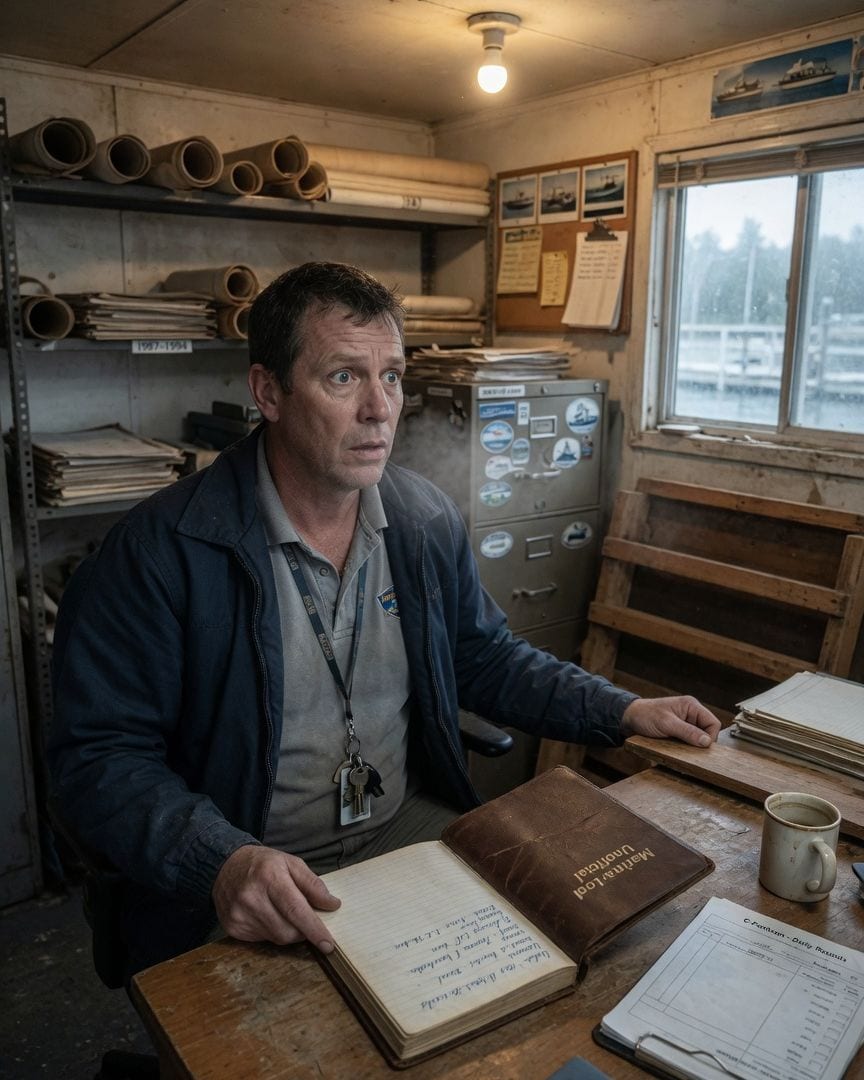
The salt spray was just picking up as I started my morning rounds, clipboard tucked under my arm. Routine, that’s what this job is. Harbormaster. Check the lines, check the power meters, make sure everyone’s where they’re supposed to be.
C-Pontoon was always the quiet one, tucked away from the main channel. I walked its length, ticking off the numbers: C-58, C-59, C-60. Then I stopped. Cold. C-60 was always the last one.
Beyond it, there should have been open water, the gentle chop of the bay. Instead, the pontoon kept going. Another thirty feet of heavy-duty composite decking, ending in a numbered post. Numbered, of course, ‘61’.
My breath plumed white in the chilly air. Moored to it, fenders out, lines perfectly coiled, was a yacht I’d never seen before. Sleek, dark grey, almost black, with tinted portholes.
On its transom, in elegant silver script, was a single word: ‘The Liminal’. My eyes dropped to the power bollard. It was a standard model, but it wasn't one I’d ever authorized.
The meter read an active draw, a steady hum of electricity flowing to the impossible boat. But I hadn’t installed it. No one had.
The air around Berth 61 felt different, too—subtly colder, somehow still, despite the light breeze that was tugging at my jacket. A wrongness that settled deep in my gut.
I spent the next few days trying to hammer the square peg of Berth 61 into the round hole of reality. I went through every single official marina plan, digital berth assignment, and construction schematic we had. Sixty berths.
Always sixty. Never more. I called Fiona Donovan, our office manager, thinking maybe I’d missed an email about some last-minute, ungodly expansion project. “New berths, Hugo? You kidding?
We’re packed to the gills as it is, and you know the council budget.” She sounded like she thought I was losing it.
I walked C-Pontoon again, more slowly this time, counting out loud under my breath, my fingers tracing the cold metal of each bollard. C-58, C-59, C-60. They were all there. But so was C-61, undeniably.
A physical fact that simply could not exist. I checked the national shipping register for ‘The Liminal’. Searched by name, by hull number, by owner. Nothing. The boat didn’t exist on paper any more than its berth did.
I even tried to trace the power cable, kneeling on the cold pontoon deck, trying to follow the thick black line from the bollard.
It just snaked down into the water, disappearing into the structure of the pontoon itself, drawing power from… where? From nothing?
The yacht itself was pristine, polished to a mirror sheen, yet it had a strange, almost ageless quality, like it had always been there, or never been there at all.
Its brass fixtures gleamed, but no one ever appeared on deck. No sound came from inside. I tried to dismiss it as an elaborate prank, or some rogue, temporary mooring that had slipped through the cracks.
But the sheer impossible effort of its construction, the official-looking numbering, the phantom power draw, and the boat’s complete lack of registration made every mundane explanation fall apart. My rational mind, the mind of a harbourmaster, was hitting a wall.
And behind that wall, a quiet dread began to bloom. This wasn’t just a mistake, it was a deliberate, impossible fact.
The nagging unreality of it all eventually drove me away from my computer screens and official ledgers. I needed something else, something… older. I remembered my great-uncle, Charles Merritt, the harbourmaster here a lifetime ago.
They said he was meticulous, even eccentric, about his record-keeping. I headed to the dusty back office, a room we mostly used for storing old charts and forgotten equipment.
The air was thick with the smell of brine and old paper. Behind a sagging bookshelf, heavy with obsolete tide tables, I noticed a floorboard that seemed a little loose. Curiosity, or maybe desperation, urged me on.
I pried it up. Beneath, tucked into the joists, was a hidden drawer. My fingers brushed against something cool and leathery. I pulled it open.
Inside sat a stack of leather-bound ledgers, their covers cracked, their pages brittle with age, smelling faintly of salt and decay, like the sea itself had seeped into their very binding. I reached for the top one.
Its cover was simply inscribed: ‘Marina Log – Unofficial’. My hands trembled slightly as I opened it. The pages crackled, revealing faded, elegant script. My eyes fell on a precise, almost unnervingly neat entry, dated decades ago: ‘October 14th, 1973.
Berth 61 appeared on C-Pontoon. Vessel: ‘The Liminal’. Unlisted.’
Over the next few days, the outside world blurred around me. Sleep was a luxury I couldn't afford. I was hunched over Charles Merritt’s unofficial logs, deep in the dust-choked back office, the leather-bound books spread across the desk.
The entries were a chilling chronicle. Berth 61 wasn’t a new phenomenon. It had appeared before, and ‘The Liminal’ with it, at regular, decades-long intervals.
Charles had meticulously noted the specific tidal and lunar conditions that seemed to precede its manifestation.
He’d written about the strange vessel’s unchanging characteristics, the phantom power draw, the unsettling stillness of the water around it – sensory details I recognised from my own recent, terrifying experience.
But the logs contained something far worse: Charles had also documented local disappearances that coincided with 'The Liminal's' presence. Not just sailors, but sometimes dockhands, even casual visitors to the marina, simply vanished without a trace.
Their names, often scrawled almost as an afterthought, were listed next to the dates the yacht was present.
I cross-referenced these dates, the names, with the faded microfilm archives of local newspapers.
While there were no official reports of 'The Liminal', there were anecdotal reports of 'ghost ships' appearing off the coast, or 'shifting channels' that confused local fishermen.
This clicked with what James Patterson, an old retired fisherman, had once grumbled about in the marina office, dismissing them as old wives’ tales from his granddad’s time.
But Charles’s logs also contained cryptic notes, observations that had meant nothing to me a week ago but now resonated with a terrifying clarity: 'the hum' and 'the drawing.'
Descriptions of a subtle, almost imperceptible energetic signature emanating from the area around Berth 61, especially noticeable during certain tides.
A low thrum, a silent pull, a physical sensation I now recognized as the very same unsettling presence I’d felt around the impossible berth. The rational explanations I'd desperately clung to had completely dissolved, replaced by a growing, terrifying coherence.
It wasn’t a mistake. It wasn't a fluke. It was a pattern. And it was repeating.
As I delved deeper into the logs, a new, unsettling element entered my days. Fiona. She was usually efficient, detached, focused on her spreadsheets. Now, I’d catch her watching me. An odd, knowing intensity in her gaze.
One afternoon, I was studying one of Charles’s faded charts, trying to pinpoint the exact location of the anomaly, triangulating it against old maps of the coast, when she appeared in the doorway of the back office.
I hadn’t even heard her approach. The sudden creak of the door frame made me jump. “Still trying to make sense of the new additions, Hugo?” she asked.
Her voice was light, almost conversational, but her eyes held a depth of understanding that chilled me to the bone. “Some things just… are, you know.” She smiled then, a small, unreadable twist of her lips, and walked away.
Later, walking home through the quiet streets, I felt an unsettling presence, not a person, but something formless, vast.
A sense of being observed, not just by Fiona, but by the marina itself, by the very water that lapped against the docks. I glanced back, half-expecting to see a shape in the shadows. Nothing.
Just the dark, silent pontoons, and the faint, impossible glow of lights from ‘The Liminal’ in the distance. The marina seemed to hold its breath.
I found myself checking the locked door to my office more frequently, double-checking it, then triple-checking.
Even in my sleep, the subtle hum I'd read about in the logs seemed to resonate, a low, persistent thrum beneath the surface of my thoughts, as if the anomaly itself was aware of my scrutiny, of my prying into its cyclical secrets.
I knew I needed to talk to James Patterson. He was the local historian, the keeper of forgotten tales. I found him mending a net down by the old fish market, his hands gnarled and slow.
I showed him Charles’s logbooks, opened to the entries about Berth 61 and 'The Liminal', the missing names. At first, he was evasive, his eyes darting away, his fingers working furiously at a tangle in the net.
"Just old wives' tales, boy," he rasped, without looking at me. "Sea plays tricks on the mind." But I persisted. I asked him about the hum, about the specific tides.
I spoke with a precision he couldn’t dismiss, not when it matched so exactly with what I’d experienced. He finally dropped the net, his gaze distant, fixed on the horizon, as if looking into another time.
"Some places… they have their own tides, boy," he said, his voice a low, gravelly whisper. "This spot, it’s always been hungry. Every fifty years or so, when the right moon pulls the right tide, the veil thins. It takes.
And it brings back… echoes."
He recounted stories passed down through generations—not just of Berth 61, but of other 'impossible places' along the coast. Brief glimpses of roads that ended in nowhere, houses with rooms that weren't on the plans, entire inlets that vanished overnight.
He explained that 'The Liminal' wasn't just a ship, but an 'anchor' for this recurring pocket of distorted reality, drawing in those who strayed into its influence in previous cycles. "It feeds on… what's lost, what's forgotten. Keeps itself going."
His voice was barely audible now, thick with a deep, weary knowledge. I asked about the power draw. "Not electricity, Hugo," he shook his head slowly. "Not in the way you mean. It's… sustenance.
For those trapped in it, for the place itself. Draws from their… persistence. Their being."
The unlisted names in Charles’s logbooks, the missing persons, the recurring berth, the phantom power draw – it all snapped into focus, a horrifying, coherent pattern. A slow, inevitable cycle of consumption.
The terror wasn't supernatural in the way of ghosts or monsters, but the cold, indifferent logic of the place itself. A wound in reality that healed, then reopened, and fed.
After that unsettling conversation with James, I returned to the old logbooks, a frantic energy thrumming through me. I had to find a way to stop it, to break the cycle Charles Merritt had so meticulously, perhaps tragically, documented.
I thumbed through the brittle pages again, past his careful observations, his desperate attempts at understanding. My fingers brushed against a small, leather-bound pouch tucked into the back cover of the very last ledger, almost completely forgotten.
Inside, among dried sea herbs that crumbled to dust at my touch, and an old, tarnished brass key, was a single, sepia-toned photograph.
It was a group shot of marina staff, celebrating some forgotten anniversary from decades past. Their faces were smiling, oblivious.
My eyes immediately found him: my great-uncle Charles, standing proudly in the center, younger than I’d ever known him, a shock of dark hair swept back.
Beside him, unmistakably, was a much younger James Patterson, his face less lined, but the same knowing eyes. But it was the background that made my blood run cold.
There, unmistakably, was the impossible extension of C-Pontoon, just as it stood today, stretching into the open water. And docked in it, undeniably, was ‘The Liminal’, its name stark on the transom, exactly as it appeared now.
My great-uncle Charles Merritt was smiling, a wide, genuine smile, his hand resting casually on the bollard of Berth 61, as if it belonged there, as if he belonged there.
The date stamped faintly on the back of the photo read: ‘August 1973’. Exactly 50 years ago. A sickening lurch twisted in my gut. Charles hadn’t just documented the cycle; he was part of it.
A chill, deeper than the marina air, enveloped me. The cycle had come around again. And now, I was in it.
I found James again, the next morning, his eyes heavy. I didn’t need to say anything; I just laid the photograph on the table between us. He picked it up, his gaze falling on the smiling figure of Charles.
He sighed, a deep, weary sound that seemed to carry the weight of generations. “Charles… he tried to fight it, same as you, Hugo. He tried to understand it, to document it, to find a way to break it.
But this place… it doesn’t let go. It draws you in. Becomes a part of you.”
James explained that Charles, in his desperation, had attempted to ‘manage’ the anomaly. He believed that if he could track its recurrences, predict its appearances, perhaps he could control it, even prevent the disappearances.
But in doing so, he only solidified its hold, becoming its unwitting chronicler and, eventually, another of its ‘occupants.’ He pointed to the photograph. "He's not just standing beside it, Hugo. He's connected to it.
He thought he was learning its secrets. But he was just feeding it more. His life, his energy, his focus… all pulled into its orbit."
James clarified the 'power draw' isn't just sustenance for the anomaly itself, but a tether for those trapped within 'The Liminal'—a way for them to persist in a distorted, liminal state, forever part of the cycle.
They’re not exactly alive, not exactly dead, but held in an eternal echo.
‘The Liminal’ itself, he explained, is a vessel not just for the sea, but for time and reality, its presence a recurring scar on the landscape, a physical manifestation of the nexus where reality thins.
I understood now: the anomaly wasn’t a monster to be slain, nor a ghost to be appeased. It was a fundamental, geological wrongness.
A cyclical wound in the fabric of space itself, a silent, indifferent force that had existed long before us, and would exist long after. My family had been its unwilling caretakers, its chroniclers, for generations, our actions inadvertently sustaining it.
Armed with the grim truth, a cold resolve settled over me. I couldn’t simply stand by. Not now that I knew.
That night, under the full moon, a luminous disc hanging low and heavy over the bay, I returned to Berth 61. The air was thick, charged.
The hum from the pontoon wasn’t subtle anymore; it was an almost audible thrum vibrating up through the soles of my boots, shaking the pilings. 'The Liminal' sat, silent and watchful, its dark portholes like vacant eyes reflecting the moonlight.
I knew I couldn't destroy the anomaly itself—it was a part of the earth, a fold in reality. But Charles’s logs hinted at a specific ritual, a way to 'starve' the current manifestation, to sever its immediate tether.
I found the old brass key from the pouch, still clutched in my hand, meant for a hidden panel within the power bollard itself. My hands trembled, not from fear, but from the raw, buzzing energy emanating from the structure.
With a click, the panel swung open, revealing a complex, arcane mechanism of aged copper wires, intricate clockwork, and ancient-looking crystals, glowing faintly from within. This wasn't electrical at all. This was something else entirely.
As I began to follow Charles's last, desperate instructions—a precise sequence of disconnections, a severing of specific conduits—the hum intensified, rising to a deep, vibrating thrum that shook the entire pontoon.
The water around 'The Liminal' began to swirl, slowly at first, then faster, a dark, churning vortex. Figures, shimmering and indistinct, coalesced at the yacht's railings.
Their faces were indistinct, like smoke given form, but their gazes were fixed on me, an unnerving, silent accusation.
I felt a powerful pull, a desperate hunger emanating from the vessel, trying to draw me in, to make me one of them, one of the echoes.
I worked quickly, my breath catching in my throat, forcing my trembling fingers to obey. One by one, I disconnected the crystals, severing the ancient flow.
The hum rose to a piercing shriek, a sound that seemed to tear at the fabric of the air itself.
The vortex boiled, spraying dark water, and the figures on the yacht recoiled, dissolving like smoke, their forms rippling into nothingness. Then, with a sudden, violent lurch, 'The Liminal' began to sink.
Not into the water, but through it, as if the surface were merely a skin, a thin veil it was piercing.
The pontoon itself shuddered, twisting and groaning like a dying thing, and then, with a sharp crack that echoed across the silent bay, the impossible extension of C-Pontoon splintered, fragmented, and vanished.
The open water rushed in, churning for a moment, then settling, leaving only the usual end of the marina, exactly where it should have been. Berth 61 was gone. 'The Liminal' was gone.
The next morning, the marina was eerily normal. The morning sun sparkled on the water. No sign of the impossible berth, no 'The Liminal'. The end of C-Pontoon was exactly as it should be, concrete and final.
Fiona reported no anomalies in the logs, no one else seemed to recall Berth 61 ever being there. The memory had been wiped clean, as if the reality of it had dissolved with the yacht.
James Patterson, his face lined with the morning sun, gave me a long, knowing look and a single, slow nod.
I spent the day meticulously repairing the end of C-Pontoon, reinforcing the pilings, painting fresh numbers on Berth 60, making it look as if nothing had ever been amiss.
That evening, I built a small fire on the beach and burned Charles Merritt's unofficial logbooks, scattering the ashes into the outgoing tide.
The marina felt lighter, cleaner, but a new, subtle chill had settled deep within me, a constant awareness of the thinness of reality, a presence that never quite left.
Months passed. The marina returned to its usual rhythm. The tourists came and went, the yachts arrived and departed. I, however, was changed.
I checked the official logbooks obsessively now, patrolled the pontoons with a new, vigilant intensity, my senses heightened to every subtle shift in the air, every unusual ripple in the water.
I knew what lay beneath the surface, what the tides could bring.
One evening, as the sun dipped below the horizon, casting long, bruised shadows across the water, I stood at the very end of C-Pontoon, exactly where Berth 61 had been.
I listened, not to the gentle lapping of the waves, but for the subtle hum I now knew, the quiet thrum of a place that held a secret.
I felt a faint tremor in the pilings beneath my feet, a ghost of the anomaly.
I looked out at the horizon, where the sea met the sky, and for a fleeting moment, just beyond the farthest visible buoy, I imagined I saw a faint, shimmering distortion, a ripple in the fabric of the distance, not just here, but somewhere else, too.
I knew I merely stopped this manifestation, not the cycle itself, not the fundamental wrongness of the world. The tide still turns, but now I know what it brings. Berth 61 is gone, but the water still whispers its number.
If this one got to you
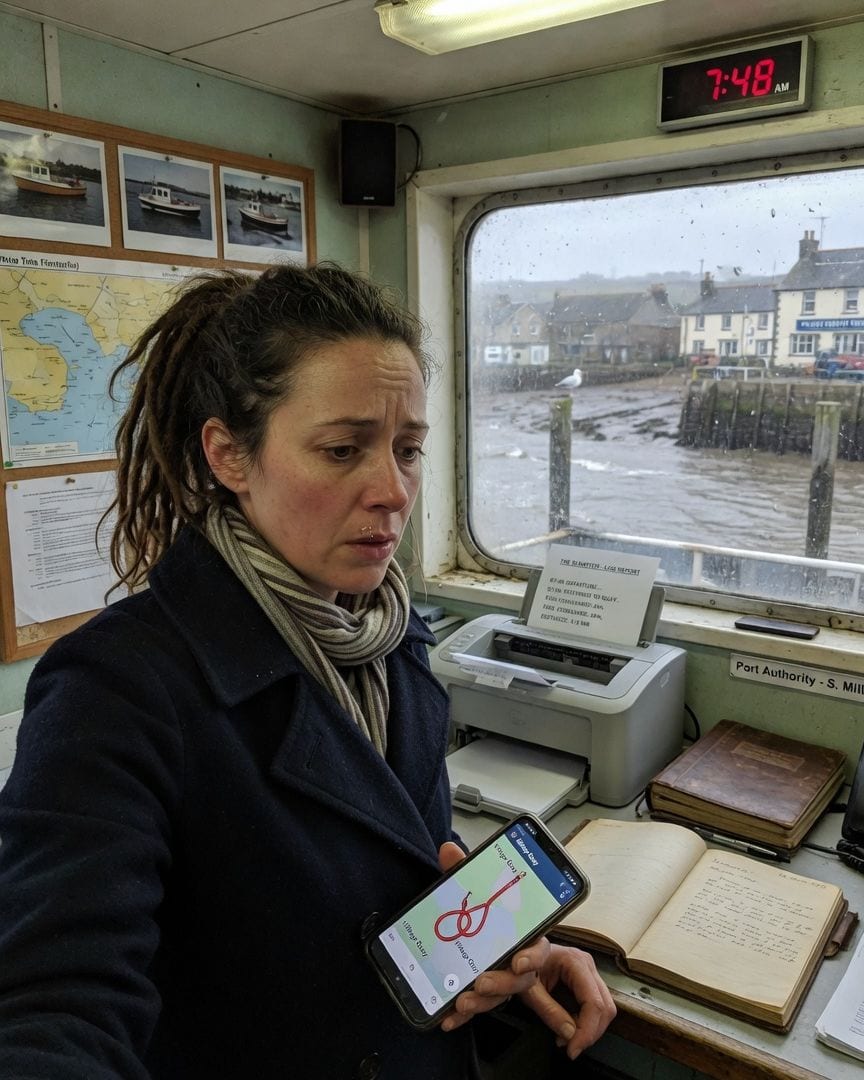
My morning ferry crossed for 40 minutes. The destination town just disappeared.
I board 'The Seawitch' every Tuesday for the familiar eight-minute estuary crossing. But this morning, after making good time, Captain Bernard and I watched the town quay simply fail to appear. Instead, our ferry repeatedly returned to the very same village quay we'd just left, despite burning fuel and advancing the clock.
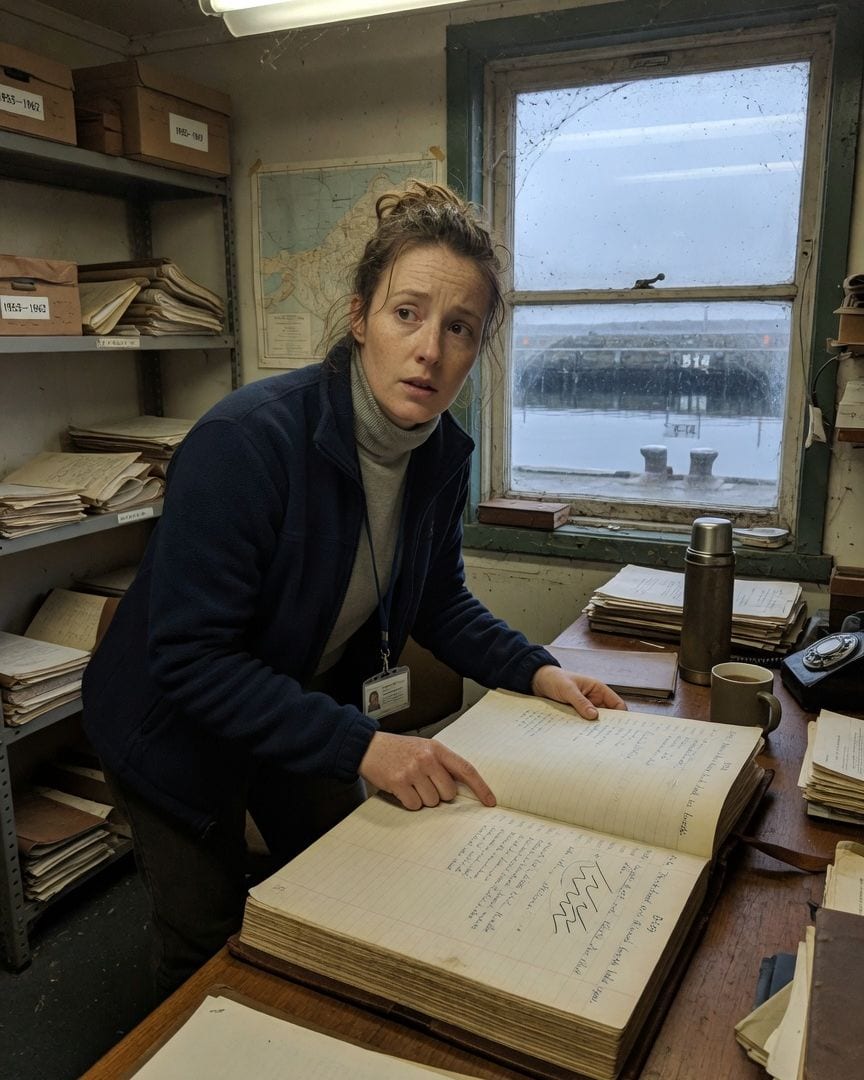
My harbour ledger shows Berth 14 let to a trawler every few years, but it's always empty. Each entry reads 'not returned to sea, berth held open'.
My job as Harbour Master's Assistant is managing the berth ledger, tracking every vessel. But Berth 14 holds a strange paradox: my book says it's let, yet it's always empty. Each entry for that berth closes with the same cryptic note – 'not returned to sea, berth held open' – a pattern stretching back to 1955.
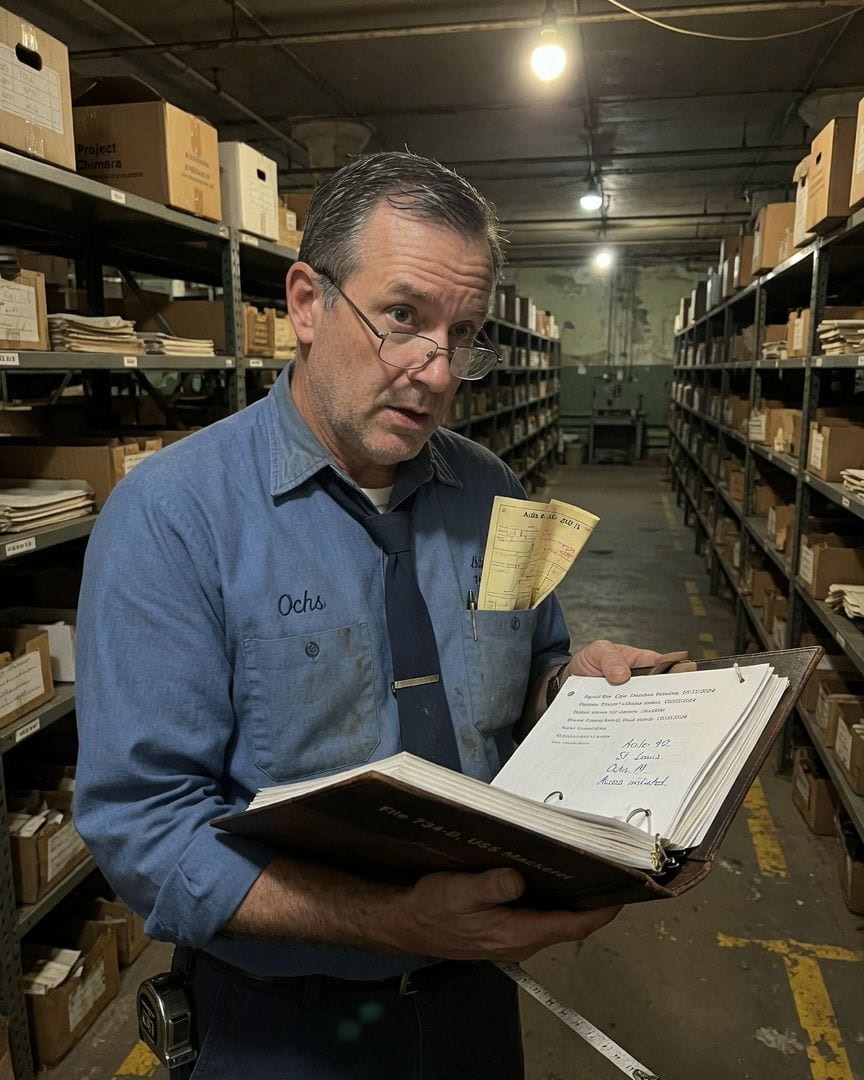
On his final inspection, a depot worker found Aisle 40 had grown 61 feet longer, and a Cold War submarine file hummed warm in his hand.
Marlin Ochs, a man of precise rhythms at the St. Louis depot, approached Aisle 40 for its final inspection before the entire structure was pulped tomorrow. For nearly two decades, the aisle had been a consistent ninety-two paces long. But on this night, his boot heels clicked past the expected mark, stretching to one hundred and nineteen paces, revealing an impossible, colder extension. Deep inside, Marlin found a heavy, leather-bound binder titled 'File 734-B, USS Mackerel,' a Cold War submarine lost with all hands in 1958. It felt oddly warm, almost humming against his palm, filled with maintenance logs and payrolls dated decades after the sub was sunk.
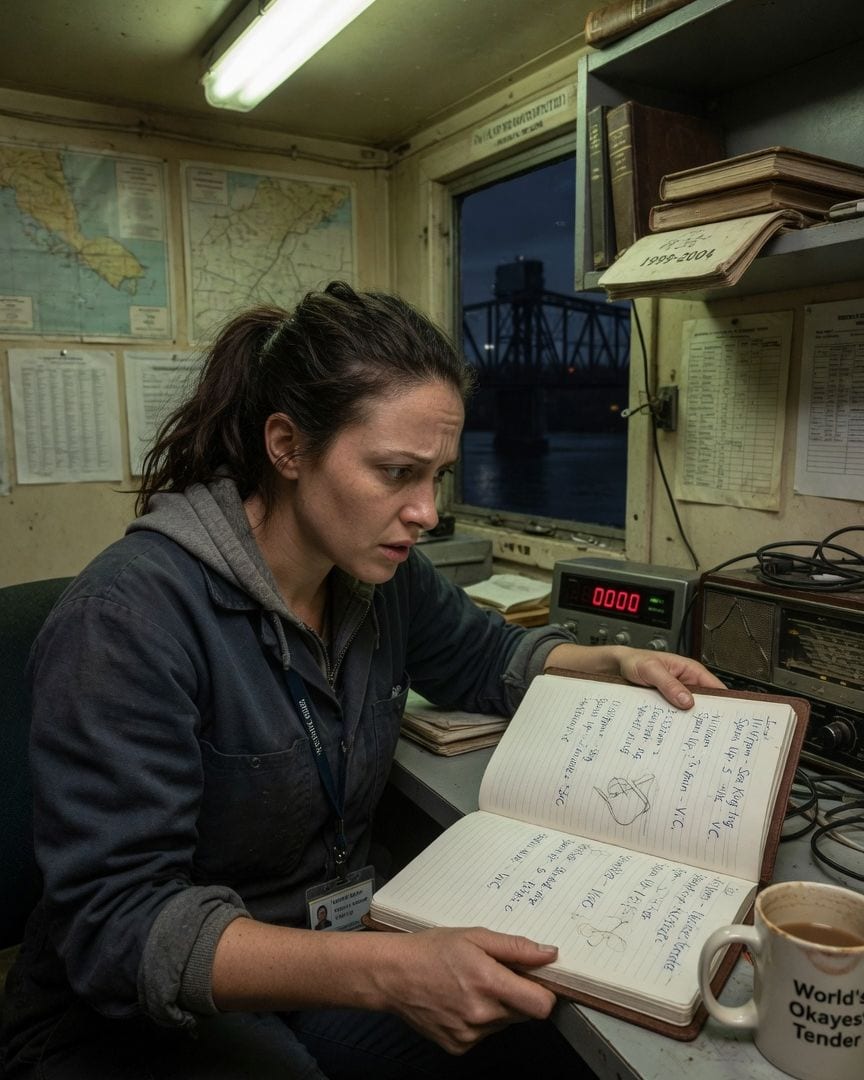
My drawbridge log shows a 2:33am lift I didn't make. The span counter never moved.
As a drawbridge tender, my midnight to dawn shift is usually quiet, a routine of monitoring traffic and logging lifts. But tonight, my own logbook shows an impossible entry for a bridge lift I have no memory of making. My initials and handwriting are there, yet the span counter above my panel reads a steady zero. No boat called, no span ever went up.
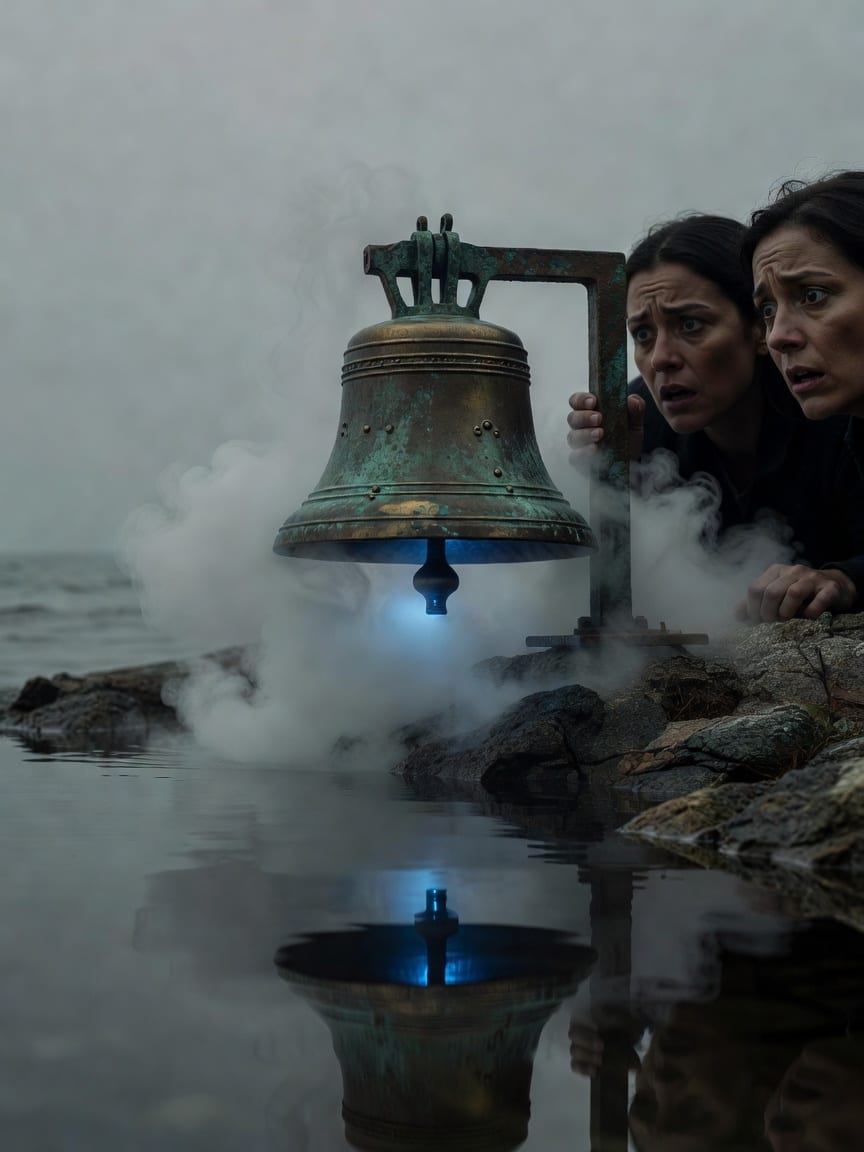
The fog bell on the point rings itself on still nights. The framed log at the yacht club lists eleven calm evenings it rang – each entry beside a boat that never came home.
Moving to a quiet coastal town, I found myself drawn to an old logbook at the yacht club. It recorded the fog bell ringing on flat-calm nights, each instance tied to a boat that simply vanished. Then, I found my own boat's name, 'The Osprey,' penciled at the bottom, marked with an unfinished, cryptic symbol.
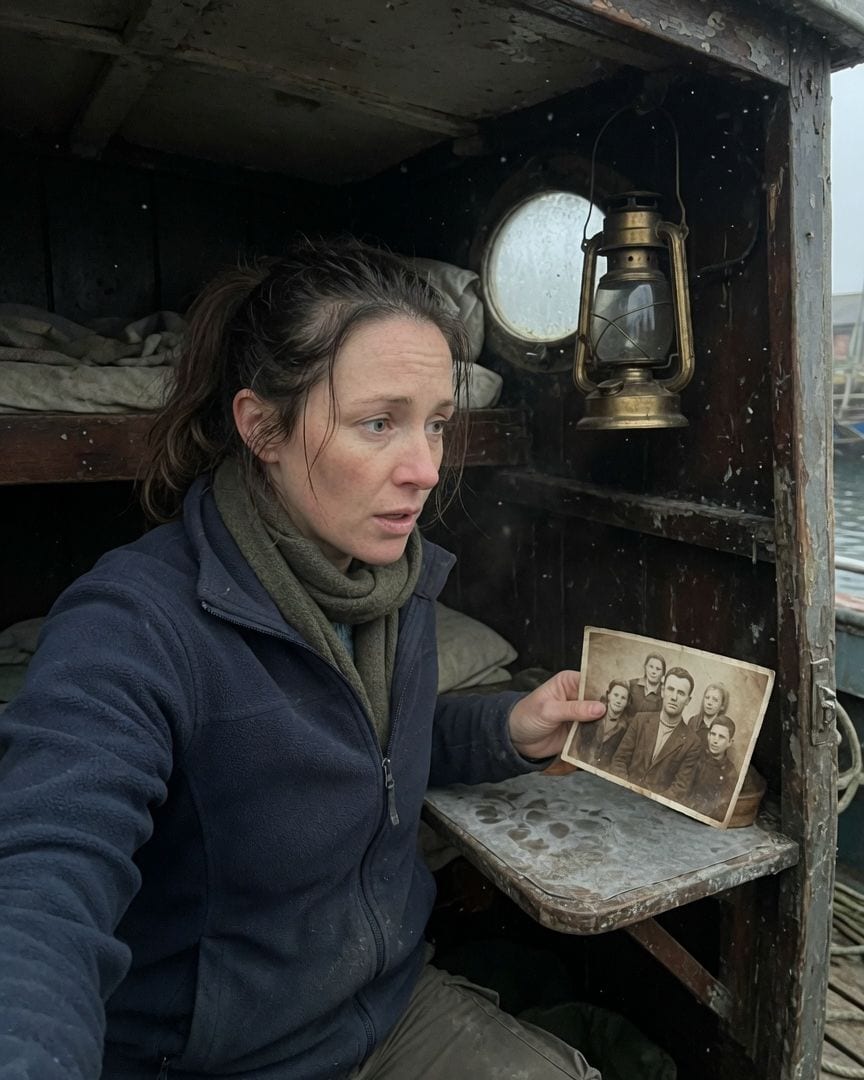
My harbour counted fourteen boats out, but fifteen came back. The last one has my name on it, tied to a berth empty since the war.
I cherished the crisp morning air in Port Blossom, watching the fishing fleet return. Fourteen boats had chugged out before dawn, but that morning, a fifteenth, older boat glided silently into the harbour. It tied itself to the very end berth, unused since the war, and painted on its stern was my family name: Walsh.