My fingerprints came back to a Nevada arrest eight years ago. Same name, same birth date, same younger face in the booking photo. I’ve never been to Nevada.
I sat across from Greg Bishop, the fingerprint examiner, the file for my new job application open between us. He was a man in his mid-forties, neat and professional, but his brow was deeply furrowed.
He pushed a grainy printout across the desk. It looked like an old police mugshot, smudged around the edges.
"Ms. Caldwell," he started, his voice a low rumble. "Your prints... they match a set on file from an arrest in Nevada, eight years ago."
I laughed. It wasn't a real laugh, just a short, disbelieving puff of air. "I think you have the wrong file, Greg. I've never been to Nevada, let alone arrested."
I’d been working at the same accounting firm for ten years, lived in the same apartment for seven. My life was, to put it mildly, predictable.
He slid a booking photo next to the prints. My breath hitched. It was me. Younger, yes, maybe twenty-four, with a slightly dazed, bewildered expression, but undeniably my face.
My hair was longer, pulled back messily, but it was my nose, my eyes, the faint mole above my lip. I recognized the simple white background, the height chart etched behind me.
Greg cleared his throat, avoiding my gaze. "The old prints, the new ones... they're identical. Same hands. And the booking photo is a younger version of you, Ms. Caldwell. I ran it through the facial recognition software twice.
The match is eighty-seven percent. That's... conclusive."
I stared at the photo, my own face looking back at me from a life I'd never lived, a moment I couldn't recall. The dread was a cold, quiet certainty.
It wasn't a jolt of terror, just a slow, creeping realization. The world's record was wrong, and it insisted on her guilt, her presence, somewhere she simply had not been.
It felt like a glitch in reality, a fundamental truth about my past that was suddenly, terrifyingly, not true.
I left Bishop’s office in a daze, the booking photo clutched in my hand. The drive home was a blur. The next day, I spent hours on the phone. My fingers kept slipping on the numbers.
I called the Nevada State Police first. After navigating automated menus and then, finally, a real person, a tired-sounding woman confirmed the arrest record was active.
Margaret Caldwell, born March 14, 1992, arrested August 7, 2016, for a minor public disturbance. She couldn't offer details over the phone, citing privacy, but the record was there, indisputable.
My bank was next. My accounts were clear, no unusual activity. No ATM withdrawals in Reno, no credit card charges from Las Vegas. No plane tickets, no rental car bookings.
My own life’s financial records were a blank slate regarding Nevada. It had to be a mistake, a clerical error, a bizarre coincidence of names, I told myself. Maybe a distant relative?
But the face in the photo… it was mine.
I tried to rationalize it, sitting at my kitchen table, making notes on a legal pad. The photo was a doppelgänger, an uncanny resemblance. The prints? A near-match, a system error, maybe even an elaborate, inexplicable prank.
My rational mind fought hard to reject the impossible. I drafted an email to a lawyer I knew, the words "identity theft" and "mistaken identity" heavy on my tongue.
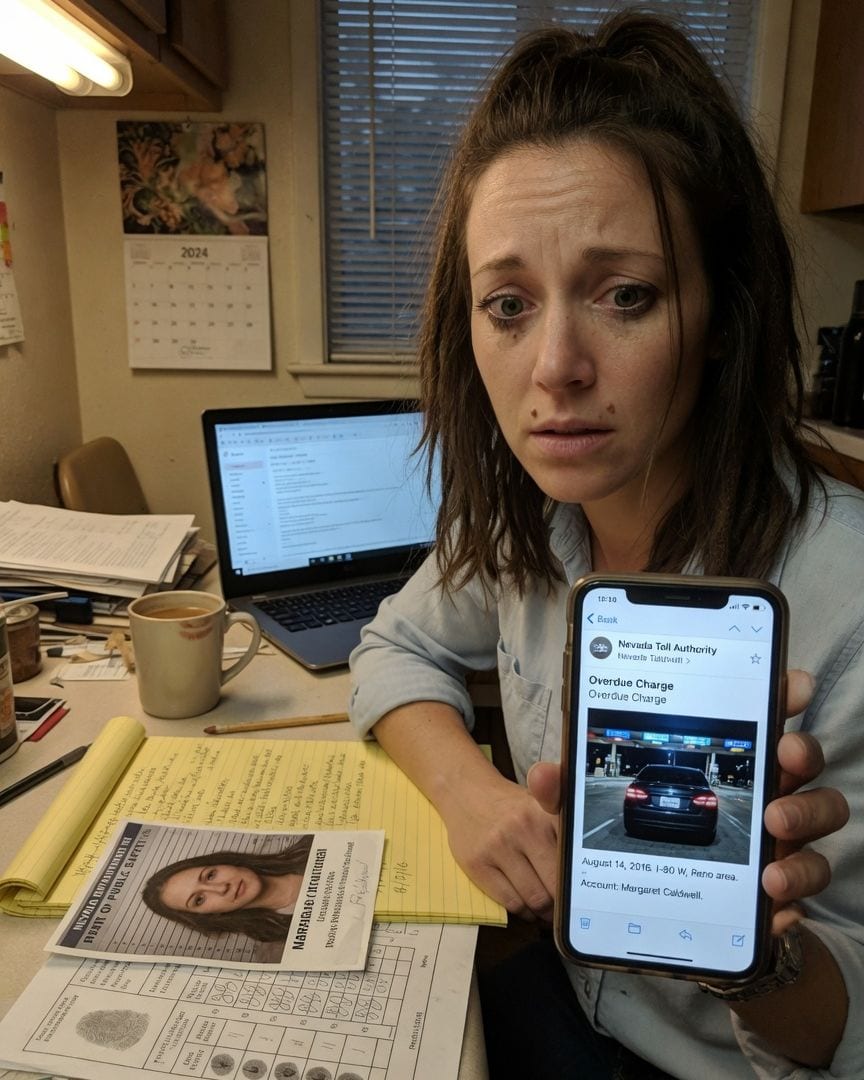
As I reread the draft, my phone, resting beside the keyboard, pinged. A new email. The sender: 'Nevada Toll Authority.' The subject line: 'Overdue Charge.'
My stomach dropped. I picked up the phone, fingers suddenly clumsy, trembling. I opened it. The email was automated, terse. It cited an unpaid toll for a vehicle crossing a bridge on I-80 W, outside Reno.
The date: August 14, 2016. Exactly one week after my supposed arrest.
A tiny, blurry photo was embedded in the email. It showed the rear of a nondescript dark sedan, passing beneath a toll gantry. I didn't own a dark sedan. I owned a silver hatchback.
The account, linked to my name, Margaret Caldwell, showed a string of numbers for a bank I'd never heard of, a branch I didn't recognize in Carson City.
This wasn't a static record from the past. This wasn't a dusty file. This was an active, impossible presence.
A Margaret Caldwell driving a car she didn't own, existing in a place she'd never been, all while the real Margaret was demonstrably at her desk, working, trying to make sense of a ghost.
The world narrowed to the screen's cold light, the impossible fact of it pressing down, sharp and suffocating.
I tried to dispute the toll charge. The automated system was a brick wall, offering no human contact, only insisting the charge was valid for "Margaret Caldwell." Each attempt led to a polite, firm digital refusal.
Driven by a cold, persistent dread that had replaced rational thought, I contacted the unfamiliar bank listed in the email. It was a regional institution, one I’d never had dealings with.
After navigating what felt like endless layers of customer service – voice prompts, hold music, eventually a weary-sounding representative – I finally learned that the account, though active under my name and birth date, had a zero balance.
More importantly, it was linked to a P.O. box in my own city, one I didn't recognize. Another dead end, yet this one had a physical address attached.
The P.O. box number led me to a private mail service in a forgotten industrial district, far from my usual routes.
The woman at the counter, bored and uncurious, directed me to an adjacent building when I asked for a physical address. It was a crumbling brick structure, paint peeling from its ancient façade.
Faded, almost illegible lettering above a boarded-up ground floor read: 'City Records & Archival Services.' The windows were dark, boarded, but a single, dimly lit door led to a narrow, creaking staircase.
Inside, the air was thick with the smell of dust and old paper, a dry, forgotten scent that clung to my clothes.
The only light came from a single bare bulb hanging over a vast, leather-bound ledger on a high desk. An elderly man, Harold Ingram, sat hunched over it, his spectacles perched precariously on his nose.
He looked up, unbothered by my sudden appearance, as if visitors were a daily occurrence, or perhaps never. His eyes were calm, almost vacant, behind thick lenses.
"Lost something?" he rasped, his voice as dry as the air.
I explained, haltingly, about the P.O. box, the bank account, the toll charge, trying to make sense of it even as I spoke. Harold nodded slowly, almost imperceptibly. "Ah, yes. The special files. Haven't seen one of those in years."
He gestured vaguely with a gnarled finger towards a dusty, locked cabinet in the deepest corner of the room. "Old records. Some of them... peculiar." He turned back to his ledger, his pen scratching softly on the brittle page.
I returned to the archives daily. The air remained thick, the light always dim. Harold Ingram observed me with a mild curiosity that never quite tipped into genuine interest. He seemed utterly content in his dusty domain.
I started sifting through the less-locked boxes, looking for anything related to 'special files' or 'identity verification.'
The quiet hum of the old building, a low, constant vibration that might have been the ventilation or just the settling of ancient wood, was unnerving. Every creak of the floorboards felt amplified.
One evening, back in my apartment, I noticed a subtle shift. A paperback on my bedside table, one I'd left spine-up, was now face-down.
My mail, usually stacked neatly by the door on the small table, was slightly askew, an envelope creased as if roughly handled. I dismissed it as paranoia, a trick of the light, the stress playing games with my perception.
It had to be.
Then, an anonymous email landed in my inbox. The subject line was chillingly simple: 'Nevada Accounts.' The body contained only three words: 'Stop looking, Margaret.'
My heart hammered against my ribs, a sudden, frantic rhythm. The email address was untraceable, a throwaway account, clearly designed to leave no trace. This wasn't a generic warning. It was specific.
Someone knew exactly what I was doing, what I had found, or was in the process of finding. The dread solidified from an abstract wrongness into a personal threat.
I was no longer just investigating a bizarre error; I was being watched. The quiet hum of my apartment suddenly felt like a listening presence.
The next morning, I confronted Harold, pushing the anonymous email across his desk. His calm demeanor finally cracked, a flicker of fear, or perhaps just surprise, in his eyes.
He leaned closer to read the screen, his breath smelling faintly of menthol.
"Who sent this?" he whispered, his voice thin.
I pressed him. "What are these 'special files'? What are the 'Nevada accounts'?" My voice was tight, barely under control.
Harold sighed, a long, weary exhalation that stirred the dust motes in the air. "They called it 'Identity Verification.' For 'sensitive cases.'" He gestured vaguely around the dusty room, a sweeping motion encompassing the rows of towering, forgotten files.
"Decades ago. It was above my pay grade. Just a clerk, I was. Kept the records, mostly. Filed the requests."
He pulled out the vast ledger he'd been working on, sliding it across the desk so I could see it. Its pages, yellowed and brittle, were filled with names, dates, and alphanumeric codes, meticulously entered in a looping, elegant hand.
His hand, I realized.
"We'd get requests," he continued, running a gnarled finger down a page, stopping at a familiar name. 'Caldwell, Margaret. Active.'
A chill, colder than the archives, raced down my spine. "What does 'parallel identity' mean?" I forced the words out.
Harold looked at me, his expression a mixture of pity and resignation. The vacancy in his eyes was gone, replaced by something sadder. "It meant we created a record. A life. An alibi, for some. A placeholder, for others.
Birth certificates, school records, bank accounts, even minor arrests. All perfectly verifiable, all utterly false, running alongside the original."
He explained how they'd gather data, biometrics, under various pretexts – jury duty surveys, census forms, even fake job applications from defunct companies. "The Nevada arrest...
that would have been your first marker, establishing a traceable history, a ghost you could never shake. A convenient incident, easily verifiable, to start the trail."
The pieces of the puzzle began to click, dreadfully, into place. The booking photo, the toll charge, the empty bank account – all meticulously crafted threads of a fabricated life, designed to be indistinguishable from her own, yet entirely separate.
Harold finally admitted he never understood the ultimate purpose, only that the files were 'never to be questioned,' never to be disturbed. They just were.
The air in the room seemed to press in on me, heavy with the weight of invisible, manufactured lives.
Harold, his face pale with dawning horror at what he was revealing, pointed to a specific, heavy cabinet in the deepest corner of the archives, one Margaret hadn't dared approach.
It was a squat, iron-bound thing, looking more like a safe than a filing cabinet.
"There are... special cases in there," he stammered, his voice barely a whisper. "Files they said were 'dormant.' Or... waiting."
He fumbled with a large, antique key, its brass dulled with age, his hands trembling slightly as he inserted it into the lock. The cabinet creaked open, emitting a puff of air thick with the scent of stagnant paper.
Inside, rows of thick, bound folders were neatly arranged, almost untouched.
"They said these were the ones... the ones that were already 'activated,' or waiting to be," he finished, his eyes wide and unfocused.
I reached inside, my fingers brushing against brittle, strangely smooth paper. I pulled out a folder, its label barely legible in the dim light: 'Constance Winslow.' Constance Winslow, a name from the character pool.
I’d read it in a forgotten newspaper article once, about a woman who’d seemingly vanished, leaving behind only a tangle of conflicting records.
Inside, among a stack of false travel logs and property deeds, a meticulously crafted illusion of a life, I found a single, yellowed legal affidavit. Its header read: 'Identity Verification Bureau - Authorization of Parallel Identity.'
Below it, a block of official text in tiny, dense print, and then, at the bottom, a signature.
My own. Unmistakably, terrifyingly, my own looping hand, the distinctive flourish of my 'C', the sharp slant of my 'M'. It was dated years ago, a date I didn't recognize, years before I’d even heard of a Nevada arrest.
My own hand, years ago, had signed her name, Margaret Caldwell, authorizing the creation of Constance Winslow's duplicate identity. My own hand, complicit in a past I could not remember, had signed me into this nightmare.
I thrust the affidavit at Harold. His eyes widened in disbelief as he took it, his gaze fixing on my signature. "This... this isn't possible," he breathed, tracing the familiar loops with a trembling finger. "Your signature?
I recognize the document, the defunct 'Identity Verification Bureau' it references, but not your hand on it. Not on that." He looked from the signature to me, then back to the paper, as if trying to reconcile two impossible truths.
He confessed that the Bureau was a covert arm of an obscure government project, disbanded decades ago, its purpose shrouded in secrecy.
They would approach ordinary citizens under false pretexts—civic duty, national surveys, even mock job interviews for non-existent positions—to collect biometric data, signatures, and personal details. These were then used to build the 'ghost' identities.
The Nevada arrest, the phantom toll charges, the empty bank accounts—all meticulously crafted to give her 'ghost' a history, a verifiable existence, a paper trail that could be followed, if one chose to follow it.
The pattern snapped into place with chilling clarity, a puzzle finally solving itself, revealing a monstrous picture.
These ghosts were not just alibis for others; they were placeholders, ready to be activated, to replace the original individual or to provide a false trail.
The 'Identity Verification Bureau' wasn't about verifying identities; it was about creating and manipulating them, like a hidden system of gears and levers that could swap out one life for another.
Her own signature on Constance Winslow's file confirmed the horrifying truth: she wasn't just a target; she had, unknowingly, been a part of the system, her identity harvested and used to create others, preparing her for her own eventual replacement.
The pattern wasn't just around her; she was always inside it, a tiny cog in a machine that was slowly, inexorably, grinding her away.
Harold, his face gray with horror and the weight of decades of complicity, stammered, "They must have taken your prints, your signature... years ago. Under some guise, some fake reason."
He frantically pulled out the master ledger, the one with every 'ghost' identity ever created, its pages fluttering like the wings of trapped birds. "We have to find the full list, expose it. Someone has to know."
As we worked, the building's ancient alarms shrieked to life. A high, piercing wail that vibrated through the floorboards. Heavy footsteps echoed from the floor below, slow and deliberate, climbing the creaking stairs.
Two figures, calm and efficient, appeared at the archway, dressed in plain, nondescript charcoal suits. They weren't police. They weren't threatening.
They simply looked at me, then at Harold, with an unsettling, knowing gaze, as if they'd been expecting us, anticipating this exact moment.
Harold tried to cry out, to yell, but one of the figures moved with impossible speed, a hand clamped over his mouth, silencing him. He went limp, eyes wide with terror, slumped against a stack of dusty files.
The other figure stepped forward, their gaze fixed on me, devoid of malice, yet utterly devoid of humanity. I realized they weren't trying to capture me; they were there to activate her ghost identity, to erase the original Margaret Caldwell.
They were coming to make the 'Nevada Margaret' real, and me, the true Margaret, disappear without a trace. My only escape was to become unfindable, to shed the identity they'd so meticulously recorded.
I scrambled, pushing past a teetering stack of files that crashed to the floor, making a desperate dash for a back exit I'd noticed earlier, a rusted metal door leading to a narrow alley.
The figures didn't pursue me with urgency, only a measured, confident pace. They knew her ghost was already everywhere. They knew she couldn't outrun a record.
Margaret Caldwell vanished. Her apartment was found undisturbed, but all personal records—digital and physical—had been subtly altered or removed. Her job application was rescinded, her bank accounts emptied, her social media profiles wiped.
The 'Margaret Caldwell' that existed before was gone, erased from every official and personal record. Harold Ingram was found dead in the archives, ruled a heart attack.
The old building was cleared out, its archives sealed and carted away by an unknown agency. The official narrative was simple: Margaret Caldwell had moved on, quietly, without a trace. Her life, for all intents and purposes, ceased to exist.
A year later, a new 'Margaret Caldwell' is seen. She lives in a different city, works a different job, has a different, yet familiar, set of habits. Her new colleagues find her quiet, efficient, and exceptionally private.
One evening, her new neighbor, Frank Winslow, waves to her from his porch, mistaking her for someone else. "Constance?" he asks, a friendly smile on his face. She pauses, a faint, wrong little smile playing on her lips.
"Is that so?"
If this one got to you
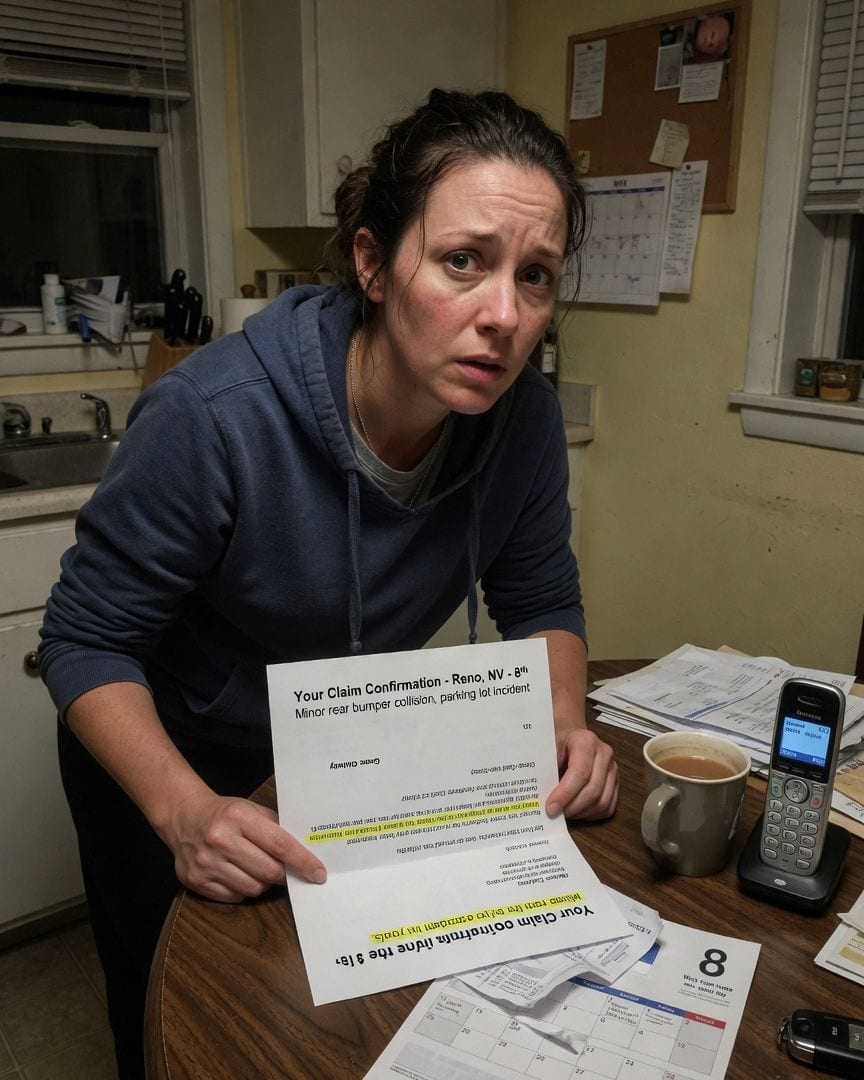
My signature is on a library card from Ohio. I've never been there.
An insurance letter confirmed a car collision in Reno, Nevada, but I'd never been there, and my car sat untouched. My adjuster insisted the claim was filed in my own voice, leaving me in a disbelieving haze. Then, a forgotten PDF attachment revealed a library card application from a small Ohio town, bearing my name and signature. I have never, in my thirty-four years, been to Ohio.
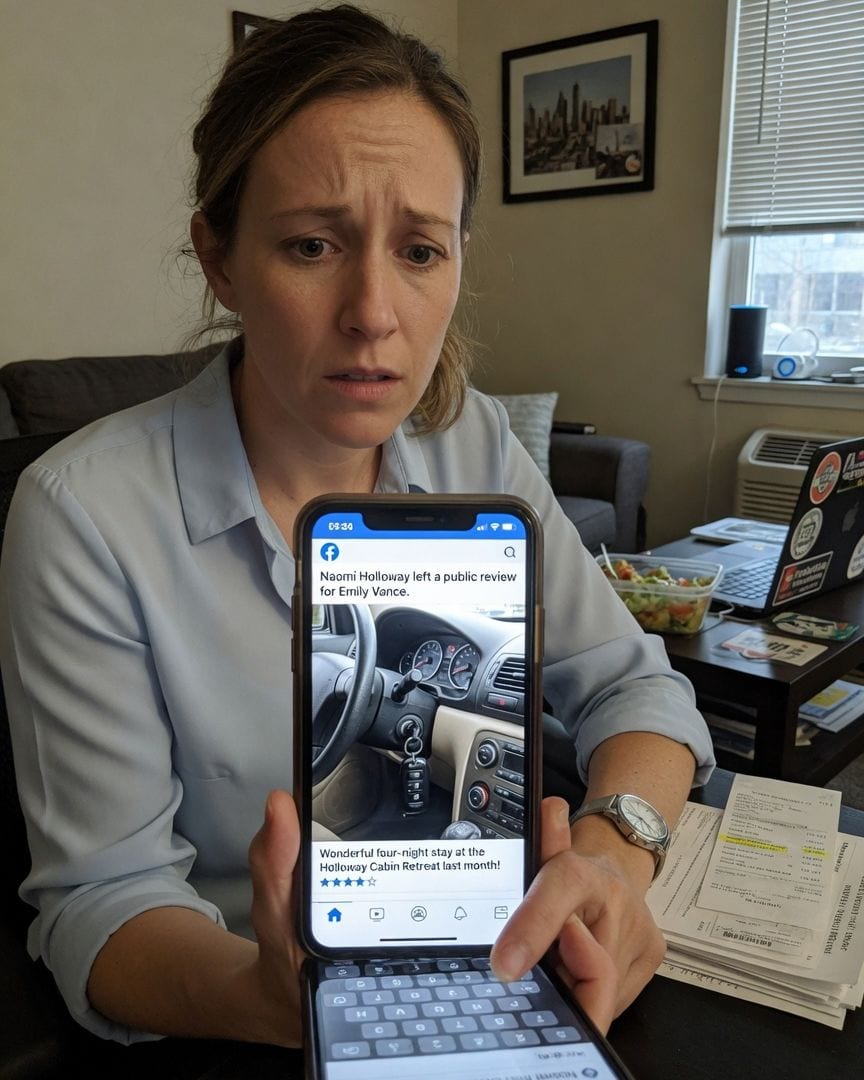
A host publicly thanked me for a four-night stay at her Montana cabin I've never visited — booked under my verified ID and paid from my card.
I was catching up on Facebook during my lunch break when an Airbnb review popped up, thanking 'Emily Vance' for a stay in Montana. I stared, bewildered. My name, but I’ve never been to Montana. Then I saw the photo: my car keys and my silver watch, on a rental car dashboard, hundreds of miles away, while both items were physically on me.
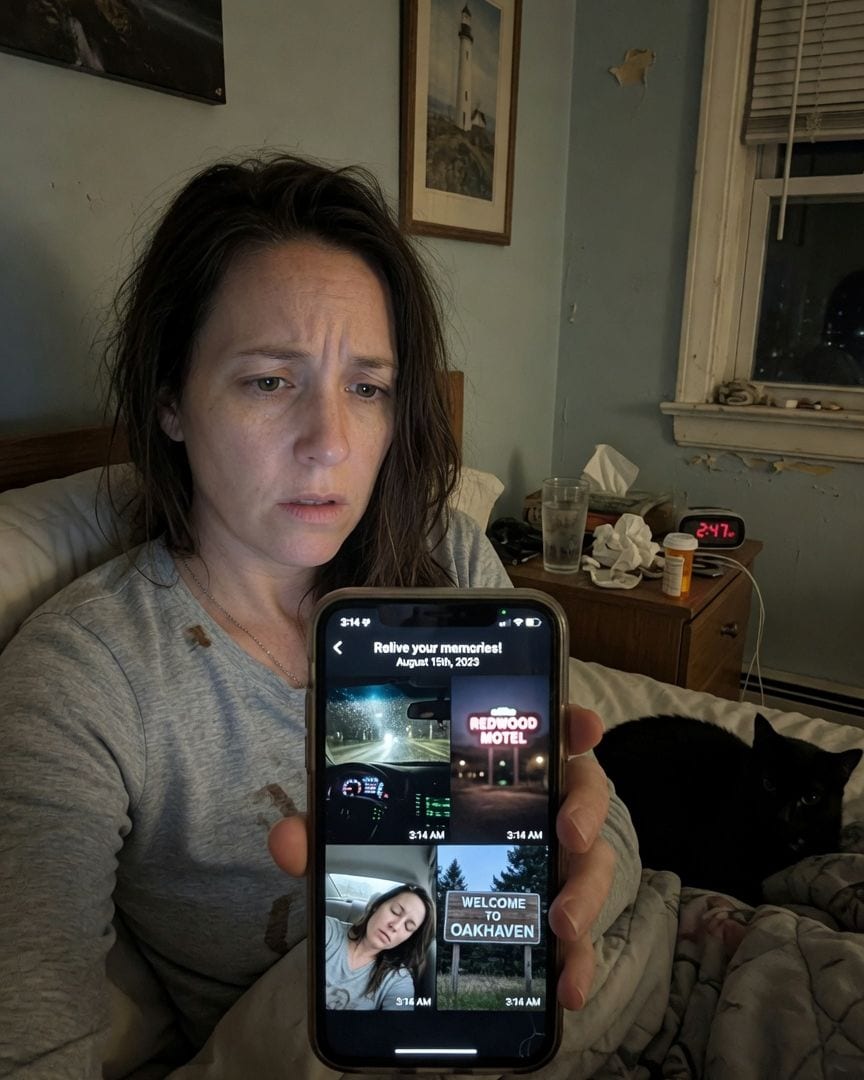
My phone has photos of me asleep in a strange car at 3 AM. Then a voicemail: 'We'll have her back by sunrise.'
My phone woke me with a cheery notification, promising memories from last August. Instead, it showed me asleep in a dark car, rain streaking the windshield, miles from my apartment. I was certain I'd been home in bed that night, but the images were undeniably in my camera roll, a quiet violation of my memory.
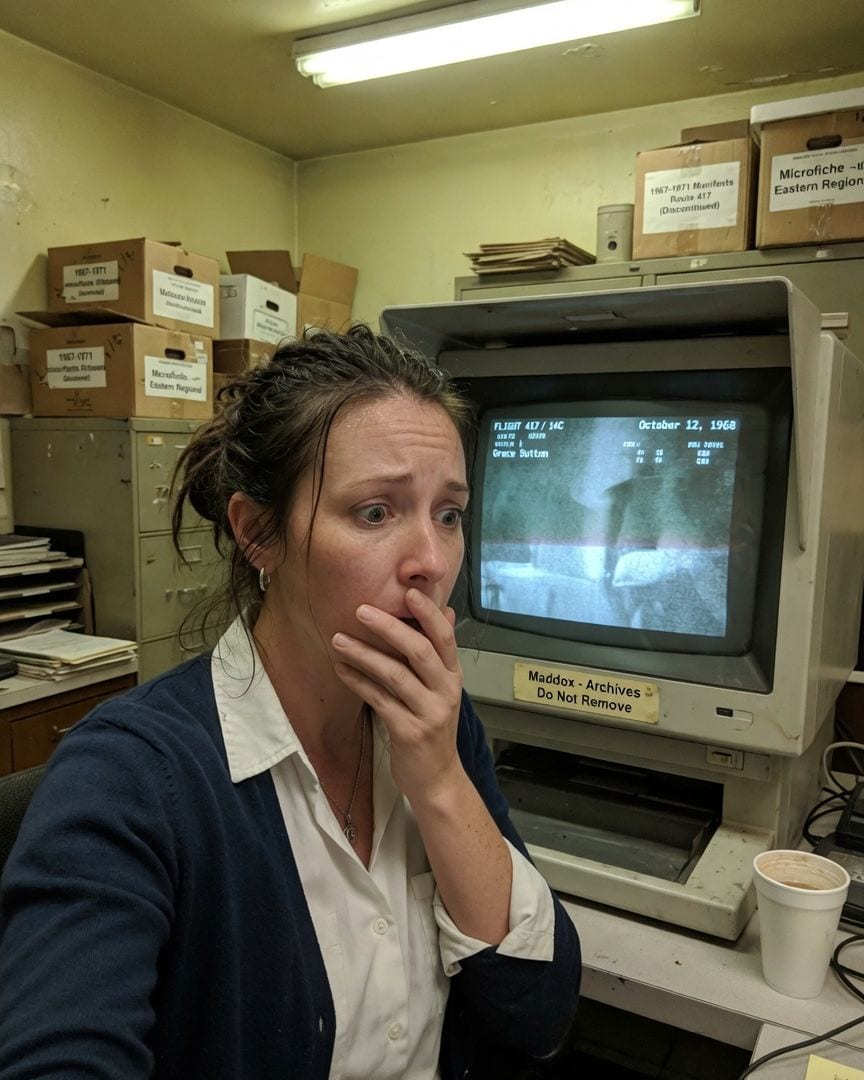
A woman I'd never met leaned across the aisle, said 'I'm sorry, Grace,' and warned me about the landing. We landed fine — but the airline says seat 14C flew empty.
My routine flight home took an unsettling turn when a woman in seat 14C spoke to me. She knew my name, warning me about the landing, then simply vanished from her seat after we touched down. Airline records confirmed seat 14C was unoccupied, as if she was never there.
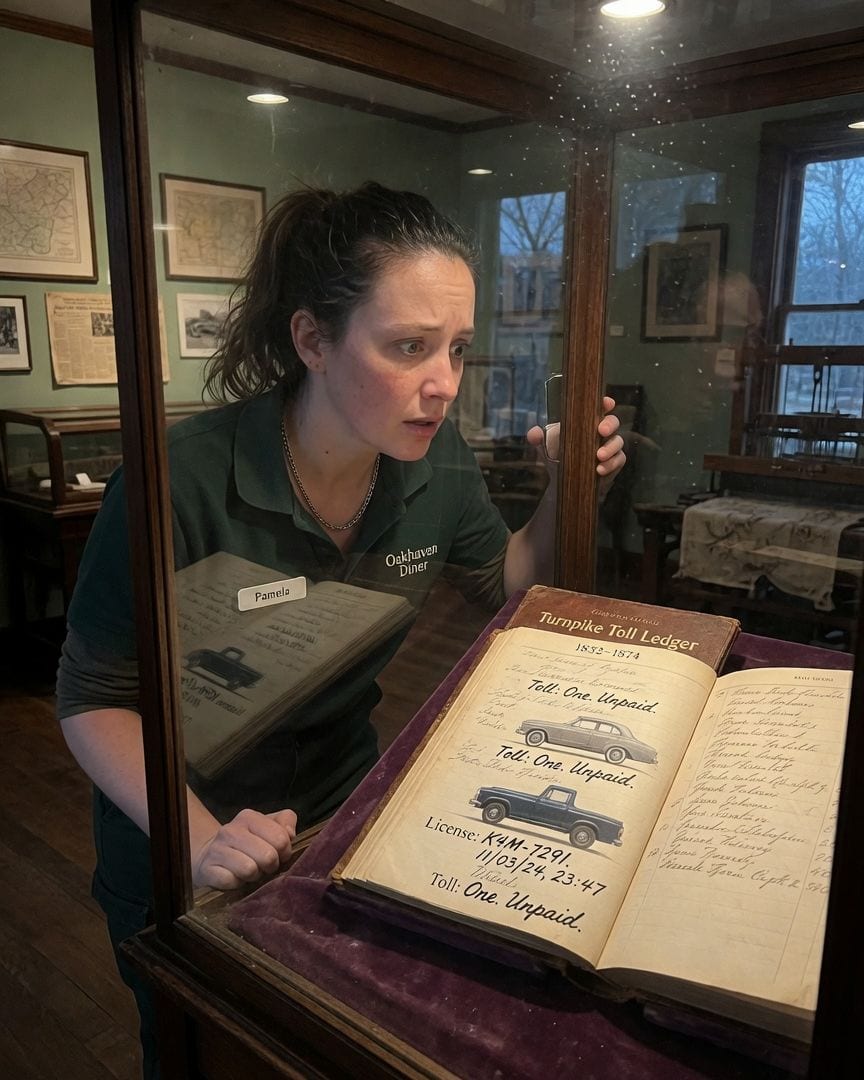
My car stalled at the old turnpike milestone, after dark. The toll ledger, closed in 1874, then listed my car, my stall time, and a toll of one, unpaid.
I had just moved to Oakhaven when my old sedan died on a dark, winding road by an infamous turnpike milestone. The next day, I found my car's exact registration and stall time written in fresh ink in a 150-year-old, locked museum ledger, marked 'Toll: One. Unpaid.' The curator dismissed it as a prank, but her white knuckles and strained voice hinted at something far more unsettling.
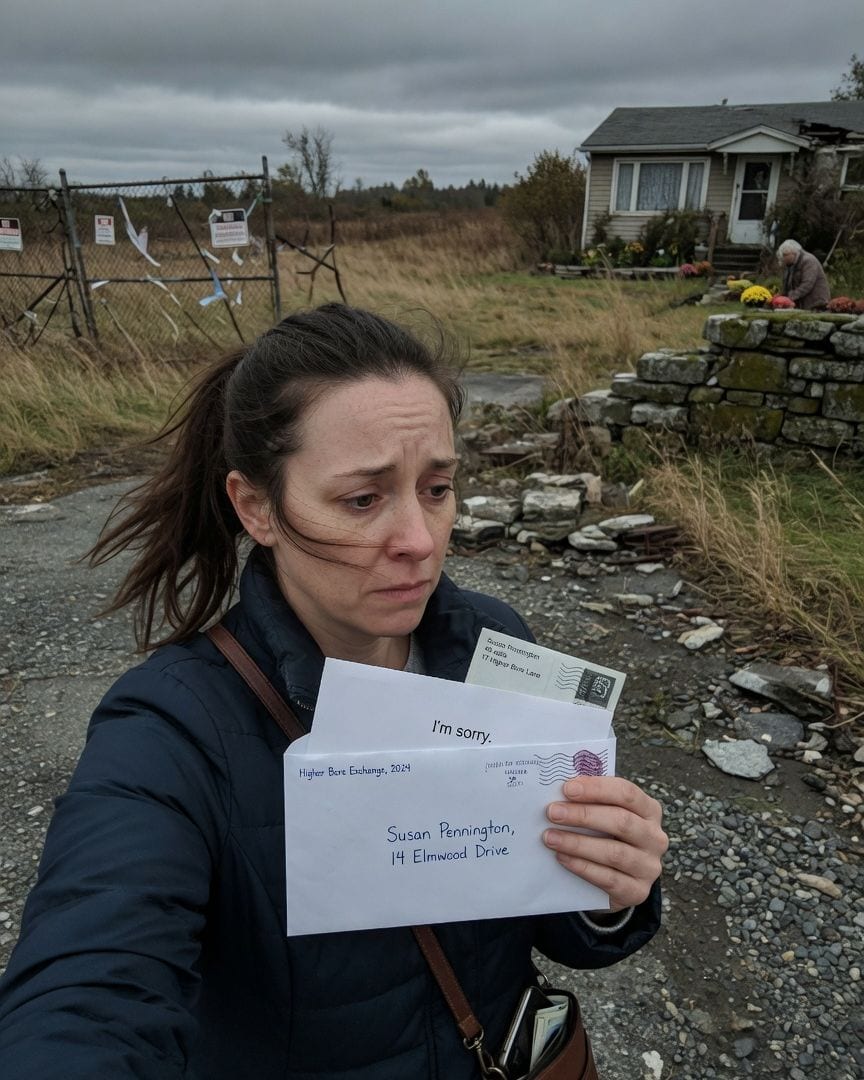
My phone bill listed forty calls made at 3:14 AM to a house demolished in 1990. The paper bill came from a flattened building. My name is on it.
I stared at my phone bill, my morning coffee forgotten. It detailed forty calls, each at 3:14 AM, to an address I knew was a vacant lot where a house had stood decades ago. But the real dread began when I saw the bill's return address: a telephone exchange flattened years before.