The grain tower light flashed three times at 2 AM, signaling me clear. The bulb was removed six years ago.
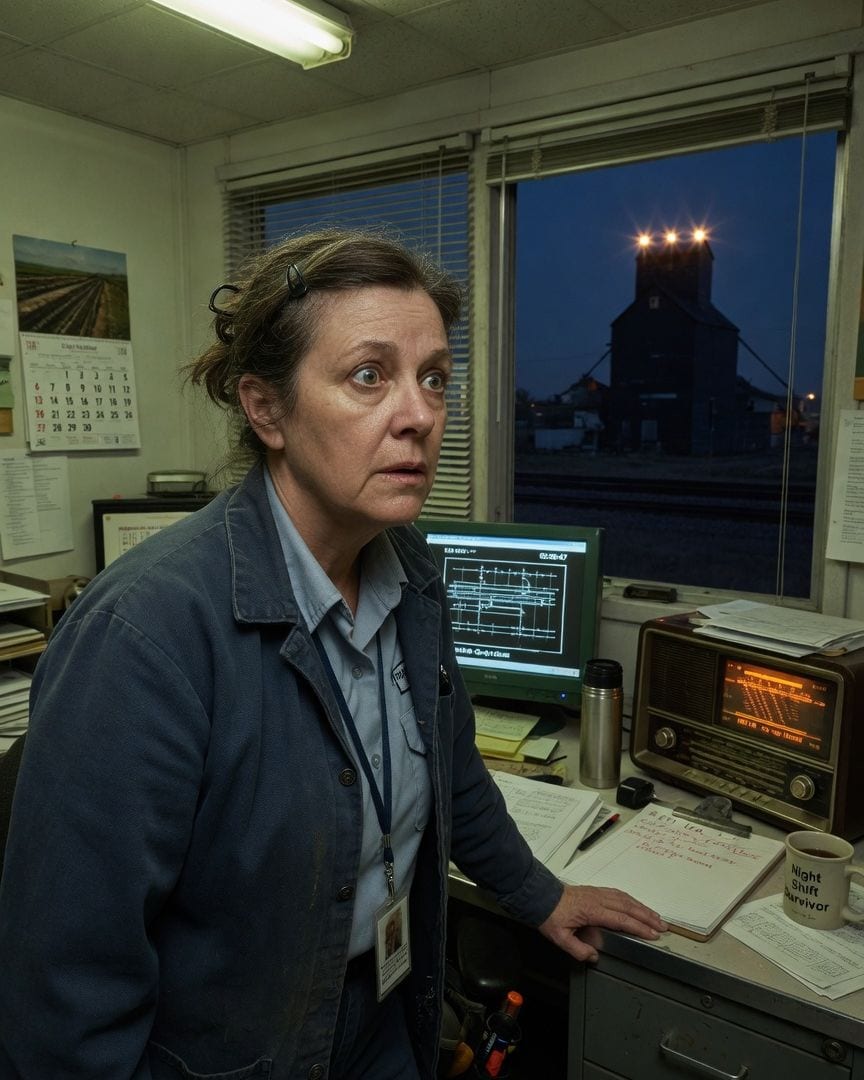
It happened, every damn bit of it. I’m writing it down because I need someone to know. I’m not crazy, not even tired. I work the night shift.
You learn to be precise when you’re alone in the dark, watching the world tick over.
My office at the transport hub isn’t fancy. Just a desk, a monitor, a sturdy chair, and an old radio I keep for show.
It’s a relic from the Thatcher-Davenport Co-op days, bulky and out-of-date, but sometimes, on the lowest bands, if you listen hard enough, there’s a whisper of something that isn’t just static. I usually ignore it.
My routine is a clock. Every night, at 2 AM, I log the status of the tracks, the gates, the distant grain elevator. It’s an old habit, a phantom limb of the job.
Six years ago, the co-op automated the whole elevator system across the tracks. Fully unmanned. No one even goes in there anymore.
When I’d complained once about a persistent hum years back, Scott Thatcher, my day supervisor, pulled up the maintenance reports himself.
He showed me the entry: the old tower light bulb, the one that used to signal 'scales clear,' had been physically removed the day they went automated. 'No operator, no light, Margaret,' he'd said, impatient but firm.
But for fifteen years, every night, at 2 AM, I see it. Three distinct flashes from the top of that hulking silhouette.
Clear. I’ve checked the wiring myself, climbed the disused ladder, flashlight clamped in my teeth, past the dust and the cobwebs. Nothing. Just an empty socket. No bulb. No power.
I’ve seen it with my own eyes, felt the cold emptiness of that socket. But the flashes still come, a silent, impossible communication across the dark tracks.
A signal meant for me, from a place that shouldn't be signaling at all.
The next morning, I couldn't shake it. The flashes had been sharper, somehow, more insistent. I called Scott, catching him just as he was clocking in.
'About the elevator light,' I started, not even bothering with pleasantries.
Scott sighed, a familiar, exasperated sound down the line. 'Margaret, we've been over this. It's automated. No operator.'
I described the three flashes, the precision of them, the exact 2 AM timing. I reminded him about my own inspection, the removed bulb.
He suggested a reflection, a faulty sensor, maybe even kids playing a prank with a high-powered flashlight. He clearly thought I was losing it. I told him I’d call him back.
I walked the tracks that afternoon, sunlight glinting off the rails. The air was crisp, late autumn. The grain elevator loomed, a rusted metal monolith against the pale sky. I found the old access door to its control room.
It was thick, heavy steel, and rusted shut, the padlock an ancient, solid block of corrosion. No way in. But then, near the bottom, almost at ground level, I spotted it: a small, rectangular ventilation panel.
It wasn't secured properly; two of its four screws were missing, the other two loose.
I pulled a flathead screwdriver from my utility belt and pried the panel open. It groaned, sending a shower of rust flakes to the ground.
Inside, the air was still and thick, smelling of old grain and something else, faint and metallic, like distant rain on steel. My flashlight beam cut through the gloom.
And then I saw it, tucked behind a loose, discolored brick, almost swallowed by shadow: a small, leather-bound logbook. Dust-covered, clearly old, its spine cracked.
I pulled it out, brushing off the accumulated grime. The cover read: 'Elevator Operations Log – Thatcher-Davenport Co-op.' I flipped through the brittle pages, past entries detailing grain transfers, scale clearances, maintenance checks. The dates stretched back decades.
I thumbed past the entry for six years ago, the date the automation was installed. And there, in neat, looping script, were entries from last week. Not for grain, but: 'Scheduled Transfer – 0200h' and beneath it, 'Operator Confirmed – T.H.'
Same time as my phantom signal.
I held the logbook, my heart hammering against my ribs. 'T.H.' The initials. I remembered the faint, crackling voice I sometimes heard on the old, disconnected radio in my office—a radio that shouldn't pick up anything but static.
Always just static, but sometimes, a whisper. I’d always dismissed it as interference, my mind playing tricks in the dead of night. Now, I flipped back to the very first entry of the logbook. The date was from 1953.
And then, beneath it, a small, faded photograph tucked into the binding. A man, dressed in old work clothes, standing by the elevator tower, waving.
His face was obscured by shadow, but I could see the distinct, heavy-rimmed glasses, reflecting a faint gleam.
And then, I heard it. A low, rhythmic hum, vibrating up through the tracks beneath my feet. It was coming from deep within the silent, automated elevator. The hum grew, a steady thrumming that seemed to shake the very ground.
I looked at the rusted access door. It was still padlocked, but the hum was a physical presence now, insistent. I glanced at my watch; it was just past 2 AM.
Something pulled at me, a certainty, like a string tied to my gut. This wasn't a prank. This wasn't a faulty sensor.
I gripped the logbook, then, with a surge of adrenaline, I kicked hard at the rusted padlock on the main access door. The chain gave, groaning, but held. I kicked again, harder.
The lock burst with a shriek of metal, spraying rust. I shoved the door open. Inside, the air was thick with the scent of old grain and that metallic, cold smell.
My flashlight beam cut through the darkness, illuminating machinery, dust motes dancing. On an ancient, disconnected control panel, a single red light glowed steadily, marked 'OPERATOR ACTIVE.'
I didn’t sleep that night. Not really. The red light, the hum, the initials 'T.H.' in that impossible logbook. My mind spun, trying to force it all into some logical pattern, some mundane explanation that simply wasn't there.
I returned to the transport hub before my shift, the leather-bound logbook clutched tight. The first thing I did was pull out the old radio, the one I kept "for show."
It was a bulky, antique model, meant for long-distance, low-band frequency communication, a forgotten piece of history.
I plugged it in, turned it on. The static filled the quiet office, a familiar hiss. I started flipping through frequencies, past the local channels, past the weather bands. Nothing but hiss, hiss, hiss.
But then, on a rarely used band, the static thinned. A faint, rhythmic click, like a telegraph key. And beneath it, almost imperceptible, a breath. I held my own breath, straining to hear, to understand.
I could almost make out a pattern in the clicks, a code repeating.
I spent the next hour online, digging into the Thatcher-Davenport Co-op, the name on the logbook. It dissolved decades ago, merged into a larger corporation, as Scott had told me.
But the old records, digitized and tucked away in forgotten corners of municipal archives, led me to one name: Albert Rutherford.
Age 65, the retired site manager for the old co-op, now a consultant for the new owners, working out of a small, dusty archive office downtown.
He was the one who handled my noise grievance six years ago, the one who’d shown me the reports.
I remembered his eyes then, the unsettling calm they held, even as I was fuming about a hum I now knew was just a distant echo.
The next morning, I found myself in Albert Rutherford's office. It smelled exactly how I imagined an archive would: mildew, forgotten paper, and a faint sweetness that might have been ancient dust motes baking in sunlight.
He was surrounded by stacks of old documents, hunched over a heavy oak desk.
He looked up as I entered, his gaze unwavering, already holding that quiet, knowing look. I held out the logbook. 'This was in the grain elevator,' I said, my voice steady despite the tremor in my hands.
'Entries from last week, after automation. Signed 'T.H.' And the light. The light still flashes, Albert. Every night at 2 AM.'
Albert listened patiently, his gaze never leaving my face. He took the logbook, running a finger over its worn leather. 'Old traditions die hard, Margaret,' he said, a faint smile playing on his lips. 'Sometimes, they don't die at all.'
He didn't deny anything, didn't offer explanations. Just that knowing silence that chilled me more than any outright threat.
I pressed him. 'Who is T.H.? What are these 'scheduled transfers'?'
He just shrugged, a small, almost imperceptible movement. 'Names fade, Margaret. Roles remain.'
As I left his office, my head buzzing with his non-answers, I noticed a small, framed photo on his desk. A grainy, sepia-toned image of an old man, standing in front of the grain elevator tower, waving.
It was the same figure from the logbook photo, clearer now. He wore the same heavy-rimmed glasses, but his face was younger, almost identical to Albert's.
And in the background, almost imperceptible, a faint light flashed three times from the tower. It was there, captured in time, an impossible signal.
Later that night, back at the transport hub, the silence in my office felt heavier than usual. I was still mulling over Albert’s words, the photo.
The old radio, which I’d left on its strange clicking frequency, suddenly crackled to life. Not with static, but a clear, deep voice. It was calm, unhurried. 'You're asking too many questions, Margaret.
Some things are best left to the night.' The voice seemed to come from directly behind me, even though I was alone in my office, the door locked, the window shut.
I spun around, heart leaping into my throat, but there was nothing there. Just the humming of the fluorescent lights and the sudden, chilling clarity of that voice.
Shaken, I called Scott Thatcher again. I needed a normal person to tell me I was insane. 'Who is T.H.?' I demanded, trying to keep my voice even. 'Why would Albert Rutherford know about the light? What are 'scheduled transfers'?'
Scott's voice was tight with genuine confusion, then frustration. 'Margaret, you're scaring me now. Albert is a nice old man. He’s harmless. The elevator is automated. It's empty. You need to drop this. I'm serious.'
I wouldn't. I marched into his office the next morning, slammed the logbook onto his desk, open to the page with the 'Scheduled Transfer' entries. 'Look at it, Scott! These are dated last week! After automation!'
He stared at the entries, his brow furrowed. He still dismissed it as a 'hoax' or 'someone's bad joke,' a forgery. But I noticed his eyes linger on the 'T.H.' initials, a flicker of something I couldn't quite place.
I pushed further, the voice from the radio still echoing in my ears. 'Did anyone else ever work the night shift here, on the old system, who disappeared? Who wasn't replaced?'
Scott hesitated, rubbing the back of his neck. 'There was a fellow, years ago. Before my time. Thomas Hayes. Night operator. Just... vanished. Never found a body. The story was he just walked off the job, no word.
His car was still in the lot.'
'Thomas Hayes,' I repeated, a cold dread spreading through my chest. 'T.H.' It clicked into place, a horrifying certainty. The radio voice. The initials. The logbook. The old radio wasn't just for show.
It was a relic, a direct link to a past that was still active. I looked down at the old radio on my desk.
I ran my hand over its worn casing, my fingers tracing the lines, the screws, the almost invisible seam where the plastic met the metal. My thumb found it, a tiny crack, a slight give.
I took a pen and carefully, slowly, pried the seam open. It popped, just barely, revealing a small, hidden compartment beneath the dusty wiring.
Inside the compartment, nestled in what felt like faded velvet, was a microfiche. It was small, no bigger than my thumb. I carefully removed it, the material stiff and cold.
I knew there was an old microfiche reader in the archive room, a relic Albert kept around for his old documents. I walked over, my footsteps echoing in the empty hall. I slid the microfiche into the reader.
The screen flickered to life, buzzing softly.
It was a roster. 'Thatcher-Davenport Co-op – Night Shift Personnel, Transport Hub Division.' Dates spanned from the 1950s up to a few years ago. Names, start dates, roles.
I scrolled through, my breath catching in my throat as I saw it. My own name: 'Margaret Drummond, Night Security, Start Date: 03/12/XX.' And beside it, in faded red ink, an entry: 'Transfer Date: 11/08/XX.' Five years ago.
A date she didn't recognize. A date when she was here, working her shift, just like any other night. I scrolled to the bottom, past the last entry.
A handwritten addendum, in the same looping script as the logbook: 'All personnel listed here are 'transferred'. They are not replaced. T.H. ensures continuity.'
My own record implied I had already been 'transferred' without my knowledge, and the 'operator' (T.H.) was ensuring the continuity of this state.
I felt a chill that had nothing to do with the drafty archive room. I looked up, saw Albert Rutherford standing in the doorway, framed by the dim light of the hall. He had a faint, almost pitying smile.
He raised a hand and pointed to the framed photograph on his desk – a grainy, sepia-toned image of an old man standing in front of the grain elevator, waving.
The man was clearly the 'operator' I'd been hearing and seeing, and his face was identical to Albert's, only younger. 'He was my grandfather,' Albert said, his eyes holding mine, 'and he ensured the transfers, just like I do.
And just like you will.'
I returned to Albert Rutherford’s office, the microfiche still clutched in my hand. He was waiting, a cup of tea steaming beside him on his desk. He hadn’t even taken a sip.
'You found it,' he said, his voice calm, almost gentle. 'The continuity ledger.'
He gestured for me to sit. I sat, the old chair creaking under me. He began to explain, his voice a low, steady drone that seemed to pull every disparate piece of this impossible puzzle into a terrifying, coherent whole.
The Thatcher-Davenport Co-op, run by his family for generations, wasn't just about grain. It was about 'processing' certain individuals, those who were ready to be part of the 'continuity.'
The grain elevator, with its silent, automated systems, was the final hub. The light signal, he confirmed, was not for me, but a beacon. A confirmation.
'The 'operator' is not a person, Margaret,' he said, his gaze fixed on the photograph of his grandfather. 'Not anymore. It's a role. A presence. It ensures the transition.' He looked at me, then back at the photo. 'He understood.
My grandfather. He became part of it. Thomas Hayes, too. He was a night operator, like you. He understood the rhythm of the place, the meaning behind the hum. And now, you.
The transfer date,' he said, nodding towards the microfiche in my hand, 'is when you were integrated into the system. You’ve been part of the continuity for five years now, Margaret.'
My world tilted. Every strange detail, every impossible light, every faint voice, every entry in the logbook – it all snapped into place, a horrifying, elegant mechanism. The dread wasn’t just a feeling; it was the chilling, undeniable truth.
I stared at Albert, the calm in his eyes more terrifying than any rage. 'What does that mean?' I asked, my voice barely a whisper. ''Integrated'? What am I?'
Albert sipped his tea, finally, his movements unhurried. 'You are where you need to be. A steward of the night. You watch, you log, you ensure the passage. Just like the light ensures the clear scales for the next transfer.'
He rose, walked to the window, looking out at the city lights, which were just beginning to flicker into existence against the deepening dusk. 'The night shift is a special kind of solitude, Margaret.
You become attuned to things others can’t see. Things that move in the dark. The system selects those who are already... open. You didn’t just work here; you belonged here. You just didn’t know it yet.'
He turned back to me, a faint, almost imperceptible smile on his lips. 'The flashes will continue. The log will fill. And you, Margaret, will ensure continuity.'
I felt a profound, chilling acceptance settle over me. There was no escape, no fight. I was already part of it. The dread wasn’t in what would happen, but in what had already happened, quietly, irrevocably, five years ago.
I looked at my hands, then back at Albert, seeing his grandfather’s face, then his own, then a flicker of the operator I’d imagined in the elevator tower. I had thought I was observing a wrongness.
I was merely observing myself.
I continued my night shifts. The light from the grain elevator still flashed three times at 2 AM. I still logged it in my personal book, now with a new understanding.
My old radio still crackled with faint whispers, now clearer, sometimes speaking my name, sometimes offering quiet instructions for logging. Scott Thatcher mentioned she seemed 'quieter,' more 'focused,' though he couldn’t place why.
He never saw the logbook again, or the microfiche. Albert Rutherford remained at his archive desk, occasionally exchanging a knowing glance with Margaret when she passed, a shared understanding in their eyes.
The transport hub ran smoothly, a silent, efficient machine.
One night, I noticed a new name in my logbook, a recent hire on the day shift, assigned to the receiving dock.
I wrote down their start date, then, in faded red ink, just as it was on my own microfiche, I added a 'Transfer Date' for them, five years from now. I knew the pattern now. I was the continuity.
The transport hub hummed through the quiet hours. Scott Thatcher, covering a sick colleague, glanced at Margaret Drummond, silhouetted against the dim office light, meticulously updating her logbook. 'Everything alright, Margaret?' he asked.
She looked up, her eyes calm, utterly placid. 'Just ensuring continuity, Scott.'
If this one got to you
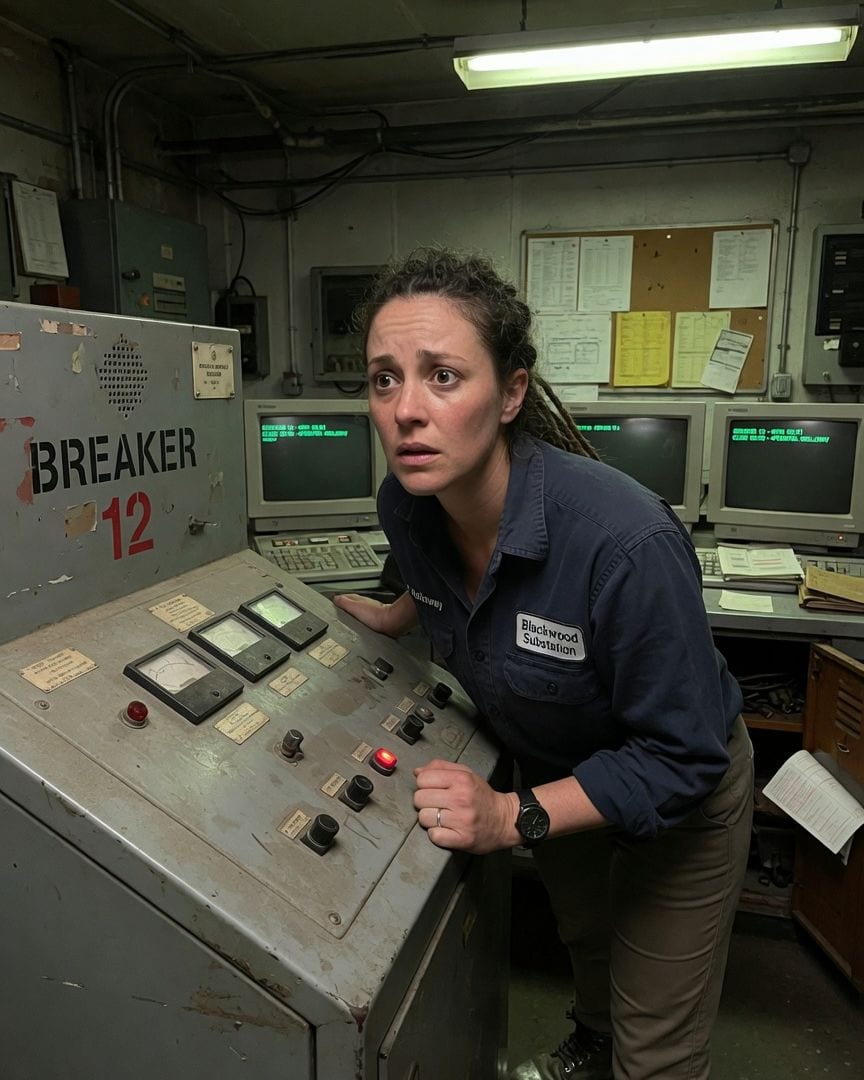
My power station's computer logs a breaker I never touched, opened and closed under my name, while the lights stayed on.
Night shifts at Blackwood Substation used to be a comforting hum, but an impossible event logged under my name shattered the peace. I'd never touched Breaker 12, yet the system claimed I opened and closed it. Now, from that same panel, a low, insistent hum resonates, and a whispered voice asks, 'Are you going to fix it this time?'
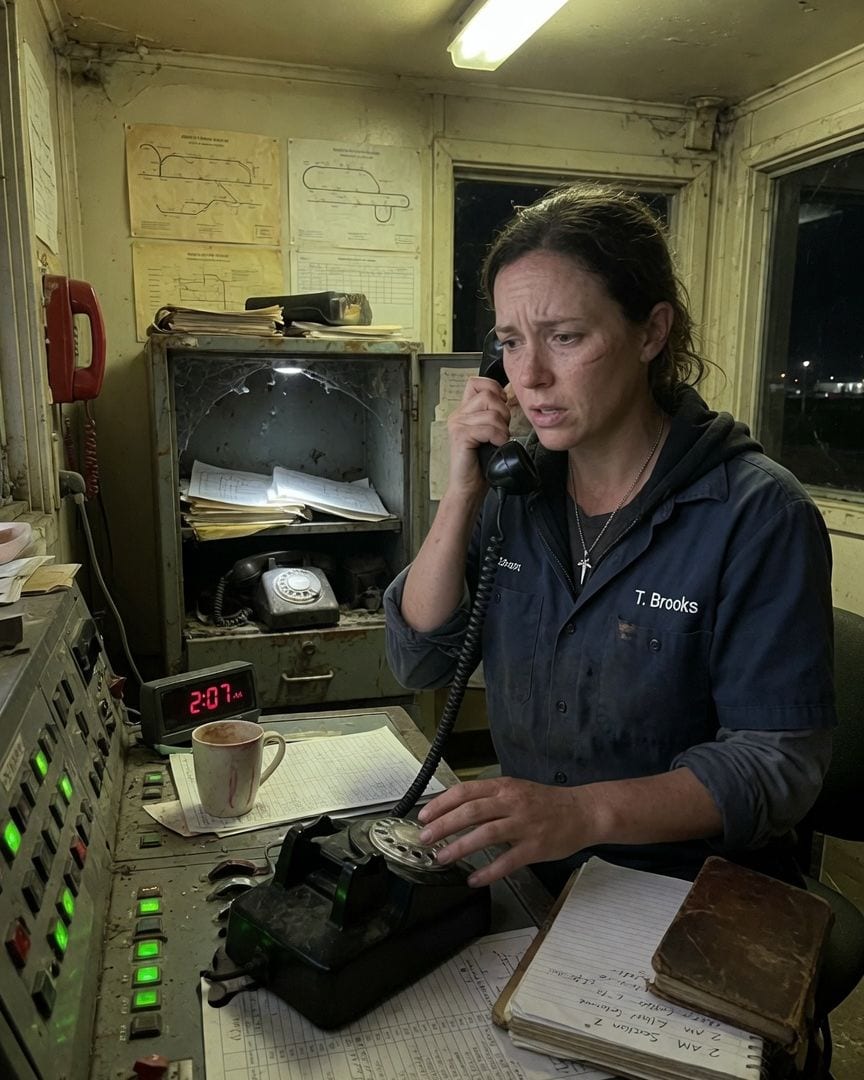
My signal box gets a 2 AM call every night from a man whose section was demolished eleven years ago. Now I found his logbook with today's date.
My night shift at the signal box is quiet and precise, defined by the routine 2 AM call from Ellis confirming Section 7 is clear. But when I asked my duty manager to log it, he said Section 7 hasn't had a track walker in eleven years, not since its cabin and phone were demolished.
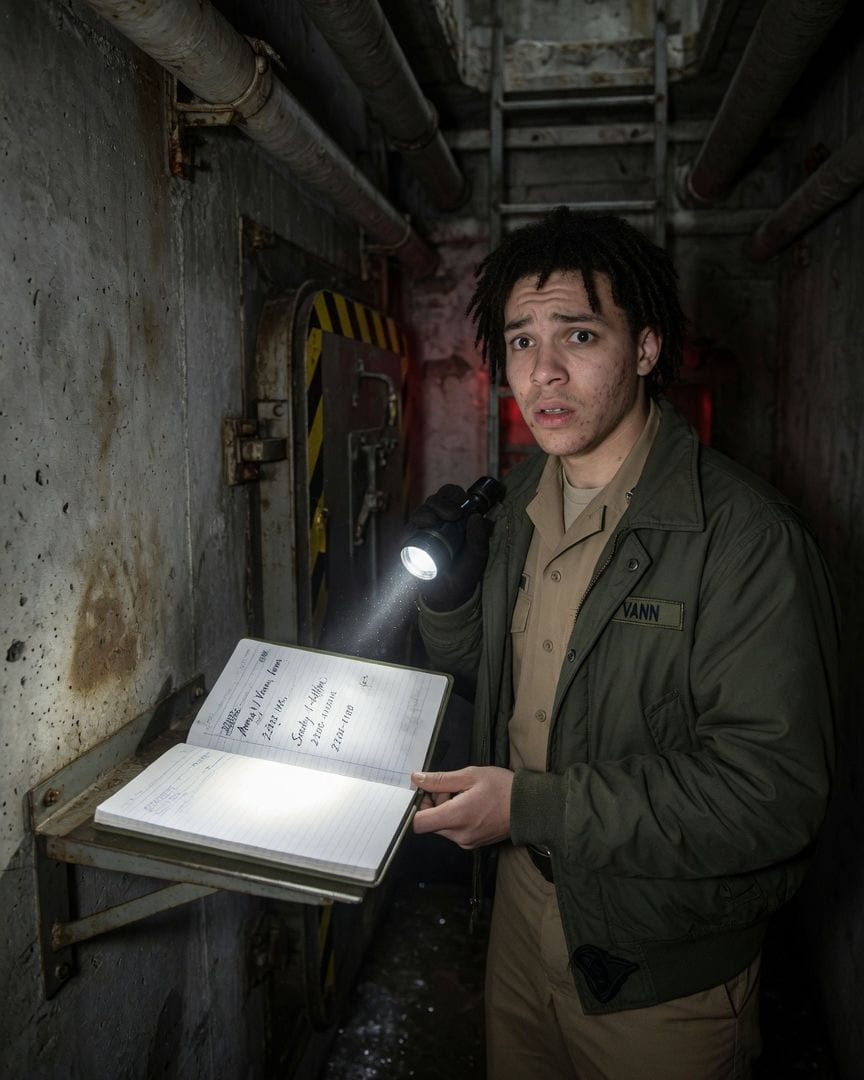
On his last patrol, Airman Vann sees a Cold War silo hatch light up from *inside*—it was welded shut a decade ago.
Airman Vincent Vann was on his last patrol across a vast, desolate Cold War missile field in the Dakotas, the cold, starless sky mirroring the emptiness of the landscape before his transfer. His routine check of eight hardened silo caps was shattered when a red fault light pulsed on Silo 4’s access panel, signaling an impossible breach from *inside* a hatch sealed for a decade. As more silos lit up, ignoring base orders, Vann found the hatch unlocked from within and descended into the dark shaft, where he discovered a pristine logbook bearing his own signature next to a chilling entry from a non-existent sentry, dated for *that very night*. Now, a steady *thump* echoed from deeper within the sealed concrete, leaving the Airman desperate for an explanation that simply wasn't there.
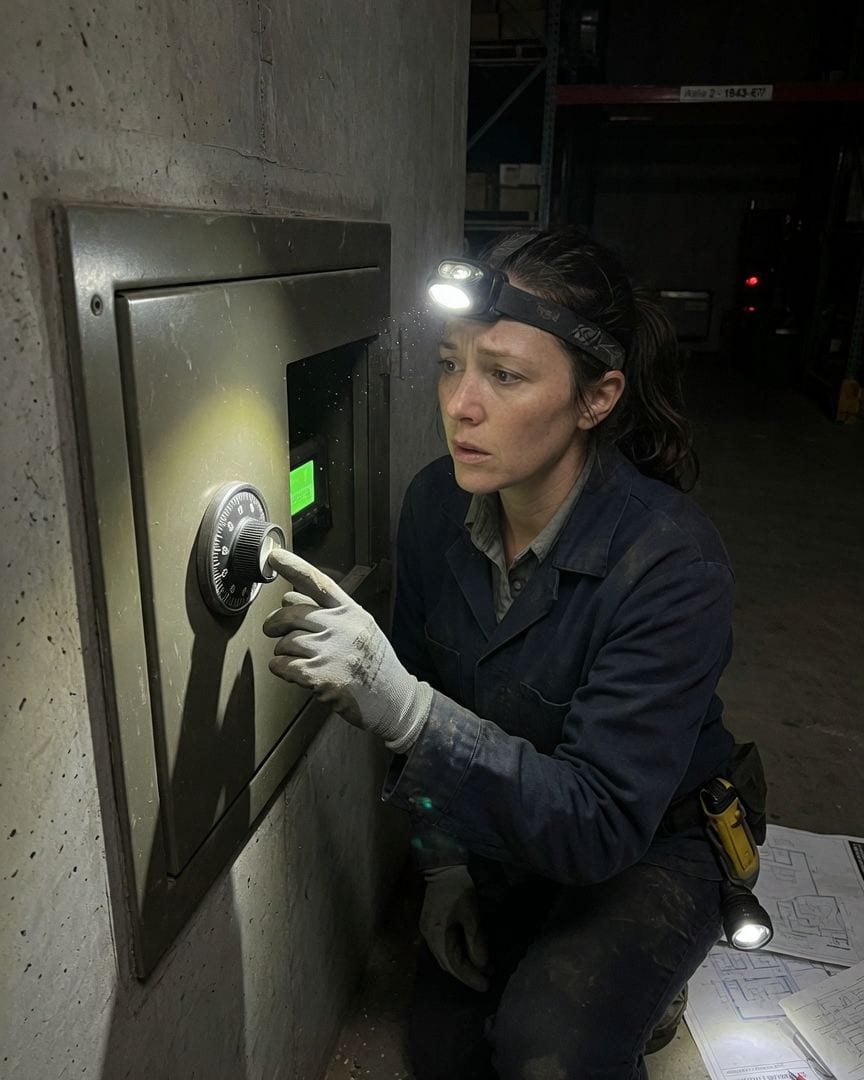
A meticulous records clerk finished her final inventory in a Cold War depot, then found a steel door not on any blueprint, worn smooth by decades of use, opening to an office with a log updated just hours ago.
Merit Lachance moved through the echoing darkness of Building 9, her headlamp cutting a lonely circle through dust motes. The depot’s oldest section was losing power, leaving her to finish her mandated shelf-read for the impending decommissioning. Every blueprint showed Building 9 as a single, vast room, so when her light fell on a waist-high, solid steel door set flush into the wall, her mind reeled. Its combination dial was worn smooth from decades of constant use, an impossible contradiction to the building’s known history. After meticulously working the dial, the heavy door shifted inward, revealing a dust-free, actively maintained office space with a terminal log updated just hours ago.
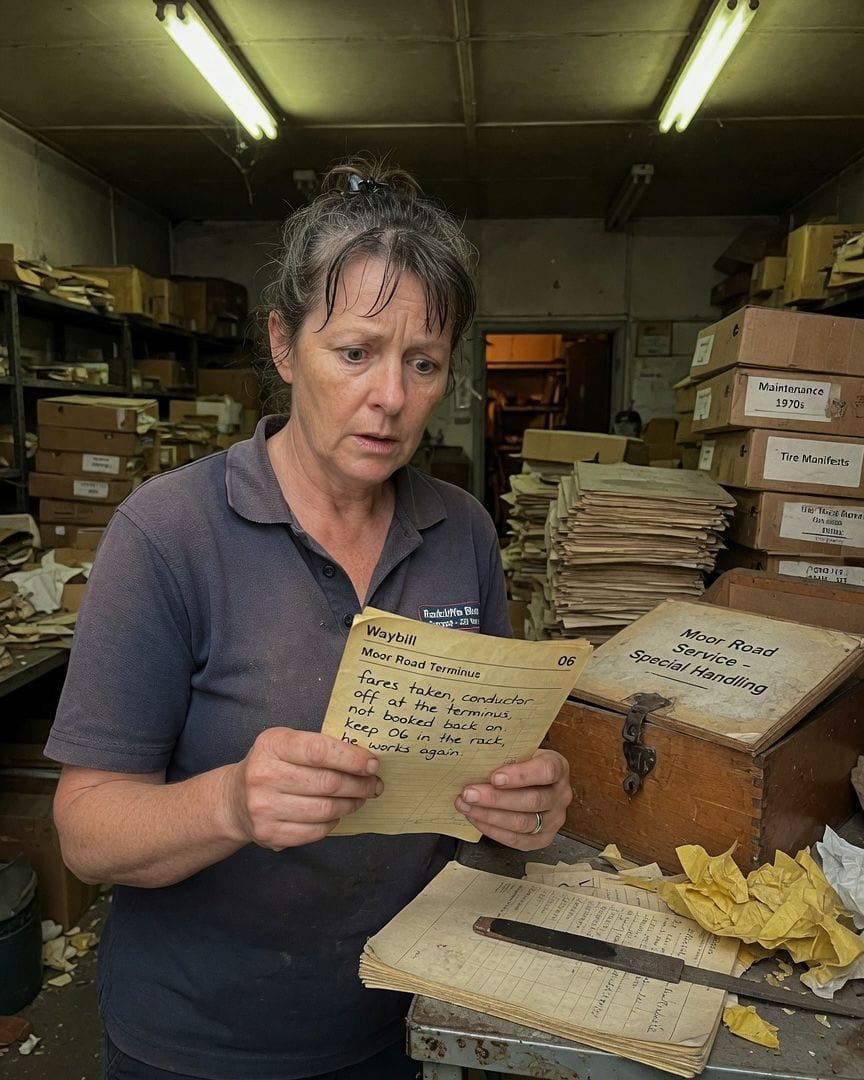
Our depot's Waybill 06 filed a moor road service we stopped running years ago. Every eight years since 1956, it closes: 'keep 06 in the rack, he works again.'
Sorting waybills in the depot, I stumbled across a form for the Moor Road Terminus. That route was decommissioned decades ago, but this waybill had a chilling handwritten instruction: 'keep 06 in the rack, he works again.'
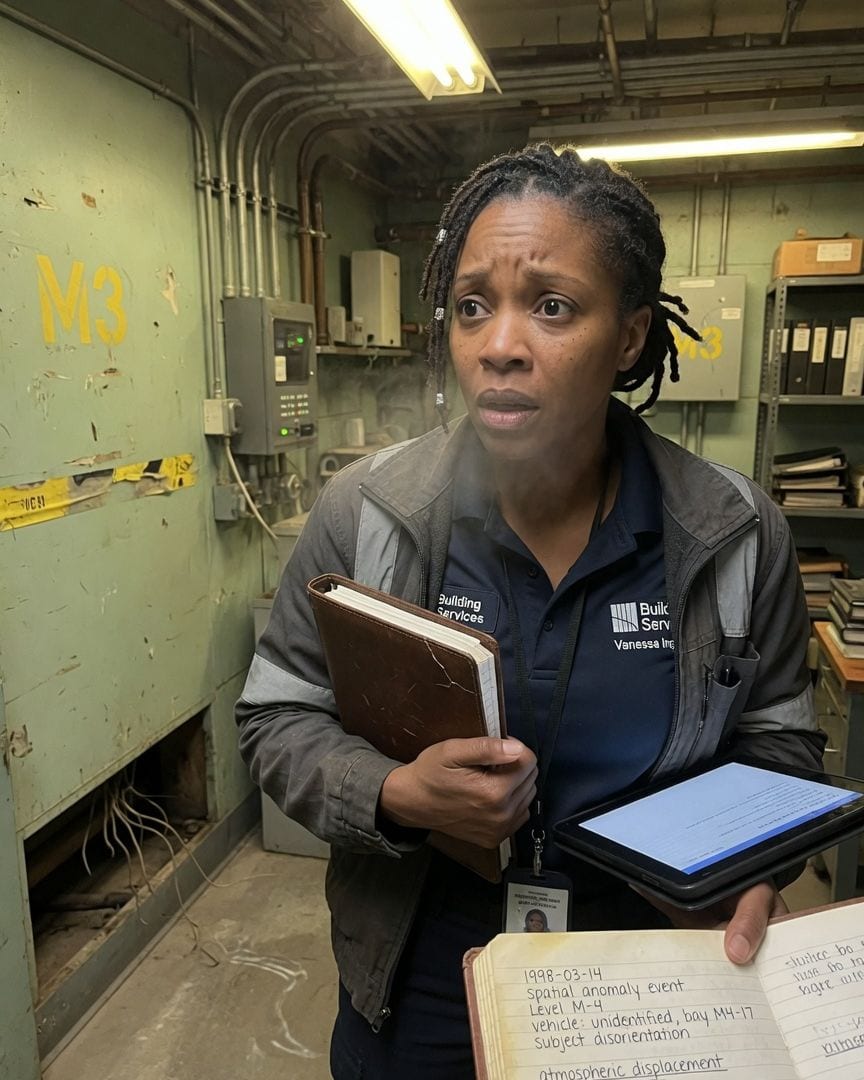
The lift offered a level below the lowest one, so I took the stairs down a flight that has never existed — into cold, empty bays where a single car sat, its engine still ticking like it had just been driven.
My routine as a Building Services Technician is usually solid, but today, the building offered a fourth basement level, M-4, that shouldn't exist. Descending into its frigid gloom, I found an old car tucked away in a bay, its engine ticking softly as if it had just arrived.