My guard log shows the east wing cleared at 2:33 AM. That wing's been sealed for months, doors screwed shut.
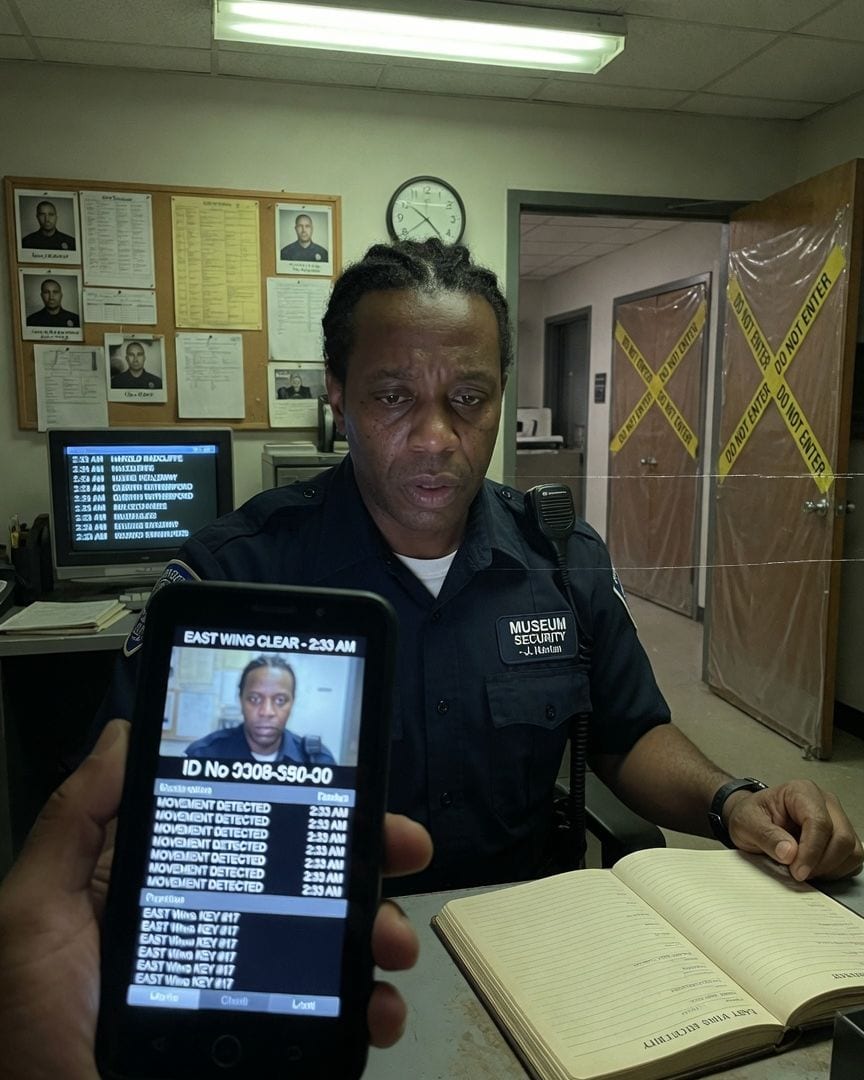
The museum was always quietest after midnight, a deep, heavy silence that swallowed the hum of the ventilation system. I was on my final rounds, my handheld security scanner clicking softly as I logged the last gallery checks.
Just one more, then I could clock out. My eyes scanned the shift log on the device, ready to confirm all clear, when something snagged. An entry, stark against the glowing screen: 'EAST WING CLEAR - 2:33 AM'.
My guard ID, clear as day.
My stomach did a cold flip. The East Wing. It’s been sealed for renovation for six months, maybe more. Heavy oak doors screwed shut, covered in thick plastic sheeting. No one, absolutely no one, had been in there.
I scrolled down, my thumb cold on the screen, past the standard 'all clear' timestamps. There it was, beneath the impossible entry: the motion sensor logs. A sequence of seven distinct trips, room by room, precisely at 2:33 AM.
Each one registered movement, then the 'clear' signal followed. It was impossible. Yet, it was recorded, undeniable, under my name.
A system glitch, I told myself, trying to shove down the creeping unease. Had to be. Or maybe Greg was finally pulling a prank, messing with the new digital system. He’s always complaining about having to learn new tech.
I checked the physical key log for the East Wing, the one kept in a locked drawer in the security office. It was dusty, the pages blank for months where the East Wing key number should have been signed out.
Nothing. Not a single entry.
I pulled up my own shift history on the handheld, cross-referencing dates and times. My jaw tightened.
Not only was I not in the East Wing at 2:33 AM on Tuesday, but some of the other identical 2:33 AM entries under my ID were logged on nights I hadn't even been working.
I'd been home, asleep, or out getting groceries. The "glitch" theory felt thin, the "prank" even thinner.
I walked the long, empty corridor towards the East Wing. The fluorescent lights hummed, casting long, stark shadows. The heavy oak doors, usually so imposing, seemed even more so, swathed in their layers of clear plastic sheeting.
'DO NOT ENTER' signs, taped firmly with bright yellow masking tape, were still perfectly in place. The screw-heads holding the doors shut were undisturbed, a fine layer of dust coating their slots. Nothing looked tampered with.
It was sealed tight, just as it had been for months.
But as I ran my hand over the plastic covering the main entrance doorframe, my fingers brushed against something. A faint, almost invisible scratch.
It was thin, precise, and ran horizontally at roughly chest height – exactly where you’d hold a handheld scanner if you were logging an entry. My breath hitched. It was too specific, too deliberate to be accidental.
It confirmed something physical had moved here, even if nothing should have. A scratch. From what?
Back in the security office, the silence felt heavier now, colder. I logged into the museum's deeper archived digital security system. My hands were shaking slightly as I typed in the filters: 'East Wing clearances,' '2:33 AM.'
The screen flickered, the old database groaning into action. Then it populated. Hundreds of entries, an endless scroll, each one for the East Wing, precisely at 2:33 AM.
They stretched back years, under different guard IDs – Harold Radcliffe, Diane Holloway, Quentin Rutherford – a silent, ceaseless procession.
An entry from last year bore my own guard number, timestamped for a Tuesday I'd spent on a beach three states away. The pattern was undeniable, horrifying in its perfect repetition.
I tried to keep my face neutral the next day, asking Greg Ellison about "odd entries" or "phantom clearances" in the old security system.
I framed it as a general interest in system quirks, a curiosity about the museum's digital history. Greg, my supervisor, a pragmatic man with tired eyes, just grunted.
"Typical museum system bugs, Lydia," he said, not looking up from his coffee. "Especially the older stuff. Always temperamental." He gave me a look over the rim of his mug, a look that suggested I shouldn't poke too hard.
"Some things," he added, his voice gravelly, "are best left alone."
I ignored him. My lunch breaks became expeditions into the museum's dusty records archive. The air was thick with the scent of old paper and forgotten things.
I sat at a long, scarred wooden table, cross-referencing the names from the 2:33 AM log entries with past employee rosters. The consistency was chilling. The impossible clearances always occurred on Tuesday nights, regardless of the guard on duty.
Always at 2:33 AM. Always for the East Wing. The names associated with these entries were often those who had retired years ago, or who had transferred out after a relatively short tenure.
I started a private, handwritten log of these phantom entries, dates, names, the perfect, sickening repetition. Each entry a tiny, cold whisper that something was wrong.
My persistent digging didn't go unnoticed. A week later, Greg Ellison called me into his office. He didn't raise his voice, but the sudden quietness in his tone was far more unsettling than any shout.
"Lydia," he said, leaning back in his chair, his gaze fixed on me. "I've noticed you've been spending a lot of time in the archives. And asking rather specific questions about the East Wing."
The overhead light hummed, making his expression difficult to read. He leaned forward then, his voice dropping, almost a murmur. "The museum has its quirks. Some things are better left alone. We've had guards in the past who...
got too invested in these 'quirks.' They didn't last long, or they left under less than ideal circumstances." He didn't make it a threat, but the implication hung heavy in the air, cold as stone. He knew.
He was subtly warning me off, confirming that others had seen this pattern before, and that pursuing it carried a cost. I felt a prickle of cold isolation.
I wasn't just investigating; I was being observed, my actions tracked by the very institution I served.
Desperate for answers, and with Greg’s warning echoing in my head, I decided to seek out Margaret Whitmore. She was a retired curator, a tiny woman with a formidable intellect and an almost mystical knowledge of the museum's history.
I found her in a quiet reading room, surrounded by teetering stacks of ancient texts. Her hands, gnarled with age, clutched a steaming mug.
Margaret, frail but with eyes sharp as glass shards, listened patiently to my halting story about the 2:33 AM entries, the motion sensors, the sealed wing.
"Ah, the East Wing," Margaret murmured, her gaze distant, fixed on a faded tapestry on the wall. "Some routines, once established, are hard to break."
I pressed her, recounting the impossible log entries, the motion sensors tripping inside a hermetically sealed space. "Mrs. Whitmore, I need to understand what's happening. Is this a person? A ghost?"
She sighed, a deep, weary sound. "Neither, child. Or perhaps, both and neither." She took a slow sip of her tea. "The East Wing, before its current... slumber, once housed a very specific collection.
Artifacts of daily routine, mechanical wonders that performed tasks endlessly. Clocks, automata, devices designed for ceaseless, repetitive function." She paused, her eyes meeting mine. "And it had a caretaker, Harold Radcliffe.
His sole duty was to ensure those routines never faltered, even at night. He performed his rounds, checked every piece, every single night, precisely at 2:33 AM."
My heart hammered against my ribs. "He vanished," I whispered, remembering the note in my private log.
"Yes. He vanished." Margaret’s voice was flat, devoid of emotion. "But the rounds... the rounds never stopped. Some routines just... keep going.
The museum adapts, the systems change, but the routine finds a way to record itself, to complete its cycle." She shrugged, a slight, almost imperceptible movement. "The museum has a deep memory, Lydia. Deeper than the archives."
Armed with Margaret's cryptic clues, and a new, chilling sense of direction, I returned to the archives. This time, I knew exactly who I was looking for: Harold Radcliffe.
I searched through dusty personnel files, the smell of decaying paper filling my nostrils. I found an old, hand-written personnel ledger, brittle with age, its cover faded and cracked.
I flipped through it, my finger tracing names, until I landed on 'Radcliffe, Harold.' His employee number was scrawled next to his name: 'G-000.' Next to it, a faint, almost erased note in a spidery hand: 'Vanished, 1978. Rounds continued.'
My blood ran cold. G-000. It wasn't just a placeholder; it was an actual, assigned ID. I then pulled up the deepest digital backups of the security system, the ones Greg had dismissed as "temperamental."
I filtered for the 2:33 AM East Wing clearances, but this time, I added a filter for 'Guard ID: G-000.' The screen flickered, then populated. These weren't system errors.
These were real entries, hundreds of them, made by a guard number that technically shouldn't exist, by a man who vanished decades ago.
And the entries continued, perfectly, precisely, every single Tuesday, 2:33 AM, East Wing Clear, right up to last week's shift.
I returned to the sealed East Wing during my next shift, a small, powerful flashlight in hand. Margaret's words about 'routine artifacts' and a 'caretaker' echoed in my mind.
The scratch on the plastic sheeting from that first night had been precisely at scanner height, a ghost of a gesture.
I ran my hand over the wall near where the scratch had been, searching for anything unusual, any seam, any give in the paneling. My fingers found it: a barely perceptible hairline crack, almost invisible against the muted wallpaper.
With a hidden catch I hadn't noticed before, a small section of the wall swung inward, noiselessly, revealing a narrow, dusty passage.
It led to a small, circular room, unlisted on any blueprints I’d ever seen. The air inside was still and cold, like a tomb. In the center, bathed in my flashlight beam, sat an ornate, antique clockwork device.
Its brass gears gleamed faintly, perfectly still. Its hands were frozen at 2:33. Surrounding it, arranged neatly on a stone shelf, were stacks of leather-bound log books.
Their pages, yellowed with age, were filled with identical, precise entries, written in a neat, looping script: 'EAST WING CLEAR - 2:33 AM.' Thousands of them. It wasn't an artifact to be displayed; it was a mechanism.
A perfect, ceaseless routine. The 'clear' was simply the mechanical completion of its cycle, imprinted onto the museum's systems by some unseen, persistent force.
Harold Radcliffe hadn't just performed rounds; he had become the routine, or perhaps, the routine had always been there, and he merely served it.
I understood then. This wasn't a ghost to be appeased or a monster to be fought. It was a relentless, unthinking mechanism, a pattern that could not be broken.
I pulled out my phone and began to meticulously photograph everything: the hidden chamber, the endless log books, the antique clockwork device frozen at 2:33.
Then, pulling up my handheld, I photographed the digital entries under 'G-000' that matched the physical logs in the chamber. Wide shots, close-ups, documenting every impossible detail.
As I finished, a faint whirring sound emanated from the clockwork device. Its brass gears shimmered, then twitched. The hands moved, with a soft click, then settled back to 2:33.
Suddenly, from the main East Wing, beyond the hidden chamber and the sealed plastic, I heard it: a series of faint, rhythmic clicks and a soft shuffle, echoing from behind the thick plastic sheeting.
The motion sensors began to trip, one after another, room to room, in the familiar, impossible sequence. The routine was beginning again.
I backed out of the hidden chamber, carefully closing the access panel behind me, trying to make it look undisturbed. The sounds of the phantom rounds grew louder, a steady, measured pace. Click. Shuffle. Click. Shuffle. It was approaching.
I fled the museum, the photos and the chilling knowledge heavy in my pocket, the rhythmic click-shuffle pursuing me until I was out the main doors, into the cold night air.
I resigned the next morning, citing 'personal reasons' and the stress of night shifts.
I tried to show my photos and the digital evidence to a former colleague, who politely suggested I'd been 'overworked' and that the images were 'clever fakes.'
Greg Ellison simply nodded, a weary, knowing look in his eyes, and ensured my severance package was surprisingly generous, conditional on a non-disclosure agreement. No one believed me, or perhaps, they simply didn't want to.
The museum continued its operations, its secrets undisturbed.
I now work a day job, far from the hushed halls of museums. But every Tuesday night, I still feel a prickle of unease, a phantom awareness of a routine unfolding.
I sometimes check the public-facing museum website, just to see. They've updated the East Wing's renovation status. It now reads: 'Delayed indefinitely. Ongoing structural assessments.' The old wing remains sealed, its impossible routine unbroken.
Some routines, once begun, never truly end.
If this one got to you
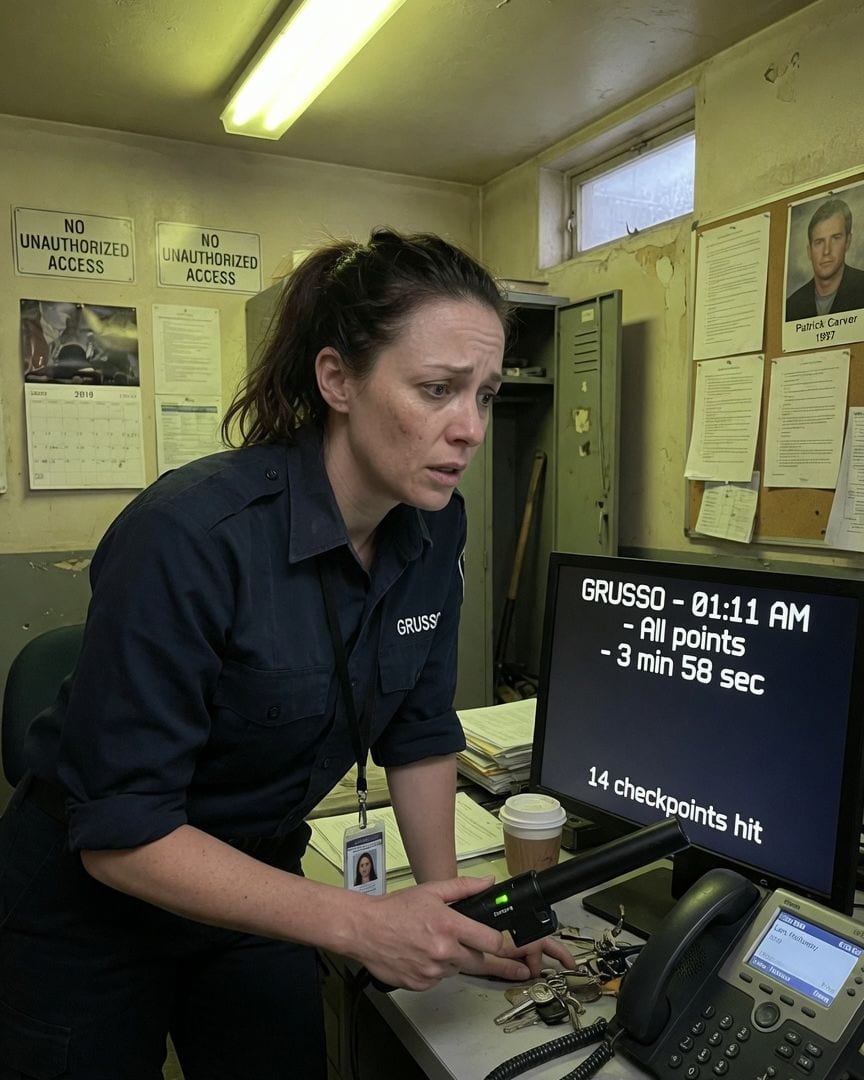
My security wand logged a full round at 1:11 AM in under four minutes. It was in the charger. Every tap is logged as mine.
Finishing my night shift, all I wanted was to get home. But the dock readout screen showed my security wand logged a full patrol at 1:11 AM, completed in just under four minutes. I knew my wand had been charging right beside the monitor the entire time, yet the log, under my ID, confirmed the impossible.
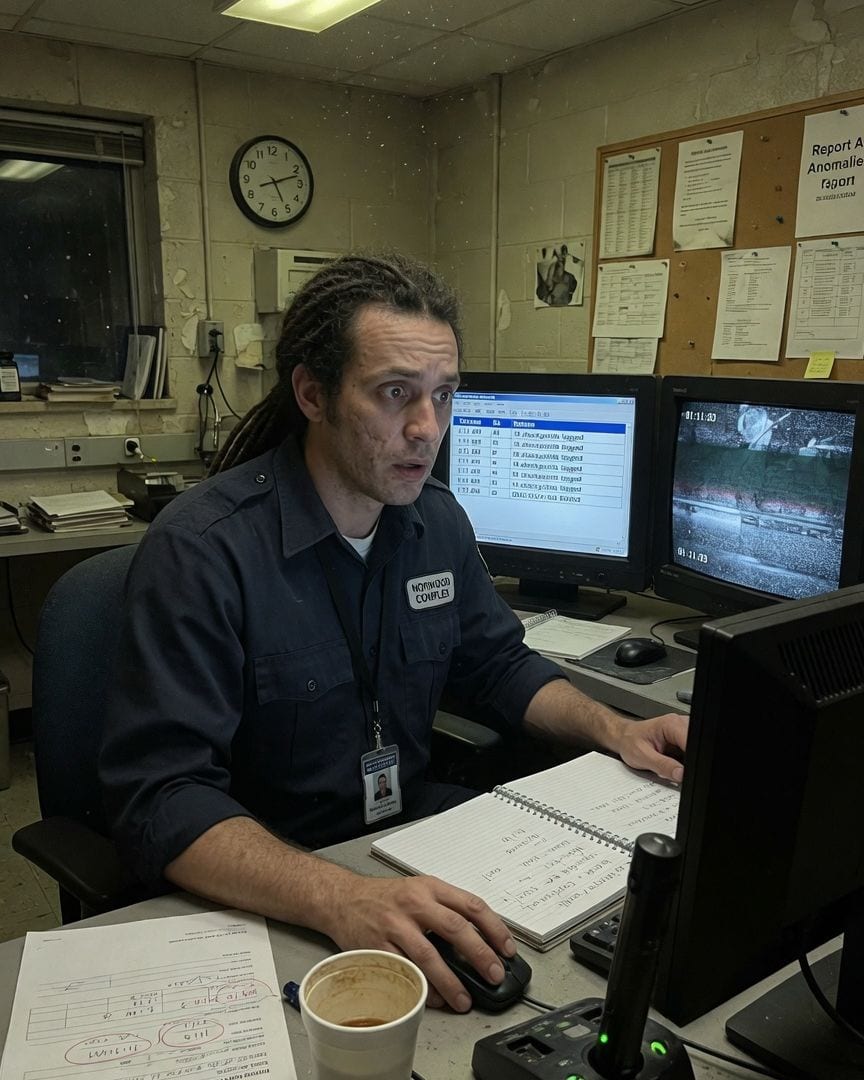
Three years ago, my security wand logged a full patrol at 1:11 AM. I was working in Arizona.
My night shift at the Norwood Complex involved the usual routine: plugging in my security wand and catching up on incident reports. But the morning's security log for that Friday showed an impossible full building sweep at 1:11 AM. All fourteen checkpoints were logged as hit by my wand, in under four minutes, a route that normally took me at least twenty.
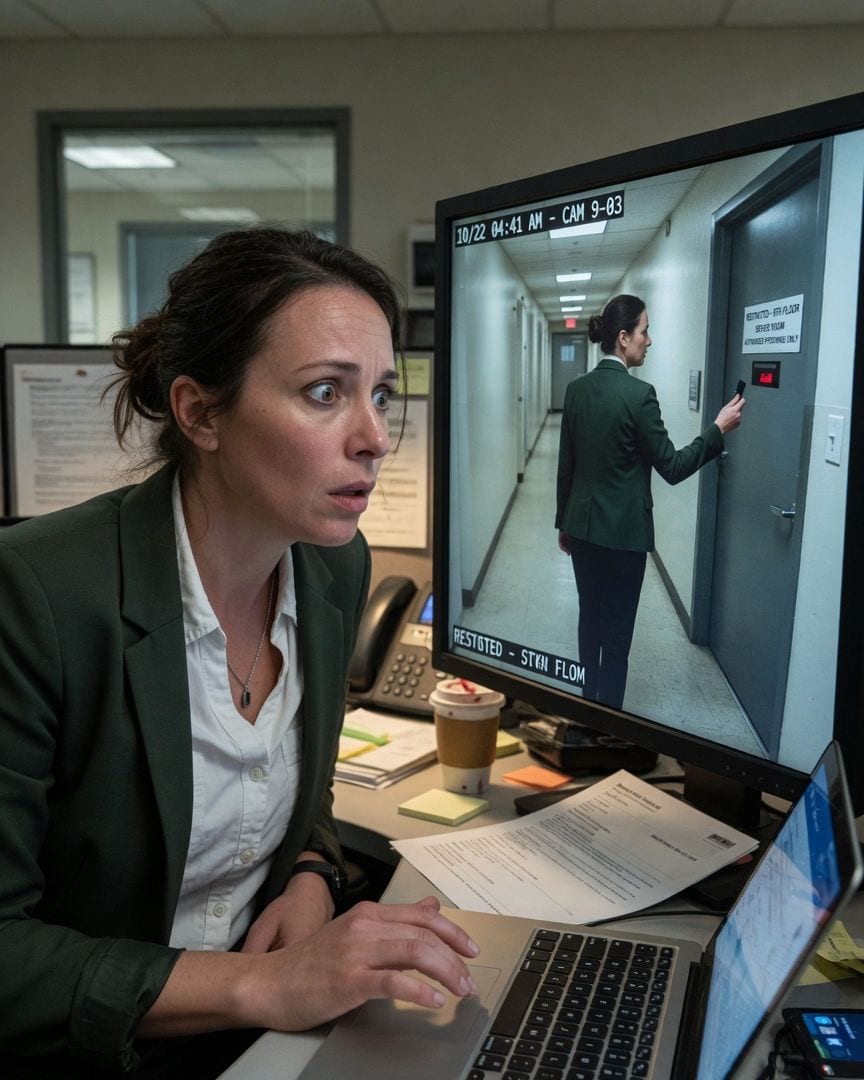
My keycard log shows me in the server room at 4:41am. I was asleep, and my badge was at home.
An email from corporate IT reveals my keycard registered entry into a restricted server room at 4:41 AM last Sunday. I was asleep in my apartment across town, my badge clipped securely to my jacket at home. But then I scrolled down and found eleven more impossible entries, all within the past week, all under my name.
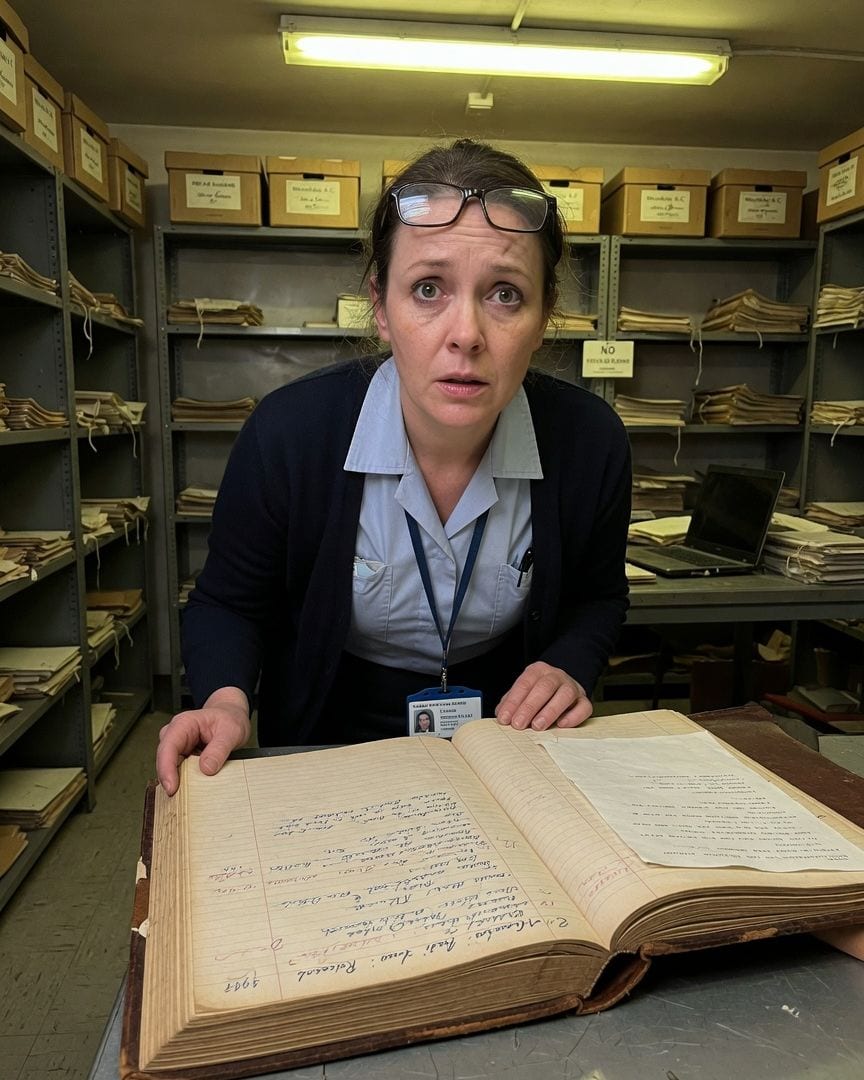
My ambulance trust's incident log shows callout 22-014 to 6 Cathcart Row at 2:40 AM. Every four years, the same call, same address. Always 'patient not found'.
My job involves tedious data entry for ambulance calls, but Incident 22-014 was different. It appeared every four years, always at 2:40 AM, always closed as 'patient not found.' Digging into the dusty physical archives, I found an entry from 1961 for the exact same incident, but its resolution read: 'Subject Secured. Relocated to "Holding".'
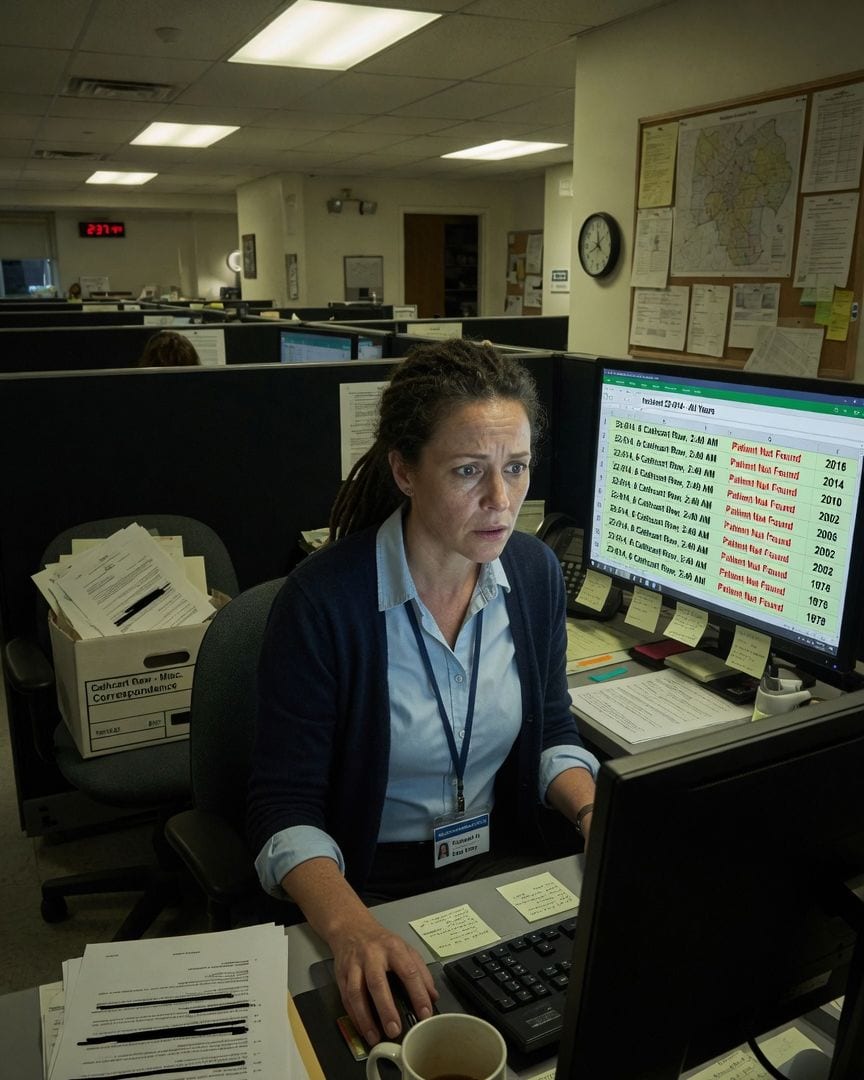
My computer log shows the same 2:40 AM call to Cathcart Row, every four years since 1978, always closed 'patient not found'.
Working data entry for the County Ambulance Trust, I found a routine incident logged as 'Patient Not Found.' But digging deeper, I discovered the exact same phantom call had repeated every four years for over forty years, always at the same address, always at 2:40 AM. Then I found a heavily redacted memo linking it to my own street.
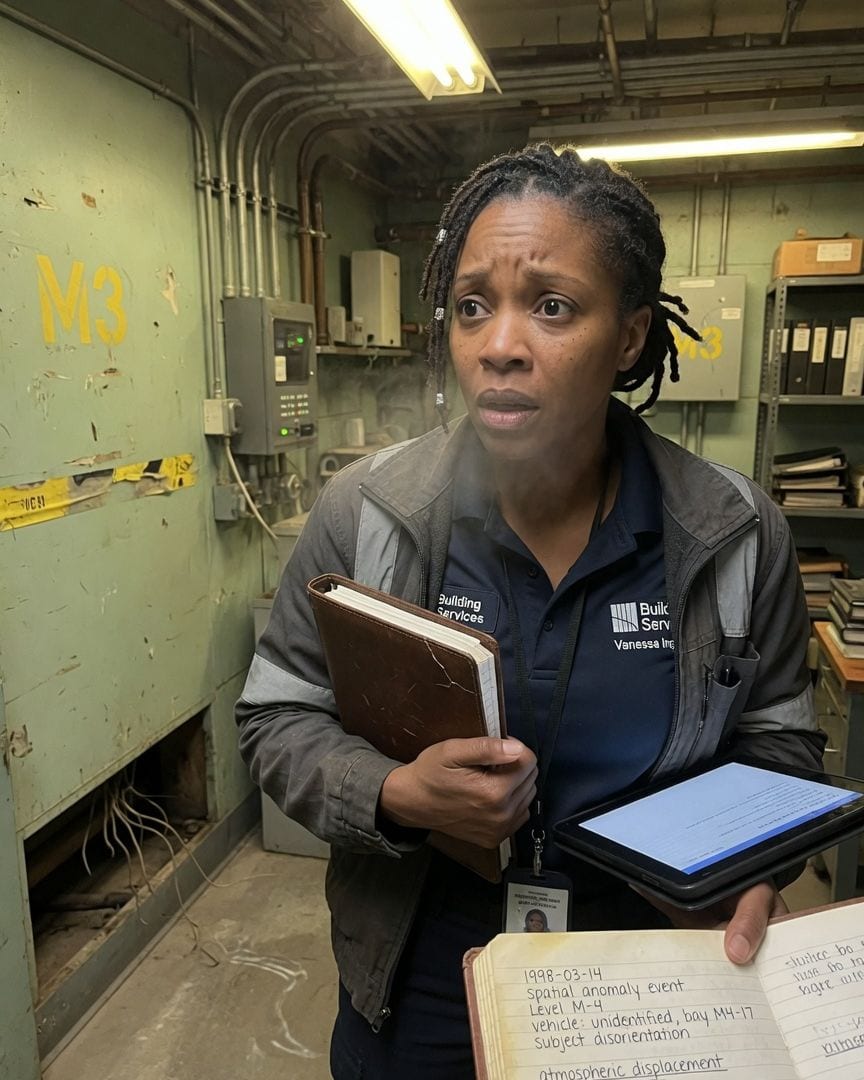
The lift offered a level below the lowest one, so I took the stairs down a flight that has never existed — into cold, empty bays where a single car sat, its engine still ticking like it had just been driven.
My routine as a Building Services Technician is usually solid, but today, the building offered a fourth basement level, M-4, that shouldn't exist. Descending into its frigid gloom, I found an old car tucked away in a bay, its engine ticking softly as if it had just arrived.