My house number appeared on the shop's warning board: 'Do not walk the Ellers after the geese go up.' I crossed the meadow at dusk.
Three covered casseroles sat on my doorstep, ceramic dishes steaming faintly in the cool autumn air. No note, no explanation, just these meals from anonymous neighbors. I’d been in the village two weeks, and this was… new.
It had been two days since I walked the Ellers meadow at dusk, the geese lifting from the marshland in a sudden, silent cloud, their wings a muted roar that had startled me.
I remembered pausing, watching them become specks against the bruised purple of the sky, before continuing across the ancient path that cut through the long grass, already slick with dew.
That same evening, Harold Holloway, the owner of the village shop, had been adding numbers to his daily chalkboard. He’d done it without a word, his usual stoic expression unchanging.
He’d just scrawled my house number, '14 Kingsley Lane,' at the very bottom, right beneath the permanent, hand-scrawled warning: 'Do not walk the Ellers after the geese go up.' The chalk dust had still looked fresh when I’d bought milk.
It felt less like a welcome to the village, and more like… a vigil. I live alone.
I picked up the casseroles, one by one, their weight substantial. This had to be a quirky village custom, some kind of 'newcomer welcome committee' thing, just a little more elaborate than a fruit basket.
People here were old-fashioned, a bit insular. Maybe this was their way of showing goodwill. The thought made me smile, a nervous, almost convincing smile.
I carried them into the kitchen, the aroma of lamb and rosemary, of rich tomato and cheese, filling the space. It certainly smelled friendly.
I set the lamb casserole on the counter and lifted the lid. The steam bloomed, warming my face.
Beneath the ceramic dish, tucked into the narrow space between the casserole and the counter, I saw it: a small, meticulously hand-stitched linen pouch. It was tied with a faded, almost brittle, ribbon. My smile faltered.
This wasn't just a quaint gesture. This felt… older. The fabric wasn't crisp like something from a modern craft fair; it had the soft, worn texture of something handled for generations.
I thought, maybe, a sachet of dried lavender or herbs, another charming local custom for a new home.
My fingers trembled slightly as I untied the ribbon. The fine linen fabric crumbled a little at my touch, releasing a faint, earthy scent, like damp soil and something else, something sharp and metallic, almost like old iron.
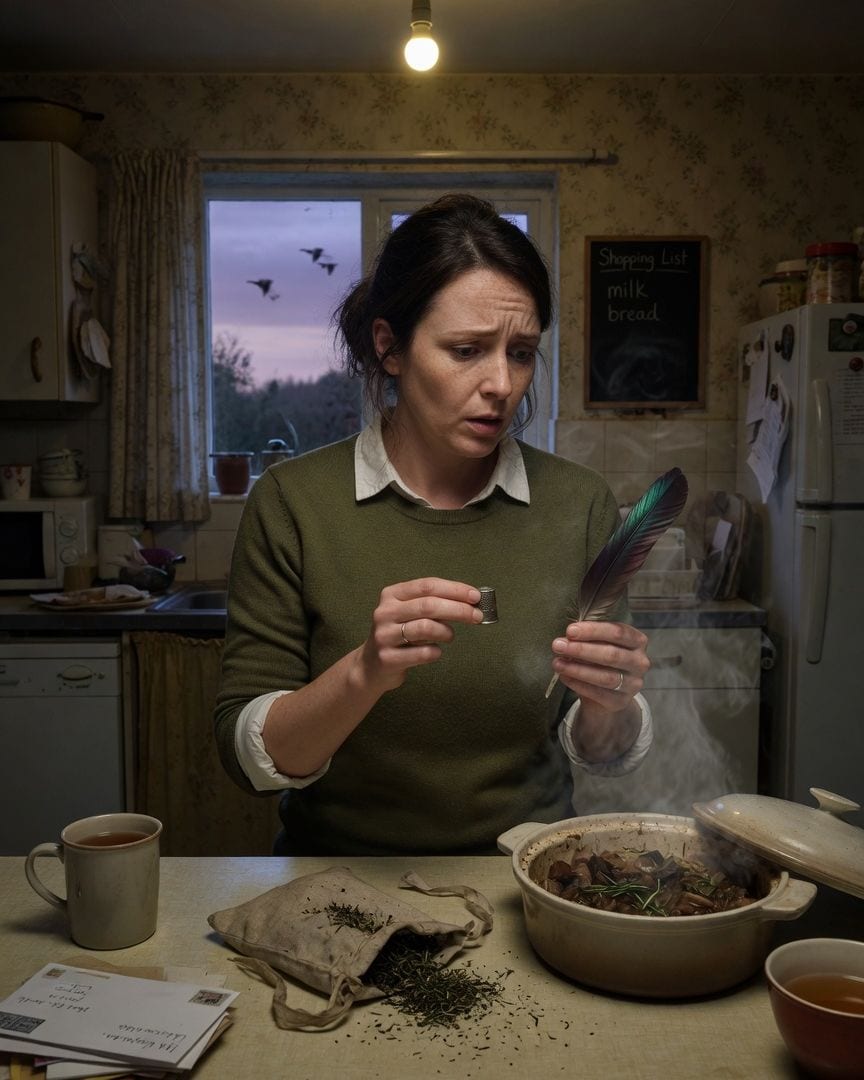
Inside, nestled on a bed of what looked like dark, dried earth or crushed herbs, were two items. The first was a single, dark, iridescent dried goose feather.
It wasn't dull like an ordinary feather; it shimmered with an oily sheen, shifting from deep violet to emerald green in the dim kitchen light, unlike any goose feather I’d ever seen.
The second item was a tiny, tarnished silver thimble. It was clearly antique, its surface worn smooth in places, the intricate pattern on its band almost entirely obliterated by time and use. This wasn't a housewarming gift.
This was something else entirely, something far older and more deliberate than a meal.
I pulled the thimble and the dried goose feather from the pouch, holding them up to the dim light of my kitchen.
The feather caught the light, its sheen like oil on water, unnatural and beautiful, while the thimble, surprisingly heavy, rested cool against my palm.
Their archaic nature settled a cold weight in my stomach, unsettling me far more than the silent casseroles ever could. A shiver traced my spine, a silent acknowledgment that the mundane explanation had failed, leaving only a deepening, unknown dread.
The next morning, the goose feather and thimble felt heavier. The dread hadn't gone away with the sunrise.
I wrapped the linen pouch around them and took it to the village shop, a place that felt like the temporal heart of this place.
Harold Holloway, a man whose face seemed carved from the same weathered stone as the village church, was behind the counter, weighing out flour.
"Morning, Harold," I said, trying for a casual tone. "Just wondering about a… tradition, I suppose." I gestured vaguely. "The casseroles, yesterday. And this."
I laid the pouch on the worn wooden counter, carefully unwrapping it to reveal the feather and thimble.
Harold's usual stoic expression tightened almost imperceptibly. He scooped the flour into a paper bag, his movements precise, his gaze avoiding mine. "Old traditions, Miss Beaumont," he murmured, his voice as dry as autumn leaves. "Neighborly concern.
This time of year, folks look out for each other."
"Right," I said, pushing slightly. "But the feather? And the thimble? It seems… specific." I picked up the feather, letting its dark iridescence catch the weak morning light filtering through the dusty window.
"It's not exactly a common housewarming gift, is it?"
His eyes flicked from the feather to the chalkboard behind me, then back to my face, his gaze brief but sharp. "Some rules are warnings, Miss Beaumont. Not superstitions." He cleared his throat, a dry, rasping sound.
"The geese, when they rise from the Ellers at dusk… that's the signal. The 'active time' for something ancient. A 'Watcher,' some call it, that claims its due."
He paused, his gaze drifting towards the window, as if he could see the distant meadow from here. "The casseroles," he continued, his voice lower now, "they're… tributes. Or 'farewells,' for those who've been 'marked.'"
He picked up a rag and began wiping down the counter, though it was already clean. He wouldn't elaborate further, his silence heavier than any explanation he could have offered.
Later that day, I was walking back from the post office when Pamela Easton, one of the casserole-givers whose name I’d learned from a neighbor, stopped me on the street.
Her expression was drawn, her eyes darting nervously towards the distant Ellers meadow, barely visible between the cottages. "Harold talks too much," she said, her voice a low, almost panicked whisper, her hand briefly touching my arm.
Her fingers were surprisingly cold. "Some things are best left alone, Miss Beaumont. Digging deeper… it only draws more attention. And not the good kind."
She squeezed my arm, then pulled her hand back quickly, as if burned, and hurried away without another word. The conversation left me with a chill that had nothing to do with the autumn air.
That night, as I sat reading, a flicker of movement caught my eye. On my windowsill, where it hadn't been an hour before, lay a small, smooth stone.
It was a dark, river-worn pebble, perfectly oval, and it felt subtly warm to the touch when I picked it up. I had no idea where it had come from. A child's prank? A bird dropping it?
The next morning, it was on my doorstep, nestled against the weathered wood of the threshold. I picked it up again. Still subtly warm. It was a quiet, unnerving message: I was being watched. My movements noted.
The presence, whatever it was, was aware of my inquiries. And the town, I realized with a fresh wave of dread, was aware of it.
I returned to Harold, the pebble clutched in my hand, Pamela's hurried warning echoing in my ears. He was behind the counter again, meticulously arranging jars of jam.
"Pamela told me you've been talking," I said, my voice sharper than I intended. "And these stones. What are they? Are you trying to scare me?" I held out the pebble.
He looked at the stone, then at me, his resolve finally cracking. A sigh escaped him, a sound of profound weariness. "No, Miss Beaumont," he said, his voice barely audible. "We're trying to warn you. To… prepare you."
He wiped his hands on his apron, then walked past the counter, beckoning me to follow him to a dusty corner of the shop, behind a stack of old flour sacks.
He pushed against a loose plank in the wall, revealing a dark recess. The air that wafted out was cold, smelling of damp earth and something else, something metallic and faintly sweet, like old, dried blood.
"It's been here longer than any of us," he said, his voice raspy. "It's the land's payment."
He described a cyclical pattern, tied to the autumn equinox and the geese's migration. "When the geese go up, the veil thins. It takes. Not always death, but… a departure. A change."
His eyes, normally flat and unreadable, held a deep, ancient sadness. He explained that the Ellers meadow was a place of 'exchange.' The thimble, he said, was an old protection charm, mostly symbolic now, a comfort. The feather?
That was the sign of the 'Watcher's claim.'
He recounted hushed tales of villagers who 'moved away suddenly' after walking the Ellers at the wrong time, their houses sold for a pittance, their names slowly fading from memory, as if they'd never truly existed.
He pointed to the chalkboard, to the numbers written below the warning. "The house numbers there… they're not just warnings. They're a grim record of those marked. A communal acknowledgment of the inevitable."
He gestured back to the casseroles on my counter. "The casseroles… they're the town’s silent farewell. A ritual of appeasement for the presence, and a quiet mourning for the departed."
The image of her own house number on that board now flooded her mind with a horrifying new significance. It wasn't a welcome; it was a death notice. My death notice.
Harold, his face pale and etched with something akin to guilt, reached into the dark recess behind the plank. He pulled out a heavy, leather-bound book, its cover scarred, its pages yellowed and brittle with age.
"This is the true record," he whispered, placing it on the dusty counter between us. "The town's memory." He slid it towards me.
I opened it carefully, the smell of old paper and something else, something earthy and damp, rising from its pages.
The book was a meticulous ledger, spanning over a century, filled with names, dates, and cryptic notes about 'offerings' and 'departures.' Each entry was written in a careful, spidery hand, the ink faded to brown.
I scanned the pages, my breath catching in my throat as I saw the recurring motif: a small, hand-drawn goose feather next to countless entries.
My eyes snagged on a recent page, a faint entry in Harold's familiar handwriting, dated for the current week: '14 Kingsley Lane.' Below it, the name 'Constance Beaumont' was faintly penciled in.
Next to my name, a small, undeniable goose feather was drawn, identical to the one in my pouch. The last entry before hers, dated twenty-three years prior, read: 'Oliver Norwood, 18 Porter Road. Ellers offering. Departed.'
My fingers traced my own name in the ledger, the horror of it paralyzing me. The goose feather next to it felt like a brand. Harold watched me, his eyes sad, his face a mask of weary resignation.
"Oliver Norwood was my cousin," he said quietly, his voice a low, gravelly whisper that seemed to echo in the dusty shop. "He walked the Ellers, just like you. Said he didn't believe the old stories.
Thought it was just folklore." He paused, his gaze distant, lost in memory. "He didn't die, not exactly. One day, Oliver was there, the next, he was… subtly wrong. His eyes held a different light, his voice a strange resonance.
He became distant, cold, eventually selling his house and moving away. Never truly present again."
The ledger, Harold explained, was the town's way of tracking the cycle, of knowing when the 'Watcher' would stir and who might next be claimed.
The dates, I now saw, aligned perfectly with the autumn equinox, every twenty-three years, sometimes shorter, if someone was particularly careless. The town didn't fight it; they managed it, endured it.
It was simply the way of things, a pact between the land and its people, honoured out of a deep-seated, generations-old fear. And I, Constance Beaumont, had walked into it, unaware, now inextricably part of its long, terrifying history.
I slammed the ledger shut, the heavy thud echoing in the quiet shop. "There has to be a way," I insisted, my voice trembling, raw with desperation. "A way to stop it. To break the cycle."
Harold shook his head slowly, his gaze mournful. "There isn't. Not once you're marked. The town has tried for centuries. The thimble, the casseroles… they're not to save you, Miss Beaumont. They're to ease the transition."
He pointed to a faint, barely visible entry at the very beginning of the ledger, a name almost worn away by time: 'Harold Holloway, 19 Porter Road.' My eyes widened. "I walked it myself, as a boy.
Thought myself brave, or foolish. Didn't know about the geese then, not really. Not until after." He looked at me, his expression a mixture of pity and resignation.
"I know what it feels like to be watched, to feel something else wearing your skin. To feel the pull." He paused, his voice dropping to a near whisper. "You'll feel it soon. The pull. The change."
I stumbled out of the shop, the weight of the ledger's truth crushing me, the chill of Harold's words colder than any autumn wind. The air felt thick, heavy with an unseen presence.
I felt a strange, cold pressure behind my neck, an unseen hand brushing my hair.
It wasn't a sound, but a thought, a whisper echoing deep within me, urging me back towards the Ellers, towards the ancient path I'd so carelessly crossed.
I knew, with a horrifying certainty that solidified into absolute dread, that I could not escape what had already begun. The pattern had snapped into place, and I was fully, irrevocably, inside it.
Days later, Constance's house, 14 Kingsley Lane, stands quiet. Her car is still in the driveway, the lights in her living room still come on at dusk, but no one answers the door.
The casseroles, now empty, have been returned to their anonymous givers. Harold Holloway continues to meticulously update his chalkboard, noting the tide and the weather. His gaze, however, lingers a little longer on the permanent warning at the bottom.
A few weeks later, a new family moves into 14 Kingsley Lane. They mention a remarkably good deal, the previous owner having 'moved on quickly.'
The new occupant, a young woman with bright, curious eyes, waves cheerfully to Harold Holloway as she walks past the village shop, a housewarming plant clutched in her arms.
Harold nods back, a faint, almost imperceptible smile playing on his lips, his gaze lingering on the shop's chalkboard, which he has just updated.
The shop chalkboard, they say, now has a new house number scrawled beneath the warning, waiting for the next autumn's geese.
If this one got to you
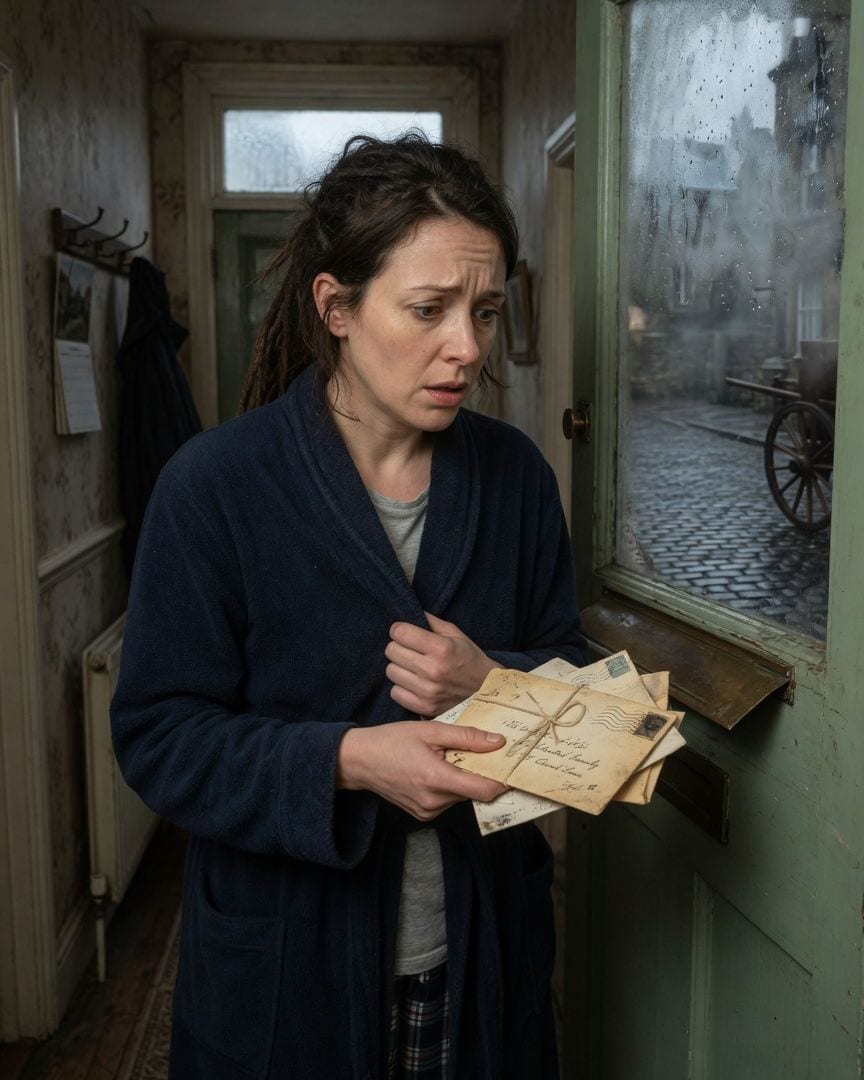
Seventy years ago, a hidden journal recorded my door opening to the wrong street and receiving Lockwood post.
I'd only recently moved into my inherited house, a quiet place on the edge of town. One grey morning, a distinct clatter from the front door's post flap caught my attention. Reaching down, I expected my gravel path, but instead, the flap showed a dark, cobbled street that wasn't mine. A bundle of warm, old letters, addressed to 'The Lockwood Family,' slid through, before the vision flickered and was gone.
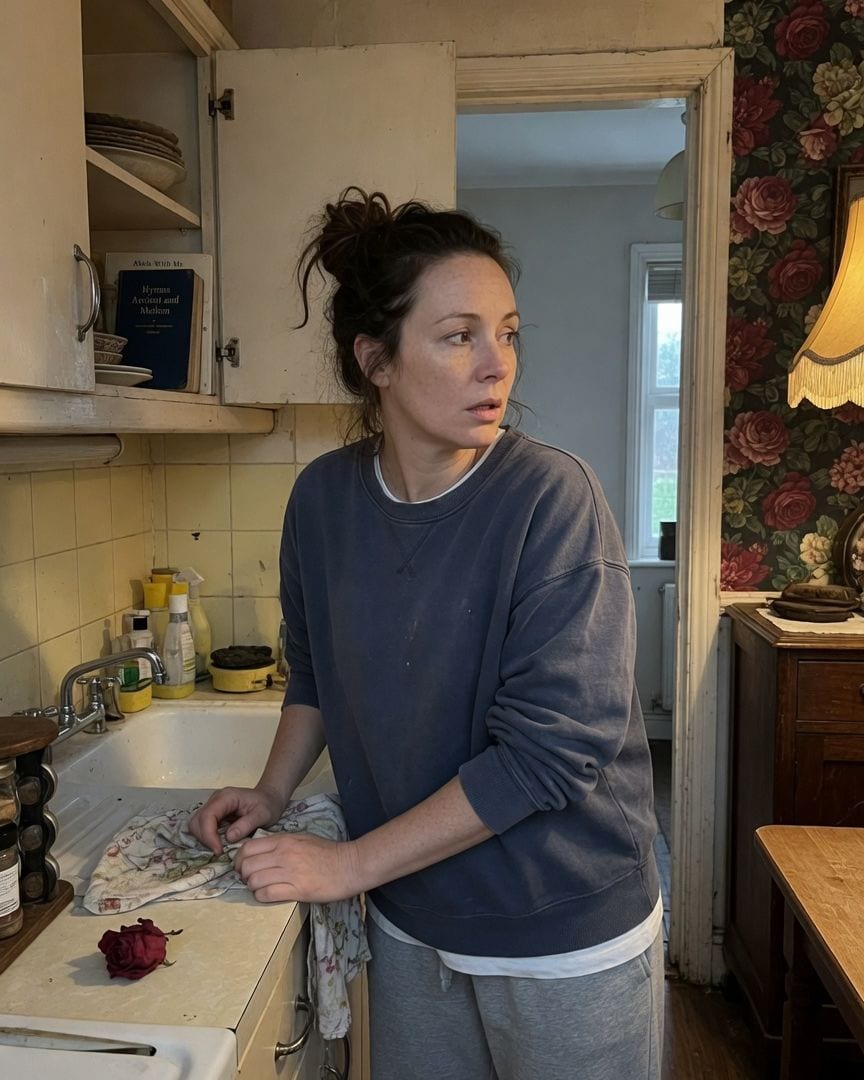
My kitchen taps run themselves on Sundays while a woman hums 'Abide With Me.' I live alone.
I moved into this quiet 1928 house for a fresh start, living alone. But for three months now, every Sunday morning, a low, tuneless hum and the distinct sound of running water drift from my kitchen sink. A plumber found no explanation.
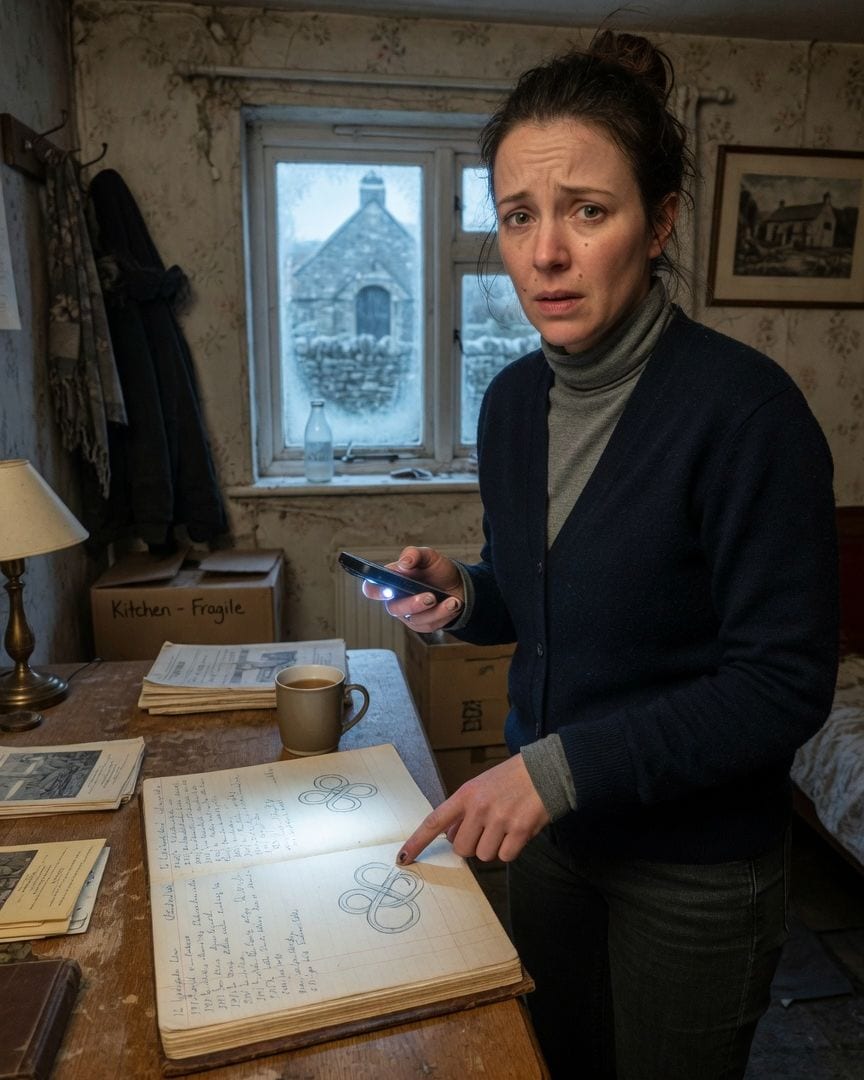
Milk appears daily by my lychgate. The dairy closed in '79. My address is handwritten into their old delivery book, starting the day we moved in.
Moving to Blackwood Creek, I loved the quaint charm, especially the unexpected morning milk delivery to my lychgate. But when I mentioned it to Eleanor at the village shop, her smile froze. She told me Willow Creek Dairy closed decades ago, in '79.
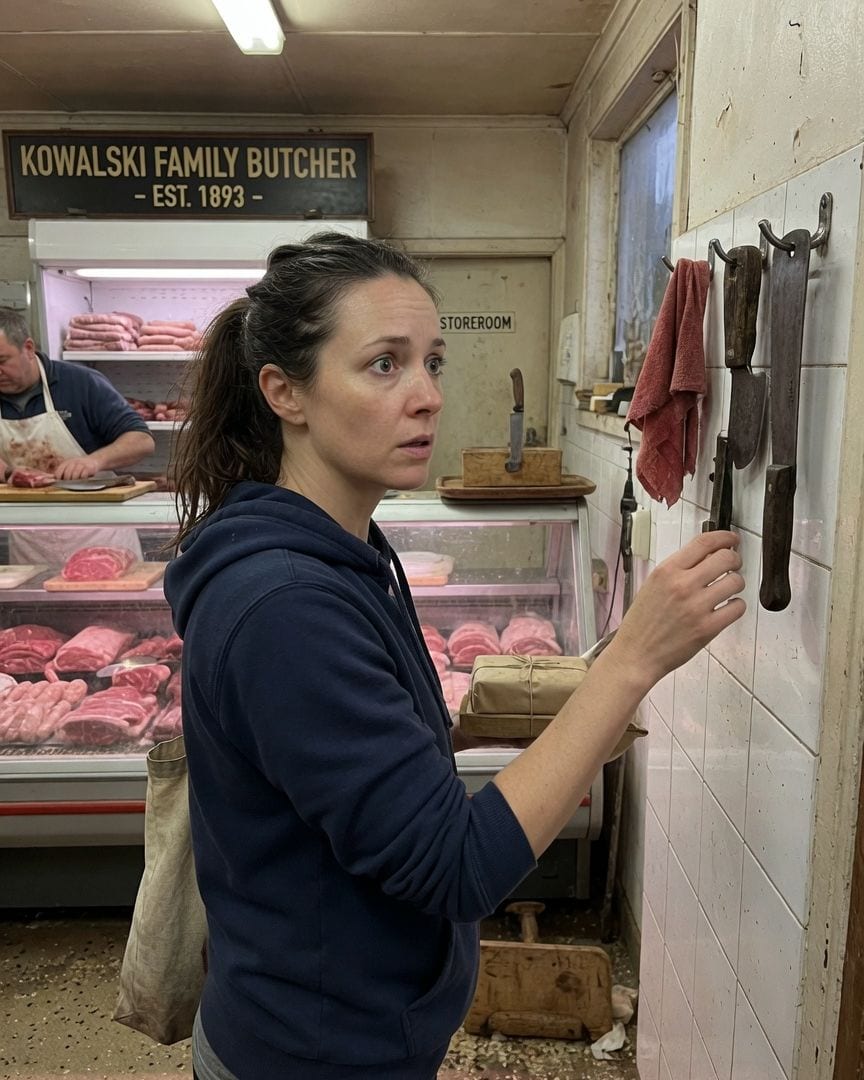
The butcher's back hook always hangs empty, draped with a red cloth. It holds a standing order since 1911 for the Hall, which burned down before the first war. The meat is gone every Friday, but no one's seen a cart.
Still new to Longnor, I stepped into Oscar Kowalski's butcher shop, needing a place to hang my bag. My hand brushed a simple hook, but Oscar's knife suddenly thudded, and he snapped, 'Not that one, dear.' He insisted the empty hook was 'reserved,' leaving me with a strange prickle of unease.
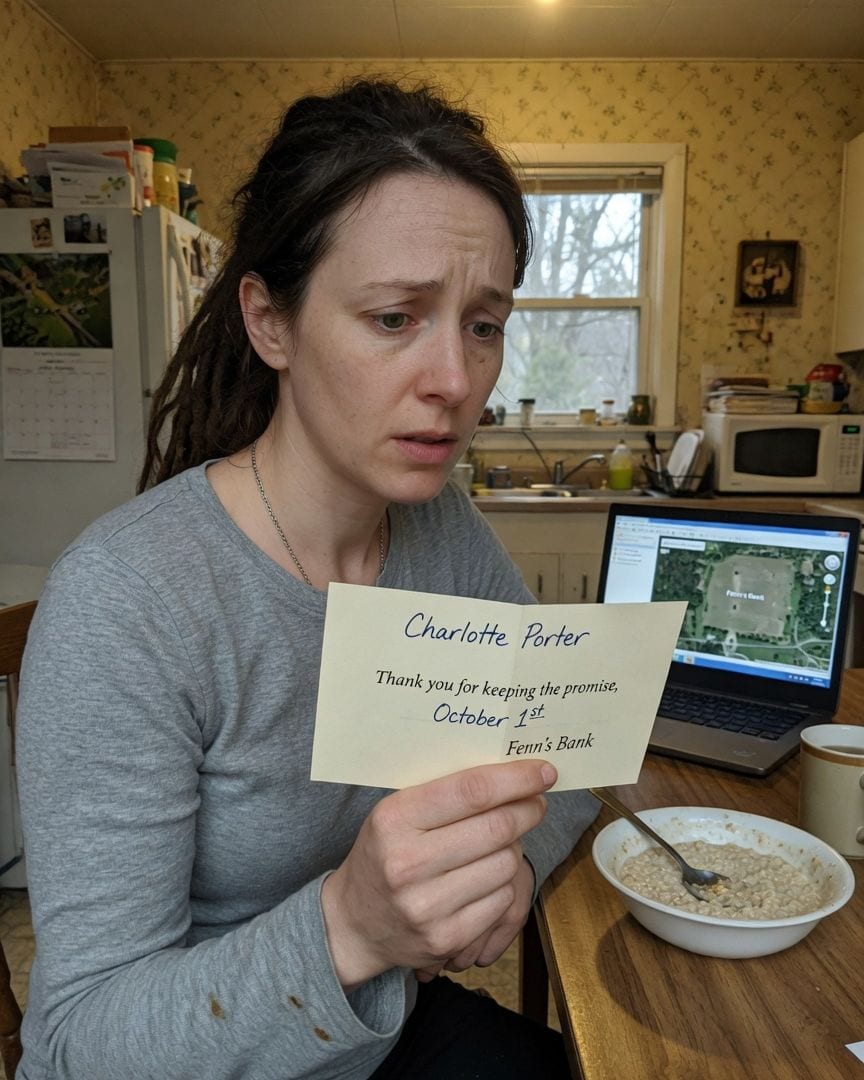
My initial, C. Porter, is carved into an ancient stone in a desolate bog. It's been there for centuries.
I keep receiving strange thank-you cards for a promise I don't recall, all addressed from 'Fenn's Bank,' a desolate peat bog miles from town. My growing unease drives me to visit the site, where I find my family name, and then my own initial, carved into an ancient stone.
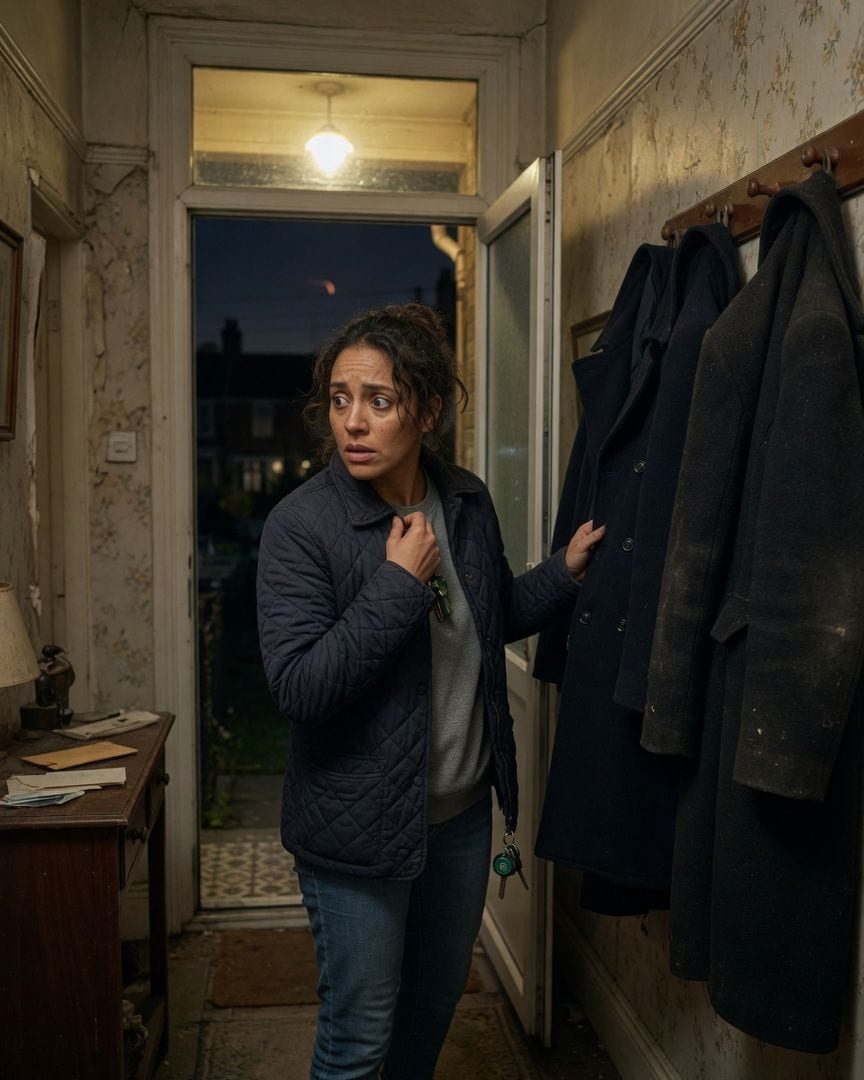
My tiled path was new, my front door green. Then three dark coats hung in my hallway.
After a late night watching the lunar eclipse, I returned to my Victorian house, only to find the path and front door inexplicably changed. Though the house seemed to revert to normal, strange things started appearing: a kettle warm from boiling, a distinct impression on my armchair. Then, an antique, lavender-scented handkerchief appeared on my bedside table, an undeniable presence in my private space.