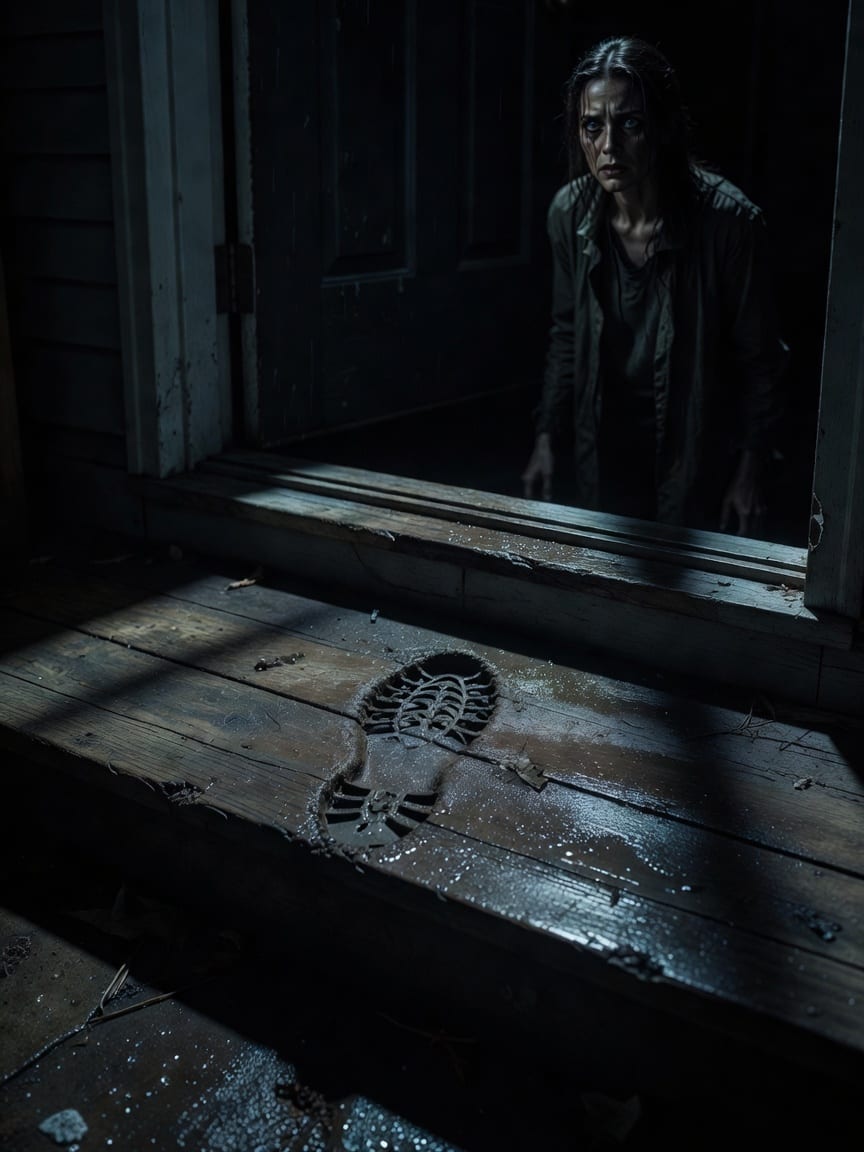
My landlord's only rule: never let the outside tap run after sundown. Last week it dripped. This morning, wet bootprints ringed the back step from the tap to my door, all the same size. The tap was off.
Greg and I had only been in the Waterside House a month when the washing machine started acting up.
It wasn't a fancy place, but the rent was right, and the view of the lake from the kitchen window was stunning. Our landlord, Bernard Whitfield, a man with a gaze that seemed to miss nothing, had been perfectly reasonable.
Aside from one peculiar thing. Buried deep in the tenancy agreement, handwritten in Bernard’s precise script, was a single, non-negotiable clause: 'Tenant must ensure outside tap remains OFF after sundown.' It struck me as odd, certainly, but easily managed.
Just a landlord’s eccentricity, I figured.
Then last week, the old washer gave out entirely, a grinding groan followed by a gurgle that meant the end. Water had backed up, so Greg had rigged the hose to the outside tap, trying to drain the overflow.
He swore he’d turned it off, but later that night, after we’d given up and called for a repair, I woke. A slow, insistent plink-plink-plink echoed from the back of the house, magnified by the night's silence. The outside tap.
Damn it, Greg must have forgotten. I meant to get up, fix it, but exhaustion won out. I rolled over, promising myself I’d deal with it in the morning.
In the morning, the sound was gone. I remember the immediate relief, followed by a slight irritation that Greg hadn't told me he'd taken care of it.
When I stepped out onto the back porch, a perfect ring of wet bootprints circled the back step. They led up from the tap, across the stone pavers, and stopped dead at our back door.
Not Greg's size 12s, definitely not my small feet. These were a solid size 10, maybe a little wider than average. And the tap itself?
It was turned fully off, cranked so tight I could barely budge it when I tried. Tighter than I could have managed, even if I'd remembered to turn it off myself.
The prints weren’t muddy smears; they were perfect, defined impressions, as if someone had deliberately stepped with care. And they were still wet. The air was cool, but not that cold. How long had they been there?
I knelt, touching one of the bootprints. The mud was dark, almost black, and smelled faintly of damp earth and something else I couldn't quite place—a mineral tang, like old, standing water, but sharper.
It wasn't the usual garden dirt smell. The water in the print was unnervingly cold.
Greg, when he finally came out, stared at them for a moment, then chuckled, dismissing it with a wave of his hand. "Probably just some local kids, Laura. You know, a prank. Saw the hose out, decided to mess around."
He was already moving on, heading for his car, late for work. "Don't sweat it."
But I couldn't shake the precision of it. The tap being off, so off. The sheer wrongness of prints appearing like that, without a sound, leading right to our door, and the water still cold on the stoop.
I checked the perimeter fence, the bushes. Nothing was disturbed, no sign of anyone climbing in or out. Just the prints. It felt like a message, though I couldn't fathom what it might be.
Later that day, feeling an irrational need to clean up whatever lingering evidence there was, I was trying to clear some overgrown weeds near the outside tap.
The ground there was always damp, clinging to the hose Greg had left out. My fingers brushed against something hard and papery in the sodden soil.
I dug it out, careful not to tear it: a small, waterlogged rectangle, incredibly old. It was a photograph.
Its sepia tones were almost entirely washed out, faded to a spectral gray, but I could make out a family standing in front of a house that looked eerily like ours.
The same distinctive porch, the same angle of the roof. But one figure, standing slightly apart near what looked like an identical outside tap, was indistinct, almost blurred, as if rubbed away by time and water.
Their features were a smear, a smudge on the paper. The photo's age alone, its stiffness from decades of damp, made it feel like a relic from another century, a ghost trapped in paper.
"Just trash, honey," Greg dismissed it again that evening, barely glancing up from his phone. "Old junk from previous tenants. Probably fell out of someone's pocket years ago." He sounded bored, already over my "prank" theory.
But I felt a prickle of something cold and persistent. Not just the photograph's age, or its blurred figure. It was the tap.
The image was fixed on the tap, almost centered, as if that was the most important thing in the picture. The same tap, the same house, a strange blurred figure.
It all tied back to the prints, the rule, the unsettling quiet of the morning.
Determined to understand the photo's origin, I took it to the local historical society the next afternoon. It was a small, dusty building, smelling of old paper and beeswax.
Abigail Drummond, the archivist, was a woman with kind eyes that crinkled at the corners and a quiet demeanor that spoke of a life spent among silent histories. She wore a thick cardigan despite the mild day.
She examined the faded image under a magnifying glass. Her expression, initially polite and professional, slowly stiffened. She didn't recognize the family, she said, her voice soft as rustling leaves.
But then her finger, surprisingly strong and precise, traced a small, barely visible detail in the background. It was a unique, intricately carved symbol on a fence post, half-hidden by overgrown foliage in the photograph.
I’d never noticed it in our garden, but then, I hadn’t been looking.
"This carving," Abigail said, her voice dropping to a near whisper, tight with something I couldn’t quite name. "It belongs to your house." Her eyes lifted from the photo, meeting mine. There was something in them now, a profound stillness.
"The Waterside House, it was called. They had a saying about the tap there, too."
I looked from the ancient symbol, so faint in the blurred photo, to the indistinct figure standing near the tap, then back to Abigail.
Her face was still, her eyes full of a quiet, ancient dread that made my skin crawl.
Abigail, though clearly reluctant, sensed my accidental stumble into something deeper. She saw it in my face, the dawning comprehension that this wasn't just a quirky clause or a teenage prank.
Her lips thinned, and she sighed, a sound heavy with years. "Come with me, Laura," she murmured, her voice barely audible over the hum of the old fluorescent lights.
She led me to a back room, even dustier than the main archives, shelves crammed with boxes and forgotten artifacts. Reaching high, she pulled out a heavy, leather-bound ledger, its cover cracked, its pages yellowed and brittle with age.
It felt cold, heavy, dangerous in her hands. "Not for public eyes," she whispered, her eyes darting nervously to the closed door, "but some things need to be understood. You've already seen too much not to."
The ledger opened with a creak, revealing archaic entries, dating back to the town's founding: mentions of 'water events,' 'settlement offerings,' and 'the lake's appeasement.'
The language was dense, almost poetic in its old-world formality, but even a cursory glance sent a chill down my spine. My fingers traced the faded ink, the looping script. I began to notice a chilling consistency in the dates.
Roughly every fifteen years, a new family would be mentioned as moving into the 'Waterside House' – sometimes by name, sometimes by address.
And shortly after, usually within a year, an entry would detail a 'water event,' often vaguely described as 'the lake's claim' or 'the water's pull,' followed by a name simply struck from the record.
No explanation, no details, just a clean, deliberate line through a name.
"What are these?" I whispered, my voice hoarse. "Struck from the record?"
Abigail only shook her head, her gaze distant, fixed on some unseen point beyond the dusty shelves.
I cross-referenced these struck names with old town census records, pulling out brittle microfiches and scrolling through blurred print. My stomach twisted with each discovery.
The names, those newcomers, corresponded exactly to individuals who had vanished without a trace from the Waterside House in those precise years. No forwarding addresses, no death certificates, just gone.
The unease in my stomach solidified into a cold, hard knot, tightening with every confirmation. This wasn't local gossip or a morbid joke. This was real.
As I hunched over the ledger, deep in the dust and silence of the archives, a shadow fell across the page. The old building’s fluorescent lights flickered, a sudden, harsh buzzing sound.
I looked up, startled, to see Bernard Whitfield, my landlord, standing there. He must have come in silently, like smoke.
He wasn't smiling, but his expression was too placid, too calm for someone who had just walked into a restricted archive. His eyes, though, were intensely focused, as if he knew exactly what I was doing.
"Still enjoying the quiet, Mrs. Kowalski?" he asked, his voice soft, almost a purr that seemed to vibrate in the still air.
His gaze, unblinking, drifted from my face to the open ledger, then back to me, lingering for a fraction too long. He took a slow, deliberate breath, the scent of old wood and something vaguely metallic wafting from him.
"Some things are best left undisturbed, especially old stories. They're just stories, after all."
He didn't raise his voice, didn't make a threat, but the message was clear, the warning implicit. The air in the small room suddenly felt heavy, compressed, like a storm front had just moved in.
I felt a sudden, profound chill, as if the air had thinned, making it hard to breathe. The temperature in the room seemed to drop several degrees, making the hairs on my arms stand up.
I knew then that Bernard wasn't just a landlord; he was a gatekeeper, a silent guardian, and my digging had been noticed.
The town's quiet agreement, I realized with a sickening lurch, wasn't just about avoiding a subject; it was an active, collective steering. Bernard Whitfield was a part of it, perhaps even its conductor.
I stared at Bernard, unable to speak, the open ledger a damning confession between us. He just held my gaze, his face unreadable, until I finally looked away, a wave of cold dread washing over me.
He simply nodded once, a barely perceptible dip of his head, then turned and walked out as silently as he'd appeared, leaving the room feeling colder and more desolate than before.
I rushed back to Abigail, my heart hammering against my ribs, the weight of Bernard's gaze still pressing on me. "Abigail, what the hell is this?" I hissed, shoving the ledger in front of her. "Those names, Bernard. He knows.
He just saw me with this. What is going on?"
Abigail, her face etched with a weary resignation, finally spoke. "It's not a story, not truly," she admitted, her gaze distant, fixed on the grimy windowpane. "The lake... it has a need. A pattern.
It's been here longer than the town, longer than any of us. These are not superstitions, Laura. These are... facts."
She leaned closer, her voice a strained whisper. "The tap running after sundown, for those in the Waterside House, it's a signal. An invitation. It draws its attention." She paused, took a ragged breath. "The bootprints, Laura, they're its claim.
Its mark. It chooses."
Abigail explained that the town didn't fight it, couldn't. They simply managed it, maintained the warning – the clause in the lease, the hushed rumors – and accepted the cost when the warning was broken.
"We try to make sure no one new moves into the Waterside House when the cycle is close," she confessed, her voice thick with shame and fear, "but sometimes, things happen. People forget the warnings.
Or new people come, like you, who don't know."
She then unrolled an old, faded map of the town, crinkled at the edges, its colors muted by time.
Her finger traced a path from the Waterside House directly to a specific, deep cove in the lake, a place I’d seen on our drives but never really noticed.
It was a section of the shore that dropped off sharply, the water always looking darker there. "That's where it takes them," she said, her voice barely audible. "The names struck from the ledger... they were the ones it took.
Always newcomers. Always after the tap ran after sundown."
The bootprints, the blurred figure in the old photograph, Bernard’s chilling warning, the town’s quiet pact, the vanishing newcomers – everything clicked into a horrifying, coherent meaning. The dread was no longer vague; it was specific, ancient, and utterly real.
It wasn't a ghost story. It was a town's terrible truth, and I had stumbled right into its core.
My hands trembled as I looked from the map, now a roadmap to terror, to the ledger, the names of the vanished newcomers now starkly clear, each one a silent scream.
The pattern was undeniable, a macabre ticking clock: a new family, a broken rule, a missing person, every fifteen years. It was so precise, so relentless.
I scanned the dates again, a cold dread seizing me, turning my blood to ice. The most recent 'struck name' was from exactly fifteen years ago. My mind raced, calculating, each number a hammer blow to my chest.
The next date in the pattern. It was this year. This very damn year.
My blood ran cold as I looked at the bottom of the last page in the ledger. Beneath the last struck name, faintly marked in pencil, was the next projected date.
A date roughly corresponding to a few weeks from now.
And beneath that, added in a familiar, precise hand, matching the script of her tenancy agreement’s chilling clause, was a single, chilling entry. My own name.
"Laura Kowalski."
I rushed home, the heavy ledger clutched to my chest, its pages feeling like a death warrant.
My own name, written there in that precise hand, was a monstrous echo in my mind, a silent scream that vibrated through my bones. Greg was in the living room, watching some mindless show.
He looked up, startled by my frantic entrance, my face undoubtedly ashen.
"Laura, what the hell?" he started, seeing my wild eyes.
I thrust the ledger into his hands, the brittle pages shaking with my trembling. "Look at it! All of it! The dates, the names, the lease!" My voice was raw, a desperate rasp. "The tap! The bootprints! Bernard!"
I pointed, jabbed at the faded entries, the bold lines striking out lives. "It's all real, Greg. It’s a goddamn pattern, and we're in it!"
He tried to calm me, tried to rationalize. His rational, logical mind fought against the horror, dismissing it as an old joke, a morbid collection of local gossip, a weird town tradition. "It's just an old book, honey.
Someone's sick sense of humor." He wasn't seeing it, not really. He was still trying to find a mundane explanation, even as the evidence screamed.
Just then, a soft, deliberate knock echoed through the house. It wasn’t urgent, wasn’t forceful, just a quiet, insistent summons. We both froze, looking at the door. I knew. I just knew.
Bernard Whitfield stood on our porch, not angry, not menacing, but unnervingly calm, almost serene. He held a small, intricately carved wooden box in his hands.
'It's time, Mrs. Kowalski,' he said, his voice quiet, devoid of malice, as if he were discussing the weather. He stepped inside without being invited, the door swinging shut behind him with a soft thud.
He opened the box, revealing a small wooden figure nestled within. It was intricately carved, with an archaic, almost featureless face, its eyes mere hollows. My breath hitched.
It was identical, absolutely identical, to the blurred figure in the old, waterlogged photograph I had found near the tap. The figure was holding a small, unidentifiable object, but I knew, deep in my gut, it was a miniature tap.
'The town doesn't control the lake's need,' Bernard explained, his voice still low, almost comforting in its detachment. 'We simply manage it. This ensures the rest of us are safe.'
His eyes, ancient and knowing, fixed on me, no judgment, no remorse, just a terrible, cold acceptance. They held the weight of generations of sacrifice.
I tried to back away, my mind screaming for escape, for a way out of this nightmare, but Bernard simply took another step, then another.
He didn't use force, didn't lay a hand on me, but his presence was an immovable wall, imbued with the quiet, unyielding authority of generations of unspoken consent. The air around him felt thick, heavy, pressing down on me.
Greg, finally, truly understanding the true horror that was unfolding, lunged forward, a cry caught in his throat, a desperate, futile attempt to protect me. Bernard merely turned his head, his gaze sweeping over Greg, unblinking.
I watched in terror as my husband froze, his eyes wide with a sudden, overwhelming dread, his body rigid and unresponsive, like a statue carved from fear. He wasn’t yelling, wasn’t struggling, just... staring, utterly paralyzed.
The small wooden figure in Bernard's hand seemed to hum with a low, almost imperceptible vibration, a faint, deep thrumming that I felt more in my bones than heard.
I looked past Bernard, through the open back door of the house, towards the darkened garden where the tap stood, silent and menacing.
I saw a faint shimmer by the lake path, a ripple in the air, like heat rising from cold water, even though the evening was cool. It wasn't a trick of the light. It was there, pulling.
The bootprints, I realized, weren’t just a claim, but a path. A guidance.
The pattern had closed around her, and she was already inside it.
Days later, the Waterside House stood quiet and empty. Greg Kowalski had left town abruptly, unable to bear the oppressive silence of the locals or the knowing looks that followed him everywhere.
He simply packed a bag and drove away, leaving a gaping hole in his life. Bernard Whitfield was seen frequently in the garden of the Waterside House, meticulously checking the outside tap, ensuring it was always, absolutely, turned off.
A new 'for rent' sign appeared on the lawn of the Waterside House. The listing, like all previous ones, contained a single, peculiar handwritten clause at the bottom: 'Tenant must ensure outside tap remains OFF after sundown.'
The Waterside House stood quiet again, waiting for its next tenant, and its next forgotten rule.
If this one got to you
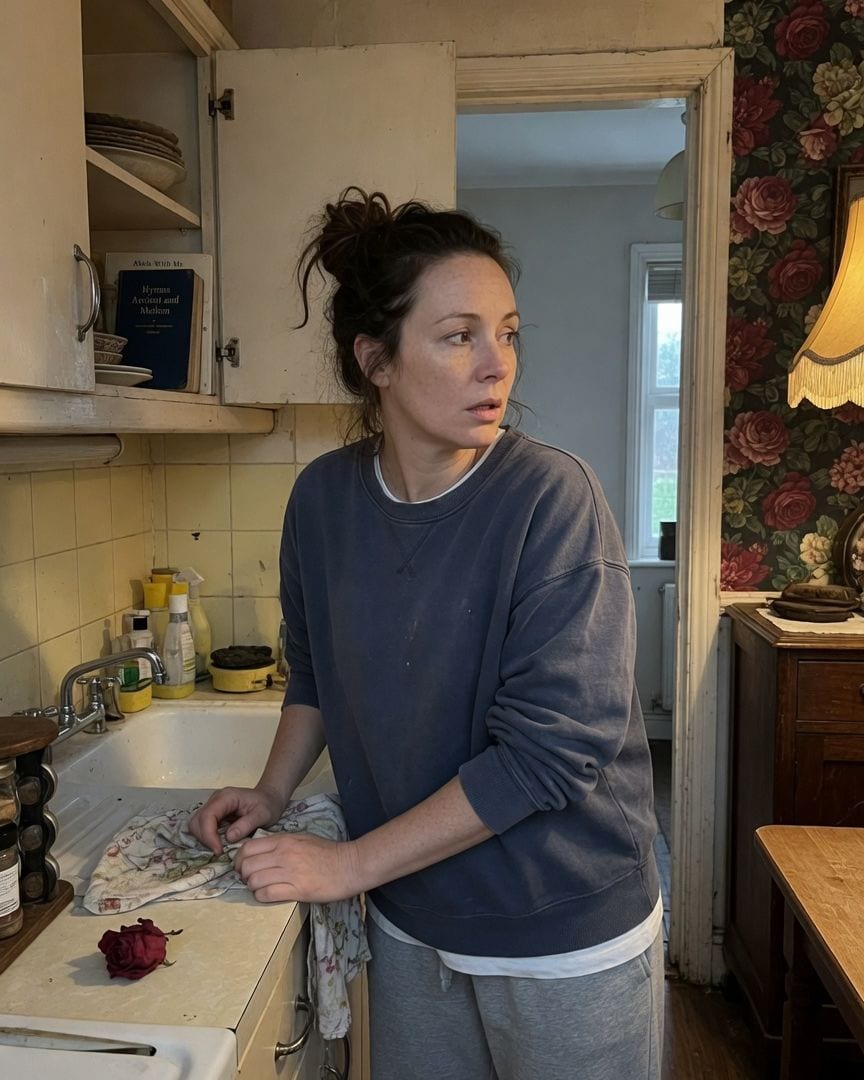
My kitchen taps run themselves on Sundays while a woman hums 'Abide With Me.' I live alone.
I moved into this quiet 1928 house for a fresh start, living alone. But for three months now, every Sunday morning, a low, tuneless hum and the distinct sound of running water drift from my kitchen sink. A plumber found no explanation.
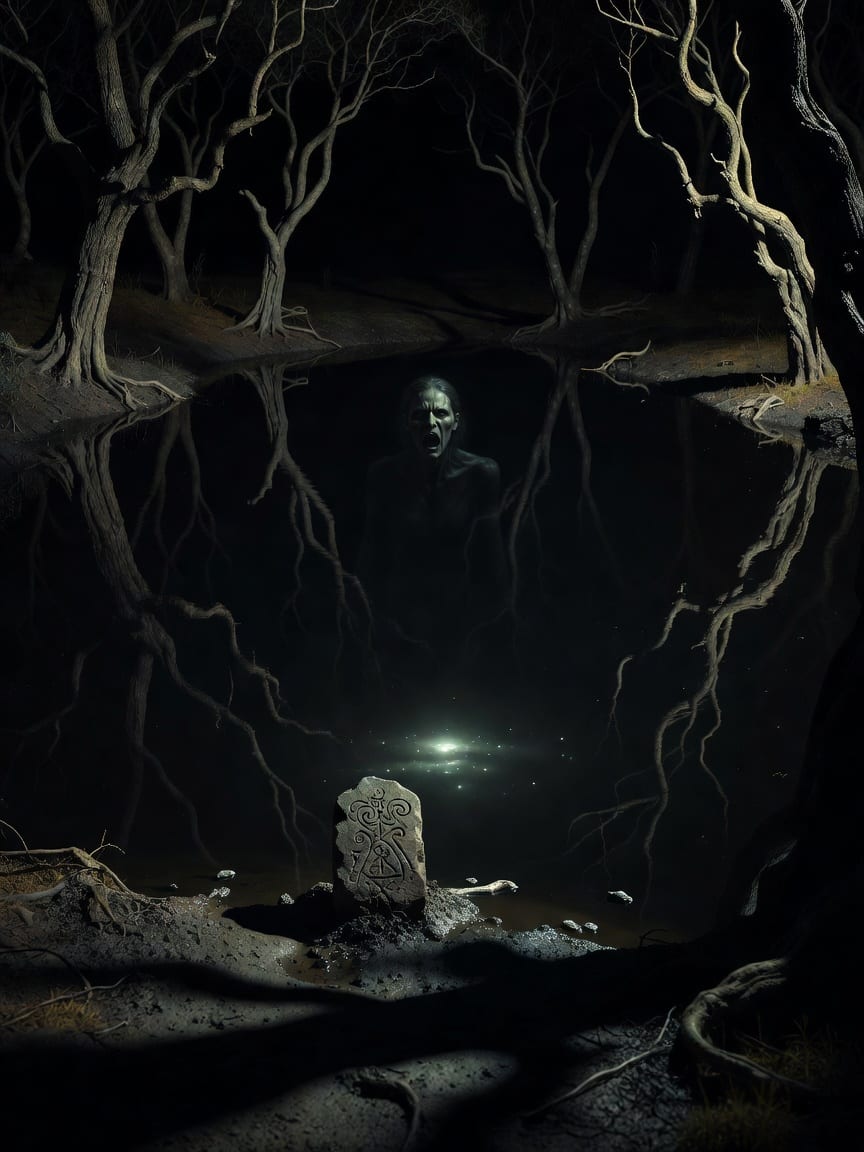
My new rectory home felt damp, even after everyone swore the old pond was drained in the fifties. But the water bill still charges for it. And the fish supplier logged a carp delivery, signed by the rector who died last Easter.
Moving into the old rectory, I noticed a persistent, unsettling dampness the locals dismissed as 'valley air.' But then I found an old water bill with a recurring charge: 'Rectory Pond - Water Rate.' Everyone in town insisted that pond was drained decades ago.
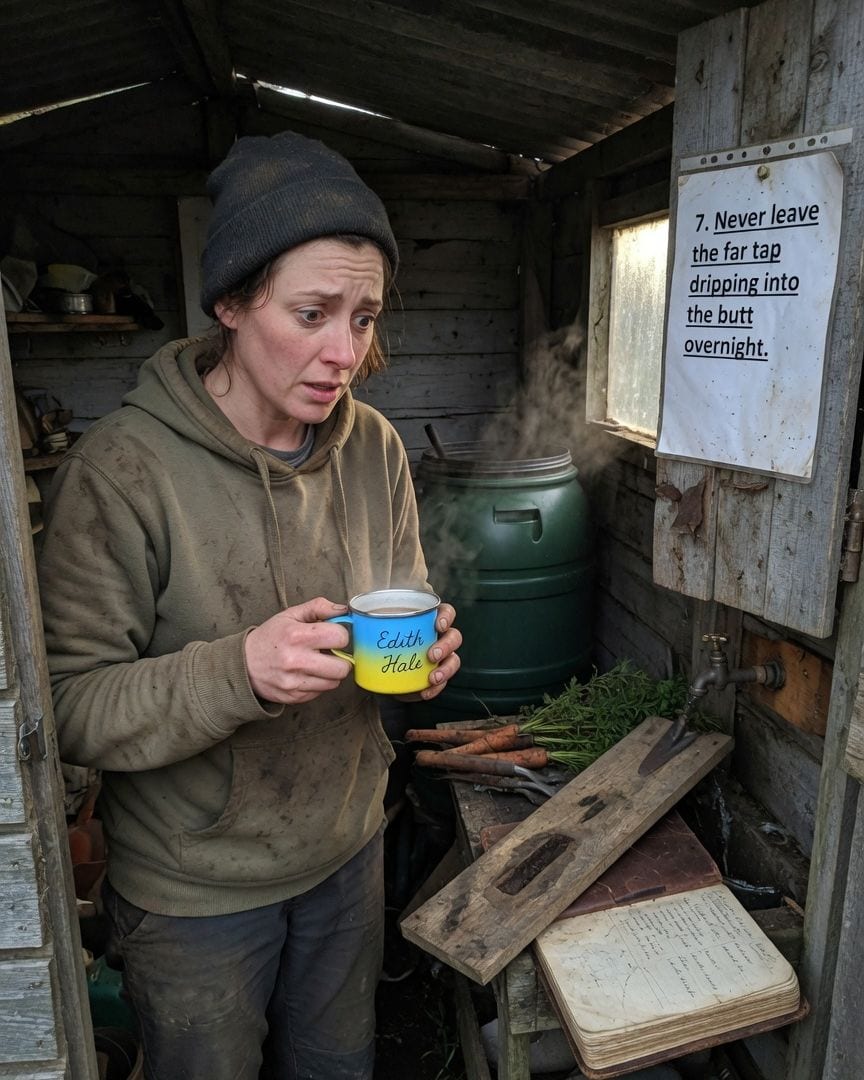
The one night I left the tap dripping, my allotment water butt was full to the brim and warm to the touch — with a child's unrusted tin cup floating on top.
Moving to Blackwood, I hoped my allotment would be a fresh start. But the shed's rulebook warned, 'Never leave the far tap dripping.' One morning, my water butt was full and steaming, an unnerving warmth rising from it. Inside, a child's tin cup floated, unrusted, etched with the name 'Edith Hale'.
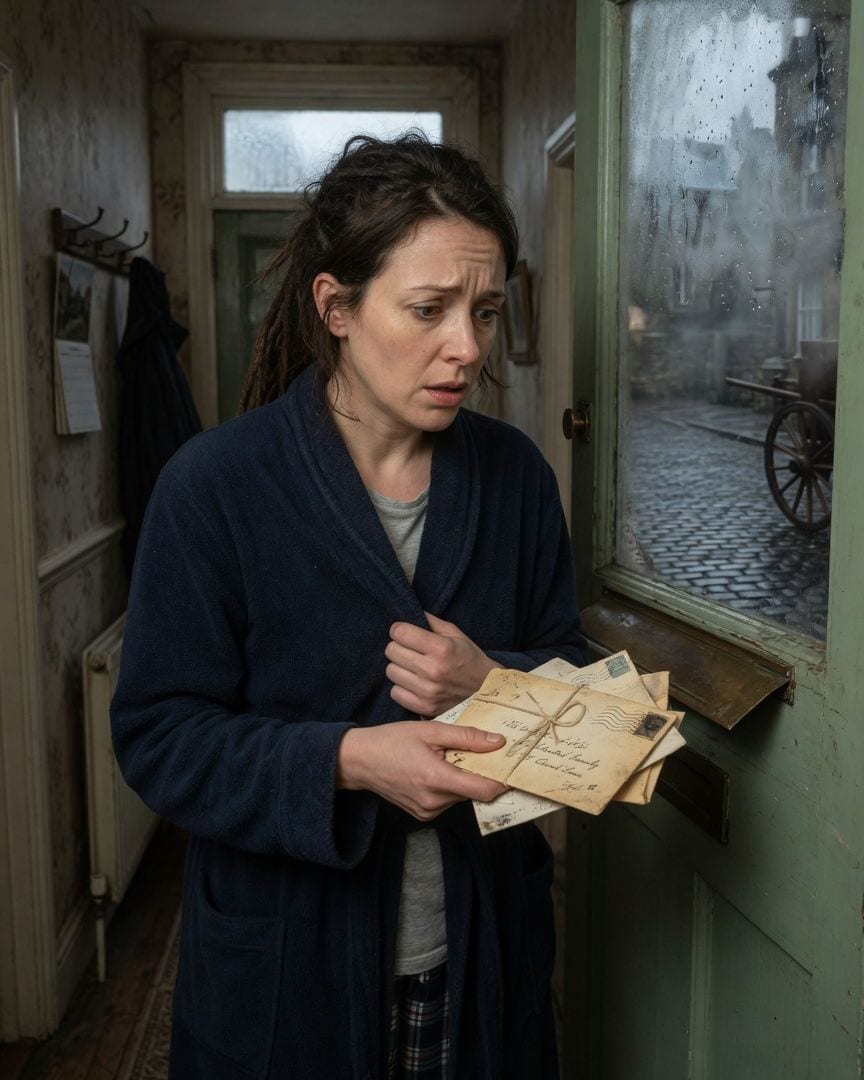
Seventy years ago, a hidden journal recorded my door opening to the wrong street and receiving Lockwood post.
I'd only recently moved into my inherited house, a quiet place on the edge of town. One grey morning, a distinct clatter from the front door's post flap caught my attention. Reaching down, I expected my gravel path, but instead, the flap showed a dark, cobbled street that wasn't mine. A bundle of warm, old letters, addressed to 'The Lockwood Family,' slid through, before the vision flickered and was gone.
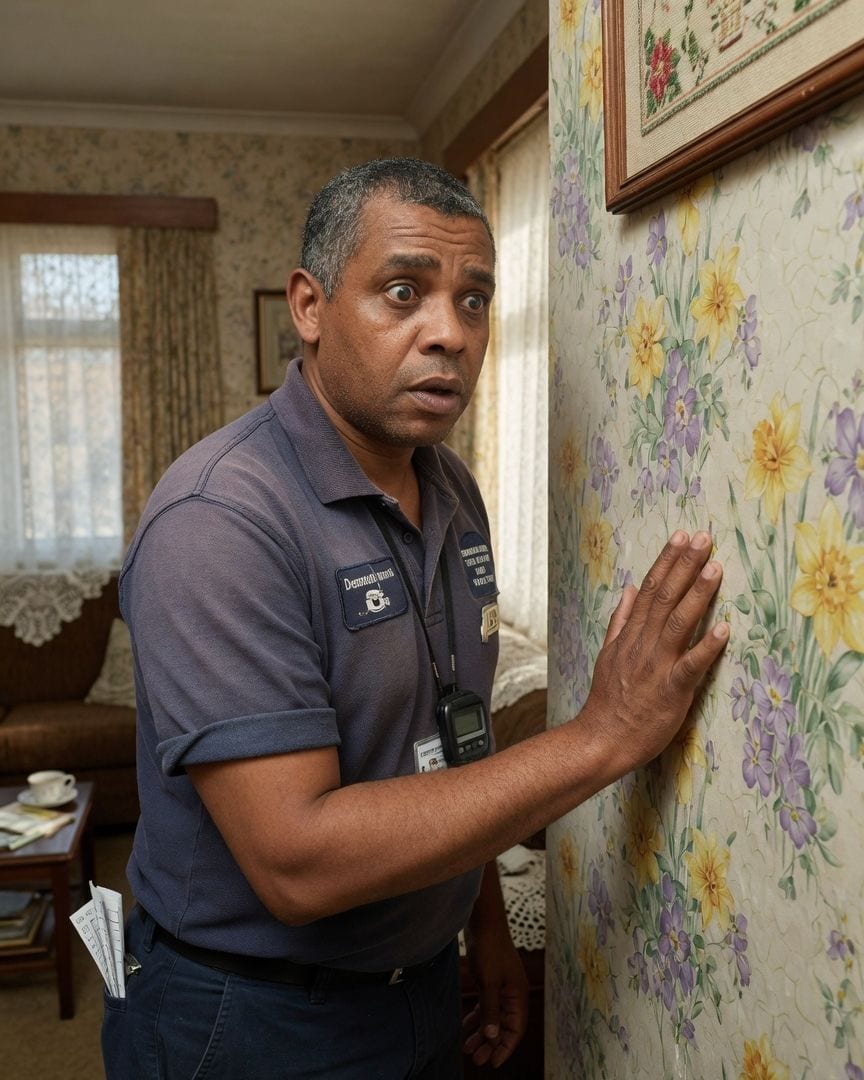
I read the water meters on this street, and this month number 30 grew a second one in pavement that was solid last month — its pipe runs back under a front door I cannot find.
I'm Desmond Drummond, a city water meter reader, used to the predictable rhythm of my fifteen-year route. But this month, Mrs. Crane's house on Elm Street showed a second meter reading. It led to a new meter pointed at a blank brick wall, and later, to a hidden door behind her living room wallpaper where no door should exist.
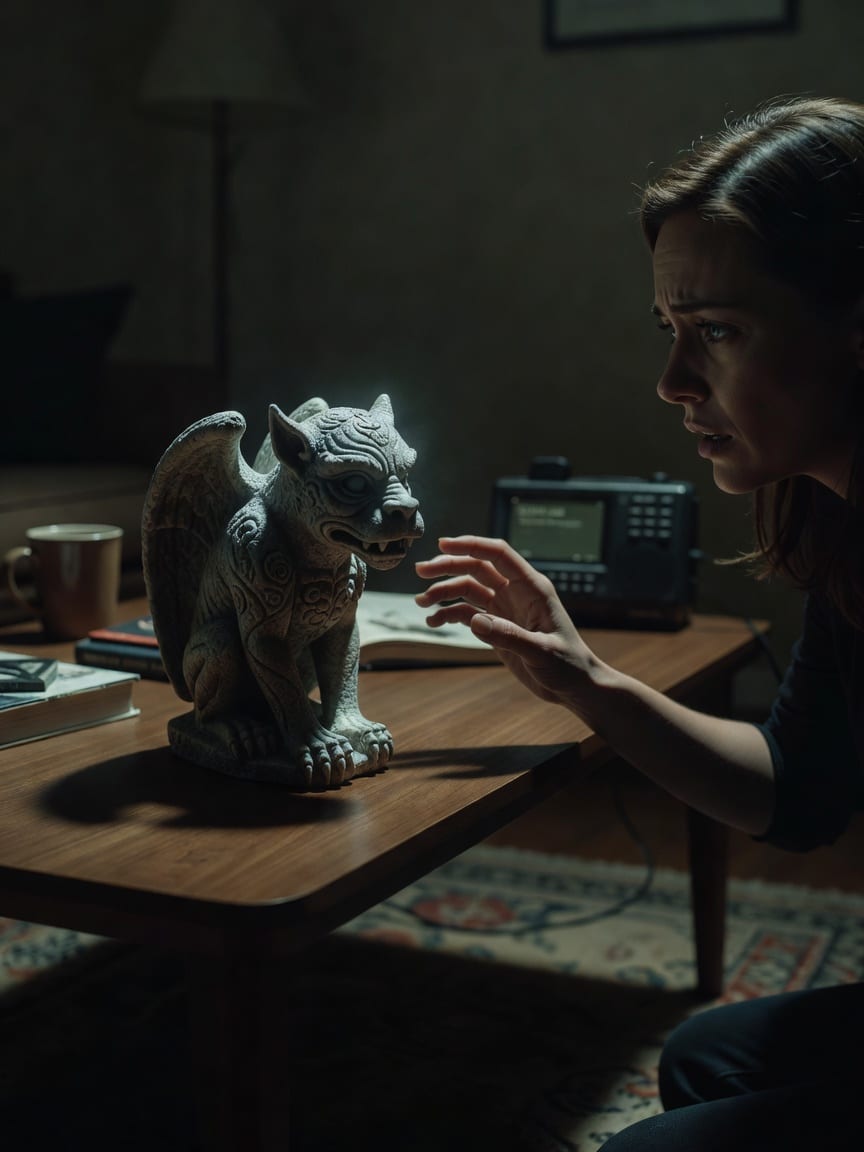
My radio scanner spoke my address at 2 AM. A flat voice read local homes, all with past dates. Mine was the only one in the future.
It was two in the morning, and my quiet house was filled with the usual hum of my weather scanner. But the static broke, replaced by a flat, synthesized voice reading a list of local addresses and dates. My hand froze when it spoke my own address, 181 Foster Drive, followed by a date: October 27th. That date was three weeks from now.