The light crosses the estuary on six specific nights a year. My ferryman called it marsh gas, but the coastguard's log entries for it stop abruptly and resume in a new hand.
The move to Blackwater Bay felt like a clean slate, exactly what I’d needed. The salty air and the constant whisper of the waves were a balm, and as an architect, the old fishing cottages offered a fresh perspective.
I spent my first full moon here by the water’s edge, watching the tide pull back from the estuary, exposing the mudflats. The air was crisp, carrying the briny scent of the marsh.
Arthur Ingram, the local ferryman, was making his last run of the night, taking me back to my side of the bay.
His old boat cut a dark line across the moon-silvered water, the diesel engine rumbling a steady counterpoint to the distant gulls.
That’s when I saw it. A faint light, no bigger than a distant lantern, gliding across the exposed marshland, moving steadily landward. It wasn’t a boat light; it was too low, too fluid, without the rigid angles of navigation.
I pointed it out to Arthur. "What's that out there?" I asked, my voice barely audible above the engine.
Arthur didn't even turn his head. His knuckles were white on the tiller. "Marsh gas," he grunted, his voice tight, eyes fixed on the distant shore, not the light.
He pulled harder on the throttle, the boat lurching forward, cutting the water a little faster. It was a brusque dismissal, and I attributed it to the late hour, or perhaps just his general gruffness.
But there was a tension in his shoulders, a rigidity, that bothered me. Not quite fear, more like… a deep-seated unease he wanted to outrun.
Back in my new cottage, the encounter replayed in my mind. Marsh gas. I’d read about phosphorescent gases, but they usually dissipated or shimmered, not moved with such deliberate purpose.
The next day, after unpacking a few more boxes, I found myself drawn to a dusty antique shop by the harbor.
Tucked away on a back shelf, under a stack of old sea charts, was a leather-bound book, its spine faded but title still legible: "Blackwater Bay Coastguard Watch Log." It looked authentic, smelling faintly of brine and mildew.
I bought it on a whim.
That evening, sipping tea, I flipped through its brittle pages. The log entries were meticulous, mostly routine observations of weather and vessel movements. But then I found it. Entries for the ‘estuary light.’
Not just once, but repeatedly, on six specific nights each year. Always at the hour the tide turned, always moving landward. The details were consistent across decades. What unnerved me wasn’t the light itself, but the breaks in the record.
On several of these 'light nights,' an entry would abruptly stop mid-sentence, the handwriting distinct and firm.
The very next line, on the same date, would resume in a completely different hand, sometimes shaky, sometimes almost frantic, picking up where the previous one left off, as if the first observer had simply vanished from their post.
It was too precise to be mere shift changes, too abrupt for a simple hand-off. It felt like an interruption, a void. The room itself seemed to grow cooler as I turned another page.
Intrigued and unsettled, I bought the log. The change in handwriting, the sudden silences it implied, nagged at me.
I spent the next few days at the Blackwater Bay Public Library, a small, quiet building that smelled pleasantly of old paper and beeswax.
Cecilia Mercer, the librarian, a woman with kind eyes and perpetually tidy hair, smiled dismissively when I explained my interest in "local phenomena." "Oh, the marsh gas," she said, with an air of practiced patience. "Old wives' tales, dear.
The bay’s full of them."
I tried to find weather anomalies or scientific explanations for the light on those specific nights listed in the log.
I scoured microfiches of old newspaper archives, looking for anything about unusual atmospheric conditions or marsh gas sightings that might account for such a recurring, precise phenomenon. Nothing. No official reports. No scientific articles.
Just the usual reports of local fishing hauls and town council meetings. Cecilia's easy dismissal started to feel less like reassurance and more like… evasion.
Instead, a different pattern emerged.
Interspersed with the innocuous community news, often on or around the exact dates when the coastguard log entries abruptly changed hands, I found small, almost unremarked articles about 'sudden relocations' or 'unexplained departures' from Blackwater Bay.
Always individuals with no clear next-of-kin, no strong ties to the town, no forwarding addresses. The explanations were vague, almost too tidy in their brevity.
A fisherman "sought new waters," a young woman "went to live with family up north," a retired shopkeeper "decided on a change of pace." There was no follow-up, no questioning. The town simply accepted these vanishing acts.
My finger traced the faded newsprint, and I noticed something else, something so subtle I nearly missed it.
Etched into the margin beside several of these 'departure' notices, in what looked like a personal, almost secret mark, was a faint, unique symbol: a stylized wave. Not a general doodle, but a specific, elegant curl.
I remembered seeing a similar mark on a few pages of the old coastguard log, beside the entries for the light, where the handwriting had abruptly changed.
It was too specific to be coincidence, too subtle to be accidental, a quiet, almost secret language threaded through the town’s silent history.
The fluorescent lights of the library hummed, suddenly sounding less like electricity and more like a held breath.
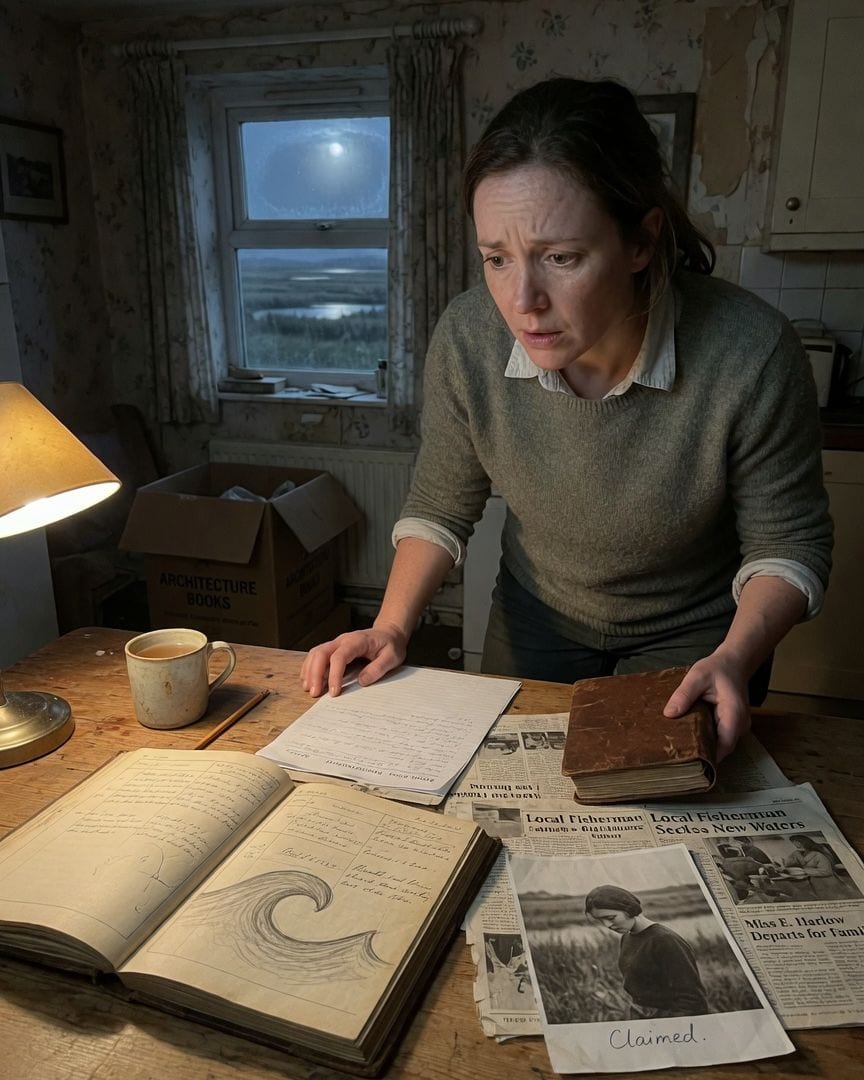
Back in my cottage, the quiet hum of the marsh outside my window felt different now. I spread the old log and the newspaper clippings across my kitchen table, connecting the dates, mapping the subtle symbol.
The wave was definitely a recurring motif, a whisper from the margins.
I found a page in the coastguard log where the entries for the light not only ceased, but the wave symbol was drawn larger, almost frantically, right across the page, smeared as if done in haste or distress.
It wasn't just a mark; it felt like a warning.
Tucked behind this page, almost hidden within the brittle binding, was a faded, brittle photograph. It showed a young woman, perhaps in her early twenties, standing by the estuary, the marsh stretching out behind her.
Her face was beautiful, a faint, almost serene smile on her lips. But her eyes… they held a distant, unfocused quality, a blankness that didn't match the gentle smile. They looked through me, through the camera, through time.
My breath hitched. I flipped the photo over. Scrawled on the back, in a looping, unfamiliar hand, was a single, unsettling word: 'Claimed.'
The word 'Claimed' was a hook, sharp and cold, lodged deep in my mind. It rattled everything I thought I knew about Blackwater Bay.
I had to know about the woman in the photo, what 'Claimed' meant, and how it connected to the departures. I returned to Cecilia at the library, the faded photograph clutched in my hand.
"I found this," I said, my voice lower than I intended, pushing the picture across her polished wooden counter. "And I'm not 'reading too much into old records.' These departures are too many, too consistent."
Cecilia’s demeanor, usually so composed, shifted. Her eyes flickered to the photograph, then to my face, then back to the closed archives behind her. She claimed no knowledge, a tremor in her voice. "I… I really can't help you, Eleanor.
Old photographs, old rumors. People move on, it happens." She suggested I was "dwelling on things best left alone." The dismissive smile was gone, replaced by a guarded, almost fearful expression.
The air in the library, usually so still, seemed to thicken, heavy with unspoken things.
Undeterred, I dug deeper into the library’s public records. Official town registries held lists of 'missing persons' and 'unaccounted for' individuals. The names from the 'departure' articles, and even one matching the woman in the photograph, appeared on these lists.
But crucially, there was never any resolution listed. No body found, no new address, no 'case closed.' They simply… remained. And the dates of their entries aligned disturbingly with the light’s appearances and the log’s hand changes.
It was a statistical impossibility, a pattern woven through generations, too regular to be anything but deliberate.
Cecilia wouldn’t help, but the logbook pointed me to another name: Samuel Sullivan, the retired coastguard whose name appeared as an early log-keeper. His address was in the oldest part of town, near the south marsh.
I found him in a weathered fishing shack, the air thick with the smell of brine and tar. He was an old man, perhaps seventy-five, hunched over a tangle of nets, his hands gnarled and scarred.
He was initially gruff, dismissing me with a curt wave. "Newcomers always prying," he rasped, his eyes watery but sharp.
I showed him the logbook, the photograph of the 'claimed' woman, and the newspaper clippings detailing the vague departures. Samuel’s gaze lingered on the photograph, a flicker of something painful, ancient, crossing his face.
A deep sigh escaped him, like the slow hiss of air from a punctured tire. He didn't deny it.
Instead, he reached for an antique estuary map I’d brought, one I’d found with the log, which I’d initially dismissed as mere navigational points. His finger, thick and calloused, traced a faded red circle far out in the marsh.
"Never go near there after dark," he rasped, his voice barely a whisper. "Especially not when the tide turns." He wouldn't explain why, his jaw clenched, only repeating, "Some things are best left to the marsh, girl.
Some things are best left alone."
As I continued my research, trying to reconcile Samuel's cryptic warnings with the cold data, the town’s quiet demeanor towards me shifted. It was subtle at first.
Arthur, the ferryman, started giving me odd, lingering looks when I was near the dock. Not hostile, but assessing, almost expectant. I dismissed it as paranoia, the natural byproduct of spending too much time with disturbing old records.
Then, things got more personal. I returned to my cottage one afternoon to find the door slightly ajar. My heart leaped into my throat. I was certain I’d locked it. I moved through the small rooms, every nerve on edge.
Nothing was stolen. No drawers rifled, no valuables missing. But my old estuary map, the one with the faded red circle Samuel had pointed to, was open on my kitchen table.
It was turned precisely to the marsh, the circled area clearly visible, the red ink stark against the aged paper. I’d left it folded on a shelf. It was impossible.
I checked the lock again, rattling it until my knuckles ached. It was solid.
One evening, after another fruitless afternoon trying to decipher Samuel’s evasions, I left his fishing shack and walked towards my cottage. The twilight was bleeding into a deeper indigo.
Arthur’s ferry, long after its usual hours, was moored by the dock. He stood on the deck, a still silhouette against the darkening water, his figure unreadable in the dim light. I hesitated, but walked past. "Still asking questions, Eleanor?"
he said, his voice low, gravelly, carrying across the still air. He didn't look at me directly, his gaze fixed on the marsh, but the question hung in the air like a threat.
"Some answers are worse than the not knowing." He didn't offer me a ride, just stood there, watching me walk home, a sentinel of unspoken warnings.
I felt a prickle on my neck, the distinct sensation of being observed, not just by Arthur, but by the quiet houses lining the street, by the very shadows themselves. It clicked then: the town wasn't just ignoring the problem.
They were actively, subtly, trying to manage me.
I couldn’t let it go. The feeling of being watched, the moved map, Samuel’s haunted eyes, Arthur’s warnings – it all coalesced into a suffocating certainty that I was on the brink of something profound and terrible.
I found Samuel again the next morning, standing by his nets, staring out at the mist-shrouded marsh. I showed him the wave symbol from the log and the clippings, laying out all the evidence. "It's a pattern, isn't it?"
I pressed, my voice firm despite the tremor in my hands. "People don't just 'relocate' like that. Not with matching dates and symbols and a changed hand in the logbook."
Samuel sighed, a long, weary sound that seemed to carry the weight of generations. His gaze remained fixed on the marsh, as if expecting something to emerge from the shifting grey.
"The light… it calls," he began, his voice barely a whisper, thin as the sea mist. "Always has. Six nights a year, when the tide turns, just as you saw it. It’s not marsh gas, Eleanor. It’s the marsh reaching.
Always has."
He finally looked at me, his old eyes dull with a sorrow I couldn't comprehend. He explained the 'rule' – a generations-old understanding, passed down through whispers and wary glances. "You never answer it. You never go near.
Not on those nights. Not for anything." He spoke of people who 'answered,' who 'went to the marsh.' They didn't die, not exactly. They 'returned,' he said, his voice thick with a strange blend of dread and resignation.
They came back, but they were… changed. "Like the woman in your picture," Samuel said, nodding towards the photograph I still clutched. "She came back. But she wasn't… her.
Her eyes held the marsh, and she'd stand by the shore, on those nights, calling others."
My mind raced, every disjointed piece of the puzzle snapping into place with sickening clarity. Arthur’s hurried rowing, his terse warnings. The abrupt changes in the coastguard log, indicating a sudden absence. The terse, vague newspaper articles about 'relocations.'
The unyielding silence of the town, Cecilia’s fear. It all clicked: Blackwater Bay wasn't just superstitious; they were managing a real, terrifying, cyclical phenomenon. The 'rule' was their only defense, a desperate pact to avoid being 'claimed.'
Samuel’s voice, low and desolate, sealed it. "We don't fight it, Eleanor. We can't. We just… avoid it. And we watch those who break the rule."
The cold dampness of the marsh seemed to seep through the shack’s walls, raising goosebumps on my arms.
Horrified by the true gravity of the town's quiet pact, and the grim reality of those 'returned,' I stumbled back to the library. Cecilia was behind her desk, meticulously arranging a shelf of dusty almanacs.
Her face was pale when I approached, her composure finally shattered. "The ledger," I said, my voice hoarse, "the unofficial records. Where are they?"
She stared at me, then at her hands, tears silently streaming down her cheeks. "You shouldn't have dug, Eleanor," she whispered, her voice barely audible. Finally, she nodded towards a small, locked cabinet tucked behind her desk.
With trembling hands, she produced a key from around her neck and opened it. Inside, amidst dusty ledgers and forgotten deeds, was a private, leather-bound journal. It felt ancient, heavy in my hands.
I opened it. It was a list, meticulously kept, spanning centuries, of names and dates. A recurring pattern across generations, undeniably tied to the light's cyclical appearances.
Each entry was accompanied by that familiar, stylized wave symbol I’d noticed in the margins of the other records. It was a complete, chilling record of those 'claimed,' and those 'returned.'
My eyes scanned the precise, almost clinical script, my heart pounding against my ribs, each beat a drum of dread. I saw the name from the photograph, a half-dozen others I’d recognized from the vague 'departure' articles.
The dates were chillingly regular, an unbroken cycle stretching back further than I could comprehend. My gaze, almost unwillingly, snapped to the most recent entry, the ink barely dry.
It was a date, just weeks from now, marked with a small, stylized symbol of a wave. And beneath it, in the same careful, damning script, was my own name: Eleanor Winslow.
I stared at my name, stark and terrifying, in Cecilia's ledger. The room, with its hushed reverence for history, suddenly felt like a tomb. I gripped the heavy book, my knuckles white. "What is this?"
I demanded, my voice raw, though I already knew.
Cecilia, her face streaked with tears, finally explained the full, horrifying truth. "It's not a punishment, Eleanor," she whispered, her voice catching. "It's a necessity. The marsh… it needs to take. It always has.
The rule is for us, to not be chosen. To keep our distance. But if you break it, if you go near, if you answer… it marks you. You become… part of the cycle."
She revealed that the town elders, including Arthur, were the quiet 'keepers' of the ledger. They identified those who had been 'marked' by their curiosity, their proximity, their refusal to heed the warnings.
Not to punish them, but so the community knew who to avoid, who might, on those specific nights, begin to 'call' for others.
The 'returned' ones, like the woman in the photograph, were not simply gone; they were subtly altered, becoming silent, hollowed lures, drawn back to the estuary on the light nights, their distant smiles guiding others to 'answer the call.'
Eleanor’s mind reeled, the coherence of it all a new kind of horror. Arthur's hurried rowing and evasive explanation. Samuel’s weary resignation. The changed log entries, the quick 'retirement' of those who knew too much. The vague 'relocations.'
The circled areas on the antique map Samuel had pointed to, not navigational aids, but 'calling points.'
It was all part of the town's desperate, generations-long effort to maintain a fragile balance, sacrificing a few to save the many, to keep the larger community safe from the marsh's silent hunger.
My own name in the ledger wasn't a threat of what might happen; it was a chilling declaration that it had already happened. I had been chosen. The next light night was my due date.
Panicked, a cold dread seizing every part of me, I tried to leave Blackwater Bay. I packed my car in a blur, throwing clothes and essentials into bags. My hands shook so violently I could barely fasten the buckles.
As I drove towards the only road out, the town felt different. The familiar streetlights flickered erratically, casting long, jumping shadows that seemed to dance with malicious glee.
I saw figures moving in those shadows, not pursuing me, but standing, watching, their faces unreadable, like an audience at a macabre play. Their stillness was more terrifying than any chase.
I passed Arthur's ferry, moored for the night, its hull black against the water. He was standing on the deck, a lone silhouette against the rising full moon, his gaze fixed on the estuary.
The light was there, faint but growing, a pale pulse moving steadily landward, just as the log described. I sped up, the old engine whining in protest.
But then a sudden, overwhelming urge to turn towards the marsh gripped me, a phantom voice whispering my name, soft and insistent, pulling at something deep within.
I fought it, my hands white-knuckled on the wheel, the car swerving wildly on the narrow road. My tires screeched. The engine sputtered, coughed once, then died.
I tried to restart it, twisting the key frantically, but it was useless. A final, despondent click was all I got. The light was closer now, a throbbing, pearlescent glow, visible through my windshield.
Through my rear-view mirror, I saw a figure emerge from the trees at the edge of the marsh, walking slowly, deliberately, towards my car. Their face was obscured by shadow, but their gait was unnervingly familiar, a subtle sway.
It was the woman from the photograph, her faint, distant smile now clearly visible in the growing glow of the marsh light, her eyes reflecting the light like dark, still pools. My breath hitched.
With fumbling fingers, I grabbed my phone, snapping a frantic picture of the pulsing light and the approaching figure, a desperate, final piece of proof of what the town knew.
The car door handle rattled from the outside, then slowly began to turn.
Eleanor Winslow’s abandoned car was found on the old marsh road the next morning, keys still in the ignition, her belongings untouched.
The police, after a brief investigation, concluded she simply 'walked away,' another transient soul lost to the quiet draw of the coast, a common enough occurrence in a world full of unexplained departures.
The townspeople offered their quiet condolences, then resumed their lives, a subtle vigilance in their eyes. The coastguard’s watch log continued to record the light, the entries now in a new, unfamiliar hand.
Cecilia Mercer quietly filed away her ledger, its newest entry sealed away from prying eyes.
Weeks later, Arthur Ingram, the ferryman, found a discarded cell phone near the estuary path.
Its screen was cracked, but the last image saved was clear: a faint, pulsing light over the water, and a blurred, indistinct figure walking from the trees. He stared at it for a long moment, then deleted the image.
The next morning, a new woman arrived in Blackwater Bay, an architect, looking for a quiet life. She paused by the estuary, watching the tide turn.
She felt a faint pull, a quiet whisper that sounded like her own name, drifting from the marsh. She smiled, a soft, distant smile, and walked towards the water. The marsh always gives things back, in its own way.
If this one got to you
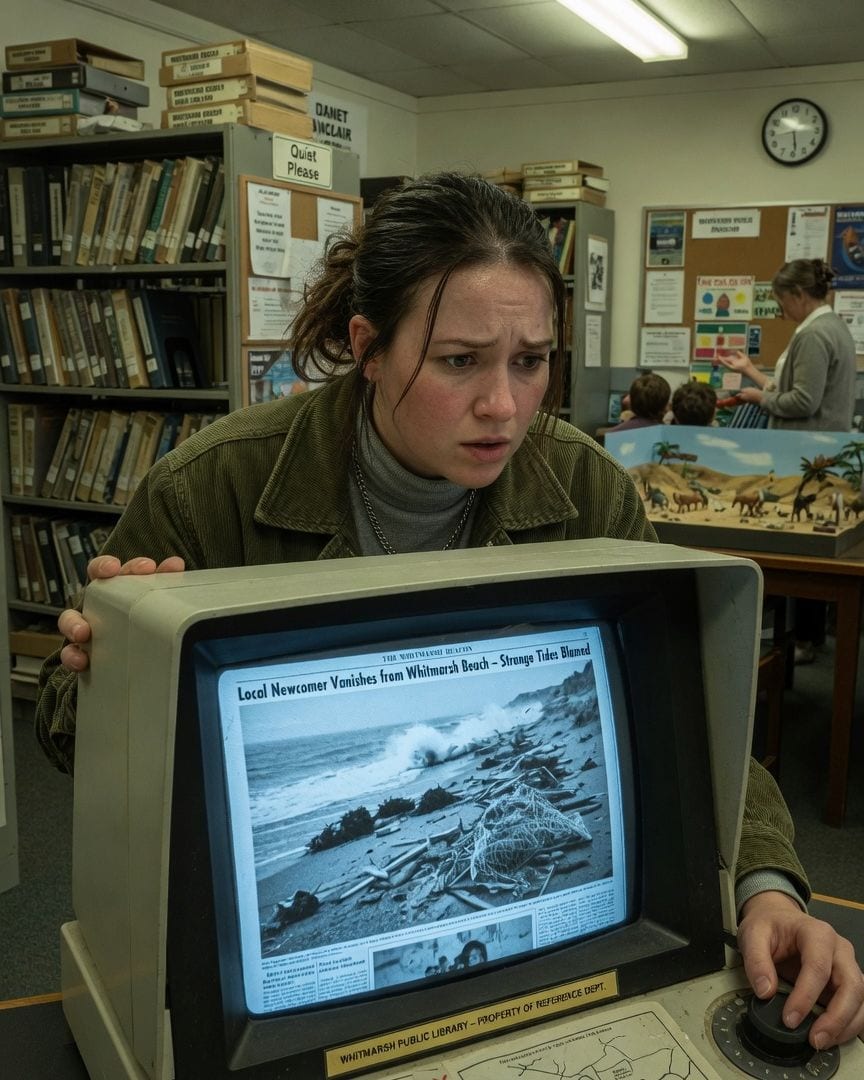
Every Whit Monday, the local paper runs the same empty beach photo. The tide line never changes, though the year does.
Since moving to Whitmarsh, I've spent months at the public library researching old newspapers. My librarian always subtly steered me away from certain dates, but I noticed a chilling pattern: 59 consecutive years of *The Whitmarsh Beacon* featured the exact same photo of an empty, still beach. Then I found the 1964 edition, and its front page screamed about a vanished newcomer and strange, chaotic tides.
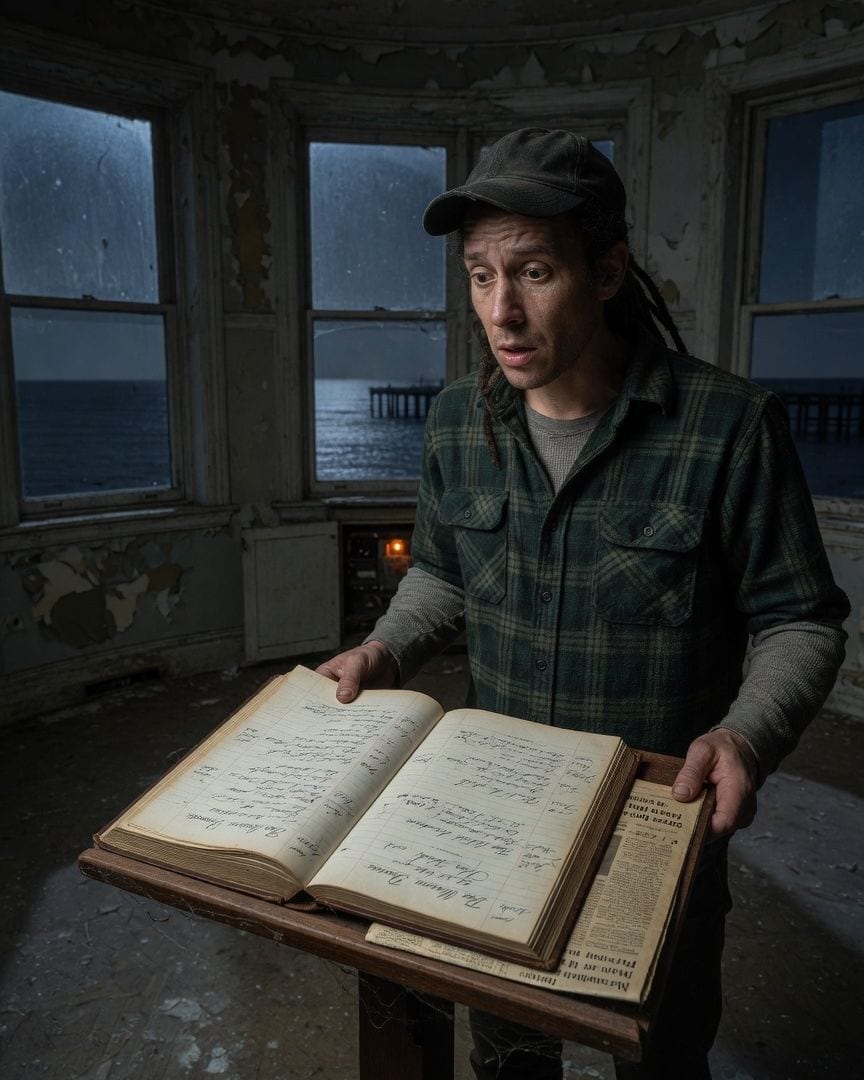
My pier's ballroom register books a new dance for Saturday, electricity meter running, but those lights are never on.
Taking over as pier caretaker, I was told one rule: never turn on the end pavilion's lights. But my first week, I noticed its electricity meter was steadily advancing every single night, even though the main breaker was off. Inside the dark, unused ballroom, I found an old ledger open to 'The Moonlit Waltz' for this Saturday, raising a chilling question: who was booking a dance and drawing power in a place that should be empty?
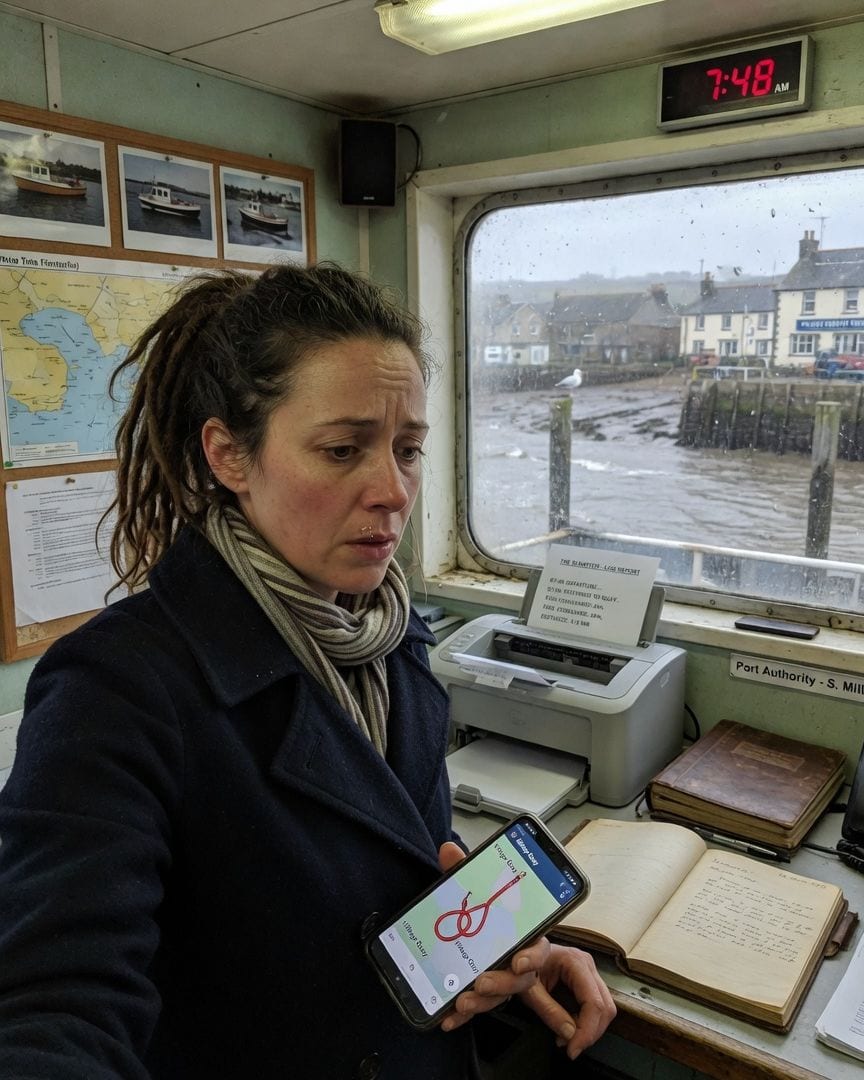
My morning ferry crossed for 40 minutes. The destination town just disappeared.
I board 'The Seawitch' every Tuesday for the familiar eight-minute estuary crossing. But this morning, after making good time, Captain Bernard and I watched the town quay simply fail to appear. Instead, our ferry repeatedly returned to the very same village quay we'd just left, despite burning fuel and advancing the clock.
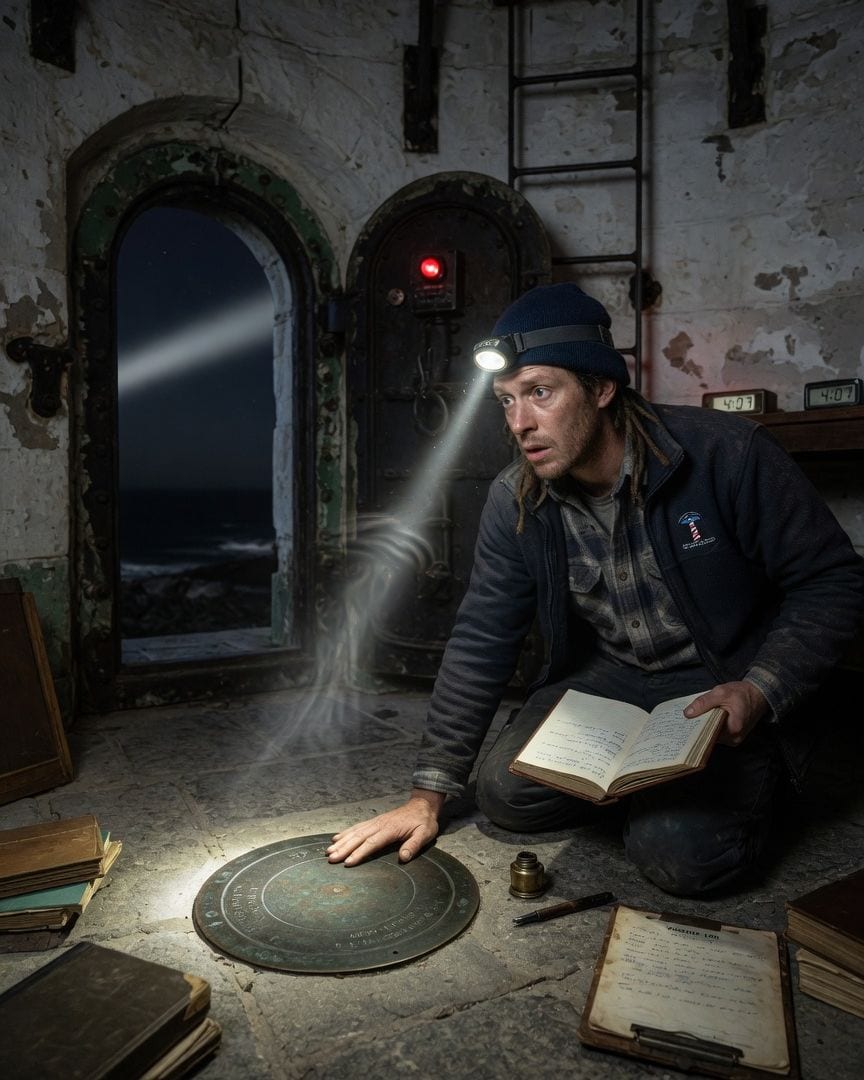
Every ninth year since 1901, my logbook records a boat through the gate at 4:05am — 'vessel through, none seen.' I was on watch tonight. Nothing passed.
As the lighthouse keeper, I log the same impossible entry every nine years, a lie I'm compelled to write. But tonight, a hidden brass disc in the floor, not on any blueprint, feels oddly warm. Hours later, it hums, and the air above it shimmers and distorts, then vanishes.
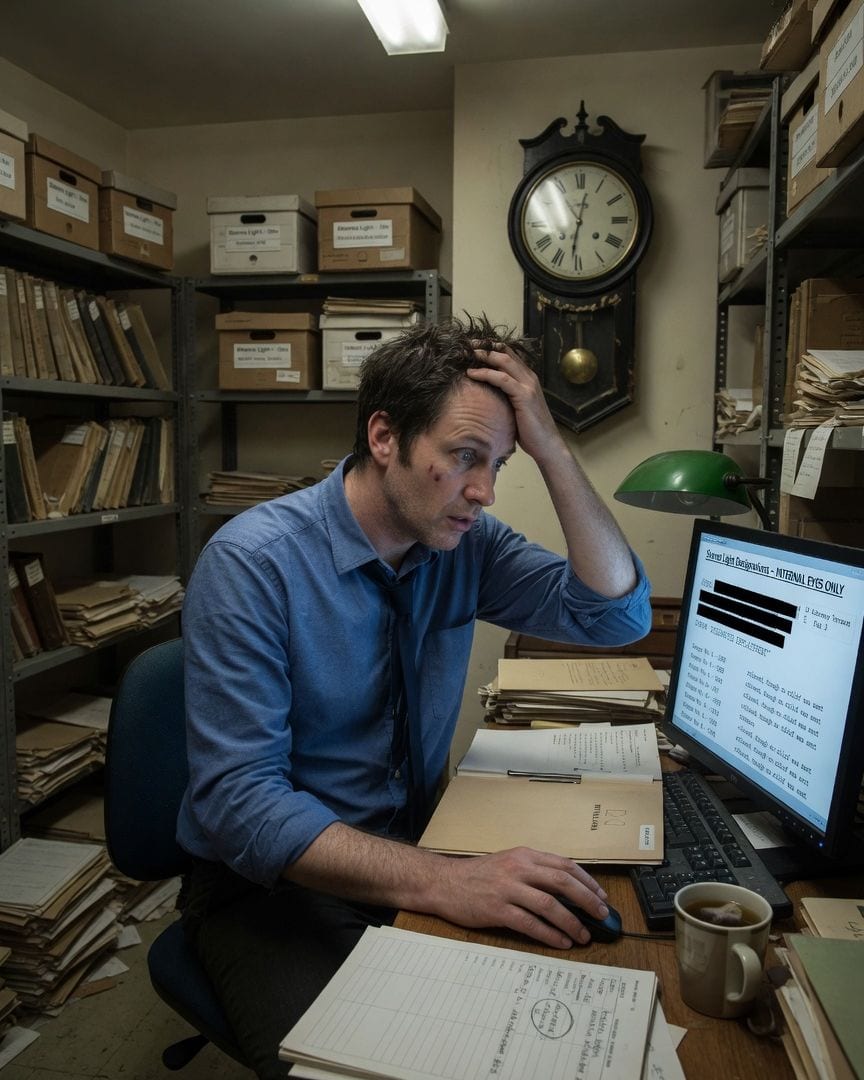
I found my street address in a century-old lighthouse file, printed decades before I lived there.
As a maritime archivist, my world revolves around forgotten lives and dusty ledgers. But the Skerne Light files broke that quiet rhythm, revealing a chilling pattern: 'Keeper number 6' relieved, though no relief was sent, repeating for decades. Now, an internal document with a strange code has led me to a redacted entry, revealing my own street address, decades before I ever lived there.
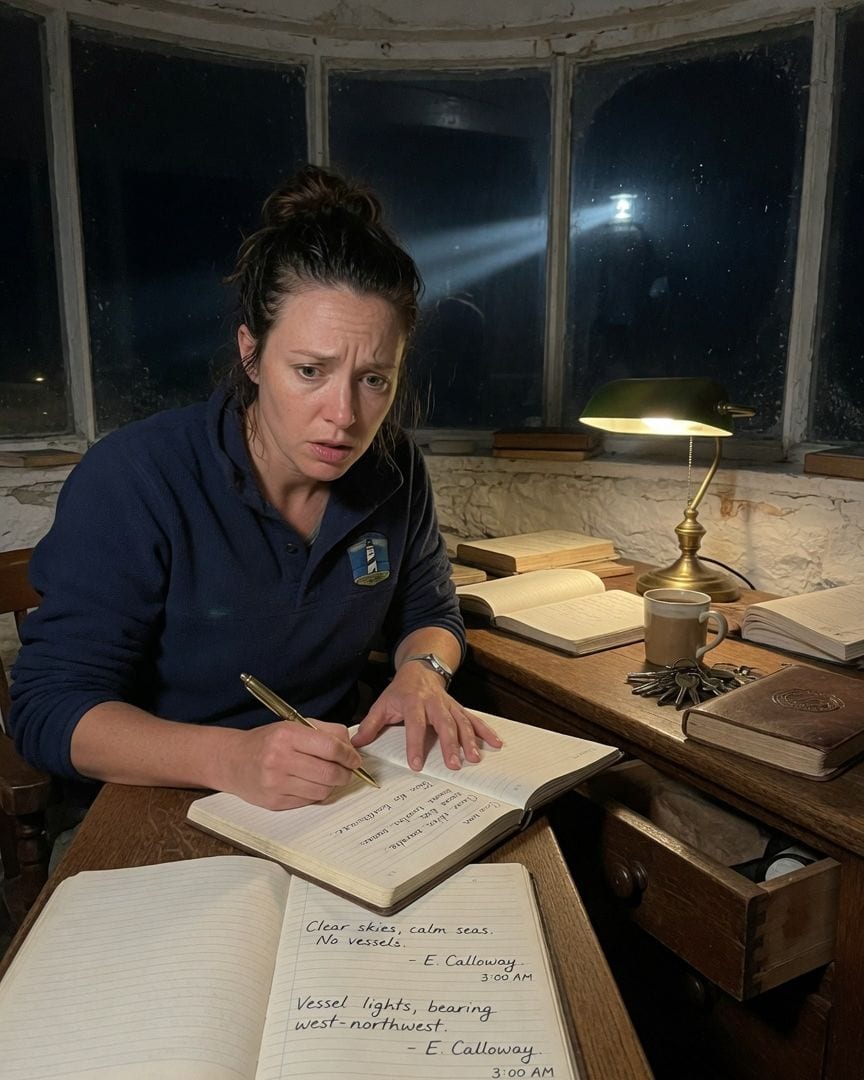
My logbook had a 3 AM entry, in my own precise hand, that I never wrote. Then I found an impossibly cold, hidden book with my name signed to an identical entry from last night.
My routine lighthouse shift was quiet until I noticed a new entry in the official logbook. Dated 3:00 AM, it described a vessel I never saw, written in my exact handwriting, and signed with my name. But I hadn't penned a single word.