A hand-drawn map keeps arriving through our letterbox — every space on the lane marked green, except the one spot under the old lime tree, alone in red. The agent made us swear we'd never park there.
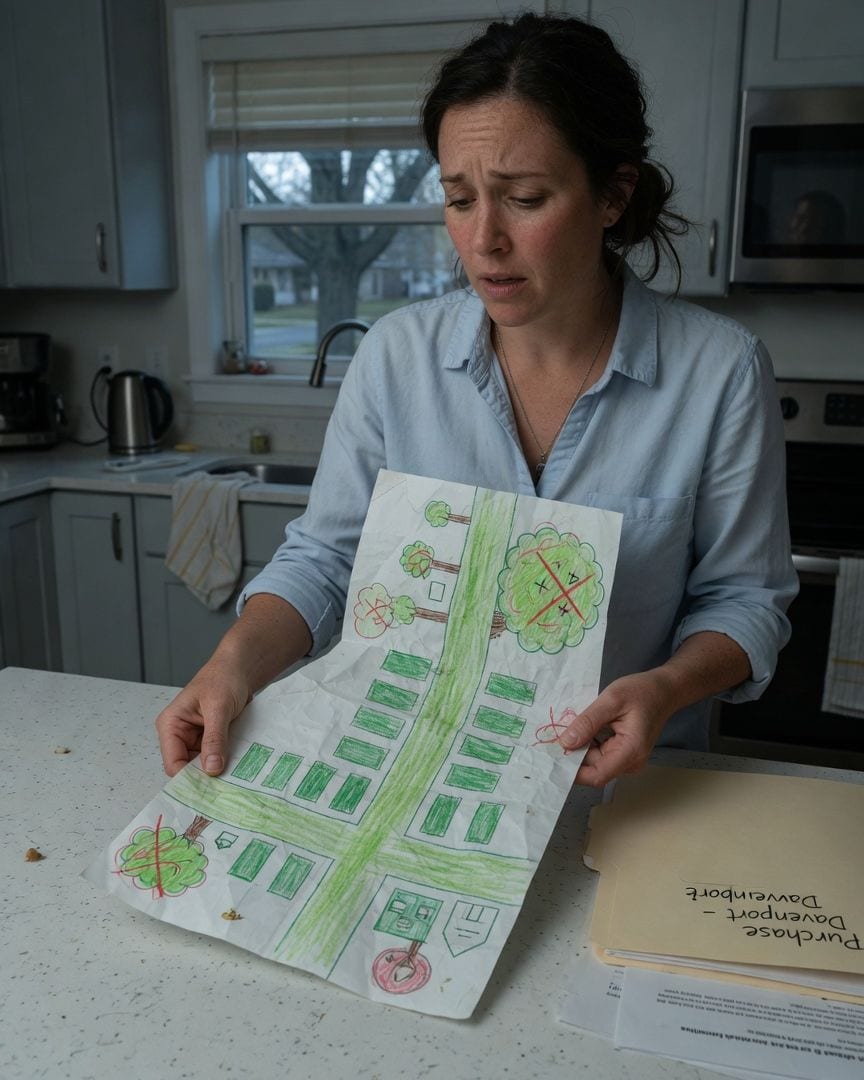
Another one. Folded into a neat square, slipped through the letterbox, just like the last three. I smoothed it out on the kitchen counter, a fresh wave of irritation washing over me.
It was always the same crude drawing of our lane: every parking space marked with a childish green crayon, except for the one directly under the old lime tree, which glowed an angry, unsettling red.
I picked at a stubborn crumb on the quartz. We’d moved into the house in spring, barely settled in before the first map appeared.
I'd parked there once, just for ten minutes, in a downpour that had turned the whole street into a slick sheet of water. Every other spot was taken.
Vincent, my husband, had laughed it off as a harmless, if persistent, local prank when the first map arrived. He’d said something about small towns and their quirks.
But the maps kept coming, every week, a silent, unsettling reminder of a rule I’d barely registered on the estate agent’s addendum. It felt less like a prank and more like… a watch. Someone was paying attention. Too much attention.
The addendum was explicit, a short paragraph tacked onto the very end of the purchase agreement, initialed by both Vincent and me. “Prospective residents agree not to park any vehicle, for any duration, beneath the large lime tree at the northern end of Davenport Lane, adjacent to property 14. Violation of this covenant may result in forfeiture of certain neighborhood amenities and potentially void aspects of the property’s liability insurance.” Vincent had chuckled, called it boilerplate nonsense from a town with too much time on its hands.
Now, I wasn't so sure. The crude maps, the constant red 'X' over that single spot, felt like they were reinforcing something far older than a modern legal clause.
I decided to get to the bottom of it. I pulled out the thick folder containing our house purchase documents. There it was: the addendum, neatly typed, signed, and dated. Official, yes, but baffling. "Forfeiture of amenities?" What amenities?
We hadn't seen any beyond public park benches. "Void liability insurance?" For parking under a tree? It sounded like a scare tactic, yet it was legally binding.
I walked the lane, stopping to chat with a few neighbours, trying to be discreet. "Do you ever get strange notes in your letterbox?" I asked Mrs. Albright, who’d lived next door for forty years.
She just smiled, a vague, distant look in her eyes, and changed the subject to her prize-winning petunias. Mr. Henderson, across the street, gave a quick, almost nervous shake of his head before retreating into his garage.
No one would meet my eye when I brought it up. It was like a silent agreement, an unspoken pact.
The small local library was musty, smelling of old paper and dust motes dancing in the afternoon light. I hoped to find some town history, an old eccentric’s memoir, anything that might explain the odd parking rule.
Tucked away in a section labeled 'Local Interest – Oakhaven Peculiarities,' I found it: an old, leather-bound volume titled 'Echoes of Oakhaven.' It was brittle, the cover scuffed, pages yellowed with age.
Flipping through, I found a brittle, yellowed page with a hand-drawn illustration that looked uncannily like our very lane. Below it, a faded, archaic passage.
It referred to 'the Sentinel Tree' and 'the forbidden ground beneath its shadow,' warning of 'the quiet cost of intrusion.' The language wasn't superstitious, not exactly. It was more... legalistic, almost.
As if describing a statute of an ancient, unyielding law. The official explanation of a local bylaw, some quaint municipal oddity, died right there, suffocated by the cold weight of those words.
Driven by the unsettling passage, I delved deeper into the old book. The air in the library seemed to grow colder as I turned pages, a draft I couldn't locate raising goosebumps on my arms.
I found sporadic mentions of families, names like 'Carver' and 'Davenport'—a strange coincidence, I noted, considering our own name—who lived on the lane generations ago.
These mentions were often followed by cryptic notes about their 'sudden quietude' or 'unexplained departures' after a specific year. No further records existed for them in the town archives. They just… stopped being mentioned.
Later that week, feeling restless, I browsed a cluttered antique shop on Main Street. Dust motes swirled in the shafts of light from the window, illuminating piles of forgotten trinkets and books.
I was drawn to a small, unassuming book on local flora, its cover depicting various native plants in faded watercolour. As I paged through it, a folded piece of paper slipped out from between two dried pressed leaves.
It was a hand-drawn map, identical in its crude, almost child-like style to the ones in my letterbox, but clearly much older, the paper brittle and yellowed like the library book. This map, however, depicted my street, my house.
And a single, stark red 'X' was drawn over my property, not the parking spot. Below it, a faded, unfamiliar name was scrawled. Helen Delaney.
The second map chilled me to my bones. I took it home, spreading it next to the latest one from my letterbox on the kitchen island.
The style was unmistakable—the same thick, uncertain lines, the same stark red X. But this one was old, brittle, and its target was my house. The name on the old map, ‘Helen Delaney,’ kept echoing in my head.
I went back to the library. The elderly archivist, a quiet man named Gideon Vaughn, was at his usual post behind the polished oak counter.
His glasses perched low on his nose, he seemed to peer over them rather than through them.
When I asked about Helen Delaney, he seemed reluctant, his eyes darting to the window that looked out onto Main Street before settling back on me. "Delaney," he mumbled, running a finger down a handwritten ledger.
"Not many of those anymore. A few generations back, perhaps." His lack of recall was strange, given his position.
I didn't let up. "What about old newspaper archives? Microfiches?" He sighed, a soft, dry sound, and pointed to a dusty corner. I spent hours there, the whir of the microfiche reader a lonely sound in the quiet library.
I uncovered a series of small, almost overlooked articles from the 1960s and 1980s. They reported on 'unexplained family departures' or 'quiet relocations' from our very lane.
The names were different each time – the Carvers, the Davidsons, the Millers – but the pattern of dates was chillingly precise: roughly every 20-25 years.
No dramatic headlines, just small, almost overlooked notices, confirming the families 'left town quietly' for undisclosed reasons. No forwarding addresses, no goodbyes. The last incident, a family named Peterson, was just over two decades ago.
The pattern was too consistent to be coincidence, and too quiet to be random. The microfiche machine hummed, and for a moment, the air around me felt thick, as if the silence held a breath.
I started to feel a chilling sense of being watched. It wasn’t just paranoia; it was a prickling sensation on the back of my neck.
One morning, I found another map, not in my letterbox, but tucked under my car's wiper blade. I’d parked several streets away from the lime tree, just to prove to myself I wasn't being silly.
This one had the same crude style, but the red ‘X’ now marked my bedroom window.
A few days later, while I was gardening, my elderly neighbour, Isaac Vaughn—Gideon’s brother, I’d learned—stopped at the edge of my lawn. He was a stooped man with eyes like polished stones.
He stared at me for a moment, his gaze unnervingly knowing. The trowel felt heavy in my hand. 'Some things are best left alone, Mrs. Davenport,' he rasped, his voice low, almost a whisper against the gentle rustle of leaves.
'The tree… it has its ways.' He didn't elaborate, just shuffled off down the pavement, leaving me unnerved. The trowel clattered against the stone border.
I tried to call Constance Ellison, the estate agent, several times. Her assistant, a young woman with a perpetually cheerful voice, was always strangely evasive. Constance was "unavailable," "in a meeting," or "out of the office." It was infuriating.
One afternoon, driving past Constance's office, I saw her through the plate-glass window. She was on the phone, her back to the street, but as I drove slowly past, her head turned sharply.
Her eyes, magnified by the window, met mine. Her expression was unreadable, a flicker of something I couldn't name—recognition? Alarm?
She held my gaze for a fraction of a second too long, then turned away abruptly, continuing her conversation as if she hadn't seen a thing. The cold knot in my stomach tightened.
I couldn’t shake the feeling that Constance knew more. Desperate for answers, I drove straight to her office the next day and walked in. "I need to speak to Constance Ellison," I told her assistant, my voice firm.
"And I'm not leaving until I do."
The assistant sighed, then disappeared into a back room. Moments later, Constance emerged, her usual poised demeanour slightly ruffled. She looked at me, a flicker of something in her eyes, then sighed again.
"Come in, Lydia," she said, her voice strangely calm, inviting me into her private office. The room was meticulously ordered, hushed, the air smelling faintly of lavender and old paper.
She sat behind a large mahogany desk, gesturing to the chair opposite. "The addendum," Constance began, her voice low and steady, as if delivering a eulogy. "It's not for the town's convenience, dear. It's for its management."
I pressed, my voice thin. "Management of what? The maps? The disappearances?"
Constance nodded slowly, her gaze fixed on a spot just over my left shoulder. "The maps… they're not from anyone in town. They're from it." My blood ran cold. It? "The old lime tree isn't just a tree, Lydia.
It's a conduit. A focal point for something ancient and deeply rooted in the land, something… indifferent." She spoke without emotion, as if recounting a town bylaw. "It doesn't care about parking, Lydia. It cares about… marking.
And once you break the rule, once you draw its attention, it marks you."
She leaned back, her chair creaking softly, a sound too loud in the silent room. "Those 'disappearances' you found in the archives? They weren't people leaving town. They were people being changed. They walk among us, still, sometimes.
But they're not… them. Not anymore." The full horror of the old records, the quiet departures, the repeated maps—everything snapped into chilling focus. Constance's calm, almost weary explanation was more terrifying than any scream.
The truth was worse than anything I could have imagined, because it was already happening.
A cold dread settled in my stomach as Constance spoke. The air in her office, which had felt still and warm moments before, now seemed to press in, chilling me.
"So, the maps… they're not warnings to stop me, are they?" I asked, my voice barely a whisper. The question felt foolish even as I uttered it, the answer already forming like ice in my veins.
Constance shook her head, a faint, sad smile on her lips. "No, dear. They're not. They're merely… a sign. A recognition." She leaned forward, her gaze softening with an unnerving pity, a look I’d never seen from her before.
"The maps, they only appear to those who have already been chosen. To those for whom the process has already begun." She gestured vaguely towards me. "You've been a little forgetful lately, haven't you?
Misplacing your keys, forgetting a word mid-sentence? A new habit, perhaps? A little twitch, a certain way you hold your head?"
I blinked, my mind racing, trying to deny it, to dismiss it as a trick of suggestion. But then I felt it. A familiar movement.
My left hand, which I suddenly realized, with a jolt, had been stroking the back of my right hand in a repetitive, almost mechanical gesture. I'd never done that before. Not until the last few weeks.
Constance's eyes met mine, unwavering, seeing straight through me. The clock on her wall ticked, each second amplified. "It's already begun for you, dear. It always does, after you break the rule."
I stared at my hand, frozen mid-stroke, then back at Constance. The gesture felt alien and deeply, horrifyingly familiar all at once. "What… what has begun?" I managed, my voice hoarse.
Constance explained, her voice a low, steady drone that seemed to vibrate through the floor. "It doesn't kill, Lydia. It replaces. Slowly.
It hollows out the individual, takes their essence, their memories, their very self, and replaces it with… something else. A perfect copy, on the outside. But inside… inside it's gone. The original person is lost."
She described the cycle, how the tree called, how the town had tried for generations to keep the peace, to maintain the rule, to minimize the 'losses.'
"I've seen it many times," Constance said, her eyes distant, as if watching ghosts in the corners of her office. "Friends, neighbours. They look the same, they talk the same, but the light behind their eyes is different.
The things they care about, the way they move. It’s subtle at first, then undeniable. Like a photograph, just a shade off the original print."
My mind raced, every forgotten word, every new, odd habit, every unsettling moment of detachment I’d dismissed as stress or tiredness, now clicking into place with horrifying coherence.
The dread wasn't just external; it was inside me, a silent, insidious invasion. The way I’d sometimes stare at my reflection, not quite recognizing the gleam in my own eyes.
The small moments of clarity where my past felt like someone else’s dream.
I rushed home, desperate to tell Vincent, to make him understand. The drive was a blur, the familiar streets seeming to shift and waver, almost mocking my urgency. I burst through the door, finding him in the living room, reading.
"Vincent! We have to talk. It's the tree. It's not a prank, it's… it's replacing people." I tried to explain, stumbling over my words, the entity, the maps, the 'changing.' He listened, his brow furrowed, his concern evident.
He saw the frantic light in my eyes, the slight tremble in my hands, but also, I knew, the subtle shifts Constance pointed out: the new, oddly precise way I arranged the scatter cushions on the sofa, the way my gaze sometimes seemed to drift past him rather than at him, settling on some unseen point in the distance.
He tried to offer rational explanations, to calm me, but his words felt hollow to my ears, like the echo of a stranger’s voice. He suggested I was overtired, stressed by the move, that my imagination was running wild.
I knew he couldn't grasp it. I knew I was already too far gone, too deeply implicated. I walked to the hallway mirror, drawn by an irresistible urge.
I looked at my reflection, and for a fleeting moment, my own eyes seemed to hold an unfamiliar, serene blankness, a placid depth that wasn't mine. It was a terrifying peace.
I turned back to Vincent, a desperate plea in my eyes, though I knew, even as I formed the words, that it was futile. "Is there… is there a way back?" I whispered, my voice cracking, fragile.
Constance’s calm acceptance echoed in my mind: Once marked, the change is set in motion. There was no escape. Only the dawning, quiet acceptance of my own inevitable, internal erasure.
Vincent struggled with the quiet transformation of his wife.
She looked exactly the same, moved the same, yet her responses were subtly off, her laughter a shade too hollow, her eyes holding a distant, serene quality that chilled him to the bone.
He tried to reach the person he knew, recounting shared memories, but her replies were always perfectly logical, yet devoid of the emotional resonance he remembered.
The hand-drawn maps stopped appearing in their letterbox, as if their purpose had been fulfilled. The forbidden parking spot under the lime tree remained empty, a silent sentinel in the lane.
Vincent Russo watched his wife across the breakfast table. She’d been different for months now, quiet, with a strange, knowing calm in her eyes.
He asked her again about the old lime tree, the maps, the things she used to fear. She just smiled, a faint, wrong little smile, and picked up her coffee. "Is that so?"
If this one got to you
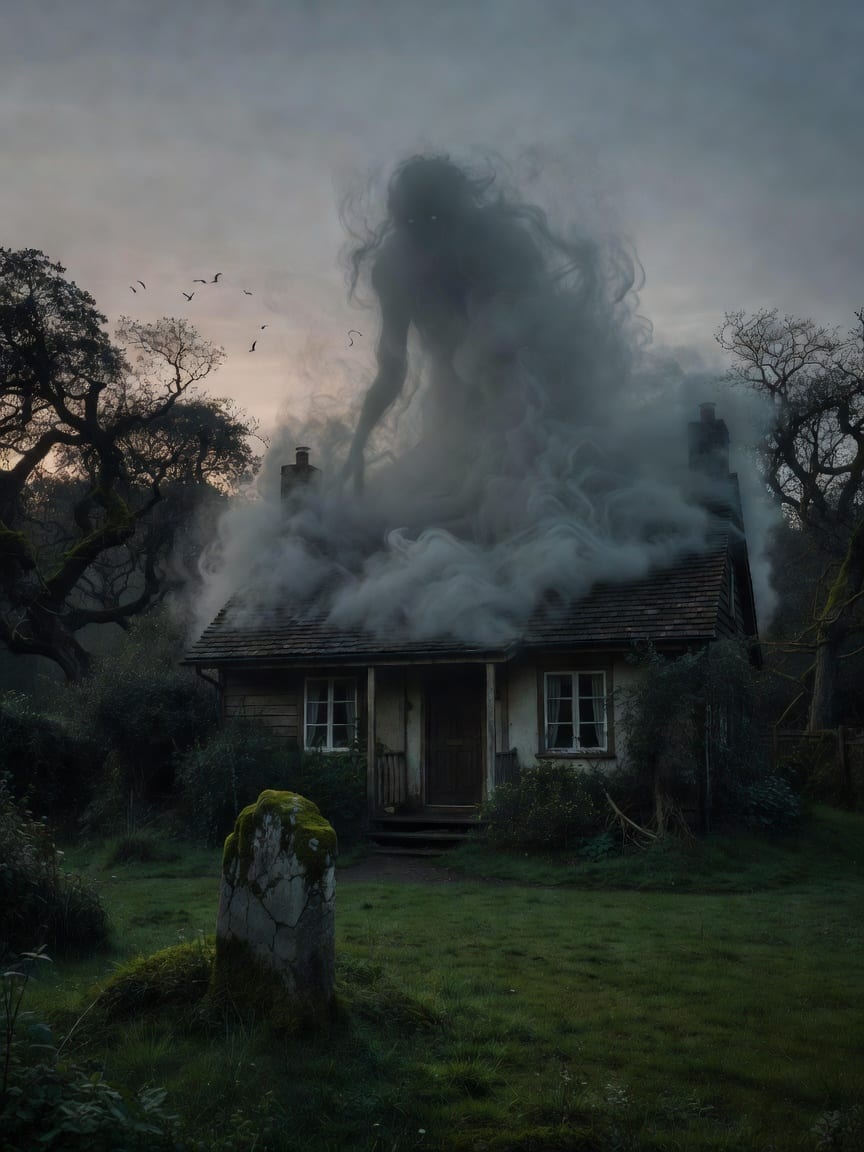
My cottage is now outside the parish, says the vicar. I moved one boundary stone into my ditch, and now I'm outside the line.
I loved my new cottage, with its sprawling garden and ancient oak. But after I moved an old, mossy stone at the edge of my property, Vicar Vance arrived with grave news: my cottage was now outside the parish line, and he could no longer keep me 'on the right side.'
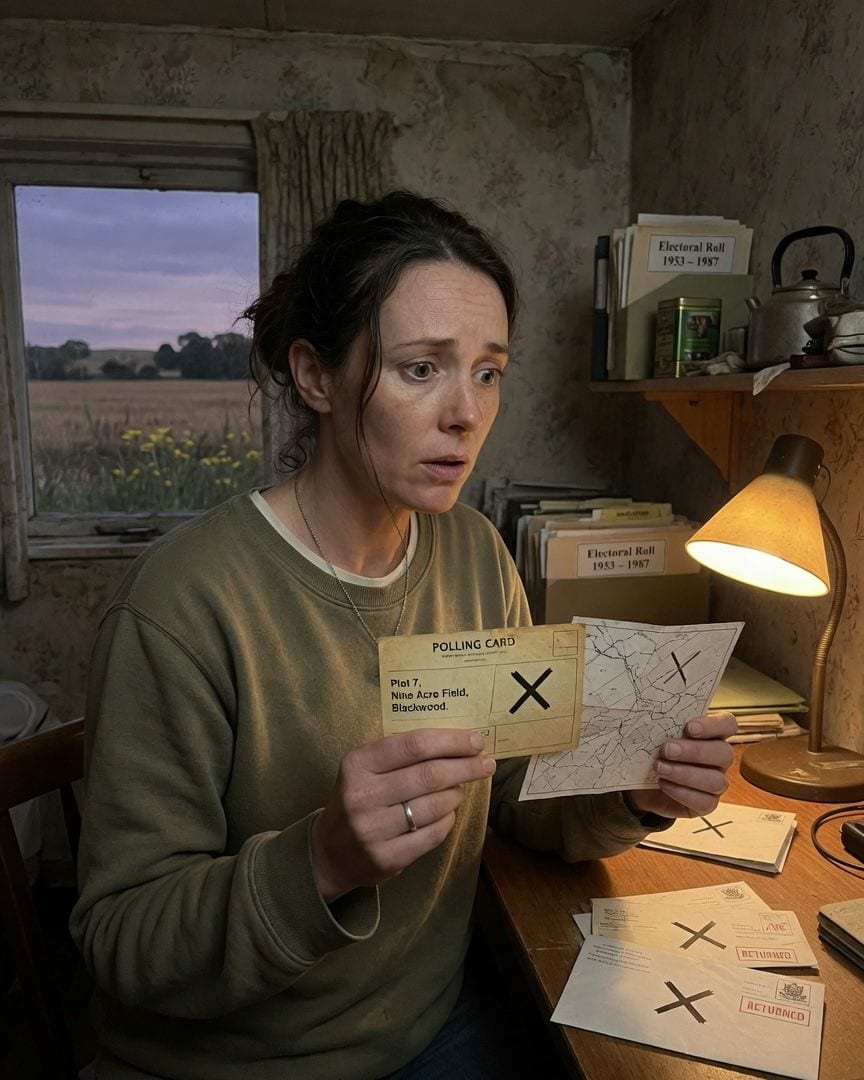
The postman still delivers polling cards to nine plots in a field where no one lives — nine families a county map names, though everyone warns the ground floods and can't be walked.
I moved to Blackwood, seeking quiet, and quickly learned about Nine Acre field, a place locals warned always flooded. Yet, it was always bone dry. My postman, Marcus, however, regularly delivered official polling cards to nine specific plots within that empty field. I later found some of these very cards returned, not as 'undeliverable,' but marked with a chilling, hand-drawn 'X'.
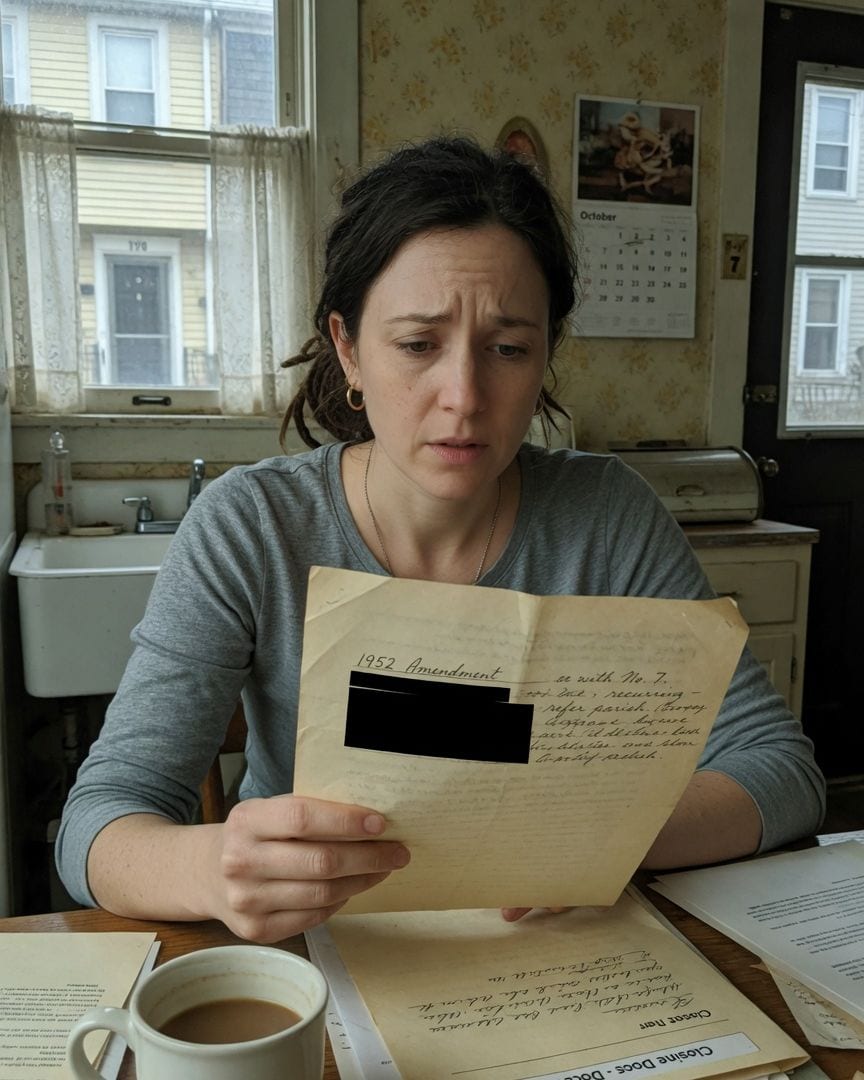
My new house deed has a blacked-out line. My mother's voice went brittle when I asked about her old No. 7 home.
Settling into my new Harlow Street home, I found a stark blacked-out line on my land registry deed. My attorney dismissed it as routine, but a hidden marginal note read 'as with No. 7, recurring – refer parish.' No. 7 was my mother's childhood home, and her reaction to my questions was chillingly evasive.
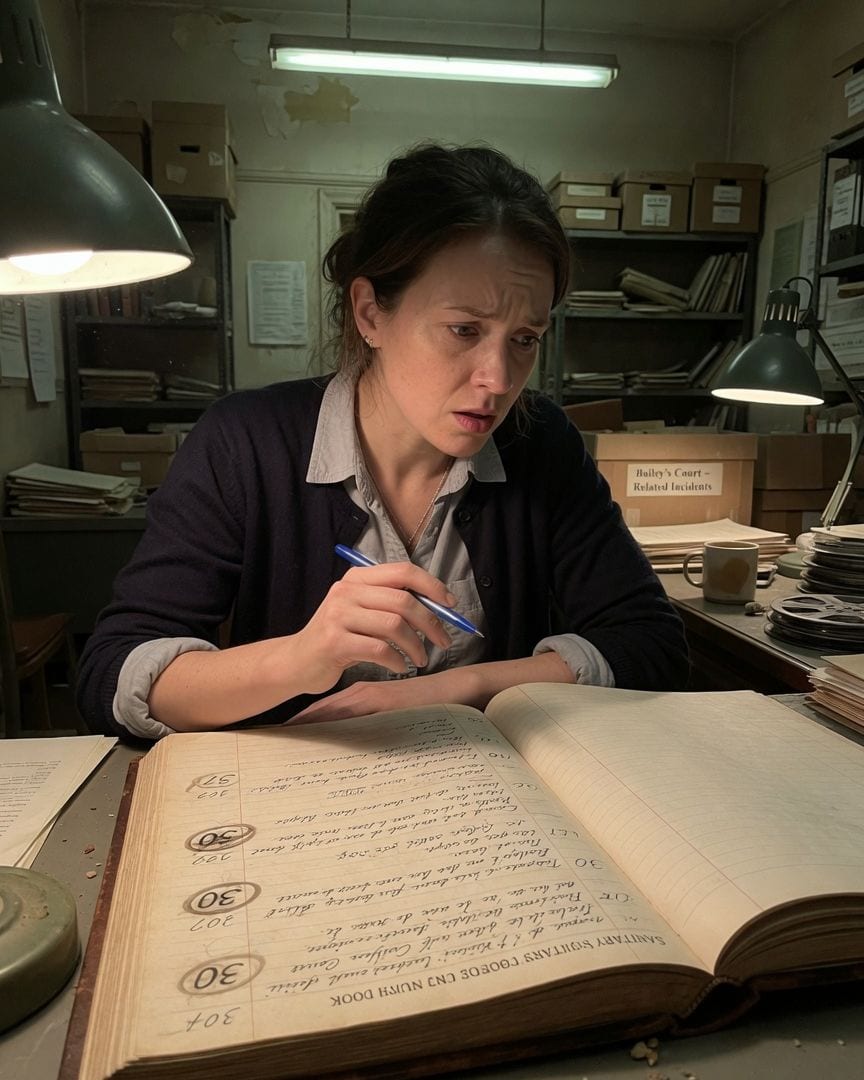
Entry 30 in the old records was re-inked for decades, always the same 'foul drain,' same order: 'do not act.' Then I found it on my street.
My job as a transcriber is usually tedious, but then I found Entry 30. The same complaint, a foul drain, logged for decades, was always re-inked with a chilling instruction: 'nuisance as before, enter it, do not act.' Then I found the same entry again, this time for my own street.
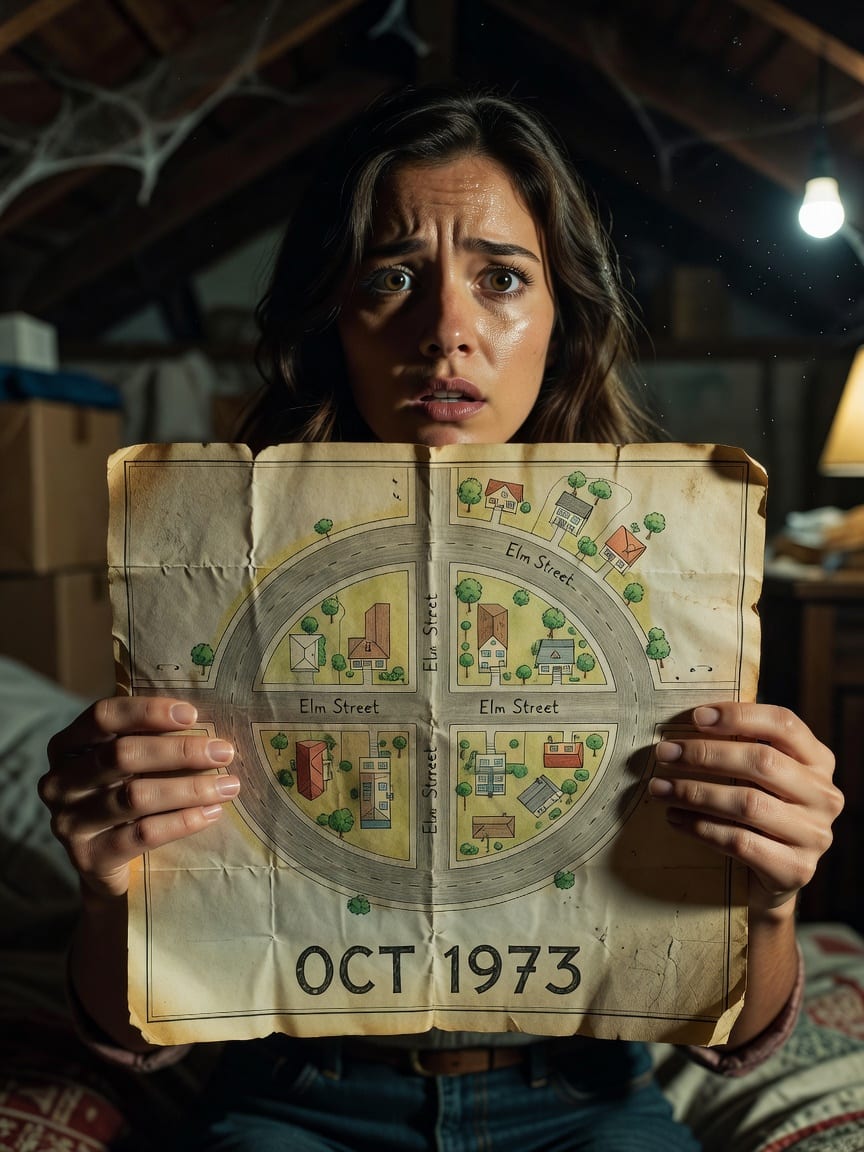
Our removal van's tracker logged 71 miles, looping back to our old flat. The men swore they unloaded somewhere. The map showed only the same postcode, over and over.
We were moving to our new house on Elm Street when the van's GPS tracker showed our movers circling our old address for 71 miles. I dismissed it as a glitch, until I found an old journal in the attic. Inside was a hand-drawn map of Elm Street, labeling our new road as an impossible loop, dated 1973.
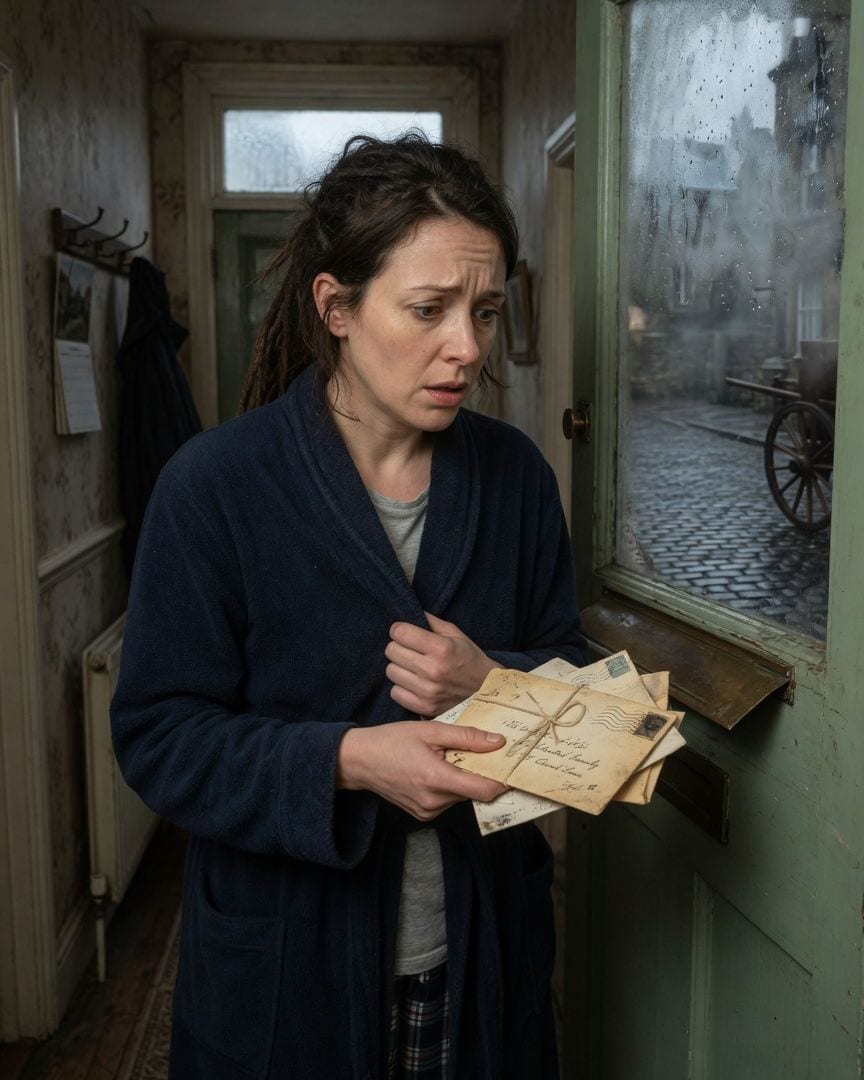
Seventy years ago, a hidden journal recorded my door opening to the wrong street and receiving Lockwood post.
I'd only recently moved into my inherited house, a quiet place on the edge of town. One grey morning, a distinct clatter from the front door's post flap caught my attention. Reaching down, I expected my gravel path, but instead, the flap showed a dark, cobbled street that wasn't mine. A bundle of warm, old letters, addressed to 'The Lockwood Family,' slid through, before the vision flickered and was gone.