My own voice called 911 from Gary, Indiana, reporting a prowler. I was asleep in Ohio, my phone on the charger.
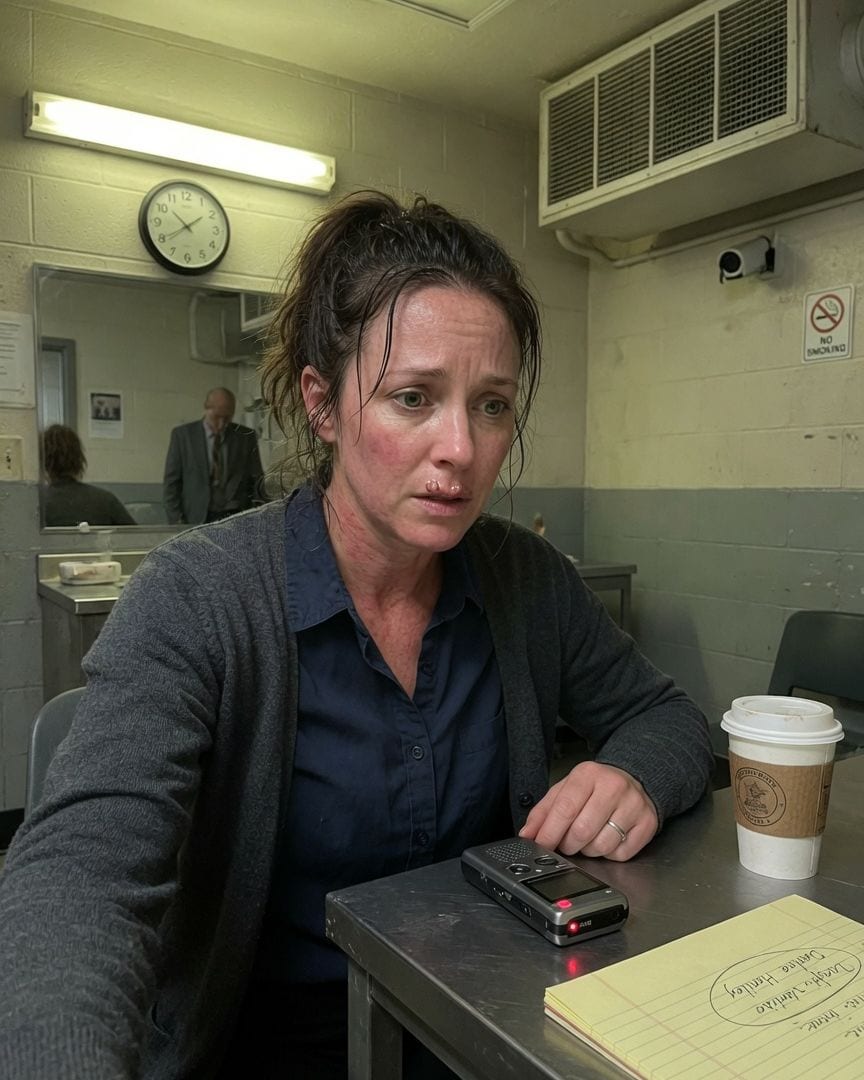
The air conditioning unit in the police station interview room hummed, a low, mechanical growl that did little to cut through the sudden chill in my bones.
Detective Walsh, a man whose face was etched with a decade too many of late nights, slid a small, gray voice recorder across the table. It looked cheap, like something you’d buy at a drug store.
“Just listen, Ms. Hartley,” he said, his voice flat, not unkind. He pressed play.
There was a crackle of static, the kind that used to preface an old radio show. Then, a woman’s voice, hushed and urgent, cut through the hum of the AC.
“Yes, I need to report a prowler.” The voice was breathy, almost a whisper. “Near the old gas station on Elm Street. I think... I saw him.”
That phrase. “I think…” There was a slight hesitation before the words, a particular lilt, a habit I didn’t even realize I had until that moment. A cold dread bloomed in my stomach, spreading through me like ink in water.
It was my voice. My exact voice. My specific way of saying “I think.” The dispatcher asked for more details, the voice giving a vague description of a tall, dark figure.
It sounded like it was coming from a payphone – the tinny, distant quality of an outdoor line. From Gary, Indiana, the dispatcher’s notes said. I knew where I’d been that night.
In my bed, in Ohio, my phone on its charger by my head. No call made. No call received.
The recording ended with a click. Walsh pressed stop, then looked at me, his tired eyes unwavering. “The dispatcher noted the caller gave a name before hanging up, Ms. Hartley.” He paused, letting the silence stretch, heavy and suffocating.
“Your name. Daphne Hartley.”
I stared at the recorder, the plastic casing suddenly feeling impossibly heavy, a tangible weight on the table. My world tilted, the sterile room around me threatening to spin. It couldn't be.
The next few days blurred into a frantic, desperate attempt to re-anchor myself in reality. I pulled every record I could think of. My cell phone statements confirmed no outgoing calls that night, or any night around that time.
My bank statements were clean; no gas purchases in Gary, no quick travel, nothing. My car’s GPS history placed me firmly in Ohio, commuting to work, running errands, all within a predictable twenty-mile radius.
I even called the phone company about the derelict payphone on Elm Street in Gary, pretending to be a concerned citizen who saw it acting strangely. They had no record of a malfunction, no logs of calls out.
Detective Walsh was sympathetic, but ultimately dismissive. “It’s a deepfake, Ms. Hartley. Or a prank. We see this kind of thing, unfortunately. Best to move on.”
But I couldn’t. The voice, my voice, was burned into my mind, a phantom echo. The specific lilt of “I think” haunted my quiet moments.
I spent hours online, obsessively searching for any mention of the incident, anything about strange calls from Gary.
I found a local blog post, buried deep in a forum for city news, a brief mention from a user about “another weird 911 call from the derelict payphone on Elm Street, late night.”
It was vague, undated specifically, but it confirmed the call itself wasn't a hallucination. Someone else had heard about it, even if they hadn't heard the recording.
Then, a few days later, a piece of mail arrived. It was thin, cheap paper, with a windowed envelope. An overdue notice from the Gary Public Library. For a book, ‘Midwest Ghost Stories,’ checked out under the name ‘Daphne Hartley.’
The date of checkout: the 9th of last month. The exact day of the 911 call.
My heart pounded, a frantic drum against my ribs. I’d never been to Gary, never checked out that book, never even heard of that library.
This wasn't a voice recording that could be faked; this was a physical record, placing me in Gary, Indiana, where I absolutely wasn't.
Driven by a desperate, nauseating need for answers, I drove to Gary. The library was a small, unassuming brick building on a quiet, tree-lined street, the kind you’d pass without a second glance.
Inside, the air smelled faintly of old paper and lemon polish. The librarian, a kindly woman with thin spectacles perched on her nose, scanned the notice.
“Oh, yes, ‘Midwest Ghost Stories’,” she said, her voice soft. “A popular one. It was checked out by a Daphne Hartley, right here, that day. I remember her, actually. She had a very distinctive… lilt in her speech.”
My stomach clenched, cold and hard. I insisted it wasn't me, my voice thin and reedy. The librarian, confused but still polite, pulled up the digital record on her computer screen.
There it was: my name, the date, the title, the library card number. Everything.
As I turned to leave, the impossible record a crushing weight in my hand, my eyes snagged on a faded black-and-white photograph in a display case near the exit.
It was part of a local history exhibit, showing the library in the 1970s. In the blurry background, across the street, near what looked like a now-demolished payphone booth, a faint, indistinct figure stood.
Its posture was oddly familiar, almost like a shadow. My mind replayed the vague description from the 911 call: tall, dark figure…
The photograph, combined with that library record, shattered any last vestiges of mundane explanation. My world, already askew, spun completely off its axis. I spent hours in the Gary library, ignoring the stares of the staff.
I pored over microfiche readers, the dusty, whirring machines displaying grainy newspaper articles, and sifted through local history books that smelled of mildew and forgotten things.
I found more impossible records for 'Daphne Hartley'. A parking ticket, issued blocks from the library, dated for the same impossible day and time.
A minor utility bill for an abandoned storefront near Elm Street, also addressed to a 'Daphne Hartley' and dated for that same window. Each record, on its own, was small, insignificant—a forgotten book, a minor infraction.
But together, they began to weave a chilling tapestry.
I noticed a pattern, clear and terrifying: these locations were always derelict, forgotten places. A crumbling payphone booth, an old library branch on a quiet street, a disused parking lot, a vacant building that time had simply forgotten.
It was as if someone, or something, was methodically building a false, phantom life for me in these overlooked corners of the city.
The unease I’d felt ratcheted up from a simple glitch in the system to a deliberate, systematic act. This wasn't just about my voice; it was about my entire identity being claimed, piece by meticulous piece, by an unseen hand.
My online research, now less frantic and more focused, led me to the Gary City Archive.
It was rumored to hold records going back to the city's founding, a labyrinth of forgotten histories, the kind of place where things went to be permanently misfiled.
I contacted the Gary City Archive. A voice, calm and surprisingly unruffled, answered on the third ring. “Samuel Kingsley, archivist,” he introduced himself. When I explained my predicament—the 911 call, the library book, the other impossible records—he didn't sound surprised.
Merely... expectant.
“Ah, another one,” he said, almost to himself, a soft sigh carried through the phone line. He granted me access without a single question, but the encounter left me profoundly unsettled.
When I arrived, the archive was even dimmer and more labyrinthine than I'd imagined. It smelled of old paper, dust, and something else – a faint, almost metallic tang, like distant rain.
Kingsley, a man in his late sixties with sharp, knowing eyes that seemed to take everything in, moved with a quiet, almost spectral grace through the towering stacks. His clothes were neat, but decades out of style.
He directed me to a specific section: 'Public Services – Anomalous Entries.' Just like that, as if such a section was commonplace.
I began to sift through heavy ledgers and microfilms, the quiet rustle of pages the only sound in the vast room.
I uncovered dozens of similar impossible records stretching back decades: 911 calls from the same derelict payphone, library fines for long-demolished branches, parking tickets in lots that no longer existed.
All under different names, but all the same type of mundane, impossible trace. Each entry was a small, unassuming detail, but collectively, they formed a chilling, undeniable pattern.
I glanced up, sensing a presence. Kingsley was watching me from across the room, his form partially obscured by a tall shelf of bound newspapers. A faint, knowing smile played on his lips, not unkind, but deeply unnerving. He knew.
He knew exactly what I’d found, and what it meant. The room itself felt heavy, pressing in on me, filled with the weight of all these inexplicable histories.
I closed a heavy, leather-bound ledger, the evidence inside undeniable, suffocating. The cold dread had hardened into a block of ice in my chest.
I walked across the archive, the floorboards creaking under my feet, each sound echoing loudly in the immense silence. I found Kingsley meticulously cataloging a box of old photographs.
“These aren’t pranks, are they?” I asked, my voice steady despite the tremor in my hands.
Kingsley merely inclined his head, his hands pausing over a sepia-toned image. “No, Ms. Hartley. They are not.” He straightened up, turning to face me fully. His expression was calm, almost serene. “This archive holds the city’s memory.
And sometimes, that memory includes things the city itself cannot explain.”
He moved slowly, deliberately, towards a small, battered wooden table. “These impossible records, especially the 911 calls from the derelict payphones, are what we call ‘registrations’.” He picked up a magnifying glass, turning it over and over in his hand.
“An entity,” he said, his voice devoid of emotion, as if discussing the weather, “maps identities. It observes, it learns. It perfects.”
My breath hitched. “My voice,” I whispered.
He nodded. “Your voice, yes. Your specific way of saying ‘I think’ – it was a nuance it adopted. It’s not a recording of you; it’s an imitation. Flawless enough to fool even you.”
He set the magnifying glass down and retrieved a particularly old, leather-bound logbook from a locked drawer. Its pages were brittle with age, the edges yellowed and crumbling.
He opened it to a random entry, pointing to a faded ink scrawl. “These are the markers. The entity uses these liminal spaces – forgotten payphones, abandoned buildings, libraries that become mere husks of their former selves – as nodes.”
His finger, surprisingly steady, tapped the page. “It leaves a trace, a record, an imprint of an identity it has… observed. You’ve been registered, Ms. Hartley.”
The air in the archive grew suddenly cold, the quiet humming of the fluorescent lights sounding impossibly distant.
I felt a chill that had nothing to do with the archive’s musty air. Registered. I stared at Kingsley, trying to reconcile his utterly calm demeanor with the enormity of what he was saying.
My mind raced, trying to find a loophole, a rational explanation, but there was none left.
“You’ve seen this before?” I asked, my voice barely a whisper, a thread of sound in the vast, silent room.
He nodded slowly, a deep, unsettling understanding in his eyes. “Indeed.” He turned the pages of the ancient logbook, his finger tracing a specific entry, dated decades ago. The ink was faded, but legible.
It read: '911 call, Elm Street Payphone. Caller: Samuel Kingsley. Report: Prowler.'
My breath caught in my throat. “You?” I asked, the word ripped from me.
He met my gaze, his expression unreadable, a lifetime of quiet acceptance in his eyes. “Yes. Decades ago.”
He then began to flip through the logbook more rapidly, his finger moving across the yellowed pages, pointing to a sequence of entries, a chilling ‘pattern across dates or names.’
Different names, different years, but the same type of impossible records, the same derelict locations. “There are others,” he said, his voice softer now, almost a murmur. “Always others.”
He walked to a large, faded map of the Midwest pinned to the wall behind his desk, its edges curling with age. It was dotted with countless small red pins, clustered in forgotten towns and empty spaces.
“These are the registration sites,” he explained, his finger sweeping across the map. Then, his finger landed on a fresh red pin, stark and new, newly added. It was on a small town in Ohio. My town.
Kingsley explained the full, terrifying truth, his voice a quiet drone in the cavernous archive. The entity, he posited, was ancient, incomprehensible, an intelligence so alien it defied human definition. Not malicious, he stressed, but profoundly indifferent.
It ‘collects’ and ‘maps’ human identities and territories. The 911 calls, the library check-outs, the parking tickets – these were all consistent signatures, specific types of ‘registration pings.’
It observed individuals, learned their vocal patterns and unique mannerisms, then used these perfect imitations from specific, forgotten ‘nodes’ like derelict payphones or abandoned buildings.
The pattern across names, stretching back generations in his logbook, revealed a slow, systematic mapping of human presence, a vast, indifferent census.
“It doesn’t want anything from you, Ms. Hartley,” Kingsley reiterated, his eyes fixed on the map. “Just of you. Your identity is a data point, an entry in its ledger.”
He explained that once ‘registered,’ an identity was permanently logged; the entity would occasionally ‘ping’ it again, leaving new impossible records, simply as part of its ongoing, unknowable work.
The specific ‘I think’ that had haunted me, that unique tic in my speech, was a learned nuance, a perfect replication of my vocal signature. It confirmed the entity’s meticulous, almost scientific approach to its ‘collection.’
He turned back to the logbook, showing me the most recent entry after mine, a name I didn’t recognize, already marked. The process continued, relentless and uncaring.
I stood frozen, the immense scale of it all pressing down on me. My initial terror gave way to a profound, chilling understanding. This wasn't a ghost, or a stalker, or a conspiracy I could expose.
It was a natural force, like gravity, but for identity. Inexorable. Unstoppable.
“What can I do?” I asked, my voice flat, hollow.
Kingsley shook his head, a faint, almost imperceptible tremor in his hand as he closed the logbook. The soft thud echoed in the silence. “Nothing, Ms. Hartley. You understand now. That is all there is.”
He explained that fighting it was like fighting the tide; it simply is.
The horror wasn't in what it might do to me, but in the realization that my unique identity, my very self, had been cataloged and absorbed into something vast and indifferent, a process that could not be undone or acted upon.
I was simply another pin on a map, another line in an ancient ledger. I watched Kingsley, seeing the quiet acceptance, the deep, settled dread in his eyes, a mirroring of my own dawning realization.
He lived with this knowledge every day, a silent, unwilling participant in an incomprehensible census. The entity was not evil; it simply was.
I left the archive, the Gary streetlights casting long, indifferent shadows on the pavement. The world outside seemed the same, but for me, it was fundamentally altered.
I checked my phone, a nervous habit, half-expecting a new alert, another impossible record placing me somewhere I wasn’t. None appeared immediately. But I knew they would.
I drove back to Ohio, the knowledge a heavy, cold stone in my gut.
I was just another entry, a registered data point in an unknowable system that had been operating for generations, long before me, and would continue long after.
The silence of my car was deafening, filled only with the echo of Kingsley’s calm, final words.
Months passed. I tried to live normally, to forget, but the knowledge gnawed at me, a constant, low thrum beneath the surface of my everyday life.
I found myself compulsively checking old news archives, scanning local reports from small towns across the Midwest, searching for other strange, inexplicable records, for new names, new impossible events.
I became a quiet, unwitting archivist myself, trying to map the unmappable.
One evening, an unremarkable spam email landed in my inbox—a generic advertisement for a local grocery store.
But the sender’s domain name included a string of letters and numbers that, for a terrifying, heart-stopping moment, seemed to echo a sequence I saw in Samuel Kingsley’s ancient logbook, a series of characters associated with one of the older, more cryptic ‘registration’ entries.
I deleted it immediately, my hand shaking, but the seed of dread was planted, growing in the fertile ground of my new, unsettling understanding.
The world was still out there, mapping us all, one impossible record at a time.
If this one got to you
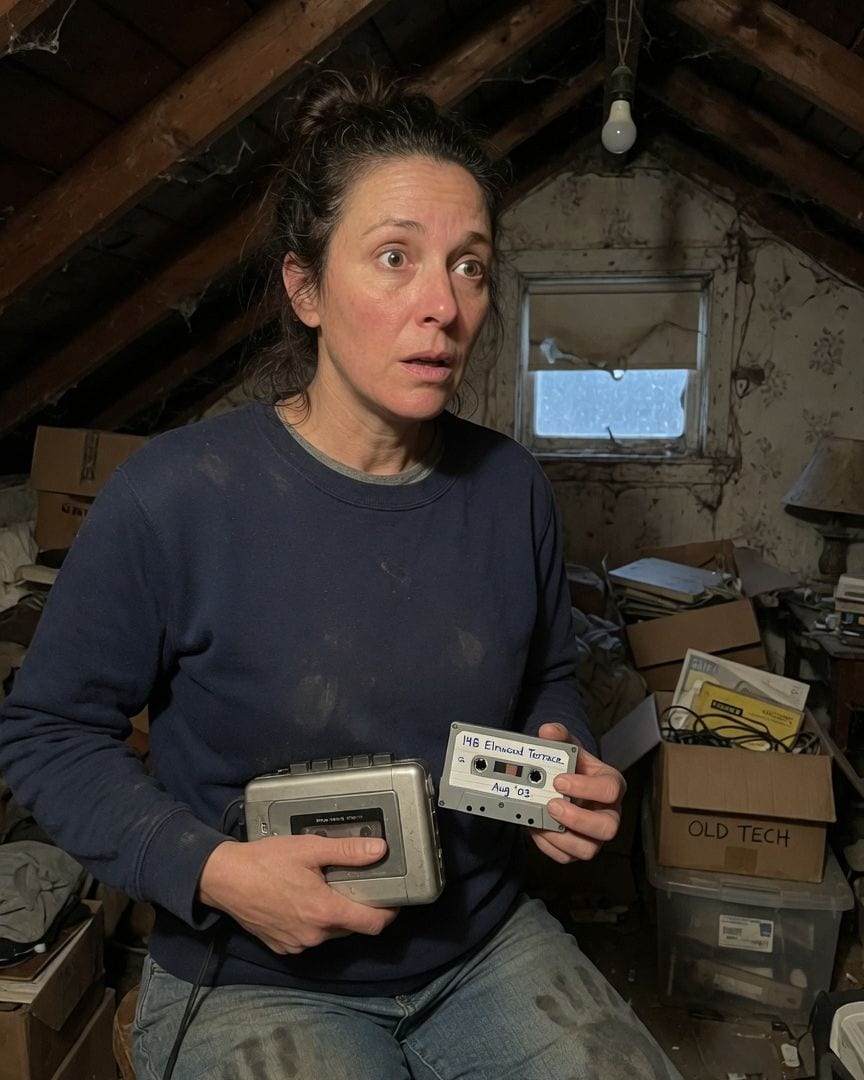
My own voice answers a screaming tenant on a tape from my old flat, recorded a week after I moved out. I live alone.
Rummaging through old tech in my attic, I found an answering machine tape from my old flat, labeled 'Aug '03' in my own hand. Playing it, I heard mundane messages, then a woman's raw scream cut short. Immediately after, my own calm voice said, 'It's alright. I've got her now.' I had moved out of that flat twenty years ago.
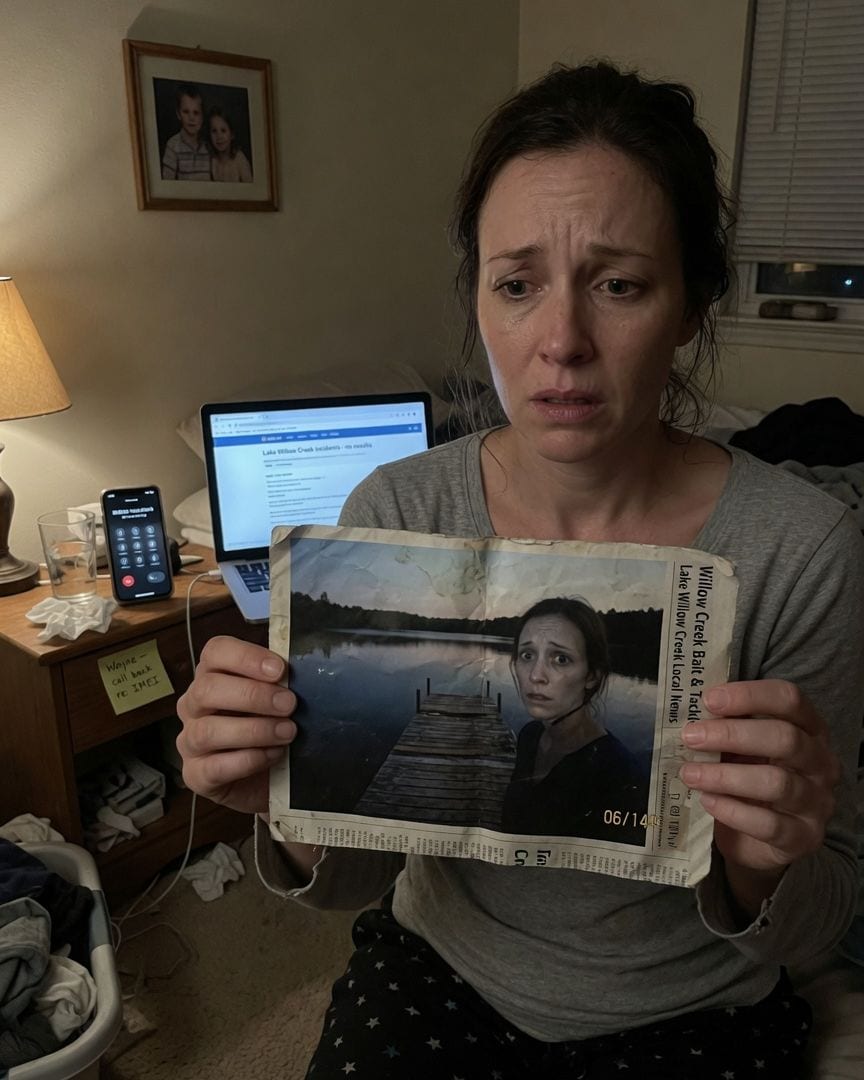
My voice called my sister at 3 AM, telling her not to worry about 'the lake.' I was asleep, my phone off, and nothing happened at any lake.
My sister received a chilling 3 AM call from my phone, my own voice warning her about a lake I'd never been to. I was asleep in my bed, hundreds of miles away. Then, a water-damaged package arrived containing a photo of me, terrified, at that very lake, dated a day I was three states away.
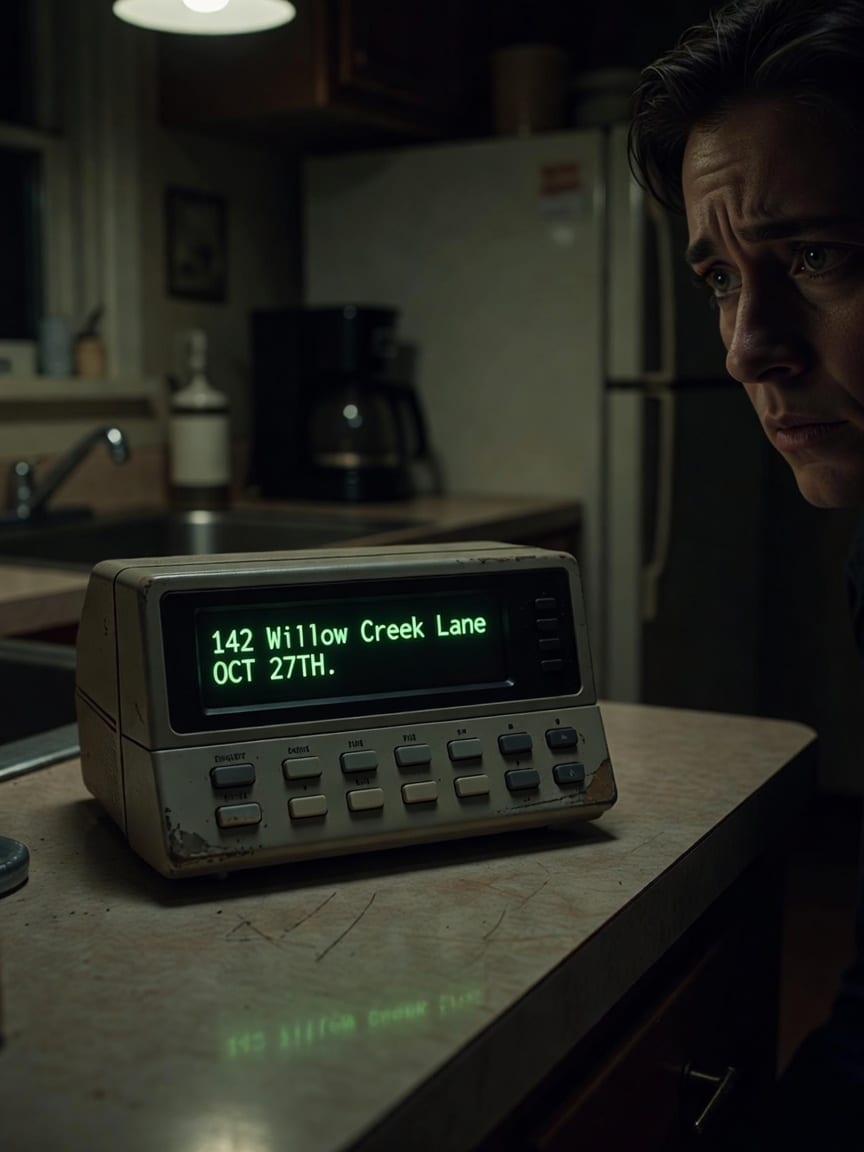
My radio scanner picked up a channel at 2 AM reading local addresses. Mine was on it, dated tomorrow.
I was tracking a storm on my old weather radio when a synthesized voice cut through the static. It began reading local street addresses, then my own: 142 Willow Creek Lane. But the date it gave for my address was tomorrow.
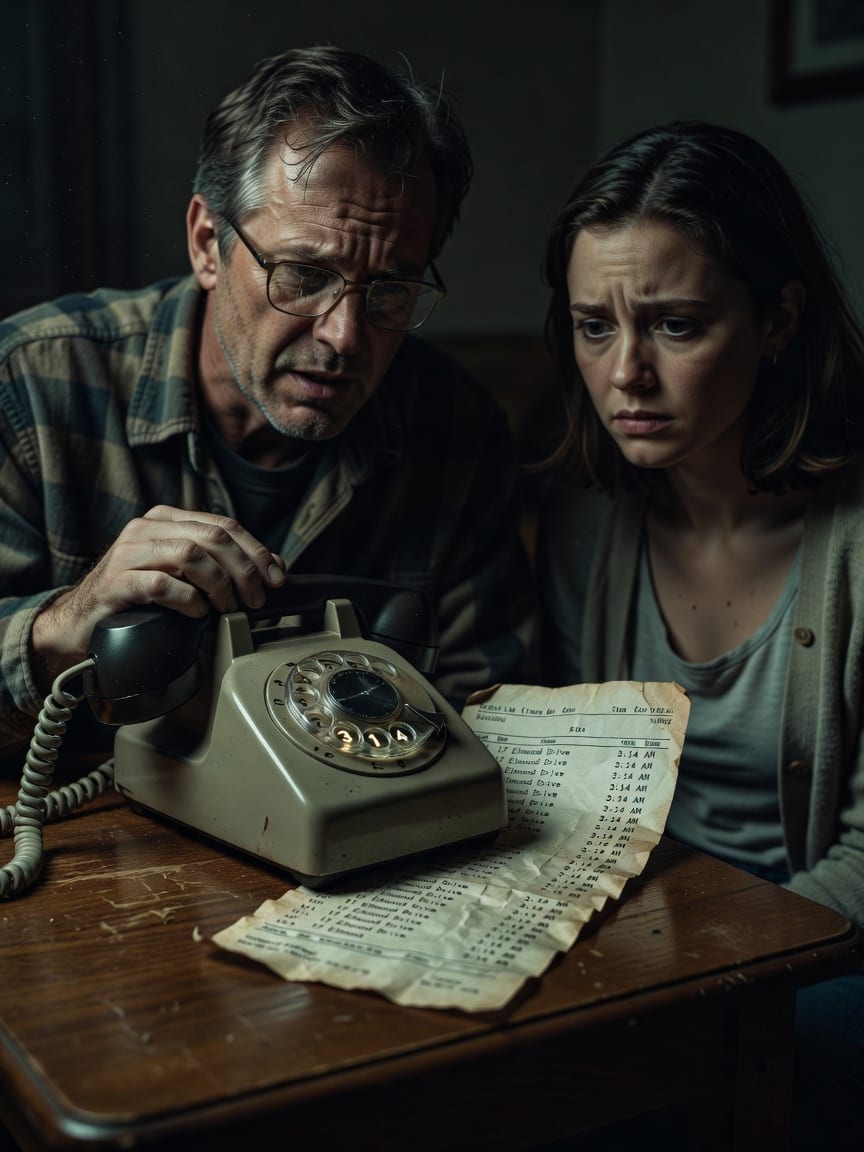
My phone bill itemised forty calls from my number to a house demolished in 1990. Each call at 3:14 AM, lasting eleven minutes. The bill arrived postmarked from a flattened building.
I expected the usual mobile bill, but my landline statement listed forty calls from my number to '17 Elmwood Drive.' That address was for a house torn down in 1990, a vacant lot I remembered from childhood. The phone company insisted the calls were legitimate, leaving me profoundly unsettled by the impossible charges.
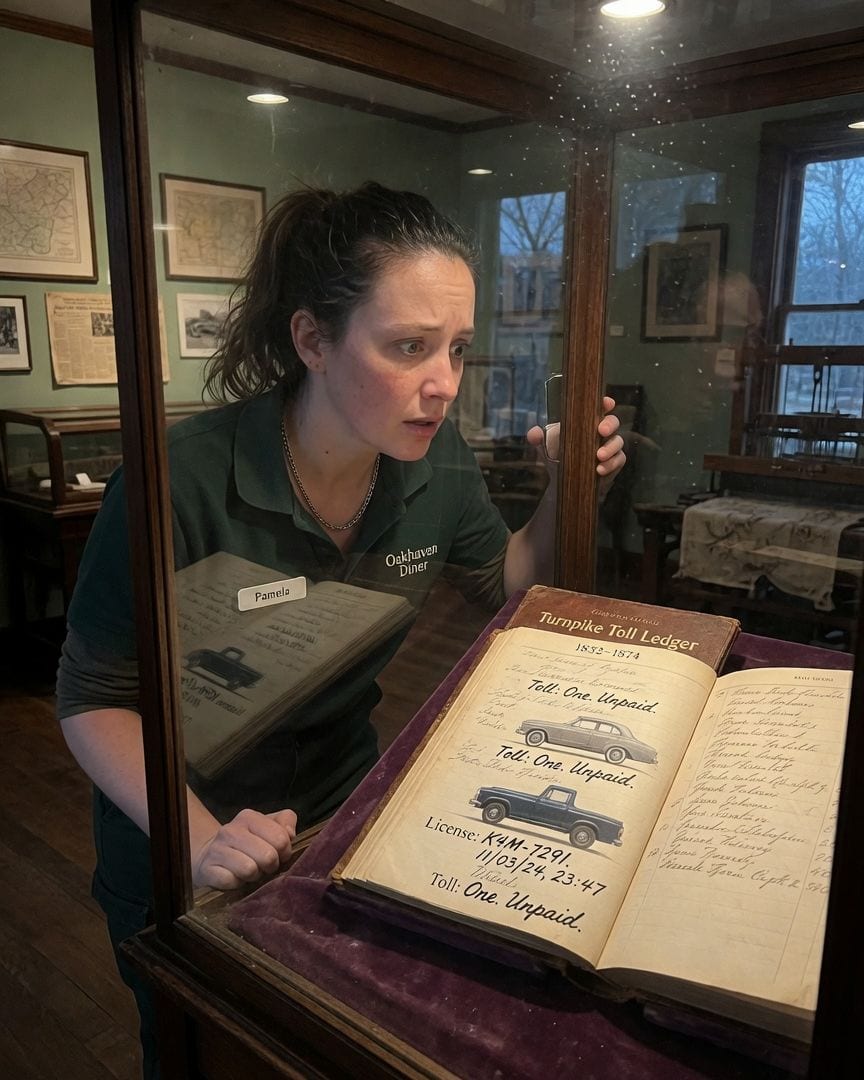
My car stalled at the old turnpike milestone, after dark. The toll ledger, closed in 1874, then listed my car, my stall time, and a toll of one, unpaid.
I had just moved to Oakhaven when my old sedan died on a dark, winding road by an infamous turnpike milestone. The next day, I found my car's exact registration and stall time written in fresh ink in a 150-year-old, locked museum ledger, marked 'Toll: One. Unpaid.' The curator dismissed it as a prank, but her white knuckles and strained voice hinted at something far more unsettling.
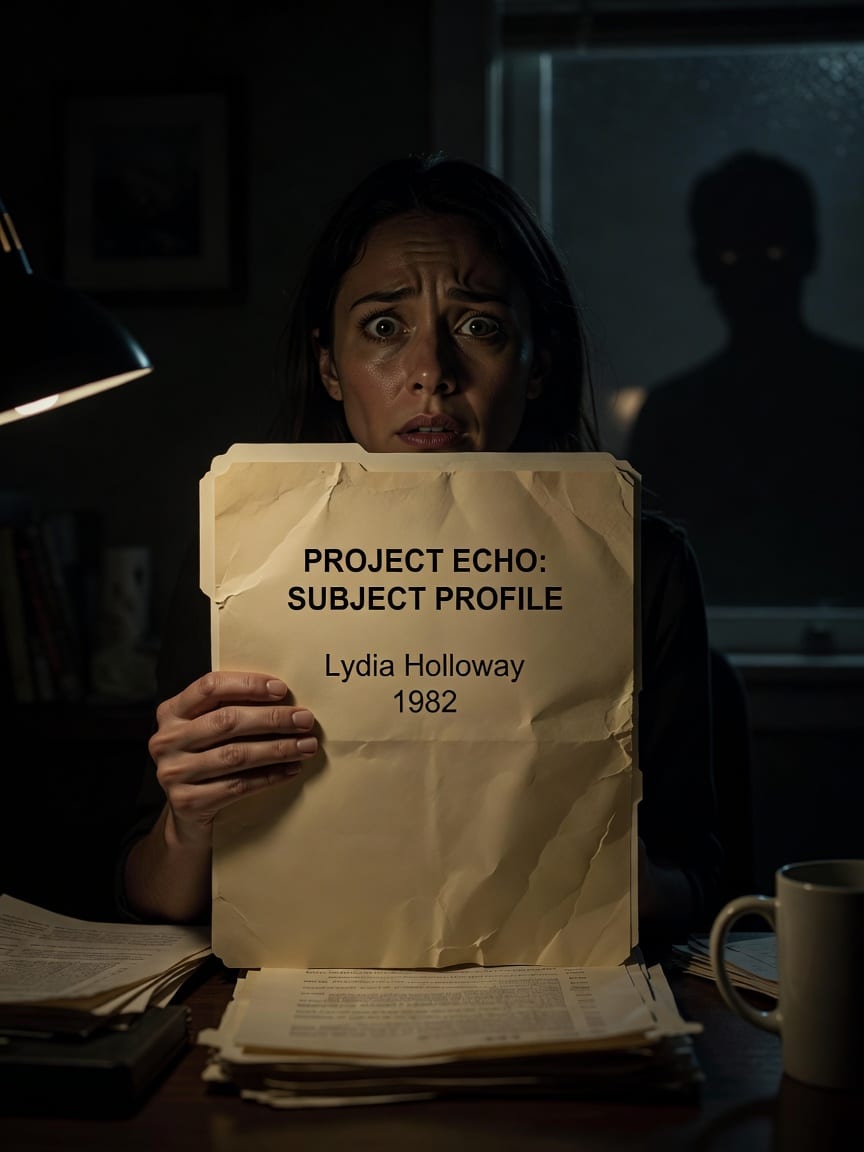
My own signature is on a Baltimore police report for a hit-and-run I never witnessed. The officer remembers my university sweatshirt.
I was settling into a quiet Tuesday evening when Baltimore PD called, asking about a witness statement I supposedly gave. They described my faded green university sweatshirt, seen at a hit-and-run last Friday. But my sweatshirt was in my dresser, and I was home in Seattle.