My savings account number 30188 has been reopened by a different person every decade since 1948, each depositing the exact same closing balance.
The number on the passbook felt familiar the moment Samuel Foster handed it across the polished oak desk. 30188. I didn't know why. It just resonated in some quiet, unsettling way.
Samuel, a kindly man with thinning hair and bifocals perched on his nose, smiled. "All set, Ms. Kowalski. Your new savings account."
The air in the Mutual Society was always hushed, smelling of old paper and dust, a scent that now seemed to thicken, pressing in.
"Mr. Foster," I began, the passbook cool in my hand. "That number… 30188. Is it common to reuse account numbers here?"
He frowned, tapping a pen against a desk blotter. "Not typically for active accounts. But our archives, some of them go way back. We've certainly recycled inactive numbers over the decades."
He pushed back from his desk, the old leather chair groaning. "Is there a problem?"
"No, no problem," I said quickly, maybe too quickly. "Just a strange feeling."
He stood, moving towards a heavy, steel-plated door set into the wall behind him. "If you're curious, I can check the old ledgers.
Sometimes a number like that might have historical significance, though I can't imagine what for a simple savings account." The vault door creaked open, revealing stacks of bound books.
He disappeared inside, and the office seemed to dim, the fluorescent lights buzzing faintly.
He emerged a few minutes later, clutching a massive, leather-bound ledger, its spine cracked with age. He laid it gently on the desk, the thud echoing in the quiet room.
He flipped through yellowed pages, his brow furrowed as he scanned. Then he stopped, his finger tracing a line. "Well, I'll be," he murmured, more to himself than to me.
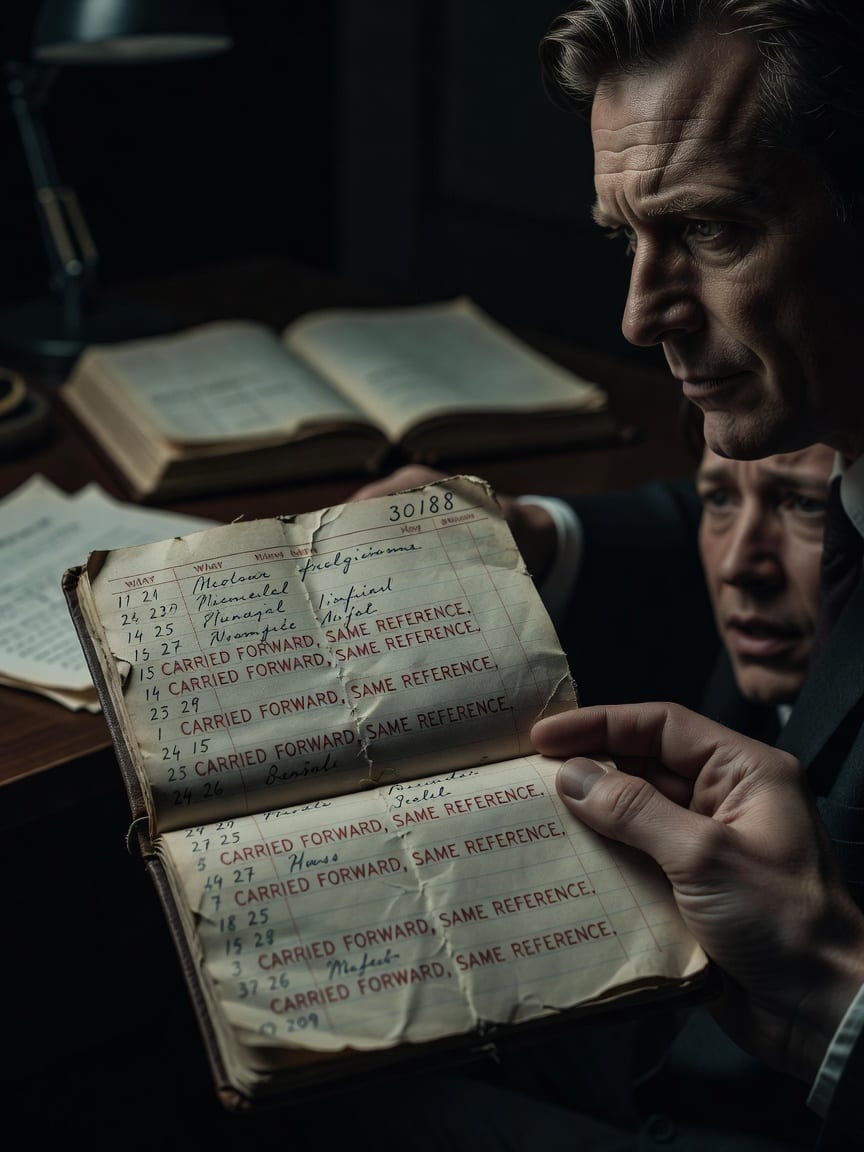
I leaned closer, my breath catching. There it was: account 30188. Opened and closed by Elias Pennington in 1948. Below that, a decade later, Vivienne Kowalski. Then Oscar Sutton. The names changed, but the account number was identical.
And on every single entry, in a neat, official script, was the same exact closing balance, to the penny, before being stamped 'carried forward, same reference.' Elias Pennington, 1948. Vivienne Kowalski, 1958. Oscar Sutton, 1968. A different person, every decade.
A lineage of strangers, linked by this one impossible number, this precise amount.
The sheer, calm bureaucracy of it, the meticulous record-keeping of something so fundamentally wrong, made my skin prickle. It wasn't an error. It was a pattern. A system.
I looked down at my own new passbook, the '30188' now a chilling echo, a placeholder in a silent, repeating cycle.
The air in the room grew heavy, and I could swear the old ledger itself felt colder under my fingertips.
I tried to dismiss it, to rationalize the growing knot in my stomach. "Perhaps it's a legacy account," I suggested to Samuel, forcing a calm tone. "For... certain types of assets? Trusts, maybe, that get disbursed and then re-established?"
It was a long shot, even to my own ears, but I needed a mundane explanation, something to anchor this strangeness.
Samuel shook his head, his usual genial expression replaced by genuine perplexity. "I've never seen anything like it, Ms. Kowalski. A reused reference, yes, but not this exact sequence, decade after decade, and certainly not the identical balance. It's...
not standard practice. Trust funds usually have specific names attached, not just a bare number re-assigned." He pushed his glasses up his nose, his eyes narrowed at the ledger.
"It's like the account itself is being renewed, not just its number. But for whom?"
He offered to check the archived records in the deeper recesses of the vault, a section he rarely accessed. The vault door groaned again, swallowing him whole.
The silence in the office was complete, save for the faint hum of the computer on the opposite desk, its screen a blue square in the dimness. It felt like the building itself was holding its breath.
After what felt like a long time, Samuel reappeared, another ledger in his hands, this one even older, its leather cover almost black with age and grime.
He handled it with care, laying it open on the desk next to the first. The pages crackled as he turned them, the paper thinner, more brittle.
He found it, an entry for account 30188 from 1958. Vivienne Kowalski's name. And next to it, not just a stamp, but faint, spidery handwriting in faded brown ink. It wasn't an accounting note. It was too specific, too...
unlike anything I'd ever seen in a bank ledger. I leaned in, my heart thumping against my ribs. The words were small, almost cramped: 'Upon final deposit, initiate transfer protocol per local stewardship directive. Reference: Perennial Cycle.'
The ordinary explanation for a simple bank account evaporated, leaving a cold void. 'Transfer protocol.' 'Local stewardship directive.' 'Perennial Cycle.' This wasn't about money. This wasn't banking.
The office suddenly felt too small, the air too thin, and the smell of old paper was no longer nostalgic, but vaguely medicinal, like something preserved.
The phrase 'Perennial Cycle' gnawed at me. It sounded less like banking and more like… something from an old text, a myth, a ritual. I couldn't shake it.
My evenings, which I usually spent catching up on emails or a new Netflix series, were now consumed by research.
I went to the local historical society, a charming, dusty building downtown, and convinced the curator to let me access their archives of local institutions.
I told her I was researching the Mutual Society's unique history, a half-truth that felt like a full lie in my mouth.
Days blurred into a week. I hunched over microfiche readers, my eyes blurring, through decades of local newspapers, society newsletters, old town council minutes.
I was looking for 'local stewardship directives,' for any mention of 'perennial cycles,' for anything that made sense of that terrible, spidery script. My fingers were stained with ink and dust, my clothes smelled faintly of mildew.
Then, late one Tuesday evening, as the light outside the historical society's window bled from grey to inky black, I found it.
Tucked away in a brittle folder labeled 'Mutual Society Internal Communications, 1960-1962,' under a pile of mundane administrative memos, was a single, water-stained, partially redacted internal memo.
The paper was fragile, the ink faded in places, but the title, clear despite the age, hit me like a physical blow: 'Ensuring Continuity of Local Stewardship.'
My heart hammered against my ribs, a frantic drum in the silent room. My fingers trembled as I unfolded it, careful not to tear the fragile paper.
I scanned the faded text, bypassing the heavily blacked-out sections, looking for anything, any thread. Then, a line, starkly unredacted, leaped out at me from the page.
The words seemed to glow, to hum with an unseen energy, burning into my vision: 'Account 30188: Prime Conduit for Resource Allocation in Perpetual Cycles.'
The unredacted line on the old memo vibrated in my mind: 'Account 30188: Prime Conduit for Resource Allocation in Perpetual Cycles.' It was too specific, too cold. I needed someone else to see it, someone rational.
I took my meticulous notes, copies of the ledger entries, and the fragile memo to Penelope Sutton, a sharp, pragmatic researcher at the historical society.
She was usually buried in seventeenth-century land deeds, but the strangeness of my findings caught her attention.
"A bank account that’s not really a bank account?" Penelope asked, pushing her glasses up her nose, her eyes narrowed. "And 'perpetual cycles'? Sounds like bad poetry, Isabella."
"Or something far worse," I countered, laying out the photocopies. "The specific names, the ten-year gaps, the identical closing balance, the stamp 'carried forward, same reference.' It's too consistent to be coincidence or an accounting error."
Penelope was initially skeptical, tracing the lines of the ledger entries with a skeptical finger. "Elias Pennington, Vivienne Kowalski, Oscar Sutton... all just names, Isabella. The Kowalskis are a big family in this town. You're a Kowalski yourself."
"But my Kowalski family, we haven't been in this town since my great-grandmother left in the late forties," I pointed out. "This Vivienne, she's not a direct ancestor. I checked."
Her skepticism, however, began to crack as we cross-referenced the names from the 30188 ledger with local obituaries and old property records. Days turned into weeks.
The air in the archives grew colder, not from the climate control, but from the mounting dread.
A chilling pattern began to emerge, stark and undeniable. Every single previous account holder for 30188—from Elias Pennington in 1948 to Oscar Sutton in 1998—had lived within a tight, almost perfect three-block radius of the Mutual Society building.
We found their old addresses, meticulously recorded on property tax forms from the 1950s and 60s, all clustered around the unassuming brick building.
"It's like a bullseye," Penelope whispered, her voice tight, pointing to a map we'd pinned to a corkboard. Red thumbtacks marked each former account holder's address, forming a disturbingly neat circle around the Mutual Society's location.
More disturbingly, their dates of death, found in archived newspaper notices and cemetery records, consistently fell within a year or two of their respective 30188 account closing dates. Elias Pennington died in 1949, his account closed in 1948.
Vivienne Kowalski in 1959, her account closed in 1958. Oscar Sutton in 1969, account closed 1968. The pattern was horrifyingly precise. The 'closing balance' date was not just a financial transaction; it was a grim marker.
The Mutual Society wasn't just filing records; it was tracking lives, and deaths, within its immediate vicinity.
The unease solidified into a terrifying certainty. Penelope pushed her chair back, the wheels scraping against the old linoleum floor. "Isabella," she said, her voice barely audible, "this isn't just a quirk. This is... an institutional design."
The fluorescent lights above hummed louder, and I could feel the cold radiating from the old documents, a silent accusation.
As I delved deeper, the creeping sense of being observed started to replace my initial academic curiosity. It wasn't paranoia; it was a subtle shift in the digital landscape.
The Mutual Society's website, which I'd frequented for hours, scrutinizing its sparse 'About Us' section, suddenly featured a new 'historical archives' section. It showcased old photographs of the building's interior, its ornate teller cages, and smiling staff from bygone eras.
I scrolled through them, a chill tracing my spine, wondering if this was a coincidence or a deliberate breadcrumb.
Then, late one night, an anonymous email landed in my inbox. No subject, no sender, just a single, unclickable link. My heart hammered against my ribs, but my professional curiosity, or perhaps a growing recklessness, won out.
I copied and pasted the link into a secure browser. It led to a digitized version of the very 1961 memo I'd found in the historical society, the one titled 'Ensuring Continuity of Local Stewardship.' But this one was different.
It had more redactions, specifically obscuring the phrase 'Perpetual Cycles,' the very words that had sparked my entire investigation. Someone knew what I was looking for. Someone was watching. And someone was trying to control the narrative, even digitally.
The screen seemed to glow with a malevolent light, its cold blue reflecting the sudden dread in my eyes.
A week later, my phone rang. The caller ID was 'Unknown Number.' I almost didn't answer, but something compelled me. "Isabella Kowalski," I said, my voice steadier than I felt.
"Ms. Kowalski," a voice replied. It was calm, cultivated, almost avuncular. The kind of voice that spoke of old money and quiet confidence. "My name is Edward Jennings. I'm a retired manager of the Mutual Society.
I heard you were asking interesting questions about Account 30188."
My blood ran cold. "How did you hear about my questions, Mr. Jennings?" I asked, trying to keep my tone neutral.
He chuckled, a dry, rustling sound, like leaves skittering across pavement. "Oh, the Mutual Society has long ears, Ms. Kowalski. Or perhaps I should say, long memories. We take our history quite seriously.
And your inquiries have certainly stirred up some dust in the archives." He paused, and I could almost feel his smile through the phone line. "I might be able to shed some light.
If you're willing to take tea with an old man? My home is just a few blocks from the society building. Tomorrow afternoon?"
The invitation felt less like an offer, and more like a summons, a soft, polite warning delivered with an unnerving certainty.
The phone felt suddenly heavy in my hand, a conduit not just for words, but for a cold, ancient power.
I met Edward Jennings in his quiet, antique-filled living room. The air was warm, smelling faintly of pipe tobacco and old books. Sunlight streamed through a bay window, illuminating dust motes dancing in the air.
He poured tea from a delicate porcelain pot with steady hands, his demeanor utterly serene, a contrast to the storm raging inside me. He gestured to a worn armchair. "Sugar? Milk?"
I shook my head, my throat suddenly tight. "Mr. Jennings," I began, cutting straight to it, "I've found some... troubling records."
He didn't deny my findings. He didn't attempt to rationalize them, didn't offer any facile explanations about clerical errors or unique investment vehicles. Instead, he simply nodded, his eyes crinkling at the corners.
He spoke in measured, even tones, as if discussing the weather, or perhaps a particularly persistent garden pest.
"The Mutual Society," he began, stirring his own tea, the spoon making a faint chime against the cup, "has always had a rather special role in this community, inherited from a much older local tradition.
You see, Ms. Kowalski, money is merely a convenient metric. A way to measure things, to make sense of transactions. But not all transactions are... purely financial."
My stomach clenched. "Account 30188," I pressed, "the repeated names, the specific balance, the deaths..."
He looked directly at me then, his eyes piercing through his wire-rimmed spectacles. "Account 30188 is not a financial account, Isabella. It's a designation. A marker. We've always been stewards of the land, you see. Of the community's well-being.
And that requires... balance. The continuity of the flow, as the old texts refer to it."
I gripped my teacup, the warmth a flimsy anchor. "The 'carried forward' stamp?"
"A literal transfer," he confirmed, taking a slow sip of tea. "Not of money, as you surmised. But of something less tangible, more essential. A life-force, you might say. A connection to the land itself.
Our Mutual Society simply ensures its smooth passage from one designated individual to the next, at the end of their 'term.'"
My mind raced, every planted clue, every unsettling detail, snapping into horrifying focus. The specific closing balance—not a sum of money, but a symbol. The 'perennial cycle' in the 1958 ledger, the 'resource allocation' in the 1961 memo.
The geographic clustering of the account holders around the society building, the chilling consistency of their death dates shortly after their 'accounts' were closed.
"The 'final deposit' in the ledger," Edward continued, his voice perfectly calm, "corresponds to the individual's last vital contribution. Their 'resource allocation,' if you will, completing the cycle. It's all meticulously documented, as you've seen. For generations."
He finished his explanation, his gaze unnervingly direct, holding mine across the small, antique coffee table. "You've done well, Isabella," he said, a faint smile playing on his lips, a mere ripple on his serene surface.
"To trace the thread so completely."
He then gestured with his chin to a framed photograph hanging on the wall behind him. It was a sepia-toned group shot of Mutual Society staff from the 1970s. Uniformed employees stood stiffly, smiling faintly for the camera.
The glass of the frame caught the sunlight, making it hard to see. But as I leaned forward, my breath hitched.
Standing next to a younger Edward Jennings, his hair darker but his smile just as thin and knowing, was a woman. She was unmistakably me.
Younger, yes, but with the same eyes, the same curve of the mouth, an identical small mole above her left lip. The very mole I had. It couldn't be. I hadn't even been born in the 70s.
My own reflection in the photo's glass seemed to mock me, a phantom limb reaching out from the past. Edward's smile widened, a thin, knowing line, and he lowered his teacup to its saucer with a delicate clink.
"It's always been a family affair, in a way," he said, his voice soft, almost affectionate. "The Kowalskis have been excellent stewards for generations."
I stared from the photograph to Edward, my mind reeling, a silent scream trapped in my throat. The woman in the picture, a younger me, smiled back with a chilling familiarity. My breath hitched, a choked sound.
Edward, calm as ever, simply watched me, his serenity unshaken. "A shock, I imagine," he said, as if commenting on the weather. "But perhaps not entirely unexpected, given your… proclivity for investigation." He picked up the teapot, offering more tea.
I shook my head, unable to speak, my gaze locked on the photograph.
He explained. The 'designation' of 30188 wasn't just a number; it was a lineage, a role passed down through specific families, the Kowalskis among them. "The woman in the photo," he said, following my gaze, "is Isabella Kowalski. Your great-aunt.
She held the 'designation' before your own mother. A different branch, perhaps, but the line remains unbroken."
My great-aunt. The same name. The same face. A cold dread seeped into my bones, colder than any fear of monsters.
He leaned forward, his voice dropping slightly, but losing none of its unsettling composure. "The 'transfer' isn't just at death, Isabella. That's merely the final, ceremonial act.
It's a gradual drawing of a specific energy, a 'resource allocation' that intensifies as the individual's life cycle nears completion, making them ripe for the final 'deposit.' A subtle shift, like the seasons."
He rose, walking towards a discreet, unadorned door in the corner of the living room. "Come," he said, a simple invitation that felt like an unbreakable command. "There's more to understand."
He opened the door, revealing a small, fireproof archive, smelling faintly of cedar and dry paper. Inside, row upon row of ledgers lined the shelves, not just the ones I’d seen at the Mutual Society, but dozens, hundreds more.
Other numbers. Other family names—Sutton, Foster, Jennings—stretching back centuries. Each showed similar 'carried forward' instructions, meticulous records of generations of quiet, systematic harvesting.
The Mutual Society, I now understood, was merely the administrative arm of this ancient, terrible pact, a front for something vast and incomprehensible.
A cold dread settled deep in my bones, colder than any fear of a monster. I wasn't a victim being hunted; I was an inheritor being presented with my legacy.
Edward explained that my initial inquiry, my 'awakening' to the pattern, was itself part of the cycle—a sign that my own 'term' was nearing its end, and the 'transfer' was preparing.
He offered no threats, no coercion, only a choice: accept my role and ensure the balance, as my ancestors had, or resist and disrupt it, with unknown consequences for myself and the entire community.
His voice was utterly devoid of judgment, simply stating facts.
He then pulled out a final, deeply archived document from a leather portfolio: a brittle, handwritten will, not from a client of the society, but from my own great-grandmother, also a Kowalski, dated 1947.
Her elegant script acknowledged her 'stewardship' and 'passing the account forward.' And there it was, etched in faded ink: the closing balance.
The exact sum I had seen in the ledger, the same amount that had recurred every decade, the amount I myself had deposited when I opened my account.
I felt an invisible thread tighten around me, a profound, ancient connection, cold and inescapable. My blood felt thin, my breath shallow. I stood slowly, the worn carpet soft beneath my feet, my mind reeling.
The world outside Edward's window, the familiar houses and quiet streets, suddenly seemed both utterly mundane and terrifyingly conditional. Edward just watched me, his calm unwavering, a silent guardian of the inevitable.
I left Edward's house, the world now irrevocably altered, yet outwardly identical. The sun still shone, children still played in their yards, cars still drove by on the street. But I saw it all through a new, chilling lens.
I didn't go to the police; the story was too vast, too deeply woven into the fabric of the town, documented by its own institutions, protected by its own quiet, watchful people. Who would believe me?
And what could they do against something that had existed for centuries?
I didn't feel hunted, but rather, contained, observed by an invisible system that had gently, meticulously drawn me into its orbit.
The Mutual Society continued its operations, its quiet, efficient bureaucracy processing loans and deposits, oblivious to the deeper reality it administered. My passbook, 30188, lay on my nightstand, a constant, silent reminder.
A few days later, Penelope Sutton from the historical society sent me an email. She'd found an obscure local folklore text, mentioning 'the old families and the land's silent pacts.' A casual aside that now felt like a chilling confirmation.
The email concluded with a mundane request for some obscure tax records from the 1920s. I read it, and deleted it, the information now a burden, not a clue.
I found myself staring at my own passbook, the number 30188 staring back at me, a mirror into a future I now understood.
I felt a strange, subtle shift within me, a faint sense of being watched from the inside, a quiet resonance with the land I walked on, a deeper connection to the very earth beneath my feet.
My steps felt lighter, yet heavier. My thoughts clearer, yet more distant.
I went to the Mutual Society, not to close my account, but to make a deposit. Samuel Foster, the manager, smiled, recognizing me. The air smelled of old paper and dust, as always.
I wrote out a cheque for the exact recurring closing balance, the precise amount that had been passed down through generations, the sum that had always ensured the 'continuity of the flow.' My hand didn’t tremble. I handed it over.
The teller stamped the deposit slip, 'Carried Forward, Same Reference.'
If this one got to you
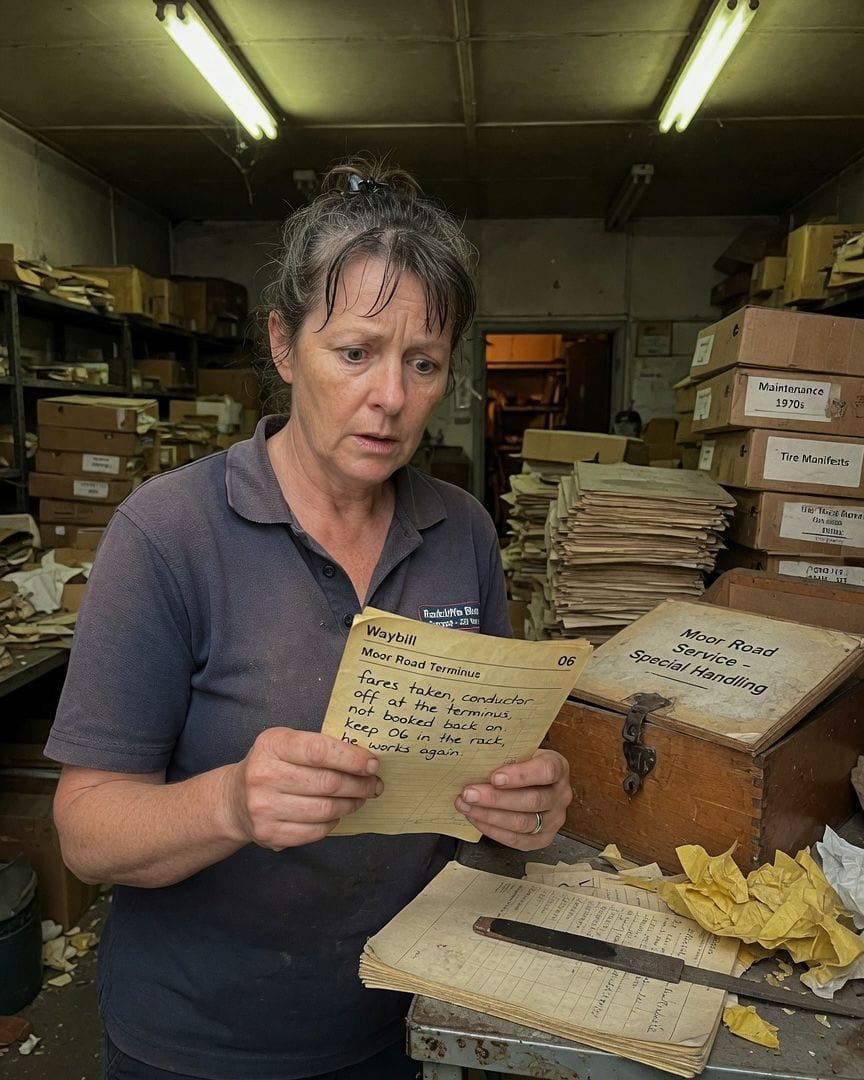
Our depot's Waybill 06 filed a moor road service we stopped running years ago. Every eight years since 1956, it closes: 'keep 06 in the rack, he works again.'
Sorting waybills in the depot, I stumbled across a form for the Moor Road Terminus. That route was decommissioned decades ago, but this waybill had a chilling handwritten instruction: 'keep 06 in the rack, he works again.'
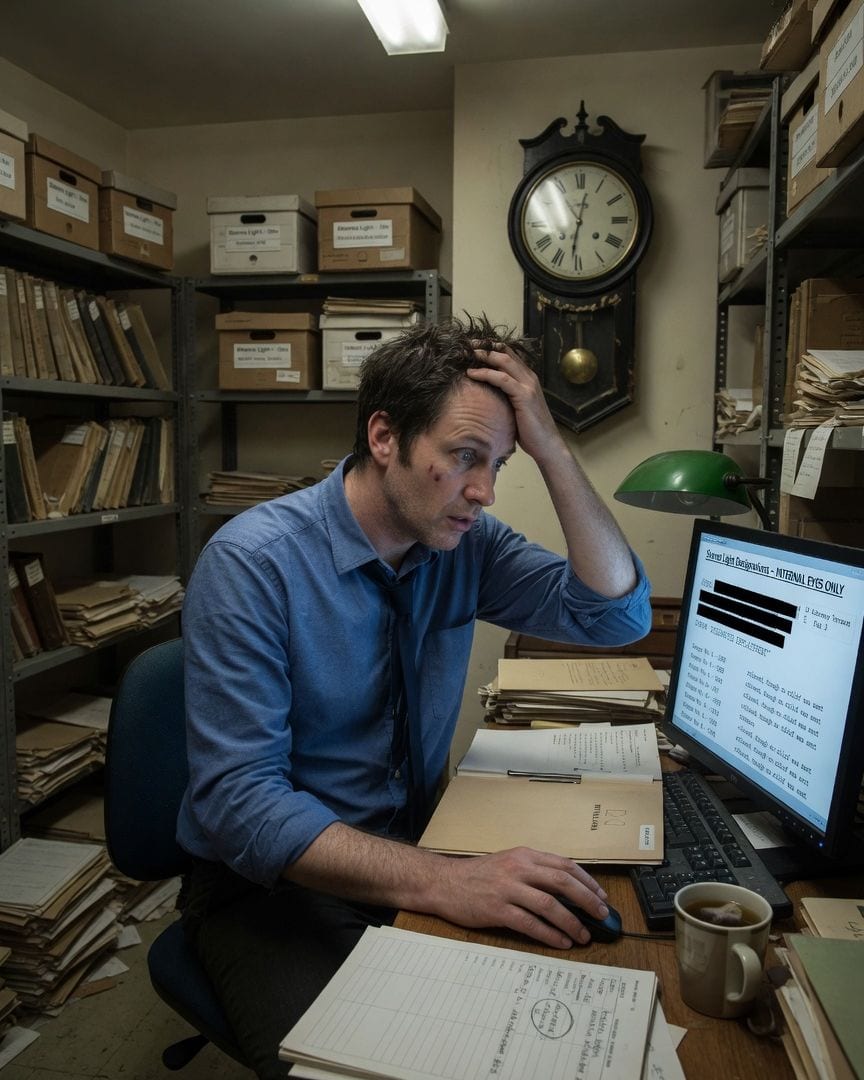
I found my street address in a century-old lighthouse file, printed decades before I lived there.
As a maritime archivist, my world revolves around forgotten lives and dusty ledgers. But the Skerne Light files broke that quiet rhythm, revealing a chilling pattern: 'Keeper number 6' relieved, though no relief was sent, repeating for decades. Now, an internal document with a strange code has led me to a redacted entry, revealing my own street address, decades before I ever lived there.
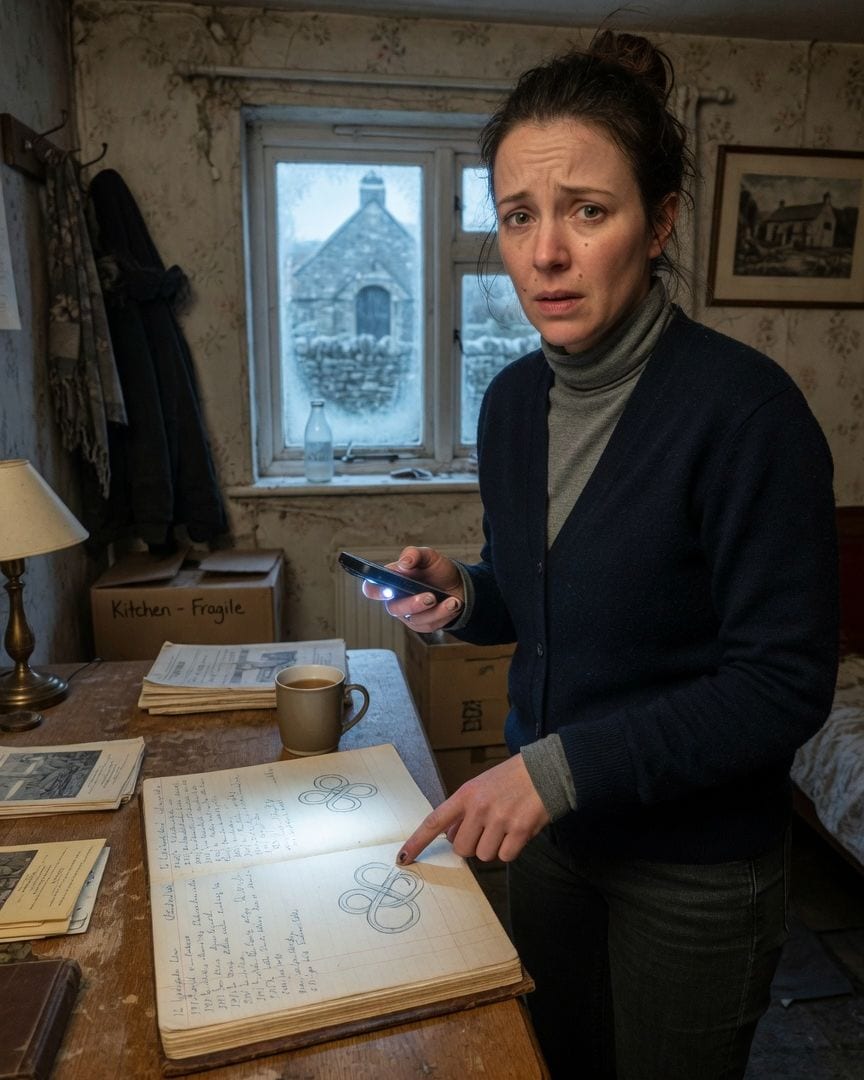
Milk appears daily by my lychgate. The dairy closed in '79. My address is handwritten into their old delivery book, starting the day we moved in.
Moving to Blackwood Creek, I loved the quaint charm, especially the unexpected morning milk delivery to my lychgate. But when I mentioned it to Eleanor at the village shop, her smile froze. She told me Willow Creek Dairy closed decades ago, in '79.
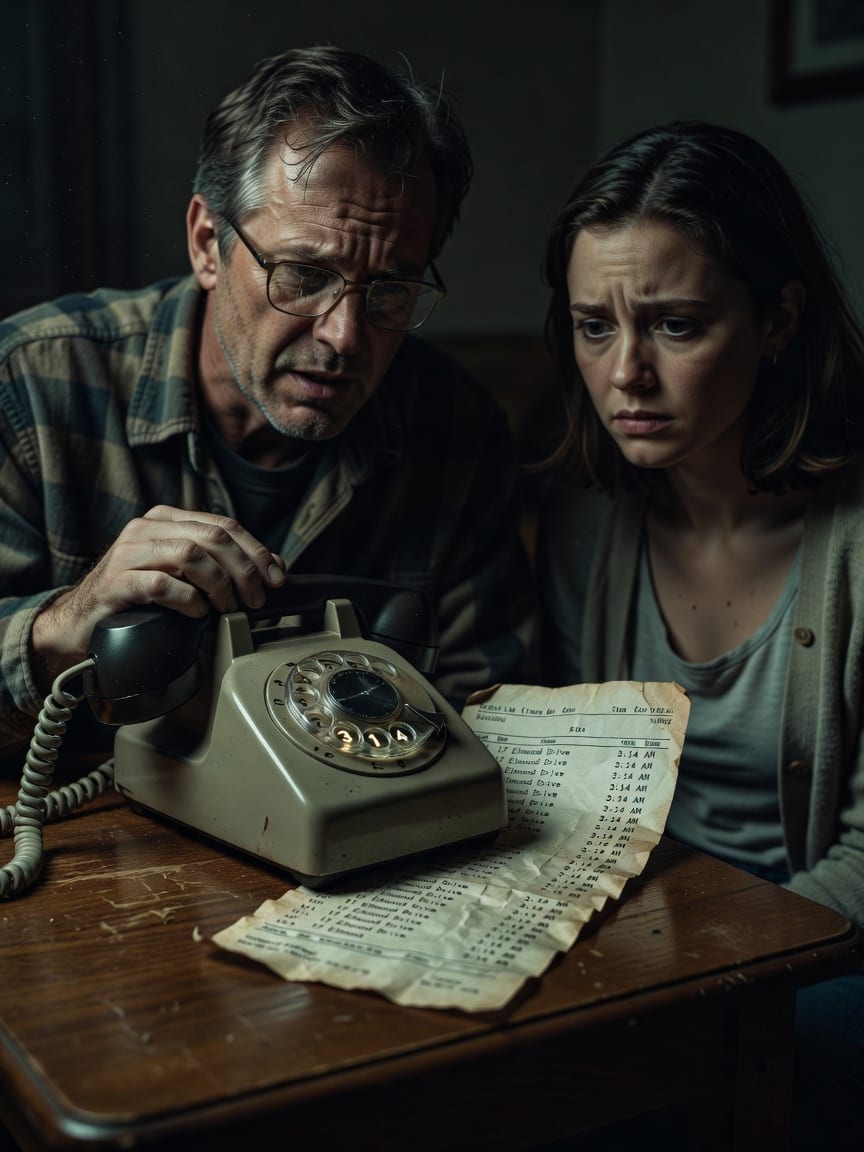
My phone bill itemised forty calls from my number to a house demolished in 1990. Each call at 3:14 AM, lasting eleven minutes. The bill arrived postmarked from a flattened building.
I expected the usual mobile bill, but my landline statement listed forty calls from my number to '17 Elmwood Drive.' That address was for a house torn down in 1990, a vacant lot I remembered from childhood. The phone company insisted the calls were legitimate, leaving me profoundly unsettled by the impossible charges.
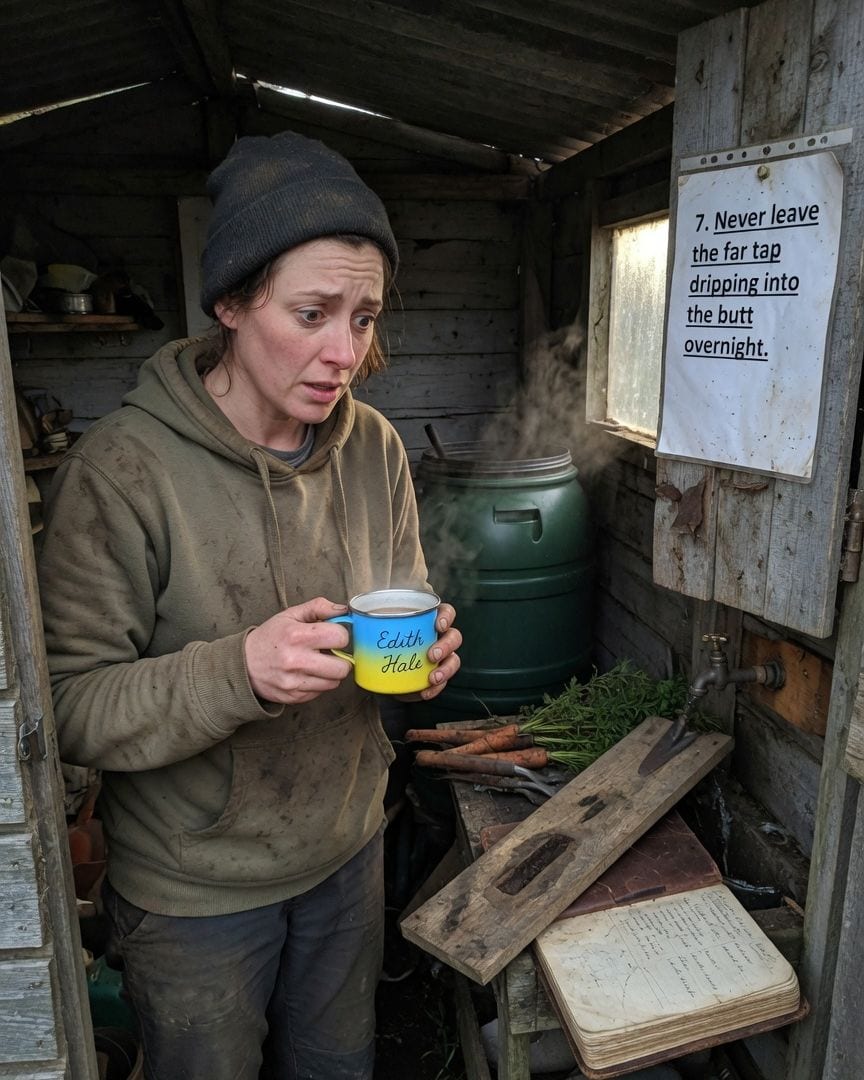
The one night I left the tap dripping, my allotment water butt was full to the brim and warm to the touch — with a child's unrusted tin cup floating on top.
Moving to Blackwood, I hoped my allotment would be a fresh start. But the shed's rulebook warned, 'Never leave the far tap dripping.' One morning, my water butt was full and steaming, an unnerving warmth rising from it. Inside, a child's tin cup floated, unrusted, etched with the name 'Edith Hale'.
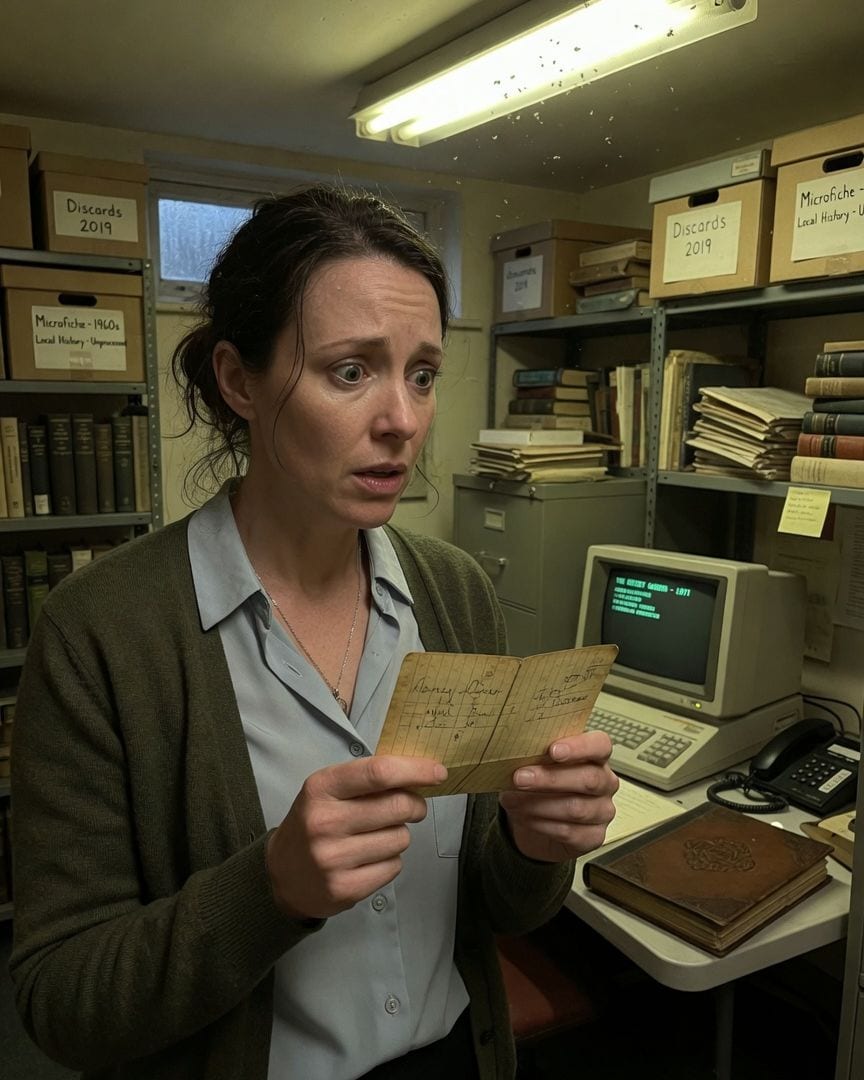
A locked library ledger from 1971 lists my name accessing 'Special Collections', marked 'Subject: Pending'.
As a county archivist, I process old library discards. Among them, I found a brittle due-card from 1971. The borrower's name was 'Nancy Lawson,' written in my own unmistakable handwriting. I wasn't born until 1985, making the card predate my existence by fourteen impossible years.