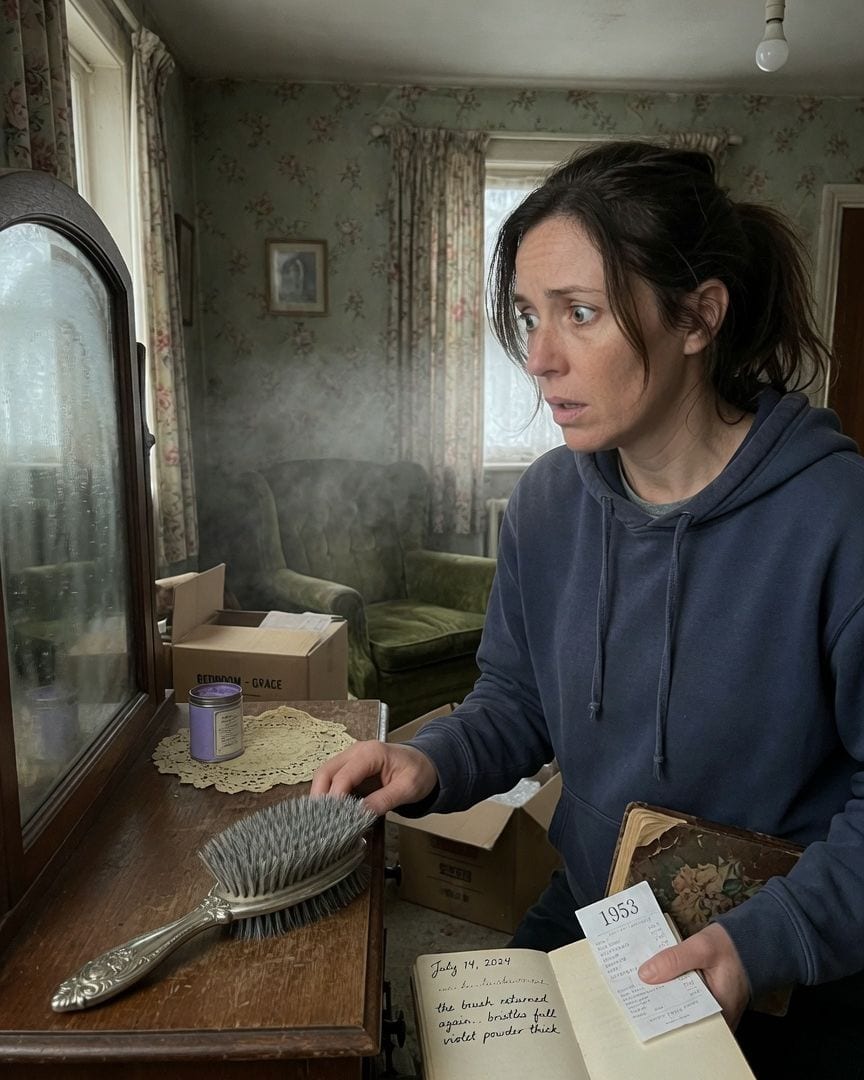
My silver hairbrush sits on the dressing table each morning, full of grey hairs. I live alone.
The house was a gift, in a way. Not a happy one. Grace Donovan, my distant great-aunt, died last autumn, leaving me this place outside of town. Built in '48, she'd lived here since '50.
It was quaint, a bit dated, but mine. I moved in early spring, still unpacking boxes, trying to make it feel like home. The first oddity was the hairbrush.
It sat on the dressing table in the master bedroom, a heavy, ornate thing with a tarnished silver back and boar bristles. Not mine. Grace’s, I assumed.
Each morning, without fail, I’d find it there, bristles thick with long, silver-grey hairs. Dozens of them. Not mine. My hair is dark brown.
The mirror below it would be misted, a low patch, just above the table, as if someone had leaned in close and breathed a soft sigh onto the glass.
And a faint, sweet smell, like old violet powder, would hang in the air until noon. I’d wrinkle my nose, blame the dust settling in an old house, or perhaps a lingering scent from Grace’s things. I’m a pragmatic person.
So, I took the brush. Cleaned it thoroughly, pulling out every last silver strand, scrubbing the bristles until they gleamed. I even used a glass cleaner on the mirror, wiping away the phantom breath.
Then I found an empty box in the loft, tucked the brush inside, and taped it shut. Problem solved.
The next morning, I walked into the bedroom, rubbing sleep from my eyes. The silver hairbrush sat on the dressing table, exactly where it had been before. Bristles full again with long, silver-grey hairs.
The mirror below was misted low down. And the cloying, sweet scent of violet powder was back.
The hairbrush wasn't an isolated incident. After that, I started noticing other repetitions, small things that grated against my logical brain. The house had its quirks, sure, but these felt… scheduled. The third stair on the landing, for instance.
It had a distinct, heavy groan that settled deep into the floorboards. I’d noticed it early on, a structural thing, I figured. But then I started to register the timing.
Every single morning, precisely at 6 AM, that exact creak would sound. Not a house settling. Not me walking on it. Just the single, isolated groan.
I’d be in the kitchen, making my coffee, and the house would announce it, clear as a bell.
Then there was the armchair in the living room. It was an old velvet thing, faded green, nestled by the cold fireplace.
Most evenings, I’d come in from work, and there would be a faint, worn impression on the cushion, deeper than my own weight would leave, as if someone had just risen from it moments before I walked through the door.
The air around it would feel faintly warmer, too. I'd tell myself it was just the cushions regaining their shape, or a draft from the window. But the feeling that someone had been there, actively inhabiting the space, was persistent.
One rainy afternoon, trying to distract myself from the phantom creaks and impressions, I decided to tackle the old bedside table. It had a drawer full of miscellaneous papers and old trinkets.
Buried beneath some yellowed receipts, I found it: a leather-bound book, thick and heavy, with a faded floral pattern embossed on the cover.
It looked like a recipe collection, and indeed, the first few pages detailed elaborate baking instructions in elegant, looping script. Grace Donovan’s script, I realized, from a letter I’d seen.
But as I flipped further, the recipes gave way to something else. Dates. Personal observations. It was half-diary.
I skimmed an entry, then another, mostly mundane details about grocery lists and garden notes. Then my breath caught. The date was smudged, but the words were clear. It described the hairbrush, the misted mirror, the cloying violet powder.
It talked about the frustration of cleaning the brush thoroughly, only for it to return, bristles full, “as if she never left.” The description was chillingly identical to my own experience.
It was like reading my own unwritten thoughts, my own bizarre daily occurrence, but written by a woman who had died months ago. The rational explanation of ‘old house quirks’ didn't just crack; it shattered.
My breath hitched in my throat as I scanned the date at the top of that entry, the one describing the silver hairbrush, the grey hairs, the misted mirror. I leaned closer, tracing the looping script with a trembling finger.
'July 14, 2024.' My own hands began to shake as I re-read it. July 14, 2024. That was months from now. That was the future. Grace Donovan died in October 2023.
The entry detailed the exact phenomenon I was living through, the frustrated cleaning, the brush’s impossible return, the violet powder scent thick in the air. Yet it was dated for a time when Grace should be long, long gone.
I stared at the page, then up at my own dressing table. The silver hairbrush sat there, bristles full. The scent of violet powder, suddenly overwhelming, was cloying in the air.
Deeply unnerved, the first thing I did was double-check Grace Donovan’s death certificate. I found the official record online: October 2023. No ambiguity. That diary entry was impossible. It had to be a mistake, a misdate, a morbid joke.
But Grace wasn't the joking type. Driven by a desperate need for answers, I decided to research Grace further, starting with the house itself.
I drove into town, to the local historical archives. The building was old, quiet, smelling of dust and dried paper.
Samuel Fletcher, the archivist, was a man in his mid-sixties, with a neatly trimmed beard and spectacles perched on his nose. He moved with the slow, deliberate grace of someone who spent his life among fragile documents.
"Grace Donovan," he mused, looking up from a microfiche reader. "Yes, I remember her. Came in occasionally. A bit of a recluse, but always kept to her schedule. Regular as clockwork." He peered at me.
"You’re the new owner, aren't you? Heard she left the old place to a relative."
I nodded, trying to keep my voice steady. "Yes, Josephine Calloway. I was hoping to find out a little more about the house. Its history, perhaps."
Samuel hummed, tapping a finger on a stack of local directories. "Built in '48, that one. Grace moved in '50. Before that... well, it was a new development.
Not much history to speak of, not compared to some of the old Victorians on Elm Street." He leaned back, a faint smile on his lips. "Local folklore, perhaps? Whispers of things that repeated in older homes?
Just stories, of course." He dismissed it with a wave of his hand.
I spent the rest of the afternoon poring over old local newspapers Samuel provided. The clippings were mundane at first, town council meetings, bake sales. But then I started finding them.
Obscure notices, sometimes just a few lines buried deep in the classifieds, detailing 'unexplained disappearances' or 'odd occurrences' on my very street, sometimes even mentioning my address. Decades ago. Often involving female residents. No follow-ups, no conclusions. Just... vanished.
It felt like trying to piece together a story from torn scraps of paper.
As I was leaving, a small, faded advertisement in a 1950s newspaper caught my eye. 'Violet Dreams Powder. A touch of elegance for the discerning lady.'
It listed a very old, obscure chemist's shop, long since closed, but the brand was specific. The same faint, sweet scent that filled my bedroom each morning.
The clues were vague, disparate, but they clicked together in a way that made a cold dread bloom in my chest. A chilling pattern was starting to emerge.
As my investigation deepened, the feeling of being watched intensified. It wasn't just the house’s routine anymore; it was a palpable presence.
I’d find myself pausing mid-sentence in an empty room, convinced I heard a soft intake of breath behind me. My skin would prickle.
I tried to dismiss it as sleep deprivation, or my imagination playing tricks, fueled by old newspaper clippings.
Then I came home one evening, the sky bruised purple with dusk, and the feeling hit me the moment I stepped through the door. It was cold in the entryway, but the living room felt strangely warm.
The worn velvet armchair, where I’d left a book open earlier, had a fresh, faint imprint on its cushion. Deeper than my own weight would leave.
And on the small side table next to it, where I sometimes put my mug, sat a teacup. A delicate, floral bone china cup. It was still warm to the touch. I hadn't made tea all day.
I didn't even own teacups like that. I mostly drank from chipped mugs.
The smell of violet powder, which usually dissipated by noon, was suddenly overwhelming. It clung to the air like a shroud, thick and sickly sweet, as if someone had just doused themselves in it.
I swallowed hard, the scent catching in my throat. I tried to rationalize it away: maybe a draft had knocked something off a shelf, maybe the cup was from Grace’s old things and I’d just missed it.
But the details were too specific, too deliberately placed.
Later that night, as I prepared for bed, my hands brushing against my pillow, I found something. A page. Tucked precisely beneath the pillow, folded into a neat square. It wasn't a missing page from Grace's diary.
It was a duplicate page, a perfect copy of one I’d already read. On it, in Grace’s elegant script, was a list of mundane chores, but at the very bottom, in bold, unmistakable strokes, a single word was underlined. 'WAIT.'
The message was clear. Someone, or something, knew I was digging. It wanted me to stop. Or, worse, to stay.
I drove back to the archives the next morning, the duplicate diary page clutched in my hand. Samuel Fletcher looked up, his brow furrowed when he saw my face.
"Josephine? Is everything alright?" he asked, his voice softer than usual.
My voice was tight with urgency. "Mr. Fletcher, you mentioned local folklore. Whispers. I need to know everything." I laid the bizarre newspaper clippings on his desk, pointing to the obscure 'disappearances' and 'occurrences' on my street.
Then, with a trembling hand, I unfolded the diary entry, the one dated July 14, 2024. "Grace Donovan died last year. How is this possible?"
Samuel’s initial dismissiveness began to falter. He picked up the diary page, peering at the date, then at the graceful handwriting. "A grieving relative's delusion, perhaps? Or a posthumous entry left by the family, maybe to confuse... an old debt?"
He tried, half-heartedly, to explain it away.
"No," I insisted, my voice rising. "This is her hand. And the hairbrush, the smell, the routines... it's all happening to me now. Just like she wrote. And these disappearances. They’re all women. In the same houses."
I pressed him, my gaze unwavering. "Grace lived in that house from 1950 until her death. But there are gaps in her history. Small ones, almost imperceptible, if you weren’t looking. She was meticulous about her routines, you said.
Did she ever… leave? For extended periods?"
Under my relentless pressure, Samuel’s professional calm cracked. He sighed, rubbing the back of his neck. "There were... whispers. In the Donovan family. A peculiar relationship with that house, indeed. My grandmother used to say... 'lives that looped.'
Nonsense, of course. Just small-town gossip."
He hesitated, then leaned forward, his voice dropping to a near whisper. "There was a record. A specific, very rare local census from the 1950s. Usually, these things are straightforward. But for the address of your house...
it listed Grace as living there, certainly. Then, for about a decade, she was... absent. Listed as 'missing' in some municipal records, though never a police report, never a full investigation. Then, she reappeared.
In a later census, dated 1965, she was back, at the same address, same details, as if she'd never left." He shook his head, looking troubled. "It was like she was gone, Josephine. Then just... came back.
And no one questioned it. Not really. Just a quiet acceptance that she was there again."
Armed with Samuel’s disquieting admission, I applied for copies of the old census records he’d mentioned. The administrative assistant gave me a strange look, but processed the request. Within a few days, a thick envelope arrived.
I spread the brittle, yellowed pages across my kitchen table, the fluorescent light stark against the ancient ink. My heart hammered against my ribs, a frantic drumbeat.
The first record I pulled was from 1955. It listed ‘Grace Donovan, age 34, occupant’ at the house’s address. And then, a small, handwritten note in the margin: ‘Deceased (Missing).’ My breath hitched. Dead. But missing.
The official ambiguity was chilling.
I slid it aside, reaching for the next. The 1965 census. My hands shook as I laid it down. There it was: ‘Grace Donovan, age 44, occupant.’ At the very same address. The name was identical.
The age progression was precise, exactly ten years later. It was the same Grace Donovan, officially gone, then officially back, accounted for as if the missing decade had never happened.
My vision blurred. This was Grace’s story, the one Samuel had hinted at. The house had swallowed her, then spat her back out.
But then, my fingers brushed against a third, earlier record. The 1949 census. I pulled it free, a cold knot forming in my stomach. On it, clear as day, was listed: ‘Grace Donovan, age 28, occupant.’
At the exact same address. And beside her name, a note, stark and simple: ‘Vanished without trace.’
A wave of nausea hit me. This ‘Grace Donovan’ from 1949 wasn't the Grace I knew. My Grace, the one who died in 2023, had been born in 1946. This 28-year-old Grace was her mother.
My great-grandmother, also named Grace Donovan. She, too, had vanished from this very house.
The pattern wasn't just Grace's. It was the house's. It was a recurring, generational trap. The house didn't just replay Grace; it replayed generations of Grace Donovans.
The full, terrifying truth detonated in my mind with the force of a physical blow. It wasn't merely a ghost haunting the house.
The house itself was a living entity, an insidious, sentient thing that didn't just retain memories; it actively captured and replayed the lives and routines of its female occupants, perpetuating a generational cycle of recurrence.
The 'routine that continues' wasn't a passive echo of the past, but the house actively filling a pre-set mold, a waiting role, drawing in a new 'keeper' to continue the established pattern.
Grace Donovan’s diary entries about the silver hairbrush, the unchanging routine, the overwhelming feeling of being watched – they weren't just descriptions of her experience.
They were her own dawning realization that she was trapped in this endless cycle, her desperate attempts to understand it, perhaps even to break it.
The impossible census records confirmed it: a generational curse, where one Grace Donovan vanished, only for another to appear, seemingly continuing the previous life, bound by the house’s will.
I understood then. The house didn't just remember; it replaced. It didn't just hold an echo of Grace; it became a vessel, a stage for a never-ending performance.
Every small, uncanny detail—the worn path on the third stair, the impression on the velvet armchair, the teacup, the kettle coming to a boil at 6 AM—was not a lingering trace of the past.
It was the active preparation for the future. For me.
A cold terror, unlike anything I’d ever known, gripped me. I scrambled, my movements jerky and uncoordinated, to escape. There was no time to think, only to react.
I grabbed a single duffel bag, throwing in essentials: my wallet, my phone, a change of clothes. I didn't care about anything else. I would leave everything, every memory, every object tied to this place.
My car keys were already in my hand, my heart slamming against my ribs.
I raced down the stairs, not daring to look back, not daring to pause. The house felt like it was holding its breath, the silence pressing in around me.
I yanked open the front door, the hinges groaning in protest, and burst outside into the twilight. The air was cool, but I was sweating, a cold clamminess coating my skin.
I fumbled with the car door, threw the duffel bag onto the passenger seat, and slid into the driver's side. My hands were shaking so hard I could barely get the key into the ignition.
I refused to look back at the house, to give it any more of my attention, any more of myself. But as the engine coughed to life, a movement in the living room window caught my eye.
A figure. Sitting in the worn velvet armchair, bathed in the dim interior light. The outline was clearly Grace Donovan, a silent silhouette against the dying light. A delicate teacup was raised to its lips.
The figure slowly, deliberately, turned its head. And for a fleeting, horrifying moment, as our gazes met across the darkening lawn, I felt a profound, chilling sense of recognition.
Not of Grace, not of the old woman who had died, but of myself. Already part of the house’s tapestry, a thread woven into its endless, impossible design.
A strange, magnetic pull emanated from the house, a deep, insidious sense of belonging, a whisper of comfort, an urge to go back inside. To settle into the routine. I fought it, a guttural cry trapped in my throat.
I slammed the car door shut, my foot flooring the accelerator. Gravel spewed as the tires screeched, and I left the house behind in a cloud of dust.
But the feeling of being watched, and the house’s silent, possessive claim, followed me down the road, a cold, hard knot in my stomach. I knew I'd escaped, but the cost felt permanent.
I sold the house immediately, at a profound loss, never setting foot inside again. I hired an agent, signed the papers without a glance, and cut every tie.
I moved to a small, impersonal apartment across town, far from anything that reminded me of the old place.
I changed my number, stopped answering emails from Samuel Fletcher, unable to speak of what I’d learned, unable to explain the impossible records.
I tried to rebuild my life, to forget. But the memory of the house, the routines, the impossible records, gnawed at me. I found myself constantly checking my reflection, scrutinizing my own habits, looking for any deviation, any new pattern.
I never fully trusted a quiet home again, always listening for the unseen, waiting for a pattern to emerge where there should be none. The silence of my new apartment felt less like peace and more like a held breath.
Months later, I’m trying to settle into my new apartment. I find myself, without consciously thinking about it, avoiding the third stair on the landing. This building is only two stories.
I shake my head, dismissing it as a nervous quirk, a lingering ghost of old habits. One morning, I wake up, and the air in my new bedroom has a faint, almost imperceptible smell of violet powder.
I don't own any. I check my dressing table. It's empty. I clean the surface, scrub it down with all-purpose cleaner, but the scent persists, faint but undeniable, clinging to the air like a memory.
I close my eyes, trying to banish the thought, but then I open them. I catch my own reflection in the mirror, misted low down, just above the table, as if someone had sat close and breathed on it.
My new dressing table smells faintly of violet powder.
If this one got to you
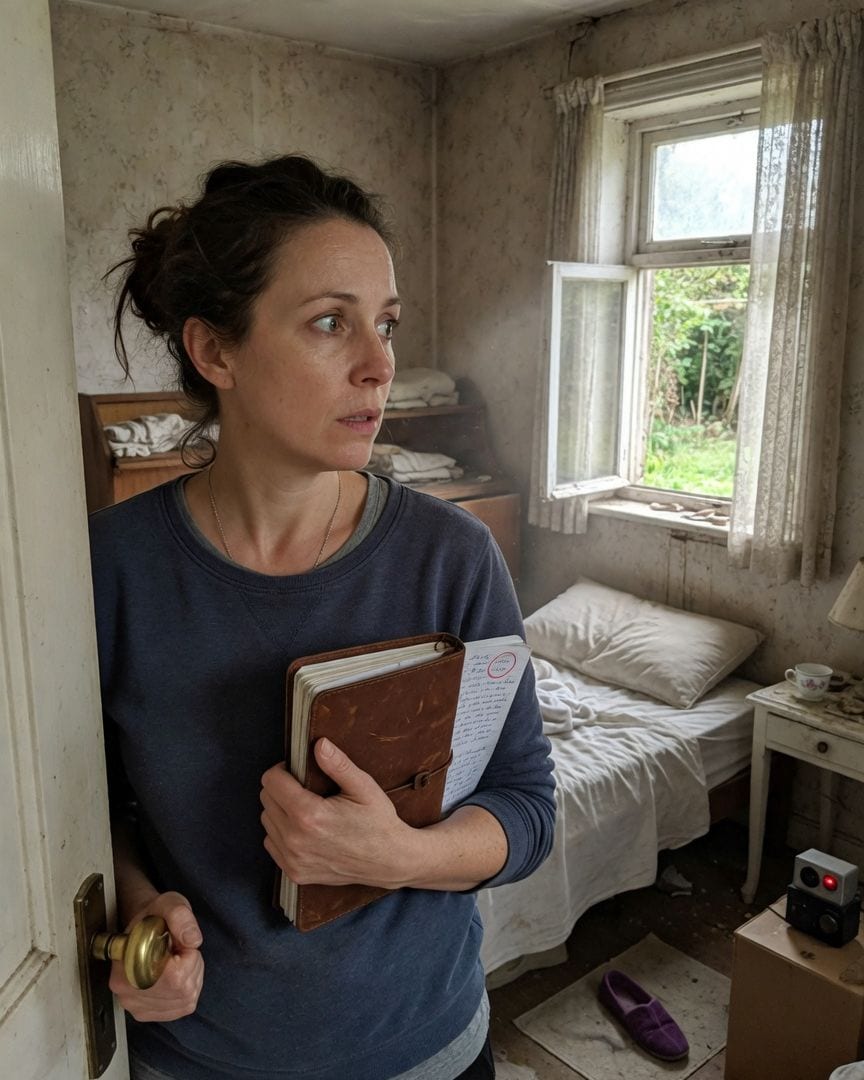
My spare room bed is slept in every few nights, sheets warm and pillow dented. I live alone, painted the window shut, and nobody has a key.
I've lived in Grace's house for six months, adjusting to its quiet rhythms. But the spare room, which I keep shut and empty for storage, has a disturbing routine of its own. Every few mornings, the bed is clearly slept in, the sheet rumpled and warm, and the window I painted shut is open exactly two inches.
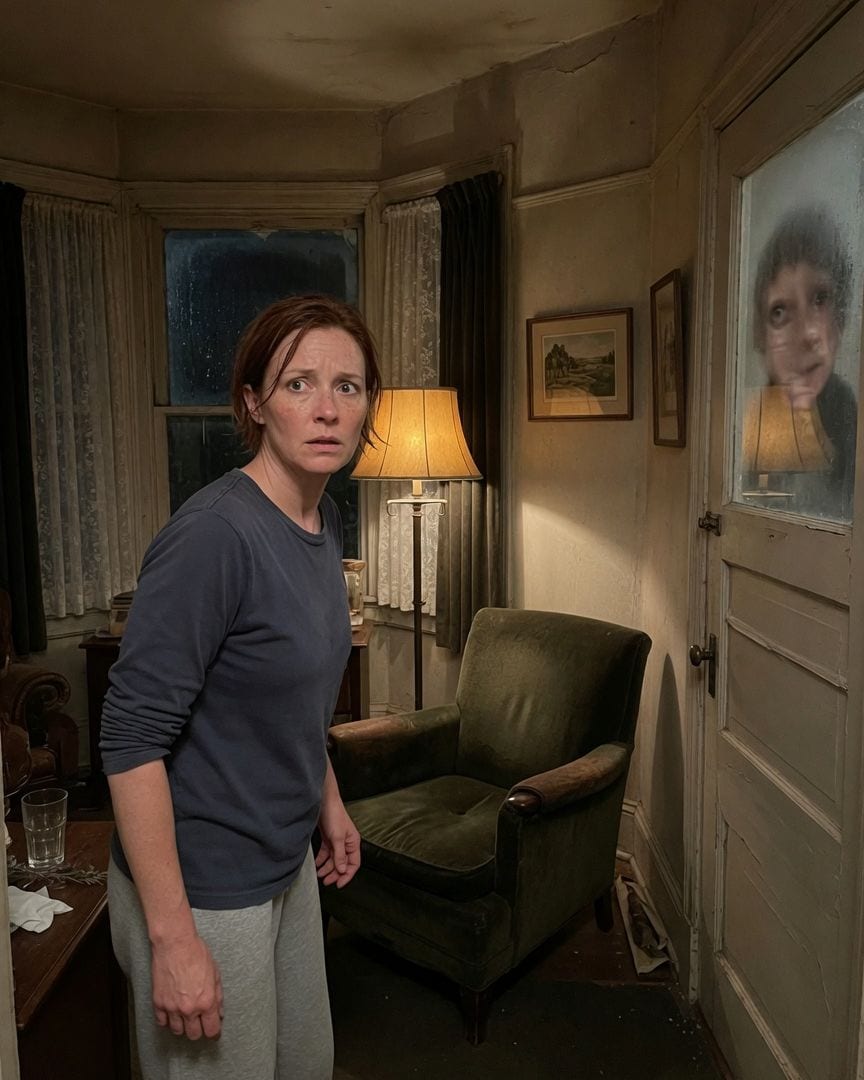
The armchair by the bay window was warm last Tuesday at 9pm. I’ve never sat in it, and the cushion was still settling from a weight that wasn't mine.
I bought this old house for quiet, and most days it's exactly what I needed. But there’s an antique armchair in the living room, deep green velvet, with a permanent hollow from years of use. I’ve never sat in it, yet last Tuesday, I found it radiating a distinct warmth, the cushion slowly settling as if someone had just left.
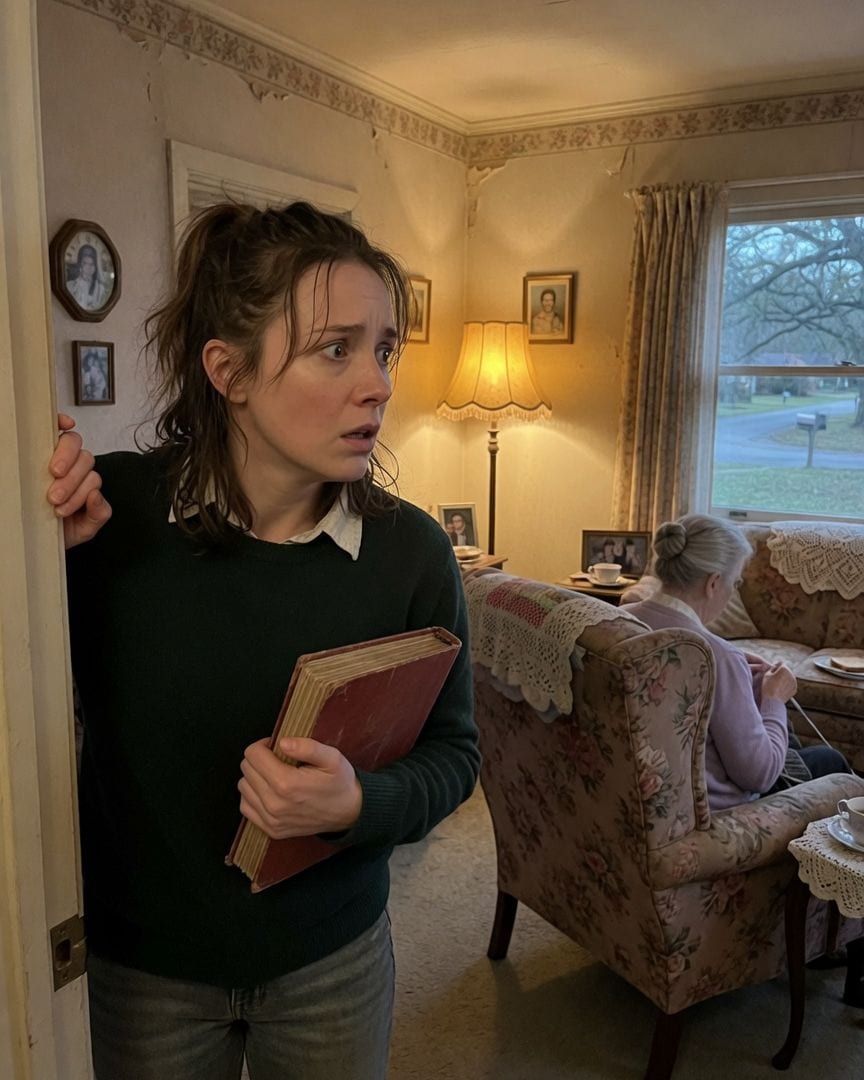
Gran's armchair faces the wall now. She moved it herself, but she'd watched that road from the window for ninety years.
I walked into Gran Kathleen’s living room, expecting comfort, but found her favourite armchair turned fully to the wall. Gran sat in it, knitting calmly, and said the road she always watched was 'never much worth watching.' Her placid certainty, contradicting a lifelong habit, made the ordinary explanation feel thin.
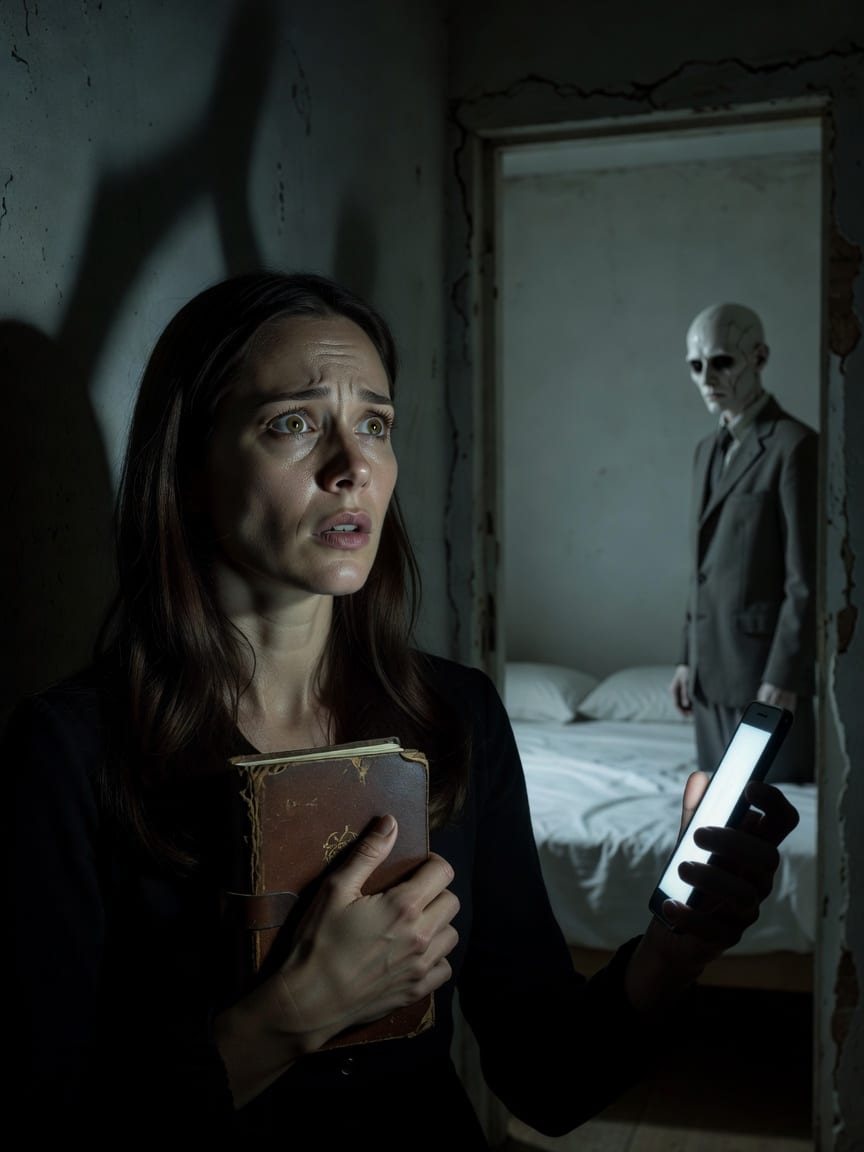
Behind a plastered-over doorway, I found a room. Papered, carpeted, and furnished with a made bed, sealed for decades. The air was dead still, but the bed wasn't dusty. My council tax bill only lists five rooms.
I'm Claire, an architect, meticulously planning my new Victorian terrace renovation. But when I uncovered a hidden room behind a wall, everything I knew about time and decay shattered. The bed was perfectly made, the air still, yet there was no dust, only an unnerving cold.
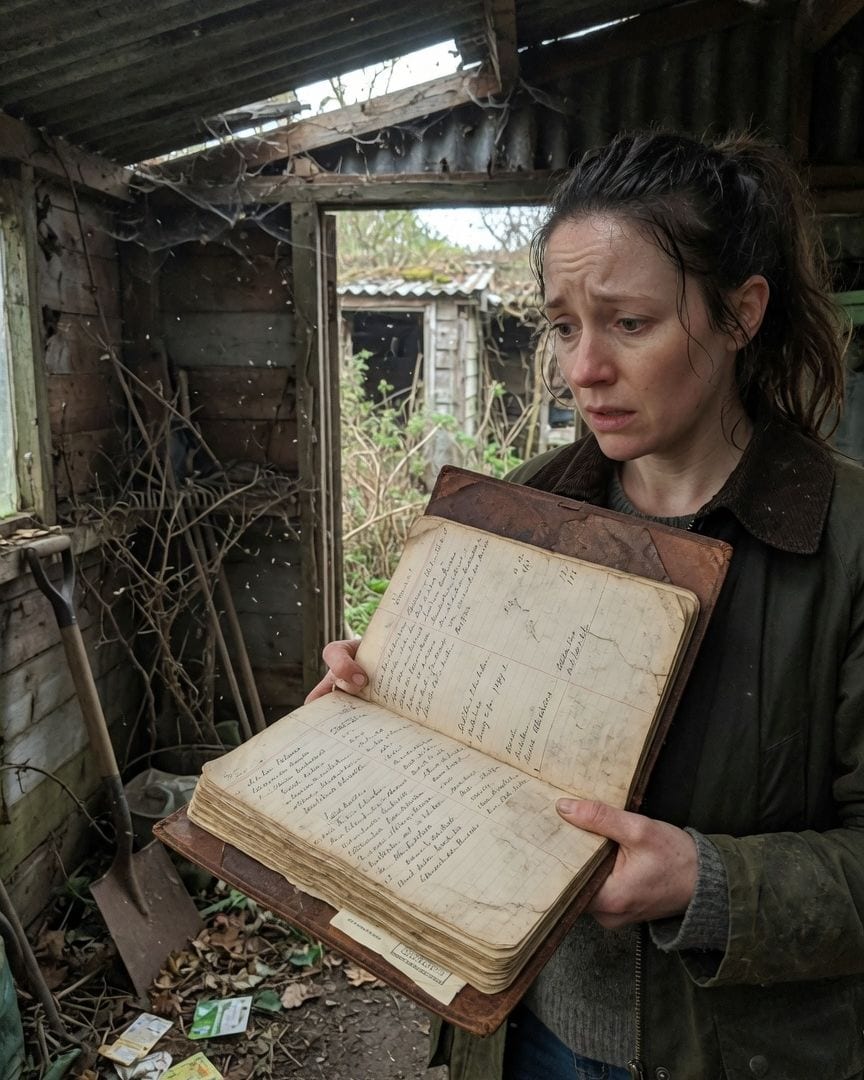
My mailbox holds my own obituary, updated weekly. The postmark reads Cold Ashby allotments, where there's only a standpipe and sheds.
Every Wednesday, a crisp white envelope arrives, containing my own obituary. It's mailed from the desolate Cold Ashby Allotments, a place with no post office, and each week a new, accurate detail of my life is added, leaving only the death date chillingly blank.
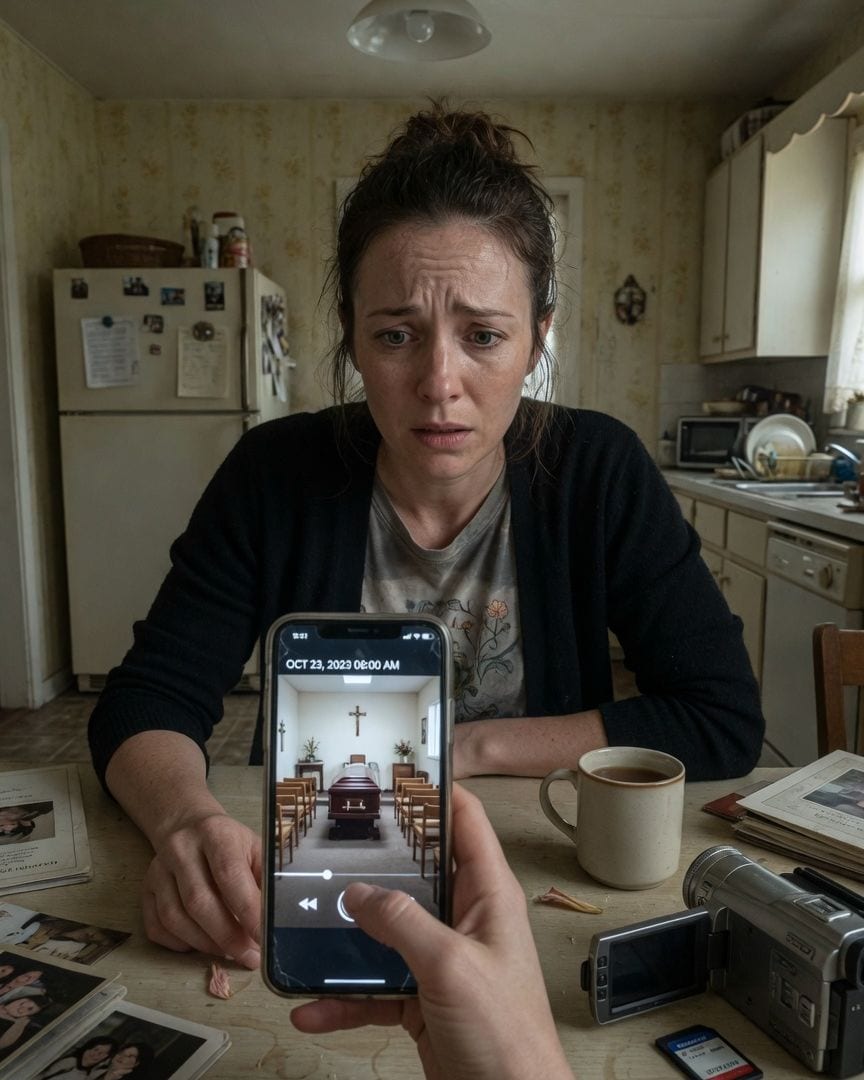
On my dead mother's phone I found a video of her funeral — steady, shot from the back over the mourners' heads, holding on her coffin. The timestamp says it was filmed an hour before any of us had arrived.
Days after my mother's funeral, I sifted through her digital life, hoping for comfort. Instead, her old camcorder revealed a video of my living room, timestamped for tomorrow morning. The abstract landscape I'd just hung was already there, waiting on the wall, a cold dread tightening in my gut.