My train ticket took me from Halden to Marsh Cross, but the doors opened back on the Halden platform. The same guard checked the same clock. The fare was taken. Marsh Cross was never announced.
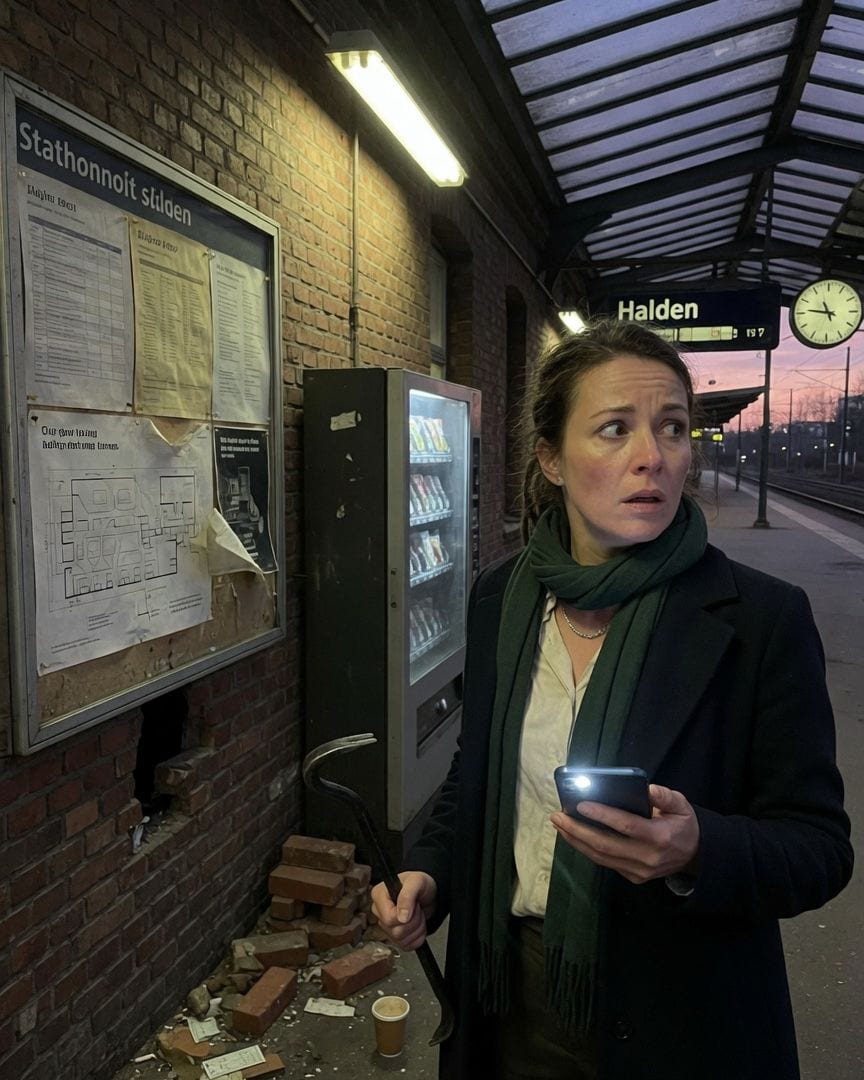
The 10:15 train to Marsh Cross is a route I’ve taken dozens of times. A familiar forty-minute journey, usually spent scrolling through work emails or half-listening to a podcast. That first Monday of October, it was no different.
I settled into a window seat, pulled out my phone, and watched the grey Halden platform slide past as the train eased out of the station.
We rumbled through the short tunnel, then broke out into the patchy green fields that always mark the start of the open country.
I barely looked up for the next forty minutes, lost in a particularly frustrating email chain about Q4 projections.
I felt the familiar slowing, the distinct jolt of the brakes, the subtle shift as the carriages settled. Marsh Cross. Time to pack up. But when the doors hissed open, I looked out, confused. It was the Halden platform.
Not a similar one, not a mistake—the exact same grimy brickwork, the same distinctive 'Halden' sign, the same faded advertisements.
The guard, a man with a distinctive scar arcing over his left eye, was checking his watch by the large station clock I’d seen before boarding.
The time on my phone confirmed it: exactly 10:55, forty minutes later than when I’d boarded. My train ticket, which he’d checked and punched just before I found my seat, was still clutched in my hand, now clearly stamped ‘used’.
The fare had been taken. Marsh Cross was never announced.
A cold knot tightened in my stomach. I stepped off the train, the platform feeling impossibly familiar, impossibly wrong. For a moment, I just stood there, letting the doors hiss shut behind me, the train pulling away without me.
Had I fallen asleep? No, I was active on my phone the whole time. Had I simply been distracted and missed the announcement? But the guard looked exactly the same, the clock at the exact same minute past the hour.
This wasn’t right.
I tried to report it to the ticket agent, a young man with a bored expression who barely looked up from his screen. He insisted the 10:15 to Marsh Cross had arrived on schedule, exactly as expected.
“Ma’am, it’s a direct line. Nothing unusual on the log.” He looked at me like I was trying to pull a fast one. “Your ticket’s used, so you must have arrived.”
I showed him my phone, the forty-minute jump, the fact that I was clearly not at Marsh Cross. He just shrugged, pointed to a sign about refunds only for cancelled journeys.
Frustrated and with a growing sense of unreality, I left the office, determined to find some proof, any proof, that something was profoundly wrong.
I paced the platforms, retracing my steps from earlier, my eyes scanning for anything out of place. It was late afternoon now, the station quieter, the light beginning to fade.
Near the disused Platform 2, which has been fenced off for years, I noticed an old notice board tucked behind a bulky vending machine. It was covered in peeling, out-of-date posters.
As I pulled at a loose corner of one, a brittle fragment of something else came away with it. Behind, yellowed with age, was an original station schematic.
It detailed the main lines, the defunct Marsh Cross spur line, and, inexplicably, a small, unlabeled room branching off an old maintenance tunnel near Platform 2. A room that certainly isn’t on any modern plans.
I’d never seen this schematic before, and I’m good with details. The spot where it should be was now a solid brick wall, part of the retaining structure for the old platform.
I ran my hand over the cold, rough bricks. Nothing.
But then, as I paused, a faint, almost imperceptible chill emanated from a specific section, an odd, deep cold that felt different from the ambient air, or the cold of mere masonry.
It was too consistent, too specific, a cold that seemed to hum from within the wall. The rational part of me tried to explain it away: a draft, old pipes, faulty insulation.
But the profound cold, emanating from such a specific point, didn't quite fit. A prickle of unease, far more intense than before, started to spread through me. I decided I had to investigate further.
Armed with a small crowbar from my car, I returned to the bricked-up section after closing hours. The station was deserted, the echoing silence amplifying every scrape of my shoes.
With some effort, the mortar crumbling easily, I managed to pry away a few loose bricks from the source of that inexplicable cold.
Behind them, there wasn't more brickwork or a solid wall, but a dark, narrow opening, leading into a black void. My heart hammered against my ribs. I shone my phone light into the darkness.
The beam cut through the black, illuminating a perfectly preserved, dust-free waiting room. An old wooden bench stood against one wall, a gas lamp fixture mounted above it, its glass globe surprisingly clean.
And on the far wall, a schedule board. Its hand-painted lettering, stark white against black, clearly displayed a departure time for 'Marsh Cross', 14:15. Below it, the date: 1957. Marsh Cross station officially closed in 1958.
The air in the room was impossibly still, silent, and colder than anything outside. It felt like time itself had stopped in that one pocket of space.
I stood there, phone beam shaking, the image of that impossible schedule board burned into my mind. I couldn't breathe. The air behind the wall had been impossibly still and cold, a silence that felt like a scream.
Slowly, carefully, my hands trembling, I replaced the loose bricks, trying to make it look as undisturbed as possible. My mind raced, trying to reconcile what I'd just seen with everything I knew.
Over the next day, I didn't just research Marsh Cross; I obsessed over it. Every historical record confirmed the official closure in 1958 and the line’s decommissioning in 1960.
A schedule board dated 1957 was, by all logical accounts, impossible to find in a forgotten room at Halden station. It was like finding a fully functional, pristine fax machine in the ruins of Pompeii.
I knew who might know something. Oliver Porter, the long-serving Halden Station Master. He’d been here forever, seen everything. I found him in his small, cluttered office on Platform 1.
He was a man with a quiet, observant demeanor, his greying hair perpetually neat, his uniform always crisp. I told him about the old schematic, the unlabeled room. He listened, stroking his chin.
"Ah, that old thing," he finally said, his voice even, almost bored. "Just an old storage closet that was bricked up decades ago. Nothing more to it, I'm afraid." His eyes, though, flickered.
Just for a split second, a movement that betrayed something hidden.
"It wasn't a storage closet," I pressed, my voice steadier than I felt. I pulled out my phone and showed him the photo I'd secretly taken of the schedule board.
The stark white lettering on the black board, the 'Marsh Cross, 14:15, 1957' clearly visible.
Oliver’s face went pale. The muscle in his jaw twitched, once, then again. He swallowed hard. "Where... where did you find this, Rachel?" he asked, his voice now a strained whisper.
"Behind the wall. The one that’s not supposed to be there. Oliver, what is going on?"
He turned from me, adjusting a stack of papers on his desk with trembling hands. "There are… vague local legends," he murmured, his back to me. "Whispers. Of lost journeys on that line. Passengers who sometimes... lost time.
Or returned confused. Old wives' tales, really. Nothing to worry about." But his composure was visibly cracking, his usual calm replaced by a palpable unease. He wouldn’t meet my gaze. He knew more, I was certain of it.
Refusing to be deterred, I decided to delve deeper. I enlisted the help of Colette Ashford, a local historian and archivist known for her meticulous research.
She initially seemed skeptical of my tale of the looping train and the anachronistic waiting room, but my account of the old schematic and the official records of the Marsh Cross closure piqued her academic interest.
We spent hours in the dusty archives of the local library, poring over brittle station logs and regional newspaper clippings from the late 1950s and early 60s.
Colette found gaps, small inconsistencies, particularly in the logs for specific dates in autumn. Whole trains, apparently, had no passenger manifest or arrival confirmation for Marsh Cross on certain days.
As I spent those long, quiet hours surrounded by brittle documents and the smell of old paper, a growing sense of being observed began to prickle at the back of my neck.
I dismissed it at first, attributing it to paranoia fueled by the strangeness of my discovery. But then I started noticing Oliver Porter. He wasn’t in the archives, of course, but I’d catch glimpses of him.
Standing outside the library, just across the street, seemingly looking at nothing. Or, once, his car parked a block away, facing the building, as I left for lunch.
Always just out of reach, always just out of sight when I tried to get a clear look. It was unnerving, like a shadow that didn't quite belong.
One evening, after returning home from another fruitless day in the archives, I found an anonymous, handwritten note slipped under my door.
The paper was thick, old, the kind that feels almost like cloth, and the ink was slightly faded, as if from a different era. My hands shook as I unfolded it.
The message was stark, written in precise, almost elegant script: 'STOP LOOKING FOR MARSH CROSS. SOME THINGS ARE MEANT TO BE LOST.' My heart pounded, the dread now sharply, terrifyingly personal. Someone knew. And they wanted me to stop.
Clutching the anonymous note, I stormed into Oliver Porter’s office the next morning. He looked up, his face etched with a weary resignation that chilled me more than anger. I slapped the note down on his desk.
"I warned you," he murmured, his voice barely a whisper, picking up the note and turning it over in his hands. His eyes, usually so calm, were clouded with something akin to sorrow.
"What is this, Oliver? Who sent this? And don't tell me it's old wives' tales again. Tell me what’s really going on." My voice was tight, sharp. I couldn’t hold back anymore.
I detailed everything: the impossible waiting room, the 1957 schedule, the missing logs Colette had found, his lurking presence outside the library. I watched his face as I spoke, seeing the last fragments of his composure crumble.
Under my relentless questioning, Oliver finally broke. He leaned back in his chair, a long, shaky breath escaping him. "It's the Marsh Cross loop," he said, the words barely audible. "It’s not a legend, Rachel. It’s real.
It's been happening for decades. Every first Monday of October, journeys from Halden to Marsh Cross… they’re cancelled."
He explained it to me like a man unburdening himself of a terrible secret. Passengers board the train, tickets are stamped, fares are taken, just like mine. But then, they always arrive back at Halden, destination unreached.
He’d seen it happen, first dismissing it as a glitch, then a strange coincidence, then a local superstition. But the pattern, the precise recurrence, became undeniable.
He’d inherited the knowledge, he said, from the station master before him, who had inherited it from his predecessor.
He gestured to the wall behind his desk, a section I hadn't noticed before. He pressed a specific panel, and a small, narrow compartment clicked open. Inside, nestled among other official-looking documents, was a dusty, leather-bound ledger.
Its pages were filled with neat, looping script, painstakingly kept. It was a list, he explained, going back to the 1920s, of 'unclaimed tickets' for Marsh Cross. Every single entry was dated on the first Monday of October.
Every ticket was stamped 'used.' And every entry included a brief, chilling note: 'Passenger reported returning to Halden.' He ran a finger down the latest page, stopping at a fresh entry. My name. The date of my impossible journey.
The impossible journey wasn't a fluke. It was a recurring event, a secret history meticulously documented by a succession of station masters, a hidden archive of vanished moments.
Oliver closed the ledger with a heavy sigh, the sound thick with generations of unspoken dread. "The loop isn't just about returning, Rachel," he said, his voice low, his gaze now fixed on something distant.
"Some of these 'lost passengers' never really returned at all. Not fully."
He gestured to a dusty wooden chest behind his desk, previously unnoticed by me, half-hidden beneath a stack of old manifests. He pulled it open.
Inside, neatly categorized and preserved in individual, brittle envelopes, were personal effects from these 'lost' journeys. A child's worn teddy bear, its button eye missing. A tarnished silver locket, engraved with faded initials.
A set of keys on a ring, rusted shut. And at the bottom, carefully wrapped in tissue, a small, leather-bound diary, its pages brittle with age.
Oliver picked up the diary, handling it with reverence, as if it were spun glass. "This," he said, his gaze distant, "belonged to Colette Ashford's great-aunt. Sarah Ashford. She was on the train in 1928, headed for Marsh Cross.
She was never seen again. Her family searched for months, but there was no trace. They even suspected foul play for a while." He paused, his eyes heavy.
"But this diary was found here, in this very chest, the very next day. Just the diary. No Sarah." He carefully opened the diary to its last entry, the faded ink barely legible under the dim office light.
I leaned closer, my breath catching in my throat, a cold dread washing over me. The last entry read: 'I'm back at Halden, but it's not Halden. And Marsh Cross is calling.'
Oliver looked at me, his eyes filled with a deep, weary understanding, a lifetime of silent witness.
Rachel and I pored over Sarah Ashford’s diary. The great-aunt’s neat, elegant script filled the brittle pages, detailing her initial confusion, much like mine.
She wrote of the impossible return, the strange chill in the air, the deep wrongness of it all. But then her entries grew darker, more unsettling.
She described finding the anomalous waiting room, just as I had, and the dates on the schedule board, impossible for her time, too.
She wrote of a growing, unsettling sense of being ‘drawn in’ by Marsh Cross, even from Halden, a subtle, magnetic pull towards the disused platform.
The horror intensified as she described seeing ghostly figures on the platform of that anomalous waiting room – sometimes just indistinct shapes, other times, impossibly, herself, younger, boarding the phantom train again and again.
She was becoming an observer to her own repeating fate.
Oliver explained it all, his voice flat, devoid of emotion, as if relaying a long-known, terrible truth.
The anomaly isn't merely a loop that returns passengers to their starting point; it's a persistent, localized pocket of Marsh Cross that ‘calls’ to certain individuals. It draws them into its repeating cycle.
The ‘extra’ waiting room isn't just a physical manifestation of a forgotten space; it's a bleed-through, a fragment of the destination that has become entangled with Halden.
It’s a place where the barrier between ‘here’ and ‘there’ is impossibly thin, a tear in the fabric of space-time.
The personal items in the chest, he explained, were from those who were fully absorbed – those whose physical presence eventually vanished from Halden, their journeys endlessly replaying within the anomaly, forever trying to reach Marsh Cross.
The horror wasn't just the return; it was the destination's insidious, inescapable pull, forever echoing in the wrong place, taking people, consuming their journeys.
Armed with this chilling knowledge, I finally understood the gravity of my own experience, the persistent chill I’d felt, the lingering sense of unease.
I felt the ‘calling’ now, too, a subtle, almost magnetic draw towards the disused Platform 2, a whisper that promised an end to the confusion, a resolution to the impossible journey. I knew what I must do.
The choice was no longer about escaping, but about confronting the truth, no matter what it meant.
I revisited the anomalous waiting room one last time, the crowbar heavy in my hand. The bricks gave way easily now, almost willingly, as if the wall itself wanted to reveal its secret.
I stepped into the familiar, yet impossible, space. The gas lamp fixtures, though unlit, seemed to cast long, dancing shadows in the beam of my phone.
The air was colder than ever, thick with an almost palpable anticipation, a humming silence that felt ancient.
I pushed deeper, past the old wooden bench, towards a faint, flickering light visible through an archway at the far end of the room.
The pull intensified, a profound sense of displacement washing over me, as if my very atoms were being stretched and rearranged.
As I stepped through the archway, I was no longer in Halden, nor was I truly in Marsh Cross. I was in the in-between, the impossible geometry itself, a place of perpetual twilight and echoes.
On an impossible track, a train approached, its windows dark, silent, moving without a sound. On the platform, a figure stood, waiting, waving. It was myself, younger, boarding the train I thought would take me to Marsh Cross.
I was now one of the observers, a silent, perpetual witness to my own lost journey, trapped within the repeating cycle, another face in the endless loop.
The Halden station continues its daily rhythm, oblivious to the hidden reality beneath its foundations. Oliver Porter, now older and more weary, still works his shifts.
He occasionally checks the ledger of unclaimed tickets, adding new entries from time to time, his gaze often drifting towards Platform 2.
The loose bricks in the old maintenance tunnel remain undisturbed, the existence of the waiting room a secret only he and the anomaly itself hold.
Colette Ashford, the historian, eventually publishes a book on local folklore, including a chapter on 'The Vanishing Marsh Cross Line,' but without the true, chilling details, dismissing it as quaint superstition.
On the first Monday of October, a new passenger approaches the ticket counter, requesting a single to Marsh Cross. Oliver Porter smiles faintly, a knowing, almost sympathetic look in his eyes, as he stamps the ticket.
"Enjoy your journey," he says, the words a quiet promise, or perhaps a warning. A figure, impossibly familiar, watches from the shadows of Platform 2.
If this one got to you
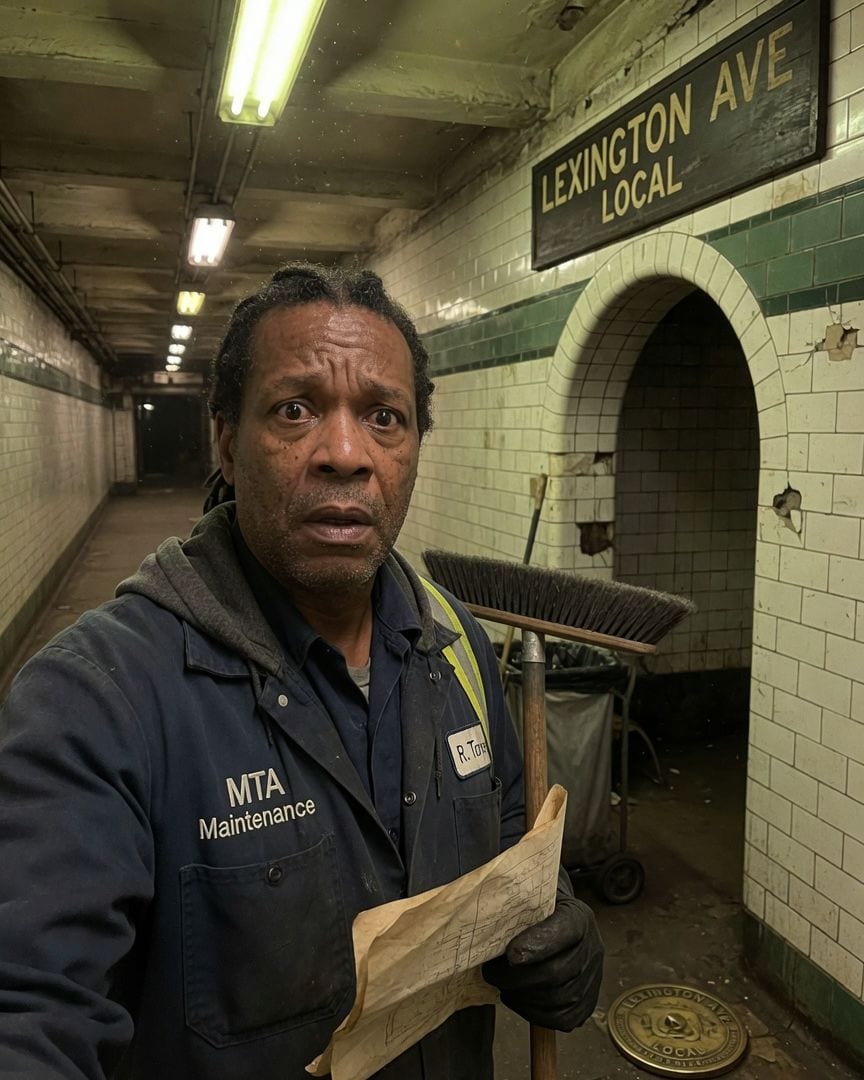
A decommissioned subway line now calls 'All aboard!' from a dark platform that shouldn't exist.
For ten years, my job as a cleaner in the Lexington Avenue Local transfer point was a precise routine. But one night, the solid wall I swept past every shift simply vanished, replaced by a dark, perfectly tiled opening. Now, from that impossible space, a train from a line decommissioned seventy years ago calls 'All aboard!'
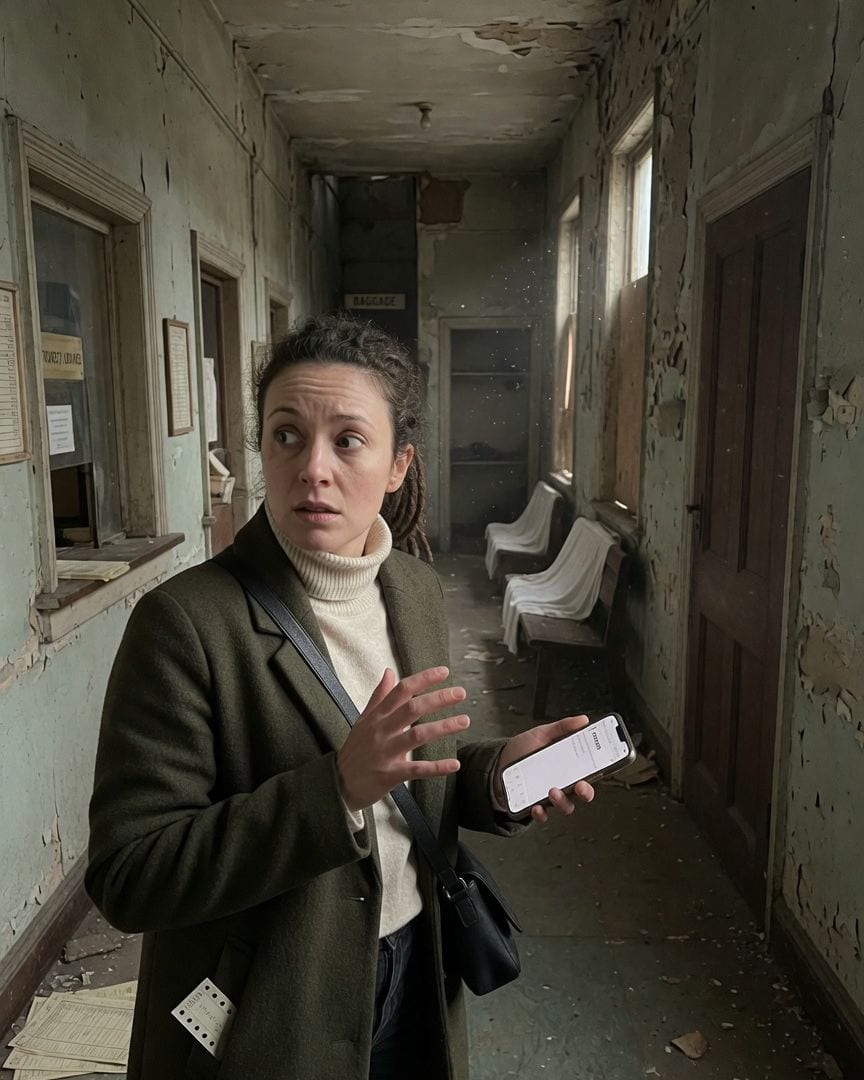
My scenic railway loop repeated six times. The same trestle bridge, the same waterfall, over and over, the conductor punching my ticket each pass. We never left the circle.
My scenic railway journey was supposed to be a gentle, thirty-minute loop through the gorge. But after only fifteen minutes, the same landmarks rolled past again, and again, and again. The conductor, Henry Kingsley, punched my ticket six times as if each was the first, his gaze utterly devoid of recognition.
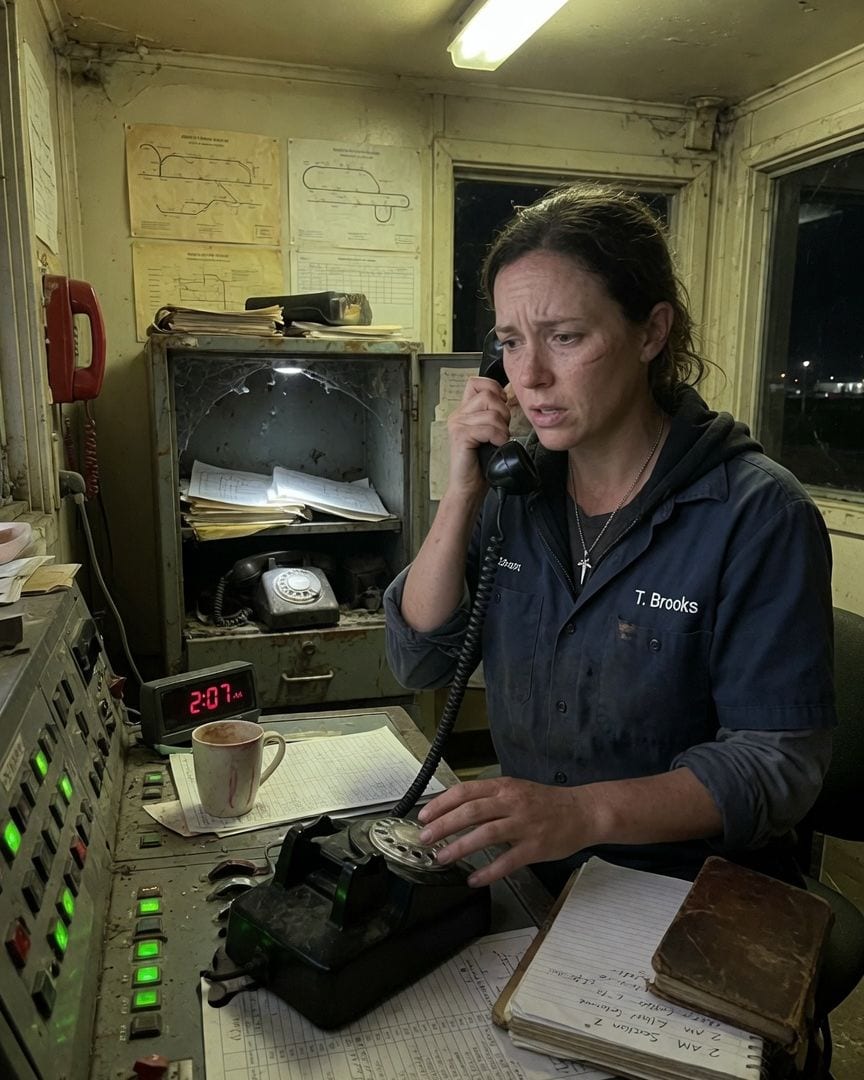
My signal box gets a 2 AM call every night from a man whose section was demolished eleven years ago. Now I found his logbook with today's date.
My night shift at the signal box is quiet and precise, defined by the routine 2 AM call from Ellis confirming Section 7 is clear. But when I asked my duty manager to log it, he said Section 7 hasn't had a track walker in eleven years, not since its cabin and phone were demolished.
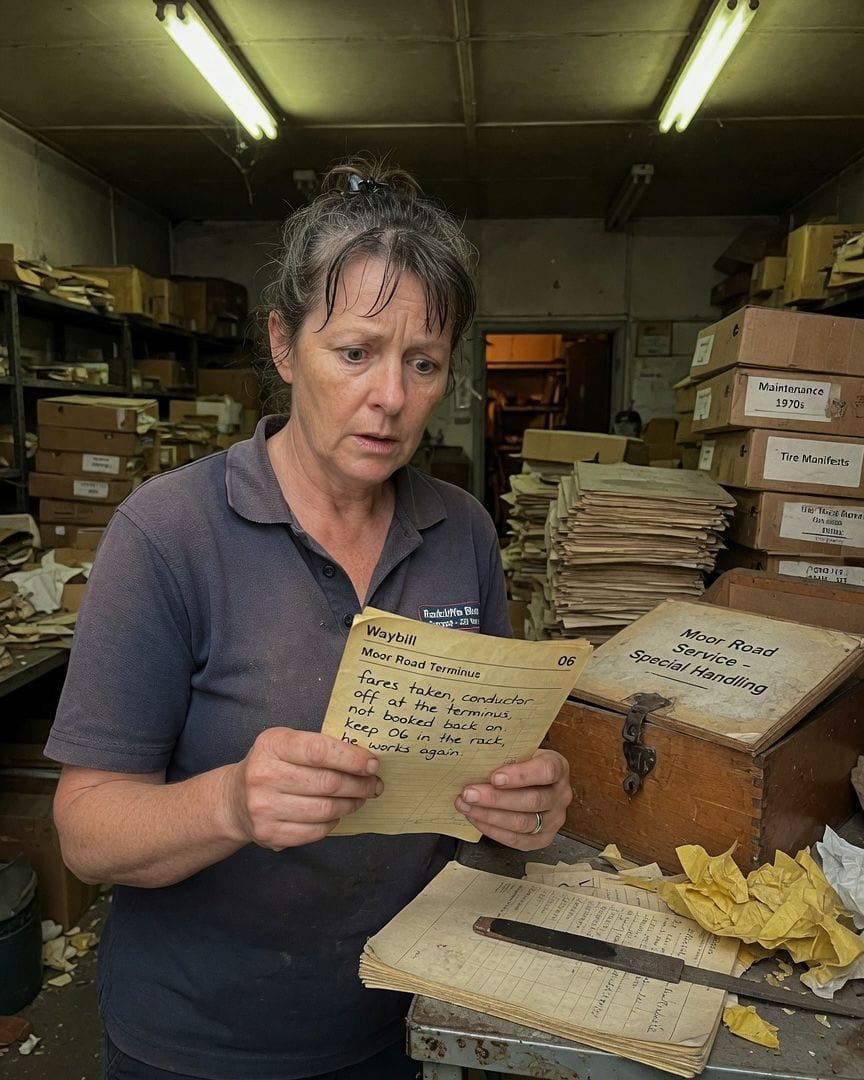
Our depot's Waybill 06 filed a moor road service we stopped running years ago. Every eight years since 1956, it closes: 'keep 06 in the rack, he works again.'
Sorting waybills in the depot, I stumbled across a form for the Moor Road Terminus. That route was decommissioned decades ago, but this waybill had a chilling handwritten instruction: 'keep 06 in the rack, he works again.'
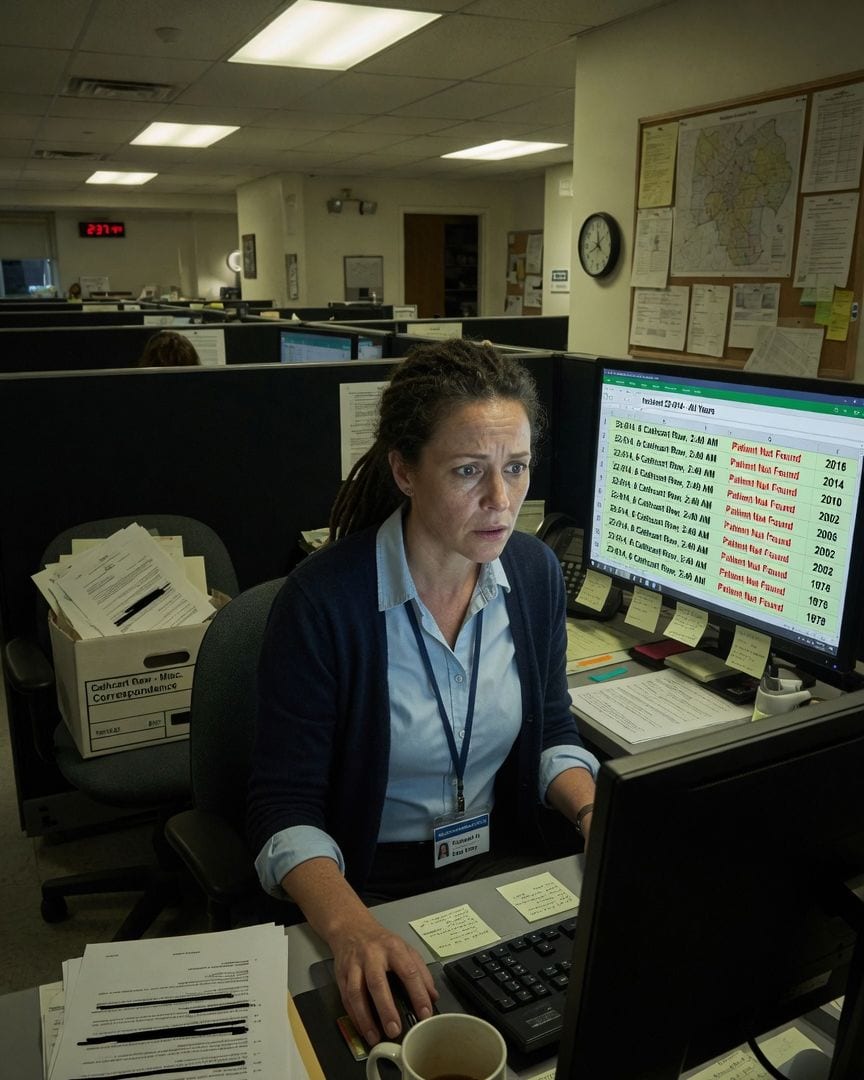
My computer log shows the same 2:40 AM call to Cathcart Row, every four years since 1978, always closed 'patient not found'.
Working data entry for the County Ambulance Trust, I found a routine incident logged as 'Patient Not Found.' But digging deeper, I discovered the exact same phantom call had repeated every four years for over forty years, always at the same address, always at 2:40 AM. Then I found a heavily redacted memo linking it to my own street.
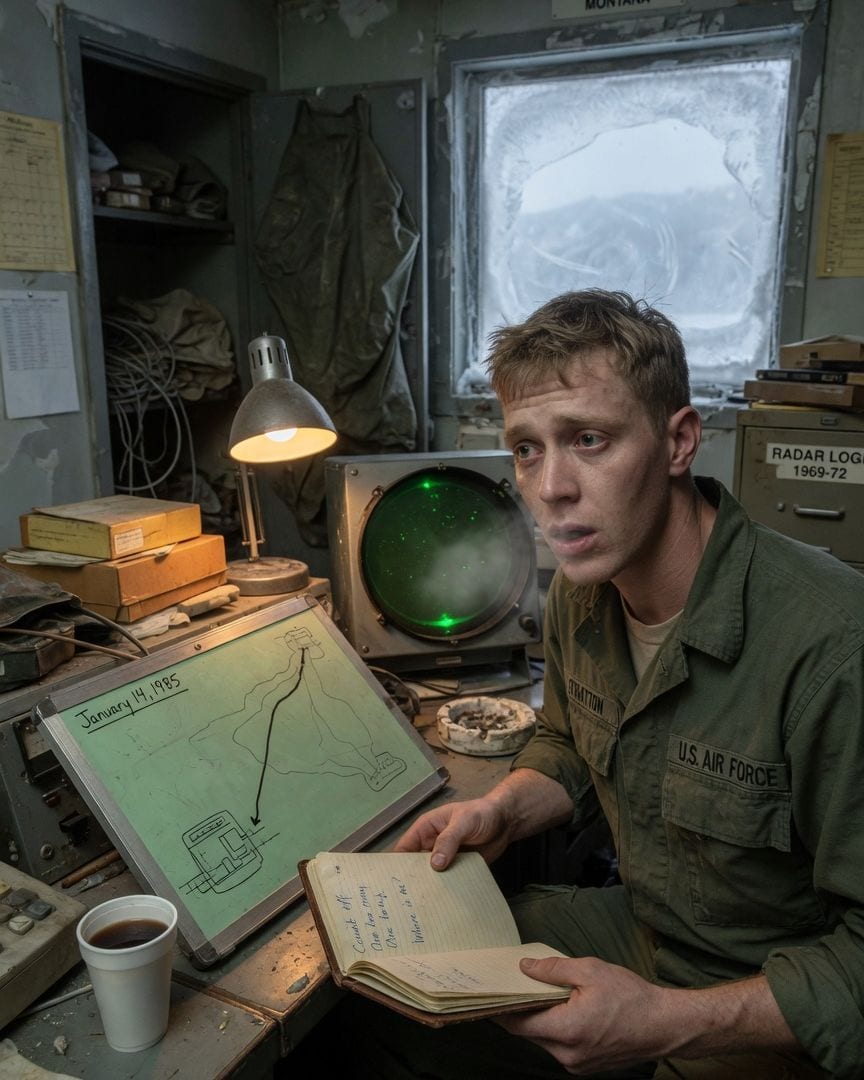
Airman Lars Stratton found an old Cold War manifest listing one name twice: 'Bernard Radcliffe' transferred and 'Bernard Radcliffe' still present.
Airman Second Class Lars Stratton was counting down his final weeks at Echo Station, a desolate Cold War outpost due for mothballing. He longed for home, far from the bitter Montana winds and the constant hum of static. Inside the dim radar shack, he logged the usual nightly ghost blip, a faint contact appearing at 2300, just as it had every winter since 1987. This night, a metallic tang like old blood lingered in the air, raising the hairs on his arms. Seeking distraction, Lars later discovered a leather-bound logbook from 1971, detailing the same 2300 contact, but with chilling notes and a manifest listing one airman's name, Bernard Radcliffe, twice—once transferred, once present. Was he truly alone in the silent, remote station?