Truck 114 left the yard last night, CAD says. It burned forty miles of fuel. But my truck 114 was up on the lift, no wheels, all shift.
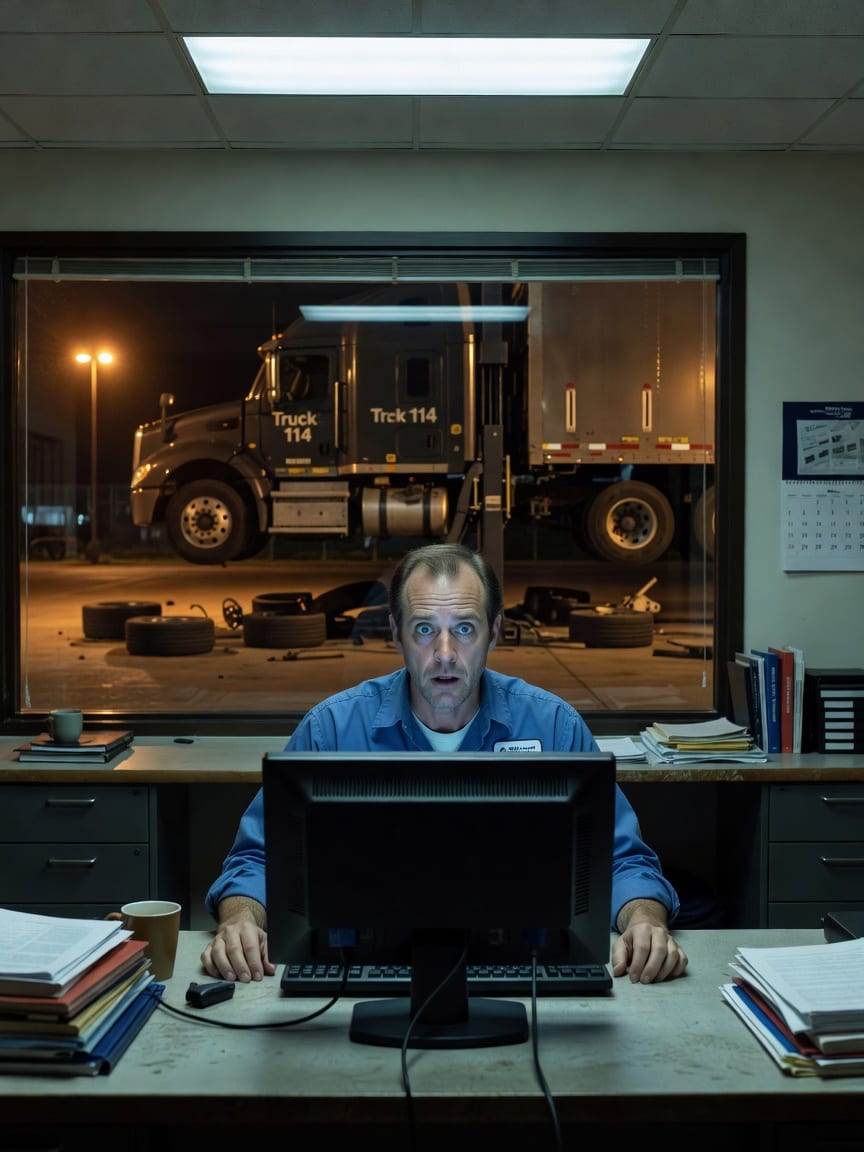
The fluorescent hummed over my head in the dispatch office, a dull, electric drone. 2:47 AM. Another Wednesday overnight, quiet as ever.
I was half-listening to the low rumble of the night yard, half-staring at a particularly stubborn dust bunny clinging to the base of my monitor. Then the CAD system pinged. A sharp, digital chirp that cut through the silence.
Truck 114, the screen blared. Gate transponder logged open, outbound.
I blinked. My chair creaked as I leaned forward. I was the only dispatcher on shift. I hadn’t logged anything. My fingers were still resting on the cool plastic of my mouse.
I watched, a knot forming in my stomach, as the entry solidified: 114 outbound 2:47 AM, inbound 3:05 AM. Eighteen minutes. Forty miles of fuel gone, the system calculated with unnerving precision.
I knew Truck 114. It was in Bay 4. Had been since Monday. Adam Sutton, the lead mechanic, had put it up on the lift for a brake job, its drive wheels removed.
I’d seen him working on it earlier, welding sparks flying. I swiveled my chair, peering through the glass wall of my office towards Bay 4.
There it was, unmistakable, a hulking silhouette under the dim bay lights, still suspended in the air, its axles bare, like a giant, grounded insect. It hadn't moved an inch.
The CAD, silent now, blinked innocently, a clean green cursor awaiting my next command. I pulled up the fuel log, my heart thumping against my ribs.
The consumption for 114 was already registered, a precise digital deduction from the yard’s main tank. Forty gallons. The numbers didn't lie, not usually. But neither did my eyes.
One of them had to be wrong, and the isolation of the night shift, the sheer impossibility of it, made the contradiction feel heavier than it should. The air in the small office seemed to thicken, pressing in around me.
I spent the next hour meticulously checking every possible explanation. I restarted the CAD system, the screens flickering to black before booting back up, clean as a whistle.
I ran diagnostics for phantom signals, for network glitches, for anything that could explain a ghost in the machine.
I even checked the physical gate logs, the old paper forms we still kept for emergencies, for a manual override, a truck passing through without a transponder signal. Nothing. The system insisted 114 had left and returned, a perfect loop.
The fuel was gone, accounted for.
Frustrated, the knot in my gut tightening, I pulled up the historical logs for Truck 114. The pattern was faint at first, a ripple in the data stream, then stark, undeniable.
Other Wednesday nights, stretching back months, showed similar short, fuel-consuming runs for 114, always between 2:45 AM and 3:10 AM. Always. I cross-referenced these with the maintenance schedule I could access.
Every single one of those nights, Truck 114 had been out of commission—either on the lift, awaiting parts, or undergoing minor repairs that would render it utterly immobile. It was impossible.
I tried the security footage archives, pulling up the feed for the gate. But the cameras facing the gate always seemed to glitch or 'skip' during those specific time windows on Wednesday nights, showing only static or fast-forwarded emptiness.
A digital stutter that perfectly obscured the truth.
This wasn't a system error; it was too precise, too consistent. It wasn't human error; I'd been the only human in here. I felt a cold prickle on my neck, a sensation like a whisper that wasn't there.
The only explanation left was the impossible. The yard itself felt like it was holding its breath.
I started to wonder if this was new, if it had started recently, or if I'd just been too busy, too tired, too focused on the daily grind to notice. I decided to check my own past shifts.
I typed in my dispatcher ID, Daniel Yates, and hit enter, searching for any unusual activity on my previous Wednesday overnights.
The search results loaded, a list of my past shifts scrolling down the screen. My eyes scanned the entries, past routine dispatches for legitimate runs, past the usual paperwork logs. Then I saw it. Three weeks ago, another Wednesday.
Truck 114, logged out at 2:48 AM, back at 3:06 AM. Forty-one miles of fuel. And next to it, my own dispatcher ID: D. YATES.
I froze. My chest felt tight, my lungs suddenly unwilling to work. I remembered that night. It had been uneventful, a blur of paperwork and quiet radio chatter.
I had no memory, no faint echo, of logging that truck out, of seeing it move, of confirming its impossible return. My own hand, my own ID, confirming an impossibility. My breath hitched in my throat.
I stared at my name on the screen, a name that now felt foreign, tainted, complicit.
A cold dread settled in my gut as I realized I had no memory of ever logging it, my fingers hovering, trembling, over the glowing keys, unsure whether to delete it, to question it, or to simply stare at the undeniable, chilling fact that I was already part of whatever this was.
The next few days off were a blur of restless sleep and obsessive research. I couldn't shake the image of my own ID on that phantom log, a ghost signature proving my involvement in a crime I hadn't committed.
I returned to the yard, ostensibly for 'personal paperwork,' but spent hours hunched over dusty HR archives in the back office, pulling old shift schedules and personnel files. My eyes burned, but I couldn't stop.
The pattern solidified: it wasn't just Truck 114. Often, it was other trucks from Bay 4, always on Wednesday nights, always logged out and back in a tight 15-20 minute window, always with a corresponding, impossible fuel consumption.
More disturbingly, I started to notice a correlation between the dispatchers whose names appeared on these phantom logs and their eventual disappearance from the company roster. Not fired, not transferred, just... gone.
A name would simply stop appearing after a certain date. No forwarding address. No final pay stub. Just a blank space where an employee should have been.
I tried to corner Adam Sutton, the lead mechanic, during a shift change. He was wiping grease from his hands with a rag, a grimy halo around his bald head.
"Hey, Adam, about Truck 114, being on the lift last Wednesday but logged out?"
Adam grunted, not looking at me. "Things get moved around, Daniel. Sometimes they need a quick check, roll it out, roll it back. Happens."
"But it had no wheels on," I pressed, my voice lower than I intended.
He finally met my gaze, but his eyes were flat, dismissive. He shrugged, a dismissive flick of his wrist. "Supervisor's call, maybe. Leave it be, kid." He turned and walked away, disappearing into the main bay.
The interaction left me colder than before. Adam's nonchalance felt less like ignorance and more like a practiced evasion, a well-worn lie. He knew. Or he was part of it.
As I walked back towards the dispatch office, the hair on my arms stood on end. I felt a prickling sensation on my neck, like unseen eyes tracking my movements from the shadows between the massive vehicles.
I was digging too deep, and someone, or something, was starting to notice. The whole yard seemed to hold its breath around me, waiting.
The following afternoon, Christine Maddox, the yard supervisor, called me into her office. Her voice was level, almost devoid of inflection, like a recording. "Daniel, I've noticed you've been... very thorough with your log reviews lately."
She gestured vaguely at a stack of printouts on her desk, though my own recent queries on the CAD system felt like they were screaming from the papers. "Digging into old records, cross-referencing shifts. It's commendable, but..."
She paused, her gaze flat and unblinking, pinning me to my seat. "It's also a distraction from your primary duties. We have a system here that works. Things run smoothly."
I felt a chill. The office, usually just cool, felt like a freezer. "Christine, there are entries that don't make sense. Trucks moving when they're immobile, fuel burning when they're not even on the ground."
Christine leaned back in her chair, a faint, almost imperceptible smile playing on her lips, a smile cold enough to freeze the room solid. "The system is robust, Daniel.
Sometimes, things look strange on paper, but they're just part of the yard's… routine. It's always been this way."
Her tone was calm, unbothered, as if discussing the weather, as if the impossible were merely a slight deviation from the norm. "I suggest you focus on your current shifts. Don't worry about what's come before."
Later that night, back in the dispatch office, the air still seemed to hum with Christine’s strange calm. I was about to log off, my mind still reeling from her casual dismissals, when I noticed something.
A small, yellow sticky note stuck to the underside of my keyboard tray. It wasn't my handwriting. Scrawled on it, in neat block letters, were three dates. All Wednesdays.
All dates of phantom runs I'd just investigated, runs I hadn't told anyone about. The note was a quiet, chilling warning, a confirmation that my digging had been observed, and that someone knew exactly what I was looking for.
The fear settled deep in my bones.
My heart pounded, a frantic drum in my chest. I held the sticky note, its message clear and terrifying.
I waited, pacing the empty office, until Christine Maddox was about to leave for the night, her purse slung over her shoulder. I stopped her at the door, holding up the note. "Christine, what is this?
How did someone know these dates? And what did you mean by 'routine'? These trucks aren't moving."
She sighed, a slow, weary sound, as if humoring a child who refused to accept simple truths. She led me back into her office, closing the door softly behind us.
The click of the latch echoed in the suddenly small space. "Daniel, some things are just… part of the yard. They always have been. Before my time, before yours."
She sat, her hands folded neatly on her desk, her expression unreadable. "This place… it has its own way of doing things. A rhythm. The logs must be kept. It's how the yard runs."
I stared, incredulous, feeling a flush of anger rise. "What runs? What are you talking about? Are you saying these phantom runs are… real? And that someone is faking the logs?"
Christine shook her head slowly, patiently. "No, Daniel. The logs aren't faked. They are… accurate. In their own way. And the runs are real. Just not in the way you understand."
She looked at me with an unnerving placidity, her eyes dark, bottomless pools. "The trucks in Bay 4. They're… used. Every Wednesday night. It's been happening for decades. The fuel. The mileage. It's all accounted for."
My mind reeled, trying to grasp the impossible coherence of her words. "Used by who? For what?"
Christine’s gaze drifted to the window, out towards the silent, moonlit yard, as if she could see something out there that I couldn't. "By whatever runs the night, Daniel. It keeps the yard… operational.
And the logs… they are its record. Its signature." She turned back to me, her eyes focusing on mine, unwavering. "The dispatchers… they play their part. They ensure the logs are complete. Or they become part of the system themselves."
My breath caught in my throat. I thought of the vanished names, the empty spaces in the HR files I'd seen. The phantom log under my own ID from three weeks ago.
Christine's words made the impossible entries from Part 1 snap into a horrifying new coherence. The dread wasn't just a glitch in the system; it was the entire system.
It was a functioning, ancient mechanism, grinding silently beneath the ordinary veneer of the yard. And I was standing right in the gears.
Shaken, I stumbled back to my computer, Christine’s words echoing in my head: "Or they become part of the system themselves."
My hands, still feeling the chill from her office, trembled as I pulled up the old personnel records again, the digital list of dispatchers whose names simply stopped appearing.
I scrolled through, the names blurring into a grim litany of absences. Leonard Jennings. Elliot Drummond. Sharon Patterson. All names I'd seen on the phantom logs I’d discovered earlier, dispatchers who had logged impossible runs before their records simply… ended.
I looked at the last complete entry on the list: Cecilia Hartley, her last shift exactly matching a phantom run from two months prior. And then, I saw it.
As if the system itself was extending the pattern, mocking me, a new line had appeared at the very top of the list, a stark, undeniable addition that vibrated with a silent dread.
DANIEL YATES, it read.
Beneath my name, the date of my first phantom log entry—three weeks ago—was highlighted, glowing faintly, an accusation. And then, an empty space. A blank line, waiting. Waiting for the date of my last shift.
I stared, frozen, at my own name, now an undeniable part of the pattern, a prophecy already half-fulfilled. I wasn’t just investigating the wrongness; I was already inside it.
The realization hit me with the force of a physical blow. Christine hadn't just been warning me; she'd been stating a fact, calm and unbothered, as if discussing the weather.
The 'vanishing' dispatchers weren't just leaving; they were being integrated, 'logged out' from their human lives and into the yard's unholy routine. The system wasn't just recording; it was consuming.
I was already on the list, my name an entry in a ledger of replacement. That phantom log under my ID from three weeks ago—it wasn't a mistake, it was my initiation.
I was already 'part of the system,' a cog in whatever machine ran the night.
A desperate impulse seized me, primal and urgent. If I could just erase it, perhaps I could erase myself from the pattern. I brought up my phantom log entry for Truck 114 from three weeks ago.
My finger trembled over the 'delete' key, poised over the glowing word, a tiny beacon of hope. I clicked 'Delete.'
A faint whirring sound came from the computer's tower, a brief flicker on the screen, like a gasp, and then the entry reappeared. Instantly. Stubbornly. But not just that.
It reappeared with a new timestamp: the exact moment I'd tried to delete it. The system wasn't just self-correcting; it was asserting its authority. It logged its own defiance, proving its absolute control over its own truth.
I checked the fuel records for the phantom runs one last time, my mind numb. Every single gallon, every mile, meticulously accounted for.
The trucks were truly moving, truly burning fuel, truly going somewhere, their impossible journeys recorded by a silent, unseen entity that controlled the very data stream of the yard, bending reality to its will.
The horror wasn't a glitch; it was the chilling, perfect coherence of it all. The world was wrong, and the system was right.
It was Wednesday night again. I was on shift, alone in the dispatch office. The clock crept towards 2:47 AM, each tick a hammer blow against my skull, a countdown to my own undoing.
I watched the CAD screen, the glowing numbers a mocking prophecy. I looked out at Bay 4.
Truck 114 was still on the lift, no wheels, just as it had been three weeks ago, just as it had been last week.
The thought of running, of just walking out the door and never looking back, flashed through my mind like a dying ember, but my legs felt heavy, rooted to the floor.
A deep, pervasive chill had settled into the office, seeping into my bones, a cold that wasn't of this world.
2:47 AM. The CAD pinged. The sound was deafening in the silence. Truck 114, gate transponder logged open, outbound. I watched its fuel gauge drop, mile by phantom mile, the numbers marching relentlessly across the screen.
Then, a shadow moved outside the dispatch window. Adam Sutton, the lead mechanic, walked past, his gait slow, unhurried, his head slightly bowed, towards Bay 4. He looked like a man walking to a familiar, unpleasant chore.
I called out, "Adam!" but the mechanic didn't respond, didn't even turn his head. He simply walked into the bay, disappearing from sight, swallowed by the darkness.
I watched the monitor as Truck 114's inbound log appeared at 3:05 AM. And then, the final, crushing blow. As the inbound was confirmed, my own dispatcher ID, D. YATES, flashed on the screen as the 'logger.'
But I hadn't touched the keyboard. My hands were resting on the desk, limp and lifeless. A cold, invasive presence seemed to settle over me, a pressure behind my eyes, a silent command.
My own hands, resting on the desk, felt alien, distant, as if they belonged to someone else.
I tried to raise them, to make a fist, but they responded sluggishly, as if they were made of stone, as if they were already part of a different machine.
I felt a profound, unsettling sense of being hollowed out, my will replaced, filled with a cold purpose that was not my own. The CAD pinged again, requesting a new log entry for Truck 115, also in Bay 4.
My fingers, heavy and unfeeling, began to move towards the keyboard, ready to comply.
The next morning, Christine Maddox arrived at the yard. The dispatch office was quiet, tidy. Daniel's chair was neatly pushed in, his coffee cup washed and upside down on the drying rack.
The CAD system hummed softly, displaying the overnight log. Truck 114 showed a clean entry, logged out and in by D. Yates. Truck 115 had also completed its brief, fuel-consuming run, logged by D. Yates.
Christine walked over to the desk, her eyes scanning the screen, a faint, satisfied smile playing on her lips.
She picked up a small, yellow sticky note tucked under the keyboard tray, a list of dates written in neat block letters. She slipped it into her pocket. The yard was running smoothly.
A week later, Sophia Muller started her first overnight shift as the new dispatcher. She was bright, eager, and a little nervous, her eyes wide as she took in the humming consoles.
She settled into Daniel Yates's old chair, the plastic still warm from the day shift. She noticed a faint, almost invisible sticky note tucked under the keyboard tray, a list of dates scrawled in neat block letters.
She pulled it out, glanced at it, and shrugged. Just old notes, she thought, crumpling it and tossing it into the waste bin. The shift passed quietly, the mundane rhythm of the yard settling over her, a comforting drone.
She poured herself a fresh cup of coffee.
At 2:47 AM, the dispatch CAD pinged, lighting up the screen. Truck 114, gate transponder logged open, outbound. Sophia blinked, looking out at the yard through the wide glass. Bay 4 was dark, silent.
She could just make out the silhouette of Truck 114, up on the lift, its wheels clearly removed. She frowned, a small wrinkle appearing between her brows. It didn't quite make sense.
She leaned forward, her finger hovering over the screen, a faint, almost imperceptible chill tracing its way up her spine. The gate transponder registered a clean exit, just as it always did.
If this one got to you
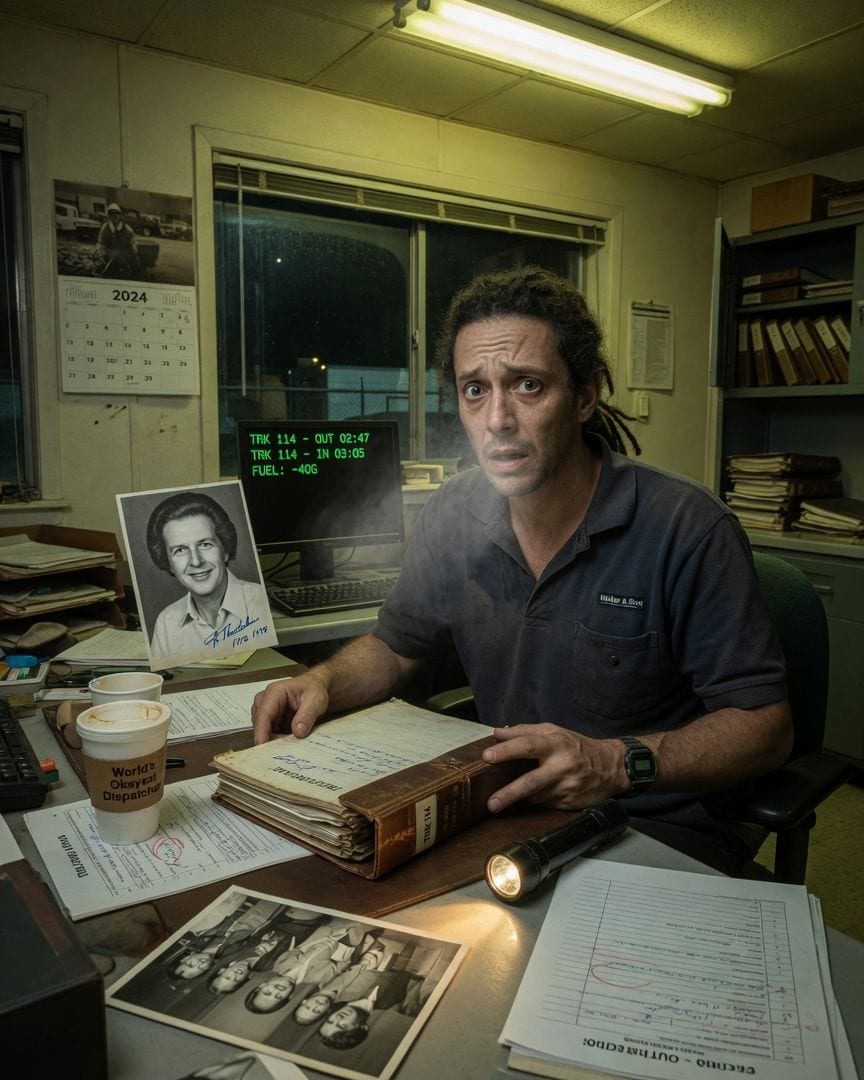
Truck 114 logged forty miles gone last night. It was on the lift, no wheels, and I was the only dispatcher.
My shift in the freight yard dispatch office was quiet, just routine monitoring. But then the CAD system logged Truck 114 moving out for a forty-mile run. That truck was impossible; it had no wheels and was on blocks in maintenance all week.
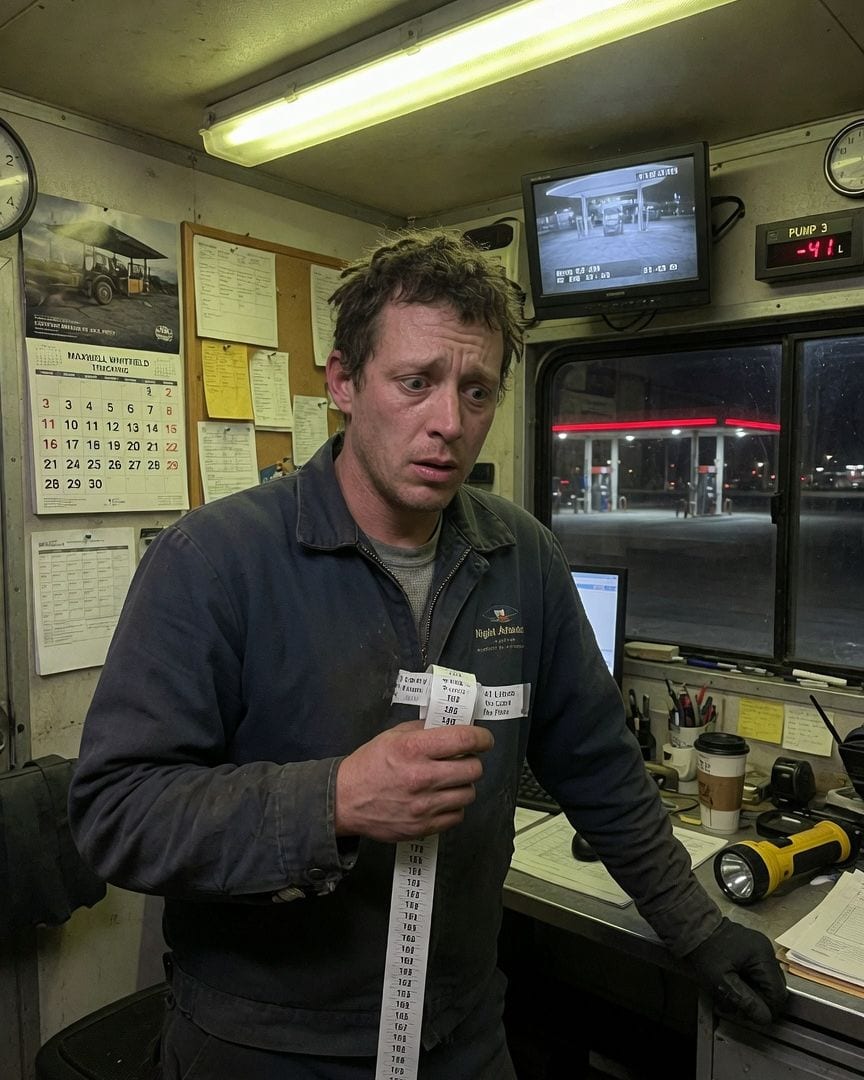
My fuel pump dispenses forty-one liters to nothing at 3:48 AM — and the nozzle was hung up and dry.
Closing out the truck stop for the night was a routine I'd done hundreds of times. But last night's totalizer tape showed an impossible entry: 41 liters dispensed from Pump 3 at 3:48 AM, with no card or plate. When I checked, the pump was dry, the ground empty, yet the tank gauge confirmed the fuel was gone.
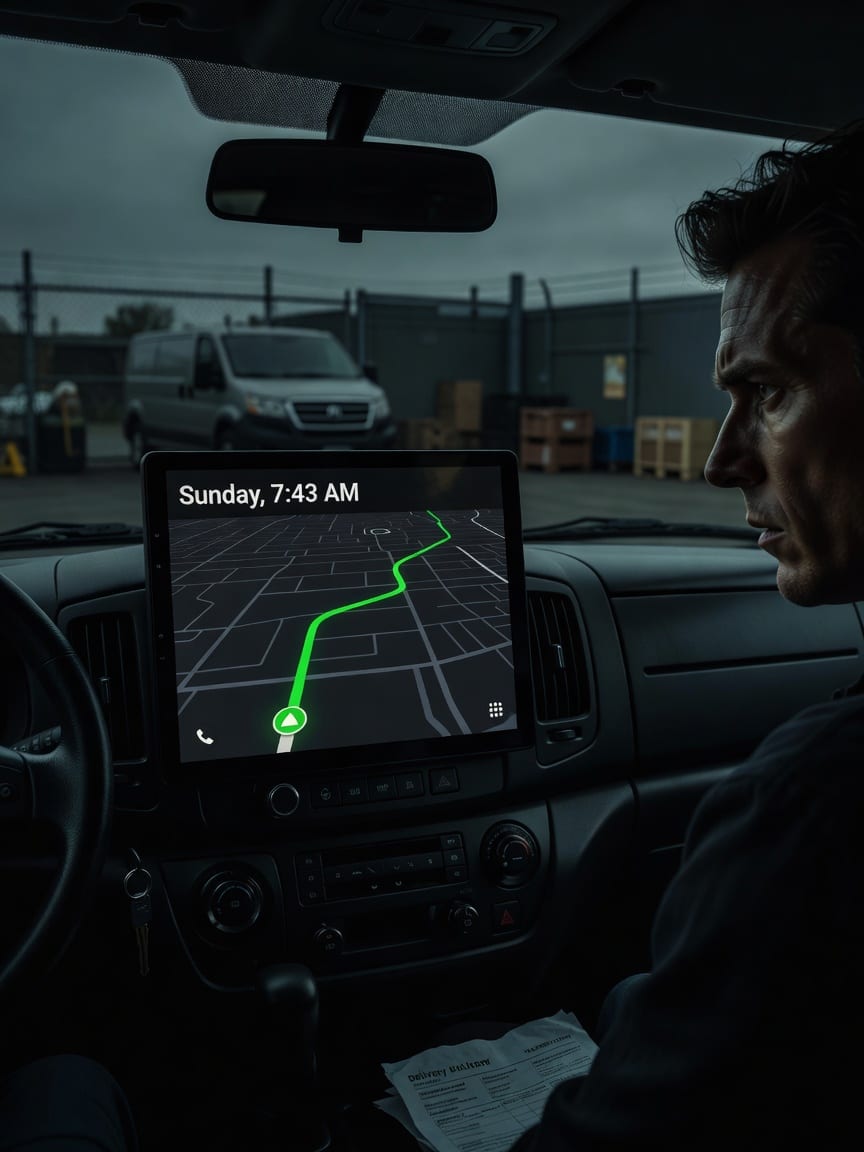
My delivery van drove 130 miles last Sunday, stopping for four hours in another state. It never left our locked yard. The GPS log drew the whole trip, timestamped to the minute.
I was just doing my job, sitting in the dispatch office with my manager Joel, when he pulled up the GPS log for my delivery van, Unit 74. It showed a 130-mile round trip to Delaware, engine on for four hours, with a distinct stop, all while my van was locked in the yard and I was home. The camera footage confirmed it hadn't moved an inch, yet the system insisted it had traveled hundreds of miles.
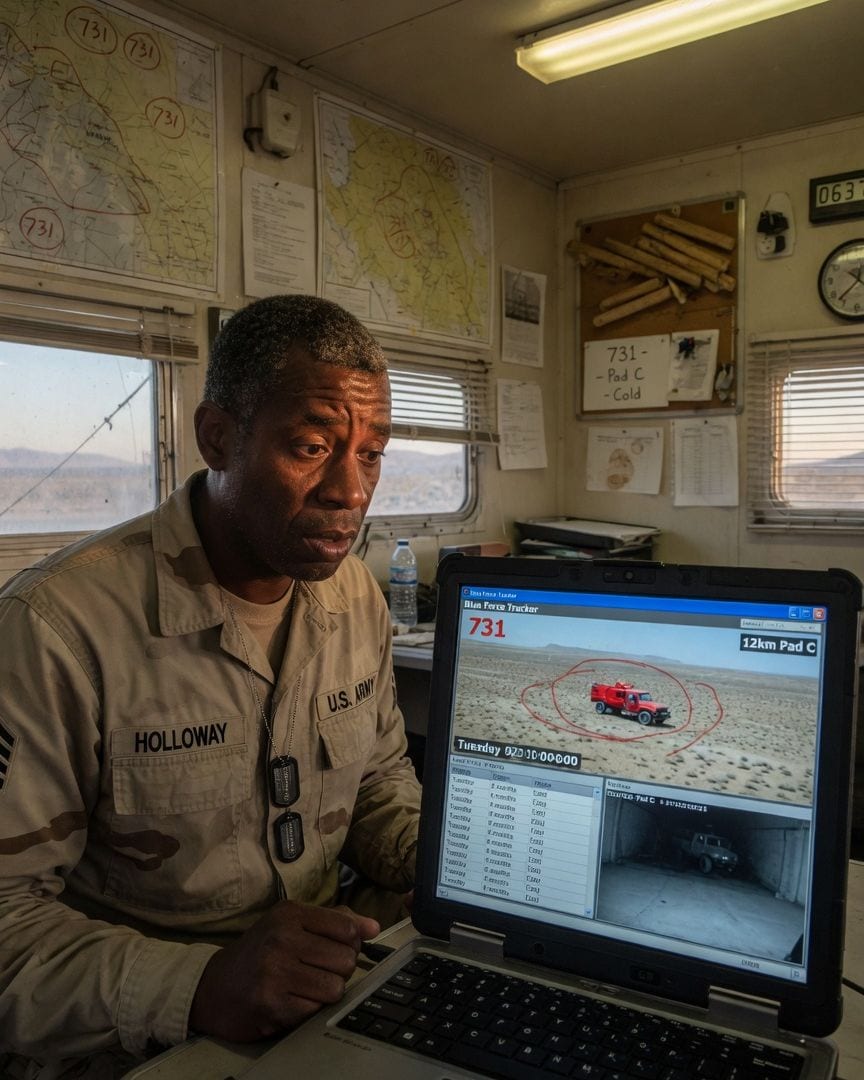
A Staff Sergeant's truck sits cold on its pad, but its ghost has been driving for months.
Staff Sergeant Marcus Holloway reviewed night shift reports, but the Blue Force Tracker showed Truck 731 driving a four-hour loop outside the wire. Its engine icon burned hot, yet Marcus found the actual armored transport cold, dark, and still on its designated pad.
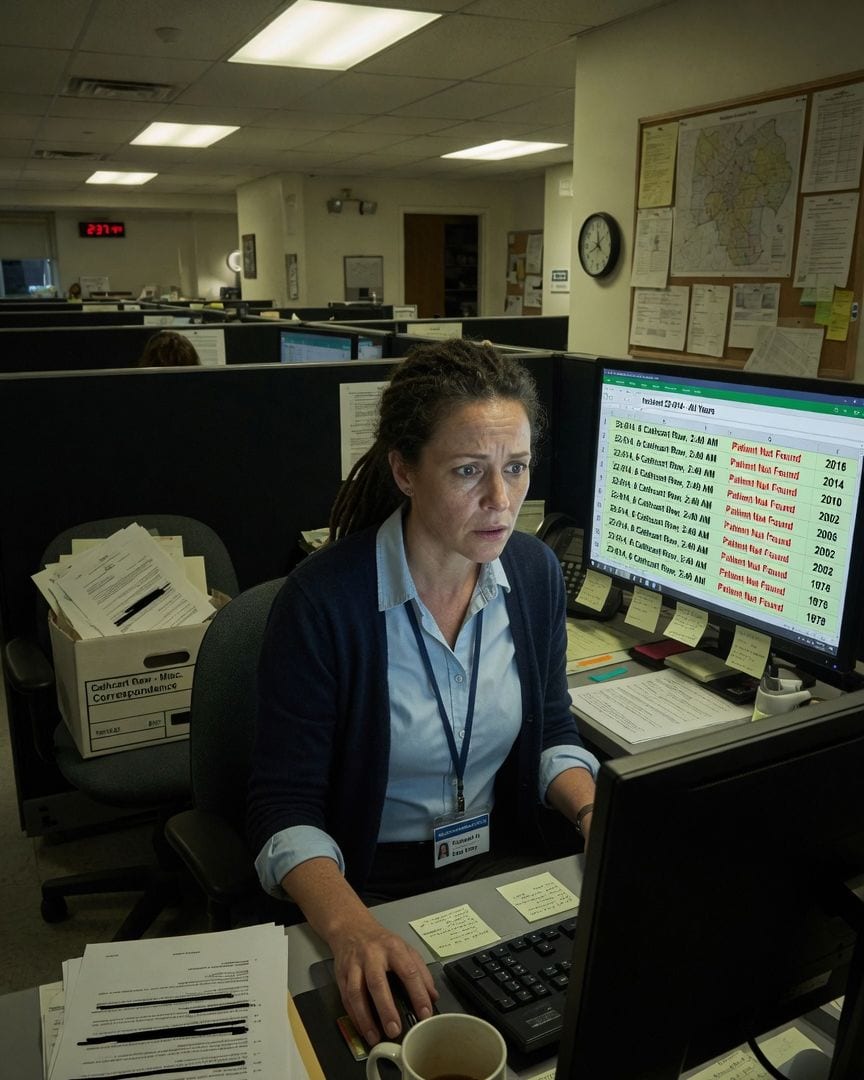
My computer log shows the same 2:40 AM call to Cathcart Row, every four years since 1978, always closed 'patient not found'.
Working data entry for the County Ambulance Trust, I found a routine incident logged as 'Patient Not Found.' But digging deeper, I discovered the exact same phantom call had repeated every four years for over forty years, always at the same address, always at 2:40 AM. Then I found a heavily redacted memo linking it to my own street.
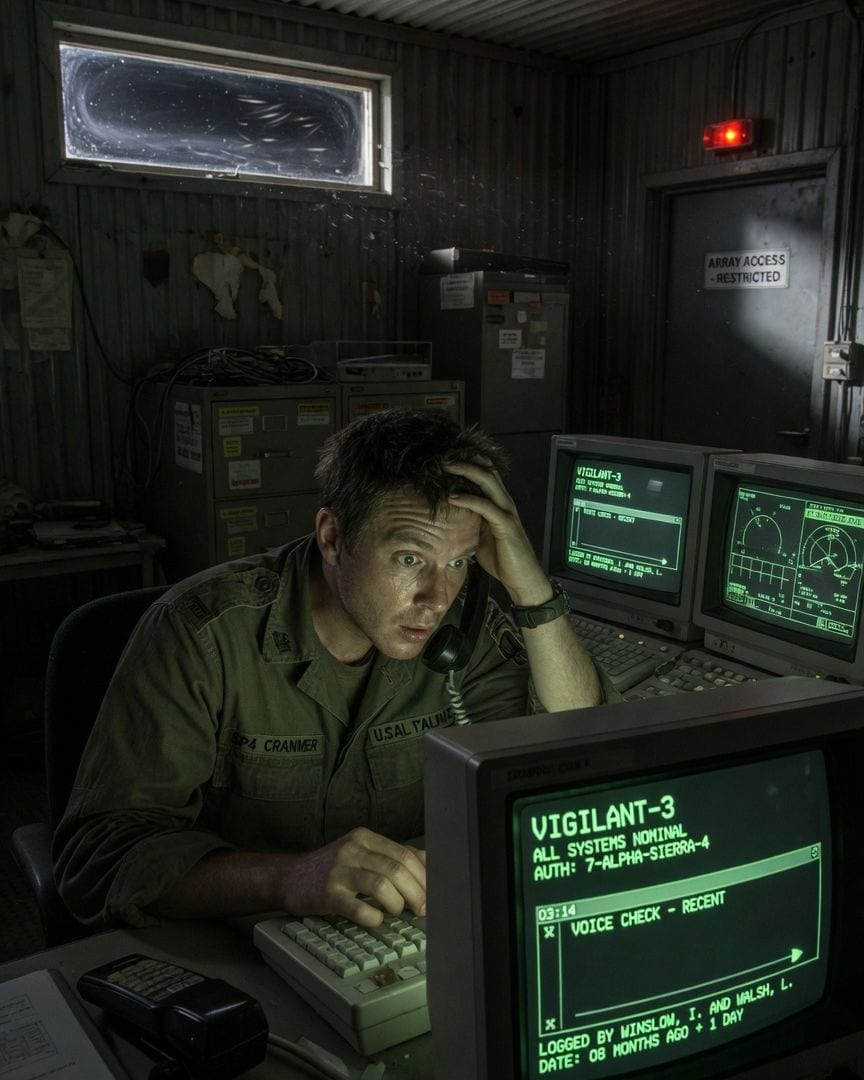
Specialist Cranmer’s console logs a voice from a station destroyed eight months ago. Its dead operators ask, 'Did anyone ever find out what happened to us?'
Specialist Arthur Cranmer endured another lonely overnight watch at Radar Site 4, the wind howling outside his isolated Anatolian post. At 0314, a routine comms check brought a chilling response from Vigilant-3, a station that had burned down, killing its two operators eight months prior. Cranmer's commanding officer dismissed it as a glitch, but the radar specialist knew better. He accessed classified logs, uncovering eight months of regular 'all systems nominal' check-ins from the destroyed station, authenticated by the dead operators. He then found his own recent call, logged by the same two k*lled personnel, followed by their haunting question: 'Did anyone ever find out what happened to us?'