My 1:30 AM pizza caller always says 'you're a lifesaver.' The address on Lantern Street burned down years ago, and no orders exist.
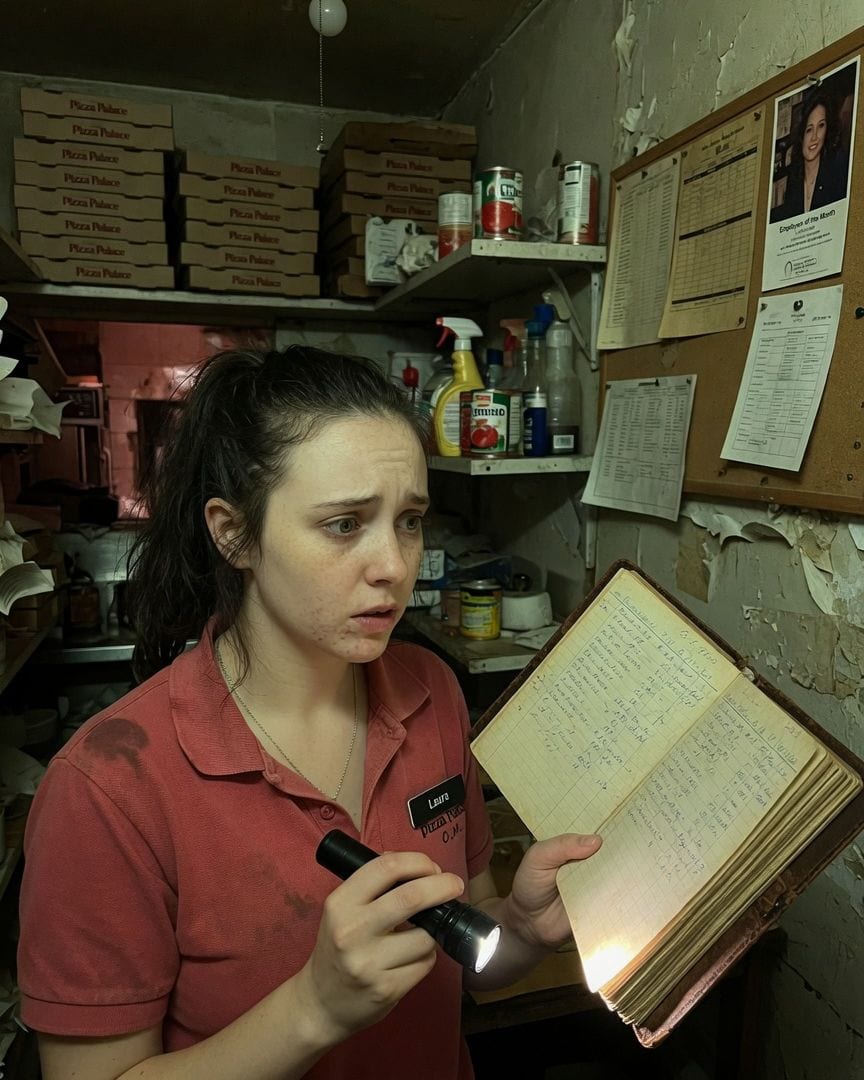
The night shift at Pizza Palace was usually just that: night. A long stretch of fluorescent hum and the faint smell of old pepperoni. I’m Laura Vance, I’m 24, and for the most part, it’s a living.
Calls come in, mostly slurred, late-night cravings. I take them, punch them in, pass them to the kitchen. Rinse, repeat.
But for the last few months, there’s been one call, always the same, that cuts through the routine like a cold knife. 1:30 AM on the dot. Never early, never late.
The number shows up as 'Blocked,' but the voice is distinct – low, a little gravelly, but oddly gentle. "Large with olives," they'd say. "To Lantern Street."
And then, just before hanging up, always the same quiet, almost wistful whisper: "You're a lifesaver." I’d punch it into the system, even though it never felt quite right. The system would ding, confirm, and I’d pass the slip back.
This week, Michael Galloway, the owner, caught me as I was clocking out. He’s 53, a decent guy, but tight with a dollar. He was hunched over the main computer, squinting at something on the screen.
"Laura," he said, without looking up, "Got a minute?"
I braced myself for a lecture about restocking the soda fridge. "Sure, Michael."
He straightened up, rubbing his temples. "I've been reconciling some old receipts. Going back a few months, trying to find a discrepancy. This Lantern Street order you keep putting in. Large with olives."
He paused, looking at me with a bewildered frown. "There's no record of it ever actually ringing up. No payment. No delivery ever dispatched."
My stomach gave a lurch. "What? That's impossible. I take that order every night it comes in. 1:30. Every night."
Michael just shook his head slowly. "I pulled the logs. Nothing. No cash, no card. It just… disappears after you key it in. But here's the thing." He spun the monitor slightly so I could see it.
He'd typed 'Lantern Street' into a map application. The satellite image zoomed in, then stopped on a residential street. But the house at the end of the pin wasn't a house.
It was a hollow, blackened shell, overgrown with weeds, a gaping maw where a front door should be.
"That address," Michael said, his voice quiet, "burned down five years ago."
I stared at the screen, a cold dread starting to spread through me. It wasn't possible. I’d seen the delivery slips. I’d heard the voice.
The next morning, after my shift, instead of going home, I drove. The sun was just starting to climb, painting the sky in pale oranges and purples, but it did nothing to lift the chill in the air.
I found Lantern Street easily enough. It was a quiet cul-de-sac, lined with respectable, if aging, houses. And then there it was. Michael hadn't exaggerated.
The house stood like a skeleton, a grim monument to a forgotten disaster. Soot-stained timbers, no roof, just empty windows staring out. Weeds choked the drive, pushing up through cracked concrete.
There was no mailbox, no doorbell, no sign of any human presence for years. Certainly no functioning kitchen waiting for a late-night pizza. The horror deepened, a cold, hard knot in my chest.
Back at my apartment, the image of that burned-out house clung to me. I sat at my laptop, my fingers flying across the keyboard. "Lantern Street fire," I typed, then the name of the town. It didn't take long.
An article from the local archives, dated five years ago. Devastating fire. Family of four inside. No survivors. The headline was stark: "TRAGEDY ON LANTERN STREET: FAMILY PERISHES IN BLAZE."
I read the names, ordinary names, and felt a profound, chilling wrongness settle over me.
That night, at Pizza Palace, after Michael had left, I started hunting. The back storeroom was a graveyard of old pizza boxes, forgotten cleaning supplies, and stacks of dusty physical order books from years past.
I was looking for anything, any anomaly, any older record of a 'Lantern Street' order. My flashlight beam cut through the gloom, illuminating decades of clutter.
Behind a wobbling stack of menus from the late 90s, tucked into a narrow gap between a shelf and the crumbling plaster wall, my fingers brushed against something leather-bound. It wasn't a standard Pizza Palace ledger.
It was thin, worn, clearly unofficial. My heart hammered, a frantic drum against my ribs.
I pulled out the old ledger, its pages yellowed and brittle like ancient parchment. It wasn't an official record; it was a personal log, a meticulous accounting of something.
The handwriting inside was faded, but clear, spanning what looked like decades. My breath hitched, caught in my throat, as I flipped through the first few pages. There, underlined multiple times, in neat, precise script, was an entry.
It hit me like a physical blow. 'Lantern St. 1:30. Lg. Olives. 'Lifesaver.'' Beneath it, a different set of initials from a time long before I ever stepped foot in this place. 'O.M.' It wasn't just me.
It was always here.
The old ledger became my obsession. In the quiet hours of my days off, I spread it open on my kitchen table, tracing the faded ink with a trembling finger.
The Lantern Street entries were chillingly consistent: 1:30 AM, large with olives, 'lifesaver.' But as I delved deeper, the pattern expanded. There were other addresses, not just Lantern Street, scattered throughout the decades of entries.
Often, they were marked with cryptic notes in the margins: 'Cold spot,' 'Empty now,' 'Missed the last one.'
Each time, I did the same thing: I typed the address into the search bar, then cross-referenced it with local news archives. And each time, the results delivered a fresh wave of dread.
One address led to an article about a family that vanished without a trace, thirty years ago. Another pointed to a mysterious death in an abandoned warehouse. A third, a house where a child disappeared from their backyard.
These weren't just pizza orders. They were something else entirely, something tied to loss and absence. The precision, the repetition, the sheer consistency of it across so many years – it was too much to be coincidence.
As I immersed myself in the ledger, I started to feel a strange, oppressive presence at work. It wasn't an empty feeling, but a heavy, watchful one.
I began to notice him more clearly then: a quiet, older man, maybe 70, meticulously cleaning the prep kitchen during my night shifts.
I’d seen him before, a blur in the corner of my eye, moving with an almost unnatural silence and precision.
I'd always assumed he was just one of those eccentric, long-time colleagues, a 'night owl' like me, doing a late clean-up. His white apron was always spotless, his movements economical, deliberate.
He never spoke unless spoken to, and even then, his words were unsettling.
"Best to keep the regulars happy, Laura," he'd said one night, wiping down a stainless steel counter until it gleamed. His voice was soft, barely a whisper. "The night gets restless if they're not."
I remembered that a week later when the Lantern Street call came in, and I felt a shiver despite the warm kitchen.
Another time, he looked up from scrubbing the floor, his eyes meeting mine with a depth that felt ancient, knowing. "Some orders just need to be handled, not questioned." He said it calmly, matter-of-factly, as if discussing the weather.
I tried to ask Michael about him. "That older cleaner," I started, "the one who works late sometimes, in the prep kitchen. What's his name?" Michael just waved a dismissive hand. "Everyone cleans sometimes, Laura. You're probably just tired."
But the man wasn't on any staff roster I could find. And he seemed to know exactly what I was doing, exactly what I was thinking, even as he moved like a ghost through the fluorescent glare.
His eyes, when they met mine, held a quiet understanding that was utterly unnerving.
The weight of the ledger and the articles became too much. The next night, I laid everything out on Michael’s desk after he arrived for his closing check.
The worn leather book, the printouts of old newspaper articles detailing fires and disappearances, all highlighted and annotated. I spread them out like a detective building a case.
"Michael," I began, my voice steady despite the tremor in my hands, "this isn't a glitch. It's not a prank. It's a pattern."
I explained the 1:30 AM calls, the Lantern Street address, the 'lifesaver' comment, and then pointed to the other addresses in the book, each one cross-referenced with a tragic news story. "These aren't just calls for pizza.
These are… something else."
He initially tried to dismiss it, rubbing his eyes, mumbling about an elaborate prank by a disgruntled former employee. But my evidence was overwhelming. The sheer volume of entries, the decades they spanned, the undeniable tragedies.
His composure, usually so solid, finally cracked. He slumped into his chair, looking older than his 53 years.
"Goddammit, Laura," he whispered, running a hand through his thinning hair. "I hoped you wouldn't find that." He sighed, a long, rattling sound. "My predecessor, Oscar Merritt. He started that log. He was the night manager for decades before me."
Michael paused, looking at the faded initials 'O.M.' in the book. "One night, about thirty years ago, he just… vanished. No note, no trace. Just gone."
Michael swallowed hard. "I found the log, and the calls, including Lantern Street, they just… continued. I didn't understand it, not really. But I was scared. What if I stopped? What if something worse happened? I just… kept it going.
Ignored it mostly, pretended it was just a strange tradition." He looked up at me, his eyes pleading for understanding. "They aren't for pizza, Laura. They're... a payment. To keep the night quiet. To keep us safe."
The wrongness of the 1:30 AM calls, the burned house, the 'lifesaver' comment – it all snapped into a terrifying, if still incomplete, focus. A payment. For what? And to whom?
My gaze drifted from Michael, across the empty main kitchen, towards the prep kitchen. Through the doorway, I could see the quiet cleaner.
He was standing by the industrial mixer, wiping it down with a cloth that seemed too clean, too white, under the harsh fluorescent lights. His movements were too precise, too silent, even for him.
He moved like an automaton, his back to us. Then, as if sensing my gaze, he turned slowly. His eyes met mine across the fluorescent-lit space. A faint, knowing smile, utterly devoid of warmth, spread across his lips.
And then it hit me, a cold, sickening wave of realization. Oscar Merritt. Michael’s predecessor, vanished thirty years ago. The initials in the oldest entries of the logbook, the ones before Michael's time. They were 'O.M.'
The quiet cleaner in the prep kitchen, the one who was never on the roster, the one who spoke in cryptic warnings. His name was Oscar Merritt. He wasn't just a witness.
He was 'The One Who Was Always Here,' and he was still here, still part of it, watching me.
Oscar Merritt stepped forward from the prep kitchen, his clean white apron stark against the shadowed room. His movements were slow, deliberate. His voice, when he spoke, was calm and steady, like stones shifting in a dry riverbed.
"Yes, Laura Vance," he said, and the way he said my full name, like he’d known it for a long, long time, sent a shiver down my spine. "Oscar Merritt. Good to finally meet you, properly."
He looked at Michael, then back at me. "Michael's explanation is… functional. Practical. But incomplete." He gestured to the ledger. "The 'orders' are not for food, not in the way you understand it. They are for acknowledgment. For recognition.
Whatever runs the night, it demands its due. It manifests through these calls, linking to specific locations. Places where lives were abruptly severed, where something was lost, violently, suddenly. These places become nodes of absence."
He picked up one of my printouts, the article about Lantern Street. "This house," he said, tapping the photo of the burned-out shell. "The lives that ended here. They are remembered through the call.
The 'lifesaver' you hear," he continued, turning his ancient gaze back to me, "it's for the recipient. A temporary reprieve, a false sense of being remembered. A moment of peace before the inevitable return to... nothingness."
Oscar explained his own story, his voice devoid of self-pity, just a flat, chilling recitation of facts. Decades ago, he was like me. He tried to stop the 'orders,' believing he could break the cycle, shut down the system.
"It didn't punish me with death," he said, almost a whisper, "but by binding me to the pattern. Made me 'The One Who Was Always Here.' To ensure the orders continue, a silent guardian of its morbid routine."
He looked at his own hands, calloused and veined, then back at me. "You understand now, don't you? The callers. The addresses. The 'lifesaver' comment. My presence. Every clue fits into one coherent, monstrous shape."
He wasn’t just explaining; he was revealing. I wasn't just an observer; I was chosen. To continue it.
I stood before Oscar, the full, horrifying truth laid bare. My rational mind, accustomed to schedules and pizza toppings, tried to recoil, but there was nowhere to go.
Oscar, calm and unbothered by his fate, seemed to understand my inner turmoil. "You simply continue the 'orders,' Laura," he said, his voice soft, almost encouraging. "As I do. It is easier. For everyone."
He implied, without malice, that the alternative was far worse. To become like him, bound to the place, an eternal shadow. Or to become one of the 'addresses,' a place of permanent absence, another name on a chilling ledger.
The entity demanded its due, and it had already claimed its price. I understood then, with a chilling certainty, that escape was not possible. The pattern required maintenance.
To break it would be to become part of its darker fabric, a victim instead of a conduit. The choice was not about victory, but survival within a horrifying system that existed just beneath the surface of the mundane world.
The phone rang. The sharp, sudden sound in the quiet store made me jump. It was 1:30 AM. Exactly.
I looked at Oscar. He simply nodded, a slight, knowing tilt of his head.
I took a deep, shuddering breath, a desperate attempt to steady myself. My hand reached for the receiver, my fingers closing around the plastic. I lifted it. "Pizza Palace," I said, my voice surprisingly steady, "how can I help you?"
The familiar voice whispered, "Large with olives to Lantern Street."
And then, just before the click of disconnection, the quiet, almost wistful whisper: "You're a lifesaver."
I continue working the night shift at Pizza Palace. Michael, relieved that the 'problem' is handled, never mentions Oscar again, nor the logbook.
The old ledger is now mine, tucked beneath the counter, updated with my precise, neat handwriting after each call. The calls keep coming, from Lantern Street and all the other 'addresses' on the list.
Oscar Merritt remains in the prep kitchen, a silent, ever-present shadow, meticulously cleaning, never speaking, but always watching.
I stand at the counter, the phone on its hook, waiting. I know the routine now, the addresses, the voices. I don't question it anymore; I just make sure the orders go out.
There is a quiet hum of acceptance in the air, a new kind of dread that is simply part of the night. I am efficient, reliable, never late.
Michael Galloway, owner of Pizza Palace, would occasionally check in on his night manager, Laura Vance. She was efficient, reliable, never late. Sometimes, when he saw her at the counter, deep in thought, he'd ask, "Everything alright, Laura?"
She'd always smile, a little too calmly, and say, "The delivery route for Lantern Street is always the first one I check now."
If this one got to you
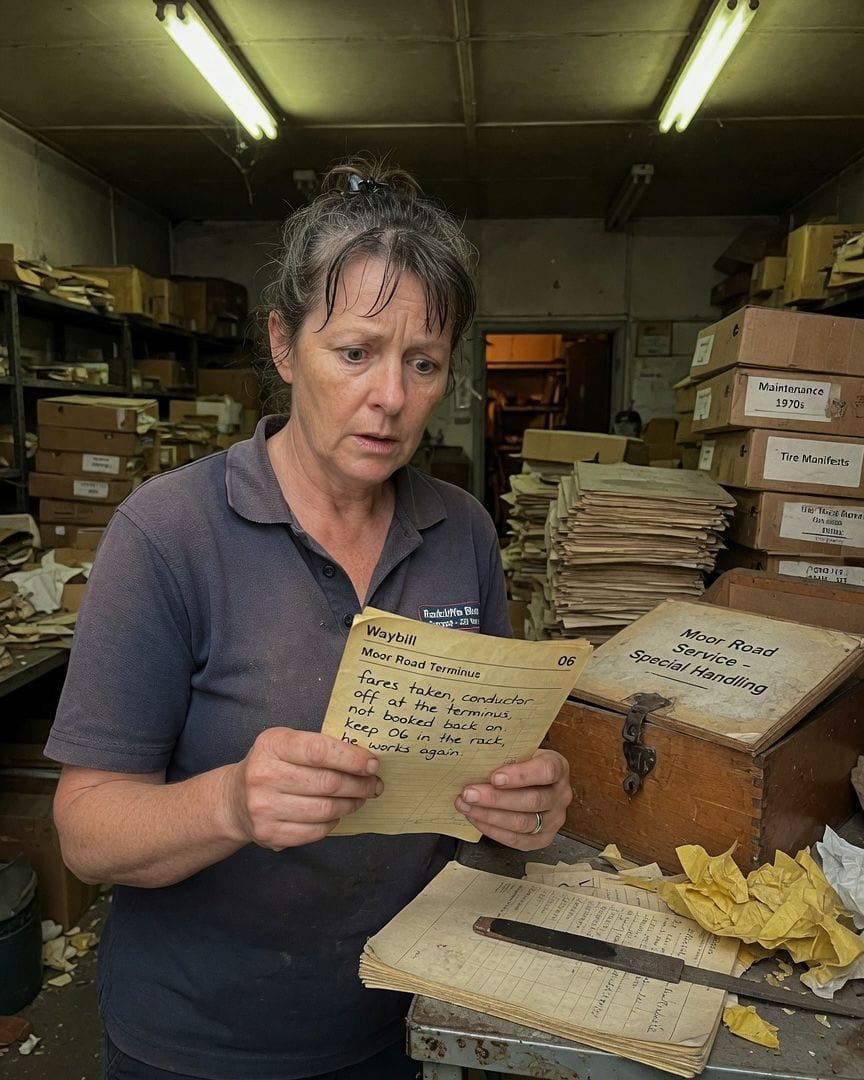
Our depot's Waybill 06 filed a moor road service we stopped running years ago. Every eight years since 1956, it closes: 'keep 06 in the rack, he works again.'
Sorting waybills in the depot, I stumbled across a form for the Moor Road Terminus. That route was decommissioned decades ago, but this waybill had a chilling handwritten instruction: 'keep 06 in the rack, he works again.'
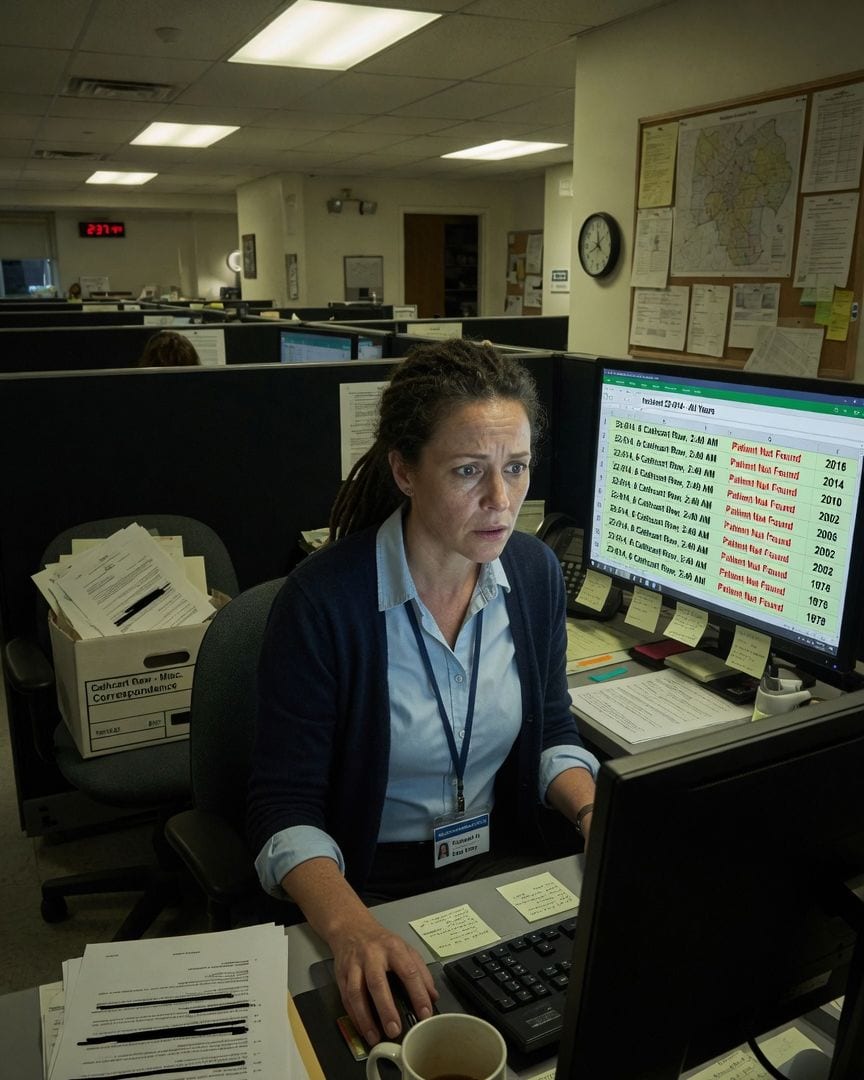
My computer log shows the same 2:40 AM call to Cathcart Row, every four years since 1978, always closed 'patient not found'.
Working data entry for the County Ambulance Trust, I found a routine incident logged as 'Patient Not Found.' But digging deeper, I discovered the exact same phantom call had repeated every four years for over forty years, always at the same address, always at 2:40 AM. Then I found a heavily redacted memo linking it to my own street.
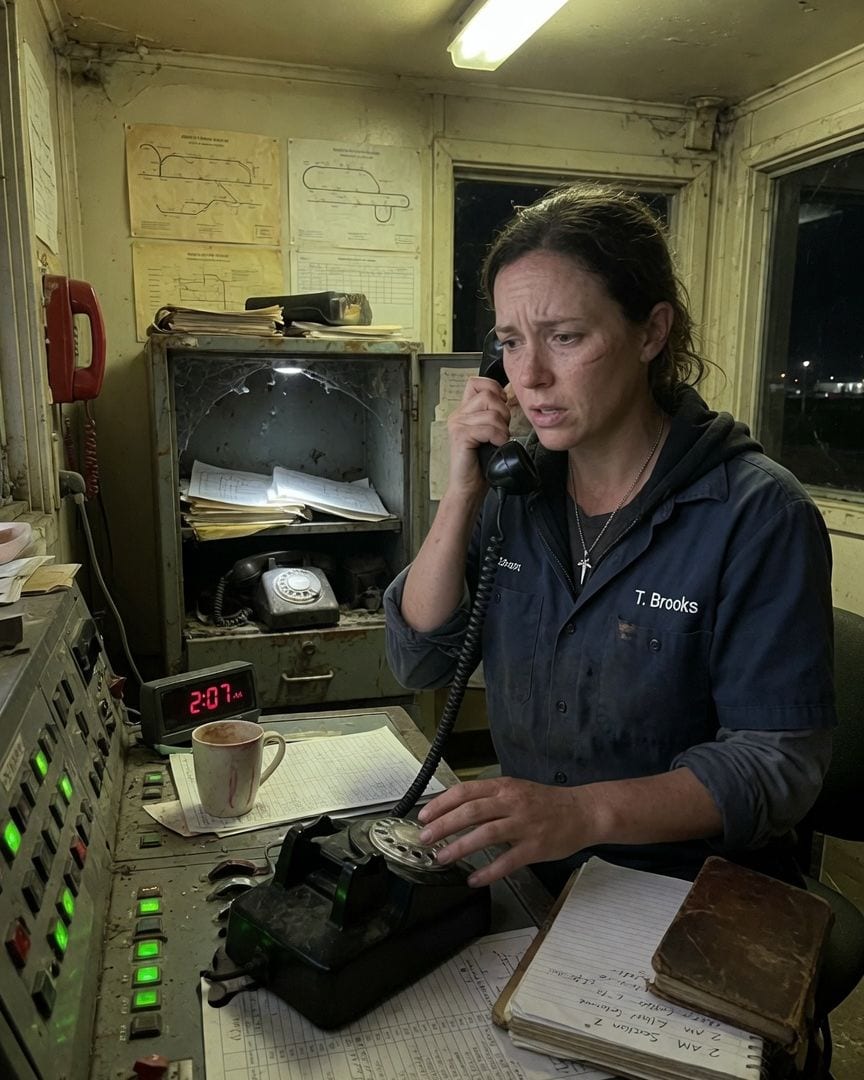
My signal box gets a 2 AM call every night from a man whose section was demolished eleven years ago. Now I found his logbook with today's date.
My night shift at the signal box is quiet and precise, defined by the routine 2 AM call from Ellis confirming Section 7 is clear. But when I asked my duty manager to log it, he said Section 7 hasn't had a track walker in eleven years, not since its cabin and phone were demolished.
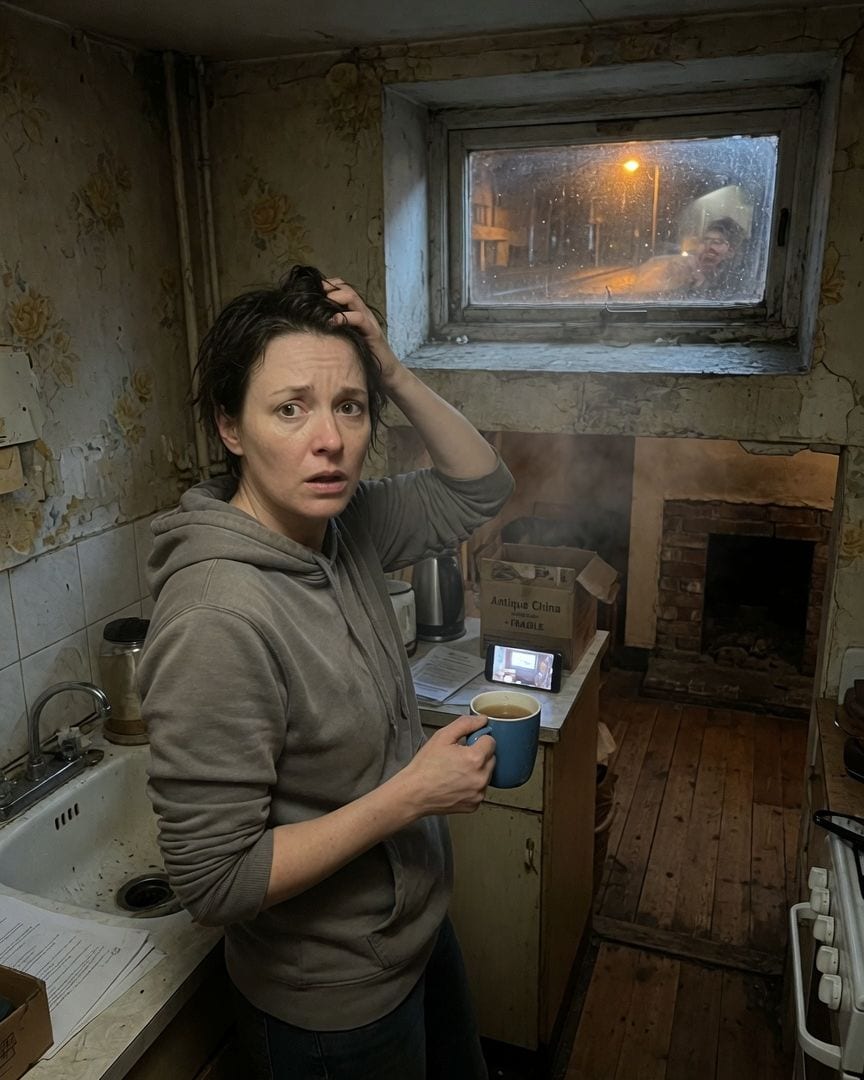
My basement window shows a gaslit kitchen moving at midnight, hams hung from the ceiling. My own kitchen is dark.
Settling into my new basement flat, I was making tea late one night when I glanced out my kitchen window. Instead of the concrete well, I saw a gaslit kitchen with an enormous cast-iron range, a young scullery girl, and cured hams hanging from the rafters. The vision was too sharp, too real, and the smell of coal smoke lingered long after it vanished.
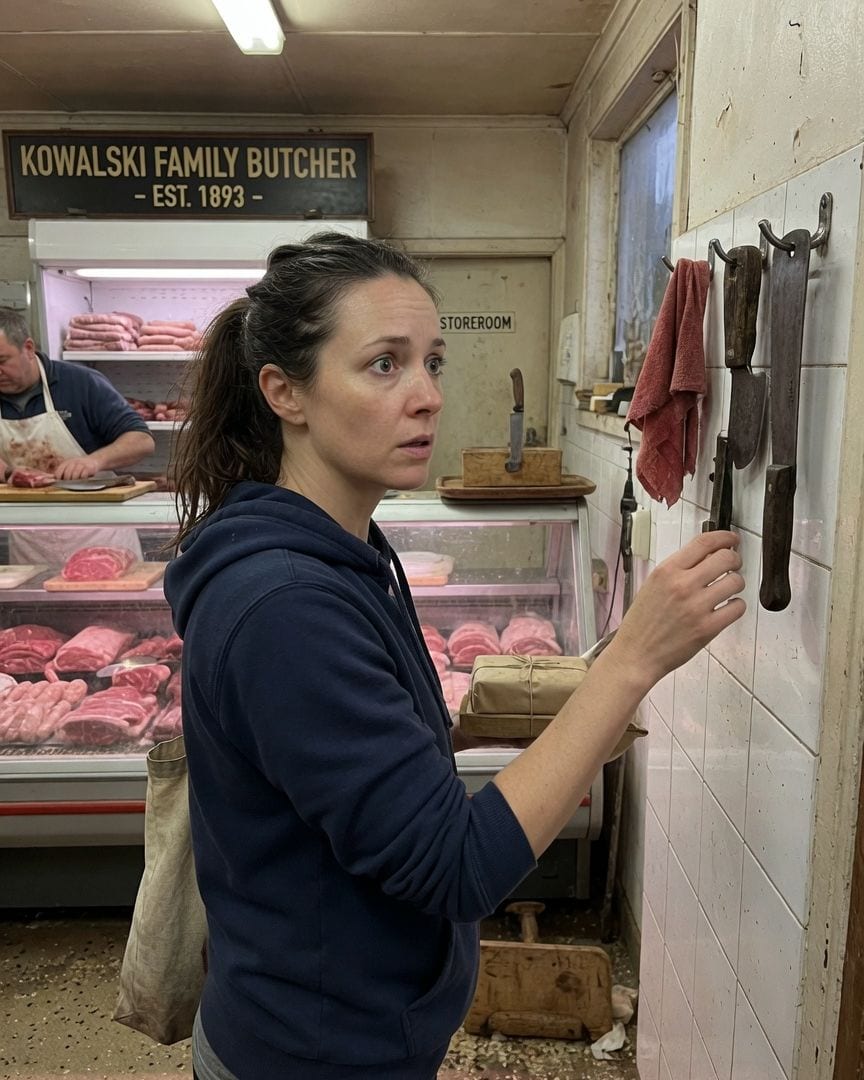
The butcher's back hook always hangs empty, draped with a red cloth. It holds a standing order since 1911 for the Hall, which burned down before the first war. The meat is gone every Friday, but no one's seen a cart.
Still new to Longnor, I stepped into Oscar Kowalski's butcher shop, needing a place to hang my bag. My hand brushed a simple hook, but Oscar's knife suddenly thudded, and he snapped, 'Not that one, dear.' He insisted the empty hook was 'reserved,' leaving me with a strange prickle of unease.
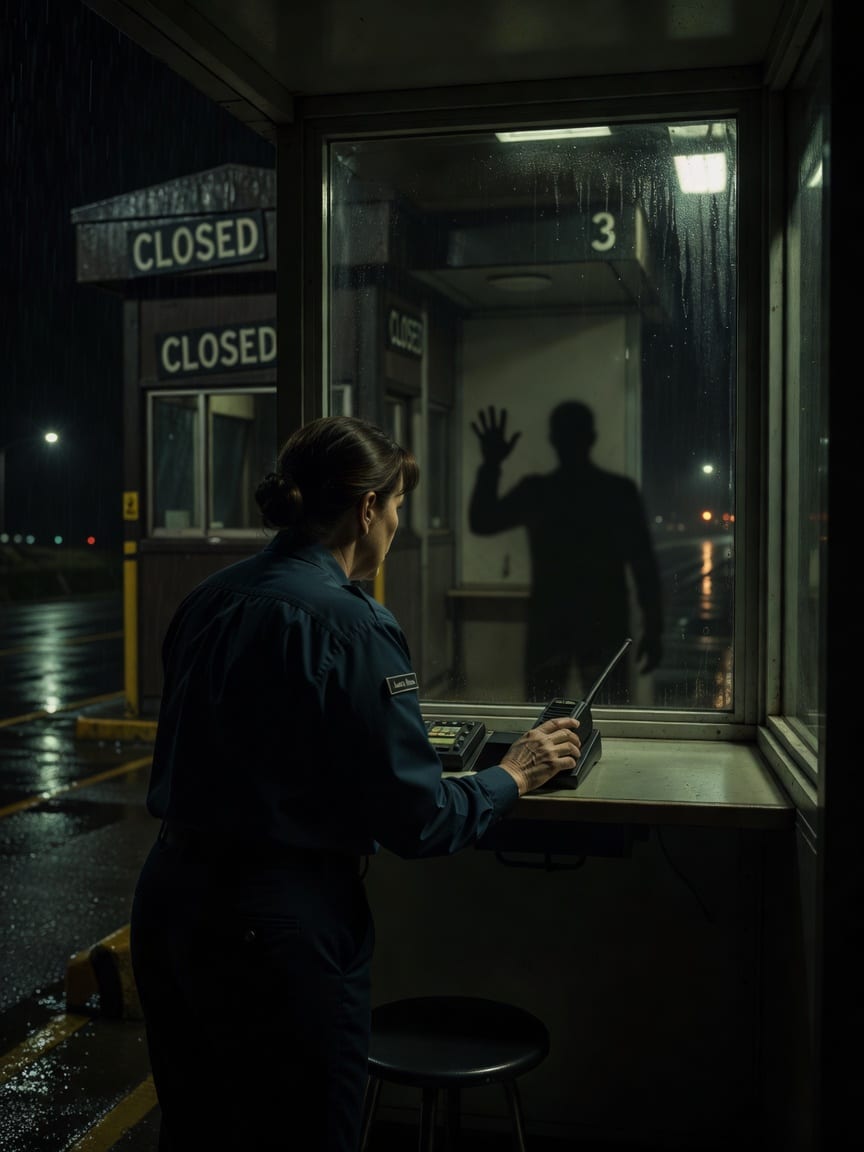
My Booth 2 radio crackles every night with Booth 3's traffic count. Central office just called about a discrepancy and told me Booth 3 has been closed since 2016. No radio, no operator.
Working the night shift, I logged vehicle counts from Booth 3 just like every other night. But my manager called, her voice tight, to tell me Booth 3 has been closed and unmanned since 2016. So who just reported the vehicle count?