My Booth 2 radio crackles every night with Booth 3's traffic count. Central office just called about a discrepancy and told me Booth 3 has been closed since 2016. No radio, no operator.
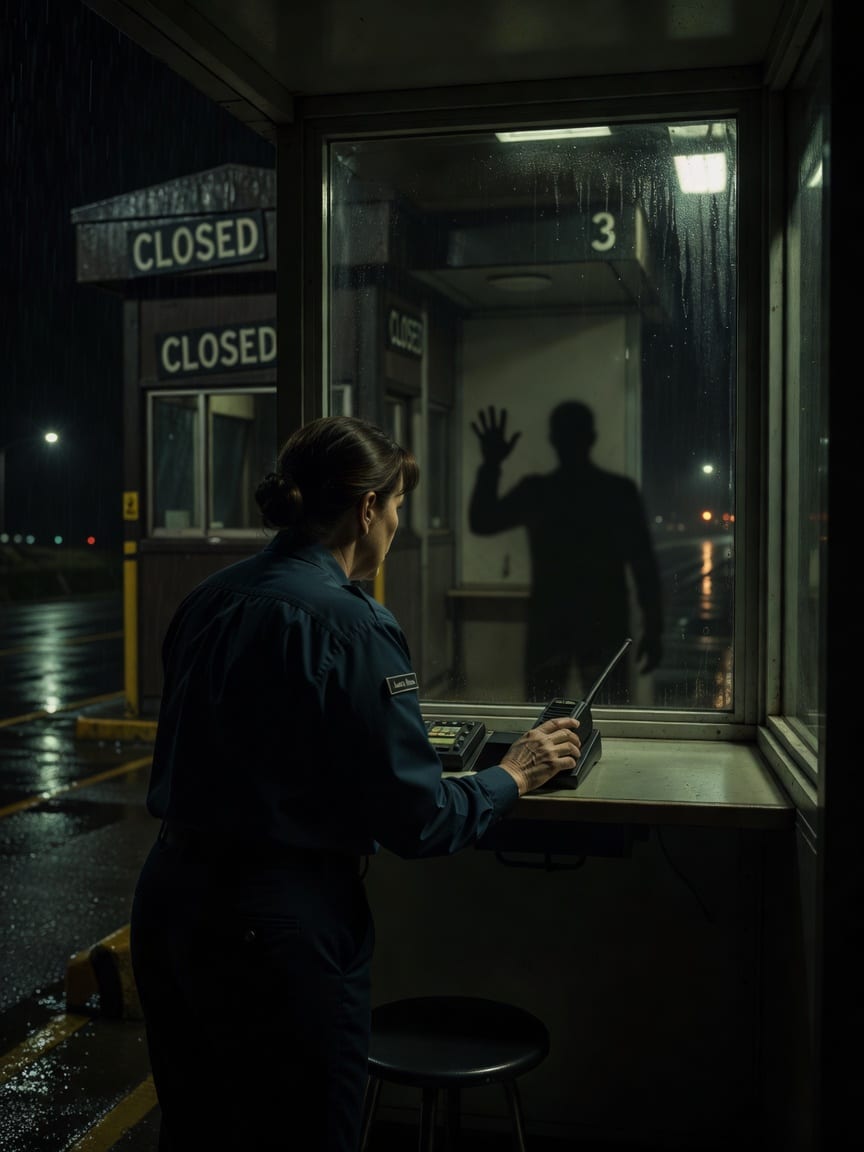
The rhythmic ping of cars hitting the sensor in my lane was usually a comfort. A steady beat through the long night shift in Booth 2. Tonight, it just sounded hollow.
The radio on my console crackled to life, a burst of static, then a voice. It was always the same voice, male, slightly tinny, reporting the nightly vehicle count from Booth 3, the lane next to mine.
“Booth 3 reporting sixty-seven sedans, thirty-two trucks, five motorcycles. Over.”
I scribbled the numbers onto my log, just like every other night for the past three months. The radio went silent. Barely a minute later, my booth phone buzzed, cutting through the quiet. Central Office. Patricia Vance, my manager.
Her voice was tight, strained.
“Laura, you logged a count from Booth 3 tonight, didn’t you?”
“Yeah, just now. Same guy as always.”
A sharp intake of breath on the other end. “There’s a discrepancy. A phantom count.” Her voice dropped, colder now. “Laura, how many times do I have to tell you?
Booth 3 has been closed and unmanned since the crash in 2016. Its radio was removed years ago. There is no operator in Booth 3.”
I stared at the radio, still faintly warm from the recent transmission, its red power light glowing. My hand was still on the pen, the numbers from a non-existent booth, a non-existent operator, staring back at me from the page.
I tried to shake it off. Static, a crossed line, some kind of old electrical interference. Had to be. I called Malcolm Sterling, the day shift supervisor, first thing. He just chuckled. “Booth 3?
Oh, that’s just the old plaza ghosts, hon. Happens every now and then. Bad wiring, probably. Forget about it.”
But I couldn’t forget. The incident gnawed at me. That specific voice, that precise count. It wasn't just static. Two nights later, driven by a cold, prickling curiosity I couldn't ignore, I used my break.
The plaza was deserted, a chill wind whistling through the empty lanes. My footsteps echoed as I walked the hundred feet to Booth 3.
It was exactly as it should be. The glass opaque with years of grime, the interior a block of impenetrable darkness. The door, heavy steel, was locked tight, rusted shut.
No one had been in there for years, not since the clean-up crew after the crash. I pressed my face to the glass, fogging it with my breath, trying to peer through a thin crack in the boarded-up window.
Inside, dust motes danced in the beam of my flashlight, a silent ballet in the stale air. Rusted equipment, cobwebs like old lace. Empty.
Then my light landed on something small, yellowed, and completely out of place. It was wedged behind the defunct coin chute, half-hidden by a thick layer of dust. A piece of paper. A toll slip.
No one was supposed to be in there. No one could be. How the hell had it gotten in? The idea that Malcolm was right, that it was ‘old plaza ghosts,’ suddenly didn't feel so funny.
I jiggled the window, pushing at the rotten wood until it gave way just enough, splintering with a soft crack. Cold air, stale and metallic, puffed out.
I reached a gloved hand inside, fingers fumbling in the darkness, until I snagged the edge of the paper. It felt brittle, ancient. I pulled it out.
Back in my booth, the fluorescent lights hummed, washing the booth in a sterile glow. I smoothed the crumpled paper on my counter.
It was indeed a toll slip, identical to the ones we still used, but yellowed and brittle with age. The date stamped at the top jumped out at me, stark against the faded paper: 'October 27, 2018.' My breath hitched.
That was two years after Booth 3 officially closed, two years after the crash that stripped it bare. Below the date, a faded vehicle code for a heavy-duty truck model—a 'Road King 3500'—that hadn’t been manufactured since the early 90s.
And beneath that, scrawled in faded blue ink, a signature: 'R. Vance.' I pulled up the current roster on my computer, then the archived ones, going back decades. Nothing. No 'R. Vance' had ever worked at this plaza.
Not in 2018. Not ever.
The toll slip became an obsession. My breaks weren't for coffee anymore; they were for burrowing into the plaza’s digital archives. Every search for ‘R. Vance’ came up blank. No employee by that name, not current, not archived.
I tried searching for any record of Booth 3 activity after 2016. Any maintenance log, any security report, any flicker of life. Nothing. The official records were airtight, a concrete wall: Booth 3 ceased to exist on paper in 2016.
It was a ghost in the system, except it wasn't.
I pulled up maintenance logs for the radio system, hoping for a glitch report, anything to explain the phantom counts. What I found made the hairs on my arms prickle.
An entry from late 2017: a work order to investigate 'phantom transmissions' from Booth 3. It was marked 'unresolved.' Just that. Unresolved. No explanation, no fix.
When I tried to press Malcolm Sterling about it, he just shrugged, a little too quickly. “Yeah, I saw that. Probably just bad wiring. Ghost signals, like I said. This old place has them.” His eyes wouldn’t meet mine.
I dug further, into old news articles about the 2016 crash. The official report said the driver, a young man, had swerved violently to avoid a deer.
But a small, almost buried paragraph in an archived article quoted him, later dismissed as delusional: he claimed he 'saw someone waving' from the empty Booth 3, right before his truck jackknifed into the barrier.
My dread deepened, a cold knot tightening in my stomach. It wasn't just a radio anomaly. It was a physical presence, something seen, something reacted to. And it happened even after the booth was supposed to be empty.
My relentless digging didn’t go unnoticed. One morning, as I was leaving my shift, Malcolm Sterling caught me at the time clock. His usual jovial demeanor was gone, replaced by a quiet intensity that was unnerving.
The clock’s faint hum was the only sound.
“Laura,” he said, his voice barely above a whisper, “some things are better left alone. Booth 3 has its stories. Best not to go chasing them, you hear?” He didn’t smile.
He just stared, his eyes holding a depth I hadn't seen before. The warning was casual, almost a throwaway, but the unspoken implication hung heavy in the air, thick and suffocating.
Later that week, an anonymous email landed in my personal inbox. No sender, no IP, just a chilling message, plain text: 'Some shifts never end. Booth 3. Look closer.' My blood ran cold.
Then, during my next night shift, it happened again. The radio from Booth 3 crackled. My heart hammered against my ribs. The voice was there, faint, distorted, not just reporting a count this time. It was asking a question.
“...are you seeing...?” The last word was swallowed by static, a garbled mess that left a ringing silence.
I fumbled with my mic, desperate to respond, to ask who was there, but the signal cut out, leaving only the deafening hiss of dead air. I felt a prickle on my neck, the distinct sensation of being watched.
I glanced sideways. The dark, silent lane next to mine, Booth 3, felt heavy, alive.
I scheduled an urgent meeting with Patricia Vance at Central Office. My hands were shaking, but my voice was steady.
I laid out every piece of evidence I’d found: the phantom radio counts, the 2018 toll slip, the 'R. Vance' signature, the 2016 crash report with the driver’s dismissed testimony, Malcolm’s quiet warning, the anonymous email.
Patricia, initially, was defensive, dismissive. She waved her hand, a tight smile on her lips, calling it a series of coincidences, faulty wiring, system glitches.
“It’s not a glitch, Patricia,” I insisted, pushing the toll slip across her polished desk. The yellowed paper looked stark against the dark wood. “It’s a pattern. A consistent, impossible pattern.”
Her shoulders slumped. The pretense dropped. She sighed, a long, weary sound, then stood and walked to a locked filing cabinet in the corner of her office.
The metal clanged as she pulled a heavy, unmarked folder from the bottom drawer. “You’re not the first to notice,” she admitted, her voice barely a whisper.
She brought the folder back to her desk, the worn cardboard smelling faintly of old paper and dust. “We call them the ‘unexplained events’ file.”
She opened it. Inside, neatly organized, were dozens of reports. Decades of them. Phantom counts from Booth 3. Impossible vehicle sightings.
Even blurry, grainy photos, taken from surveillance cameras over the years, showing indistinct figures waving from the darkened booth’s interior. Laura flipped through them, her eyes widening with each page.
Different dates, different names – 'J. Thatcher,' 'D. Kingsley' – all aliases, all impossible. All tied to Booth 3. The pattern was undeniable, stretching back further than I could have imagined.
A cold dread seeped into the office, making the air heavy.
Patricia’s finger, trembling slightly, traced an entry from 1988. A meticulously hand-written report, faded brown ink on yellowed paper, detailing 'unaccounted vehicles' and 'unsolicited counts' from Booth 3.
Attached was a faded carbon copy of a toll slip, tucked into a plastic sleeve. It was signed 'P. Vance.'
I stared at the signature. It was an elegant, looping script, eerily familiar. An echo of the 'R. Vance' from the slip I’d found. My mind raced, trying to connect the dots, to make sense of the new wrongness.
Patricia’s voice was tight, strained, barely audible. “That was my mother’s maiden name.” She didn’t look at me, her gaze fixed on the old slip. “Paige Vance. She worked the night shift here. Booth 3. Back in ’88.”
A profound chill shot through me, raising goosebumps on my arms. The pieces clicked into place with horrifying clarity, a perfect, terrible fit. Patricia’s mother, Paige Vance, vanished without a trace from this very toll plaza in 1988.
I had seen her picture on Patricia’s desk, an old wedding photo, and the elegant, looping signature on the 1988 slip was an exact match.
The 'P. Vance' on this impossible record, a record of a shift that never ended, was Patricia’s own mother. And Patricia herself had been living with this secret, this legacy of wrongness, for decades.
Patricia’s composure finally broke. Tears welled in her eyes, silent trails down her worn cheeks. She recounted the story of her mother, Paige Vance.
A dedicated night operator, she’d vanished from Booth 3 in 1988, leaving behind only her coat draped over her chair and a half-finished cup of coffee. The official report called it a desertion, a woman walking away from her life.
But the family never believed it. Paige had been complaining in her last weeks, Patricia said, about 'ghost signals' on the radio, about 'phantom drivers' waving her through from empty lanes.
Patricia now believed her mother had become one of the echoes, trapped by the relentless routine of the plaza itself.
She went on, her voice raw.
The crash in 2016, the one that finally shut Booth 3 down, involved a driver who swore he’d veered violently to avoid a 'figure waving from the empty Booth 3,' even though it was already officially closed and stripped of equipment.
This wasn't just a place of work; it was a nexus, a place that held its workers, their routines, their very presences, long after they were gone. The 'discrepancies' weren't glitches.
They were the frantic, automated attempts of these trapped echoes to continue their shifts, to be seen, to be counted.
Every impossible record, every phantom count, every blurry photo was a voice crying out from beyond the veil of time, performing their duty, trying to finish their shift.
Armed with this terrifying, unsettling understanding, Patricia and I returned to Booth 3 in the dead of night. The plaza was silent, eerie, the air thick with dampness.
My flashlight beam cut through the darkness as Patricia, her hands trembling, knelt beneath the old cash drawer. She felt around for a moment, then removed a loose panel, revealing a hidden compartment I never would have noticed.
Inside, nestled in a cocoon of dust and cobwebs, was a small, leather-bound logbook. Its pages were brittle, its cover cracked with age. Paige Vance’s original, unfiled logbook from 1988.
I took it from her, my fingers brushing the soft, worn leather. I opened it. The entries were meticulous, written in that same elegant script, detailing vehicle types and counts, just like our current logs.
They ended abruptly on the night Paige vanished. The last entry, dated August 14, 1988, read: '04:17 AM. Lane 2 waved through. Empty.'
My blood ran cold. Lane 2. My booth. Paige Vance, in 1988, saw an empty Lane 2 wave her through. Just as I, in my booth, had seen an empty Booth 3 waving to me.
I flipped to the final, faded page. Paige had scrawled a note to herself, a desperate, looping plea. It was barely legible in the dim light, but the words chilled me to the bone: 'Who is in Lane 2?
They keep waving.' Beneath it, a final, faint, impossible signature: 'R. Vance.' A variant of her own name, a name she herself had adopted, exactly like the one I had found on that toll slip from 2018.
The logbook. An artifact, a physical record of the impossible, confirmed everything. The ordinary explanation died for good, replaced by the horrifying, chilling coherence of the wrongness. It all fit.
The logbook and Patricia's 'unexplained events' file were submitted to Central Office. An internal investigation was launched, quiet and discreet, but thorough. Booth 3 is not just closed anymore. It's permanently sealed.
Its windows bricked over, its structure reinforced, as if to contain something. The plaza's official history remains unchanged, the reports wiped clean, but a new, unsettling understanding settles among the long-time staff.
Malcolm Sterling just nods at me now, a knowing look in his eyes.
I still work the night shift in Booth 2. The radio is quiet now, Booth 3 a solid, bricked-up wall next to me. No phantom counts, no strange questions. But the silence is different now, heavier.
It's the sound of something held at bay, not gone.
Sometimes, when the night gets quiet, I still catch myself checking the lane next to mine, just in case someone waves me through.
If this one got to you
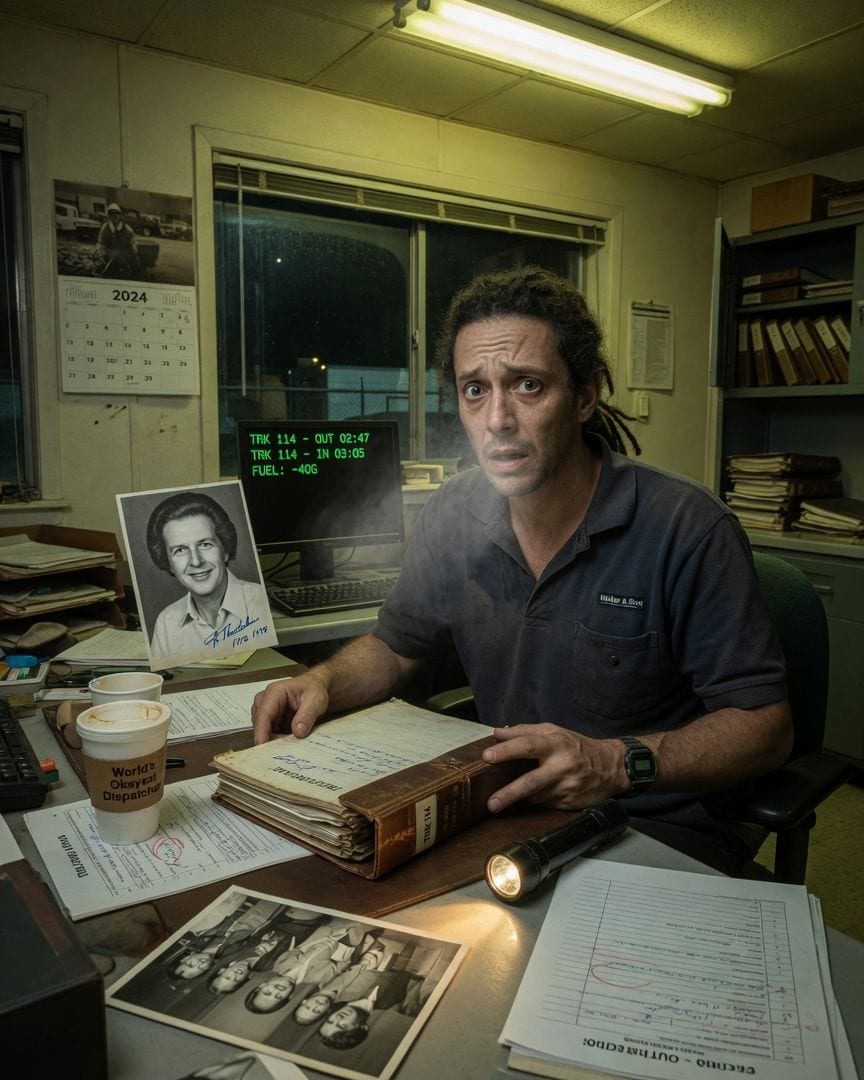
Truck 114 logged forty miles gone last night. It was on the lift, no wheels, and I was the only dispatcher.
My shift in the freight yard dispatch office was quiet, just routine monitoring. But then the CAD system logged Truck 114 moving out for a forty-mile run. That truck was impossible; it had no wheels and was on blocks in maintenance all week.
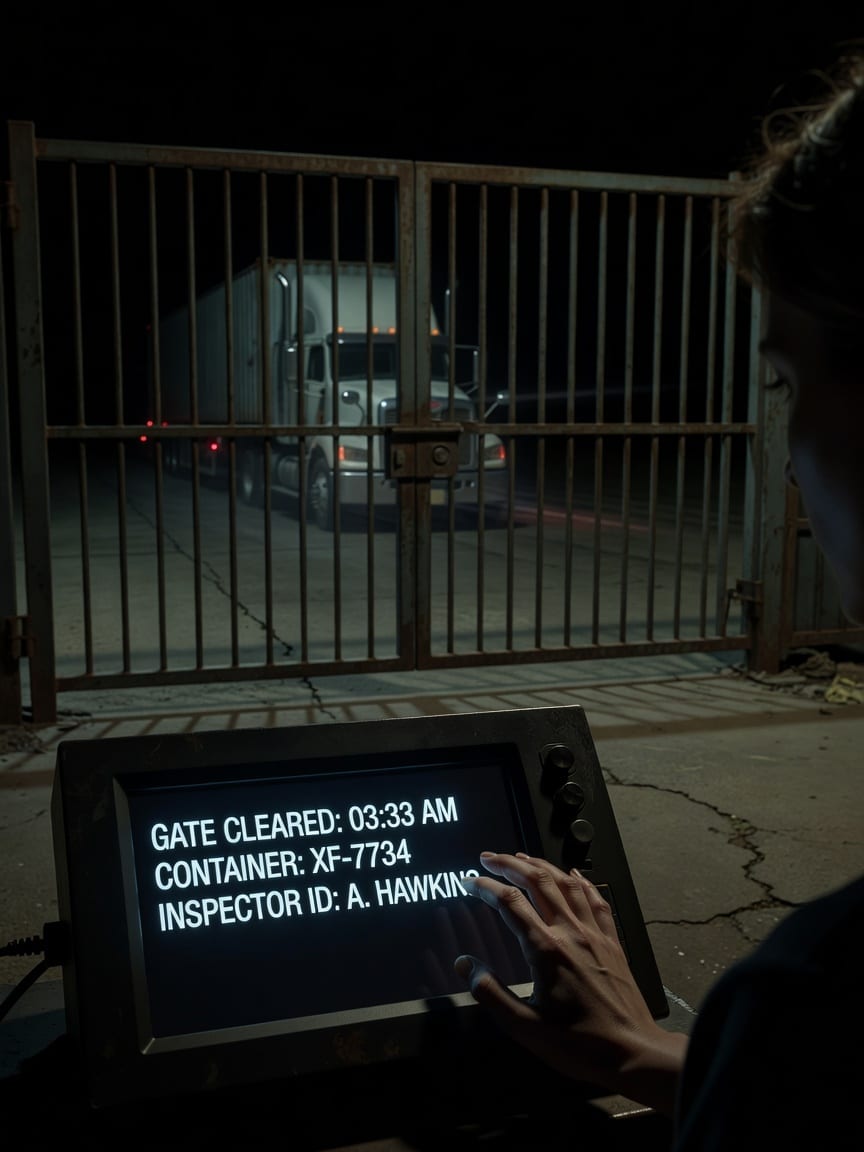
My gate log shows a container left at 3:33 AM, stamped with my ID. The yard was closed, the gate down, and I was asleep.
Audrey Hawkins' inspection log shows a container cleared at 3:33 AM, an impossible time when the gate was locked and no one was working. Her supervisor dismisses it as a glitch, but Audrey can't shake the specific details. Digging into old archives, she finds a handwritten ledger entry from 1974 for the exact same container, signed by a man who died half a century ago.
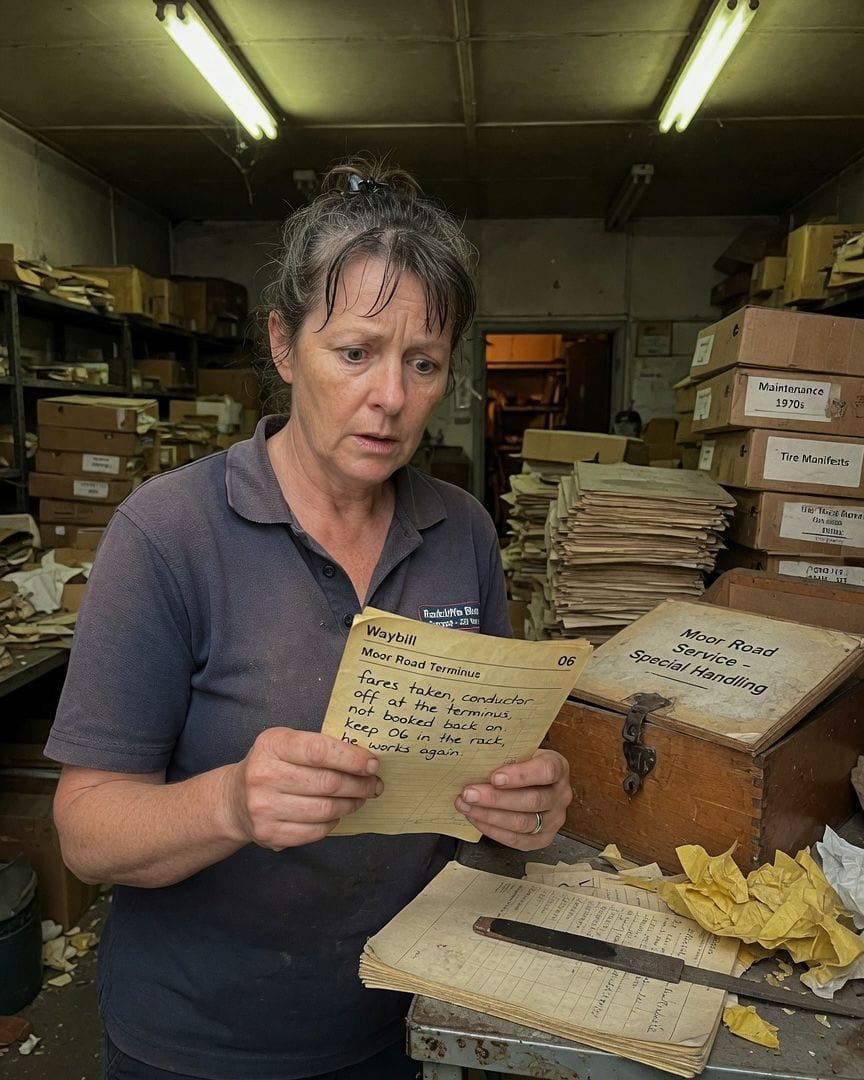
Our depot's Waybill 06 filed a moor road service we stopped running years ago. Every eight years since 1956, it closes: 'keep 06 in the rack, he works again.'
Sorting waybills in the depot, I stumbled across a form for the Moor Road Terminus. That route was decommissioned decades ago, but this waybill had a chilling handwritten instruction: 'keep 06 in the rack, he works again.'
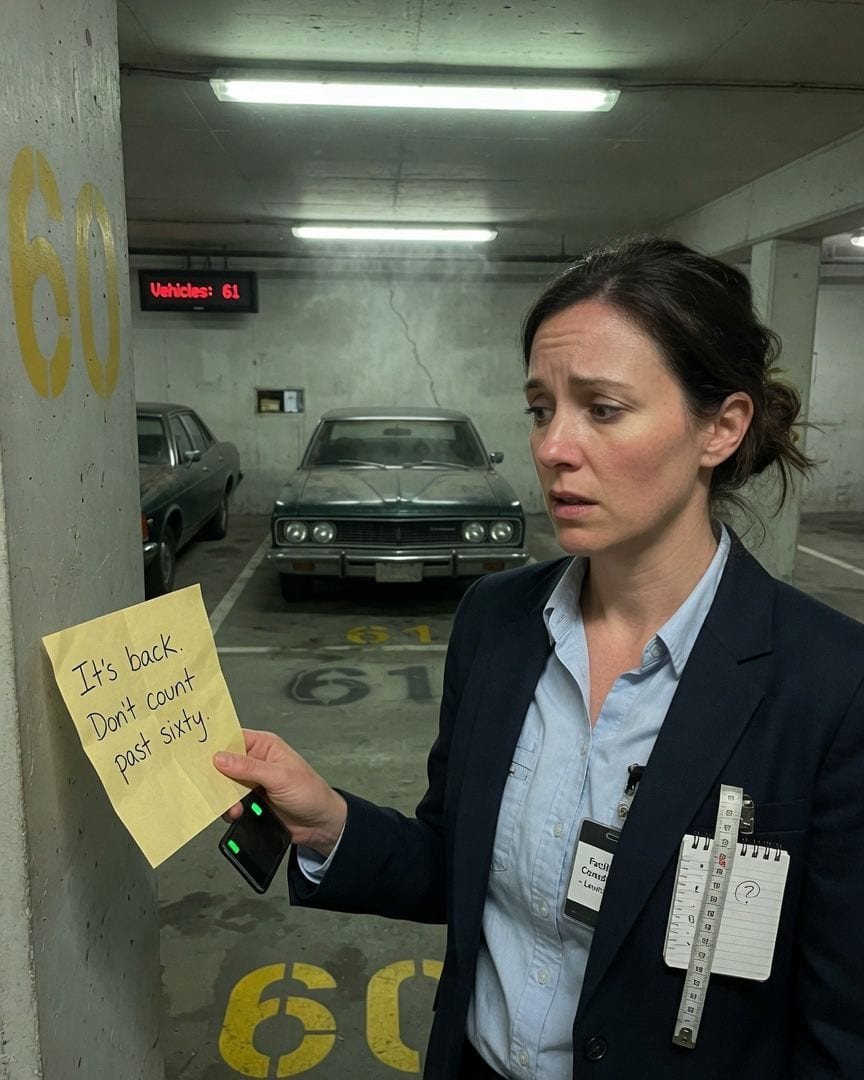
My hand found a hidden seam in the concrete wall. Inside, a desperate note warned: 'Don't count past sixty'.
I arrived at the underground parking lot a few minutes late, expecting the usual sixty spaces. But my pass blinked '61', and a new bay, numbered 61, had appeared beyond the lot's end wall. Inside it sat a vintage car, still warm from a recent drive. Every blueprint and log insists this space doesn't exist, yet it's undeniably there.
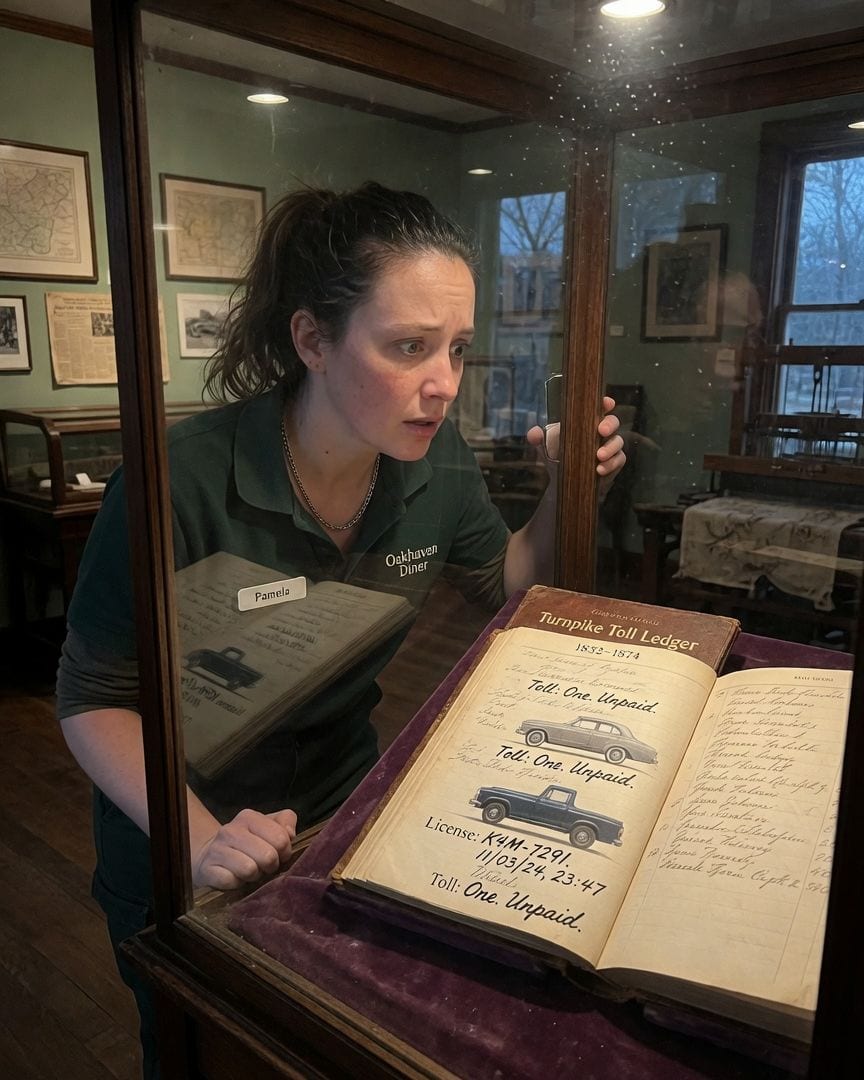
My car stalled at the old turnpike milestone, after dark. The toll ledger, closed in 1874, then listed my car, my stall time, and a toll of one, unpaid.
I had just moved to Oakhaven when my old sedan died on a dark, winding road by an infamous turnpike milestone. The next day, I found my car's exact registration and stall time written in fresh ink in a 150-year-old, locked museum ledger, marked 'Toll: One. Unpaid.' The curator dismissed it as a prank, but her white knuckles and strained voice hinted at something far more unsettling.
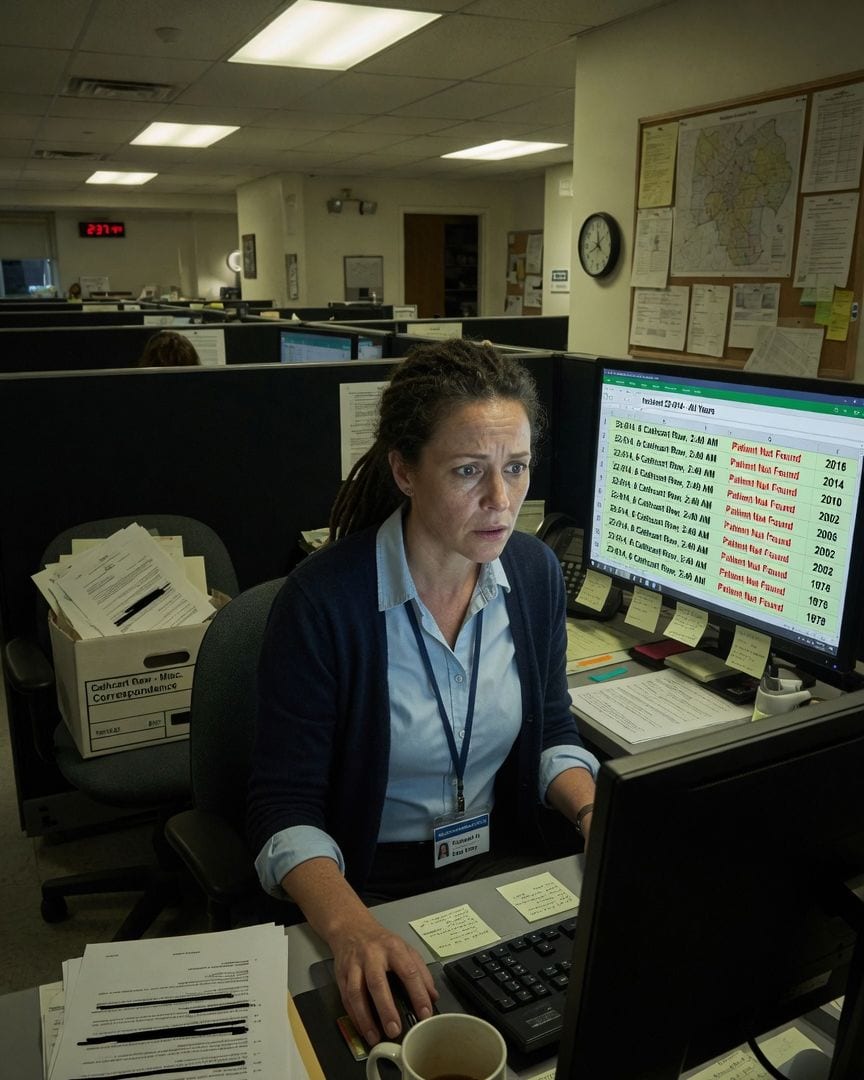
My computer log shows the same 2:40 AM call to Cathcart Row, every four years since 1978, always closed 'patient not found'.
Working data entry for the County Ambulance Trust, I found a routine incident logged as 'Patient Not Found.' But digging deeper, I discovered the exact same phantom call had repeated every four years for over forty years, always at the same address, always at 2:40 AM. Then I found a heavily redacted memo linking it to my own street.