My gate log shows a container left at 3:33 AM, stamped with my ID. The yard was closed, the gate down, and I was asleep.
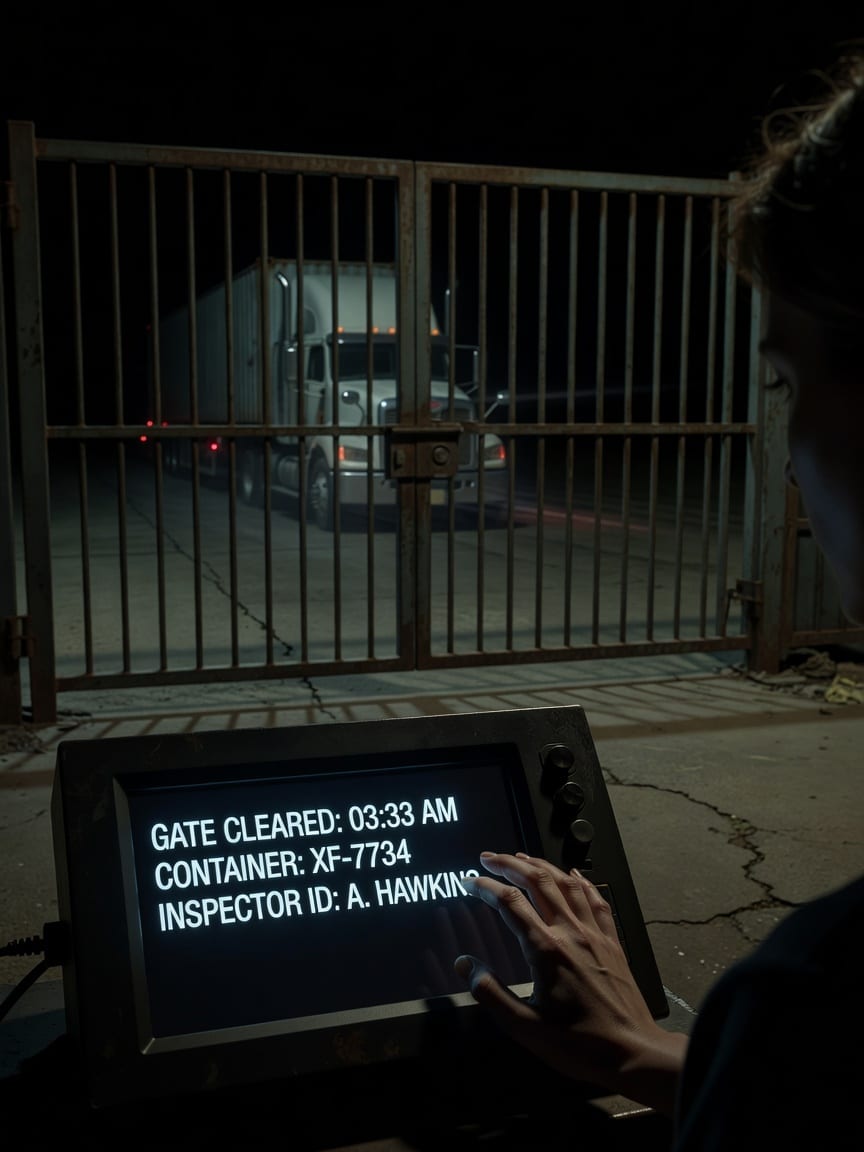
The gate was closed, the yard silent. I was halfway through my coffee, scrolling social media, when the notification pinged. My screen showed an outbound container, 'XF-7734,' cleared the gate at 3:33 AM. Truck ID 'TRK-901.' Inspector ID: mine.
Audrey Hawkins. My stomach hollowed out. I knew for a fact the main gate had been down since 1 AM, locked tight. No trucks were booked until the morning shift, and the crane operators went home at midnight.
This wasn't just a mistake; it was impossible.
I pulled up the security feed for 3:33 AM. Static. Just a flicker, then back to the empty, rain-slicked tarmac. The camera in that sector had been temperamental for weeks. I’d reported it, of course.
Maybe it was just a system ghost, a blip, something registering without actually happening. But the system insisted. The digital log had my unique inspector ID, stamped clean and precise.
I double-checked the crane's move log, dread slowly tightening in my chest. At 3:33 AM, 'XF-7734' was indeed recorded as lifted off Stack 7 and moved to the outbound bay. A full, successful transfer.
My ID, my gate log, an impossible movement. The quiet hum of the night, usually a comfort, now felt like a low thrumming in my ears.
It kept looping in my head, a single, impossible fact against the quiet of the empty yard.
I tried to write it off as a glitch. Systems hiccup. I'd seen weirder things from the old software. I reported it to Maxwell Davenport, my supervisor, first thing. He just sighed, waved a dismissive hand. 'Another phantom log, Audrey?
Happens sometimes. Just clear it from your queue, it'll sort itself out.' He said it with the kind of practiced nonchalance that made me think he’d had this conversation before. But it didn't feel like a glitch.
The details were too specific. The container number, the truck ID. The fact it was 3:33 AM – a time when nothing ever, ever moved. I couldn't shake it.
During my next shift, the phantom log still gnawed at me. I started digging. I pulled up the digital archives, cross-referencing 'XF-7734' against past logs. Nothing recent, nothing historical that matched the exact container or truck number.
Then I tried searching for 'TRK-901.' Still nothing. I expanded my search, looking for any 3:33 AM outbound logs outside operating hours. It took hours of sifting through old, sometimes corrupted, files.
Then I found one from seven years ago, 'XF-5012,' cleared by an inspector named 'E. Porter.' I'd never heard of an E. Porter working nights, or even days, in my five years here.
The entry was digital, but the system noted it as a 'manual override' from an older, pre-digital system import. The dread started to prickle, a cold whisper on the back of my neck.
I asked Edward Brooks, the longest-serving day guard, about E. Porter during our shift handover. Edward's face, usually ruddy and cheerful, went blank. He paused, wiping his hands on a greasy rag. 'Elliot Porter?'
he asked, his voice low, almost a murmur. 'He died decades ago. Before I even started. Freak accident, just outside the gate. Fifty years ago, I reckon.'
The fluorescent lights above us seemed to flicker just as he finished speaking, casting long, wavering shadows.
Edward said Elliot Porter was a day guard, never worked nights. Died fifty years ago.
But the digital record for 'E. Porter' from seven years back referenced a manual override, a ghost in the machine from an era before I was born. It was a long shot, but I couldn't let it go.
I went to the terminal's dusty old paper archives, a forgotten room filled with the smell of mold and old paper, past rows of forgotten manifests and ledgers.
I ran my gloved fingers along spines, searching for anything from the early 70s. I finally found the ledger for June 1974.
My fingers, trembling slightly, flipped through the brittle, yellowed pages. Each turn sent a small cloud of dust into the air, dancing in the narrow beam of my flashlight. And there it was.
A handwritten entry, dated June 14, 1974, 3:33 AM. Outbound container 'XF-7734.' Inspector signature: 'E. Porter.' The same container number as my impossible log from just hours ago. The same impossible time.
And a signature I now knew belonged to a man dead for half a century. I stared at the faded ink, the familiar numbers, the impossible clarity of it all, my breath catching in my throat.
The Elliot Porter entry wasn't a glitch. It was a pattern. I spent my days off in the archives, my nights at the gate, pulling every thread I could find. First, I looked up Elliot Porter's personnel file.
It was slim, yellowed, but clean. Confirmed his birth date, his hire date, and his death date: June 15, 1974, the day after the impossible log entry I’d found.
A 'workplace accident,' the report stated, vague and clinical, no details beyond a simple mention of heavy machinery. The coldness of it was jarring.
I then started sifting through other old logbooks, cross-referencing every 3:33 AM entry I could find, and every 'manual override' in the digital system. The pattern solidified, chilling me to the bone.
Impossible outbound movements, always at 3:33 AM, always involving containers with numbers that recycled every few decades – 'XF-7734' reappeared several times – and always signed by names that didn't fit.
Some were guards who'd retired years before the log date. Others, like Elliot Porter, were deceased. A few were names I didn't recognize at all, names that didn't appear in any personnel records I could access.
The sheer volume of these anomalies, stretching back to the terminal's opening in the late 1960s, was staggering. It wasn't a one-off. It was a routine.
A silent, impossible routine that had been running for generations, hidden in plain sight, logged by ghosts. The silence of the archive, once peaceful, now felt like the watchful quiet before a storm.
My digging didn't go unnoticed. My access card, normally flawless, started failing at random checkpoints, forcing me to use the manual override, the clunky old system beeping its protest.
My computer sessions would log out without warning, sometimes right as I was about to save a crucial search or cross-reference. The monitor would simply go black, then hum back to life, the login screen mocking me.
One morning, I found a sticky note on my monitor. It was faded, yellowed, and stuck with an old, brittle piece of tape. On it, scrawled in a shaky, almost illegible hand, was a single word: 'STOP.'
The handwriting, the thin, spidery strokes, was eerily similar to Elliot Porter's signature in the old logbook. I ripped it off, my heart hammering against my ribs, the paper crackling like dry leaves.
Later that week, I confronted Maxwell. I marched into his office, the crumpled note still in my pocket. 'Someone knows I'm looking,' I said, pulling out the sticky note and flattening it on his desk.
His eyes, usually crinkling with easy humor, were cold, unreadable. They fixed on the note for a long moment, then on me.
He took the note, tore it into tiny pieces without a word, and dropped them into his waste bin. The soft thump of the paper hitting the bottom of the bin was the loudest sound in the room.
'Audrey,' he said, his voice flat, completely devoid of his usual warmth, 'this terminal has been here for a long time. Things happen. Things you don't need to understand. Some dogs are better left sleeping. For your own good.'
He turned back to his screen, the conversation abruptly over, leaving me with the chilling implication that he knew far more than he let on, and that I was now in his sights.
The air in his office, usually stuffy, felt suddenly thin, hard to breathe.
Maxwell’s warning only made me more determined. 'For your own good' sounded more like a threat than advice. I knew there had to be more, something deeper than just rogue log entries, deeper than Elliot Porter's 'accident.'
I remembered Edward mentioning an 'old manager's office' in the deepest part of the archive, now just a storage room. He'd said his own father, Gordon Brooks, had been one of the first managers there.
It was rarely used, mostly for old, forgotten records and decommissioned equipment. I used my master key, the one Maxwell rarely checked, and slipped in. The door groaned shut behind me, plunging the room into near total darkness.
Dust motes danced in the lone beam of my flashlight. The air was thick with the smell of decay and forgotten paper.
Behind a stack of rusted shelving units, piled high with ancient boxes, I found it: a locked, fireproof cabinet, the paint peeling. My heart pounded against my ribs, a frantic drum in the silence.
I picked the simple lock – an old brass mechanism that offered little resistance – and inside, I found not just more logbooks, but a series of memos, bound with twine, their paper brittle and yellowed.
The earliest, dated 1968, was from the terminal's first manager, a Gordon Brooks. Edward's father. It described 'unusual nocturnal activity' and 'unaccounted cargo movements' at 3:33 AM. He initially tried to shut it down, demanding investigations, installing more cameras.
But later memos, growing increasingly resigned, referred to these as 'Special Cargo Transfers' and 'necessary operational realities.' The language shifted from concern to cold, bureaucratic acceptance.
One memo, dated June 1974, specifically addressed the 'Elliot Porter incident.' I held my breath as I read: 'Inspector Porter became aware of the nature of the 3:33 AM transfers.
His subsequent 'accident' was regrettable, but ensured the continuity of the operation. Staff are reminded to process these transfers without question and to avoid unauthorized investigations.' My blood ran cold. Elliot hadn't died in a freak accident; he'd been silenced.
The terminal wasn't just covering it up; it was actively managing it. This wasn't a ghost; it was a system. A cold, calculating system that consumed those who questioned it.
The institutional quiet of the room pressed in on me, feeling less like history and more like a living, breathing weight.
I kept sifting through the memos, past the chilling confirmation of Elliot Porter’s fate, past dozens of identical 'Special Cargo Transfer' logs from decades past. The sheer institutional memory of it all, the cold acceptance, was terrifying.
It wasn't just a few rogue entries; it was a deeply ingrained, generations-old pattern, a routine. I found a loose page, not bound with the others, tucked into a folder labeled 'Future Staffing Projections.'
It was another log, identical to the others I'd been finding, dated June 14, 1974. Outbound container 'XF-7734.' Truck ID 'TRK-901.' The impossible details, again.
But this time, the Inspector ID wasn't Elliot Porter. It was 'A. Hawkins.' And beneath it, a signature. My signature. The looping 'A,' the familiar slant of the 'H,' the confident stroke of the 's.' It was unmistakably mine.
On a log from fifty years ago. Before I was born. My own name, my own hand, logging the impossible, decades before I even existed.
I stared at it, the paper shaking in my grip, the dread a physical weight pressing down on me, knowing I was not just a witness, but a part of the machine.
The 'Future Staffing Projections' folder, the pre-birth signature – it all clicked into place with horrifying clarity.
The terminal wasn't just a place where impossible things happened; it was a nexus, a conduit, where time itself folded to ensure 'Special Cargo Transfers' occurred.
The 'whatever runs the night' wasn't an entity in the traditional sense, but a self-sustaining anomaly, a routine that demanded its own perpetuation.
It wasn't creating ghosts; it was using the identities of future, living guards to retroactively validate its past movements.
My ID, my signature, Elliot Porter's, Edward Brooks's – they were all just placeholders, drawn into a pattern that had been running for generations.
The 'cargo' wasn't something being moved out of the terminal, but rather the very continuity of the impossible operations themselves, weaving a narrative of existence that defied logic.
The institution, led by figures like Gordon Brooks and now Maxwell Davenport, hadn't just covered it up; they had become its unwitting, or perhaps unwilling, custodians, ensuring the smooth operation of this temporal paradox, knowing it was bigger than them, unchangeable.
The dread wasn't in what I would find, but in what I already was: a part of its inevitable, terrible design.
Realization hit like a physical blow: I was already caught in the pattern. My future self had logged that container, just as Elliot Porter had. There was no fighting it, only escaping its grasp.
The archive, once a sanctuary of truth, now felt like a mausoleum. I scrambled to copy the damning memos, the impossible logs, anything I could use as proof, but my computer screen flickered, access denied.
Every folder I clicked brought up an error message, "Access violation." My phone had no signal down here.
The archive door, which I'd left ajar, slowly swung shut with a soft, almost deliberate click, plunging the room into oppressive silence broken only by my ragged breathing.
Maxwell Davenport stood there, his face expressionless, silhouetted against the dim light from the corridor. 'Audrey,' he said, his voice quiet, devoid of anger, 'I told you to let sleeping dogs lie.'
He walked toward me, not with malice, but with a weary resignation, his footsteps echoing softly. 'Some things simply are. This terminal, it has its own schedule, its own demands. It demands its due.'
He looked at the old log page still clutched in my hand, the one with my signature from 1974. His gaze lingered on it, as if he'd seen it a hundred times before.
'Others have tried to fight it,' he continued, his voice barely above a whisper, 'to expose it. They always found their place. Eventually.'
He didn't threaten me; he simply stated a fact, as cold and unyielding as the concrete floor beneath our feet.
The implication was clear: I would either become another 'Elliot Porter' – silenced and gone – or another 'A. Hawkins' – a willing, unwitting participant, my identity consumed by the loop. I wasn't going to be either.
I lunged past him, tearing a single faded page from the 'Future Staffing Projections' folder as I went, a small, desperate act of defiance. The old paper ripped with a dry, brittle sound.
I burst out of the archive, my heart hammering, running blindly through the deserted terminal, the sound of my shoes slapping against the concrete echoing in the cavernous space. I didn't look back.
Through the silent bays, past the dark shapes of the cranes, I ran for the main gate, a sliver of dawn light just beginning to show on the horizon.
As I slammed through the main gate's turnstile, the digital system behind me chimed, a soft, final 'ping.' Outbound container cleared. 3:33 AM.
I never went back to the terminal. I drove until the sun came up, then kept driving, miles blurring into indistinguishable highways.
I told no one what I'd found, knowing how insane it sounded, how impossible it would be to believe.
The single faded page, tucked into my wallet, was my only proof, a constant, unsettling reminder, the looping 'A' a brand on my soul.
I saw news reports in the following months: 'Unexplained disappearance of former terminal guard,' 'Freak accident claims life of local supervisor Maxwell Davenport.' The names were familiar, the circumstances vague, sanitized. I knew. I knew what the terminal demanded.
I changed my name, moved across the country, tried to build a new life, far from the hum of container cranes and the silent operations of the night.
Every night, at precisely 3:33 AM, a cold shiver would run down my spine, a phantom chill that no blanket could ward off.
I tried to ignore it, to live a normal life, but the memory of that impossible log entry, my own signature from before my birth, was etched into my very being.
I occasionally checked local news from my old area, an anonymous habit I couldn't break. One morning, a small online article caught my eye: 'New Night Shift Guard Starts at Portside Terminal.'
A young man, Brandon Whitaker, smiling confidently in the accompanying photo.
A few days later, on a local oddities forum, a user posted about a strange occurrence at the terminal: a digital log entry for a container cleared at 3:33 AM, stamped with an inspector ID that belonged to a guard who swore he was home asleep.
A single comment beneath the post simply read: 'The shift never ends.'
If this one got to you
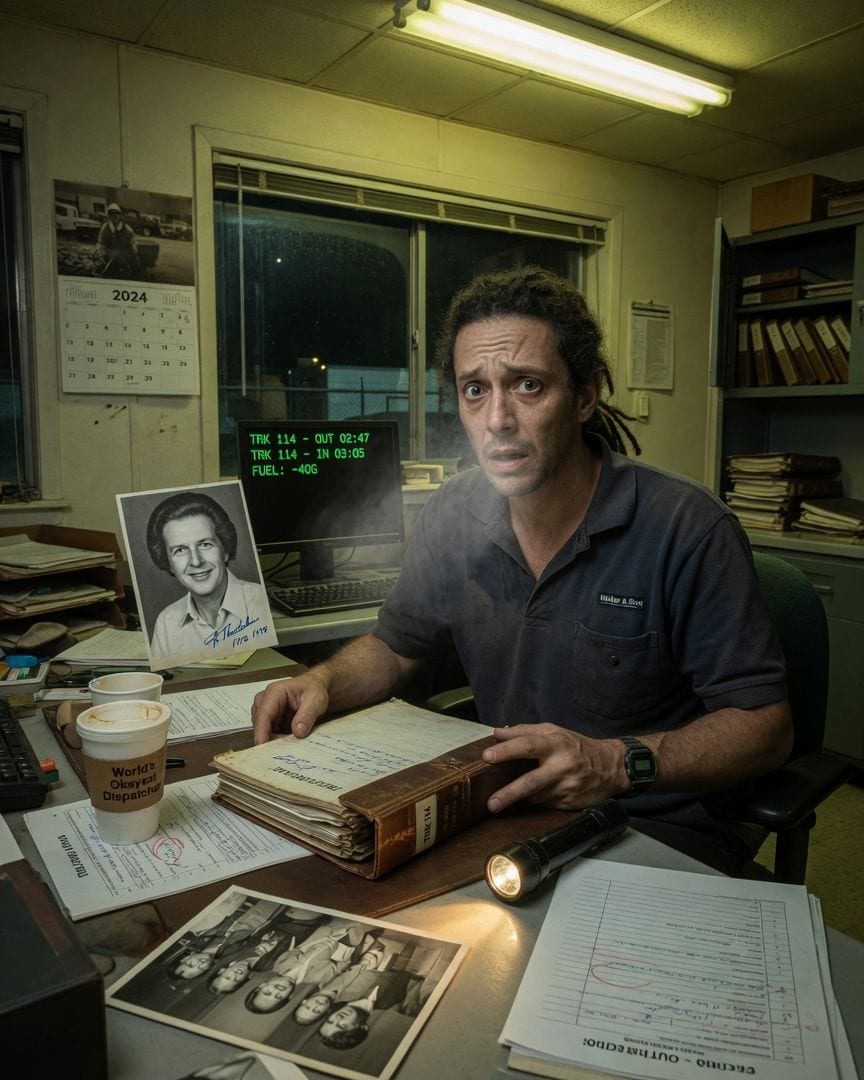
Truck 114 logged forty miles gone last night. It was on the lift, no wheels, and I was the only dispatcher.
My shift in the freight yard dispatch office was quiet, just routine monitoring. But then the CAD system logged Truck 114 moving out for a forty-mile run. That truck was impossible; it had no wheels and was on blocks in maintenance all week.
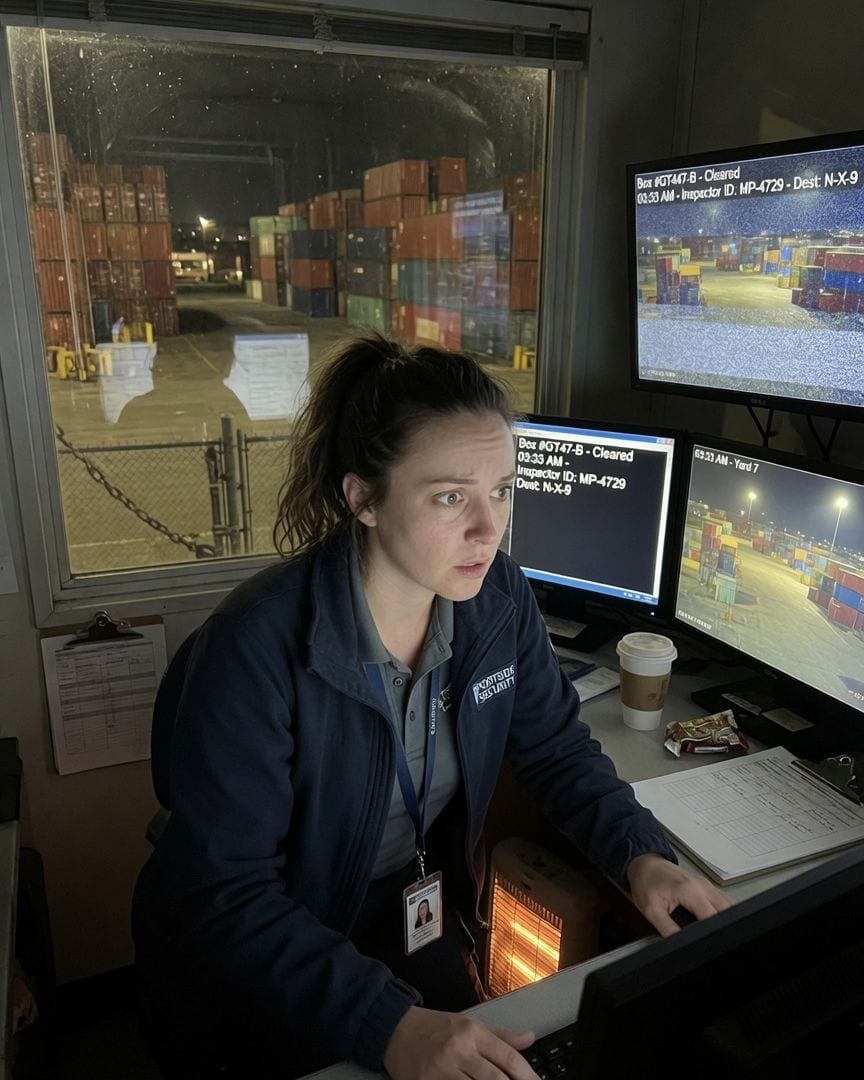
The log says a container cleared my gate at 3:33 AM, stamped with my ID — but the gate was chained and locked, and the yard beyond it was dark and empty. No truck was ever booked.
My night shift at Portside Container Terminal is usually a predictable drone of monitors and stale coffee. But then I saw a familiar guard, Arthur Larsen, on a live feed, smiling unsettlingly at the camera. The next morning, my supervisor searched for him; the employee database returned 'No results found.'
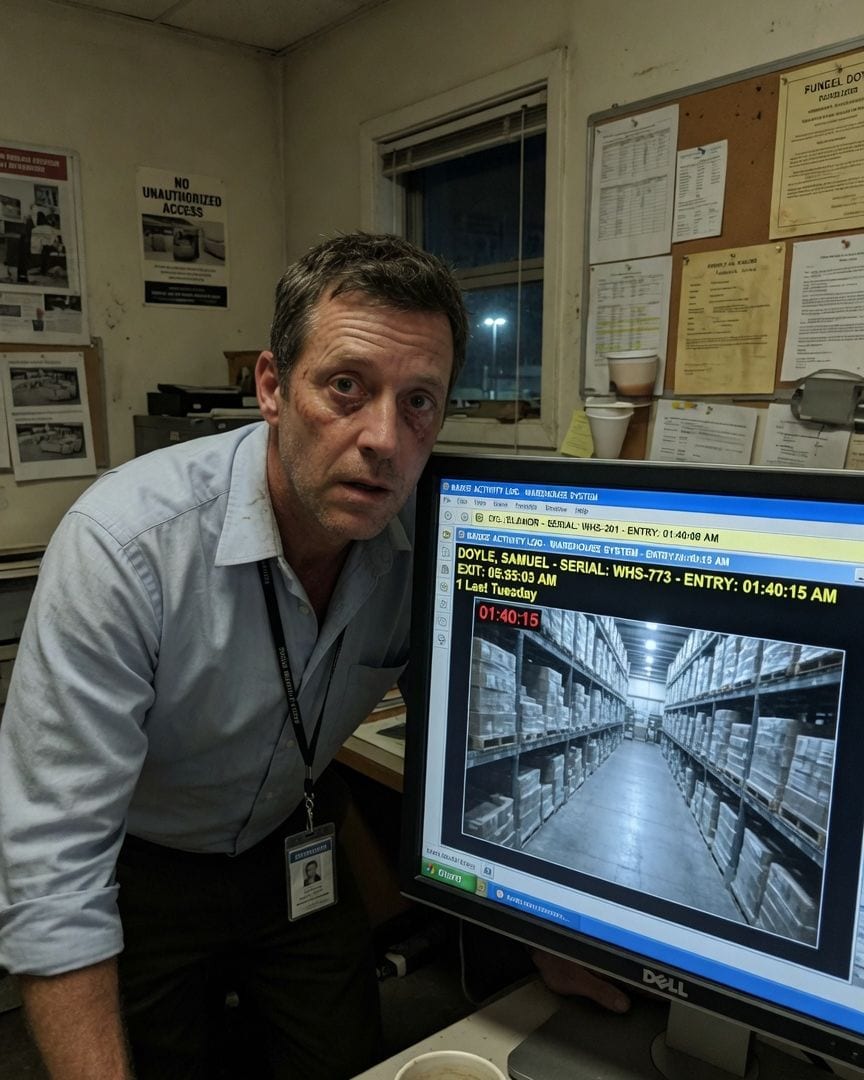
My dead colleague's badge, deactivated weeks ago, logged an entry at 1:40 AM last Tuesday. Then I found another from 1978, with the same impossible times.
My monitor showed a shocking entry: Samuel Doyle, dead and buried three weeks ago, had just logged into the warehouse. His badge was deactivated the day of his funeral, yet the system recorded his precise entry and exit, even though security footage showed the aisles were utterly empty.
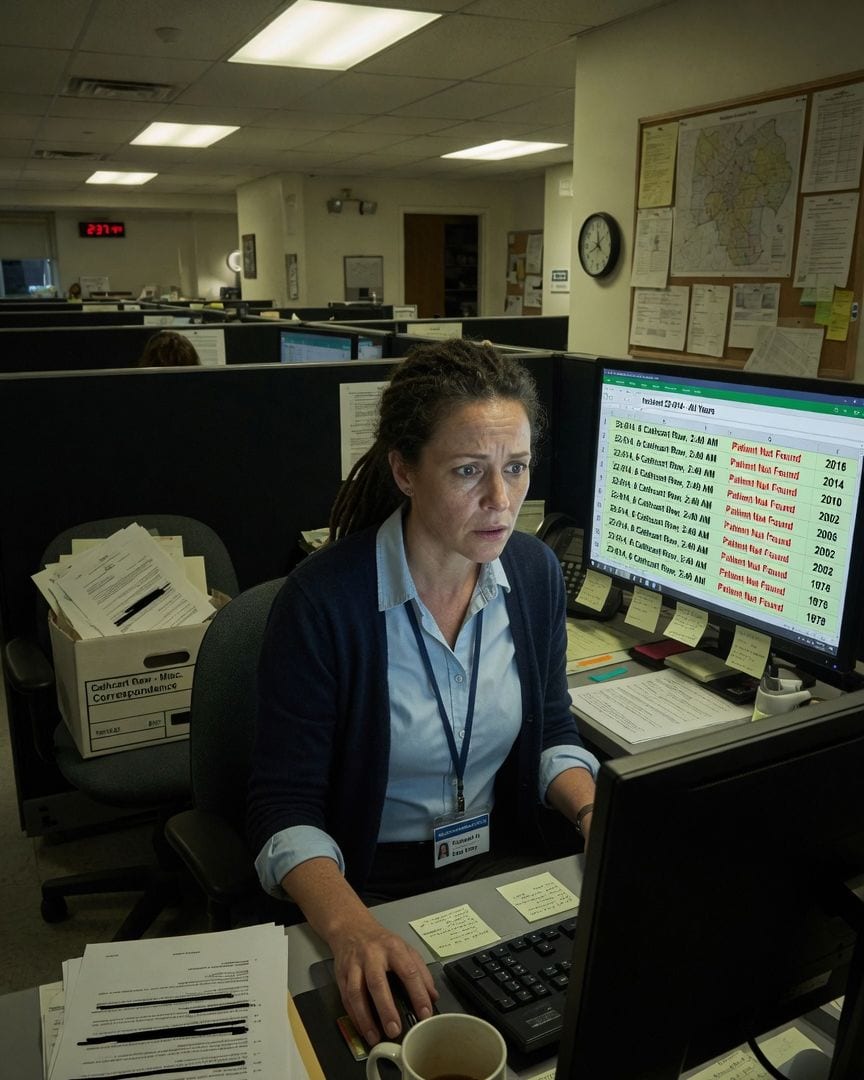
My computer log shows the same 2:40 AM call to Cathcart Row, every four years since 1978, always closed 'patient not found'.
Working data entry for the County Ambulance Trust, I found a routine incident logged as 'Patient Not Found.' But digging deeper, I discovered the exact same phantom call had repeated every four years for over forty years, always at the same address, always at 2:40 AM. Then I found a heavily redacted memo linking it to my own street.
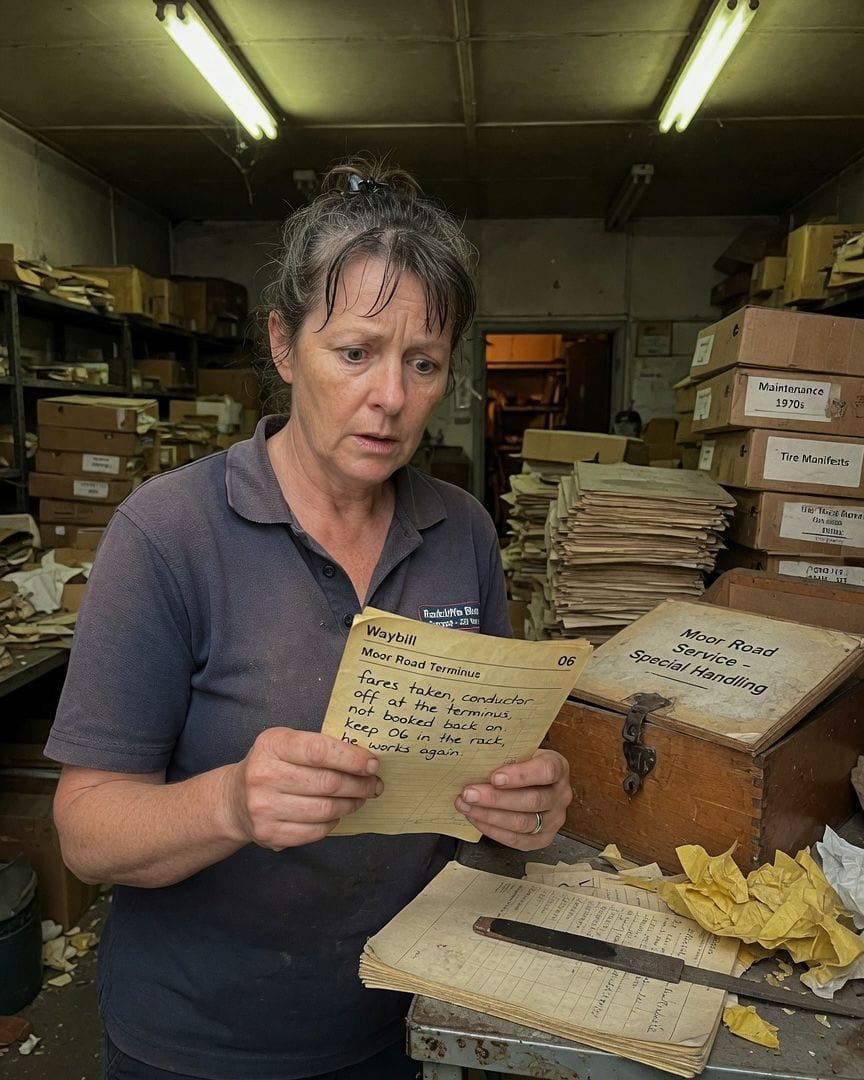
Our depot's Waybill 06 filed a moor road service we stopped running years ago. Every eight years since 1956, it closes: 'keep 06 in the rack, he works again.'
Sorting waybills in the depot, I stumbled across a form for the Moor Road Terminus. That route was decommissioned decades ago, but this waybill had a chilling handwritten instruction: 'keep 06 in the rack, he works again.'
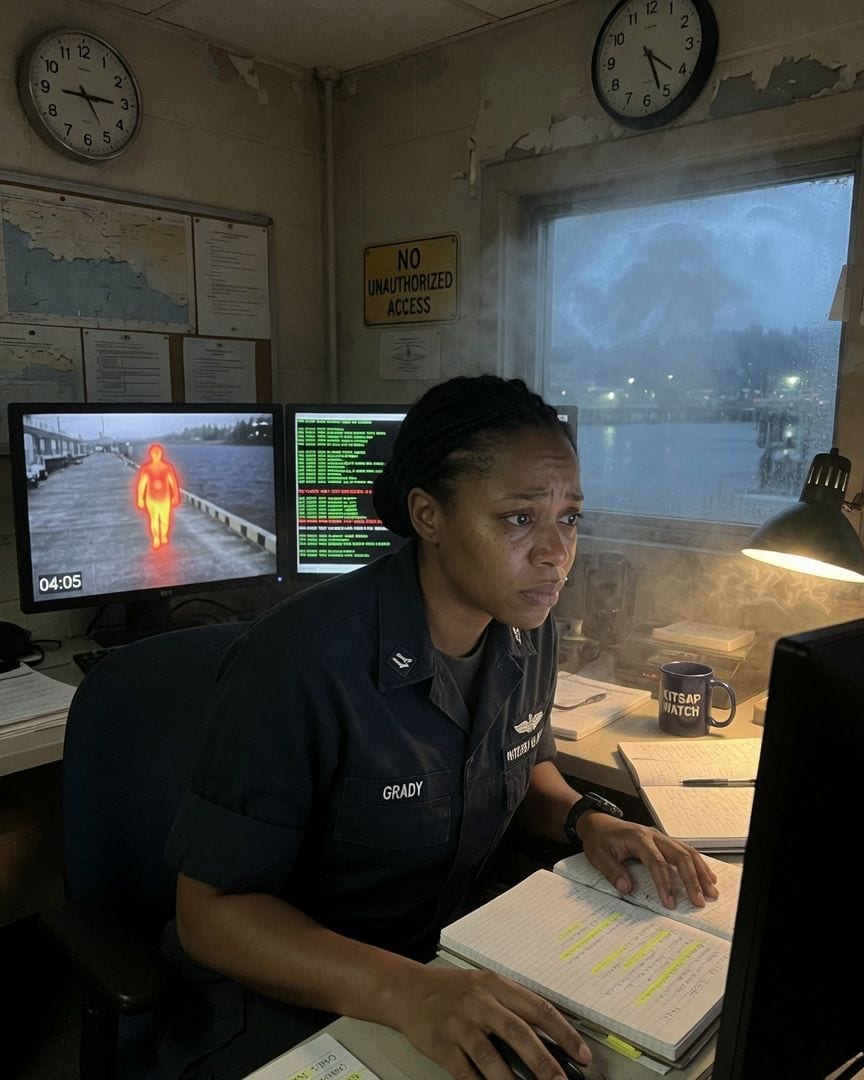
Petty Officer Olivia Grady found the base system logging impossible access at 0405. Every night for years, a blank ID walks Pier 7.
Petty Officer Olivia Grady stood her predawn watch on Pier 7, the cold mist of Puget Sound a familiar companion. Her routine scan of monitors at 0405 was shattered when an IR sensor flared with a man-sized heat bloom moving along the pier. Yet the camera feed showed only empty concrete and swirling mist. When historical logs confirmed the invisible presence had walked that exact path every night for years, Olivia dug deeper. She found a ghost "access log" entry with a unique ID but no name attached, meticulously aligned with the 0405 bloom. What impossible entity was the base system logging, night after night?