My baby monitor showed something crouched in my son's cot corner, looking back. He was sleeping alone, then it named him.
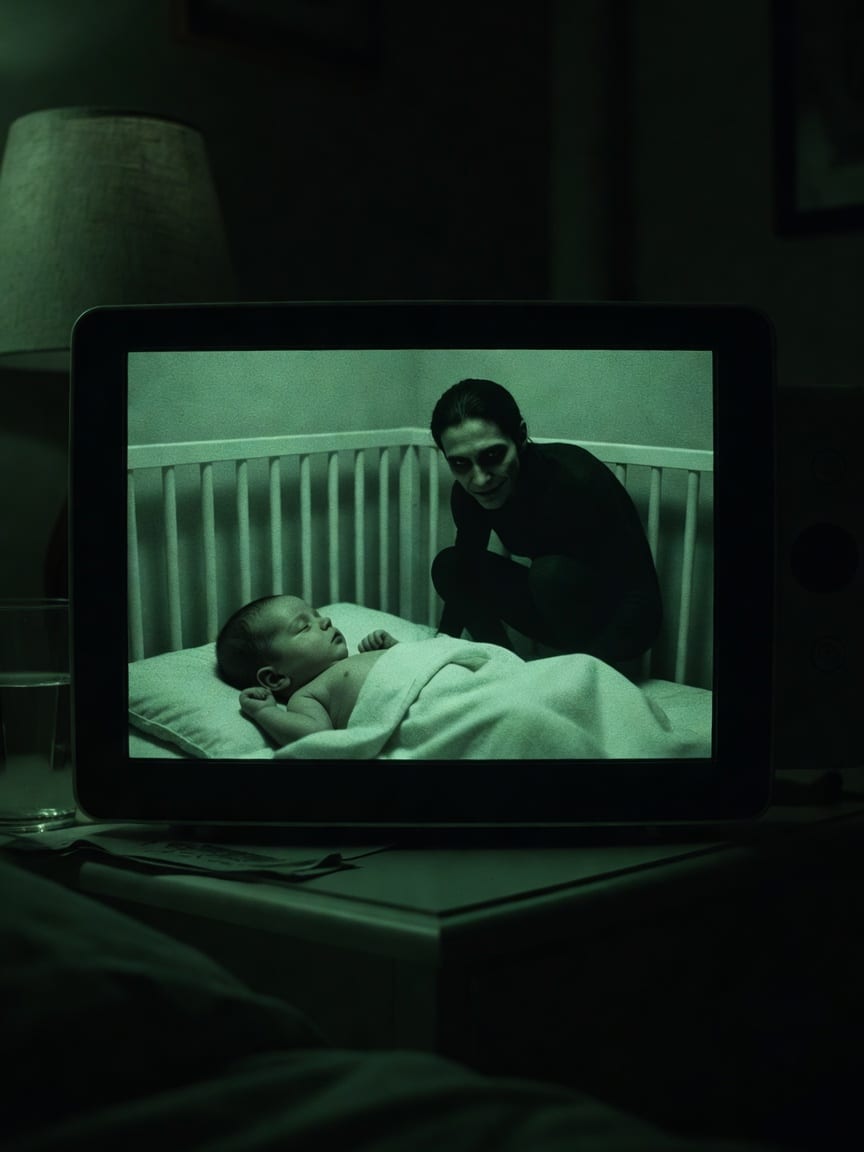
The first time it happened, it was 2:50 AM. I know the exact time because I was staring at the monitor display, half-asleep on the couch, watching Theodore.
He was a year old, and still woke sometimes, but mostly he slept through now. His cot glowed in the familiar grey-green of the night vision, a quiet, reassuring picture of peace. Except, that night, it wasn't peaceful at all.
I saw him sit bolt upright. Not a sudden jolt, more like a slow, deliberate rise. His head turned, not towards the door where I would eventually enter, but fixed on the far corner of his room. My stomach clenched.
He was staring. Staring with an intensity that made the hair on my arms prickle. He just sat there, utterly still, watching.
And then I saw it. In that corner, where there was only a blank wall, a shadow began to coalesce. Grey and grainy, like a smudge on the monitor lens, but it had depth. A definite form.
It was low to the ground, crouched, almost hunched. It wasn't a toy. It wasn't a pile of clothes. It had a presence. And then, subtly, the 'smudge' shifted, and I knew it was looking back.
Right into the camera, right at me.
A cold dread shot through me, an animal alarm bell. My rational mind, the part that usually kept me sane, immediately fought back. It was a shadow. A trick of the light. My eyes playing up because I was tired.
A flaw in the cheap camera. I pushed the throw blanket off, my heart hammering against my ribs, already halfway across the hall. The old floorboards creaked under my feet.
I reached his door, pushing it open with a soft click, and burst in. By the time I was beside the cot, Theodore was lying down again, perfectly still, eyes wide open and staring at the ceiling.
The corner was empty. Nothing there but a faint grey patch where the wall met the floor. I checked every inch of the room, under the cot, behind the small dresser. Nothing.
Not a shadow, not a forgotten toy, not a stray blanket. The room was exactly as I had left it. I picked Theodore up, cradling him close, telling myself I’d imagined it. The exhaustion, the stress of a new baby.
But the image from the monitor kept replaying in my mind, clear as day: the crouched form, looking back. And the way Theodore had stared.
The next morning, the memory clawed at me. I hadn't slept, not really. I needed proof it was nothing. I needed to see it again, to rationalize it away in the cold light of day.
I pulled up the saved footage from the baby monitor, my hands shaking slightly as I navigated the interface. I fast-forwarded to 2:50 AM.
There it was. Theodore, sitting up, his small head turning, eyes fixed. My breath hitched. And there, in the corner, the grey smudge solidifying into a definite shape. It was low to the ground, yes, but undeniably there.
Not a smudge now, not a trick of light. It was a hunched figure, almost like a small person, or maybe an animal, but too still, too wrong.
It moved slightly, a subtle shift of its head, as if adjusting its gaze.
I zoomed in, pushing my face closer to the laptop screen. The pixels blurred, but the shape remained. It was there. I tried to tell myself it was just compression artifacts, a glitch in the night vision.
But it felt too deliberate, too present. As I watched, Theodore made a soft, sleepy cooing sound, a little breathy murmur of contentment, even while staring at that empty corner.
Then, barely audible beneath the static hum of the monitor's microphone, a faint whisper cut through.
I frowned, leaning closer to the speakers. Too soft. Too indistinct. Like air escaping a tight space. I rewound, played it again, adjusting the audio levels on my laptop. There. Clearer now.
A sibilant sound, like a drawn-out 'S' or a soft 'Th'. It was right after Theodore's coo. My heart hammered against my ribs, a dull drum in my chest.
I tried to rationalize it again – faulty microphone, a neighbour's radio bleeding through, wind outside whistling through a crack in the window. But the sound was too specific, too close to Theodore's cot. It wasn't random interference.
It was a response. My mouth felt dry.
I spent the next hour isolating the audio, running it through every filter my computer had. I muted the ambient room noise, amplified the whispers, scrubbing out the static.
My hands were clammy, cold despite the warmth of the headphones pressed against my ears. The sound emerged, undeniably a voice, low and resonant, yet impossibly soft. It wasn't a random syllable, not white noise, not a trick of sound.
It was two distinct syllables, formed words. I heard it again, perfectly clear, directly after Theodore's sleepy sigh, as he settled back down. A soft, drawn-out 'The-o-dore.' Not a question. Not a command.
Just his name, spoken by a voice that wasn't mine, wasn't my husband's, wasn't anyone who should have been in that room. It was a lullaby, chillingly intimate, from something that wasn't there.
The 'Second Voice' became my waking nightmare. I unplugged the baby monitor, then, convinced it was just a glitch, plugged it back in a few hours later. Nothing. I bought a new one, a different brand, different frequencies, different everything.
The next night, the new monitor showed nothing. For three nights, I slept soundly, exhausted but relieved. The house was quiet, Theodore was peaceful. I thought I’d finally shaken it.
Then, on the fourth night, the familiar grey smudge reappeared in the corner of the new monitor's night vision, and the faintest whisper, like breath against the microphone, cut through the feed. It wasn't the monitor. It was the connection.
The creeping cold that had started in Theodore's room now felt like it was spreading through the walls.
I spent days online, a frantic blur of searches. I found obscure forums, old creepypasta stories about haunted electronics, all dismissed as hoaxes, lurid fiction.
But then, a comment, buried deep in a thread about strange baby monitor phenomena, mentioned an archived local news report from fifty years ago.
'The Nursery Shadow,' it was called, a series of panicked accounts of 'voices' and 'figures' caught on early baby-listening devices. It had been dismissed as mass hysteria, a collective delusion fueled by fear in a small, superstitious town.
I drove to the town's dusty public library, the faint smell of old paper filling the quiet air. I found the grainy microfiche reels, turning the crank until I landed on the right dates.
The reports were vague, sensationalized tabloid fodder, but the core details were eerily similar: a shadow, a voice, a child's name. Always a child's name.
No explanation, just a quiet cessation after a few weeks, the affected families moving away or simply ceasing to talk.
One article mentioned a small, unusual object found in one of the cots, later deemed a prank by a local teen. The article didn't elaborate. It was a dead end, or so I thought, but the pattern was undeniable.
This wasn't a glitch. This was a recurrence.
My research felt less like investigation and more like digging a hole for myself. I started noticing things. A dark sedan, parked down the street from my house for hours, then gone when I next looked.
Another time, the same car, half a mile away, again just sitting there, engine off.
A subtle shift in the silence when I walked past the old, abandoned 'Harrington House' on my way to the library, a sense of being observed from its boarded-up windows, as if the decrepit structure held a hidden gaze.
One afternoon, checking my mailbox, I found an unmarked envelope. No stamp, no return address, just my street number scrawled on the front. Inside, a single, faded newspaper clipping.
It was identical to one of the 'Nursery Shadow' articles I’d found on the microfiche. The one mentioning the 'unusual object'. No note, no sender. Just the clipping. My blood ran cold. Someone knew what I was doing.
Someone was watching me, and they wanted me to know about the past. The wrongness wasn't contained by the monitor anymore; it had seeped out, into the real world, and it knew my name.
I drove past the Harrington House again, slower this time. The windows were dark, empty eyes. But then, a flicker. A movement in an upstairs window, barely there, like a ripple in water, gone the instant I tried to focus.
Enough to make me slam on the accelerator, the tires squealing. My heart was pounding, a wild bird trapped in my chest. It wasn't just the monitor anymore.
The wrongness had seeped out, into the real world, and it knew my name.
The clipping had also mentioned a few local historians who had tried to compile information on the 'Nursery Shadow' incident. That led me to Daniel Galloway.
I found him tending a meticulously kept rose garden behind a small, isolated cottage on the edge of town, calm and utterly unbothered by my frantic questions. His hands were gnarled, but surprisingly steady as he snipped a spent bloom.
'Ah, the monitors,' Daniel mused, his voice raspy, like dry leaves scuttering across pavement. His eyes, though clouded with age, held a distant, unsettling knowing. 'Technology, always finding new ways for the old things to peek through.'
I pressed him, my voice tight with a fear I was barely holding in check. I pulled out my laptop, showing him my monitor footage, the grainy figure, the sound file.
Daniel watched, nodding slowly, a faint, unsettling smile playing on his lips, not of amusement, but of weary familiarity.
'They always use the new wires, don't they? The old house, the old well, now the little screens. It's just a different kind of conduit for them.'
I demanded to know what 'they' were. He shrugged, picking a leaf from a rose. 'Just... things. That listen. That watch. They find a crack, a loop, a frequency. And they try to come through.'
He remembered the families, the whispers, the dismissals by the town elders. 'One family, the Fairfaxes, they swore up and down. Said something left a gift. A small carving. A bird, I think. Made of dark wood.'
He paused, his gaze fixing on me with an unnerving clarity. 'Everyone said it was the father, playing a cruel joke to cover up his own strange behaviour. But they were so distraught, the parents. Truly terrified.
They said it appeared in the cot. Never seen it before. Never seen it since. An impossible object, they called it. A calling card.'
Daniel's words about the 'impossible object' echoed in my head, a jarring chime. A calling card.
I hardly heard him offer me tea as I snatched up my laptop and rushed home, my mind a frantic blur of adrenaline and dawning horror. If the entity left an object then, what about now?
Had it left something for Theodore?
I pulled up the monitor footage from the night the voice first spoke, the night the figure first crouched. I didn't just watch; I scrutinized, every pixel, every shadow in that grey-green frame.
I slowed it down to agonizingly minute increments, my finger hovering over the pause button, my breath catching in my throat with every millisecond.
The figure was there, grey, hunched, a phantom in the corner. Theodore stirred, a soft whimper escaping his lips, his tiny hands moving. The figure leaned closer, its shape becoming fractionally more defined in the low resolution.
And then, a split-second flash. A tiny, dark shape, distinct even in the grainy night vision, appeared in the figure's hand.
The figure lowered its hand, placing the object gently beside Theodore's head, right on the mattress, before melting back into the shadows, becoming just a grey smudge again.
I froze, my breath caught in my throat. My heart stopped. There. My trembling fingers rewound, played, rewound. There it was again. Small, dark, and intricately carved. A wooden bird. The exact impossible object Daniel Galloway had described.
Placed into my son's cot, by something that wasn't real, leaving something that was.
I didn't hesitate. I burst into Theodore's room, my eyes darting to his cot. He was sleeping soundly, a tiny hand curled near his face. Tucked under his small pillow, nestled against the soft fabric, was the wooden bird.
Dark, smooth, intricately carved, just as Daniel had described. It was real. It was here. My fingers shook as I snatched it up, the wood cold and heavy in my hand, impossibly solid.
I drove back to Daniel Galloway’s house, the carving clutched so tight my knuckles were white. Theodore, still sleepy, was strapped into his car seat in the back.
I practically fell out of the car and thrust the bird at Daniel, along with my laptop, showing him the footage of the figure placing it in the cot.
He took the carving, turning it over in his palm, his expression one of weary familiarity.
'So it continues,' he murmured, his voice softer now, almost sad. 'The object is an anchor. They can only manifest fully where they have a foothold.
The recordings are the window, the voice is the invitation, and the object… the object is the key. It draws them in. Draws a part of them out, and a part of the child in.'
He explained it slowly, patiently, like a teacher explaining a difficult truth. The entity slowly exchanges itself with the child, piece by piece, through the constant connection of the monitor and the influence of the object.
The 'second voice' was the entity learning, mimicking, claiming.
'It's a slow replacement,' Daniel said, his gaze unflinching as he looked from the bird to Theodore, who was now awake and babbling softly from the car seat. 'By the time you see the object, the process is well underway.
The child... Theodore... he's already begun to change. He's not entirely yours anymore.'
I stared at Daniel, the wooden bird feeling like a lead weight in my hand, a cold, dense truth. Not entirely yours anymore. The words echoed, chilling me to the bone.
I ran to the car, unbuckling Theodore, clutching him against me, his small body a warm anchor in a world that had tilted sideways. I looked at the wooden bird carving, then at my son's innocent, bewildered face.
I had to break the connection. I had to destroy it.
Driven by a desperate, primal urge, I rushed outside, Theodore held tight against my hip. I found a large, jagged rock in Daniel's meticulously kept garden, heavy and rough against my skin.
Raising the carving, I brought it down with all my strength against the rock. The wood didn't splinter. It didn't crack. It only made a dull, resistant thud, a solid, unyielding sound that vibrated up my arm.
I tried again, and again, slamming it down, desperate, until my hands were raw and trembling, aching with the effort. The carving remained intact, not a scratch on its dark, smooth surface. It was impossible.
Daniel emerged from his cottage, watching me with a sad, knowing look. 'It won't break, Olivia. It's not just wood anymore.'
I looked at the monitor still running back at my house, a silent, open portal in Theodore’s room. I looked at Theodore, nestled against me, his eyes wide and curious, watching my frantic efforts. I couldn't fight it.
I couldn't destroy it. But I could run.
I threw the bird carving into my car, strapped Theodore into his seat, and sped away, leaving my house, my old life, and the insidious monitor behind.
I carried the impossible object, the only proof of a truth no one would ever believe, and a son who might carry a silent, growing passenger.
Olivia and Theodore moved across the country, starting over in a small, anonymous town no one knew. The old house was sold quickly, the monitor long gone, consigned to a dumpster months ago.
The wooden bird carving was sealed in a lead box, buried deep in a storage unit I never visited, paid for annually, a forgotten memory I knew was still there.
I watched Theodore constantly, every smile, every cry, searching for any subtle shift, any sign. He was still my son, bright and playful, quick to laugh.
But sometimes, a flicker in his eyes, a stillness that was too profound for a child his age, would make my heart clench. I never spoke of what happened, not to anyone. The secret was mine, and Theodore's.
Sometimes, in his sleep, Theodore calls out a name that isn't ours.
If this one got to you
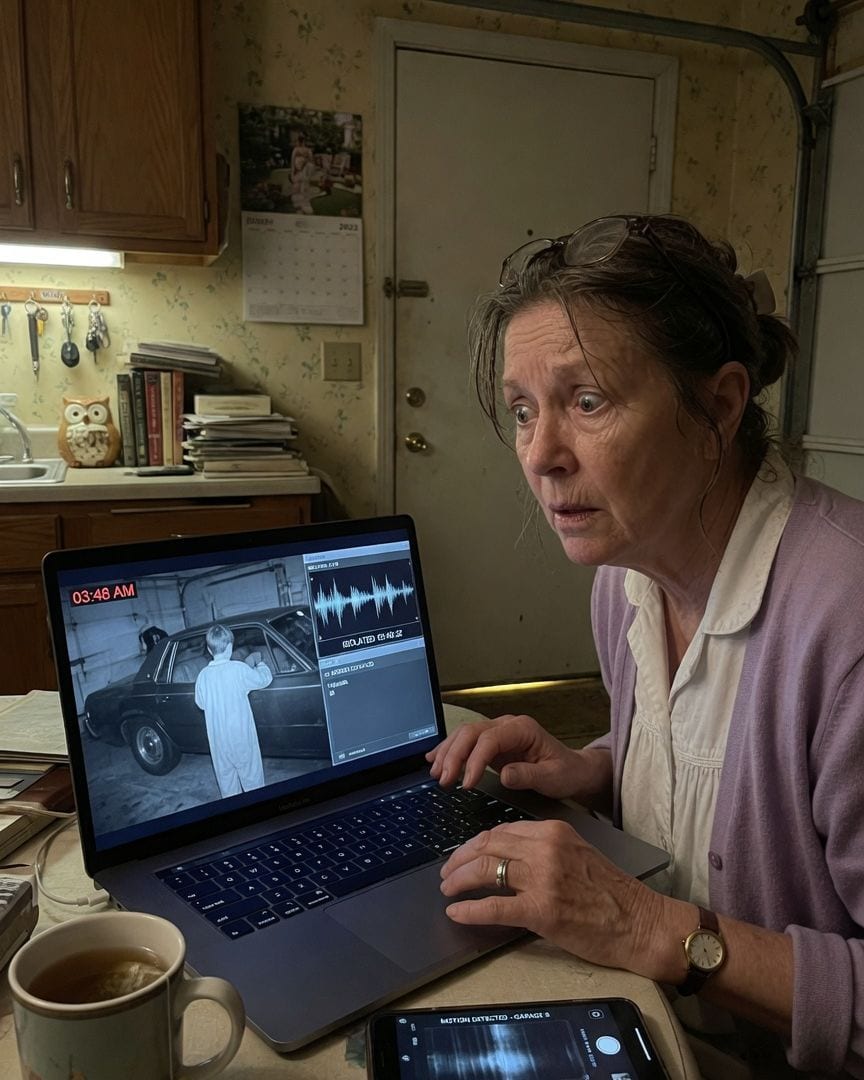
My garage camera filmed a boy of six walk out of a locked door at 3:48am, stare into my empty car, then vanish. My children live abroad.
I live in a quiet, solid house, my children grown and gone. But one night, my garage camera caught an impossible sight: my internal door, locked and bolted, slowly opened. A small, solid boy, no older than six, stepped through, then stood staring into the driver's seat of my empty car.
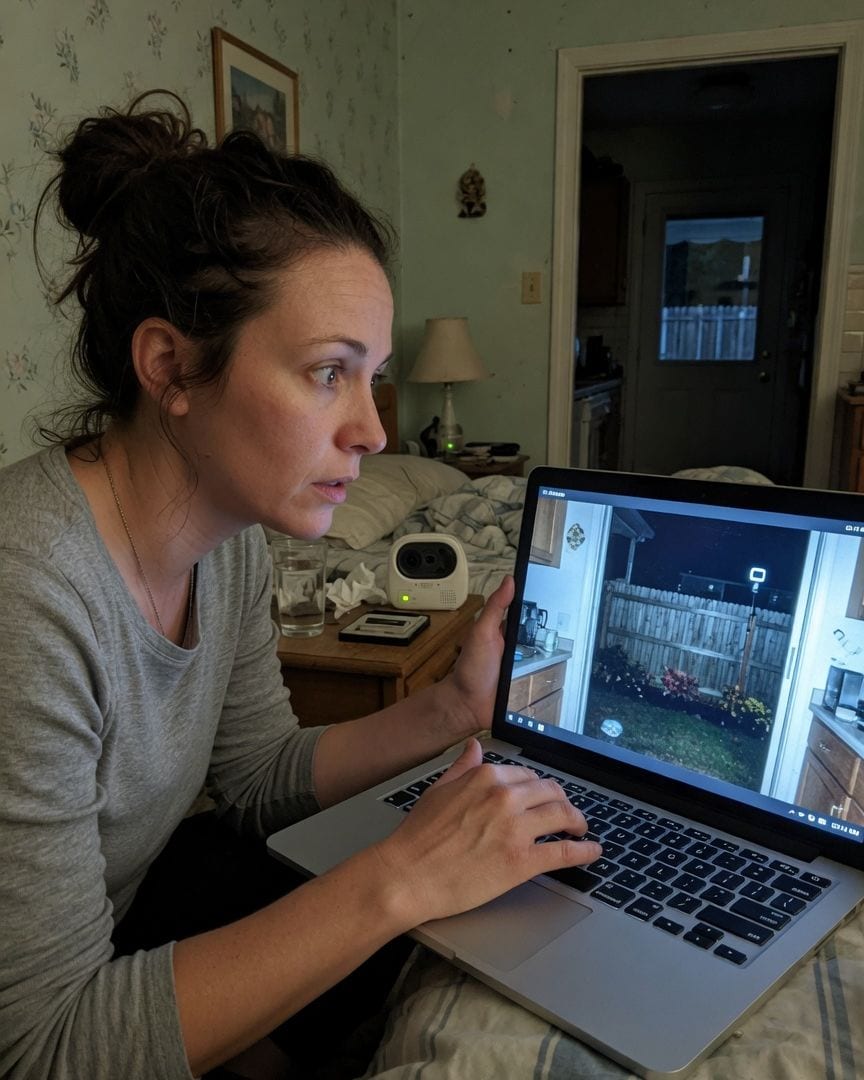
My game camera caught my back door from the inside. For three nights, it showed my door from the yard, getting closer. The last picture is from inside the glass, looking out at the fence.
I had set my game camera on the back fence, aimed at my house, to catch whatever I'd seen moving outside my kitchen window. But the last photo, taken after midnight, showed my kitchen from *inside* the locked back door, looking out.
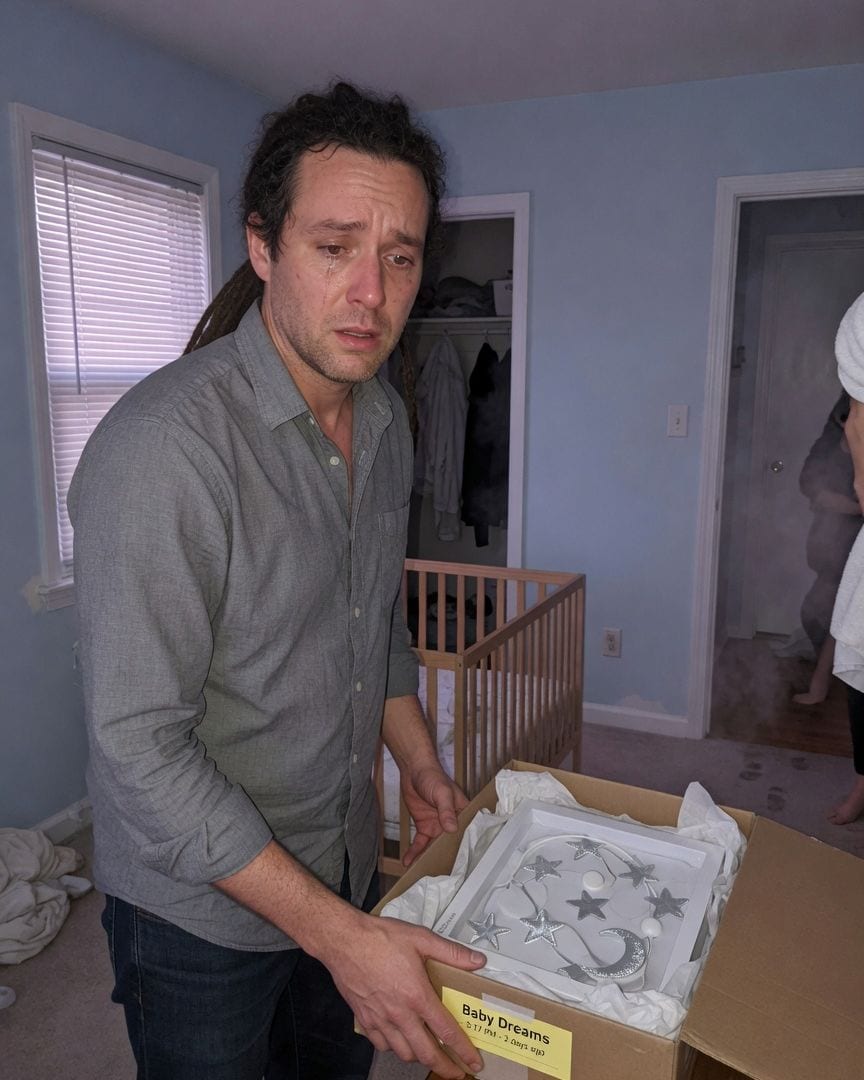
My wife thanked me for the pale blue nursery. We have no child. She described the mobile I'd only imagined, then asked when it would arrive.
Sylvia returned exactly one year after her disappearance, a miracle I could barely believe. But her first words about a nursery I'd only ever imagined, complete with a specific mobile, sent a shiver down my spine. That mobile, a private fantasy, arrived two days ago, and she just asked why it was late.
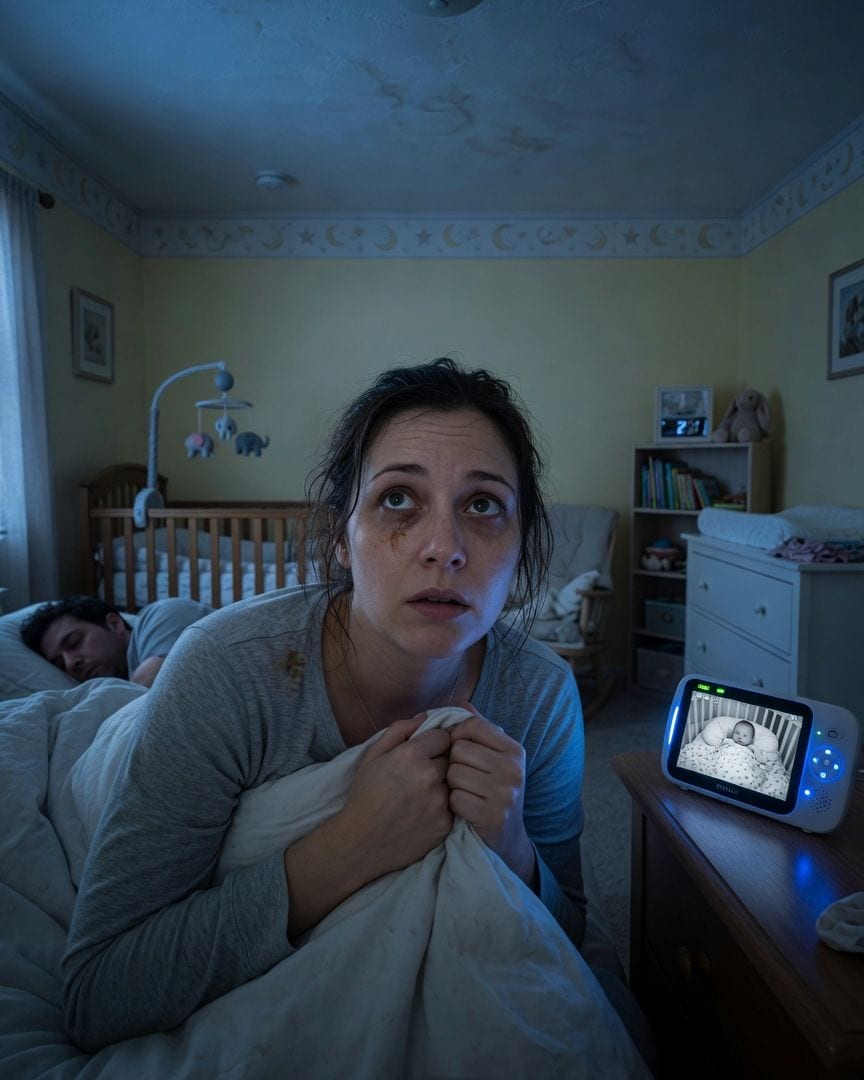
My baby monitor plays a lullaby from an empty room. But the floor holds a rocking chair's deep, decades-old track.
Every night, my baby monitor plays a lullaby and a rhythmic rocking chair creak from Emily's room. But the camera feed always shows her tucked in her crib, completely alone, in a silent, empty nursery. The sound is impossibly clear, as if the speaker were right there, even though nothing is.
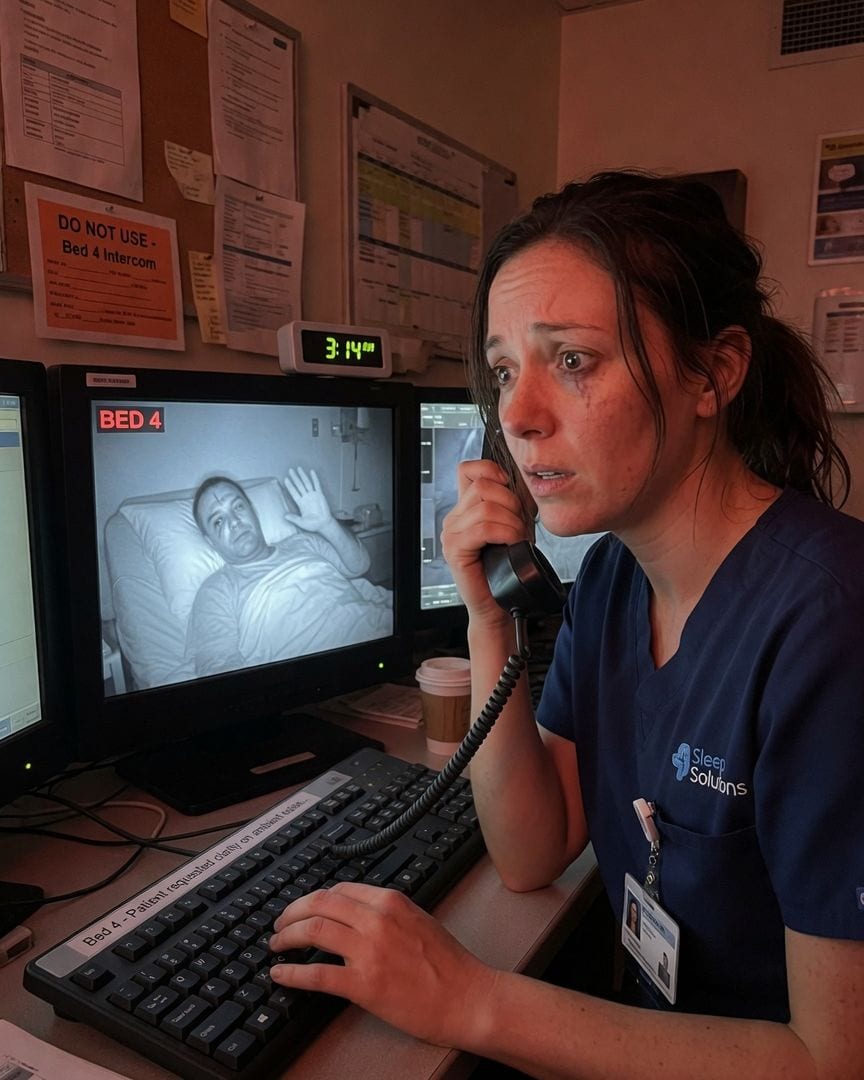
Bed 4's patient always waves at my camera, asking if I hear the humming. Bed 4 was never booked.
As an overnight nurse, my shift at Sleep Solutions is usually routine. But after interacting with a patient in Bed 4, my manager insists the room has been off-limits for deep cleaning all week with its intercom disconnected for months. Yet, I found a faint, warm indentation on the new mattress where the patient had been.
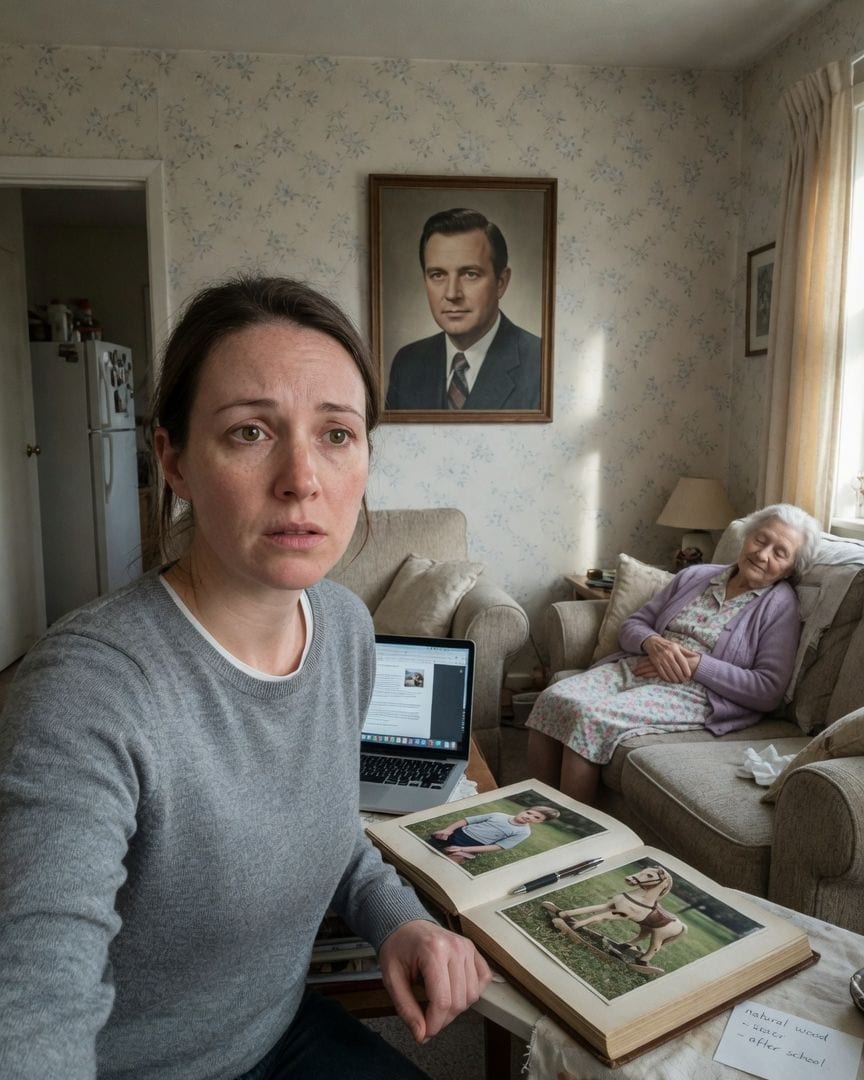
My Grandma Deborah swore she painted my father's rocking horse blue. It was always natural wood, a family heirloom.
My Grandma Deborah returned after a devastating flood, unharmed but changed. She spoke of my father's portrait and the new wallpaper with intimate certainty, details she shouldn't know in a house she'd never entered. Her eyes held a knowing glint, not the soft confusion of age, making the ordinary feel chillingly wrong.