My beach hut row now has Hut 61, but it's not in my books. Inside, a kettle steams, and a plaque on the wall bears my family name, dated 1923.
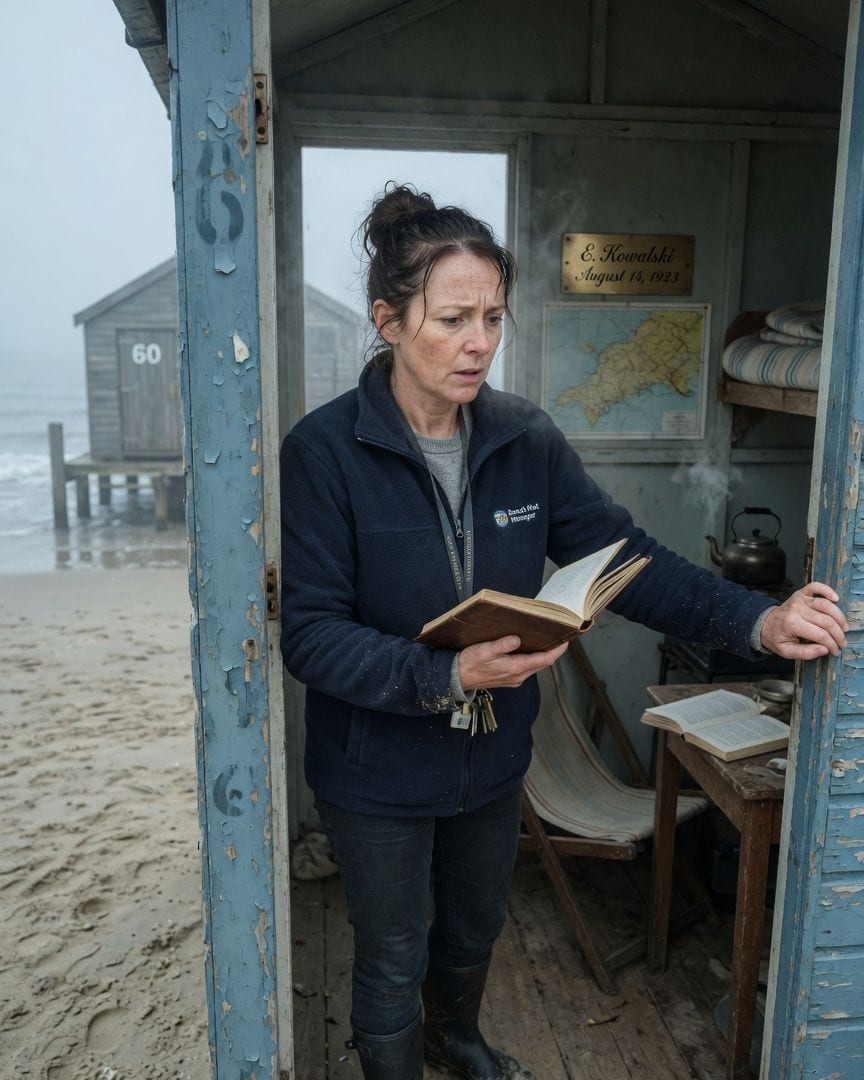
The sea mist still hung heavy that morning, clinging to the wooden pilings of the groyne and the painted fronts of the beach huts.
I walked my usual route, the damp sand crunching under my boots, a familiar rhythm to the start of my day. One to sixty.
I’ve been manager of these council huts for ten years, and I could count them blind, each one a neat blue square in a perfect row.
Today, the salt air was sharper, carrying a faint, almost metallic tang I couldn't place.
I passed Hut 60, its door securely bolted, its windows filmed with salt spray. The end of the line.
Beyond it, there should have been nothing but the wide expanse of the beach, the curve of the bay, and the groyne stretching out like a skeletal finger into the grey water. But there it was.
Hut 61.
It stood exactly where no hut should, nestled against the groyne, a perfect continuation of the row. Same weathered blue paint, same sturdy timber construction, even the same stenciled white number '61' on its door.
It wasn't new, not pristine like a fresh installation. No, it looked just as old, just as salt-battered, as Hut 1, or Hut 37, or any of the others I managed.
As if it had always been there, yet I had never seen it before.
Two wooden deckchairs, faded canvas stretched taut, were set out neatly in front, facing the indifferent grey sea, like someone was expected back any minute.
My first thought was a mistake. A council oversight, a rogue hut placed by some new contractor. But it wasn't new. I approached slowly, the crunch of my boots suddenly loud in the silence.
Through the small, grimy window, I peered inside. On a camping stove, a small, old-fashioned kettle sat, dark metal gleaming faintly. And from its spout, a wisp of steam, so faint I almost missed it, curled into the still air.
It was warm in there, palpably so, despite the chill outside.
I pulled out my booking book, a sturdy leather-bound ledger that held every record, every official hut from one to sixty.
My thumb ran down the page, past 'Hut 59 – The Miller Family,' past 'Hut 60 – Vacant, reserved for August.' There was no 'Hut 61'. There never had been.
My rational mind, which handles lost keys and overdue payments, tried to process it. Maybe I’d miscounted? I walked back to 59, then 60, then to this new hut. No, the numbers were clear. This was 61.
It simply wasn't on my books. And the kettle... that warm kettle. It hummed with an impossible quiet.
Curiosity, or perhaps a stubborn refusal to believe my own eyes, pushed me forward.
The lock on Hut 61's door was an old iron clasp, and to my surprise, it gave with a gentle click when I fiddled with it, as if it wasn’t truly secured.
The door swung inward on well-oiled hinges, no creak. Inside, the air was still, heavy, but held a faint, cloying scent – salt, yes, but also something else, something herbal and old, mixed with the unmistakable aroma of brewed tea.
The hut was small, just like all the others, but fully furnished. A small, scuffed wooden table stood in the center, a single bunk bed neatly made up in the corner, and a shelf of well-worn books lined one wall.
An old paperback, its cover faded to illegibility, lay face-down on the table, as if someone had just paused reading.
I paced the small space, my steps echoing softly. Three paces wide, four paces long. I knew the dimensions of these huts intimately. This one was identical. Standard council issue, except for its impossible existence.
My hand went to the wall, rough-hewn timber painted a familiar shade of blue. I scraped at it near the doorframe with my fingernail, and the paint flaked away, revealing older layers beneath.
Fainter, almost ghost-like, but undeniably there, was the outline of an earlier stencil, still clearly reading '61'. This hut hadn’t been re-numbered, or mislabeled.
It had always been 61, even when it hadn't existed, even when the books claimed it didn’t.
The rational explanations—a prank, a lost hut, a new construction I hadn't been informed about—each crumbled into nothing. A prank wouldn't account for the old layers of paint and the original stencil.
A lost hut would have been on the books at some point, and this one never was. And a new construction wouldn't already look decades old. The numbers simply refused to add up.
They stared at me from the hut's door, from the peeling paint, a solid, tangible fact that defied everything I knew.
As I examined the interior, running my hand over the rough wood of the bunk, my gaze snagged on something fixed to the back wall.
It was half-obscured by a peeling, yellowed map of the local coastline, its edges curling like old parchment. A small, tarnished brass plaque, screwed firmly into the wood.
I reached out, my fingers brushing away the dust and grime that coated its surface. Beneath my thumb, the faint engraving became legible, cut into the metal in an elegant, almost florid script. A name: 'E. Kowalski'.
And beneath the name, a date: 'August 14, 1923'. My breath hitched. Kowalski. My surname. The date… 1923. That was decades before these huts were even built, before the promenade was laid.
I ran my fingers over the corroded brass, the engraved name 'Kowalski' and the impossible date feeling impossibly cold beneath my touch, a shiver tracing up my arm.
The impossible date, 1923, pulsed in my mind like a low-grade fever. My own family name.
These huts, the modern ones, were built in the late 60s, a project I’d seen documented in dusty council minutes. 1923 was a different world.
I took a photo of the plaque with my phone and drove straight to Bernard Hayes, retired council property manager.
Bernard was seventy-two, a man with a quiet, knowing gaze and a reputation for remembering every forgotten detail of the town’s history.
I found him in his cluttered study, surrounded by stacks of old maps and local almanacs. He peered at the photo through thick bifocals, his brow furrowed. "Hut 61, you say? And a Kowalski?" He chuckled, a dry, raspy sound.
"Good one, Naomi. An old joke, I suppose. The lads used to make up stories about a phantom hut that moved with the tide. Never took it seriously."
But his eyes lingered on the 'Kowalski' name, a flicker of something unreadable passing behind his glasses. I pressed him, detailing the kettle, the original stenciling, the utterly mundane reality of the hut. "It's real, Bernard.
And it's not in the records. Did the council ever have 61 huts? Or a different set back then?"
He sighed, pushing the photo back across the desk. "Records are funny things, Naomi. Sometimes what's real isn't what's written down. And sometimes... things that come back with the tide aren't meant to be counted."
He spoke vaguely of 'old ways' and 'fault lines in the coast,' the kind of cryptic pronouncements that usually meant he was warming up to a long, winding anecdote about Victorian smugglers. But today, his tone was different, almost grave.
He didn’t elaborate, just shook his head and waved me off.
I spent the next few days holed up in the council archives, a place usually reserved for bored interns and genealogists. I sifted through dusty official maps, property deeds, old development plans. Nothing. No mention of a 61st hut, ever.
No 'E. Kowalski' associated with beach hut management in 1923. It was a blank. Yet, the deeper I dug, the more I found subtle inconsistencies in older survey maps.
A slight, almost imperceptible shift in the groyne's recorded position between one decade and the next. A discrepancy in distances measured along the coastline, off by a foot here, a few inches there.
Hints of a geometry that didn't quite hold stable over time, as if the very land itself was... elastic. The unease, which had started as a shiver, tightened its grip around my chest.
Returning to Hut 61 that evening, the low sun casting long, dark shadows across the sand, I felt a prickle of anticipation. I had left the door ajar when I’d left, an unspoken invitation for the "prankster" to reveal themselves.
Now, it was firmly shut. And locked. From the inside. A cold dread, colder than the metal plaque, washed over me. There was no keyhole on the outside for a typical council lock. The old clasp was secured.
I circled the hut, my heart thudding a slow, heavy rhythm against my ribs. The small, grimy window offered little visibility. I pressed my face to the glass, cupping my hands to block the fading light.
For a fleeting moment, a shadow moved within, too quick, too indistinct to identify. It wasn't a trick of light; it was an internal movement, a shifting of darkness within the dim interior. I stepped back, my skin crawling.
The kettle on the stove was now cold, of course, but I could see the old paperback on the table. It had shifted. A different page was marked, the corner folded down.
I stood there for a long time, the wind whipping strands of hair across my face, feeling a distinct sense of being observed. Not by a person hiding inside, not by curious seagulls, but by the hut itself.
Its silent, weathered presence felt heavy, watchful, as if it were exhaling the cloying scent of old tea into the evening air.
Later, my phone rang, startling me in the quiet of my living room. It was Bernard. His voice was unusually grave, stripped of its usual folksy charm.
"Naomi," he said, his voice a low rumble, "Some things are better left uncounted. You understand?" He didn’t wait for a reply, didn’t offer an explanation.
Just a soft, almost mournful warning, and then he hung up abruptly, leaving me with the distinct impression he knew, somehow, that I had gone back to the hut.
The next morning, I drove straight to Bernard’s. The air in his study felt thick, heavy with unspoken things. I brought up the inconsistencies in the maps, the hut locking itself from the inside, the shadow I’d seen.
I pressed him harder, my voice tight, demanding to know what he wasn’t telling me. "My name, Bernard. On that plaque. And Elara Kowalski. My grandmother. Did you know her?"
Bernard sat in silence for a long moment, his gaze fixed on a distant point beyond the window. The only sound was the faint ticking of an old grandfather clock in the hall.
Finally, he sagged, as if a great weight had settled on his shoulders. "Aye, Naomi. Elara. A good woman. Vanished in '23, same year your plaque says. Died at sea, they said. But... that wasn't it. Not really."
He admitted it then, in a voice barely above a whisper. "Every few decades, a 61st hut appears in that exact spot, always for a brief period, always occupied, before vanishing again. My grandfather, he worked for the council too.
He documented these 'recurrences'. No one believed him, of course. Called him mad."
He rose slowly, moving to a heavy oak bookshelf. He reached behind a stack of dusty volumes, pulling out a small, leather-bound box. He opened it, revealing faded, brittle papers and maps. "He kept everything.
Thought one day someone would listen." He laid out a hand-drawn map, meticulously annotated in a fine, spidery hand.
It showed the coastline, the groyne, and clearly marked, just past Hut 60, were the words: 'Hut 61 - The Recurrence Point'. Next to it, a handwritten list of names and dates.
My blood ran cold as I read down the list, my finger tracing the faded ink. 'Elara Kowalski – Vanished – August 14, 1923'.
The 'E. Kowalski' on the plaque, my own surname, clicked into place with a horrifying inevitability. My grandmother hadn't died at sea. She had vanished. Here. With this hut.
Bernard confessed, his voice heavy with resignation, "People associated with the hut's management, particularly those with a family connection, sometimes... disappeared with it. It doesn't just appear, Naomi. It claims its own."
Bernard, his face etched with a deep sadness, gestured to another item in the box, nestled among the brittle papers. "This was found in my grandfather's things, tucked away. He never spoke of it, not once. Just kept it.
Maybe he hoped it would never be needed."
I picked it up, my hands trembling. It was a brittle, sepia-toned photograph, small and fragile. It showed the beach huts, a clear, crisp line of them, receding into the distance.
And there, at the very end, past what would have been Hut 60, was a perfectly distinct Hut 61. My breath caught in my throat.
Sitting on one of the wooden deckchairs outside Hut 61, a woman smiled broadly, her face radiant, waving directly at the camera with an open, friendly gesture. I stared. The woman's face was undeniably my own.
Younger, yes, the fashion of her clothes clearly from a different era, but the eyes, the curve of her smile, the way her hair fell – it was unmistakably me.
My fingers, clammy with a sudden, inexplicable terror, fumbled to flip the photograph over. In faded ink, a date was scrawled on the reverse. Clear and unwavering. 'August 14, 1973'.
I stared at the faded sepia photograph, the woman in front of Hut 61 smiling, waving directly at the camera, her face a mirror image of Naomi's own, and the handwritten date on the reverse, 'August 14, 1973', burns into her mind.
I confronted Bernard with the photograph, my voice a barely audible whisper. "This… this isn't possible."
He nodded, his gaze distant. "The Kowalski family, Naomi. You have a generational 'debt' to the coastline's impossible geometry. It's always been there, older than the town, older than any record.
Your grandmother, Elara, she wasn't just managing the huts in 1923. She became the occupant of Hut 61.
Her mother, your great-grandmother, she too worked the huts, always with a quiet dread, always warning about the groyne, about things that went missing."
He explained it all, the terrible truth unfurling like a cold wave. The hut didn't just reappear; it 'called' for an occupant, drawing someone from the lineage into its impossible space to perpetuate its existence.
The photograph wasn't a trick of light or a coincidence, he insisted. It was a premonition, a geometric echo manifesting my own future.
My own mother, he recalled, had quietly cautioned me about working near the groyne, a warning I’d dismissed as old wives’ tales.
I wasn’t just managing the huts; I was always destined to be part of the recurrence, a 'record that cannot be' of my own future disappearance.
Every clue, every strange detail, snapped into horrifying focus: the warm kettle, the set deckchairs, the feeling of being watched – they weren't random occurrences. They were all preparations. They were waiting for me.
Over the next few days, an increasing, almost magnetic pull began to draw me towards Hut 61. It wasn't just a morbid curiosity anymore, or a chilling horror; it was an inevitability, a tide I felt rising within me.
My rational mind struggled, screaming against it, but my body moved with a will of its own, drawn by an invisible current, a silent, powerful chord that hummed deep in my bones.
I walked along the promenade as the last rays of the setting sun cast long, distorted shadows across the sand. The air was still, quiet, the usual sounds of the beach muted, as if the world held its breath.
Hut 61 stood at the end, exactly as I had first seen it that morning weeks ago, or perhaps, decades ago. The deckchairs were set out, facing the bruised purple of the horizon.
The door was ajar, just slightly, an inviting dark slit in its blue facade. A faint, almost imperceptible glow emanated from within, a warm, pulsing light that beckoned.
I knew what was happening. I knew what I was becoming. There was no struggle left, no fight against the current. Just a profound, bone-deep acceptance. My feet crunched softly on the sand as I passed Hut 60.
Then, I stepped past the invisible threshold, and into the impossible space of Hut 61.
The door swung shut behind me with a soft, final click, the sound absorbed by the strange silence within.
The glow from inside intensified for a moment, a bright, warm pulse that filled the small space, then faded to a steady, constant light, soft and inviting.
The next morning, Hut 61 was gone. The groyne end was empty, just beach and sea, exactly as it should have been all along. Laura Drummond, my colleague, took over the management of the beach huts without a word.
The bookings for huts 1-60 continued as usual, a familiar rhythm to the summer season. No one mentioned Hut 61, or my sudden, unexplained absence.
Bernard Hayes gave Laura a long, searching look when he saw her at the council office, his eyes heavy with an ancient sorrow, but he said nothing.
Laura unpacked the new season's supplies in Hut 60, the last in the row. She noticed a new, old-fashioned kettle on the camping stove, warm to the touch, and a fresh stack of wooden deckchairs leaned against the wall outside.
The next morning, Laura picked up the warm kettle, a faint scent of salt and old tea in the air, and wondered why she felt a sudden, inexplicable urge to count the huts one last time.
If this one got to you
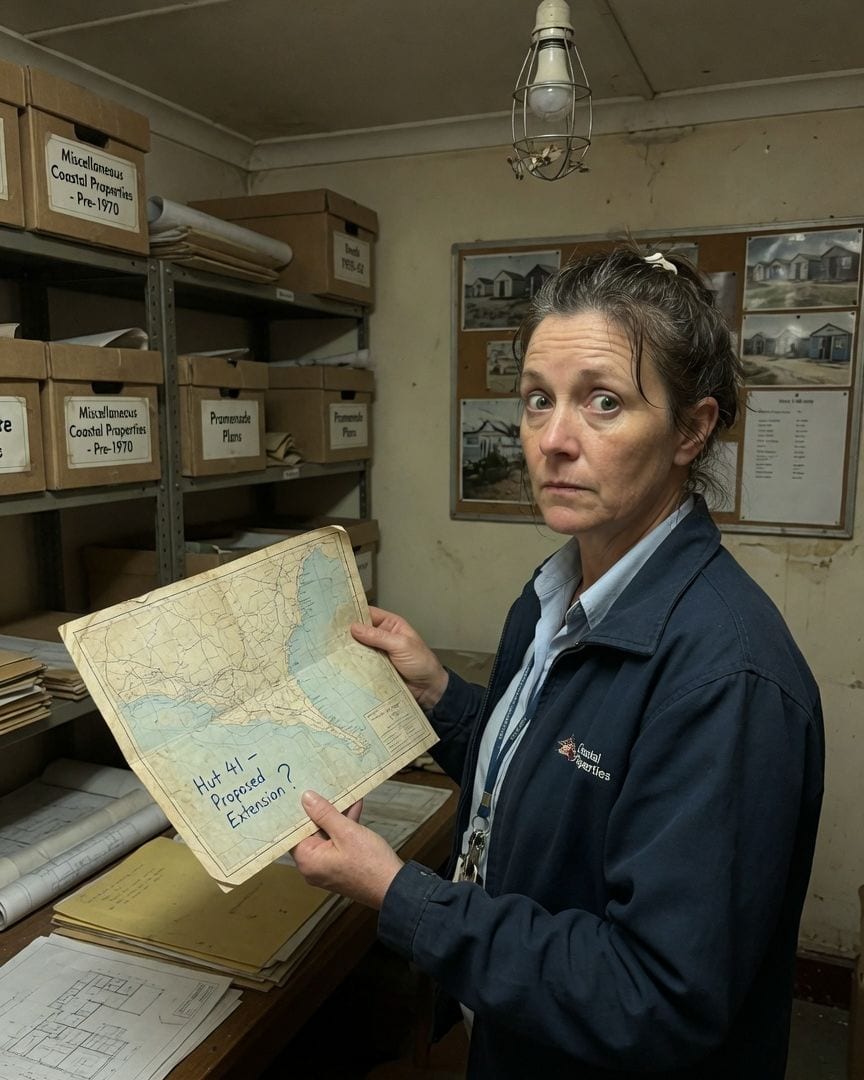
My beach huts now number forty-one. Hut 41 appeared past the promenade's end, locked with a padlock I don't own, washing stiff and dry on its line every morning since Monday.
My morning rounds along the promenade were always predictable: forty beach huts, each numbered and accounted for. But one morning, past the usual end of the concrete slipway, a new hut appeared. Hut 41 stood there, identical to the others, yet its padlock was a tarnished brass and a child's swimsuit hung bone-dry on a line.
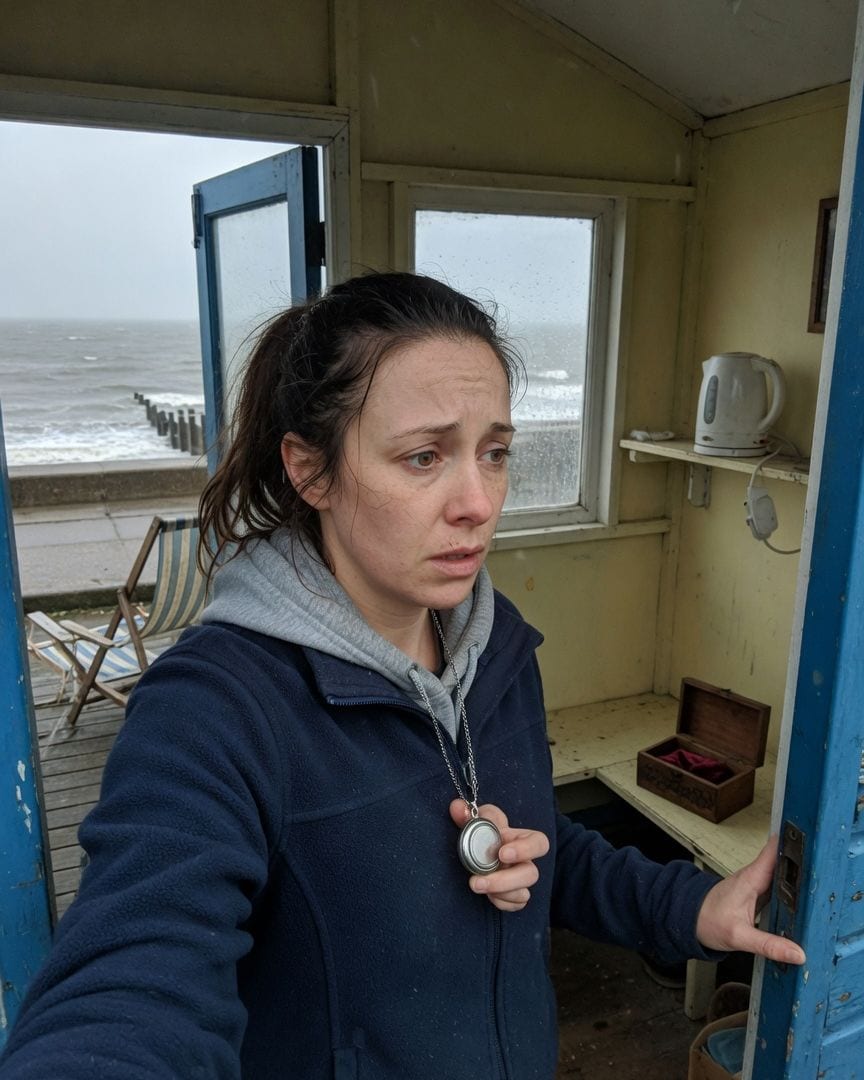
My beach huts run 1 to 60. On Sunday, past 60, was a Hut 61, weathered, with a kettle warm inside, and no record of it ever existing.
I've managed the sixty beach huts on the promenade for five years, knowing every detail. But one Sunday, a new one appeared: Hut 61. Inside, the air was warm and a kettle still steaming, as if someone had just stepped away, yet my booking book holds no record of it.
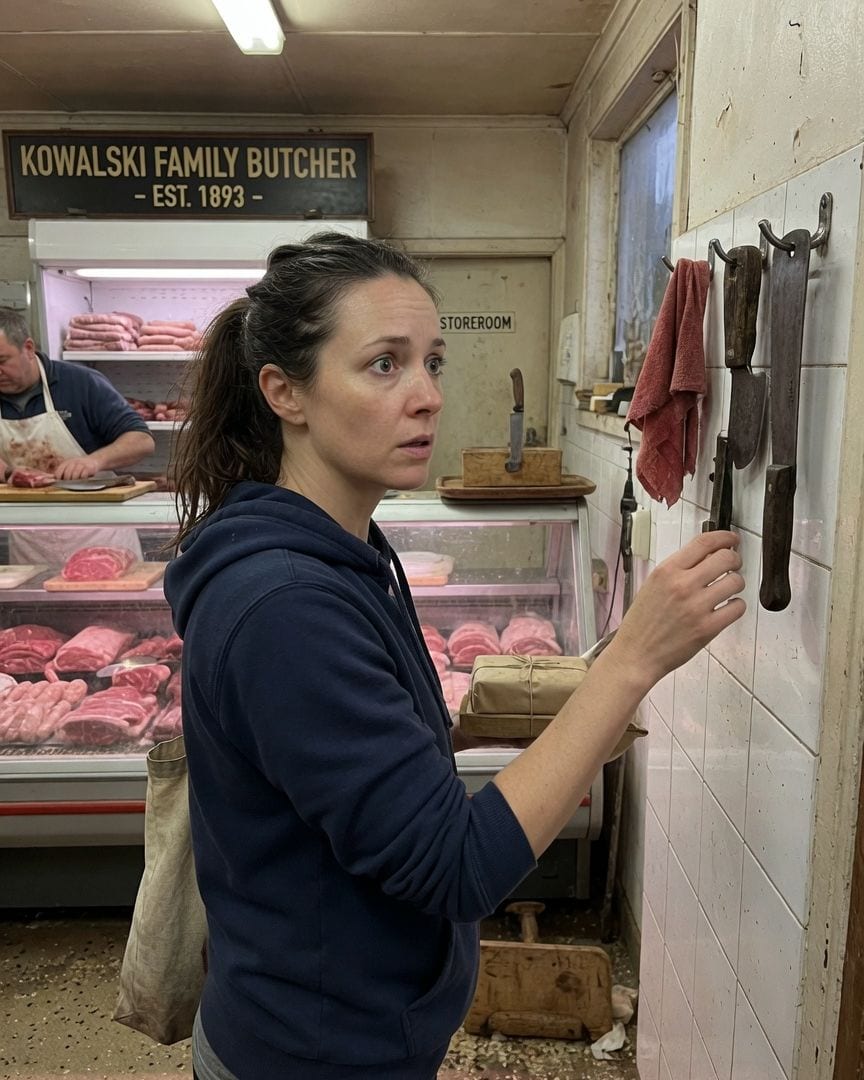
The butcher's back hook always hangs empty, draped with a red cloth. It holds a standing order since 1911 for the Hall, which burned down before the first war. The meat is gone every Friday, but no one's seen a cart.
Still new to Longnor, I stepped into Oscar Kowalski's butcher shop, needing a place to hang my bag. My hand brushed a simple hook, but Oscar's knife suddenly thudded, and he snapped, 'Not that one, dear.' He insisted the empty hook was 'reserved,' leaving me with a strange prickle of unease.
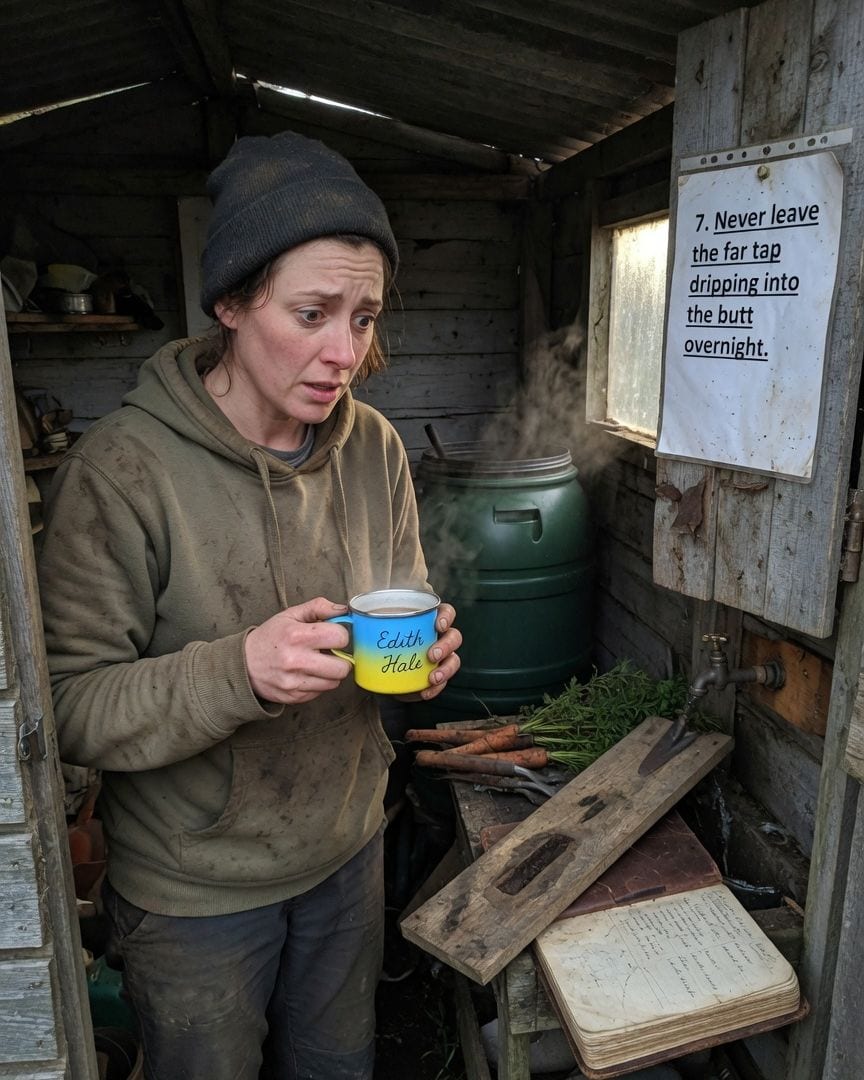
The one night I left the tap dripping, my allotment water butt was full to the brim and warm to the touch — with a child's unrusted tin cup floating on top.
Moving to Blackwood, I hoped my allotment would be a fresh start. But the shed's rulebook warned, 'Never leave the far tap dripping.' One morning, my water butt was full and steaming, an unnerving warmth rising from it. Inside, a child's tin cup floated, unrusted, etched with the name 'Edith Hale'.
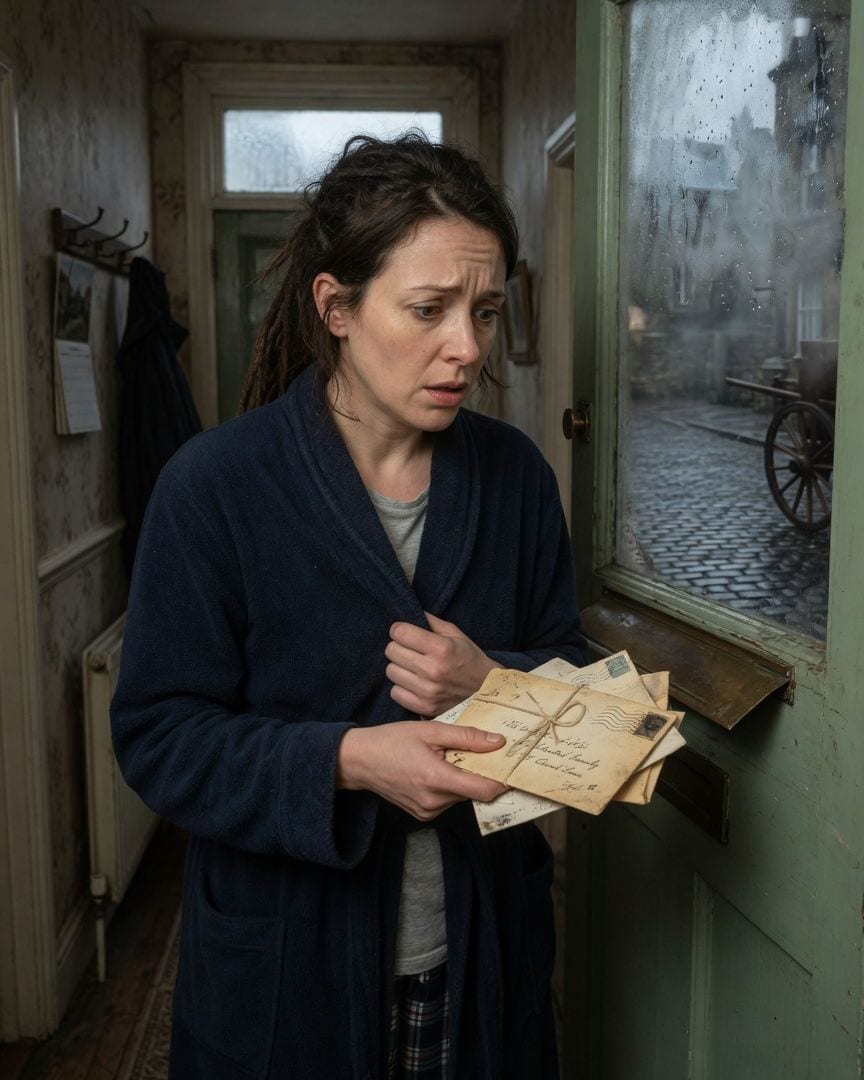
Seventy years ago, a hidden journal recorded my door opening to the wrong street and receiving Lockwood post.
I'd only recently moved into my inherited house, a quiet place on the edge of town. One grey morning, a distinct clatter from the front door's post flap caught my attention. Reaching down, I expected my gravel path, but instead, the flap showed a dark, cobbled street that wasn't mine. A bundle of warm, old letters, addressed to 'The Lockwood Family,' slid through, before the vision flickered and was gone.
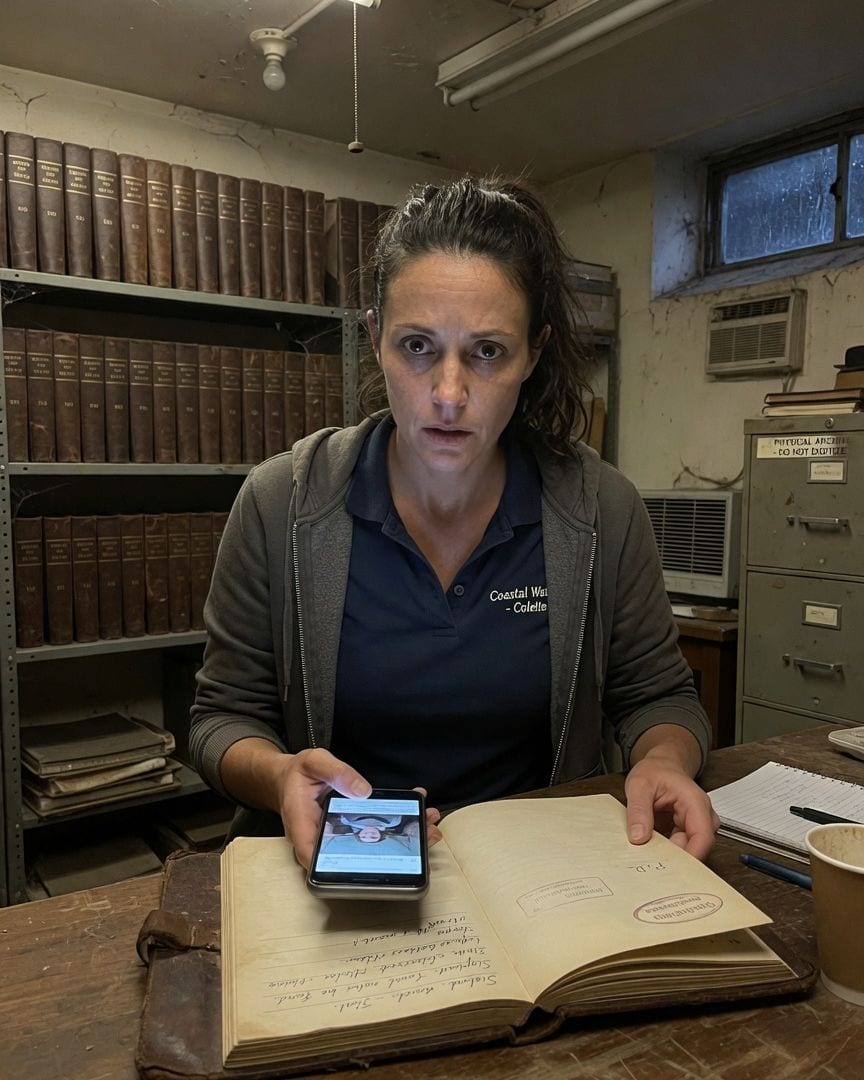
My coastguard log noted Sighting 9 again tonight, a light where no vessel showed. The old logs carry Sighting 9 off Skerry Point at 3:14am every tenth year since 1954, always 'nothing found,' always 'send no boat.'
On my watchtower night shift, the radar screen glowed green and the ocean was quiet. Then, a familiar light appeared off Skerry Point, exactly on cue, just as it had every tenth year for decades. But digging deeper, I found a hidden stamp in an old logbook: 'Operation Skerry. Status: Complete.' It left me with a chilling sense of finality.