My coastguard log noted Sighting 9 again tonight, a light where no vessel showed. The old logs carry Sighting 9 off Skerry Point at 3:14am every tenth year since 1954, always 'nothing found,' always 'send no boat.'
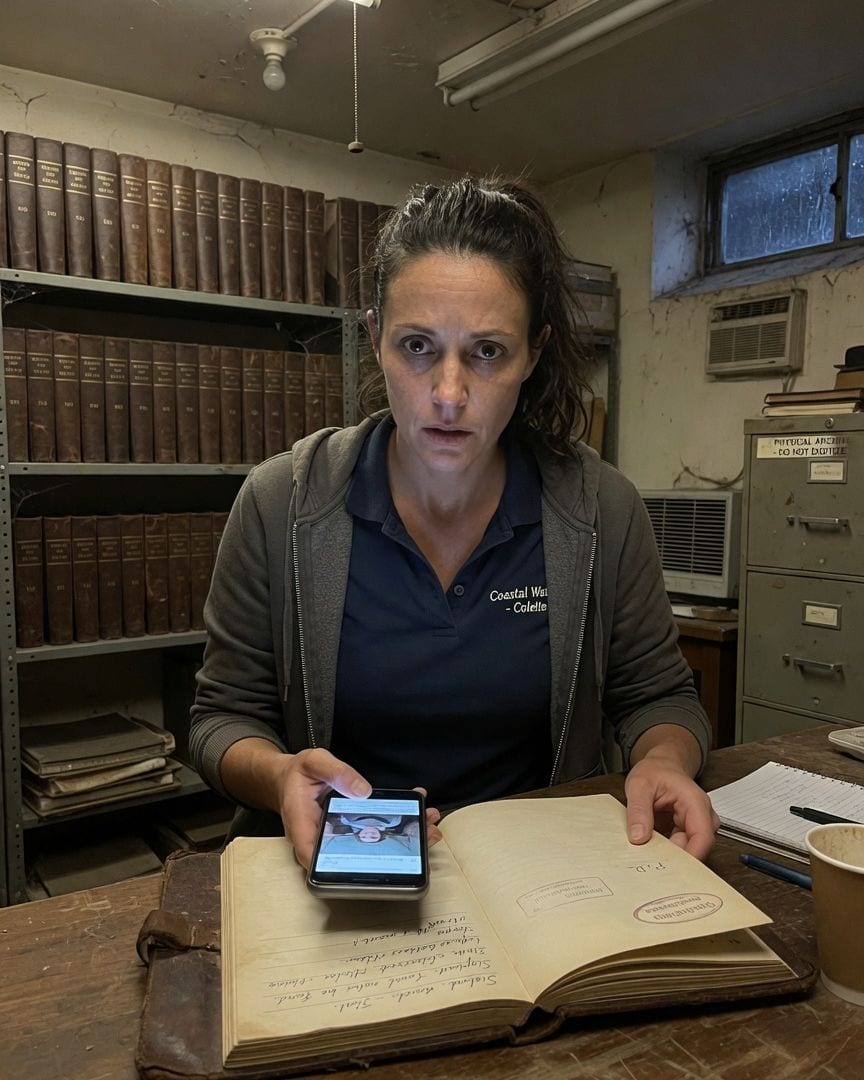
The radar screen glowed a dull green, clean as polished glass. Nothing out there but open ocean and a light drizzle misting the watchtower windows. It was 3:13 AM, June 17th, 2024.
I was on the night shift, same as Kenneth Crane, my senior officer. The silence of the station was thick, broken only by the hum of the equipment and the rhythmic splash of waves against the breakwater.
Then, the automated optical sensor chimed, a soft, polite alert. A light. Off Skerry Point. Right on cue. 3:14 AM.
I leaned forward, my mug of lukewarm coffee forgotten. Skerry Point. An empty stretch of coastline, just cliffs and rocks. "Sighting 9," I murmured, typing it into the digital log. Just like every tenth year.
It was a joke, almost, this impossible regularity. I'd only seen it logged twice in my tenure, 2004 and 2014, but I knew the pattern. Every single time, the coordinates were precise. The timestamp, down to the minute.
Kenneth didn't move from the window. He was staring out into the dark, rain-streaked sea, his silhouette heavy against the faint glow of the distant buoy. He’d been unusually quiet tonight. Maybe it was just the late hour.
I pulled up the digital archive, navigating past the daily reports and emergency calls. There they were, the Sighting 9 entries, stretching back. 2014. 2004. 1994. 1984. 1974. 1964. 1954. Every single one: "light observed, nothing found."
And underneath, a terse, identical directive, a bureaucratic whisper across decades: "log and report, send no boat."
It wasn't a glitch in the system. It was a record. A perfectly preserved, calmly documented impossibility. It should have been alarming, a red flag. But it was just… there. A constant, acknowledged anomaly.
The sheer, bureaucratic repetition of it, the quiet acceptance, pricked at me. It felt wrong, profoundly.
Kenneth finally turned from the window, his face unreadable in the dim light. "Close the log, Colette," he said, his voice flat. He didn't ask about the light, didn't ask if I saw anything, didn't offer a theory.
Just, "Close the log."
The Sighting 9 entry gnawed at me the next day, even in the bright, ordinary sunshine. I tried to rationalize it during my lunch break. A peculiar atmospheric refraction, maybe.
Or a rogue satellite flare that happened to drift in just the right way. A secret military exercise, perhaps, though 'send no boat' sounded more like an order to ignore than to protect.
But the decades of identical entries, always off Skerry Point, always at 3:14 AM, always with that chillingly placid 'send no boat' order, defied simple explanation. It wasn't random; it was precise.
The station's physical archive was a forgotten place, a musty room rarely visited since everything had been digitized years ago. I found it tucked away in a corner of the basement, beyond the hum of the HVAC.
The air was still and cool, smelling of old paper and dust. Rows of heavy, leather-bound volumes lined the shelves, silent monuments to forgotten watches. I ran my hand over the spines until I found the right sequence: the 1950s.
The 1954 logbook felt heavier than the others, its leather cover cracked with age. The gold lettering on the spine was almost completely worn away. I opened it carefully, the stiff pages groaning in protest.
The handwriting was spidery, precise loops and flourishes, a distinct contrast to the crisp digital font I was used to. The paper was yellowed, brittle at the edges.
I found the entry for June 17th, 1954, under the 0300-0400 watch. And there it was: "Sighting 9. Skerry Point. 0314hrs. Light observed, nothing found. Log and report, send no boat." Identical. Word for word. The same cold, unyielding language.
I closed the heavy book, the thud echoing in the quiet room. As I moved to reshelve it, something caught my eye on the adjacent page – the back of the 0314 entry. A faint, almost erased pencil mark.
It was small, barely perceptible, tucked into the margin: 'P.D.' It was next to a date that matched the Sighting 9 perfectly: June 17th, 1954. Below it, a barely legible, oval-shaped stamp. I squinted, leaning closer.
The ink was faded, a brownish-red, but it looked official.
I tried to rub it away, thinking it was an old coffee stain, a remnant from a long-ago watchman. But my finger met resistance. It was ink, set into the paper, faded but permanent. Not a stain.
I pulled out my phone, the screen a stark, modern light in the dusty gloom. I took a photo of the faded entry, then zoomed in, pixel by agonizing pixel. The stamp resolved, becoming clearer, colder: "Operation Skerry. Status: Complete."
Operation Skerry. The name hung in the air, foreign and sharp. I immediately scrolled through the digital files on my phone, searching for 'Operation Skerry,' but found nothing. Not a single hit. It was like it had been scrubbed clean.
The 'P.D.' kept swimming in my mind. Where had I heard that before? Then it clicked, a vague echo from a local historical society pamphlet I'd skimmed once, something about a family tragedy. Pamela Delaney.
A young woman who had vanished from one of the small coastal villages in the mid-fifties. A mystery never solved. The coincidence felt too sharp, too cold.
I looked at the logbook again, the calm, official language of 'nothing found' now curdling into something utterly sinister. My hand trembled slightly as I traced the 'Complete' stamp on the screen of my phone.
A chilling sense of finality settled over me.
The next few days off were a blur of restless research. The image of the faded stamp, the name Pamela Delaney, the unyielding precision of Sighting 9, had hooked into something deep.
I started at the local historical society, a small, quiet building that smelled of lavender potpourri and old paper. I found the pamphlet I remembered. "Unsolved Mysteries of the Seaboard." Pamela Delaney.
Vanished from her home near Skerry Point on June 17th, 1954. No trace, no witnesses. Officially, she'd simply... left. Or fallen victim to the sea. The date matched the 1954 Sighting 9 entry perfectly, down to the day.
The pamphlets about other disappearances were less precise on dates, but close enough to make my stomach clench.
I then moved on to the local newspaper archives, dusty bound volumes in the public library.
I meticulously cross-referenced every Sighting 9 year – 1964, 1974, 1984, 1994, 2004, 2014 – with reports of missing persons and 'unexplained disappearances' from the immediate coastal community.
The pattern emerged, stark and chillingly consistent: for every Sighting 9 year, a specific individual, usually a young adult or child under 30, was officially reported 'lost at sea' or 'vanished without a trace' within days, sometimes hours, of the June 17th 3:14 AM event.
Their names, sometimes matching initials or vague descriptions in older, less detailed reports, were tied to these specific dates. It implied the 'lights' were not just sightings, but orchestrated 'pick-ups' or 'deliveries.' The hair on my arms stood up.
Back at the Coastguard station, on my next shift, I kept digging, burrowing through the deeper layers of the digital archive that even I rarely accessed.
It was like searching for a specific grain of sand on a vast beach, but I had a growing unease driving me. And then I found it: a cryptic internal memo from 1964, filed under a vague heading, "Coastal Anomalies."
It was short, almost dismissive, but it referenced "Skerry Point Protocol - Asset Management." Asset Management. The words echoed hollowly in my head, cold and bureaucratic.
I tried to casually bring up "Operation Skerry" with Kenneth during a quiet moment. He was wiping down the console, a habit he had when he was thinking.
"Kenneth, I was looking through some of the older records," I started, trying to keep my voice light. "Came across a reference to something called 'Operation Skerry.' Ever heard of it?"
He paused, the damp cloth hovering over the console. His gaze, usually sharp, became distant, fixed somewhere beyond the windows, out at the invisible horizon. "Old files, Colette," he said, his voice softer than usual.
"Best to let sleeping logs lie." He didn't elaborate. He didn't deny. He just looked at me with an odd, knowing sadness, a warning in his eyes.
The room, for a moment, felt heavy, the very air thick with unspoken history.
After Kenneth’s warning, I grew more cautious, the hairs on the back of my neck prickling even in the empty hallways. I started noticing small things.
Kenneth watching me too closely across the watch floor, a pause in his step when I mentioned "old files" or "the 1964 anomaly." It wasn't hostility, but a kind of wary, almost mournful observation.
Like he was waiting for me to do something he already knew I would.
One evening, I stayed late, reviewing more archived documents in the station's back office. The building was old, and sounds carried. The wind outside whined around the eaves, and the floorboards creaked with shifts in the building's ancient frame.
I was lost in a series of obscure maintenance logs from the '70s, hoping for some hidden reference, when I heard it. Faint footsteps, just outside the closed door to the office. Light, deliberate, then stopping.
I froze. My heart hammered against my ribs, a frantic drum in the sudden silence. I held my breath, listening past the wind. Nothing. Just the whirring of my desktop computer.
I waited, my muscles tensed, for what felt like an eternity. Slowly, cautiously, I pushed my chair back and reached for the doorknob. It was cold under my hand. I pulled the door open, just a crack, then wider.
The hallway was empty. The lights were off, casting long, deep shadows. No one. I peered around the corner, towards the main watch floor, towards the stairwell. Nothing. Just the usual hum of distant machinery. Had it been the wind?
A settling beam? I told myself it must have been.
But later, as I was finally packing up to leave, I saw it. A sticky note. On my monitor, right in the center of the screen, glaringly yellow against the dark desktop.
A simple, block-lettered message, stark and unblinking: "PROTOCOL IS THERE FOR A REASON."
My blood ran cold. I lived alone. I was the last one in the station. I’d walked through every room, locked the main doors myself. No one else was supposed to be here.
The message wasn't a threat, not overtly, but it was a warning. A quiet, terrifying assertion of control. It wasn't a question or a plea; it was a statement. Someone knew I was digging.
And they were watching me, silently, calmly. The chill that seeped down my spine wasn't just fear; it was a profound, suffocating dread that I was already too deep.
I found Kenneth in the breakroom, staring into a mug of black coffee, the steam coiling around his face.
My hands were shaking, clutching the printout of the 'Skerry Point Protocol - Asset Management' memo and the crude, handwritten list of coincidental disappearances I’d compiled.
The sticky note was still in my pocket, the block letters burning against my thigh.
"Kenneth," I said, my voice tight, "We need to talk. Now."
He looked up, his eyes already weary, like he’d been expecting me. He set his mug down with a soft click. His usual gruff demeanor, the solid, unshakable Coastguard officer, seemed to crumble around the edges.
He sighed, running a hand over his face, pushing back graying hair.
"It's not a glitch, Colette," he said, his voice low, gravelly. "It's a job. Always has been."
He leaned back, the plastic chair creaking under his weight. "Skerry Point," he began, "it's a transfer zone. Not for ships, not for cargo. But for... something else. Something that comes from the deep. Something old.
Older than this station, older than any map." His eyes, normally guarded, held a profound, ancient sorrow.
"The lights," I prompted, my voice barely a whisper.
"The lights are a beacon," he confirmed, his gaze drifting to the window, to the dark expanse of the ocean. "A signal. And our job, the Coastguard's job, isn't to stop it. It's to manage it. To log the 'sightings.'
To ensure 'no boat is sent' to interfere. That's the protocol. It’s what we do."
He stood up, walking to the counter and refilling his coffee, his back to me. "Operation Skerry," he continued, "that's the designation for the 'asset acquisition' related to these transfers. And 'nothing found'..."
He turned, his eyes meeting mine, raw and shadowed. "... 'nothing found' means the transfer was successful. It means the transaction was completed."
He didn't elaborate on "assets." He didn't need to. The implication of the missing persons, the children and young adults from my list, hung heavy in the stale air of the breakroom. It was an unspoken, horrifying understanding.
"Some things are bigger than us, Colette," he said, his voice almost a plea. "And some records are better left buried." He looked genuinely afraid, not for himself, but for me, for what I was uncovering.
"They've always had someone on the inside," he added, his voice dropping further, "to ensure the protocol is maintained. To keep things quiet. To make sure the logs say what they need to say."
He walked over to a locked, heavy-gauge steel cabinet that I’d always assumed held classified navigation charts. He pulled out a large, ornate brass key from his uniform pocket, older than any Coastguard issue.
The lock clicked, a sound like a bone snapping. He retrieved a heavy, leather-bound volume, larger and more elaborate than the standard watch logs. It was dark green, almost black, with no title on the spine.
"The Special Register," he called it. "Skerry Point Transfers."
It was not an ordinary logbook. The paper was thick, almost parchment, with precise, copperplate handwriting. Each page listed a Sighting 9 date, a 'Transfer ID,' and then a 'Subject Name.'
The very first entry, pristine and chilling, read: "1954 - TP-001 - Pamela Delaney."
My heart hammered against my ribs, a frantic, trapped bird. Pamela Delaney. The first name on my list. The first clue I’d found. I reached out, my fingers trembling, and flipped through the pages. Each one a decade apart.
Each one a Sighting 9. Each one with a name. Names I recognized from my frantic searches, names from faded newspaper clippings, names officially 'lost at sea' or 'vanished without a trace.' Thomas Rutherford, 1964. Eleanor Vance, 1974.
Daniel Peterson, 1984.
Then, on the page for 1964, not ten years after Pamela Delaney, my eyes locked onto a name that made my breath catch, made the world tilt on its axis.
Printed with the same meticulous, chilling formality: "TP-002 - Deborah Rutherford."
My grandmother. Deborah Rutherford. The woman who had vanished when my mother was just a child, officially lost to a rogue wave during a sudden, violent storm. A cold, alien certainty settled over me, chilling me to the bone.
Not just for Pamela Delaney, not just for the others. For my own family. The institution hadn't just filed the wrongness. They had been managing it, taking people, for generations. My grandmother was part of the ledger.
One of the 'managed assets.' The full, horrifying scale of it hit me then, leaving me utterly breathless.
Kenneth, seeing the blood drain from my face, the utter shock in my eyes, finally explained the full, grim truth. He spoke in a low, even tone, like reciting an ancient catechism.
"The transfers," he said, his voice raw, "they're part of a pact. Centuries old. Between the coastal communities and whatever resides in the deep trench off Skerry Point."
He insisted it wasn't a sacrifice, not in the way I was imagining, but an exchange. A grim, terrifying balance. "They take one," he whispered, his voice hoarse, "and they leave us alone. The rest of us.
It's always been that way." He explained that a select few in the Coastguard, families tied to the coast, had managed this for generations. It was a duty, passed down.
The 'lights,' he clarified, were not from a vessel at all. They were a biological beacon. A lure. And the 'assets,' the people. They were individuals deemed 'expendable' by some ancient, unwritten rule.
Often those without immediate family, or those who simply 'wandered too close' to the designated zone, particularly around the dates of the transfer. Deborah, my grandmother, had been one of those.
A widow, her children grown, her house empty, walking by the cliffs in the storm.
"My own uncle, Theodore Fairfax," Kenneth said, nodding towards a framed, faded photo on a nearby shelf – a stern-faced man in an old Coastguard uniform. "He was the one who initiated me into the 'protocol.'
He saw his own father go into the log."
He pulled out a faded, creased maritime chart from the Special Register cabinet. It was old, hand-drawn, not an official Coastguard map. A specific grid was marked around Skerry Point, labeled "Transfer Zone."
And in the center of that grid, a small, almost invisible symbol: a trident.
"It's not evil, Colette," Kenneth said, his eyes filled with a weary, almost monumental resignation. "It just is."
Every single clue I’d uncovered clicked into place with horrifying precision. The 'Sighting 9' wasn’t a generic number, but the codified reference for the protocol itself, a reissued file for a recurring type of event.
The 'send no boat' directive wasn't about protecting people, but about protecting the operation. The disappearances were the 'payments,' the assets acquired.
And the Coastguard, the institution I had served, wasn't a defender of the coast, but the ancient, cold manager of this horrific pact. A steward of human exchange.
I couldn’t accept it. I simply couldn’t. My grandmother. Deborah Rutherford. My blood. I refused to be part of this 'protocol,' to let it continue. I had to expose it.
I had to copy the Special Register, every single page, every name.
I lunged for the cabinet, my mind racing, calculating the fastest way to get to the station’s high-speed copier. Kenneth moved, blocking my path, not with violence, but with a desperate, pleading urgency. "Don't, Colette!" His voice was hoarse.
"You can't fight this. It's too old, too deep. They'll know." He didn’t elaborate on who 'they' were, but the word hung in the air, heavy and menacing.
He stood firm between me and the copier, his face etched with sorrow, his eyes betraying a profound, bone-deep fear. "You'll only become another entry," he whispered, his voice barely audible. "Another 'TP' number in the log.
Is that what you want? To become just another asset?"
I stared at him, at the despair in his eyes, the weight of generations of complicity in his posture.
I knew then that I couldn't fight him, couldn't fight an institution so deeply ingrained, so utterly resigned to its horrifying duty.
I had the proof on my phone – the photos of the old log entries, the internal memos, the first few pages of the Special Register I'd managed to snap before Kenneth had fully revealed it.
That would have to be enough.
I made a break for the main door, bypassing Kenneth, my heart pounding a frantic rhythm against my ribs.
He didn't physically restrain me, but his eyes followed me, a silent, knowing despair in them that chilled me more than any physical threat.
As I ran out of the station, out into the cold, pre-dawn air, I felt the crushing weight of generations of complicity.
The chilling realization that this quiet horror had always been here, woven into the very fabric of the coast, managed by ordinary people who chose to look away, or worse, to participate. I knew I couldn't stay.
I had the proof, but I also knew, with a certainty that was heavier than fear, that no one would ever believe me.
I left the Coastguard station that night and never returned. I drove inland, far from the salt tang of the sea, abandoning my career, my home, my entire life. I tried to expose the truth, contacting journalists and authorities.
But my evidence – grainy photos of old logs, vague internal memos about 'asset management,' the first few pages of a 'Special Register' of 'transfers' – was dismissed. They called it the ramblings of a stressed, paranoid ex-officer.
A conspiracy theory fueled by overwork and a vivid imagination.
Kenneth Crane remained at his post, quietly managing the logs, ensuring the 'protocol' continued undisturbed. The Coastguard continued its operations, serene and unbothered, its institutional memory stretching back further than anyone could imagine, beyond the reach of public scrutiny.
Now, years later, I live a quiet life in a landlocked town, far from the sound of waves. The nearest body of water is a small, placid lake, its surface undisturbed by anything but the wind.
I keep the digital photos of the logs, the memos, and the chilling 'Special Register' on an encrypted drive, a constant, heavy reminder of what I found.
Every ten years, around June 17th, I check the news from my old coastal town online, half-expecting, half-dreading to see a report of an 'unexplained disappearance.'
I know the cycle continues, managed by new, quiet hands, ensuring the pact is kept. The sea keeps its secrets, and the institution keeps its records.
The silence of the landlocked night is a cold comfort, but the records are still there, waiting for the next ten years.
If this one got to you
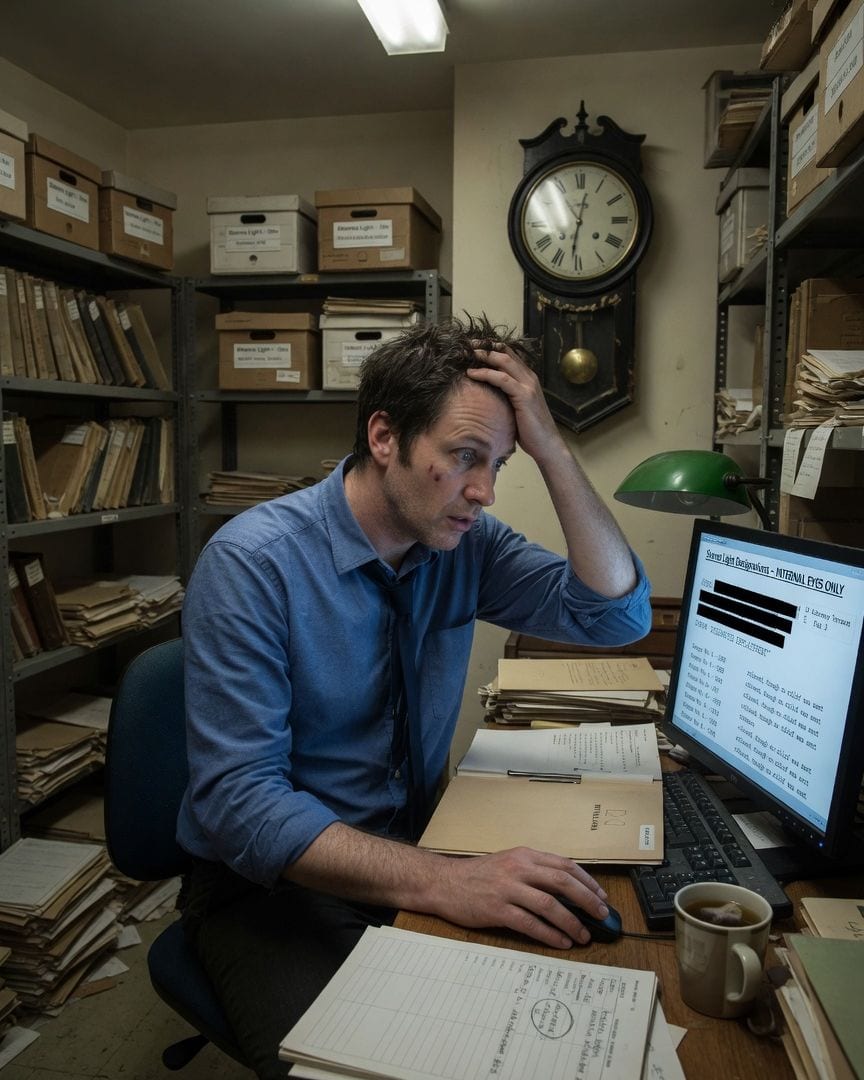
I found my street address in a century-old lighthouse file, printed decades before I lived there.
As a maritime archivist, my world revolves around forgotten lives and dusty ledgers. But the Skerne Light files broke that quiet rhythm, revealing a chilling pattern: 'Keeper number 6' relieved, though no relief was sent, repeating for decades. Now, an internal document with a strange code has led me to a redacted entry, revealing my own street address, decades before I ever lived there.
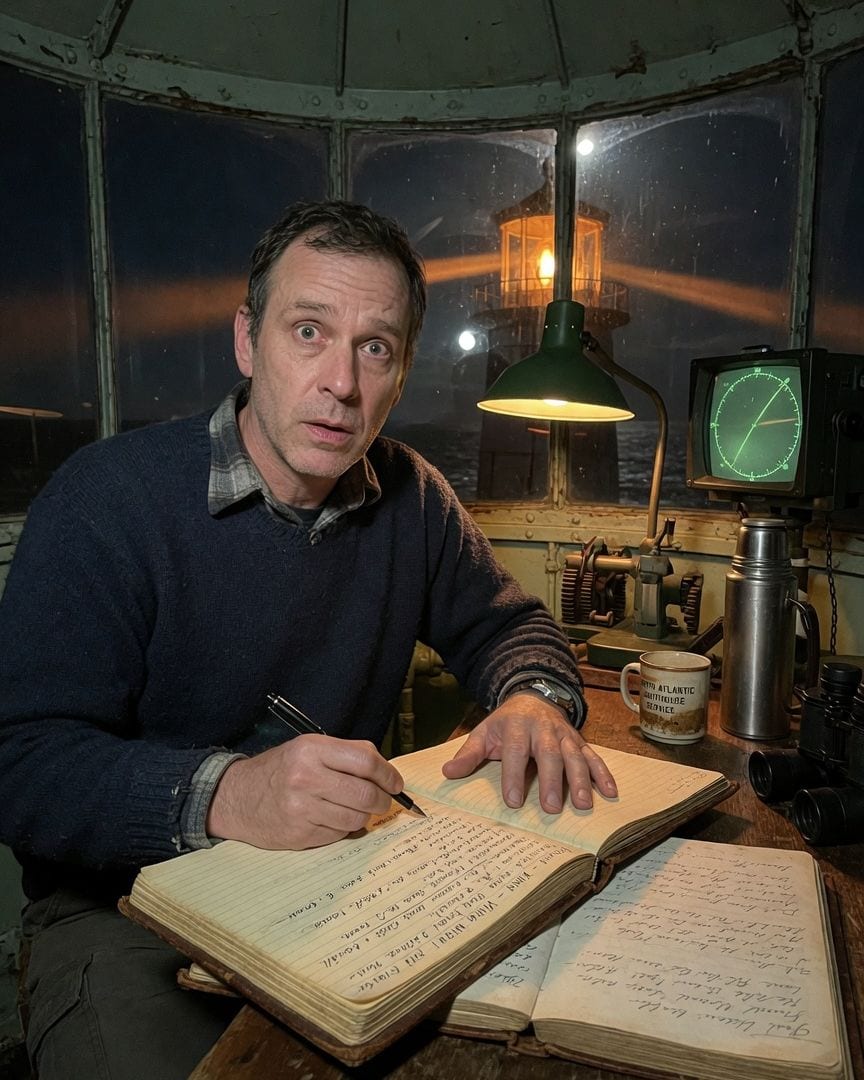
My lighthouse log has my own 3 AM entry for a phantom ship. I was alone in the tower, and I wrote no such thing.
Perched in the lantern room for my usual 2-6 AM watch, I reached for the thick logbook. But the 3:00 AM entry, under my own name, detailed a vessel I never saw. The words were in my own ink, yet I had never written them.
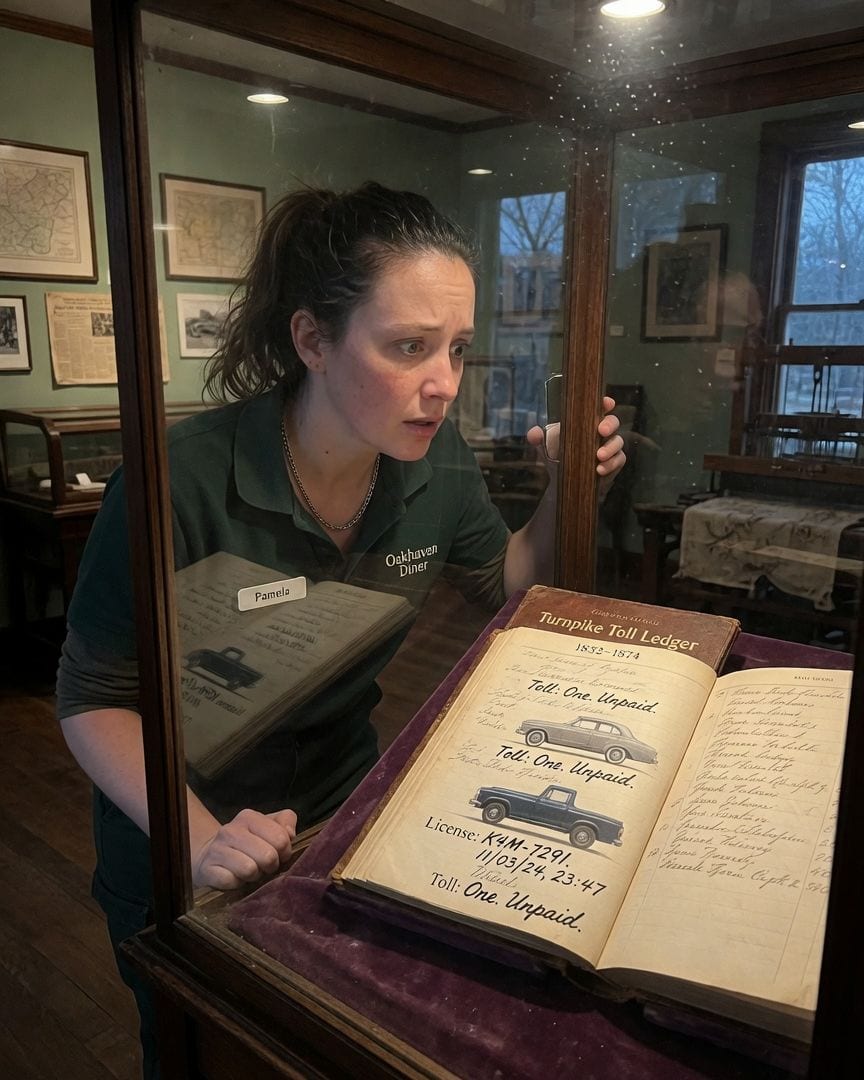
My car stalled at the old turnpike milestone, after dark. The toll ledger, closed in 1874, then listed my car, my stall time, and a toll of one, unpaid.
I had just moved to Oakhaven when my old sedan died on a dark, winding road by an infamous turnpike milestone. The next day, I found my car's exact registration and stall time written in fresh ink in a 150-year-old, locked museum ledger, marked 'Toll: One. Unpaid.' The curator dismissed it as a prank, but her white knuckles and strained voice hinted at something far more unsettling.
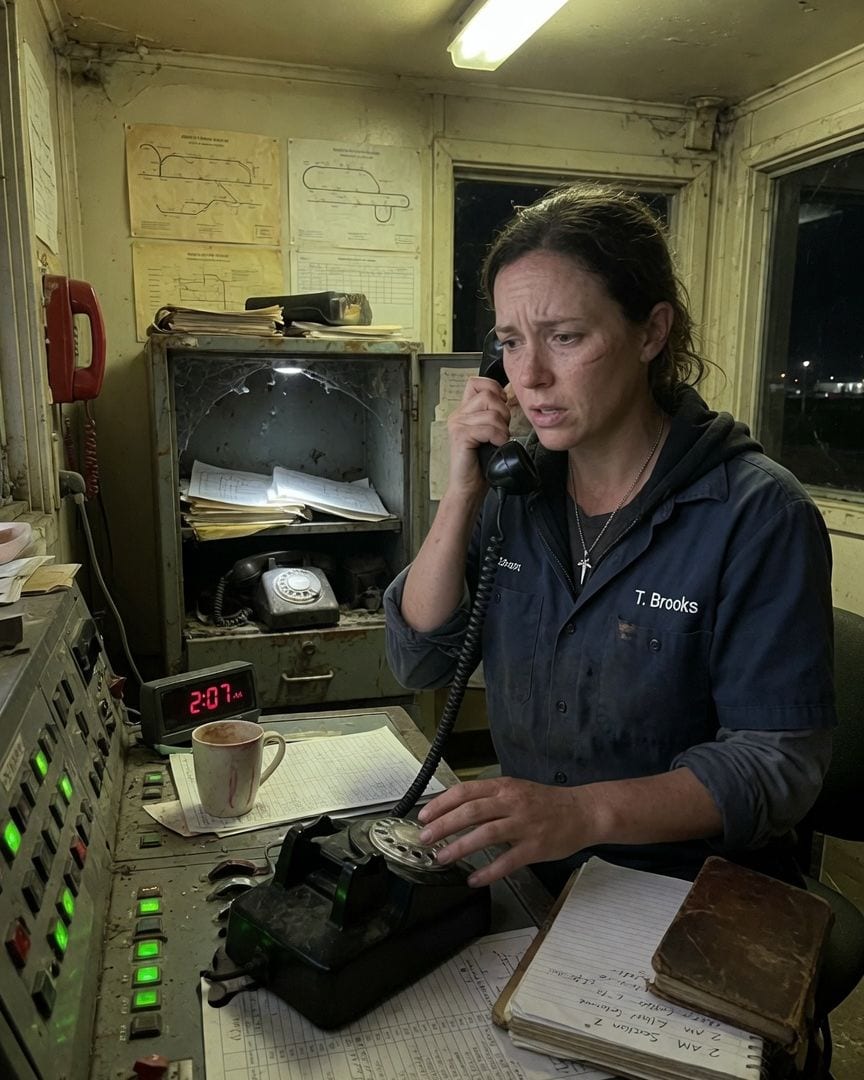
My signal box gets a 2 AM call every night from a man whose section was demolished eleven years ago. Now I found his logbook with today's date.
My night shift at the signal box is quiet and precise, defined by the routine 2 AM call from Ellis confirming Section 7 is clear. But when I asked my duty manager to log it, he said Section 7 hasn't had a track walker in eleven years, not since its cabin and phone were demolished.
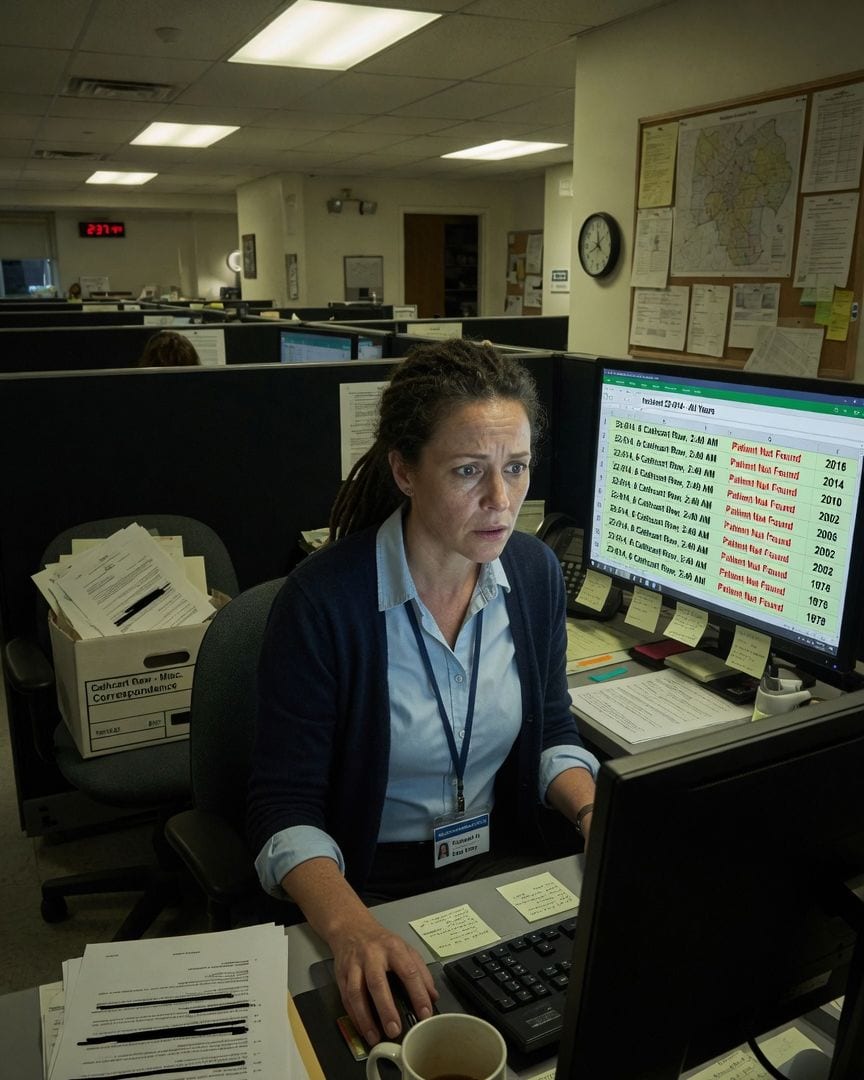
My computer log shows the same 2:40 AM call to Cathcart Row, every four years since 1978, always closed 'patient not found'.
Working data entry for the County Ambulance Trust, I found a routine incident logged as 'Patient Not Found.' But digging deeper, I discovered the exact same phantom call had repeated every four years for over forty years, always at the same address, always at 2:40 AM. Then I found a heavily redacted memo linking it to my own street.
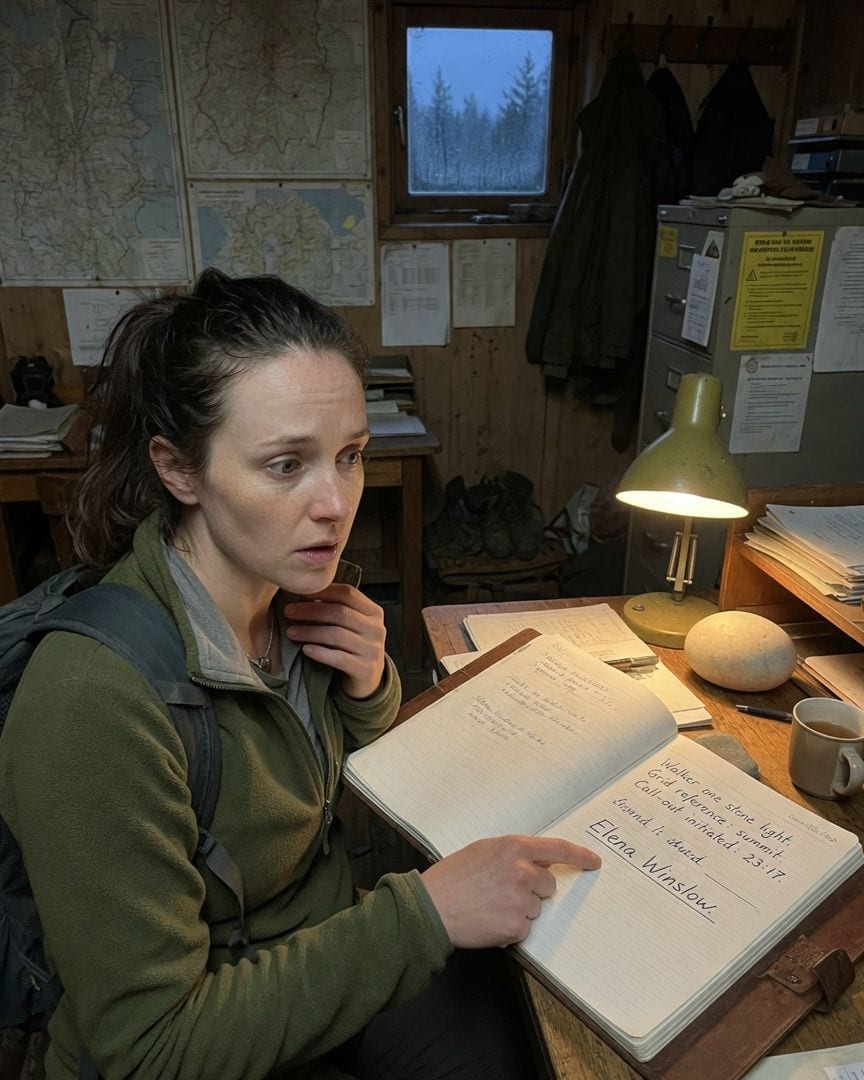
My pocketed mountain stone meant a rescue logbook recorded a call-out that night for me — a shout that never went out.
After an exhilarating climb on Cadair, I took a small, smooth white stone from the summit cairn, despite a warden's warning. Back at the station, a logbook entry shocked me: my name, dated last night, for a rescue call with an impossible detail: 'Walker one stone light'.