My pocketed mountain stone meant a rescue logbook recorded a call-out that night for me — a shout that never went out.
The crisp mountain air on Cadair was exhilarating. The climb had been challenging, but the reward was the sprawling view of the valley, a patchwork of greens and greys under a sky stretched thin and blue.
Reaching the summit cairn, a mound of stones marking the peak, I remembered the warden’s casual instruction: "Add a stone, never take one." A local tradition, he'd said, something about respecting the mountain.
But a small, perfectly smooth white stone, worn by wind and rain, caught my eye. It lay apart from the others, almost calling to me.
It felt cool and comforting in my palm, a tiny piece of the mountain, a harmless keepsake. I pocketed it.
The descent was uneventful, but a prickle of unease, a tiny, irrational guilt, persisted, a whisper at the back of my mind that I’d broken some unspoken rule.
Back at the warden’s station, the unease gnawed at me. It was silly, I knew, but I decided to return it.
Walter Ashford, the warden, was busy with paperwork, his head bowed over a thick, leather-bound logbook open on his desk. The room smelled faintly of old paper and damp wool.
As I approached, placing the stone discreetly back onto a shelf near the door, my eye drifted to the open page of the log. My breath hitched.
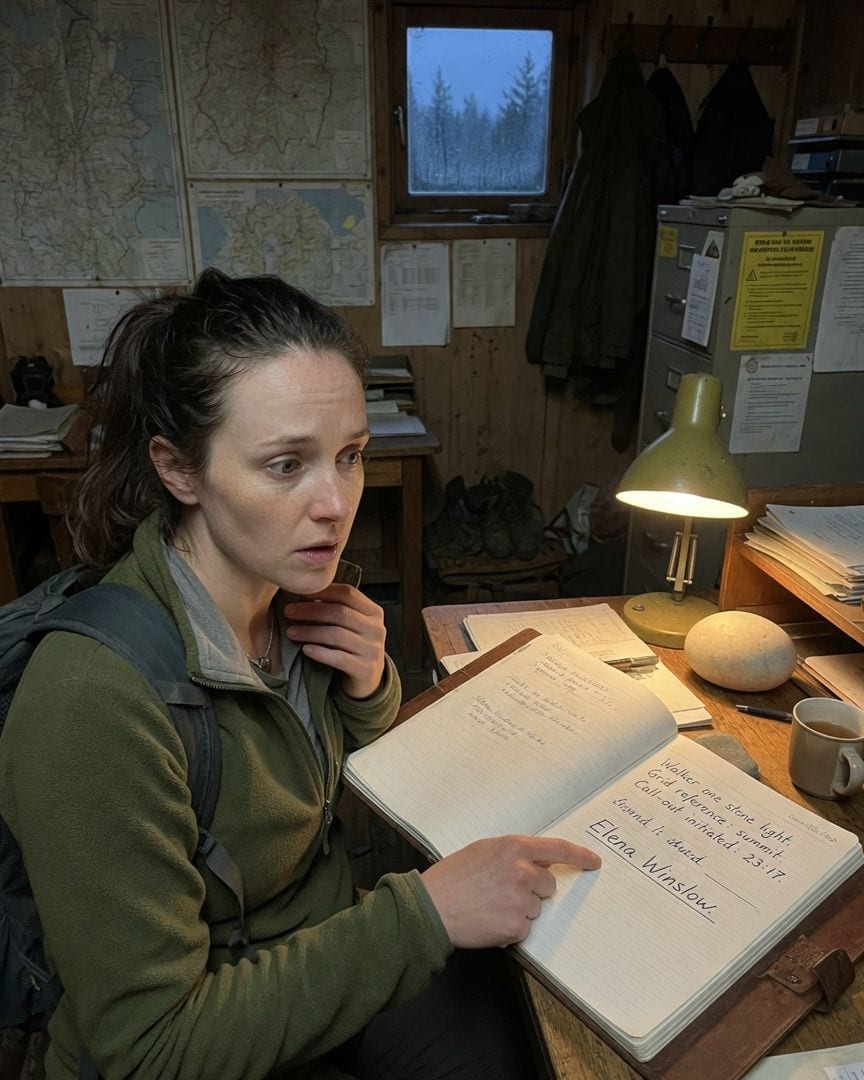
There, in neat, official script, dated just last night, was an entry that seemed to jump from the page: 'Walker one stone light. Grid reference: summit. Call-out initiated: 23:17.'
And beside it, scrawled in the same hand, my name: 'Elena Winslow.' A call-out that never happened, for a walker who was me, describing an impossible detail: 'one stone light.'
My heart started to beat a slow, heavy rhythm against my ribs.
The ink on the page felt too real, too precise. My name. The impossible time. The utterly baffling detail of being 'one stone light.' It had to be a mistake. A clerical error, a joke from Walter, perhaps?
But his face, when he looked up, was devoid of humor. 'Walter,' I asked, my voice tighter than I intended, 'this logbook… are these all rescue calls? Every incident on the mountain?'
He met my gaze, his expression unreadable, then offered a practiced, almost too-smooth smile that didn’t quite reach his eyes. 'Yes, Elena. Every single one. Why do you ask?'
I pointed a trembling finger at the offending entry. 'This one. It says… me. But I was fine. I got back before dark. And 'one stone light'? What even is that?'
His smile didn't waver, but his eyes, sharp and dark, flickered to the spot where I’d just returned the stone. A subtle shift, barely perceptible. 'Ah, an old tradition, that,' he said, his voice taking on a casual, dismissive tone.
'Some folk get superstitious about the cairn. Think it’s bad luck to take a piece of it. It’s a mountain, Elena. Things get exaggerated. Local colour, you know?'
He waved a dismissive hand, as if swatting away a fly, but his gaze lingered on the logbook, then back at me. I pressed, a cold knot forming in my stomach. 'But a call-out? At 11:17 PM?
Was a team actually dispatched? Did people go looking for me?' He shuffled some papers on his desk, avoiding my eyes, his movements a little too deliberate. The office suddenly felt colder. 'Sometimes, a false alarm.
Happens all the time, particularly in this valley. Hikers get back late, maybe a sensor trips… Nothing to worry about, Elena. We just log everything, just in case.'
His reassurances felt hollow, like rehearsed lines, like he was reciting from a script he'd used many times before. The dread wasn’t in what he said, but what he carefully didn't say.
The entry was too specific, too odd to be a simple error. It wasn't just a record of events; it was a record of something else entirely. Something unsettling.
The 'false alarm' explanation gnawed at me. It felt too glib, too neat. Later that week, I found an excuse to return to the warden's station, feigning interest in hiking maps for a more ambitious trail.
Walter, predictably, launched into a detailed explanation of routes and elevations. When he stepped away for a moment to answer a buzzing radio in the back room, I quickly, almost instinctively, flipped through the logbook on his desk.
My heart hammered against my ribs. I wasn't looking for my name again; I was looking for other 'errors.' And I found them. More entries, some decades apart, but chillingly similar: 'Walker one stone light, grid reference summit.'
The dates were always specific, precise. And the names… my fingers trembled as I turned a page, eyes scanning the dated entries. I stopped on a page dated forty years prior.
Beneath my fingers, in the same duty officer's hand, was another entry: 'Walker one stone light, grid reference summit.'
The name next to it, 'Brandon Pierce,' was one I vaguely remembered from a faded newspaper clipping about a missing person, never found.
The names from the logbook became an obsession. Monica Pierce, Brandon Pierce, Gary Yates. The dates, the chillingly specific 'one stone light' detail. I started asking around, subtly at first. 'Did you know a Monica Pierce?'
'Whatever happened to Gary Yates? Did he really just 'move away'?' The reaction was always the same: a slight stiffening, a brief, bland answer, then a quick change of subject.
'Oh, they moved away,' or 'He went off to the city, never looked back.' It was 'The Town That Agrees,' a quiet, unspoken pact of silence that hummed beneath every interaction.
No one met my gaze for too long when these names came up. Their eyes would slide away, their smiles would tighten.
I decided the local archives might hold some answers, a place where official records couldn't lie, where history was meant to be preserved, not buried.
Catherine Yates, the town archivist, was a meticulous woman, her grey hair pulled back in a severe bun, her sharp eyes magnified behind wire-rimmed glasses.
She was initially helpful, guiding me to dusty shelves filled with old local newspapers and brittle council minutes. I found the missing persons reports for Monica Pierce and Gary Yates.
They weren't 'moved away' stories; they were unsolved disappearances, police searches, desperate appeals, even sketches of faces that would forever remain unidentifiable. The dates on the newspaper clippings matched the logbook entries precisely, down to the day.
The coherence of it all sent a fresh wave of dread through me. When I cautiously mentioned the 'one stone light' detail from the rescue log, trying to sound casual, Catherine’s hands, which had been delicately sorting through microfiche, froze.
The air in the quiet archive seemed to still. Her eyes, usually so keen, narrowed, and her mouth thinned to a tight line. 'That's… an old story, Elena. Just folklore. Silly mountain superstitions.'
Her voice was strained, too quick to dismiss, too forced in its casualness.
The thread was pulling taut, and I could feel the resistance of the entire town, not just Catherine, pressing in on me from the silent stacks of old records.
My research at the archives became a daily ritual, and with it came a growing sense of being watched. It wasn’t just my imagination.
One afternoon, Dean Fletcher, an elderly man I’d seen often in the village, a quiet figure who usually kept to himself, appeared in the archive's reading room.
He spent an hour ostensibly looking through old parish records, his gnarled finger tracing lines on yellowed pages, but every so often, I’d catch his eyes on me.
They were calm and unblinking, disconcertingly so, before he would return to his page. He never spoke, never approached, never offered a greeting. It was unnerving, like being observed by a perfectly still predator.
The quiet rustle of old paper in the room seemed to amplify the silence between us.
Later that evening, returning to my small cottage on the edge of the village, the unsettling feeling of being watched clung to me like the damp evening air. As I fumbled with my keys, I found something on my doorstep.
My blood ran cold. A small, smooth white stone. Identical in every way to the one I had taken from the cairn, and the one I had returned to the warden’s station.
It lay there, stark against the dark wood, a silent, unmistakable message. My breath hitched. Someone knew. Someone was watching my every move, every question, every page I turned.
The stone wasn't a random object; it was a reminder, a warning, and a confirmation that my digging had not gone unnoticed. It felt like a deliberate re-insertion of the wrongness I had tried to dismiss.
The air around my cottage felt heavier, colder, as if the mountain itself had come down to my door to deliver its judgment.
The stone on my doorstep solidified my resolve. Fear was still a bitter taste in my mouth, but it was mixed now with a fierce anger. I returned to the archives the next morning, bypassing the usual pleasantries with Catherine.
Her face was already set, as if she'd been expecting me. I walked straight to her desk and placed the smooth white stone in the center of her blotter. It made a soft, resonant thud.
'This was on my doorstep last night,' I said, my voice low, steady despite the tremor in my hands. 'After I asked about Monica Pierce and Gary Yates. After I saw their names in the logbook, marked 'one stone light.'
What is this, Catherine? What is truly happening?'
She picked up the stone, turning it over in her fingers, her expression hardening, losing its careful archivist’s composure. 'You shouldn't have gone digging, Elena,' she said, her voice devoid of its usual pleasantness, flat and ancient.
'You were told to leave it alone.' The air in the archive, usually so dry and still, felt suddenly charged. 'The logbook…' she continued, her gaze fixed on the stone in her hand, 'it’s not what you think.
It's not for rescues. Not really.'
I leaned forward, my knuckles white as I gripped the edge of her desk. 'Then what is it? A record of false alarms for people who then disappear? A register of the lost?'
Catherine sighed, a long, weary sound that seemed to carry the weight of generations. She looked up, her eyes holding an ancient, profound sadness. 'It's an accounting, Elena. A record of those who have broken the accord.'
'The accord?' The word felt heavy, unfamiliar, yet utterly chilling in its context.
'The mountain has rules, Elena. Ancient ones. Rules the folk here have lived by for centuries. You add to the cairn. You never take. To take… it marks you. For a debt. A balance.'
My mind raced, all the pieces of the impossible puzzle finally snapping into place with sickening precision. The warden’s evasiveness, the town’s unified silence, the faded missing persons reports, the stone on my doorstep – it all clicked.
The logbook wasn’t for saving; it was for claiming.
'So, Monica Pierce and Gary Yates… Brandon Pierce… they weren't rescued. They were… claimed?' The word felt like ash in my mouth.
Catherine nodded slowly, her gaze distant, fixed on some far-off point beyond the archive walls. 'The mountain takes its due. And the logbook is how we keep the count. How we know it has been satisfied.'
The cold certainty of Catherine's words wrapped around me, a shroud of inescapable truth. 'But why?' I demanded, my voice raw. 'Why does the mountain demand a 'due'? And why has no one ever stopped it?
Why does this town just… allow it?' My gaze flickered to the rows of shelves, the records of centuries, wondering how much more was hidden.
Catherine rose, her movements stiff, like an old hinge groaning open. She walked to a section of the archive I hadn't noticed before, a narrow, unadorned wall of shelves hidden behind a large, dusty map of the valley.
She slid a panel aside, revealing a small, dark recess that smelled faintly of earth and dry leaves.
From within, she retrieved a book, older than anything I’d seen in the archives, its leather cover cracked and faded, bound with tarnished bronze clasps that looked as if they hadn't been opened in generations.
It seemed to pulse with a quiet, forgotten power.
She laid it gently on the table between us. It was a ledger, much larger than the rescue logbook, filled with names and dates, not in modern script, but in looping, elegant handwriting that stretched back centuries.
Each entry had a small, abstract symbol beside it, a symbol that, with a sickening lurch, I recognized as a stylized depiction of a single stone.
It was a perfect match to the stone on the table, to the one on my doorstep, to the one I’d taken from the cairn.
Catherine’s finger, steady and calm, traced a line down the page, past entries for 2004, 1984, 1964. She stopped on a specific date, very near in the current year, a date circled in faded red ink.
The line beneath it was blank. She looked up, her eyes holding a profound, ancient sadness, a quiet resignation.
'The cycle is almost complete,' she whispered, her gaze lifting to meet Elena’s, 'and your name, Elena, is the one the mountain is waiting to fill.'
Catherine’s words hung in the air, cold and definitive. She opened the ancient ledger fully, revealing its chilling purpose with a slow, deliberate turn of the brittle pages.
'This is the true record, Elena,' she explained, her voice quiet, almost a hum, as if reciting a sacred text. 'The mountain demands a life every twenty years. A balance.
To maintain its peace with the valley, its quiet slumber, so to speak. And the cairn… it’s the point of contact. The place where the agreement is reaffirmed.
Break the rule, take a stone, and you offer yourself to the cycle.'
She pointed to the names in the ledger, each one followed by a date – precisely twenty years apart, a methodical tally that stretched back beyond any living memory. 'Monica Pierce, Gary Yates… Brandon Pierce. They all took a stone.
Just like you. They were marked. The 'call-out' in Walter's logbook isn't a rescue attempt; it's the mountain acknowledging its claim, a bureaucratic confirmation that the terms have been met.'
Her gaze was steady, unblinking. 'The town… we’ve learned to live with it. For generations, we’ve maintained the 'accord.' We don’t interfere. We ensure the one who is marked… is available when the time comes.
It’s for the good of all of us. For the valley to survive.'
The coherence was horrifying. It wasn't just individual anomalies; it was a system.
Every evasive answer, every quiet glance, every unexplained disappearance, the warden's practiced smile, the stone on my doorstep – it all clicked into place with sickening precision, a vast, intricate clockwork of dread.
The town wasn't hiding a secret; they were upholding a pact, an ancient, terrible contract with the land itself.
And I, unknowingly, had volunteered to be the next link in a chain stretching back further than memory, a chain forged in silence and sustained by complicity.
The air in the archive, once just old, now felt heavy with unspoken truths, with the ghosts of those who had come before me.
The truth ignited a desperate, primal urge to flee. My mind screamed at the inevitability of it, but my body insisted on action. I bolted from the archives, Catherine's quiet words echoing in my ears, 'The mountain always collects.'
The urgency was a cold fire in my veins. I threw my belongings into my car, my hands trembling so violently I fumbled with the keys.
The engine roared to life, a welcome sound of defiance, and I slammed the gear into reverse, gravel spitting as I sped towards the main road, the only route out of the valley.
I thought of the open highway, of anonymity, of a world beyond this cursed valley.
But the main road was 'closed for essential maintenance,' a flimsy barrier and a single, unsmiling road worker blocking the way. He was leaning against his small pick-up, whistling, his gaze oddly serene.
'Detour, miss,' he said, pointing to a narrow, unpaved track winding deeper into the hills. There was no other choice. I took it, my heart pounding, convinced I could outrun them, outwit whatever subtle net they had cast.
But the track grew rougher, the gravel loose, my tires struggling for purchase, spinning uselessly at times. Then, with a sickening thud, a flat.
I pulled over, the car lurching to a halt, the engine dying with a final, defeated cough. Fumbling for the spare, cursing under my breath, I saw him.
Dean Fletcher, the silent watcher from the archives, standing by a fence, a few hundred yards back, watching me with that same placid, unreadable expression.
Further down the road, by the 'road closed' barrier, Walter Ashford was leaning against his warden's truck, casually chatting with the road worker, their voices a low murmur on the wind. They weren't blocking my way, not physically.
But their presence, their quiet observation, was a suffocating net, an absolute blockade of my escape. I tried my phone – no signal.
My gas gauge, which had been half-full when I started, was now on empty, the needle resting mockingly on 'E.' It wasn't a confrontation; it was a pervasive, inescapable agreement.
The town wasn't going to stop me with force; they were simply ensuring I couldn't leave. The mountain had already made its claim, and the town would see it honored.
I was trapped, not by walls, but by a silent, ancient understanding, a conspiracy of the earth and its people.
Eventually, I stopped trying. The futility was crushing, a weight on my chest heavier than any cairn. I returned to my cottage, the car abandoned, the flat tire a final, mocking gesture.
The specific date Catherine had pointed to in the ledger came and went. There was no dramatic event, no sudden appearance, no violent seizure.
Just a deepening quiet in the valley, a subtle shift in the air, as if the mountain had settled into a new, comfortable silence.
The townspeople continued their lives, their faces calm, their eyes avoiding mine with a familiar, practiced ease, a quiet affirmation of the accord. My initial terror slowly receded, replaced by a profound, unsettling understanding.
The dread wasn't in a monster, but in the inevitable, in the coherence of it all, in the knowledge that everything fit, perfectly.
I was still here, still breathing, still walking the valley, but a piece of me, a vital part of my will, had been claimed.
The mountain had taken its due, not with a roar, but with a whisper, and I had accepted it.
Weeks later, a new visitor, a young hiker passing through, saw me near the base of Cadair. I was walking slowly, deliberately, my gaze fixed on the towering peak, its summit hazy in the distance.
In my pocket, I carried a small, smooth white stone. It felt cool and comforting in my palm, a familiar weight.
My face, once etched with a frantic fear, was now calm, almost serene, an acceptance that had replaced every desperate urge to escape.
I looked up at the mountain, a quiet understanding settling deep within me, the same understanding I had seen in Catherine’s eyes, in Walter’s practiced smile, in Dean Fletcher’s unblinking stare. I was a part of it now.
The mountain always keeps its count.
If this one got to you
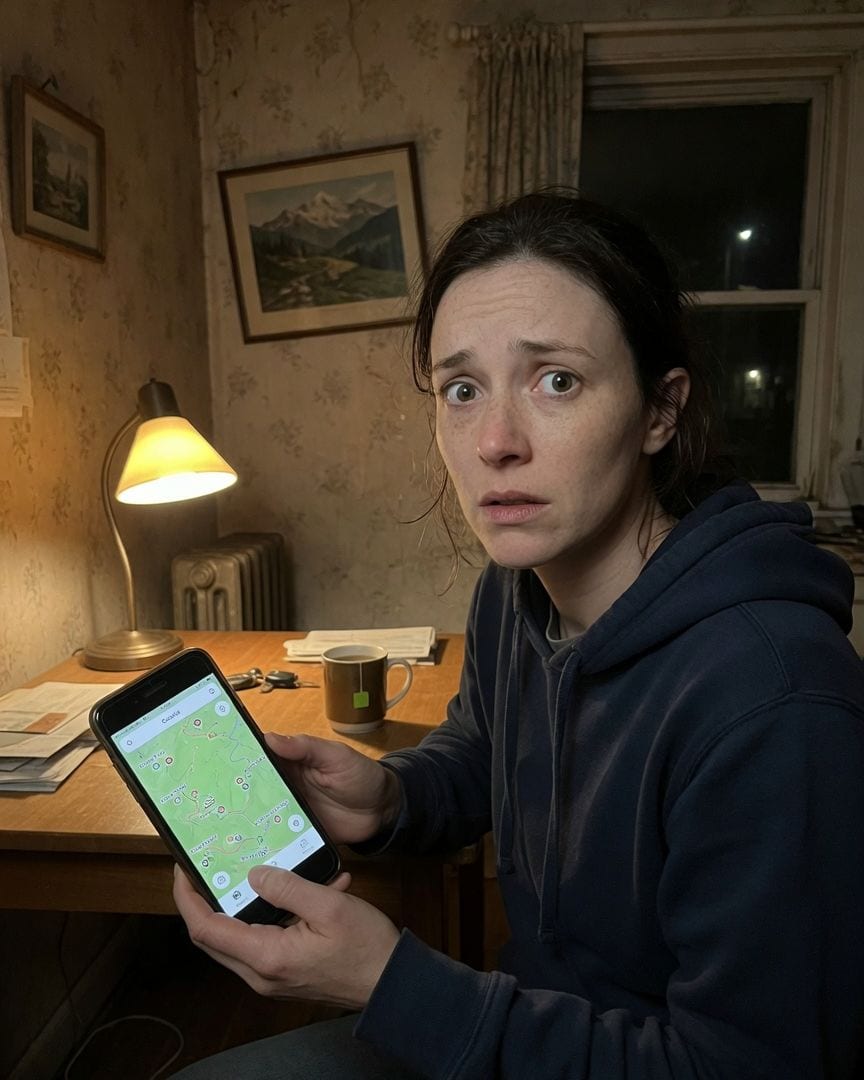
My hiking app scrubbed the hill's name from the map, on a phone that's been in airplane mode for two days.
I just moved to town and hiked a local hill, 'Cathan Tor,' according to my phone's app. But when I mentioned the name to the mechanic, he froze, dropped his wrench, and whispered, 'Don't say that name, Colette.'
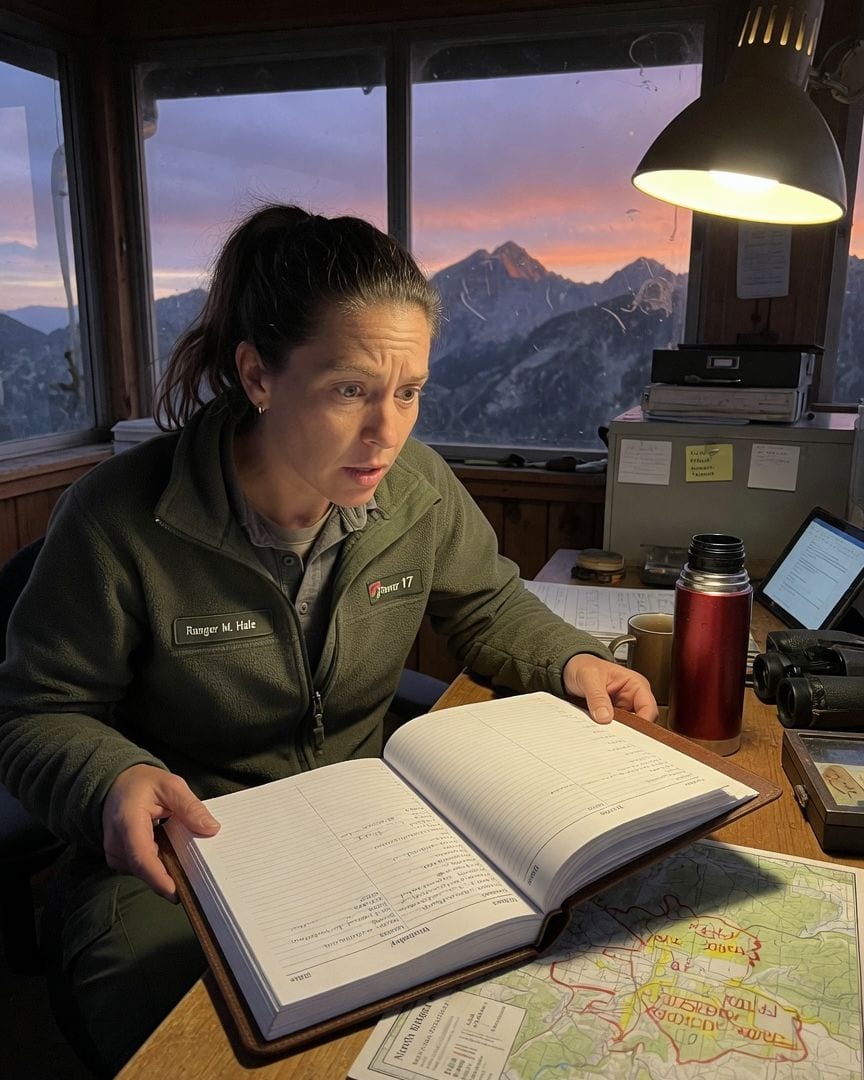
My fire lookout tower's summit register holds a blank space where the hiker's name should be. The trail he climbed has been closed since June.
As a ranger at Tower 17, I watched a hiker climb the North Ridge Trail, officially closed for months. Later, I opened the summit register where I'd just seen him sign, only to find the page unnervingly blank, as if no one had ever touched it.
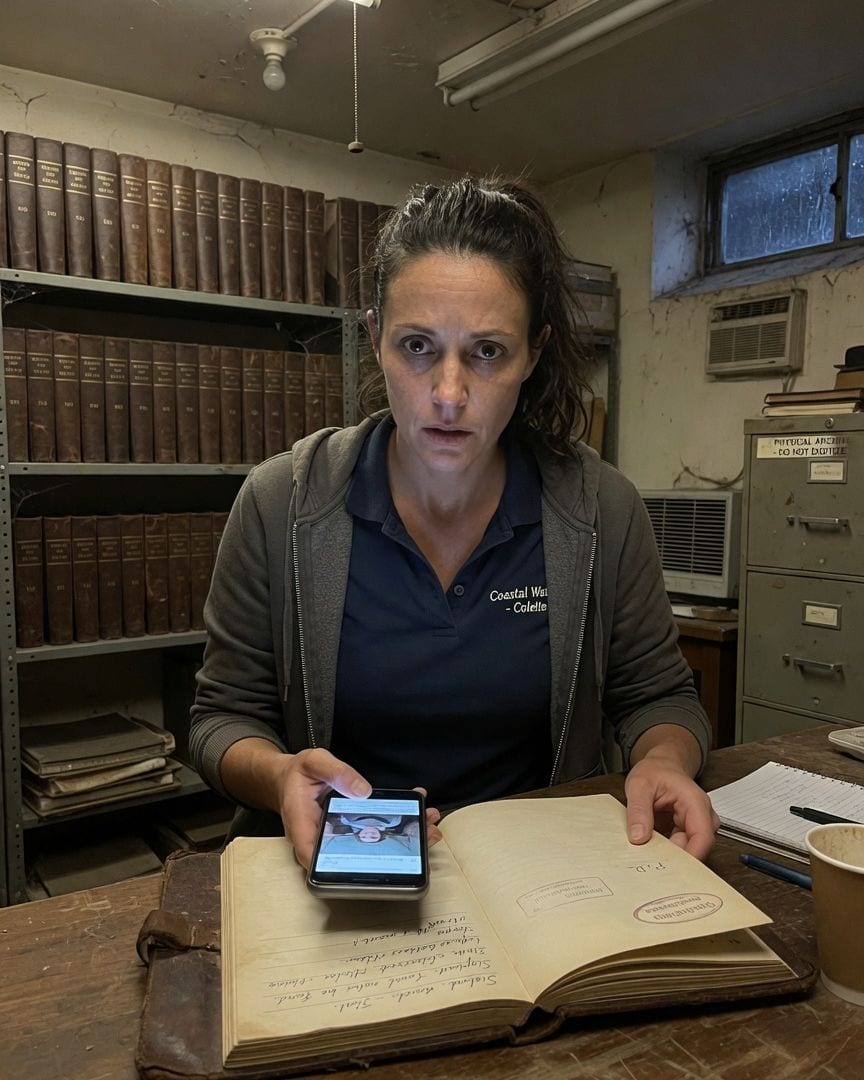
My coastguard log noted Sighting 9 again tonight, a light where no vessel showed. The old logs carry Sighting 9 off Skerry Point at 3:14am every tenth year since 1954, always 'nothing found,' always 'send no boat.'
On my watchtower night shift, the radar screen glowed green and the ocean was quiet. Then, a familiar light appeared off Skerry Point, exactly on cue, just as it had every tenth year for decades. But digging deeper, I found a hidden stamp in an old logbook: 'Operation Skerry. Status: Complete.' It left me with a chilling sense of finality.
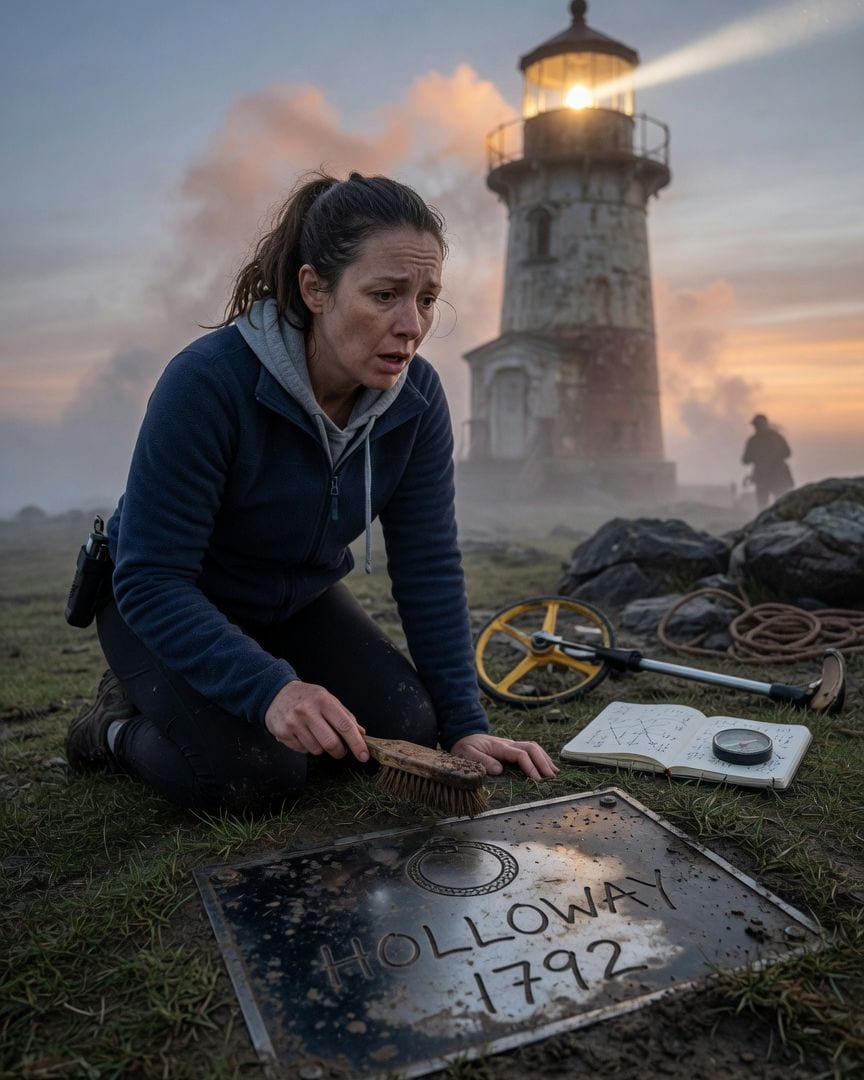
My coastal path just kept curving me back to the lighthouse. Nine miles walked, the same fisherman coiling rope, but I never left.
My morning ritual is a brisk walk along the coastal path. But last Tuesday, after what felt like an hour, I found myself back at the lighthouse, having walked miles to nowhere. My step-counter read 4.5 miles, yet the same fisherman was still coiling the same rope right where I started.
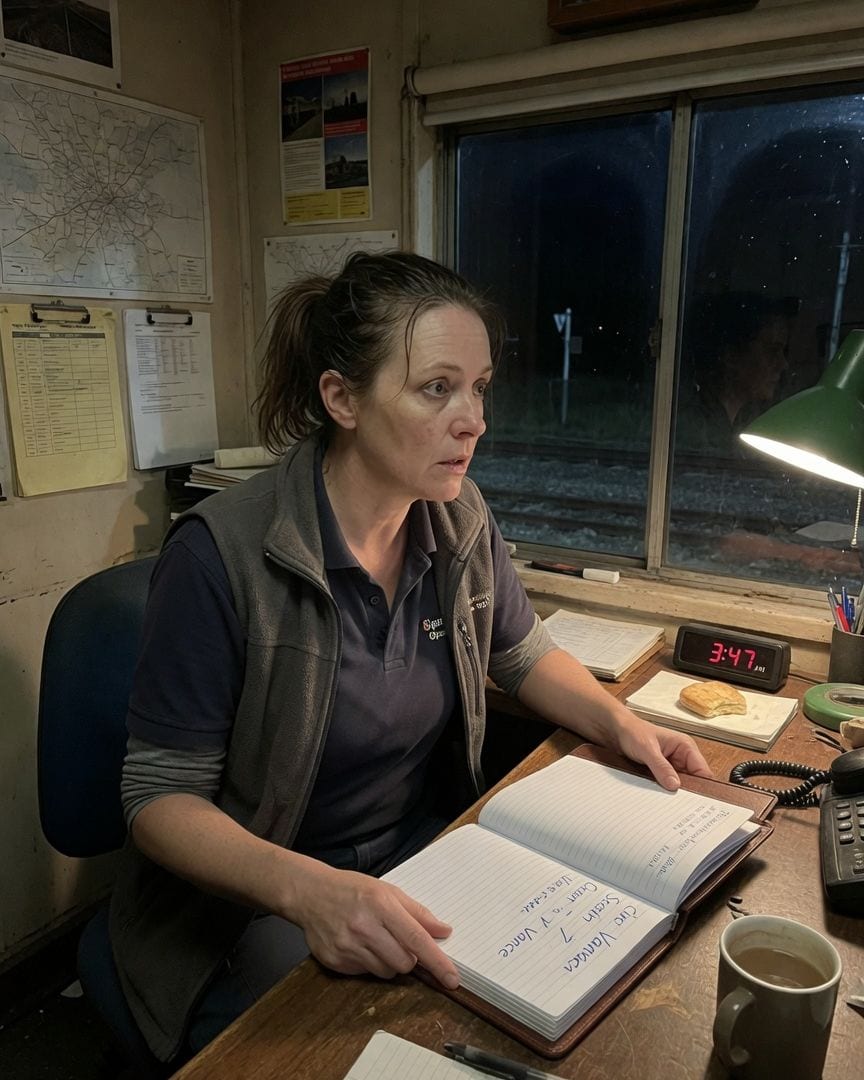
My linesman taps twice on my window at 3 AM. Control says he retired and passed years ago.
My routine at the rural signal cabin was regular: the linesman's double tap on the window at 3 AM. But then my supervisor called, revealing the linesman I knew, Warren Vance, had died five years ago. Now, an impossible entry in my official logbook, with his signature and timestamped from my shift, proves someone else was there.
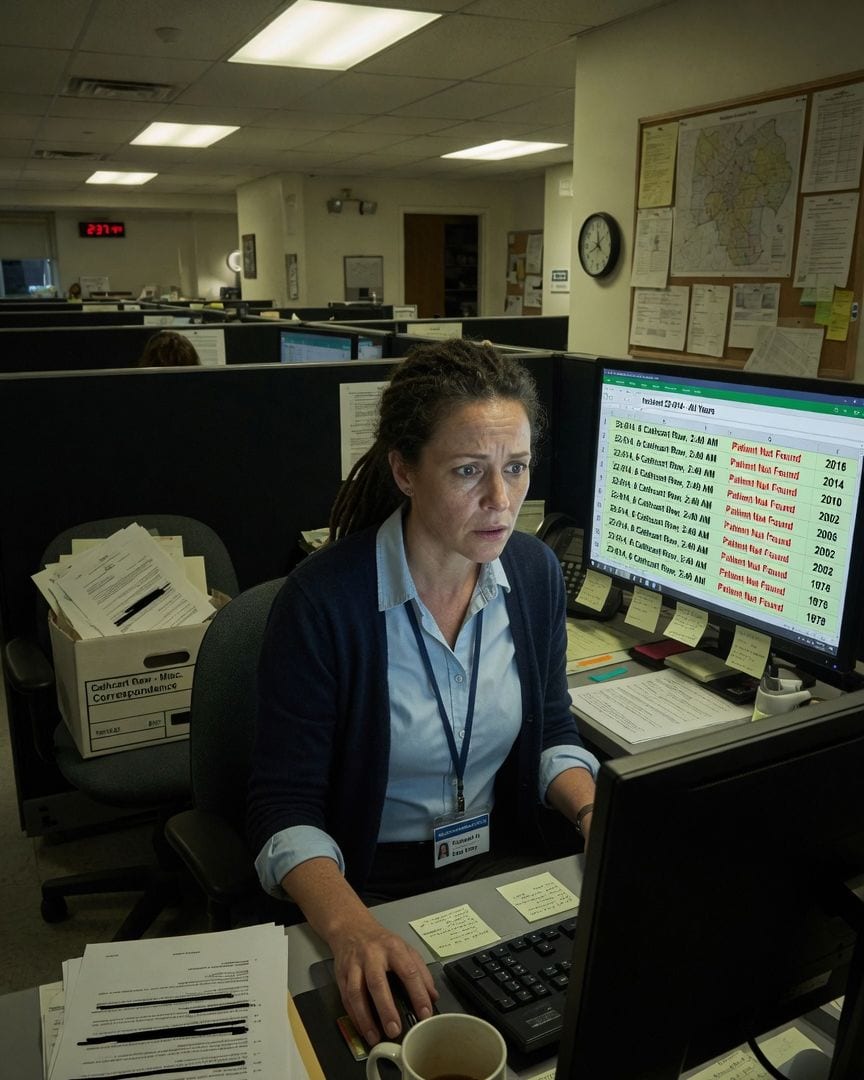
My computer log shows the same 2:40 AM call to Cathcart Row, every four years since 1978, always closed 'patient not found'.
Working data entry for the County Ambulance Trust, I found a routine incident logged as 'Patient Not Found.' But digging deeper, I discovered the exact same phantom call had repeated every four years for over forty years, always at the same address, always at 2:40 AM. Then I found a heavily redacted memo linking it to my own street.