My fire lookout tower's summit register holds a blank space where the hiker's name should be. The trail he climbed has been closed since June.
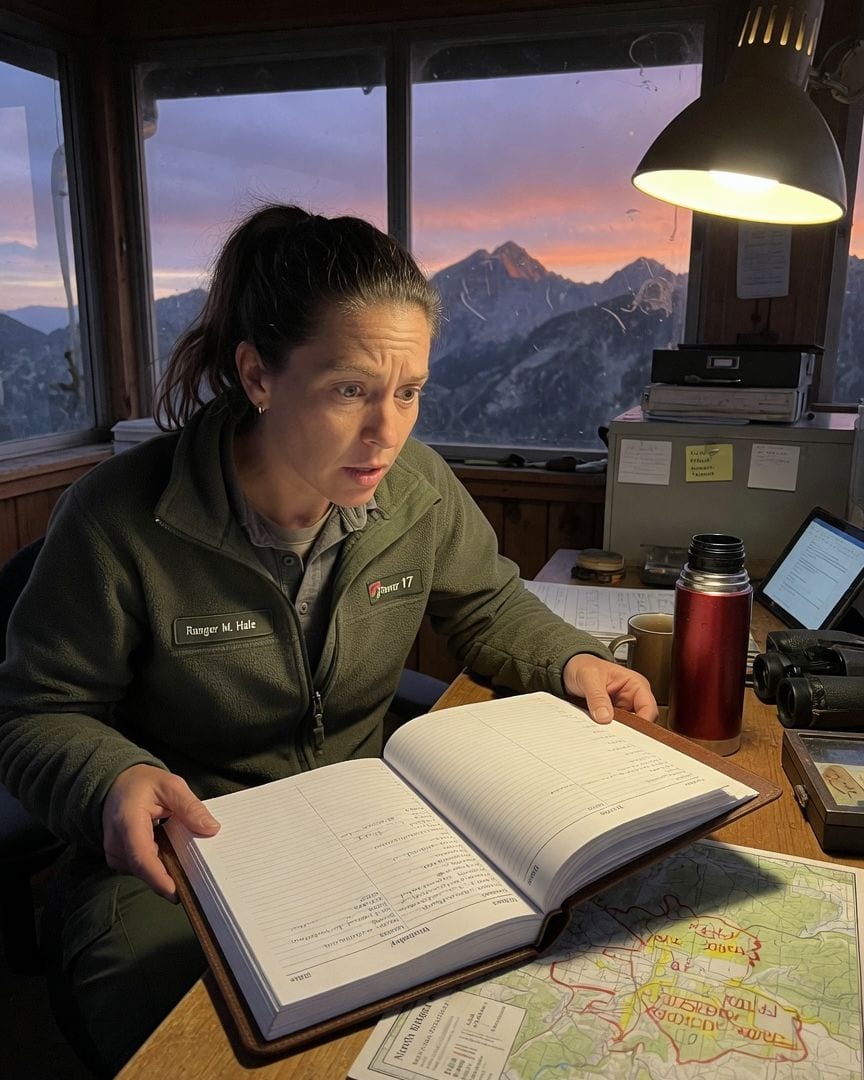
The last sliver of sun was bleeding out behind the western peaks, painting the sky in bruised purples and oranges.
I was halfway through my nightly weather check at Tower 17 when I saw him – a lone figure making his way up the final switchback of the North Ridge Trail.
He moved with a steady, unhurried gait, a heavy rucksack slung over one shoulder, a thick beard almost entirely obscuring his face. It was late for a hike, especially on that trail.
The North Ridge had been officially closed since June, a major rockslide taking out a significant section near the base. I still hadn't gotten used to seeing it empty.
He reached the cabin door just as the last light drained from the sky. I offered him a thermos of coffee, hot and strong, which he accepted with a grateful nod and a quiet "Thanks, ranger."
His eyes, when they caught mine, were a pale, almost unsettling blue, too bright in the deepening twilight. We chatted for a few minutes about the view, the sudden drop in temperature. He seemed… detached, polite but not quite present.
Before he left, I gestured to the thick, leather-bound summit register, kept in its small, glass-fronted case on the desk.
He took the pen, signed with a deliberate flourish, then turned and descended back into the rapidly falling dark, the sound of his boots quickly swallowed by the wind.
An hour later, the tower was quiet. I was settling into my routine, pulling out my own weekly visitor log. I opened the summit register to the current page, ready to transfer the hiker's name.
I looked at the line where he should have signed.
It was starkly, unnervingly blank.
Not smudged, not faded, just empty. As if the page had skipped a line, or the pen had simply failed.
And the North Ridge Trail he’d just come up, the one I’d watched him climb, the one I had just confirmed with Grace Mitchell last week was still impassable? It had been closed by a major rockslide since June.
I ran a hand over my face, the skin prickling with cold. I’d watched the man sign it. I’d seen the pen move, the careful, almost artistic script.
I even remembered his slight hesitation, as if he were deliberating over what name to put down. He'd pressed hard, a slight indentation left on the page, but no ink.
I leaned closer, scanning the page, then the previous page, then the one before that. He wasn't there. His name wasn’t anywhere on the current week's entries.
I flipped back to the beginning of the week, forcing myself to be methodical. The couple from Tuesday? I could picture their matching brightly colored raincoats, hear their jokes about getting lost.
Their names were there, solid and ink-dark, next to the date. The group of college students from Wednesday, loud and boisterous, asking about bear sightings? Present and accounted for. Their enthusiastic scrawls filled two lines. Nothing was wrong there.
I pulled my official district map from its hook, unfolding it on the desk. The North Ridge Trail, highlighted in red, was clearly marked: 'CLOSED – ROCKSLIDE HAZARD.'
I pulled up the digital trail reports on my tablet, just in case of a recent, unannounced update. Nothing. The closure was firm, ongoing, impassable for any casual hiker. No new reports, no changed status. Yet I had seen him.
I had spoken to him. The coffee mug on my desk, still faintly warm, smelled of the strong brew I’d shared with him.
I tried to dismiss it as a lapse in my own attention, a trick of the fading light and an overly tired mind, but the image of the man, the distinct sound of his boots crunching on the gravel, the warmth of the shared flask in my hand—they were too real, too immediate.
The ordinary explanation felt flimsy, cracking under the weight of my own memory, leaving a cold, hollow space in my chest.
I grabbed the register, holding it under the direct beam of my desk lamp, the light harsh and unforgiving. I started flipping backward, past the previous week, past the college students and the couple, checking every entry I could recall.
The couple from Tuesday? Still there. The college students? Present and accounted for. But as I reached the entries from three weeks ago, a new wave of cold dread, sharper and more immediate, washed over me.
A family I’d spoken with, a lone trail runner I’d offered water to, a group of birdwatchers who’d spent an hour at the overlook – all names I vividly remembered seeing, even making a mental note of their hometowns for my own records.
Now, those lines, too, were unnervingly blank. Just the dates, stark and precise. The ink was gone, not faded over time, but utterly absent, as if the page itself had never been touched, or wiped clean by an invisible hand.
The register wasn't just missing one name; it was selectively erasing history, right under my nose, from my own memory.
The next morning, the first thing I did was call Grace Mitchell, the District Chief.
I tried to keep my voice level, matter-of-fact, recounting the details about the hiker, the blank entry, and then, with more hesitation, the other erased entries I’d discovered in the register.
Grace listened patiently, her voice practical, already carrying the faint, tinny echo of a radio transmission in the background. She confirmed, again, the North Ridge Trail's closure, emphasizing its impassibility due to the rockslide.
"It's not just closed, Nathaniel," she’d said, "it's dangerous. No one should be on it." She checked the district's official visitor logs for the previous day, finding no record of anyone matching my description attempting to access the area.
"It’s a strange one, Nathaniel," she said, her tone softening slightly, "but sometimes people just… forget to sign, or sign illegibly. As for older entries, maybe the ink just faded over time? It happens with those old registers."
I knew that wasn’t it. The ink hadn't faded; it had vanished. I pressed her about older registers, any historical oddities, anything unusual about Tower 17. Grace sighed, a long, weary sound.
"Look, the only one who might have any insight into the real old stuff up there is Isaac Walsh. He was the ranger at Tower 17 for thirty years before he retired.
Lives down in the valley, still sharp, but… a bit odd, if you catch my drift. Says he ‘knows the mountain better than his own family.’ Maybe too well."
Nathaniel Thatcher, I thought, you're the one sounding 'a bit odd' right now. But the image of those blank pages, of a man who simply ceased to be recorded, still burned in my mind. Isaac Walsh.
The phrase 'knows the mountain' echoed, sounding less like a boast and more like a warning. I decided to drive down to the valley that afternoon, hoping Isaac could offer a more satisfying, albeit perhaps stranger, explanation than Grace's.
The drive down from the tower was long and winding, the narrow road coiling like a snake through the foothills. My mind replayed the blank pages, the hiker’s unsettlingly pale blue eyes.
I tried to focus on the road, the familiar landscape, but a prickle of unease had begun to spread through me.
I was halfway to the valley when I noticed it: an older, dark-colored sedan, a model I couldn’t quite place – perhaps an old Crown Victoria or something similar – always a few cars behind me. It was too consistent.
I changed lanes, slowed down, sped up slightly; the sedan maintained its distance, never getting closer, never falling too far behind. Its windshield seemed to glint with a strange, dark reflection, making it impossible to see the driver.
When I pulled into a small gas station in a sleepy, one-horse town to fill up, the sedan didn't follow.
It turned off, disappearing down a narrow side road that dead-ended into a cluster of old farmhouses, the kind you only ever saw in faded photographs.
I tried to shake it off, dismissing it as paranoia, a coincidence fueled by my growing unease. But the feeling of being watched lingered, a cold weight just behind my ribs.
Later that day, back at the tower after visiting Isaac, as I climbed the worn wooden steps to the cabin, I found it. A small, perfectly smooth, grey stone resting neatly on the topmost step.
It was unlike any stone I’d ever seen on this mountain, too uniform, too polished, with a faint, almost imperceptible sheen. It wasn’t there when I left. I picked it up, the stone surprisingly heavy, cool against my palm.
It felt like a message, a quiet acknowledgment of my digging, a silent warning that someone, or something, knew exactly what I was doing.
Isaac Walsh’s cabin was small, tucked away behind a stand of old pines, cluttered with maps yellowed by age and gear that looked like it hadn't been used in decades.
It smelled of woodsmoke and aged paper, comforting yet somehow claustrophobic. Isaac himself was a lean man, his face a roadmap of wrinkles, with eyes that seemed to see too much, too deeply.
He offered me a mug of strong, black coffee, the kind that scalded your tongue. I recounted my experience with the hiker, the blank register entry, the other erased entries. Isaac listened, nodding slowly, calmly, his gaze unblinking.
There was no surprise in his eyes, only a quiet, almost knowing sadness.
When I finished, Isaac just sipped his coffee, the silence in the small cabin stretching taut. "The tower has always had its… guests," Isaac said, his voice a dry, raspy whisper, completely unbothered by the implications. "They pass through.
Not like you and me. Not quite. Not entirely corporeal, you understand. The North Ridge Trail, that’s their path. Always has been. The rockslide, the closure… that’s for the living. Keeps them from stumbling into what they shouldn’t.
Keeps the two worlds from touching too directly." He reached for a worn, leather-bound book from a dusty shelf behind him. It wasn’t an official register, but an old, hand-written logbook, its pages brittle with age.
“This is what I kept,” Isaac explained, handing it to me. “My own record. The real one.”
I opened it. Inside, I saw dates, names, sometimes just vague descriptions like "the woman in blue" or "the man with the dog." And next to many of them, small, intricate symbols I couldn’t decipher – swirling patterns, interlocking lines.
Isaac pointed to an entry from three weeks prior, matching my memory of the erased birdwatchers. Beside their names, a small, swirling symbol. “They’re acknowledged,” Isaac said, his gaze distant, “then they’re… tidied away from the official record.
It’s how it works. Always has. The official register, the one you keep, it’s a kind of filter. What's seen there, what's not seen there, is part of the process. A necessary part of their passage.”
He leaned forward, his eyes holding mine. “There was a ranger, decades ago,” Isaac continued, his voice dropping slightly, “Marcus Carver. He understood it. Better than anyone.
He was the one who taught me how to keep track, how to… maintain the balance.” He paused, then gestured to the smooth grey stone I still held in my hand, my fingers unconsciously tracing its perfect curve.
“And that,” he said, his eyes narrowed, “is a warning. You’re noticing too much. You’re asking questions you shouldn’t.”
Isaac took the smooth grey stone from my hand, placing it carefully on a small, cluttered table, next to a stack of old postcards.
"Carver left these for me, too, when I started asking too many questions back in the day. A quiet reminder to mind my business."
He then pulled out another book, even older and more brittle than his own logbook, its cover faded to near-illegibility. Faintly, on what must have once been the spine, I could just make out the words: “Tower 17, 1970-1980.”
He opened it to a random page. My breath caught. I saw the same meticulous handwriting as in Isaac’s unofficial log, the same strange symbols next to dates and descriptions of visitors.
I flipped through the crumbling pages, a chill running down my spine as I recognized entries detailing hikers who went missing in the district in those years, now marked with those same unsettling symbols. And then, I saw it. Repeatedly.
Across different years, different seasons, always associated with unusual activity around the tower, or with the disappearance of other visitors, the name: 'Marcus Carver.'
Not as the ranger on duty, but as an entry, sometimes followed by a symbol, sometimes just standing alone on a line. Isaac saw my recognition.
He stood, walked to a faded, framed photograph on his wall, a group shot of rangers from fifty years ago, all in their standard uniforms, squinting into the sun.
Isaac’s finger, gnarled with age, pointed to a figure in the back, a man with a stern, unsmiling face, his pale eyes strikingly familiar. “And that’s Marcus Carver,” he said, his voice flat, “the one who was always here.
He never left the mountain.”
Isaac’s words hung in the air, cold and heavy, settling into the cabin's aged timbers. "Carver wasn’t just a ranger, Nathaniel. He was… something more. A steward. A guardian. He understood the tower, this place, as a kind of gate.
A threshold between… here and there. The ‘guests’ aren't lost hikers; they are entities, shadows, spirits, whatever you want to call them, that occasionally cross over.
They need to be witnessed, to briefly touch the world of the living, to be acknowledged in some small way. And then they need to be erased, to maintain the separation. To keep the worlds from colliding.
The summit register, the official one, is their final ledger. The act of signing, and then the subsequent erasure from official memory, completes their passage, sends them back. Carver maintained that balance.
He made sure the records were kept, then made sure they were unkept.”
Isaac explained that the smooth grey stones, like the one I found, were markers, left by Carver or others like him, to signal when the threshold was active, when a 'guest' was expected or had passed.
The dark sedan I saw? “Perhaps another sentinel, another ‘watcher’ ensuring the process continued smoothly,” Isaac murmured, his eyes fixed on some point beyond the cabin walls. He looked at me with a strange mix of pity and resignation.
“You saw the man. You gave him coffee. You witnessed him. He had his brief moment. And then the system tried to erase him. Just as it always does. Just as Carver always ensured.”
I returned to Tower 17, my mind racing, churning with Isaac’s words. I looked at the glass-fronted case holding the summit register.
It wasn't just a book; it was a tool, a key in a ritual far older than the tower itself. The act of signing and being erased. It clicked into place with horrifying clarity.
I knew what I had to do.
I pulled the register from its case, the old leather warm beneath my fingers. As I did, my gaze snagged on something beneath the stand: a small, almost invisible seam in the wooden floorboards.
It was carved so precisely, it was practically hidden. I knelt, and with my utility knife, I pried it open.
Inside, nestled in velvet, was a collection of smooth grey stones, identical to the one Isaac had shown me, and an ornate, antique silver-plated pen. Not a modern ballpoint, but a heavy, old-fashioned fountain pen, its nib still gleaming faintly.
This, I realized with a jolt that went right through me, was the instrument of erasure. The true 'pen' that un-writes. The thing that undid the witness.
I felt a cold presence in the room then, a prickling sensation on my skin, a silent disapproval that seemed to weigh down the air.
It wasn't menacing, exactly, but it was absolute, an unseen force realizing its order was about to be broken.
I took the silver-plated pen, its metal cold against my fingers, and with a surge of conviction that felt both insane and utterly necessary, I hurled it out the open window, watching it tumble end over end, flashing in the last light, down the sheer rock face into the deepest part of the ravine below, lost forever.
Then, with trembling hands, I carried the worn leather register outside, to the small, stone fire pit I used for brush burns. I crumpled up some old newspaper, tucked it under the register’s thick pages, and ignited it.
The old paper caught quickly, curling into black ash. The leather binding hissed, then flared, and the pages, with their phantom entries and blank spaces, began to turn to dust.
As the last page curled into smoke and ash, a faint, wailing sound, like wind through empty pipes, echoed from the direction of the North Ridge Trail.
It wasn't a cry of anger, but something disoriented, lost, a sound of profound undoing. The immediate cycle, at least for this tower, for this moment, was broken.
The air felt lighter, but the silence that followed was heavy with an absence that felt almost tangible.
I finished my remaining shifts at Tower 17 in a strange, uneasy quiet. No more hikers appeared on the North Ridge Trail. No more strange entries, or erasures.
Grace Mitchell called, annoyed about the missing register, which I attributed to a small, accidental fire. She accepted it, though her tone suggested skepticism, the kind that meant she knew I was holding something back.
A few days later, Isaac Walsh called. His voice was softer, tinged with a quiet melancholy. “You broke the circuit, Nathaniel,” he said, a long pause following. “But it was never the only one.” I didn't ask what he meant.
I knew. I knew the mountain had other gates, other stewards, other ways for the guests to pass. I was transferred to a new district, a coastal one, far from the silent, watchful peaks.
I work my new post now, a small ranger station overlooking a stretch of windswept beach. I avoid night shifts whenever possible. I keep a single, smooth grey stone, found near the burnt remains of the register, on my desk.
It’s a constant, cool reminder. I never look at mountains the same way, seeing not just rock and forest, but thresholds and hidden paths.
I understand now that the trails are just lines on a map, but some lines lead to places that aren't on any map, and some gates are never truly closed, only managed.
I often find myself staring out at the endless expanse of the ocean, wondering what other 'guests' might find their way ashore, what other quiet stewards might be watching from the dunes.
I know my act at Tower 17 was a small gesture, a temporary disruption in a cycle far older and larger than myself.
Sometimes, when the wind dies and the air grows still, I think I hear the faint, rhythmic crunch of boots on the North Ridge Trail, climbing steadily toward the tower, even now.
If this one got to you
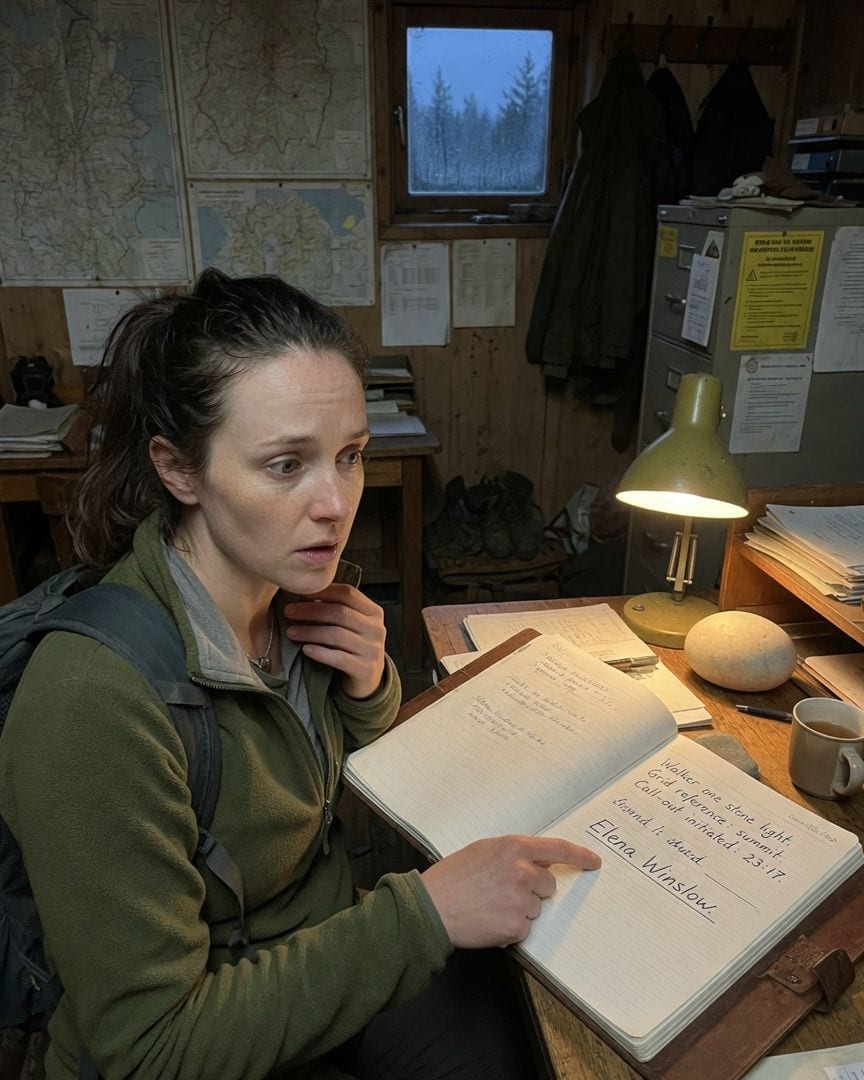
My pocketed mountain stone meant a rescue logbook recorded a call-out that night for me — a shout that never went out.
After an exhilarating climb on Cadair, I took a small, smooth white stone from the summit cairn, despite a warden's warning. Back at the station, a logbook entry shocked me: my name, dated last night, for a rescue call with an impossible detail: 'Walker one stone light'.
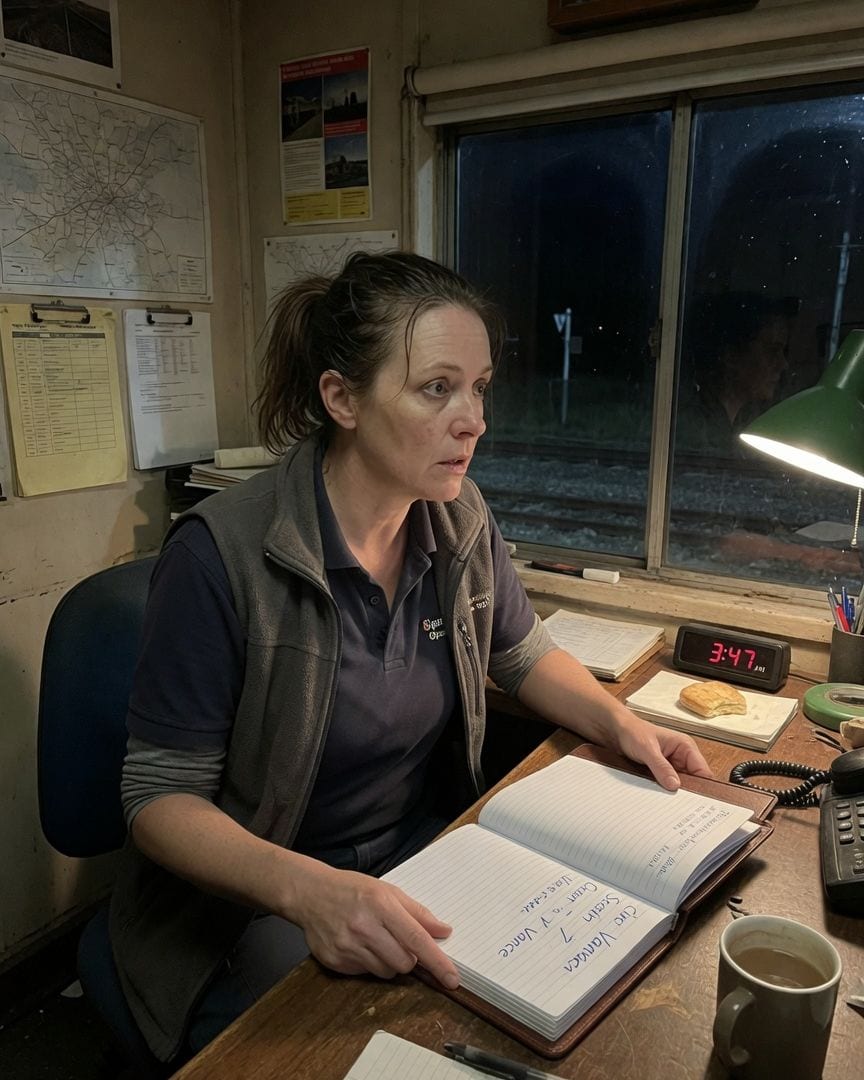
My linesman taps twice on my window at 3 AM. Control says he retired and passed years ago.
My routine at the rural signal cabin was regular: the linesman's double tap on the window at 3 AM. But then my supervisor called, revealing the linesman I knew, Warren Vance, had died five years ago. Now, an impossible entry in my official logbook, with his signature and timestamped from my shift, proves someone else was there.
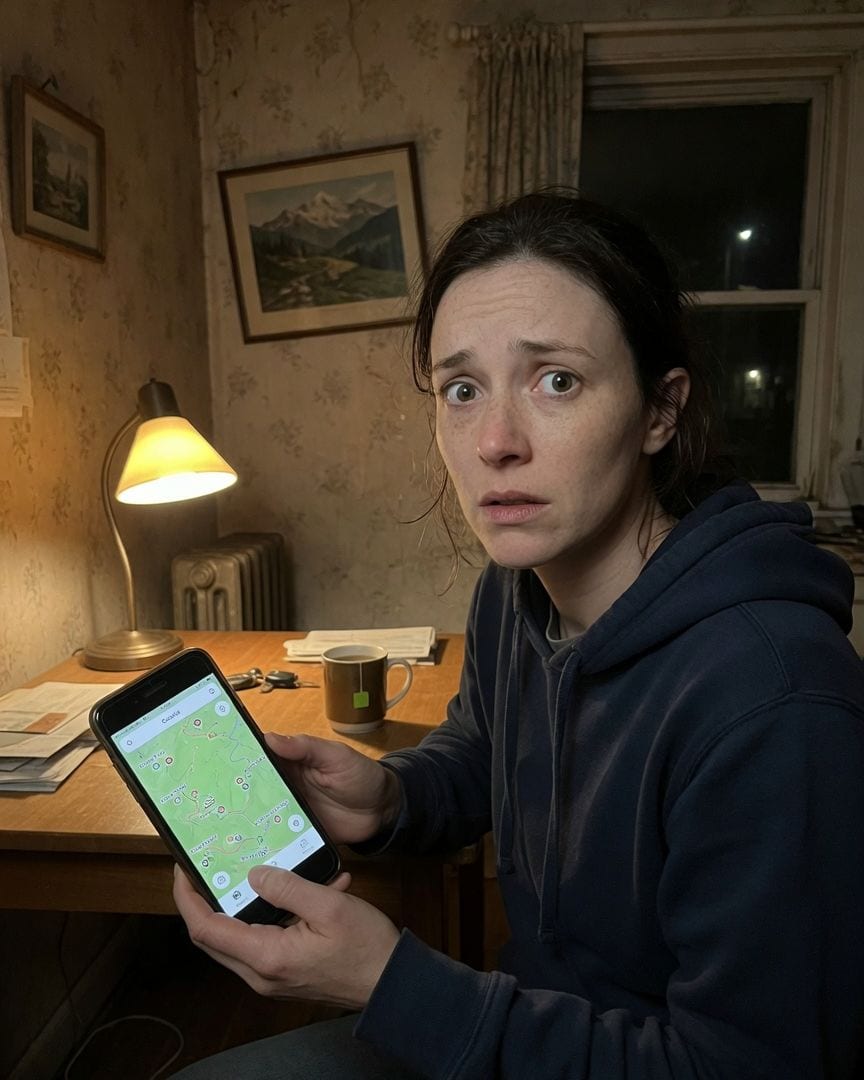
My hiking app scrubbed the hill's name from the map, on a phone that's been in airplane mode for two days.
I just moved to town and hiked a local hill, 'Cathan Tor,' according to my phone's app. But when I mentioned the name to the mechanic, he froze, dropped his wrench, and whispered, 'Don't say that name, Colette.'
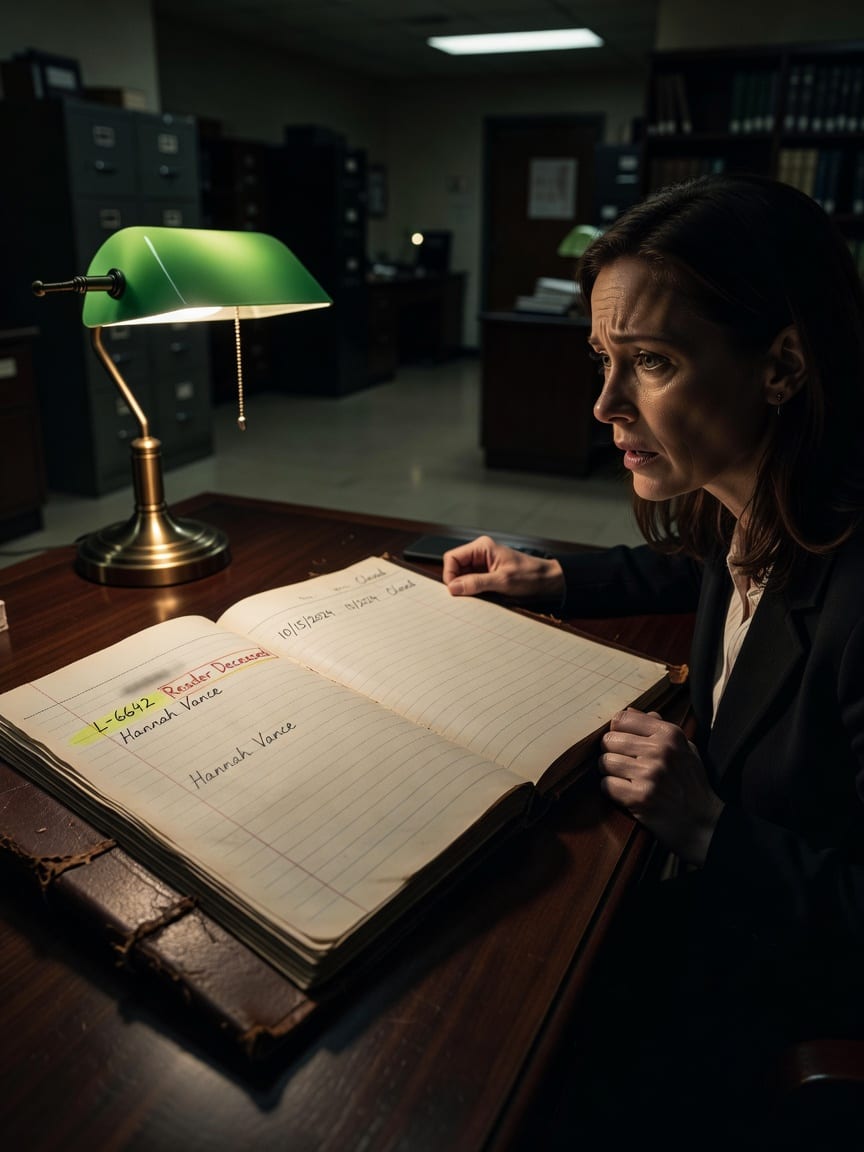
My library card number L-6642 was issued to me at seven — and the ledger shows that number has marked a reader 'deceased' every twelve years since 1949.
Returning my late father's library card to the old town library felt like a small act of closure. But the senior librarian's ancient ledger revealed a chilling pattern of 'reader deceased' entries tied to specific card numbers and borrowed books. My unease turned to cold dread when I secretly found my own name penciled in, marked for a future 'reader deceased' entry.
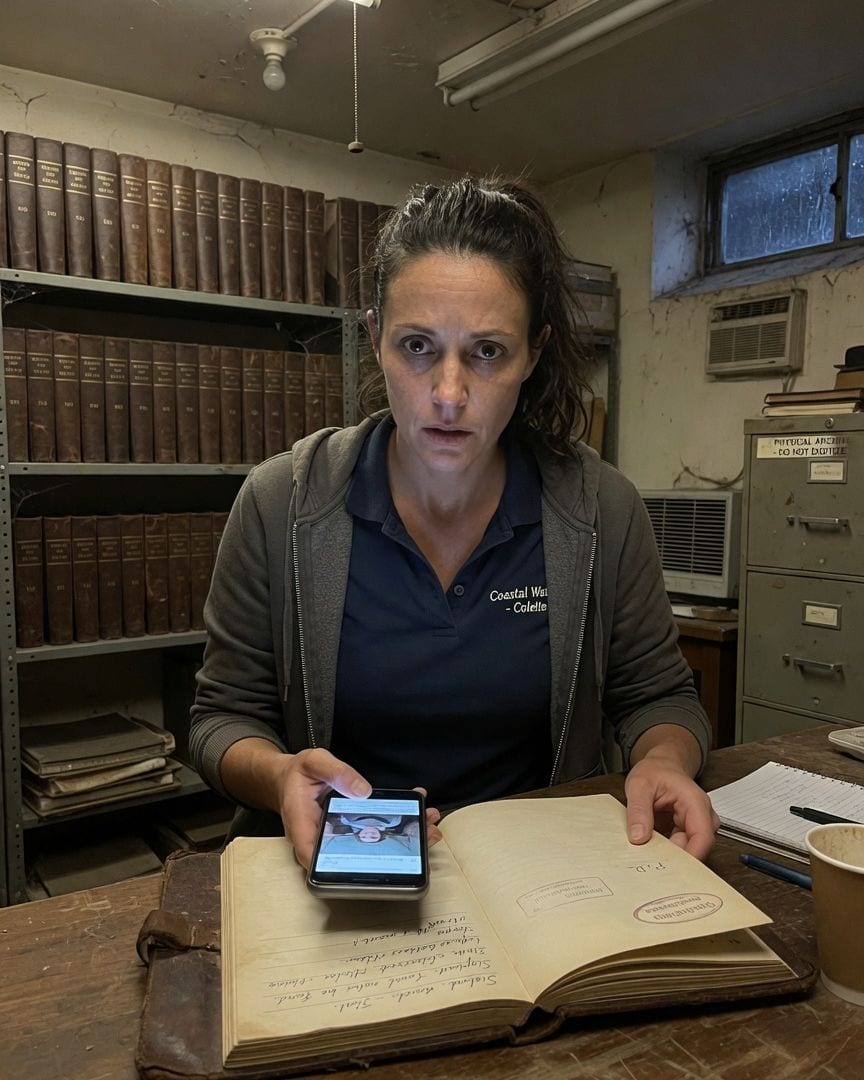
My coastguard log noted Sighting 9 again tonight, a light where no vessel showed. The old logs carry Sighting 9 off Skerry Point at 3:14am every tenth year since 1954, always 'nothing found,' always 'send no boat.'
On my watchtower night shift, the radar screen glowed green and the ocean was quiet. Then, a familiar light appeared off Skerry Point, exactly on cue, just as it had every tenth year for decades. But digging deeper, I found a hidden stamp in an old logbook: 'Operation Skerry. Status: Complete.' It left me with a chilling sense of finality.
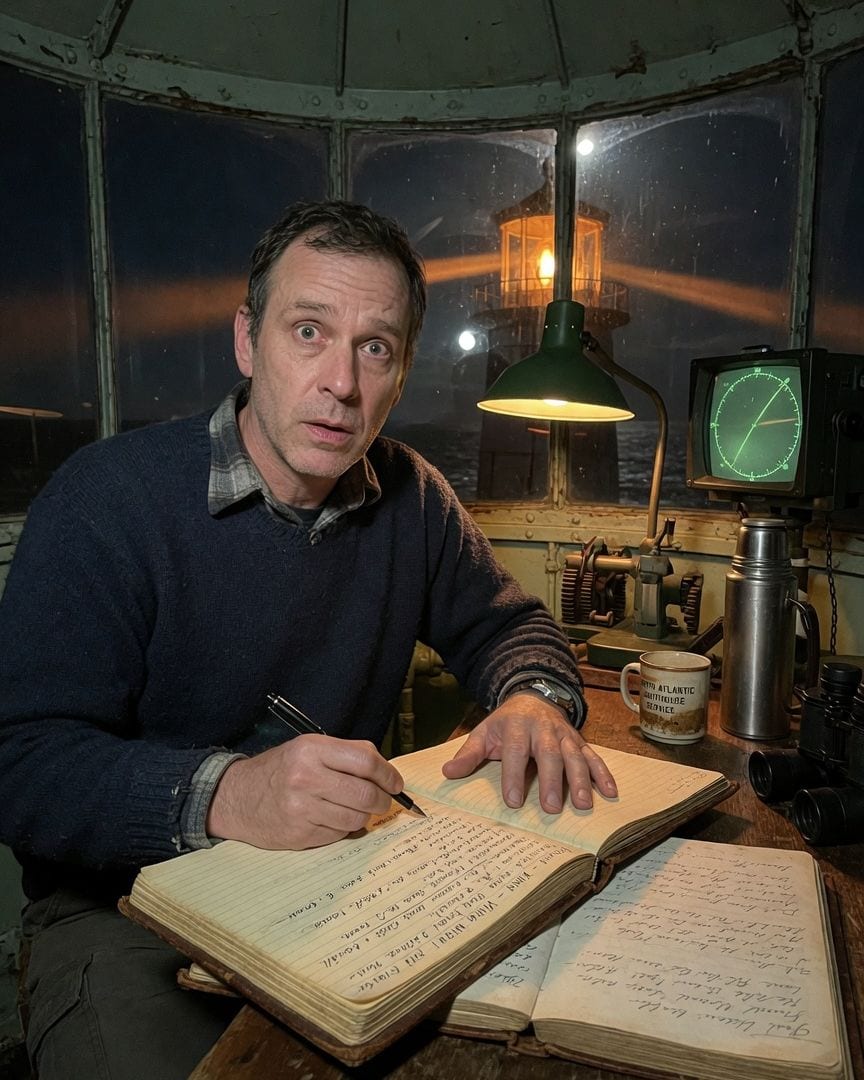
My lighthouse log has my own 3 AM entry for a phantom ship. I was alone in the tower, and I wrote no such thing.
Perched in the lantern room for my usual 2-6 AM watch, I reached for the thick logbook. But the 3:00 AM entry, under my own name, detailed a vessel I never saw. The words were in my own ink, yet I had never written them.