My bus depot has a solid brick wall where an old, hidden plan shows an unmarked bay. I found a faint seam in the bricks.
It was just after 3 AM, and the night bus was mostly empty. I'd been stuck late at the office, churning through spreadsheets, and all I wanted was my bed. Weir Lane, my stop, was usually a quick 22 minutes.
I checked my phone: 3:14 AM. I settled back, watching the city lights blur outside. After what felt like too long, a specific flicker of neon caught my eye.
'The Fryer's Delight' – a shuttered chip shop with a broken sign that always seemed to hum a low, dying note.
It slid past the window, then a moment later, a scruffy fox with a distinctive limp darted across the road, caught in the bus's headlights. I remember thinking, poor thing, late night scavenging. It registered as a mild sense of déjà vu, nothing more.
Twenty minutes passed, maybe thirty. My phone buzzed with an email. I looked up, then out the window. The Fryer's Delight. Again. Same broken sign, same low hum.
And there, ahead in the beams, the exact same limping fox, crossing the road in precisely the same spot. A cold knot tightened in my stomach. I checked my watch. It hadn't been twenty minutes.
It had been over an hour. The bus continued, the same landmarks, the same sequence of houses and streetlights, repeating at regular, impossible intervals.
Reginald Harlow, the driver, a man I’d seen on this route for years, sat impassively, his eyes fixed on the road. Not a glance in the rearview mirror, no reaction to the impossible time warp.
Without a word, without even a subtle shift of his shoulders, he pulled the bus into the depot – the very same depot we had departed from over an hour ago. He switched off the engine.
The silence was heavier than any roar, more unsettling than any explanation.
The next morning, the exhaustion was nothing compared to the persistent chill in my gut. I couldn't shake it. I typed "Weir Lane night bus route 314" into my browser, expecting to find some anomaly, a reported delay, anything. Nothing.
The route was its usual 22 minutes, no detours, no incidents. No, this wasn't going to be explained by a simple online search. I needed to see the place. I decided to visit the depot.
A quick call, a little white lie about being a student researching urban transport logistics for a project. They were surprisingly accommodating. The tour was brief, perfunctory.
I nodded at the right places, asked polite, bland questions about maintenance schedules, but my real attention was on the layout. I started counting. Bus bays, maintenance rooms, offices, the canteen.
I pulled out my phone, subtly sketching a rough floor plan as I went, trying to match it to the official schematics the guide had briefly shown me. That's when the numbers started to fight back.
My count consistently came up one bay short compared to the printed schematics, or one room too many in a section that should have been uniform.
Specifically, in an older, disused section of the depot, I kept hitting a solid brick wall where my mental map, based on the external structure and the repeating rhythm of the other bays, insisted an additional bay should be.
I tried to reconcile the discrepancy, pacing the perimeter again and again, but the geometry was subtly, persistently wrong. The numbers refused to add up.
Later that day, the need for an answer clawed at me. I returned to the depot, using the same flimsy 'rechecking measurements' excuse.
I waited until the guide was preoccupied, then slipped away towards the dusty, disused archive room I'd spotted earlier. It was crammed with stacks of old uniforms, forgotten equipment, and the faint smell of damp paper.
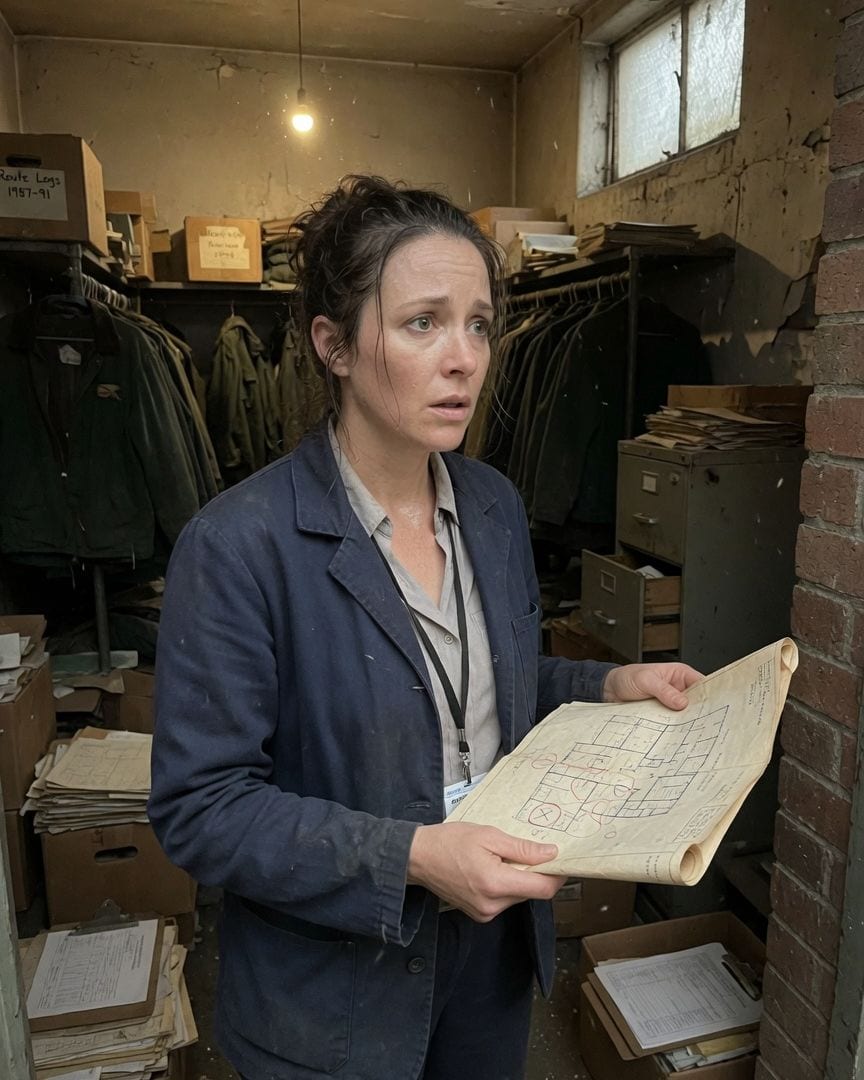
I started methodically searching, pushing aside old crates, until my fingers brushed against something rolled up, brittle to the touch, hidden behind a stack of moth-eaten driver's jackets. An old, hand-drawn floor plan of the depot.
It was clearly unofficial, annotated in faded ink. I unfurled it carefully, the paper crackling like dry leaves. The layout was familiar, but my breath caught in my throat.
In the very section where I'd noted the discrepancy, where the solid wall now stood, this plan clearly showed an additional, unmarked bus bay, a small, unlabeled room. It was right there.
I left the room, plan still clutched in my hand, and walked directly to that section of the depot, to the grime-streaked wall. My fingers traced the faint, almost invisible seam in the bricks, a seam that shouldn't be there.
Armed with the old, brittle plan, I returned to the depot the next morning.
The diagram showed the additional space, and the faint seam in the brick wall of the depot’s old section was no longer just a trick of the light.
It was a hairline crack, then another, then a barely perceptible, crudely patched-up doorway, almost perfectly camouflaged. Someone had gone to great lengths to hide it.
I worked quickly, using a small pry tool I’d brought – technically a screwdriver, but it did the job. The mortar was old, crumbling.
I managed to dislodge a few bricks, then another, until I had an opening just big enough to squeeze through.
Beyond, the air was thick with dust and the pervasive, cloying smell of damp concrete and something metallic, like old rust. It wasn't a bus bay. It was a small, forgotten office.
Rusted metal filing cabinets lined one wall, a heavy, dust-caked desk dominated the center, and a single, grime-streaked window looked out onto another, equally disused wall. No one seemed to have entered it in years.
I searched, my phone's flashlight beam cutting through the gloom, stirring motes of ancient dust into swirling galaxies. Nothing but stacks of old invoices, maintenance logs for buses long since scrapped, and a few broken tools.
The discrepancy, the 'room that isn't counted,' was a physical reality, tangible, but its purpose remained elusive. Still, a growing certainty settled over me: this room, this hidden space, was connected to the impossible bus loop.
I felt it in the stagnant air, in the way the silence hummed.
I spent hours in the hidden room over the next few days, meticulously sifting through every document, every scrap of paper. The light was poor even with my phone's flashlight, and my throat was raw from the dust.
I was about to give up, convinced I’d found nothing but dead ends, when I heard footsteps outside the concealed entrance. They were slow, deliberate. I froze, holding my breath, my heart hammering against my ribs.
The footsteps stopped directly outside the patched-up wall. My blood ran cold. A voice, low and calm, broke the silence. "You shouldn't be in there, dear." It was Reginald Harlow, the night bus driver. My breath hitched.
He didn't sound angry, not in the slightest. Just… resigned. I stayed utterly still, hidden deep in the shadows behind a towering stack of yellowed ledgers. After what felt like an eternity, he sighed. A slow, weary sound.
"Some things are better left alone. They always come back." The footsteps receded, slow and even, until they were completely gone. I waited, counting a full two minutes after the sound had faded, before carefully, silently, replacing the bricks.
His words echoed in my mind: They always come back. He knew. Not just about the hidden room, but about the loop. He wasn't just a driver; he was a guardian, or perhaps, like the space itself, a prisoner.
The next day, I found Reginald in the depot canteen, nursing a mug of tea, his face as impassive as ever. I approached him, feigning a casual air, my voice deliberately light.
"Mr. Harlow," I began, my hands clammy, "about that night bus…" He looked up, his eyes a pale, unreadable blue. He took a slow sip of his tea. "Some journeys," he said, his voice quiet, "don't have an end.
Not really." My stomach clenched. I pressed him, my voice barely a whisper. I described the repeating chip shop, the limping fox, the impossible hour that had passed. He nodded slowly, his gaze distant.
"It's been like that, on and off, for longer than I've been driving. Or longer than anyone admits."
He told me about 'the old man,' Lars Ellsworth, a former manager, long since retired, who used to spend hours in this disused section of the depot.
"He had his own ways of keeping track," Reginald muttered, glancing vaguely towards the area where the hidden room lay concealed. "Said it was just… a fold. Like a crease in a map that keeps folding back on itself."
He didn't offer more, didn't explain. His calm acceptance of the impossible was more chilling than any frantic denial. The loops weren't glitches, weren't isolated incidents.
They were a consistent, recurring feature of this place, something 'the old man' had observed and recorded for years.
Following Reginald's cryptic advice, I started looking for Lars Ellsworth. It took a few days, a couple of phone calls, but I found him living in a quiet retirement home on the outskirts of town.
He was a man in his early seventies, frail but with sharp, knowing eyes that seemed to see right through me. He greeted me with an unsettling familiarity. "You finally found the little office, then?"
he asked, as if he'd been expecting me all along. The question hung in the air, heavy with unspoken knowledge. He led me to a dusty cardboard box tucked away under his bed, pulling out a thick, leather-bound book.
"The records," he said, his voice raspy. "My way of understanding the geometry." It was an impossibly old, handwritten logbook, its pages brittle, filled with copperplate script detailing bus schedules and passenger manifests from decades past.
He flipped through it, his finger tracing faded entries for the Weir Lane night bus, describing the exact 'loop' phenomenon I'd experienced. "It's a temporal echo," he explained, his gaze steady. "A fold that occasionally reasserts itself.
Some people just… get caught up in it." He turned a page, and my finger, almost of its own volition, hovered over a faded, copperplate entry dated October 27, 1988, for the Weir Lane night bus.
Under the passenger manifest, clear as day: 'E. Winslow'. My own name, in a book older than my memory of this city.
Lars Ellsworth watched my stunned face, a quiet, almost sad understanding in his sharp eyes. "Yes," he said, his voice soft, "you've been on that bus before.
Not physically, not in this lifetime, but the echo… it draws certain people in. A resonance."
He explained that the logbook wasn't just a record of the loops; it was a record of these 'resonances,' tracking the individuals whose presence seemed to align with the fold's activation.
The name 'E. Winslow' appeared sporadically across different decades, always coinciding with a recorded 'loop event.' He pointed to other names, familiar local surnames that had appeared and reappeared over generations, their fates intertwined with the Weir Lane route.
"It's not a curse, not a haunting," Lars explained calmly, as if discussing the weather. "Just a consistent misbehavior of space and time, a pattern. And once you've been in it, you're always a little bit in it.
You become an observer, like me, or… part of the loop itself."
The logbook, an artifact that by all logic should not exist, lay open before us, real, dated, and horrifyingly checkable, confirming the impossible geometry and my unwitting, recurring role within it.
Every clue, from the looping bus and the limping fox to the hidden room and Reginald's knowing silence, clicked into place, forming a coherent, terrifying pattern.
I stared at the logbook, the impossible reality settling over me like a suffocating blanket. "So, I'm stuck? Part of this?" Lars gave a soft, sad smile that reached his eyes. "You're aware now. That's the difference.
Most just forget, or dismiss it as a dream or a breakdown. Some, like Reginald, they just… continue the route, knowing what it is. They become… constants." He closed the logbook gently, the old leather creaking. "The fold isn't evil.
It just is. And you, Emily, you're now one of the ones who sees it, who remembers." He paused, a long silence stretching between us. Then, he said, "There's a bus leaving soon. The last one for the night.
You could take it." He didn't need to say which bus. I understood. It wasn't an instruction, but an invitation. Or a final push.
I could try to ignore it, to live a normal life, or I could lean into this impossible knowledge, this terrifying truth. The ordinary explanation for the world, for my reality, had died for good.
I looked at Lars, who seemed to emanate a quiet, ancient understanding, a man completely at peace with the impossible. The choice wasn't about escaping the loop, he implied, but about how I would exist within its knowledge.
I left Lars's home, the heavy logbook tucked under my arm, and walked toward the bus stop, the night air cool on my face, the destination an open question.
I did not take the night bus that night. I returned home, the logbook a physical anchor to my shattered reality.
I tried to go back to my data analysis job, but the numbers on my screen seemed to shimmer, hinting at unseen discrepancies, at folds and echoes I hadn't noticed before.
I found myself walking past the bus depot almost every evening, observing Reginald Harlow silently pulling his bus out for the night run.
He would never look at me directly, but I felt his quiet recognition, a subtle shift in his posture as I passed. The Fryer's Delight remained shuttered, its sign still humming its dying note.
The fox, I imagined, still crossed the road in its endless, looping path, oblivious to the pattern it was part of.
Sometimes, late at night, Emily finds herself in the depot's hidden room, tracing the barely visible seam in the brickwork, the old logbook open on the dusty desk. She doesn't write in it, doesn't try to change anything.
She just watches the silent depot through a crack in the wall, waiting for the night bus to return.
If this one got to you
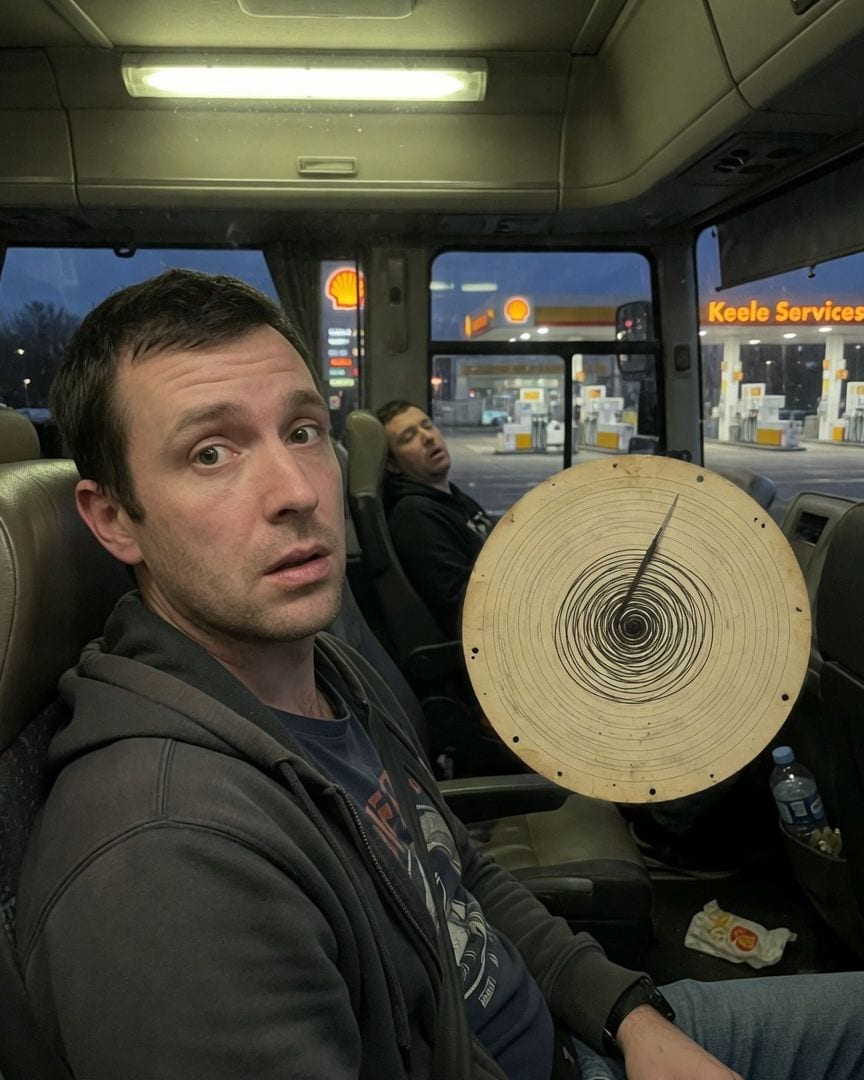
My coach stopped twice at Keele services this morning. Same pumps, same lit sign, the driver's log disc spinning a tight circle, never leaving the one place.
I was on an overnight coach, tired and stiff, when I first woke at Keele Services at 3:20 AM. An hour and a half later, I woke again to find us still there, the driver's log disc spinning a perfect, impossible circle of stasis.
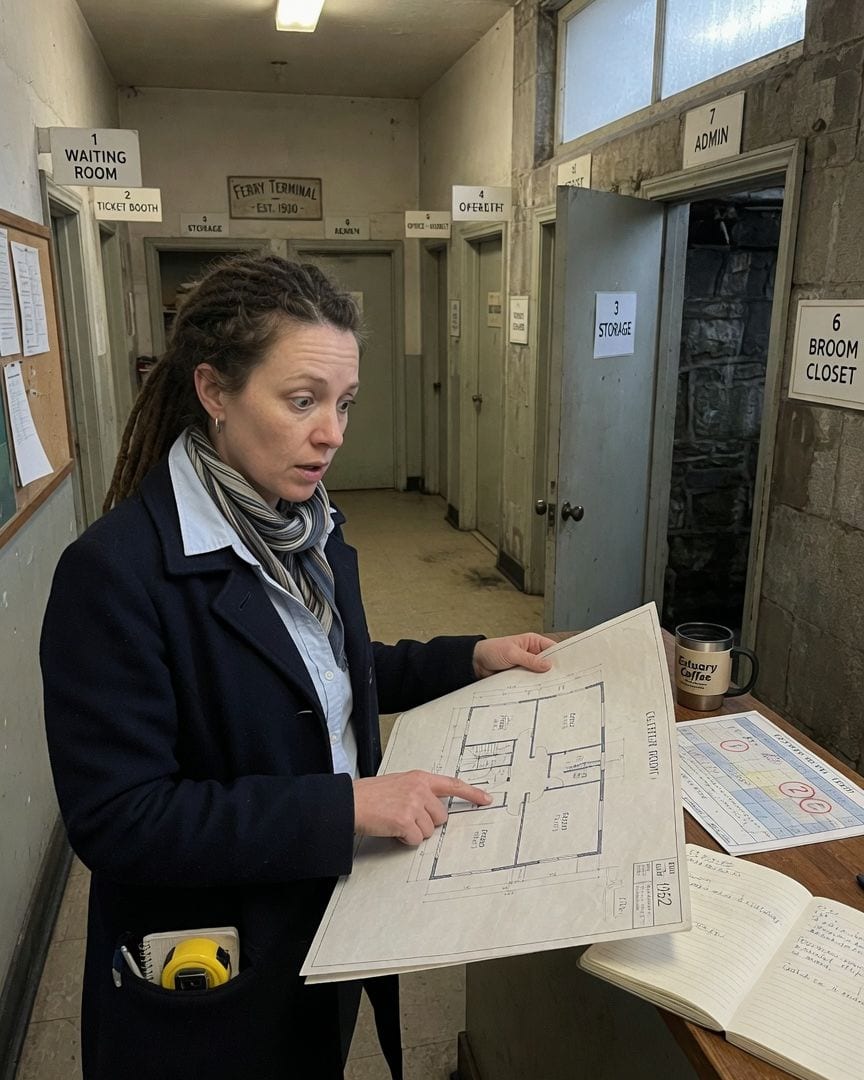
Our ferry returned to the same slipway three times yesterday, the town quay dissolving to our village shore. The crossing was never made.
After our ferry inexplicably kept returning to shore, I investigated the old office building. Its architectural plans clearly showed six rooms, but when I walked the hallway, I found a seventh door. That extra room was undeniably there, an impossible presence.
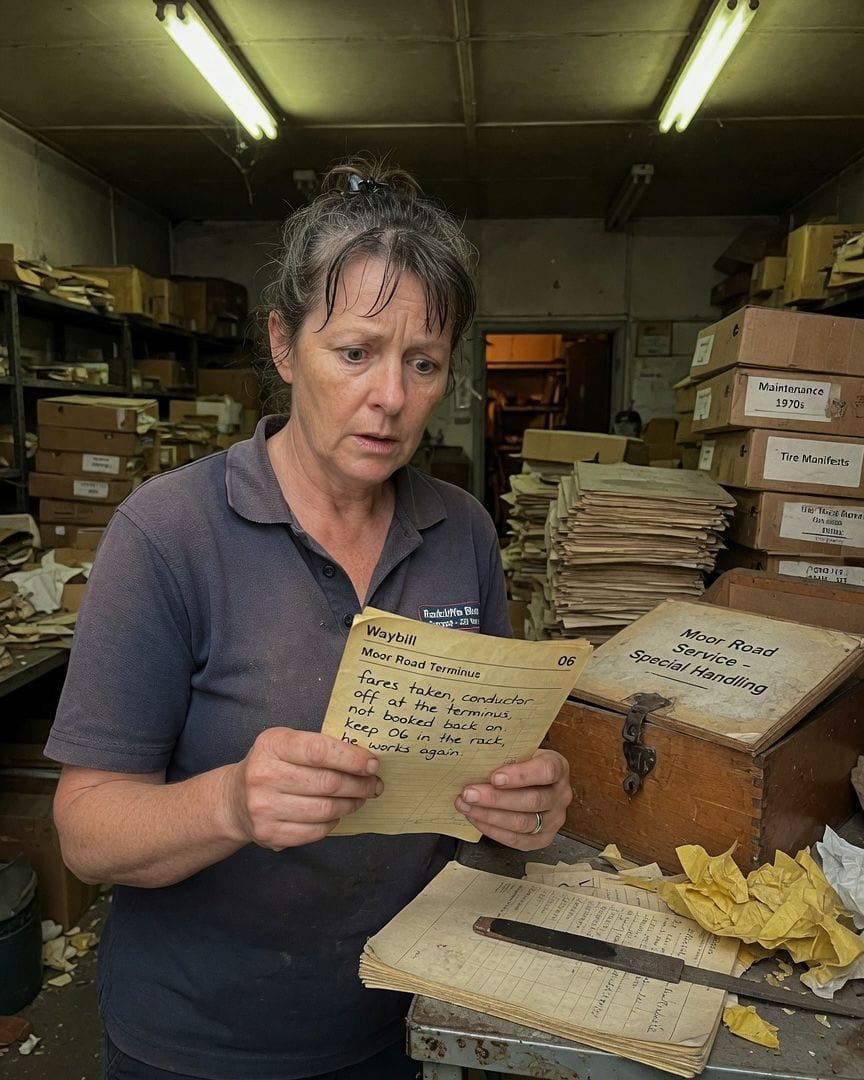
Our depot's Waybill 06 filed a moor road service we stopped running years ago. Every eight years since 1956, it closes: 'keep 06 in the rack, he works again.'
Sorting waybills in the depot, I stumbled across a form for the Moor Road Terminus. That route was decommissioned decades ago, but this waybill had a chilling handwritten instruction: 'keep 06 in the rack, he works again.'
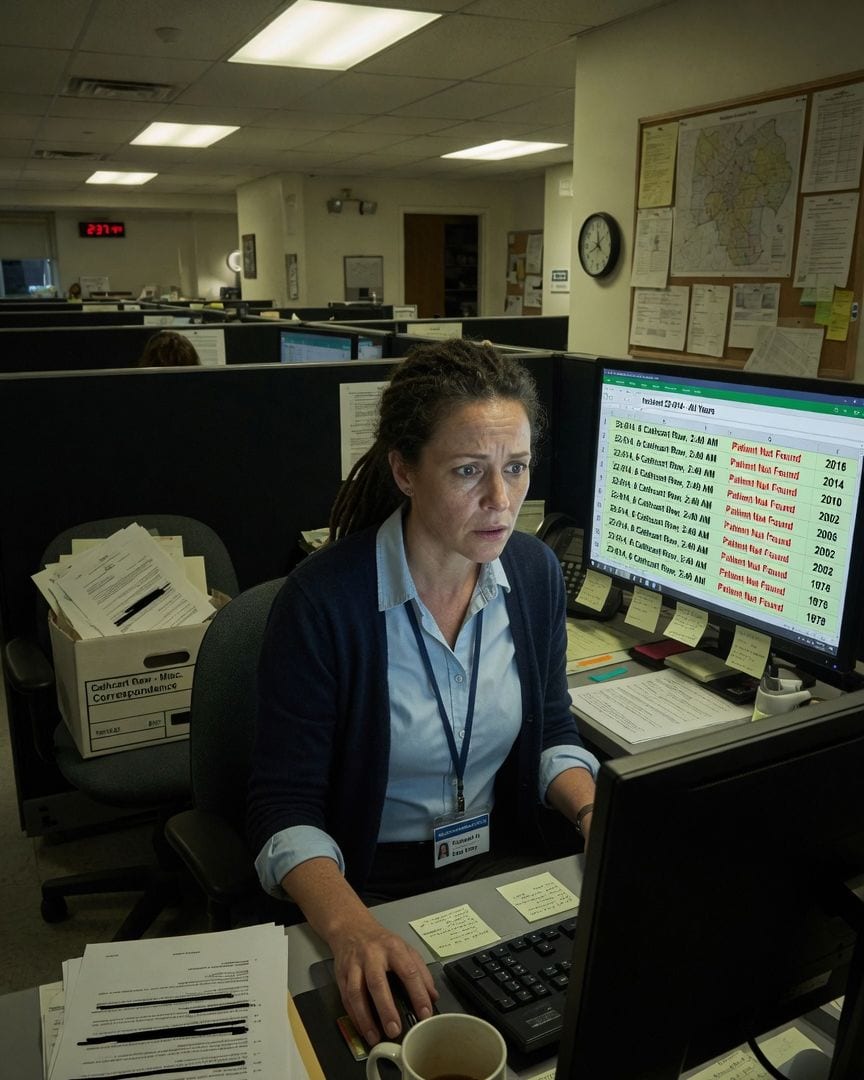
My computer log shows the same 2:40 AM call to Cathcart Row, every four years since 1978, always closed 'patient not found'.
Working data entry for the County Ambulance Trust, I found a routine incident logged as 'Patient Not Found.' But digging deeper, I discovered the exact same phantom call had repeated every four years for over forty years, always at the same address, always at 2:40 AM. Then I found a heavily redacted memo linking it to my own street.
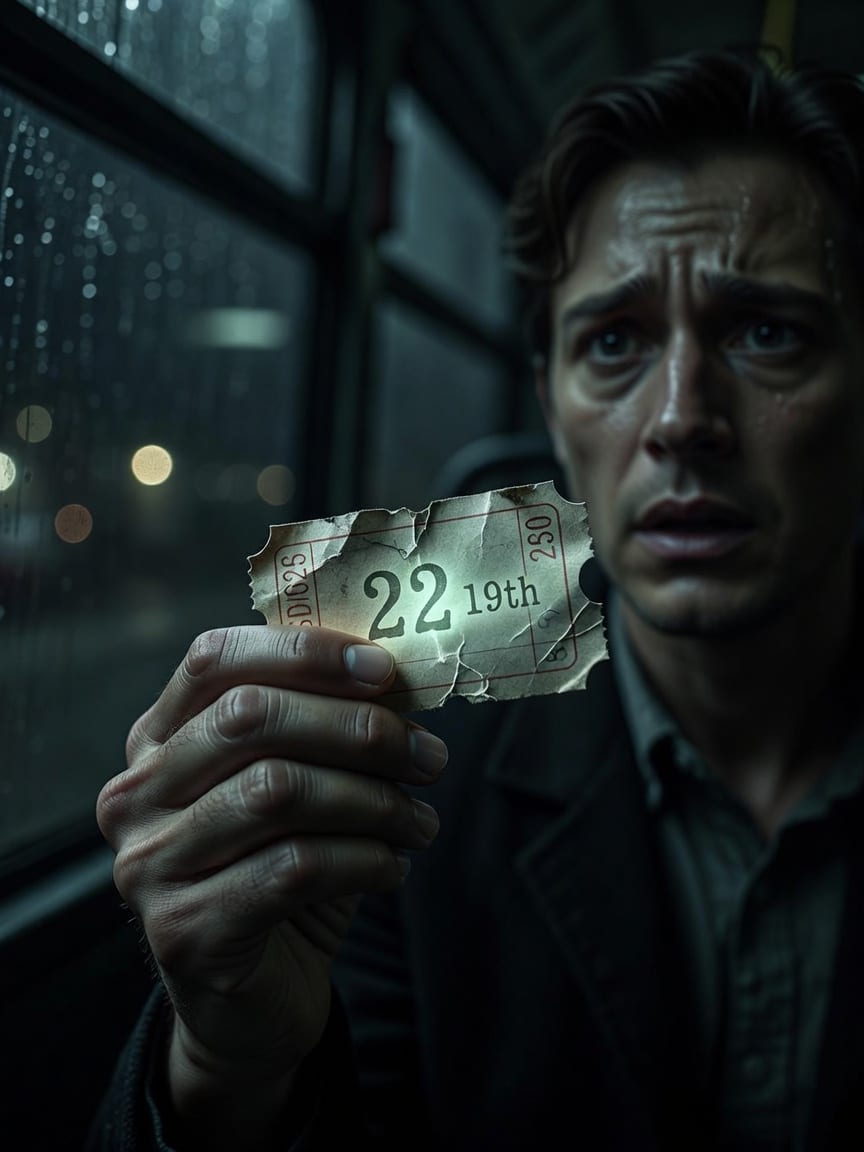
Bus driver Daniel says 'Sorry, Iris — not long now' every morning, using my name. Today he added a date: tomorrow. I've never told him my name.
Every morning, my bus driver, Daniel, knew my name despite me never telling him. Today, he added a chilling warning: "The 19th, isn't it?" when today was the 18th. Later, a blank bus ticket appeared on my doorstep, stamped with that exact impossible date.
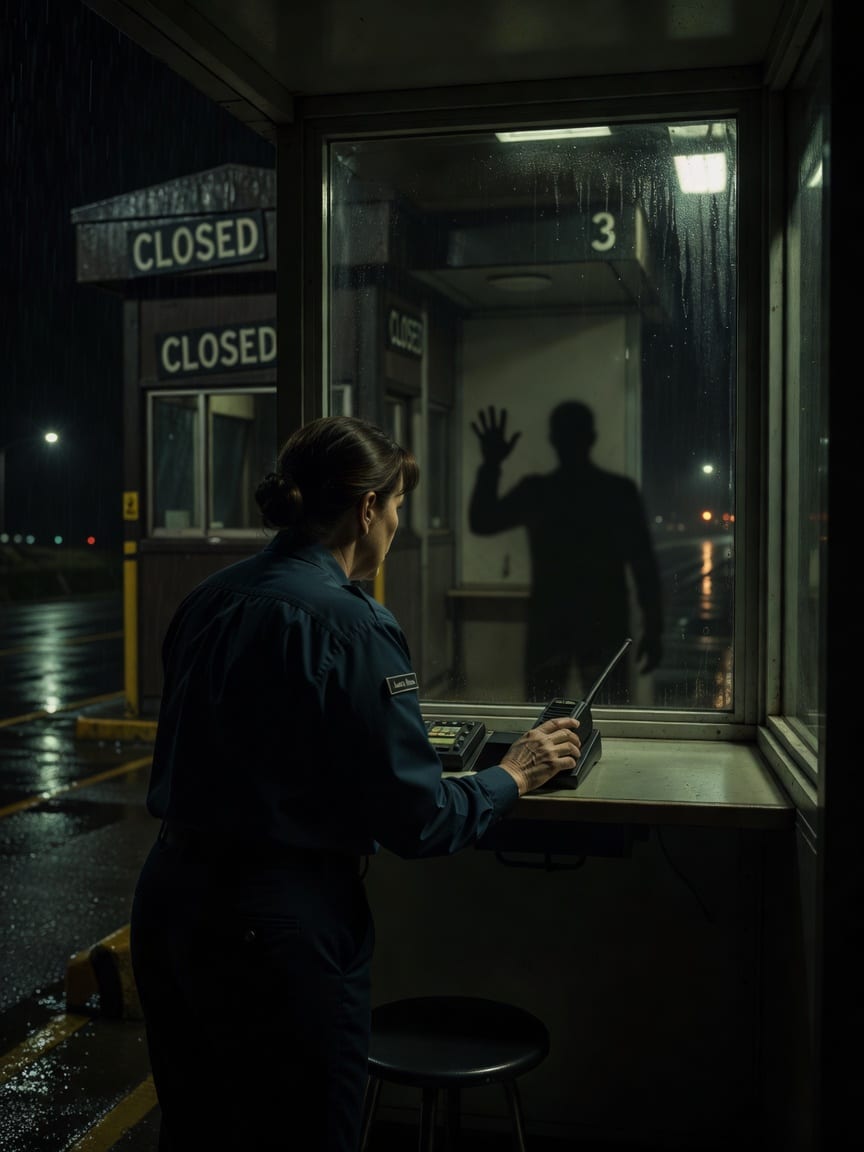
My Booth 2 radio crackles every night with Booth 3's traffic count. Central office just called about a discrepancy and told me Booth 3 has been closed since 2016. No radio, no operator.
Working the night shift, I logged vehicle counts from Booth 3 just like every other night. But my manager called, her voice tight, to tell me Booth 3 has been closed and unmanned since 2016. So who just reported the vehicle count?