My car stalled at the old turnpike milestone, and the 1874 toll ledger now lists my plate, the date, and an unpaid toll.
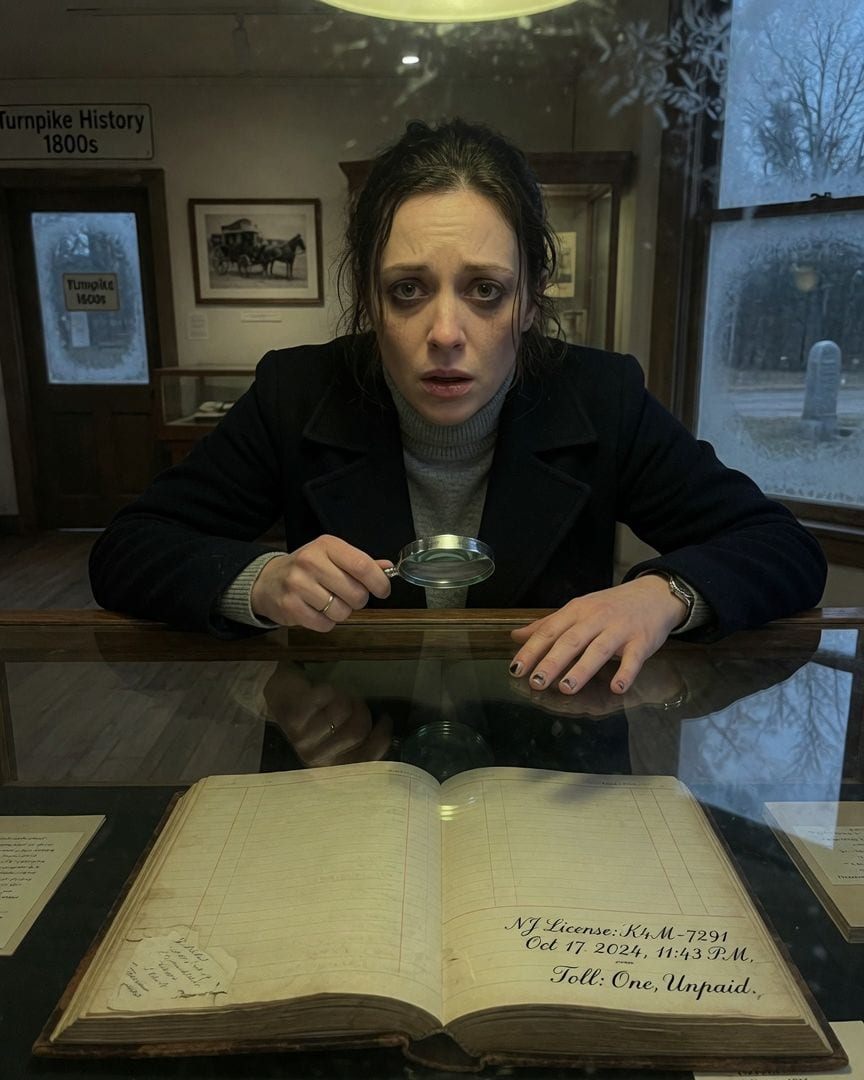
My car died right at the old turnpike milestone, exactly where Raymond Crane, the carrier, had warned me never to stop after dark. ‘Slow, yes, Miss Delaney,’ he’d said with a tight smile, ‘but never halt.’ The engine just… cut.
Ten minutes of grinding silence, the only sound the wind hissing through the skeletal trees and the distant, unsettling creak of the milestone itself, like old bones settling.
It was a frosty night last month, and the air had a metallic tang that made my teeth ache. Finally, it caught, sputtering back to life. I drove straight home, shaken but dismissing it as a fluke.
Until I visited the local museum the next week. Theodore Abbott, the curator, had just finished a talk on local history, and I was browsing a glass case containing the old turnpike’s toll ledger, officially closed in 1874.
I laughed, a little, at the thought of my ‘unpaid toll.’
But then, at the very bottom of the last page, below the faded script marking the final entries from a century and a half ago, a new line was visible. It was written in fresh, dark ink.
My car registration, the exact date, the hour I stalled, and ‘Toll: One, Unpaid.’ The museum was empty. I live alone.
I thought it was a prank. It had to be. Maybe Raymond Crane, with his dry wit, decided to mess with the new city girl. But the handwriting wasn’t Raymond’s; it was too neat, too stylized, almost calligraphic.
And how would he have known the exact minute my car stalled? I tried to rationalize it. A peculiar coincidence? A local legend I wasn’t privy to, played out for my benefit?
I went back to the museum the next day, heart thumping. Theodore Abbott was behind the counter, polishing a framed photograph of the old turnpike. ‘Mr. Abbott,’ I began, trying to sound casual, ‘about the ledger… the last page.’
He looked up, his eyes kind but unreadable. ‘Ah, the old toll book. Fascinating piece of our history, isn’t it?’ He didn’t offer more, just watched me.
I explained what I’d seen, carefully omitting my registration number, asking about ‘recent additions.’ He chuckled, a dry, papery sound. ‘Oh, that. Locals have a bit of fun with it, sometimes. Add their names, dates, for a laugh.
Old superstition, you know. Never stop at the milestone after dark, or you’ll owe the road a toll.’ He dismissed it with a wave of his hand. But his eyes, I noticed, never quite met mine.
It felt too smooth, too practiced. The ‘joke’ wasn’t funny, and his explanation, while plausible, left a cold spot in my gut. I knew, with a certainty that chilled me, that it wasn’t a joke. Not to him.
That night, I couldn’t sleep. The ‘joke’ felt like a warning. I researched the local history, looking for anything about the milestone, the turnpike, or unexplained disappearances. Nothing.
The next morning, I returned to the museum, feigning interest in other exhibits. When Theodore Abbott was distracted with a tour group, I slipped back to the ledger. This time, I looked closer.
The new entry for my car was clearly on top of something else. I leaned in, catching the light just right. Beneath the fresh ink, barely visible, were faint indentations, remnants of older, erased handwriting.
With a magnifying glass from the counter, I could make out fragments: a date, a time, and the word ‘Unpaid.’ My hands trembled. I carefully turned the page over, examining the reverse.
The paper was thicker there, almost like a patch. I could just make out a faint outline, as if something had been carefully pasted over it. I peeled back the corner, just a millimeter.
Underneath, a whole new section of the page was revealed, covered by a thin, almost invisible layer of archival paper.
It was filled with similar entries, written in different, older hands, each one mirroring my own: ‘J. Harper, 1932, 2:17 AM, Unpaid.’ Below it, another: ‘M. Kowalski, 1967, 1:04 AM, Unpaid.’
My breath caught as I realized these aren't just names; they are whispers of the missing, now accounted for in a book that should have been closed a century and a half ago, each one a mirror to my own entry.
The discovery jolted me. These weren’t ‘jokes.’ I spent the next few days in the town library, cross-referencing the names and dates from the hidden ledger entries with old newspaper archives and local historical society records.
J. Harper, 1932: a short article about a traveling salesman who ‘vanished without a trace’ from the area. M. Kowalski, 1967: a brief mention of a new schoolteacher who ‘left town suddenly after only a few months.’
The pattern was chillingly consistent: people who had recently arrived, stayed a short time, and then disappeared, with locals offering vague, polite explanations that never quite added up. ‘Moved for family,’ ‘found a better opportunity,’ ‘just got quiet.’
The town, I realized, had agreed on a narrative for each of these. I tried asking around, casually bringing up these old stories. Raymond Crane, usually so chatty, became stiff. ‘Oh, old Mr. Harper?
Fine fellow, just up and left for California, I heard.’ His eyes darted away. Mrs. Pennington at the general store, a fount of local gossip, suddenly found a pressing need to restock shelves. ‘The Kowalski girl? Sweet thing.
Never really settled, did she? Probably better off in the city.’ Everyone gave the same, too-smooth story, a quiet agreement to steer away from the subject. It wasn’t just a folk tale; it was a carefully maintained silence.
I found an old map of the turnpike, marked with the exact location of the milestone. It was on a rarely used stretch of road, deliberately unmaintained since the highway bypassed it decades ago.
Why would so many ‘newcomers’ have found themselves there, after dark? It didn’t make sense, unless they were drawn, or led, or… marked. My own entry in that ledger felt less like a prank and more like a sentence.
My digging didn’t go unnoticed. I started feeling eyes on me. Not overtly, but a subtle shift in how people reacted. A pause in conversations when I walked into a room. A shopkeeper watching me a moment too long.
One evening, after leaving the library late, I found a small, smooth river stone on my porch, placed neatly by my front door. It was the exact shape and color of the stones embedded in the old turnpike milestone itself.
Just a stone. But it felt like a message. A warning. The next day, I saw Theodore Abbott’s car, a vintage Ford, parked down the street from my house. He was just sitting there, reading a newspaper.
When I walked out, he lowered the paper, offered a small, knowing smile, and then drove away. No wave, no greeting. Just that smile. It was a clear signal: he knew I was looking. He knew what I had found.
The danger was now personal, not just historical. I felt a chill that had nothing to do with the autumn air.
I was no longer just an investigator; I was now part of the story, and the town, or whatever force it was protecting, was closing in. I started checking my locks twice, leaving lights on.
The dread was no longer abstract; it was a physical weight, a constant hum of unease. I was no longer just looking for answers; I was looking over my shoulder.
I decided to confront Theodore Abbott directly. I found him in the museum archives, carefully cataloging old documents. ‘Mr. Abbott,’ I said, my voice steadier than I felt, ‘I know about the ledger. And the names.
And what happened to them.’ He didn’t flinch. He slowly placed the document he was holding back into its box, then turned to face me. His expression was calm, almost serene. ‘You’ve been thorough, Miss Delaney. More thorough than most.’
He gestured to a worn, leather armchair. ‘Please, sit. It’s time someone explained.’ He began to speak, his voice low and even, like a lesson being taught. ‘The turnpike, the milestone… they’re older than the road itself.
A place of transition. And some transitions require a toll. Always have.’ He explained that the ‘rule’ about not stopping after dark wasn’t superstition, but a vital part of a centuries-old agreement.
‘The town, you see, has always sought to maintain a certain… balance. To keep the greater population safe.’ He described how the ‘unpaid tolls’ were not just random incidents, but ‘collections.’
He spoke of individuals, often newcomers, who found themselves at the milestone, drawn there by an unseen pull, or by the simple act of breaking the rule. ‘The ledger,’ he explained, ‘is a record.
A quiet acknowledgement of who the turnpike has claimed.’ He picked up a faded photograph from his desk – a group of stern-faced men from the late 19th century. ‘My great-grandfather, the last official tollkeeper, understood this.
His family, the Abbotts, have been… stewards, ever since.’ He didn’t express regret or fear, only a deep, weary understanding. The pieces clicked into place: the town’s uniform evasiveness, the vague disappearances, his own knowing smile.
It wasn’t a joke, or a prank. It was a truth, carefully hidden, and quietly maintained. The cold spot in my gut turned to ice.
He was not just a historian; he was a gatekeeper, a keeper of the balance, and he was confirming everything I had feared.
I felt a horrifying clarity. ‘So, the unpaid toll… it means I’m next, doesn’t it?’ I asked, my voice barely a whisper. Theodore Abbott smiled faintly. ‘Not exactly, Miss Delaney. Not for you.’
He stood, walked to a locked cabinet, and retrieved a different book. It was smaller, bound in dark, unmarked leather, far older than the museum’s ledger. He placed it gently on the table. ‘The museum’s book records the incidental collections.
The ones the town tries to keep quiet. But this…’ He opened the dark ledger. The pages were brittle, filled with intricate, almost hieroglyphic symbols and names, some of which I recognized from the town’s earliest settler records.
He turned to a specific page, worn thin at the edges. ‘This is my family’s ledger. Our true history.
And your family, Miss Delaney,’ he said, his voice soft, almost regretful, ‘is one of the few here with a history of… non-compliance.’
He tapped a symbol next to the name ‘Delaney,’ a symbol I recognized from an old, local gravestone. ‘You aren’t meant to pay a toll. You are, in a very old sense, the toll itself.’
Theodore Abbott sat back, watching my face. ‘Your ancestors, the Delaneys, were among the first here,’ he explained. ‘They understood the turnpike’s nature, but unlike others, they refused to participate in the ‘management.’
They tried to defy it, to break the cycle. And in doing so, they marked their line. Not for a simple toll that can be paid with a quiet relocation, but for a different kind of collection. A deeper integration.’
He elaborated on the ‘exempt from payment, but subject to collection’ status. He explained that the ‘presence’ at the milestone wasn’t malevolent in the human sense, but a force of nature, a ‘junction keeper’ that required balance.
The town’s rules, the ‘folk tales,’ were a way to feed it the occasional, manageable ‘payment’ – the newcomers, the rootless – to prevent it from taking something far greater, something foundational to the community.
My stalling at the milestone wasn’t an accident; it was an activation. A re-claiming of a long-overdue debt.
He spoke of others in the ‘Delaney’ category from his family’s ledger: names that were never recorded in the town’s official history, people who simply ‘faded’ or ‘changed,’ becoming quiet, empty echoes of themselves, often found years later, sitting by the milestone, watching the road.
They became part of the turnpike, its silent guardians, its living tollkeepers. The horror wasn’t death; it was absorption.
The old carrier’s warning, the town’s uniform agreement, the hidden ledger entries – every clue now fit into this horrifying, coherent system. My own family’s history wasn’t just a detail; it was the key to my unique, and terrifying, predicament.
I wasn’t just a trespasser; I was a legacy.
I stood up, pushing the chair back with a scrape. ‘So what do I do?’ My voice was tight, barely audible. ‘There is nothing to do, Miss Delaney,’ Theodore said, his voice gentle. ‘The process has begun.
The turnpike has called its due.’ He explained that the ‘unpaid’ entry in the public ledger was a mere formality, a public notice. The true marking was in his family’s book, activated the moment I stopped.
He wasn’t threatening me; he was simply outlining an inevitable, natural law of this place. He spoke of the shift, the slow, subtle change. The fading of memory, the growing detachment from the mundane, the increasing pull towards the milestone.
‘You will feel drawn to it,’ he said, his gaze fixed on mine. ‘To watch the road. To wait.’ He wasn’t suggesting I escape; he was describing my transformation.
I looked at the old ledger, then at him, this man who had known all along, whose family had maintained this terrible balance for generations.
His calm acceptance, his quiet explanation of my impending loss of self, was more terrifying than any monster. There was no struggle, no grand escape. Only a quiet, horrifying inevitability.
The dread was in the coherence, the complete absence of a way out. I walked out of the museum, the cold air doing nothing to clear the unnatural chill that had settled deep in my bones. The world looked different.
Sharper, yet somehow less real. I felt the tug, a faint, insistent whisper at the back of my mind, urging me towards the old turnpike, towards the milestone. It wasn’t a choice; it was a current, pulling me.
I knew then that the ‘toll’ was not just a life, but the very essence of what it meant to be alive, to be myself. And it was already being collected.
My house, once a sanctuary, now felt like a temporary stop. My work, once engaging, became an endless, meaningless task. The impulse to drive, to simply sit by the milestone, grew stronger each day.
I packed a small bag, not for escape, but for a journey I knew had no return. I left a note on my kitchen counter, but its words felt hollow, inadequate. The town seemed to subtly shift around me.
The quiet agreement among the locals solidified, their polite smiles now tinged with a distant understanding, a sad resignation. Raymond Crane avoided my eyes entirely.
Theodore Abbott continued his work at the museum, a silent sentinel, cataloging the town’s history, both seen and unseen. The world moved on, but I no longer moved with it.
I was becoming something else, something tethered to the old road.
The last entry in my personal journal read: ‘The milestone calls. I must go. The road… it never ends.’
A few months later, the town museum announced a new, part-time curator for the local history section. She was quiet, meticulous, and had an uncanny knowledge of the old turnpike.
She would often sit by the window, watching the road, a faint, unreadable smile on her face. Her name was Fiona. The toll, it turns out, is never truly paid.
If this one got to you
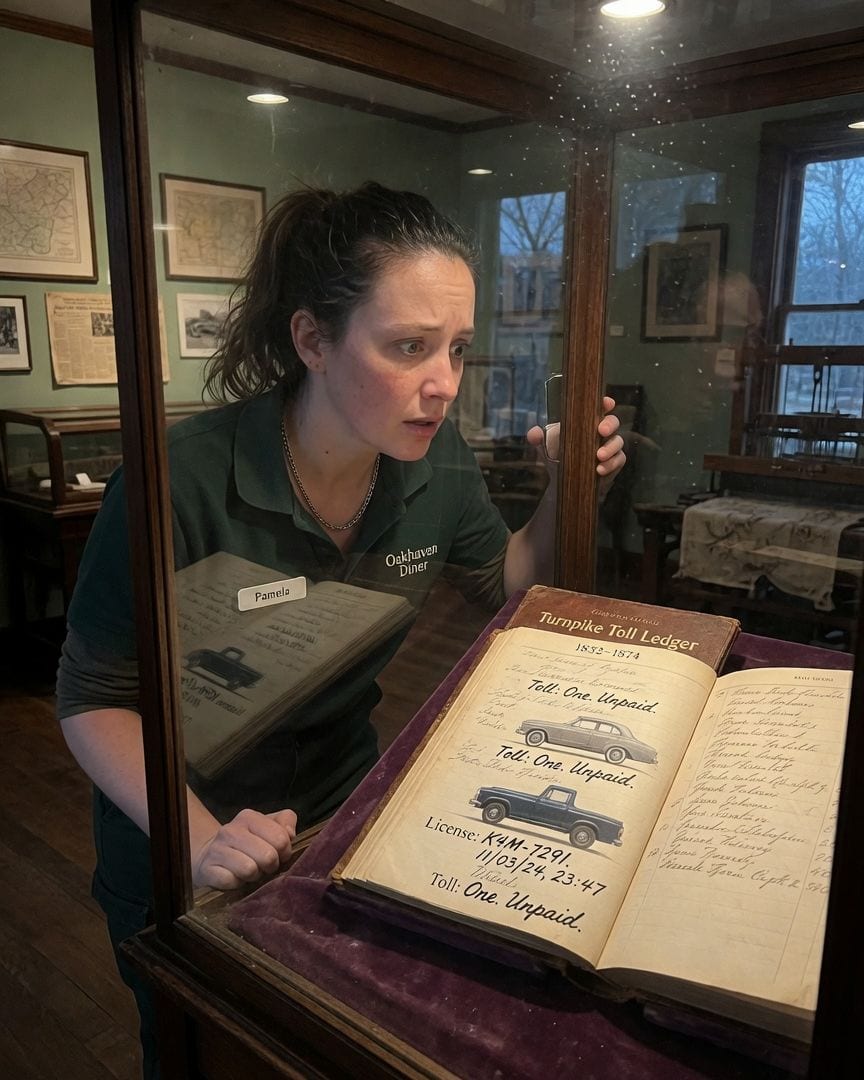
My car stalled at the old turnpike milestone, after dark. The toll ledger, closed in 1874, then listed my car, my stall time, and a toll of one, unpaid.
I had just moved to Oakhaven when my old sedan died on a dark, winding road by an infamous turnpike milestone. The next day, I found my car's exact registration and stall time written in fresh ink in a 150-year-old, locked museum ledger, marked 'Toll: One. Unpaid.' The curator dismissed it as a prank, but her white knuckles and strained voice hinted at something far more unsettling.
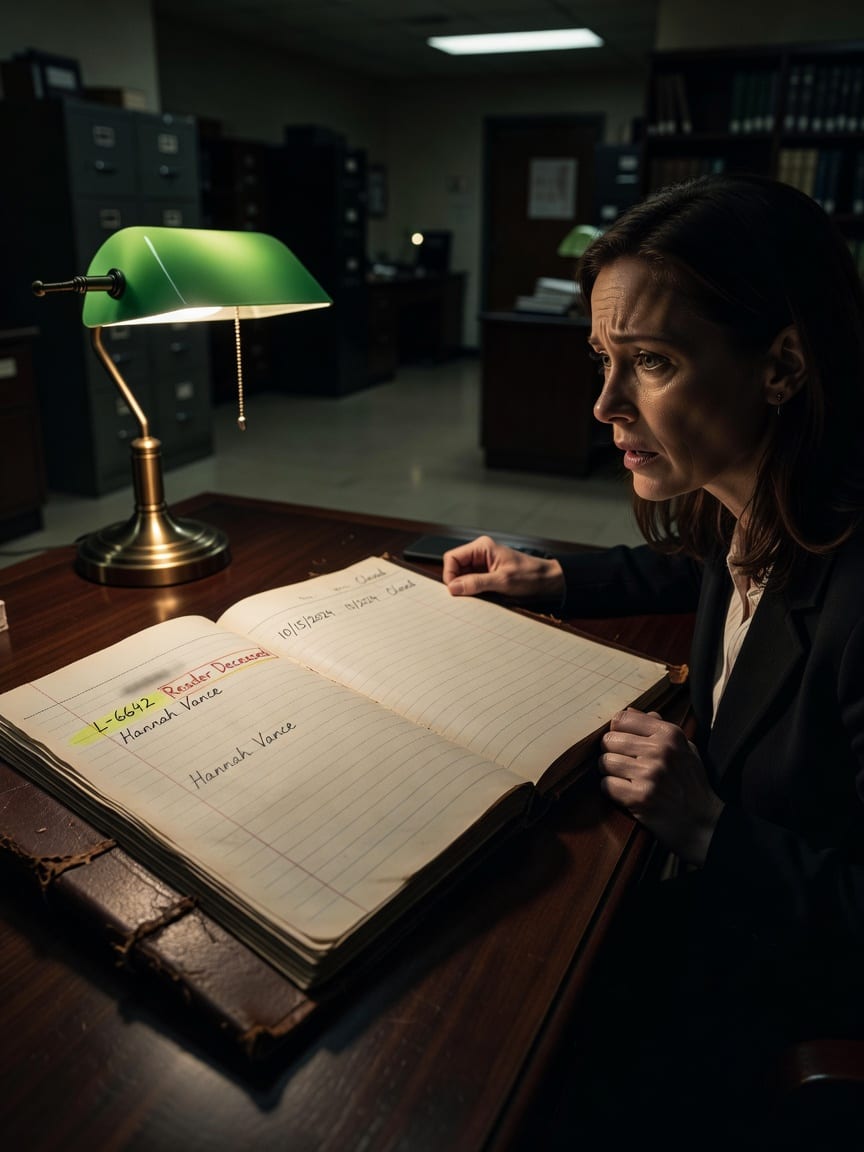
My library card number L-6642 was issued to me at seven — and the ledger shows that number has marked a reader 'deceased' every twelve years since 1949.
Returning my late father's library card to the old town library felt like a small act of closure. But the senior librarian's ancient ledger revealed a chilling pattern of 'reader deceased' entries tied to specific card numbers and borrowed books. My unease turned to cold dread when I secretly found my own name penciled in, marked for a future 'reader deceased' entry.

My taxi driver knew my name before I spoke, then apologized for the flight I was going to miss. I was arriving. The cab's plate was scrapped four years ago.
After a strange taxi ride, I received an unsettling birthday card addressed to me. Its return address listed 'Old Mill Road Field,' an empty lot where a mill once stood, and it was postmarked locally. The card arrived four months before my actual birthday, sparking a cold dread I couldn't ignore.
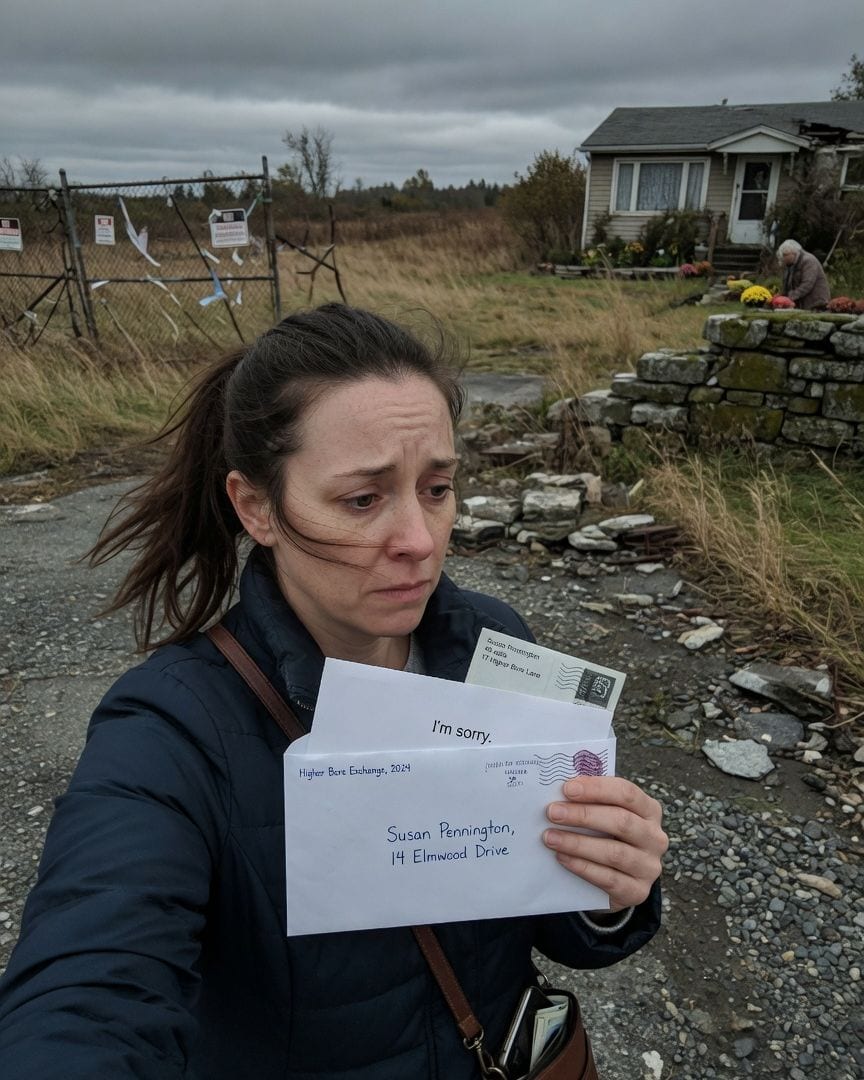
My phone bill listed forty calls made at 3:14 AM to a house demolished in 1990. The paper bill came from a flattened building. My name is on it.
I stared at my phone bill, my morning coffee forgotten. It detailed forty calls, each at 3:14 AM, to an address I knew was a vacant lot where a house had stood decades ago. But the real dread began when I saw the bill's return address: a telephone exchange flattened years before.
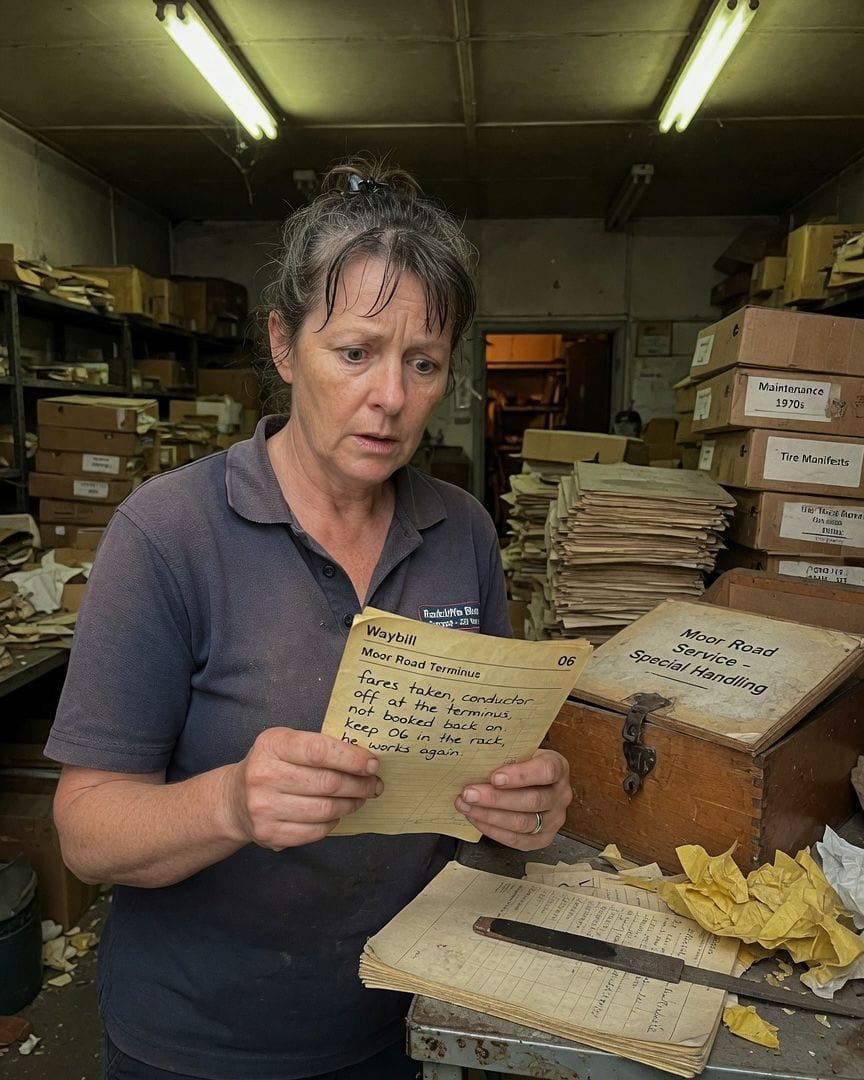
Our depot's Waybill 06 filed a moor road service we stopped running years ago. Every eight years since 1956, it closes: 'keep 06 in the rack, he works again.'
Sorting waybills in the depot, I stumbled across a form for the Moor Road Terminus. That route was decommissioned decades ago, but this waybill had a chilling handwritten instruction: 'keep 06 in the rack, he works again.'
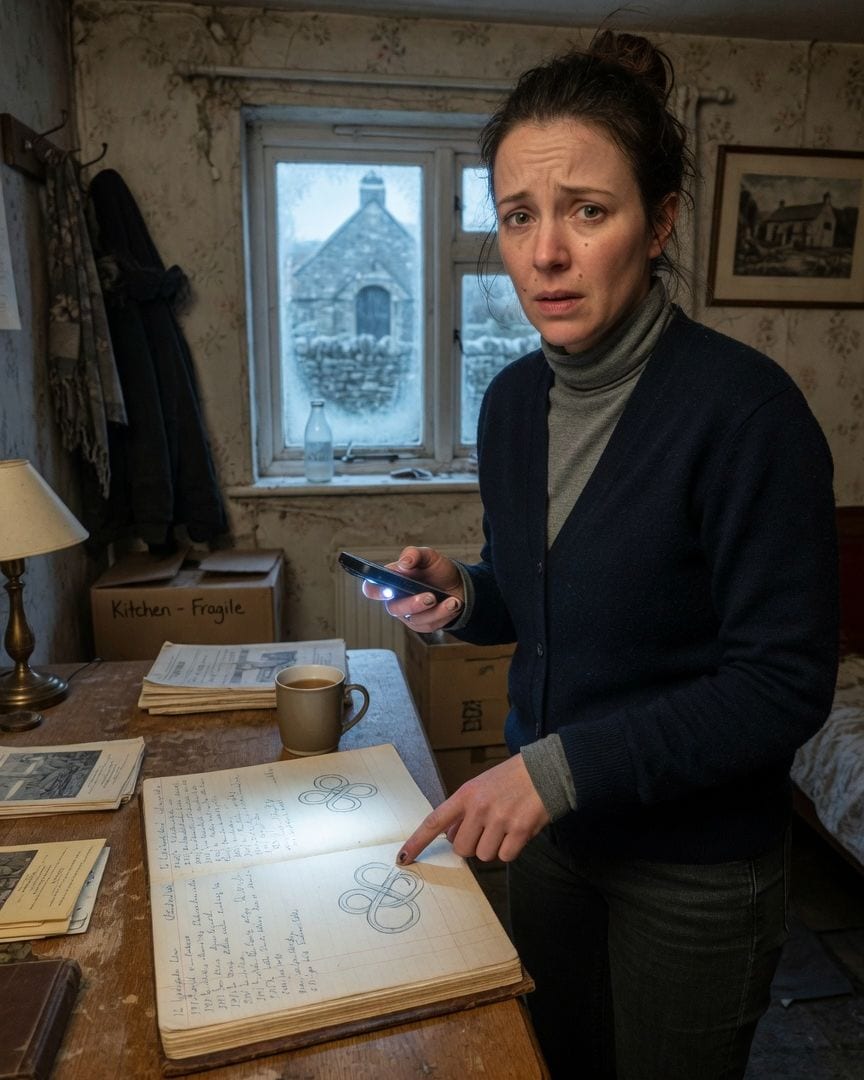
Milk appears daily by my lychgate. The dairy closed in '79. My address is handwritten into their old delivery book, starting the day we moved in.
Moving to Blackwood Creek, I loved the quaint charm, especially the unexpected morning milk delivery to my lychgate. But when I mentioned it to Eleanor at the village shop, her smile froze. She told me Willow Creek Dairy closed decades ago, in '79.