My taxi driver knew my name before I spoke, then apologized for the flight I was going to miss. I was arriving. The cab's plate was scrapped four years ago.
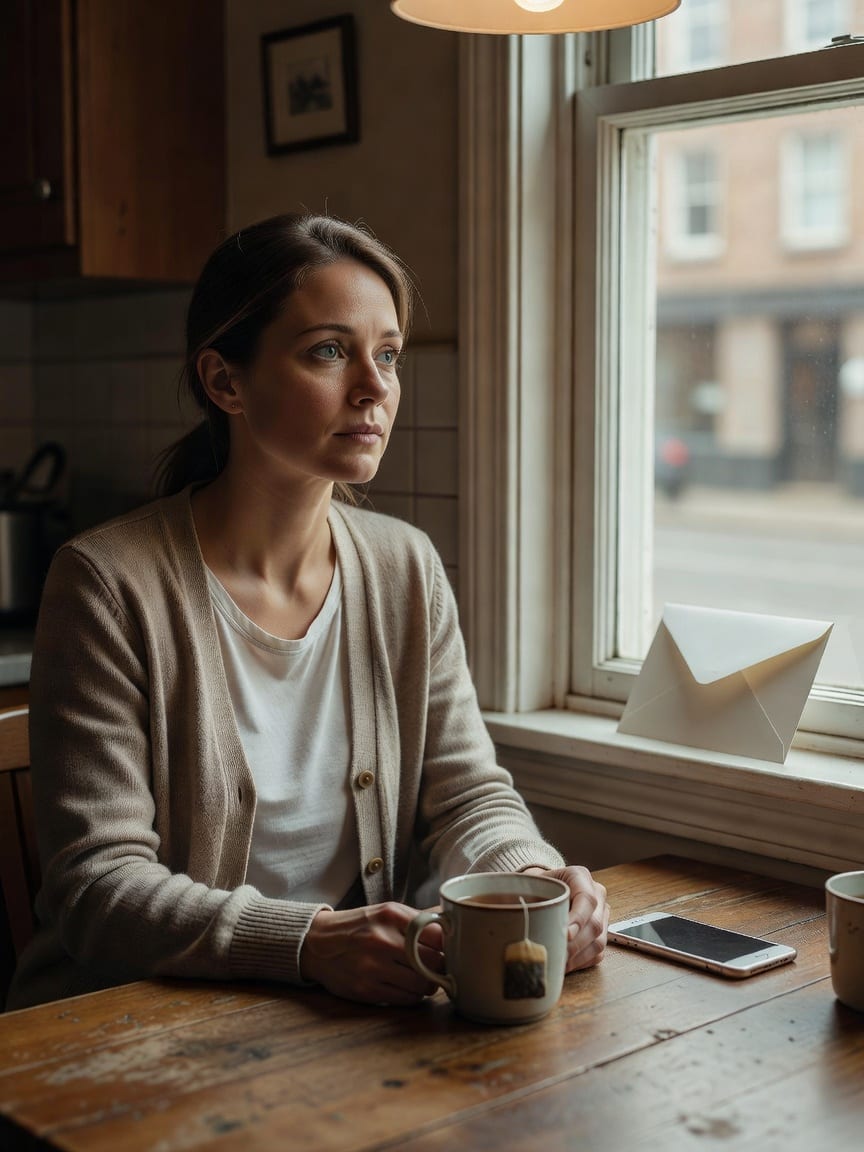
The cool evening air of Gatwick hit me with a jolt, a welcome shock after the recycled oxygen of an eight-hour flight. I was tired, beyond tired, but relieved.
My transfer was late, naturally, so I just stepped to the curb to hail a black cab. One pulled up almost immediately, too fast, too perfect.
The driver, a man in his forties with a kind but watchful face, was already leaning out the window.
"Nora Vance?" he asked, his voice surprisingly gentle, cutting through the airport din.
My jaw went slack for a second. I hadn't said a word. I hadn't even confirmed my destination. But the fatigue blurred my surprise. "Yes," I managed, nodding.
He offered a faint, unreadable smile. "Apologies, twice over. For the flight you're going to miss."
My brow furrowed. "I'm sorry?" The words didn't make sense. "I'm arriving, not leaving."
He chuckled softly, a dry, rustling sound. "Indeed you are. Nevertheless." He opened the back door for me. "No fare, by the way. Protocol."
"Protocol for what?" I asked, but he just gestured for me to get in. Before I could argue or ask for clarification, he was behind the wheel, pulling away from the curb with a smooth, silent glide. It felt… off.
The car was too quiet, the driver too knowing. I memorized the plate number instinctively, a small, irrational defense against the strangeness.
Later that night, the incident gnawed at me. I was home, in my own bed, but the memory of his eyes, that faint smile, wouldn't fade.
I pulled out my phone and typed the plate number into the online vehicle database. The screen loaded, slow and deliberate. And then the result: 'Registration B798 LKY.' My heart lurched. 'Status: Scrapped, December 2019.'
The taxi I’d just been in, minutes ago, had legally ceased to exist four years ago.
The taxi incident felt like a crack in the pavement of my reality, but my rational mind was already patching it up. A prank. A mistaken identity. A glitch in the database, maybe. It had to be.
I dismissed the driver, Charles Lawson, as a weirdo, and tried to forget his unsettling smile.
A week later, another anomaly landed on my doormat. A pristine white envelope, crisp and almost aggressively plain.
It was addressed to ‘Nora Vance,’ with my correct address, but the return address was handwritten, in neat, almost artistic script: ‘Old Mill Road Field.’ The postmark was local, a blurred circle of black ink that still clearly read 'Kingston-upon-Thames.'
Old Mill Road Field. I knew that place. It wasn't an address; it was a ghost. An empty, overgrown lot on the outskirts of town, where an old mill had stood for centuries before being demolished decades ago.
I’d driven past it a hundred times. Just a patch of weeds and forgotten history.
I tore open the envelope. Inside was a generic birthday card, the kind you buy in a multipack from the supermarket. Cartoon balloons, a printed ‘Happy Birthday!’ in cheerful script.
But the message inside was handwritten, in the same neat, almost artistic hand as the envelope. A simple, unsettling phrase: ‘Wishing you the best, as always.’
My birthday wasn’t for another four months.
A cold prickle of unease, sharp and definite, traced its way down my spine. This wasn't a prank.
Who would know my full name, my address, my birthday, and send me a card from a demolished site, weeks ahead of time? I pulled up old maps on my laptop. Checked historical records.
The mill, 'Blackwood Mill,' gone since the 1970s. The field was just that: an empty field, not a house, not a post office, not anything that could generate a postmark.
My phone, usually silent, seemed to hum with the wrongness of it all. The room itself felt colder, the air thick with unanswered questions.
The 'Old Mill Road Field' address became an itch I couldn’t stop scratching. It screamed for a mundane explanation, and I was going to find one.
I called in sick to work and drove to the local historical society, a charmingly dusty building tucked between a bakery and an antique shop.
Benjamin Porter, the registrar, was a kind man in his mid-fifties, with spectacles perched on his nose and a perpetually bewildered expression. He remembered my father, which was a nice surprise.
He helped me search old land deeds and town records for any peculiarities related to the mill site, muttering about 'lost boundaries' and 'unregistered easements.'
While Benjamin was distracted with another query, helping a young student trace some obscure ancestor through microfiche, my gaze fell upon a dusty, leather-bound ledger half-hidden on a shelf of forgotten registers.
It was thicker than the others, and its spine was unlabelled, its leather worn smooth in places. Curiosity, potent and undeniable, overrode caution. I pulled it down.
It was heavier than it looked, settling in my hands with a dull thud.
The pages were yellowed, brittle, filled with elegant, uniform script. Names, dates, brief, cryptic notes. Like a family Bible, but not. My finger traced down a column, past a 'Thomas Vance' and an 'Eleanor Vance.' And then I saw it.
My full name, 'Nora Vance,' clearly written in that distinctive, flowing hand, next to a date: '1989.' My breath caught in my throat, a sharp, cold gasp. The world tilted, a vertigo that was more than just physical.
I wasn’t born until 1991.
I returned to the historical society the next day, the ledger entry burning in my mind like a phantom limb.
The air felt charged, every rustle of paper, every muffled cough from the next room, echoing with a new, unsettling significance. Benjamin Porter was initially dismissive, waving his hand vaguely. "Oh, that old thing? Just a parish record, probably misfiled.
Clerical error, I expect." His easy rationalization grated. He wasn't the one whose existence had been contradicted.
"It has my name, Mr. Porter," I pressed, my voice tighter than I intended. "Nora Vance. And a date two years before I was born."
I pushed the open ledger across the counter, pointing a trembling finger at the elegant, distinctive handwriting. "Do you know who wrote this?"
Benjamin peered closer, his spectacles slipping down his nose. "Hmm, yes, I recognize that hand." He squinted at the page. "Belonged to an old volunteer, Conrad Muller. Eccentric fellow.
Spent years poring over these books, especially the ones with unusual entries." He straightened up, a fond, slightly exasperated look on his face. "Obsessed with local 'oddities,' he called them. He had a theory about everything, that one."
I flipped through the ledger again, my eyes no longer skimming. Now I saw it clearly: not just names, but cryptic notes. 'Arrival foreseen,' 'Departure understood,' 'Passage observed.'
Next to specific dates and addresses, some of which I vaguely recognized as now-demolished buildings or empty lots. It wasn't just my name; there was a pattern. A disturbing, impossible pattern of impossible records.
"I need to speak to him," I said, the words a demand rather than a request. "Conrad Muller. Do you have contact information for him?" A sense of dread had solidified into purpose, sharp and cold as a surgical blade.
I spent the next few days in a blur of frantic, obsessive research. The historical society's ledger became my bible, and Conrad Muller my unwilling prophet.
I cross-referenced names from the book with old census records, scanned microfiches of local newspaper archives, and trawled obscure genealogy sites until my eyes ached.
A disturbing consistency emerged: individuals listed in the ledger often had unusual, unexplained events associated with them—strange disappearances, unexpected relocations, or odd, untraceable communications.
Many of these events were tied to locations that had since vanished or become 'nowhere' places, much like Old Mill Road Field. It was sickeningly coherent. Too coherent.
One afternoon, hunched over a flickering microfiche reader in the quiet, hushed library, the faint whirring of the machine the only sound, a wave of cold dread washed over me.
It wasn't just my imagination; it was a physical sensation, like walking into a freezer. I felt, distinctly, as if I were being watched. The hairs on my arms stood on end.
I looked up, scanning the empty rows of shelves, the high, arched windows, but saw no one. Just the endless, silent corridors of forgotten knowledge.
Just as I was about to dismiss it as nerves, a trick of the dusty air, my phone vibrated on the table, a sudden, jarring buzz in the stillness.
An unfamiliar number. No caller ID, just a string of digits I didn't recognize. My heart hammered against my ribs, a frantic drum against bone.
I hesitated, my thumb hovering over the green icon, then answered, my voice a strained whisper.
A calm, elderly male voice, clear as a bell, spoke directly into my ear. "You're getting close, Nora. Be careful what you wish to understand."
The line clicked dead. No dial tone, just silence. The caller ID simply displayed 'UNKNOWN.' My hands trembled, and I slowly lowered the phone, the cold dread turning into a knot in my stomach.
The library, moments before a haven of logic, now felt like a trap.
The phone call solidified my conviction. This wasn't just a pattern; it was targeted. I immediately thought of Conrad Muller. He was the one who knew. He had to be.
My hands were still shaking, but a desperate resolve had replaced the terror.
Using the address Benjamin Porter had given me, Nora drove to a secluded, older house on the edge of town, its garden meticulously kept, every rosebush pruned, every lawn blade trimmed to perfection.
It was too neat, too quiet, like a stage waiting for its actors.
Conrad Muller, a man with a neat grey beard and piercing, calm eyes that seemed to hold centuries of quiet observation, answered the door.
He didn't seem surprised to see me, his expression perfectly neutral, as if I were a delivery person he’d been expecting.
The front door swung inward without a creak, revealing a hallway lined with dark, polished wood and the scent of old paper and dust.
I didn't mince words. My voice, usually steady, cracked slightly. "Mr. Muller, I think you know why I'm here. The ledger. And the phone call."
Conrad simply nodded, a faint, almost imperceptible smile playing on his lips, a smile that didn't reach his eyes. "Indeed." He invited me in, gesturing to a comfortable armchair in a living room filled with towering bookshelves. "Tea?
I find it helps with… clarity."
"I've been expecting you, Nora Vance," he said, his voice the same calm, elderly tone from the phone call, steady and unwavering. He didn't deny anything. There was no theatrical villainy, no gloating. Just an unsettling, matter-of-fact acceptance.
He sat opposite me, his hands clasped, a picture of tranquil repose. He explained, in a measured voice, that his family, for generations, had observed a 'pattern.' "Not an entity in the corporeal sense, perhaps," he clarified, his gaze steady.
"More a force. A resonance. It 'marks' certain individuals. Individuals tied, often, to a particular lineage. The Vance family, for instance."
My stomach clenched. "What does that mean, 'marks'?"
"It sees. It records," he clarified, his voice a quiet murmur that somehow filled the room. "It doesn't interfere, not in the way you might imagine. It doesn't cause events. It simply knows."
He took a slow sip of his tea. "It foresees the significant events of these marked lives. Your taxi driver's misplaced apology for a flight you were going to miss? That wasn't about a literal journey. That was a marker.
A signal of your 'arrival' at a new understanding. Your arrival here, today."
The dread in me tightened, cold and suffocating. Not from fear of a monster, but from the chilling, detached certainty of his explanation. "The birthday card," I whispered, the words barely audible. "From Old Mill Road Field."
Conrad nodded. "Old Mill Road Field is one of its many focal points. Places where its presence is… clearer. Places where the veil between what is and what will be is thinner.
The card was a typical 'signal' for a marked individual. An acknowledgement. A reminder."
Every strange event, every impossible detail, began to click into place with horrifying coherence. The scrapped taxi plate. My name known before I spoke. The card from a place that didn't exist, for a birthday that hadn't happened.
The ledger entry from before my birth. It wasn't random. It was all connected. All for me.
Conrad led me to a small, oak-paneled study, the air heavy with the scent of leather and aged paper. Sunlight, thick with dust motes, streamed through a single tall window, illuminating a large, antique desk. On it, lay another ledger.
This one was far older and thicker than the one at the historical society, its leather cover cracked with age, its metal clasps oxidized green. This was the original. The real one.
"This is our family's true record," he said, his voice devoid of pride or regret, "the full chronicle of the marked." He opened it to a specific page, its parchment brittle and yellowed, ink faded to sepia.
The pages smelled faintly of earth and dried herbs.
My eyes scanned the page, past generations of 'Vance' entries. A long list of my own surname, 'Vance,' dating back centuries. Each entry had a name, a date, and a brief, cryptic note: 'Arrival foreseen,' 'Departure understood,' 'Passage observed.'
The handwriting, though evolving slightly from generation to generation, was unmistakably the same careful script I'd seen in the historical society's book. The pattern was undeniable.
And then I saw it. About two-thirds of the way down the page, clear as day, written in the same precise hand from the historical society’s ledger: 'Nora Vance, 1989 (birth foreseen).' My own name. My own impossible date.
My breath hitched.
Conrad pointed a steady, almost elegant finger. Directly beneath my entry, there was a blank space, meticulously drawn, clearly the next entry, waiting for a future date, the same careful hand having ruled the line for it.
The pattern wasn't just a record of past Vances, a chronicle of the already-lived. It was an active, pre-ordained designation. Not just for her name, but for her. And the blank space was for her own destiny.
My voice was a whisper, thin and reedy. "What does that mean? The blank entry?" My gaze was fixed on that empty, waiting line, etched into parchment that had seen centuries.
It felt less like a book and more like a map of the inevitable.
Conrad met my gaze, his eyes unwavering, devoid of any emotion I could interpret as human. "It means the entity has observed your path. It doesn't cause events, Nora. It simply observes them, often with a precognitive quality.
It is a record-keeper, not a puppet master." He paused, allowing the words to sink in, his calm voice a terrifying counterpoint to the storm in my head. "The taxi driver's apology for a missed flight?
That was a marker, as I said. Not for a literal flight you will fail to board, but for your 'arrival' at this understanding, this new phase of being 'seen.' You are no longer ignorant of the pattern."
He explained that his family's role was not to interfere, but to maintain the record, a chronicle of those chosen for this unique, intimate observation. "Your lineage, the Vances, is particularly… resonant to it," he stated, almost academically.
"A recurring motif. Each 'Nora Vance' across the centuries, each 'arrival' and 'departure,' has been meticulously recorded. The cards from Old Mill Road Field are simply its acknowledgements, confirmations of its continued observation.
Little nudges to let you know it's there, watching, knowing."
My own existence, a nudged acknowledgment. The thought was sickening.
"The blank entry isn't a death sentence, Nora," he continued, his voice softer now, almost empathetic in its detachment. "It's a prediction. A significant event in your life, already known, already etched into the pattern.
It is your designated moment, just as it was for all the others."
The terror wasn't in a threat, not in some monster lurking in the shadows. It was in the profound, chilling intimacy of being so perfectly, utterly known.
My life's trajectory, my choices, my future – all of it already mapped out by an unseen, uncaring observer, recorded in a book held by a man who saw me as little more than another entry.
It was an existential dread, a total loss of agency.
There was no fight left in me. No escape to be planned, no battle to be waged. The confrontation wasn't with Conrad, but with the chilling reality he had laid bare.
My life, my choices, my future – all were part of an ancient, observed pattern, already known, already recorded in a ledger held by a calm, detached stranger. The silence in the room stretched, thick and heavy.
Even the dust motes dancing in the sunlight seemed to slow, caught in the unbearable stasis of absolute certainty.
I looked at Conrad, who sat across from me, a sentinel to an indifferent truth. He wasn't malicious; he was simply a part of the mechanism. The entity wasn't evil; it was simply. And I was simply observed.
I rose slowly, the weight of inevitable observation pressing down on me, making my muscles ache. My limbs felt heavy, detached. I didn't ask for a way out, because I knew there wasn't one.
The knowledge had settled into my bones, a cold, unyielding certainty. There was no argument, no plea, no bargaining that would change what was already written.
I left Conrad's house, the afternoon sun feeling strangely artificial, its warmth a lie. The world around me was subtly altered, the edges of reality blurred and sharpened all at once.
Every rustle of leaves, every distant siren, seemed to carry a new, unsettling resonance, as if the world itself was whispering the pattern, confirming its presence.
I tried to process the idea that my choices, my future, were already known, already etched into a ledger, recorded before I had even conceived of them.
I could not escape the pattern; I could only live within its parameters, now knowing I was truly, deeply, and irrevocably seen.
I returned to my flat, the stillness almost painful. I told Alice a version of the story, omitting the deepest, most unsettling truths. I spoke of a strange family history, a record-keeping society, and a series of disturbing coincidences.
I watched her face, concerned but ultimately rationalizing it away. "It's just a strange old man, Nora. And a lot of bad luck." Alice, my rational, grounded friend, who believed in empirical evidence and verifiable facts. I didn't argue.
I knew she couldn't understand. She saw the normal world. I saw the patterns beneath it.
I started looking at the world differently. Every unexpected encounter, every odd synchronicity, now held a new, ominous significance. The world was full of markers, if you only knew how to read them.
I kept the birthday card from Old Mill Road Field pinned to my notice board, not as a threat, but as a constant, chilling reminder. A physical manifestation of my marked existence. It never faded, never yellowed.
It stayed pristine, a permanent signal.
I sat at my kitchen table, a half-finished cup of tea growing cold beside my laptop. I typed a message to Alice, a mundane update about work, then stopped, my finger hovering over 'send.' What was the point?
Everything I did, everything I would do, was already known. Already logged. A faint gust of wind rattled the windowpane, even though the house was sealed tight, the sound impossible.
I looked up, my gaze fixed on nothing, and a faint, almost imperceptible smile touched my lips, a smile Alice would not recognize.
A few days later, Alice Blackwood checked Nora's online profile again. The last post was still a half-finished sentence, a draft of a message to her. Underneath, a single, anonymous comment had appeared overnight, simply reading: 'the end.'
The wind whispered my name, and I knew it was time.
If this one got to you
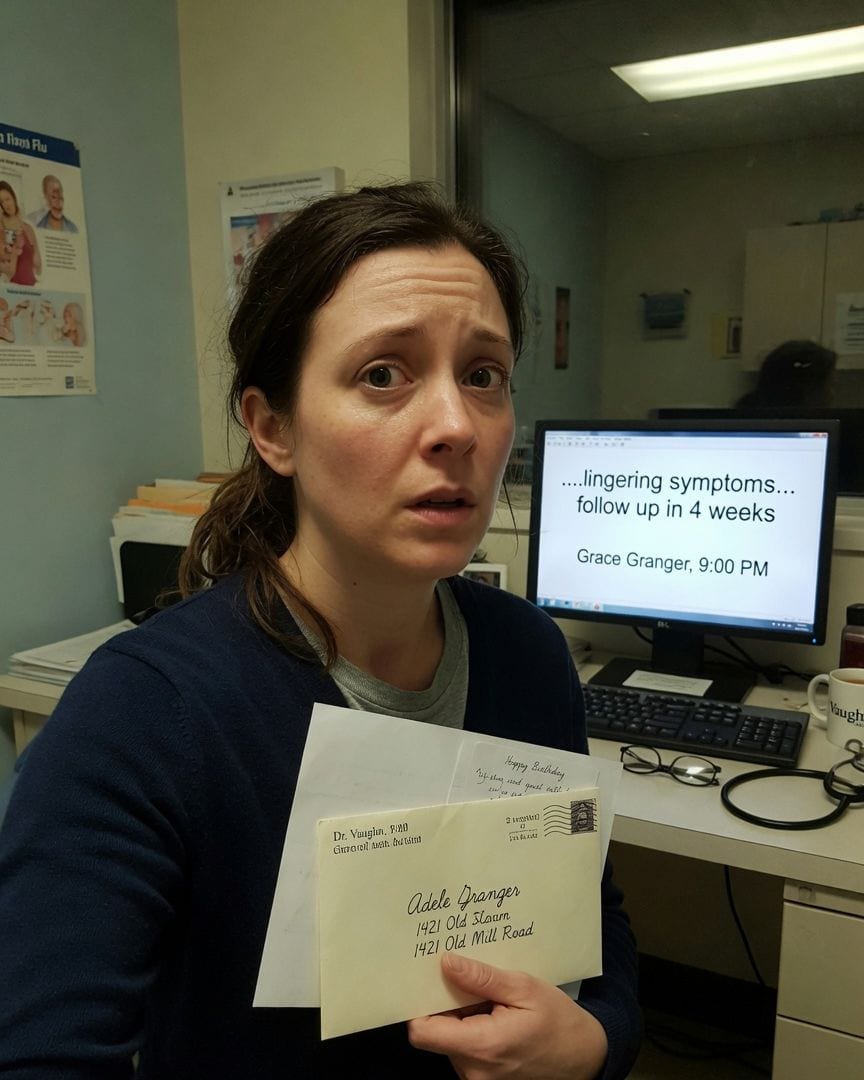
Mid-appointment about my cough, my doctor told me to call my estranged sister tonight — a sister I'd never mentioned to him. The note on his screen ended with her name and a time.
My doctor dismissed my cough as a lingering virus, but then he said something impossible: "You should call your sister tonight." I hadn't spoken to Grace in years, and I'd never mentioned her to him. When I saw her name on his screen with a specific time, a cold dread began to claw at me.
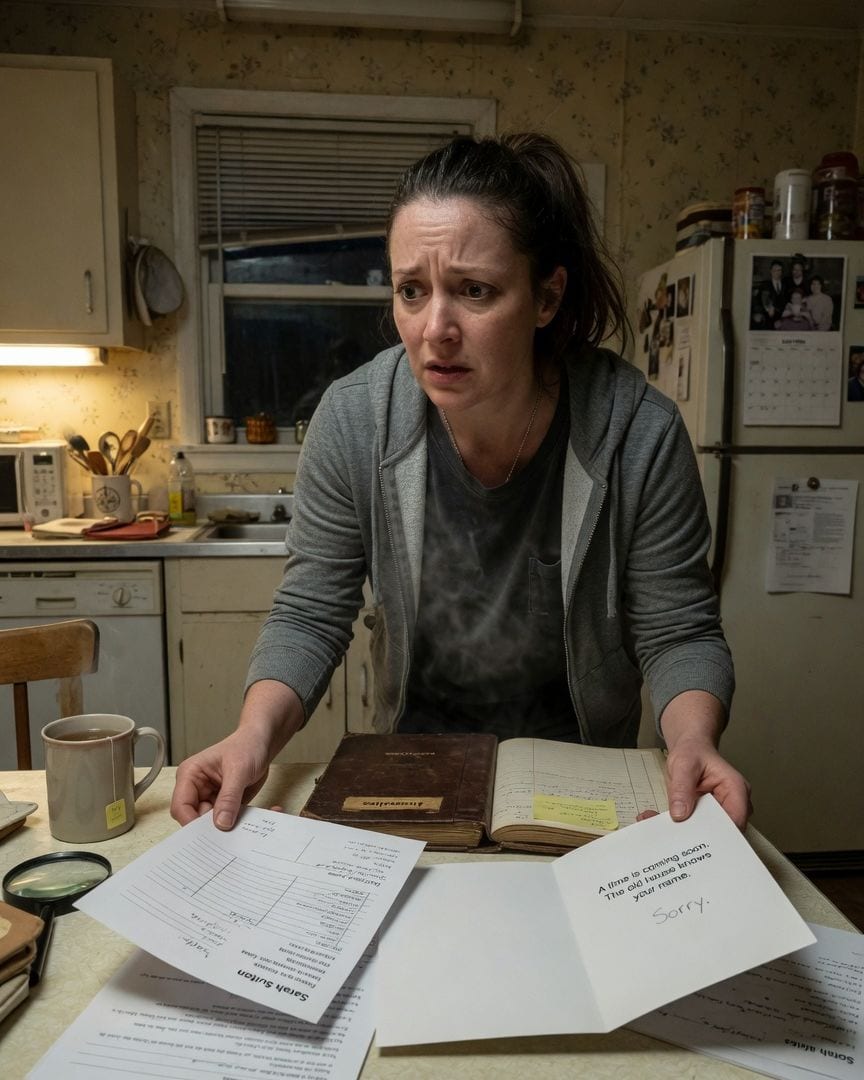
My name sits in the 1966 electoral register. My house, my exact name. Someone pencilled 'sorry' in the margin.
I was sifting through dusty microfiche, tracing my family line for my childhood home, when I found it. The 1966 electoral register for my address listed my exact name: Sarah Sutton. My heart hammered. I wasn't born until 1988; this was thirty-five years before I existed.
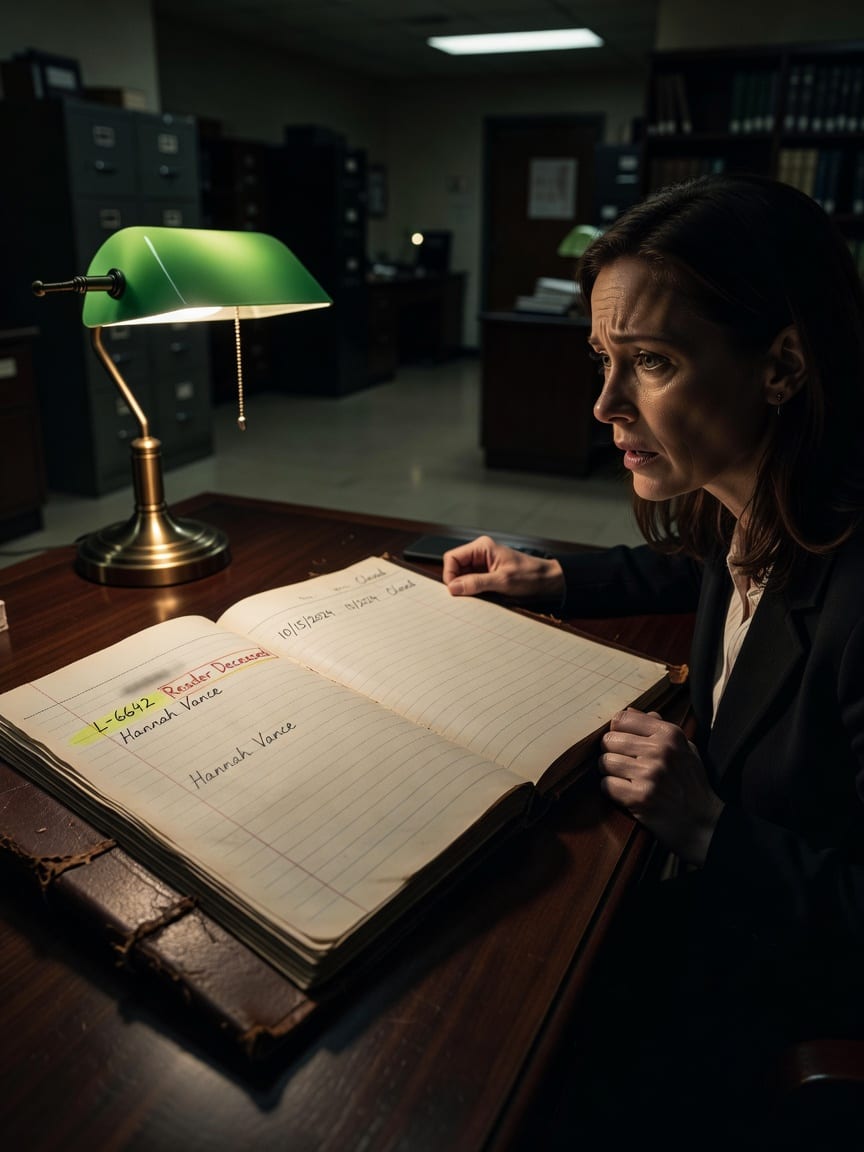
My library card number L-6642 was issued to me at seven — and the ledger shows that number has marked a reader 'deceased' every twelve years since 1949.
Returning my late father's library card to the old town library felt like a small act of closure. But the senior librarian's ancient ledger revealed a chilling pattern of 'reader deceased' entries tied to specific card numbers and borrowed books. My unease turned to cold dread when I secretly found my own name penciled in, marked for a future 'reader deceased' entry.
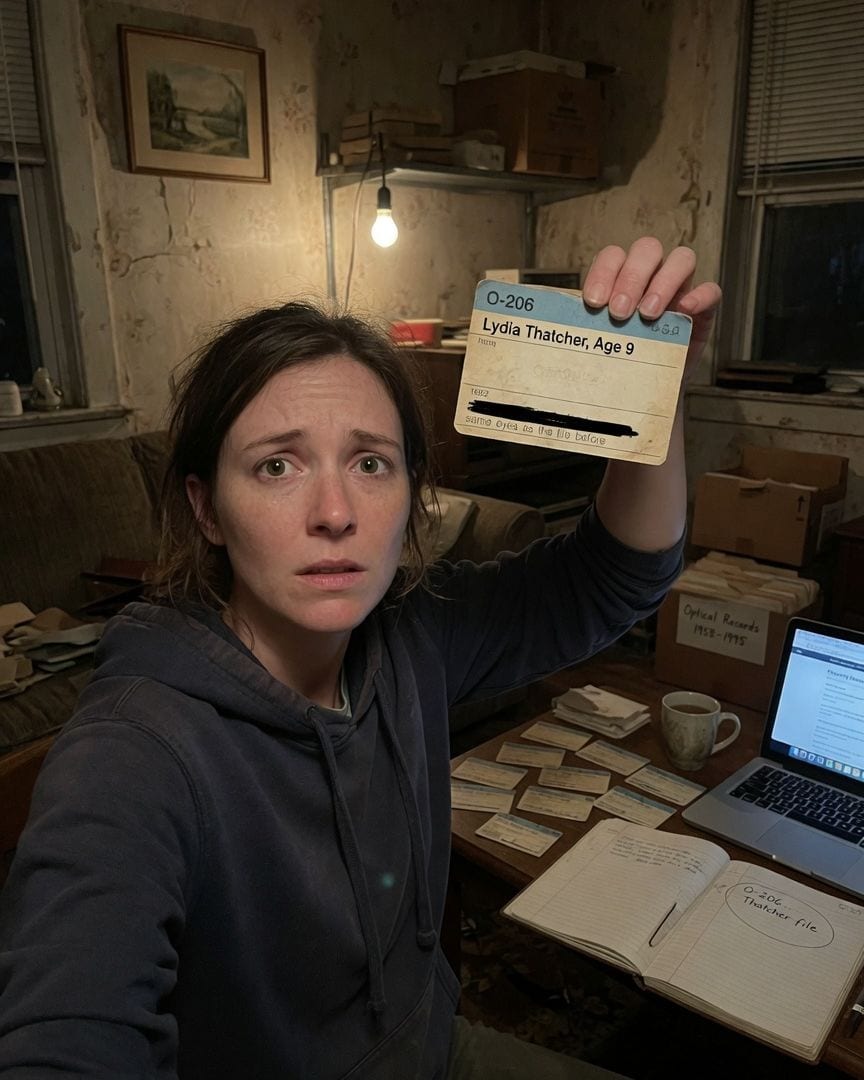
My own optical card is dated 1962, with my name on it. I wasn't born until 1993.
Sifting through old patient files from my former optical practice, I found my own O-206 card. It had my name, Lydia Thatcher, and my current home address printed on it. But the card was dated 1962, decades before I was even born, and a redacted note mentioned 'same eyes.'
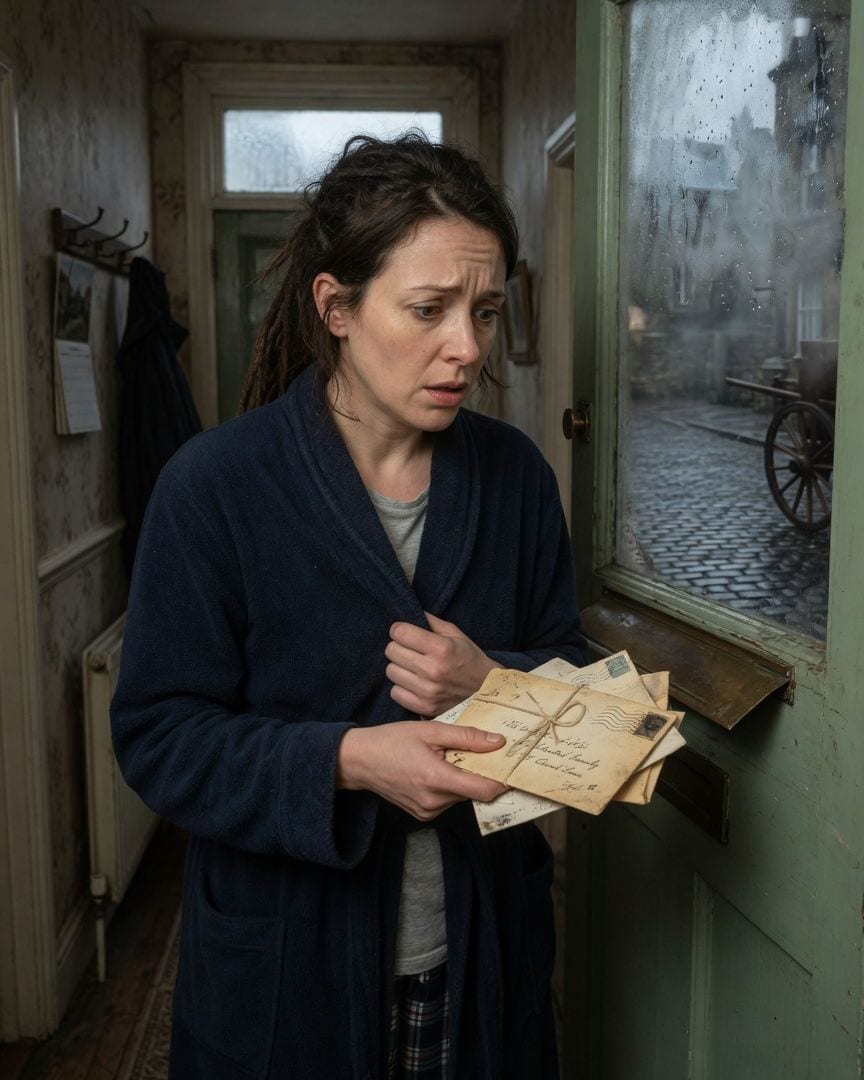
Seventy years ago, a hidden journal recorded my door opening to the wrong street and receiving Lockwood post.
I'd only recently moved into my inherited house, a quiet place on the edge of town. One grey morning, a distinct clatter from the front door's post flap caught my attention. Reaching down, I expected my gravel path, but instead, the flap showed a dark, cobbled street that wasn't mine. A bundle of warm, old letters, addressed to 'The Lockwood Family,' slid through, before the vision flickered and was gone.
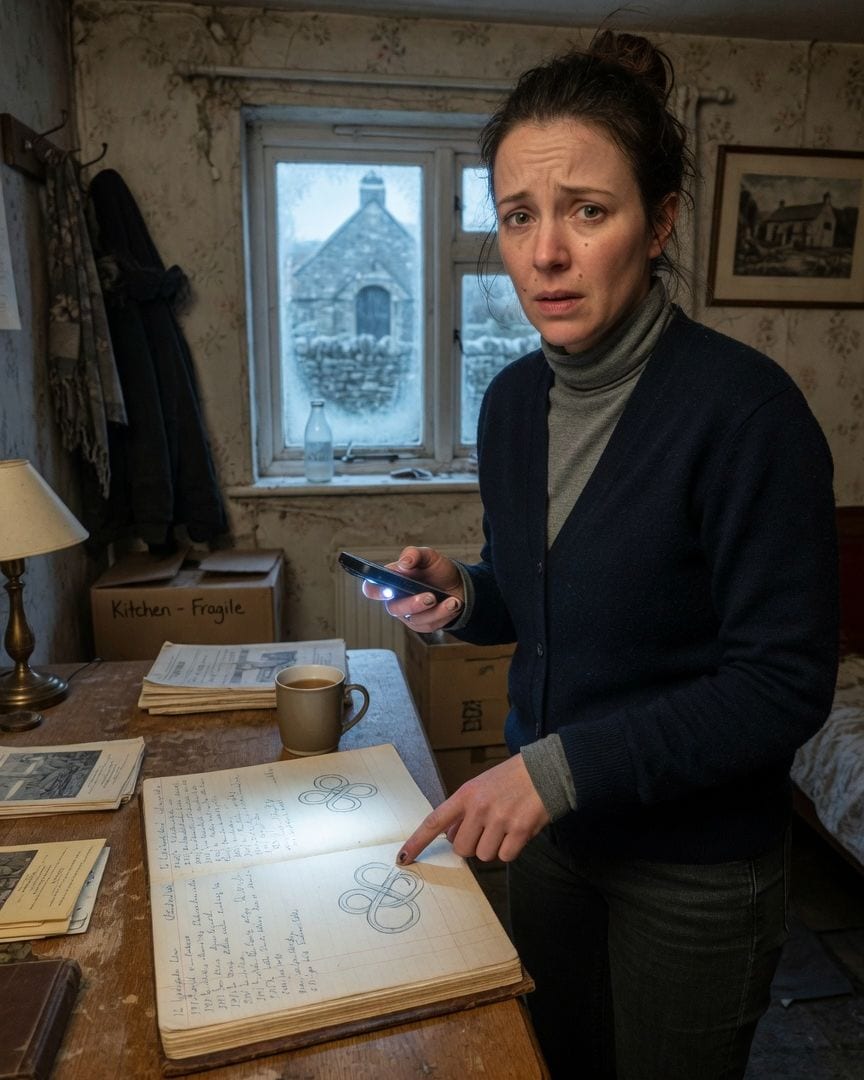
Milk appears daily by my lychgate. The dairy closed in '79. My address is handwritten into their old delivery book, starting the day we moved in.
Moving to Blackwood Creek, I loved the quaint charm, especially the unexpected morning milk delivery to my lychgate. But when I mentioned it to Eleanor at the village shop, her smile froze. She told me Willow Creek Dairy closed decades ago, in '79.