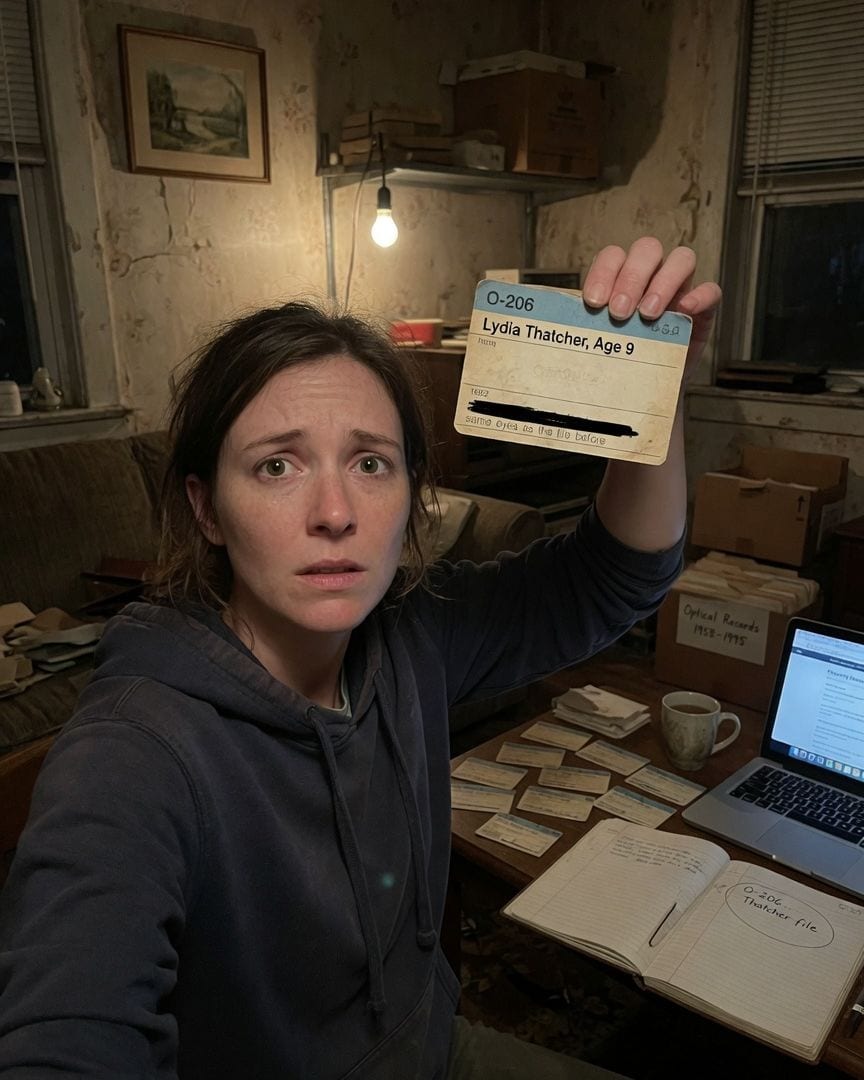
My own optical card is dated 1962, with my name on it. I wasn't born until 1993.
I still can’t quite believe I’m writing this. It feels like something out of a bad movie, but it happened. Every single word. And I need someone, anyone, to read it. To know.
It started with a box of old files. My old optical practice, where I used to manage records, finally shut its doors last year. They’d been open since the 50s. A dusty, slow death, really.
As a former employee, I had the grim task of sifting through years of paperwork, mostly to grab my own personal files before everything got shredded. Tedious work, in a cramped storage unit that smelled faintly of cardboard and mildew.
I pulled out my own O-206 card. Standard form, really, from when I was a kid. My name, Lydia Thatcher, age 9, date of last exam, my prescription. All normal.
I ran my finger over the laminated surface, tracing the faded blue ink. Then I saw it. A line, near the bottom, just above the section for 'notes'. It was neatly redacted with a thick black marker.
Not crossed out, but blacked over, as if to conceal.
But the card was old, the marker a cheap kind, and against the strong light of the storage unit’s single bare bulb, I could still make out faint, ghosted words beneath the bar. A date: 1962. And then, same eyes as the file before — identical, keep for the record.
I blinked. My heart gave a funny little stutter. 1962? I wasn't even born until 1993. It had to be a mistake. A reused card? But no, my name was printed clearly at the top.
And then I looked at the address. My current home address. The house I’d moved into last year. Printed there, in that same faded ink, decades before I’d even existed. My name. My house. 1962.
My fingers, suddenly clumsy, flipped through the box. There they were. Four other O-206 cards, identical in form, all for the same street address.
One from 1972, another 1982, 1992, each with the same 'same eyes' note faintly visible under a redaction. And each of them, in the bottom corner, stamped with a precise, chilling phrase: not collected.
A clerical error. That was my first thought, the only logical one. The old practice was a mess sometimes. Maybe someone had reused a patient number, a file code?
It made a kind of sense, if you squinted at it hard enough. I called Pamela Norwood, my friend and former colleague. She’d always had a knack for administrative quirks.
'Pam, you remember the O-206 cards? The really old ones?' I asked, trying to keep my voice casual. I was pacing my living room, the cards spread out on my coffee table like a bizarre tarot reading.
She laughed, a familiar, easy sound that usually put me at ease. 'Yeah, vaguely. Some archaic numbering system, right? Why?'
'I just found my own, and it's… weird. It has a note about 'same eyes' and my current address, but it's dated 1962. With my name on it.'
There was a pause. 'Lydia, you sure? That sounds like a total screw-up. Maybe they reused a file number. Or it's just some old, blank form they grabbed. You know how disorganized Mr. Henderson was with the archives.'
Her explanation felt like a flimsy shield against something much sharper. The 'same eyes' note, though. It was too specific. And my name. Tied to an address decades before I was born. It burrowed under my skin like a splinter.
I spent the rest of the evening hunched over my laptop, cross-referencing old property deeds for my house. I confirmed its history: several owners, going back well into the 1900s. The address was consistent.
But no ‘Lydia Thatcher’ appeared in any prior records I could access. Not even a distant relative.
The mundane explanations, the ones that usually settled everything, simply crumbled. A reused number didn't explain the recurring dates, every ten years, for the exact same address. It didn't explain the eerily consistent 'same eyes' annotation.
It certainly didn't explain my name, linked to it all. A prickle of unease started to spread, cold and slow. This wasn't just a mistake. It felt like a deliberate pattern, something I’d just stumbled upon.
And the room, usually comforting, seemed to press in on me, suddenly too quiet.
Driven by a dread that had taken root deep in my gut, I went back to the storage unit the next morning. The air was stale, heavy, and a shiver ran through me despite the mild autumn temperature outside.
I wasn't looking for my own records anymore. I needed to dig deeper. I pulled boxes, sending clouds of dust dancing in the single bulb's beam, until my hand brushed against something heavy, leather-bound. It wasn't a patient file.
It was an old practice logbook, thick and unwieldy, dating back to the late 1950s.
The pages were brittle, the corners dog-eared, the ink faded to shades of sepia. I flipped through, past routine appointments, supply orders, mundane entries that meant nothing. Until I found a section of irregular, terse notations, squeezed into the margins.
My finger trembled slightly as it traced down the columns. There it was again. The designation: 'O-206.' Next to it, in the precise, looping script of a bygone era, was my street address.
And then, a small, precise note, dated 1962: 'Subject identified. Observation period initiated. Refer to Thatcher file.'
The phrase 'Refer to Thatcher file' felt like a cold whisper down my spine. It implied something active, something planned, far beyond a simple record. My own name. A file. Not just a card, but a whole file.
I began to research. Old employees, anyone who might have worked at the practice around those dates. Eventually, I found Desmond Hayes.
He was listed as a retired archivist for the local council, and his name popped up on various historical society committees. He’d handled a lot of the practice’s older records when they were first being digitized, or so I’d read.
I called him, feigning interest in my house’s property history, a plausible excuse to meet.
Desmond was a meticulously tidy man, even in his retirement. His small living room was lined with shelves of local history books, organized by color and then by height.
He listened, nodding politely, as I explained my supposed interest in my house. But when I steered the conversation to the optical practice, to the obscure 'O-206' designation, his demeanor shifted.
'O-206? Ah, yes. An old internal code, I believe,' he said, his voice clipped. He waved a dismissive hand. 'Hardly relevant to property deeds, I assure you.'
'But it kept appearing,' I pressed, trying to sound genuinely curious, not desperate. 'Every ten years, for my address. And then there was a note, 'same eyes as the file before'. It’s just so... unusual.
And the logbook mentioned a 'Thatcher file' from 1962, connected to my house.'
The air in the room seemed to cool. The hum of the refrigerator, barely noticeable before, suddenly seemed loud, almost judgmental. Desmond’s eyes, usually steady behind his spectacles, flickered away, towards a framed photograph on the mantelpiece.
He picked it up, dusted it unnecessarily. 'Special files? No, no. Anything like that would have been purged decades ago, Miss Thatcher. Standard procedure for sensitive patient data.'
He put the photo back, a fraction of an inch out of alignment. His gaze met mine for a fleeting second, and I saw something there – not fear, but a deep, careful wariness.
'Though,' he added, almost off-handedly, 'certain properties in the area have always had… unique historical markers. Nothing to worry about, just local quirks.'
He offered no elaboration. And when I tried to push, to ask what he meant by 'historical markers,' he looked at his watch. 'I'm afraid I have another engagement, Miss Thatcher. A historical society meeting.'
He ushered me out with a politeness that felt like a brick wall. I left with a growing certainty that Desmond knew more than he let on, and that my questions had stirred something dormant and unpleasant.
A few days after my meeting with Desmond, an anonymous email landed in my inbox. No subject line. No text. Just a single attachment. I clicked it open, a cold knot forming in my stomach.
It was a grainy, slightly out-of-focus image. A photo of the exterior of my house. Taken recently. The angle was from across the street, half-hidden behind a neighbor's hedge. My porch light, which I’d replaced last month, was clearly visible.
Someone was watching me.
I spent an hour trying to trace the email, but it led to a dead end, bouncing through multiple servers in different countries. Later, I tried to revisit the online archive Desmond had vaguely referenced for 'historical markers.'
The specific search terms I'd used before now yielded nothing, or linked to broken pages. It was like someone had gone through and carefully pruned the internet.
That evening, as dusk settled, I noticed a dark sedan parked on my street. Tinted windows. It sat there for an unusual length of time, an hour at least, before slowly driving away. The next night, it was there again.
My unease morphed into a palpable sense of being watched, a tightening in my chest that made it hard to breathe. The light through my front window, usually soft, now felt scrutinizing.
I called Pamela again. 'Lydia, you sound… I don't know. Stressed,' she said, her voice tight with concern. She’d heard the tremor in mine. 'Look, about those records. Maybe you should just… drop it. Seriously.
Some things are better left alone.'
Her warning, however vague, only fueled my determination. I wasn’t just curious anymore. I was being watched. My investigation had crossed a line, and I was no longer an observer.
I was now part of whatever pattern I was trying to uncover.
I had to go higher. To the source. The practice’s retired senior administrator, Jeffrey Lockwood. I found him listed in an old industry directory, living in a quiet retirement community about an hour out of the city.
I arranged a meeting, inventing a story about wanting to donate old practice memorabilia to a local museum, hoping he could authenticate some items. He seemed pleased by the idea.
Jeffrey Lockwood was impeccably composed. Silver-haired, with kind eyes that held no warmth, only a deep, unsettling stillness. He sat across from me in the community’s airy common room, sipping Earl Grey tea.
I laid out my evidence: my O-206 card, the redacted line, the 'same eyes' note, the logbook entry referencing the 'Thatcher file' at my address.
He picked up my card, his movements slow and deliberate. He examined the documents without a trace of surprise or alarm. 'Ah, O-206,' he mused, tapping the card gently against the table.
The tapping was the only sound in the unnervingly quiet room. 'A very particular designation, Miss Thatcher.'
'Mr. Lockwood, what is this?' I demanded, my voice steadier than I felt. 'My name, my address, dates decades before I was born, a 'Thatcher file.' It’s not a clerical error.'
He initially feigned ignorance, a polite smile on his lips. 'Antiquated numbering system, perhaps, Miss Thatcher. A product of simpler times.'
'Antiquated numbering system that applies only to my house, appears every ten years, and refers to 'same eyes as the file before'?'
I pushed back, detailing the recurring dates, my name before my birth, the 'not collected' notes on the preceding cards. 'Mr. Lockwood, this isn't a mistake. This is a pattern. And it involves my house, and my eyes.'
Jeffrey sighed then, a faint, almost imperceptible shift in his placid expression. He placed the O-206 card back on the table. 'Very well, Miss Thatcher. There's no point in prolonging the charade.
The O-206 designation refers to individuals possessing a unique ocular trait. A... particular sensitivity to certain light frequencies, let's say. It manifests at specific geographical nodes. Your house, for instance, is one such node.'
He continued, his voice calm, even, without a hint of shame or fear. 'The practice, working under a larger, unnamed institution, has been conducting a long-term 'study' of this trait. Tracking its manifestation across generations.
The 'same eyes' simply confirms the continuity of the trait at that location. And the 'Thatcher file' was the institutional record of the initial identification of your lineage at that address.'
I felt the floor drop out from under me. It all fit. The dates, the address, the 'eyes.' The pieces clicked into place with horrifying precision.
But his calm, bureaucratic explanation, delivered over a cup of tea, was far more chilling than any monster I could have imagined.
I stared at Jeffrey, reeling from his casual revelations. The very air in the room felt thick and heavy, pressing down on me. 'So, you've just been... watching people?'
I asked, my voice barely a whisper, a hollow sound in the suddenly vast room. 'Filing them away? Like specimens?'
Jeffrey inclined his head slightly, a small, almost imperceptible gesture. 'Observation is a key component, yes. But the continuity is paramount, Lydia.' His smile didn't waver, a chillingly benign expression that made my skin crawl.
'And the institution is very good at ensuring continuity. Your decision to move into that particular house, with those particular eyes, was… expedient.'
He leaned forward slightly, his gaze unnervingly direct, pinning me in place. The warmth from his tea cup, sitting untouched on the table, felt like ice. 'Those 'not collected' files, for example.
We ensure the 'eyes' remain at their designated node. Sometimes, a gentle nudge is all that's required. Sometimes, a more... direct approach is necessary.' He paused, letting the implication hang in the air, a silent, dreadful weight.
'We've been waiting for you to find the file, just as we did for the others. It's always a fascinating part of the process, when they begin to see the pattern themselves.'
A cold dread gripped me, clenching my heart. It wasn't just passive observation. It was active management. Active manipulation. And I, by moving into my house, with my eyes, had walked right into their carefully orchestrated plan.
They hadn't just watched. They had guided. They had chosen.
My mind raced, every horrifying dot connecting with sickening clarity. 'What do you mean, 'manage continuity'?' I demanded, my voice trembling, breaking the eerie quiet of the common room.
Jeffrey took a slow sip of his tea, unperturbed. His composure was a solid, unyielding thing. 'The 'eyes' are not merely a genetic quirk, Miss Thatcher. They are... conduits.
Receivers of a certain perception, a unique way of seeing the world, or perhaps, another world, through this particular optical signature. Our institution has, for generations, been dedicated to understanding and, where possible, utilizing this phenomenon.'
He set his cup down with a soft click. 'The 'nodes' like your house are points where this optical trait manifests with unusual strength and consistency.
The 'not collected' records meant the previous O-206 subjects at your address had either been persuaded to remain, or, when that failed, 'relocated' and replaced by another suitable candidate with the 'eyes' – often a younger relative or someone with a similar genetic predisposition, subtly guided to the location.'
He paused, his gaze fixed on mine. 'Your move to the house last year, after the previous occupant's unfortunate illness, was a stroke of remarkable, if predictable, fortune for our study.
We simply ensured the administrative path was clear for you.'
He explained that my own optical records, even as a child, had marked me as a potential 'successor.' Every planted clue, every unexplained detail, now clicked into place, forming a coherent, terrifying picture.
It wasn't a conspiracy in the traditional sense, but a multi-generational, detached scientific endeavor, viewing people as instruments.
I pushed back from the table, a sudden surge of adrenaline coursing through me. I needed to get out. 'I won't be part of this,' I stated, my voice sharp and loud in the quiet room. 'I'll leave the house.
I'll expose you. I’ll go to the authorities, the press—'
Jeffrey merely smiled, a faint, almost pitying expression that robbed my words of their power. 'You can leave the house, Lydia. But the eyes don't forget their purpose. The perception, once awakened, cannot be un-seen.
You are not merely a resident; you are a conduit. And the 'study,' as you call it, is not confined to the walls of your home. It's in the light, in the air, in the very fabric of that street.'
He stood then, a tall, imposing figure despite his age. The chair scraped softly on the polished floor, a sound that echoed in the sudden silence. 'We have no desire to harm you, Lydia. Quite the opposite.
We merely wish to continue our observation. You are free to do as you wish. But you will find, over time, that the world looks different now. And the pull of the node, the focus of the eyes, is... undeniable.'
He didn't physically restrain me. He didn't threaten violence. His calm certainty was a far more insidious prison than any locked room. I stumbled out, the words echoing in my mind.
The confrontation wasn't with a monster, but with a quiet, unshakeable bureaucracy that had claimed me, not with chains, but with knowledge and an altered perception.
I tried to sell the house. I listed it, priced it fairly, but my attempts were met with strange bureaucratic delays. Paperwork vanished, reappeared with errors, and then vanished again.
Potential buyers came, some seemed overly interested in the house's 'history,' asking odd, probing questions. Offers came in, but they were strangely low, far below market value, despite the booming property market. Each time, something just… didn't work out.
I find myself constantly adjusting my glasses now, convinced my vision is subtly shifting. Faint distortions at the edges of my perception, a kind of shimmering that isn't quite there, but I feel it.
I avoid my street at night, the shadows seem too long, too deep, but even in daylight, the familiar houses seem to hum with a quiet, unseen energy.
I packed my remaining files, including my O-206 card, the old logbook, and Jeffrey's archived memos. They sit in a box, ready to be moved, but I cannot bring myself to discard them.
They are a testament, a burden, a part of me now.
I still live in the house. I haven't sold it. I couldn't. The new way of seeing, the subtle shifts in light and shadow, the almost imperceptible hum that only I seem to notice, have become a constant companion.
I sometimes catch myself staring out the window, not at the street, but through it, as if seeking something just beyond the veil of ordinary sight.
I know I am still being observed, part of the 'study,' but the watchers are no longer a source of terror, merely a fact of my altered existence. The dread has settled into a quiet, unwavering acceptance, a new normal.
The world looks different now, seen through these eyes.
If this one got to you
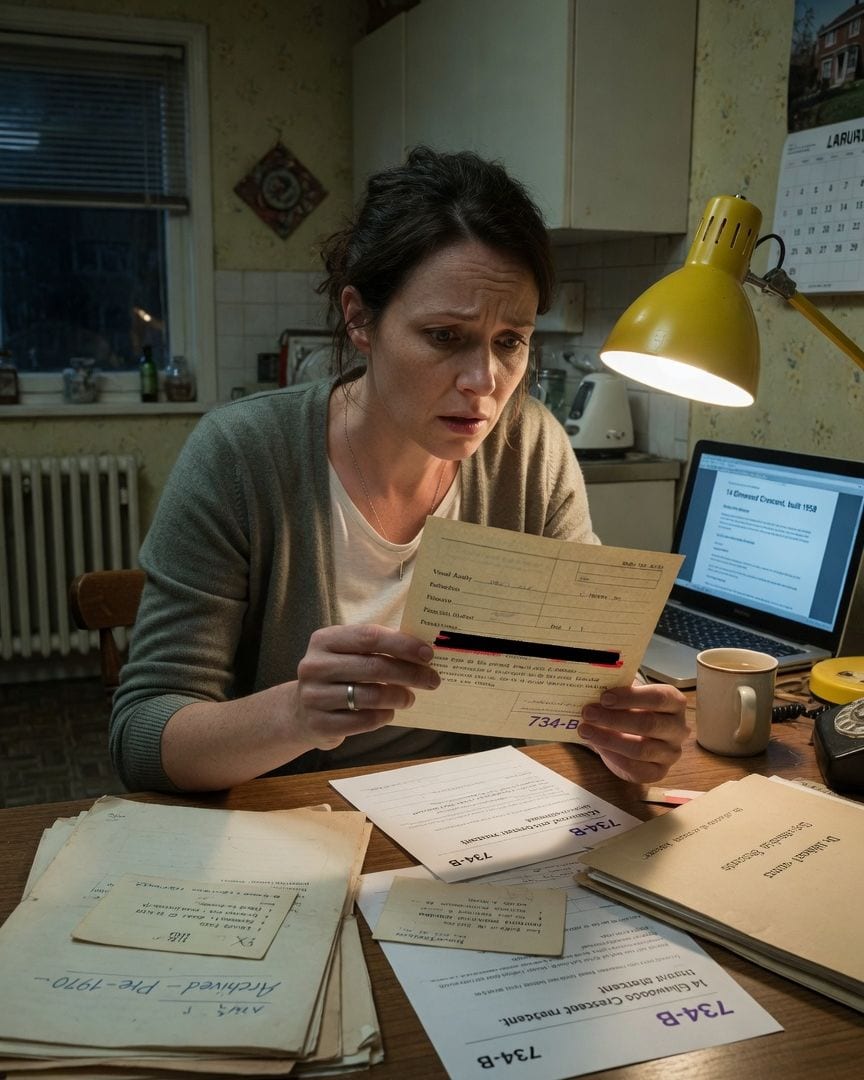
An old eye test card had my patient ID, 734-B, dated 1966. I found another, from 1948, for my house.
Transferring my old eye records should have been routine, but a strange, redacted card from 1966 raised a cold knot of dread. It mentioned my surname and street, along with a chilling instruction: 'tell the patient nothing.' Then I found my unique patient ID, assigned to me, on records dated 1948.
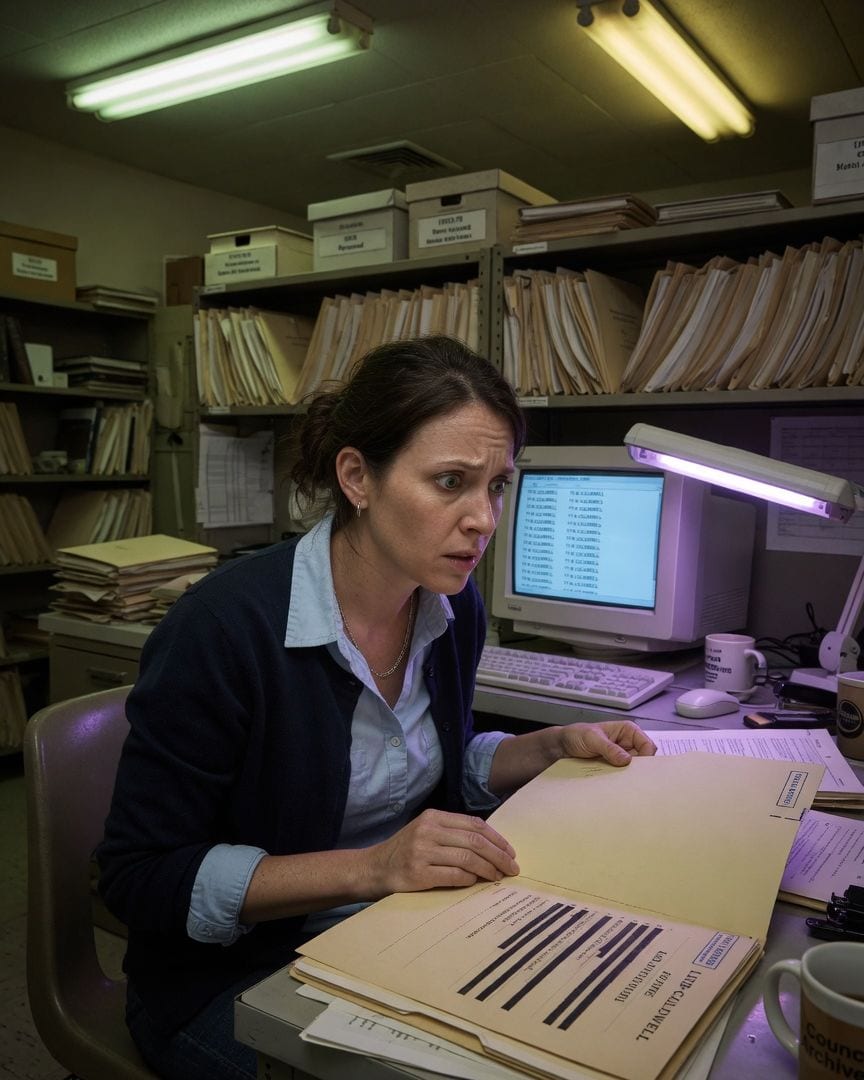
My employer's security file holds a vetting report on me dated nine years before I ever applied. It has my full name and my parents' address — with only one line, the source who referred me, blacked out.
Working a routine data audit, I pull my own security file. The issue date is nine years before I even applied for the job. Then, hidden within an old archive file, I find my current address etched under a blacked-out line.
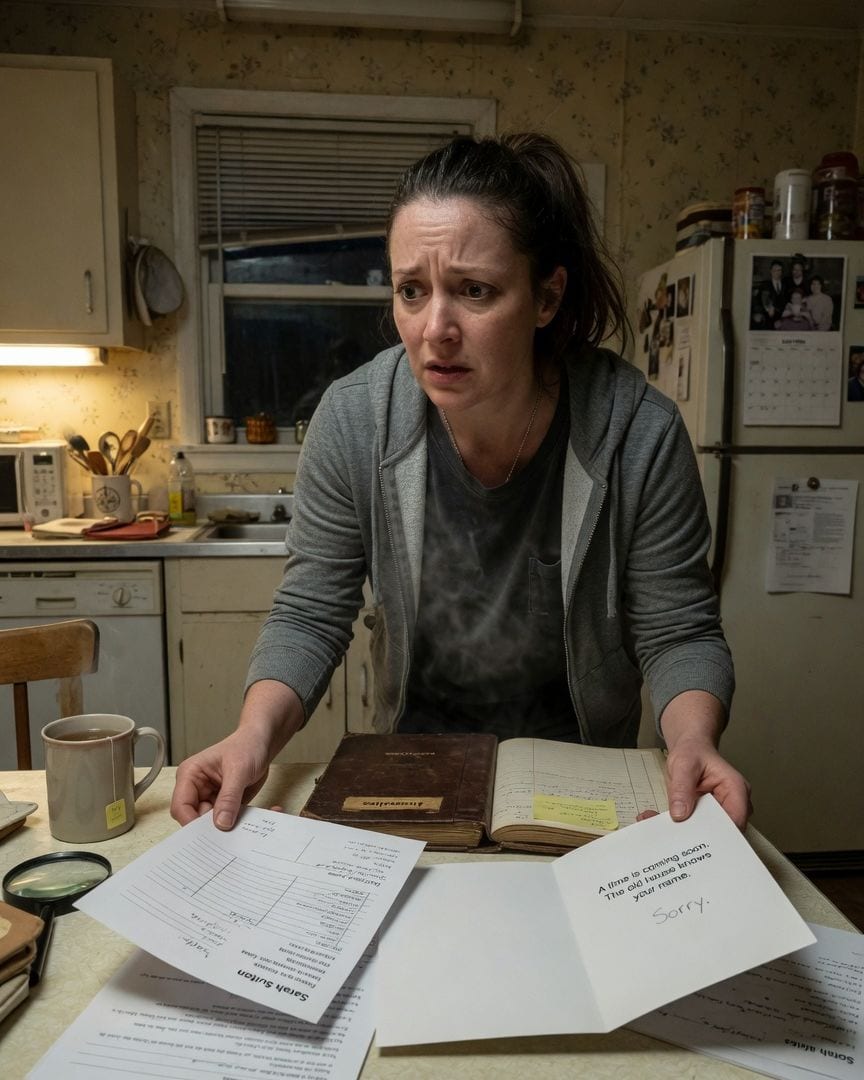
My name sits in the 1966 electoral register. My house, my exact name. Someone pencilled 'sorry' in the margin.
I was sifting through dusty microfiche, tracing my family line for my childhood home, when I found it. The 1966 electoral register for my address listed my exact name: Sarah Sutton. My heart hammered. I wasn't born until 1988; this was thirty-five years before I existed.
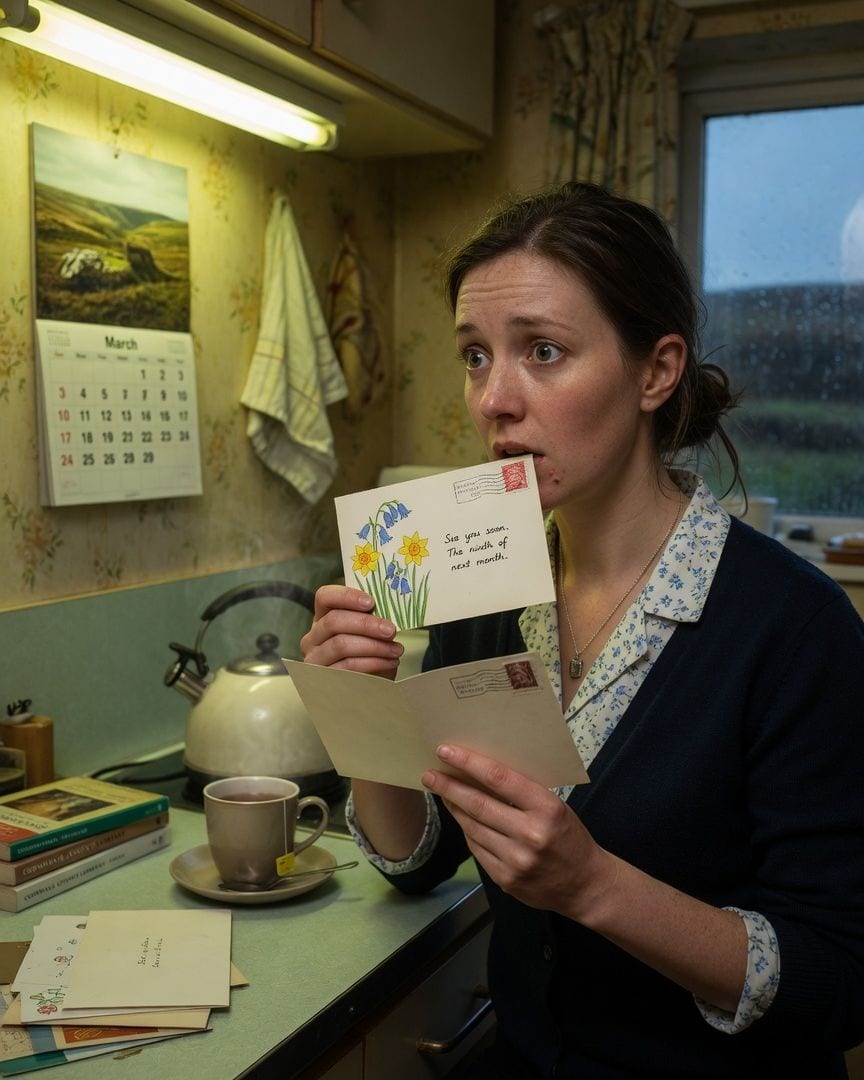
My get-well card arrived from a field, postmarked from a sanatorium that burned down in 1963. It wished me well for an operation I've never had, scheduled for next month.
I was just making tea on an ordinary Tuesday when a strange letter arrived. It was postmarked from Treneglos Sanatorium, a place that burned to nothing over sixty years ago, and contained a get-well card for an operation I'd never had. My research into this impossible message then led me to an old patient register where I found my own name, dated 1958.
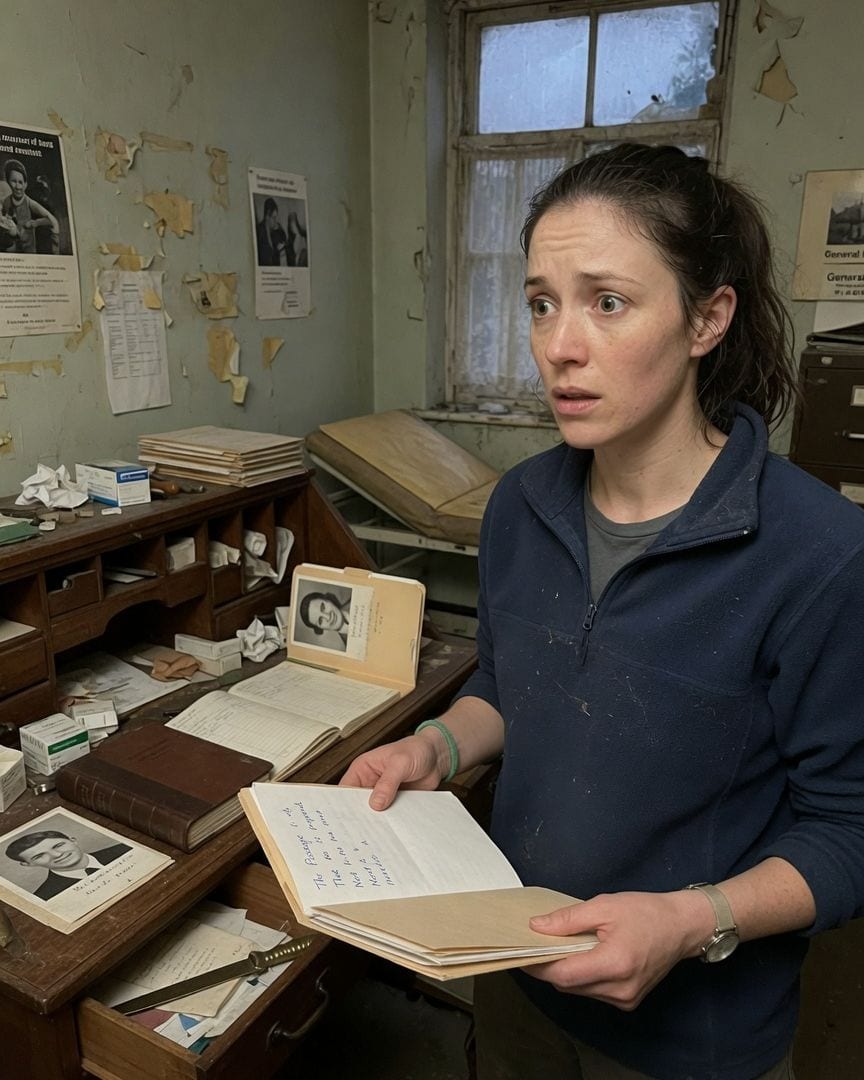
My new clinic's appointment book shows entries for this coming Monday, decades after the doctor retired and died.
Chloe Lawson bought an old, abandoned surgery in Nettlebed, ready to open her new vet clinic. Locals insisted Dr. Almott retired in '79 and the practice shut down for good. But then Chloe found his dusty appointment book filled with meticulous entries, continuing unbroken from 1979 through the decades, right up to this coming Monday.
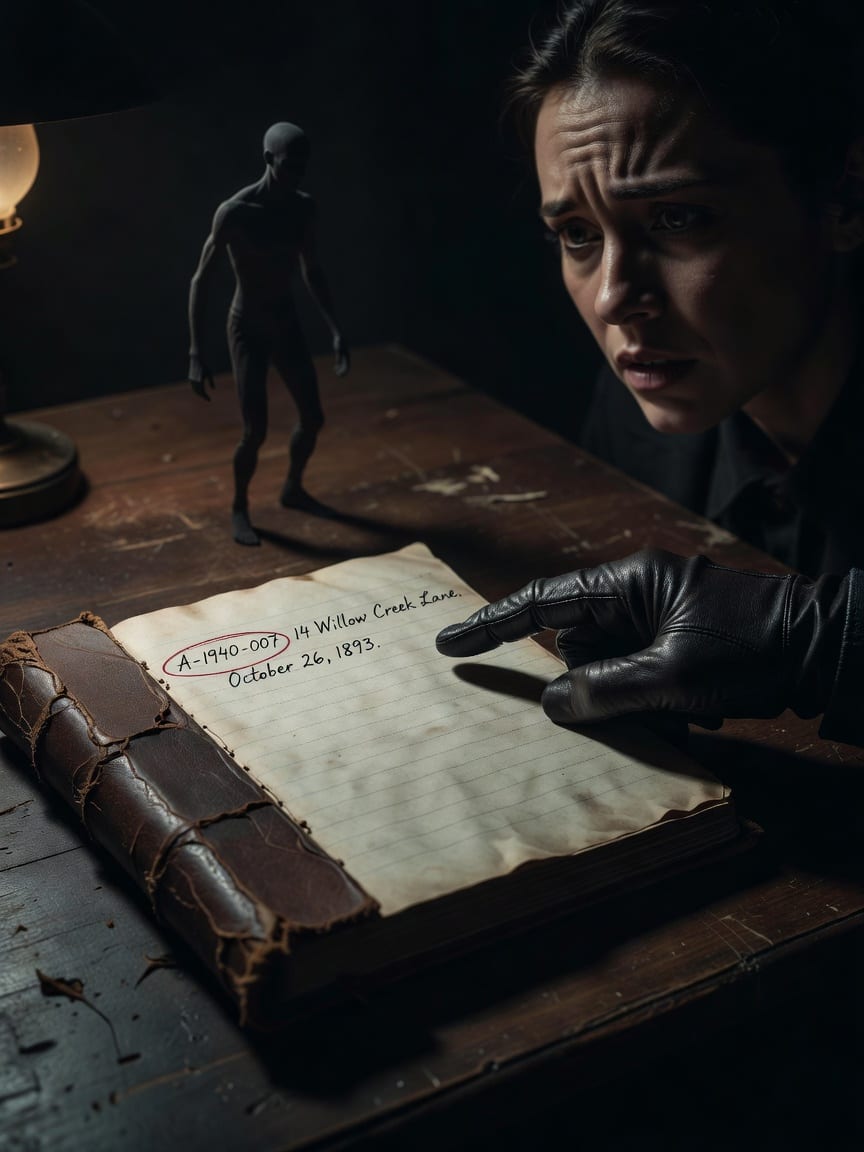
My dead relative's 1940 hospital record had a note: 'same admission number as reissued below.' Below it, decades later, was my home address, and 'hold, do not process new patient.'
As an archivist, I was researching my great-aunt Vera's 1940 psychiatric admission. Her microfiche file, however, contained a handwritten note about a reissued admission number. To my shock, this identical number was later assigned to a blank file listing my own home address, with a chilling directive to 'hold'.