My get-well card arrived from a field, postmarked from a sanatorium that burned down in 1963. It wished me well for an operation I've never had, scheduled for next month.
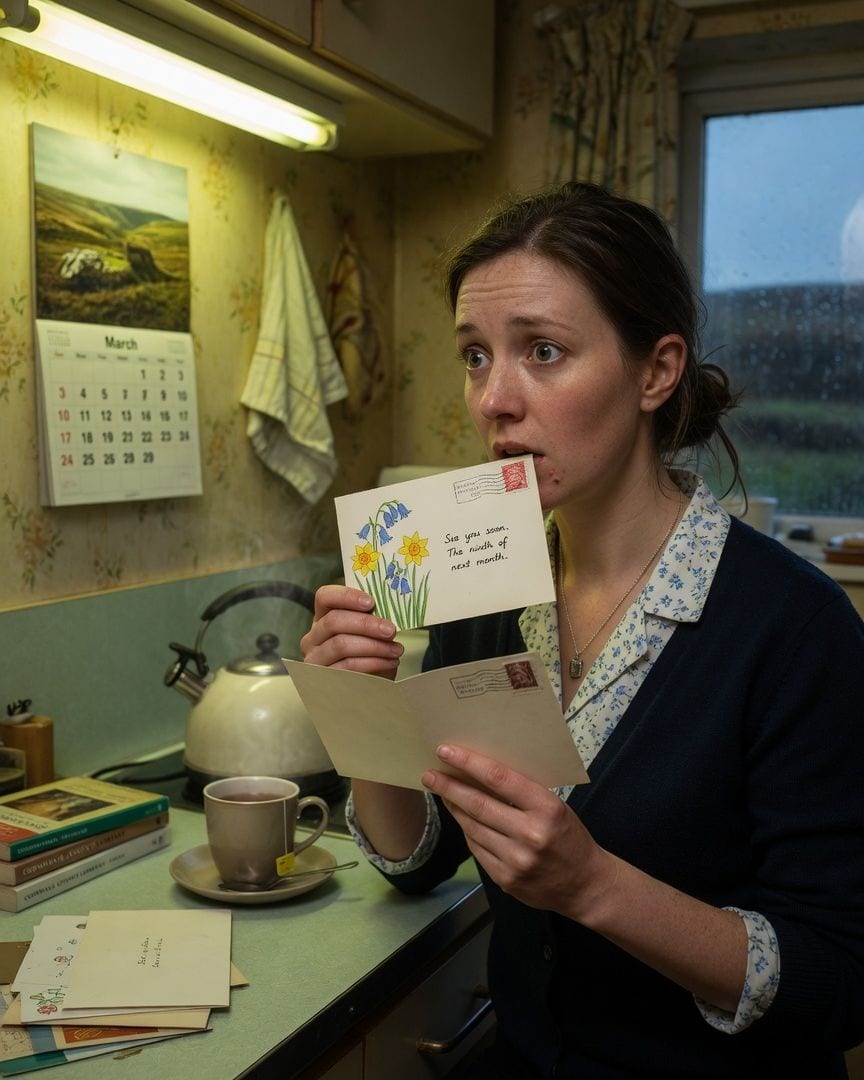
The kettle had just clicked off, the steam still curling around the mug of Earl Grey on my kitchen counter. It was a Tuesday, the kind of Tuesday where everything felt muted, ordinary.
Until I noticed the mail, specifically one envelope. It was cream-coloured, sturdy, and addressed to me, Emily Winslow, in neat, flowing script. My rational mind, the librarian mind, registered it as something out of place.
It was the postmark that made my hand tremble, a faint red stamp: Treneglos Sanatorium. I knew Treneglos. Everyone around here knew Treneglos.
It was the old TB hospital, miles out on the moor, that had burned down to nothing in 1963. A field, that’s all it was now. Sheep-grazed, wind-swept, empty.
I tore open the envelope. Inside, a generic get-well card, cheerful bluebells and daffodils. “Wishing you a speedy recovery from your operation!” it read, in an embossed font.
Below that, a dozen unfamiliar signatures, a mix of neat and sprawling hands. Agnes, Thomas, Eleanor, Gareth. Not one name I recognized. And the kicker: penciled at the bottom, small and precise, "See you soon. The ninth of next month."
My operation. I hadn’t had an operation. I’d never even broken a bone. My thirty-two years had been remarkably un-medical. The card felt cold in my hand, despite the warm kitchen. It was a mistake, obviously.
A bizarre, elaborate prank, perhaps. But why? And how could a letter be postmarked from a place that ceased to exist over sixty years ago?
My librarian brain, always seeking to categorise and explain, found itself rattling against a locked door.
The next day, instead of going straight to the library, I drove. The coordinates of the old sanatorium were easy enough to find on an archived map. What I found was exactly what the postmark implied: nothing.
A vast, empty field, the grass long and rustling in the wind. A few uninterested sheep watched me from a distance.
The only remaining evidence of a structure was a crumbling stone wall, barely waist-high, marking what must have been a perimeter. The wind through the grass felt cold, almost wet, despite the clear sky.
There was no building, no sign of human habitation, nothing.
Back at the city library, I buried myself in the archives. I pulled up microfiche of old maps, scanned fire department records from the sixties, scrolled through grainy local newspaper clippings.
Every single source confirmed it: Treneglos Sanatorium, complete destruction in a blaze of glory in March 1963, never rebuilt, its land reverting to the moor.
I even found a piece on the local council’s refusal to allow new development, stating the site was ‘unsuitable’.
"Bizarre, isn't it?" I muttered to Oliver Prescott, my colleague, showing him the card on my phone screen. He peered at it over his glasses.
"Probably a misdirected letter," he said, ever practical. "Some elderly relative you've forgotten, or a very specific, very weird prank. You're Emily Winslow; maybe there was an Emily Winslow who actually had an operation around '63."
He shrugged, going back to cataloging. "The post office makes mistakes."
But the specificity gnawed at me. My name. The ninth of next month. Not an old date, but a future one. It felt less like a mistake and more like a deliberate, impossible message. I couldn't shake it.
My research, spurred by a need to ground this weirdness in fact, led me down another rabbit hole. A small, obscure local history society, operating out of a cramped office, occasionally featured talks on ‘lost Cornish landmarks’.
Treneglos was mentioned in their old newsletters. My last hope for a mundane explanation.
The society’s office was a single room, crammed with dusty glass cabinets and overflowing cardboard boxes. The air was thick with the scent of old paper and something else, something dry and faintly metallic.
A timid woman, the volunteer, listened patiently as I explained about the card. She peered at it, her brow furrowed, then directed me to a corner with uncatalogued donations.
"Might be something in those," she said, waving vaguely at a stack of crates.
I pulled out an old wooden crate, the wood splintered and dark with age. Inside, beneath faded newspapers and brittle pamphlets, I found them: a stack of leather-bound books, some partially charred, their pages stiff.
One, thicker than the rest, bore a faded, almost illegible label: 'Treneglos Sanatorium – Patient Register.' My heart hammered against my ribs, a frantic little bird. I carefully opened it, the leather creaking like a dry bone.
The pages were yellowed, the ink faded, but still readable. I skimmed, looking for anything, any detail that might explain the impossible card. And then I stopped. My gaze locked on an entry. My own name.
'Emily Winslow,' scrawled in looping ink, precise and utterly chilling. Below it, a date: 1958. And beside my name, a small, unsettling symbol, like a broken circle, or an incomplete eye.
The next few days were a blur. The patient ledger entry was an anchor dropped into the impossible, dragging my rational mind into deep, cold water. 1958. I wasn’t even a concept then. I was born in 1992.
I took a dozen photographs of the page, the grainy images on my phone a constant, unsettling reminder. I cross-referenced other names in the register against public records. Agnes, Thomas, Eleanor, Gareth – the names from my card.
Many were common enough that their records were untraceable, lost in a sea of identical entries.
But a disturbing number, when I did find them, either had no clear record of death, or their obituaries were unnervingly vague: 'a sudden, inexplicable decline,' 'disappeared without a trace,' 'passed away peacefully, though unexpectedly.'
A pattern started to emerge, a cold thread weaving through the data. I looked at the dates of these mysterious fates. Many fell on the ninth of various months, year after year, decades apart.
The ninth of June, the ninth of October, the ninth of February. The dread in my stomach tightened, a hard knot.
It wasn't just my name; it was the date, the recurring date from my card, now echoing in the forgotten lives of others. Oliver still thought it was a prank, or a coincidence. "People go missing, Emily," he’d said.
"People die suddenly. It’s life." But he hadn't seen the ledgers. He hadn't felt the impossible chill radiating from those names.
I needed more. I started trying to find anyone, anyone, connected to the old sanatorium. Old staff lists, local directories from the 50s and 60s.
One name kept appearing in local historical articles, usually in connection with the land around Treneglos, or its ‘forgotten past’: Felix Patterson. Described as a 'local historian with a deep knowledge of the area's forgotten past.'
My last, best hope for an explanation. Or, maybe, the start of something far worse.
I started calling Felix Patterson. Polite messages at first, then increasingly urgent ones. The phone just rang and rang, or went to an impersonal voicemail. No reply.
I started to feel a prickling sensation, a shift in the air around me. It wasn't just the card anymore; it was a sense of being watched.
I found myself drawing my curtains the moment dusk settled, checking the locks twice. The silence in my apartment stretched too thin, too deep. A draft seemed to follow me from room to room, even with the windows shut.
One morning, it escalated. I opened my mailbox to find a stark white envelope. No stamp. No return address. Just my name, handwritten in the same elegant script as the first card. My hands shook as I opened it.
Inside was a single, heavy card, thick as a postcard, professionally printed. Three words. Only three words: "Your appointment is confirmed. Treneglos Sanatorium." No date. No signature. Just the chilling finality of the statement.
The dread in my stomach, already a knot, hardened into solid fear. It wasn't a prank. It was methodical. It was real.
I knew, then, that I had to speak to Felix Patterson, directly. Forget phone calls. I found his address in an old town directory, an unassuming entry on the edge of the moor, not far from the Treneglos field.
It was an hour's drive, winding country lanes giving way to open, scrubby land. My hands gripped the steering wheel so tight my knuckles ached.
The white card lay on the passenger seat, a terrible beacon burning a hole through the quiet morning.
Felix Patterson's house was an old, stone cottage, nestled low against a rise in the land. Smoke curled lazily from its chimney, a domestic, comforting sign that felt entirely at odds with the card on my seat.
I walked up the short, flagstone path, the white card and the photograph of the ledger page clutched in my hand. I knocked. The door opened almost immediately.
Felix was an older man, perhaps late sixties, with kind, intelligent eyes that seemed to take in everything at once. He had a full head of white hair and a surprisingly soft voice. He didn't seem surprised to see me.
No 'can I help you?' or 'who are you?'. Just a quiet, appraising look. "Miss Winslow," he said, as if he'd been expecting me all along. The unnerving stillness of him settled over me like a shroud.
I stepped inside. The cottage was a maze of books, shelves built into every available wall, stacked high with dusty tomes. Old maps hung framed, faded with age.
The air smelled of old paper, pipe tobacco, and something else, something earthy and damp, like turned soil after rain. My voice, surprisingly steady despite my racing heart, laid out my case.
I pulled out the original get-well card, then the stark white confirmation. I held up my phone, showing him the photograph of the Treneglos patient register, my name, the 1958 date, the unsettling symbol.
He took the cards from me, his movements unhurried, his expression unreadable. He examined the photograph on my phone, his gaze lingering on the symbol beside my name. Not a hint of surprise. Not a flicker of denial.
He seemed to simply... absorb it.
"Treneglos," he began, his voice low, measured, "was not merely a hospital. It was built on land with a very specific, shall we say, arrangement." He spoke of 'the land's due,' and 'the cycle.'
He confirmed the patient ledger I’d found was a 'pre-selection' list, a register of individuals whose names were 'marked' for a later, more significant event. He pointed to the cryptic symbol beside my name on the screen.
"That," he explained, "is the mark for a candidate for full reclamation."
My mouth felt dry. "Reclamation?"
He didn't answer directly. Instead, he walked to an antique writing desk in the corner, its surface covered in loose papers and more books. His movements were slow, deliberate, almost ritualistic.
He ran a hand over a section of the desk, then pressed a hidden catch. A small drawer, flush with the wood, sprang open with a soft click. From the hidden compartment within, he retrieved a small, leather-bound book.
It was much newer than the patient register, its leather still supple, but it felt equally, profoundly unsettling.
Felix opened the leather-bound book. The cover was simple, unadorned, save for the title debossed in gold: 'Operations Ledger.' Its pages were filled with meticulous, handwritten entries.
Each entry detailed a name, a date, and a cryptic description: 'reclamation,' 'transfer,' 'exchange.' The dates spanned decades, some going back further than the patient register I'd found, others terrifyingly recent.
My eyes darted across the page, my breath catching in my throat, a cold, hard lump of fear. I saw my own name clearly listed: 'Emily Winslow.'
Below it, in the same precise, elegant hand, was written: 'Ninth of next month – Full Reclamation.' And then, below my entry, I recognized a column of names.
Names I'd found in my frantic research, people who had vanished or suffered mysterious, sudden ailments. Agnes. Thomas. Eleanor. Gareth. All with similar cryptic 'operations' scheduled, years or decades ago.
The last entry was mine, the date looming, the full, horrifying scope of a systematic, ongoing pattern laid bare before me.
Felix closed the 'Operations Ledger' with a soft thud. He met my wide, terrified eyes with his calm, almost placid gaze. "The Full Reclamation," he explained, his voice still low, "is not an operation in any medical sense.
It is a complete absorption, a taking of identity and spirit. A way for the land, or the entity tied to it, to renew itself. A necessary renewal, you see."
He spoke of his family's lineage, generations stretching back, as custodians. They maintained the records, ensuring the 'due' was paid. "A debt to the soil," he said, "long established, long honoured.
It is a natural cycle, not inherently evil, merely a function of the ancient pact tied to the very ground Treneglos was built upon. The sanatorium was just a convenient collection point, a focus, for many years.
Now, it has no need for physical structure."
The letters, he clarified, were not from him. "They are directly from the entity. Its way of reminding those 'selected' of their impending 'appointment.'
It is not bound by the sanatorium's physical presence; its influence extends across the field and beyond, reaching out to those whose names are written in the ledger, wherever they may be."
His calm, almost detached explanation was far more terrifying than any monster. There was no malice, no grand evil, just a quiet, horrifying acceptance of a system I could not fathom.
"But... it can be stopped?" I managed, my voice a ragged whisper. Horrified, but still desperately rational, searching for a loophole, a way out of the meticulous, unblinking record of my fate.
Felix shook his head slowly. "Not stopped, no. The cycle is absolute. But perhaps... diverted." He picked up a smooth, grey stone from his desk, turning it over and over in his fingers. "A transfer. A decoy."
He explained that it had to be something deeply personal, something with a strong emotional resonance, carried by the individual, taken to the Treneglos field at the precise time of the scheduled reclamation.
It would draw the entity’s focus, satisfy the 'due,' and spare the individual. A flicker of hope, cold and fragile, sparked in my chest.
Desperate, I agreed. I rushed home, the image of my name in the ledger burned behind my eyes. My mind was a whirlwind of half-formed plans, of a life I was fighting to keep.
I rummaged through old boxes in the back of my wardrobe, past forgotten photos and childhood trinkets. Finally, my fingers closed around it: a small, silver locket, tarnished now, a gift from my grandmother on my tenth birthday.
It was worn smooth with age and sentiment, a tangible link to love and memory. I clutched it tightly, the metal warm against my palm. This. This had to be it.
As dusk settled on the ninth of the month, the air grew thick and heavy, pressing in on me like a physical weight.
I drove back to the Treneglos field, my old car’s headlights cutting weak paths through the gathering gloom. I parked at the crumbling stone wall, the only remaining trace of the sanatorium, and stepped out.
The wind, which had been whipping fiercely earlier, died down to an unnatural stillness. The sheep were gone. I stood alone in the vast, empty space, the locket clutched in my hand, its chain digging into my skin.
A faint, shimmering distortion began to form in the air before me, about twenty feet away.
It wasn’t a shadow, not exactly, but a subtle warping of light and shadow, like heat haze on a summer road, except the air was bitterly cold. It grew larger, more defined, coalescing into an indistinct, rippling column.
I felt an immense, silent presence, a cold vacuum that seemed to draw all the warmth and sound from the world. My heart pounded so hard I thought it would burst through my ribs.
With a gasp, with all the force I could muster, I threw the locket into the centre of the shimmering distortion.
The shimmering distortion rippled violently, an abrupt, inward collapse. It vanished as quickly as it had appeared, leaving only the ordinary chill of the night and the faint scent of damp earth.
I stumbled back to my car, shaking, my legs weak, but alive.
I told Oliver Prescott that the 'prank' was a bizarre misunderstanding, a case of mistaken identity, now completely resolved. He nodded, probably thinking I was a bit mad, but let it go.
A few days later, Felix Patterson's cottage stood empty. His books were gone, the 'Operations Ledger' vanished. The local history society quietly reported that he simply 'moved on,' leaving no forwarding address. No one questioned it further.
I tried to resume my normal life. I returned to my work at the library, the familiar scent of old books a fragile comfort. I avoided the local history section now, especially the archives, a silent, unspoken pact with myself.
But sometimes, when cataloging a new donation or researching a local family tree, I see a familiar name. A name that echoes from the pages of the 'Operations Ledger,' a name that might now be due for its own 'appointment.'
The dread is a quiet hum beneath my skin, a permanent awareness of the unseen patterns, the silent demands of the land.
The silence always follows, but the names keep coming.
If this one got to you
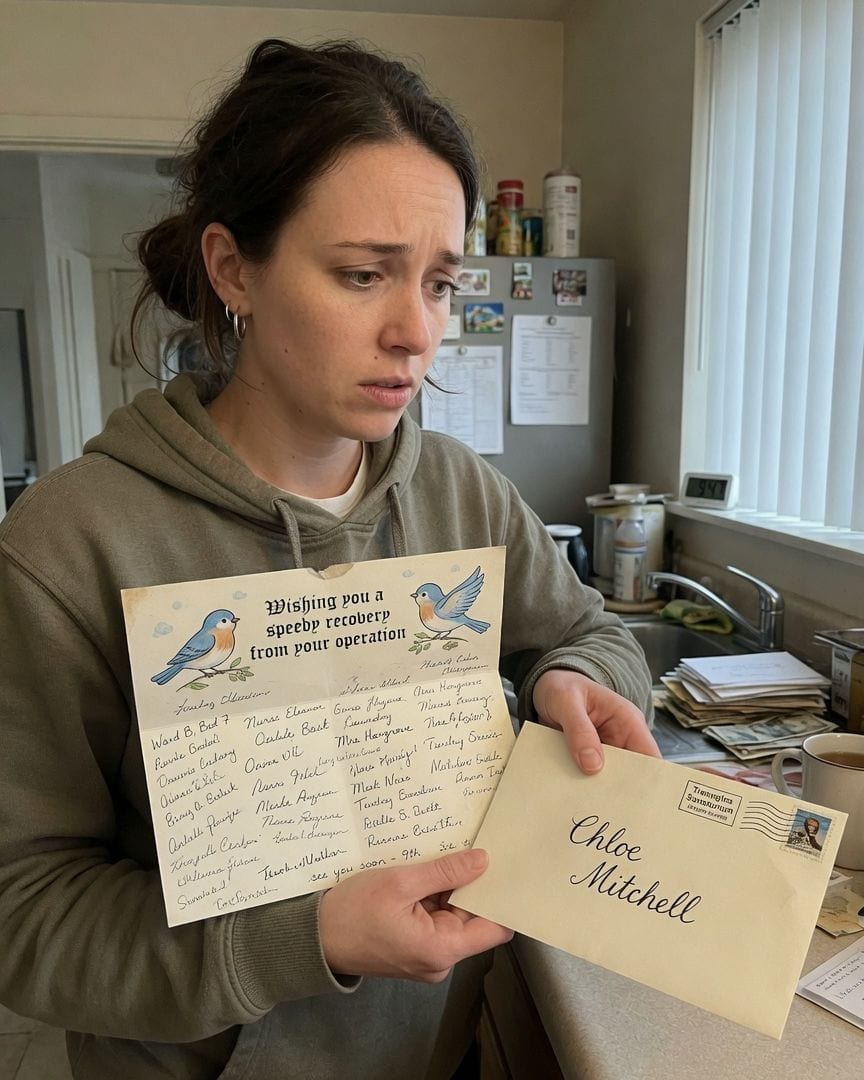
A get-well card wished me a speedy recovery from an operation I never had. It was postmarked from a sanatorium that burned down in 1963.
My quiet Tuesday morning was interrupted by an elegant get-well card, addressed to me. It wished me a speedy recovery from an operation I'd never had. But the postmark read 'Treneglos Sanatorium,' a hospital that vanished in a fire back in 1963.
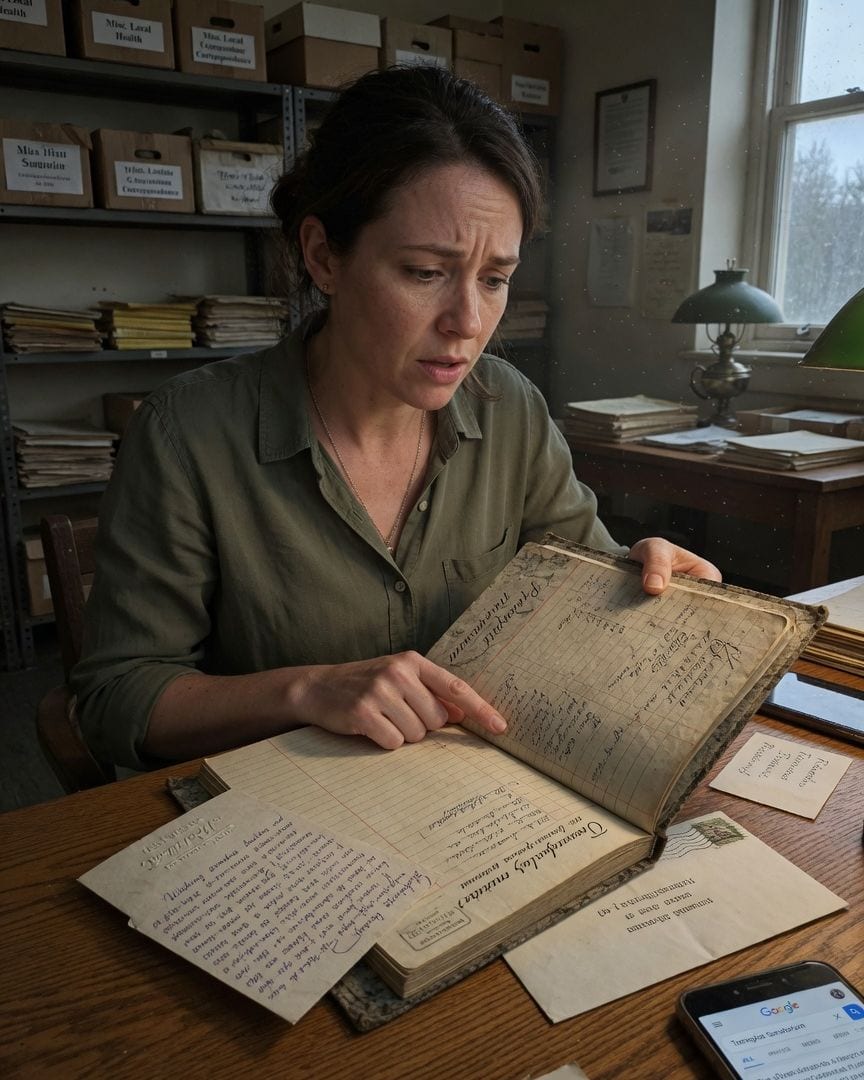
My get-well card wished me recovery from an operation I never had, postmarked from a hospital that burned down in 1963.
I received a get-well card wishing me recovery from an operation I never had. The envelope bore a fresh postmark from Treneglos Sanatorium, a TB hospital that burned down and ceased to exist in 1963. Now, a patient register from that long-gone sanatorium lists my name, dated 1959.
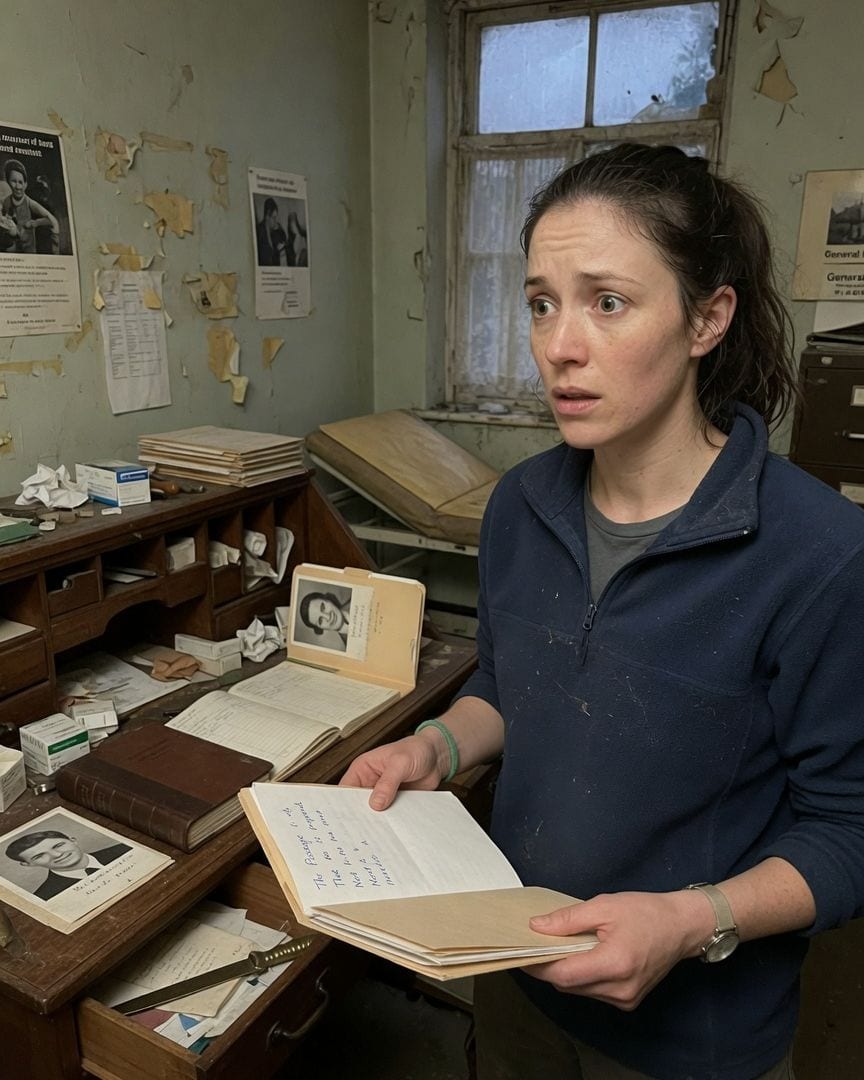
My new clinic's appointment book shows entries for this coming Monday, decades after the doctor retired and died.
Chloe Lawson bought an old, abandoned surgery in Nettlebed, ready to open her new vet clinic. Locals insisted Dr. Almott retired in '79 and the practice shut down for good. But then Chloe found his dusty appointment book filled with meticulous entries, continuing unbroken from 1979 through the decades, right up to this coming Monday.
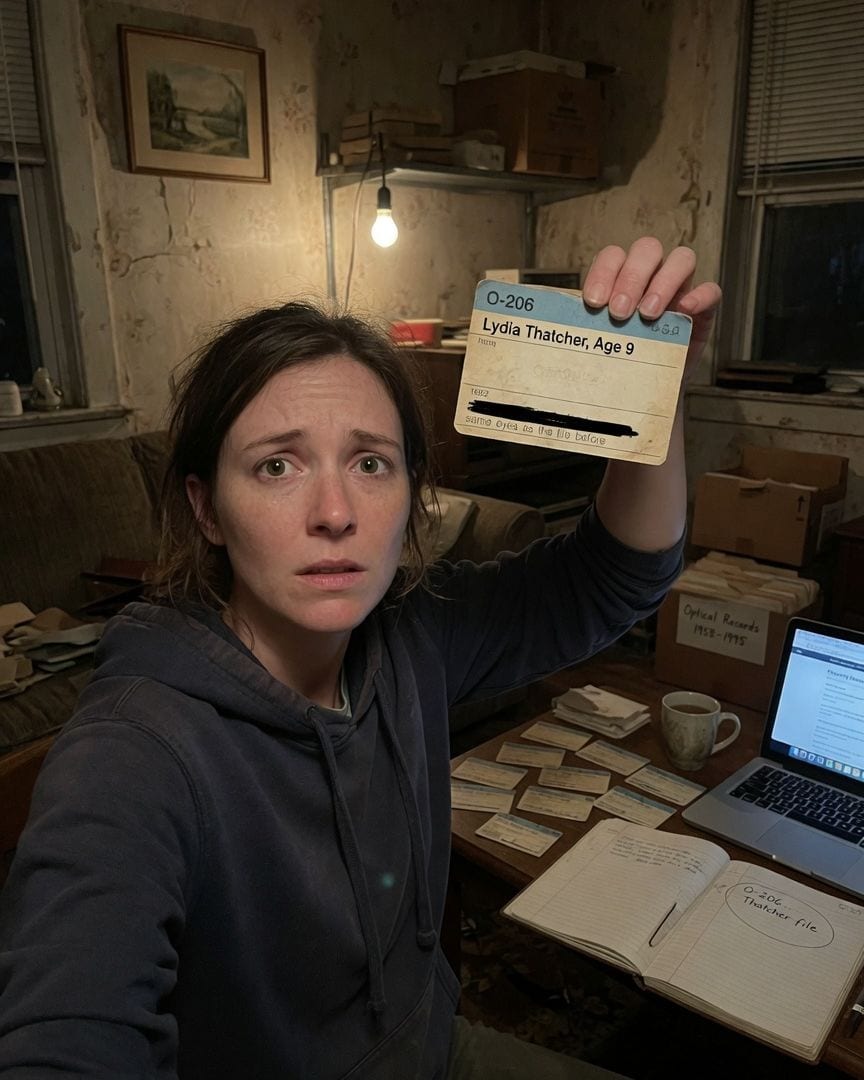
My own optical card is dated 1962, with my name on it. I wasn't born until 1993.
Sifting through old patient files from my former optical practice, I found my own O-206 card. It had my name, Lydia Thatcher, and my current home address printed on it. But the card was dated 1962, decades before I was even born, and a redacted note mentioned 'same eyes.'
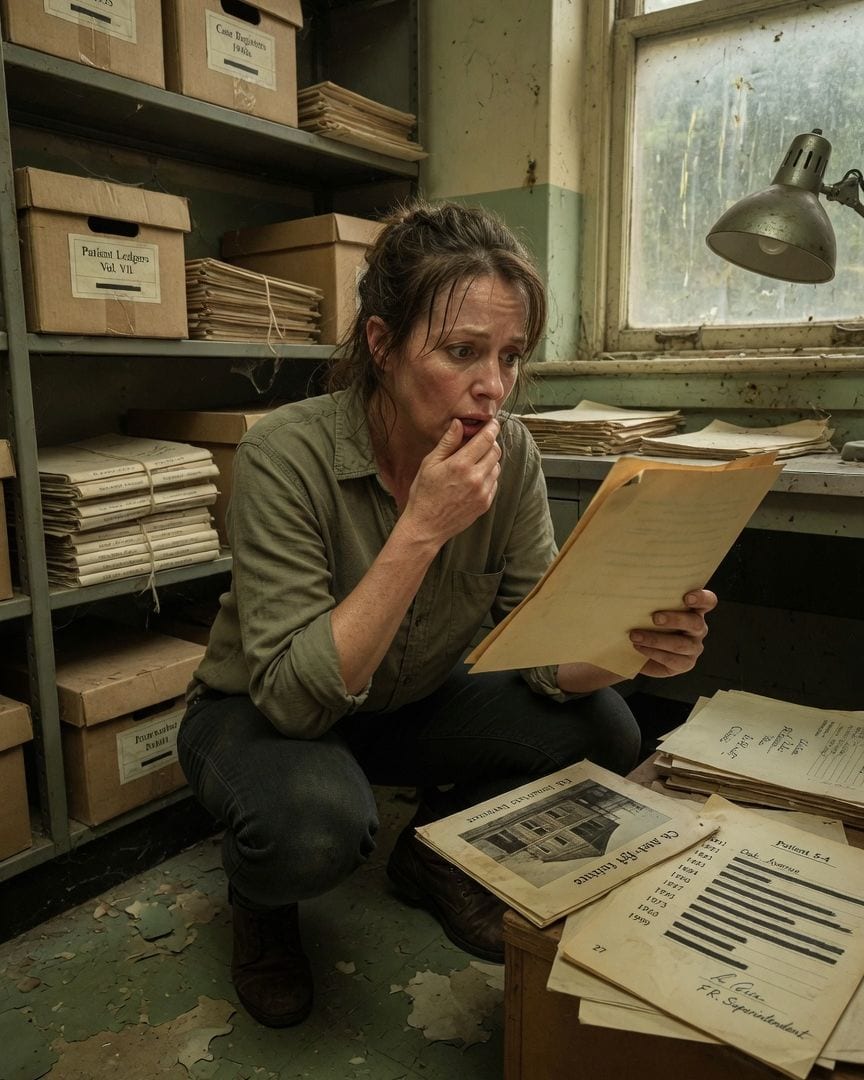
Patient 5-4 keeps checking into my aunt's old sanatorium chalet. The same initials sign them out, 'not traced,' every thirteen years since 1921.
Sifting through my aunt Margaret's estate, I found her old sanatorium file from 1999. Her patient record listed her as 'Patient 5-4,' discharged 'not traced.' But when I accessed the archives, I found 'Patient 5-4' was admitted every thirteen years since 1921, always with identical discharge notes.
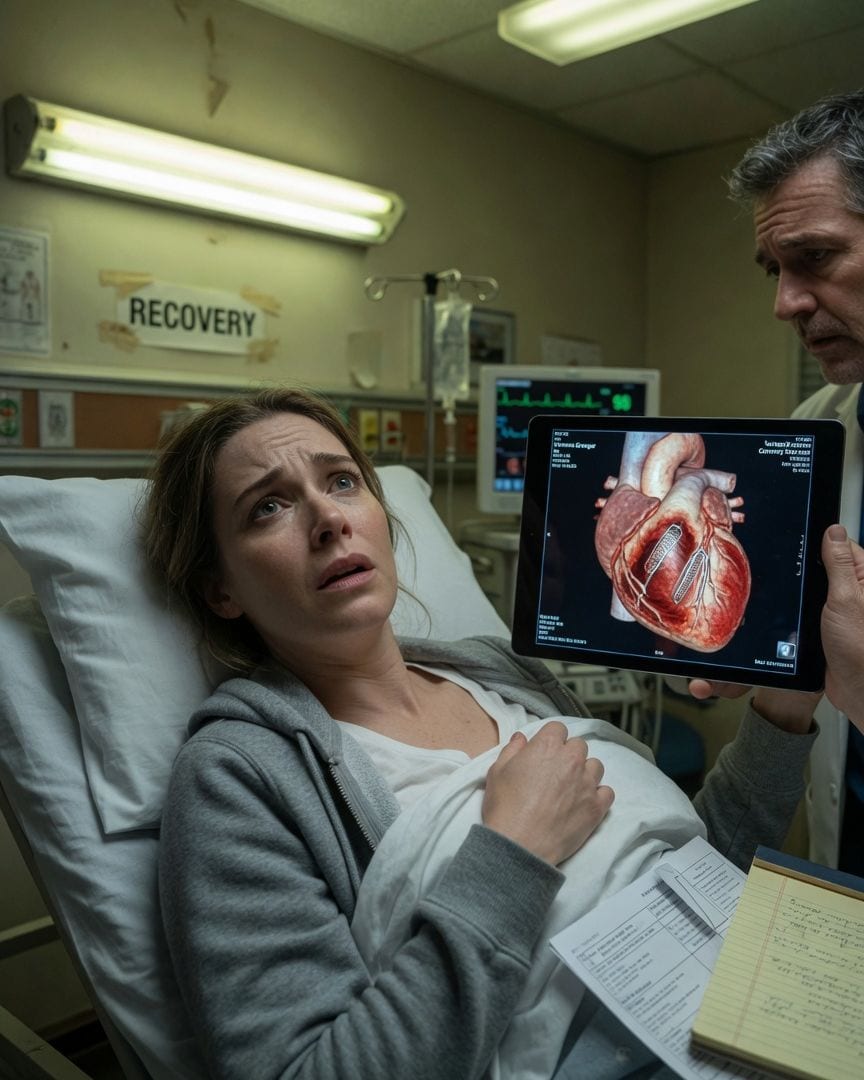
Metal stents are propping open my heart. The doctor rotated the image, but I've never had a cardiac procedure.
After years of dismissed chest pain, a CT scan revealed an impossible truth: my heart contained two metal stents. Dr. Maddox confirmed there was no record of any cardiac procedure in my entire medical history, and I had no memory of ever having surgery. My own body held a secret, alien architecture I couldn't explain.