Patient 5-4 keeps checking into my aunt's old sanatorium chalet. The same initials sign them out, 'not traced,' every thirteen years since 1921.
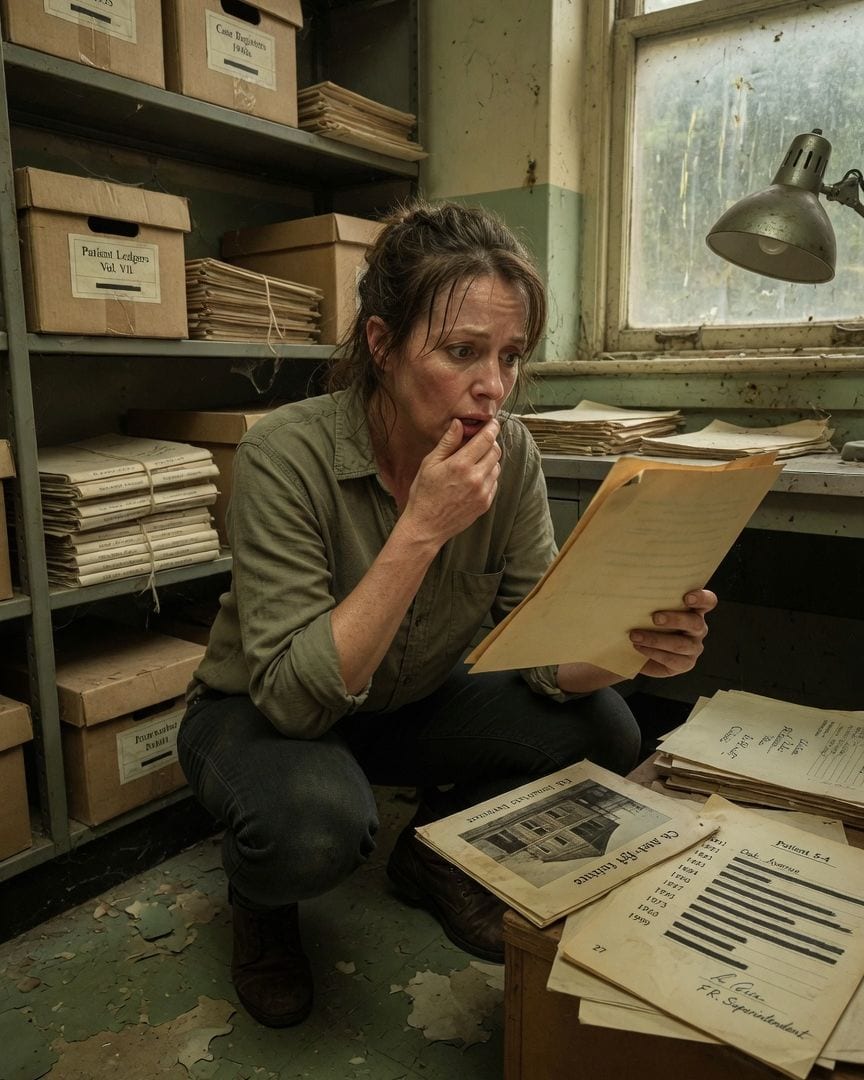
I still don’t know why I kept digging, even after everything. Maybe it was the quiet way my aunt Margaret had faded, less a death and more a slow, almost intentional erasure.
I was forty, practical, and knee-deep in her estate, sifting through the boxes in her attic after the funeral. A grim duty, a final act of respect.
Among the yellowed photo albums and dusty trinkets, I found it: a slim, unassuming folder, the kind institutions use, labeled 'St. Jude's Sanatorium, 1999.' Margaret had spent a month there, 'for her nerves,' as the family euphemistically put it.
A euphemism for a quiet breakdown, a temporary removal from a life she’d never quite fit into.
Inside the folder, the patient ledger was sparse, a single sheet. But one detail snagged my eye. Margaret Patterson was listed as 'Patient 5-4.' The number felt clinical, almost robotic.
A quick flip through the attached case notes showed the usual medical jargon, the kind of bland, neutral language meant to obscure more than it revealed. But at the bottom, the discharge summary read: 'Patient 5-4. Left against advice.
Not traced.' Below it, a signature, elegant and looping: 'F.R., Superintendent.'
I frowned. 'Not traced?' It felt strangely dismissive for a medical record. Who lets a patient leave 'against advice' and then makes no effort to trace them? It was too neat.
I pulled out an old, water-stained sanatorium brochure I'd found deeper in the box; its history page mentioned the institution dated back to the 19th century.
A superintendent from 1999 signing off on a 'not traced' discharge for a patient number that felt oddly generic. The number, the note, the unchanging initials – they were small, quiet details, almost too insignificant to notice.
But they hummed with a wrongness that Monica couldn't quite shake, a faint, discordant note in the otherwise peaceful silence of the attic.
Intrigued, and with a growing sense of unease that felt irrational in the bright light of day, I secured permission to access St. Jude’s archives. The sanatorium, now a private rehabilitation center, maintained meticulous, if archaic, paper records.
The archive itself was a dusty, forgotten wing, smelling of old paper and something metallic, like forgotten pennies. I requested the full case registers, specifically looking for 'Patient 5-4.'
What I found sent a cold prickle up my spine that had nothing to do with the chill in the air. The first entry for 'Patient 5-4' was dated 1921. Then 1934. Then 1947.
Every thirteenth year, like clockwork, a new 'Patient 5-4' was admitted. Each one, without fail, was assigned 'Chalet 7, End Terrace.' Each one was discharged with the identical, chilling phrase: 'Left against advice. Not traced.'
And at the bottom of every single one, the same elegant, looping initials: 'F.R., Superintendent.'
I tried to rationalize it. A bureaucratic quirk, a reused patient number for difficult cases, a family name for superintendents that simply carried on through generations.
But the perfect, unwavering thirteen-year cycle, the exact same chalet, and the utterly identical discharge notes across seven decades, through countless changes in medical staff and institutional management, defied any mundane explanation.
It was too precise to be coincidence, too consistent to be an accident.
I pulled my aunt Margaret's 1999 file again, comparing it to the 1986 'Patient 5-4' entry.
The two files were almost carbon copies, down to the phrasing of the preliminary assessments, the initial presenting symptoms, even the notes on diet and sleep patterns, as if the 'patient' was less an individual and more a recurring event.
The dread wasn't a sudden jolt, but a slow, creeping realization, a cold seep into my bones. The horror was in the perfect, quiet coherence of it all. It fit too well.
My fingers traced the raised ink of the redacted line, the black a stark void on the brittle paper of my aunt’s 1999 file.
I squatted in the dim archive, the smell of dust and old paper clinging to my clothes, holding the page up to the weak, greasy light from a grimy window, trying to glimpse the words beneath the heavy black bar.
Slowly, agonizingly, fragmented letters and shapes began to resolve into something horrifyingly familiar. A street name, partially obscured: 'Oak... Avenue.' Then, beneath it, a faint, barely visible outline of what looked like a house number: '27.'
All but swallowed by the thick black bar, but undeniably there. My childhood street. My family's house number. The file, dated 1999, held details about my own life, my own home, years before I’d ever considered looking for it.
It was a detail that shouldn’t exist, a link that defied time and logic, and it was buried right there, in a record about my aunt, signed by 'F.R.'
The air in the archive suddenly felt impossibly cold, as if something ancient had just breathed down my neck.
The redacted line, naming my childhood home, had plunged me into a new, deeper current of dread. This wasn't just a strange institutional pattern; it was personal. It implicated me.
I spent the next days meticulously cross-referencing, moving from the patient registers to old staff directories, property deeds, and maintenance logs.
The name 'Felix Romano' appeared as the superintendent in 1921, but after that, 'F.R.' simply became a set of initials associated with a specific, high-level administrative function, seemingly detached from any individual.
No other superintendent used those initials, and no other department was designated 'F.R.' It was as if the initials themselves were the entity, not a person. A brand.
I focused on Chalet 7. Its location at the end of the terrace seemed innocuous enough, but an obscure maintenance log from 1960 detailing 'specialized structural reinforcement' and 'integrated monitoring conduits' for Chalet 7 caught my eye.
These were features entirely absent from any other room. The entries were signed, predictably, 'F.R.' The logs mentioned reinforced walls, a sealed ventilation system, and odd pressure sensors. Not for a person, but for something that needed to be contained.
I also tried to trace the 'not traced' patients. Online searches, public records, death certificates – all yielded nothing. It was as if, after their discharge, these individuals simply ceased to exist in any official capacity.
No follow-ups, no next of kin listed, no forwarding addresses. They evaporated. The quiet bureaucratic efficiency of it was more terrifying than any monster, suggesting a network, an apparatus, designed not to find, but to erase.
I felt a growing certainty: the sanatorium wasn't just observing a phenomenon; it was actively managing its disappearance, and somehow, my family was part of the equation.
My persistent digging did not go unnoticed.
While requesting another batch of archived files – a file for a 'Patient 5-4' from 1947 that seemed to have an odd handwritten note in the margin – I was approached by George Norwood.
He was a soft-spoken, impeccably dressed man in his early sixties, head of the sanatorium’s historical records department. His tailored suit was a sharp contrast to the dusty archives, and his presence felt… too deliberate.
His eyes, though kind, held a disturbing placidity, like a perfectly still pond hiding unknown depths.
'Ms. Pierce,' he began, his voice a smooth, low register, 'your interest in the older records is, shall we say, unusually thorough.' He smiled, a thin, unreadable line that barely creased his face.
'Some of our historical cases, particularly those designated '5-4,' are quite sensitive. For the institution's peace of mind, and indeed, for your own, it might be prudent to let sleeping files lie.'
He offered no threat, no overt warning, just a calm, almost paternal suggestion that chilled me to the bone. The way he knew the specific designation I was focused on, without me ever having explicitly stated it, was unsettling.
Later that day, I found my archive access card mysteriously deactivated for 'system maintenance,' and my requests for further '5-4' files were politely but firmly denied. 'A temporary issue, I assure you,' the clerk had said, avoiding my gaze.
As I left the sanatorium, walking across the manicured grounds towards my car, I glanced back at the institution's imposing stone facade.
In a dimly lit window on the third floor, high above the main entrance, I saw a figure standing, watching me.
It was George Norwood, his silhouette still and unnervingly composed against the twilight, a faint, knowing smile visible even at that distance. He knew what I was looking for. And he was letting me know I was seen.
Fuelled by a mix of fear and defiance, I returned to the sanatorium the next day. I wasn't just going to be politely dismissed. I walked straight to the administrative offices and demanded to speak with George Norwood.
I found him in his office, a surprisingly modern space compared to the archives, sipping tea from a delicate china cup, unperturbed by my abrupt entrance.
The room, for all its contemporary fittings, felt heavy, as if the very air had absorbed decades of secrets.
I laid out my evidence on his polished mahogany desk: printouts of the 13-year cycle of Patient 5-4, the unchanging 'F.R.' initials, the identical 'not traced' discharges. I showed him the obscure maintenance log detailing specialized modifications to Chalet 7.
Finally, I placed my aunt’s 1999 file before him, pointing to the redacted line that had named my own street.
'This isn't just a quirk, Mr. Norwood,' I said, my voice trembling slightly despite my best efforts to keep it steady. 'What is Patient 5-4? What is going on here?'
George Norwood set down his teacup with a soft, precise click. He looked at me, his eyes devoid of malice, only a profound, weary resignation, as if he'd had this conversation countless times before.
'Patient 5-4,' he began, his voice low and steady, 'is not a person, Ms. Pierce. It is a recurring condition. A manifestation, you might say, that has been managed by this institution for over a century.'
He explained that the sanatorium was founded not to cure, but to contain. The 'patients' were merely temporary hosts for an ancient, cyclical presence that emerged from the moor every thirteen years.
'F.R.,' he clarified, 'stands for Felix Romano, the first superintendent, who established the protocol. The initials became a designation for the specific department dedicated to its management.'
The 'not traced' discharges were simply the official record of the host successfully releasing the entity back into the containment of Chalet 7. 'Your aunt, Margaret,' he continued, 'was one such host in 1999.
She was deemed stable after the cycle, meaning the manifestation passed without lasting detriment to her, or, more importantly, without spreading beyond containment.' He spoke of it with the calm detachment of a veterinarian discussing a recurring ailment in livestock.
Every piece of my puzzle snapped into horrifying focus, re-meaning the quiet bureaucracy into something far more sinister than I could have imagined.
The sanatorium wasn't a place of healing; it was a prison, a trap for something ancient, and my family had been unwilling participants for generations.
'We don't just contain it, Ms. Pierce,' George Norwood said, his voice dropping to a near whisper, cutting through the sudden ringing in my ears. 'We prepare for it. We anticipate.'
He slid a pristine, unmarked file across the desk, its cover stark white against the dark wood. 'We're due for the next cycle, Ms. Pierce,' he added, his gaze unwavering, fixed on my face.
'And your aunt, bless her, was quite resilient. It meant the lineage was strong.'
My breath hitched in my throat, a dry, painful catch. My gaze dropped to the file's cover. The label, in crisp, institutional font, read: 'Patient 5-4: Risk Assessment, 2012 Cycle.' My hands felt clammy.
I swallowed hard, a dry click in my throat. I flipped it open. Inside, on the first page, in clear, unredacted script, was my own name: Monica Pierce. My current address. My date of birth. All dated years ago.
The redacted line in my aunt's file wasn't just a historical curiosity; it was a precursor, a forecast.
'Your aunt's stability,' Norwood explained, as if reading from a script, 'was a strong indicator. Proximity, genetic markers... it all pointed to you.' The threat wasn't just outside, a historical anomaly. It was meticulously documented, waiting.
The institution wasn't just filing it; they were cultivating it, and I was the next harvest.
The room, the calm administrator, the file with my name on it—everything suddenly felt like a trap closing around me, the air growing thick, heavy, impossible to breathe.
My mind reeled, trapped by the calm, horrifying logic George Norwood had just laid out. It was so simple, so monstrously efficient. George, observing my reaction, continued, 'The entity, as we call it, is ancient. It predates the sanatorium.
It's a kind of parasitic intelligence, bound to the moor, that requires a human host for a specific period every thirteen years to rejuvenate. Without a host, it would seek any available vessel, and the resulting chaos would be... considerable.'
He explained that Felix Romano, the original superintendent, discovered this cycle and, rather than attempting the impossible task of destroying it, devised the containment protocol. The sanatorium was built around Chalet 7, which was designed as a specialized 'release chamber.'
'We identify families with a genetic predisposition, like yours, who demonstrate a certain resilience to the entity's influence. We then subtly guide them into the cycle.'
He spoke of it as a necessary evil, a grim stewardship, as if they were performing some sacred, gruesome duty.
The 'left against advice, not traced' was indeed a euphemism, not for escape, but for the host successfully releasing the entity back into Chalet 7's containment, after which their public existence was discreetly scrubbed to prevent panic or further investigation.
'Your aunt's cycle ended successfully,' Norwood said, 'and the entity has been dormant, waiting for the next host, the next cycle. That, Ms. Pierce, is you.' He gestured to the file with my name on it. 'The cycle is due.
And you, Monica, are the designated vessel. It's for the greater good.' The quiet hum of the building seemed to resonate with his words, a low, constant thrumming beneath the floor.
I felt a surge of cold fury, quickly overshadowed by a gut-wrenching terror. 'No,' I whispered, pushing away from the desk, sending my chair scraping back across the polished floor. 'I won't be a part of this.'
I spun, trying to reach the door, but it was solid, heavy, locked from the outside. I twisted the handle, uselessly.
George Norwood didn't move, merely watched me with a serene, almost pitying expression. 'Resistance is... futile, Ms. Pierce. And dangerous. Not just for you, but for everyone beyond these walls. The alternative is unthinkable.'
He spoke of the entity's uncontrolled spread, of a plague of madness that would consume the nearby towns if the cycle was broken or mismanaged.
His voice was calm, almost soothing, as he outlined the horrors they believed they were preventing.
He offered me a choice: accept my 'role' and be contained in Chalet 7 for the next cycle, with a promise of 'support' afterward, or resist and risk 'unleashing it upon the world.'
My mind raced, desperate. I couldn't fight them physically. But I could expose them. Feigning a terrified resignation, I nodded slowly, my head still swimming. 'Okay,' I managed, my voice barely a whisper, forcing the word out. 'Okay. I understand.'
I watched his expression subtly shift, a fractional easing of the tension in his shoulders. As Norwood relaxed slightly, turning to retrieve a thick, leather-bound 'protocol manual' from a nearby shelf, my hand instinctively went to my purse.
I fumbled for my phone, my fingers clumsy with adrenaline. I managed to open my email app, typed a hasty, anonymous message to Joel Davenport, a journalist I knew from a local paper.
'St. Jude's, Patient 5-4, Chalet 7, they're preparing for me.' I attached a blurry photo of the 'Patient 5-4: Risk Assessment' file open on Norwood's desk, my name clearly visible.
I hit send just as Norwood turned back, the heavy manual in his hands.
'Good,' he said, a faint, almost imperceptible smile touching his lips. 'Now, if you'll follow me, Chalet 7 awaits.'
He led me down a silent, dimly lit corridor, the air growing colder with every step, the distant, low hum of machinery growing louder.
The door to Chalet 7 stood at the end, ancient and heavy, with the number '7' casting a long shadow on the scuffed linoleum floor.
Monica Pierce's anonymous email, containing the damning photo and a garbled message about 'Patient 5-4' and 'Chalet 7,' reached Joel Davenport. His subsequent investigation and leaked documents sparked a local scandal that quickly escalated.
St. Jude's Sanatorium was raided by authorities. George Norwood and other administrators were arrested, their calm demeanor during questioning chilling investigators. Chalet 7 was sealed off, its unusual modifications and the strange, cold presence within confirming Monica's claims.
The institution's decades of complicity were laid bare. However, Monica Pierce was never found.
Her family reported her missing, but the official records, updated shortly after the raid, stated that Monica Pierce had been 'admitted' to St. Jude's Sanatorium and later 'left against advice, not traced,' just like all the Patient 5-4s before her.
Her car was found abandoned on the moor, its doors unlocked.
Joel Davenport, the journalist, sat in his office, sifting through the last of the recovered files from St. Jude's. He'd done his job, exposed the truth, but Monica Pierce's disappearance still haunted him.
He picked up an old, brittle piece of parchment, an original, hand-drawn map of the sanatorium grounds, dated 1920. It was signed 'F.R.'
The map showed not only the sanatorium, but also a series of faint, almost invisible symbols scattered across the entire moorland surrounding it. Small circles with a dot in the center.
He recognized the symbol from a faded, sepia-toned photograph of Felix Romano, the first superintendent, where it was tattooed on his wrist. Joel's finger traced the symbols, following their silent, terrifying pattern far beyond the sanatorium's sealed walls.
The map showed more than just the sanatorium; it showed the moor was riddled with them.
If this one got to you
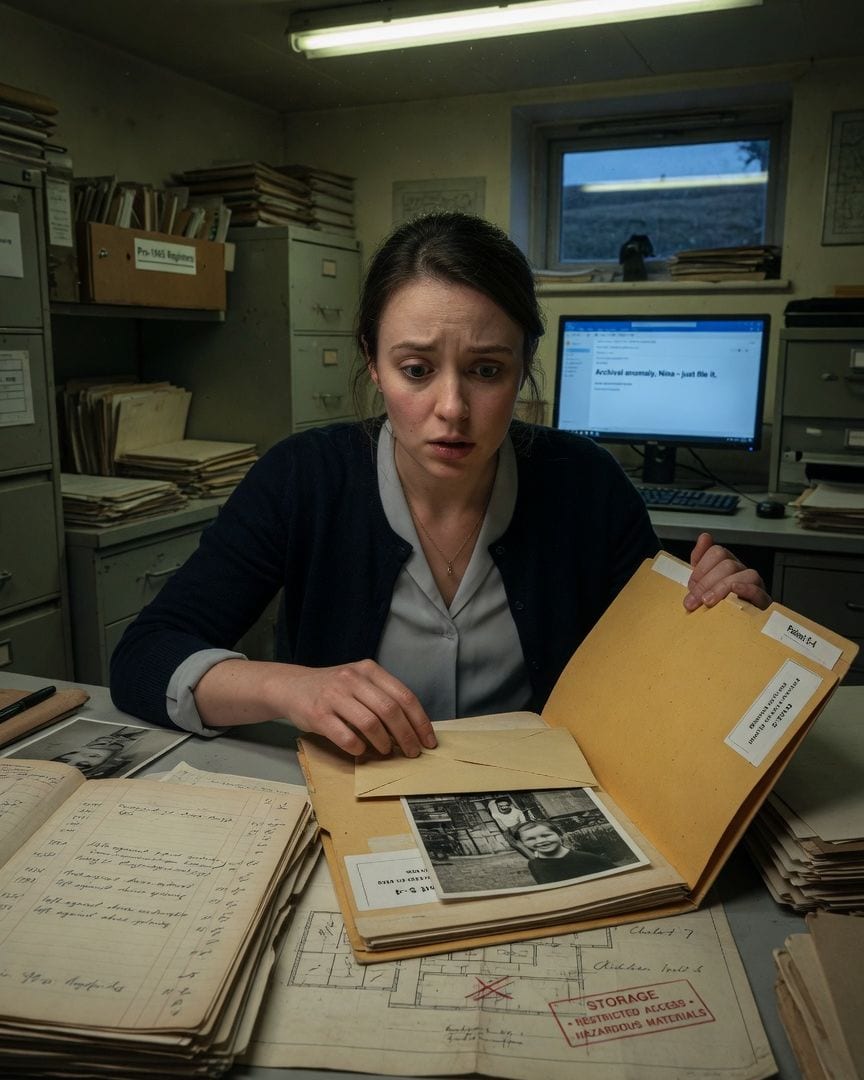
My aunt's sanatorium record shows Patient 5-4. The same file number has been quietly reissued every thirteen years since 1921, signed by the same superintendent's initials.
Processing my aunt Florence's admission file in the archives, I found her patient number, 5-4, held a disturbing secret. This number appeared every thirteen years since 1921, for patients admitted to the same remote chalet, signed by the same impossible initials, and all vanished without a trace. Then, hidden in my aunt's file, I found an old photo of her outside that chalet, with a gaunt, still figure watching from its window.
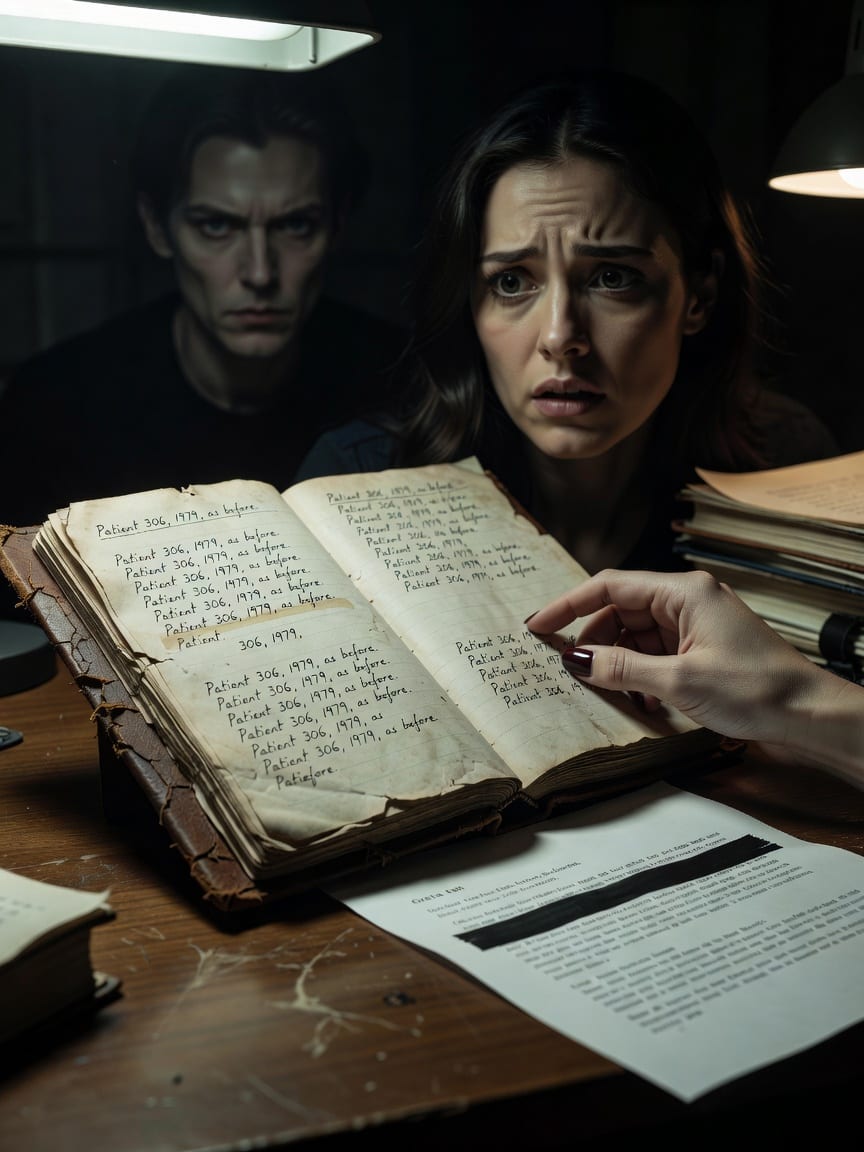
My archive ledger shows Patient 306 admitted in 1889, 1911, 1934, 1957, 1979 — same diagnosis, different names, and always, 'as before.'
My job as an archive transcriber is usually soothing, digitizing ancient admissions ledgers. But a recurring entry for 'Patient 306' caught my eye, noted 'as before' in the same hand for nearly a century. Digging deeper, I found a council file, dated 1998, outlining 'containment procedures' – and it named my own street and surname.
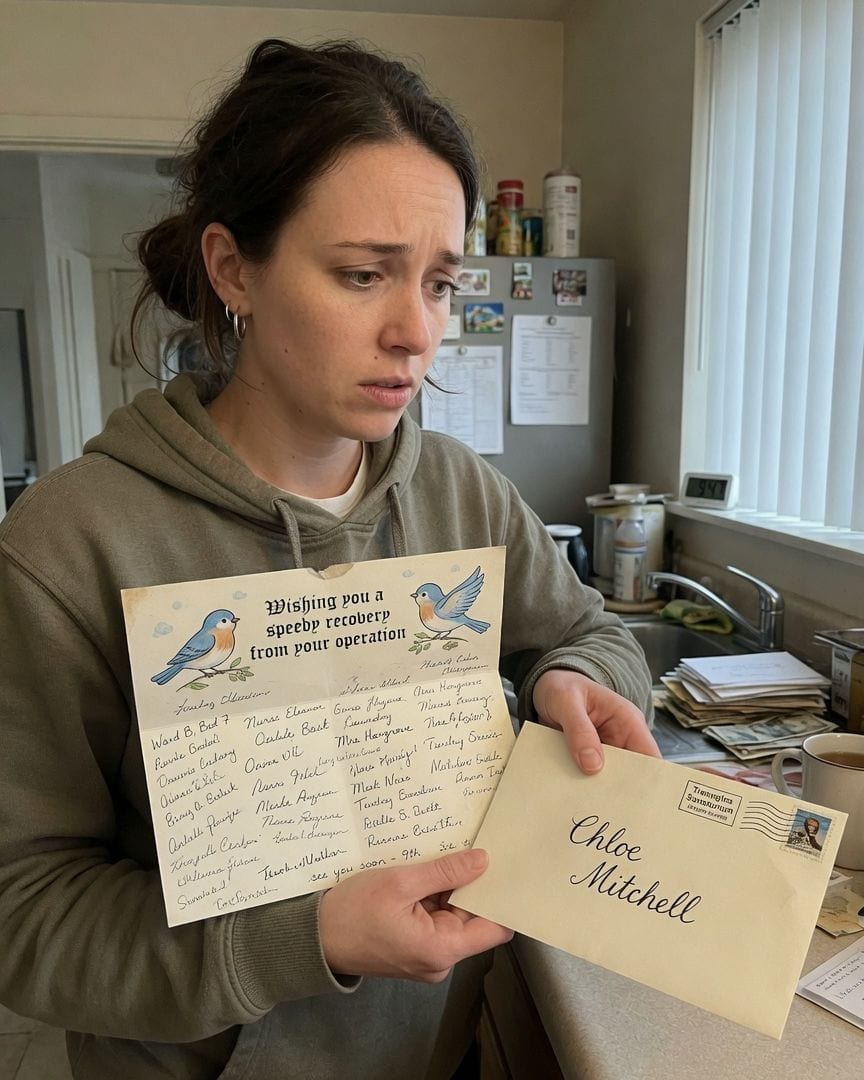
A get-well card wished me a speedy recovery from an operation I never had. It was postmarked from a sanatorium that burned down in 1963.
My quiet Tuesday morning was interrupted by an elegant get-well card, addressed to me. It wished me a speedy recovery from an operation I'd never had. But the postmark read 'Treneglos Sanatorium,' a hospital that vanished in a fire back in 1963.
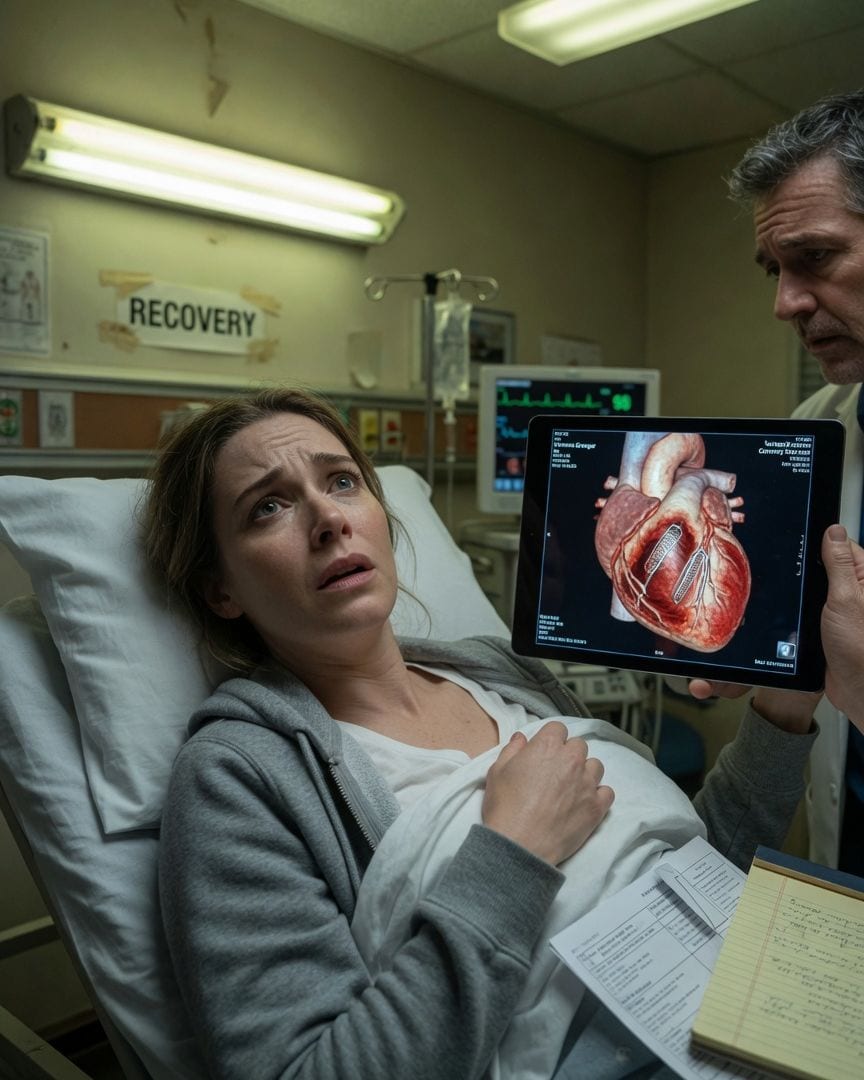
Metal stents are propping open my heart. The doctor rotated the image, but I've never had a cardiac procedure.
After years of dismissed chest pain, a CT scan revealed an impossible truth: my heart contained two metal stents. Dr. Maddox confirmed there was no record of any cardiac procedure in my entire medical history, and I had no memory of ever having surgery. My own body held a secret, alien architecture I couldn't explain.
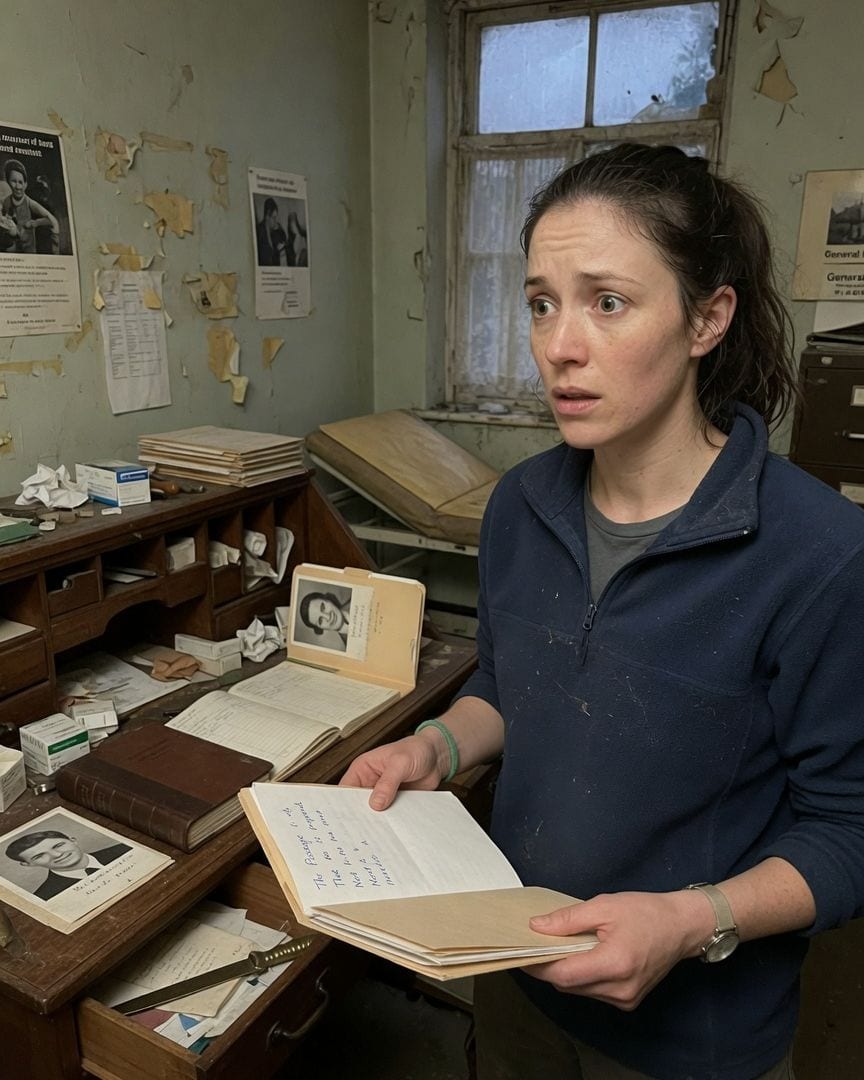
My new clinic's appointment book shows entries for this coming Monday, decades after the doctor retired and died.
Chloe Lawson bought an old, abandoned surgery in Nettlebed, ready to open her new vet clinic. Locals insisted Dr. Almott retired in '79 and the practice shut down for good. But then Chloe found his dusty appointment book filled with meticulous entries, continuing unbroken from 1979 through the decades, right up to this coming Monday.
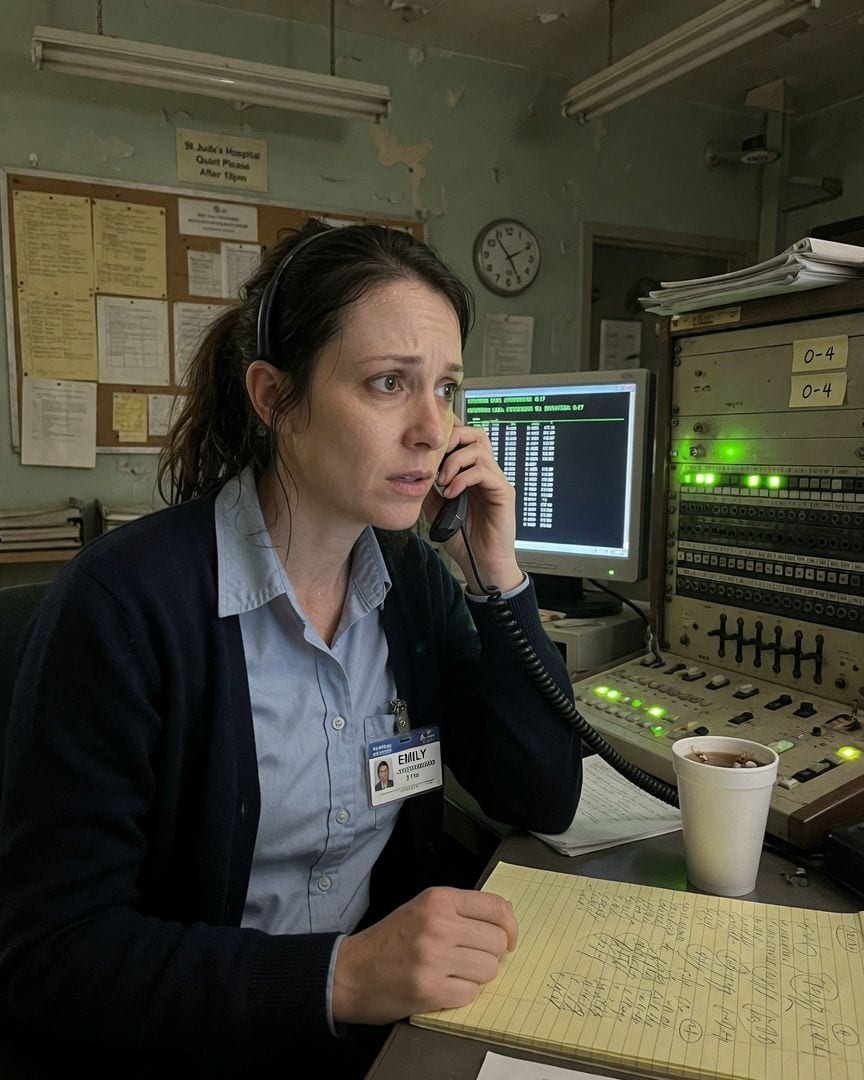
A nurse's voice asks me to page Dr. Reyes to the third floor. My hospital's third floor was demolished years ago, and extension 0-4 with it.
Working the quiet overnight shift at St. Jude's, I was used to predictable clicks. But just after 4 AM, my switchboard lit up: a call from extension 0-4. That extension was decommissioned decades ago, tied to a floor that no longer exists, yet the light pulsed insistently.