My archive ledger shows Patient 306 admitted in 1889, 1911, 1934, 1957, 1979 — same diagnosis, different names, and always, 'as before.'
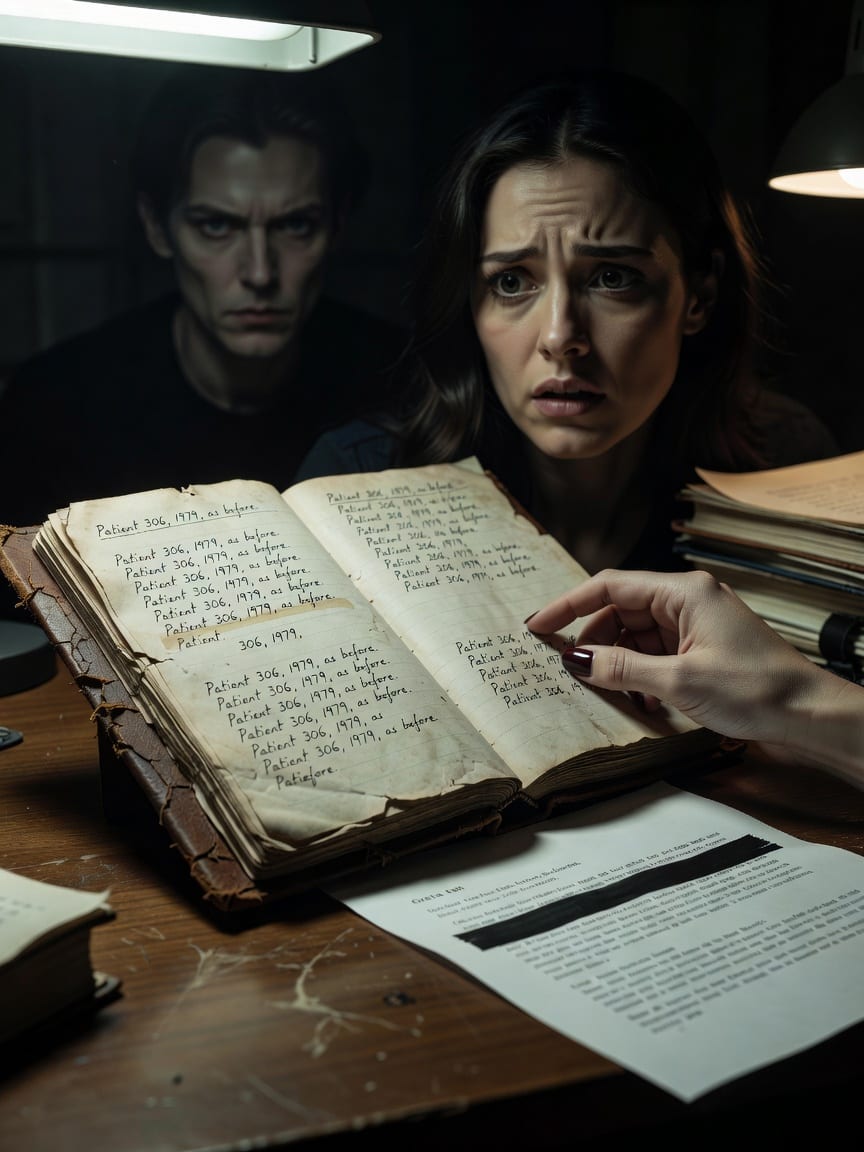
The office hummed with the dry, recycled air of the county archive. Dust motes danced in the single shaft of sunlight cutting through the high window, illuminating the ancient Kelvin Grange admissions ledgers spread across my desk.
As a transcriber, my job was to digitize these crumbling records, a meticulous task I usually found soothing.
But the ledger opened before me, a thick, leather-bound volume smelling of stale paper and forgotten lives, had snagged on a single, impossible entry.
Patient 306. Admitted 1889. The diagnosis, a cryptic six-word phrase, was unsettlingly precise. Beside it, in a neat, familiar hand, was a marginal note: 'as before.'
I frowned. I’d seen this before. Turning pages forward, my fingers brushing the delicate, foxed paper, I found Patient 306 again. Admitted 1911. Different name, same six-word diagnosis. 'As before.' Then 1934. Again. 1957. 1979.
Always Patient 306, always the same diagnosis, always the same steady hand noting 'as before,' despite the names changing—a Sheppard, a Ford, then a Caldwell.
It was like a looped film, each frame slightly different, but the core image unchanging, a quiet hum of wrongness beneath the calm bureaucracy of the archive.
The handwriting of the notes, I now realized, belonged to the same person, a meticulous hand that spanned almost a century of entries.
How could one person live so long, or maintain such an odd record for an institution that had closed decades ago?
The repeated entries for Patient 306 gnawed at me. Dismissing it as an oddity of archaic record-keeping, perhaps a re-used internal code, I spent my lunch breaks digging deeper, pulling other Kelvin Grange ledgers. The pattern held.
Across decades, Patient 306 reappeared, always with that precise six-word diagnosis and the 'as before' marginalia. It felt like a glitch in the fabric of the past, something too orderly to be accidental.
I decided to check the digital council archives. Maybe a misfiling, a shared internal code for some generic affliction. I typed in 'Patient 306' and then the six-word diagnosis. Nothing. No hits, no records, no cross-references.
It was as if this specific patient, this specific diagnosis, existed only within those physical ledgers, disconnected from the modern digital world.
Then I tried a broader search: 'Kelvin Grange, post-1985 management.' The asylum had closed in 1985, its records transferred to the county archive shortly thereafter. What happened to its protocols, its ongoing cases?
Among the hundreds of irrelevant documents that populated the screen, one title caught my eye, striking out from the mundane list of land deeds and public works notices: 'Protocol Review, KG-306, Family Lineage Management.'
It was a heavily redacted council file, dated 1998, long after the asylum closed. Most of the text was blacked out, black rectangles obscuring lines of information, but the few visible words hinted at ongoing 'observation' and 'containment procedures.'
My heart hammered in my chest. This wasn't just old history. This was active. This was a living document, still relevant years after I had started working in this very archive.
I scrolled down, my finger tracing the trackpad. And there, almost entirely obscured by a thick block of printer ink, was a single, blacked-out line.
The redaction was so heavy, so deliberate, it seemed to hum with its own dark secret, a dense shadow on the otherwise official page.
I printed the redacted file, the paper warm and slick in my hands. Back at my desk, the office growing quiet as colleagues left for the day, I angled it under the powerful halogen lamp I used for difficult transcriptions.
The light caught the subtle indentations where the printer ink had pressed the black rectangle onto the paper, leaving ghostly traces of the text beneath. Patience, precision.
I leaned closer, my eyes straining, slowly, painstakingly reconstructing fragments of letters, then words. A sequence emerged from the ghostly imprints: '…residence: [REDACTED]wood Lane… family: [REDACTED]ford… status: under observation, as before.'
My breath hitched. Underwood Lane. Ashford. My own street. My own surname. The house I grew up in. The file was dated 1998, years before I started at the archive, years before I’d ever seen a Kelvin Grange ledger.
It was a cold, precise document, and it named me. The paper rustled as my hand trembled, the thin sheet crinkling under my fingers.
The redacted line was a hidden weapon, aimed directly at me. I couldn't shake the chilling implication. I spent the next weeks in a feverish, clandestine investigation, digging through my own past.
I scoured my family’s old photo albums, property deeds, and local history books. My great-grandmother, Naomi Ashford, had indeed lived on Underwood Lane.
More unsettling, Naomi had worked briefly as an administrative assistant at Kelvin Grange in the 1930s, precisely when one of the Patient 306 entries—the 1934 one—appeared in the ledgers.
The coincidence felt less like an accident and more like a carefully placed piece of a puzzle.
I tried to confide in Olivia Caldwell, my usually pragmatic colleague. I showed her the ledgers, the repeated entries, the six-word diagnosis. Then the printed redacted file. She squinted at it, her brow furrowed.
"Greta, this is… weird, I'll grant you that. But 'family lineage management'? It's probably just a bureaucratic quirk. A misfiled record, an unfortunate coincidence." She shrugged, dismissing it with a wave of her hand.
"It's just old paper, don't let it get to you."
But it was getting to me. The rational explanations were failing. Olivia’s dismissal only made me feel more isolated, more certain that I was seeing something no one else wanted to see. I needed a living witness.
I started cross-referencing staff lists from Kelvin Grange’s later years, specifically administrative logs that mentioned patient management reviews. I was looking for anyone who might have understood the 'KG-306 Protocol' hinted at in the redacted file.
A single name surfaced repeatedly, associated with these management reviews: Harold Sutton, a retired administrator who would now be in his late eighties. His last known address was listed as a care home on the outskirts of town.
The trail, cold for decades, suddenly felt very, very warm.
As I delved deeper, a subtle shift occurred. It started small. Files on my desk, though carefully arranged before I left, seemed to be subtly out of place when I returned from breaks.
A folder containing photocopies of the 1979 Patient 306 entry, which I’d tucked under my keyboard, was once found sitting neatly on top of my monitor. A draft from an open window? An absent-minded colleague? I tried to rationalize it.
Then my archive computer, usually quick, started to lag. It would display brief, phantom error messages before returning to normal, the screen flickering for a split second, a digital eye blinking at me.
One evening, leaving the archive late, the streetlights humming in the damp air, I noticed a dark sedan parked a block from my apartment, its engine idling. No one was visible inside, but the windows were tinted, opaque.
I walked faster, my keys gripped tight in my hand. It was gone a minute later when I glanced back, but the unnerving presence lingered. It felt like a cold spot in the air, a shadow that had just vanished.
Then came the email. Anonymous sender, no name, no address. Subject line: 'Regarding Your Inquiries.' The message was brief, almost polite: 'Some curiosities are best left undisturbed. The past has its own quiet managers.'
It wasn't a threat, but a warning, chilling in its understated authority. Someone knew. Someone was watching me. I wasn't just pulling a thread; I was being watched as I pulled it.
The dread now had a face, unseen but felt.
The anonymous message, far from deterring me, cemented my resolve. Whatever 'quiet managers' existed, they were clearly afraid of what I might uncover.
I booked an appointment at the care home, steeling myself for the encounter, knowing I was stepping into a live situation, no longer just a researcher, but a participant.
The care home smelled faintly of disinfectant and lavender, a cloying sweetness that didn't quite cover the underlying scent of old age.
Harold Sutton was frail but alert, his eyes sharp behind thin spectacles, the blue so faded they were almost white. He greeted me with a serene, almost expectant air, as if he’d been waiting for me for decades.
I laid out my evidence on the small, polished table between us: printouts of the Patient 306 ledgers, the six-word diagnosis, the 'as before' notes, and the modern, redacted council file.
The paper, stark white against the dark wood, seemed to hum with the weight of its secrets.
'Mr. Sutton,' I began, my voice steady despite my racing pulse, 'what was Kelvin Grange really doing with Patient 306? Why the different names, the same diagnosis, the 'as before'?'
Harold Sutton nodded slowly, a faint, papery rustle of his skin. 'Kelvin Grange,' he said, his voice soft but clear, 'was not merely an asylum, Miss Ashford. It was a custodian. For certain… recurring social anomalies.'
He paused, his gaze fixed on the table, letting the words hang in the air, allowing their true weight to settle. 'Patient 306 was not a person. It was a classification. A code for a specific set of manifestations.
A pattern, if you will.'
I pointed to the 'as before' notes, my finger tracing the neat script. 'And this? This handwriting is almost a century old. How could one person—'
'Indeed,' Harold replied, cutting me off gently, 'a testament to the consistency of the protocol. 'As before' meant the established containment and management procedures were to be reapplied. The condition, you see, was hereditary. It reappeared in certain family lines.'
My blood ran cold. Hereditary. My great-grandmother.
I pushed the redacted file across the table. 'And this? 'KG-306, Family Lineage Management'? Dated 1998? After the asylum closed?'
Harold’s gaze softened, a hint of something like pity in his faded eyes. 'The institution may close, Miss Ashford, but the need for management does not. The council inherited not just the records, but the… understanding. And the protocols.
Your inquiries are not new to us. Nor is your surname. The Ashford line, particularly those on Underwood Lane, have a long history of… curiosity. And manifestation.'
The words hit me like a physical blow. The old ledgers, the cryptic diagnosis, the modern redacted file – it all snapped into sickening focus.
It wasn't just a record; it was a living system, a generations-long bureaucracy of quiet control, and her family was part of it. I was part of it.
I stared at Harold, the implication of his words chilling me to the bone. 'My family?' I whispered, the question barely audible. 'Are you saying… I’m part of this?'
Harold Sutton leaned back, his expression unreadable, a faint, unsettling smile playing on his lips. 'Your inquiries, Miss Ashford,' he said, leaning forward slightly, 'are, in fact, quite typical.
Your diligence, your meticulous observation of patterns, your unwavering pursuit of coherence… these are all very familiar traits. We’ve seen them before. In other Ashfords. In other 306 candidates.' He gestured to the pile of documents between us.
'Your current… curiosity, as you call it, is merely the latest manifestation. The protocol, you see, is quite comprehensive.' He then added, his voice dropping to a near whisper, 'And it has already been activated for you, Miss Ashford.
Your inquiries ensured it. The quiet managers have taken note. The system is already in motion. As before.'
I felt a cold dread bloom in my chest, realizing I was no longer the investigator, but the next subject. The air in the room seemed to thicken, pressing in on me.
The world tilted. 'Activated?' I managed, my voice hoarse. 'What does that mean?'
Harold Sutton’s smile remained, a fixed, unsettling thing. 'It means the institution, in its continuing capacity, has identified a potential recurrence.
The 'six-word diagnosis,' Miss Ashford, translates not to a treatable illness, but to a specific, disruptive pattern of thought, a particular kind of 'coherence-seeking' that, left unmanaged, can destabilize communities. Kelvin Grange was built to contain it.
When the asylum closed, the oversight transferred. Key personnel, like myself, ensured the knowledge, and the 'file,' persisted.
Your great-grandmother, Naomi, wasn't a 'benefactor' in the traditional sense; she was a liaison, placed to observe and report within your family line.'
He gestured to the redacted council file. 'That document you found? It was an update, an assessment of your own potential. Your investigations simply confirmed what was already suspected.
The 'as before' protocol mandates quiet observation, then gentle redirection, and if necessary, a controlled… removal. For the greater good, of course.'
He gestured around the quiet care home. 'Many of us who understood the true nature of 306 found a quiet place to retire, ensuring the continuity of the 'file.'
He explained how the network extended beyond Kelvin Grange, subtly influencing local authorities, health services, even property sales, to ensure 'subjects' were always within reach of the 'management.'
The horror wasn’t a monster, but the silent, systematic bureaucracy that had managed human anomaly for over a century, and now had its sights on her.
My great-grandmother hadn't been an unfortunate patient; she had been a gatekeeper, and I was next in line.
I left Harold Sutton, the world a discordant hum around me. I was not a patient, but a subject. A pattern. I refused to be managed.
Over the next few days, fueled by a terrifying clarity that burned away my fear, I gathered every shred of evidence.
The original Kelvin Grange ledgers, copies of the redacted council file, my detailed notes from Harold Sutton’s confession, cross-referenced with my family history.
I compiled a comprehensive report, outlining the century-long pattern, the coded diagnosis, the 'as before' protocol, and the chilling continuation of the 'management' system post-asylum closure.
I bypassed Olivia, bypassed my immediate superiors, who would have dismissed me as overworked or paranoid. I went straight to the County Council’s Chief Executive, Daniel Larsen.
He was a stern, no-nonsense man, initially dismissive, convinced I was suffering from stress, a hallucination born of too many hours in dusty archives.
But I was calm and rational. I laid out the documented facts on his pristine mahogany desk. The sheer coherence of the evidence, the cold, bureaucratic logic woven through decades of official records, slowly broke through his skepticism.
He poured over the ledgers, tracing the '306' entries, his face blanching as I explained the true meaning of the 'six-word diagnosis' and the chilling significance of the 'as before' marginalia.
The redacted file, with its partial reference to my own street, my own name, was the clincher.
'This… this is unconscionable,' Larsen finally muttered, his voice tight. He ran a hand through his thinning hair. 'A systemic, generations-long… containment protocol?' He ordered an immediate internal investigation, freezing all related council activities.
The 'management' system, built on quiet paper trails and unspoken understandings, was finally exposed, brought into the harsh light of public scrutiny. The silent machinery, for the first time in over a century, was forced to stop.
The ensuing scandal was contained, a quiet tremor rather than an earthquake. Daniel Larsen’s internal investigation confirmed the existence of the 'KG-306 Protocol' and its insidious reach.
Harold Sutton vanished from the care home, leaving no forwarding address, his room swept clean as if he’d never been there. The remnants of the 'management' system were dismantled, the 'file' officially closed.
I was heralded as a whistleblower, but the experience left me deeply marked. Some colleagues avoided me, whispering about my 'obsession,' my 'conspiracy theories.'
The public, receiving a sanitized version of events, understood only that a historical injustice involving wrongful confinement had been uncovered, but the true, uncanny nature of the 'six-word diagnosis' and the 'recurring anomaly' remained largely unexplained, deemed too sensitive or simply too unbelievable for mass consumption.
I returned to my life, forever changed. The archive, once a sanctuary of quiet order, now felt like a mausoleum of hidden truths. I still transcribed ledgers, but my gaze lingered on the margins, searching for other patterns, other codes.
The 'KG-306 Protocol' was stopped, its quiet managers scattered, but the underlying condition, the 'anomaly,' still existed. I knew that. I lived with that knowledge, a quiet, internal hum of dread that never quite faded.
One afternoon, digitizing a lesser-known set of maritime hospital records from the early 20th century, my fingers froze. Patient 712. A different code, a different institution, but the diagnosis, though phrased slightly differently, echoed the same uncanny six-word pattern.
And beside it, in a firm, confident hand, was a familiar marginal note.
Greta Ashford continued her work at the archive.
Sometimes, on quiet afternoons, colleagues would notice her gaze linger a little too long on certain entries, a faint, knowing smile playing on her lips, as if she understood a secret language only she could read. Managed as before.
If this one got to you
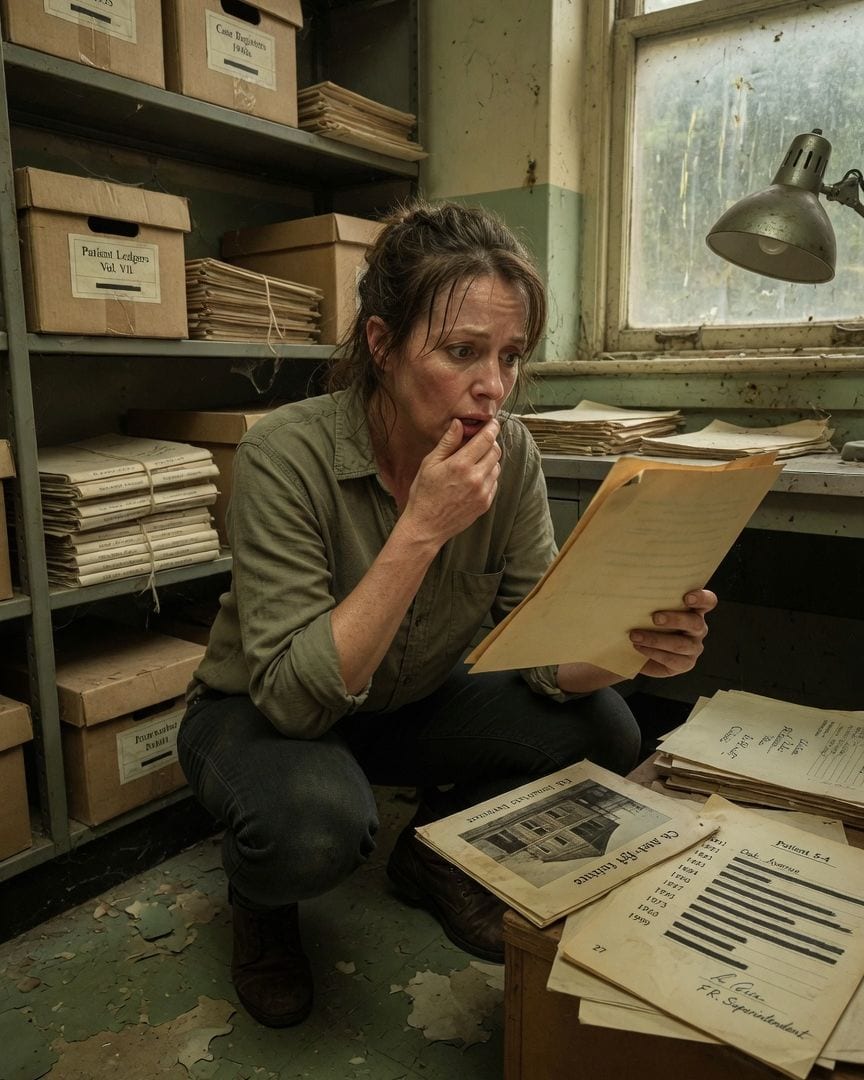
Patient 5-4 keeps checking into my aunt's old sanatorium chalet. The same initials sign them out, 'not traced,' every thirteen years since 1921.
Sifting through my aunt Margaret's estate, I found her old sanatorium file from 1999. Her patient record listed her as 'Patient 5-4,' discharged 'not traced.' But when I accessed the archives, I found 'Patient 5-4' was admitted every thirteen years since 1921, always with identical discharge notes.
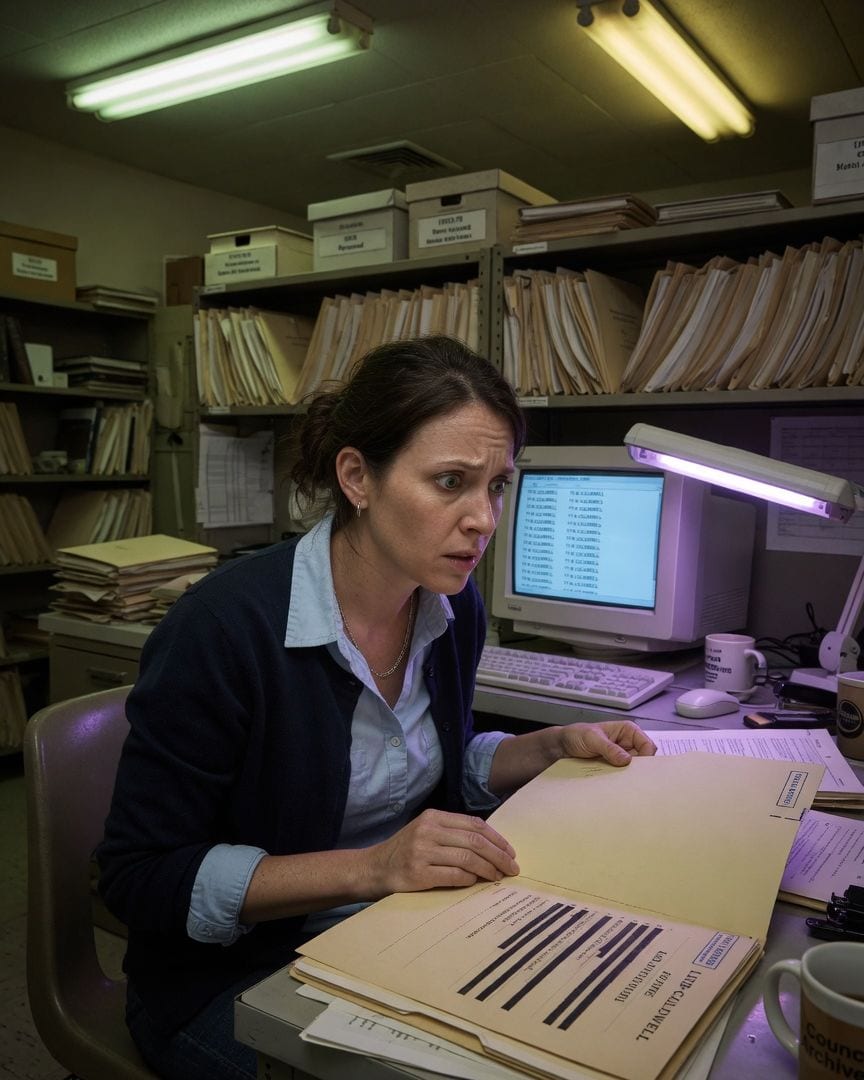
My employer's security file holds a vetting report on me dated nine years before I ever applied. It has my full name and my parents' address — with only one line, the source who referred me, blacked out.
Working a routine data audit, I pull my own security file. The issue date is nine years before I even applied for the job. Then, hidden within an old archive file, I find my current address etched under a blacked-out line.
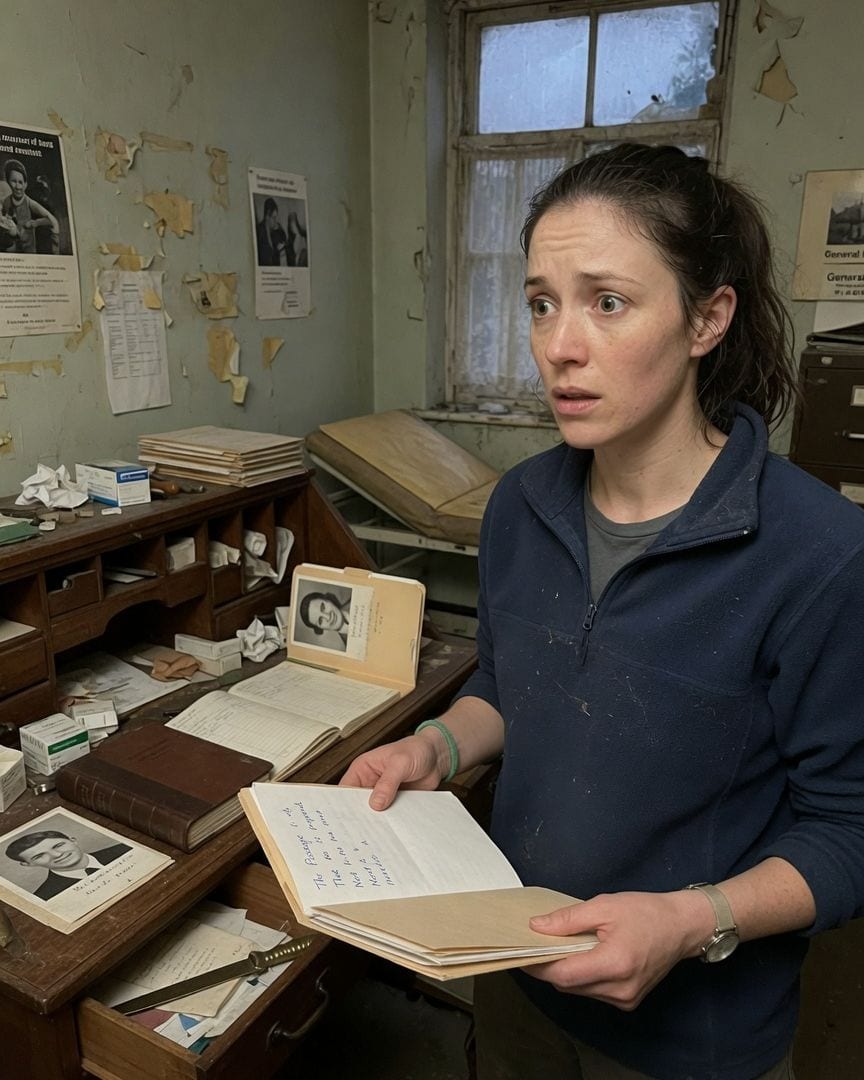
My new clinic's appointment book shows entries for this coming Monday, decades after the doctor retired and died.
Chloe Lawson bought an old, abandoned surgery in Nettlebed, ready to open her new vet clinic. Locals insisted Dr. Almott retired in '79 and the practice shut down for good. But then Chloe found his dusty appointment book filled with meticulous entries, continuing unbroken from 1979 through the decades, right up to this coming Monday.
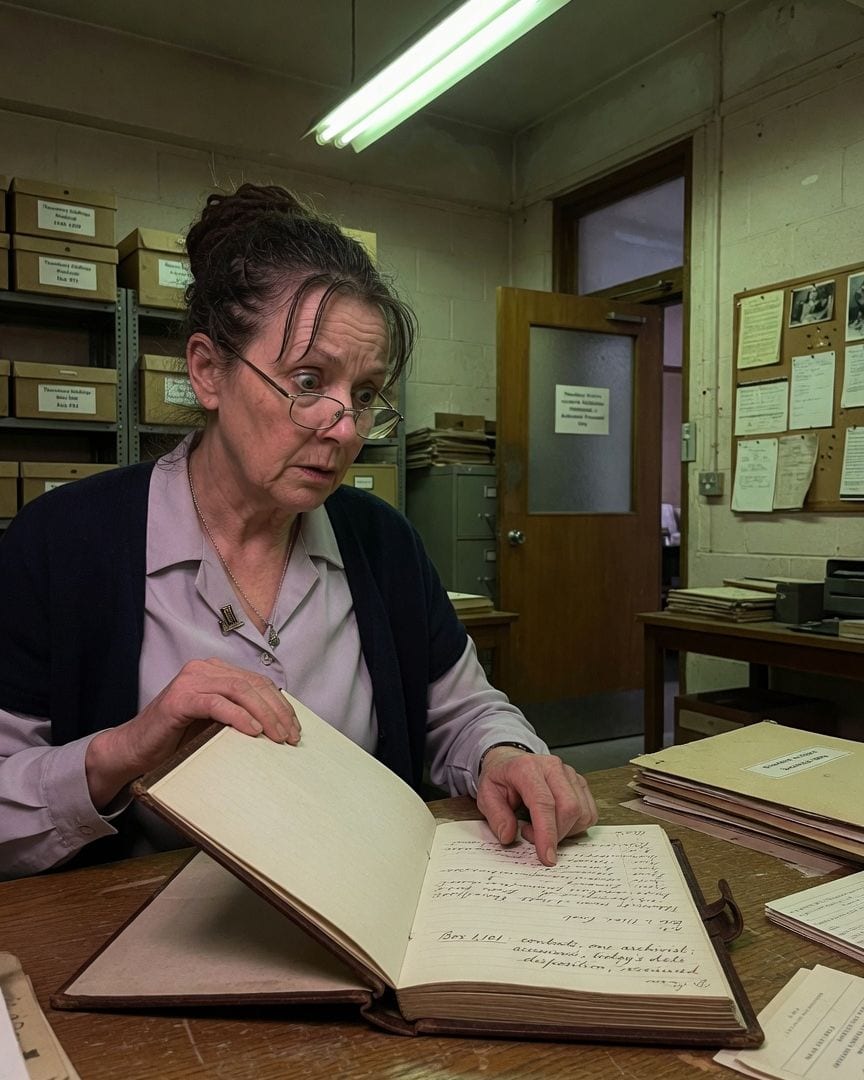
Archivist Beatrice Kell had four hours to finish her life's work when an old Cold War register listed 'Box 1,101: contents, one archivist' for today's date.
Methodical archivist Beatrice Kell had just four precious hours left before renovation began, a final chance to complete two decades of her life's work within the Thornbury Collection. The heavy oak door creaked shut, sealing her in with the comforting scent of old paper. But as she opened the original 1952 accession register, a familiar document she knew intimately, she found an impossible entry: 'Box 1,101: contents, one archivist; accessioned, today's date; disposition, retained.' Her own title, linked to a box that didn't exist, settled a profound chill deep in her bones. Was this a macabre joke, or something far more sinister?
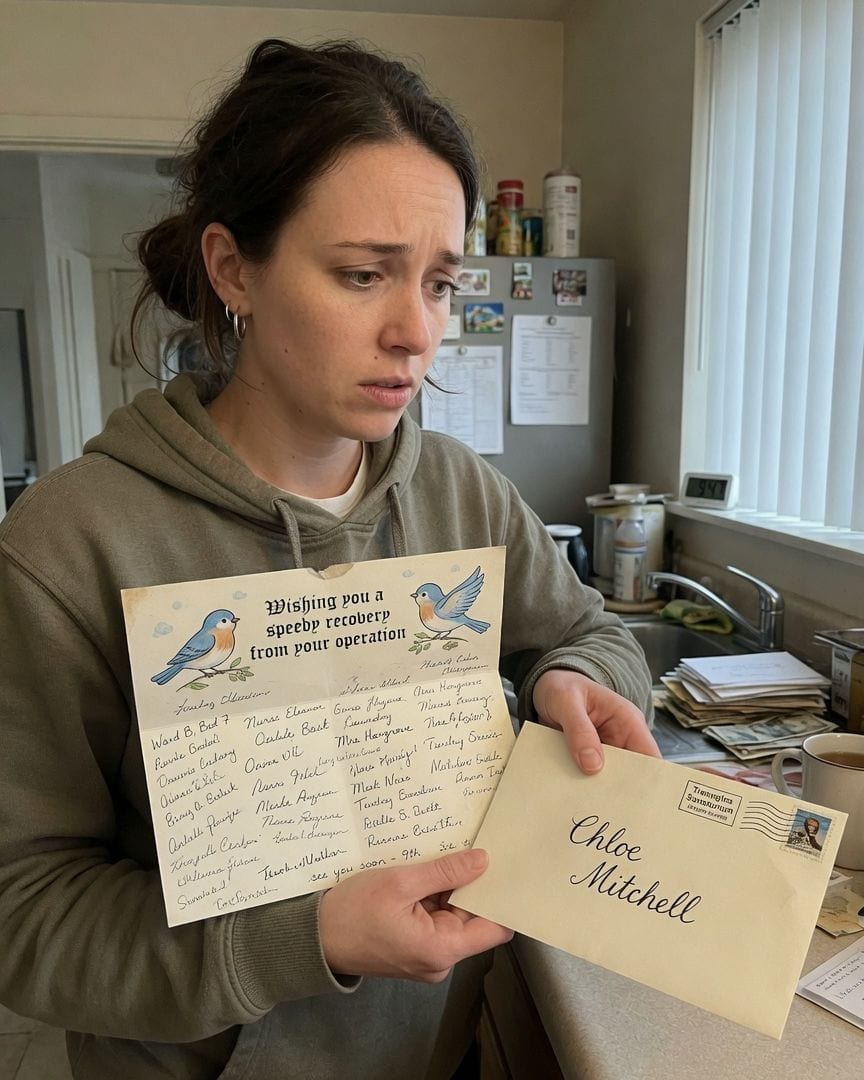
A get-well card wished me a speedy recovery from an operation I never had. It was postmarked from a sanatorium that burned down in 1963.
My quiet Tuesday morning was interrupted by an elegant get-well card, addressed to me. It wished me a speedy recovery from an operation I'd never had. But the postmark read 'Treneglos Sanatorium,' a hospital that vanished in a fire back in 1963.
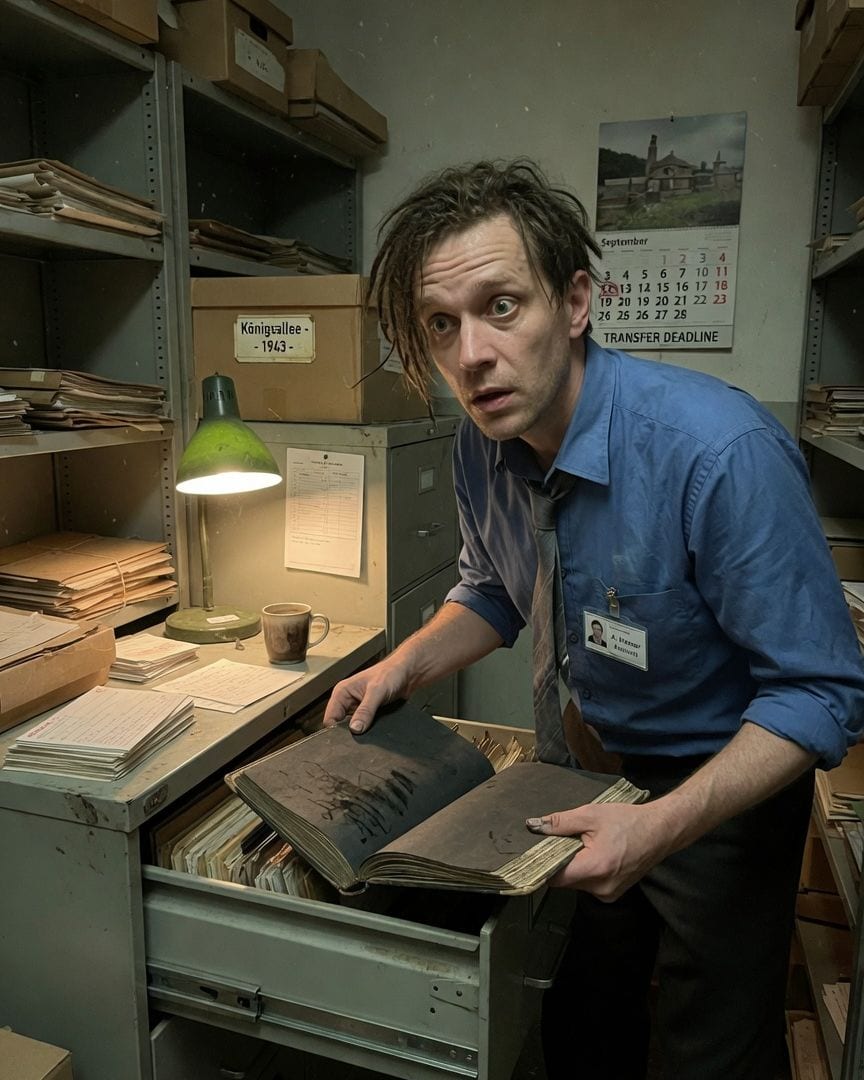
A Berlin archive researcher races a deadline. A hidden log for a Cold War barracks on a vacant lot has ink still wet from last month.
Ansel Vidmar, a methodical researcher, felt the pressure of a looming deadline. The municipal transfer of the old Berlin archive was days away, and he still had countless documents to categorize amidst towering stacks of forgotten history. His focus narrowed to an unindexed metal cabinet, revealing records for a garrison company at Königsallee – an address that had been a vacant lot since the war. A punishment log inside listed an entry from 1983, a date far too recent for a non-existent building. When Ansel visited the site, he found only overgrown grass, save for a single, eerily clean concrete doorstep emerging from the earth. His unease solidified into dread when he later uncovered a hidden Quartermaster's Log, meticulously detailing supplies for the same barracks, with entries extending to "last month," the final page's ink still faintly wet. What unseen operations were still being maintained?