A Berlin archive researcher races a deadline. A hidden log for a Cold War barracks on a vacant lot has ink still wet from last month.
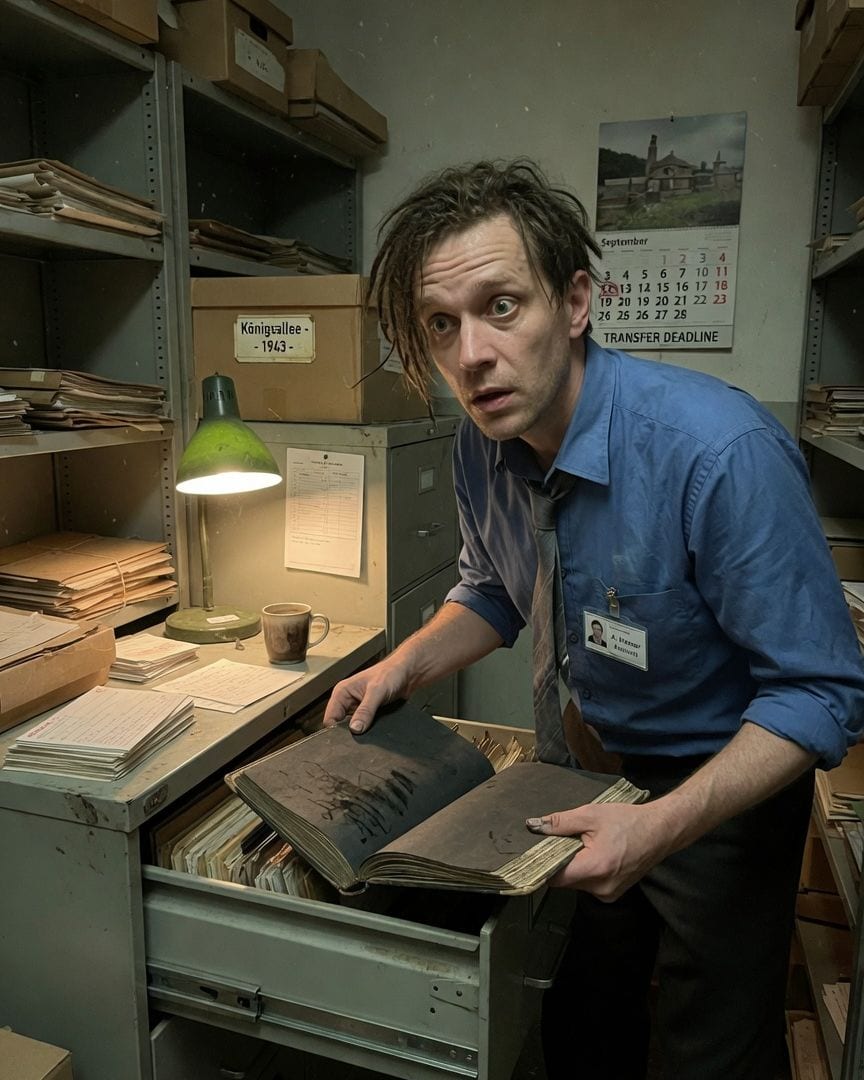
Ansel Vidmar, a methodical 38-year-old researcher, felt the clock ticking down. The first of the month loomed, bringing with it the municipal transfer of the old Berlin archive, and he still had shelves of documents to categorize.
He worked with a quiet intensity, his movements precise, almost ritualistic, amidst the towering stacks of forgotten history. His current focus was a single, plain metal filing cabinet, tucked away in a dusty corner, keyed to no index.
It held the complete administrative life of a garrison company: pay vouchers, sick call logs, a mess account, and a thick punishment book.
All were meticulously detailed for a barracks address on Königsallee, a site that had been a vacant lot since the war.
The contradiction gnawed at him. He pulled out the punishment book, its heavy pages smelling faintly of mildew and cheap paper. His finger traced the final entry, dated 1983.
It restricted one Private First Class Joel Oakley to quarters for fourteen days, a disciplinary action recorded with the same bureaucratic precision as the 1943 entries.
The date felt too recent, too real, for a building that had not existed in decades. Ansel tried to rationalize it – a misfile, an administrative ghost, a clerical error from a chaotic post-war era. But the specificity lingered.
That evening, a quiet dread propelled him. The Berlin air was crisp as he drove to Königsallee. The address led him to a forty-square-meter patch of overgrown grass, bordered by a crumbling brick wall.
There was no trace of any structure, just weeds and sparse, struggling wildflowers. Yet, in the precise center of the lot, a single, concrete doorstep emerged from the earth.
It was cracked and weathered, but its surface was eerily smooth, distinctly free of any dust, leaves, or detritus. It was swept clean.
Ansel returned to the archive the next morning, the image of that pristine doorstep burned into his mind. He spent hours at his desk, hunched over city records, land registry documents, and old demolition permits for Königsallee.
There was no official record of any barracks at that address post-World War II, absolutely none. The cabinet's contents, its lack of indexing, the 1983 entry – they all hung in the air, defying explanation.
He sought out Daphne Vaughn, the 54-year-old archive supervisor. Daphne was a pragmatic woman, her face a map of decades spent navigating the labyrinthine records of Berlin.
She kept her graying hair tied in a no-nonsense bun, and her posture was always ramrod straight. Ansel presented the punishment book, hoping for the mundane explanation he couldn't find himself.
"Königsallee Barracks?" Daphne squinted at the ledger, her brow furrowing. "A misfile, surely. Probably a ghost company, administrative error. Happened all the time after the war, so many units disbanded, records scattered."
She handed the book back, already turning to a pile of ledgers on her own desk. "Just tag it as a historical oddity, Ansel. We need these shelves clear by the first."
Her dismissal was firm, yet it did nothing to quiet Ansel's unease. The specific 1983 date refused to be dismissed, and the image of that swept doorstep resonated with a quiet, undeniable wrongness.
He spent the next few hours trawling through various post-war military archives, searching for any record of a 'Private First Class Joel Oakley' that would fit the timeline.
Nothing concrete emerged, just fragmented names and blurry discharge papers that offered no definitive link. The ordinary explanations kept failing, one by one.
Frustration, cold and sharp, pushed Ansel back to the unindexed cabinet. He felt an inexplicable pull towards it, a sense that the answer lay not in external records, but deeper within its dusty drawers.
He knelt, running his hand along the bottom drawer, feeling for any anomaly, any hidden catch. His fingers brushed against something solid, a thick, unmarked ledger, wedged deep beneath the other files, almost hidden from view.
He pulled it out. The cover was plain, a dark, heavy canvas, embossed with faint, gold-leaf lettering: 'Quartermaster's Log – Königsallee Barracks.' He flipped it open, the heavy paper crackling softly. His breath caught in his throat.
The entries were meticulous, detailing mundane supplies for a full company: uniforms, cleaning supplies, rations, even coffee. They extended not just to 1983, but right up to 'last month.'
On the final page, detailing a shipment of rations and cleaning supplies, the ink was still faintly wet.
The smell of fresh ink was a stark, almost violent, contradiction to the archival dust that coated everything else. Ansel sat at his desk, the Quartermaster's Log open before him, the faint scent clinging to his fingers.
He pored over the entries, noting specific items: "20kg roasted coffee," "Type 3 rations, 250 units," "standard issue uniforms, summer weight," "industrial floor cleaner, 5 gallons."
He methodically cross-referenced the listed suppliers – a local bakery, a uniform outfitter, a general store. All were real, current businesses in Berlin.
He called the bakery first. "I'm inquiring about deliveries," he began, trying to keep his voice even, "to, uh, Königsallee Barracks?"
A pause. "Königsallee Barracks?" the owner's voice, thick with a Berlin accent, sounded confused. "We've never delivered to a barracks there. It's a vacant lot." Ansel’s heart thumped. "But our digital records show a monthly standing order, placed by...
'Department 7.' For 'Königsallee, Central District.' Paid in full, on time, every month. For the last forty years."
Ansel’s unease ratcheted up, sharp and cold. The 'barracks' wasn't just a misfiled record; it was an actively administered, if non-physical, entity. He began to document the entire paper trail, creating a meticulous timeline of orders and payments.
He transcribed names of suppliers, dates, and amounts. He was acutely aware of the ticking clock, the looming archive transfer that would make his access impossible, closing off this strange, disturbing rabbit hole forever.
The hum of the fluorescent lights above his desk seemed to pulse with a new, insistent rhythm.
Ansel's focused, almost obsessive, investigation began to raise subtle red flags. Daphne Vaughn, the archive supervisor, became subtly watchful. She often appeared near his desk, ostensibly checking inventory, but her gaze always flickered to the open Quartermaster's Log.
She made 'casual' inquiries about his progress, her voice light, but her reminders of the impending transfer deadline and the absolute necessity of categorizing every document became more frequent, more pointed. "Everything must be accounted for, Ansel. Every single page."
One evening, Ansel worked late, the archive hushed and empty save for the insistent hum of the old fluorescent lights and the distant clang of a streetcar. The silence felt heavy, pressing in on him.
He heard a faint, rhythmic sound, like footsteps, echoing from the direction of the unindexed cabinet. They were heavy, deliberate, as if someone in thick-soled boots was pacing slowly. Then they stopped.
He froze, listening, a cold prickle on his skin. He waited, his breathing shallow. No further sound.
Cautiously, he rose from his desk. The archive felt colder now, as if a window had been left open somewhere. He approached the cabinet, his senses heightened.
It was slightly ajar, just a hairline crack, and a faint, almost imperceptible scent of pipe tobacco lingered in the air, a smoky, sweet note he'd never noticed in the archive before.
It was a smell of old men and quiet contemplation, yet it felt utterly out of place here. He checked his meticulously organized notes. A single page, detailing his cross-referenced names, including 'Joel Oakley,' was missing from the folder.
The room itself seemed to hold its breath.
The next day, Ansel confronted Daphne. He didn't mention the missing page, or the footsteps, or the pipe tobacco. He focused on the concrete facts: 'Department 7' and the bakery's records.
He detailed the monthly orders, the specific delivery instructions for a non-existent barracks.
Daphne initially dismissed it, her face tightening. "A prank, Ansel. Or an old, forgotten shell corporation. Happens more than you think." She gestured vaguely towards the shelves.
But Ansel pressed, his voice tight with controlled urgency. "It's too much, Daphne. The sheer volume of records, the meticulously maintained Quartermaster's Log, the actual swept doorstep on a vacant lot."
He watched her face, seeing a flicker of something beyond irritation, a shadow of recognition in her eyes. The mask of dismissiveness began to crack.
Finally, she sighed, a sound heavy with resignation. She leaned back in her chair, her gaze fixed on a distant point. "Department 7," she said, her voice barely above a whisper, "is an old, highly classified designation. Pre-war.
Officially disbanded decades ago, its purpose obscured." She rose and retrieved a single, heavily redacted memo from a secure vault behind her desk. It was brittle with age, dated in the 1950s.
The memo, barely legible, mentioned a 'Königsallee Relocation Protocol' and 'administrative transfer of assets.' It didn't explain how, but it confirmed the site was not merely demolished, but 'relocated' under special administrative control.
The implication snapped into focus, cold and precise, like the click of a lock. The barracks, or at least its administrative function, still existed, somehow. This reframed the 1983 punishment entry for Pfc.
Oakley and the swept doorstep not as historical oddities, but as real events occurring in this 'relocated' space, a place that continued to operate under the unseen, methodical hand of Department 7.
Ansel returned to the unindexed cabinet, now understanding its true, chilling nature. It wasn't just a container for old files; it was a direct administrative link, a portal, to this 'relocated' reality. The air around it felt colder, heavier.
He searched the Quartermaster's Log again, his fingers tracing the entries, looking for any further anomalies, for the 'how' of it all. He had to know the mechanism.
Buried amidst pages of mundane supply lists, he found a separate, bound ledger, thinner than the Quartermaster's Log, its cover equally plain. It was a 'Personnel Intake Register.' He pulled it free, his heart pounding with a new, colder dread.
The heavy paper felt almost alive in his hands.
He flipped through it, past faded entries from the 1940s, 50s, 60s, a steady trickle of names, service numbers, and assigned quarters. Each entry was neat, formal, a bureaucratic ghost.
He scanned the more recent pages, past 1983, past the 90s, into the new millennium. His eyes caught a fresh entry, the ink still vibrant, dated just two days ago. He read the name, the service number, the 'assigned quarters.'
It was his own name: Ansel Vidmar. His heart pounded in his chest, a frantic drum against his ribs. He saw the assigned quarters for Private First Class Ansel Vidmar, Königsallee Barracks, Room 14.
The full, horrifying truth detonated in Ansel’s mind, sharp and cold as shattered glass. He hadn't just been investigating a historical anomaly; he was being processed.
The unindexed cabinet, the Quartermaster's Log, the 1983 punishment entry, the swept doorstep – they were not mere traces of a hidden reality, but an active, insidious mechanism for 'recruiting' people into it.
'Department 7' hadn't just 'filed away' a barracks; it found a way to administratively claim locations and personnel, maintaining them in a non-physical, 'filed' reality.
The swept doorstep, he realized, was a beacon, a subtle lure, drawing in those who noticed the wrongness, those who paid too much attention.
The missing page from his notes wasn't just a theft; it was a sign of his own file being updated, his 'intake' processed.
He understood the terrifying pattern across decades and classifications: people who got too close, who disturbed the 'filed' reality, or who were simply deemed 'suitable' by some unseen criteria, were quietly added to the register.
Their physical lives would fade, replaced by their administrative lives in the Königsallee Barracks, a place that existed only on paper, yet was terrifyingly real.
Ansel knew he had to disrupt the process, not just for himself, but for anyone else who might fall into the trap. The archive transfer was mere days away, his clock running out.
He realized the 'doorway' was the cabinet itself, its administrative function the key. He frantically searched the Quartermaster's Log again, now with a desperate clarity, his eyes scanning for any hint of a counter-protocol, anything that could sever the link.
Buried among pages of mundane supply audits, he found it: a 'Deactivation Protocol,' a complex sequence of sealing and archiving procedures. It was written in the same steady, official hand as the other entries, precise and clinical.
He worked against the clock, his hands trembling, performing the listed steps on the cabinet: locking specific drawers, applying official lead seals from the archive’s supply closet, securing them with a small, specialized crimping tool.
Finally, with trembling hands, he removed the entire 'Personnel Intake Register' from the cabinet, its weight heavy and cold in his grip. He placed it in a separate, officially designated 'destroyed documents' bin, marked for shredding.
He felt a cold, heavy pressure in the air around him, a subtle resistance, as if something unseen was fighting him, trying to hold the files, to keep the system open.
The old fluorescent lights flickered once, then settled back into their dull hum. He pushed through the invisible force, snapping shut and sealing the last drawer, the faint scent of pipe tobacco suddenly growing stronger, then fading.
He was 'stopping' the mechanism, at least for this particular instance, for this particular cabinet, for himself.
The archive transfer proceeded without incident. The unindexed cabinet, now properly sealed and cataloged under a generic 'Miscellaneous Historic Records' tag, was moved to municipal storage, its strange contents hidden within a larger system.
The 'Personnel Intake Register,' placed in the 'destroyed documents' bin, was shredded with other outdated papers, its names and records reduced to unreadable confetti, swirling briefly like snow before settling into dusty oblivion. Ansel Vidmar finished his research project.
He felt hollowed, as if a part of him had been scraped clean, but he was free. He never returned to the Königsallee lot, never looked at vacant spaces the same way again.
The dread of what he found, what nearly claimed him, settled into a permanent, quiet corner of his mind.
Weeks later, Ansel was at home, trying to return to a semblance of normal life. The memory of the archive, of Department 7, felt distant, almost unreal. He received a small, unmarked package in the mail.
Inside was a simple, tarnished brass key. There was no note, no return address, just the weight of the metal in his palm.
It was the exact key to the unindexed filing cabinet, the one that should have been in the archive's possession, now sealed and stored away.
He stared at it, a cold dread settling deep in his bones, colder than any archival vault. He remembered one last entry in the 'Deactivation Protocol' he had overlooked, a single, handwritten line at the very bottom, almost an afterthought:
The lock is secondary. The file is always signed.
Weeks later, a new researcher at the municipal archive, clearing out an old storage room, discovers a single, unindexed filing cabinet.
It contains the complete administrative life of a garrison company, attached to a barracks address on Königsallee that had been a vacant lot since the war.
The final entry in the punishment book, dated last month, restricted one Private First Class to quarters for fourteen days.
If this one got to you
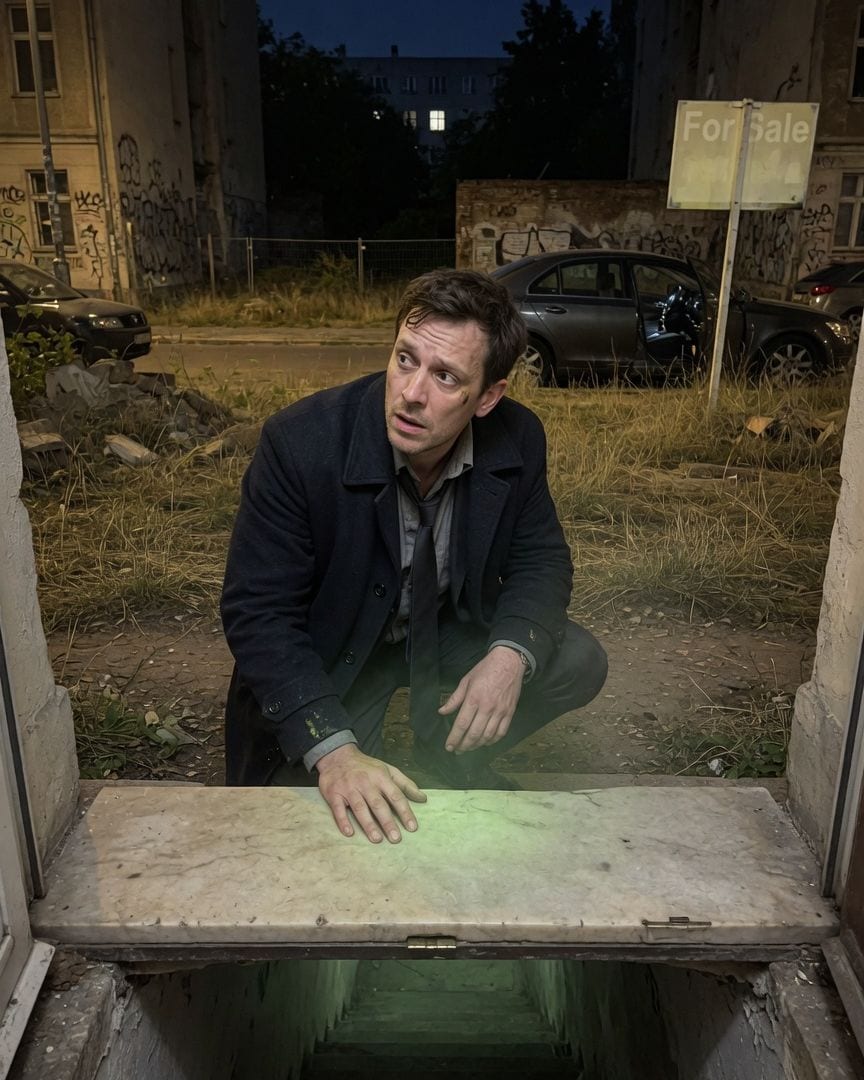
A Berlin researcher found a Cold War garrison's complete records for an address that's been a vacant lot for decades. Then, he found its immaculately swept doorstep open into a pulsing green light.
Ansel Vidmar, a methodical researcher, worked late in a Berlin archive, driven by academic curiosity before its municipal transfer. He discovered a steel cabinet containing meticulous administrative records for a 1980s garrison company, listed at an address that had been a vacant lot for decades. The discrepancy gnawed at Ansel, pushing him to visit the site, where he found a single, immaculately swept doorstep. To his astonishment, it silently sank inward, revealing a dark, concrete stairwell. From its depths, an anachronistic hum and faint green light pulsed, hinting at an impossible secret beneath Berlin.
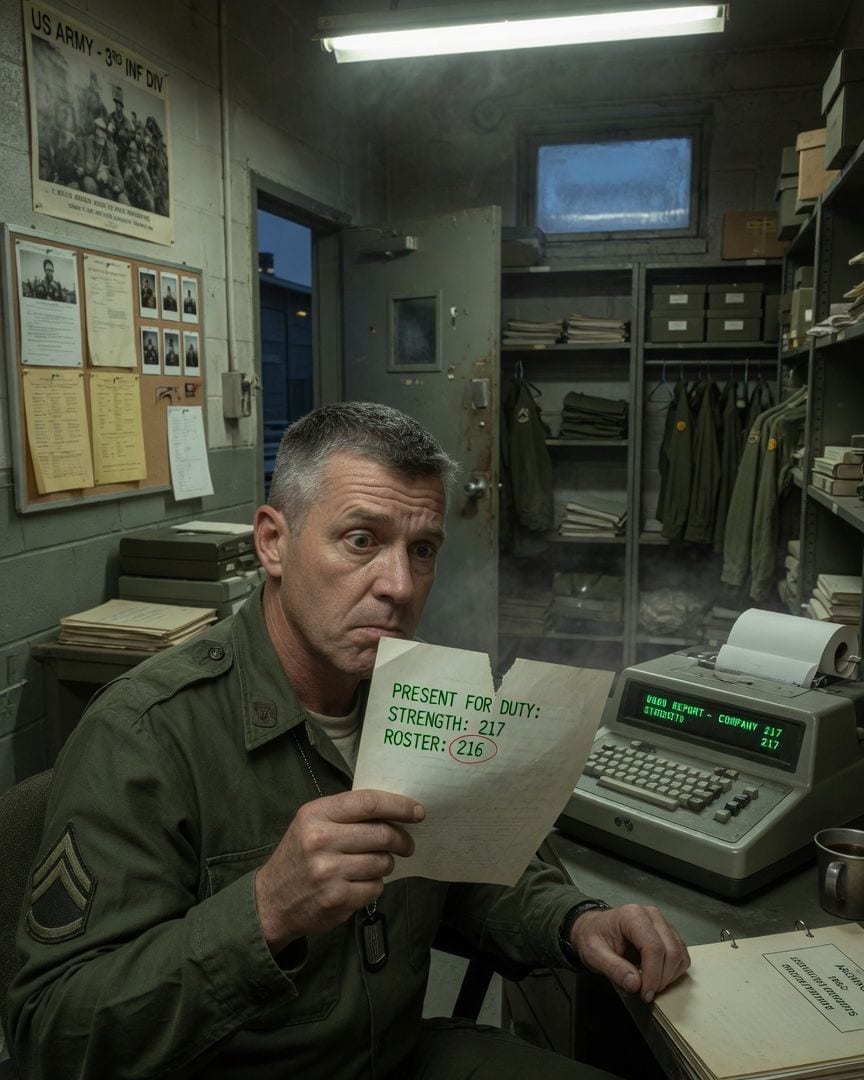
Sergeant Halloran is three months from a promotion, but his Cold War morning report shows 217 men. He counted only 216. A cold, hidden log from 1963 records the same impossible count.
Sergeant First Class Joseph Halloran, three months from a promotion and stateside transfer, faced the chilly 0600 darkness of his West German garrison in 1987, his career built on impeccable order now threatened. For a week, his morning reports had defied him: a meticulous physical count of 216 shivering soldiers always resulted in the Teletype machine blinking 217. His exhaustive double-checks confirmed no error, yet the impossible 'plus one' persisted, leading him to a distinctly colder section of the supply room. Behind ancient manuals, a hidden alcove revealed a worn leather log, where a Sergeant Hayes in 1963 had recorded the identical, chilling discrepancy.
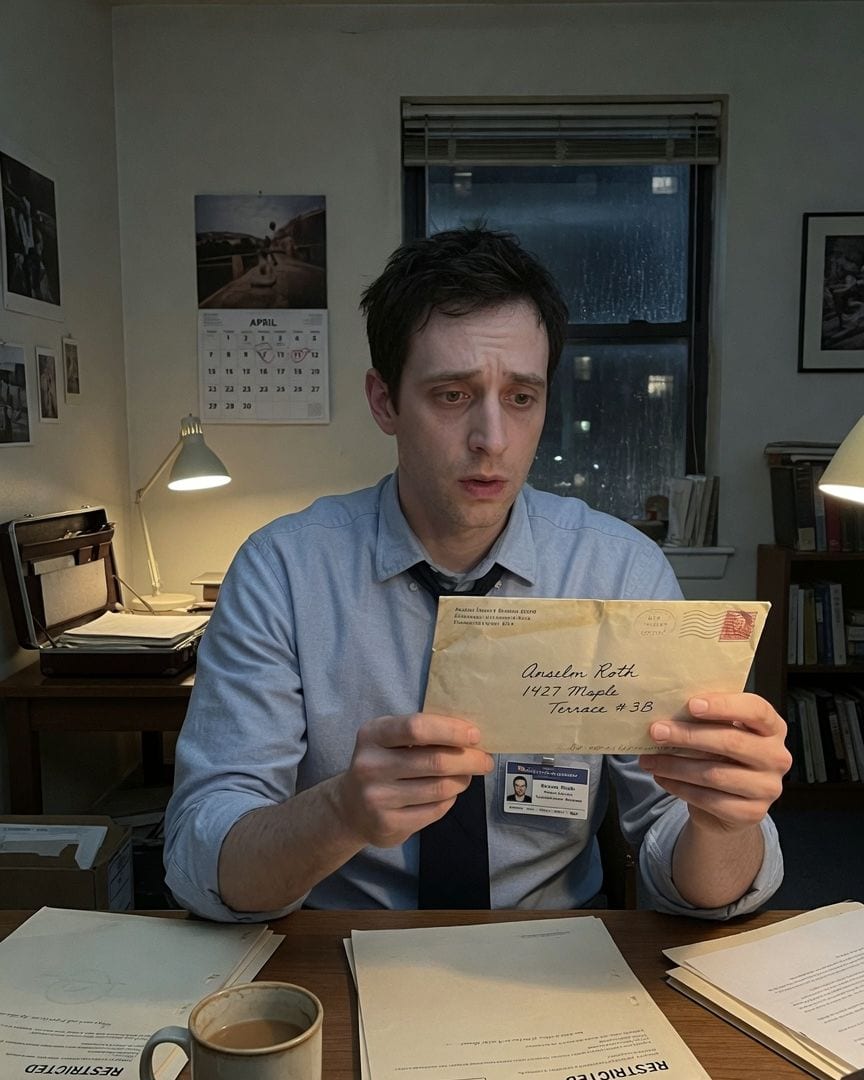
A Cold War declassification reviewer finds his dead grandmother's letter, postmarked 1974, addressed to him years before he was born, and radiating heat.
Declassification reviewer Anselm Roth meticulously sorted through a Cold War-era file on impossible disappearances at the National Archives, a routine 'thirty-year clock' review in 2014. Among the countless records of vanished ships and military units, he found an unscheduled addendum: a thick, sealed envelope addressed to him in his dead grandmother Eleanor Vance’s unmistakable hand. The postmark read 1974, years before he was born, and the paper itself was faintly, inexplicably warm against his fingers, defying every archival principle. Later, a photograph inside revealed his grandmother in an unknown uniform with a stark warning: 'They file us, Anselm. Don't let them finish.' This wasn't just a record of the lost; it was still active.
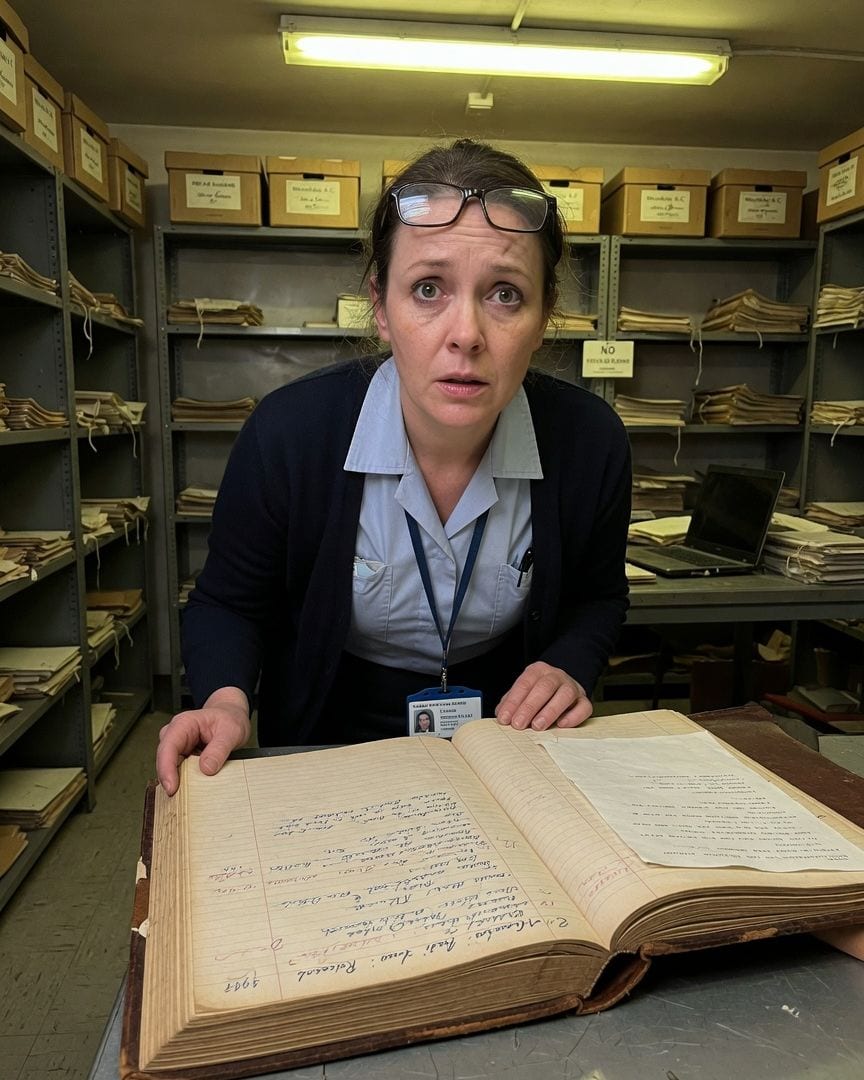
My ambulance trust's incident log shows callout 22-014 to 6 Cathcart Row at 2:40 AM. Every four years, the same call, same address. Always 'patient not found'.
My job involves tedious data entry for ambulance calls, but Incident 22-014 was different. It appeared every four years, always at 2:40 AM, always closed as 'patient not found.' Digging into the dusty physical archives, I found an entry from 1961 for the exact same incident, but its resolution read: 'Subject Secured. Relocated to "Holding".'
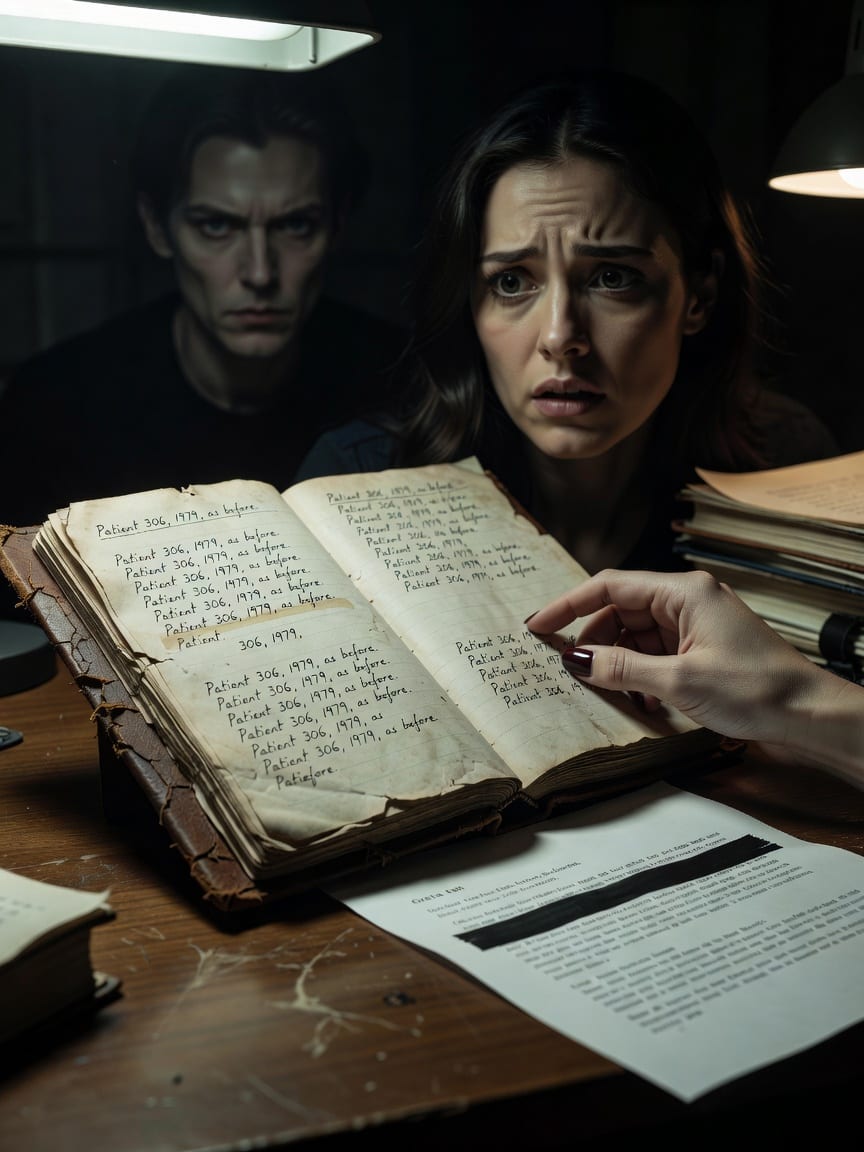
My archive ledger shows Patient 306 admitted in 1889, 1911, 1934, 1957, 1979 — same diagnosis, different names, and always, 'as before.'
My job as an archive transcriber is usually soothing, digitizing ancient admissions ledgers. But a recurring entry for 'Patient 306' caught my eye, noted 'as before' in the same hand for nearly a century. Digging deeper, I found a council file, dated 1998, outlining 'containment procedures' – and it named my own street and surname.
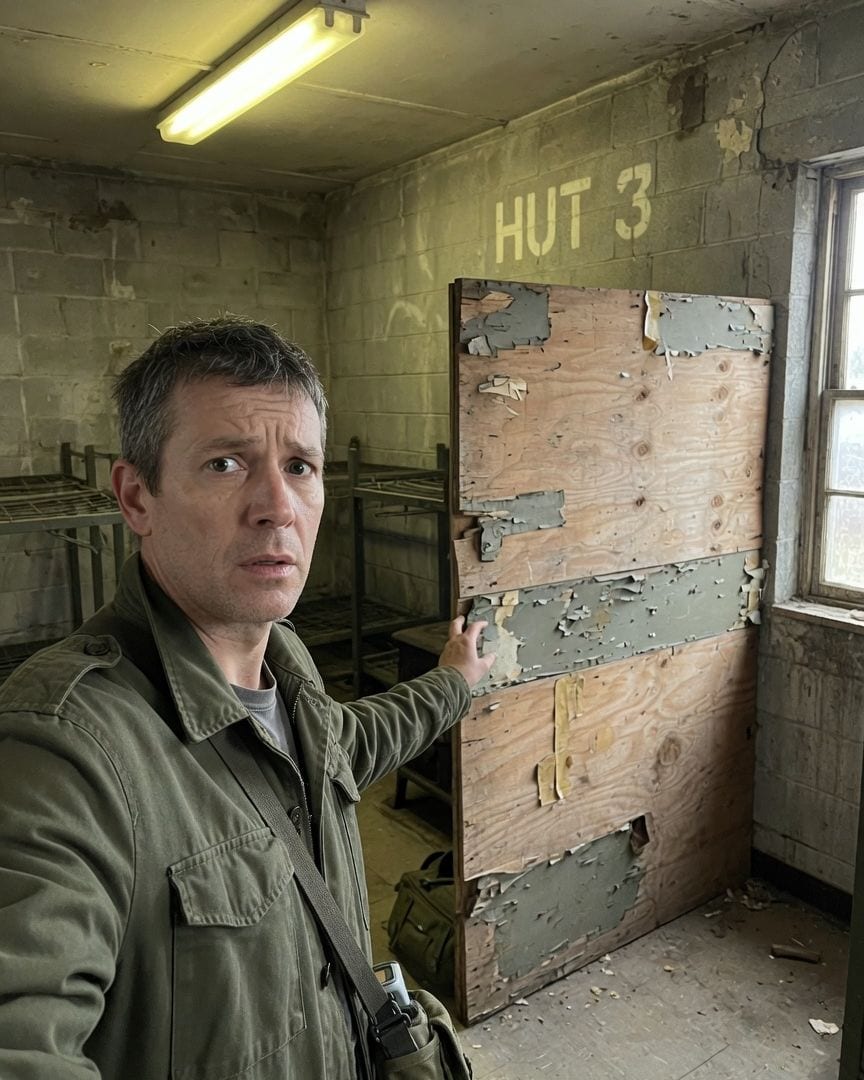
One morning there were twenty-one bunks in a hut built for twenty — the extra one made up tight at the far end past the stove, a kitbag beneath it stencilled with a name no roll could match. By nightfall the sergeant had that end boarded over.
I was a young recruit in a barracks hut built for twenty men, each bunk accounted for. But one morning, a twenty-first bunk appeared, impossibly tucked into a corner, meticulously made up for a man who didn't exist on any roster. Twenty-eight years later, the boarded-up wall concealing its secret remains, defying all logic and every measurement.