A get-well card wished me a speedy recovery from an operation I never had. It was postmarked from a sanatorium that burned down in 1963.
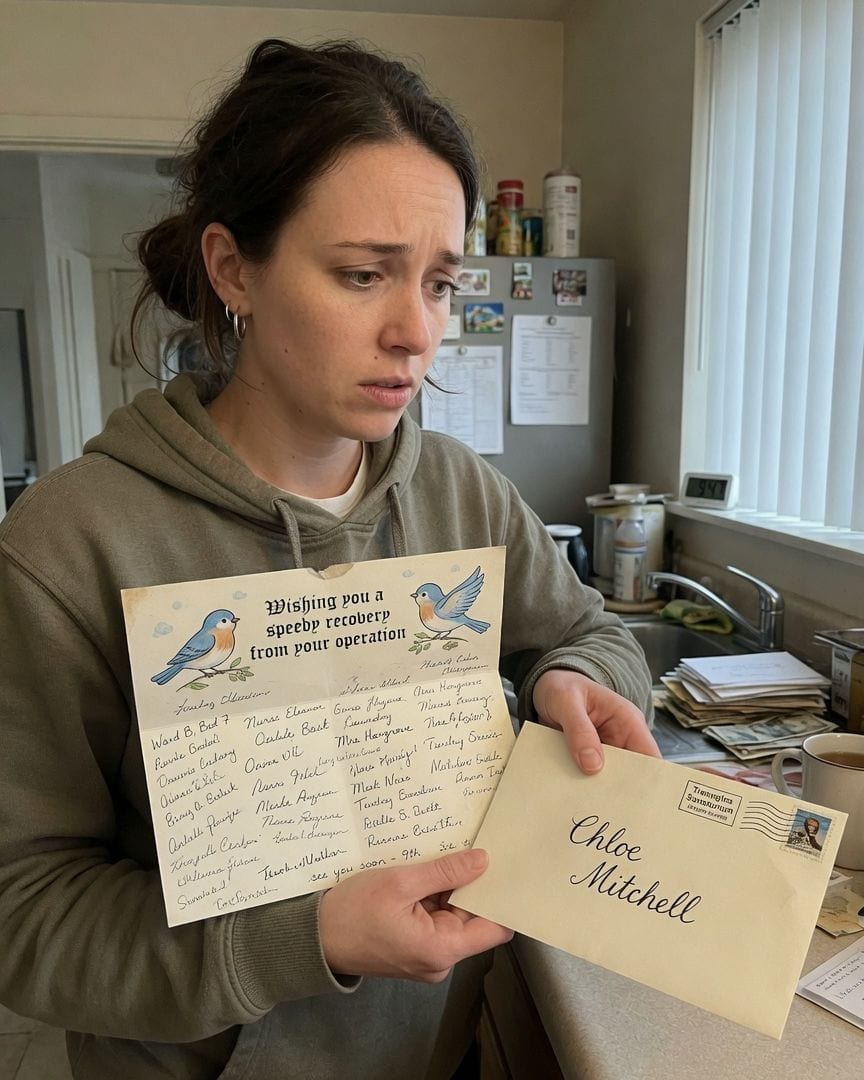
The thick, cream-colored envelope sat on the kitchen counter, an elegant anomaly among my usual stack of bills and junk mail.
My name, ‘Chloe Mitchell,’ was written across the front in a looping, almost ornate script that felt utterly out of place in my modern apartment.
It was a quiet Tuesday morning, the sort where the only sound was the hum of the fridge, and for a second, I thought it was some kind of marketing ploy, an invitation to a spa or something equally innocuous.
Inside, the paper was heavy, cool against my fingertips. It was a get-well card, cheerful bluebirds framing a generic, if slightly somber, message: ‘Wishing you a speedy recovery from your operation.’ My stomach did a small, cold flip.
I hadn’t had an operation. I’d never had an operation in my life. Below the printed message, dozens of unfamiliar names were scrawled in various hands: ‘Ward B, Bed 7,’ ‘Nurse Eleanor,’ and more. A chill prickled my skin.
It felt less like a card and more like an attendance sheet.
Then I saw the postmark. Crisp, clear, not faded in the slightest, it read: ‘Treneglos Sanatorium.’ My breath hitched. Treneglos. Everyone around here knew about Treneglos.
It was a local legend, a tuberculosis hospital that had burned to the ground in a catastrophic fire back in 1963. It was never rebuilt.
The land where it once stood was just a field now, where sheep grazed, less than ten miles from my apartment. The card felt impossibly heavy in my hand.
Inside, next to a printed ‘see you soon,’ a date was pencilled in a shaky, old-fashioned hand: the ninth of next month.
I live alone. My health records are pristine. The sanatorium is a ghost on a map.
The card was a physical impossibility, a solid object from a place that didn't exist, addressed to me by name, for an event that never happened.
Refusing to panic, I went for the mundane first. My GP’s office confirmed no upcoming procedures, no history of any major surgery. My online patient portal was a blank slate. Nothing.
The logical explanation was a prank, but the sheer effort, the dozens of names, the precise postmark—it felt too elaborate.
I drove straight to the local post office, the card clutched tight. Grace Thatcher, a sorting clerk with a kind, weary face and a formidable memory for local history, examined the postmark under a desk lamp.
‘Treneglos Sanatorium? That’s… odd, dear,’ she muttered, turning the card over and sniffing the heavy paper. ‘Looks authentic, though. Stamp’s a standard issue from ’87, but the cancellation mark… it’s crisp, like it went through yesterday.’
She peered closer, her brow furrowed.
I explained about the sanatorium’s fiery end. Grace shook her head slowly. ‘No mail comes from there, not for sixty years. A mistake, surely. Perhaps a very elaborate prank?’
But the elegant script, the sheer number of signatures, the specific mention of an ‘operation’ – it didn’t feel like a prank. It felt colder, more calculated. Back home, my hands shaking slightly, I searched online for ‘Treneglos Sanatorium.’
Beyond the detailed historical accounts of the 1963 fire, I found a few obscure forum posts. Whispers of ‘ghosts’ and ‘unmarked graves,’ the usual creepypasta fare, but nothing concrete about mail.
Then, buried deep in the digital archive of the local history society, I found it. A scanned image of a faded newspaper clipping from 1962.
It detailed the sanatorium’s final, struggling year, its structural integrity failing, but it specifically mentioned a ‘Patient Registry’ being meticulously maintained, ‘a testament to diligent care even in dire times.’ A cold knot tightened in my stomach. A registry.
Of patients.
Driven by a desperate need for a rational explanation, I visited the local historical society the next day.
Arthur Kowalski, the archivist, a man with kind eyes and a memory like a steel trap, was initially skeptical about my ‘ghost mail.’ He chuckled, thinking it was a local legend I was chasing.
But when I mentioned the ‘Patient Registry,’ his expression shifted. The light left his eyes, replaced by something heavier.
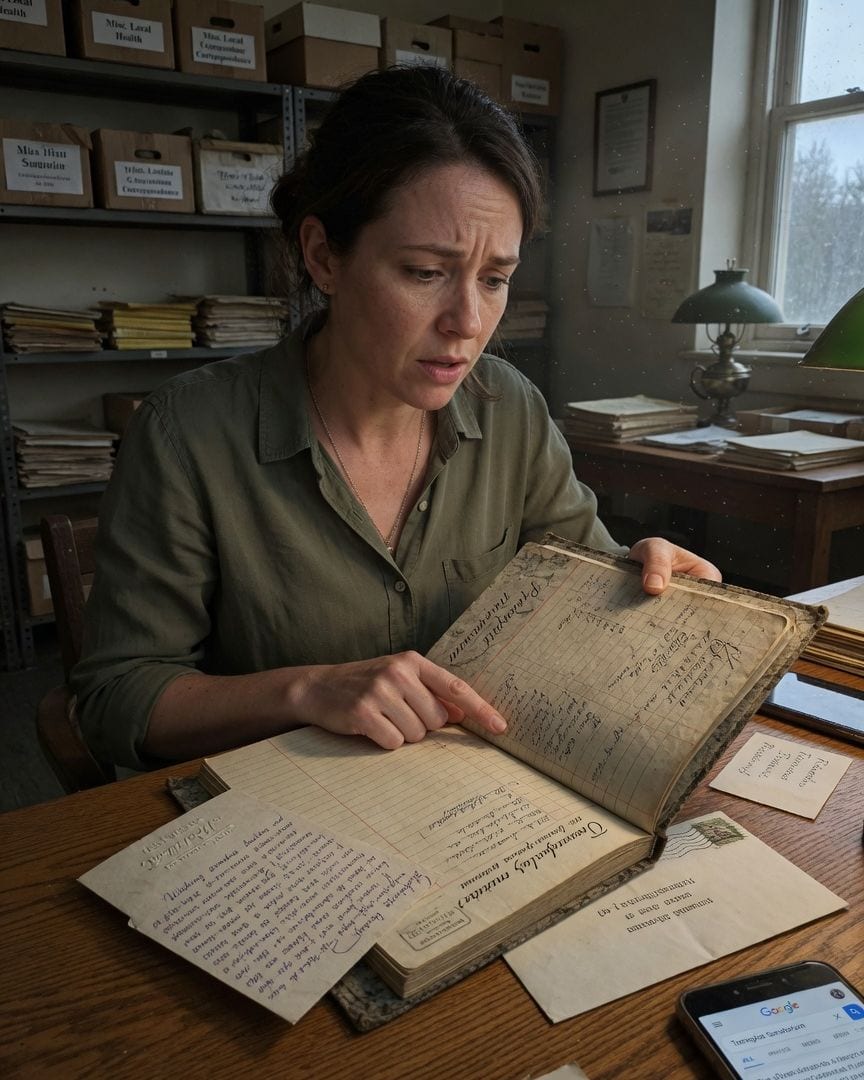
He led me to a back room, the air thick with the scent of old paper and dust. He pulled out a heavy, leather-bound book from a locked cabinet, its pages brittle with age.
It was the original Treneglos Sanatorium admissions ledger. Arthur handled it with reverence, placing it gently on a velvet cloth. As he carefully turned the pages, tracing entries with a gloved finger, my heart pounded.
He stopped on a page, tapping an entry with his index finger.
‘Admission Date: 1958.’
Below it, in neat, looping script, identical to the card’s address, was my name.
‘Chloe Mitchell.’
My breath hitched, a cold tremor running through me, freezing me in place.
The initial shock of seeing my name in the 1958 ledger quickly gave way to a frantic, sickening need for answers. Arthur Kowalski, though bewildered, confirmed the ledger’s authenticity, his voice hushed.
‘This book was salvaged before the fire,’ he explained, his gaze fixed on my name. ‘Kept by the head nurse, a woman named Eleanor. She always said every patient deserved their record, even after the place was gone.’
He pointed to a small, precise signature beside my name: ‘E. Radcliffe.’ The same ‘Nurse Eleanor’ from the get-well card.
I researched ‘Eleanor Radcliffe,’ finding an obituary for a woman who died peacefully in 1995, well into her eighties. This meant the card, with its seemingly fresh postmark, could not have been sent by her. Another rational explanation, shredded.
I returned to the post office, the ledger entry now a grainy photo on my phone. Grace Thatcher looked genuinely disturbed. ‘I don’t know how that could happen, dear,’ she murmured, her kind face pale.
‘We don’t keep records that far back, certainly not names.’ It was clear she found it as impossible as I did.
The next day, I drove out to the sheep field where Treneglos Sanatorium once stood. The air was still, save for the whisper of wind through the tall grass.
I walked the perimeter, trying to picture the old hospital, trying to find any trace. Nothing. Just grass and the distant bleating of sheep. But I felt something. An immense, suffocating presence, a silence that wasn't empty, but watchful.
Like the very ground held a breath it refused to release.
Back home, I started cross-referencing names from the ledger with online obituaries. Many were long dead, their lives documented. But some, a disturbing few, had no obituaries, no death records at all.
They simply vanished from public record after the 1960s, a few years after their ledger entry, like they simply ceased to be. The pattern was too consistent to be coincidence.
My investigation into the vanished names and the unsettling ledger entries began to feel less like research and more like an intrusion. I felt a tightening, a pressure, as if my digging was being actively resisted.
One evening, after a particularly intense session of sifting through online archives, my phone rang. It was an unknown number. I answered cautiously, my heart already pounding.
A crackle of static, then a low hum, deep and resonant. No voice. ‘Hello?’ I said, a tremor in my voice. The hum deepened, almost a low thrumming sound that vibrated in my ear. ‘Is anyone there?’ Silence.
Just the hum. I hung up, my hand shaking. Moments later, my landline rang. Same low hum. I yanked the plug from the wall.
The sound didn't stop immediately, it seemed to reverberate in the air for a few seconds before fading, leaving an unnatural quiet.
The next morning, as I checked my mail – I still did, out of a morbid habit – I found a small, plain white envelope tucked behind the usual junk. No postmark, no return address.
Inside was a single sheet of paper, folded precisely. On it, typed in a simple, old-fashioned font, were three words:
‘Stop Looking, Chloe.’
The paper felt cold, almost damp, in my hands. It wasn't a crude threat of physical harm, but a chilling confirmation that my digging had been noticed.
That whatever sent the card knew my name, knew my actions, and was now actively watching me. The dread was no longer distant; it was right outside my door, inside my home.
I felt a profound sense of violation, the terrifying intimacy of being singled out closing in around me. The world, once ordinary, now felt like a stage where I was the unwilling, watched performer.
My kitchen clock ticked, impossibly loud in the sudden, heavy silence of my apartment.
Terrified but resolute, I called Arthur Kowalski. I recounted the blank phone calls and the chilling note, my voice tight, barely holding steady. Arthur listened, his usual calm demeanor replaced by a deep, troubled frown.
He picked at a loose thread on his armchair.
‘I should have told you more, Chloe,’ he admitted, his voice low, heavy with unspoken things. ‘There were whispers, even back then, about Treneglos. It wasn’t just for TB.
It was… a place for certain families to send their ‘difficult’ children, those who saw things, heard things no one else did. And for those who were simply… ‘chosen’.’
I pressed him, leaning forward, my knuckles white as I gripped the phone. ‘Chosen for what, Arthur?’
Arthur sighed, running a hand over his face, as if trying to wipe away years of unsettling memories. ‘The head nurse, Eleanor, she believed in a different kind of healing. Not just from consumption. She kept that ledger.
She said it was a record for ‘transfer.’ She spoke of a ‘ward’ beyond the hospital walls, a place where these ‘patients’ would receive a… permanent cure. A full recovery.’
He paused, meeting my gaze across the phone line, though he couldn't see me. ‘The cards, the ‘operations’… it was her language for it. She thought she was helping them transition to this other ward.’
My mind raced, every wrong detail snapping into place with sickening precision. The get-well card, the operation I never had – it wasn’t a mistake, it was a prophecy.
The ‘Ward B, Bed 7’ and ‘Nurse Eleanor’ signatures weren’t just names; they were the collective, guiding hand of whatever Eleanor believed in. The ‘ninth of next month’ suddenly felt like an inescapable deadline, a final appointment.
‘My name,’ I whispered, the words barely audible. ‘In the ledger. Dated 1958. Thirty-four years before I was born.’
Arthur nodded slowly, sadly. ‘Eleanor believed some names were… pre-selected. Marked for the ward, even across generations. She was convinced it was a great honor. To be chosen.’
The truth solidified, cold and horrifying: the card wasn’t a random anomaly, but a targeted summons, part of a generational ‘collection’ process initiated by Eleanor Radcliffe, for an entity that now sought to claim me.
The ‘recovery’ wasn’t from an illness, but from my current life.
The weight of Arthur’s revelation pressed down on me, heavy and suffocating. I thanked him, my voice strained, and hung up.
I tried to rationalize, to find a mundane explanation for Eleanor’s beliefs, for Arthur’s own unsettling calmness, but the ledger, the card, the whispered warning – it all fit too perfectly.
I paced my apartment, the silence now feeling menacing, like a held breath. I needed to understand Eleanor’s ‘channels.’
I pulled out my phone, opening my voice recorder app, thumbing the record button until the red light glowed.
I called Arthur back, hoping to extract more details about Eleanor's 'ward' and 'transfers,' anything that might give me a loophole, a defense. The phone rang once, twice, then connected, but it wasn’t Arthur’s voice that answered.
Instead, it was the same low hum from before, the static-laced silence that had preceded the warning note. I held the phone to my ear, the recorder running, capturing the impossible sound.
Then, a voice, faint but clear, sliced through the static. It wasn't Arthur. It wasn't human. It was a low, resonant murmur, filled with a strange, deep affection that chilled me to the bone.
‘Chloe Mitchell,’ it sighed, drawing out my name, intimate and possessive. ‘Don’t you worry, dear. We’ll have you home soon. Just like the others.’
The murmur deepened, a guttural sound that seemed to vibrate through the very air. I realized with a sickening lurch that the sound wasn't coming from the phone's speaker.
It was coming from inside my apartment, from the space directly behind me. I gripped the phone, trembling, the faint, wrong voice still echoing in my ears, still resonating from the empty air behind my head.
I spun around, scanning my empty living room, but the chilling sensation of being watched, of the whisper having come from inside my own home, was overwhelming. I was not alone.
I dropped the phone. It clattered to the floor, the recorder still blinking red. My heart hammered against my ribs, a trapped bird desperate to escape.
The hum that had been on the line now filled the entire room, a low thrumming vibration that seemed to settle in my bones, making my teeth ache.
The air grew cold, a sudden, unnatural drop in temperature that sent shivers racking through me. The faint scent of antiseptic, like an old hospital, mixed with something else, something cloying and ancient, filled my nostrils.
The voice, no longer a whisper, spoke again. It resonated from the very fabric of the room, from the walls and the floor, seeming to envelop me. ‘The ninth of next month, Chloe. Your appointment is set.
The preparation is complete.’ It was the voice from the phone, but amplified, present, right here. It used my name with a terrible, possessive tenderness that made my stomach churn.
Every clue, every impossible detail, snapped into place with horrifying clarity. The ‘get-well card’ was not a notification of an illness, but a summons for a ‘transfer.’ The ‘operation’ was the process of this transfer.
The Treneglos Sanatorium was not just a hospital, but a gateway, a point of collection for an entity that sought to ‘heal’ by taking. The ledger was its roll call, Eleanor Radcliffe its willing acolyte, marking names across generations.
The ‘ninth of next month’ was the date I was to be ‘collected,’ to receive my ‘permanent cure.’ The voice was the direct channel, the entity itself, reaching for me, inside my own home.
It wasn't a ghost; it was a presence, an intelligence that used the framework of human institutions – the post office, the hospital, the ledger – to manifest its will.
It knew me, intimately, not from observation, but from a deeper, more fundamental connection, a name written in a book long before I took my first breath.
The thrumming intensified, a pressure building in the room, pushing against my eardrums. I scrambled, heart racing, grabbing my car keys from the hook by the door and snatching up the voice recorder, which was still running, from the floor.
The voice, now a low, continuous murmur, seemed to emanate from the very air around me. ‘Don’t be afraid, dear. It will be a full recovery.’
I pushed past it, my mind racing, a frantic urge for survival overriding the terror. I had to get out, to break the connection, sever this invisible tether.
The entity was here, drawn by the approaching ‘ninth of next month,’ by my investigation, by the very act of speaking its name.
I threw open my front door, the cold night air a sudden, sharp relief against the oppressive atmosphere inside. I ran, not knowing where, just away.
I drove to Arthur Kowalski’s house, pounding on his door, the sound echoing in the silent street. He answered, startled, his spectacles askew, and I, breathless, shoved the recorder into his hand. ‘Listen to this,’ I gasped, fighting for air.
‘It’s real. It’s here.’
As the recording played, the low thrumming and the possessive voice filled Arthur’s quiet living room. He paled, his eyes widening behind his glasses, slowly lifting a trembling hand to his mouth.
‘It’s… it’s what Eleanor described,’ he whispered, his voice thin, ‘the call from the other ward.’
I knew I couldn't stay. I grabbed the recorder back. ‘They’re coming for me,’ I said, my voice flat with a terrifying certainty, ‘on the ninth. I have to disappear. Completely.’
I emptied my bank account, wiped my digital footprint as best I could, and drove, leaving my phone, my old life, everything, behind. The cost was immense: my home, my job, my identity, all stripped away.
I carried only the clothes on my back, a small bag of essentials, and the digital recorder, its memory filled with the chilling, intimate voice that knew my name.
Chloe Mitchell vanished without a trace, leaving behind an empty apartment and a bewildered Arthur Kowalski. Her bills went unpaid, her job quickly filled.
The post office continued to deliver mail for a few weeks, including another cream-colored envelope, postmarked from 'Treneglos Sanatorium,' before her mail was returned to sender.
Arthur tried to tell people about the recording, but the eerie hum and disembodied voice were dismissed as a 'hoax' or 'deepfake.' No one believed him.
Chloe became a ghost in her own life, a name whispered occasionally by former colleagues, then forgotten. The field where Treneglos Sanatorium once stood remained quiet, grazed by sheep, its secrets undisturbed.
I drive. The recorder is clutched tight in the passenger seat, my only companion. I am a phantom now, a person without a past, always looking over my shoulder. I survive, but the cost is everything I was.
I know it’s out there, waiting for the ninth of next month, every month, for the rest of my life. I will never have a fixed address, never settle, never truly be safe.
The terror isn't that it will find me, but that it knows me, intimately, always. I carry the proof, but it's proof no one will ever believe. My existence is a constant, quiet dread.
I stop for gas in a small, nameless town, my new, burner phone tucked away. As I pay, the clerk, a young woman, smiles.
'Have a good day, Chloe,' she says, her voice perfectly normal, her hand reaching for my change. I freeze, my blood turning to ice. I haven't given my name. I haven't spoken a word.
The clerk’s smile doesn’t falter, but her eyes, for a split second, seem to hold a knowing, ancient light, a depth that shouldn't be there. I flee, leaving my change.
The road stretches endlessly before me, always calling me by name. I am free, but marked. I am always, always, on the ninth.
Arthur Kowalski would sometimes find himself listening to the recording on his old tape deck, a shiver running down his spine. The low hum, the voice. He’d tried to warn others, but they just shook their heads.
There was no Chloe Mitchell anymore, not officially. Just a missing person report that went cold. He’d wonder if she was truly safe, out there somewhere. One morning, a small, cream-colored envelope arrived for him. No return address.
Inside, a single, elegant card. 'Wishing you a speedy recovery from your operation,' it read. Arthur had never had an operation. It was dated for the ninth of next month. His name, in the ledger, was waiting.
If this one got to you
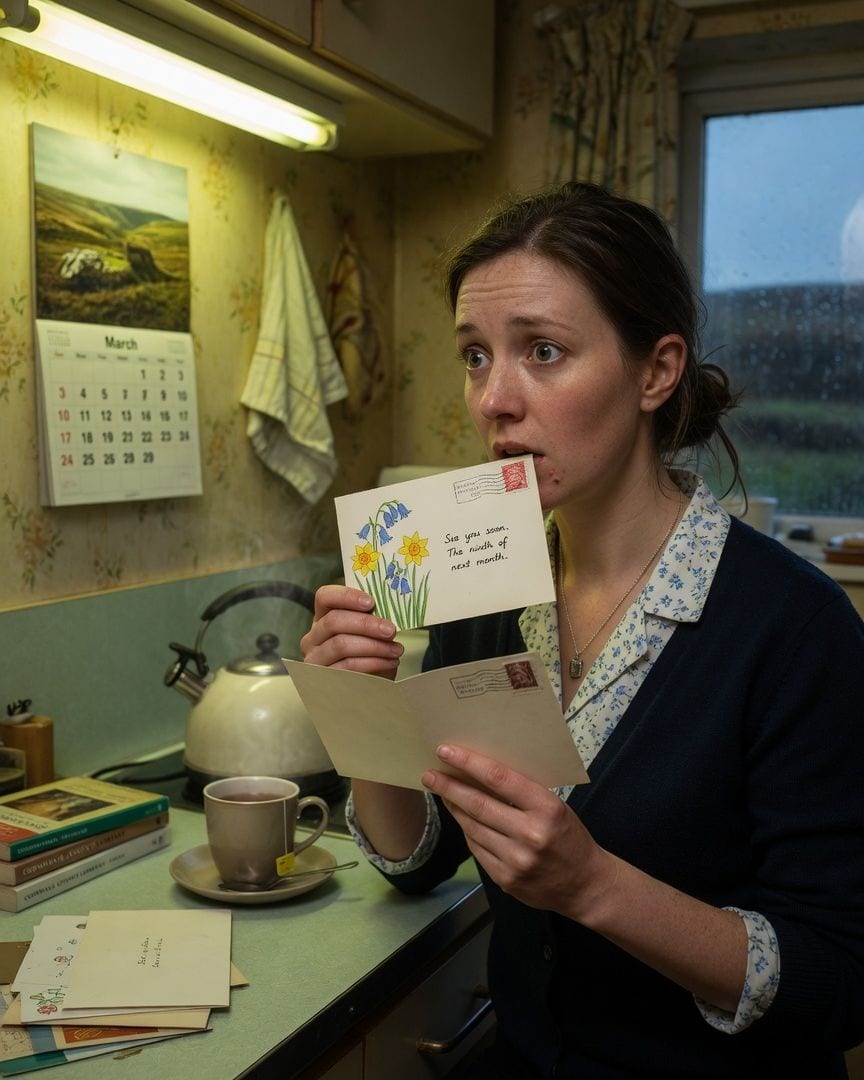
My get-well card arrived from a field, postmarked from a sanatorium that burned down in 1963. It wished me well for an operation I've never had, scheduled for next month.
I was just making tea on an ordinary Tuesday when a strange letter arrived. It was postmarked from Treneglos Sanatorium, a place that burned to nothing over sixty years ago, and contained a get-well card for an operation I'd never had. My research into this impossible message then led me to an old patient register where I found my own name, dated 1958.
My get-well card wished me recovery from an operation I never had, postmarked from a hospital that burned down in 1963.
I received a get-well card wishing me recovery from an operation I never had. The envelope bore a fresh postmark from Treneglos Sanatorium, a TB hospital that burned down and ceased to exist in 1963. Now, a patient register from that long-gone sanatorium lists my name, dated 1959.
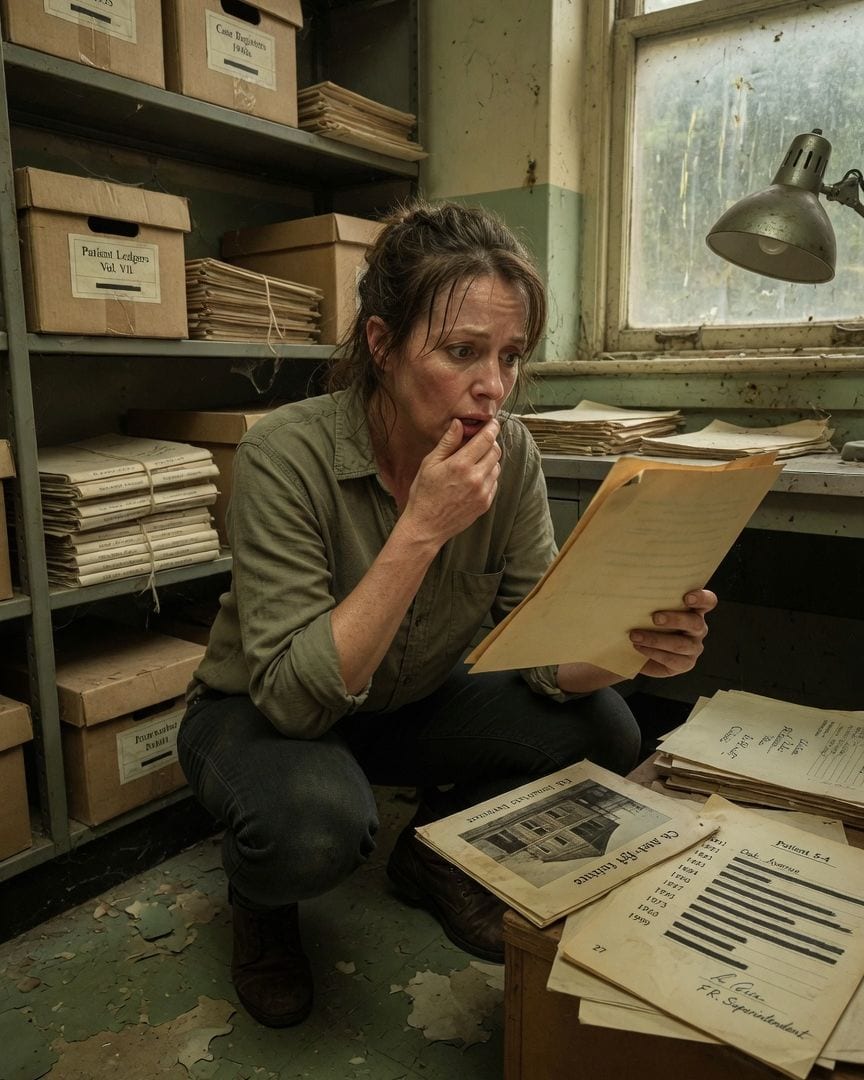
Patient 5-4 keeps checking into my aunt's old sanatorium chalet. The same initials sign them out, 'not traced,' every thirteen years since 1921.
Sifting through my aunt Margaret's estate, I found her old sanatorium file from 1999. Her patient record listed her as 'Patient 5-4,' discharged 'not traced.' But when I accessed the archives, I found 'Patient 5-4' was admitted every thirteen years since 1921, always with identical discharge notes.
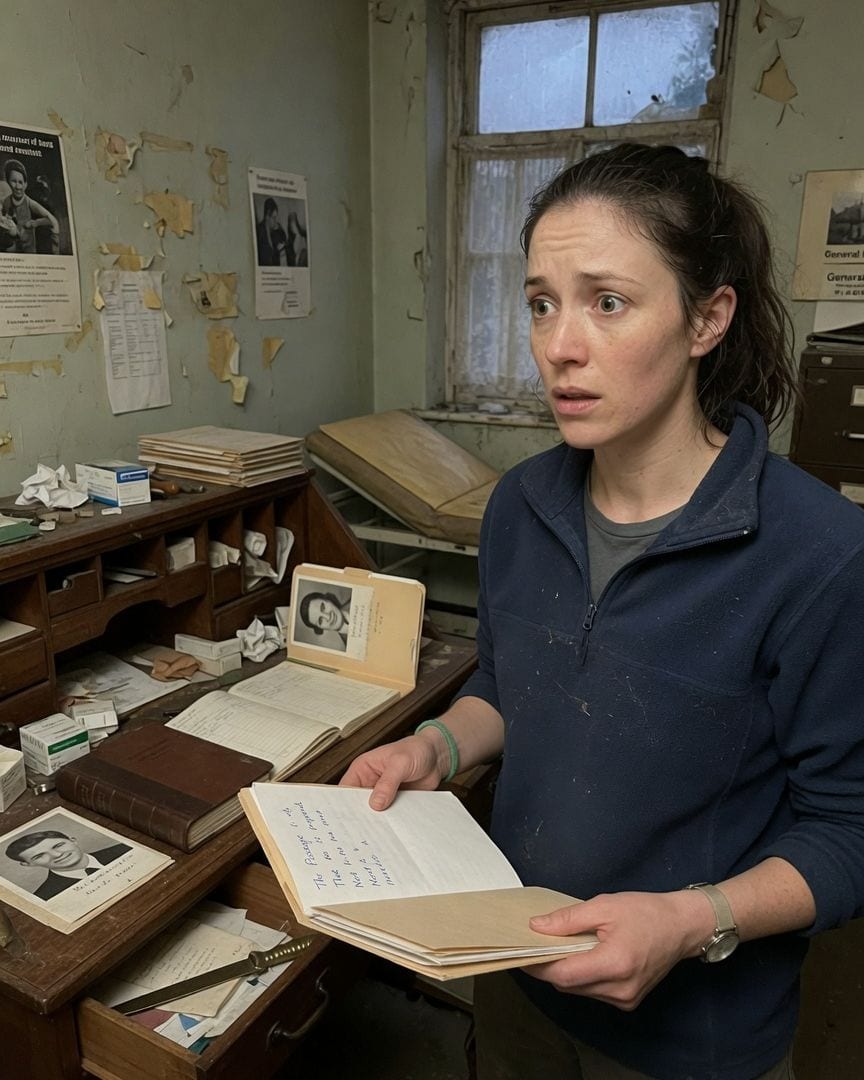
My new clinic's appointment book shows entries for this coming Monday, decades after the doctor retired and died.
Chloe Lawson bought an old, abandoned surgery in Nettlebed, ready to open her new vet clinic. Locals insisted Dr. Almott retired in '79 and the practice shut down for good. But then Chloe found his dusty appointment book filled with meticulous entries, continuing unbroken from 1979 through the decades, right up to this coming Monday.
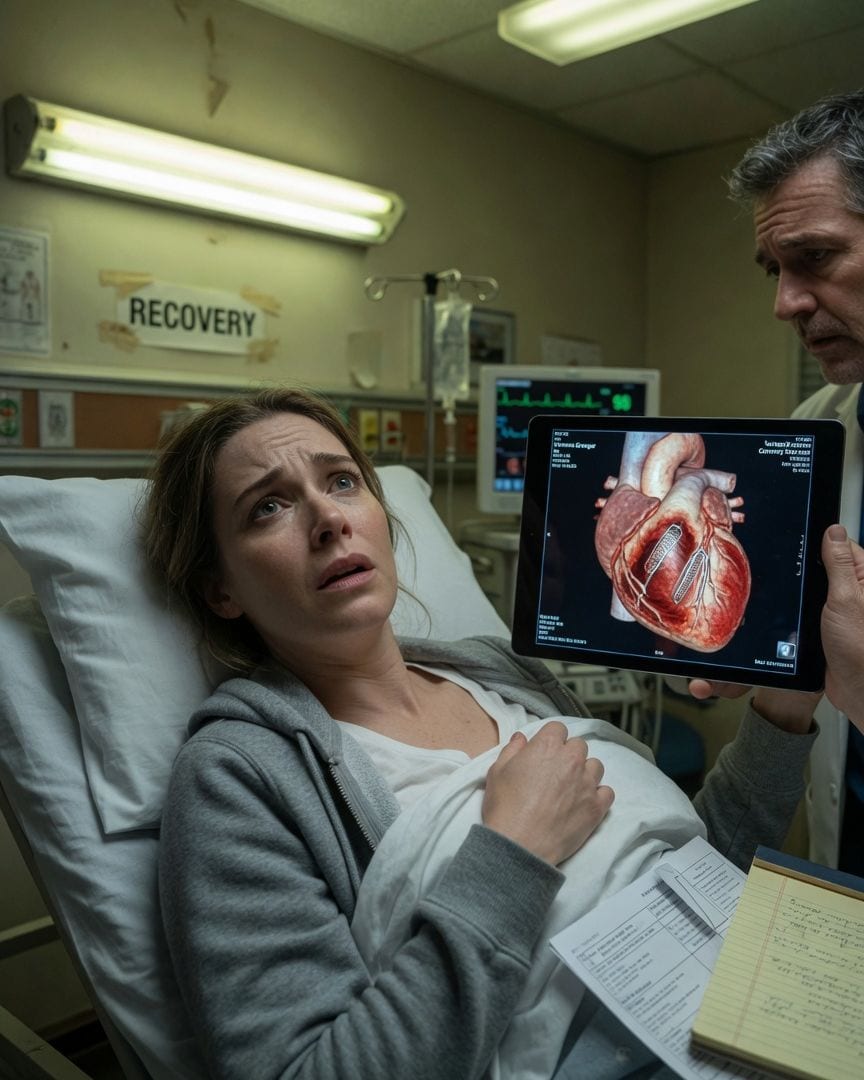
Metal stents are propping open my heart. The doctor rotated the image, but I've never had a cardiac procedure.
After years of dismissed chest pain, a CT scan revealed an impossible truth: my heart contained two metal stents. Dr. Maddox confirmed there was no record of any cardiac procedure in my entire medical history, and I had no memory of ever having surgery. My own body held a secret, alien architecture I couldn't explain.
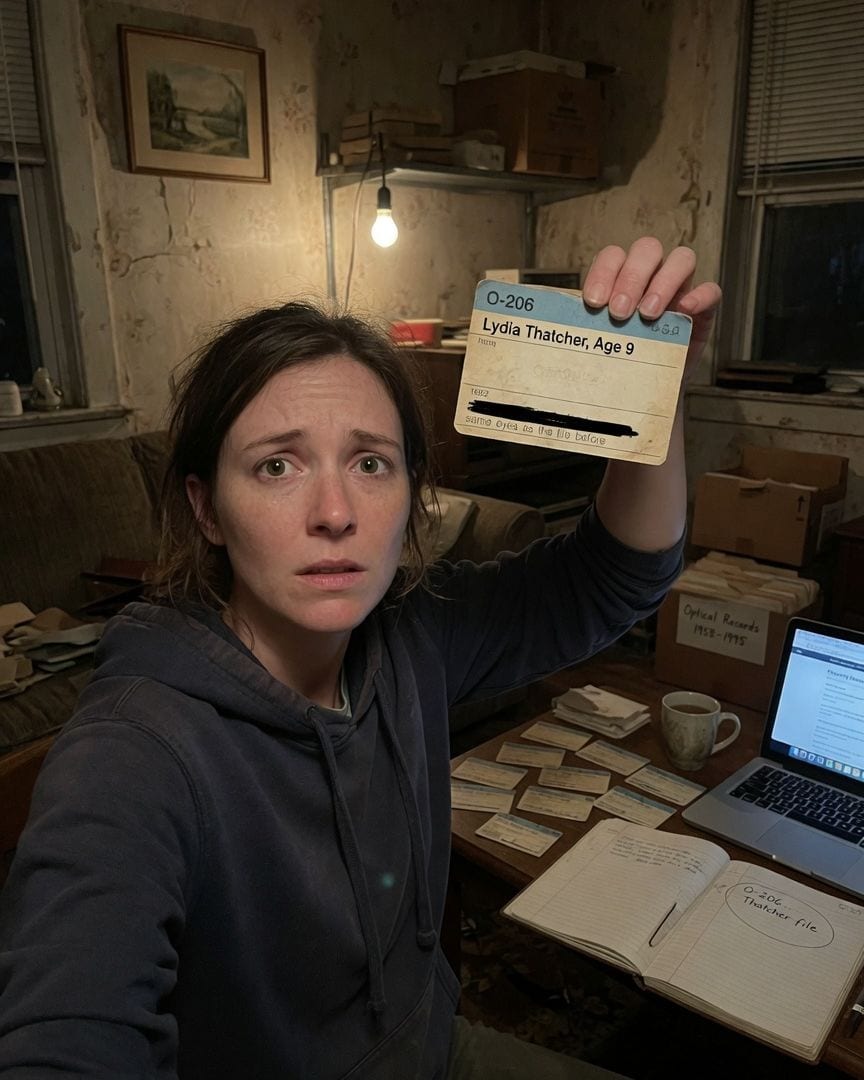
My own optical card is dated 1962, with my name on it. I wasn't born until 1993.
Sifting through old patient files from my former optical practice, I found my own O-206 card. It had my name, Lydia Thatcher, and my current home address printed on it. But the card was dated 1962, decades before I was even born, and a redacted note mentioned 'same eyes.'