My get-well card wished me recovery from an operation I never had, postmarked from a hospital that burned down in 1963.
The heavy cardstock felt luxurious in my hands, oddly formal for a Tuesday afternoon in my apartment. I’d picked it up from the mail slot, an unexpected delivery amidst the usual bills and flyers.
The envelope was unmarked, no return address, just my name, Sandra Prescott, written in neat, elegant script. Inside, a beautiful, embossed get-well card. It was signed by dozens of names, a sprawling script that blurred together like a guest book.
“Wishing Sandra a speedy recovery from her operation,” it read, the ink a deep, almost purple shade.
A profound chill ran through me, not from the cool air of the apartment, but from the words themselves. I haven’t had an operation. I haven’t had so much as a dental cleaning in months.
My mind, ever rational, immediately tried to construct an explanation. A prank? A misdelivery? Some bizarre clerical error? But the card felt solid, real, the kind you buy for serious occasions. And then I saw the postmark. Treneglos Sanatorium.
Treneglos. The name hit me like a physical blow. It was a TB hospital, everyone knew that. It had burned down in 1963, its site now just an empty field used for grazing sheep on the edge of town.
There was no Treneglos Sanatorium. Not anymore. Yet, here it was, stark and clear, stamped on the envelope. My hands trembled slightly as I turned the card over again.
Inside, penciled faintly beside a scrawled "see you soon," was a date: the ninth of next month.
My rational mind tried harder. Maybe it was a commemorative stamp? A collector’s item? But the postmark looked fresh, the ink crisp. I picked up my phone, quickly typing "Treneglos Sanatorium" into a search bar.
The results were immediate: local history pages, old newspaper clippings, all confirming the fire, the closure, the total destruction in '63. It was gone. It had been gone for over sixty years.
The card remained in my hands, its details unnervingly specific, defying every logical explanation I could invent.
Disturbed, I made calls. My family, first. No, nobody sent a card. Nobody knew of any planned surgery. My friends, equally baffled. Even my doctor’s office confirmed I had no upcoming procedures, nothing on the books.
It was as if this card existed in a void, disconnected from my own life, yet bearing my name, my address, an impossible return label.
My online research confirmed it all: Treneglos’s fiery demise in '63, the land now just an open pasture.
Every search for "Treneglos Sanatorium postmark" or "get-well card from a burned-down hospital" yielded only confused forum posts about ghosts or urban legends. My need for a mundane explanation gnawed at me.
I needed to see something, a record, anything that would ground this back in reality.
So, I drove to the local historical society. It was housed in an old brick building, smelling of dust and aged paper. Richard Ingram, a kind, elderly volunteer with glasses perched on his nose, greeted me.
He seemed surprised by my specific interest in the long-gone sanatorium. "Most folks are interested in the old mill, or the railway station," he chuckled, leading me through narrow aisles lined with meticulously kept boxes.
He explained that most of Treneglos’s records were lost in the fire, a real tragedy. "But a few odd ones… they were kept by Matron Helen Reynolds. Very particular woman. Had her own way of doing things, you know.
Tucked some things away, maybe." He disappeared behind a towering shelf, returning a moment later with a dusty cardboard box labeled "Misc. Local Health."
I sat at a large, oak table, the afternoon sun streaming through a high window, illuminating motes of dust dancing in the air. The silence of the room was heavy, filled with the presence of forgotten stories.
Richard went back to his own work, occasionally glancing over with a gentle, curious smile.
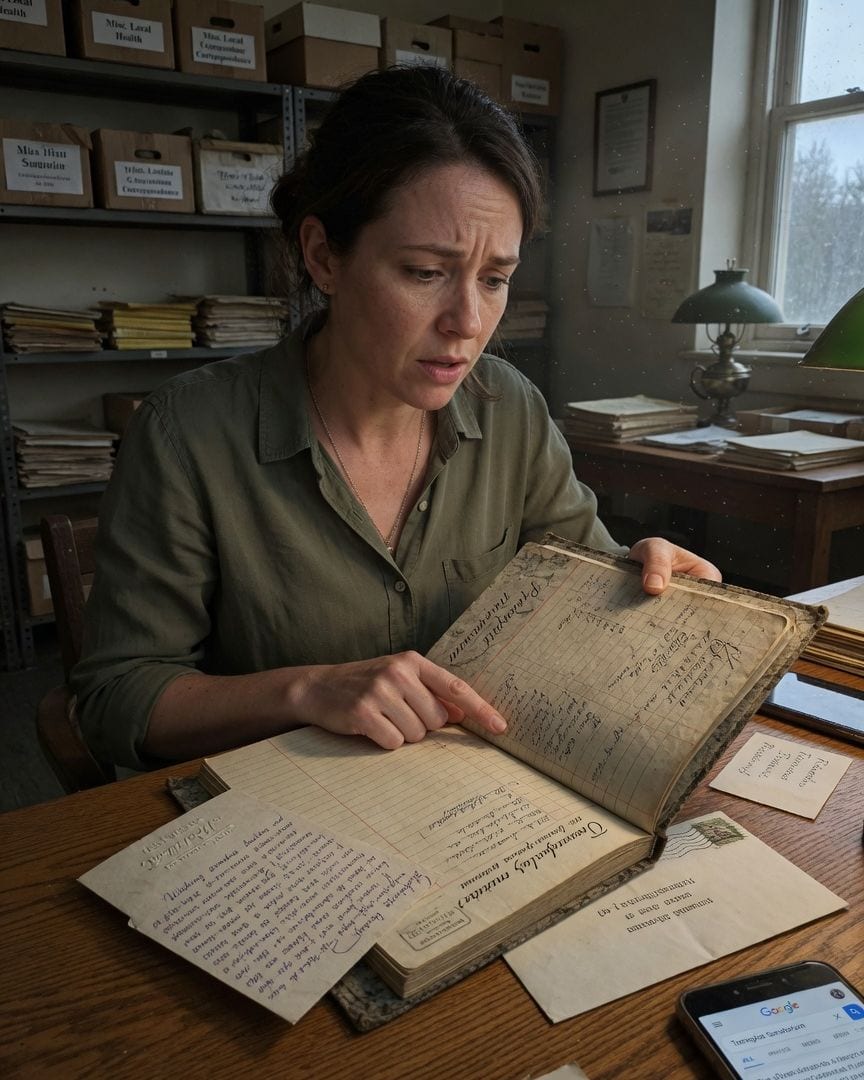
After some searching, I found it. Tucked beneath some yellowed pamphlets about local farming practices, Richard unearthed a brittle, bound ledger.
Its cover was faded to a mottled grey, but the title, etched in looping, old-fashioned script, was legible: ‘Treneglos Patient Register.’
He apologized for its poor condition, saying it had been found years ago, tucked away in a box of unrelated documents during a town hall cleanout.
My heart began to thump, a slow, heavy drumbeat against my ribs. I carefully opened the ledger. The pages crackled under my fingertips, fragile, almost translucent with age.
I leafed through them, the names and dates a blurred tapestry of lives lived and ended long before my time. My finger traced down a column of names and admission dates, searching for anything, a connection, a clue.
My breath caught in my throat. Halfway down a page, dated 1959, was an entry. Clear as day, spelled out in looping script: 'Prescott, Sandra.'
Beside it, scribbled in faint, almost illegible ink, were notes like 'premonitory symptoms' and 'temporal bleed.'
My own name. Dated four years before I was born.
I made a digital copy of the ledger page on my phone, the shaky photo a testament to my trembling hands. Richard, though puzzled by my intensity, just dismissed the name as a "spooky coincidence." I knew it wasn't.
The card was too specific, the postmark too impossible. This wasn't a coincidence. This was… a pattern.
I spent days at the local library, a sprawling, modern building that felt worlds away from the musty historical society. I enlisted the help of Eileen Thatcher, the archivist.
Eileen was in her fifties, sharp and methodical, with a no-nonsense bun and glasses that magnified her serious blue eyes. She was initially intrigued by my research.
We sifted through old town records, census data, microfiche—everything imaginable, searching for any other Sandra Prescott born in the area in the 1950s. We found none. Not a single one.
I tried researching 'premonitory symptoms' and 'temporal bleed' on the library’s computers. Nothing standard. The terms didn’t exist in any contemporary medical dictionary or academic database.
I found old articles hinting at Treneglos's experimental therapies, whispers of "unconventional treatments" for "nervous disorders," but nothing specific. Just vague, sensationalist headlines about a "house of secrets" before the fire. Eileen, however, offered a tidbit.
"Matron Helen Reynolds," she said, tapping a dusty file on her desk, "Richard’s 'particular matron'? She was my grandmother." Eileen explained that her grandmother had been known for her unconventional methods and a fierce, almost obsessive protection of patient privacy.
"She believed in treating the person, not just the disease. Some thought she was a bit eccentric." The air in the quiet archive seemed to grow colder as she spoke, the low hum of the fluorescent lights suddenly more prominent.
My persistent inquiries about Treneglos and those unusual medical terms began to draw subtle attention. Eileen Thatcher, at first helpful, started watching me with a strange, knowing look that went beyond professional curiosity.
It was as if she understood something I didn't, or perhaps, recognized something. Her glances lingered, her lips pressed into a thin, unreadable line.
I tried to ignore it, to dismiss it as my own paranoia, the late hours of research getting to me.
One evening, as I gathered my things to leave the library, the automatic doors sliding shut with a soft whoosh behind me, I noticed a dark-windowed car. It was idling across the street, its engine barely a whisper.
As I started down the street, it slowly cruised past, too slow, the occupants unseen behind the tinted glass. I tried to dismiss it, telling myself it was nothing, just a passerby.
The streetlights flickered, casting long, shifting shadows that made the whole street feel… wrong.
The next morning, however, I found something tucked under my apartment door. A small, unmarked envelope. No stamp, no address, just resting there on the mat. My heart hammered. Inside, a single, faded sepia photograph.
It was old, brittle, and curling at the edges. It showed a group of patients, some looking gaunt, others with unnervingly intense eyes, sitting on a sunlit veranda at Treneglos.
In the background, partially obscured by a potted fern, was a younger woman. Her hair was pulled back in a severe bun, but there was no mistaking the piercing blue eyes, the set of her jaw.
It was unmistakably Eileen Thatcher. Or at least, a much younger version of her. The photo wasn't a threat, not overtly. But it was a clear, unsettling message: someone knew I was digging, and they were watching me closely.
The apartment felt suddenly smaller, the walls pressing in.
I walked back to the library, the photograph clutched in my hand. Eileen was at her desk, cataloging some old maps. I laid the photo on her desk. She didn’t even flinch. Just looked at it, then at me.
“That’s my grandmother,” she said, her voice hushed, calm. “Helen Reynolds. The Matron.” She pointed to the younger woman in the background. My blood ran cold. “No, Eileen,” I said, my voice barely a whisper. “That’s you.”
Eileen’s composure, usually so solid, finally cracked. Her gaze drifted to the woman in the background, then back to me. A faint tremor ran through her. “It’s… an old photo. From around 1960, I think.
People say I look like her when she was younger.” She hesitated, then sighed, a long, weary sound. “Alright, Sandra. You’ve dug deep enough. Too deep, perhaps.”
She picked up the photo, tracing a finger over the face of Matron Reynolds. “Treneglos wasn't solely a TB hospital. Not really.”
She leaned forward, her voice dropping to a near whisper. “It was… a sanctuary. For people with a rare, hereditary condition.” She looked at me, her blue eyes intense. “A unique form of temporal sensitivity.
Certain families, including the Prescotts, carried a gene that allowed them to perceive glimpses of the future. Sometimes specific events, sometimes just echoes. Dreams. Voices. My grandmother, Helen, believed these ‘patients’ weren’t mad.
She believed they were receiving messages across time. She tried to protect them, to manage their ‘bleeds’ and ‘premonitions,’ which were often dismissed as madness by the outside world.”
My mind reeled, trying to process her words. Temporal bleed. Premonitory symptoms. It all clicked, terrifyingly.
“The ‘operation’ in your card,” Eileen continued, her voice steady now, matter-of-fact, “was a term Matron Reynolds used. It described the activation of these abilities. A significant temporal shift. Not surgery, but an opening. An awakening.”
She looked at the patient register page I’d printed. “The ledger entry for ‘Prescott, Sandra’ in 1959. That wasn’t you. It was an ancestor. Someone with the same name. A pattern that repeated itself. A lineage tied to the condition.
You’re not the first Sandra Prescott they tried to help.”
Eileen, her face pale, explained that her grandmother had meticulously documented these families. Not just their names, but their predicted ‘activation’ dates. Helen Reynolds believed the 'messages' weren't random, but targeted, almost calling to the next generation.
A warning, an invitation. She was about to reveal more about the Prescott lineage, about the specific date on the card—the ninth of next month—when my phone rang.
It was in my hand, resting on the table. An unknown number. My fingers froze. Eileen’s hand clamped onto my arm, her grip surprisingly strong, her face etched with a mix of fear and grim understanding.
On the screen, the number was old, local, but one I didn't recognize. And then I recognized it. The area code, the first three digits. It was an old exchange, long decommissioned.
It was the precise number for the main switchboard of Treneglos Sanatorium. I stared at it, my breath held tight in my chest. Eileen gave a small, almost imperceptible nod.
I answered.
A low, raspy voice, strangely calm, spoke my full name. “Sandra Prescott.” It paused, a beat of profound silence stretching between us. Then it asked, “Are you ready for your operation?”
Eileen grabbed my hand, her eyes wide with a mixture of fear and a chilling, grim understanding. "It's started," she whispered, her voice barely audible. "The channel that uses your name. It's fully active."
My phone still hummed faintly in my palm, the call still connected. I could hear a low, distant crackle on the line, like static from a forgotten radio. Eileen confirmed my dawning horror: the voice wasn't a person.
"It's an echo from the past, or perhaps a temporal bleed from the future," she explained, her voice gaining a disturbing, calm certainty.
"Reaching out through the established 'channels' – the old phone lines that once connected the sanatorium, the very paper of the letters, the names repeated through generations."
She revealed that the 'Sandra Prescott' in the ledger wasn't just an ancestor, but a direct predecessor, also named Sandra, who experienced the same premonitory symptoms and received similar 'calls'. This was a family legacy.
The 'operation,' she stressed, was the final, irreversible opening of my own temporal perception, making me a full participant in this lineage of 'listeners.'
The date on the card, the ninth of next month, was the predicted peak of this activation, the point of no return. The card wasn't a warning, it was an invitation.
A welcome from those who had already passed through the 'operation.' My world tilted.
A profound chill ran through me, not from fear, not exactly, but from the horrifying coherence of it all. Every clue snapped into place, a terrible, intricate lock.
The letters from nowhere, the impossible postmark, the name in the ledger, the voice on the line – all parts of a terrifying, inevitable legacy. I realized there was no escape, no shutting it off.
This wasn't something external to be fought; it was within me, an inherited current that had finally been activated.
Eileen explained that her grandmother, Matron Reynolds, had tried to find ways to 'manage' the condition, to prevent the 'listeners' from being overwhelmed, but never to stop it. "You can't stop what's part of you," she said, her voice flat.
I asked what happened next. Eileen looked at me, her eyes filled with a sad, ancient knowledge. "The 'channel' will deepen. The 'messages' will become clearer, more frequent.
You will begin to perceive moments, conversations, emotions from across time, bleeding into your present. You are now one of them. A new 'patient' in the long-closed sanatorium, experiencing its echoes from the inside." There was no cure, no reversal.
"The operation has begun, Sandra," she said, her voice firm. I felt a strange pressure behind my eyes, a faint ringing in my ears, a sense of vast, unseen depths opening around me.
I left Eileen, the library now feeling like a tomb of hidden knowledge, every book a potential echo. I drove home, but my apartment felt different, imbued with a new, subtle resonance.
The card lay on my table, no longer a mystery, but a harbinger. The future date, the ninth of next month, now loomed not as a threat, but as an inescapable appointment.
I tried to go about my normal life, but every sound, every shadow, seemed to carry a faint, additional layer of meaning, a whisper from somewhere else. The world was the same, but I was not.
The ringing in my ears never fully faded. Sometimes, I hear faint murmurs, like distant conversations, just at the edge of hearing, or the rustle of old paper.
I still open my mail, still check the postmark, but now with a strange sense of anticipation, not dread.
I even find myself humming a tune I've never heard before, a children's lullaby that Eileen mentioned was sung to patients at Treneglos. The world around me is the same, but my perception of it is irrevocably altered.
I am now listening, constantly. The 'operation' is complete. I am part of the channel now.
A week after her last post, Sandra Prescott's Facebook page went silent. Her last public update was a photo of a field, green and empty, captioned, "The sheep graze. The grass grows."
A few days later, a relative tried to call her, but the line just rang, then clicked to a strange, old-fashioned dial tone, like a switchboard connecting, before a soft, calm voice answered, "Treneglos Sanatorium, how may I direct your call?"
If this one got to you
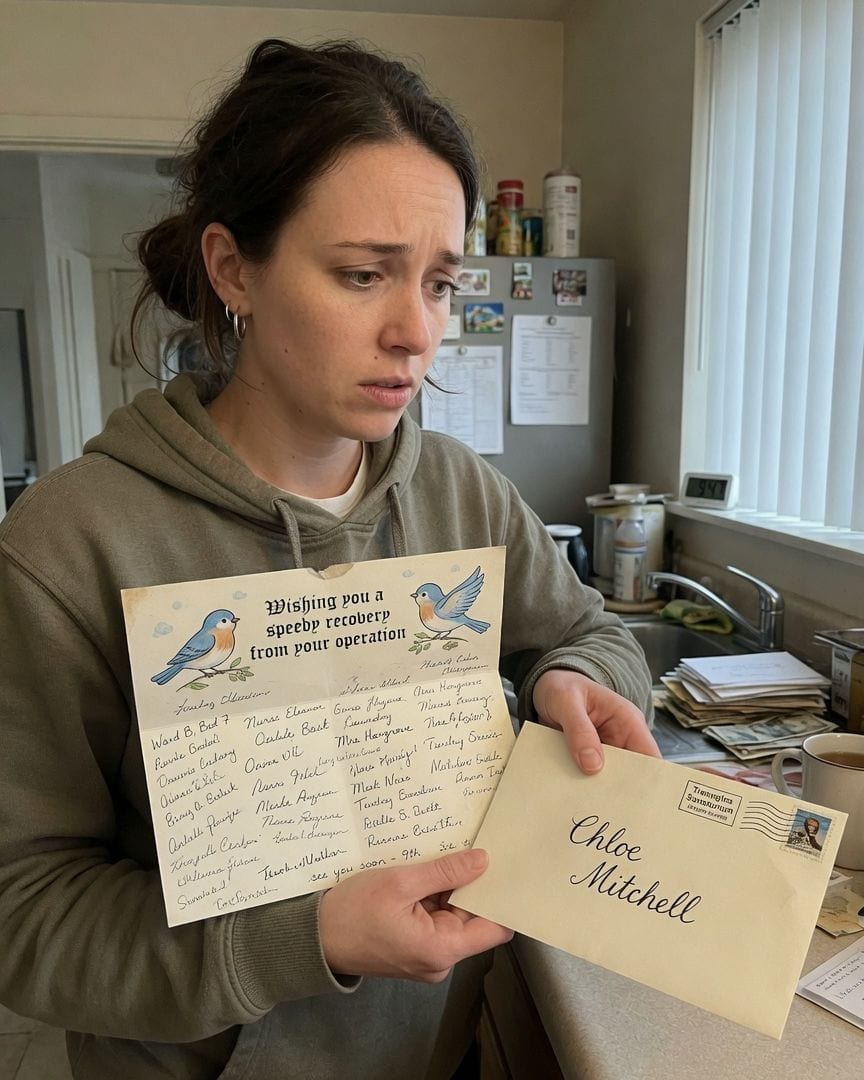
A get-well card wished me a speedy recovery from an operation I never had. It was postmarked from a sanatorium that burned down in 1963.
My quiet Tuesday morning was interrupted by an elegant get-well card, addressed to me. It wished me a speedy recovery from an operation I'd never had. But the postmark read 'Treneglos Sanatorium,' a hospital that vanished in a fire back in 1963.
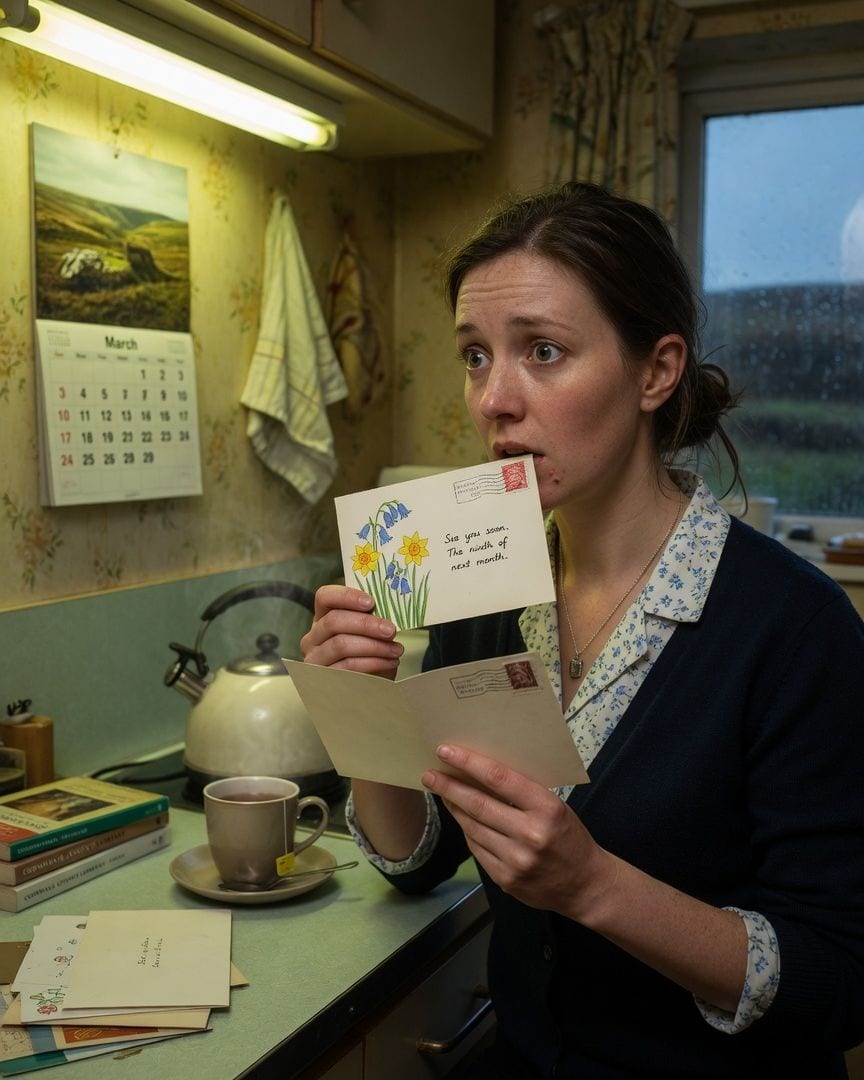
My get-well card arrived from a field, postmarked from a sanatorium that burned down in 1963. It wished me well for an operation I've never had, scheduled for next month.
I was just making tea on an ordinary Tuesday when a strange letter arrived. It was postmarked from Treneglos Sanatorium, a place that burned to nothing over sixty years ago, and contained a get-well card for an operation I'd never had. My research into this impossible message then led me to an old patient register where I found my own name, dated 1958.
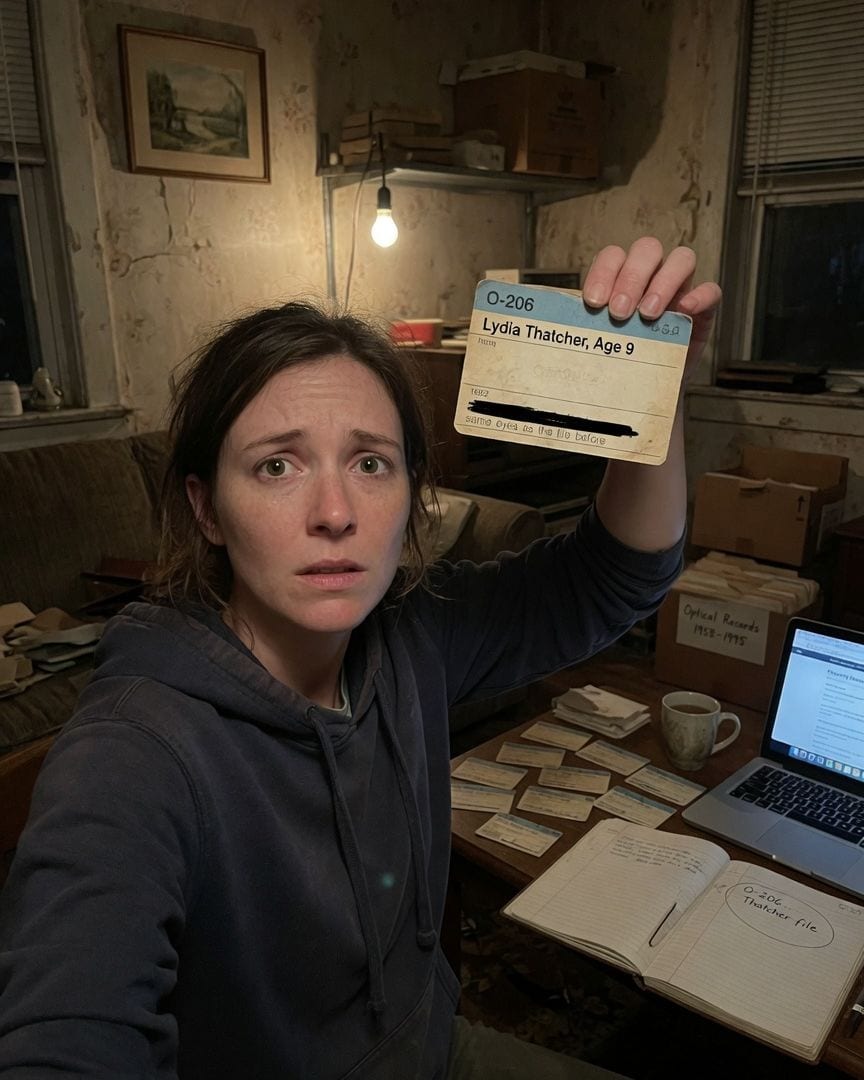
My own optical card is dated 1962, with my name on it. I wasn't born until 1993.
Sifting through old patient files from my former optical practice, I found my own O-206 card. It had my name, Lydia Thatcher, and my current home address printed on it. But the card was dated 1962, decades before I was even born, and a redacted note mentioned 'same eyes.'
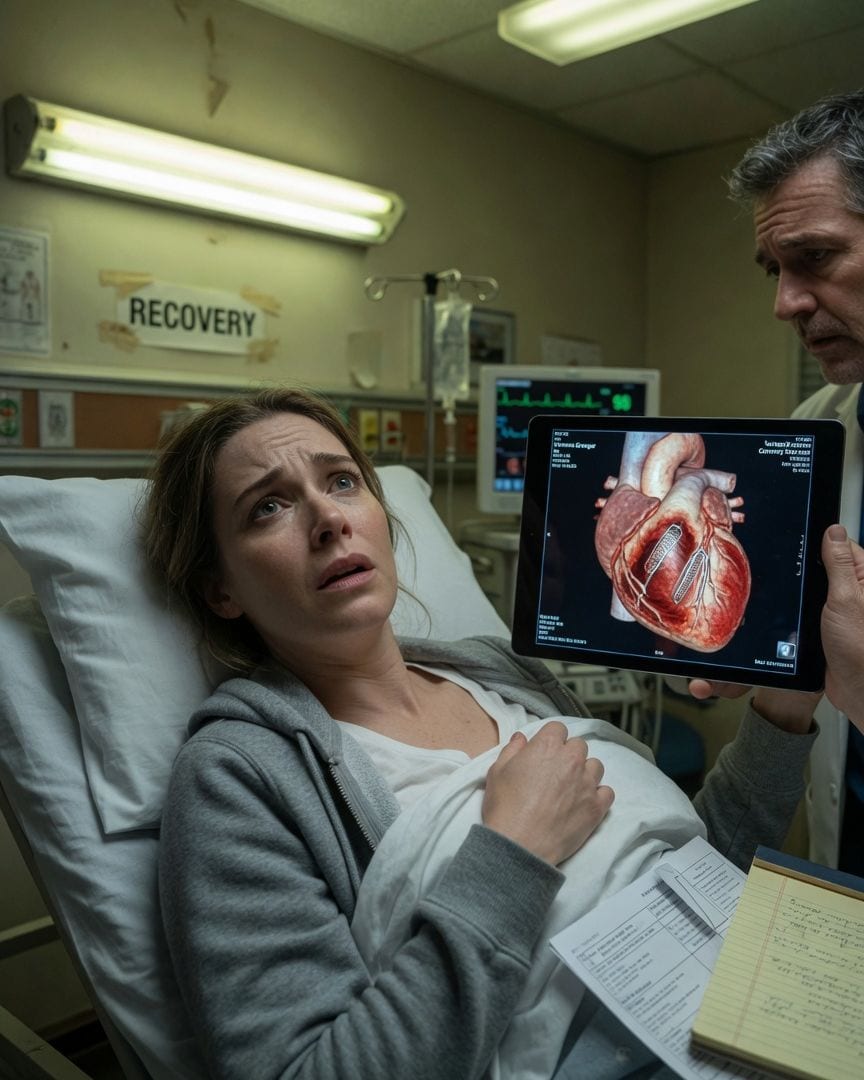
Metal stents are propping open my heart. The doctor rotated the image, but I've never had a cardiac procedure.
After years of dismissed chest pain, a CT scan revealed an impossible truth: my heart contained two metal stents. Dr. Maddox confirmed there was no record of any cardiac procedure in my entire medical history, and I had no memory of ever having surgery. My own body held a secret, alien architecture I couldn't explain.
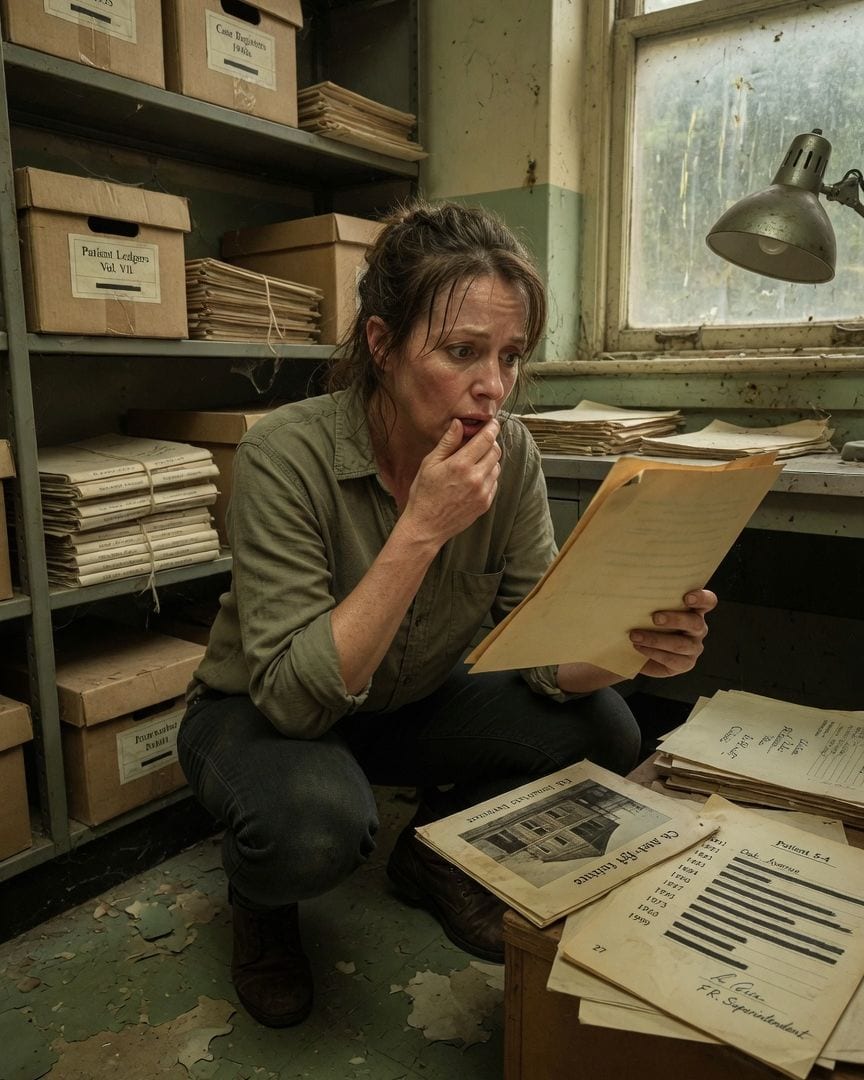
Patient 5-4 keeps checking into my aunt's old sanatorium chalet. The same initials sign them out, 'not traced,' every thirteen years since 1921.
Sifting through my aunt Margaret's estate, I found her old sanatorium file from 1999. Her patient record listed her as 'Patient 5-4,' discharged 'not traced.' But when I accessed the archives, I found 'Patient 5-4' was admitted every thirteen years since 1921, always with identical discharge notes.
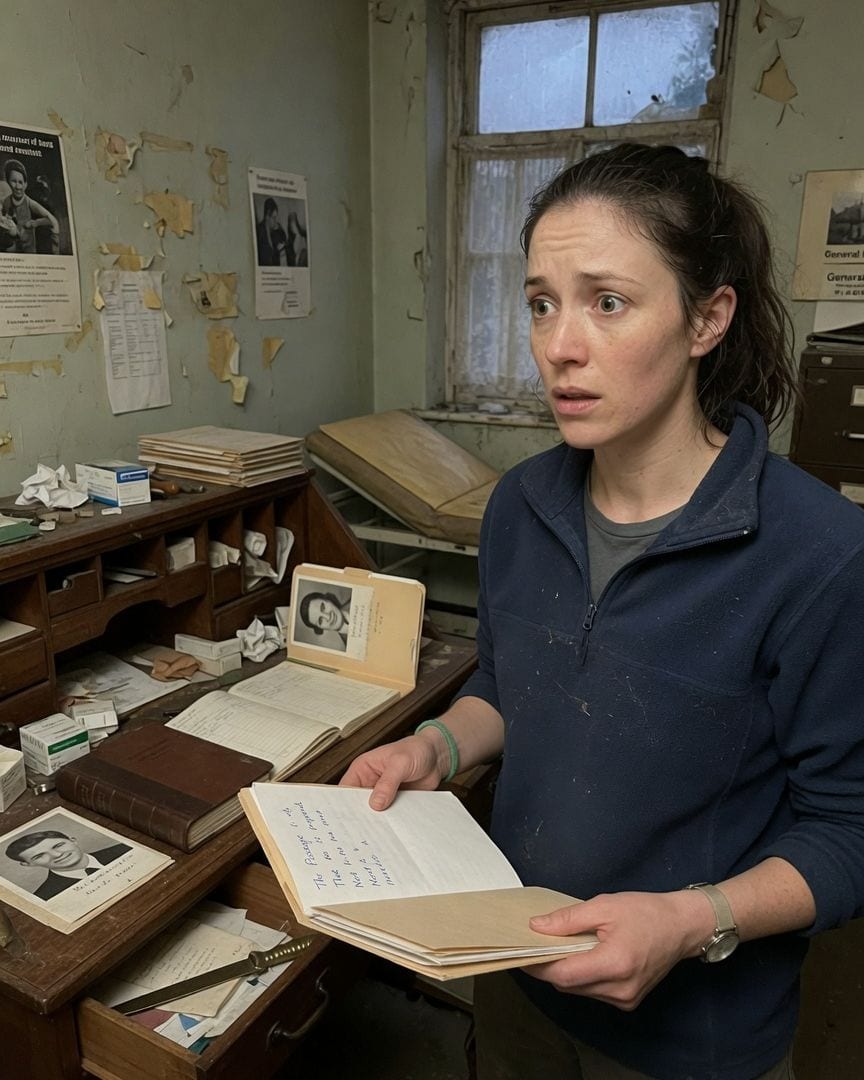
My new clinic's appointment book shows entries for this coming Monday, decades after the doctor retired and died.
Chloe Lawson bought an old, abandoned surgery in Nettlebed, ready to open her new vet clinic. Locals insisted Dr. Almott retired in '79 and the practice shut down for good. But then Chloe found his dusty appointment book filled with meticulous entries, continuing unbroken from 1979 through the decades, right up to this coming Monday.