Metal stents are propping open my heart. The doctor rotated the image, but I've never had a cardiac procedure.
I lay on the gurney, the fluorescent lights of the recovery room buzzing faintly above me. The hum seemed to vibrate right through the thin mattress.
My chest pain, an occasional tightness, had been dismissed as anxiety by my GP, but Dr. Maddox, the cardiologist, had ordered a CT angiogram just to be thorough. Now, he stood beside me, tablet in hand, looking perplexed.
His usual assured demeanor was gone.
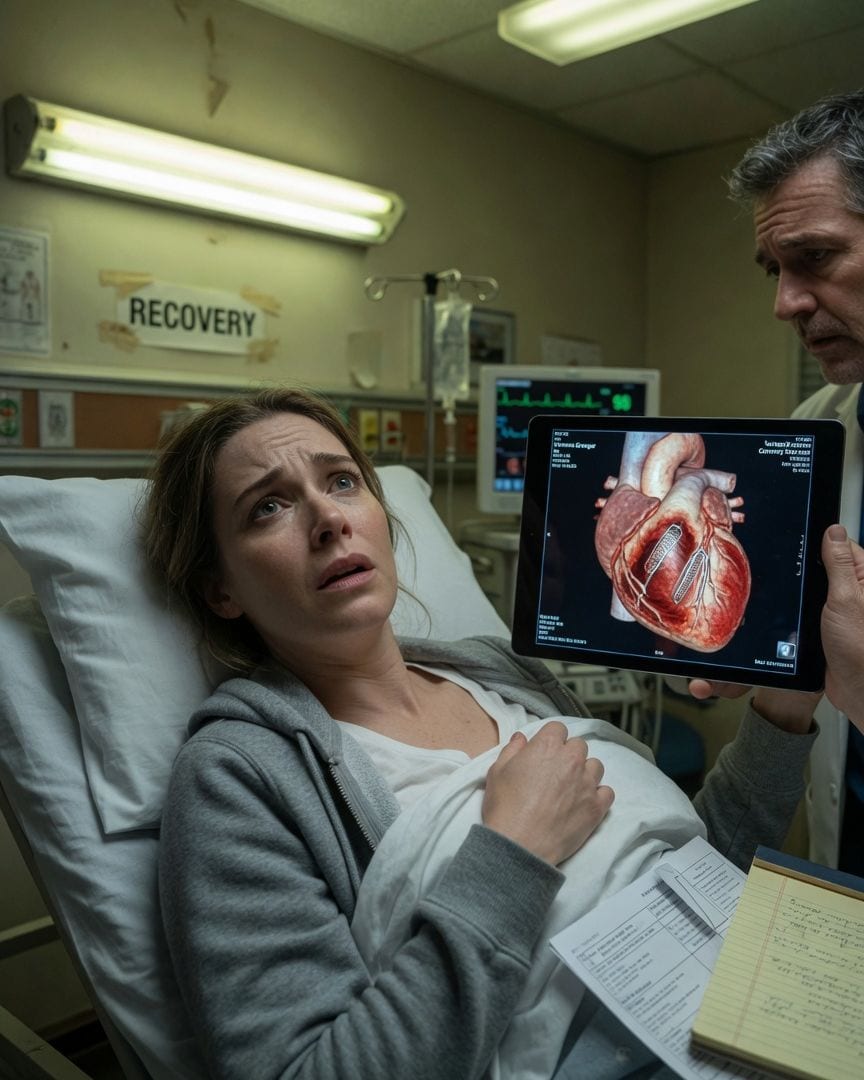
"Vivienne," he began, his voice carefully neutral, "the scan shows something quite unusual." He rotated the tablet, displaying a vivid, three-dimensional image of my own beating heart. It pulsed on the screen, a fleshy, complex engine.
Clear as day, two tiny mesh tubes, metal stents, were visible, perfectly integrated into one of my coronary arteries. The tissue had grown smoothly around them, a seamless part of me.
"They’re propping open your artery," he explained, pointing with a stylus. "It’s a very clean job. But… we have no record of you ever having a cardiac procedure.
No scar tissue on your chest, no surgical history in your file, nothing."
I stared at the screen, a cold knot forming in my stomach. My heart, so familiar, now held a secret, alien architecture. I’d never had surgery. Not once.
I tried to remember a hospital, a procedure, any incident, but my mind was a blank. Not a flash of a memory, not even a vague sensation.
Dr. Maddox asked again, gently, if I was absolutely certain. "Even as a child? Sometimes these things are done very early on and forgotten."
"No," I managed, my voice thin. "Never. My parents would have told me. I would remember something." The wrongness of it, inside my own body, was inescapable.
A fundamental fact of my own existence, contradicted by an image of my own core.
The dread settled in my bones like a chill that wouldn't leave. Back home, I pulled out every old medical record I possessed – childhood immunizations, dental charts, school physicals.
I spread them across the kitchen table, a paper archaeological dig. Nothing. Not a single mention of a cardiac event, let alone surgery. My records were boringly mundane.
I called my parents, Karen and David, asking about any childhood illnesses or hospital stays I might have forgotten. My mother, Karen Granger, was insistent. "No, sweetheart, never anything like that.
A few scraped knees, a broken arm when you were seven, but never anything serious with your heart. You were always a healthy child. Why do you ask?" I skirted the real reason, mumbling about a routine check-up.
She wouldn't understand.
I contacted my childhood pediatrician's office, then my long-standing dentist. Both confirmed my records were clean, no gaps, no major procedures beyond routine care.
Dr. Evans, my old pediatrician, even remembered me as "the kid who hated needles but never got sick." The stents were an impossible ghost, a physical reality with no documented origin.
Driven by a desperate need for a rational explanation, I began to search wider. I knew hospitals sometimes merged, records were digitized, or transferred. I started with online databases, then obscure public health archives, government-run medical record repositories.
I spent hours typing variations of my name, looking for any 'Vivienne Granger' who might have had a cardiac procedure decades ago. It felt like chasing smoke, a hopeless, frantic task that kept me up past midnight.
My partner, Felix, kept asking if I was okay. I told him I was just working on a complex project.
Then, late one night, deep in an archived index of defunct medical facilities and their record transfers, I found it. My cursor hovered over the entry, my breath catching. A single line, stark against the old digital text: 'Granger, Vivienne.
DOB: [my exact birthdate]. Procedure: Coronary Stent Placement. Date: [20 years ago]. Facility: St. Jude's Hospital, [nearby small town].'
St. Jude's. I’d never heard of it, let alone been there. It wasn't even in my hometown, but a small, forgotten place about an hour's drive away.
But the name, the birthdate, the procedure, the timing – it was too specific to be a coincidence. My heart hammered, not from chest pain, but from a dawning, terrible recognition. This was it. This was the explanation.
But it raised more questions than it answered.
I spent the next day tracking down the physical archives of St. Jude's Hospital, now long-closed and merged into a larger, anonymous medical conglomerate.
The building where the records were stored was a drab, windowless brick structure on the edge of the Ellsworth Medical Group campus.
After navigating layers of bureaucracy, filling out forms, and proving my identity, I finally held a faded, brittle patient file in my hands. The paper felt like tissue in my grip.
The cover read, in neat, typewritten script: 'Vivienne Granger, DOB [my exact birthdate].' Inside, a handwritten entry detailed a 'coronary stent placement' performed exactly twenty years ago, matching the date from the archive index.
It was here, in black and white. A chill ran down my spine, confirming the impossible truth Dr. Maddox had seen.
But then, I saw it: a note about 'referring physician Dr. Ellison' – a name I didn't recognize, had never heard of. And a 'primary contact: Naomi Granger (Aunt).' My entire family tree, well-known to me, had no such branch.
I had no Aunt Naomi. My mind raced, trying to reconcile the name with anyone. A friend? A distant cousin? No one fit.
I stared at the faded printout, my own name and birthdate staring back at me, alongside a medical history that was utterly alien.
The hospital code was for a facility I'd never set foot in, twenty years ago, and a specific family name listed as next-of-kin was one I'd never heard.
This wasn't just a mix-up; it was a ghost in my own machine, a perfect match to an impossible past. My heart throbbed, a dull ache behind the familiar rhythm, a subtle discord beneath the surface.
The discrepancy of the 'Aunt Naomi' and unknown referring doctor gnawed at me. It was a splinter under my skin. I tried to locate Dr. Ellison, but the archives listed him as having retired decades ago, leaving no forwarding information.
A digital phantom. St. Jude's Hospital itself was now a derelict shell, its records absorbed by the larger 'Ellsworth Medical Group,' a sprawling network of clinics and hospitals across the region.
I visited their main administrative office, a sleek, modern building of glass and steel that felt miles away from the dusty, forgotten archive I'd found. The waiting room music was too calm, too generic.
I requested further information on the St. Jude's file, emphasizing the matching name and birthdate, the critical medical anomaly. The clerk, a young woman named Chloe, seemed flustered, her smile flickering. "Those old files are...
complicated," she mumbled, her eyes darting to a closed door, before she disappeared to consult a supervisor.
I waited for what felt like an eternity, the synthetic calm of the waiting room becoming oppressive. After a long wait, Chloe returned, apologetic but firm. "I'm so sorry, Ms. Granger.
We can't release any more information on that specific patient. Privacy concerns for a historical record." Her gaze was evasive, sliding past mine. I pushed, explaining my own medical anomaly, the stents, the impossibility of it all.
"It's my medical history, Chloe. I need to know." But Chloe simply repeated the phrase like a well-trained automaton, her eyes fixed on a spot just above my left shoulder. The wall itself seemed to hum with silent disapproval.
Undeterred, I started researching St. Jude's more intensely. Not just patient records, but its history. I spent hours trawling through old local newspaper archives, digitized microfiches.
They painted a picture of a respected, if somewhat experimental, institution in the mid-to-late 20th century, known for its progressive approaches to mental health and 'integrative' medicine. The language in the articles was always carefully optimistic, slightly clinical.
One article from nineteen years ago, tucked away on an inside page, mentioned a local controversy: 'Unexplained Patient Transfers at St. Jude's.'
It detailed concerns raised by families whose loved ones had been admitted for various ailments, only to be discharged with 'altered dispositions' or, in some cases, to simply vanish from official records.
The article quoted a 'retired archivist, Mr. Charles Fletcher,' who had expressed 'concerns about the nature of some patient reassignments.'
I felt a cold thread tightening around me. Fletcher. An archivist. He would know. I found an address for Charles Fletcher, listed in a decades-old town directory.
He was still living in the same small, quiet house on the edge of town, the one the article had mentioned. A living link to a dead hospital.
I drove to Charles Fletcher's house a few days later. It was a charming, if slightly overgrown, cottage, nestled behind a tangle of rose bushes. The air was still and warm, heavy with the scent of honeysuckle.
When I knocked, an elderly man with kind, tired eyes answered, his frame slightly stooped. Charles Fletcher, exactly as described in the old article, invited me in.
His living room was a testament to a life lived among books and papers, shelves overflowing.
He listened patiently as I explained my impossible situation, showing him the CT scan on my phone, then the St. Jude's file I'd photocopied.
He didn't interrupt, just nodded slowly, his gaze distant, as if recalling something from a very long time ago.
"Ah, St. Jude's," he murmured, his voice soft, almost a sigh. "A place of… unique practices." He confirmed that 'identity integration' was a term used for certain experimental therapies there.
"Usually for patients with severe trauma or amnesia," he elaborated, "to help them build a 'new, functional self.' To give them a fresh start, as it were."
He offered no judgment, just a quiet, almost academic, tone, as if discussing an obsolete scientific theory. "The institution believed it was doing good."
As I left his house, the afternoon sun was beginning to dip. I noticed a black sedan, parked down the street, pull away from the curb a little too quickly. Its windows were tinted dark, obscuring the driver.
I dismissed it as coincidence, my mind already reeling from Fletcher's words.
The next morning, however, an anonymous email landed in my inbox. My phone chimed with the notification. The subject line was simply 'St. Jude's.' The body of the email contained only three words: 'Let it go.'
No sender, no other text, no links, nothing to trace. Just those three stark words. My blood ran cold. I tried to trace it, but it was a dead end. The server was offshore, masked, untraceable.
Later that week, I saw Charles Fletcher at the local grocery store. He was in the produce aisle, inspecting a bunch of carrots. He saw me and gave me a small, knowing smile that didn't quite reach his eyes.
It was a smile that held a secret.
"Still digging, Vivienne?" he asked, his voice calm, like he was asking about the weather. "Some things are best left buried, you know. For everyone's peace of mind."
The words were a warning, delivered with the casualness of a neighborly chat, but the implication was clear: someone was watching, and Charles Fletcher knew exactly what I was doing, and why.
The fluorescent lights of the grocery store seemed to hum with a new, menacing undertone.
The email and Charles Fletcher's unnerving warning only fueled my resolve. I couldn't let it go. It was inside me, literally. I returned to his house the very next day, my knuckles white as I rapped on his door.
This time, I wasn't asking for help; I was demanding answers.
"Mr. Fletcher," I began, my voice trembling slightly, but firm. "What exactly happened at St. Jude's? What is 'identity integration'?
And why does a file with my name and birthdate exist for a procedure I don't remember, while someone else is listed as my family?"
Charles Fletcher sighed, a long, weary sound, the air seemed to deflate around him. He led me to a dusty armchair in his living room, settling into his own across from me. "Sit, Vivienne. This isn't a simple story."
He explained that St. Jude's, in its pursuit of radical therapies, had indeed pioneered methods to 'reconstruct' patients deemed too traumatized or unstable to function with their original identities.
"A patient would suffer a severe physical or psychological trauma," he elaborated, his voice quiet, almost a whisper, "and if their identity was deemed shattered, beyond conventional repair, a new one could be… facilitated.
New memories, new narratives, sometimes even new physical markers to anchor the new self."
I felt a growing horror, a cold dread seeping into my very bones. "Are you saying… they wiped people's memories?"
He nodded, his eyes fixed on some point beyond my shoulder. "In essence. Or more accurately, they built new ones over the old. A new persona, a new history. The goal was always therapeutic, mind you.
To give someone a second chance at a functional life. To rescue them from a past they couldn't survive."
"And the stents?" I whispered, my hand instinctively going to my chest, covering the place where the impossible metal lay.
"A physical anchor," he confirmed, his voice flat. "A unique, undeniable mark of the 'new' beginning. A 'wound you never had' that proves you are someone else, that your old self is gone, and this new one is real, physical."
He paused, studying my face with an unnerving intensity. "There was a Vivienne Granger admitted to St. Jude's twenty years ago. A young woman, just eighteen. She had a severe cardiac event, a sudden collapse. Her family was… complicated.
Difficult to locate, ultimately uncooperative. The hospital made a decision."
He reached into a drawer in a small side table beside his chair, pulling out a brittle, yellowed sheet of paper. It crackled softly as he unfolded it. It was a missing person's report.
"This was filed shortly after her admission. By a local acquaintance, not family. It describes a Vivienne Granger, age eighteen, last seen entering St. Jude's Hospital."
My eyes scanned the description, my breath catching in my throat. 'Slender build, light brown hair, small birthmark on left cheekbone.' It was me. Every detail, down to the small, faint birthmark I sometimes forgot was there.
"She… disappeared?" I asked, my voice barely audible, a ragged whisper.
Charles Fletcher nodded gravely. "From her old life, yes. A new life was prepared." He handed me the report. The date of disappearance was precisely the day after her stent procedure was recorded in the St. Jude's file.
The entire room seemed to tilt, the world shifting on its axis.
I clutched the missing person's report, my fingers tracing the grainy photo of the young woman at the top.
The face staring back was undeniably mine, younger, perhaps a little more innocent, but the eyes were the same, the faint birthmark on her cheek identical. The name was Vivienne Granger. The age: eighteen.
The date of disappearance: twenty years ago, the very day after the cardiac procedure that placed the stents in my heart, according to the St. Jude's file I held.
The address listed for the missing girl, faded in the old ink, was just a few blocks from the old hospital.
The rational world collapsed around me. It wasn't just a mix-up, or a strange coincidence, or a shared name. It was her.
The girl in the photo, the one who had vanished, the one whose heart had been surgically altered – that was Vivienne. That was me.
The life I had lived for the past two decades, the memories I cherished, the family I loved, my entire sense of self – it was all a meticulously constructed lie, built upon the disappearance of another Vivienne.
Or rather, built upon my own disappearance. I was the impossible object, the wound that never healed, the person who wasn't supposed to exist. I was inside it. I was the vanished girl, somehow reborn into my own stolen life.
The blurry missing person's poster, yellowed with age, showed a girl with her own eyes, her own faint birthmark on her cheek. The name was Vivienne Granger.
The date of disappearance was exactly twenty years ago, the same week as the cardiac procedure in the impossible record, and the listed address was mere blocks from St. Jude's.
I looked at the photo, then at my own reflection in the window, my face pale and drawn, a terrifying echo staring back. The world outside looked distorted, like a funhouse mirror reflecting a reality I no longer understood.
I returned to Ellsworth Medical Group, armed with the missing person's report and Charles Fletcher's chilling admissions. This time, I didn't request; I demanded.
The manager, a stern woman named Abigail Blackwood, with a perfectly coiffed grey bob and an unyielding expression, initially tried to stonewall me. Her office felt airless, the silence thick.
But my quiet, unshakeable resolve, backed by the growing evidence, finally broke through. The missing person's report, laid out on her pristine desk, seemed to hum with suppressed truth.
Abigail led me to a secure, climate-controlled vault deep in the basement – the true archive of St. Jude's, far more extensive than the public one I'd found. It hummed with the quiet efficiency of industrial-grade servers and dehumidifiers.
There, in a meticulously organized section marked 'Project Chimera,' she found a file labeled 'Patient 734 - Granger, Vivienne.' The numeric designation felt like a brand.
The file was thick, spanning decades, its binding surprisingly robust. It detailed her original admission at age eighteen, the severe cardiac event, the 'uncooperative' family, and the subsequent 'recommendation for identity integration due to profound dissociative trauma and familial abandonment.'
There were psychological assessments, surgical reports documenting the stent placement, and then, chillingly, 'memory imprinting protocols,' with dates and details of various 'integration sessions.'
The stents were explicitly noted as 'permanent physical anchors for the new self-narrative,' a physical truth to ground the manufactured memories.
The file documented her 're-introduction' into society, her fabricated family history, even notes on 'behavioral consistency checks' over the years. My 'parents' were listed as 'placement facilitators.' 'Aunt Naomi' was detailed as a 'support network facilitator.'
Every planted clue clicked into place: the missing person's report, the impossible hospital record, the unknown 'Aunt Naomi' – all were pieces of the meticulously constructed facade of my life.
The horror wasn't a sudden monster; it was the cold, clinical precision of an institution that had taken my shattered self and rebuilt it into someone entirely new, erasing the original Vivienne Granger and replacing her with the one who now stood there, reading her own carefully documented lie.
The air in the vault felt impossibly cold.
Abigail Blackwood watched me read the file, her expression unreadable, her hands clasped neatly on her desk. The fluorescent lights gleamed off her perfectly styled hair.
"We understand this is a shock, Vivienne," she said, her voice devoid of empathy, utterly calm. "But Project Chimera was a medical breakthrough. It gave you a stable, functional life. The alternative for the original Vivienne Granger was… not good."
I looked up, my face pale, the file still open in my hands. "You stole my life. You erased me."
"We saved you," Abigail countered calmly, her eyes unwavering. "The original Vivienne Granger was profoundly unstable, abandoned, on the brink of absolute collapse. We gave you a foundation. A family, a partner, a career. A future."
She gestured to the file with a subtle movement of her chin. "We've monitored your progress for twenty years. You are, by all metrics, a success story."
I felt a terrifying sense of inevitability, a profound helplessness. There was no monster to fight, no grand conspiracy to expose in a dramatic showdown.
This wasn't some rogue scientist; this was a system, efficient and rational, that had simply decided my fate. I tried to imagine fighting it, revealing the truth to Felix, my 'parents.' What would I tell them?
That their daughter, their partner, was a carefully engineered construct? That their memories of our shared life were, in large part, curated by an institution?
The institution had not only replaced my identity but had woven my new self so deeply into the fabric of the world that unraveling it would destroy everything I knew, everyone I loved. It was a perfect, insidious trap.
I was trapped inside the truth.
Abigail offered a brochure from a drawer. 'Post-Integration Support Services,' it read, in tasteful sans-serif font. "We can help you process this, Vivienne. Integrate this new knowledge into your current self-narrative. Many of our patients find acceptance, even peace."
I realized there was no escape. I couldn't un-know what I knew, but I also couldn't undo what had been done. The institution wasn't going to be stopped; it was still operating, still 'helping' people, quietly, efficiently.
The horror was in the calm, unbothered certainty of it all, and my own profound powerlessness. I was a living ghost, a walking lie, and the architects of my life were offering me therapy to accept my own erasure.
The silence in the vault stretched, broken only by the hum of the air conditioning, as I looked from the file to Abigail's placid face, understanding the full, terrible weight of my situation.
A tiny, imperceptible shiver ran through the vault, as if the walls themselves were taking a breath.
I left Ellsworth Medical Group, the heavy file box tucked under my arm, a physical manifestation of my new, unwanted truth. The world outside looked the same, but it was fundamentally altered.
My home, my car, the familiar faces on the street – they were all part of the elaborate stage set for my new life, a meticulously crafted reality.
I didn't confront Felix, or my 'parents.' What was the point? The truth would shatter them, and for what? To reclaim a self that no longer existed, a past that was profoundly broken and probably unsalvageable?
The original Vivienne was gone, perhaps dead, certainly erased. I was who I was now, a composite.
I continued my routine, went to work, shared meals with Felix, but a chilling distance had settled over me. A thin, invisible pane of glass separated me from everyone and everything I loved.
The institution remained unperturbed, its work continuing in the quiet efficiency of its secure archives. I was a testament to their success, a perfectly integrated lie, living proof of Project Chimera.
Days bled into weeks. I sat on the sofa, a framed childhood photo in my hand. A smiling girl, my own face, but a past that wasn't truly hers, not in the way I'd always believed.
The bright, innocent smile in the photo felt like a betrayal. I remembered Dr. Maddox rotating the image of my heart on his tablet, the tiny metal tubes, the confusion in his voice.
The wound she never had, now the key to the life she never lived. My life.
Felix entered the living room, a mug of tea in his hand, steam curling gently into the air. He looked at me, a gentle concern in his eyes. "Thinking deep thoughts again, Viv?" he asked, his voice soft, familiar.
He sat beside me, reaching for my hand, his touch warm and real. "You've been quiet lately. Everything alright?"
I turned to him, the photo still in my grasp, the smooth glass cool against my palm. The truth was a gaping chasm between us, a silent, infinite void, yet he saw nothing but the woman he loved.
He knew nothing of the girl in the picture, or the one whose identity had been painstakingly built over the ruins of another.
I looked at his kind, unsuspecting face, then back at the photo of the girl who was and wasn't me. The lie was too vast, too deeply rooted. It was my life now. It was all I had.
I smiled, a faint, almost imperceptible curve of my lips that didn't quite reach my eyes. It was the smile of someone who understood the true cost of coherence.
Felix asked if she wanted tea, and Vivienne replied with a faint, wrong little smile.
If this one got to you
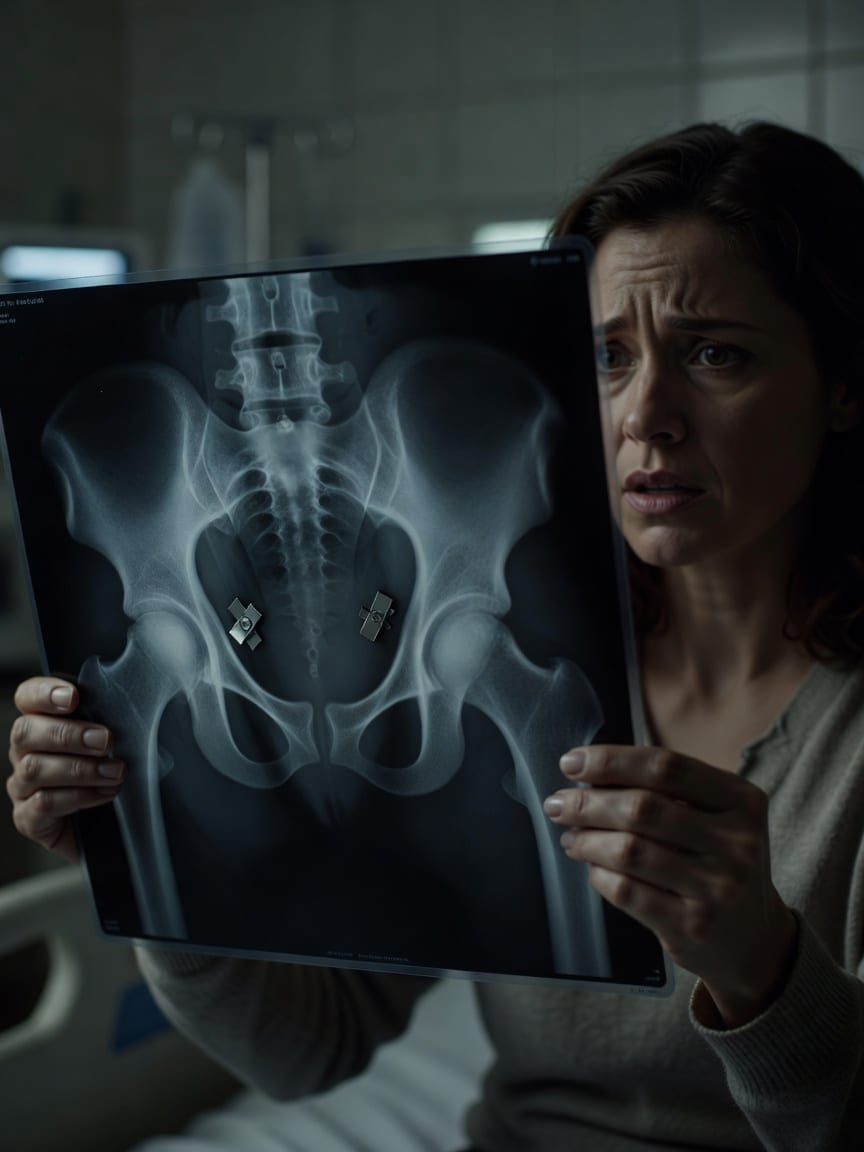
My X-ray shows sterilisation clips on my tubes. I've never had surgery, and I have no scar.
A routine X-ray for a hip injury turned chilling when my gynecologist pointed to two small clips on my fallopian tubes. She called it a standard tubal ligation, but I know I've never had surgery. My memory is completely blank, yet the X-ray is undeniably mine, dated yesterday.
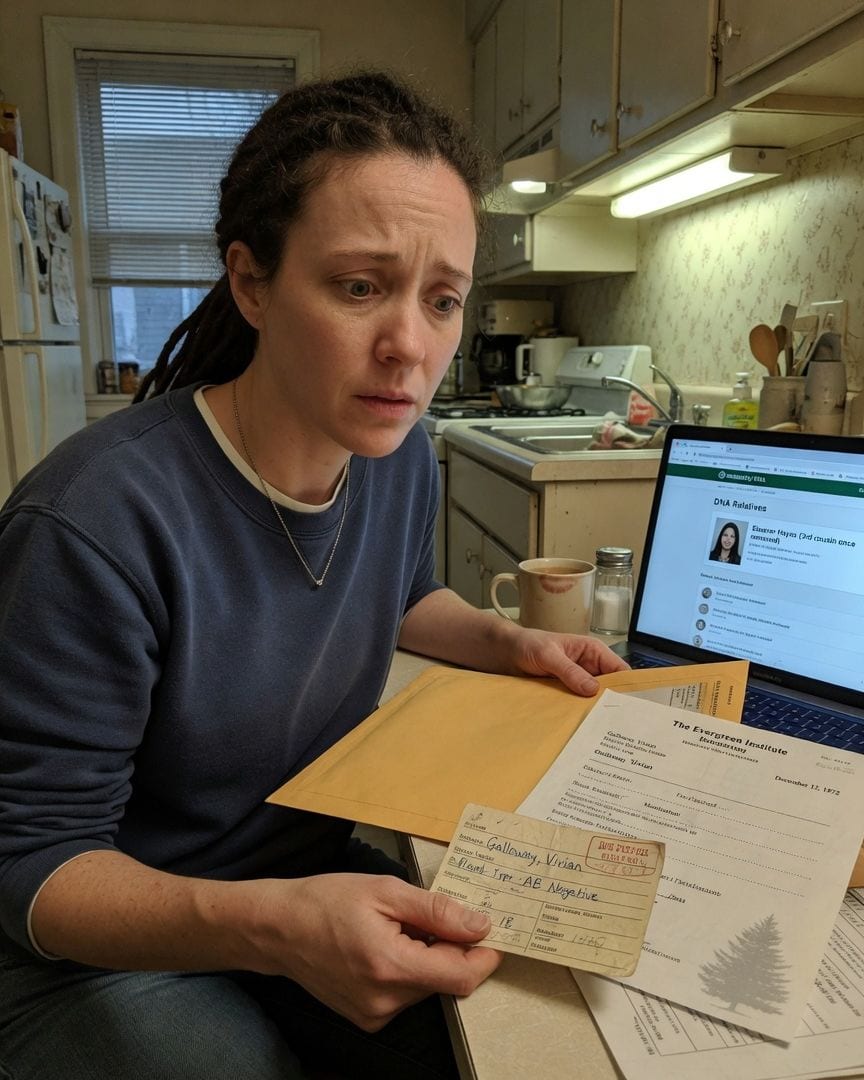
My blood type switched from AB negative to O positive. My old donor card, in my own hand, lists one. Every doctor since has found the other. The transfusion service retyped me three times this week, all O positive.
I sat at the city's transfusion service, my old AB Negative blood donor card on the desk. Doctors had retyped my blood three times that week, each test confirming O Positive. They stated it's medically impossible for a primary blood type to change spontaneously like this, leaving my entire medical history with a terrifying hole.
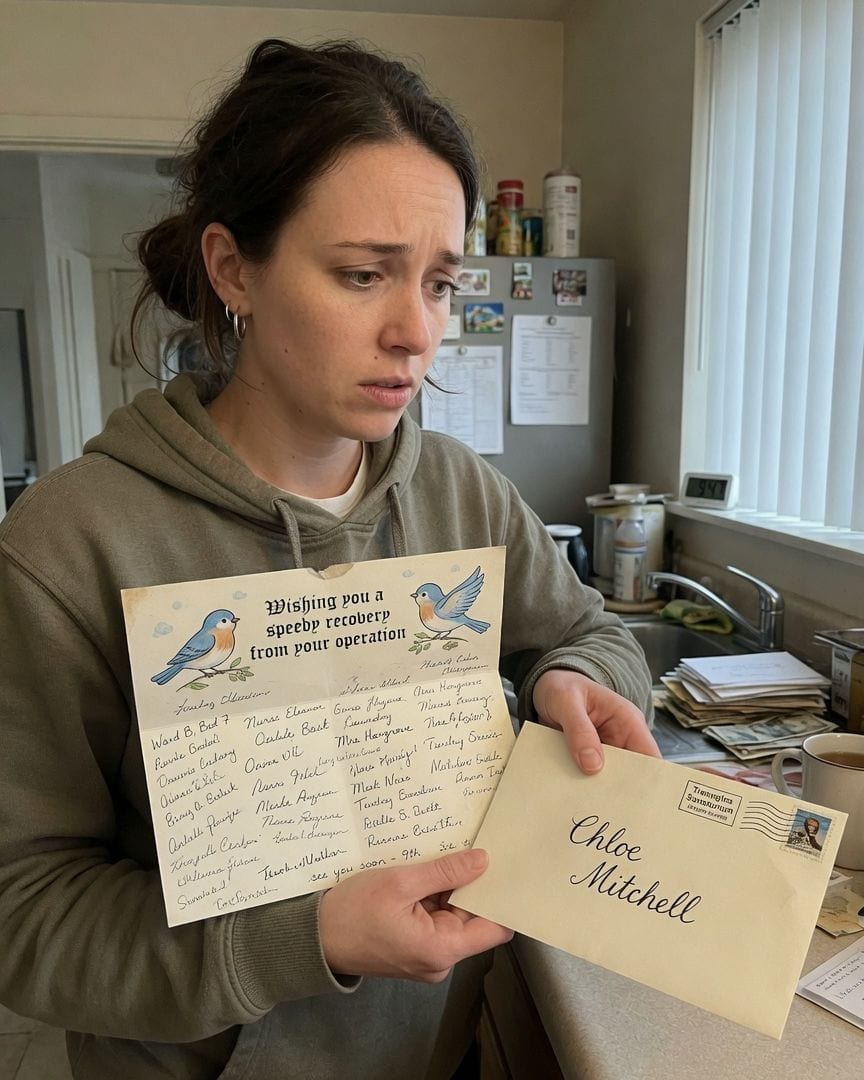
A get-well card wished me a speedy recovery from an operation I never had. It was postmarked from a sanatorium that burned down in 1963.
My quiet Tuesday morning was interrupted by an elegant get-well card, addressed to me. It wished me a speedy recovery from an operation I'd never had. But the postmark read 'Treneglos Sanatorium,' a hospital that vanished in a fire back in 1963.
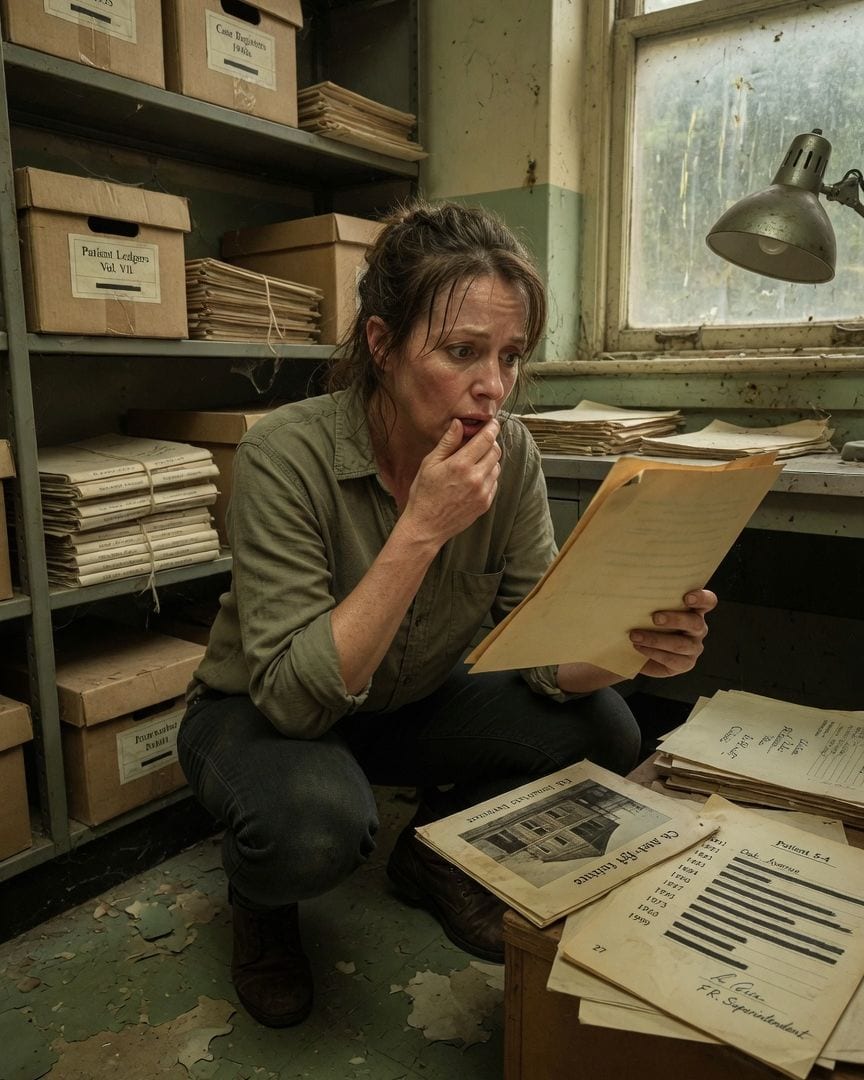
Patient 5-4 keeps checking into my aunt's old sanatorium chalet. The same initials sign them out, 'not traced,' every thirteen years since 1921.
Sifting through my aunt Margaret's estate, I found her old sanatorium file from 1999. Her patient record listed her as 'Patient 5-4,' discharged 'not traced.' But when I accessed the archives, I found 'Patient 5-4' was admitted every thirteen years since 1921, always with identical discharge notes.
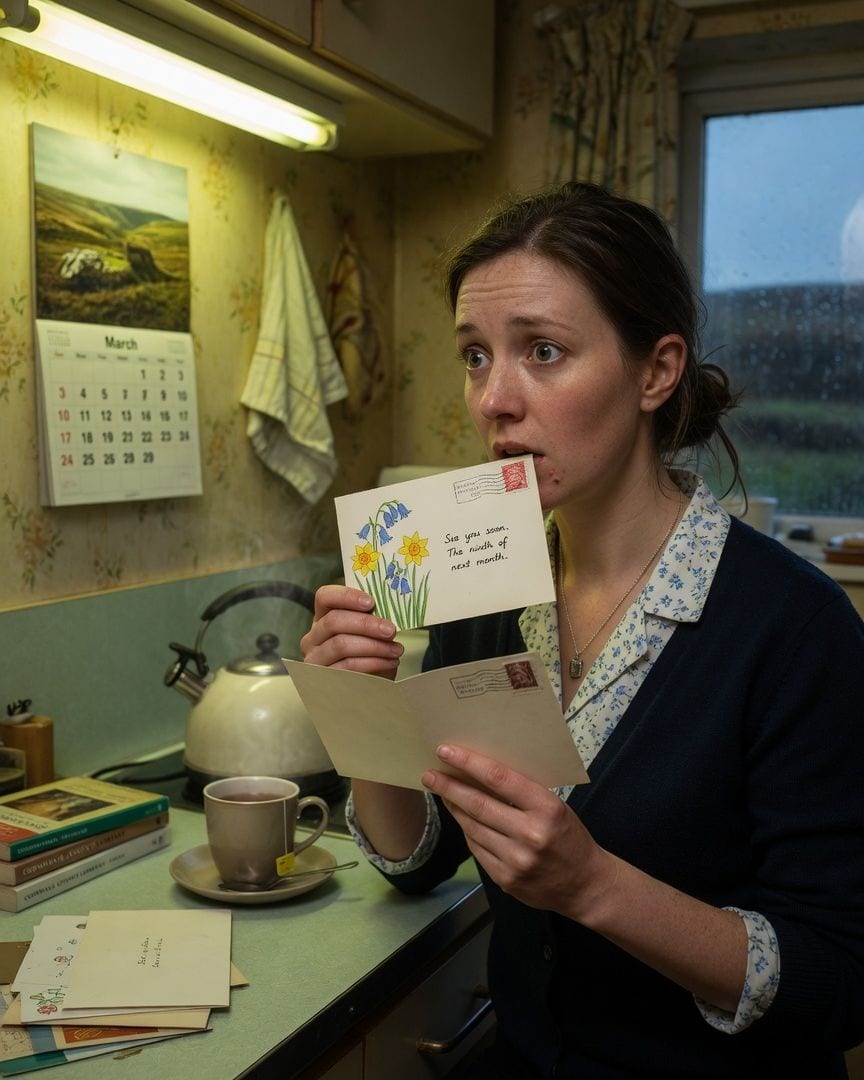
My get-well card arrived from a field, postmarked from a sanatorium that burned down in 1963. It wished me well for an operation I've never had, scheduled for next month.
I was just making tea on an ordinary Tuesday when a strange letter arrived. It was postmarked from Treneglos Sanatorium, a place that burned to nothing over sixty years ago, and contained a get-well card for an operation I'd never had. My research into this impossible message then led me to an old patient register where I found my own name, dated 1958.
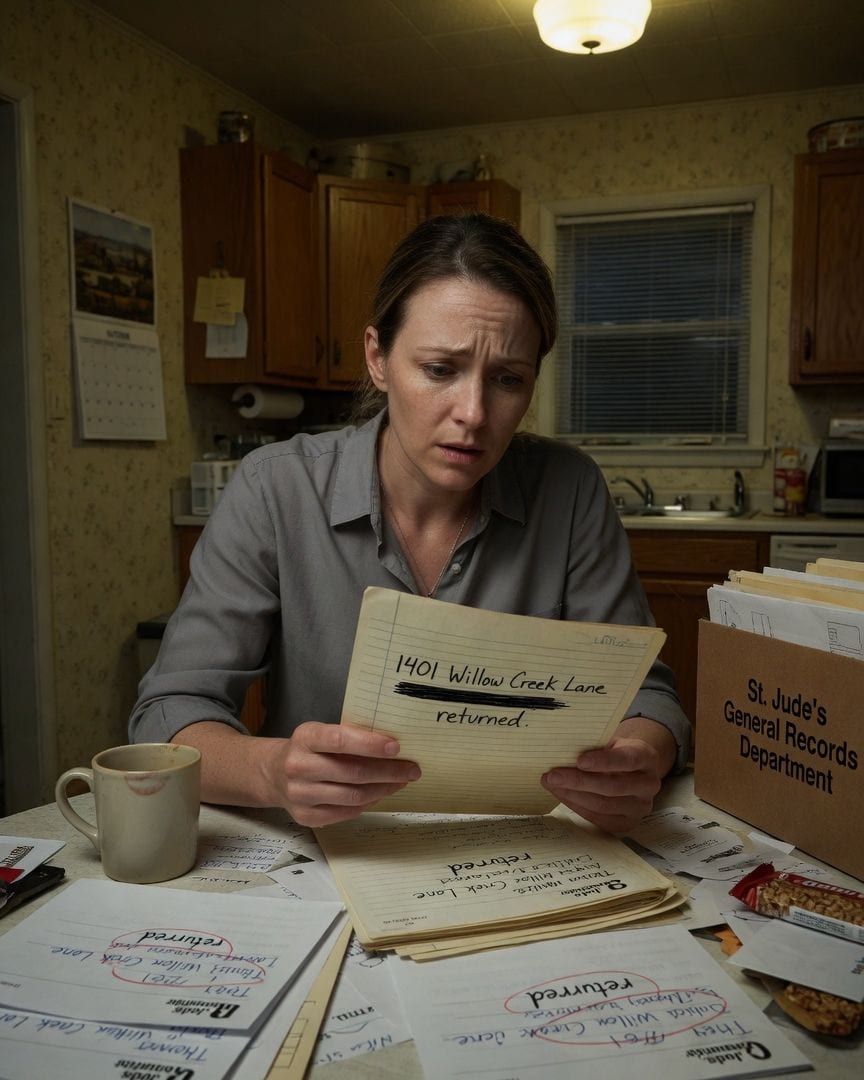
My medical file shows my street address on a struck-through line from 1988, a year I lived two counties away. It just says 'returned'.
A routine insurance audit led me to my childhood medical file from 1988. But among the expected notes, a deliberately struck-through line listed my current house address, followed by the stark word 'returned.' In 1988, I lived two counties away, making this entry an impossible and unsettling mystery.