My blood type switched from AB negative to O positive. My old donor card, in my own hand, lists one. Every doctor since has found the other. The transfusion service retyped me three times this week, all O positive.
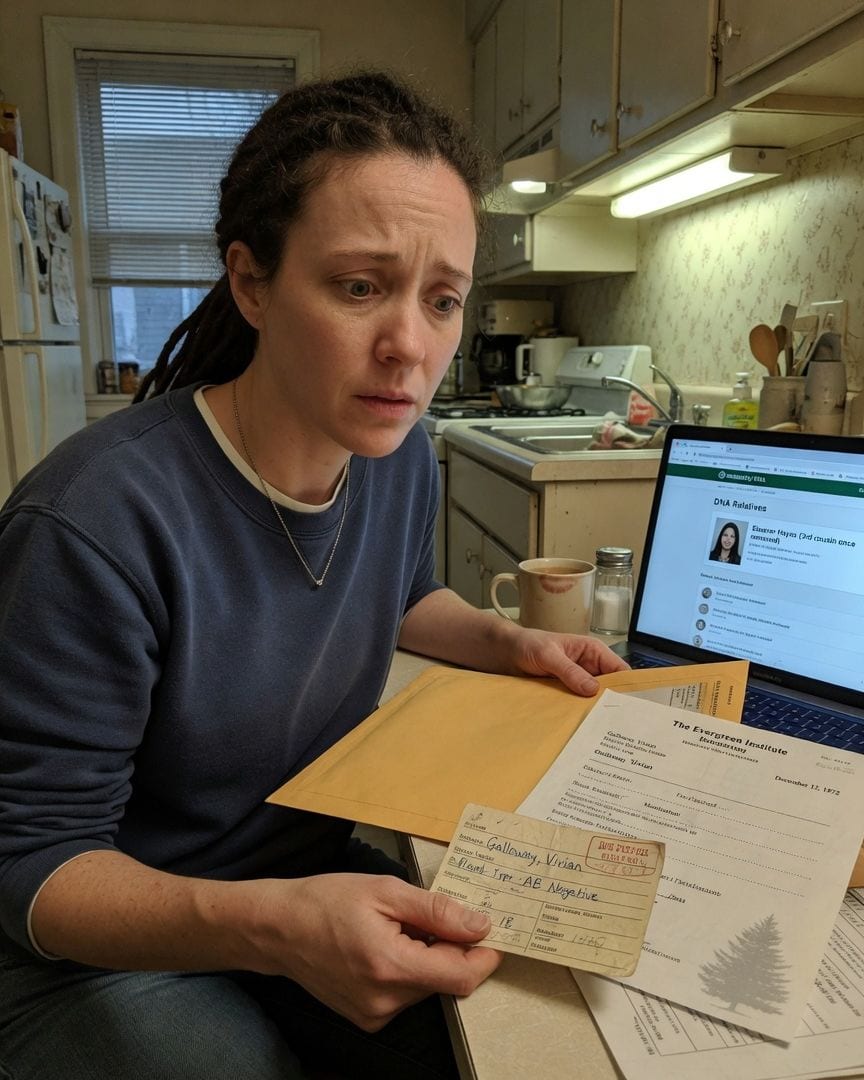
I still remember the feeling of the laminated card in my hand, the slight rigidity of the plastic, the way my own teenage scrawl looked on the line for "Blood Type." AB Negative. I was 18, feeling important.
Twenty years later, it felt like a ghost.
I sat in the sterile, too-bright office of Dr. Brooke Sterling at the city's transfusion service, the hum of the fluorescent lights a low thrum against my eardrums.
My old blood donor card lay on the desk between us, faded but unmistakable. Dr. Sterling, a no-nonsense woman with sensible glasses, tapped a file – a crisp, new one that smelled faintly of fresh paper and clinical disinfectant.
"Ms. Galloway, we’ve retyped your blood three times this week from fresh samples," she stated, her voice calm but firm. "Each test confirms O positive. Your records here, dating back fifteen years, are consistent with O positive."
My stomach clenched, a cold knot tightening inside me. "But the card… I remember getting it. I filled it out myself at a high school drive."
Sterling shook her head slowly, her gaze fixed on the plastic rectangle. "It's a complete mismatch. Not just a subtype variation, but a different major group entirely. Medically, it’s impossible for your primary blood type to change like this spontaneously.
Short of a bone marrow transplant or a chimerism, which we see in some twin pregnancies… but you don't have a history of either, do you?"
I tried to rationalize it—a lab error at the donation drive decades ago, a mix-up with the sample, a faulty pen—but the card, my own familiar handwriting, stared back, an impossible, concrete lie.
How could I have been wrong about something so fundamental, so personal, for two decades?
Dr. Sterling leaned forward, her voice dropping, the clinical detachment replaced by a flicker of genuine concern. The air in the room, already cool, suddenly felt colder, making the small hairs on my arms prickle.
"We need to understand this, Ms. Galloway. Have you ever had a transfusion? A transplant? Anything that might explain foreign blood cells in your system, or an absorption of a different type?"
I shook my head, my mind racing, scrambling for an explanation. My entire medical history felt suddenly alien, a story I thought I knew, but which now had a gaping, terrifying hole in its center.
My own body, this thing I inhabited every day, was holding a secret I couldn't explain.
The transfusion service, unable to reconcile the conflicting blood types, advised me to consult my primary care physician and consider more comprehensive genetic testing. They clearly thought I was either misremembering, or there was something gravely wrong with me.
Following their advice, I ordered an ancestry DNA kit. Maybe a rare genetic anomaly, I thought, a weird mutation, might explain the impossible shift.
While waiting for the results, which promised a detailed breakdown of my lineage, I requested my complete medical history from my doctor’s office.
A week later, a thick, manila envelope arrived, landing on my kitchen table with a soft thud that seemed to echo in the sudden quiet of my apartment. It felt heavy, burdened with decades of records.
I sifted through it, page by page, my fingers growing dusty from the old paper, looking for any mention of unusual procedures or forgotten hospital stays. Routine check-ups, flu shots, a broken arm in fifth grade. Nothing.
I was about to give up when, deep within the stack, nestled between my childhood immunization records and a routine physical from five years ago, I found a single, stapled sheet of paper that didn't quite belong.
It was a discharge summary. The heading read, 'The Evergreen Institute.' The date was December 12, 1972. My eyes scanned the patient name: 'Galloway, Vivian.' My breath hitched. But the birth date below it was not mine. It listed 1940.
My own birth year is 1985. The listed primary physician was someone I’d never heard of.
I scanned the diagnosis field, expecting to find a typo, a clerical error that would explain this impossible document. Instead, I found a series of cryptic, clinical terms I didn't understand: 'Subject Stabilization,' 'Cognitive Integration,' 'Post-Transfer Monitoring.'
There was a faint, almost invisible watermark of a stylized evergreen tree at the bottom of the page, the branches twisting upwards into an elegant, unsettling symbol.
The institute itself was unfamiliar, and a quick online search yielded no current results for 'Evergreen Institute' in my region. No old ones either, not really. Just a few broken links to defunct health directories.
The document felt cold, official, and profoundly wrong, like a page ripped from someone else’s life and stapled into mine.
Two days later, the ancestry DNA results pinged my email. The notification arrived with a chirpy chime, utterly at odds with the growing dread in my chest. With a shaky breath, I clicked the link.
My ethnic breakdown was as expected—a familiar mix of Irish and German that I’d always known. Then I scrolled down to the 'DNA Relatives' section, my heart thumping against my ribs.
There, listed as a 'Third Cousin, Once Removed,' was a name that hit me like a physical blow: Eleanor Hayes. Beneath it, a small link to an online obituary from a local historical society.
Eleanor Hayes, born 1908, died 1972, in this very county. A distant relative I’d never heard of, deceased more than a decade before I was even born.
The family tree diagram on the screen, a swirling web of lines and names, showed no possible branch connecting Eleanor to my known lineage, not a single common ancestor for generations.
I stared at the screen, the impossible document from the 'Evergreen Institute' now flashing in my mind, the two separate threads of wrongness suddenly feeling like parts of a single, terrifying knot.
I couldn't just leave it. The image of Eleanor Hayes, the name ‘Vivian Galloway’ on a 1972 discharge summary, the impossible blood type – it demanded answers.
I delved into the mystery of Eleanor Hayes with an urgency that bordered on obsession. I visited the local historical society, a charming but musty building that smelled of old paper and dust, tracking down newspaper archives and property records.
Kathleen Sullivan, the registrar, a meticulous woman in her early sixties with a fondness for local history and a keen eye for detail, was initially bemused by my questions.
Eleanor Hayes, I discovered, was indeed a local woman, unmarried, who lived a quiet life as a librarian. There was no mention of any connection to a 'Galloway' family in her records, no marriage, no children listed. Just Eleanor.
Until I found an old, grainy photograph in a community event album from 1968.
There she was, standing in the front row, a woman with kind eyes, a gentle smile, and a distinct, small mole on her left cheek – a mole that I myself have, in the exact same spot.
The coincidence sent a shiver down my spine, cold and sharp. My skin felt suddenly alien.
Next, I pressed Kathleen about the 'Evergreen Institute.' Together, we pored over old city directories and land deeds.
We discovered the institute, under various names like 'Evergreen Sanatorium' and 'Evergreen Wellness Center,' operated from the 1930s until the late 1980s, always at the same secluded, sprawling property on the outskirts of town.
It was eventually sold and redeveloped into luxury condos. Kathleen mentioned that the institute was always 'a bit private,' catering to 'specialized cases' and 'long-term care,' but never seemed to have a clear public mission.
She recalled whispers from her grandmother about 'people going in and not quite coming out the same.' When I showed her the 1972 discharge summary, she frowned. "This is very odd.
I can find no further records of a 'Vivian Galloway' associated with Evergreen in that period, only the one you provided. It's almost as if… they didn't want anyone to find more."
The trail felt deliberately obscured, a carefully wiped slate. Then, a name jumped out at me from some of the institute's later property transfers, listed as an 'administrator': Gideon Crane.
I tracked Gideon Crane to a quiet retirement community an hour away, a place of manicured lawns and hushed hallways.
He was a man in his late seventies, impeccably dressed in a tweed jacket, with sharp, intelligent eyes that seemed to hold a vast, unreadable history.
I introduced myself, explaining my unusual medical history and the strange document from the Evergreen Institute. Crane listened politely, his expression unreadable, sipping slowly from a cup of herbal tea.
"Ah, the Evergreen," he said, a faint, almost nostalgic smile playing on his lips, a smile that didn't quite reach his eyes. "A pioneering establishment in its day. Ahead of its time, some might say."
I showed him the discharge summary, my hand trembling slightly as I held out the faded paper. Crane glanced at it, then back at me, his gaze lingering. "Cognitive Integration, Subject Stabilization… rather technical jargon, wouldn't you agree?"
He offered no explanation, only an unnerving calm. The quiet hum of the room, usually soothing, now felt oppressive, as if the air itself was holding its breath. "Many patients sought a fresh start there, Ms. Galloway.
To leave behind old troubles, old selves." He paused, his gaze still on me, making my skin prickle with an uncomfortable awareness. "Some found it, too. A complete transformation."
"My blood type changed," I stated, my voice tighter than I intended. "My DNA matches a woman who died decades before I was born. And this document has my name, but the wrong birth date.
What was the Evergreen Institute doing?"
Crane merely sipped his tea again, his composure unshakeable. "The human body is remarkably adaptable, Ms. Galloway. And memory… a fragile thing. Perhaps you're remembering things differently.
Or perhaps," he added, his voice barely a whisper, "some truths are best left undisturbed." He subtly advised me to 'let sleeping dogs lie.'
As I left, I glanced back. Crane was still at his window, a silhouette against the fading afternoon light, watching my car pull away, that faint, knowing smile still on his face.
Later that week, I noticed a dark sedan, unremarkable and clean, parked a block from my apartment. Its occupants were indistinct, just shapes behind tinted windows, seemingly waiting.
It was gone by morning, but the unease settled deep in my bones, a cold weight.
I returned to Dr. Sterling, the new documents clutched in my hand: the Evergreen Institute discharge summary and a printout of the Eleanor Hayes DNA match.
Dr. Sterling, initially skeptical, took them from me, her brow furrowing as she reviewed the pages. She read the cryptic terms aloud, her voice tight. "This… this isn't standard medical practice, Ms. Galloway.
'Cognitive Integration' isn't a recognized procedure, not in any medical textbooks I’ve ever seen." Her initial professional distance was rapidly dissolving into something closer to alarm.
"What about the blood type?" I pushed, my voice gaining an edge. "What about Eleanor Hayes? The mole? It’s all too much to be coincidence. It feels like it all fits."
Dr. Sterling, clearly uncomfortable, made a few calls. I heard snippets of her hushed conversations through the thin walls of the consultation room. Her expressions shifted from bewilderment to genuine concern, her hand periodically running through her short, dark hair.
When she returned, her face was pale, the fluorescent lights in her office suddenly feeling oppressive, the air thick with unsaid things.
"I spoke to a colleague," she began, her voice barely above a whisper, "a specialist in historical medical records. He mentioned some… experimental programs from that era, highly classified, often involving patients with severe amnesia or identity disorders.
They were attempts to… re-establish a sense of self, sometimes using external data points."
A chill snaked up my spine. "External data points? Like someone else's life?"
Dr. Sterling avoided my gaze, looking at the wall just beyond my shoulder. "It's speculative, Vivian. Highly speculative. But the Evergreen Institute… it had a reputation for unorthodox methods.
They claimed breakthroughs in 'identity continuity' for patients who had completely lost their sense of self. Essentially, a complete 'reset' of their identity."
I pressed on the blood type, forcing her to look at me. "If my blood type was AB negative when I was 18, and now it's O positive, and my DNA matches someone else, what does that mean, Dr. Sterling?
What does that really mean?"
She took a deep, shaky breath, her gaze finally meeting mine, filled with a grim understanding. "It suggests… a profound biological alteration.
Or, perhaps, that the 'self' you identify with was, in some way, transferred or integrated onto a different biological platform. The AB negative would be the original, the baseline from which these procedures began. And the O positive... the new."
The words hung in the air between us, clinical and horrifying, confirming my darkest fears: my body, my very being, might not be entirely my own.
The mole, the conflicting blood, the shared name, the deceased relative—it all clicked into a terrifying, coherent pattern.
Desperate for concrete proof, for something solid beyond Dr. Sterling’s cautious speculation, I returned to Kathleen Sullivan at the historical society. I explained Dr. Sterling’s cryptic admissions, the chilling implications.
Kathleen, now fully intrigued and disturbed by the unfolding mystery, recalled an obscure, rarely accessed archive of 'administrative documents' from institutions that had closed without proper transfer protocols – papers often misfiled, forgotten.
She spent days digging, disappearing into the dusty back rooms of the society, emerging only for coffee. Finally, she called me, her voice trembling slightly. "Vivian, I found something.
It was misfiled under 'Evergreen Property Deeds,' but it's clearly an internal roster. You need to get down here."
I raced to the society, my heart hammering against my ribs. Kathleen was waiting, her face pale, standing by a large, heavy ledger on a reading stand.
Its cover was faded leather, worn smooth in places, the stylized evergreen embossed on its front barely visible. The air in the room felt heavy, charged with a silent, terrible electricity.
She carefully, almost reverently, flipped it open to a specific page.
It was a roster. The heading read, 'Evergreen Project: Subject Roster, 1960-1980.' And there, on the page, under 'Galloway, Vivian,' was a sepia-toned photograph.
It was my face. Unmistakably mine, but younger, with an old-fashioned hairstyle, the kind you’d see in a yearbook from the 70s. Below the photo, the entry read:
'Subject: Galloway, Vivian. Donor: Eleanor Hayes. Blood Type: AB Negative. Birth Date: 1940. Project Status: Transfer Complete.'
My breath caught in my throat, a painful gasp. My own face, looking back at me from a document dated decades before I was born. An official record of my own impossible existence. A record that couldn't be.
I confronted Gideon Crane again, this time with the Evergreen Project roster spread open on the table between us.
His apartment in the retirement community felt unnervingly quiet, the ticking of a grandfather clock in the corner suddenly too loud, measuring out impossible time. He didn't flinch.
His eyes, though, lingered on the ledger, a flicker of something almost like pride in their depths.
"You've been thorough, Ms. Galloway," he said, a hint of admiration in his voice. "Remarkably so. The Evergreen Project was a marvel of its time. 'Identity Continuity,' we called it."
He leaned back in his armchair, a knowing calm settling over him, and began to explain the process with detached scientific precision, as if discussing the weather.
"When a valuable mind, a unique personality, faced terminal illness or irreversible decline, we offered a solution. A fresh start. A new vessel."
Eleanor Hayes, he explained, was a brilliant but reclusive scholar, terminally ill in 1972. Her consciousness, her memories, her 'self,' were carefully 'mapped' and 'transferred' onto a compatible, healthy host body.
"You," Crane said, looking directly at me, his gaze unwavering, "are that host. Or rather, you are the continuation of Eleanor Hayes.
The AB negative on your old card was Eleanor's blood type, a detail we recorded from the previous occupant. Your current O positive is the vessel’s biological reality. The DNA match is to the vessel's original family, Eleanor's distant relatives.
The mole? A minor cosmetic detail that coincidentally aligned. We managed these 'transfers' for decades, perfecting the integration. You are our longest-running, most stable success."
He gestured to the ledger, its faded cover seeming to pulse with unspoken secrets. "We started with simple identity imprints, then moved to full consciousness transfers.
The records show how many decades we've known, how many lives we've extended, how many people we've… continued."
The horror wasn't that it was random. The horror was that it all made perfect, chilling sense. Every single wrong detail, every impossible fact, clicked into place with terrifying precision.
I stared at Crane, the weight of his words pressing down on me, heavy enough to crush. The air in the room, previously merely quiet, now felt thin, suffocating, as if all the oxygen had been drawn out.
"So, I'm not me," I whispered, the words feeling foreign, impossible to form. "I'm… a copy? A re-run?"
Crane smiled faintly, a serene, untroubled expression. "You are Eleanor, Ms. Galloway. You have her memories, her intellect, her essence. The 'Vivian' you believe yourself to be is the integrated identity, the new persona that emerged.
The vessel's original identity was suppressed, overwritten. A seamless transition, for the most part."
I felt a wave of nausea, a profound disorientation. "And the blood type? The constant re-typing?"
"A minor glitch in the initial stages," Crane explained, his voice even and calm. "The vessel's biological markers occasionally reassert themselves, attempting to re-establish their original blueprint. We learned to manage it.
Your current doctors are simply seeing the vessel's true biology. The records are merely a testament to the process."
He stood, walking to a window overlooking the perfectly manicured lawns of the retirement community, the outside world through the glass feeling impossibly distant, unreal. "We believed we were preserving something vital. Humanity's greatest minds, its most unique spirits.
To allow them to continue, beyond the limitations of the flesh."
I felt a profound sense of violation, of erasure. My entire life, my memories, my sense of self—all a carefully constructed illusion. I was a lie, a continuation, a ghost in someone else's machine.
Crane turned back, his eyes calm, unbothered by my dawning horror. "The Evergreen Institute was dissolved for political reasons, not ethical ones. The knowledge, however, persists."
I realized there was no escape. I could not run from this truth, because it was her. It was me. The very foundation of my existence had been revealed as a carefully managed project, decades in the making.
I was the living proof, the ultimate record. I was the impossible object, examined and terrifyingly real.
I returned to my apartment, the weight of Crane's words settling over me like a shroud. The world looked the same, but felt fundamentally altered.
My reflection in the mirror was still my own, yet it now carried the ghost of Eleanor Hayes, a silent, knowing presence behind my eyes.
I tried to resume my life, to go to work, to meet friends for coffee, but every interaction, every memory, was tainted by the knowledge that it was not entirely my own.
The old blood donor card became a totem, a silent witness to the impossible truth, nestled in my wallet like a cold stone. My work felt meaningless, my friendships hollow. I was a performance, a continuation, a carefully constructed echo.
I stopped looking for answers. There were no more answers to find, only the chilling coherence of the one I had.
Vivian Galloway existed, but the 'Vivian' who had started this search was gone, replaced by a self that understood its own intricate, manufactured nature.
I continued to live, to breathe, to exist in the body that was both hers and not hers.
The mirror showed the same face, but the eyes looking back held a new, quiet dread, a profound hollowness born of a truth that could not be unlearned.
I made myself tea, the familiar ritual a small anchor in a sea of unreality, then sat by the window, watching the streetlights flicker on, the ordinary world moving on, oblivious.
I was a living record, a testament to a secret that had always been inside me.
I picked up my old blood donor card, tracing the faded AB Negative with my finger, then placed it carefully back in my wallet, a silent reminder of the impossibility I now was.
The face in the mirror was hers, but the memories behind its eyes belonged to two people, and only one of them knew it.
If this one got to you
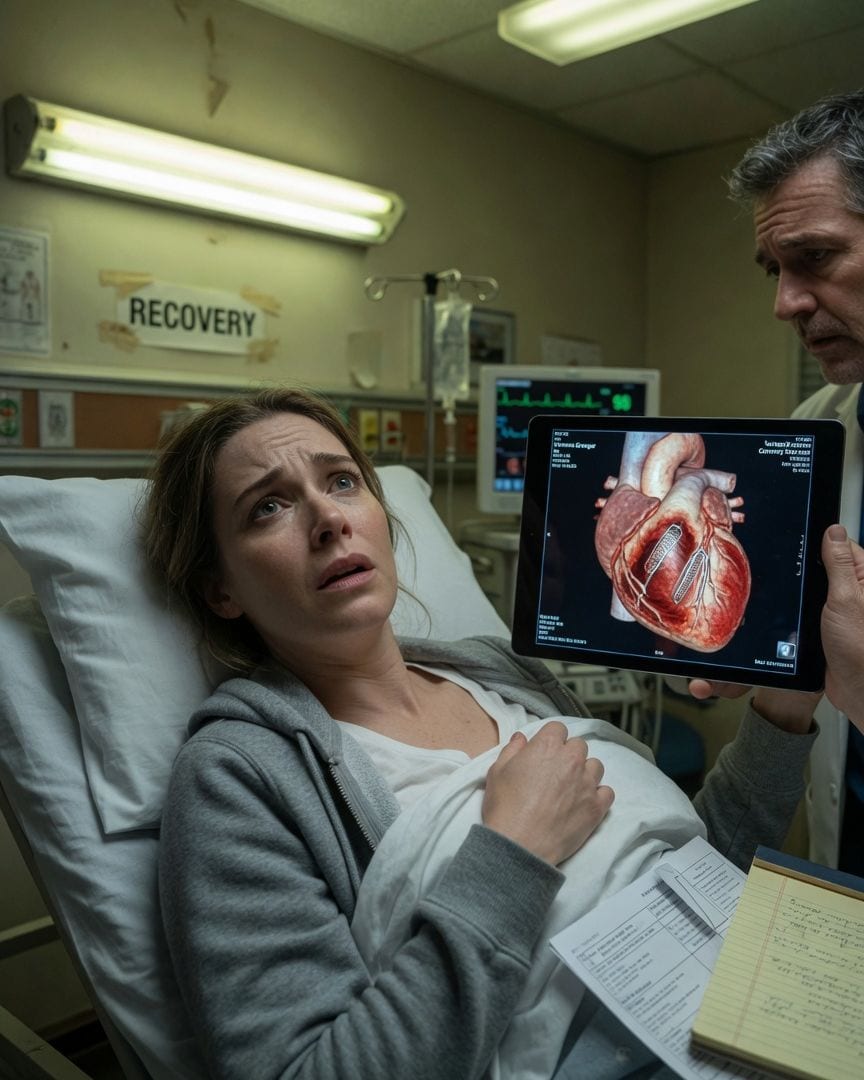
Metal stents are propping open my heart. The doctor rotated the image, but I've never had a cardiac procedure.
After years of dismissed chest pain, a CT scan revealed an impossible truth: my heart contained two metal stents. Dr. Maddox confirmed there was no record of any cardiac procedure in my entire medical history, and I had no memory of ever having surgery. My own body held a secret, alien architecture I couldn't explain.
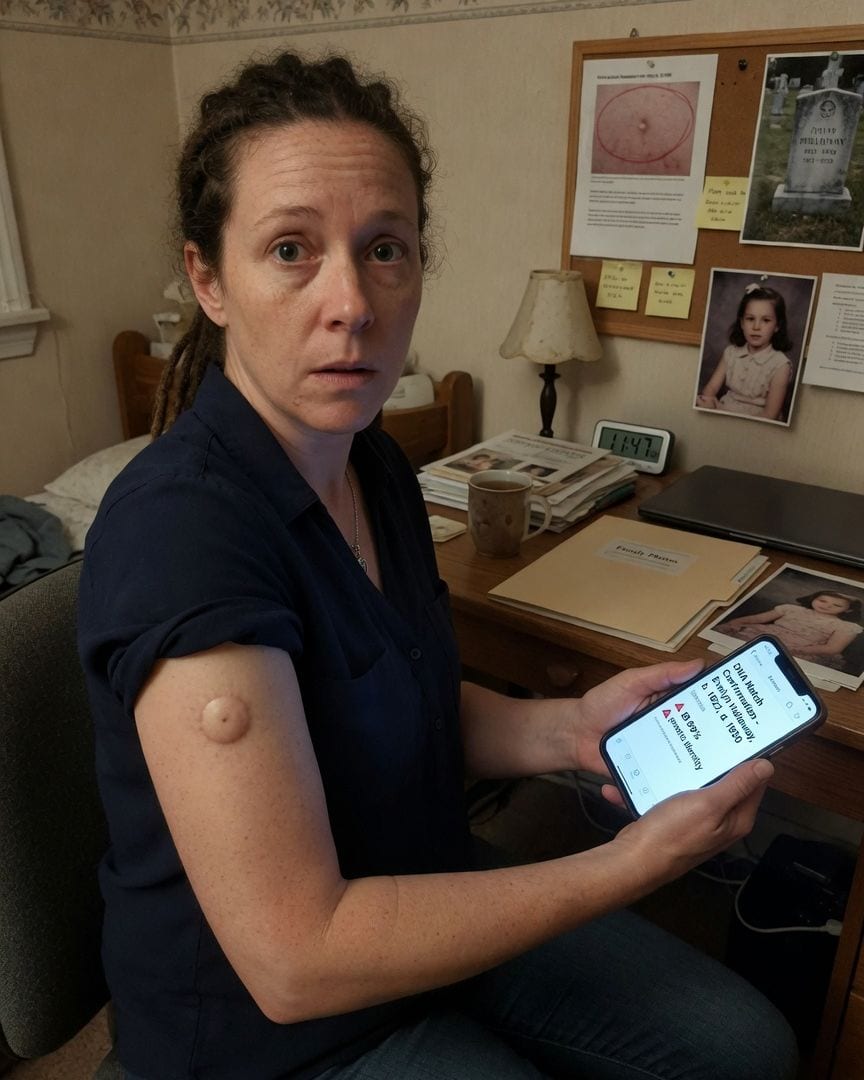
My ancestry DNA kit found me genetically identical to Evelyn Holloway, dead since 1950.
I sat on the exam table, my arm outstretched, when the travel nurse paused, tracing a familiar dimpled scar. It was a smallpox vaccination mark, unmistakable, but the nurse said it was impossible. She explained the vaccine was discontinued decades before I was born. The scar I'd carried my entire life suddenly felt alien, a physical lie on my own body that shouldn't exist.
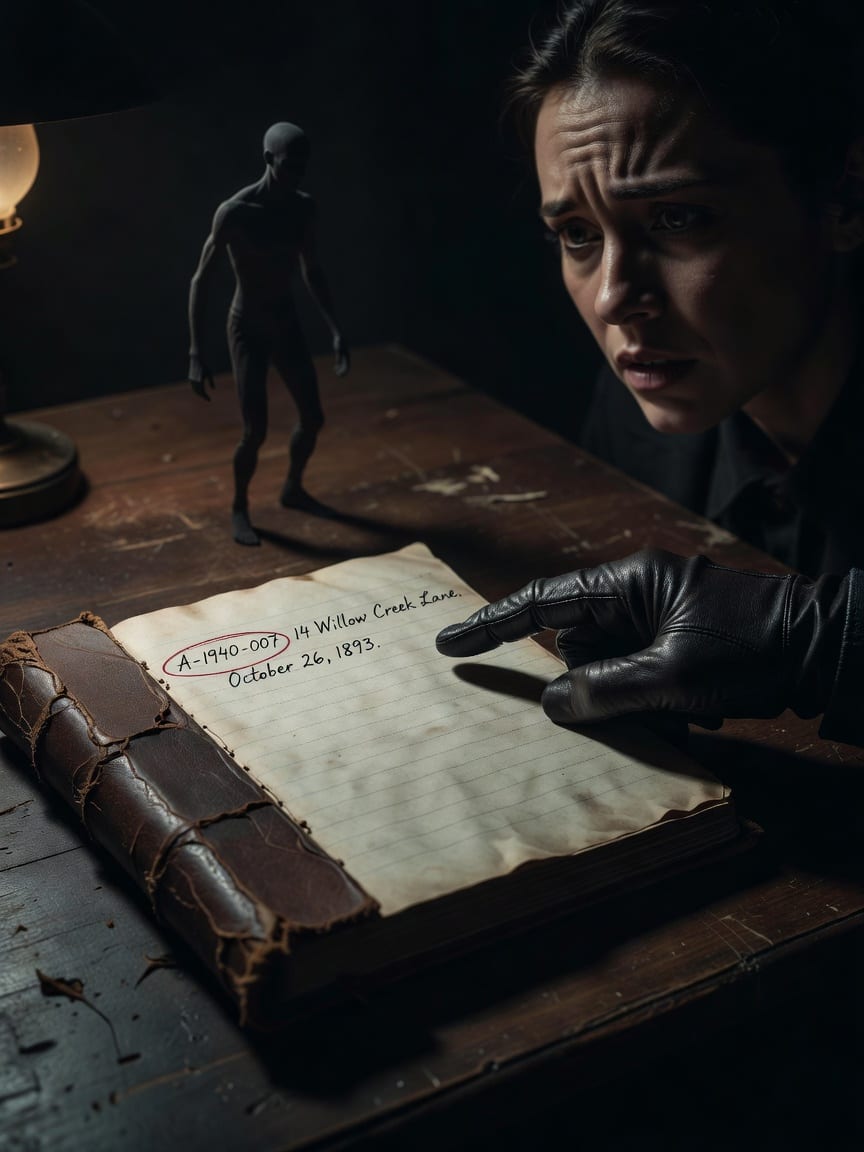
My dead relative's 1940 hospital record had a note: 'same admission number as reissued below.' Below it, decades later, was my home address, and 'hold, do not process new patient.'
As an archivist, I was researching my great-aunt Vera's 1940 psychiatric admission. Her microfiche file, however, contained a handwritten note about a reissued admission number. To my shock, this identical number was later assigned to a blank file listing my own home address, with a chilling directive to 'hold'.
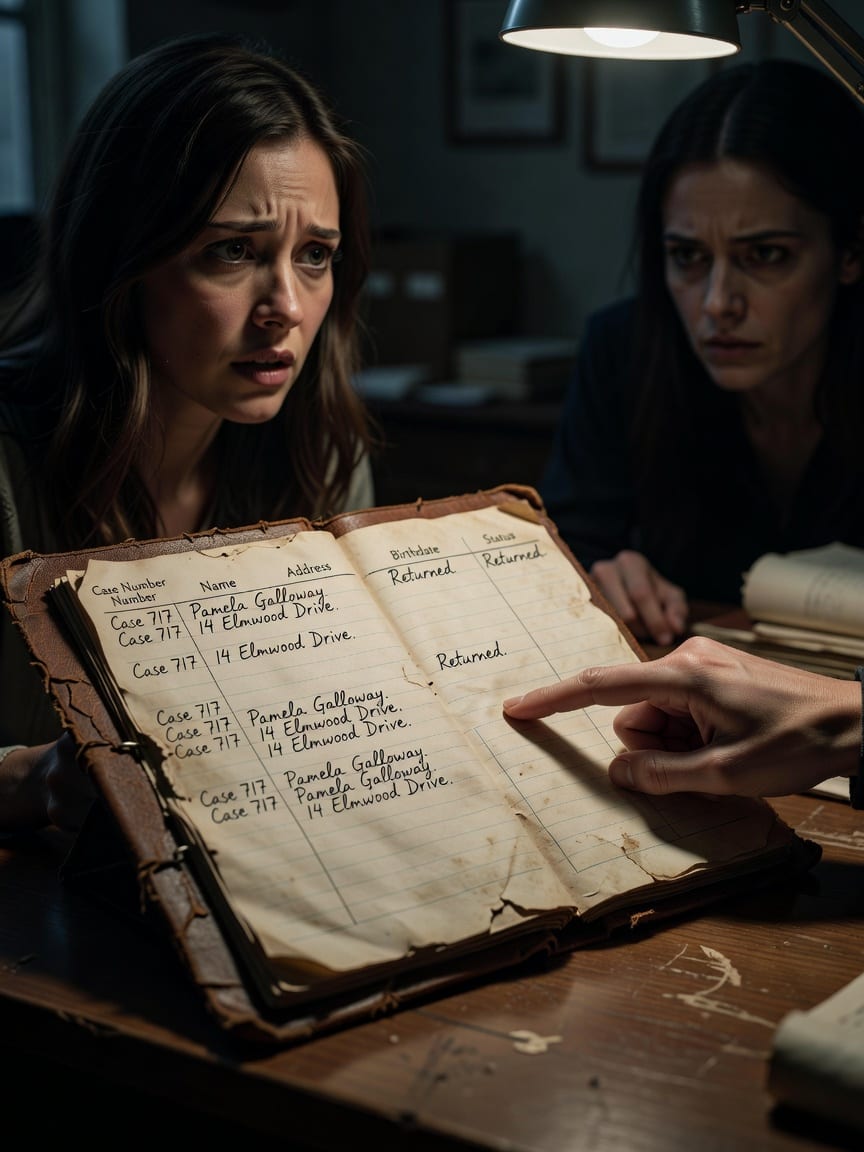
My hospital file has a blacked-out line from 1988. It names my street address, decades before I lived here. Then: 'returned'.
I finally got my medical file, hoping to clear up a ridiculous bill. Inside, I found an entry from 1988: my current home address, scrawled on a partial intake form and marked 'returned.' I was six then, living fifty miles away.
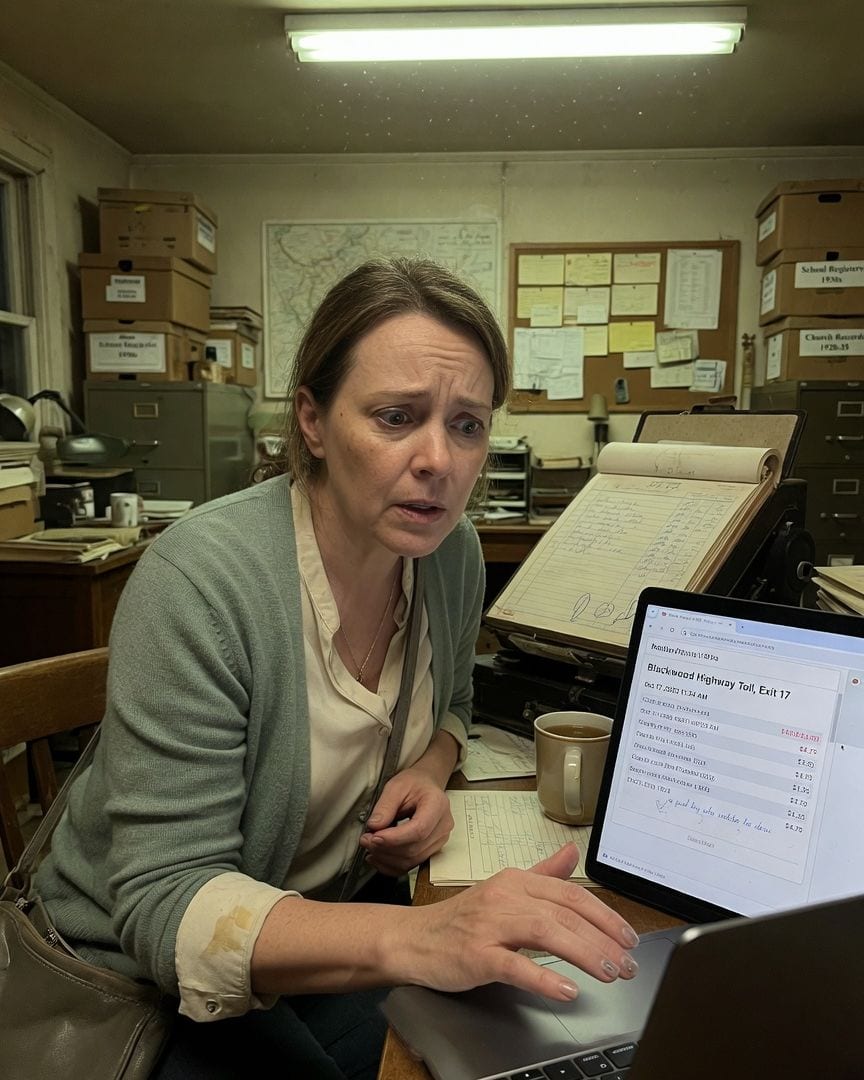
A 1931 school register marks me present every single day of that spring term — but I was born in 1969. And the teacher's note beside my name calls me 'a quiet boy who watches the door.'
As the village archivist, Lydia Kowalski uncovered her own name in a 1931 school register, decades before she was born. Then she found her unmistakable signature in the book, followed by the teacher's chilling note describing 'a quiet boy who watches the door'. Later, her bank statement showed a highway toll charge from a place she'd never been, on a day she was home with the flu.
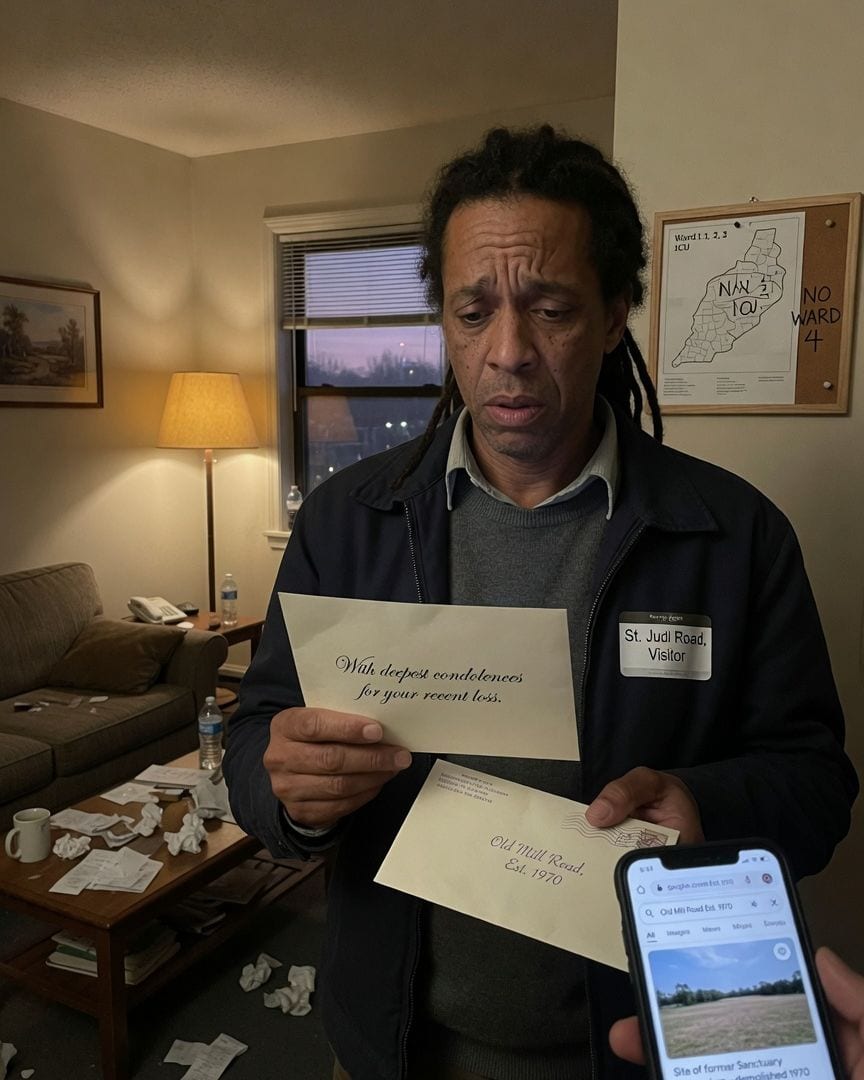
A night nurse I'd never seen touched my arm, 'I'm sorry about your results, Mr. Halloran.' My bloodwork wasn't until Monday. Her badge named a ward not in this hospital.
Leaving St. Jude's, a night nurse I'd never seen stopped me. She apologized for 'my results,' addressing me as Mr. Halloran, though I hadn't had any tests booked. Her kind, tired eyes held a flicker of something profound, leaving me chilled by her impossible words.