My hospital file has a blacked-out line from 1988. It names my street address, decades before I lived here. Then: 'returned'.
My hands were still stained with dust from the garage, but I’d finally found the box. My medical file. After six weeks and two forgotten forms, the hospital had actually sent it.
I ripped the tape, pulled out the thick stack of papers, and settled onto the kitchen floor, hoping to quickly clear up the ridiculous bill they’d sent from a routine check-up.
Most of it was boilerplate, standard stuff. My birth in '82, vaccinations, a bout of chickenpox. Then, there it was. Dated 1988. I was six.
It was a partial intake form, mostly blank, but a few lines of nurses' handwriting scrawled across it. And one line, specifically, was struck through with a thick black pen. Someone had tried to redact it.
But the paper was thin, the ink faded, and the light from the window hit it just right.
I leaned closer, my breath catching. Clear as day. "14 Elmwood Drive."
My current address.
My blood went cold. This house, the one I’d bought just three years ago, was built in 1958. In 1988, I was six years old and living with my parents, over fifty miles away in a completely different county.
This was impossible. I re-read the line, my finger tracing the faded ink. After the address, a single word: "returned." Returned? What the hell did that mean?
The room, usually so bright and familiar, suddenly felt like it had dropped ten degrees.
I called the hospital records department the next morning. A man named Walter Abbott answered. His voice was smooth, almost unnervingly calm.
"Yes, Pamela Galloway. I see your file request came through," he said. "What can I help you with?"
I explained the entry, the impossible address, the struck-through line. I could hear the faint click of a keyboard on his end.
"Ah, yes. 1988," he murmured. "An old entry. It's likely a clerical error, Pamela. We've been at this location since before 1960. Forms get reused, numbers get jumbled. Sometimes they just pull up a template from a similar case.
Happens more than you'd think in a system this old."
He sounded so reasonable, so utterly unbothered, it almost worked. But that word – "returned" – kept looping in my head. And the address wasn’t just similar; it was exact.
"It's not a template," I insisted, my voice tighter than I wanted it to be. "It's my actual house number, on Elmwood Drive. How could a reused form have my future address, decades before I lived here?"
A beat of silence. The keyboard clicks stopped. "Well, Ms. Galloway, it's highly irregular, of course. Perhaps a data entry mistake? A wrong street name appended to the wrong patient? We can look into it.
There's a 'Case Number' associated with that 1988 entry, '717.' I can cross-reference that for you, see if it brings anything up. But I assure you, it’s nothing to worry about."
He agreed to send an email if he found anything. A few hours later, my phone pinged. The subject line: "Re: Your File Inquiry." I opened it, my heart hammering against my ribs.
The email was curt, just a short list.
* Case 717: Pamela Galloway, 1988, note: 'returned to care.' * Case 717: Gerald Abbott, 1961, note: 'reintegrated into family unit, Elmwood vicinity.' * Case 717: Lydia Underwood, 1975, note: 'returned, local foster placement.'
* Case 717: Sean Galloway, 1999, note: 'reintegrated, Elmwood Drive address.'
My blood ran cold again, but this time it was different. This wasn’t a clerical error. This was a list. Different names, different birthdates, different years, but the same "Case 717." Gerald Abbott, Lydia Underwood, Sean Galloway... and me.
All linked to Elmwood, all with a variant of "returned" or "reintegrated." The monitor on my desk flickered, a small shiver running through its bright pixels. No, this was not an error. This was a pattern.
I sat at my kitchen table, the laptop a harsh glow in the deepening twilight. Walter Abbott had sent me just enough information to scratch the surface, but I’d been able to leverage it.
A quick search, using the internal numbering system he’d referenced, and I was in. I’d managed to run a direct query on the hospital’s database for ‘Case 717’.
The screen was a blur of information, scrolling faster than I could read. Dozens, no, hundreds of entries.
Each one was a distinct patient name, a different birthdate, varied medical notes – minor injuries, routine check-ups, even some psychiatric evaluations – stretching back to 1961. But every single entry, without fail, bore the same, unchanging ‘Case 717’.
And every single one ended with a variant of ‘returned to care’ or ‘reintegrated,’ with addresses always, always, just a few blocks from Elmwood Drive.
The sheer volume was staggering. The meticulous order, spanning over sixty years, froze me. This wasn't about a clerical error. It wasn't even about my file, not really. This was about something much, much larger.
A cold certainty settled in my gut, heavy and metallic.
I barely slept for days. The hum of the refrigerator, the creak of the floorboards, every sound in the house amplified, turning into a backdrop for the frantic clicking of my keyboard.
I became a ghost in my own home, consumed by the 'Case 717' rabbit hole. I cross-referenced names from Walter’s list with every archived local directory and property record I could find online.
Many of them, at some point in their lives, lived within a few blocks of my current address on Elmwood Drive.
The internet coughed up a faded post on a local historical society forum. Someone, years ago, had asked about the "Elmwood Orphanage," which apparently closed in the late 1950s, its residents supposedly transferred to the main hospital. A chilling detail.
Could the 'reintegrated' notes be connected to that? I dug deeper. The orphanage building itself was long gone, replaced by a strip mall, but its shadow felt long.
Then I found it: a small article in an old digital newspaper archive, detailing the hospital's administration in the 1970s. A photo. Carl Abbott, Hospital Administrator. Walter Abbott's father.
The same Carl Abbott who oversaw the hospital during a period when many of those 'Case 717' entries were made. A coincidence? My gut churned, telling me otherwise. The dread became a constant, low-frequency hum, vibrating through me.
I neglected work, let the mail pile up. My entire life narrowed to the glow of my laptop screen.
I called Walter Abbott again, trying to sound casual, like I was just following up on a historical curiosity. "Walter, I was just wondering about some of the older records," I began, pitching my voice light.
"You know, archived patient numbering systems? Historical record-keeping practices?"
His tone was immediate, noticeably colder. "Ms. Galloway, I believe I addressed your concerns. Those are archaic systems, largely irrelevant now." His words were clipped, precise, like someone reading from a script.
"Yes, but you mentioned 'legacy cases' before," I pressed, trying to keep my breathing even. "What exactly does that mean? Are there specific protocols for them?"
A pause, too long. The clicks I’d heard last time were absent. "Legacy cases refer to individuals who may have had... extensive historical contact with the institution. There are historical protocols, yes, but they are...
not something I can openly discuss." His voice had lost its smooth, dismissive quality and taken on a careful, almost rehearsed caution. It wasn't irritation anymore; it was something else, something guarded. A wave of unease washed over me.
Later that evening, after hours spent hunched over microfiche at the local library, I stepped out into the damp night air. My car was parked a block down the street.
As I approached, I saw it: a dark, nondescript sedan, parked on the opposite side, headlights off. I’d seen that car before. Parked near my house on Elmwood, sometimes. A flicker of worry, but I dismissed it.
Probably a neighbor, or someone visiting.
The next day, that flimsy excuse shattered. I drove to the historical society, still chasing obscure links to the orphanage. When I came out, half an hour later, the sedan was there. Parked across the street, idling.
The driver's face was obscured by the tinted window, but the angle, the stillness of the vehicle, the slow turn of the wheels as I pulled out of the parking lot… it wasn't coincidence.
The casual unease I’d felt earlier sharpened into a chilling, definite certainty. I was being watched.
The dread had a name now. It wasn't just a pattern in a file. It was a pair of eyes on me, a shadow in my rearview mirror. I needed answers, and I needed them now.
I drove straight to the hospital.
Walter Abbott was in his office, sifting through a stack of files. He looked up, startled, as I walked in without knocking. His pleasant demeanor dissolved instantly.
"Ms. Galloway, this is highly inappropriate," he said, standing, his voice low and tight.
I ignored him. I pulled out printouts of the 'Case 717' list, pages from the old directories, even the newspaper article with his father's picture. I slapped them down on his desk. "Clerical error, Walter? Reused forms?
You tried to tell me this was nothing. But this 'Case 717' isn't just one error, it’s a network. Different names, different years, but all linked to Elmwood.
And your father, Carl Abbott, was administrator here when half these entries were made."
His calm facade finally cracked. His face went pale, a muscle jumped in his jaw. He sat down heavily, staring at the papers spread before him. The silence in the small office pressed in, heavy and thick.
"Damn it," he muttered, running a hand through his thinning hair. "Look, Pamela... 'Case 717' is indeed a legacy identification marker. It’s part of... it was part of 'The Elmwood Project.'"
He said the name with a strange mix of resignation and careful neutrality. My blood ran cold, the words chillingly concrete.
"The Elmwood Project?" I whispered.
He nodded, avoiding my gaze. "It was... an outdated social welfare program. From the early 60s, mostly. For what they called 'vulnerable children' from the old Elmwood Orphanage and surrounding impoverished areas.
The idea was to ensure they received proper medical care, were 'reintegrated' into stable homes. Monitored for their welfare." He gestured vaguely, as if trying to distance himself from the words.
"Monitored? What does 'returned' mean then?" I asked, pointing to my file entry.
He sighed, his eyes finally meeting mine. They held a deep, tired sadness. "It means you were briefly part of it. Identified, observed, and then... 'returned' to your family. Given back to your parents.
The address in your file, 14 Elmwood Drive... that was just part of your record. We had to keep tabs. For their welfare, you understand."
His voice was devoid of malice, but the institutional conviction behind his words, the quiet certainty that this was for my own good, was more terrifying than any threat.
My own address, my own childhood, my whole life, laid bare in some dusty file. It was a cold, alien violation. He insisted the project ended decades ago, but his eyes, darting from the printouts to me, betrayed him.
He knew more. He was protecting something bigger.
Walter, seeing the continued disbelief and growing horror in my eyes, sighed heavily. "Look, Pamela, you need to understand. This was... a different time. Different methods."
He stood up, pacing to the small, dusty archive shelf that lined one wall of his office. "There were... other numbers. Other cases. Not just 717." He gestured vaguely, his hand brushing against a stack of old binders.
It was a fleeting moment, a subtle distraction.
My mind raced. Other numbers. As Walter turned to answer a buzzing intercom, his back momentarily to his desk, I seized the opportunity. My hands trembling, I reached for his keyboard, quickly accessing the hospital's internal database. 'Elmwood Project'.
I typed it in, my fingers flying.
The results exploded onto the screen. It wasn't just 'Case 717'. It was a sequence. 'Case 717,' 'Case 718,' 'Case 719,' 'Case 720,' and more. Each number was linked to multiple names, different generations, stretching across decades, just like 717.
My stomach lurched. This wasn't a single "legacy marker" for a few individuals. This was a system.
I hit print, the small office printer whirring to life, spitting out pages with terrifying speed. As the intercom stopped buzzing, and Walter turned back towards me, I snatched the partial list from the tray.
With my free hand, I pulled out the old Elmwood Drive property register I’d obtained from the historical society, spreading it on his desk, the ancient paper crinkling loudly.
My hand trembled as I pointed, first at the printout, then at the register. "Walter," I whispered, my voice barely audible. The case numbers, 717, 718, 719, 720... they aligned perfectly. Street number by street number. House by house.
My house was 14 Elmwood Drive. Case 717. The house next door, 12 Elmwood, was Case 718. The one after that, 10 Elmwood, Case 719.
It was a meticulously documented network, a spiderweb of linked files, covering my entire quiet, unassuming street. Going back over sixty years.
Reeling from the sheer scale of the discovery, I drove out to the Willow Creek Retirement Home, the name Florence Crane echoing in my head.
The historical society forum had mentioned her as a retired archivist who’d worked at the hospital for decades. She might be the last living link to whatever the hell 'The Elmwood Project' really was.
Florence was frail, her hair a wispy cloud of white, but her eyes were sharp, missing nothing. She offered me tea, her hands steady as she poured.
I started cautiously, explaining I was looking into old hospital records, a 'legacy program.' She listened, her expression unreadable, offering polite evasions. "Oh, dear, so much has changed. The old systems..."
But then I laid out the printouts: the list of recurring 'Case 717' names, the sequence of 717 through 720, aligning with the Elmwood Drive property register, house by house. I watched her face.
Her composure, initially so placid, slowly crumbled. A flicker of something – fear? Recognition? – crossed her eyes.
"You've... been digging," she said, her voice softer, a hint of something deeper beneath the surface. She set down her teacup, the porcelain clinking against the saucer. "Come with me."
She led me to a small, unassuming writing desk tucked into a corner of her room. With surprising strength, she pulled out a false bottom in a drawer, revealing a worn, leather-bound ledger.
It wasn’t a hospital record; it was her own meticulously handwritten notes, the pages yellowed with age, filled with elegant script.
"This," Florence said, her voice now steady, almost academic, "is the true history of the Elmwood Project. A 'community health initiative,' we called it, starting in 1961.
Designed to 'track and manage' the health and 'social integration' of children born or residing in the Elmwood area."
She paused, looking at me, her eyes unsettlingly calm. "The reissued numbers, Pamela, weren't just for individuals. They were meant to follow bloodlines. Or specific genetic traits. Through generations.
We believed it was benevolent, a way to ensure 'optimal outcomes' for children, using the hospital's unique access to medical and social data."
My stomach clenched. "So 'returned'..."
"Simply meant they were monitored," she finished, her voice flat. "Not released. Never truly released. The pattern of numbers across the houses? That was to track entire families. We knew who lived where. We knew their histories."
Her calm explanation was a colder horror than any anger.
Florence, now disturbingly lucid, flipped a page in the ledger. Her finger, arthritic but precise, traced a line down the page. "Ah, Case 717. Yes." She looked up at me, her gaze unwavering.
"Your mother, Sandra Galloway, was also a Case 717. Identified as a direct descendant."
The words hit me like a physical blow. My mother. This wasn't just some vague program; it was woven into my own family. My throat closed.
"A brief observation period for you," Florence continued, oblivious to my shock, or perhaps simply ignoring it. "Then returned to the family unit. Standard procedure. We just make sure everyone is... accounted for."
Her face held no malice, only the serene conviction of a lifetime spent in service to this silent, pervasive system. The horror wasn't cruelty; it was the cold, methodical, decades-long management, the utter lack of apology.
"It was never officially ended, Pamela," Florence said, her eyes fixed on mine. "Just went underground. Managed by a small, dedicated group of administrators. It's for their own good. We just... kept an eye on things."
I stood up abruptly, the leather-bound ledger still open on the table, its neat script detailing generations of quiet surveillance. The air in the room, warm moments ago, felt suddenly like ice.
The weight of all those quiet observations, all those lives cataloged and tracked, pressed down on me. I didn't say goodbye. I couldn't.
I just fled the retirement home, the sedan I’d seen earlier now a constant shadow in my mind, a confirmation of Florence's chilling words.
I immediately sold my house on Elmwood Drive. I didn't care about the market, about the substantial loss. I just needed out. I packed only the essentials, left everything else behind, a ghost abandoning her haunt.
I moved to a different city, hundreds of miles away, cutting off all contact with my old life, abandoning my former career, my phone number changed.
I tried to forget, to rebuild, but the knowledge gnawed at me. The face in the sedan, Walter Abbott's tired eyes, Florence Crane's calm, knowing smile – they were all permanent residents in my head.
I found myself constantly checking over my shoulder, scrutinizing every parked car, every unfamiliar face in a crowd. The feeling of being perpetually known, perpetually observed, never truly leaves me.
I know my file is still out there, updated, patiently waiting.
The quiet dread of being an item on a ledger, a case number under 'ongoing observation,' is my new normal.
I live with the chilling certainty that the institution's calm, bureaucratic eye still follows her, a shadow that no amount of distance can outrun. She still checks the mail every day.
A quiet update to the hospital's internal 'legacy case' database showed a new address for Case 717, recorded just last week. The entry was marked 'relocated, ongoing observation.' She still checks the mail every day.
If this one got to you
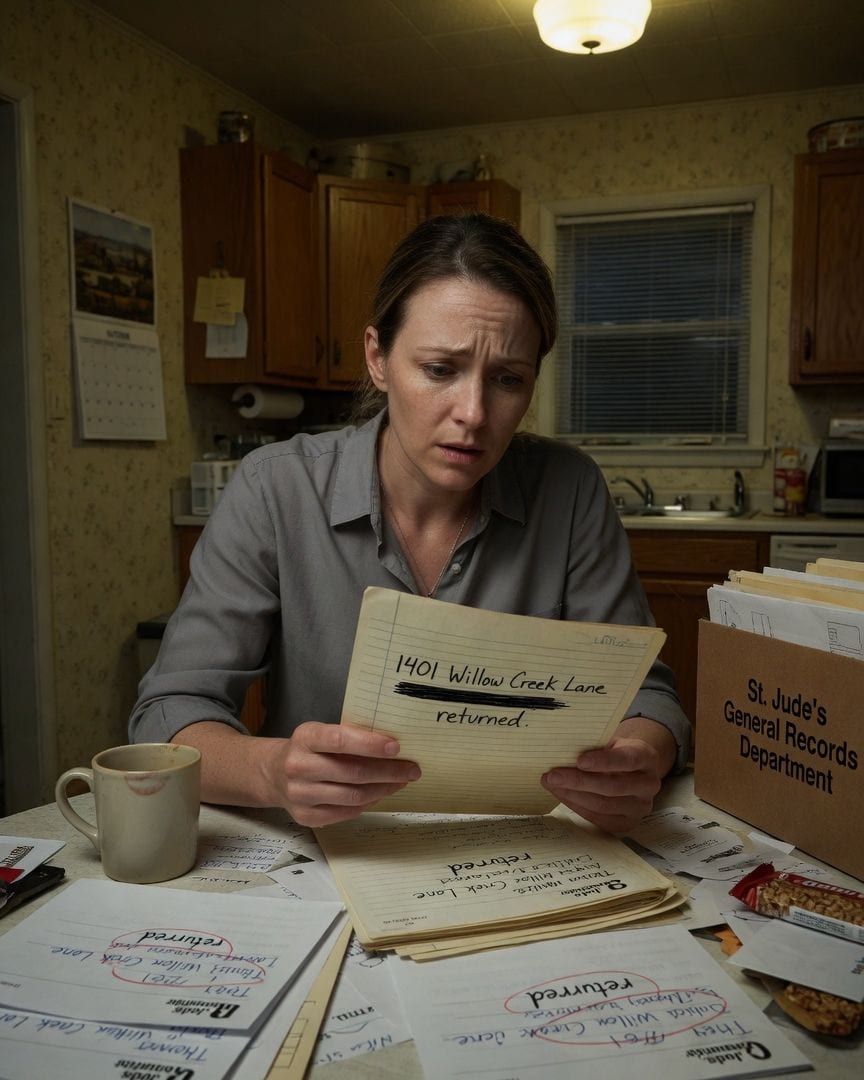
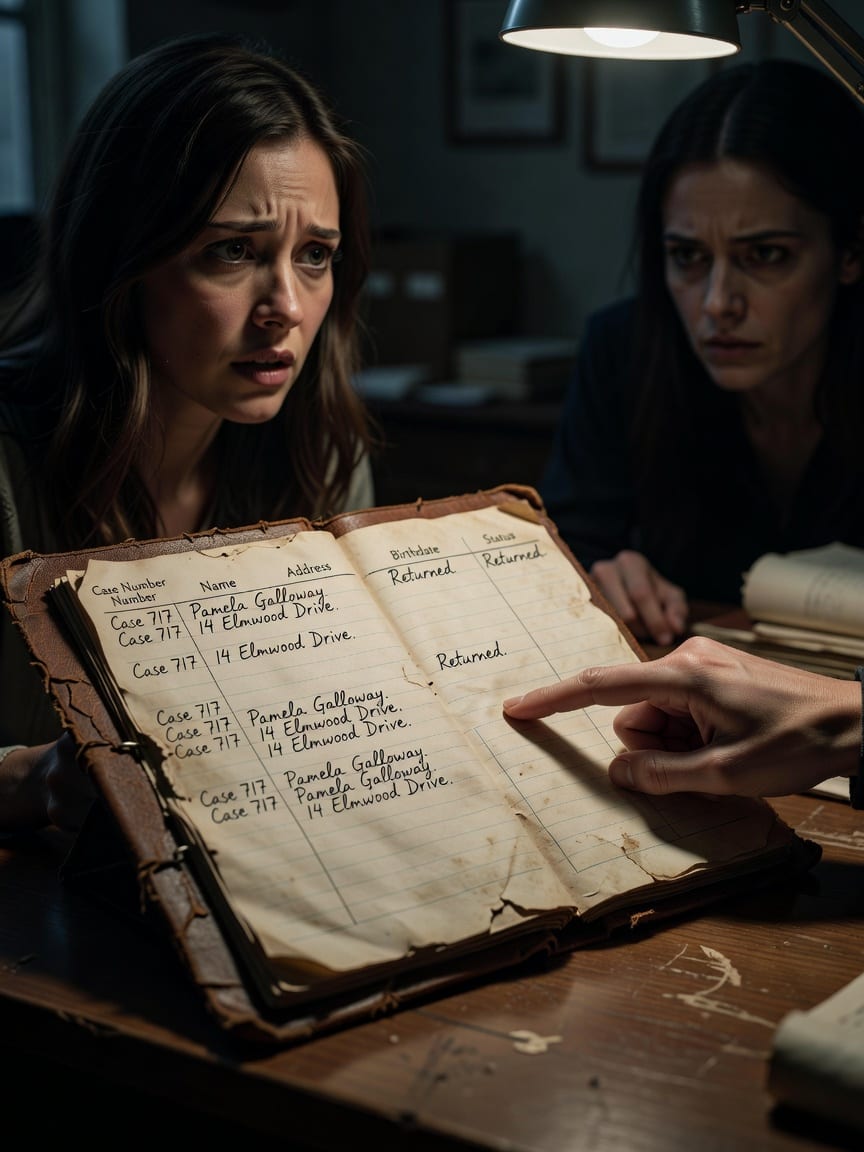
My medical file shows my street address on a struck-through line from 1988, a year I lived two counties away. It just says 'returned'.
A routine insurance audit led me to my childhood medical file from 1988. But among the expected notes, a deliberately struck-through line listed my current house address, followed by the stark word 'returned.' In 1988, I lived two counties away, making this entry an impossible and unsettling mystery.
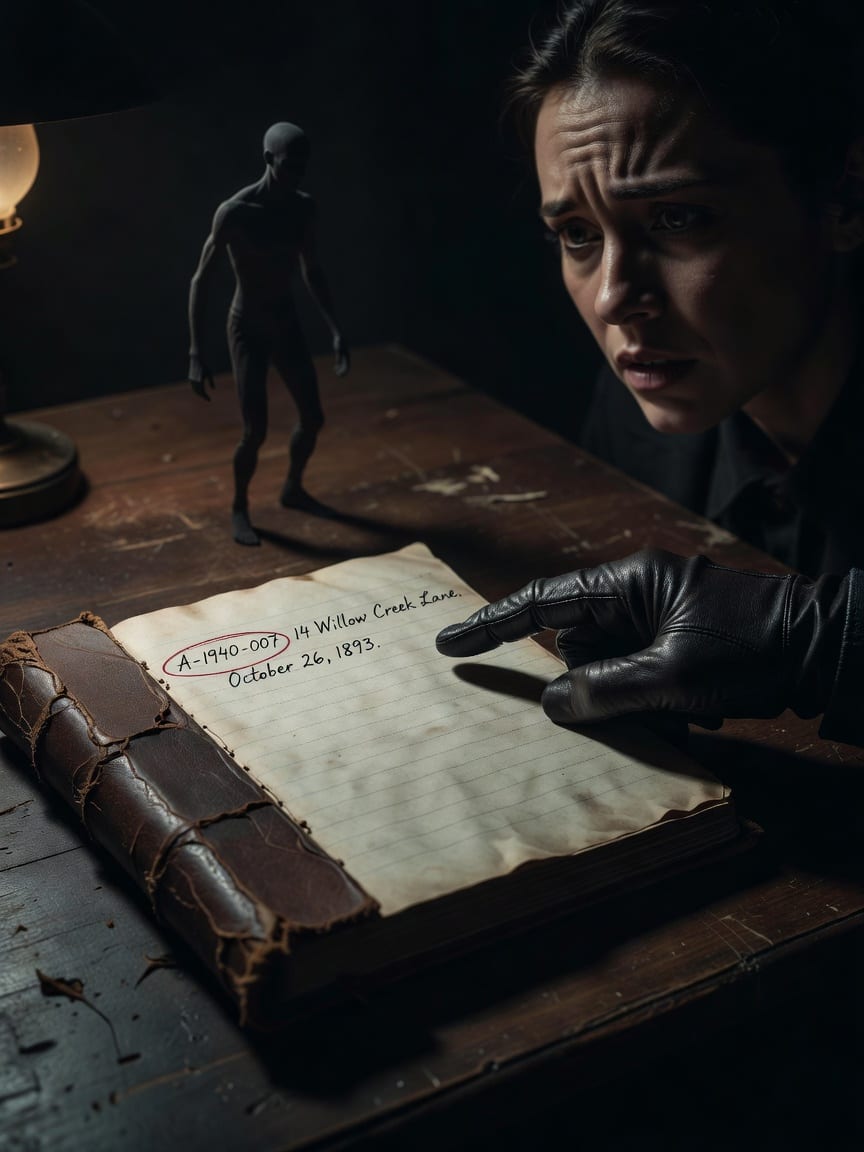
My dead relative's 1940 hospital record had a note: 'same admission number as reissued below.' Below it, decades later, was my home address, and 'hold, do not process new patient.'
As an archivist, I was researching my great-aunt Vera's 1940 psychiatric admission. Her microfiche file, however, contained a handwritten note about a reissued admission number. To my shock, this identical number was later assigned to a blank file listing my own home address, with a chilling directive to 'hold'.
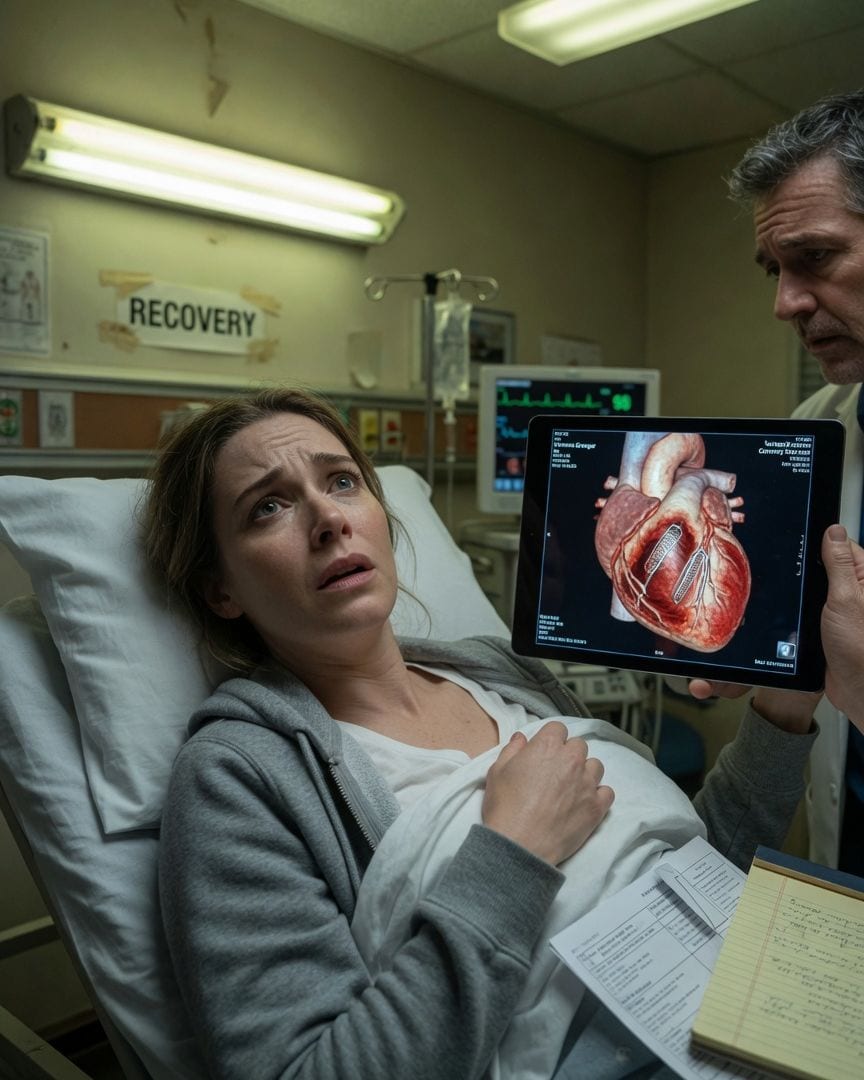
Metal stents are propping open my heart. The doctor rotated the image, but I've never had a cardiac procedure.
After years of dismissed chest pain, a CT scan revealed an impossible truth: my heart contained two metal stents. Dr. Maddox confirmed there was no record of any cardiac procedure in my entire medical history, and I had no memory of ever having surgery. My own body held a secret, alien architecture I couldn't explain.
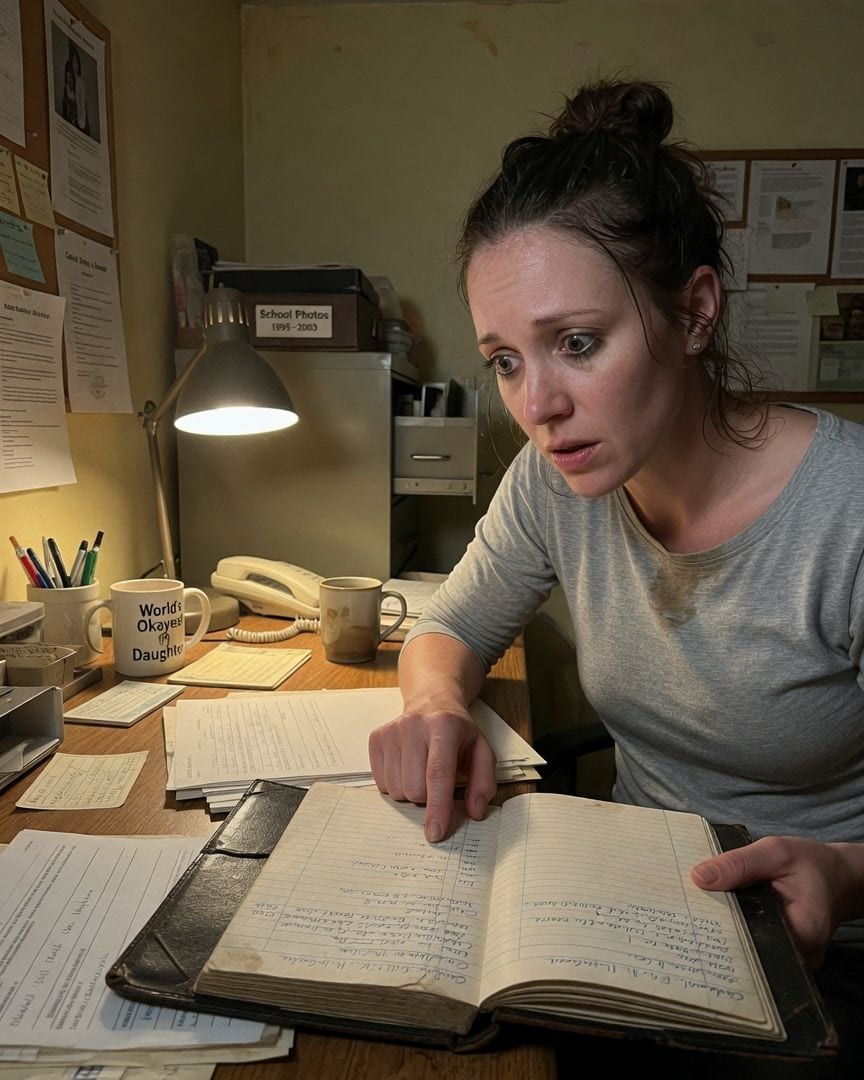
My CT scan found a metal plate in my eye socket. Then I found its surgery record, two years before I was born.
After a CT scan for my headaches, I learned a small metal plate was embedded in my left eye socket, a well-healed repair from decades ago. I have no memory of any injury severe enough to require such surgery, and my parents are certain it never happened. It's a piece of someone else's past, stitched into mine.
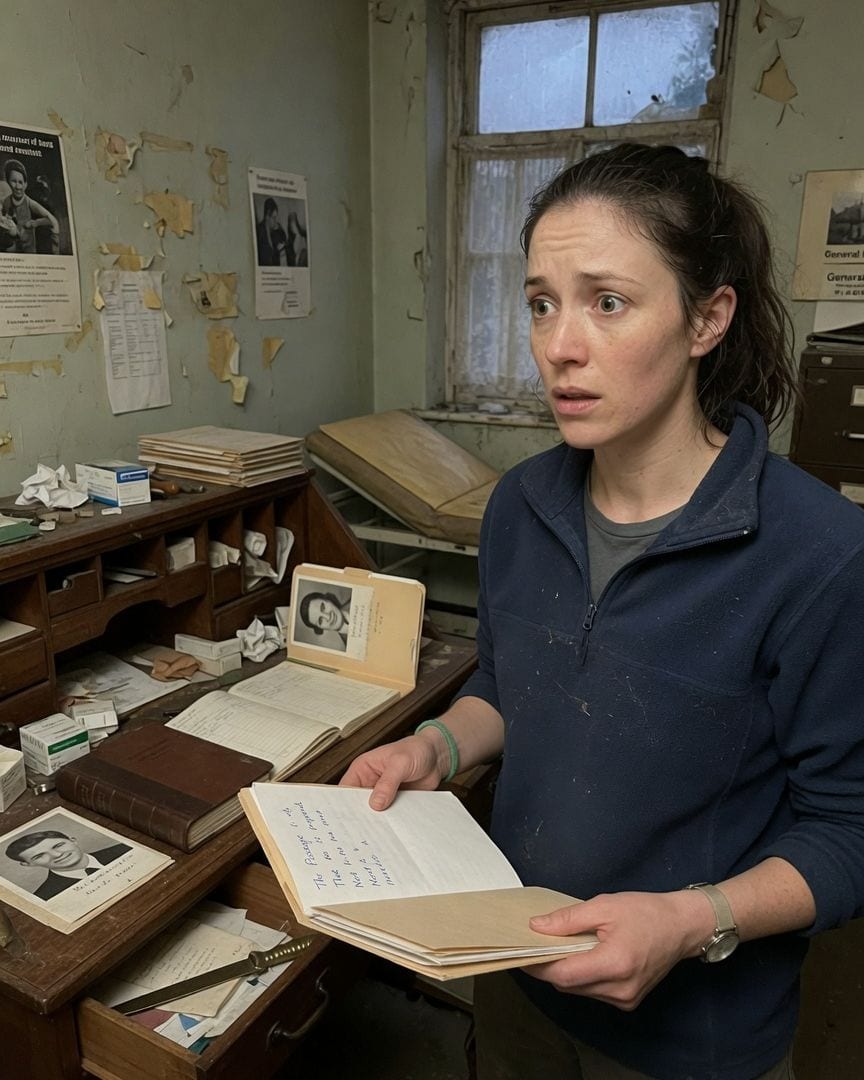
My new clinic's appointment book shows entries for this coming Monday, decades after the doctor retired and died.
Chloe Lawson bought an old, abandoned surgery in Nettlebed, ready to open her new vet clinic. Locals insisted Dr. Almott retired in '79 and the practice shut down for good. But then Chloe found his dusty appointment book filled with meticulous entries, continuing unbroken from 1979 through the decades, right up to this coming Monday.
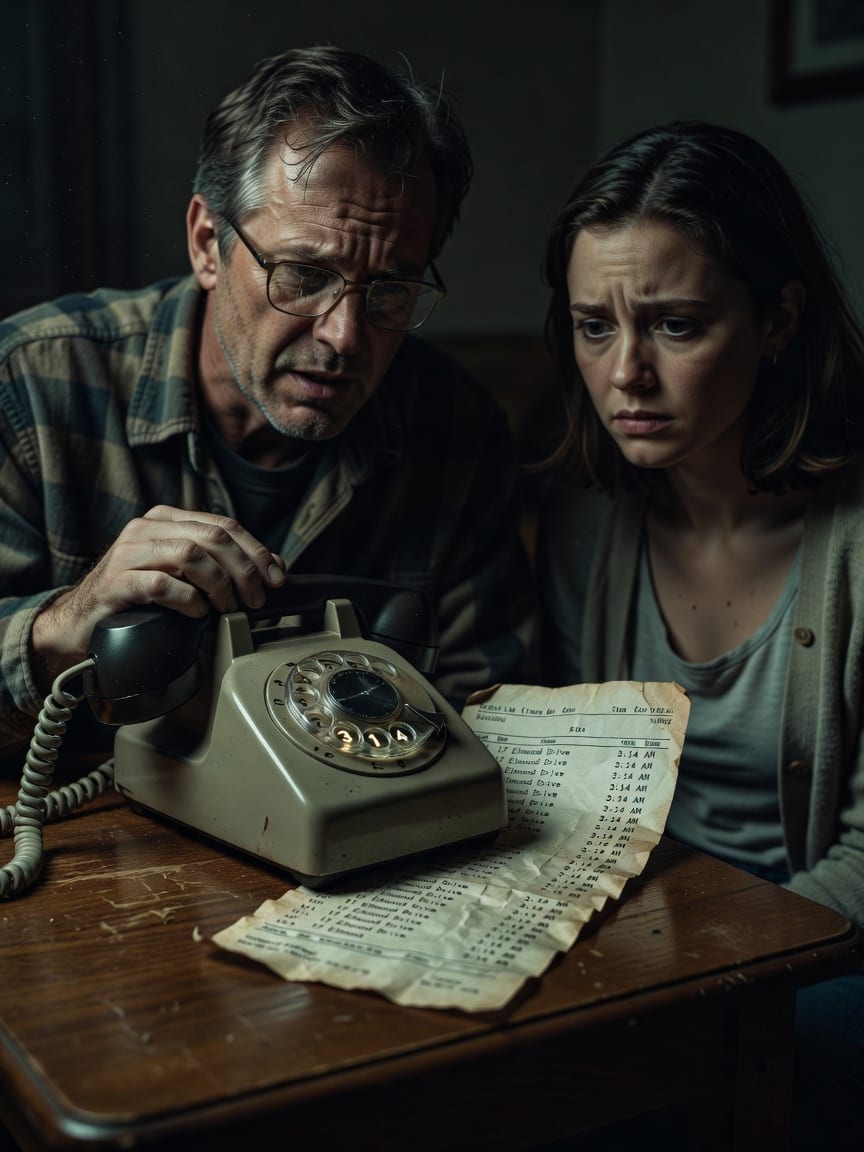
My phone bill itemised forty calls from my number to a house demolished in 1990. Each call at 3:14 AM, lasting eleven minutes. The bill arrived postmarked from a flattened building.
I expected the usual mobile bill, but my landline statement listed forty calls from my number to '17 Elmwood Drive.' That address was for a house torn down in 1990, a vacant lot I remembered from childhood. The phone company insisted the calls were legitimate, leaving me profoundly unsettled by the impossible charges.