A night nurse I'd never seen touched my arm, 'I'm sorry about your results, Mr. Halloran.' My bloodwork wasn't until Monday. Her badge named a ward not in this hospital.
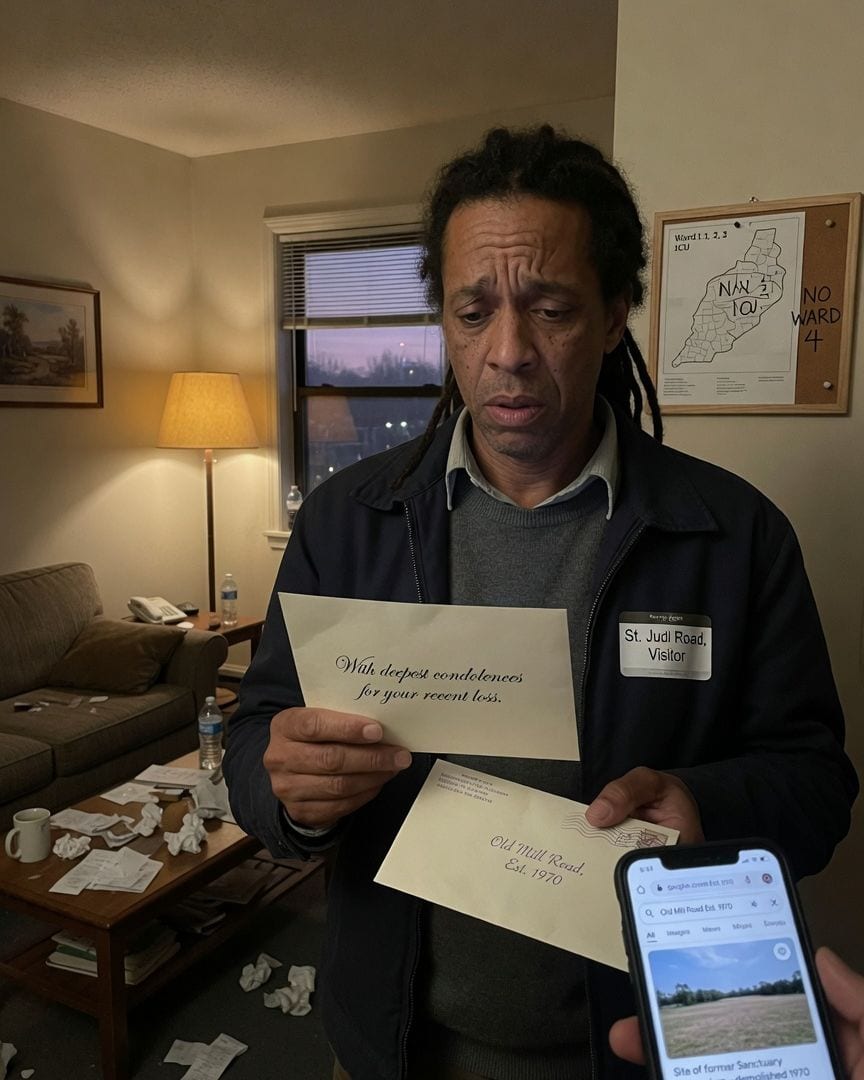
Leaving St. Jude’s Hospital after visiting hours, I felt the familiar ache of fluorescent lights in my eyes. The day had been long, another visit with my aunt, another hour of polite but empty conversation with doctors about her 'progress.'
I just wanted to get home. As I reached the exit, pulling my jacket tighter against the evening chill, a night nurse stepped into my path. I’d never seen her before.
She had kind, tired eyes, the kind that had seen too many long nights, but her touch on my sleeve was firm, a surprising grip.
“I’m so sorry about your results, Mr. Halloran,” she said, her voice soft but clear, carrying just above the distant hum of the hospital.
I blinked at her. “My results? I haven’t had any tests. My bloodwork is booked for Monday, actually.”
A flicker of something crossed her face. Pity, maybe. Or something colder, something more profound that didn't quite make sense.
She just nodded, her gaze fixed somewhere beyond me, then turned and walked down a quiet corridor, disappearing around a corner. As she moved, I glanced at her badge, clipped to her scrub top. Linda Galloway. Ward 4.
That name, Linda Galloway, meant nothing to me. But Ward 4? I knew St. Jude’s well. My aunt had been here for weeks, and I’d memorized the layout. I’d never heard of a Ward 4.
There was a Ward 1, 2, 3, and then surgery and intensive care. No 4. I walked over to the digital directory near the elevators, my brows furrowed, and scrolled through the listings. Nothing.
I checked the printed map by the security desk. Still no Ward 4. I even asked a passing orderly, a young guy pushing a cart of linens, who just shook his head.
“Never been a Ward 4 in my time, sir. Not that I know of.”
The nurse was gone. Linda Galloway. Ward 4. I walked out into the cool night air, the impossible exchange replaying in my mind. The phantom words, 'your results,' chilling me more than the autumn breeze.
It felt like a bad dream I was still stuck in.
The next morning, the odd encounter still gnawing at me, I called St. Jude’s. I asked for a Nurse Linda Galloway. The receptionist put me on hold, checking the roster. After several minutes, a different voice came on the line.
Bridget Lockwood from HR, polite but firm. “Mr. Halloran, we have no one by that name currently employed, nor in our recent records. And Ward 4 was repurposed into administrative offices back in the seventies.”
I hung up, a knot tightening in my stomach. I tried to rationalize it – a new temp nurse whose name I’d misheard, a momentary confusion, or perhaps my own stress playing tricks on me.
My aunt's condition had me on edge. But the detail about my ‘results’ was a precise, tangible thing. It made no sense.
That afternoon, a thick, cream-colored envelope arrived in my mail. Hand-addressed, in elegant cursive, to ‘Mr. Franklin Halloran.’ My full name. There was no return address. The postmark was faded but legible: ‘Old Mill Road, Est. 1970.’
I slit it open with my thumbnail, a faint whisper of paper tearing. Inside was a single card, heavy stock, with a subtly embossed border. No other text, no logo. Just: ‘With deepest condolences for your recent loss.’
My recent loss? I hadn’t lost anyone. Not recently, anyway. My aunt was ill, yes, but stable, no immediate danger. I frowned, turning the card over. Nothing. Blank.
I pulled out my phone, typing ‘Old Mill Road, Est. 1970’ into the search bar.
The results showed a single location: the site of the former ‘Sanctuary’ — an old asylum or sanatorium, demolished in 1970, now an empty field on the outskirts of town.
I stared at the screen, then at the card in my hand. Condolences from a demolished building in an empty field. My rational mind struggled to find an explanation, and found none.
The unease escalated from a strange, fleeting encounter to something deliberate, something targeted, and profoundly wrong.
That evening, I drove out to Old Mill Road. The GPS led me down a desolate stretch of highway, then a narrow dirt track bordered by overgrown trees.
The air grew colder with each mile, seeping into the car through the vents. I parked where the asphalt ended and walked, the silence pressing in.
The track opened into a wide, flat field, eerily quiet beneath the darkening sky. The last vestiges of sunlight bled from the horizon, painting the clouds in bruised purples and grays.
There were no buildings, no ruins, just tall, dry grass swaying in the wind, and a few crumbling stone foundations swallowed by weeds at the far end of the field. This was it. The site of ‘The Sanctuary.’
I pulled the condolence card from my pocket, the elegant script blurring in the fading light. My name, Franklin Halloran, seemed to leap off the envelope.
I looked from the card to the desolate field, then back to my own name. A shiver, colder than the wind, ran down my spine. Someone knew my name.
Someone was sending me messages from a place that no longer existed. And they knew something about me I didn’t.
I spent the next week digging. My rational mind demanded answers, demanded to disprove the impossible. I visited the local historical society, poring over brittle microfiche and dusty town records until my eyes ached.
I found old photographs of ‘The Sanctuary,’ a grand, gothic structure with high walls that looked more like a prison than a place of healing.
Then blueprints detailed its demolition and the subsequent development of the surrounding land, revealing a surprising overlap with the current St. Jude’s Hospital property line.
An old newspaper clipping from 1958 mentioned ‘special cases’ being admitted to The Sanctuary, individuals with ‘unusual constitutions’ requiring ‘specific guidance.’ The language was vague, almost euphemistic, but the implication was chilling.
Then I found an obituary from 1972 for a ‘Nurse Linda Galloway,’ who had worked at ‘The Sanctuary’ for decades before its closure. The same name. The same profession.
But she’d died two years after the building was demolished, and decades before I was born. The timeline was impossible, a direct contradiction to my encounter. How could a dead nurse give me information?
I also discovered that the land where St. Jude’s now stood had been owned by the same philanthropic trust that had funded The Sanctuary. It was all connected.
I felt a cold thread, thin but strong, connecting the present to the past, the impossible nurse to the demolished building, and somehow, to myself.
I drove back to the field on Old Mill Road, the sky a vast, indifferent gray. I walked the perimeter, trying to reconcile the idyllic emptiness with the sinister history. The wind whipped the dry grass around me.
My foot snagged on something. I noticed a faint, almost imperceptible depression in the earth, a rectangular outline hidden by the tall grass. I kicked at the soil, and my foot hit something solid.
I knelt, pushing aside the weeds, revealing a rusted metal plate, partially buried. It felt like a marker, a relic of something deliberately hidden.
The letters on the plate were too corroded to read, just jagged rust, but the shape was unmistakable. This was no ordinary field. This was a grave, or a vault, or something worse.
My digging didn’t go unnoticed. My phone rang one evening. The caller ID was blocked. I hesitated, staring at the screen, a cold premonition settling in my chest. Then I answered.
A calm, masculine voice, utterly devoid of emotion, spoke. “Mr. Halloran,” it began, using my full name. “We appreciate your patience. Your upcoming arrangements are well in hand.”
My heart hammered against my ribs, a frantic drum. “Who is this? What arrangements?”
The voice chuckled softly. It wasn't a sound of humor, but of dry, clinical amusement. It sent ice through my veins. “You’ll know soon enough. Just know that we’ve been expecting you.”
The line went dead. I tried calling back, but it was just a disconnected tone, over and over. A sudden, intense paranoia seized me. I peered through my blinds, scanning the street.
A dark sedan with tinted windows was parked across the road, lights off, blending into the evening shadows. It hadn't been there earlier. I watched it for an hour, my heart racing, before it finally drove away, silently.
The next morning, as I left for work, I noticed a small, almost invisible mark etched into the paint of my front door, near the frame. A stylized ‘H’ within a circle, or perhaps a ‘4’.
It definitely wasn’t there yesterday. I ran my finger over it, the symbol feeling cold and alien beneath my touch.
I tried to dismiss it as a random scratch, a coincidence, but the timing, the phone call, the sedan—it all coalesced into a terrifying certainty. I was being watched.
My investigation had flipped, and now I was the one being observed, a target in a game I didn’t understand.
I drove straight to my mother’s house. Margaret Halloran was in her garden, tending to her roses, a picture of domestic calm in her floral apron and gardening gloves.
She looked up, smiling, as I walked up the path, but my face must have told her something was wrong.
I pulled out the condolence card, the information about The Sanctuary, the old obituary for Linda Galloway, and finally, a photo of the symbol on my door.
Her face, usually so composed, paled as she looked at the items spread across her patio table. She picked up the card, her fingers brushing the embossed border.
“The Sanctuary,” she whispered, her hand going to her throat, her voice thin. “I haven’t heard that name in years.”
I pressed her, recounting the nurse’s impossible words, the letters, the phone call. “Mom, what’s going on? What are these ‘results’? What does ‘designated’ mean?”
Margaret looked away, her gaze drifting over the neatly trimmed rose bushes. Tears welled in her eyes, slowly tracking pathways through the faint dust on her cheeks. “It’s… it’s complicated, Franklin.
Some families, our family, we’ve always had a connection to certain institutions. An understanding.” She wrung her hands, her knuckles white. “It’s not medical, not in the way you think. The ‘results’… they’re more like a designation. A purpose.
It’s been happening for generations.”
A cold dread spread through me, chilling me to the bone. “What kind of purpose? Who designates it? And why me?”
Margaret finally met my gaze, her eyes filled with a deep, ancient fear I’d never seen there before. “They know who’s coming. They always have. The Sanctuary… it was where these designations were… fulfilled.
And Ward 4 was its last echo. Linda Galloway… she wasn’t just a nurse. She was a collector. The letters, the calls, the marks… they’re notifications. They’re telling you your time has come.
It’s for the greater good, Franklin, that’s what we were always told. A necessary part of the cycle.” Her voice was barely a whisper. “You were always going to be part of it.”
Margaret stood, her movements stiff, and walked to an old, mahogany chest in the corner of the living room, a piece of furniture I had never seen her open.
It had always just been part of the background, an antique in a quiet room. She produced a small, ornate key from a chain around her neck, unlocking it with a soft click that echoed in the sudden silence.
From within, she pulled out a heavy, leather-bound book, its cover worn smooth with age, the pages yellowed. The smell of old paper and dust filled the air, thick and cloying.
She laid it on the coffee table between us. “This is… the family record,” she said, her voice thin, almost breaking. “Kept by every generation.”
With trembling hands, she opened it to a specific page, already marked with a faded silk ribbon.
I leaned forward, my breath catching in my throat. In neat, flowing script, I saw it. My full name, clear as day: Franklin Halloran. Beside it, a date. 1985. A year before I was born.
And beneath my name, a single, stark word, written in bolder, more deliberate strokes: Designated.
The world tilted on its axis. I looked from the ancient book, to my mother’s terrified face, and back to my own name, etched into a record that should not exist, dictating a fate I never knew I had.
I traced my finger over my name in the ledger, the word ‘Designated’ feeling like a brand on my skin. Margaret, her voice raw, explained. “It’s a lineage. Certain families, certain bloodlines. We’re… chosen. For specific roles. Specific services.”
She pointed to earlier pages. “Look.”
I scanned the elegant script. Names I recognized—distant relatives, prominent local figures from generations past I’d heard my grandmother speak of. Each name had a similar designation, sometimes a ‘Collector,’ sometimes a ‘Guardian,’ sometimes simply ‘Sacrifice.’
The dates stretched back centuries, a horrifying, unbroken chain of pre-ordained lives. The ‘results’ the nurse mentioned, the ‘upcoming arrangements’ from the phone call, the ‘condolence’ letter—they were all markers, milestones leading to this final stage.
The Sanctuary, and its echo in ‘Ward 4,’ was the place where these designations were brought to fruition. I saw entries for individuals who had simply ‘vanished,’ or ‘reassigned.’
The pattern snapped into place with sickening clarity. I wasn’t just a random target; I was the next in line, a cog in an ancient, monstrous machine.
My entire life, every decision, every path, had been leading to this moment, orchestrated by an unseen hand. I wasn’t being targeted; I was being harvested.
The dread wasn’t just about being known; it was about being known so completely, so utterly, that my life was never truly my own. I was always inside it.
The ledger lay open, a chilling testament to my predetermined fate. “They’ll come for you,” Margaret whispered, her face ashen, her eyes wide with a desperate, familiar fear. “Once the designation is complete, they collect.”
I looked at the names, the dates, the cold, bureaucratic precision of it all. I wasn’t meant to fight; I was meant to accept. But a spark of defiance, a desperate need for self-preservation, ignited within me.
I couldn’t go through with it. I couldn’t become another entry in this morbid book, another ‘Sacrifice’ or ‘Collector’ for some vague ‘greater good.’
I had to run. I had to disappear.
I spent the next few hours in a feverish blur, emptying my bank accounts, withdrawing every cent in cash, and packing a small bag with only essentials.
I smashed my phone with a hammer, removed the SIM card, and threw it into a public bin miles from my house. I deleted my online accounts, wiped my computer, severing every digital tie.
This wasn’t just about escaping a group; it was about erasing myself from a system that had known me since before my birth.
I wrote a quick, cryptic note to my mother, a final goodbye, telling her I couldn’t follow the ‘arrangement.’ I knew I could never see her again, that my old life was over.
I couldn’t trust anyone, not even family, because the ‘understanding’ was too deeply ingrained. She had accepted it. I couldn't.
I walked out of my house, leaving the ledger on the coffee table, a monument to the life I was abandoning.
I got into my car, took a circuitous route to the highway, avoiding every major road and camera I knew of, and drove.
I didn't know where I was going, only that I had to be gone, far from any place that might know my name.
I drove until the sun rose, painting the horizon in pale yellows and pinks, then drove some more, fueled by adrenaline and fear. I changed vehicles twice, paying in cash only, leaving no paper trail.
I settled in a remote, nameless town, working odd jobs under assumed names, never staying in one place for long.
I saw shadows in every parked car, heard whispers in every crowd, my senses finely tuned to any sign of detection. My old life was a distant, dangerous memory.
I sent a single, untraceable postcard to my mother, a picture of a generic landscape—a calm lake surrounded by mountains—with only three words on the back: ‘I chose survival.’ I never received a reply.
The news, when I dared to check, carried no stories of missing persons or strange disappearances, only the mundane churn of the world, seemingly unaffected by the ancient, predatory system I had narrowly escaped.
Months later, I sat alone in a small, isolated cabin, nestled deep in the woods. The only sound was the comforting crackle of the wood-burning stove, chasing away the cold.
I’d learned to live with the silence, to interpret every creak of the floorboards, every rustle outside as either benign or a potential threat. I was safe, for now. I thought of my old life, the comfort, the certainty.
All gone. I was a ghost, a phantom, and that was his survival. I stared into the flickering flames, a deep, unsettling peace settling over me, born of constant vigilance.
A twig snapped outside, a sharp sound in the vast quiet. I froze, every muscle tensing, my breath held. I listened, straining to hear anything else. Silence. Just the wind, I told myself, as I always did.
But I knew, deep down, that it could be anything. Or anyone.
The wind whispers my name.
If this one got to you
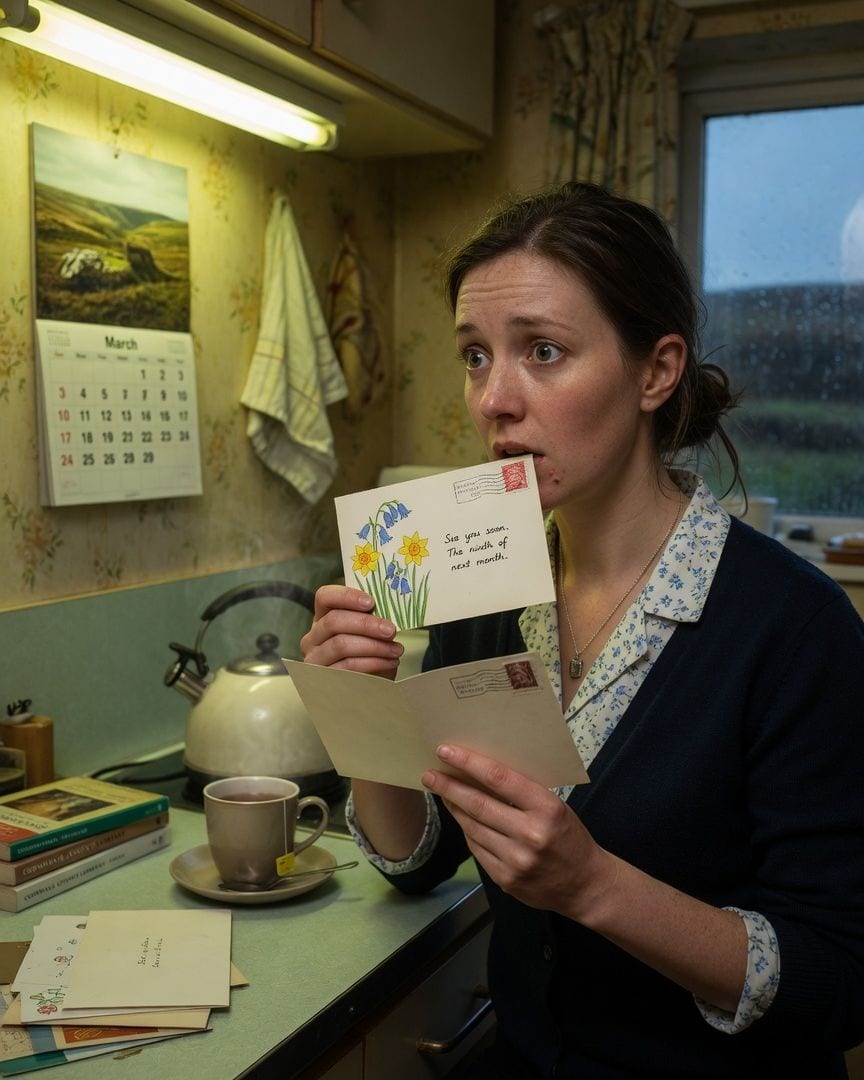
My get-well card arrived from a field, postmarked from a sanatorium that burned down in 1963. It wished me well for an operation I've never had, scheduled for next month.
I was just making tea on an ordinary Tuesday when a strange letter arrived. It was postmarked from Treneglos Sanatorium, a place that burned to nothing over sixty years ago, and contained a get-well card for an operation I'd never had. My research into this impossible message then led me to an old patient register where I found my own name, dated 1958.
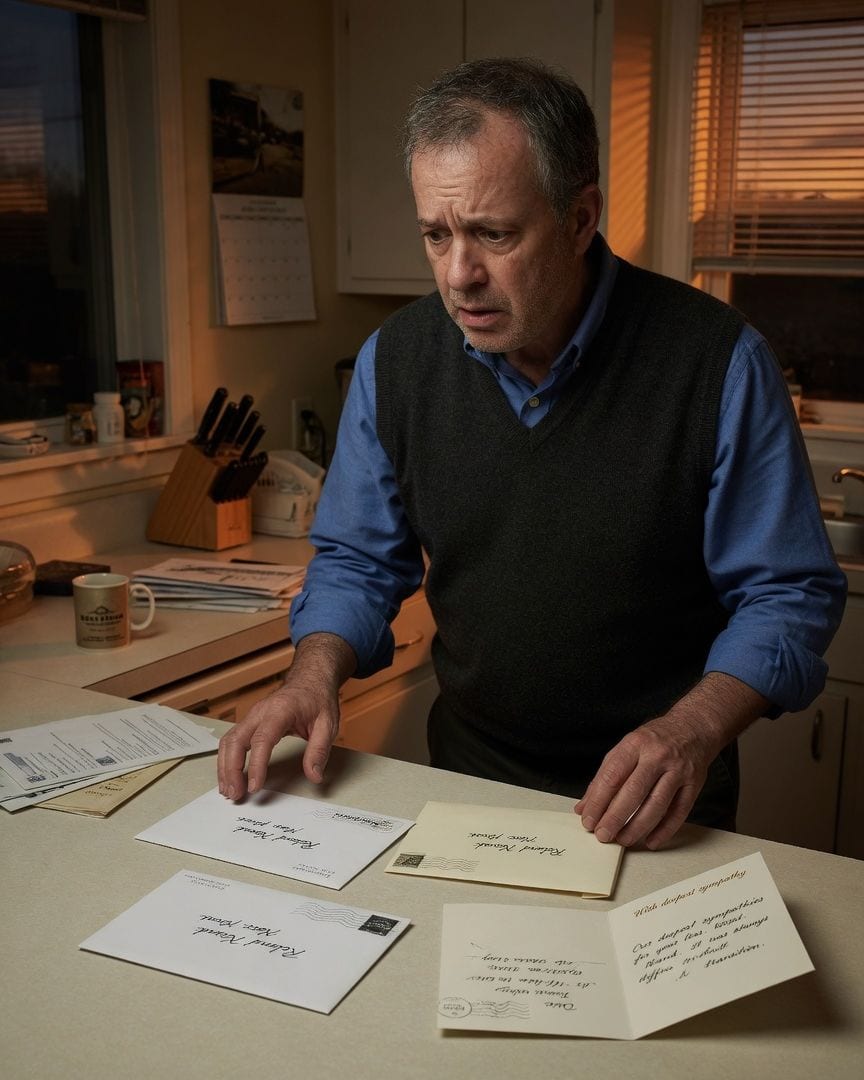
My maternity appointment arrived yesterday from a hospital demolished in 1987. Then the condolence card came today.
Roland Novak, a fifty-year-old man, receives a crisp white envelope containing an appointment card for a maternity unit, complete with a due date. The listed hospital, Trewint Cottage, was demolished in 1987, and the consulting doctor died decades ago. The impossible letter is then followed by a second, equally impossible, arrival.
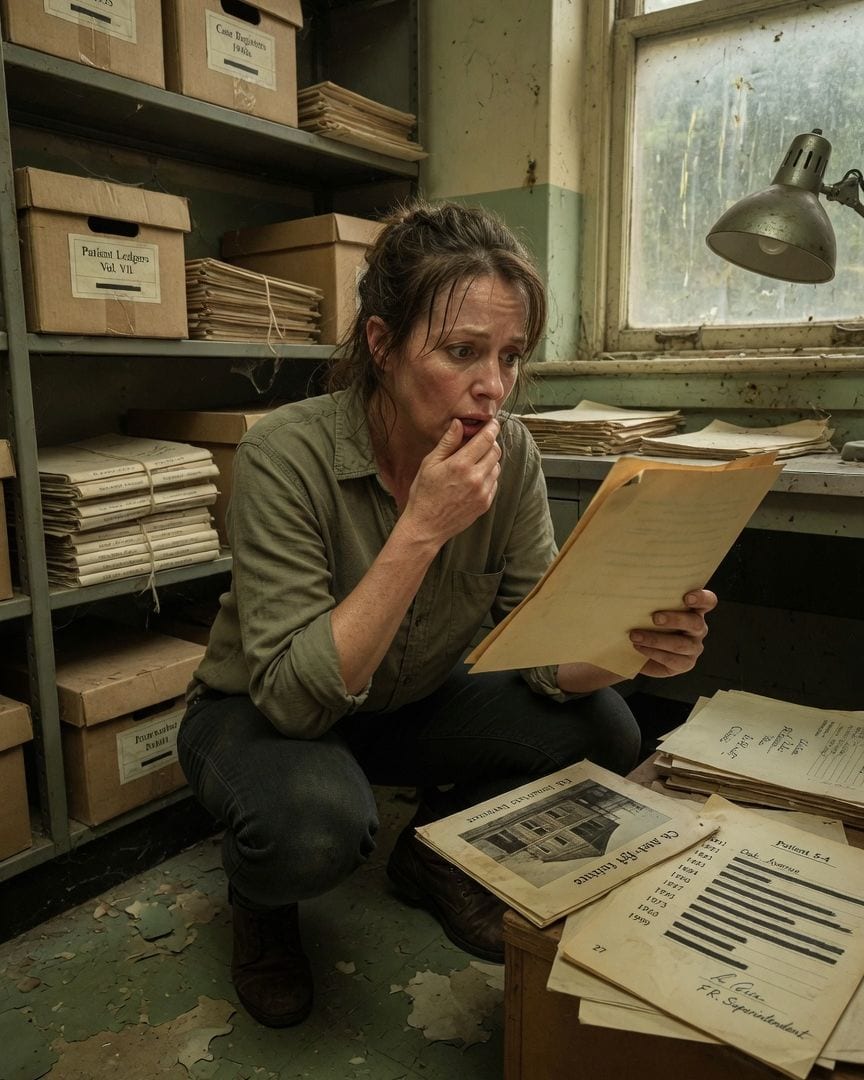
Patient 5-4 keeps checking into my aunt's old sanatorium chalet. The same initials sign them out, 'not traced,' every thirteen years since 1921.
Sifting through my aunt Margaret's estate, I found her old sanatorium file from 1999. Her patient record listed her as 'Patient 5-4,' discharged 'not traced.' But when I accessed the archives, I found 'Patient 5-4' was admitted every thirteen years since 1921, always with identical discharge notes.
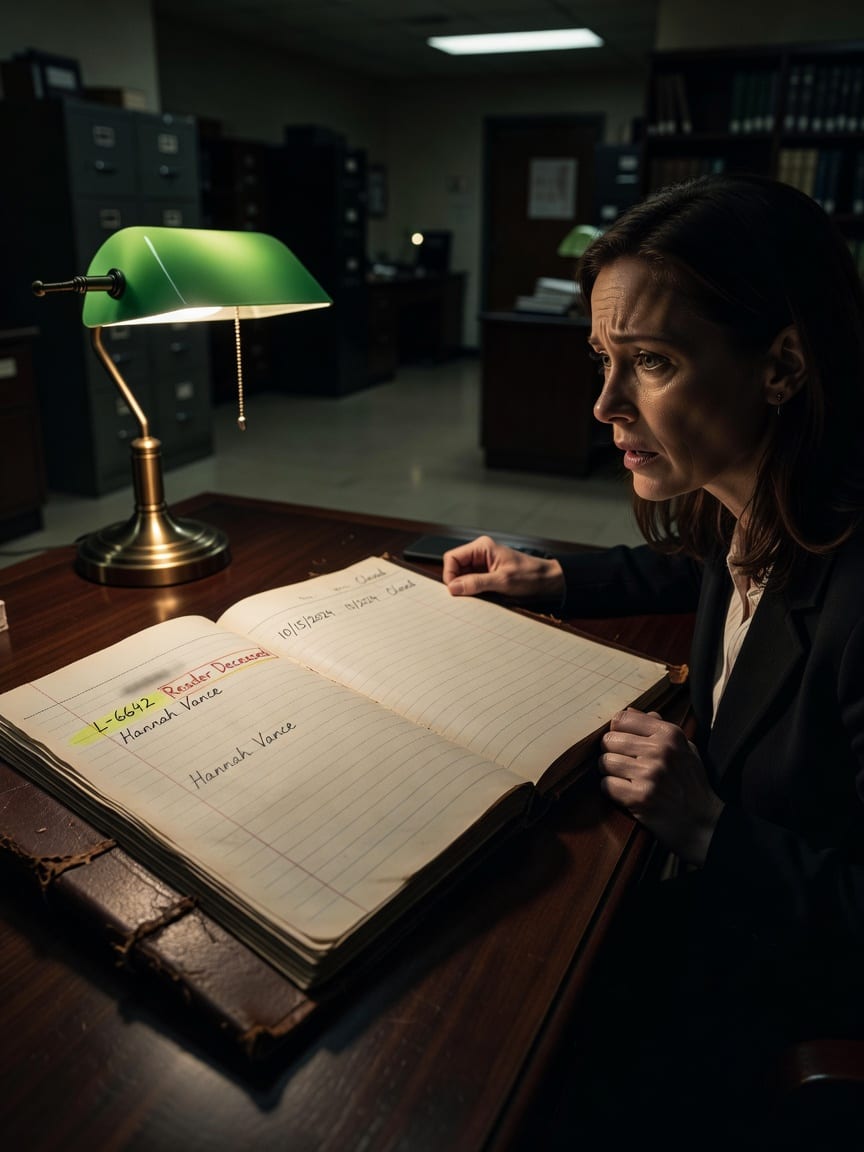
My library card number L-6642 was issued to me at seven — and the ledger shows that number has marked a reader 'deceased' every twelve years since 1949.
Returning my late father's library card to the old town library felt like a small act of closure. But the senior librarian's ancient ledger revealed a chilling pattern of 'reader deceased' entries tied to specific card numbers and borrowed books. My unease turned to cold dread when I secretly found my own name penciled in, marked for a future 'reader deceased' entry.
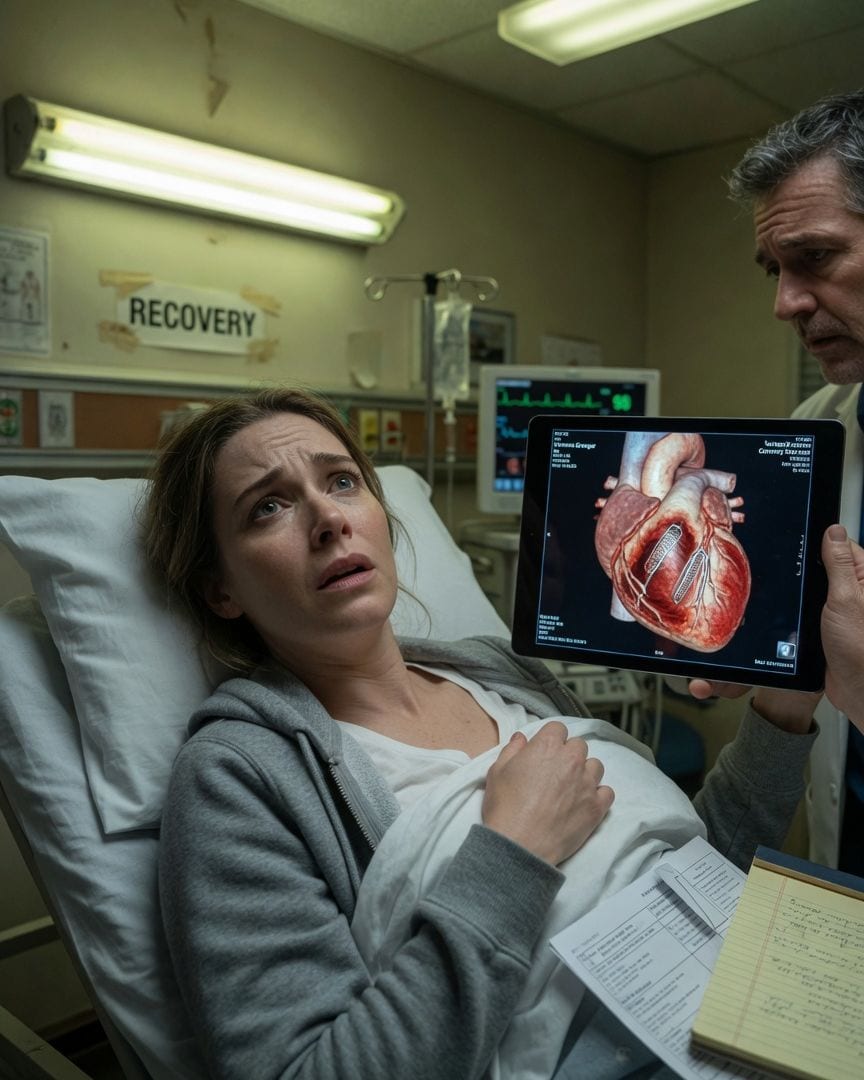
Metal stents are propping open my heart. The doctor rotated the image, but I've never had a cardiac procedure.
After years of dismissed chest pain, a CT scan revealed an impossible truth: my heart contained two metal stents. Dr. Maddox confirmed there was no record of any cardiac procedure in my entire medical history, and I had no memory of ever having surgery. My own body held a secret, alien architecture I couldn't explain.
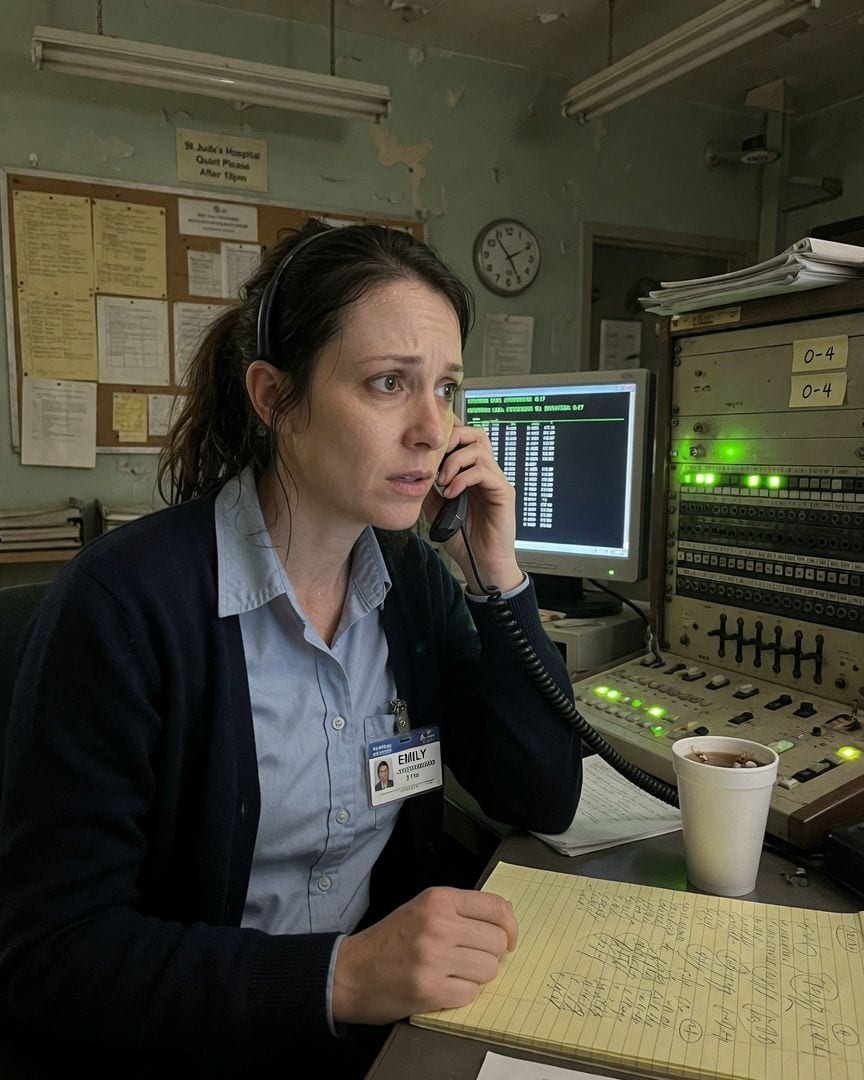
A nurse's voice asks me to page Dr. Reyes to the third floor. My hospital's third floor was demolished years ago, and extension 0-4 with it.
Working the quiet overnight shift at St. Jude's, I was used to predictable clicks. But just after 4 AM, my switchboard lit up: a call from extension 0-4. That extension was decommissioned decades ago, tied to a floor that no longer exists, yet the light pulsed insistently.