My maternity appointment arrived yesterday from a hospital demolished in 1987. Then the condolence card came today.
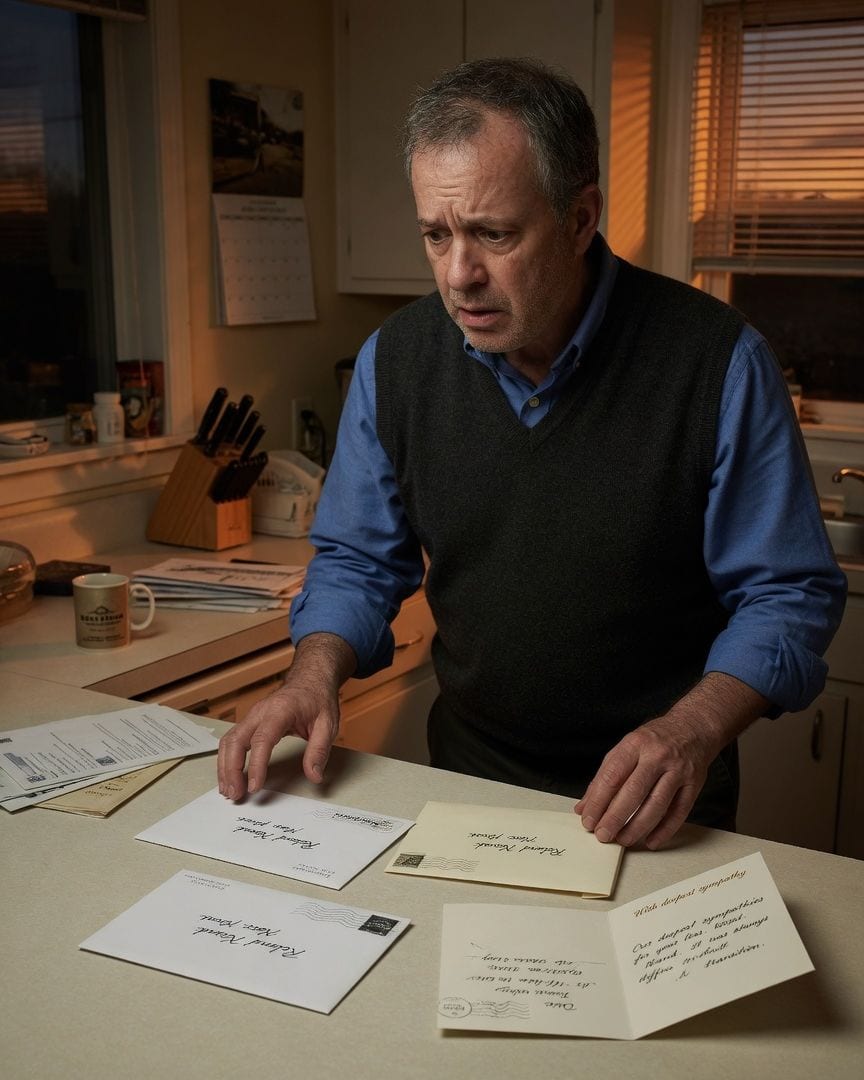
I found it on Tuesday, nestled between a power bill and a flyer for discount gutter cleaning. A crisp, white envelope, hand-addressed in an elegant, almost old-fashioned script.
It bore my name, Roland Novak, and a return address I didn't recognize: 'Trewint Cottage Hospital.' My brow furrowed. Trewint? That name tugged at something distant, a childhood memory of a place that wasn't there anymore.
Inside, the paper was thick, slightly textured. An appointment card. My name was there again, typeset this time, below a date: 'Next Tuesday.' And then the kicker: 'Maternity Unit, Consultant Dr. Vance.' My due date was listed as 'Early Spring.'
I stared at it, a laugh bubbling up, hot and disbelieving. Maternity? I was fifty years old, a man, and the closest I’d come to a hospital recently was a check-up for my cholesterol. Dr. Vance?
The name felt familiar, but vague, like an old town fixture.
I pulled out my phone, dialing the number printed neatly at the bottom of the card. A polite, automated voice greeted me. "The number you have dialed is disconnected. Please check the number and try again." Disconnected?
I tried again, punching the numbers more carefully. Same voice, same message. I typed 'Trewint Cottage Hospital' into my search bar.
The first result was a Wikipedia entry: "Trewint Cottage Hospital, established 1930, served the local community until its closure and demolition in 1987." Below that, an archived news article with a grainy photo of rubble.
The site, I remembered then, was an empty field now, just outside town, off an old gravel road. I’d driven past it a hundred times without a second thought.
Yet, the postmark on the envelope was undeniably 'Yesterday,' and the ink on the appointment card was fresh, the paper uncreased, as if it had just come from a printer. And Dr. Vance?
A quick search brought up an obituary from thirty years ago. He'd been a well-regarded local consultant, died peacefully in his sleep. I felt a cold prickling unease spread over my skin, raising the hairs on my arms.
This had to be an elaborate, deeply bizarre prank. But who would bother? And to what end?
Unwilling to let the sheer oddity of it go, I drove out to the site of Trewint Cottage Hospital. The gravel road, overgrown in places, ended abruptly at a dilapidated chain-link fence.
Beyond it stretched an expanse of tangled weeds and tall grass, swaying in the faint breeze. No foundations, no ghostly remnants of brick or concrete, just field. Exactly as the internet had promised.
As I stood by my car, the engine still ticking from the drive, an old, rusty pickup truck rumbled past. It slowed, then pulled over a few yards ahead.
Edward Brooks, a lean man in his early seventies with a permanent squint, stepped out. He was a familiar face from the general store, a genuine local.
"Lost, son?" Edward asked, his voice raspy, a faint smile playing on his lips. He recognized me as a town resident, not a tourist.
I felt a flush of foolishness. "No, Edward. Just… looking for something." I hesitated, then decided to explain. "I received a letter, a… an appointment for Trewint Cottage Hospital." I held up the envelope, feeling like an idiot.
Edward’s smile widened, becoming a dry, creaking chuckle. "Trewint? Good old Dr. Vance. Haven't heard that name in donkey's years." He shook his head. "Died thirty years ago, he did. My auntie worked for him. Hospital's been gone even longer.
Someone's having you on, Roland." He leaned against his truck, offering a few rambling anecdotes about Vance: a respected, if a bit eccentric, country doctor who loved his garden and always wore a bow tie.
Edward reminisced about the small, friendly hospital, the way it used to be a hub for the community. Roland thanked him, the encounter leaving him more confused than reassured.
Edward's casual dismissal only highlighted the impossible reality of the letter in my hand. The prank, if it was one, was too elaborate, too precise, for a casual joke.
I returned home, the image of that empty field burning in my mind. The sun was beginning to dip, casting long shadows across my lawn.
As I fumbled with my keys, unlocking my front door, I noticed a thin, cream-colored envelope tucked into the frame, almost invisible against the dark wood. It hadn't been there when I'd left.
I picked up the second envelope. It was identical to the first: the same crisp, high-quality paper, the same elegant, almost antique handwriting addressing it to 'Roland Novak.' My breath hitched.
The postmark, impossibly, was also 'Trewint Cottage Hospital,' dated 'Today.' My fingers trembled as I tore it open, the sound unnaturally loud in the quiet kitchen. Inside was a condolence card.
The printed message was generic, a standard 'With deepest sympathy,' but beneath it, in the same neat, flowing script as the address, were the words: 'Our deepest sympathies for your loss, Roland. It was always a difficult transition.' A loss?
A death that hadn't occurred, a grief I hadn't experienced.
I stared at the two impossible letters on my kitchen counter: the maternity appointment for a fifty-year-old man from a demolished hospital, and a condolence card from the same impossible source for a death that hadn't happened yet, both addressed to me, the crisp postmarks a mocking lie.
The two letters shattered my rational mind. This wasn't a prank; it was a systematic, scheduled pattern. For the next few days, I lived in a haze of caffeine and frantic research.
I haunted the local library, squinting at microfiche, my eyes stinging. I sifted through dusty bound volumes at the historical society, pulling up old newspaper archives.
I found articles detailing Trewint Cottage Hospital's closure in '87, the public outcry, the eventual demolition. I found Dr. Vance’s obituary again, confirming his death three decades prior, almost to the day.
Every fact I uncovered only deepened the impossibility of the letters.
Buried in a historical society newsletter, I found a brief mention of Dr. Vance’s unusual hobby: local history. Specifically, a self-published 'Chronicle of Local Families,' described as a peculiar genealogical project.
It sounded exactly like the kind of niche, forgotten thing that might hold a clue. I tracked down the librarian who handled the local archives, Deborah Holloway.
She was a sharp woman in her late forties, with a no-nonsense bun and glasses perched on her nose.
Initially, Deborah was amused by my query about 'letters from a dead hospital.' I felt that familiar flush of embarrassment again as I tried to explain, but when I carefully laid the two envelopes on her desk, her expression sobered.
She picked them up, turning them over, her fingers tracing the postmarks. "Trewint Cottage… I remember that old place. My grandmother was born there, before Vance took over." She paused, her gaze fixed on the elegant script.
"And Dr. Vance… yes, he was quite the local character. His 'Chronicle,' you mean? Less a history, more a collection of cryptic notes and names, I always thought." She leaned back in her chair, a thoughtful frown creasing her brow.
"He kept a separate, personal ledger, too. Full of even stranger entries. People said he was a bit eccentric, you know? Obsessed with old families, old land…"
I pressed her for more details, a cold dread replacing my initial incredulity. "Where would that ledger be? Is it here?"
Deborah tapped a pen against her teeth. "It's… not officially cataloged. Vance was quite private about it. Might be in his old personal papers, if they ever came to us. Or maybe… in a locked cabinet somewhere."
She looked at the letters again, her eyes wide. "These are genuine, aren't they? The paper, the ink… they're not some cheap photocopy."
I felt a cold trail forming, leading not to a prankster, but to something far older and more disturbing. The room, usually a quiet haven of orderly information, suddenly felt charged, the air thick with unanswered questions.
As I continued my research, the atmosphere around me subtly shifted. It wasn't just the cold dread, the growing sense of being entangled in something I didn't understand. It was external.
My phone began to ring at odd hours, late at night, early in the morning.
When I answered, there was only dead air, or sometimes, a faint, almost imperceptible whisper of my name, a sound like dry leaves skittering across pavement.
I dismissed it as a faulty connection, a trick of the light, but the calls persisted. Sometimes, the whisper seemed to come from inside my head, echoing in the silence after I hung up.
One evening, returning from the library after another fruitless afternoon, I found a small, unmarked package on my doorstep. It was wrapped in plain brown paper, tied with twine. No address, no stamp. Just… there.
My heart hammered in my chest. I carried it inside, my hands shaking slightly. With a quick tear, I opened it.
Inside, nestled in a bed of dry, brittle grass that smelled faintly of damp earth, was an old, faded photograph.
It depicted a serene, rolling field, unremarkable apart from its age. But in the background, faintly visible through the haze of age and the yellowed paper, was the unmistakable outline of a building. Trewint Cottage Hospital.
The building looked pristine, almost new, standing proud with clean lines and untouched paint in a way it never had in any of the old, black-and-white photos I'd seen in the archives.
It was a detail that shouldn't exist, a glimpse of a past that was too perfect, too impossible. The photo felt like a message, a warning. Someone knew I was digging. Someone was watching.
The whispers on the phone calls, now growing clearer and more insistent, always my name, 'Roland,' a sound that chilled me to the bone, echoed the disturbing intimacy of the letters.
The silence in my house felt like it was holding its breath.
I met Deborah Holloway again, this time in the hushed, dusty backroom of the historical society. The air was thick with the smell of old paper and leather. I didn't bother with pleasantries. I showed her the photograph.
Deborah’s casual demeanor evaporated instantly. She took it from my hand, holding it delicately, her eyes scanning the impossible image.
"This isn't from the archives," she said, her voice low, a tremor of something I recognized as fear in her tone. "This… this looks like one of Vance's personal effects. He had a few strange things, kept them locked up."
I told her about the calls, the whispers, the chilling way my name was spoken into an empty line. "It's all connected, Deborah. Vance, the hospital, the letters. What's in that ledger? You said it was full of stranger entries."
My voice was urgent, tight.
Deborah hesitated, wringing her hands, her gaze darting around the small room as if expecting to be overheard. "It was… peculiar. Not a proper record, not like the Chronicle. More like a list. Dates, names, short notes.
Things he couldn't explain." She walked over to a heavy, dark wooden cabinet, older than anything else in the room, and fumbled with a small, tarnished brass key. The lock groaned open.
Inside, nestled amongst other forgotten curiosities, was a small, leather-bound book. The cover was blank, save for the faint indentations of what might have once been a title. The pages were yellowed, brittle, covered in Dr. Vance’s distinctive, elegant hand.
She carefully opened it, flipping to a page near the middle. "Vance called these 'vessel records.'" Her voice was barely a whisper now, strained with dawning comprehension. I leaned closer, my breath catching in my throat.
The page was neatly divided into columns: 'Date,' 'Name,' 'Event,' 'Vessel.' My gaze froze on a line. Under 'Name,' it read: 'Roland Novak.' Under 'Date,' a year, decades before my birth. Under 'Event,' a single, chilling word: 'Spring.'
And under 'Vessel,' his own name again. Vance hadn't just listed me. He'd listed me as a vessel.
Deborah pointed to another entry, much older, further up the page. "See? My great-grandmother, Annika Holloway. Same thing. A 'spring' event.
I always thought it was a genealogical eccentricity, a family tree with some odd branches, maybe a touch of delusion on Vance's part." Her eyes, wide and pale, met mine.
"But… your letters… the maternity appointment for a man, the spring due date, the impossible postmarks, the condolence for a death that hasn't happened. It’s all there, Roland. Laid out in Vance's impossible ledger."
The earlier clues clicked into place with horrifying precision, a monstrous, coherent shape forming in the back of my mind.
My breath hitched, my eyes fixed on my name in the ledger, a name recorded decades before I even existed. I felt a profound, chilling sense of being seen, known, and utterly trapped.
Deborah, her face pale, was murmuring about how Vance had tried to make sense of it, tried to find a rational explanation for the recurring names and 'events,' for the precise dating.
Her voice was a terrified drone, detailing Vance's growing paranoia, his desperate attempts to chart and understand something he clearly couldn't control.
As she spoke, her landline on the nearby desk, a heavy rotary model that looked almost as old as the ledger, rang. It was a sharp, anachronistic sound in the hushed, dusty room, making us both jump.
She answered, her 'hello' tentative, strained. Her eyes widened, her jaw slackened, and a low moan escaped her lips.
She held the receiver away from her ear for a moment, listening, then, with a slow, deliberate motion, she handed it to me.
Her own phone, clutched in her other hand, had a disconnected dial tone ringing softly from it, a forgotten echo. "It's for you," she whispered, her voice barely audible.
I took the phone. A clear, calm voice, devoid of static or distortion, spoke directly into my ear. It was neither male nor female, but profoundly ancient, utterly confident.
The sound of it seemed to resonate in my bones, vibrating through my very teeth. "Roland Novak," it said, the sound of my name an intimate caress, utterly familiar, as if it had known me for millennia.
"You've found the record. You're ready."
I could only stammer a disbelieving sound, a choked gasp. The voice on the line continued, a low hum that seemed to resonate in my bones, filling the small, dusty room. "The spring is coming, Roland.
The vessel must be prepared. The lineage is unbroken." It offered no explanation, no threat, only an ancient, patient statement of fact, a terrible certainty.
Deborah, her face contorted in sheer terror, snatched the phone back from my trembling hand, slamming it into its cradle with a violent clatter that echoed through the quiet room.
She then confessed, her words tumbling out in a desperate, breathless rush, as if purging a poison. "Vance didn't just record it, Roland. He was trying to warn us.
He spent his last years convinced he was charting something… something cyclical. He thought… he thought the hospital itself was a focal point. Not just a place, but a gateway. That the 'births' weren't human.
That the names in the ledger were those chosen to… facilitate."
She wrung her hands, pacing the tiny space between shelves of forgotten books. "He believed certain individuals, always 'named' by impossible means—letters from nowhere, whispers in the dark—were destined to be 'channels' for something that manifested in cycles.
Always in spring, always tied to that field. The 'maternity unit' was a euphemism, a cruel joke. And the condolence letter, Roland?
That was for the 'death' of the previous vessel, or the 'loss' of their humanity when they became… a channel." Every clue, every impossible detail, every chilling coincidence, snapped into a coherent, monstrous shape.
I wasn't just a witness; I was the next stage in an ancient, terrible design. My life, my very existence, was merely a line in Vance's ledger, a pre-ordained step in a horror I couldn't comprehend.
A primal terror seized me. I wrestled the ledger from Deborah, a desperate, irrational impulse to destroy it. I intended to burn it, tear it, obliterate every single page, every name, every chilling date.
But the leather-bound book felt impossibly heavy in my hands, as if anchored to the earth, unyielding. I couldn't even rip a single, brittle page from its binding.
It felt as though it were mocking my futile struggle, a physical representation of the inescapable pattern.
I fled the historical society, abandoning Deborah to her fear, her wide, haunted eyes watching me go. I ran to my car, got in, and drove.
I tried to leave town, heading for the highway, my bag packed with a change of clothes, my car idling in the driveway, ready to escape. But as I drove, new letters began to appear.
On my dashboard, tucked into my visor, on the passenger seat. They weren't cryptic anymore; they were demands. 'Return to the field.' 'Prepare the vessel.' 'Next Tuesday.' The date of the original maternity appointment. It was tomorrow.
An irresistible pull, a profound, terrible sense of belonging, tugged at me, drawing me back to the empty field where Trewint Cottage Hospital once stood.
The letters piled up on the passenger seat like a physical weight, like chains, each one a whisper, a summons.
I found myself driving there, my hands numb on the wheel, my eyes fixed on the distant outline of the treeline.
I got out of the car, the cool evening air carrying the scent of damp earth and budding spring. The field lay still, expectant under the deepening twilight.
I felt it then, a faint shimmering in the air above the tall grass, like heat haze on an August road, but wrong, a distortion in the very fabric of reality.
The outlines of the distant trees seemed to waver, and the air hummed with a low, resonant frequency. It was waiting for me. And I, Roland Novak, was waiting for it.
The sky above was a bruised purple, the first stars beginning to prick through the deepening gloom.
Deborah Holloway tried to reach Roland for days. Her calls went straight to voicemail, the familiar greeting replaced by an impersonal network message.
Driven by a dreadful certainty, a cold knot of dread in her stomach, she drove to his house. The front door was slightly ajar, as if he'd left in a hurry, or hadn't bothered to close it.
Inside, the house was silent and empty, an unnatural stillness hanging in the air. On the kitchen counter, neatly stacked, was a pile of letters.
All were addressed to 'Roland Novak,' all postmarked from 'Trewint Cottage Field,' the most recent one dated 'next Tuesday.' Roland Novak was gone, leaving only the impossible mail behind.
Deborah walked out of Roland's empty house, the silence amplifying her dread. She looked toward the distant field where Trewint once stood, the setting sun casting long, skeletal shadows across the land.
Nothing seemed out of place, yet the air felt heavy, charged with a quiet, terrible expectation. She pulled out her phone, about to call the police, to report Roland missing, to tell them about the letters, about Vance's ledger.
Her thumb hovered over the screen, then she paused. Tucked under her windshield wiper, a small, crisp white envelope. It was addressed to 'Deborah Holloway.' The postmark was 'Trewint Cottage Field.'
The field lies silent under the first stars, waiting for spring.
If this one got to you
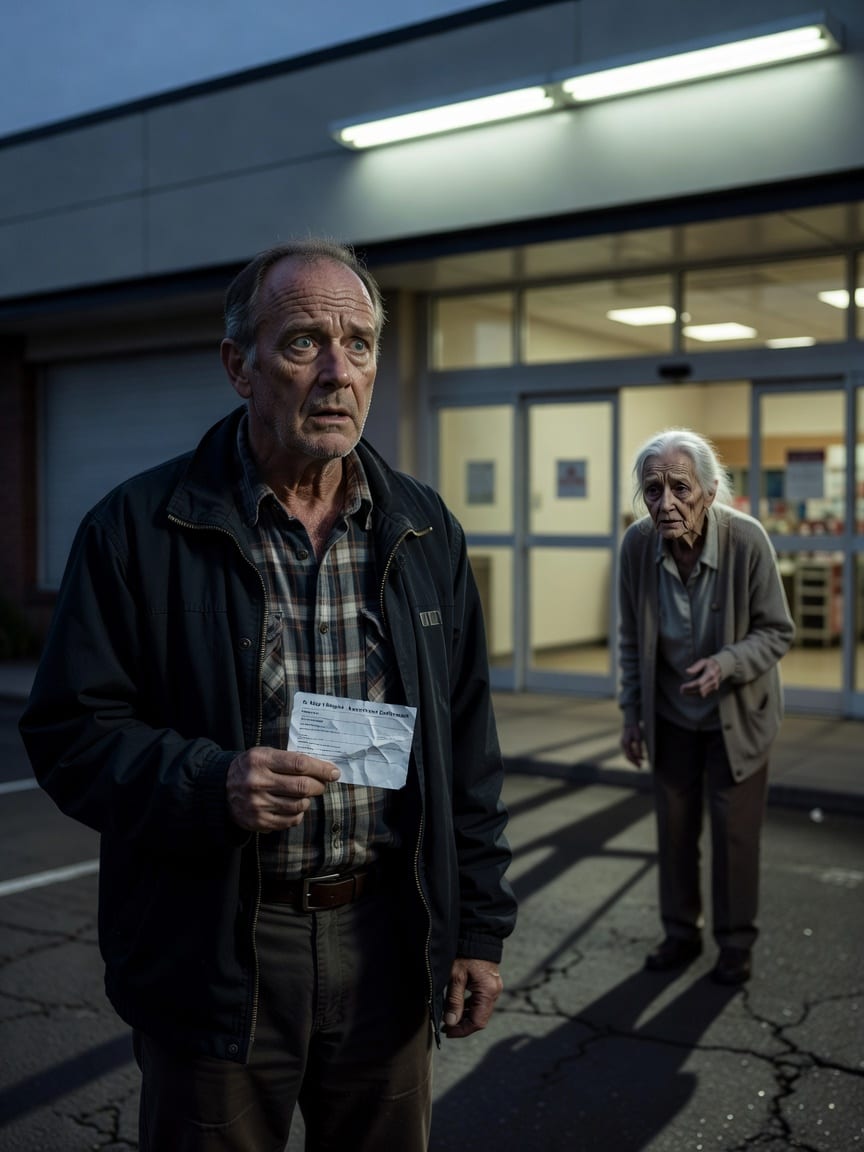
My maternity appointment card arrived for next Tuesday. I'm a fifty-year-old man. It named Trewint Cottage Hospital, demolished in '87, and a doctor dead for decades.
I'm Carl Prescott, a 50-year-old man with no children. An official maternity appointment card arrived for me, detailing a due date in the coming spring. The card listed Trewint Cottage Hospital, a place that was demolished in 1987.
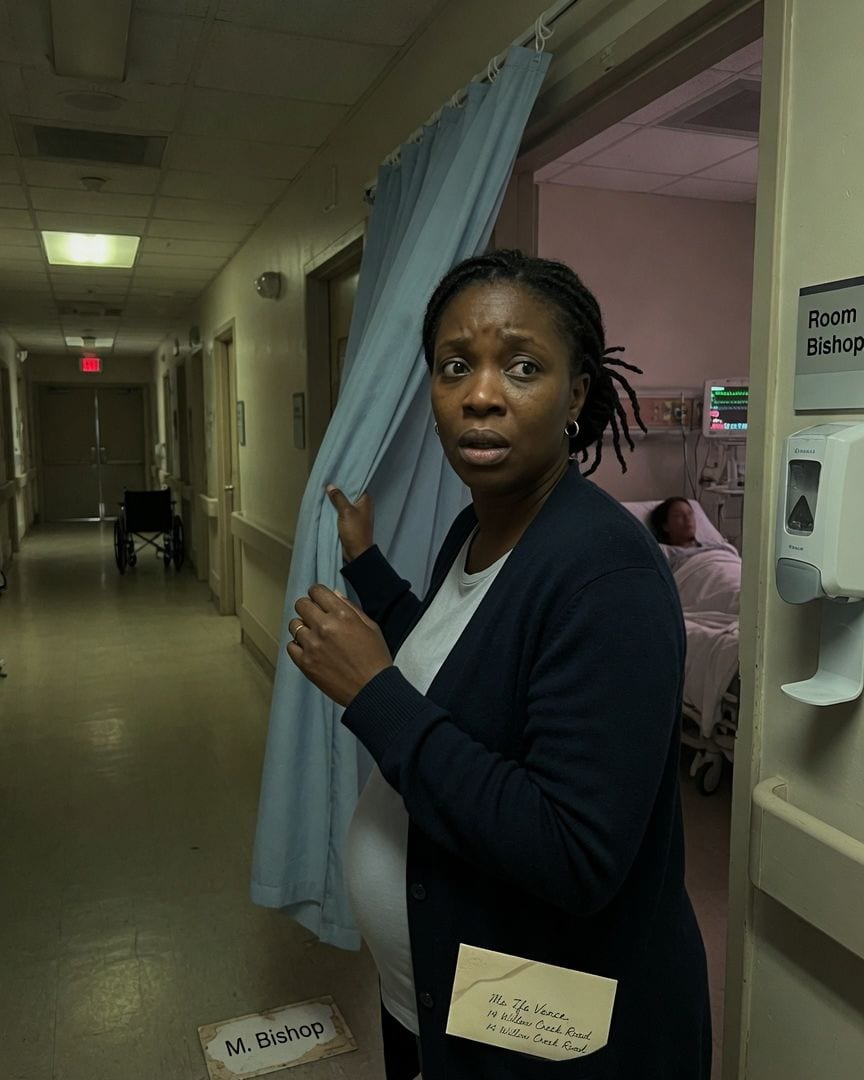
A midwife I’d never met touched my arm in the maternity ward, said my name, and whispered, 'Not this one, the next one.' I was only visiting my sister.
Back home after visiting my pregnant sister, a strange envelope arrived in my mailbox. It was a birthday card, but the return address was a road that had been a demolished highway for twenty years. How could a letter be sent from a place that no longer existed?
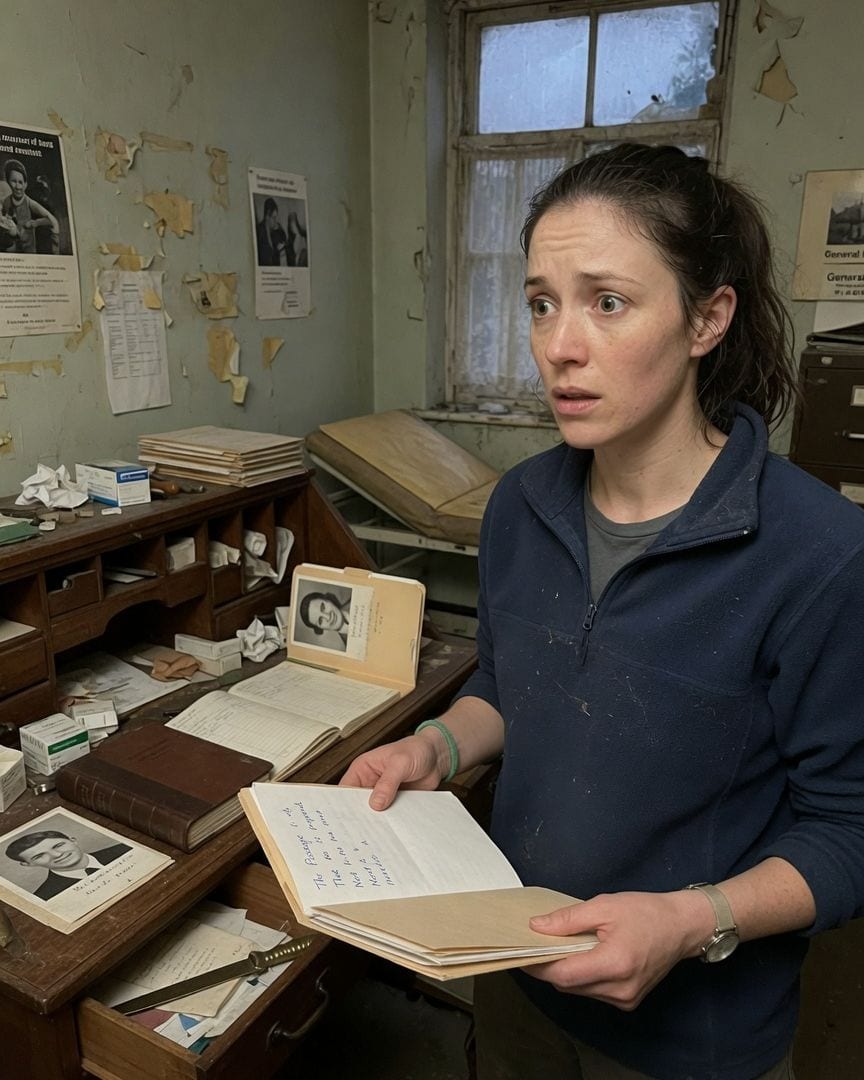
My new clinic's appointment book shows entries for this coming Monday, decades after the doctor retired and died.
Chloe Lawson bought an old, abandoned surgery in Nettlebed, ready to open her new vet clinic. Locals insisted Dr. Almott retired in '79 and the practice shut down for good. But then Chloe found his dusty appointment book filled with meticulous entries, continuing unbroken from 1979 through the decades, right up to this coming Monday.
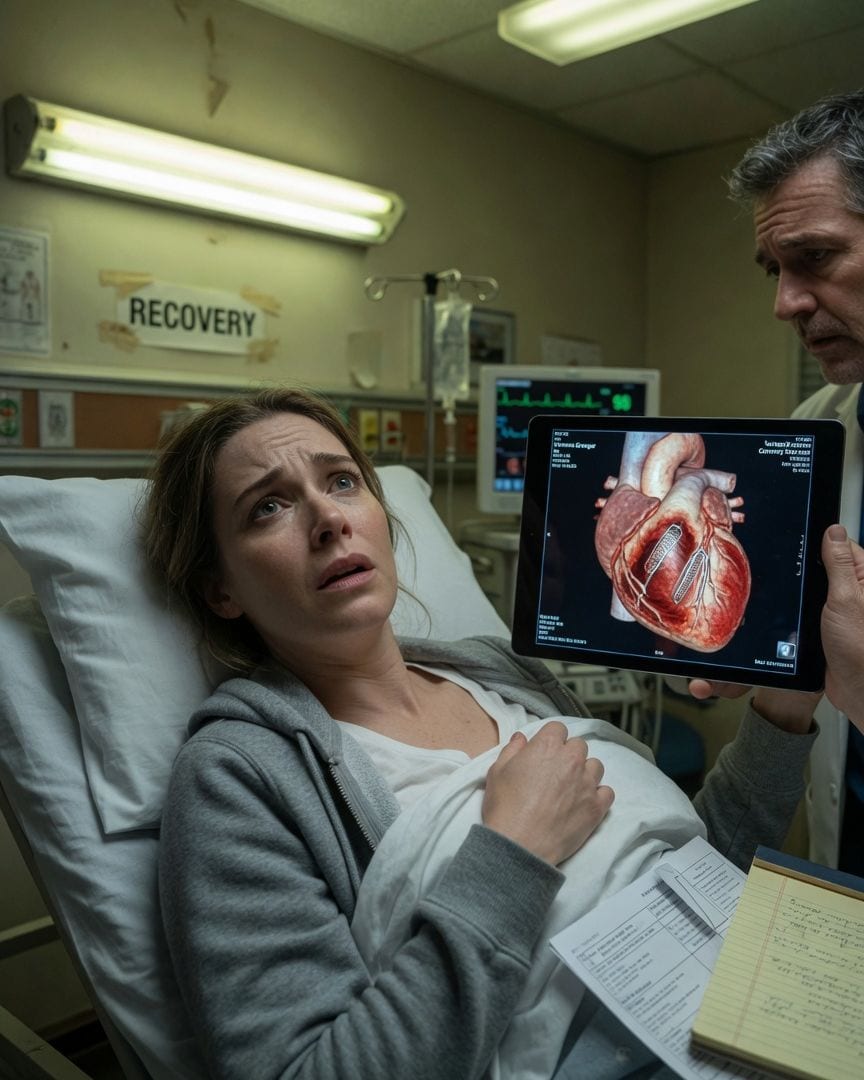
Metal stents are propping open my heart. The doctor rotated the image, but I've never had a cardiac procedure.
After years of dismissed chest pain, a CT scan revealed an impossible truth: my heart contained two metal stents. Dr. Maddox confirmed there was no record of any cardiac procedure in my entire medical history, and I had no memory of ever having surgery. My own body held a secret, alien architecture I couldn't explain.
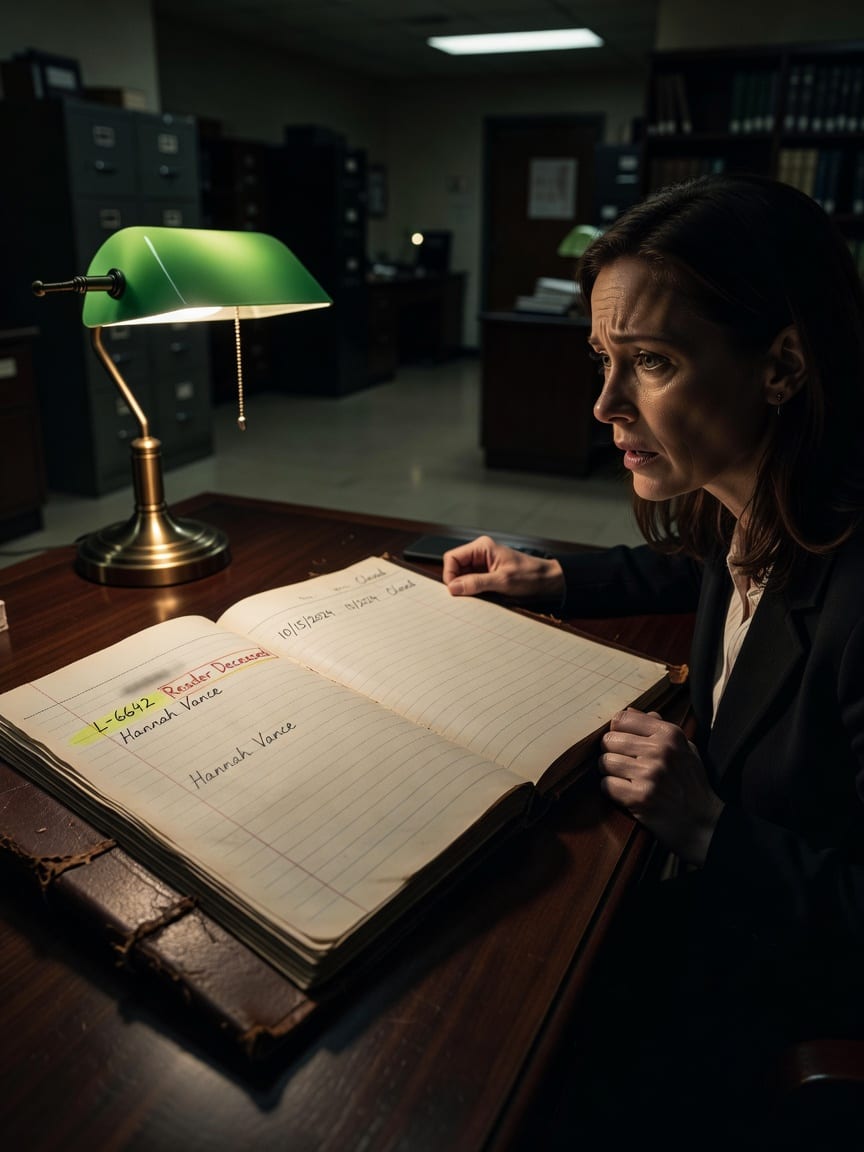
My library card number L-6642 was issued to me at seven — and the ledger shows that number has marked a reader 'deceased' every twelve years since 1949.
Returning my late father's library card to the old town library felt like a small act of closure. But the senior librarian's ancient ledger revealed a chilling pattern of 'reader deceased' entries tied to specific card numbers and borrowed books. My unease turned to cold dread when I secretly found my own name penciled in, marked for a future 'reader deceased' entry.
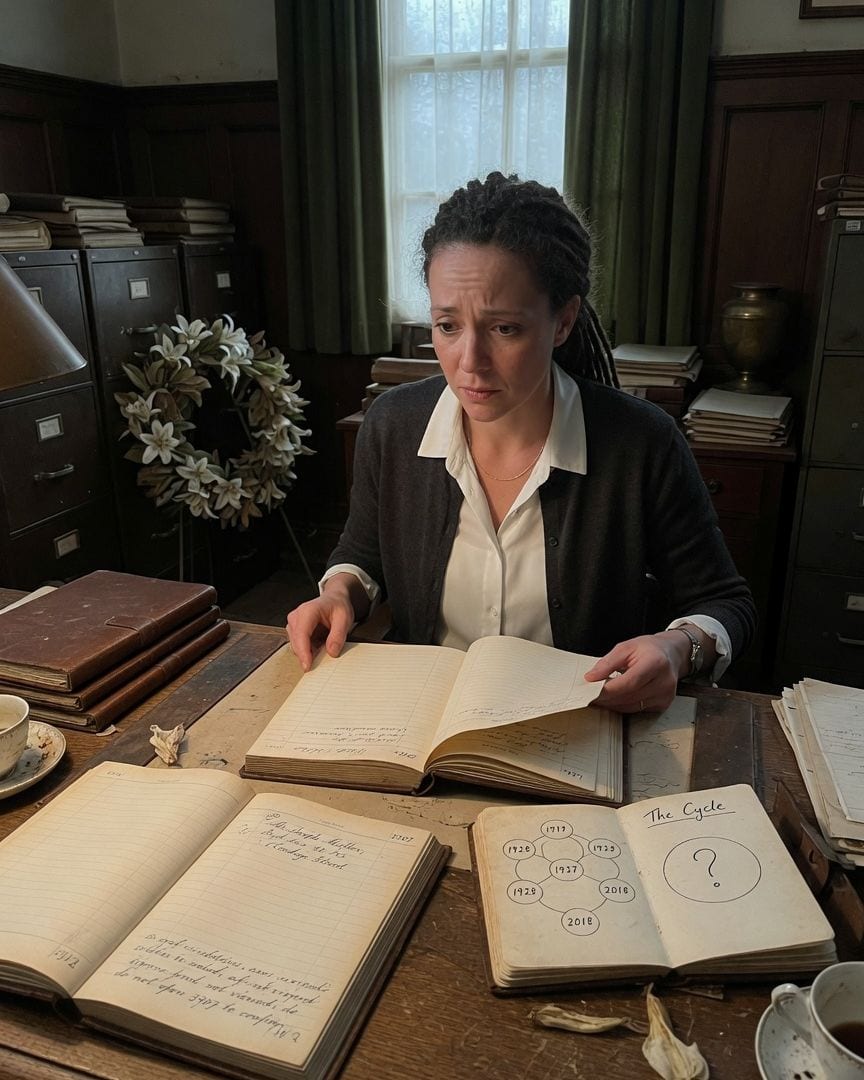
Our funeral ledger records my family name, same age, buried on Cordage Street every nine years since 1919. My great-grandfather's note: 'do not open 3907.'
Reviewing my great-grandfather Joseph’s old ledgers at the Ingram Funeral Firm, I stumbled upon a recurring anomaly. The same burial order for a Joseph Muller, age 45, residing at our family home, 14 Cordage Street, appeared every nine years across decades of records. Each entry, identical, carried the unsettling instruction: 'coffin sealed, not viewed.'