My maternity appointment card arrived for next Tuesday. I'm a fifty-year-old man. It named Trewint Cottage Hospital, demolished in '87, and a doctor dead for decades.
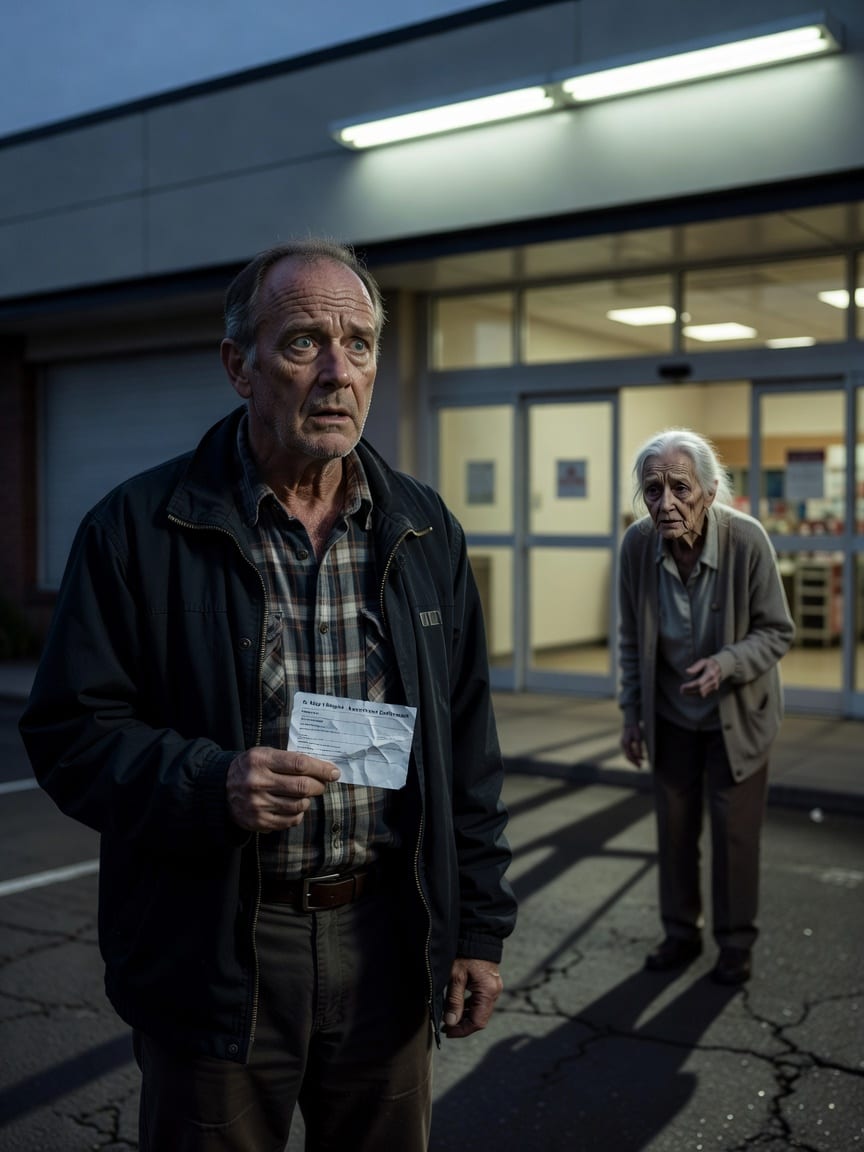
The heavy cardstock felt official in my hand, an embossed seal pressing into the corner, marking it from Trewint Cottage Hospital.
It confirmed an appointment in the maternity unit, addressed to me, Carl Prescott, with a due date in the coming spring. I'm fifty years old, a man who lives alone, and I’ve never had children.
The consultant named was Dr. Vivian Merritt. I frowned, a cold knot forming in my gut. My first thought was a prank, a cruel joke from some old acquaintance.
But the postmark was real, dated just yesterday, and my name was printed with unnerving accuracy, not handwritten.
I pulled out my phone. A quick search confirmed Trewint Cottage Hospital had been closed and demolished in 1987, replaced by a sprawling retail park. Not just closed, demolished.
The photos showed a dusty field of rubble, then construction, then a massive supermarket with a gleaming car park. My stomach tightened further. Another search, 'Dr. Vivian Merritt,' brought up an obituary from 1993. Thirty years dead.
This was beyond a prank. This was a physical thing, a real card, from a non-existent place, naming a non-existent doctor, for an impossible appointment.
The rational part of my brain screamed "administrative error of epic proportions," but the dread was already a cold, specific weight in my chest.
I tried calling the hospital number listed on the card; it was, predictably, disconnected. A pre-recorded message redirected me to a regional health authority that had no record of Trewint, directing me to a completely different trust entirely.
Rational explanations were failing fast, dissolving into static. The card lay on my kitchen counter, mocking me with its impossible precision. I needed to see the place.
I drove to the site where Trewint Cottage Hospital once stood, now a sprawling supermarket car park. It was a Saturday, busy, the air thick with exhaust fumes and the smell of fresh bread from the bakery.
The setting sun cast long shadows, but the bright fluorescent glow of the store sign still felt heavy, too bright for the strangeness humming just beneath the surface.
I walked around the perimeter of the car park, the appointment card still clutched tight in my hand, its embossed seal digging into my palm. Nothing. Just concrete, trolley bays, and the drone of an industrial chiller unit.
As I walked back to my car, defeated, an old woman emerged from the supermarket entrance. Her face was a web of wrinkles, her eyes wide with a strange, unsettling pity that made my skin prickle.
She shuffled directly towards me, surprisingly agile for her age, her gaze fixed intently on the card in my hand.
'Carl Prescott?' she whispered, her voice like dry leaves scraping pavement.
I stopped, taken aback. 'Yes?'
'I am so, so sorry for what's coming for you,' she continued, her gaze fixed on the card. 'For what they'll make you do at Trewint.' Her eyes, ancient and knowing, seemed to bore right through me.
Before I could ask how she knew my name, or what in God's name she meant by "what they'll make you do," she simply repeated her apology, her voice breaking, a raspy sob escaping her lips.
Then she veered away into the stream of shoppers, disappearing as quickly as she’d appeared, leaving me frozen, the card now feeling like a burning coal in my hand.
The encounter with the woman, Constance Crane, had stripped away any lingering hope of a prank, any notion of a simple clerical error. The dread was now sharp, targeted, and intensely personal. "What they'll make you do."
The words echoed in my head, a cold hammer blow. Back home, the card seemed to pulse with an unseen energy on my coffee table. I poured myself a whiskey, but couldn't taste it.
I decided to dig deeper into Trewint Cottage Hospital, beyond general news articles, beyond obituaries. I needed answers, not more questions.
I found a local history forum, a dusty corner of the internet dedicated to obscure regional lore.
An old post from years ago, buried under dozens of casual comments, mentioned a fire at Trewint in the late 1960s, and a cryptic reference to a 'lost ledger' that documented 'unusual births.' My breath hitched. Unusual births.
Below it, a grainy black and white photo, dated 1972: Trewint staff posing stiffly outside the hospital, a brick wall behind them. Among them, a younger Dr. Vivian Merritt, her smile stiff, almost forced.
And in the background, slightly out of focus, standing apart from the group, her eyes holding that same haunted look, was unmistakably Constance Crane.
The next morning, the lingering chill of Constance Crane's words and the cryptic forum post spurred me into action. I contacted the local archives. Patricia Lockwood, the archivist, answered my call. Her voice was crisp, professional, and initially dismissive.
'We have very little from Trewint Cottage Hospital, Mr. Prescott. Most records were lost in a fire decades ago.'
'I saw something online,' I pressed, trying to keep my voice even, rational. 'A forum mentioned a 'lost ledger,' specifically detailing 'unusual births.' I think it was from before the fire, or maybe it survived it.'
There was a pause, a beat of silence that felt too long. Patricia's voice, when she spoke again, was cooler, a slight edge replacing her earlier briskness. 'There is one item, filed under 'Miscellaneous Donations.' A ledger.
It's not a birth register in the usual sense, and it's partially fire-damaged. Not generally available.'
'I have this,' I said, holding up the maternity card to my computer camera, hoping she could see it through the low resolution.
'A card for an appointment at Trewint, addressed to me, a fifty-year-old man, with a dead doctor's name. It's a significant administrative anomaly.
This ledger, if it exists, might be a key to understanding a historical oversight, or something even stranger.' I emphasized the 'administrative anomaly' bit, trying to appeal to her sense of order.
After some bureaucratic back-and-forth, a required email, and a scanned copy of the offending card, she granted me limited access. The archive reading room was hushed, smelling of old paper, dust, and a faint, acrid scent I couldn't place.
Every rustle of my jacket sounded like a roar. Patricia brought out the ledger herself, not trusting it to a junior.
It was a heavy, leather-bound volume, its edges singed black, pages brittle and discolored, looking like something dragged from a furnace. It was titled, simply, 'Registrations,' in faded gold leaf.
'Handle with extreme care, Mr. Prescott,' she cautioned, her gaze lingering on my face for a moment, a strange mixture of curiosity and something else I couldn't quite interpret.
She retreated to her desk, leaving me alone with the weight of the book.
I began to turn the fragile pages, my fingers careful not to tear the edges. Many entries were illegible charcoal smears, the ink melted by heat and time.
But a specific section, towards the middle, had survived the fire's worst damage. It was titled: 'Spring Registrations.' Under 'Patient Name,' I saw 'Ellison,' 'Kingsley,' 'Carter'... and then, my breath hitched. A name I knew too well.
As I meticulously examined the ledger, a prickle on my neck made me look up.
Patricia Lockwood stood by a distant shelf, ostensibly reorganizing files, her back to me, but her head was cocked slightly, and her reflection in the glass of the display case showed her gaze kept flicking to me, sharp and assessing.
The air in the room felt suddenly colder, and the faint smell of something metallic, like old blood, seemed to cling to the pages.
She eventually walked over, her footsteps unnervingly soft on the worn carpet. The silence of the archive seemed to deepen around us, pulling tight. 'Are you finding what you expected, Mr. Prescott?'
she asked, her voice calm, but with an undercurrent I couldn't quite place. It wasn't accusatory, but knowing. 'Some things are best left undisturbed.'
I tried to appear nonchalant, closing the ledger on the page with my name, though my hand trembled slightly. 'Just an old hospital record, trying to make sense of a strange letter.'
I pushed the card across the table towards her, as if to reinforce my mundane explanation.
She merely glanced at it, then back at me. Her lips thinned into a line.
She simply nodded, a knowing, almost pitying look in her eyes, before retreating to her desk, her presence leaving a phantom chill in the space she’d vacated. The encounter left me profoundly unsettled. She knew something. She had to.
Later that evening, back in the silence of my apartment, my phone rang. No caller ID. I hesitated, my thumb hovering over the answer button, remembering Patricia's words, Constance's warning.
The dread wasn't just in the ledger now; it was in the silence of my apartment, in the knowing eyes of the archivist. I took a deep breath, then answered.
A distorted, whispering voice filled my ear, barely audible above a low hum that sounded like wind through bare wires. The hum vibrated through my eardrum, making my teeth ache. 'They know you're looking, Carl. The date approaches.
Don't fight it.' The voice was flat, without inflection, inhumanly calm. The line clicked dead. I stared at the screen, the silence that followed more terrifying than the call itself.
The voice had used my name, and knew exactly what I was uncovering. I wasn't just digging into history; I was being watched.
Ignoring the anonymous call, or rather, trying to, I returned to the ledger in my apartment, the whisper of the voice still echoing in my skull. I had managed to get a camera phone shot of a few pages.
My fingers traced the entry: 'Prescott, Carl. 1950.' Under 'Role,' it said 'Father.' The 'Mother' entry was a blank line, and 'Birth Type' was scrawled, almost haphazardly, 'Unregistered.'
My heart pounded against my ribs. 1950. That was before my birth, and my father's name wasn't Carl. This couldn't be a relative in the conventional sense.
The handwriting, though faded, was eerily consistent with the printed font on the card I still carried. I kept searching, my eyes flying across the dates. The pages shimmered slightly under the lamplight, almost as if they were alive.
Another 'Prescott, Carl,' in the 1920s. Same blank 'Mother,' same 'Unregistered' type. Then another, from the late 1800s. The dread began to coalesce into something horrifyingly coherent, a sickening click as impossible pieces snapped together.
This wasn't a family name passed down; it was my name, repeating, again and again, across generations.
And next to several of these entries, even the oldest ones, was a familiar, looping signature: 'Dr. V. Merritt.' The same Dr. Vivian Merritt who had died decades ago, whose signature graced my appointment card.
She hadn't just been a consultant; she had been involved, complicit, for generations. The ordinary explanation died for good, strangled by the sheer impossibility of the evidence. This was a pattern. The name 'Carl Prescott' was not a person.
It was a role.
I found a marginal note, barely legible, next to an 1890 entry, scrawled in a different, finer hand, as if a later addition: 'The Spring Tide calls its own.' The implications were vast, chilling.
A specific name, a specific season, unusual 'births,' and a doctor who defied time itself. I felt a profound coldness seep into my bones, a cold that had nothing to do with the temperature of the room.
I was frantically flipping pages, the pattern solidifying into a terrifying certainty. 'Carl Prescott' as 'Father,' then 'Guardian,' then 'Attendant.'
The role seemed to evolve, adapting with the times, but the name, the spring date, the 'unregistered' nature of the 'births' remained constant. The repetition was a blunt instrument, hammering away at my sanity.
The faint scent of damp earth and something sweet, like night-blooming jasmine, seemed to rise from the ledger itself.
My fingers trembled as I reached the very last page of the 'Spring Registrations' section, the paper thin and fragile, smelling faintly of old smoke and that unsettling sweetness.
There, in crisp, dark ink, an entry for the upcoming year, the handwriting eerily familiar, matching the appointment card precisely. Under 'Patient Name': 'Prescott, Carl.'
My breath hitched, a cold tremor running through me, freezing me in place.
I stared at the next column, the single word that stole all air from my lungs, the word that turned the key in the final, inescapable lock of terror. Under 'Role': 'Mother.'
My gaze snapped to the 'Due Date' column, which perfectly matched the date printed on the card still in my pocket: next Tuesday. The ledger was real. The appointment was real.
And it was for me, not to attend, but to become.
I stumbled out of the archives, the ledger's final entry burned into my mind. 'Mother: Carl Prescott.' The sheer, impossible wrongness of it threatened to unravel me entirely. My logical brain, usually a fortress, had finally collapsed.
I needed to talk to Constance. I found her number through the old forum post, listed under a relative who had maintained it.
Her voice was frail but clear when she answered. 'They found you, didn't they? The Spring Tide always finds its own.'
She explained, not in riddles, but with a weary resignation that spoke of ancient burdens.
Trewint Cottage Hospital wasn't just a place of human births; it was built on an ancient ley line, a node of 'receptivity' where something… else… could cross over.
Every generation, on a recurring spring cycle, a 'host' was chosen, always bearing the name 'Carl Prescott,' to facilitate these 'Spring Registrations.'
Dr. Vivian Merritt, Constance revealed, was not just a doctor; she was a gatekeeper, one of the 'ones who knew,' who had cultivated the lineage and overseen the 'births' for centuries, feigning her own death to maintain the illusion of mortality.
The 'unregistered' births were not human. They were entities, given form through the host, then dispersed, their purpose unknown, until the next cycle.
Constance's own grandmother had been a nurse at Trewint, a witness to the horrors, and had tried to warn people. Constance was still trying.
The apology she gave me in the car park was for the inevitable, for the role that had been thrust upon me, as it had upon countless 'Carl Prescotts' before.
The hospital, the doctor, the card – it all clicked into a terrifying, seamless whole. Horror by coherence.
Constance urged me to run, to disappear, to change my name, my address, to become a ghost. But a strange lethargy had settled over me, a profound weariness that went bone-deep.
The call had ended with her saying, 'They'll be here for you soon. The Spring Tide is almost full.' I knew it was futile. The targeting had been too precise, the pattern too ancient, too inescapable.
They weren't just looking for a name; they were looking for me.
I sat in my living room, the appointment card now a grotesque relic on the coffee table, waiting. The evening deepened into night, the streetlights outside casting long, indifferent shadows. The silence in my apartment felt heavy, pregnant.
At precisely 3:00 AM, a soft chime echoed from my smart lock. The deadbolt disengaged with a barely audible click, from the inside. I lived alone.
My front door swung inward slowly, revealing only the deeper darkness of the communal hallway. No one was there, but a cold, sweet scent, like damp earth and budding flowers, filled the air, chilling me to the marrow.
My skin crawled. I tried to stand, to fight, to scream, but my limbs felt heavy, weighted, as if filled with lead. My tongue felt thick in my mouth.
A deep, resonant hum began to vibrate through the floorboards, rising from the earth itself, passing through the concrete foundations of my building. It was the sound of something awakening, something vast and ancient.
The hum intensified, filling my chest, my head, drowning out all other thoughts. My vision blurred at the edges, a grey fuzz encroaching.
I could feel a profound, alien presence drawing near, not through the door, but from everywhere at once. It was inside the walls, under the floor, in the very air I breathed.
I felt a pressure, a subtle reshaping, not painful, but profound, as if my very essence was being prepared, stretched, made hollow. My body was no longer entirely my own.
I looked down at my hands, and for a moment, they seemed to shimmer, translucent, the flesh fading into an ephemeral glow.
The hum became a chant, a chorus of voices that knew my name, not just Carl Prescott, but the deeper, older name of the 'Mother.'
The 'Spring Registration' at the site of the former Trewint Cottage Hospital went unnoticed by the wider world. Carl Prescott simply vanished. His apartment was found tidy, his car in the driveway, phone on the charger.
No signs of struggle, no frantic notes, just an absence. Constance Crane, the old woman, was admitted to a care home, muttering about 'Spring Tides' and 'unregistered births,' her stories dismissed as dementia by the busy staff.
The archive's 'Miscellaneous Donations' ledger was quietly re-filed, deeper in the stacks, its sensitive contents forgotten once more.
The supermarket on the old hospital site continued its business, its customers oblivious to the ancient currents beneath their feet, to the slow, relentless pulse that had never truly ceased.
The dread had settled, not resolved, but absorbed into the fabric of the ordinary.
Months later, in the height of spring, a new manager started at the supermarket built on the old Trewint site. Her name was Carla Prescott.
She had no memory of a previous life, just a vague, unsettling feeling of having always been here, a quiet understanding of the land beneath her feet.
One sunny afternoon, a customer, a young mother pushing a pram, smiled at her as she passed by the entrance. 'Lovely day for a walk, isn't it, Carla?'
The manager smiled back, a faint, wrong little smile, her eyes holding an ancient, deep, and knowing light. 'Yes,' she replied, her voice soft, 'especially with the new life stirring.'
If this one got to you
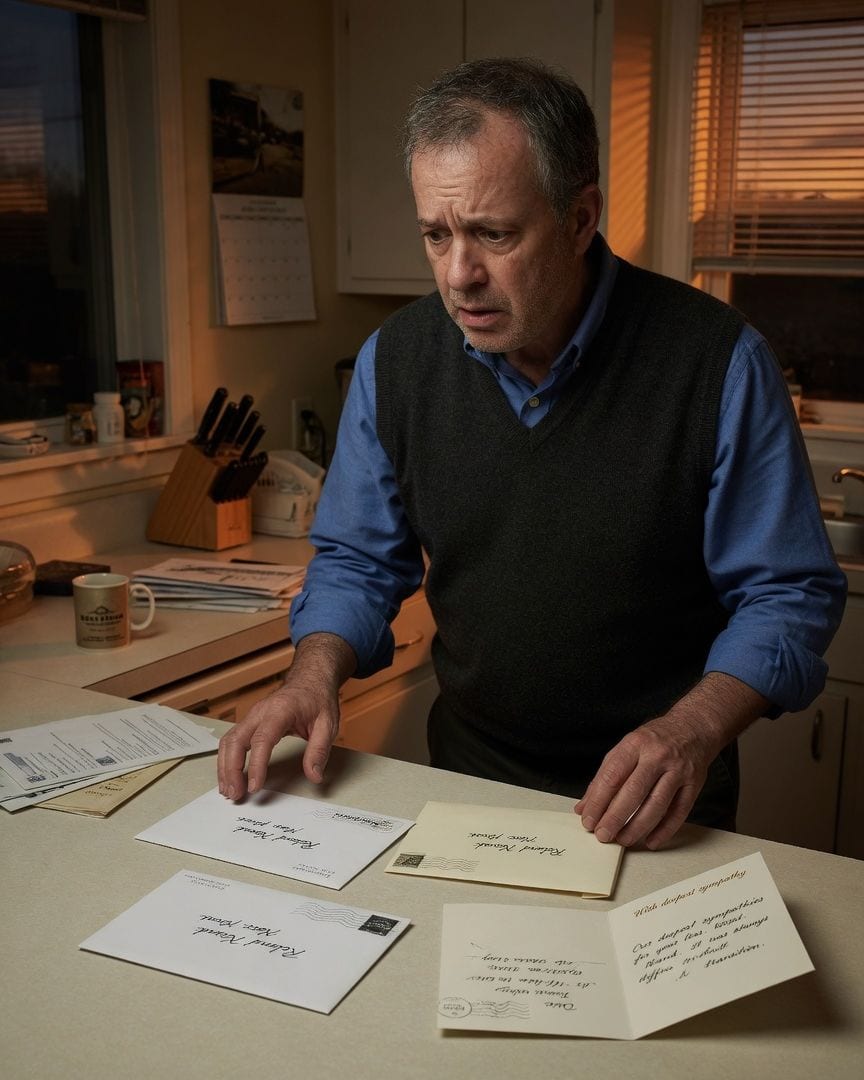
My maternity appointment arrived yesterday from a hospital demolished in 1987. Then the condolence card came today.
Roland Novak, a fifty-year-old man, receives a crisp white envelope containing an appointment card for a maternity unit, complete with a due date. The listed hospital, Trewint Cottage, was demolished in 1987, and the consulting doctor died decades ago. The impossible letter is then followed by a second, equally impossible, arrival.
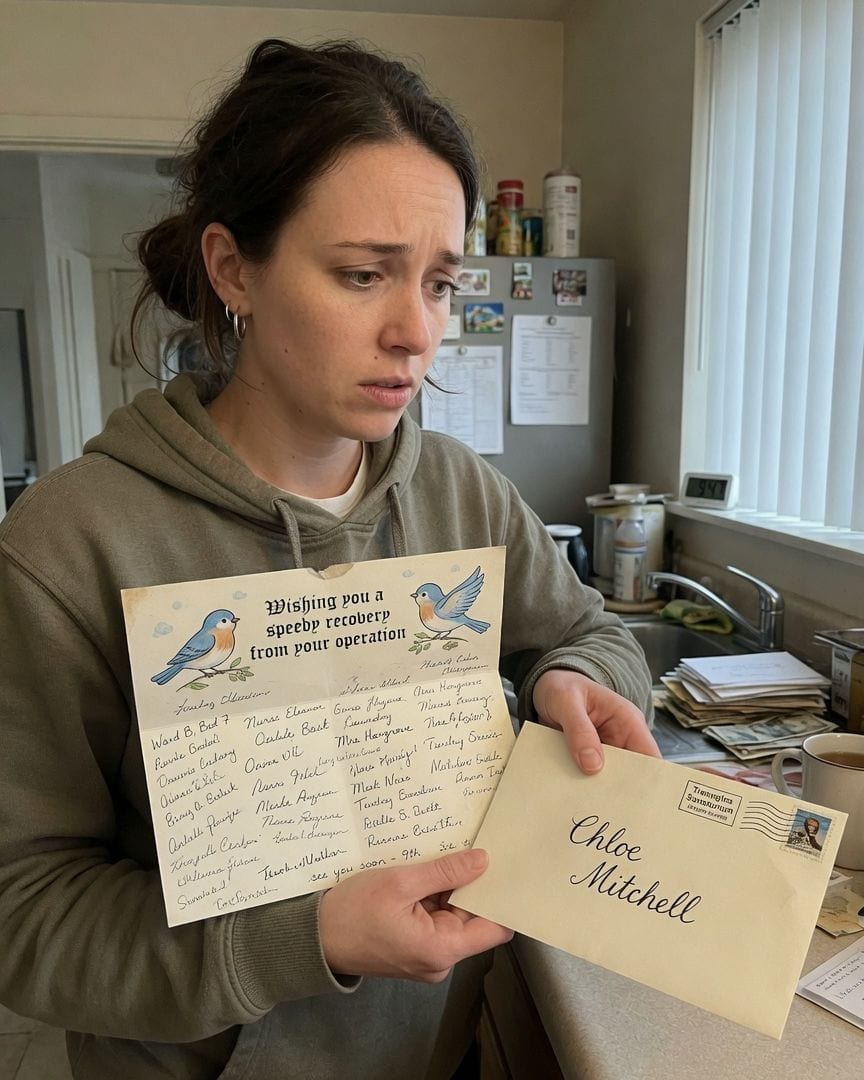
A get-well card wished me a speedy recovery from an operation I never had. It was postmarked from a sanatorium that burned down in 1963.
My quiet Tuesday morning was interrupted by an elegant get-well card, addressed to me. It wished me a speedy recovery from an operation I'd never had. But the postmark read 'Treneglos Sanatorium,' a hospital that vanished in a fire back in 1963.
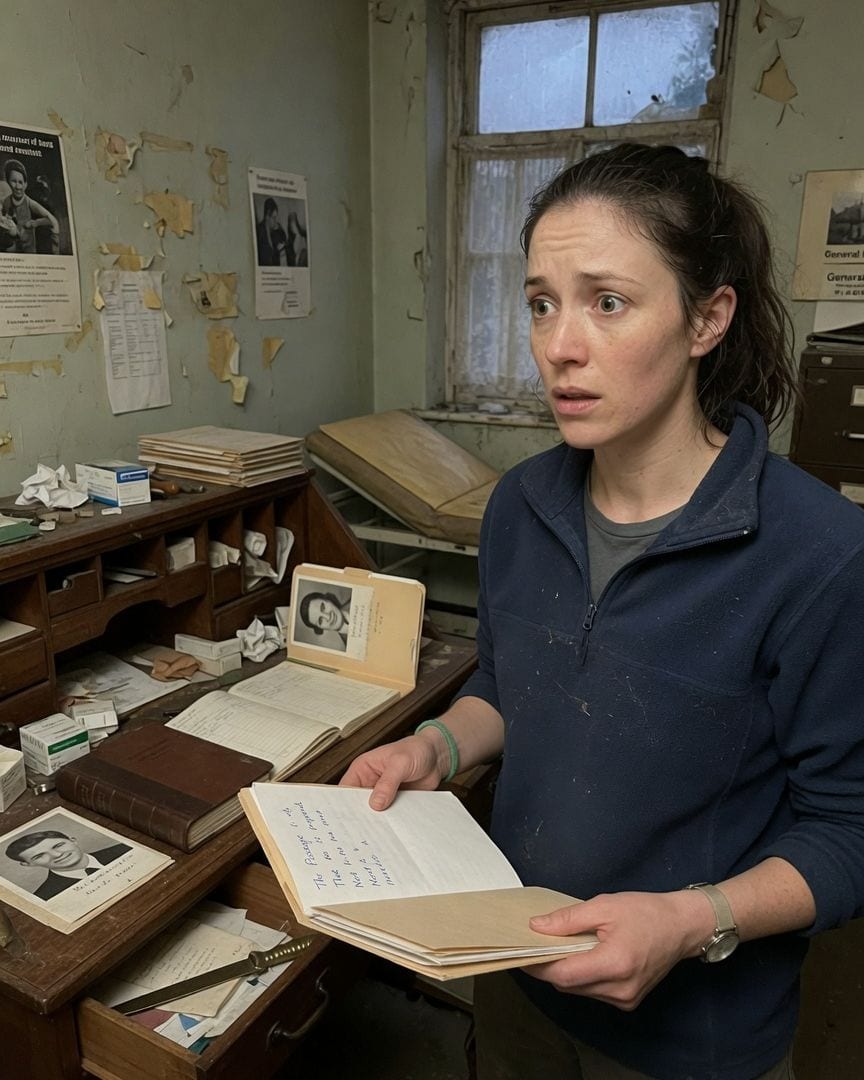
My new clinic's appointment book shows entries for this coming Monday, decades after the doctor retired and died.
Chloe Lawson bought an old, abandoned surgery in Nettlebed, ready to open her new vet clinic. Locals insisted Dr. Almott retired in '79 and the practice shut down for good. But then Chloe found his dusty appointment book filled with meticulous entries, continuing unbroken from 1979 through the decades, right up to this coming Monday.
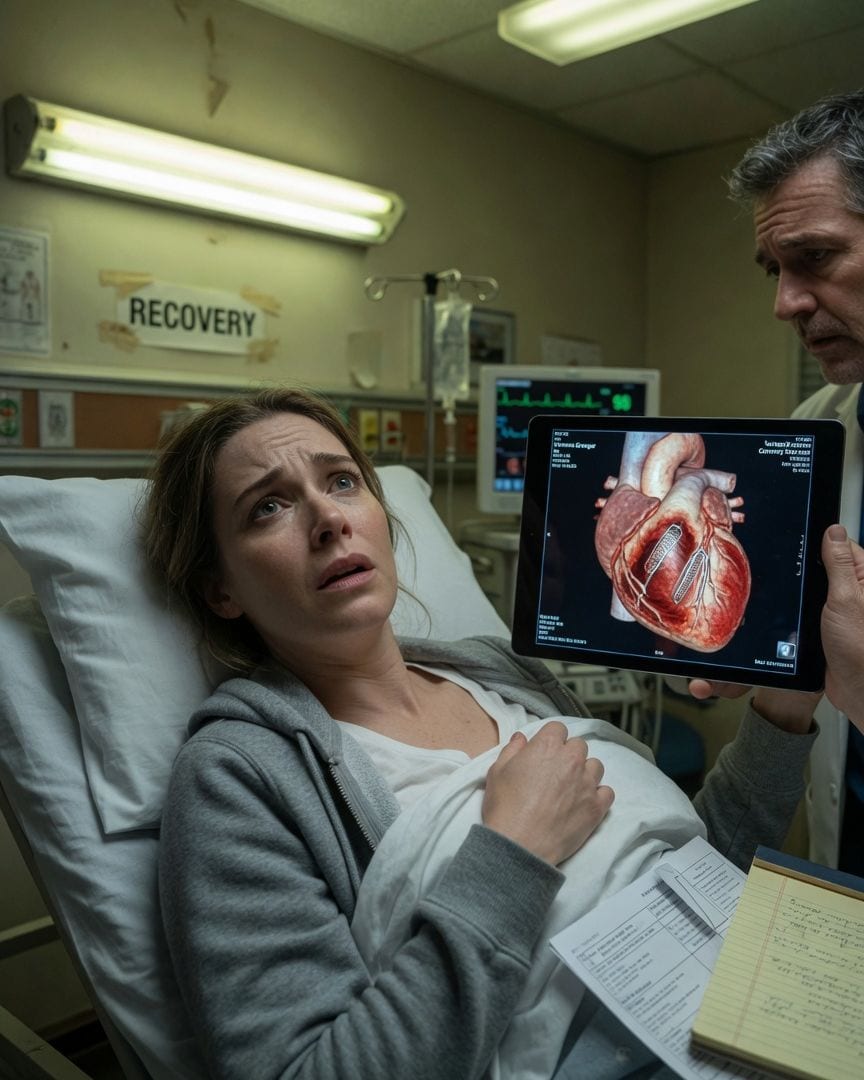
Metal stents are propping open my heart. The doctor rotated the image, but I've never had a cardiac procedure.
After years of dismissed chest pain, a CT scan revealed an impossible truth: my heart contained two metal stents. Dr. Maddox confirmed there was no record of any cardiac procedure in my entire medical history, and I had no memory of ever having surgery. My own body held a secret, alien architecture I couldn't explain.
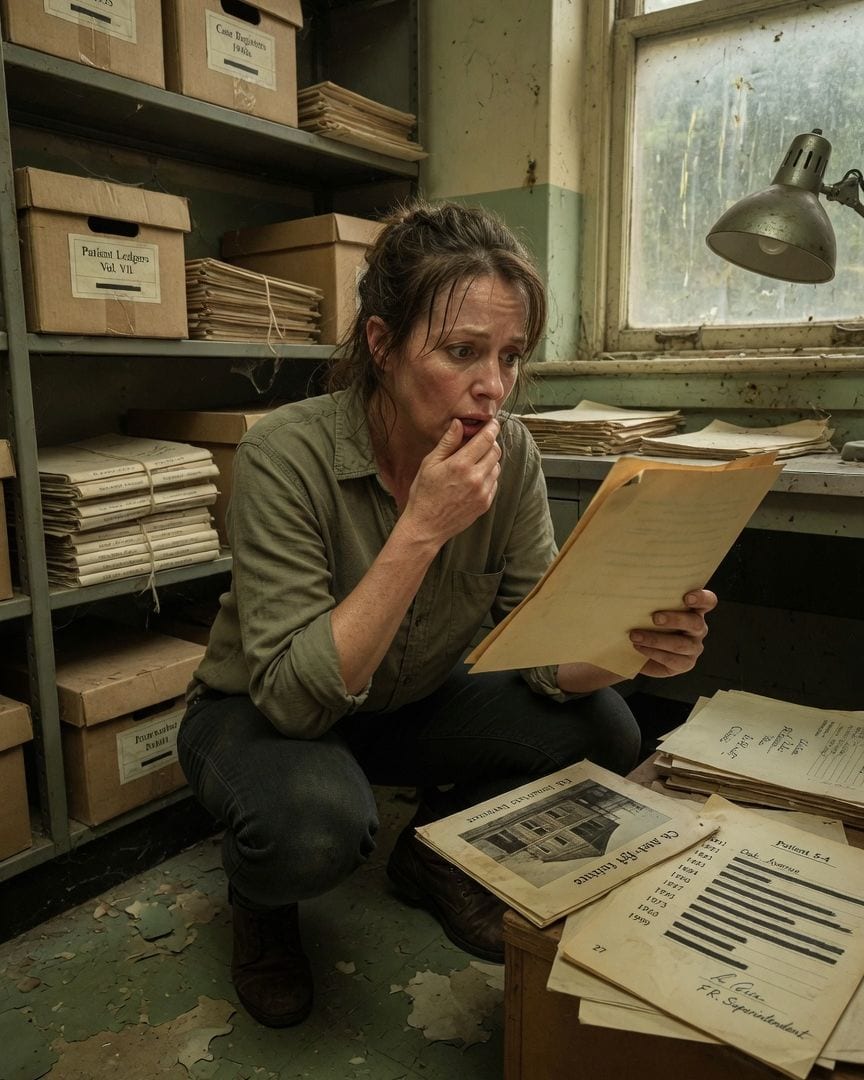
Patient 5-4 keeps checking into my aunt's old sanatorium chalet. The same initials sign them out, 'not traced,' every thirteen years since 1921.
Sifting through my aunt Margaret's estate, I found her old sanatorium file from 1999. Her patient record listed her as 'Patient 5-4,' discharged 'not traced.' But when I accessed the archives, I found 'Patient 5-4' was admitted every thirteen years since 1921, always with identical discharge notes.
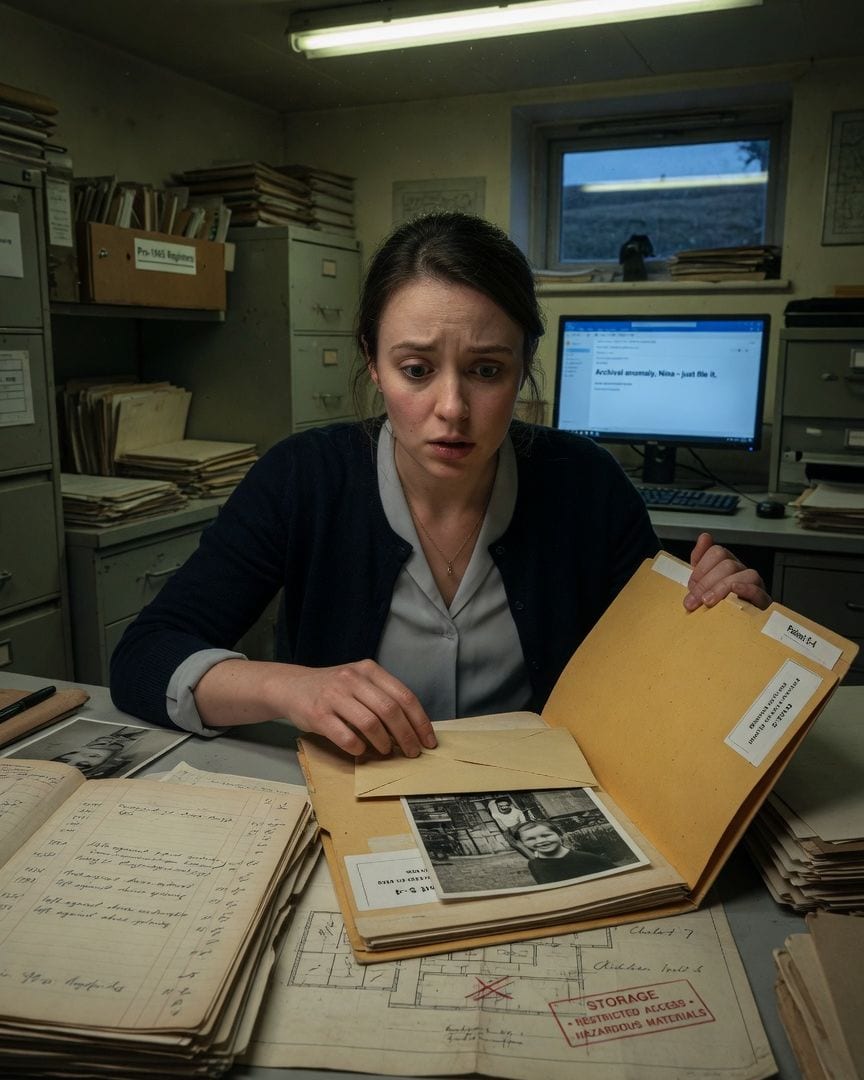
My aunt's sanatorium record shows Patient 5-4. The same file number has been quietly reissued every thirteen years since 1921, signed by the same superintendent's initials.
Processing my aunt Florence's admission file in the archives, I found her patient number, 5-4, held a disturbing secret. This number appeared every thirteen years since 1921, for patients admitted to the same remote chalet, signed by the same impossible initials, and all vanished without a trace. Then, hidden in my aunt's file, I found an old photo of her outside that chalet, with a gaunt, still figure watching from its window.