A midwife I’d never met touched my arm in the maternity ward, said my name, and whispered, 'Not this one, the next one.' I was only visiting my sister.
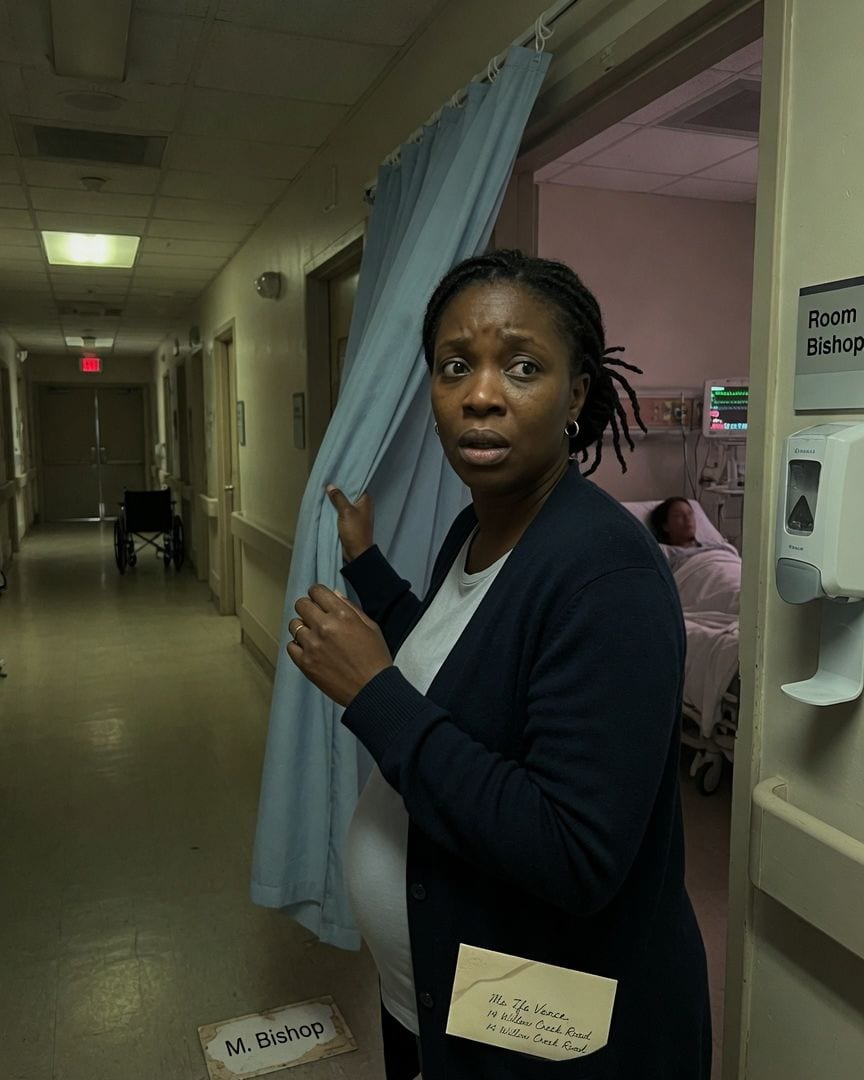
The air in the maternity ward was thick, cloying with the smell of antiseptic and a faint, sweet milkiness. I sat by Hannah’s bed, trying to appear useful, trying to ignore the dull, rhythmic hum of the monitors beside her.
My sister, Hannah Bishop, heavily pregnant, dozed fitfully, her hand resting on her swollen belly. I watched the numbers on the screen, a meaningless parade of heartbeats and pressures, anything to distract from the quiet anticipation in the room.
That’s when I saw her. A woman in dark blue scrubs, a midwife’s uniform, standing just inside the door to Hannah’s room. I’d never seen her before.
She was tall, with kind, tired eyes that seemed to hold a vast, unspoken sadness. Her name tag, I registered idly, read ‘M. Bishop’. Odd coincidence, I thought, Hannah’s married name.
The woman stepped closer, her steps silent on the linoleum. She reached out, her hand cool and firm, and laid it on my arm. My arm, not Hannah’s.
“I’m so sorry, Ife,” she whispered, her gaze unnervingly direct, her voice soft as falling snow. “Not this one, the next one.”
I pulled back, confused, a cold prickle starting on my skin. “Sorry? What do you mean?”
The midwife just smiled faintly, a knowing, sad expression, then turned, her movements fluid and quiet. She walked away down the corridor, disappearing around the bend.
Disturbed, I waited a moment, then stood. I flagged down a passing nurse, a familiar face from earlier rounds. “Excuse me, do you know that midwife? M. Bishop?”
The nurse paused, frowning. “M. Bishop? I don’t recognize that name. Is she new?”
She checked the shift roster, her brow furrowed. Nothing. I went to the ward clerk, a brusque woman named Brenda. No M. Bishop on the hospital’s payroll, no record of a temporary placement.
Brenda just shrugged, suggested maybe she was a new hire or from a different wing. But the name tag, I remembered now, had looked old. Worn smooth at the edges, the lettering faded. Not new at all.
The midwife’s words, "Not this one, the next one," gnawed at me. I tried to explain it away – sleep deprivation from watching Hannah, a mistaken identity, a strange prank. But she’d known my name. Ife.
Not Hannah, not my sister’s, but mine. Back home, the unease clung to me like a damp sheet. Malcolm Ford, my husband, listened patiently as I recounted the bizarre encounter, but he had no explanation.
“A weirdo, babe,” he’d offered, squeezing my hand. “Best to forget her.”
I couldn’t forget her.
A few days later, a strange envelope arrived in our mailbox. It was cream-colored, thick cardstock, and addressed in elegant, looping cursive to ‘Ms. Ife Vance’. The return address was handwritten too: ‘14 Willow Creek Road’.
I frowned, turning the envelope over in my hands. I knew that spot.
I’d driven past it a hundred times over the years; it was a stretch of highway now, built on what used to be empty fields and, before that, a few dilapidated farmhouses.
I remembered a local history podcast mentioning a small, private sanatorium there, "The Willow Creek Retreat," demolished decades ago for the highway expansion.
The postmark was crisp, clean, dated yesterday. It was impossible. Who would send a letter from a place that no longer existed? From a place that had been asphalt and gravel for twenty years?
I showed Malcolm, who was equally baffled. We sat at the kitchen table, hunching over our laptops, trying to look up '14 Willow Creek Road' in old digital maps and archives.
Every source consistently showed it as 'site of proposed highway' since the mid-90s, the demolition completed by the early 2000s. There was no house, no building, no post office, nothing that could have sent a letter yesterday.
The dread solidified then; this wasn't a mistake. This was targeted.
I carefully opened the impossible envelope. Inside was a single, beautiful birthday card. The front depicted a serene, pastoral scene: rolling green hills, a winding stream, a small, gnarled willow tree in the foreground.
My heart pounded against my ribs, a frantic drum, as I read the elegant, handwritten inscription inside: ‘Happy Birthday, Ife. Not this one, the next one.’ Below the message, a date: ‘October 27th.’ My birthday is in April.
This card was for six months from now. The words, the impossible address, the future date – it all crashed together. This wasn't a random occurrence. This was a direct, impossible echo of the midwife's words, aimed squarely at me.
The birthday card from nowhere became my obsession. I drove out to the former site of 14 Willow Creek Road, now just a blur of highway and the occasional flash of sound barrier.
There was nothing there but asphalt, the roar of passing trucks, and a few stunted trees that seemed to shrink from the road. The air felt wrong, thin and humming, like static before a storm.
I parked on a small shoulder, watching. There was no trace of the sanatorium, no ghosts of old foundations. Just the highway, forever moving.
I started digging. Online, I found archived newspaper articles mentioning a private sanatorium, ‘The Willow Creek Retreat,’ which had indeed operated on that land until it was condemned and demolished in the early 2000s.
The articles were sparse, vague mentions of ‘unusual patient cases’ and ‘isolated incidents’ that had led to its closure. I even found a few mentions in the local historical society archives, scanned and uploaded.
I searched for any ‘M. Bishop’ connected to the retreat, or any name even similar to the midwife's. Nothing.
But then I found a brief, almost hidden obituary for a ‘Penelope Maddox,’ who had vanished from the Willow Creek area in 1987. Her disappearance had been ruled a ‘nervous breakdown and flight.’
The obituary mentioned she was a ‘frequent correspondent’ with the Willow Creek Retreat. My stomach twisted.
I found an old, faded letter from Penelope Maddox in the historical society’s digital collection, addressed to a local historian, complaining about strange dreams and whispers. The handwriting was eerily similar to the elegant cursive on my birthday card.
The dread deepened, heavy and cold. Penelope Maddox was sending letters, too. And then she vanished.
Then my phone started ringing. ‘No Caller ID’ numbers. At first, I dismissed them as spam, silencing them, blocking them. But then, one evening, I answered. A calm, low voice, distinctly feminine, whispered my name.
“Ife,” it said, the sound like silk brushing against stone. “You’re digging where you shouldn’t. Some things are best left buried.” The voice sounded eerily familiar, a soft, knowing tone that sent a shiver down my spine.
It reminded me of the midwife. I hung up, my heart pounding, sweat beading on my forehead.
I told Malcolm, my voice tight. He suggested I change my number, and I did, but the calls persisted, always ‘No Caller ID,’ always using my name, always with that same calm, knowing tone. They weren't just random calls.
They found me. One night, the voice whispered, “They’re watching you, Ife. They know you’re looking for answers.” I rushed to my window, peering through the blinds, my breath misting the glass.
I saw nothing—just the quiet, dark street, the distant glow of a streetlamp. But the feeling of being observed was palpable, a cold prickle on my skin, as if eyes I couldn’t see were boring into my back.
I tried to trace the calls, to pinpoint their origin, but they were untraceable, bouncing through ghost numbers that evaporated the moment I tried to latch onto them.
Another Letter From Nowhere arrived. This time, it was a plain white envelope, no return address, just ‘Ife Vance’ in that familiar, elegant cursive.
Inside, I found a single, dried flower, a fragile sprig of willow, its leaves brittle and gray. And beneath it, a printed line, chillingly precise: ‘The next one always finds the path.’
Desperate, I returned to the hospital. The main entrance felt too public, too bright, so I found a side door, a forgotten service entrance, and wound my way through a maze of sterile corridors until I reached the archives.
It was a dusty, forgotten corner in the hospital's oldest wing, smelling faintly of paper and decay. There, hunched over a cluttered desk, sat Joel Delaney, a stooped, bespectacled archivist who looked as old as the records he guarded.
His skin was parchment-thin, his eyes magnified behind thick lenses.
I explained my predicament, showing him the impossible letter, recounting the midwife's words, the strange calls, the dried willow. Joel listened, his face growing paler with each detail, his fingers twitching nervously.
He fumbled with a stack of files, avoiding my gaze. "The Willow Creek Retreat," he murmured, almost to himself, the name sounding like a curse on his lips. "That place… it had a peculiar affiliation with the hospital, generations ago.
Not official, not really. More… a shared interest."
I leaned forward, pressing him. "Shared interest in what, Joel?"
He looked around nervously, his eyes darting to the towering shelves of records, then lowered his voice, the sound raspy. "There were stories. Of a… 'designation' system. Certain families, certain names, believed to be… attuned.
The Retreat was a sort of holding place, or maybe a training ground, for them. They'd come in, or be brought in, for… observation." He wrung his hands. "The 'M. Bishop' name… it might not be a coincidence, Ife.
The 'midwives'… they weren't on staff. They were… from the other side of things. They appear when a new cycle begins, when the 'next one' is due."
He finally looked at me, his eyes wide with fear, a terror that mirrored my own. "You're not the first, Ife. And you won't be the last. The records… they exist, but they're not where you'd expect them.
Not in the official ledgers. They’re… hidden in plain sight."
Joel, trembling, led me deeper into the archives, past rows of forgotten medical histories, their spines brittle with age. The air grew colder, stiller, the dust motes dancing in the single shaft of light from a high, grimy window.
He stopped before a heavy, oak cabinet, its lock rusted shut. With a jiggle and a practiced twist, he opened it, the groan of old wood echoing in the quiet.
Inside, not patient files, but a single, leather-bound ledger, thicker than any book I had ever seen. Its cover was unadorned, save for the faded inscription, barely legible: ‘Hospital Registry - 1920-1960.’
He pulled it out, the pages yellowed, brittle, smelling faintly of forgotten herbs. With a shaking finger, Joel flipped through the ledger, the sound like dry leaves skittering across the floor, stopping at a page near the middle.
He pointed, unable to speak, his eyes wide with pure terror. I leaned in, my breath catching in my throat. There, in elegant, precise script, was an entry that stole the air from my lungs:
‘Vance, Ife. DOB: 1953. Status: Awaiting Activation.’
Below it, another entry, marked with the same cryptic, swirling symbol:
‘Hartley, Grace. DOB: 1928. Status: Activated.’
The ledger, predating my own existence by decades, held my name, my impossible birthdate, and a chilling designation that echoed the midwife’s words.
I gripped the ledger, my knuckles white, my mind reeling. The words, black ink on yellowed paper, screamed at me. "What does 'Awaiting Activation' mean?"
I demanded, my voice barely a whisper, thin and reedy in the sudden, vast silence of the archives.
Joel, slowly regaining some composure, his face still ashen, began to explain, his words a torrent of dread that confirmed every impossible suspicion. "It means you've been chosen, Ife. Designated. This isn't a hospital record in the way you think.
It's a register of those selected by… by what lies beneath this place. The Willow Creek land, the hospital's very foundations, they are tied to an entity that requires… periodic integration.
'Activation' is when the chosen individual is fully absorbed, or transformed. Grace Hartley, Penelope Maddox – they were all 'activated.' The midwife you saw? 'M. Bishop'? She was likely one of them, now a manifestation of the system, a herald.
They become the mechanism, the messengers."
He leaned closer, his eyes pleading. "The Letters From Nowhere are communications from those already 'activated,' sent from a liminal space, perhaps to guide or warn the 'next one.' And the phone calls, the voice using your name?
Those are 'pre-contact events,' designed to gently, or not so gently, steer you towards your fate." He gestured vaguely around the room, to the ancient walls, the foundations that ran deep beneath our feet.
"This institution isn't just a hospital; it's a front for an ancient, cold, bureaucratic horror that has tracked these bloodlines, these names, for centuries, ensuring the 'cycle' continues. The ledger is its meticulous, terrifying record of ownership."
I slammed the ledger shut, the dull thud echoing like a gunshot. "No. I won't let this happen."
My fingers fumbled, trying to tear the brittle pages, to erase the impossible words, but Joel grabbed my arm, his grip surprisingly strong for a man his age.
"You can't fight it, Ife! It only hastens things. You try to warn others, you just put them in its path." He pleaded with me, his eyes brimming with tears. "Leave, Ife. Try and forget."
But I couldn't. I pulled my arm free, my hands shaking as I fumbled for my phone. I had to call Malcolm, warn Hannah. My finger hovered over Malcolm's contact, but the line was dead.
No dial tone, just a flat, empty hum. Then my phone rang. 'No Caller ID.' My breath hitched. I answered.
The familiar, calm voice, the midwife's voice, whispered, "You've seen the record, Ife. There is no escape. Your time is now."
Suddenly, the lights in the archive flickered, once, twice, then died, plunging us into absolute darkness.
A cold wind, smelling of damp earth and something metallic, swept through the room, though all windows were sealed, rattling the shelves of old documents. Joel screamed, a choked, terrified sound that was abruptly cut off.
I heard a soft, rhythmic thrumming sound, like a deep, ancient heartbeat, growing louder, closer. I fumbled for my phone's flashlight, my thumb numb as I jabbed at the screen. The beam cut through the darkness, illuminating the room.
Joel was gone. Where he had stood, the heavy oak cabinet was open, its contents spilled across the floor like scattered bones.
And in its depths, where dusty shelves should have been, a dark, swirling void shimmered, like water pooling in an impossible shadow. From the void, a hand, pale and slender, reached out, its fingers beckoning.
My name echoed from the darkness, a chorus of calm, knowing voices, all belonging to the midwife, all belonging to the watcher, all belonging to something ancient.
Ife Vance vanished from the hospital archives without a trace. Malcolm Ford reported her missing, but the police found no signs of forced entry, no struggle, nothing.
Joel Delaney, the archivist, was found hours later, catatonic, muttering about 'the ledger' and 'the cycle' until he was sedated and transferred to a psychiatric ward. Hannah Bishop gave birth to a healthy baby girl two weeks later.
She named her Grace, a family name she'd always liked. The midwife who had delivered the baby had a name tag that read 'M. Vance'.
Malcolm sits alone in their quiet house, Ife's phone clutched in his hand. He dials her number, one last desperate attempt. It rings once, then a familiar, calm, knowing voice answers, using Malcolm's name, saying, "She's with us now.
Not this one, the next one." The line goes dead.
Malcolm hangs up, staring at the blank screen. A faint, wrong smile touches his lips. He looks towards the nursery, where baby Grace sleeps. His eyes seem to hold an ancient, knowing light. "Is that so?"
he whispers, to no one.
If this one got to you
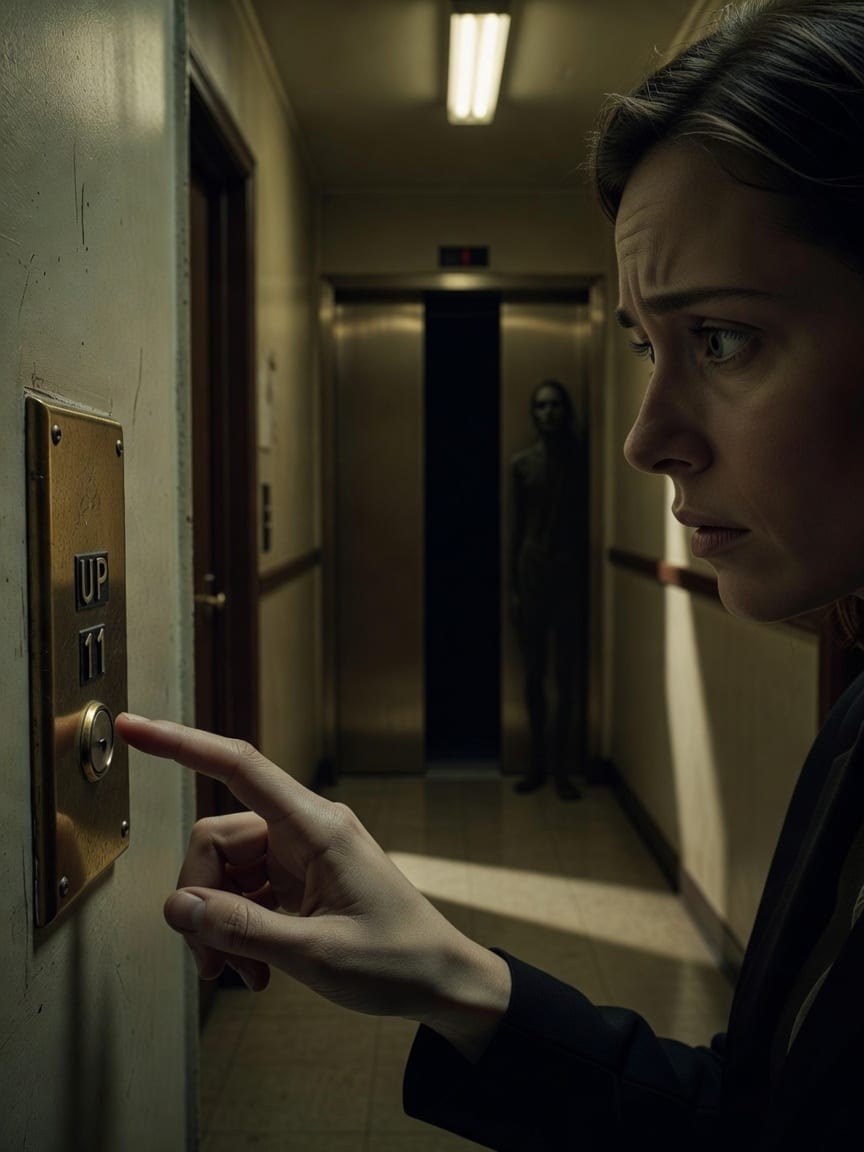
My doorman warned me not to take the tenth-floor lift on Saturday. The building's lift passed inspection last month. He seemed terrified that he'd said it.
My doorman's unsettling warning about the tenth-floor lift left me with a metallic taste of unease. I tried to rationalize it away, but then a birthday card arrived for me, five months early, from an impossible address. It was a site linked to unexplained disappearances, and a cold certainty began to settle in.
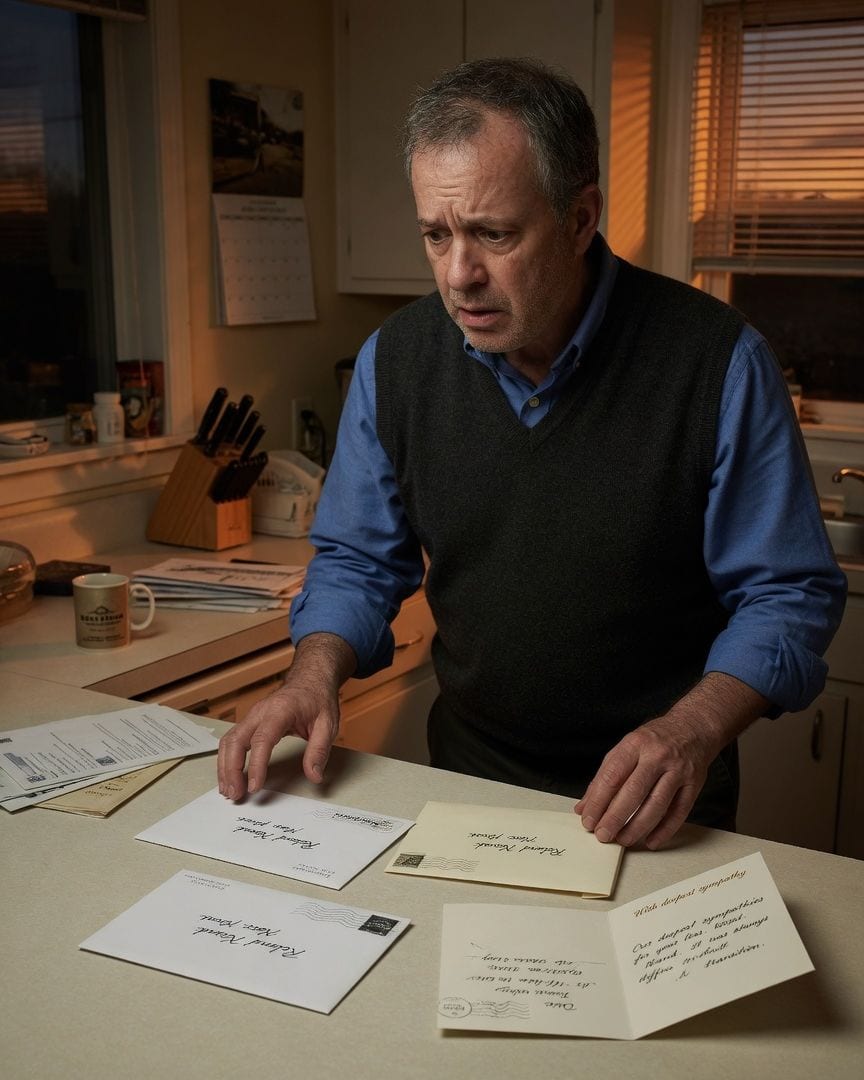
My maternity appointment arrived yesterday from a hospital demolished in 1987. Then the condolence card came today.
Roland Novak, a fifty-year-old man, receives a crisp white envelope containing an appointment card for a maternity unit, complete with a due date. The listed hospital, Trewint Cottage, was demolished in 1987, and the consulting doctor died decades ago. The impossible letter is then followed by a second, equally impossible, arrival.
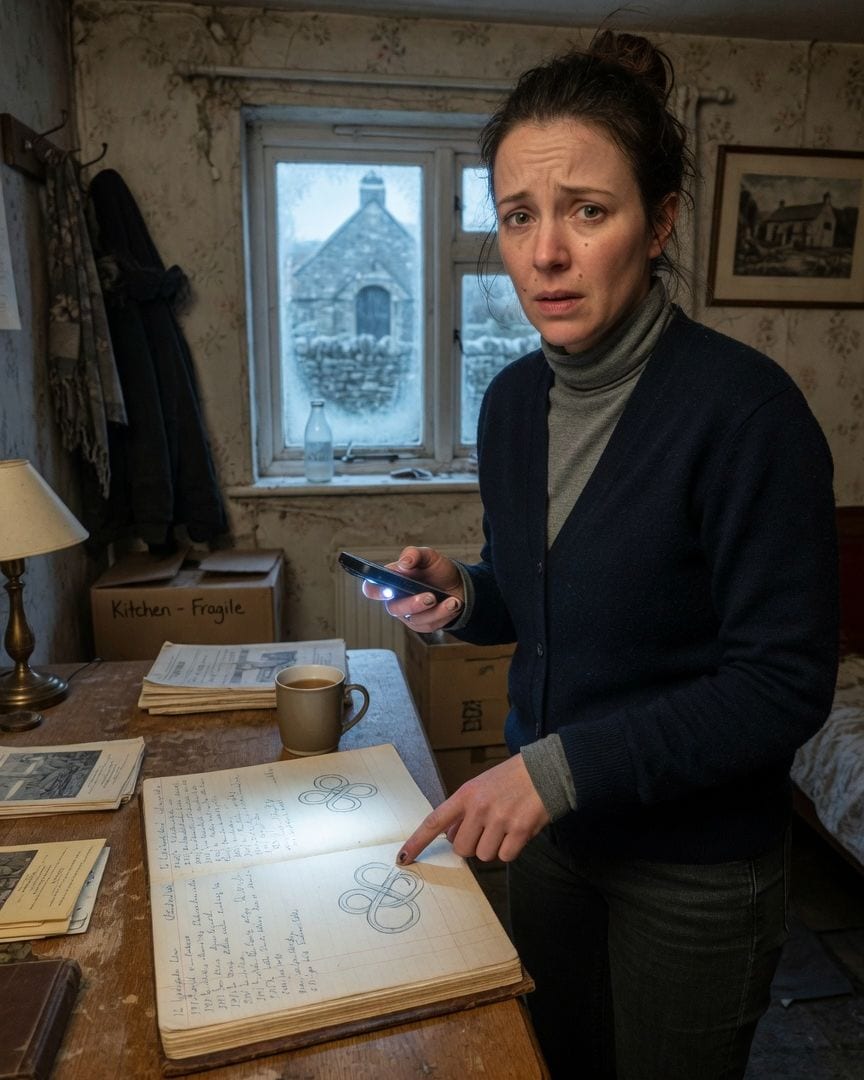
Milk appears daily by my lychgate. The dairy closed in '79. My address is handwritten into their old delivery book, starting the day we moved in.
Moving to Blackwood Creek, I loved the quaint charm, especially the unexpected morning milk delivery to my lychgate. But when I mentioned it to Eleanor at the village shop, her smile froze. She told me Willow Creek Dairy closed decades ago, in '79.
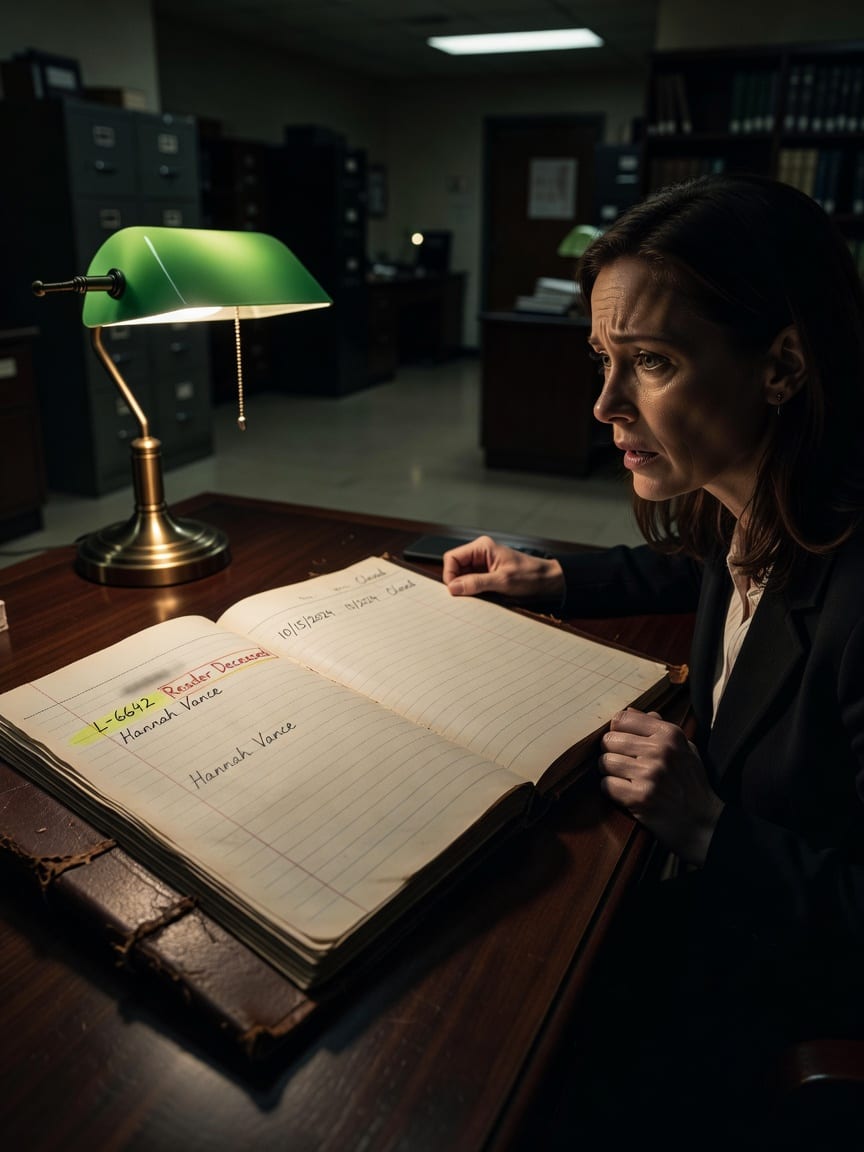
My library card number L-6642 was issued to me at seven — and the ledger shows that number has marked a reader 'deceased' every twelve years since 1949.
Returning my late father's library card to the old town library felt like a small act of closure. But the senior librarian's ancient ledger revealed a chilling pattern of 'reader deceased' entries tied to specific card numbers and borrowed books. My unease turned to cold dread when I secretly found my own name penciled in, marked for a future 'reader deceased' entry.
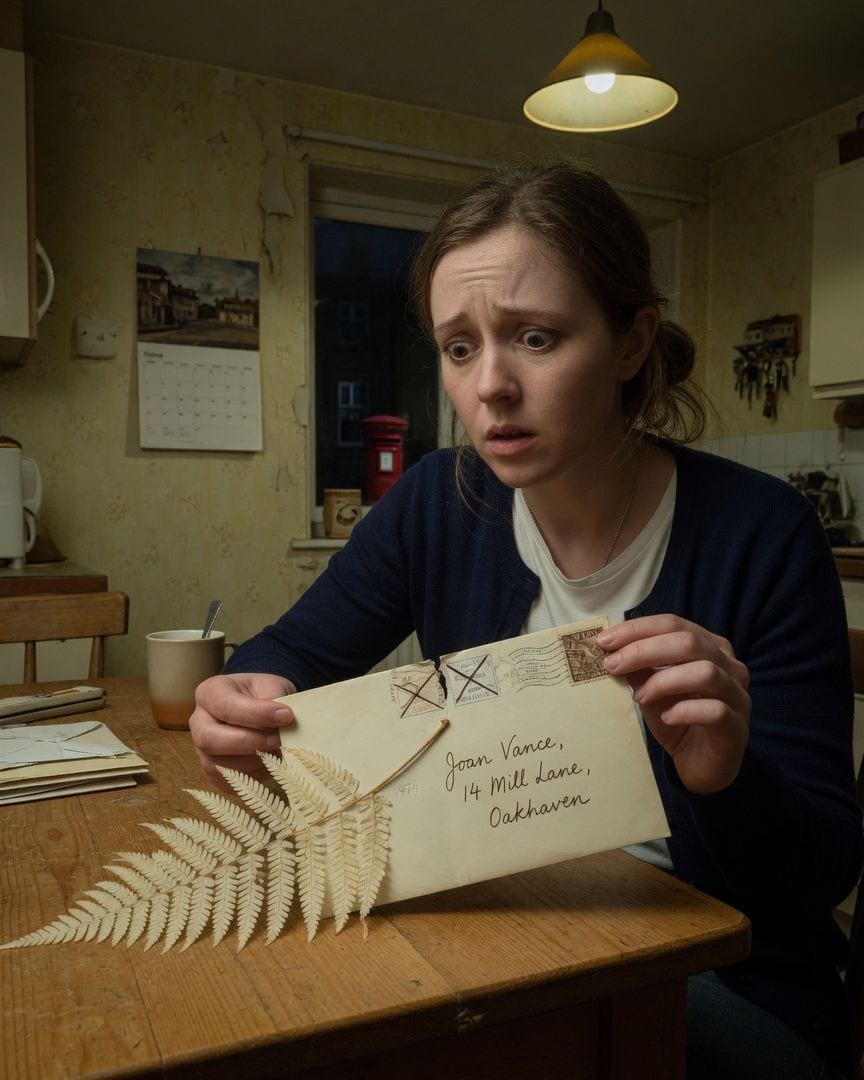
My letter returned. Delivered by hand, with a 1974 postmark. My own address, in a hand I didn't recognise.
As Joan Vance, new to Oakhaven, I posted a letter to my sister just two days ago, well past the last collection. Now, that same envelope sits on my kitchen table, delivered by hand. It bears a postmark from Oakhaven, 1974, a date that makes no sense, as the local post office officially closed that very year.
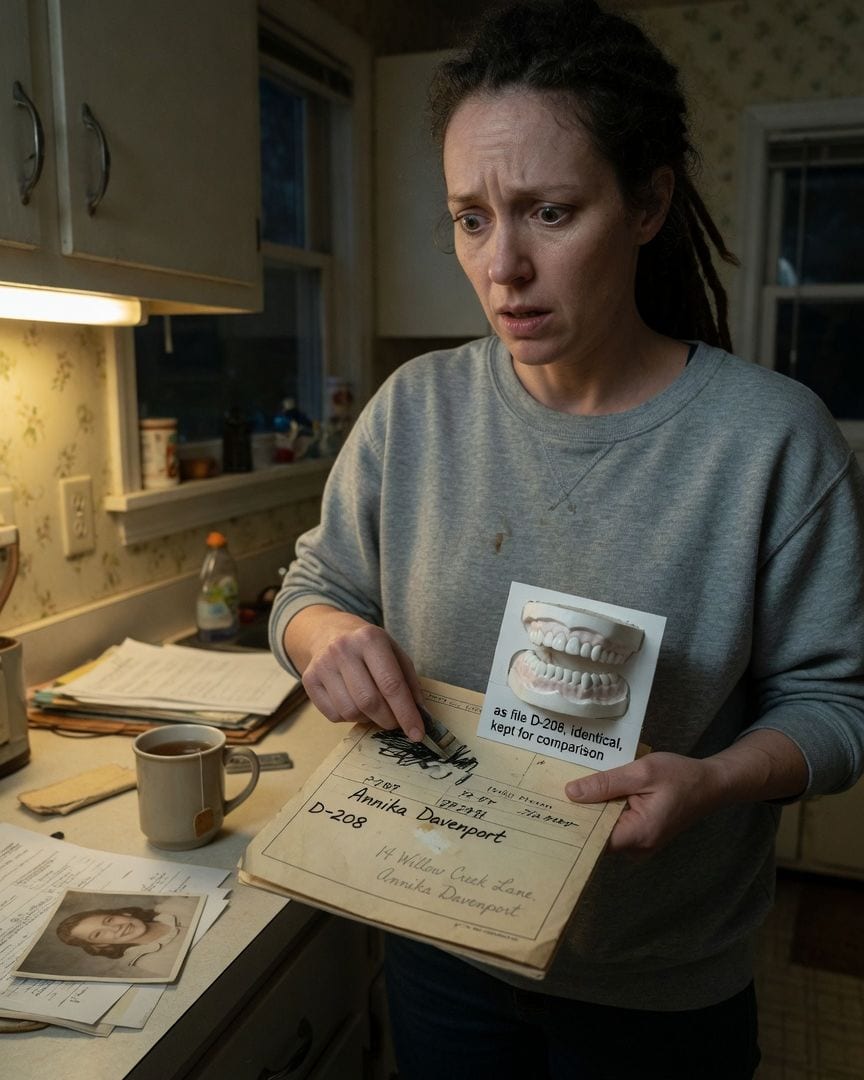
My childhood dental chart lists the house I bought last year — in my own name, years before I was born. A second set of my teeth sits filed beside it, marked 'identical.'
Sifting through old dental records, I found my chart, D-208, with my 1988 birth date. But a line from 1958 was blacked out, and a clipped card with an impression of my teeth listed my name and current home address, decades before I was born. The impossible facts knotted into a cold certainty.