My doorman warned me not to take the tenth-floor lift on Saturday. The building's lift passed inspection last month. He seemed terrified that he'd said it.
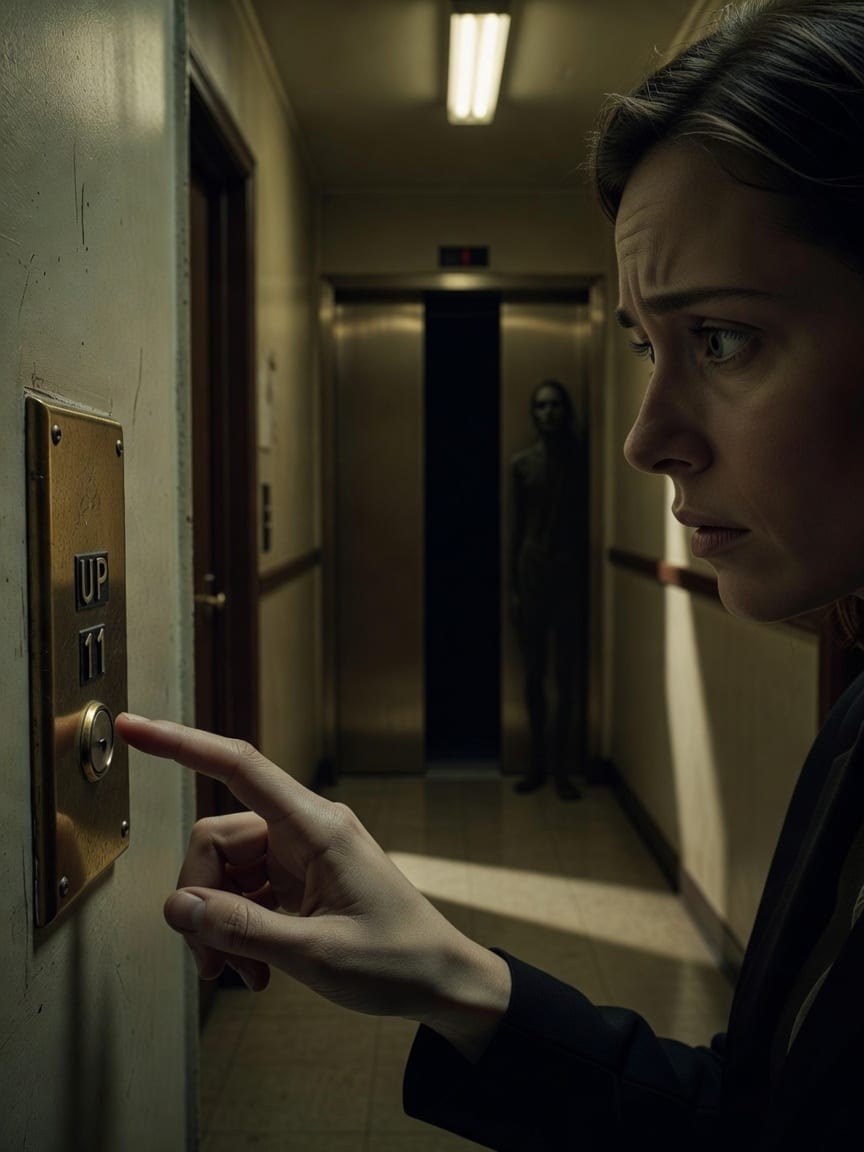
The lobby’s air was always a little too warm on Wednesday mornings, smelling of old coffee and polish. I stepped out of my apartment building, already running late for work, when Errol stopped me.
He was standing by the mailboxes, not his usual post by the glass doors, and he looked… different. Pale.
His eyes, usually crinkled with a gentle, tired amusement, were wide, darting around the empty lobby as if he’d just seen a ghost.
“Miss Feng,” he mumbled, his voice a dry rasp. He was 58, had been the doorman for the whole six years I’d lived here. I’d never seen him like this.
“I’m so sorry, Miss Feng – don’t take the lift on the tenth. Not this Saturday.”
I paused, my hand on the cold brass of the door. “What? The tenth floor?” My apartment was on the seventh. “Why not?” I asked, trying for a light tone, but a sudden, cold knot tightened in my stomach.
The tenth floor was just another floor. We’d had the annual lift inspection last month; everything was fine.
He shook his head, a slight tremor in his hand as he ran it over his thinning grey hair. “I… I don’t know. I just… a feeling. Please.”
His gaze fixed on me, desperate, then flickered towards the closed lift doors, as if the thing itself might be listening. “Just… don’t.”
I looked at him, really looked. Errol was a practical man. This wasn’t a joke. He was genuinely terrified that he’d said it, whatever it was.
I wanted to ask more, to press for a rational explanation, but his fear was a wall. He just kept shaking his head, repeating, “Not this Saturday,” under his breath. The moment hung there, thick and unsettling.
I nodded slowly, a shiver running down my spine despite the warm air. “Okay, Errol. I won’t.” I turned and walked out, the metallic taste of unease in my mouth.
The morning sun felt too bright, too normal, for the strange dread that had just settled over me.
I spent the next two days trying to shake it off. A bad dream? An old superstition Errol had picked up? The tenth floor was home to a couple of lawyers and a retired artist. Nothing sinister.
My rational mind kept trying to dismiss it.
Then, on Friday, it arrived. A thick, cream-colored envelope, waiting in my mailbox. My name, ‘Lydia Feng,’ was written across the front in an elegant, looping script that felt oddly familiar, yet I couldn’t place it.
The postmark was smudged, but I could make out ‘Oakley, CT’ and a date from a few days prior. Connecticut? I didn’t know anyone there.
Inside, a card, thick and formal. ‘Happy Birthday!’ it declared. Underneath, a handwritten message: ‘Wishing you the happiest of returns, Lydia.’ My birthday wasn’t for another five months. October.
It was unsettlingly specific, a detail someone shouldn't know unless they really knew me.
Intrigued, and more than a little unnerved, I flipped the envelope over. A subtle return address was printed on the back. I typed it into my phone’s map. My eyebrows furrowed. There was no such street number in Oakley, CT.
The address generator showed a gap. I tried searching for the address with the town name. Nothing. I widened my search, digging into old property records online. That’s when I found it.
The address, 14 Juniper Lane, Oakley, CT, corresponded to an empty, overgrown lot on the very outskirts of that city. The site of a house that had been demolished decades ago.
The local history page mentioned it briefly, a footnote about a property that had a string of ‘unexplained disappearances’ associated with it before it was razed.
The discovery sent a fresh, colder chill down my spine. Someone knew my name, my exact birthday, and was sending me mail from a place that literally didn’t exist. A place connected to disappearances. My rational brain struggled. A prank?
A very elaborate, very disturbing one. But the knot in my stomach tightened, a silent alarm.
I spent the rest of Friday trying to find a rational explanation. A prank caller had once gotten my birthday from a public record, maybe this was similar? But the demolished house, the elegant script… it didn’t fit. Nothing fit.
Then, when I got home from grabbing some dinner, another identical envelope was tucked into my mail slot. It was Friday. Saturday was tomorrow. My hands trembled as I picked it up. The same thick, cream paper.
The same elegant, looping script on the envelope, ‘Lydia Feng,’ written with an unnerving precision. The postmark was the same smudged ‘Oakley, CT,’ the same impossible address.
Inside, this time, it was a condolence card. Blank inside, save for a single, stark printed line: ‘Our deepest sympathies for your terrible loss.’ A loss that hadn't happened. My breath hitched.
My heart pounded so hard I could feel it against my ribs. This wasn’t a prank. This wasn’t random. The dread wasn’t a vague unease anymore; it was a cold, specific certainty, a knife plunging into something personal.
It had found my name.
I visited the Oakley lot the next day, a Saturday. The sun was cold, the sky a dull grey. It was just as the records showed: an empty patch of forgotten earth, choked with weeds and saplings.
Crumbling brick foundations peeked through the overgrowth, the ghosts of forgotten walls. The wind whispered through the tall grass, a hollow, mournful sound. Nothing.
Just an empty space where a house had been, and a growing certainty that the letters were not a trick of the mail system or a prank. They were from nowhere.
Back at the building, I tried to speak to Errol again. He was by the main doors, wiping down the glass, but he avoided my eye.
“Errol, about what you said… and these letters…” I started, pulling one of the envelopes from my bag. He flinched, his eyes wide and haunted. “Miss Feng,” he muttered, his voice barely audible, “Some things are best left alone.
You don’t want to go digging.” He kept wiping the same spot on the glass, his fear palpable, a heavy, unspoken weight in the air between us. He clearly wasn’t going to say anything more.
My rational mind fought back, but it was losing. I started researching the building’s history. My own building. I found nothing overt online, no mention of anything unusual.
But in the local library, poring over old microfiche, I found a series of cryptic, century-old newspaper clippings. They mentioned ‘unexplained departures’ from this very address, always around specific dates. ‘Local Gentleman Vanishes Without Trace’ read one from 1912.
Another from 1935: ‘Family Mystified by Daughter’s Disappearance.’ No bodies, no clues, just gone. There was a persistent, unsettling rumor about a ‘whispering house’ that once stood on the site.
A local eccentric, a sophisticated scam, a clerical error – my mundane explanations shredded themselves under the weight of these impossible details.
The letters kept arriving, sporadically, on my exact schedule. Each one a different, unsettling life event, each postmarked from ‘nowhere.’ A congratulations card for a promotion I hadn’t received.
A cheerful announcement for my wedding day – I wasn't even engaged, hadn't been on a date in months. The targeted dread wasn’t just a curiosity anymore; it was a palpable, suffocating threat. Each envelope felt like a countdown.
As I delved deeper into the building’s shadowed past, I started to notice Evelyn Caldwell. She was an elderly resident who lived on the eleventh floor, always impeccably dressed, her white hair pulled back in a severe bun.
She’d lived here for decades, everyone knew her, but I’d rarely interacted with her. Now, though, she seemed to be everywhere. I’d catch her watching me in the lobby, a small, knowing smile playing on her lips.
Sometimes she’d be coming out of the lift just as I was getting in, her gaze lingering for a beat too long.
One afternoon, I was checking my mailbox, pulling out yet another impossible letter – this one a congratulatory note for buying a summer home I didn’t own – when Evelyn’s voice, soft but clear, spoke from right behind me.
“Still receiving those fascinating letters, dear?”
I froze. My hand clutched the envelope. My heart hammered against my ribs. I hadn't told anyone about the letters, not really. Not even Errol had seen them. I slowly turned.
Evelyn stood there, a faint, unreadable smile on her face, her eyes piercing, bright with an unsettling intelligence.
“Oh, don’t look so surprised,” she continued, her voice light, like she was discussing the weather. “One develops an intuition in old buildings, wouldn’t you say? Some things simply… continue.”
Her smile didn't waver, but her gaze drifted past me, past the mailboxes, to the row of lift doors.
It lingered specifically on the one for the tenth-floor lift, for a beat too long, a beat that stretched into an eternity. Then, she simply turned and walked away, her footsteps soft on the polished marble.
I watched her go, my skin prickling. The air in the lobby, usually so mundane, felt suddenly heavy, pressing in on me. The chilling certainty hit me like a physical blow: my investigation had not gone unnoticed.
Someone was watching, and they knew exactly what I was looking for.
I became obsessed. Evelyn’s words, Errol’s terror, the impossible letters – they all swirled in my head, a disorienting, horrifying storm. I returned to the city archives, this time with a specific purpose.
I poured over old land deeds and architectural plans for my building, tracing its lineage back through time.
I discovered it had been erected on the site of a much older structure, a grand house that had been owned by the Caldwell family for generations before its demolition in the 1920s.
Buried deep in a property transfer document, in tiny script, was a phrase that snagged my attention: ‘the continuation of certain historical arrangements.’
It was an innocuous legal boilerplate, but in the context of everything else, it pulsed with a dark, hidden meaning.
Then, in a collection of local historical society pamphlets, I found it: a slim, brittle volume titled ‘The Whispering House of Oakley Hill.’ My breath caught. The Oakley. The impossible address.
It described a local family – the Caldwells – who were said to ‘tend’ to the land, maintaining an ancient, peculiar tradition.
It spoke of a recurring pattern of ‘vanishings’ associated with the property, described in vague, almost poetic terms, steeped in folklore, but chillingly specific in its mentions of ‘specific dates’ and ‘chosen names.’
The pieces clicked into place with a horrifying precision. Errol’s specific, terrified warning about Saturday, about the tenth-floor lift. The letters from a demolished house, sent from ‘nowhere,’ announcing impossible events.
Evelyn’s unnervingly specific comments, her knowing smile, her lingering gaze at the tenth-floor lift. It wasn’t a glitch in the system. It wasn’t a prank. It was a pattern.
And it had been here, right under my feet, for a very, very long time, meticulously maintained.
The certainty that it was a pattern, not an accident, intensified my desperation.
I returned to the archives, demanding access to the Caldwell family’s personal effects, donated to the city decades ago after the last known Caldwell had died, leaving no direct heirs.
The archivist, a kind woman named Martha, raised an eyebrow but eventually led me to a back room, unlocking a dusty, metal cabinet.
Tucked away on a bottom shelf, in a box marked ‘Miscellaneous – Caldwell Estate,’ I found it. A heavy, leather-bound ledger. Its cover was dark, worn smooth in places by centuries of handling, its pages brittle with age.
My hands trembled as I lifted it. The elegant script on the cover, ‘Registrum Animarum,’ was identical to the writing on the letters I’d been receiving. My heart began to pound a frantic rhythm against my ribs.
I opened it, the dry pages crackling. Inside, column after column, was a chillingly consistent pattern: names, dates, and cryptic notations. ‘Passage via West Wing, 3rd Floor – May 18, 1782.’ ‘Departure from Garden Gate – August 9, 1850.’
‘Taken from the Old Well – March 3, 1901.’ The dates stretched back centuries, each entry brief, precise, horrifying. My eyes scanned frantically, skipping over dozens of names, searching for… something.
The dread was a physical pressure in my chest, a cold hand tightening around my lungs.
And then I found it. An entry, stark and undeniable, among dozens of others, yet standing out like a brand. My own name.
‘Lydia Feng.’
My breath caught. My fingers traced the delicate, faded ink. Beside my name, a date: ‘October 12, 1989.’ My actual birth year was 1992. I was born three years after that date.
And next to that, the words that made my blood run cold, chilling me to the bone, snapping every impossible detail into a terrible, coherent whole: ‘Tenth Floor - Lift.’
My name was merely one in a meticulously maintained, centuries-long list of the marked.
The ledger clutched tight in my shaking hand, I confronted Evelyn Caldwell. I found her in her immaculate eleventh-floor apartment, the door ajar, as if she’d been expecting me.
She invited me in with a serene smile, gesturing to a plush armchair. Her apartment was elegant, quiet, filled with old furniture and the faint scent of lavender.
“So, you’ve found the record,” Evelyn said, her voice calm, utterly devoid of surprise or malice. She sat opposite me, her hands folded neatly in her lap. “It always finds its way to those who need to see it.”
I tried to speak, but the words stuck in my throat. “This… this ledger. My name. The date…”
Evelyn nodded, her expression placid. “Yes. Your designation. My family has been the ‘caretakers’ of this land for centuries, you see. Ensuring the ‘Passage’ continues. It’s a necessary cycle, Lydia. A… harvest, if you will.
Tied to the very foundations of this city, this ground.” She spoke as if discussing a mundane household chore. “The ledger is merely the documentation. Names are designated at birth, or even before, to maintain a certain balance.
A balance we have always, always upheld.”
“The letters? From that demolished house?” I managed to choke out.
“A courtesy,” she replied, a faint, almost pitying smile. “The system’s way of acknowledging the chosen. Delivered through unwitting conduits, of course. The demolished house is simply a ‘nowhere’ point to obscure the true, non-physical origin.
You’ll find similar placeholder addresses used throughout the centuries in those old records.”
“Errol’s warning,” I pressed, the pieces now interlocking into a horrifying, seamless picture.
“Ah, Errol,” Evelyn said, her gaze softening slightly, as if recalling a fond, misguided pet. “A brief moment of clarity. A flicker of understanding given to those sensitive enough to perceive the pattern, before it recedes again.
He tried to warn you, poor man, without truly understanding the nature of the Passage. He is good at his duties, but not quite attuned.”
My eyes went wide. “The tenth-floor lift?”
Evelyn looked at me, her smile unwavering. “Yes, Lydia. The tenth-floor lift. A specific ‘channel’ for your designated passage. Just as it was for many others before you. Each marked individual has their own channel, their own method.
It is precise, elegant, and timeless.” The horror wasn’t in Evelyn’s words, but in her placid acceptance. Her complete lack of remorse or fear. It was simply a fact, a duty, a pattern that had to be maintained.
A pattern I was part of.
Numb with dread, I tried to argue, to scream, to find a way out, but Evelyn’s calm explanation had stripped away all hope. She didn’t threaten me. She simply stated the inevitability. “Your date is Saturday, dear. The tenth-floor lift.”
Her words hung in the air, heavy and final.
I spent Friday night in a haze of terror. I packed a bag, my hands shaking, stuffing in clothes, my passport, cash. I tried to book a flight, any flight, to anywhere.
But an inexplicable inertia, a profound, unshakeable weariness, bound me. My fingers fumbled on the keyboard. My mind felt dull, slow. Every escape route seemed to vanish the moment I thought of it.
By midnight, I was still sitting on my bed, the packed bag at my feet, the laptop screen displaying an empty flight search. My legs felt heavy, my will sapped.
On Saturday morning, I felt an almost magnetic pull towards the lift. My legs moved as if on their own, guiding me down the corridor, past the locked doors of my neighbors.
The smell of old coffee from the lobby was stronger today, cloying. Errol was on duty. His face was grey, etched with a profound sorrow, his eyes meeting mine for a silent, knowing moment. He knew.
He offered no words, only a slight, almost imperceptible shake of his head, a gesture of resignation.
I walked past him, my heart thudding a slow, heavy beat. I entered the main lift car. Pressed the button for the tenth floor. The climb felt endless.
When the doors opened, I stepped out into a corridor that looked exactly like mine, but felt utterly alien. I walked to the tenth-floor lift, the one Errol had warned me about.
The doors glided open, revealing an ordinary, empty cabin. No monster, no bright light, no sign of anything out of the ordinary. Yet, the air inside felt heavy, humming with an ancient, waiting presence, a cold breath on my skin.
I hesitated for a single, agonizing moment, my entire being screaming at me to run, to turn, to escape. But the pull was too strong, too overwhelming.
My hand, as if it belonged to someone else, reached out and pressed the ‘Open Door’ button. I stepped inside. The doors hissed shut behind me, the soft ‘ding’ echoing in the empty hallway.
Days passed. Lydia Feng’s colleagues noticed her absence. Her phone went straight to voicemail. Errol, the doorman, answered questions about her with a practiced, neutral tone, stating she must be “out of town.”
But a week later, Lydia Feng was seen again. She returned to her apartment, continued her routine. Her colleagues commented on her new “calmness,” a detached serenity that replaced her usual vibrant energy.
She smiled more, but the smiles didn’t quite reach her eyes.
Errol saw her in the lobby, and there was a flicker of profound recognition in his gaze, a deep sadness, as if he saw a ghost, or something that wore a familiar face but was not quite the person he knew.
Weeks later, a new tenant moved into a vacant apartment on the ninth floor. One afternoon, they found a thick, cream-colored envelope in their mailbox. It was addressed to them, in elegant, looping script.
The postmark was smudged, but they could make out ‘Oakley, CT’ and a date. Inside, a handwritten card wished them ‘the happiest of returns’ for a birthday still months away.
Later that week, Evelyn Caldwell watched from her eleventh-floor window as the new tenant carried their mail inside, a faint, unreadable smile playing on her lips.
The city hums on, oblivious.
If this one got to you
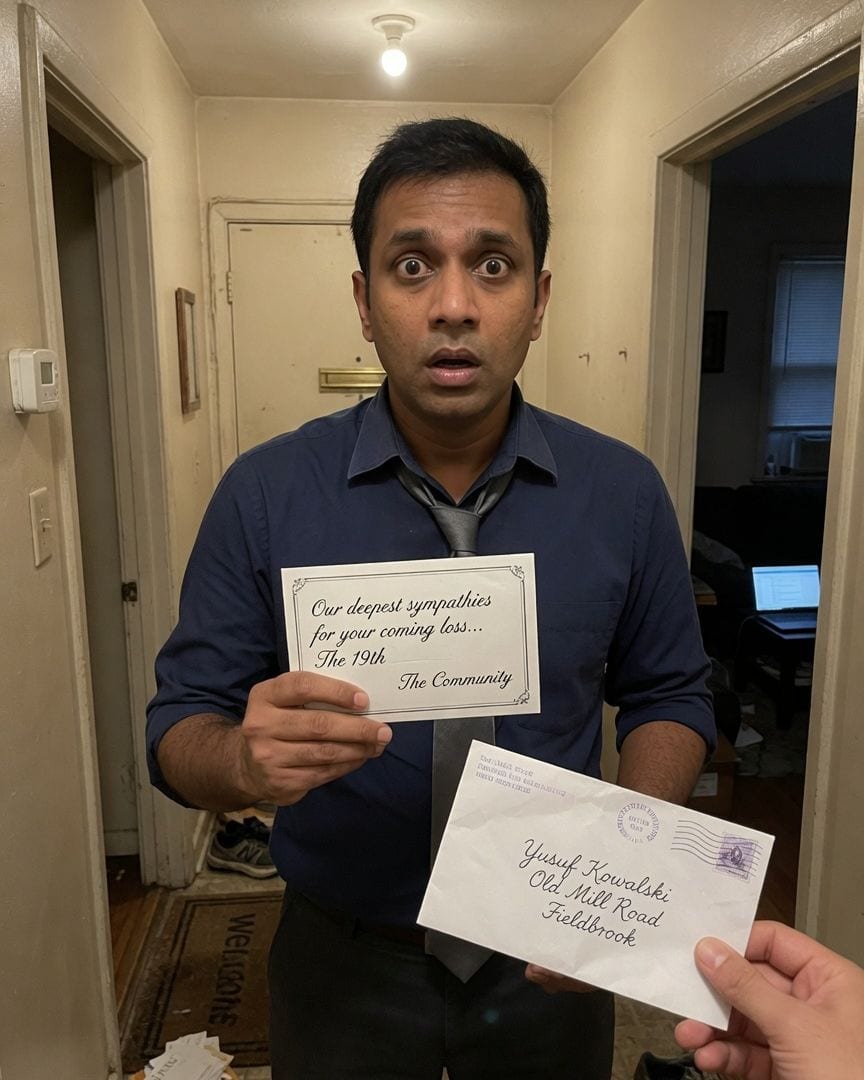
My bus driver knows my name, Yusuf, and said 'not long now.' Today is the 18th. He added a date this morning: the 19th.
My morning bus commute is a predictable comfort until driver Bernard Ellison addresses me by name. I've never told him Yusuf. Then, he adds a quiet, 'Not long now... The 19th.' Today is the 18th, and his words leave me with an inexplicable dread.

My taxi driver knew my name before I spoke, then apologized for the flight I was going to miss. I was arriving. The cab's plate was scrapped four years ago.
After a strange taxi ride, I received an unsettling birthday card addressed to me. Its return address listed 'Old Mill Road Field,' an empty lot where a mill once stood, and it was postmarked locally. The card arrived four months before my actual birthday, sparking a cold dread I couldn't ignore.
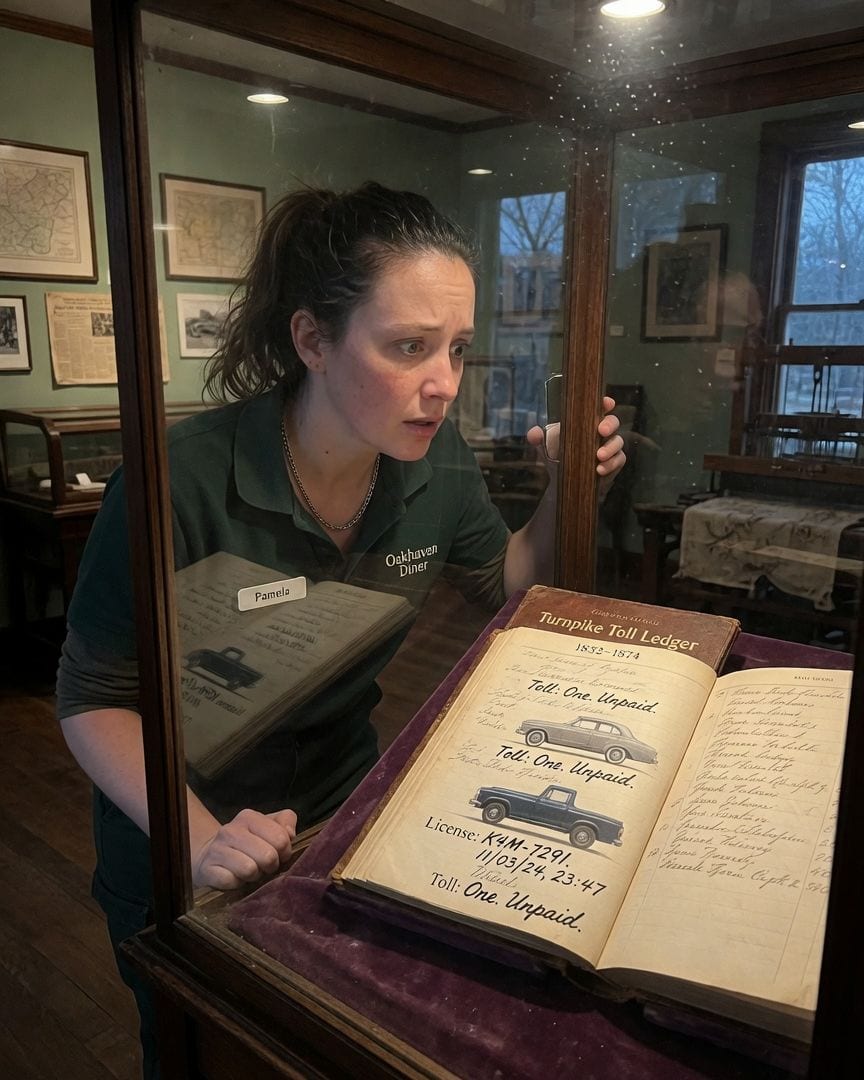
My car stalled at the old turnpike milestone, after dark. The toll ledger, closed in 1874, then listed my car, my stall time, and a toll of one, unpaid.
I had just moved to Oakhaven when my old sedan died on a dark, winding road by an infamous turnpike milestone. The next day, I found my car's exact registration and stall time written in fresh ink in a 150-year-old, locked museum ledger, marked 'Toll: One. Unpaid.' The curator dismissed it as a prank, but her white knuckles and strained voice hinted at something far more unsettling.
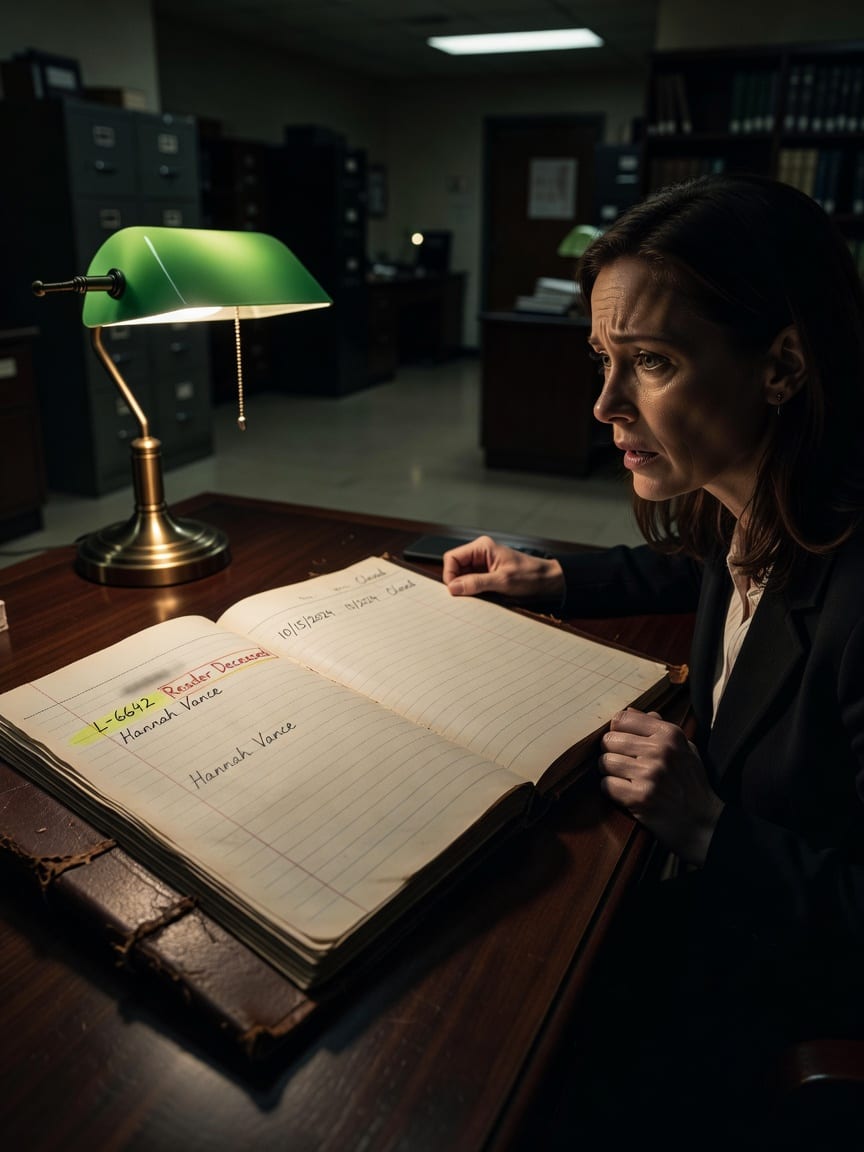
My library card number L-6642 was issued to me at seven — and the ledger shows that number has marked a reader 'deceased' every twelve years since 1949.
Returning my late father's library card to the old town library felt like a small act of closure. But the senior librarian's ancient ledger revealed a chilling pattern of 'reader deceased' entries tied to specific card numbers and borrowed books. My unease turned to cold dread when I secretly found my own name penciled in, marked for a future 'reader deceased' entry.
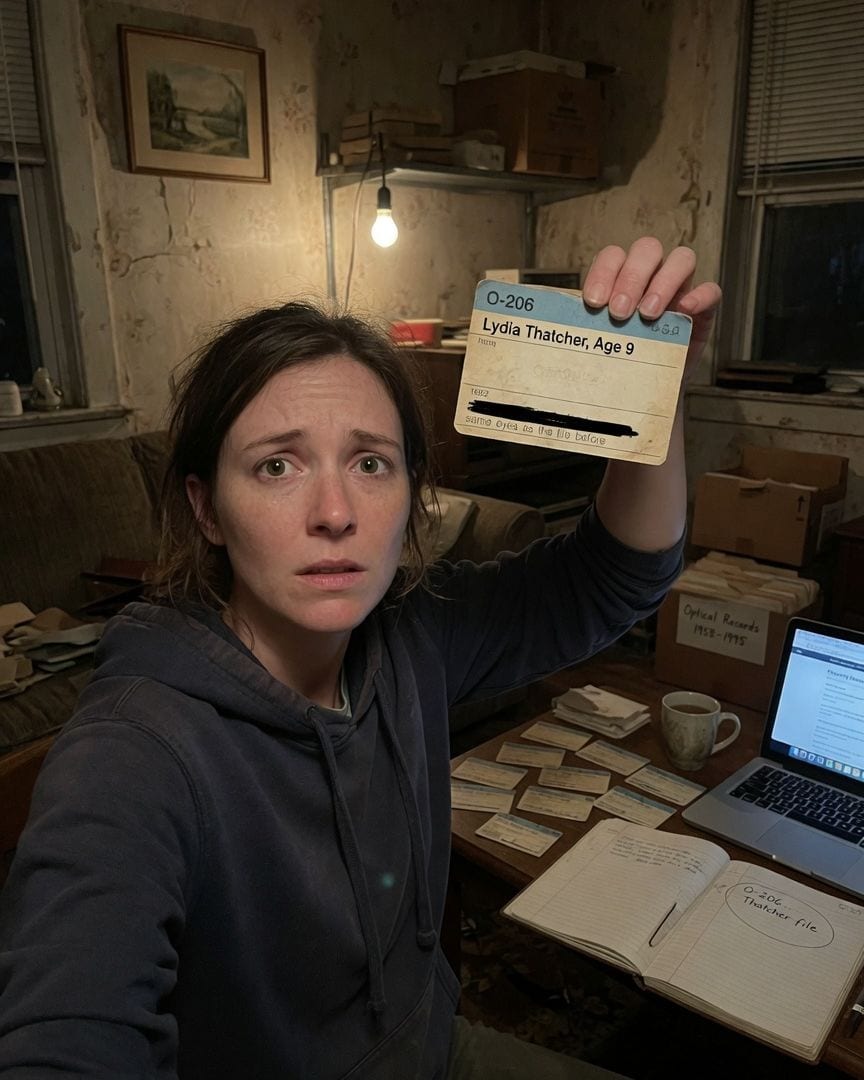
My own optical card is dated 1962, with my name on it. I wasn't born until 1993.
Sifting through old patient files from my former optical practice, I found my own O-206 card. It had my name, Lydia Thatcher, and my current home address printed on it. But the card was dated 1962, decades before I was even born, and a redacted note mentioned 'same eyes.'
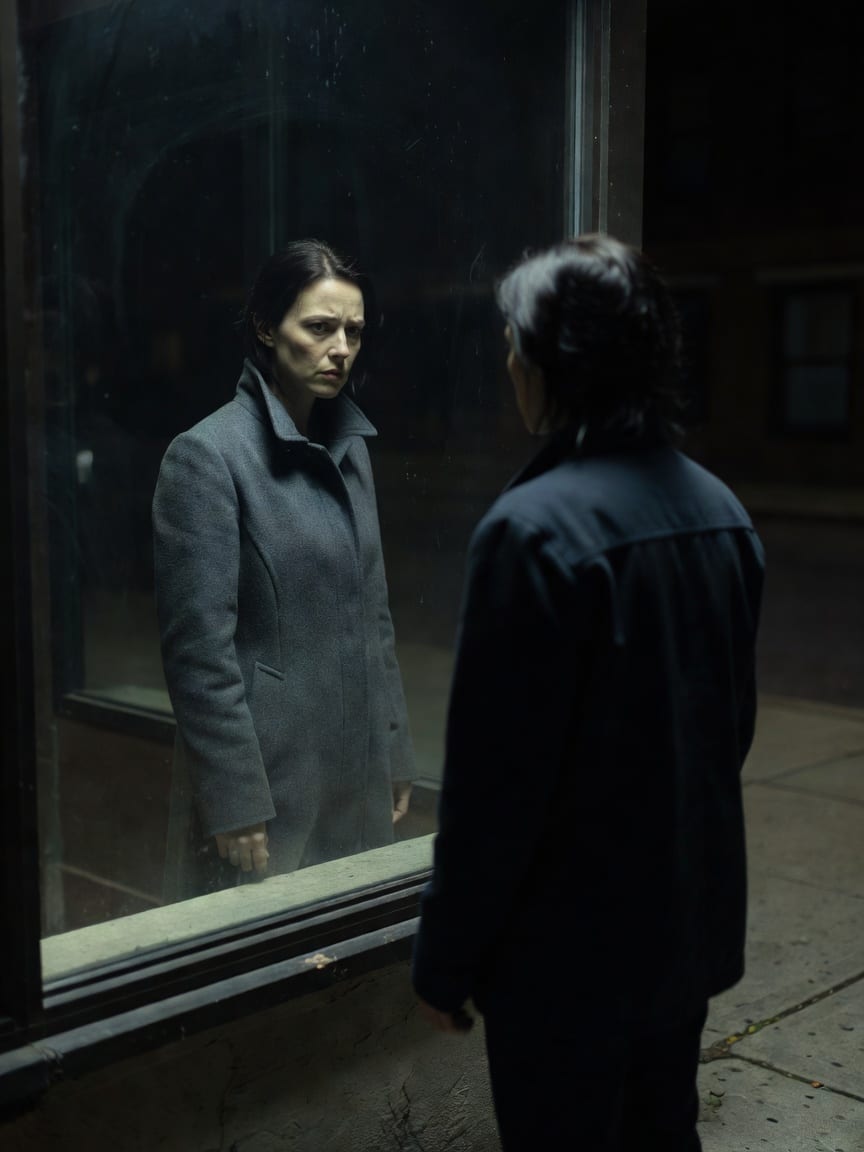
My neighbor saw me take her parcel, wearing my grey coat, at 11:52 AM. I was in Lisbon that whole week.
Returning from Lisbon, I was met by my neighbor Elena, who insisted I'd signed for a parcel last week. She even said I was wearing my grey wool coat. But my coat was still packed in my suitcase, and I was thousands of miles away, checking into my Lisbon hotel at that exact time.