Our funeral ledger records my family name, same age, buried on Cordage Street every nine years since 1919. My great-grandfather's note: 'do not open 3907.'
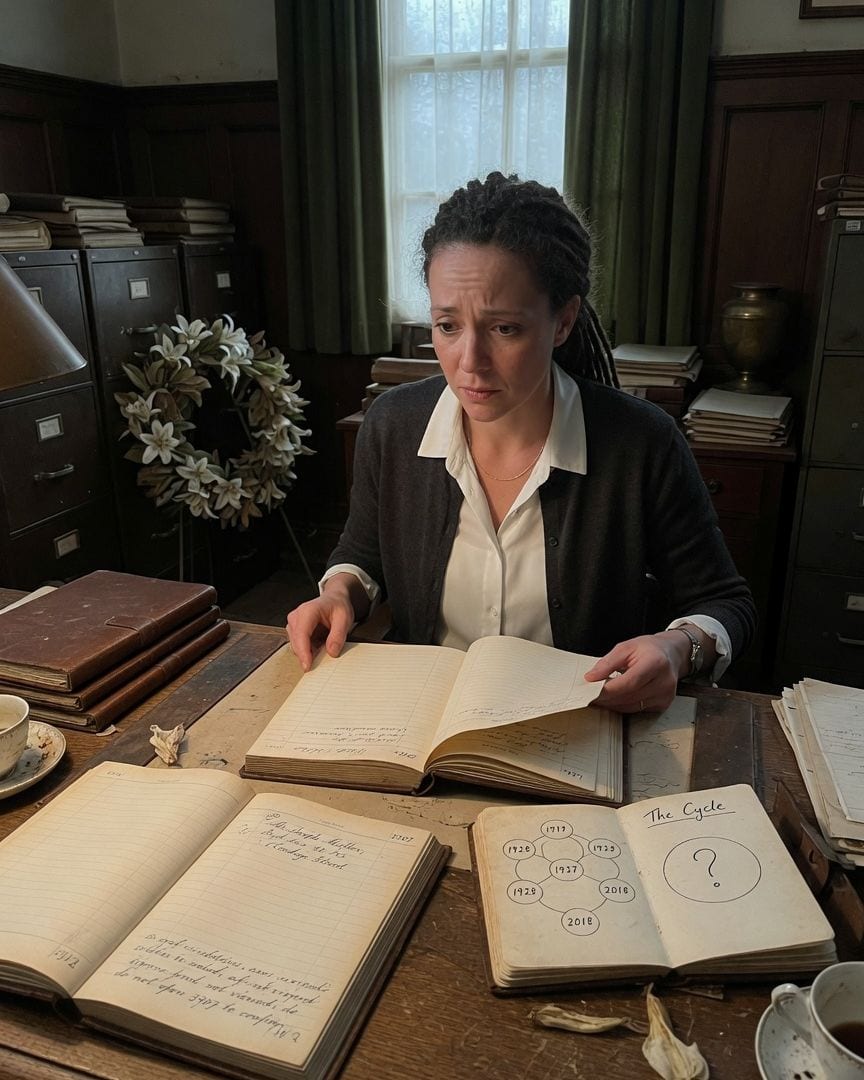
The air in the Ingram Funeral Firm always carried the same two scents: old paper and lilies. A strange combination, but comforting in its predictability.
I was sitting at my great-grandfather Joseph’s heavy oak desk, inherited just like the firm itself, reviewing old arrangement ledgers.
Usually, I saved this task for quiet afternoons, when the drone of traffic outside was low and the light was fading. Today was one of those days.
My finger skimmed down a yellowed page in the 1919 volume, past familiar names and dates, then paused. Order 3907. Mr. Joseph Muller, age 45, residing at 14 Cordage Street. A standard burial arrangement, nothing out of the ordinary.
I made a mental note to cross-reference the address with our current records – Cordage Street was still a residential area, and 14 was our own family home.
Then my eyes jumped to the next volume, dated nine years later: 1928. Order 3907. And there it was again. Mr. Joseph Muller, age 45, 14 Cordage Street. A shiver, light as a draft, ran down my spine. Clerical error?
A peculiar coincidence? I flipped to 1937. Again. And again in 1946. Each entry, identical down to the age and the address, carried the same closing note, penned in Joseph’s elegant, looping script: 'coffin sealed, not viewed.'
Below that, a firm, underlined instruction: 'do not open 3907 to confirm; prepare it and proceed.'
I tried to rationalize it. Maybe it was a standing account for a particular family, passed down. But the identical name, age, and address, spanning decades, defied logic.
And the instruction not to open the coffin, not even to confirm… it felt less like a quirky family request and more like a deliberate, carefully managed process.
A cold knot began to form in my stomach, tightening with each identical entry. This wasn't a mistake. It was too consistent.
The next morning, the ledger entries were still a cold weight behind my eyes. I couldn't shake them.
I pulled out every single arrangement volume, spanning a full century, from the heavy, leather-bound books of the early 1900s to the thinner, laminated binders of recent years.
Order 3907 appeared every nine years, without fail. 1919, 1928, 1937, 1946, 1955, 1964, 1973, 1982, 1991, 2000, 2009, and most recently, 2018. Always 'Joseph Muller,' always age 45, always 14 Cordage Street.
Always 'coffin sealed, not viewed,' always Joseph Ingram’s terse instruction.
I found Oliver Fletcher in the embalming room, polishing a brass urn with a methodical, almost meditative rhythm.
Oliver had been with the firm since my grandfather's time, a quiet, kind man who knew the history of these walls better than anyone.
'Oliver,' I started, trying to sound casual, despite the frantic thump of my heart. 'Do you remember anything about a Joseph Muller, Order 3907?'
He paused, his polishing rag still. His gaze flickered from the urn to the stack of old ledgers I’d brought up from the archives. 'Ah, Order 3907,' he said, his voice softer than usual. A little too soft.
'A standing arrangement. Been with the firm since before I started. Joseph always handled it himself.' His eyes darted away, a subtle evasion that I wouldn't have noticed if I hadn't been watching so closely.
I pressed, 'But the same man, every nine years? Same age, same address?'
Oliver just shook his head slowly, his gaze now fixed on some point beyond me. 'Some families have… particular requests, Nina. Best not to pry into the old ones. Your great-grandfather was very clear.'
He returned to his polishing, the gentle scrape of the cloth against the brass suddenly grating.
I spent the rest of the day in a blur, my hands shaking slightly as I tried to work. Later, I used every archival resource I could access online: local death certificates, property records, old newspaper obituaries.
I searched for a Joseph Muller living at 14 Cordage Street, dying on any of those specific nine-year intervals. Nothing. No record outside the Ingram firm.
It was as if these 'burials' existed only within our own walls, an elaborate phantom only we acknowledged.
Frustrated, and with a growing sense of unease, I retreated to my great-grandfather Joseph’s old office. It was mostly a storage room now, filled with dusty files and forgotten equipment.
I ran my hand over his heavy oak desk, still scarred with ink stains and faint rings from forgotten teacups. It felt solid and permanent, a relic from a different time.
On a whim, I tugged at a small, decorative escutcheon on the side panel. I remembered Joseph, when I was very small, once showing me a trick with a puzzle box, a tiny hidden latch.
It gave way with a soft click, revealing a shallow, hidden compartment, barely big enough for a hand.
Inside, nestled beneath layers of fine, undisturbed dust, was a small, leather-bound journal, its pages yellowed with age. Joseph’s personal diary. Flipping through, I found mundane entries about firm business, family events, even weather reports.
Then, tucked between two pages near the middle, a stark, unsettling diagram. It was a series of interlocking circles, drawn freehand, each labeled with a date from the ledger’s repeating pattern: 1919, 1928, 1937, and so on, up to 2018.
The final circle was empty, marked only with a stark, unsettling question mark. The words 'The Cycle' were scrawled above it, in my great-grandfather’s familiar, elegant hand.
I spent the next few days in a daze, poring over Joseph’s journal. The mundane entries gave way to something far darker around the dates of 'The Cycle.' His handwriting grew tighter, almost frantic.
He wrote of 'The Steward' and 'The Vessel,' of 'managing the transition' and 'ensuring the quiet.' There were chilling references to 'the preparation' and the 're-filing.'
He never explicitly named the 'thing' he was preparing, but the implication was clear: it was not human. It was something that needed to be contained, transferred, hidden.
I cross-referenced the dates with old family photo albums, searching for anything unusual. Around the 'Cycle' dates, I noticed subtle shifts in Joseph. He often looked strained, almost gaunt, his eyes hollowed with what looked like exhaustion or deep worry.
The lines around his mouth were tight, as if he were constantly holding something back.
Then, I found one that stopped my breath. It was a photograph from 1955, taken shortly after a '3907' ledger entry.
Joseph stood in front of what was unmistakably the Ingram family home at 14 Cordage Street, though it looked older, the paint peeling.
Beside him was a man who looked strikingly like the 'Joseph Muller' described in the ledgers—same build, same receding hairline, same set to the jaw.
Not a family member I recognized, yet the resemblance to the name in the ledgers was undeniable. But it was the man's eyes that chilled me. They held an unnervingly blank, almost vacant stare, like windows to an empty room.
He was wearing an old, out-of-fashion suit, the fabric hanging oddly on his frame. The date on the back, faded but legible, read 'October 1955,' just weeks after the ledger entry.
It wasn't the look of a dead man; it was something hollowed out, something occupied.
I confronted Oliver Fletcher again, this time with Joseph’s journal open to 'The Cycle' diagram, the unsettling photo tucked between its pages. Oliver’s face drained of color as he saw them.
He reached out a trembling hand, as if to close the journal. 'Nina, you shouldn't be looking at this,' he said, his voice barely a whisper, thin as dried leaves. 'Your great-grandfather… he had his reasons. Deep reasons.'
He refused to elaborate, only warning her, 'Some things are meant to stay buried, Nina. For everyone’s safety. Not just for us.' The scent of lilies, usually so comforting, now felt cloying, suffocating the air around us.
That night, I stayed late in my office, unable to stop thinking. The journal, the photo, Oliver’s terrified look—they swirled in my head. The old building groaned around me, settling in for the night.
I heard a faint shuffle from the office downstairs, a sound like paper being moved, distinct against the quiet. I froze, my heart pounding a frantic rhythm against my ribs.
The firm should have been empty; I was the last one here. I grabbed my heavy, antique flashlight and crept down the creaking stairs, my breath held tight in my chest. The reception area was dark, silent. Nothing amiss.
Yet, a file I’d left open on my desk was now neatly closed, its tab tucked in, and the old grandfather clock in the reception area, which hadn’t worked in years, was ticking softly, its steady cadence a mocking heartbeat in the quiet.
The air grew suddenly cold, raising goosebumps on my arms.
The next morning, a small, folded note was tucked under my office door. It was written on firm letterhead, but unsigned. The message was short, chillingly precise: 'Some things are meant to be filed. Don't make it harder.'
The implication was clear: someone knew what I was doing. And they were watching.
I cornered Oliver in the firm’s quiet prep room, the air thick with the cloying, sweet scent of embalming fluid. The fluorescent lights hummed, casting a sterile glow on his ashen face. 'Who left that note, Oliver?
And what does 'Some things are meant to be filed' mean?' I pushed the journal, open to 'The Cycle' diagram, and the photograph of the vacant-eyed 'Joseph Muller' across the stainless-steel table. The metal clanged sharply under the impact.
Oliver’s composure, usually as unyielding as polished granite, finally cracked. He sighed, a deep, shuddering breath that seemed to rattle his entire frame. He looked down at his hands, clasped so tightly they were white at the knuckles.
'It's not a burial, Nina. Not in the way you think.' His voice was barely audible, raspy with dread. 'It's a… transfer.'
He finally met my gaze, his eyes ancient with sorrow. 'The 'man' isn't truly dead. He's… a vessel. An empty shell that houses something. Something that needs to be contained, re-filed, every nine years.
The 'coffin sealed, not viewed' isn't about protecting the deceased, Nina. It's about protecting others from seeing what's inside. Or rather, what's not inside.' His voice dropped to a whisper. 'It's empty, Nina.
Or it holds… something that shouldn't be seen.'
He began to explain, the words coming in a rush, as if a dam had finally burst. The Ingram family, he revealed, didn't just manage a funeral home; they were 'Stewards,' tasked with facilitating this entity's passage.
The 'Joseph Muller' identity, the age, the address—these were identifiers, a quiet, almost bureaucratic way to track and contain it. 'Your great-grandfather,' Oliver continued, his eyes distant, fixed on the far wall, 'he wasn't just managing a client.
He was managing a… presence. One that renews itself, takes a new form, and is then quietly put back in its place, filed away, until the next cycle.
The family's role is to ensure its quiet transition and re-filing, preventing its true nature from being discovered. And to provide the next vessel. To find the next place for it to settle.'
He avoided my gaze again, his hands still clasped, trembling slightly. 'The family... we ensure the cycle continues.' The room suddenly felt suffocating, as if all the air had been sucked out.
Oliver, his face grim and etched with despair, retreated to a dusty, forgotten corner of the prep room, near a stack of unused caskets. He pulled open a rusted metal cabinet, its hinges groaning like an old man.
From it, he extracted a single, yellowed document, its edges brittle and crumbling slightly. It was an official-looking form, but old, heavily redacted with thick black bars like censor lines on a government report.
The title, however, was clear, stark against the faded paper: 'Lineage of Stewardship for Order 3907.'
His finger, gnarled with age, traced a blank line near the bottom of the document, then moved to a faded, handwritten note beneath it. It was partially obscured by the black redaction, but undeniably readable: 'Nina Ingram.'
And next to it, a date—just months away.
Then he held the brittle document against the harsh fluorescent light. The redacted line directly above my name, barely visible through the thick paper, revealed a familiar street name: 'Cordage Street.'
Followed by a series of numbers that looked disturbingly like my own birthdate, years before I was even born.
Oliver’s eyes, filled with a terrible, resigned sorrow, met mine. He handed me the document, his hand trembling. 'You were always part of the file, Nina,' he whispered, his voice cracking. 'From the very beginning.
Your great-grandfather, your grandfather, your father… they all knew. They all prepared. And now… it's your turn to understand your place in the file.'
I stared at the document in my hands, then at Oliver, my mind reeling, struggling to process the implications. 'What does this mean? My birthdate? My name?
You said 'provide the next vessel'…' The words felt like ash in my mouth.
Oliver took a deep, ragged breath, his shoulders slumping. 'The Ingram family doesn't just manage the entity, Nina. We host it. Each generation, one member is chosen as 'The Steward' to prepare for the entity's next manifestation.
And then, eventually, to become the next vessel.'
He explained that the 'man of the same name, same age, same address' wasn't just a placeholder; it was the entity's current form, its temporary vessel, which was 'filed away' when it was time for a new host.
The redacted line on the document wasn't just about my records; it was about my birth. I was born for this.
The 'same name,' the 'Joseph Muller' identity, was a subtle misdirection; the entity takes the family name, inhabiting a new Ingram.
The pattern I had painstakingly pieced together snapped into place with horrifying clarity: every nine years, an Ingram was 'lost' or subtly changed, and the 'man' reappeared, seamlessly continuing the cycle.
I remembered old photos, not just of my great-grandfather, but of my grandfather, my own father… all with that same vacant, unsettling look I saw in the first photo of 'Joseph Muller.' It wasn't just the firm that hosted it.
It was the bloodline itself. The entity didn't just cycle; it cycled through them. It was a monstrous family secret, an inheritance of flesh and dread, and I was the latest designated host.
The firm wasn't just a business; it was a carefully maintained prison and a nursery for the entity, a place to facilitate its eternal, horrifying return.
Horror clawed at my throat, a primal scream trapped in my chest. 'No,' I whispered, backing away from Oliver, the brittle document still clutched in my hand. 'No, I won't. I'll expose it. I'll burn this place down.
I'll tell everyone.' My voice was a desperate, ragged whisper.
Oliver remained unnervingly calm, his eyes filled with a profound, almost ancient sorrow, as if he had witnessed this exact scene countless times before. 'Escaping is impossible, Nina. The 'filing' is deep-seated, generational.
It's not something you can simply walk away from.' As he spoke, the air in the prep room grew impossibly cold, colder than any embalming slab, the scent of embalming fluid replaced by something metallic and earthy, like disturbed soil.
A faint, almost imperceptible hum began to fill the space, a low thrumming that vibrated through the floorboards, up into my very bones.
My gaze snapped to the shadows in the far corner of the room, where the old, unused embalming table stood, usually obscured by boxes.
The hum intensified, a deeper vibration now, and the shadows around the table deepened, coalescing into a tall, indistinct shape. It moved with an unnatural fluidity, a profound stillness that was more terrifying than any frantic, thrashing movement.
The shape began to resolve, taking on the vague outline of a man, familiar in its proportions, but utterly devoid of detail, a silhouette darker than the surrounding gloom, drinking the light from the room.
I heard a soft click from the firm's main door, the heavy sound of the old latch engaging, sealing us in. Oliver’s eyes, filled with a terrible sadness, were fixed on the emerging figure.
He reached out a hand, not to me, not in comfort or warning, but toward the form, as if in greeting.
'It's time for the next arrangement, Nina,' he whispered, his voice thick with resignation, with the weight of generations of complicity. 'It’s time for the file to be updated.'
The shadowy figure took a single, slow step forward, and I felt an icy dread seep into my bones, not from fear of death, but from the horrifying recognition that I was always meant to be part of this.
Days later, the Ingram Funeral Firm continued its quiet business. The old grandfather clock in the reception area had stopped ticking once more, its hands frozen at a quarter past three.
Oliver Fletcher was seen tidying Nina’s old office, carefully placing the ledgers back on their shelves, his movements precise and unhurried.
The 'Lineage of Stewardship' document was gone from the hidden drawer, and Joseph Ingram's journal was back in its secret compartment, undisturbed, as if it had never been found.
A new entry had been made in the current ledger, not for Order 3907, but for a different arrangement, handled with the same quiet efficiency that had defined the firm for generations.
The office felt cleaner, emptier, yet somehow more settled.
A lone, unmarked car is parked down Cordage Street, a block away from the Ingram Funeral Firm, observing the building. Inside, a man sits perfectly still, his face obscured by the twilight shadows of the car's interior.
He watches the firm for a long moment, then slowly raises a hand to his face, tracing the faint scar that runs from his left temple to his jawline—a scar that Nina Ingram had received in a childhood accident.
If this one got to you
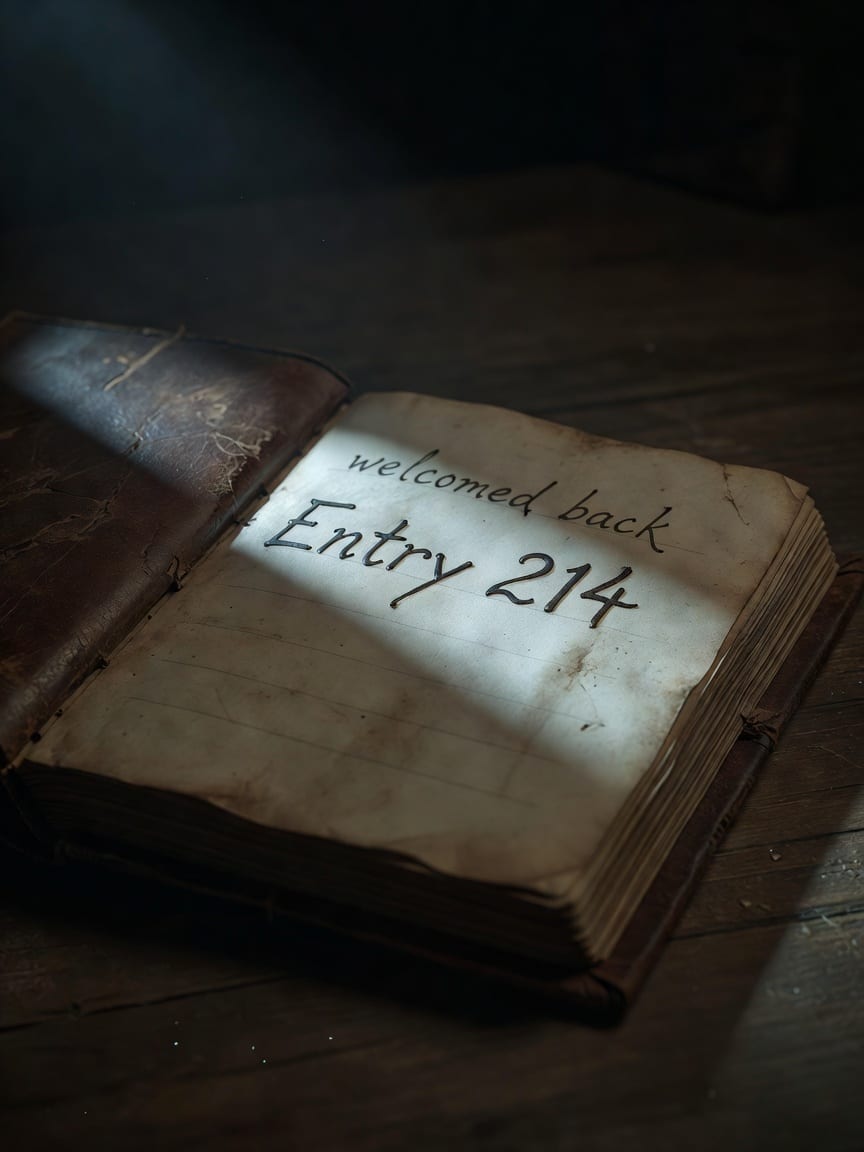
My hand traced the ink of 'welcomed back' beside Entry 214 in the old baptism register. It was the same entry number, used for a christening every seventeen years, inked over and over. Someone had been managing this for over a century.
As the new keeper of my village church's baptism register, I found solace in its unchanging ritual. But when I opened the heavy volume to Entry 214, I saw it was inked over an older, identical number. I soon discovered this specific entry had been used every seventeen years since 1873, each time with the same cryptic note: 'welcomed back'.
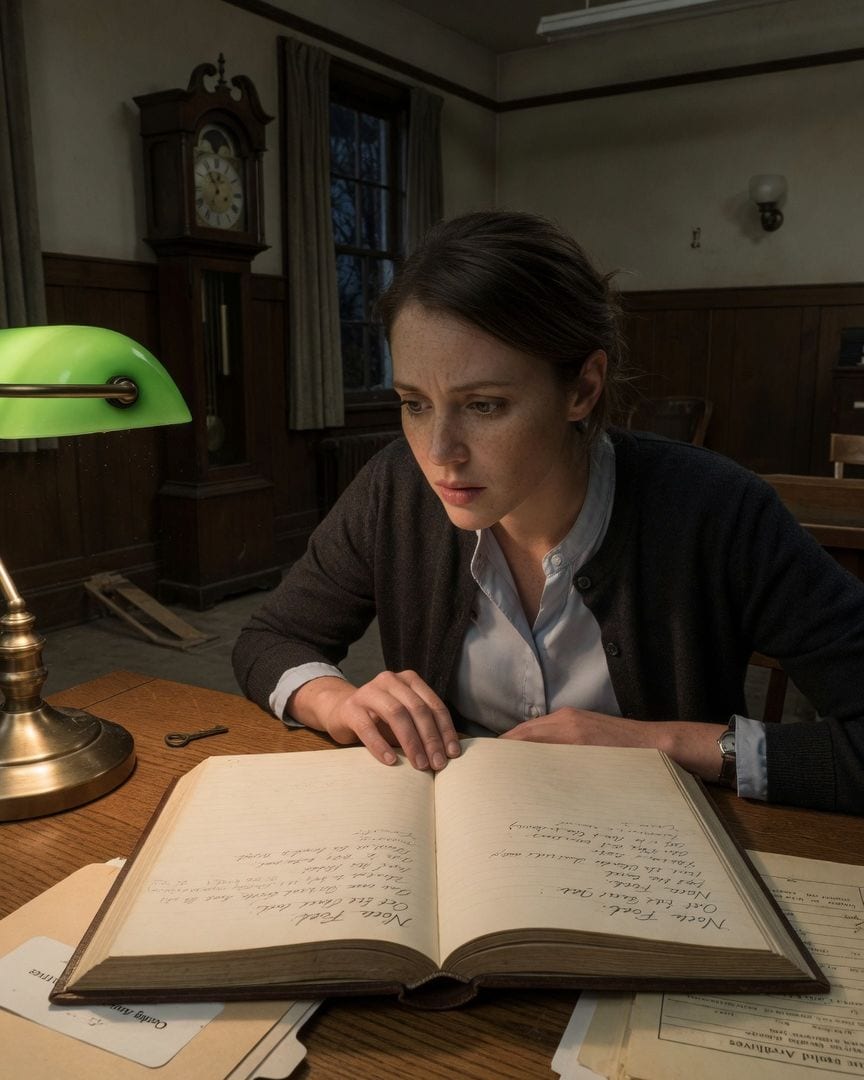
My grandmother’s name reappears in the old book of remembrance — on the same date, same street, every few decades since 1929. A verger’s note reads: 'ask no family.'
As Keeper of the crematorium's Book of Remembrance, my job is quiet and meticulous. But while updating my own grandmother's entry, I found two more Nora Fords listed above hers. Each died on October 3rd, decades apart, with the same address and a strange instruction: 'ask no family.'
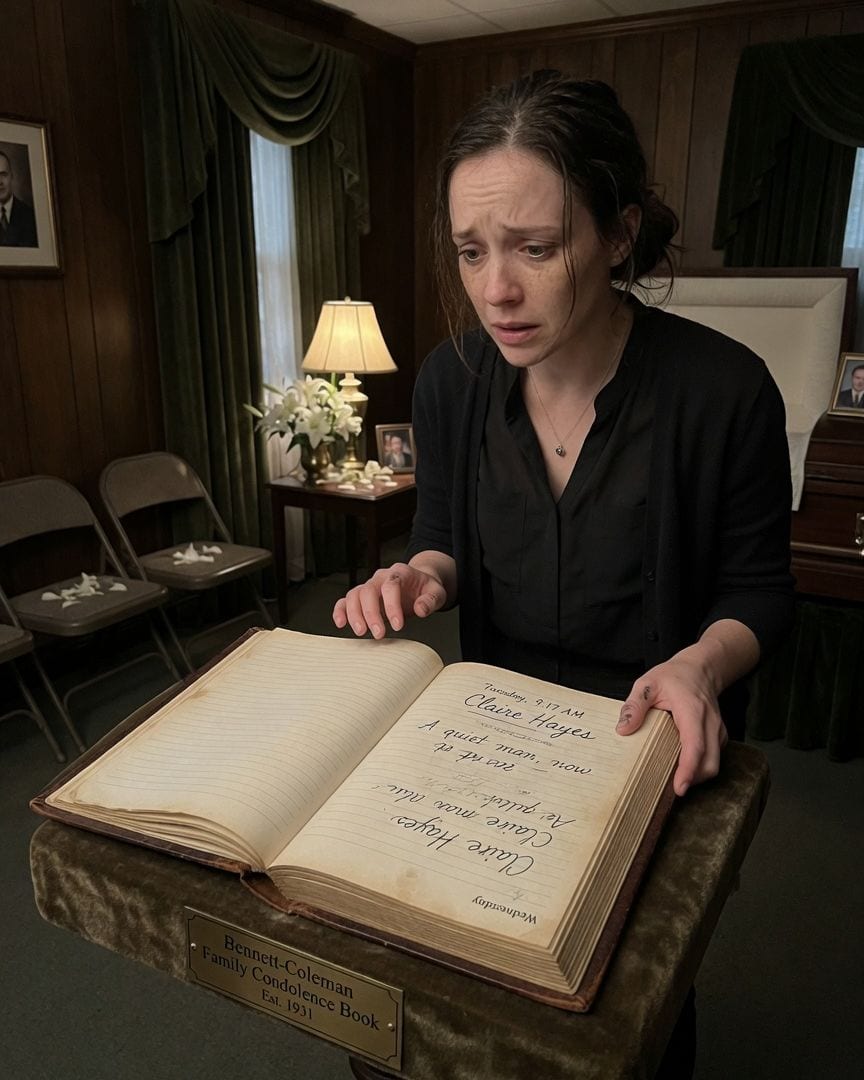
My uncle's wake book held my signature, dated yesterday, before he died. The words were not mine.
At Uncle Charles's funeral, I signed the condolence book. A nagging curiosity made me open it again, only to find my own signature already there. It was dated Tuesday morning, hours before my uncle had actually passed away, the ink impossibly dry.
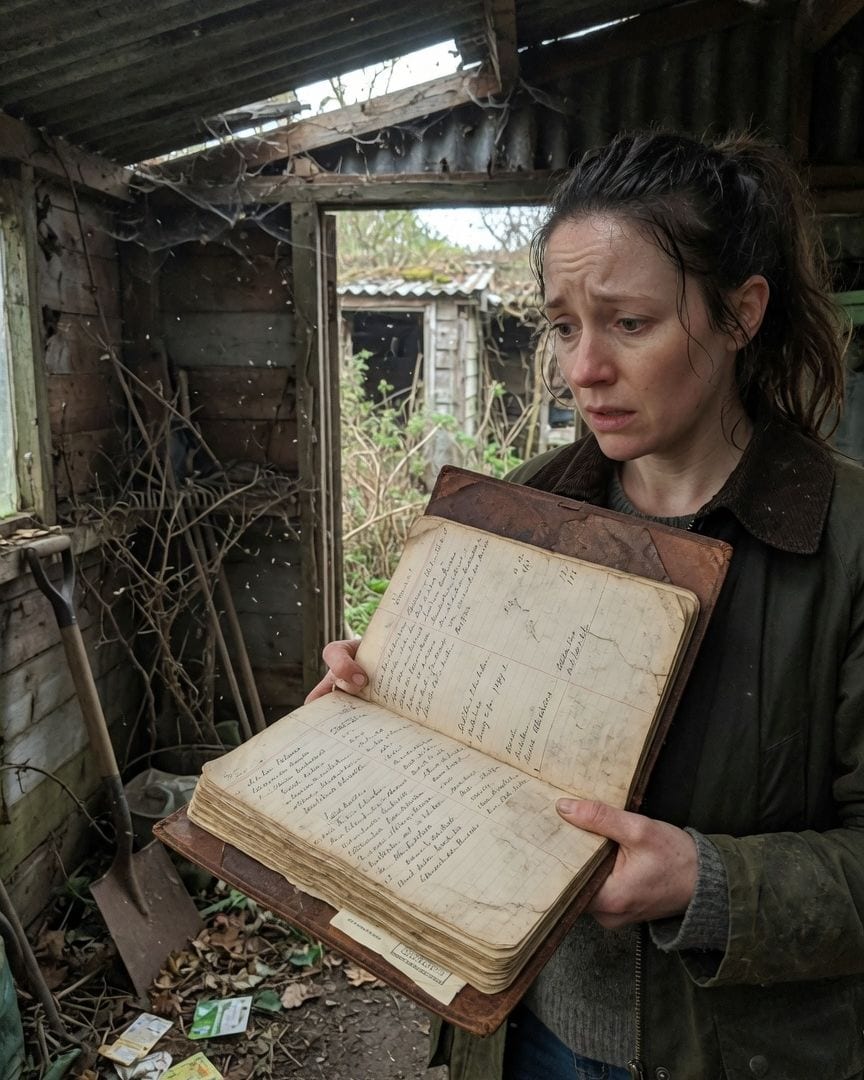
My mailbox holds my own obituary, updated weekly. The postmark reads Cold Ashby allotments, where there's only a standpipe and sheds.
Every Wednesday, a crisp white envelope arrives, containing my own obituary. It's mailed from the desolate Cold Ashby Allotments, a place with no post office, and each week a new, accurate detail of my life is added, leaving only the death date chillingly blank.
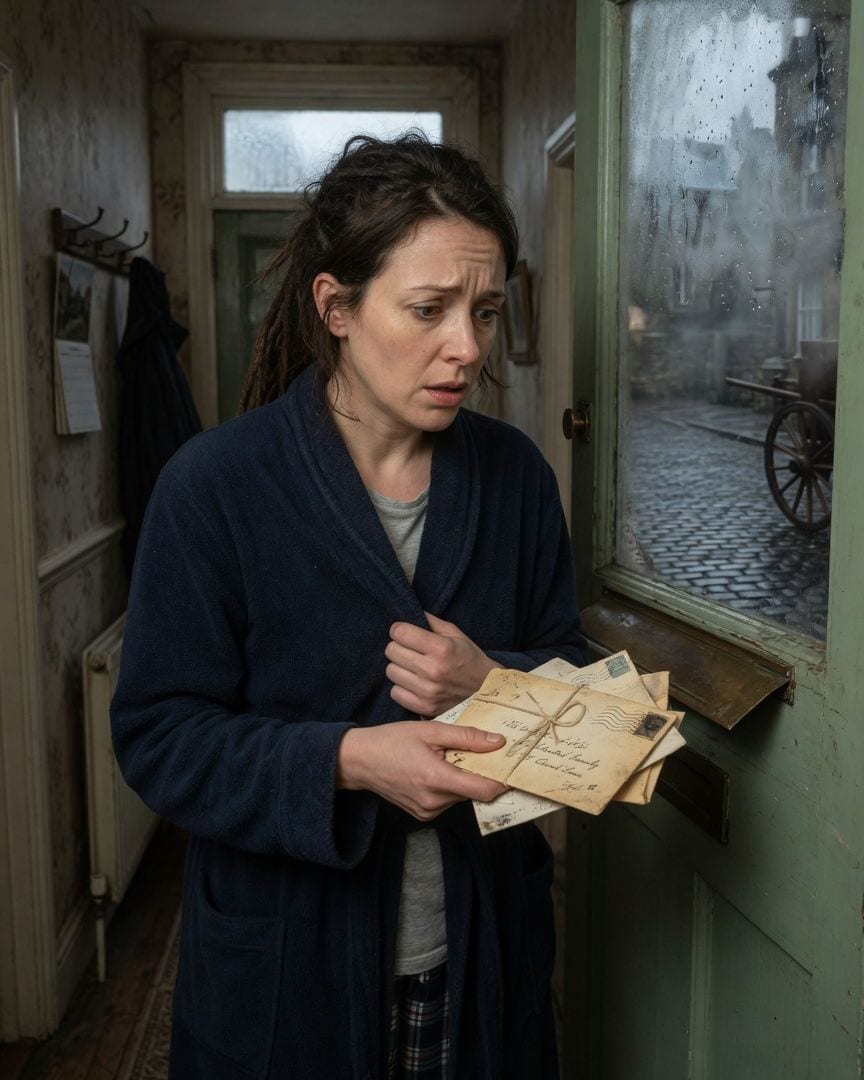
Seventy years ago, a hidden journal recorded my door opening to the wrong street and receiving Lockwood post.
I'd only recently moved into my inherited house, a quiet place on the edge of town. One grey morning, a distinct clatter from the front door's post flap caught my attention. Reaching down, I expected my gravel path, but instead, the flap showed a dark, cobbled street that wasn't mine. A bundle of warm, old letters, addressed to 'The Lockwood Family,' slid through, before the vision flickered and was gone.
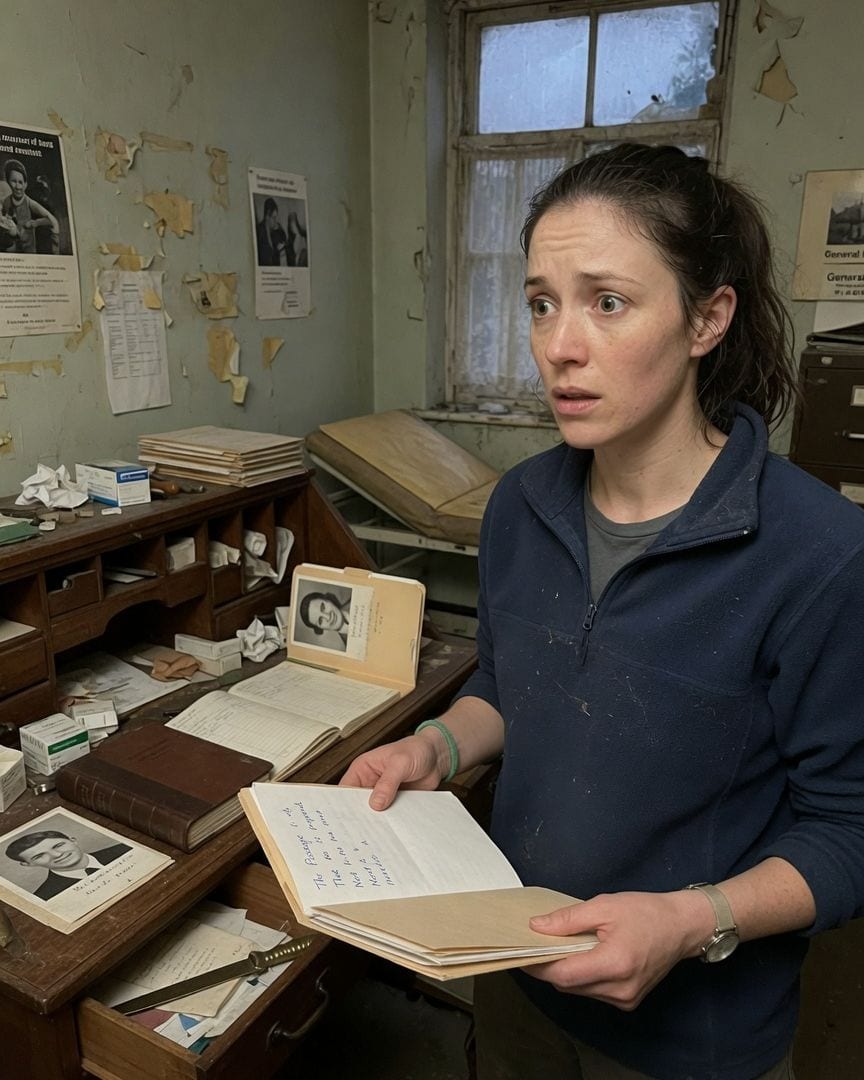
My new clinic's appointment book shows entries for this coming Monday, decades after the doctor retired and died.
Chloe Lawson bought an old, abandoned surgery in Nettlebed, ready to open her new vet clinic. Locals insisted Dr. Almott retired in '79 and the practice shut down for good. But then Chloe found his dusty appointment book filled with meticulous entries, continuing unbroken from 1979 through the decades, right up to this coming Monday.