My grandmother’s name reappears in the old book of remembrance — on the same date, same street, every few decades since 1929. A verger’s note reads: 'ask no family.'
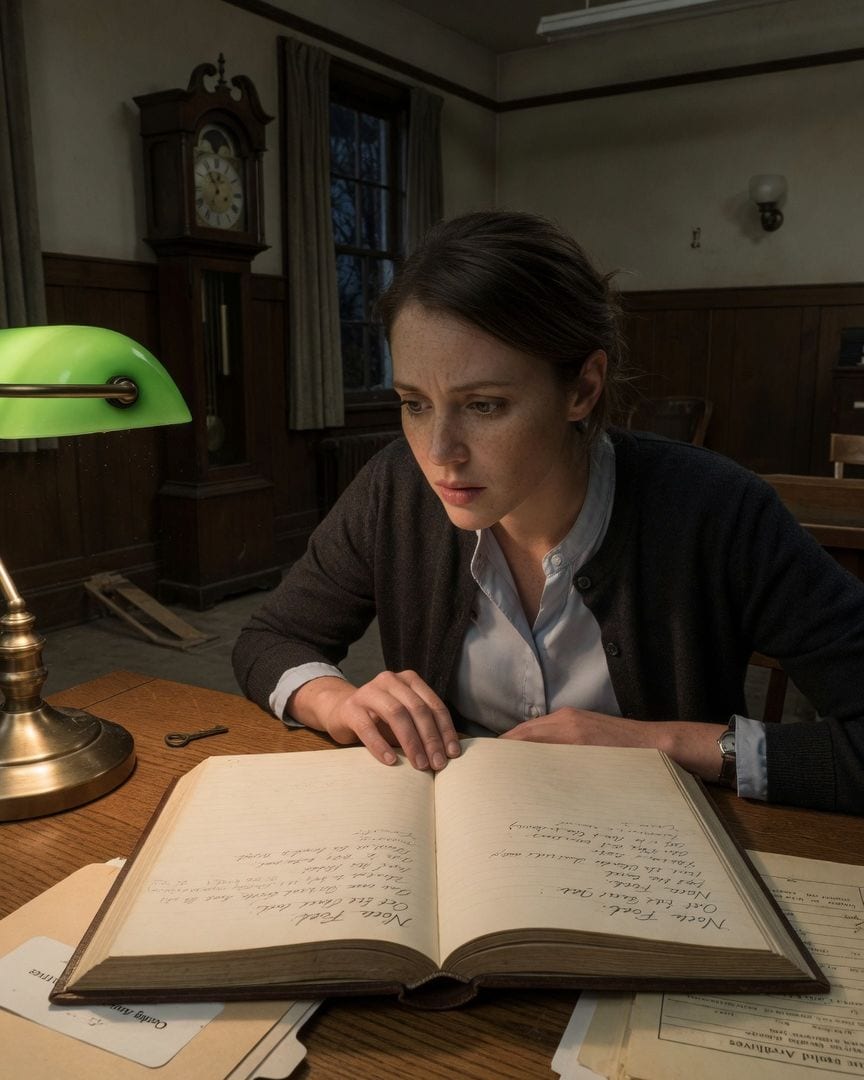
The polished oak of the desk felt cold under my forearms. It was October 3rd, and the crematorium chapel was quiet, the only sound the soft, rhythmic tick of the grandfather clock in the reception hall.
I, Hannah Ford, 32, sat at my usual spot, the heavy, leather-bound Book of Remembrance open before me. It was my job, as Keeper, to ensure the entries were meticulously maintained, a quiet duty in a place steeped in quiet.
Today, I was turning to the page for my own grandmother, Nora Ford, who had passed just last year. Her name was there, in my own neat script, with the date of her passing.
But as my eyes scanned the page, an oddity snagged my attention. Just above Nora’s entry, in older, faded ink, were two more. 'Nora Ford, Oct 3rd, 1948.' And above that, 'Nora Ford, Oct 3rd, 1929.'
Each older entry bore the same street address, re-lettered with a precise, almost identical hand, as if someone had taken great pains to copy it perfectly over the decades.
Beside each of these older entries, a verger's penciled line, faint but legible, read: 'turn to this page on the day, light the lamp, ask no family.'
I frowned, trying to rationalize it. A family tradition, perhaps? My grandmother’s parents, then her grandparents, all sharing the same name, a beloved custom passed down?
It was a stretch, given the specific, identical dates, the same street, and the unsettlingly specific, repeated instructions. 'Ask no family.' It felt less like a coincidence and more like a deliberate, quiet management of something deeply wrong.
The chill in the chapel wasn't just from the autumn air.
The recurring names gnawed at me. I tried, genuinely, to dismiss it. Maybe Gloria Harlow, the junior verger, 41, might have heard some old chapel lore. 'Oh, that?' Gloria had shrugged, not even looking up from her screen.
'Just Arthur's old ways. He's very particular about the book, always has been.' She waved a dismissive hand, clearly uninterested. Her casual indifference was almost as unnerving as the entries themselves.
Unsatisfied, I decided to look deeper. My access to the chapel’s archives was comprehensive. I spent my lunch breaks, and then my evenings, delving into the dusty old records for October 3rd.
I pulled out old death certificates, parish registers, anything I could find for 1929 and 1948.
I found them. Official records for a 'Nora Ford' at the exact same street address for each year. My breath caught as I noted the details. The Nora Ford from 1929 was listed as dying in her twenties.
The Nora Ford from 1948 was in her sixties. And the listed family members, the parents and spouses, were entirely distinct across both entries. It was impossible. These couldn't be the same person.
They couldn't even be close relatives reusing a name – the familial connections simply weren't there in the official records.
Yet, the crematorium’s own filing system, the old, handwritten indexes, had cross-referenced them. They were filed together, as if they were linked, as if they were a single, ongoing file spanning generations.
My rational mind, the one that kept the records neat and ordered, found no purchase. The mundane explanation had failed, leaving a gaping void where logic should have been.
The silence of the archive room seemed to deepen, pressing in around me.
The impossibility of the linked records, the sheer defiance of any normal explanation, propelled me forward. I remembered Arthur Calloway, 68, the senior verger.
He had a locked cabinet in his office, tucked away in a shadowed corner, always humming faintly with the ancient hum of the chapel’s electrical system. It had an old-world air about it, like everything Arthur touched.
One evening, after Arthur had finally locked up and the chapel was silent, I found myself drawn back. Near my own desk, under a loose floorboard that had always creaked a little, I noticed something glinting. A small, ornate key.
I’d never seen it before. It looked old, tarnished brass, and a cold certainty settled in my gut: it belonged to Arthur's cabinet.
My heart began to thump a heavy, irregular rhythm against my ribs. I walked to his office, the key cool and heavy in my palm. The lock on the cabinet looked ancient, intricate. I slid the key in.
It turned with a soft, almost reverent thud, and the heavy door swung open, revealing the dusty shelves within.
Among forgotten parish notes and other seemingly innocuous ledgers, my eyes fixed on a smaller, heavier, leather-bound book. It was distinct from any official record I’d ever seen.
Its cover, embossed with faded gold, read, with a chilling clarity: 'Subject 734 - Recurrent Manifestations.'
My trembling fingers opened it. The pages were thick, parchment-like. There, on the first page I found, were the words: 'Nora Ford, Oct 3rd, 1929.'
Beside it, a detailed physical description – eye color, a specific birthmark on the left forearm, the precise shape of her jawline. And a small, hand-drawn symbol, intricate and unsettling.
My eyes dropped to the next line: 'Nora Ford, Oct 3rd, 1948.' An identical physical description. The very same symbol.
A cold dread settled deep in my gut, heavy and undeniable. The impossibility of it all crystallized into a terrifying, undeniable truth.
For the next week, I worked in secret, late into the evenings. The 'Subject 734' ledger became my obsession. I meticulously cross-referenced other recurring names I found within its pages with the chapel’s official archives.
The pattern was chillingly consistent: specific dates, specific names, always linked to a 'Subject Number' – like 734 for the Nora Fords – and often, disturbingly, to the same street addresses.
The ledger didn't just detail names and dates. It listed subtle identifying markers – a birthmark, a unique eye color, a particular facial structure – that appeared in photographs and descriptions across decades for the 'same' recurring individual.
I found other vergers' names, long dead, scrawled in margins beside entries, sometimes a century old, confirming the ledger’s authenticity and its institutional history.
Old parish registers, burial permits, even maintenance logs for the chapel's antique oil lamps, subtly corroborated the ledger’s impossible claims.
Faded memos, almost illegible, referencing 'special observances' and 'lamp protocols' for certain dates, matched those cryptic notes in the 'Subject 734' ledger.
Then, in a folder marked 'Lineages,' tucked away in the very back of Arthur’s cabinet, I found an obscure document.
It was brittle with age, the ink almost entirely faded, but one phrase stood out in a cleaner hand, as if recently traced: 'The Ford Lineage – Receptivity Index High.' My own family name, connected to this impossible, silent history.
The weight of the old building, the quiet, felt oppressive.
One Tuesday night, I was deep in my research, the 'Subject 734' ledger spread open on my desk, when I heard it. The distinct, slow footsteps of Arthur Calloway in the hall. My blood went cold.
Panic seized me, sharp and sudden. I shoved the heavy book under a pile of mundane invoices, grabbed a pen, and tried to appear engrossed in the chapel’s quarterly budget.
Arthur entered, his presence filling the small office. His gaze, unnervingly calm, lingered on me for a moment longer than necessary. The air in the room seemed to still, becoming heavy, expectant.
'Still here, Hannah?' he asked, his voice soft, almost a whisper. 'Don't work too hard. Some things are best left undisturbed.' He smiled, a gentle, unreadable expression that didn't quite reach his eyes.
Then he turned, walked into his own office, and closed the door. My heart pounded a frantic rhythm, a drum against my ribs. Had he seen the ledger? Did he know what I was doing?
The next morning, when I arrived, a small, antique brass lamp, unlit, sat on my desk. It was heavy, tarnished, and identical to the description in the verger's notes for 'lighting the lamp.' Beside it, a single, unlit match.
There was no note, no explanation. Just the lamp, an object that now felt profoundly sinister, a silent, chilling warning that my digging had been noticed, and I was being watched.
I found Arthur Calloway in his office, organizing an impossibly tall stack of old funeral programs. I walked over, my movements stiff, and placed a carefully copied page from the 'Subject 734' ledger on his desk.
It showed the recurring Nora Ford entries, with their identical physical descriptions.
Arthur glanced at it, then at me. His calm was unbroken, a solid, unyielding thing. 'Ah,' he said, a faint, almost pitying smile touching his lips. 'You found it.' He gestured to the visitor's chair opposite his desk. 'Please, Hannah.
Sit.'
He didn't deny a word. He didn't even try to feign ignorance. He simply began to speak, his voice low and even, of 'the cycle.'
He explained that the crematorium, or rather, the institution it represented, had been a custodian of these specific 'returns' for centuries. The Book of Remembrance, the lamps, the notes – it was all part of ensuring the cycle continued smoothly.
He referred to the 'subjects' not as people, but as 'returning memories,' patterns of consciousness that manifested again and again. The 'ask no family' instruction, he explained, was crucial. 'Grief, attachment… it can disrupt the new manifestation.
It never goes well.' He described it with a matter-of-fact reverence, not malice, as if discussing a natural, albeit hidden, process. He said the institution's role was to facilitate these returns, to ensure 'continuity.'
A cold understanding dawned on me. The impossibilities I'd unearthed now clicked into a terrifying, coherent system, managed by this calm, almost benevolent, bureaucracy.
The quiet hum of the building seemed to resonate with an ancient purpose, suddenly devoid of comfort.
Arthur, still calm, gestured towards a deeper, older section of the 'Subject 734' ledger, the one with more intricate symbols and faded script. It was a section I hadn't dared to examine too closely.
He pointed to an entry for 'Nora Ford,' marked with the familiar, unsettling symbol.
But this time, it wasn't a past date. It was a future entry, listed with a specific birthdate. And beside it, an address. An address very close to my own apartment. And a chilling note: 'Ford Lineage - Guardian.'
My breath caught in my throat, a sharp, ragged sound. I stared at the date, my vision blurring at the edges. It was my own birthday. Just a few years in the future.
Arthur looked at me, his eyes holding an ancient, unblinking depth. His expression was not unkind, but utterly devoid of empathy, like a priest observing a ritual. 'We've been waiting for this particular confluence for some time,' he said softly.
'Your grandmother's last visit was... complicated. But the lineage is strong. You'll understand, in time.'
The implication slammed into me, a physical blow. I wasn't just an observer, tracing a morbid historical curiosity. I was part of the cycle. I was implicated. Perhaps I was the next host.
Or the designated 'guardian' for the next 'Nora Ford,' my own family name a preordained link in this terrifying, quiet, institutional plan. I felt the floor drop out from under me.
'What do you mean, "Ford Lineage - Guardian"?' My voice was a thin, reedy whisper, barely my own.
Arthur explained, his voice a low, steady drone that filled the silent office. 'Subject 734' wasn't a person in the conventional sense. It was a powerful, recurring pattern of consciousness – a 'memory' that sought to manifest.
The Ford lineage, he revealed, had a unique genetic predisposition, a 'receptivity,' making them ideal hosts or 'guardians' for certain patterns.
My grandmother Nora wasn't just a Nora Ford; she was the Nora Ford for her time, a vessel for this specific 'memory.'
He continued, unflinching. The 'light the lamp' instruction, which I'd seen so many times, was a crucial element: a subtle psychic anchor, a ritual to draw the 'memory' to its intended vessel.
'Ask no family' was to prevent the emotional attachments of relatives from splintering the returning consciousness. That, he calmly stated, leads to madness for the host and an incomplete, 'fractured return' for the memory.
The institution's role, he clarified, wasn't to create or stop it, but to manage it. To ensure the returns were as stable as possible for the benefit of 'the continuity.'
He spoke of it as a natural, albeit hidden, part of life, like tides or seasons, an ancient duty passed down through generations of vergers.
Every planted clue, every strange note, every impossible record now clicked into a horrifyingly coherent system. The very air in the office felt thick with centuries of silent, ritualistic purpose.
'What does this mean for me?' I asked, my voice barely audible.
Arthur stated, with chilling calm, that my 'guardian' role was predetermined, an inherited duty. I was meant to facilitate the next Nora Ford, due on my own birthday.
He offered me two choices, the words chilling in their casual delivery: 'Accept your role, Hannah. Help us ensure a smooth transition.
Or resist, and risk a fractured return – a terrible outcome for both the returning memory and your family.'
He pushed across the desk a small, ancient, unlit brass lamp, identical to the one that had appeared on my desk.
Beside it, a worn, leather-bound book – an older, more detailed version of the 'Subject 734' ledger, filled with intricate instructions and symbols I didn't yet recognize.
'The lamp must be lit on the day,' he said, his eyes fixed on mine, unwavering, 'and the book read. It is your legacy.'
I felt a profound terror, a cold, seizing grip in my chest. But my rational mind, still clinging to some semblance of control, recognized the futility of outright refusal.
I took the lamp and the book, my fingers cold against the aged leather. I nodded, feigning compliance, while internally, a desperate plan to escape or subvert the ritual began to form.
I couldn't participate in this, not truly, but I knew I couldn't openly defy it either.
I left the crematorium, the lamp and the ancient ledger heavy in my hands. I continued my work, coming in every day, tending to the Book of Remembrance, but the chapel now felt like a cage.
Every quiet ritual, every soft-spoken word, every turn of a page felt like a piece of the horrifying puzzle, a cog in the cycle.
I avoided Arthur Calloway, though I felt his unnervingly calm, expectant gaze from his office doorway whenever I passed.
The knowledge of the cycle, and my family's unwitting, ancient role in it, was a constant, cold weight. It settled deep in my bones, a kind of existential frost. I began to make quiet, careful preparations.
I started selling off small possessions online, researched distant towns where my family name wouldn't mean anything, planning to disappear before my next birthday, to break the 'continuity' and sever my lineage from the cycle, if I could.
Finally, the day came. Not my birthday, but the day I chose to run. I packed a small bag, just enough for a clean break.
I placed the lamp and the ancient ledger carefully on my empty bed, a symbolic rejection of my inherited 'legacy.'
I slipped out of my apartment building into the predawn gloom, intending to drive away and never look back, to become a ghost in the world, unfindable, untraceable.
As I reached my car and fumbled for my keys, my breath pluming white in the cold air, I glanced up at my second-story window.
The small brass lamp, which I had left unlit, was now glowing faintly, casting a soft, steady light from my empty bedroom, a silent beacon in the encroaching dawn.
The apartment remained empty, the lamp softly burning, waiting.
If this one got to you
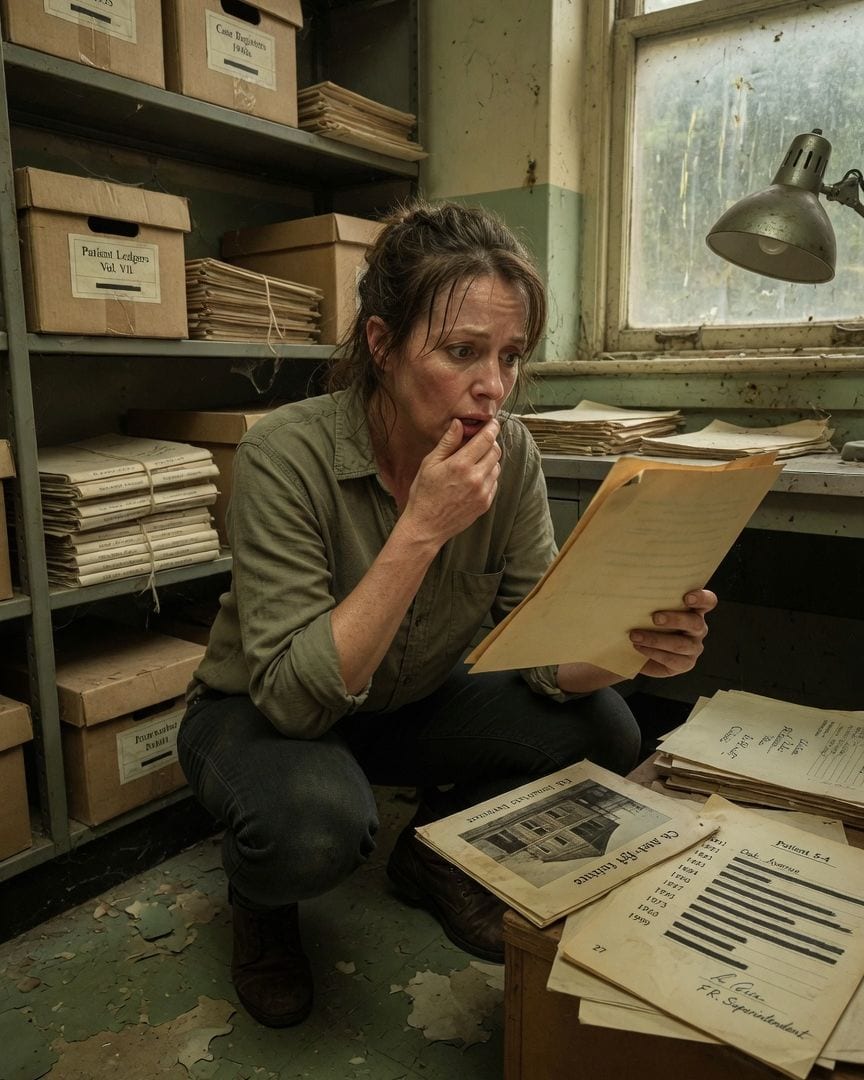
Patient 5-4 keeps checking into my aunt's old sanatorium chalet. The same initials sign them out, 'not traced,' every thirteen years since 1921.
Sifting through my aunt Margaret's estate, I found her old sanatorium file from 1999. Her patient record listed her as 'Patient 5-4,' discharged 'not traced.' But when I accessed the archives, I found 'Patient 5-4' was admitted every thirteen years since 1921, always with identical discharge notes.
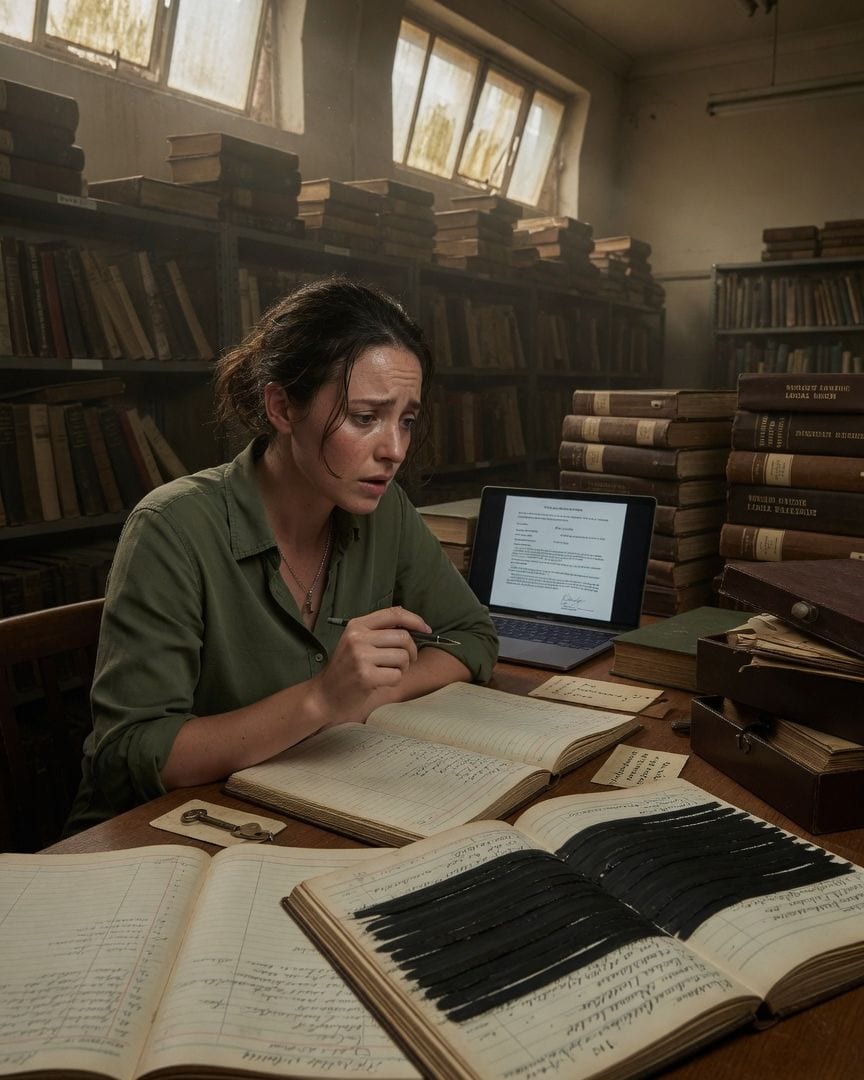
My grandmother’s name is on a blacked-out line from a 1954 drowning inquest, on our street, with a note: 'do not send a second notice.'
Transcribing old inquest registers in the quiet archive was a routine task, until I found a 1954 entry for an accidental drowning. The next of kin line was savagely blacked out, but the faint impression underneath named Patricia Kingsley, my grandmother. Her address was listed on Weir Lane, eleven years before she ever lived there, alongside a chilling note: 'do not send the notice a second time.'

My taxi driver knew my name before I spoke, then apologized for the flight I was going to miss. I was arriving. The cab's plate was scrapped four years ago.
After a strange taxi ride, I received an unsettling birthday card addressed to me. Its return address listed 'Old Mill Road Field,' an empty lot where a mill once stood, and it was postmarked locally. The card arrived four months before my actual birthday, sparking a cold dread I couldn't ignore.
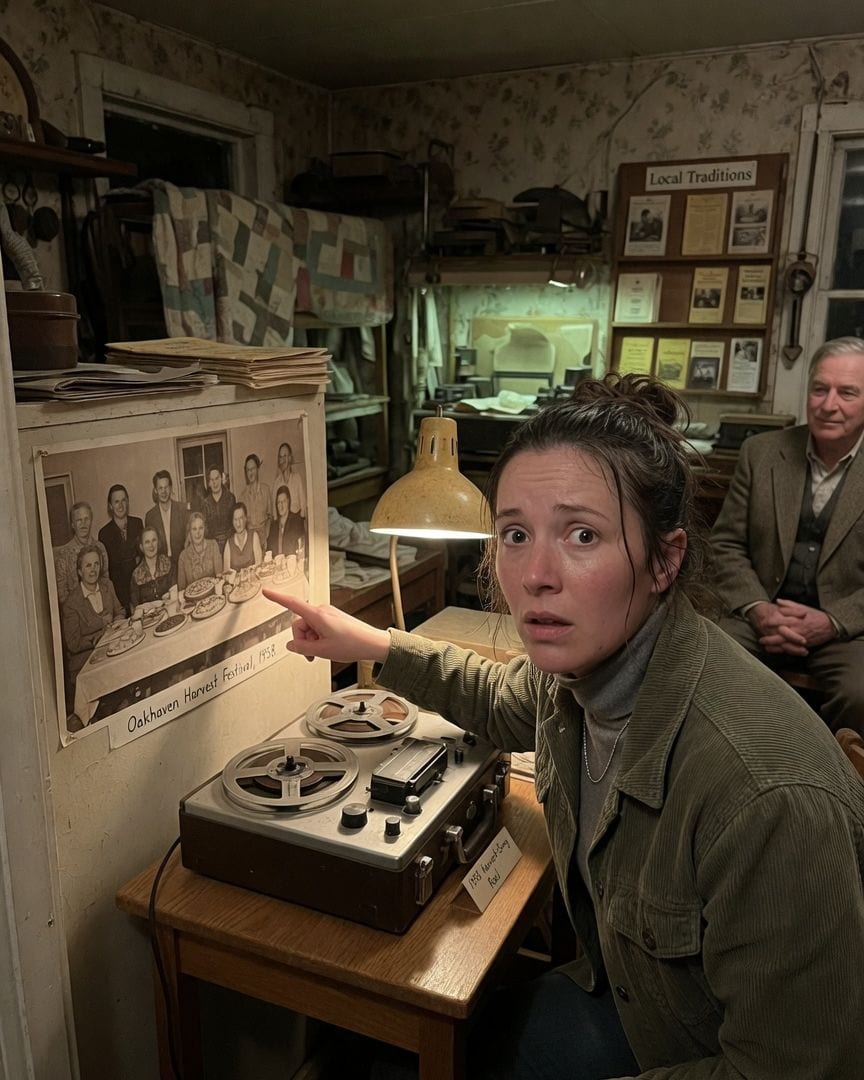
The folk museum's harvest tape counts one more singer than the photograph shows. The curator turned the recorder off before playing it.
I found a quiet escape at Oakhaven's dusty Folk Museum, where the curator played a rare 1958 harvest song. But as a cheerful tune filled the room, a low voice began to count. The tape tallied thirteen, yet the old photograph beside it showed only twelve smiling villagers.
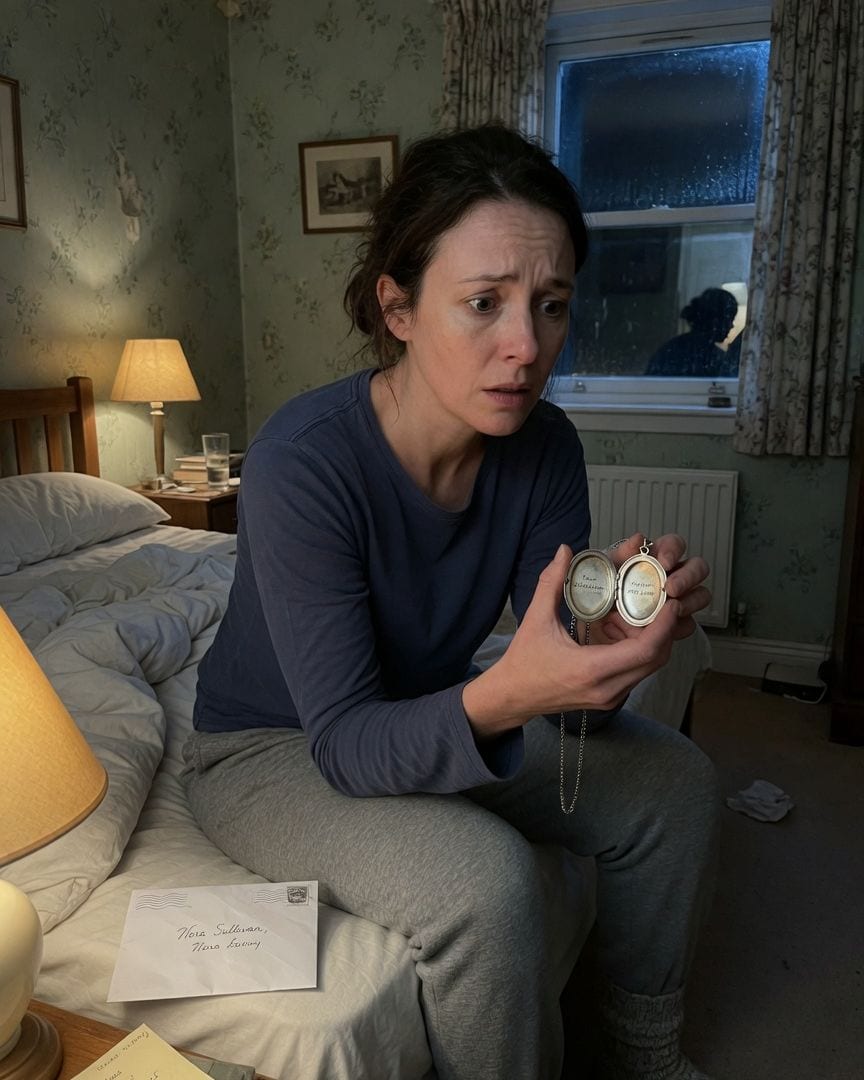
My antique locket held my maiden name, engraved with 'until the ninth.' The dealer said the woman who owned it left a note: 'for her, when she comes.'
My husband Scott, always finding unusual things, gave me an antique silver locket. Inside, engraved beneath my maiden name, Nora Sullivan, were three chilling words: 'until the ninth.' It felt like a direct, personal address, even though I hadn't used that name in years.
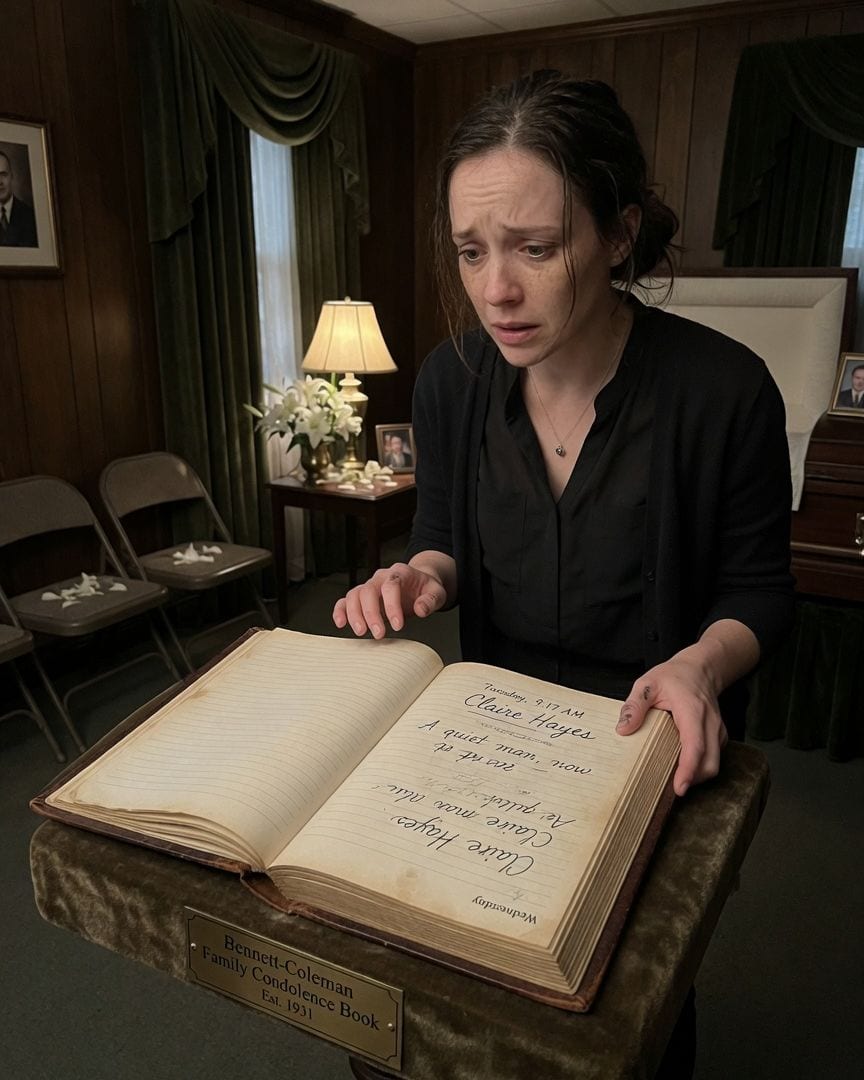
My uncle's wake book held my signature, dated yesterday, before he died. The words were not mine.
At Uncle Charles's funeral, I signed the condolence book. A nagging curiosity made me open it again, only to find my own signature already there. It was dated Tuesday morning, hours before my uncle had actually passed away, the ink impossibly dry.