An old eye test card had my patient ID, 734-B, dated 1966. I found another, from 1948, for my house.
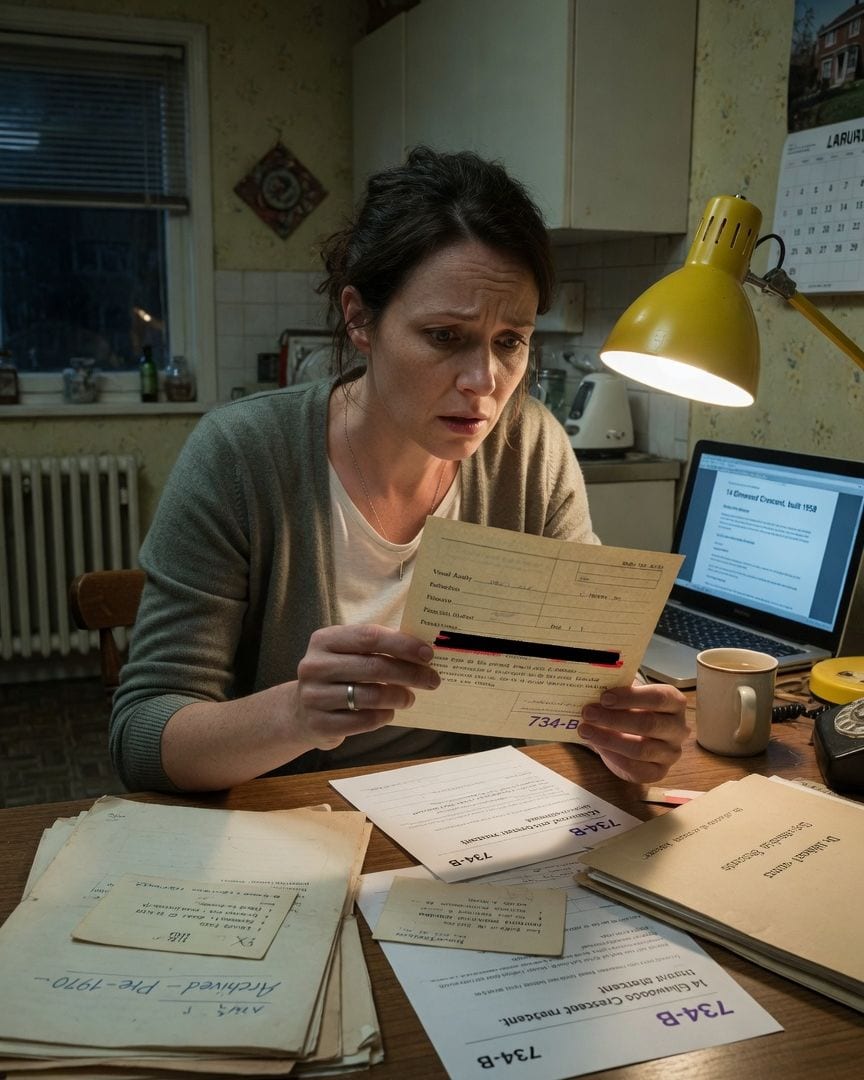
The stack of old papers from Dr. Whitaker’s office felt strangely substantial in my hands, a testament to decades of eye appointments.
I’d asked for them to transfer to Dr. Patterson, my new optician, expecting nothing more than routine charts and prescriptions.
My fingers, accustomed to the smooth surface of fresh documents, brushed against something different, thicker, cream-coloured, tucked awkwardly into the very back of the file. It felt older, heavier.
I pulled it out. It was an eye test record, not a digital printout, but a physical card, dated 1966. The edges were softened with age, the paper itself a pale yellow.
Most of the entries were faded, barely legible against the cream background, but one line, near the bottom, stood out.
It was covered by a thick, stark black bar of redaction, a heavy rectangle of ink that swallowed whatever lay beneath.
A faint frown creased my brow. What would warrant such a severe blacking-out in a routine optician's file? Around the edges of the heavy marker, I could just make out fragments of text.
My own surname, 'Thornton,' was there, faint but unmistakable. And then, below it, the street name: 'Elmwood Crescent.' My street. A cold knot tightened in my stomach. I leaned closer, tilting the card under the desk lamp.
Below the black bar, squeezed between its bottom edge and the next printed line, I could discern more words, partially obscured but legible enough to piece together: 'same eyes as the previous at this address — record, refer to the office, tell the patient nothing.'
Following that, the date: '1966.'
I was born in 1981. This record predated my birth by fifteen years. Yet it named my street, implied my surname, and spoke of a 'previous' me with 'my' eyes at 'my' address.
My name was on the cover of the file, clear and unredacted. But this one card was wrong, impossibly wrong, yet quietly, bureaucratically filed with the rest, like a secret kept in plain sight.
The air in my home office suddenly felt colder, despite the central heating humming softly in the background.
I tried to dismiss it, to force a logical explanation into place. A misfiling, a clerical error from decades past, a common surname appearing by chance.
I called Dr. James Patterson, my new optician, the next morning, hoping for a mundane reassurance.
"Old records can be a bit of a mess, Ms. Thornton," he said, his voice polite but distant over the phone. "Especially from practices that have changed hands. I wouldn't worry about a stray card."
He suggested it might have been an administrative note for another patient with a similar name, accidentally slipped into my file. His tone was dismissive, subtly closing the door on my burgeoning unease.
But the words 'same eyes as the previous at this address' felt too specific, too chilling to ignore. Unconvinced, I pulled out the current patient details from Dr. Patterson's office, the crisp, white sheet I’d been given just last month.
My unique patient ID, assigned to me when I first registered, was clearly printed: '734-B.'
My hand trembled almost imperceptibly as I flipped back to the 1966 card.
Beneath the blacked-out line, where the full entry should have been, barely visible now that I knew to look, was the same sequence of numbers and letters: '734-B.' Not a general file number, not a generic code for Elmwood Crescent.
It was my specific patient number, reissued decades before I existed.
The mundane explanation crumbled, leaving a cold, empty space in its wake. A patient ID shouldn’t carry over decades, especially not before I was born. It simply wasn’t how medical records worked.
Driven by a growing unease, I accessed online property records for my house at 14 Elmwood Crescent. I typed in the address, the details popping up on my screen.
The house, a semi-detached, red-brick property, was built in the late 1950s. This wasn’t some centuries-old family legacy at the address. This was a relatively new build when the 1966 record was created.
This was a specific record, a specific number, linked to my exact address, and now, to me. The implication of 'same eyes as the previous' took on a new, unsettling weight. Someone had been tracking this. Or something.
The '734-B' on the 1966 card, identical to my own, gnawed at me. It felt like a hook, pulling at the edges of my rational mind.
I returned to the stack of old records from Dr. Whitaker’s office that evening, spreading them across my kitchen table. I examined each page, slowly, meticulously, hoping to find another anomaly, or perhaps, still, a confirmation of an ordinary explanation.
My fingers brushed over brittle paper, faded ink, and forgotten prescriptions.
Then, tucked deep inside a yellowed folder marked 'Archived – Pre-1970,' I found another eye test card. This one was even older, its paper thinner, almost translucent with age, dated 1948.
The name on it was 'Lydia Winslow,' a name I didn't recognize, certainly not one from my family tree. But below Lydia’s details, faint but undeniable, was the address: '14 Elmwood Crescent,' my exact street, my exact house number.
And beneath it, in the space for patient ID, the familiar, chilling sequence: '734-B.'
My breath caught in my throat. The same number, the same address, decades apart, different names. It couldn't be a coincidence. It wasn't just 'the previous.' It was 'the previous' and 'the previous before that.'
My initial unease hardened into grim determination. The reissued patient number, '734-B,' now a recurring ghost in my records, refused to be ignored. It demanded answers.
I spent the next few days at the local council archives, navigating dusty ledgers and microfiche.
The air in the archive was thick with the smell of old paper and dust, a quiet, almost reverent hush broken only by the rustle of turning pages.
Arthur Romano, a quiet archivist with spectacles perched on his nose, was initially helpful, guiding me through the catalogue system.
But his helpfulness subtly shifted into wariness as my requests became more specific, focusing on past residents of 14 Elmwood Crescent and any associated medical records from the mid-20th century.
He kept glancing at me over the top of his reading glasses, his expression unreadable.
I uncovered a series of short-term tenancies at my address in the 1940s and 50s, a succession of names coming and going, some correlating with the dates of the older '734-B' entries I’d found.
Nothing overtly suspicious, no missing persons reports or local tragedies tied to the address. Just ordinary lives, brief stays. The paper trail for Dr. Whitaker's optician practice, which had closed years ago, led to a dead end.
Its records had been dispersed, some destroyed, others absorbed by successor practices.
However, a brief article in a local paper from 1998, found on a brittle microfilm reel, mentioned the retirement of Constance Hughes, the long-serving office manager at Whitaker's. The article lauded her 'decades of diligent service.'
If anyone knew the secrets hidden in those files, it would be her.
I found an old address for Constance Hughes in a phone book tucked away in a dusty corner of the archive.
After some hesitation, a debate between my growing dread and my rational need for answers, I drove to a quiet residential street on the outskirts of town.
Constance’s house was neat, almost unnervingly so, with perfectly trimmed hedges bordering a meticulously kept rose garden. It felt like a place where nothing was ever out of order.
When Constance answered the door, her eyes, though aged, were sharp and observant, taking in every detail of me with a calm, unhurried assessment. She wore a sensible floral dress and a quiet smile.
I explained my reason for visiting, holding up the old files, the creased 1948 and 1966 cards prominent. Constance's expression remained neutral, almost expectant, as if she'd been waiting for this conversation for years.
The quiet hum of her refrigerator from inside the house sounded unusually loud in the sudden silence between us.
The calm reception from Constance Hughes didn't reassure me; it unnerved me. It was too composed, too controlled.
Over the next few days, as I continued to delve into property records and previous residents of Elmwood Crescent, a subtle shift in my surroundings became apparent.
I noticed the same dark blue sedan, an older model I didn't recognize, parked down my street on two separate evenings. It was always in a different spot, but close enough to be watching.
Its occupants were indistinct shadows behind heavily tinted windows. Each time, a cold prickle of unease ran down my spine, tightening with each passing car.
During a follow-up visit to Dr. Patterson for a minor eye irritation – a purely coincidental, inconvenient itch that had developed – he asked about my move from Whitaker's office.
His gaze lingered on my eyes a little too long, a faint flicker of something unreadable in his expression. It wasn’t a medical gaze, not really. More like observation.
"Old records can stir up all sorts of things, Ms. Thornton," he said, almost casually, as he scribbled on my chart. The room suddenly felt sterile and cold, the hum of the diagnostic equipment a low, warning thrum.
He didn't offer any further explanation, just a tight, professional smile that didn't reach his eyes.
One evening, returning home, the streetlights casting long, distorted shadows, I found an envelope slipped under my front door. It wasn't an ordinary piece of mail.
It was an old, official-looking memo, yellowed with age, bearing the faded letterhead of 'Whitaker Optometry Services – Internal Use Only.' The paper felt thin, almost brittle, in my fingers.
The text was dense, clinical, detailing 'protocol for recurring ocular patterns.' I skimmed it, my heart beginning to thump against my ribs.
One line, however, stood out, underlined in bright red ink, clearly added later, slashing across the old, faint print: 'Refer to case file 734-B. Patient to be informed nothing. Let the records lie.'
The message was clear, chillingly so. Someone knew I was digging, and they wanted me to stop. The danger was no longer abstract; it was personal.
The wind outside seemed to pick up, rattling the windows, mimicking the trembling in my hands.
I returned to Constance Hughes's house the next morning, the anonymous memo clutched tightly in my hand, the chilling phrase 'Let the records lie' echoing in my mind.
The neatly trimmed hedges and the quiet façade of her house offered no comfort. Constance invited me in, her calm unwavering, offering tea as if I were a casual visitor, not someone bringing a secret to light.
The smell of Earl Grey and lemon filled the air.
I laid the records on the polished coffee table – the 1948 Lydia Winslow file, the 1966 entry with its stark redaction, and finally, my own current patient ID. Each bore '734-B.'
I pushed the anonymous memo forward, its red underlining a contrast against the cream paper.
"This isn't a patient number for a person, is it, Constance?" I asked, my voice steady despite the frantic rhythm of my heart. "It's a case number. For something else."
Constance took a slow sip of her tea, her gaze never leaving mine. "You're a bright girl, Cynthia. It took you long enough." She set her cup down on its saucer with a delicate clink.
"The '734-B' isn't for a patient. It's for a condition. A recurring ocular pattern, specific to certain individuals, usually found within a particular geographic cluster. Your Elmwood Crescent is one such spot."
A cold dread spread through me, numbing my limbs. "So, 'same eyes as the previous'… it's literal?"
Constance nodded, her expression unreadable. "A distinct, identifiable trait. Harmless, mostly. A subtle genetic marker, perhaps, expressed in the retina. But unique enough to warrant observation. Dr. Whitaker, and his father before him, believed in thorough record-keeping.
They called it 'the pattern' internally."
I pointed to the blacked-out line on the 1966 card. "And 'tell the patient nothing'?"
Constance shrugged, a small, elegant movement of her shoulders. "What would we tell them? That they're part of a pattern? That their eyes are… not quite unique? That they're being observed? It causes undue distress.
Easier to simply observe, record, and file. It was always about the data, not the individual. The office received a small grant, once upon a time, to document such anomalies. Nothing sinister, dear. Just… science, of a sort."
The pieces clicked into place with a sickening thud: the reissued number, the blacked-out line, the quiet bureaucracy, the anonymous memo.
It was never about a monster, or a conspiracy of evil intent, but about a phenomenon managed with dispassionate, almost benign, efficiency. A silent, decades-long study hidden in plain sight.
"You knew all this time," I whispered, not a question, but a raw, horrified statement.
Constance Hughes looked at me, her calm gaze unwavering. "Of course, I knew. I managed the records for decades. Every entry for 734-B passed through my hands.
From the moment I started as a junior clerk, I was trained on how to identify the subtle markers, how to process the specific paperwork. It was part of the job, a quiet understanding within the practice."
She leaned forward, her voice dropping slightly, almost conspiratorial. "But it goes deeper than that, Cynthia. I didn't just manage the records; I contributed to them." Constance paused, a faint, almost imperceptible smile touching her lips.
The air in the room suddenly felt heavy, compressed, and the gentle ticking of a grandfather clock in the hall seemed to stop.
She slowly raised a hand to her face, her fingers, age-spotted but steady, tracing the delicate skin around her left eye. "Do you know why I was so thorough with those particular files?
So meticulous in maintaining the 734-B ledger, ensuring every detail was exact?"
I shook my head, a new, sickening wave of fear washing over me, cold and clammy.
Constance’s eyes, though aged and slightly clouded with time, held a familiar glint.
A subtle, almost unnoticeable characteristic that I suddenly recognized from old anatomical diagrams in the files — a specific, minute detail of the iris, a particular angle of the pupil's reflection.
It was the ocular pattern, the trait of 'Case 734-B.'
Constance then pointed directly at my face, her finger hovering inches from my left eye. "Because I was a 'previous,' dear. Case 734-B. I lived in number 23 Elmwood Crescent as a child. Just down the street from you.
And now… you have them too. Your file is just the latest entry for case 734-B. I've been managing these records since before you were born."
I recoiled, a cold dread seizing me. The implication of Constance's words – that she, Cynthia, was another 'entry' – was horrifying, turning me from an investigator into merely another data point. "My eyes?"
I managed, my voice thin, almost a gasp.
Constance nodded, her expression softening with a strange, almost maternal pity. "Yes, dear. A specific, very subtle ocular trait. Harmless, as I said, but it recurs. Not just on Elmwood Crescent, but in a small pocket of streets around it.
Your parents, your grandparents, if they lived here, likely had it too. It’s a local phenomenon. The opticians, over generations, simply took note. They couldn't cure it, or stop it, so they documented it.
A continuous genealogical study, in a way."
She retrieved a heavy, leather-bound ledger from a hidden compartment in her desk, its edges worn smooth with age. It looked like something from a Dickensian counting house. It was filled with precise, coded entries, written in meticulous copperplate script.
"Case 734-B," she explained, flipping through pages with a practiced hand. "Each entry is a new individual, their address, date of birth, date of first observation. See?" She pointed to a series of entries.
My own name was there, in a more modern hand, followed by my parents' names, and names I vaguely recognized from local history records, stretching back to the early 20th century, all linked to addresses within a few blocks of my home.
The pattern was stark, undeniable. It was a family tree of a recurring anomaly, meticulously tracked by an indifferent institution, a secret map of human biology unfolding over a century.
The dread wasn't in a monster, but in the cold, coherent, bureaucratic indifference of it all. I was just a data point in a long-running, secret study, my unique self subsumed into a case number.
The full truth, laid bare in Constance's ledger, was a suffocating weight. I realized there was no monstrous entity to fight, no evil to confront, only a deeply ingrained, unethical system of observation.
I couldn't stop the inherent 'pattern' in my own eyes, or in the generations before me, but I could stop the quiet, decades-long institutional complicity.
The thought of 'tell the patient nothing,' of generations of people unknowingly being tracked, ignited a furious resolve within me. The memory of the anonymous memo, telling me to 'Let the records lie,' only solidified my decision. They wanted silence.
I would give them light.
I spent hours with Constance, carefully, methodically, going through the ledger.
I gathered copies of the most damning records – sanitized versions, protecting individual privacy but highlighting the recurring case number, the redacted lines, the internal memos detailing 'protocol for recurring ocular patterns.'
I anonymized my own involvement, choosing to be a silent catalyst, a ghost in the machine.
I leaked the package to a local investigative journalist, a contact I found through Arthur Romano at the archives – a man who, despite his initial wariness, seemed to trust my quiet persistence.
I framed it as an exposé on egregious patient data mismanagement and a shocking breach of medical ethics by a defunct optician's practice and its lingering network.
The story broke a week later, not as a horror piece, but as a scandal: 'Decades of Secret Patient Tracking Uncovered in Local Optometry.' The public outcry was swift.
Local news channels ran segments, patient rights groups issued statements, and letters to the editor filled the local paper.
The medical board launched an immediate investigation into Dr. Whitaker's old practice and its successors, including Dr. Patterson's current office, for their knowledge and perpetuation of the '734-B' system.
The casual, almost benign oversight, the bureaucratic filing of the 'wrongness,' was finally exposed and made to stop. I felt a grim, hollow victory.
The institutional tracking was over, but the pattern, I knew, continued, flowing silently through the generations, unseen.
The local news cycle was dominated by the 'Optometry Scandal' for weeks. Dr. Patterson, despite his protestations of merely inheriting a system, faced disciplinary action and a hefty fine for his office's continued complicity in the unofficial tracking system.
Constance Hughes, though never directly implicated in the public eye, quietly retired from her modest life, her role in maintaining the '734-B' ledger fading into the background. She seemed unbothered, almost relieved.
The official investigation confirmed the existence of the decades-long, unethical record-keeping. The remaining files for 'Case 734-B' were seized and, supposedly, permanently sealed or destroyed.
I felt a strange mix of relief and emptiness. I had successfully exposed the institution, bringing its silent, bureaucratic wrongness to light.
But the knowledge that I was merely the latest 'entry' in a continuing pattern, a walking data point, lingered like a shadow. My unique self now carried the weight of a code.
Eventually, I sold my house on Elmwood Crescent, the weight of being 'Case 734-B,' of feeling like a marked individual at a marked address, too heavy to bear.
I moved to a different town, a few hundred miles away, hoping for a fresh start, for a place where I was just Cynthia, not a file number. Years passed.
The memory of the files, Constance, and the 'same eyes' receded, becoming a strange, unbelievable anecdote from my past, something I rarely spoke about, even to myself.
Then, one ordinary Tuesday morning, an email arrived from a distant cousin, Sarah, whom I had barely known. Sarah had recently moved into my old house on Elmwood Crescent, drawn by its charm and location, unaware of its quiet history.
The email was cheerful, filled with updates about renovations and new neighbors, the mundane details of settling in. Towards the end, Sarah mentioned a recent routine eye exam at the local optician, the same one Dr. Patterson used to run.
'The doctor was very thorough,' she wrote, 'and asked so many questions about our family history, and the house. Said he'd never seen anything quite like it.' Sarah signed off, 'They said my eyes were just like yours, Cynthia.
Isn't that a coincidence?'
If this one got to you
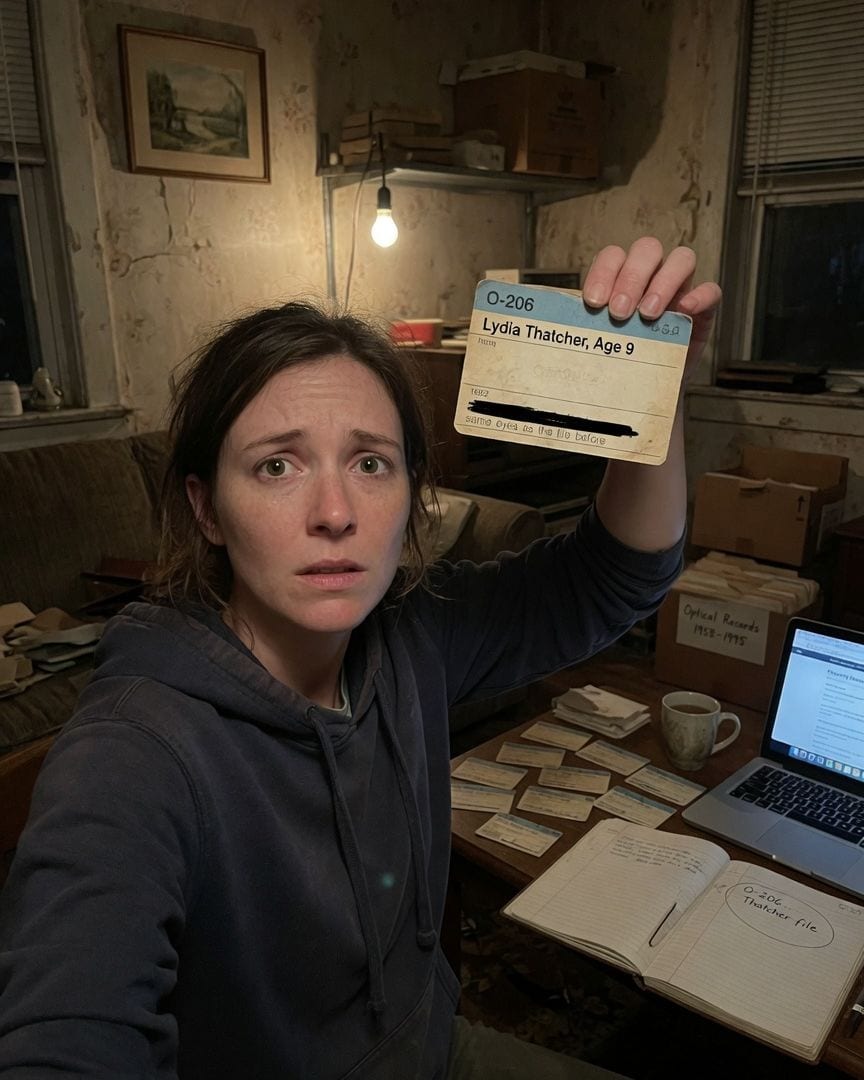
My own optical card is dated 1962, with my name on it. I wasn't born until 1993.
Sifting through old patient files from my former optical practice, I found my own O-206 card. It had my name, Lydia Thatcher, and my current home address printed on it. But the card was dated 1962, decades before I was even born, and a redacted note mentioned 'same eyes.'
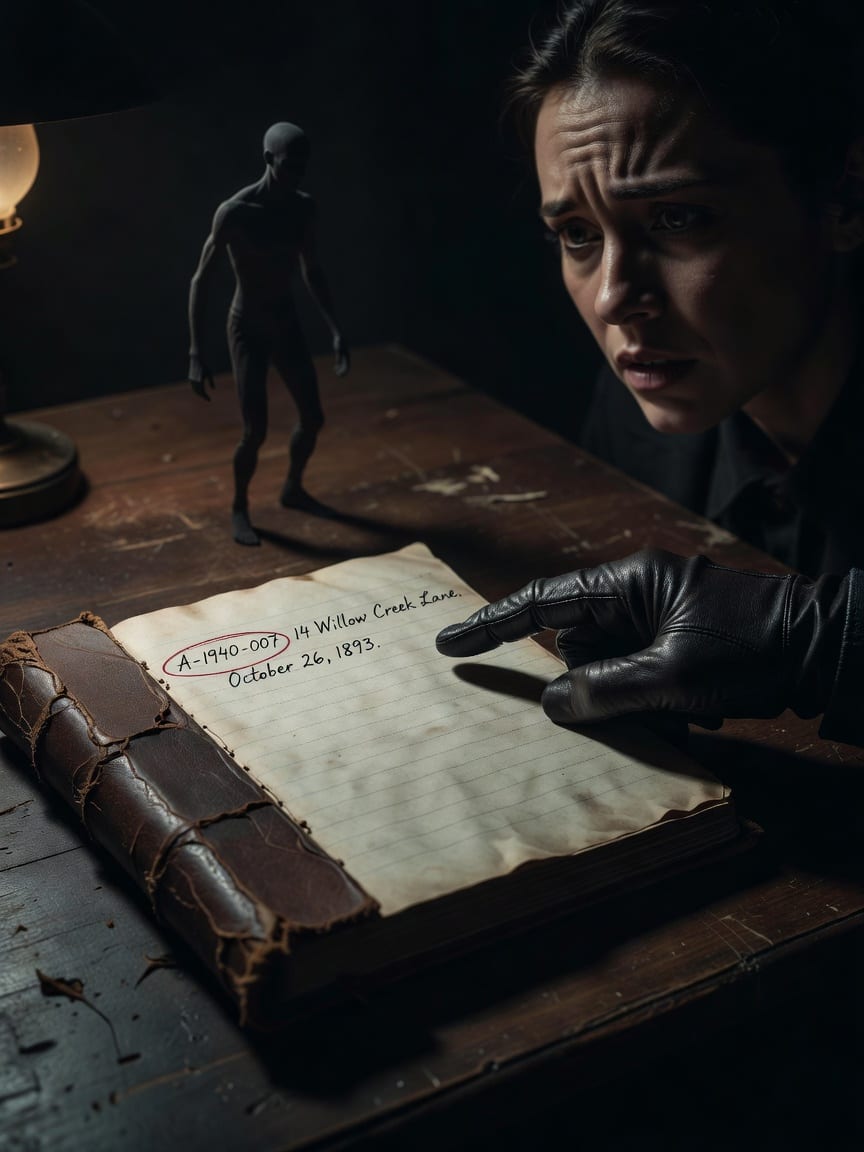
My dead relative's 1940 hospital record had a note: 'same admission number as reissued below.' Below it, decades later, was my home address, and 'hold, do not process new patient.'
As an archivist, I was researching my great-aunt Vera's 1940 psychiatric admission. Her microfiche file, however, contained a handwritten note about a reissued admission number. To my shock, this identical number was later assigned to a blank file listing my own home address, with a chilling directive to 'hold'.
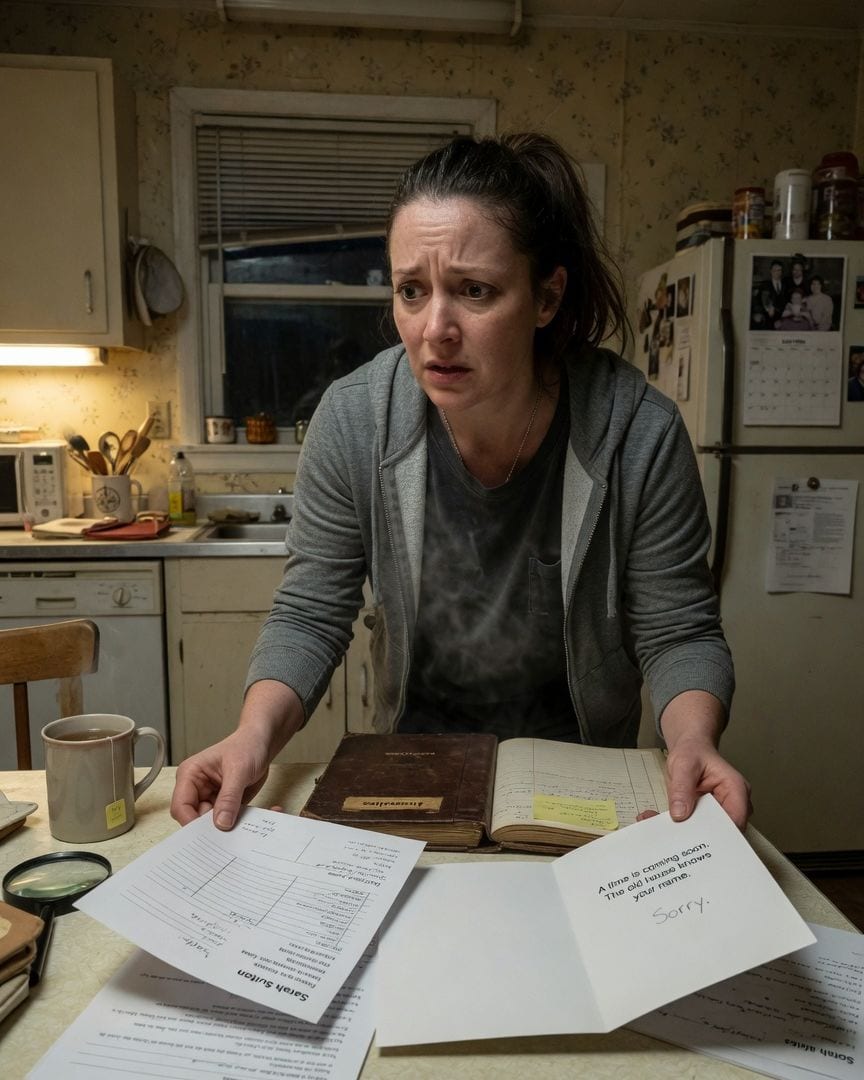
My name sits in the 1966 electoral register. My house, my exact name. Someone pencilled 'sorry' in the margin.
I was sifting through dusty microfiche, tracing my family line for my childhood home, when I found it. The 1966 electoral register for my address listed my exact name: Sarah Sutton. My heart hammered. I wasn't born until 1988; this was thirty-five years before I existed.
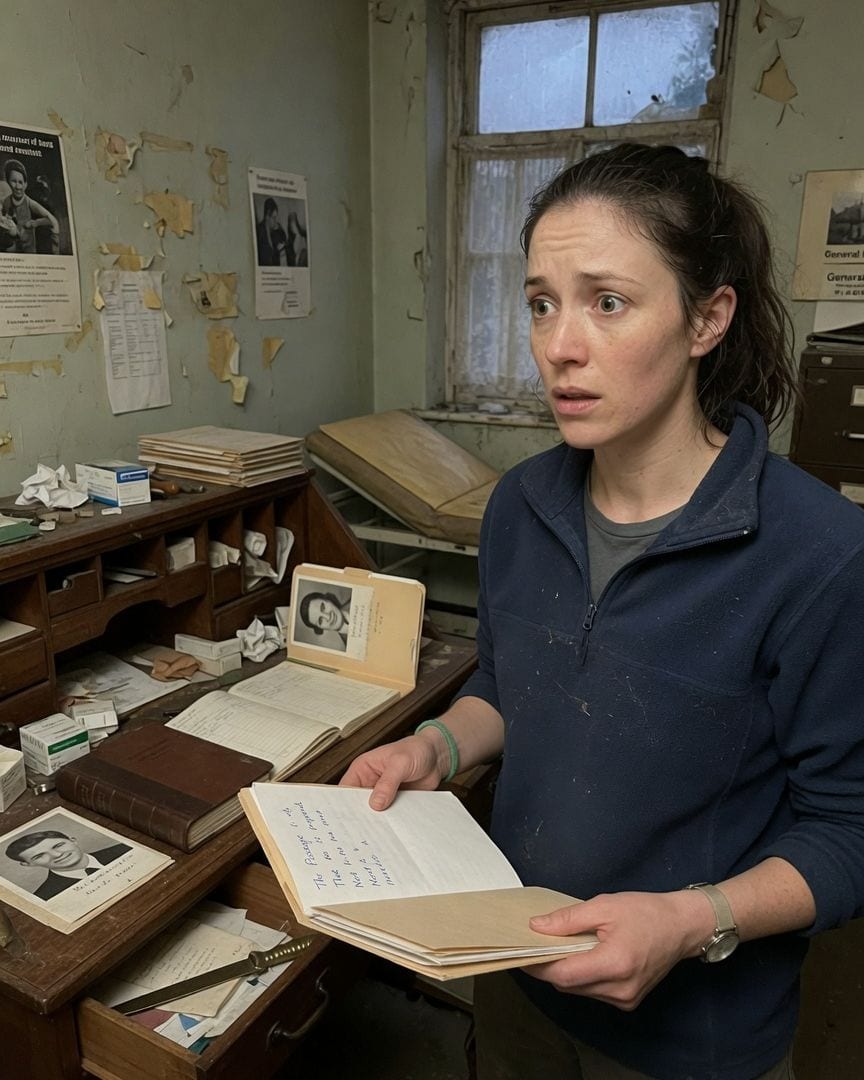
My new clinic's appointment book shows entries for this coming Monday, decades after the doctor retired and died.
Chloe Lawson bought an old, abandoned surgery in Nettlebed, ready to open her new vet clinic. Locals insisted Dr. Almott retired in '79 and the practice shut down for good. But then Chloe found his dusty appointment book filled with meticulous entries, continuing unbroken from 1979 through the decades, right up to this coming Monday.
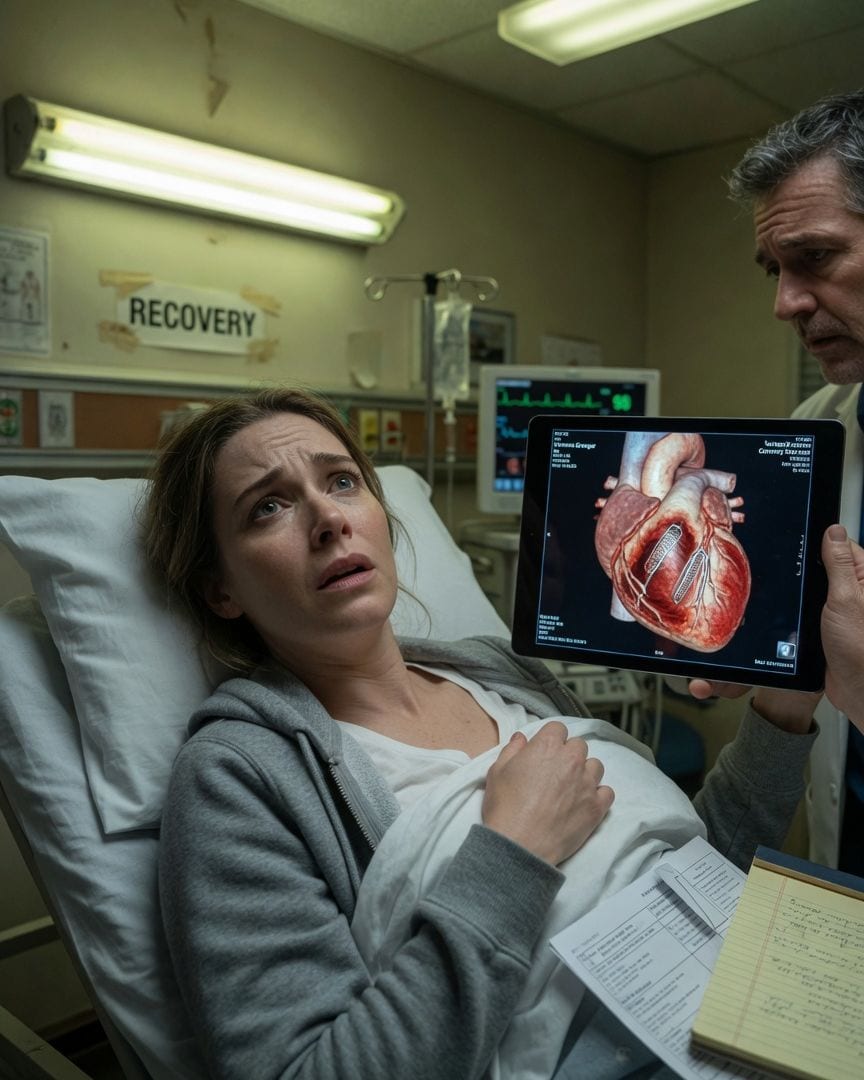
Metal stents are propping open my heart. The doctor rotated the image, but I've never had a cardiac procedure.
After years of dismissed chest pain, a CT scan revealed an impossible truth: my heart contained two metal stents. Dr. Maddox confirmed there was no record of any cardiac procedure in my entire medical history, and I had no memory of ever having surgery. My own body held a secret, alien architecture I couldn't explain.
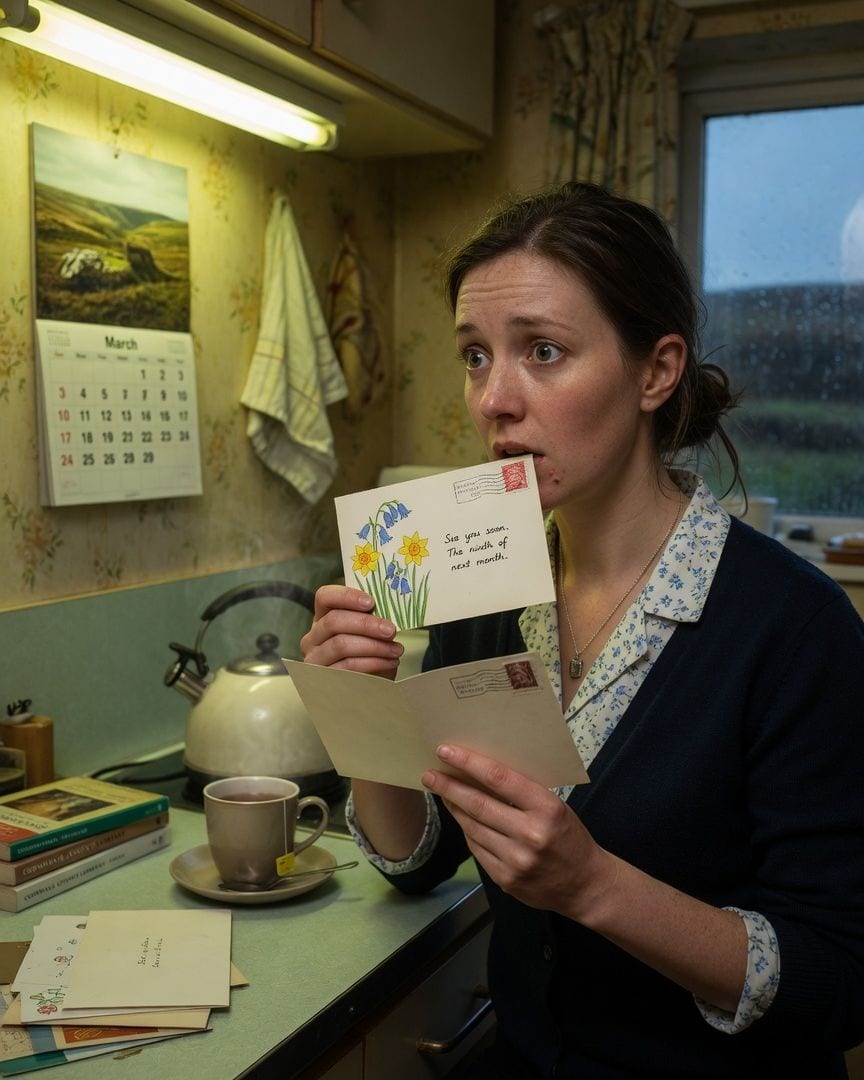
My get-well card arrived from a field, postmarked from a sanatorium that burned down in 1963. It wished me well for an operation I've never had, scheduled for next month.
I was just making tea on an ordinary Tuesday when a strange letter arrived. It was postmarked from Treneglos Sanatorium, a place that burned to nothing over sixty years ago, and contained a get-well card for an operation I'd never had. My research into this impossible message then led me to an old patient register where I found my own name, dated 1958.