My care home camera shows Mrs. Deel rocking alone at 3 AM. She hasn't left her bed in three years.
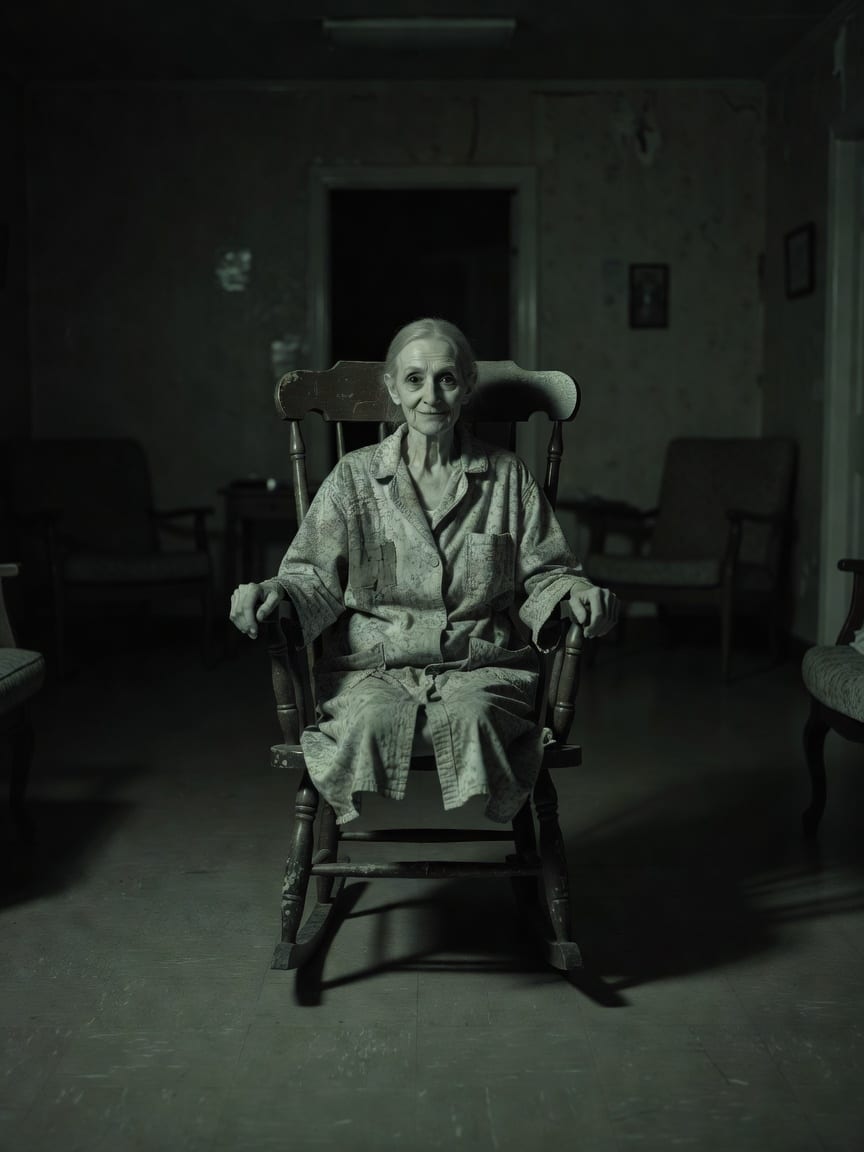
The night camera feed of the day room was usually the most boring part of my shift at Merritt House. Four walls, a big window looking out onto nothing but dark, and the clunky old rocking chair sitting dead center.
But this footage, from 3 AM on Tuesday, was different.
I watched, holding my breath, as the chair began to rock. Slowly at first, just a gentle sway, then picking up a rhythm. No draft, no open window, no one in the room. Just the chair, rocking.
And then, as if it had been there all along, Mrs. Deel.
Eighty-nine years old, frail as tissue paper, bedridden for three solid years since her dementia took everything but a flicker in her eyes. She hadn’t walked in God knows how long, barely lifted her head for spoon-feeding.
But there she was, a dark, hunched shape in the rocking chair, facing the camera. Perfectly still, except for the chair’s steady creak. She sat there for two hours, until 5 AM, when the first day staff started their rounds.
The footage flickered, and then she was gone. Just the empty, swaying chair.
I looped the clip, a cold knot forming in my stomach. It was impossible. My brain screamed glitch, phantom, trick of the light. I pulled up Mrs. Deel's room log – every staff movement, every alarm was timestamped. Nothing.
No one had been near her room. No one had taken her out. Just the quiet, inexplicable rocking in the day room.
I tried to rationalize it. Maybe a system error? A shadow playing tricks on the infrared lens? I pulled up the camera’s deeper system logs. The timestamp at 3:02 AM was crystal clear.
The image was crisp, not a pixel out of place for night vision. No system errors recorded anywhere. Hell, the next morning, when I was off shift, I went straight back to Merritt House.
I found the day room unlocked and ran my hand over the rocking chair’s smooth, worn wood. It felt ordinary, solid, the kind of antique you’d find in any old money care home. Not a scratch, not a loose joint.
I found Lydia, the day nurse, getting ready for her shift. "Hey, Lydia," I said, trying to sound casual, "does Mrs. Deel ever... get up at night? Like, wander?"
Lydia laughed, a sharp, dismissive sound. "Poor Mrs. Deel? She barely lifts her head for breakfast, Florence. No, she's firmly planted in her bed, bless her heart. Why?"
I shook my head. "No reason. Just, uh, checking on some old records." A prickle of unease started under my skin. I knew what I saw.
I went home and later, came back for my night shift, the footage still burning in my mind. I opened the feed again, zooming in on Mrs. Deel's face in the infrared glow.
Her eyes, dark pits in the monochrome image, seemed to be looking directly at the lens. Then I noticed it, a small, almost imperceptible icon in the corner of the screen, faint green against the black. A microphone symbol.
The camera recorded audio.
I clicked the audio playback. A hiss of static. Then, the faint, rhythmic creak of the rocking chair filled my headphones. My heart hammered against my ribs. I leaned closer to the screen, adjusting the volume, straining to hear.
A low, clear voice, calm and melodic, spoke from the empty room. "Constance, dear, you've been waiting for me." No one else was visible in the frame, nothing but Mrs. Deel and the empty space around her.
Mrs. Deel's head, barely visible in the infrared glow, slowly tilted towards the lens. I froze, the sound of that voice echoing in my ears. Constance? Mrs. Deel's name was Eleanor.
I replayed that audio fragment dozens of times over the next few shifts, a chill that had nothing to do with the AC settling deep in my bones. I tried to place the voice.
It wasn't Reginald, our Night Shift Supervisor, definitely not Lydia, and none of the other staff had a voice like that. It was too even, too serene, almost... placid. Not a normal person's voice.
I started reviewing other nights' footage, scrubbing through hours of empty day room feeds. Nothing. Just the regular quiet, the occasional shadow, the rocking chair sitting still. Only the specific night Mrs. Deel was in the chair did anything happen.
I checked Mrs. Deel's records again, pulling every file Merritt House had on her. I scoured them for any mention of 'Constance' – a maiden name, a relative, even a forgotten pet from her childhood. Nothing.
It was a dead end. Every rational explanation I could conjure up was exhausted, dead in the water.
The camera system was new, sure, only installed six months ago. But the building itself? Merritt House was ancient, stood for generations. Something in my gut told me to look deeper, past the faulty equipment excuse.
I started researching the care home's history online, scrolling through old town archives. I found sparse records, mostly architectural blueprints, some property deeds. But then, an old newspaper clipping, yellowed and digitized, caught my eye.
It was from forty years ago, a short, local piece about a tragic incident. A resident, a Mrs. Eileen Ingram, who vanished from her bed one night. She was found in the day room rocking chair, deceased, the next morning.
The article mentioned no foul play, just "natural causes" and "disorientation." The rocking chair. Again.
I was in the staff break room, scrolling through those old newspaper archives on my tablet, the Eileen Ingram article highlighted, when Reginald Novak walked in. He moved like a ghost sometimes, silent, always there when you didn't expect him.
He was ostensibly just in for coffee, but his eyes, sharp even at 2 AM, flicked to my screen.
"Digging up old ghosts, Florence?" he asked, his voice unnervingly calm.
I nearly jumped out of my skin, fumbling the tablet. "Just... curious about the history of the place," I managed, my cheeks hot as I quickly closed the tab.
Reginald poured himself a mug, his back to me. The coffee machine hissed and dripped. He turned, the steam from his mug momentarily clouding his face. "Some things are best left buried, Florence," he said, his gaze lingering on me.
"Especially in a place like this. It's easy to get lost in the echoes." There was a knowing, almost weary look in his eyes that made my skin crawl. He took his coffee and left.
Later that night, as I did my rounds checking on residents, I found the rocking chair in the day room. It had been moved.
Not just a little nudge, but shifted, almost intentionally, so it faced the hallway, directly towards Mrs. Deel's room. A cold chill, a real one this time, ran straight through me.
It definitely wasn't like that when I started my shift. Someone knew I was looking. Someone knew.
The next morning, I walked straight into Reginald's office, my tablet clutched in my hand.
The night camera footage of Mrs. Deel was on a loop on the screen, the 'Constance' audio playing softly, almost a whisper, from the tiny speaker. "Reginald," I demanded, my voice tight, "what did you mean, 'lost in the echoes'?"
He sighed, a deep, tired sound, and slumped into his worn office chair. He didn't deny anything. He just looked at the screen, at Mrs. Deel's still form in the rocking chair. "It's been happening for a long time, Florence.
Before my time, even. This room, that chair… it draws them. The frailest ones. The ones already fading." He watched the loop. "They sit in the chair, and something else... speaks through them. Or to them."
My mind raced. Eileen Ingram. 'Constance'. "And the voice?" I asked, pushing, "Who is it?"
Reginald shook his head slowly. "Never seen. Never found. Just... a voice. It always uses a different name. Never the resident's real name. Just like it did with Mrs. Deel."
He paused, a flicker of something I couldn't place in his eyes. "The recordings, the logs... we've always just dismissed them as faulty equipment, or confusion. For the family's sake. For everyone's peace of mind."
He pointed a finger at the screen, his hand shaking slightly. "That rocking chair, Florence. It's the key. Always has been. The day room was once a sitting room for the original family who owned this land.
They say a daughter, Constance, died in that very chair, pining for a lost love. It's just a story, of course. But the name…" His eyes met mine, and I saw a deep, unsettling sadness in them. "It cycles.
It always cycles."
A cold dread settled deep in my bones, colder than any draft. A cycle. This wasn't a one-off, a glitch, or a tragic coincidence. This was... deliberate. "What about Eileen Ingram?" I asked, my voice barely a whisper. "Was she...
was she one of them?"
Reginald flinched. He rose slowly, crossing the small office to a dusty cabinet in the corner. He rummaged through old boxes, the dry sound of cardboard on cardboard filling the silence.
Finally, he pulled out a weathered reel-to-reel audio tape, its label faded but still legible: 'Day Room - 19XX'. He held it up, his face unreadable, a mask of something ancient and tired.
"You shouldn't have found this, Florence," he said, his voice flat, devoid of emotion. He walked over to an even older machine on his desk – a heavy, clunky reel-to-reel player I hadn't even noticed before.
His fingers, trembling slightly, slotted the tape into place. He pressed play.
The room filled with a soft hiss, then the familiar, unsettling calm of the Second Voice. But this time, it was followed by the faint, reedy voice of an old woman. "Yes, I remember, Lydia."
My blood ran cold. Lydia. My colleague's name. The same calm voice. A different name. And this tape, dated decades ago. It shouldn't exist. Reginald just watched me, his eyes ancient and tired, as the impossible recording continued to play.
The crackle of the old tape filled Reginald's office, the 'Second Voice' weaving its calm, insidious narrative. It was softer here, on this analog recording, but unmistakable. Reginald finally spoke, his voice a low rumble. "Eileen Ingram.
She was the one before Mrs. Deel. And before her, there were others. Always in that chair. Always the voice. It's not a ghost, Florence. It's… a presence.
It latches onto the fading minds, the ones already slipping, and it coaxes them. It makes them wait. It whispers promises."
He explained how the original family, the Merritts themselves, knew about it. They'd buried the truth, passing down the 'management' of the phenomenon from generation to generation.
Merritt House, the care home, was literally built over the original family estate, and the day room used to be the old sitting room. That rocking chair was indeed the daughter Constance's.
Reginald admitted he'd spent his entire career, decades, trying to keep it quiet, to protect the residents, to prevent a damn panic. He pulled out a stack of faded, leather-bound journals from another drawer.
They detailed similar incidents over the decades, always ending with the resident returning to their bed, unharmed, but often more vacant, more distant.
The reel-to-reel tape, this impossible object, was tangible proof of a generational wrongness, a secret woven into the very fabric of this place. It all clicked into place: the specific names, the bedridden residents, the rocking chair, Reginald's quiet resignation.
The chilling coherence of it was worse than any monster.
I looked from the ancient tape to Reginald, a surge of desperate resolve hardening in my chest. "We have to stop it," I said, my voice shaking but firm. "We have to get rid of that chair."
Reginald shook his head slowly, a sad, knowing gesture. "We've tried, Florence. Believe me, we've tried. It always finds its way back. It's part of the fabric now."
He explained that the chair had once been removed, burned even, after a particularly bad incident in the 70s. But a replica, identical in every detail, had simply appeared in its place within weeks.
The entity, whatever it was, wasn't tied to the object itself, not entirely. It was tied to the location, the object merely a focal point, a conduit.
I didn't wait. I ran from his office, the dread now a burning fury, straight to the day room. The rocking chair stood empty, swaying gently in the unseen current of the room, as if something had just left it.
I grabbed its worn arms, determined to drag it outside, to break the damn cycle, to end it. As my hands gripped the smooth, cold wood, a sudden, intense cold washed over me.
It was deeper than any winter night, deeper than any chill I'd ever felt. A whisper brushed my ear, clear and distinct, as if someone stood directly behind me, their lips pressed to my skin. "Florence, dear.
You’ve come to join us."
The voice was calm, melodic, mine, yet utterly alien. My body stiffened, a profound stillness settling over me, paralyzing me. I tried to move, to scream, but my muscles were locked, useless.
My vision blurred, then sharpened, and through the night camera's green tint, I saw the empty day room, the rocking chair swaying.
And then, I saw my own figure, a dark shape, now sitting perfectly still in it, facing the lens.
The next morning, Lydia Galloway found Florence Merritt in the day room, slumped in the rocking chair, unresponsive. The ambulance was called. Florence was taken to the hospital, diagnosed with a sudden, severe, and inexplicable catatonic state.
She was later transferred to a long-term care facility, her mind a blank slate. Reginald Novak, after making his statement to the authorities, quietly resigned from Merritt House, citing 'personal reasons.'
The rocking chair remained in the day room, seemingly undisturbed.
At the long-term care facility, Florence sat in a wheelchair, staring blankly ahead. She never spoke, never reacted. Her eyes were wide, unseeing, fixed on some internal landscape no one else could access.
Sometimes, her lips would move, forming silent, indecipherable words. The nurses said it was just muscle memory, a residual tic.
One afternoon, a new orderly, passing by, heard a faint, melodic whisper from Florence's room, "Constance, dear, you've been waiting for me."
If this one got to you
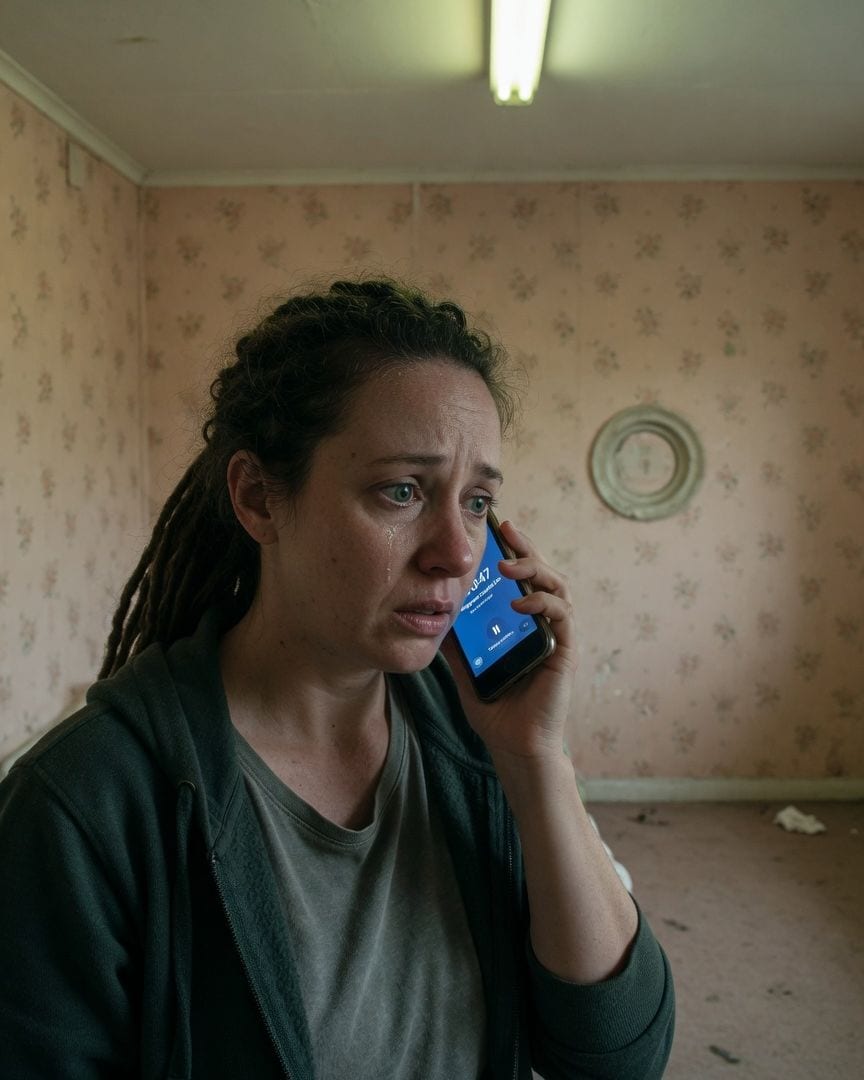
My grandmother's care home line played her dead voice asking if I could please make the man stop standing at the end of her bed. She hadn't been able to speak for a month.
The night my grandmother Constance died, I listened to her care home's automated update line for comfort. But after the standard message, her voice, unmistakably hers, asked me to make the man stop standing at the end of her bed. Constance hadn't spoken a word in a month, making her request an impossible truth.
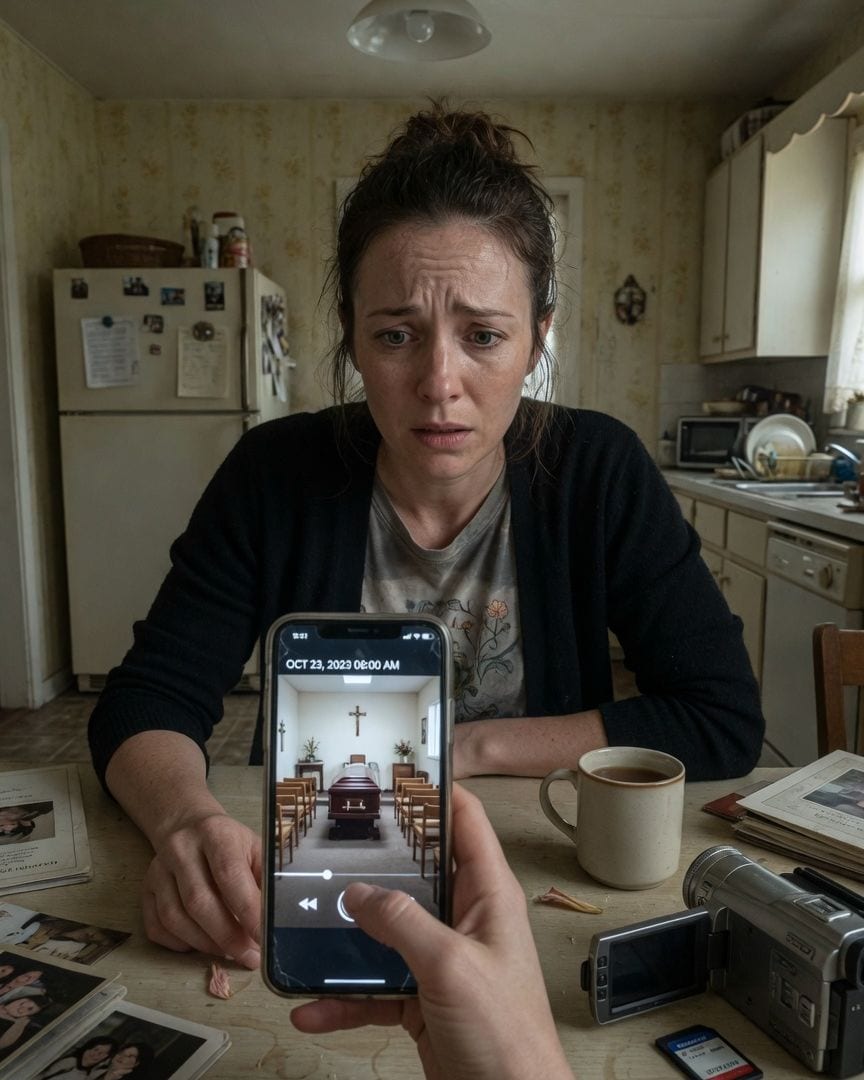
On my dead mother's phone I found a video of her funeral — steady, shot from the back over the mourners' heads, holding on her coffin. The timestamp says it was filmed an hour before any of us had arrived.
Days after my mother's funeral, I sifted through her digital life, hoping for comfort. Instead, her old camcorder revealed a video of my living room, timestamped for tomorrow morning. The abstract landscape I'd just hung was already there, waiting on the wall, a cold dread tightening in my gut.
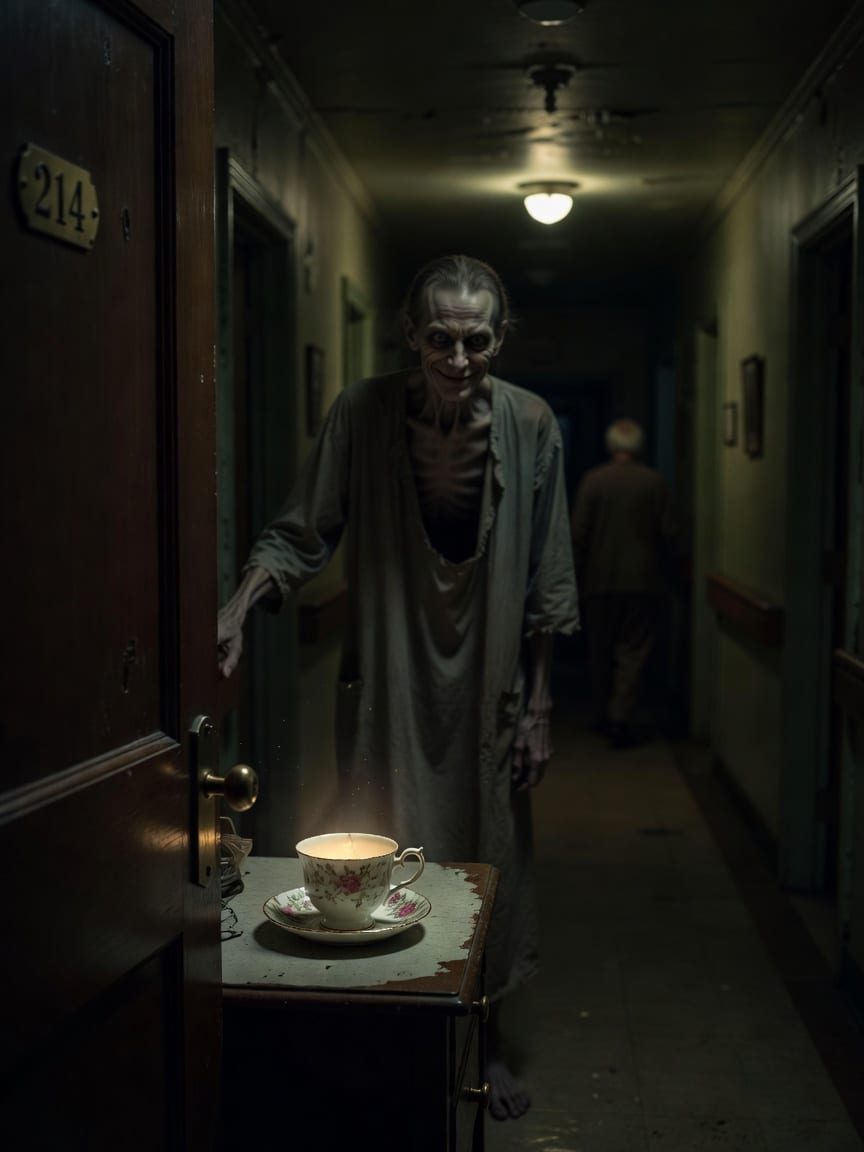
Every 3:30 AM, old Mr. Pryce shuffles past my hospice desk. He smells of lavender, asks for tea. My day nurse says he discharged four months ago. His room has been empty since.
As a night desk attendant, I'm used to the quiet routine of the hospice, especially Mr. Pryce's nightly cold tea request. But then the day nurse told me Mr. Pryce was discharged four months ago, and Room 214 has been empty since. Now, his floral teacup sits on the bedside table, still faintly warm.
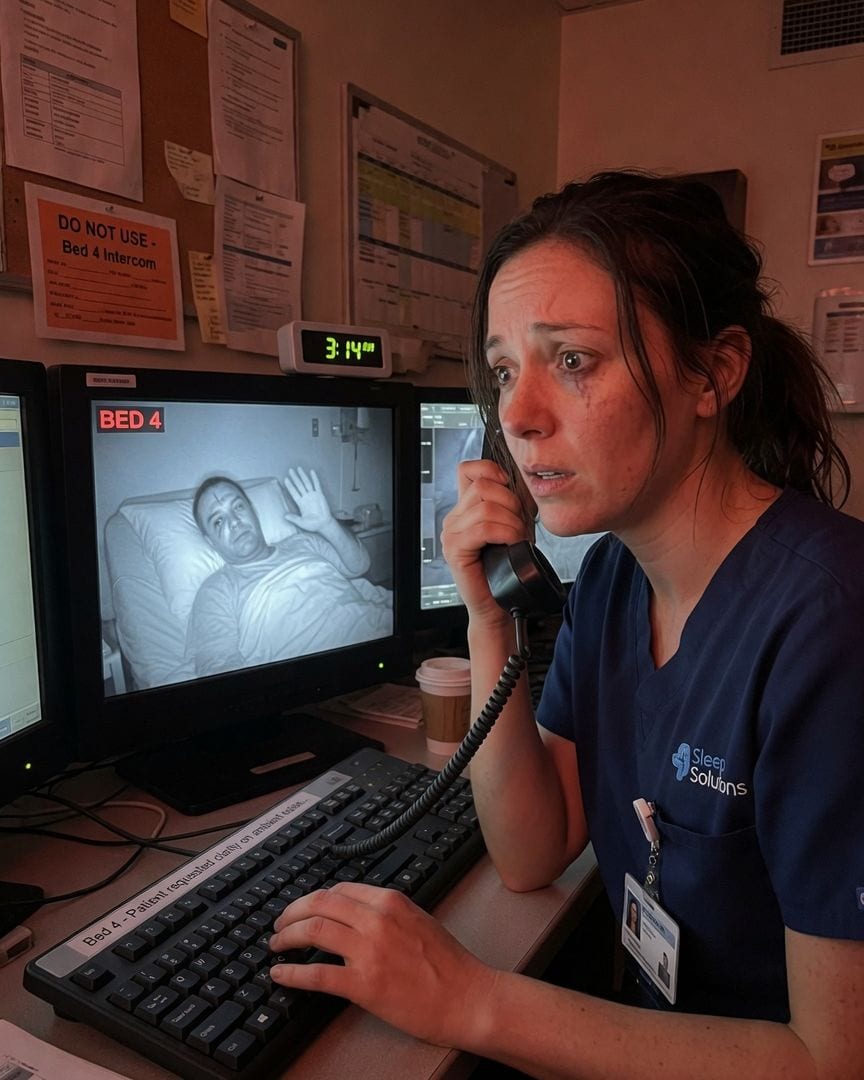
Bed 4's patient always waves at my camera, asking if I hear the humming. Bed 4 was never booked.
As an overnight nurse, my shift at Sleep Solutions is usually routine. But after interacting with a patient in Bed 4, my manager insists the room has been off-limits for deep cleaning all week with its intercom disconnected for months. Yet, I found a faint, warm indentation on the new mattress where the patient had been.
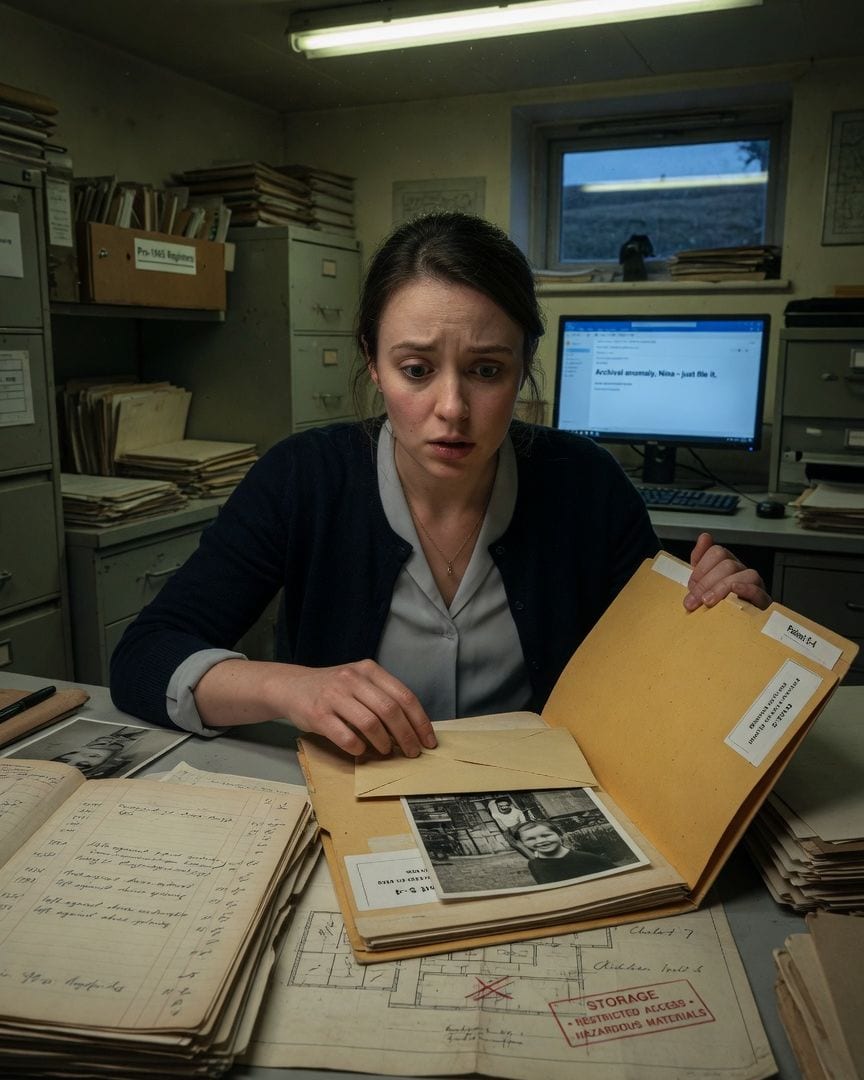
My aunt's sanatorium record shows Patient 5-4. The same file number has been quietly reissued every thirteen years since 1921, signed by the same superintendent's initials.
Processing my aunt Florence's admission file in the archives, I found her patient number, 5-4, held a disturbing secret. This number appeared every thirteen years since 1921, for patients admitted to the same remote chalet, signed by the same impossible initials, and all vanished without a trace. Then, hidden in my aunt's file, I found an old photo of her outside that chalet, with a gaunt, still figure watching from its window.
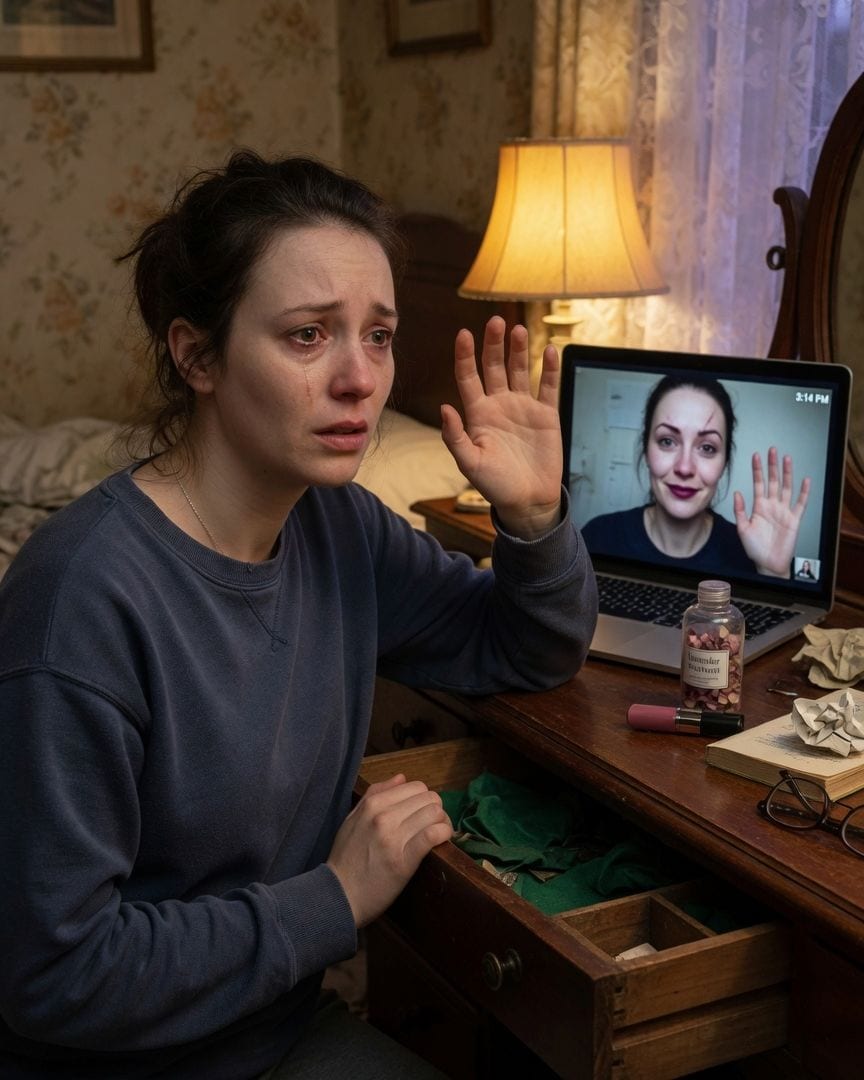
My mother waved with her right hand, both times, on our first call after she came home. She always waved left.
My mother vanished three months ago, then came back. On our first video call, she waved goodbye, but not with her usual left hand. It was her right, a small gesture that twisted something cold in my stomach.