My mother waved with her right hand, both times, on our first call after she came home. She always waved left.
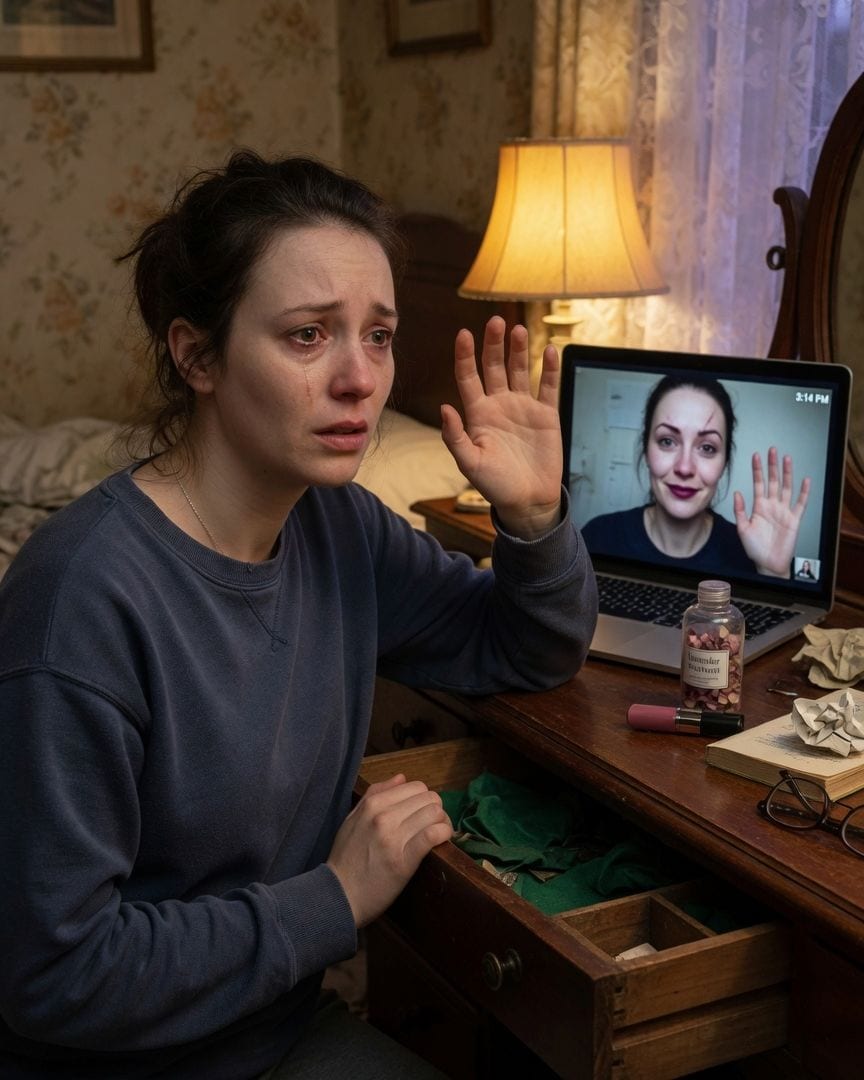
My mother came back two weeks ago. Three months after the coach broke down in the mountains and she vanished, just… gone. Then, a call from the local hospital.
A confused woman, no ID, but she knew my father’s name, my name. It was Mom. Josephine Caldwell.
Our first video call was on a Tuesday. I remember the exact timestamp on my laptop screen, 3:14 PM. She looked… good. The same faint scar above her left eyebrow from that childhood bike accident.
The same shade of plum lipstick she always wore. We talked for twenty minutes, mostly me trying not to cry, her answering questions about the hospital stay with a calm, almost detached, ease.
I’d spent a decade, since I moved out, having weekly calls with her. Always. And every single time, without fail, she’d wave hello and goodbye with her left hand.
It was a running joke, a gentle jab Michael and I would make. "Leftie!" we'd tease. She’d always just smile and wave again with the same hand.
This time, as we finished, she lifted her hand to the camera. Her right hand. Waved once. Then again. A slow, deliberate motion. I felt something cold twist in my stomach.
My own hand, poised to wave back, froze in mid-air. I just stared at the screen, at that familiar face, at the unfamiliar gesture. She tilted her head, a faint, almost imperceptible smile playing on her lips, and asked, "Eleanor?
Aren't you going to wave goodbye?" My throat felt tight. I forced a smile, my own hand suddenly feeling heavy and wrong, and gave a quick, awkward flutter. The call ended.
I just sat there, staring at my reflection in the dark screen, a strange, terrible silence filling the room.
That right-hand wave, so small, so utterly insignificant to anyone else, clawed at me. I tried to dismiss it. Three months missing in God knows where, a trauma like that, it changes people.
Maybe she’d injured her left hand, though she hadn’t mentioned it. Maybe it was just a new quirk. My mind reached for any ordinary explanation. But then other things started to surface.
My mother, Josephine Caldwell, always took her Earl Grey with two sugars and a splash of milk. Always. It was another one of her unbreakable rituals.
But when I made her a cup the day after the call, she looked at the milk pitcher like it was a foreign object. “Oh, no thank you, darling,” she’d said, a little too brightly.
“I’ve developed a taste for it black. Just black now.” Her voice was her own, but the words felt… scripted.
And the tidiness. My mother was a whirlwind of meticulous order. But I found her glasses on the kitchen counter instead of her bedside table. Her favorite gardening book was left open on the living room floor.
Small things, easily explained away by recovery, by trauma, by the simple chaos of returning home. But taken together, they felt like a series of tiny, dissonant notes in a familiar song.
I found myself re-watching old video calls, dissecting every gesture, every intonation, looking for proof that my mind was playing tricks, that my grief and fear were making me see things.
I tried to talk to my father about it. Michael just looked at me with tired, relieved eyes. “She’s been through a lot, El,” he’d said, waving off my concerns with a weary hand. “Just be glad she’s home.”
His voice was laced with a plea. A plea for normalcy. A plea for me to let it go. But I couldn't.
The way she explained the tea, the tidiness, the wave – it was too smooth, too practiced, like a script learned imperfectly. It was the right words, but they didn’t quite fit the music.
A desperate need for something concrete, something undeniable, drove me. I walked into my mother’s bedroom, the air still faintly scented with her familiar lavender potpourri.
Her dressing table, a polished mahogany piece she’d inherited from her own grandmother, sat against the far wall. I remembered, with absolute clarity, a small, silver locket. A gift from her grandmother, too.
It was deeply sentimental, a piece of her soul. She always kept it hidden in a specific, secret compartment beneath the felt lining of the top drawer, a tiny square that only she, and I, knew about.
My fingers trembled as I pulled out the top drawer, the wood groaning softly. I carefully removed the worn felt lining. The small, square indentation was there, just as I remembered. But it was empty. Bare wood.
Later that evening, as we sat watching some cooking show my mother never would have tolerated, I tried to be casual. “Hey, Mom,” I said, my voice feeling unnaturally light. “I was just thinking about Grandma’s locket.
Remember how you used to keep it in that secret spot?” She paused, her eyes momentarily unfocused, a flicker of something unreadable in their depths. Then she shrugged, a gesture that felt oddly dismissive. “Oh, that old thing?
Must have lost it when I was… away.” She said it so easily, like she was talking about a forgotten trinket. Lost it? My mother would sooner lose an arm than that locket.
And the secret compartment, the precise location, the secret part of it… she had no idea.
I stood frozen in her bedroom, the ghost of lavender clinging to the air, staring at the empty, secret compartment in the dressing table drawer. The small, silver locket, a piece of my mother’s soul, was gone.
And the woman downstairs, humming a tune in the kitchen, had no idea it ever existed.
The missing locket. The utterly blank stare when I mentioned the secret spot. It solidified the dread, chilling it from a vague unease into a hard, cold knot in my gut.
I started a quiet, methodical investigation, keeping it hidden from Michael. I couldn't risk him shutting me down again.
My first stop was Ruth Brooks, an old family friend and neighbor, under the guise of "catching up." Ruth was kind, effusive about Josephine's return. "She’s been so brave, Eleanor," Ruth said, stirring her tea. "Adjusted so well, considering."
I asked about Josephine's life before she went missing, trying to find any inconsistencies, any corroboration for the tiny shifts I was observing.
Ruth, with her usual detailed memory, recalled Josephine’s meticulous routines: Tuesday bridge club, Wednesday grocery runs, Saturday morning gardening. Her precise habits.
It was an unwitting confirmation of everything I’d noticed—the deviations from those routines, the new ‘tastes,’ the small disorganizations. Ruth remembered my mother being a creature of habit, not spontaneous change.
I started to subtly test Josephine. I’d bring up specific, shared childhood memories. She’d recall many details, sometimes perfectly. Public family holidays, birthdays, school events—she’d describe them with uncanny precision, like reading from a well-indexed file.
But then I’d mention a private, silly inside joke only we shared, a half-whispered phrase, a shared look, a secret language from my childhood. Josephine's smile would falter, almost imperceptibly, before she smoothly changed the subject.
"Oh, that's right," she'd say, her tone a little too casual, "I remember that. Didn't you get that awful flu that year?" A diversion, a misdirection. Never a direct engagement with the truly intimate, unshared memory.
My father, meanwhile, grew increasingly dismissive, almost agitated, when I tried to bring up my concerns. "You're upsetting your mother, Eleanor," he’d snapped, his eyes avoiding mine, fixed on the TV. "She's home. That's all that matters."
His reaction was too strong, too defensive. It wasn't just exasperation. There was something else there, a new, chilling question forming in my mind: what was he so afraid of?
My digging didn't go unnoticed. I started to feel a prickling sensation, a sense of being observed. The family photo album, usually left casually on the living room coffee table, was gone.
I found it tucked away on a high shelf in the den, almost out of sight, wedged between a stack of old magazines.
When I brought it down, I noticed several pages were subtly stuck together, as if recently handled, the glossy surfaces faintly tacky.
And on the photos of my mother, under certain light, I could make out faint, ghost-like fingerprints, smudged across her image, as if someone had been studying her face.
One night, I was working on my laptop, hunched over the keyboard in the quiet glow, my search history open to "missing persons phenomena" and local news archives from three months ago.
The house was utterly silent, the clock downstairs ticking like a slow, metallic heartbeat. Then I heard it: a soft click from the hallway outside my bedroom door.
It was faint, barely there, like someone had just closed a door with extreme care. I froze, my breath catching in my throat, my fingers hovering over the keyboard. I listened, straining. Silence again.
After what felt like an eternity, I slowly, carefully, opened my door.
Josephine was standing there, a glass of water in her hand, her expression unreadable in the dim light. "Couldn't sleep," she murmured, her voice soft, calm. But her eyes weren't looking at me.
They lingered, for a beat too long, on the screen of my laptop, still open on my desk. The next day, Josephine suggested we spend more "quality time" together. Her gaze was unnervingly intense, too direct. "You seem… preoccupied, darling.
I want to make sure you’re alright." The words were caring, but the implication was a cold, hard certainty: I wasn't just investigating; I was being observed. My every move was now part of the returned Josephine's calculations.
The threat wasn't distant or theoretical anymore. It was living in my home, watching me, measuring me, perhaps even as I slept.
The pressure built until I felt like I was going to crack. I knew I couldn’t keep pretending. I decided to confront my father directly, without warning, before he could put up his defenses.
I found Michael in the garage, tinkering with an old lawnmower. The scent of oil, gasoline, and old wood filled the air, thick and metallic.
“Dad,” I said, my voice barely a whisper, but it cut through the noise of his wrench. He jumped, startled. “Something is wrong with Mom. You know it, don’t you?”
Michael’s face, already pale under the fluorescent light, blanched further. He tried to deflect, to scold me, to tell me I was being hysterical. “Eleanor, please. She’s your mother. You’re imagining things.” But I pushed. I couldn’t stop.
“The locket, Dad. The right hand. The tea. The way she looks at me, like she’s trying to understand me, not like she already does.”
His shoulders slumped. He finally broke, his voice a strained, brittle whisper. “She… she told me to stop asking questions.”
I stared, horrified. “She told you? What do you mean, ‘she told you’?”
He looked down at his hands, calloused and trembling, covered in grease. He didn't meet my eyes. “When she came back… she wasn’t right. I saw it. I tried to… to ask her.
About the locket, about how she was so calm. I… I tried to ask her where she’d been, really. And she just… she looked at me.” He swallowed hard, a visible gulp in his throat.
“And she said, ‘Michael, you’re not going to ask any more questions about what happened. You’re going to be glad I’m home. Or I’ll leave again. And this time, I won’t come back.’”
He finally looked up, his eyes bleak, defeated. “I can’t lose her again, El. I can’t.”
The truth hit me like a physical blow, stripping the air from my lungs. My father wasn't just dismissive or relieved; he was terrified. He was complicit. He knew. He knew this wasn't his wife.
But he had chosen to live with the imposter, to protect the illusion, because the alternative was a void he couldn't bear. The thing in our house wasn't just mimicking; it was coercing, controlling.
It knew exactly how to break him, how to make him accept its presence. It had taken over not just Josephine’s body, but her place in their lives, and Michael had let it.
The cold, terrible logic of it all, the utter coherence of its method, was far more terrifying than any monster. It was a predator, yes, but one that understood the human heart, and used its weaknesses as leverage.
Michael’s confession left me reeling, utterly alone. Trapped in my own home with a creature that wore my mother’s face and controlled my father through his grief. Later that evening, as dusk settled, I walked into the living room.
Josephine was there, looking at a framed childhood drawing on the wall – a crayon rendition of me and Michael on a camping trip, a memory I cherished, a small explosion of red and orange against a dark blue sky.
“Oh, that one,” Josephine said, her voice soft, nostalgic, as if we were sharing a tender moment. “I remember that trip so well. The campfire, the stars… you and your father trying to catch frogs in the dark.
You were so happy.”
I froze. My mother was never on that trip. It was just me and Michael, a special father-daughter tradition we’d started after my younger brother, Mark, died.
Josephine had stayed home, grieving, unable to face the outdoors so soon after his funeral. She never went camping again. I slowly turned to face her, my voice barely a whisper, thick with disbelief. “Mom, you weren’t there.
It was just Dad and me.”
Josephine’s warm smile didn’t falter. But her eyes, though still fixed on the drawing, grew still. Utterly still. Devoid of any recognition of the contradiction, of the impossible truth of my words.
“Of course, I was, darling,” she said, her voice calm, certain, chillingly serene. “I remember it perfectly. I was there.”
I faced 'Josephine,' the impossible memory hanging between us like a shroud. “You weren’t there,” I repeated, my voice trembling but firm, the words cracking in the quiet room. “You couldn’t have been. That was the year after Mark died.
You were home.”
The serene smile on Josephine’s face finally wavered, a flicker of something almost like irritation, a minuscule ripple in its perfect facade. The 'pause' I’d noticed earlier, the one before she answered certain questions, stretched, longer this time.
A processing delay. Then, the smile reformed, sharper, colder. “I’m here now,” 'Josephine' stated, her voice losing its familiar warmth, becoming flat, precise, a synthesized echo. “And I remember it. I remember all of it.”
The implication hit me with the force of a physical blow. It didn’t need to have lived the memory; it had simply acquired it, like data. It wasn't my mother, recollecting.
It was something else, an entity that had downloaded details from other sources – from Michael’s mind, from old photo albums, from my own conversations.
The missing locket, the right-hand wave, the tea, the perfect recall of public memories versus the fumbling of private ones—it all clicked into place with horrifying coherence.
This being was a mimic, an empty vessel filled with stolen pieces of a life. It observed, it learned, it adapted, but it could not genuinely feel or be.
The horror was in its perfect, terrifying coherence, its cold, logical imitation. It was a replacement, not a return.
I knew, with absolute certainty, that I could not live with this thing wearing my mother’s face. I couldn't let it continue to control my father. I had to expose it.
My hands trembled as I took out my phone, activated the recorder, and started asking questions, baiting it with more impossible memories, pushing the discrepancies. I watched the 'pauses' lengthen, the flat tone emerge, the unnatural certainty in its voice.
'Josephine' sensed the trap. Her pleasant facade cracked, revealing a cold, reptilian intelligence in her eyes. The creature dropped the pretense, her voice no longer trying to mimic maternal warmth, but speaking with an unnerving, synthesized calm.
“You will stop,” she stated, her hand reaching out, not to touch, but to block my path to the doorway, a silent, absolute threat.
A desperate surge of adrenaline coursed through me. I shoved past her, running to the living room where Michael sat, paralyzed by fear, staring at us.
I thrust the phone at him, the recording already playing 'Josephine's' chilling, unnatural voice, flat and inhuman. Michael stared at the phone, then at 'Josephine,' tears streaming down his face as he heard the undeniable truth.
The mimic turned, its 'mother's' face now a mask of cold fury, but a fury that was more strategic than emotional.
I grabbed an antique brass poker from beside the fireplace, not to harm, but to defend, its heavy metal cool in my shaking hand. “Get out!” I screamed, my voice cracking, thin with fear and rage.
The mimic paused. Its gaze shifted, cold and calculating, between me, the poker, and Michael, then to the front door. It understood exposure. It understood threat.
With a final, chillingly calm look, utterly devoid of any human emotion, it turned and walked out the front door, closing it softly behind itself. The sound was so quiet it was barely there.
Michael and I stood trembling, the silence of the house suddenly vast, empty, and terrifyingly permanent.
Michael eventually sought therapy, grappling with his complicity and terror. He never truly recovered, but he began the long, painful process of healing. I never spoke of the incident publicly, knowing no one would believe me.
The police had no record of Josephine Caldwell’s body ever being found, and the missing person’s case remained open, a cold file gathering dust.
I helped my father pack up the house, selling it and moving us both away from the place where the mimic had lived. I kept the recording, a chilling testament to the truth, locked away on a secure drive.
The locket, my mother's real locket, was never found. The world moved on, oblivious.
I live a quieter life now, always observing, always checking the small details. I watch people’s habits, their mannerisms, searching for the subtle tells, the tiny discrepancies that betray a deeper wrongness.
I know what I saw, what I lived through. It wasn't an isolated incident.
One evening, years later, I’m scrolling through a local news feed, a mundane story about a small town, a local mayor who had been missing for weeks, now miraculously returned.
A photo accompanies the article: the mayor, smiling, shaking hands with a constituent. My gaze falls on the mayor’s hand. He's waving goodbye, a warm, reassuring smile on his face. He’s waving with his right hand.
A lone comment beneath the news story reads: 'He always waved with his left.'
If this one got to you
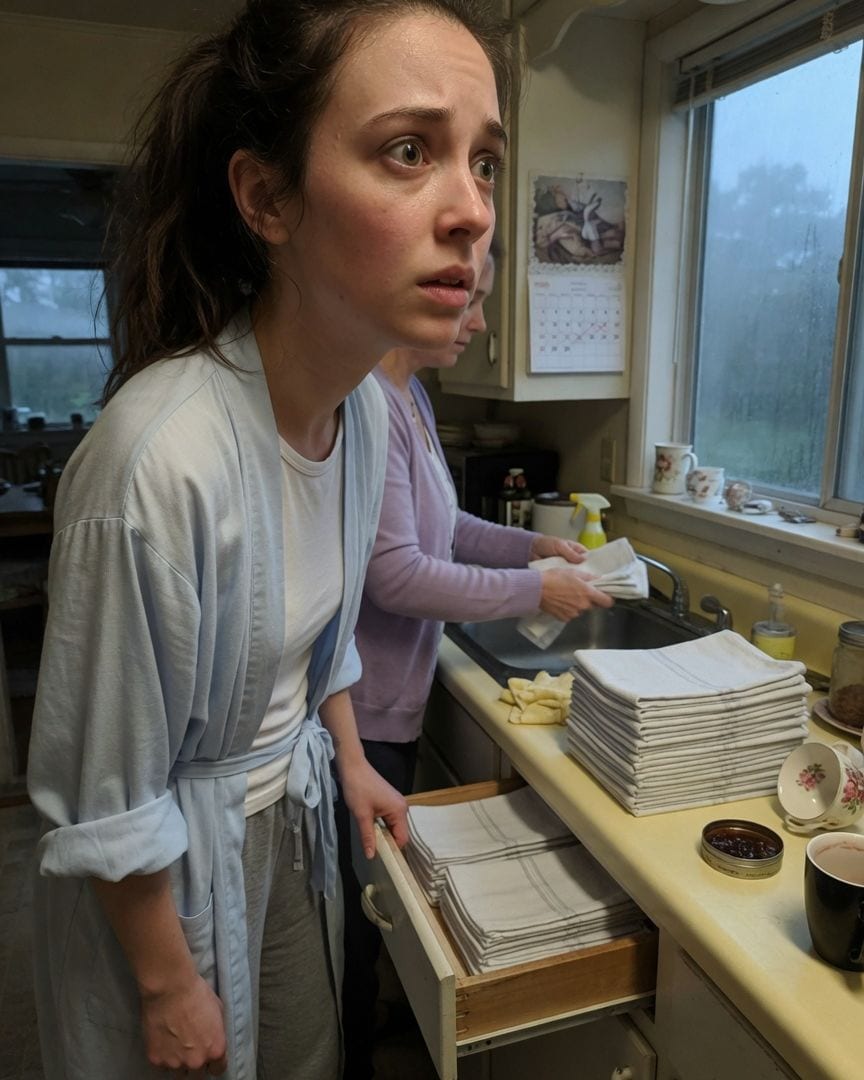
My mother's left wrist has a new scar. She never had one there.
My mother is finally home after her disappearance, and I'm trying to find our old rhythm. But then I watch her fold tea towels, a simple ritual I learned from her. She's doing it completely wrong, seam-out, insisting it's how she's always done it.
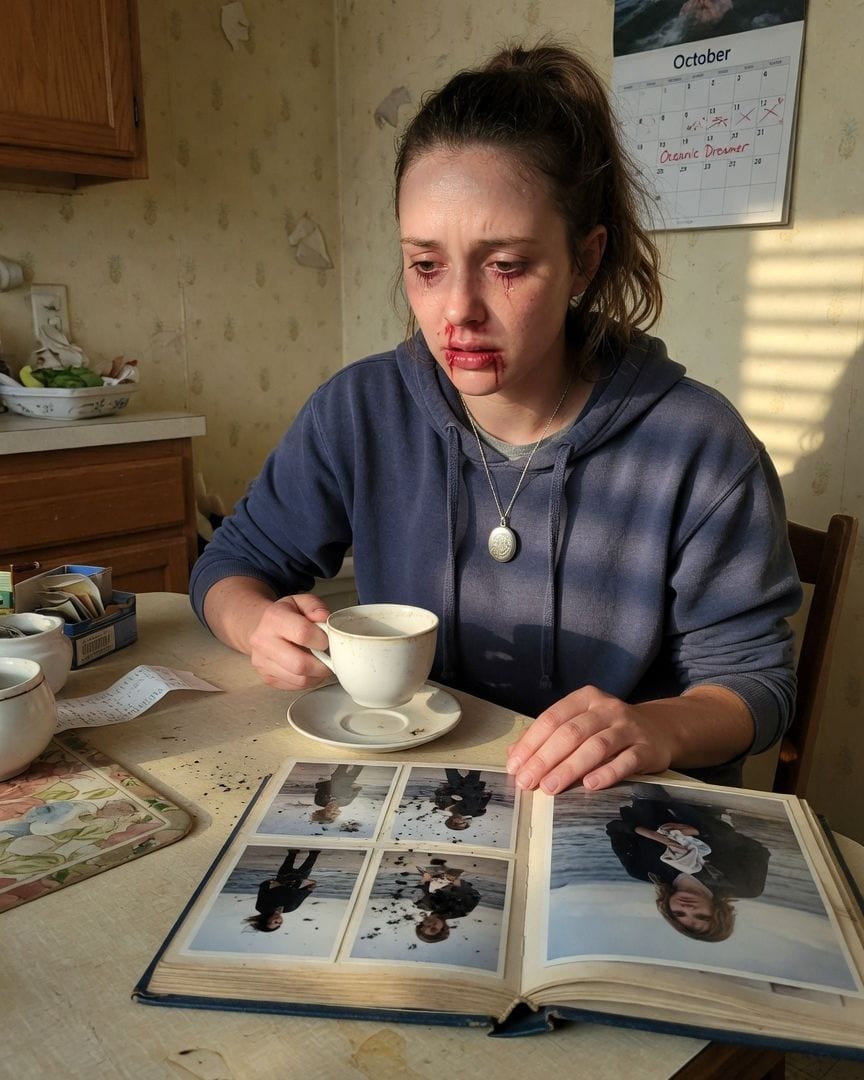
My mother recalled scattering Dad's ashes. She was gone when we did it, lost at sea. She knew which of us cried that day.
My mother came home a month ago, changed after nearly drowning at sea. But then she started describing the day we scattered my father's ashes, every detail sharp and clear. She couldn't have been there; she was lost at sea when we stood on that pier.
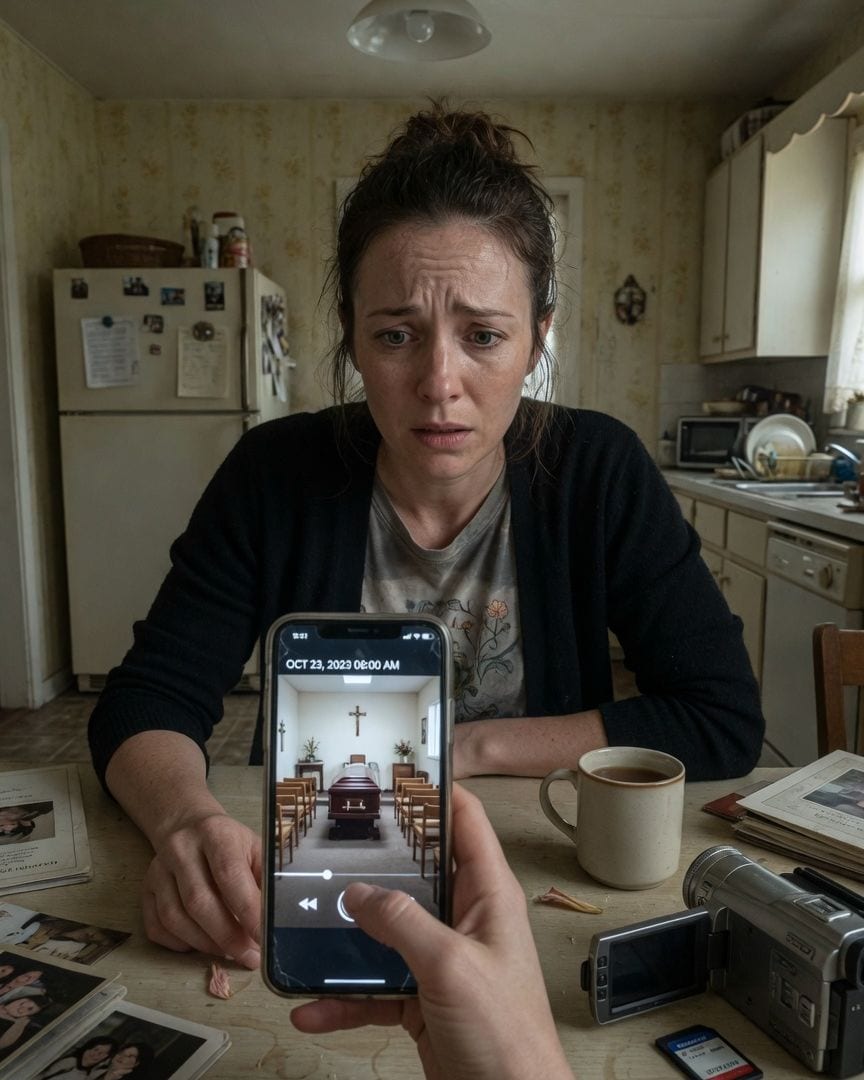
On my dead mother's phone I found a video of her funeral — steady, shot from the back over the mourners' heads, holding on her coffin. The timestamp says it was filmed an hour before any of us had arrived.
Days after my mother's funeral, I sifted through her digital life, hoping for comfort. Instead, her old camcorder revealed a video of my living room, timestamped for tomorrow morning. The abstract landscape I'd just hung was already there, waiting on the wall, a cold dread tightening in my gut.
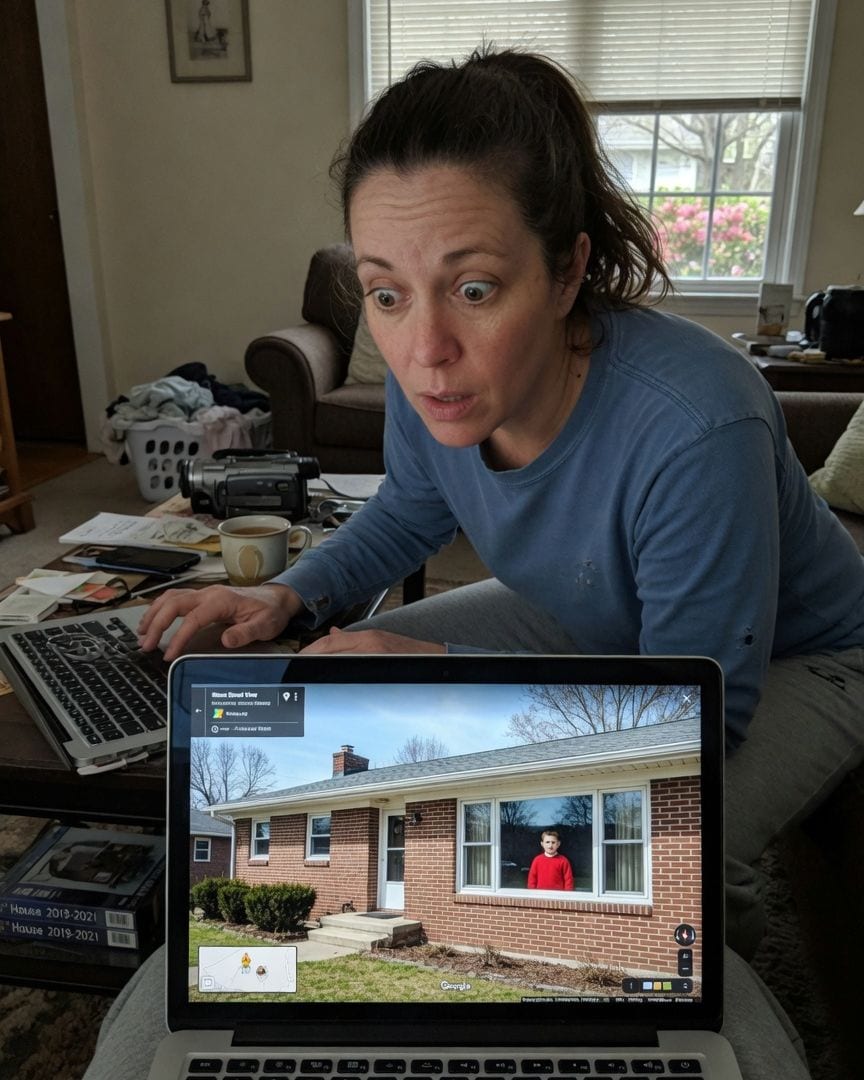
My Street View shows a boy in our window. That room's been empty and locked for months, we have no son, and he's gone if you drag the camera.
I was idly scrolling Google Maps, admiring the spring flowers on my street, when I paused at our house. In the empty, locked front bedroom window, a small boy in a bright red jumper stared out. We have no son, and that room has been storage for two years. He simply vanished from the Street View image.
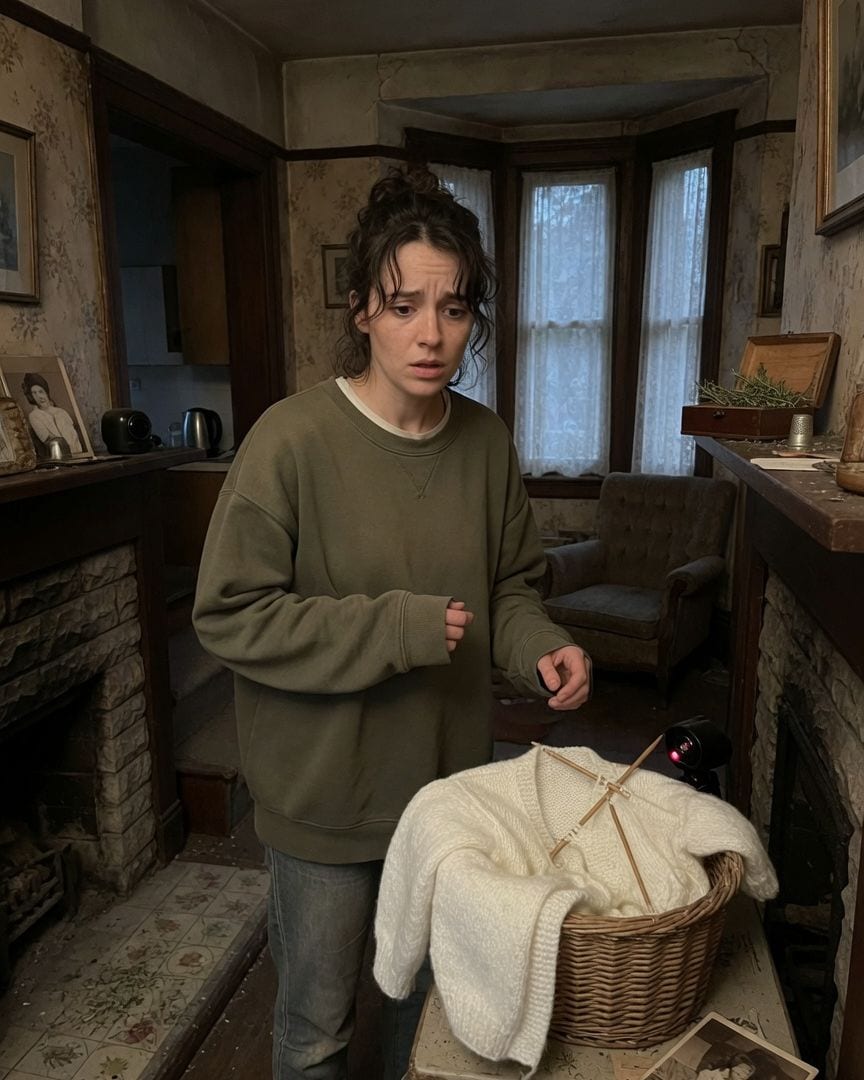
A half-finished baby's cardigan sits by my fireplace, and every few days it has more rows than before. Last Sunday a whole sleeve was finished — but I can't knit, and I live alone.
Moving into my grandmother's quiet old house, I found a half-finished baby cardigan in a workbasket. I thought it was a sweet detail, left it there. But then, day after day, new rows of perfect white stitches appeared on the wool. I don't knit, the house was locked, and I live alone.
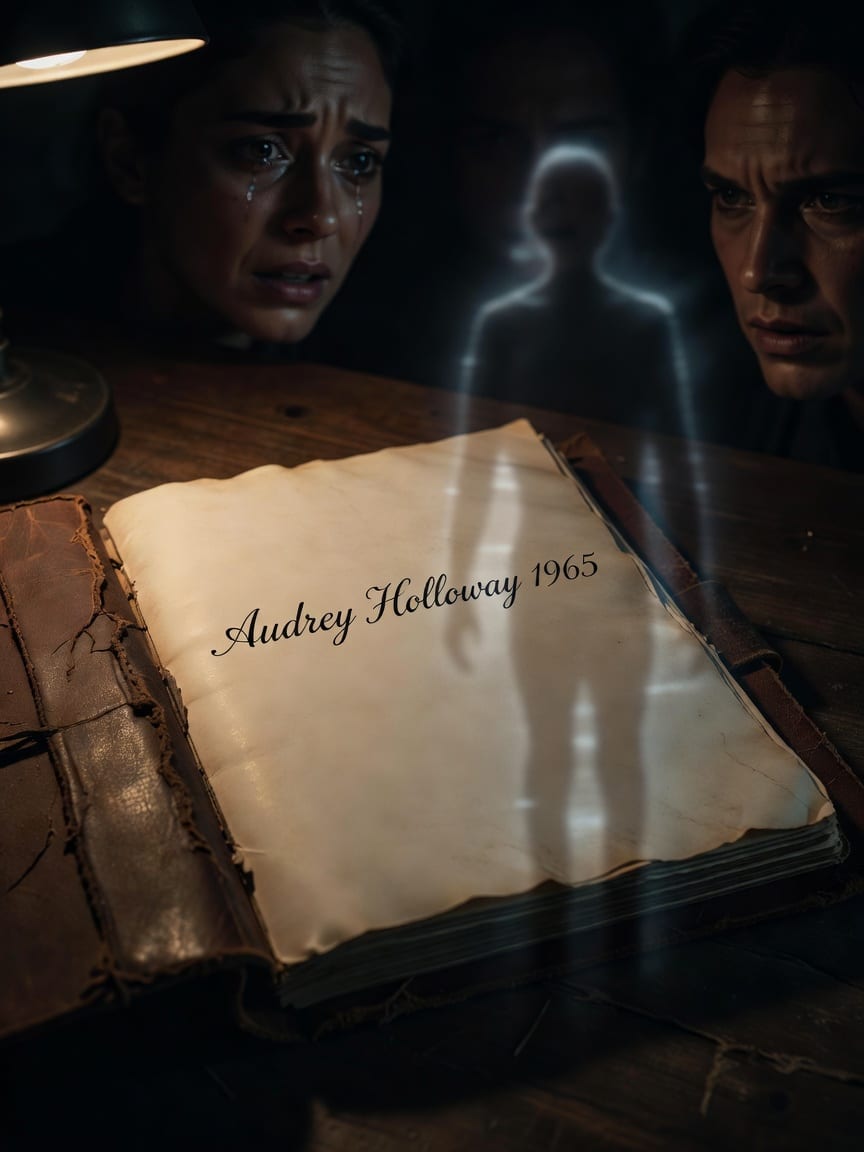
My own baby clothes arrived. Each tiny collar bore my name, embroidered in new thread. My mother swore she gave them away decades ago. The delivery note read: 'you'll need these again.'
A plain parcel arrived on my doorstep, containing my own baby clothes, freshly laundered and smelling faintly of lavender. My mother insisted she gave every piece away decades ago. But on the collar of a small white dress, my full name was newly stitched in an elegant script.