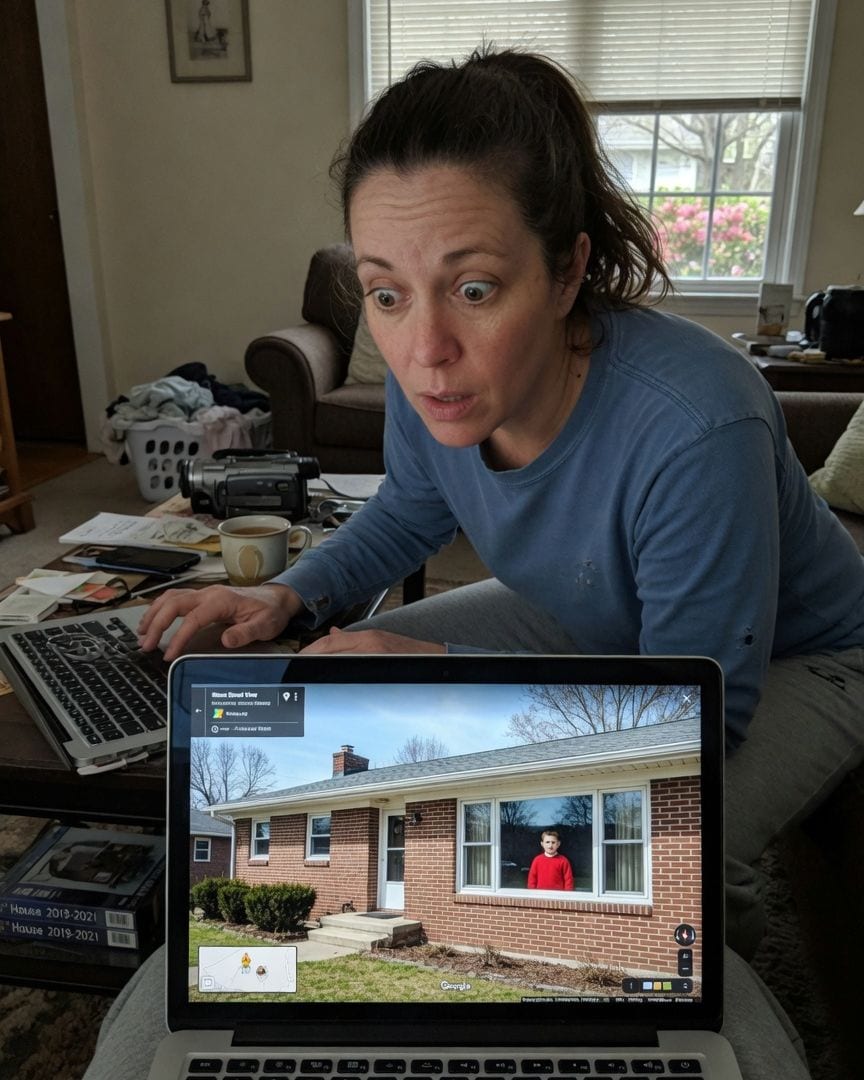
My Street View shows a boy in our window. That room's been empty and locked for months, we have no son, and he's gone if you drag the camera.
I was procrastinating, the way you do on a Tuesday afternoon when the laundry machine is churning and there’s no immediate crisis. Scrolling through Facebook, then got bored, and clicked over to Google Maps.
Just idly dragging the Street View cursor down my own quiet suburban street, admiring the spring flowers the neighborhood had finally managed to coax out.
I paused at our house, a charming 1950s brick ranch, a little proud of how neat the trim looked after Nathan painted it last fall.
Then I saw it. In the front bedroom window, the one that faces the street. A small boy, maybe eight years old, in a bright red jumper.
He was staring straight down at the passing camera, his face a pale oval. My heart jumped, a real, physical thump. That room is mine, but it’s been empty and locked since we bought the place two years ago.
We use it only for storage, a place to dump forgotten boxes and off-season clothes. It certainly isn't a child's room. And we have no son. My breath caught in my throat, a cold, dry gasp.
I dragged the Street View cursor forward, just slightly, to advance the camera a few feet. The boy was gone. The window now reflected only the clear spring sky, a perfect, empty mirror. I dragged back. Nothing.
The window remained stubbornly vacant. Forward, nothing. He had been there, I swear it. Solid and clear, a real boy. But the frame refused to hold him.
I tried again, nudging the cursor back and forth, over and over, my thumb hovering. Nothing. Just an empty window, mocking me with its reflection of blue. The boy had simply… vanished.
The image of that small face, framed by the empty window, wouldn't leave me.
I tried to rationalize it – a reflection, a trick of the light, a neighbor’s kid playing a prank that just happened to perfectly coincide with the Google car. But it felt too vivid, too precise.
I pulled out an old box of digital files, mostly home videos from when Nathan and I first moved into the house. I was grasping for anything, any shred of a mundane explanation.
I found a shaky clip of Nathan painting the living room, singing off-key as he rolled white over beige. Then one of me, laughing, trying to assemble an IKEA bookshelf with entirely too many small screws.
My hand was visibly trembling as I fast-forwarded through the clips, looking for anything that might shed light on that front bedroom.
I landed on a brief shot, taken before we fully locked it up, just an empty space with dusty light filtering through the window. The room was bare save for a couple of boxes and a rolled-up rug.
The video played, and for a moment, it was just the quiet hum of the camcorder, the ambient sound of an empty house. My own breathing was loud in the silence of my living room.
But then, a faint, almost inaudible sound. A child’s voice. A soft, indistinct murmur, seeming to come from the empty room on the recording.
It wasn’t a laugh, not a cry, just a quiet, sustained word or sound that I couldn't quite make out. It was so faint, I almost dismissed it as background noise, or a trick of my mind.
I rewound the video, my fingers fumbling on the trackpad. Played it again. There it was. Impossible. The room had been empty. I remembered it perfectly, the silent dust motes dancing in the sunbeams.
I cranked the volume on my laptop, leaning closer, straining to hear over the camcorder's soft static. It was still there, a ghost of a sound, a breathy whisper.
I called Vivian Russo, my neighbor and oldest friend. She was over in fifteen minutes, a glass of wine already in hand, trying to lighten the mood. I didn’t even offer her one.
I just played the old home video for her, pointing to the laptop screen, gesturing wildly at the faint sound. Vivian leaned in, her brow furrowed, listening intently to the nearly silent clip.
"It’s just static, Eileen, or the wind through an open window," Vivian suggested, trying to be rational, trying to pull me back to earth. Her voice was firm, but I could hear a thread of uncertainty in it now.
I shook my head, my eyes fixed on the timestamp. I rewound the segment again, my finger shaking slightly as I pressed play.
We listened a third time, both of us straining, our heads almost touching over the laptop screen. The air in the room felt heavy, cold, despite the spring day outside.
And then, clearer now, cutting through the faint murmur and the camcorder's hiss, a distinct whisper. It was soft, almost breathy, a sound that seemed to part the air. But both of us heard it.
A single word, undeniable, spoken from the empty room on the recording. It was my own name.
"Eileen."
The whisper of my name on that old home video recording left me deeply unnerved. It wasn't just a random sound; it was directed at me. I couldn't sleep.
Every time I closed my eyes, I saw that boy in the red jumper, then heard my name, soft and insistent.
Nathan was away on a business trip, which usually meant I indulged in late-night reading, but now the silence of the house felt like a gaping maw.
I started researching, furiously, obsessively, in the dark hours. I scoured online property records for our address, traced ownership back decades. Nothing unusual, just a succession of ordinary families.
Then I moved to local forums, archived newspaper articles, anything that mentioned "unexplained occurrences" in our quiet suburban pocket. These were usually dismissed as old wives' tales, vague mentions of strange shadows or sounds, often centered around children.
They felt like whispers in the wind, but they pricked at me. Each mention, however vague, added a layer to the cold dread that was starting to seep into my bones.
The official records were sparse, just names and dates of ownership, unremarkable details of taxes paid and deeds transferred. It was like the house itself was trying to erase its past.
Eventually, after days of digging, I found a contact for Everett Kingsley, 62, an archivist at the local historical society.
I sent him an email, trying to sound casual, asking if he had any more detailed property files for our street, specifically any involving unusual incidents.
Everett's reply was prompt, almost too prompt, landing in my inbox within an hour. His email tone was calm, almost unbothered, as if he anticipated my questions. He agreed to meet, suggesting I come by the society on Wednesday.
When I arrived, the place smelled of old paper and dust. He was a small man with kind eyes and a trim gray beard, but there was something unsettlingly serene about him.
I asked him directly about any unusual incidents connected to my address, specifically any involving children. He gave me a mild, almost knowing smile.
"Some places, Ms. Hartley," he said, his voice soft, "simply hold onto things longer than others. Particularly if there was... a strong impression left behind." He didn't elaborate.
Instead, he directed me to a dusty box labeled "Local Lore - Northwood Estates," filled with old newspaper clippings and town council minutes.
"You might find some 'local color' there," he added, his eyes twinkling, though the twinkle felt more like a glint of steel.
I delved into the archives Everett had provided, sitting at a long, oak table in the historical society, the smell of aged paper a constant presence. My hands trembled as I turned the brittle pages.
I found a series of articles from the late 1960s, yellowed and faded, about the disappearance of an eight-year-old boy named Philip from a house on my street.
The address wasn't explicitly stated in the initial reports, but the cross-streets matched ours. The reports were vague on details, implying a runaway, mentioning local search parties that yielded nothing.
But what caught my eye, what made my breath hitch, were the mother’s increasingly erratic claims.
Nina Ellsworth, Philip’s mother, insisted she still heard her son’s voice calling to her from empty rooms in the house, long after the search had been called off.
As I read, hunched over the articles, my smart speaker in the corner of my home office crackled.
The small, gray device, usually silent unless prompted, suddenly repeated a phrase from the newspaper clipping I was holding: "...the search continued for weeks..." The words were disembodied, slightly distorted, then cut out abruptly, leaving a ringing silence.
I froze, my heart thumping against my ribs. It had to be a coincidence, a snippet from a radio ad I'd heard earlier, somehow triggered. I told myself that.
Later that day, my security camera app sent a notification to my phone: 'Motion detected in front bedroom.' The same room where I'd seen the boy in Street View, where I’d heard the voice on the video.
I clicked the notification, my thumb slick with sweat, bringing up the live feed. The room was empty, just as I’d left it, the door still locked from the outside.
The notification disappeared a moment later, as if it had never happened, leaving no trace in the app's history.
A few days later, Everett sent an unsolicited email. No subject, just a cryptic link to an obscure online archive of local public access television from decades past.
The subject line, when I opened it, read: 'Perhaps this will shed some light on those 'impressions' we discussed, Eileen.' The use of my first name, uninvited, informal, sent a distinct shiver down my spine.
He knew I was digging, and he wasn’t just guiding me. He was leading me.
The silence on the video where Philip's mother claimed to hear him. The whisper of my name on my video, from my empty room. The connection was undeniable, terrifying.
I marched back to the historical society the next morning, my laptop clutched in my hand, the old video cued up. Everett was at his desk, sorting through microfiche, looking entirely too placid.
"Mr. Kingsley," I said, my voice sharper than I intended. He looked up, his mild eyes showing no surprise. I didn't waste time. I placed the laptop on his desk and played him the segment of my home video.
The soft static, the almost imperceptible murmur, then the clear, chilling whisper: "Eileen."
He listened, his expression unreadable, a faint sadness in his eyes I hadn't noticed before. "So, it's not just the visual traces anymore," he mused, almost to himself, his gaze fixed on the blank screen after the video ended.
I pressed him, leaning over his desk. "Who was Philip? What happened in my house?"
Everett sighed, a slow, deep exhalation, then closed the laptop gently. "Philip was a boy, yes. Philip Ellsworth. He disappeared from your house, or what was your house, almost sixty years ago.
The official conclusion was a runaway, but his mother, a woman named Nina, she insisted she still heard him. Calling her name, calling for her. From that very bedroom."
He gestured vaguely in the direction of my neighborhood, as if he could see my house from his office window. "She said the house was... keeping him. Recording him."
I felt a cold dread, heavy and absolute, spread through me. "Recording?"
"Not like a tape recorder," Everett explained, his voice low, almost a murmur itself. "More like an echo. A very strong, very persistent echo. Some places, Ms. Hartley, they have a resonance. They hold onto powerful emotions, powerful events.
And they play them back. The boy in the Street View, the voice on your recording... they are echoes of Philip. And the house, it seems, has grown more adept at amplifying them. Reaching out.
Especially when someone starts to listen, starts to look for answers."
The pieces of the puzzle began to click into place, horrifyingly. The Street View image, the impossible voice, the flickering devices—all echoes, all Philip, all tied to the house.
The house wasn't just old; it was alive in some awful, unthinking way, playing back a tragedy.
Everett looked at me, his expression grave. "The phenomenon isn't just passive, Eileen. It learns. It responds to attention. Your attention, specifically."
Deeply disturbed, my mind a tangle of dread and half-formed theories, I rushed home. The idea of my house as a sentient recording device, trapping a child's echo, was grotesque.
I remembered Everett's email, the one with the cryptic link to the old public access TV archive. A desperate impulse, a need to understand more, to pull back another layer, drove me.
Maybe there was something there, a clue, a full recording of Nina's distress.
I navigated to the obscure website, the URL a jumble of ancient code. The interface was clunky, decades old, full of broken image links.
I found the section for archived broadcasts and clicked on a link for a decades-old, static-filled program, titled simply "Community Voices."
The screen on my laptop was a blur of white noise, static-filled, the image flickering erratically. It was mostly unwatchable, a kaleidoscope of grays and blacks. But then, cutting through the hiss and crackle, a child's voice.
Distorted, but undeniably present, it spoke my name. Clear as day.
"Eileen."
And then, equally clear, equally chilling, it asked, "Why are you looking for me?"
The child's voice, Philip’s voice, repeated the question from the static-filled recording: "Why are you looking for me?" I replayed the segment again, my blood running cold. This time, I realized the subtle, horrifying truth.
It wasn’t asking why I was looking for him, Philip, the lost boy. It was asking why I was looking for it – the house. The revelation was a chilling pronouncement.
The house was not merely playing echoes; it was aware, interacting.
Just then, a quiet knock at the door. I jumped, my heart hammering against my ribs. I hadn’t heard a car, hadn’t expected anyone. It was Everett Kingsley, his face pale, his usual composure gone.
"I had a feeling you'd find that channel," he said, stepping inside without waiting for an invitation, his eyes scanning my living room, as if seeing something I couldn't.
"It’s a conduit," he continued, his voice low, urgent. "The house, Eileen, it’s not just replaying old memories. It’s drawing people in, making them look, making them record.
The channel, your smart devices, the Street View – these are all manifestations of its growing awareness. It’s reaching out. It wants a new host, a new anchor for its echoes.
Philip is trapped within it, a part of its projection. He's not the ghost; he's the broadcast."
Everett explained that the house fed on attention, on the act of seeking, of recording.
Every time I looked at Street View, every time I listened to the home video, every time I searched its history, I was strengthening its hold, giving it a clearer voice, a stronger signal.
The dread deepened, transforming into pure horror: the house wasn’t haunted by Philip; Philip was part of the house, an echo made real, amplified by its insidious, growing will.
It was like a parasitic recording device, turning attention into energy, becoming more real with every query.
The full, horrifying truth settled over me: the house was the entity, and Philip was merely its projected echo, a lure. I knew, with absolute certainty, what I had to do.
The only way to stop it, to break its hold, was to starve it of attention. To erase every trace.
I moved with a frantic energy, a desperate urgency. I furiously deleted all my recordings of the house – the old home video, the downloaded Street View images, the screenshots of the old newspaper articles.
I disconnected every smart device, yanking plugs from outlets, even unscrewing lightbulbs. I unplugged the Wi-Fi router, severing its connection to the outside world. I needed to cut off every potential conduit.
Vivian arrived then, her face a mask of concern after my frantic, half-coherent call.
I told her everything, the whole unbelievable story, and to her immense credit, she just nodded, her eyes wide, sensing the real danger without needing full scientific explanation. "We're leaving," I said, my voice firm. "Now."
We packed essentials into two duffel bags, moving with a desperate haste that felt almost primal. My hands were shaking, but my resolve was absolute.
As we made a final sweep, just before heading for the front door, I almost forgot. My baby monitor. It was still sitting on the dusty dresser in the empty front bedroom, a small, white plastic device.
It had been there, unplugged, for months.
I reached for it, my hand trembling as I stretched out. Just as my fingers brushed the cold plastic, it crackled to life. No batteries. No power.
Philip’s voice, clearer than I'd ever heard it, not distorted by static or distance, filled the room. "Don't leave me, Eileen."
The words were followed by a deep, resonant hum that seemed to emanate from the very walls, a vibration that made the floor tremble beneath my feet.
The house itself was making a sound, a low, demanding growl, like a living thing being abandoned.
Vivian grabbed my arm, her grip like a vice, pulling me toward the door. "Now!" she shouted, her voice laced with terror.
We fled, leaving the monitor blaring Philip's voice and the house's growing, hungry hum behind us, slamming the front door shut on the rising sound.
Vivian and I never looked back. We sold the house for a fraction of its value, disclosing nothing of its true nature to the real estate agent, only citing "personal reasons" for the rapid sale.
We moved to a small apartment across the state, cutting ties with our old life, our old neighborhood, as completely as we could.
The old house sat empty on the market for over a year, its listing eventually removed. No one would buy it. Eventually, developers purchased the entire block, planning to demolish the aging homes for new construction.
I tried to forget, tried to build a new life, free from the echoes, from the pervasive, insidious sense of being watched.
Months passed. I worked from my new apartment, meticulously avoiding online maps and local news feeds, trying to erase every memory.
One evening, Vivian sent me a link to a local news article about the old neighborhood, a "before and after" piece on the new developments. My stomach clenched, but a morbid curiosity, an awful, magnetic pull, made me hesitate.
Then I clicked.
The article showed a new Street View image of where my old house once stood, now a cleared, vacant lot, a pristine patch of raw earth.
But in the background, just visible in an upper window of the neighboring house, was a faint flash of red.
A small boy, in a red jumper, staring down at the passing camera.
If this one got to you
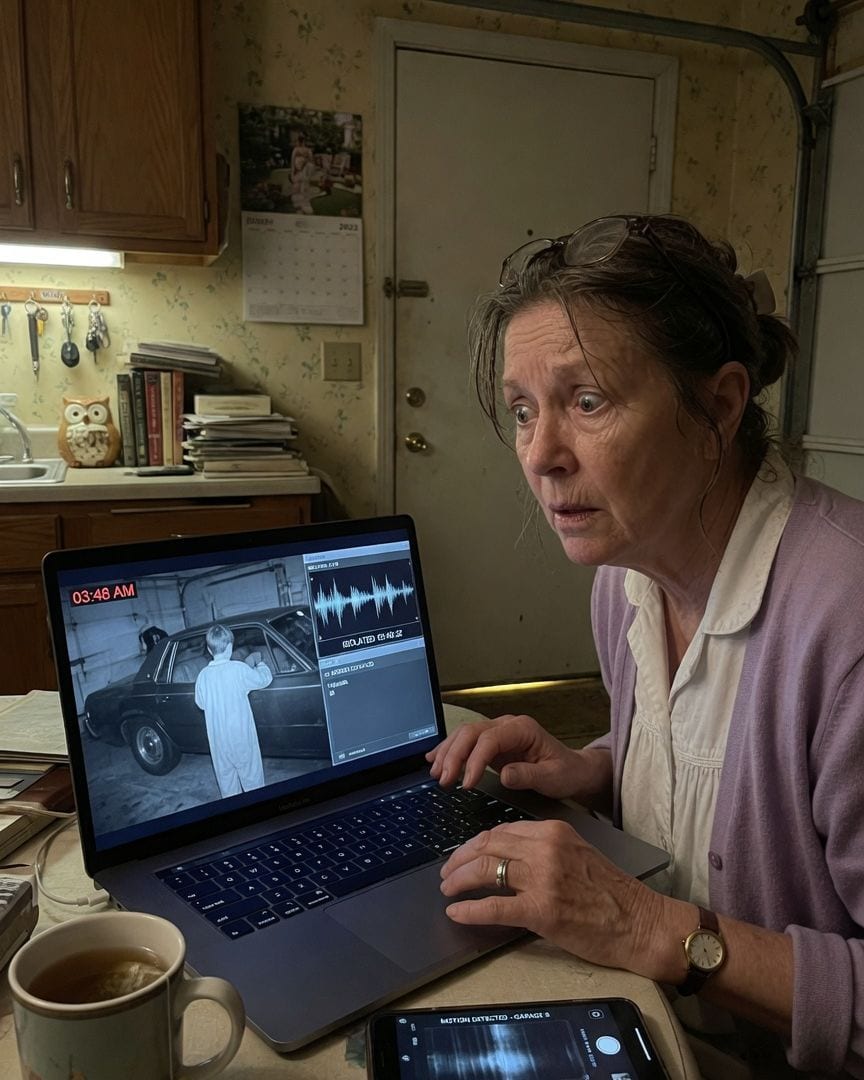
My garage camera filmed a boy of six walk out of a locked door at 3:48am, stare into my empty car, then vanish. My children live abroad.
I live in a quiet, solid house, my children grown and gone. But one night, my garage camera caught an impossible sight: my internal door, locked and bolted, slowly opened. A small, solid boy, no older than six, stepped through, then stood staring into the driver's seat of my empty car.
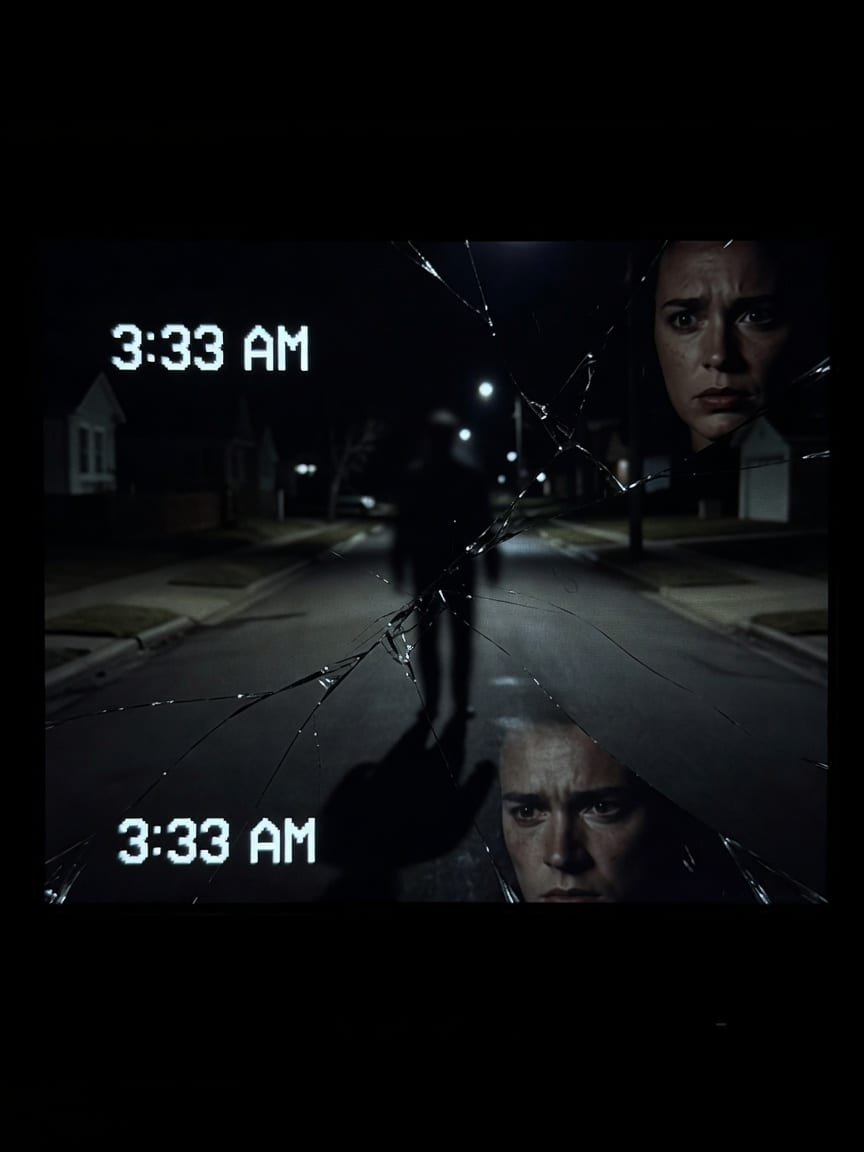
Every night at 3:33 a.m., my dashcam records the same empty street. But in each clip, the figure at the far end is one house closer to mine.
My quiet street should be empty at 3:33 a.m. But for five nights, my dashcam captures a blurred figure at the far end of the block. It isn't moving within the clips, but each day, it stands one house closer to my home.
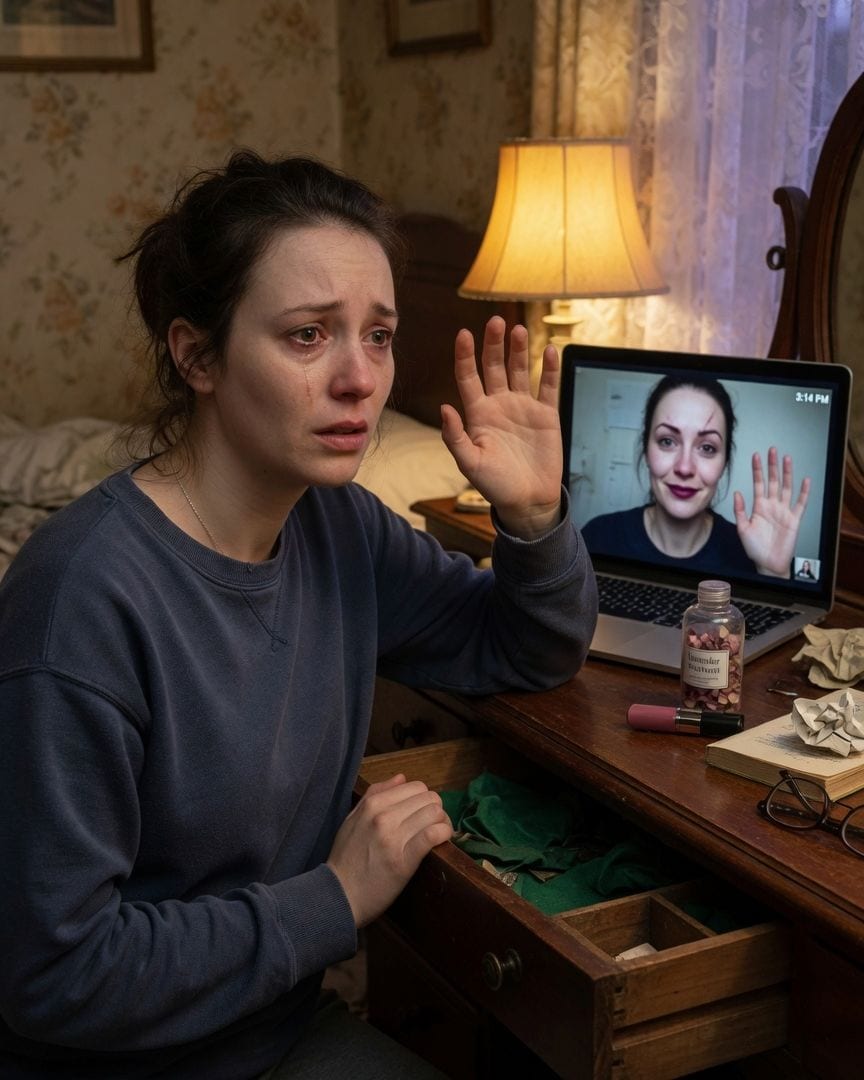
My mother waved with her right hand, both times, on our first call after she came home. She always waved left.
My mother vanished three months ago, then came back. On our first video call, she waved goodbye, but not with her usual left hand. It was her right, a small gesture that twisted something cold in my stomach.
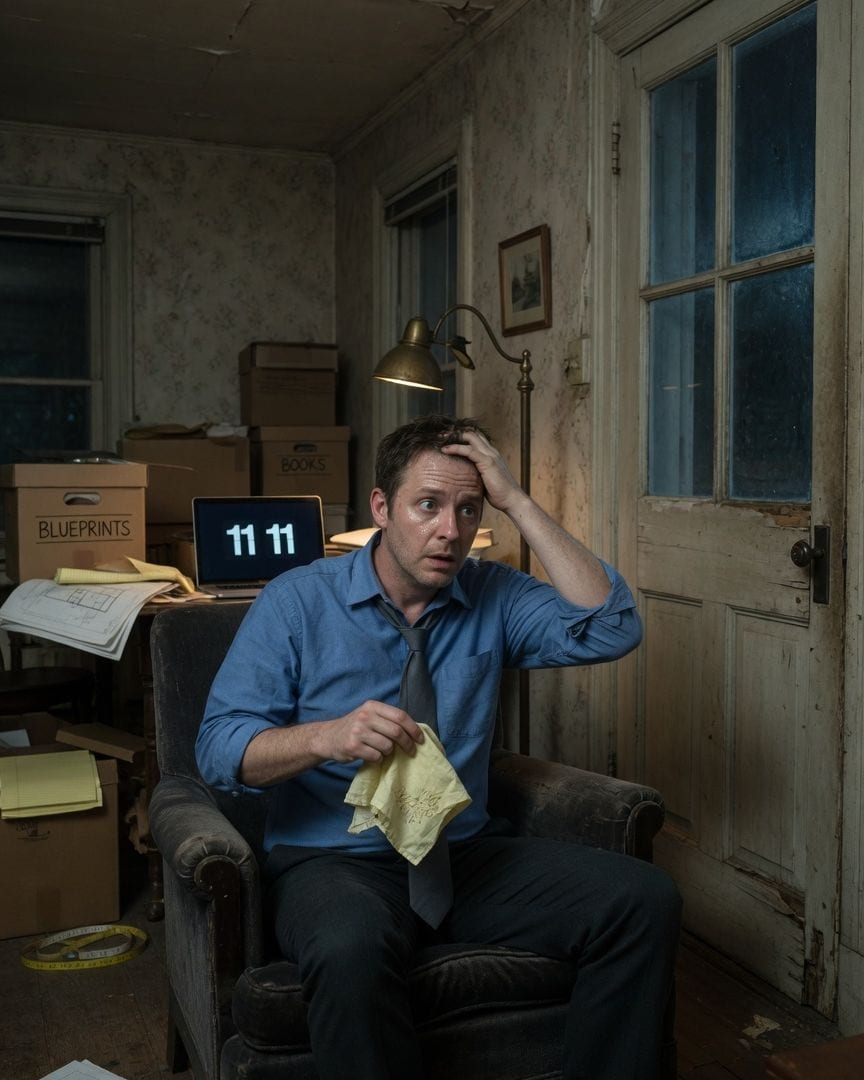
The boarded-up door in my study has twice swung open onto the balcony that was torn off this house years ago — iron railings back, and a woman at the rail with her back to me, watching a street that no longer runs below.
As an architect, I approach my great-aunt's inherited house with a rational eye, seeing its potential, not its ghosts. I knew the charming French door was boarded up because its balcony was removed back in 1953. But for two nights now, at 11:11 PM, those boards simply vanish, revealing the balcony restored and a silent woman watching an impossible street.
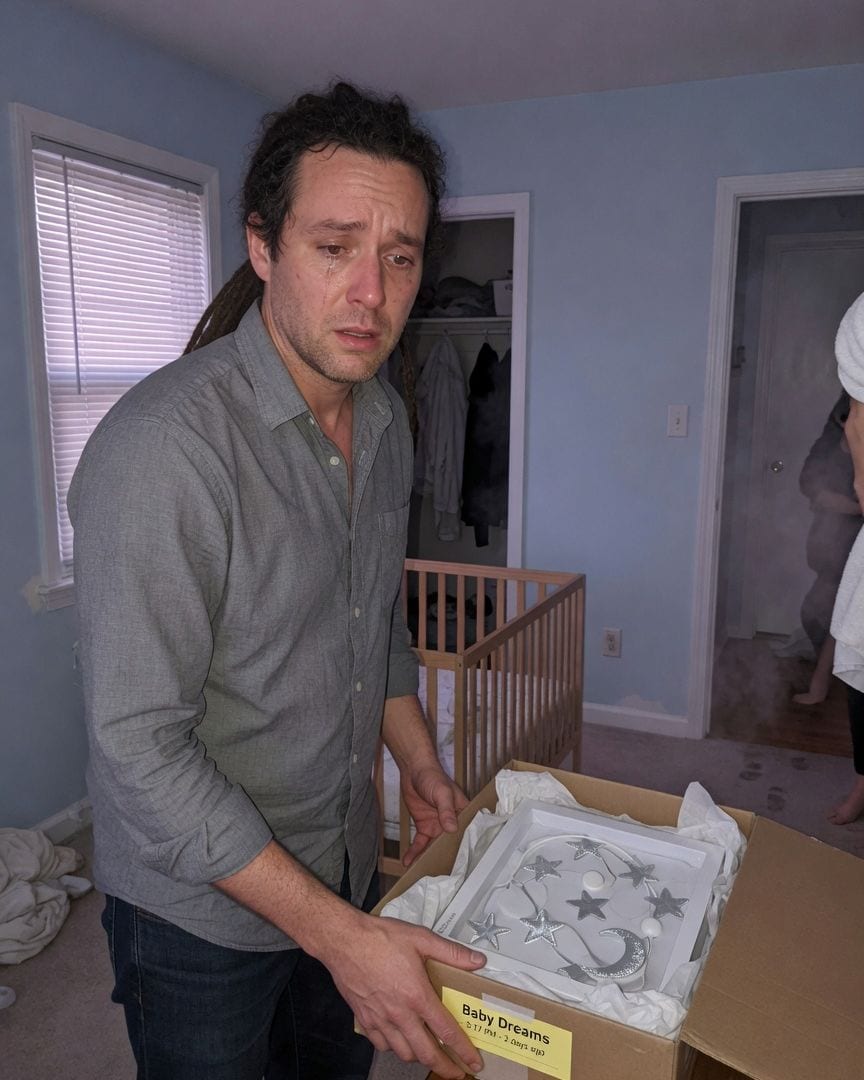
My wife thanked me for the pale blue nursery. We have no child. She described the mobile I'd only imagined, then asked when it would arrive.
Sylvia returned exactly one year after her disappearance, a miracle I could barely believe. But her first words about a nursery I'd only ever imagined, complete with a specific mobile, sent a shiver down my spine. That mobile, a private fantasy, arrived two days ago, and she just asked why it was late.
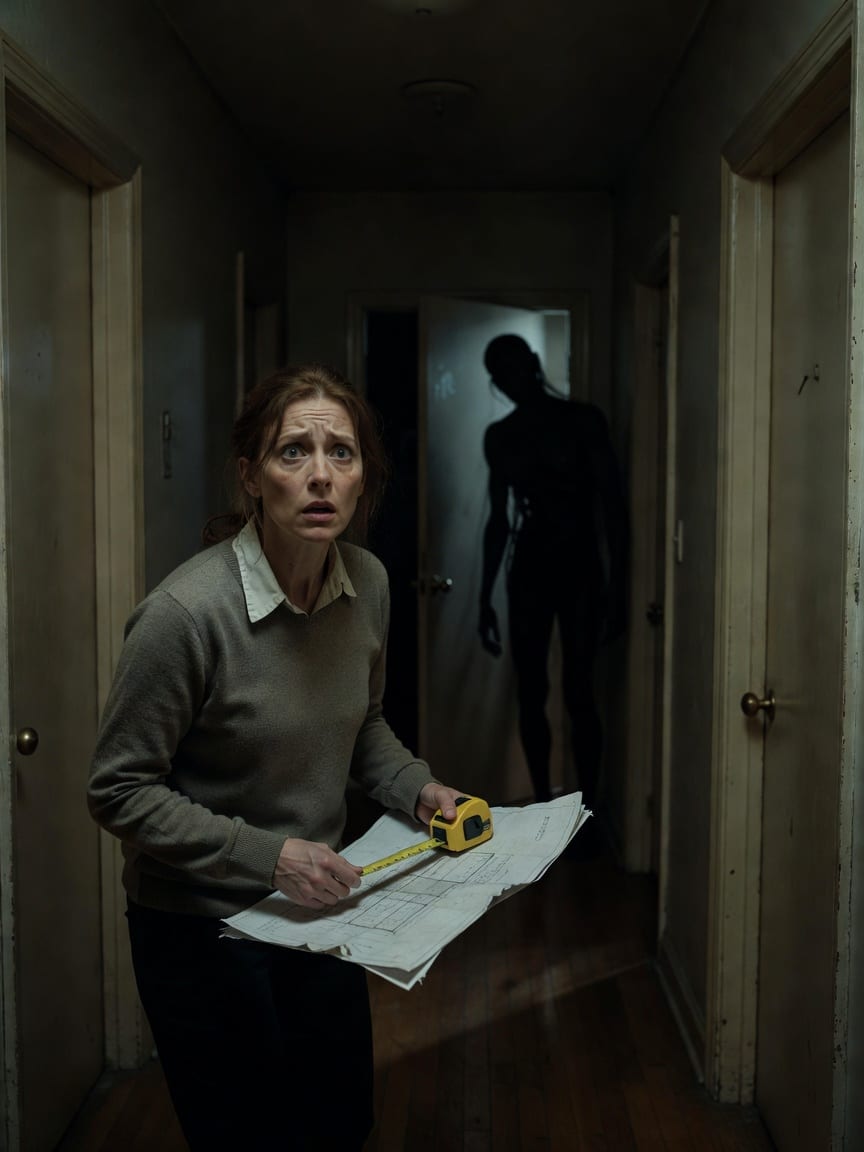
My front door has a dented gate and a dead hydrangea. I walked past it six times, trying to reach the corner shop just a hundred yards away. The pavement kept bringing me back to my own porch, and the shop's light never moved.
My morning started like any other, a quick walk to the corner shop from my home at Number 14, Elm Terrace. But after walking what felt like two minutes, I found myself back at my own front door, the shop no closer. I tried six times, faster and slower, but my street kept compressing, refusing to let me leave.