The boarded-up door in my study has twice swung open onto the balcony that was torn off this house years ago — iron railings back, and a woman at the rail with her back to me, watching a street that no longer runs below.
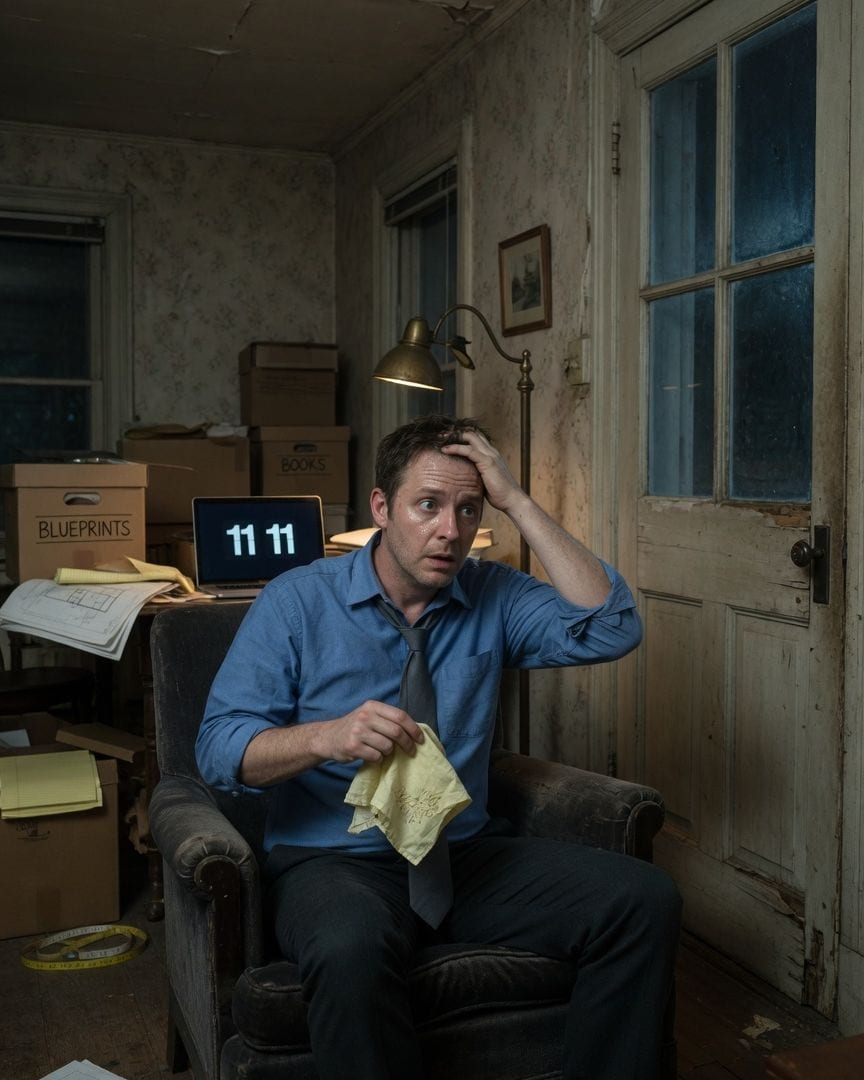
I’m an architect, practical by trade, rational by nature. So when I inherited my great-aunt’s old house, I saw its potential, its history, not its ghosts. I loved the high ceilings, the quiet study overlooking the back garden.
It had this charming, if impractical, French door. The lower panels were boarded up, of course, because the balcony it once led to was removed decades ago, back in 1953, according to the property records.
Just a boarded-up door to nowhere, a relic. I chalked it up to quaintness.
Two nights ago, precisely at 11:11 PM, I saw it. Not just imagined it, but saw it. The boards simply weren’t there. They were gone.
The French door stood open onto a restored balcony, the old iron railings back in place, a chipped stone urn on one side. And there was a woman.
Her back was to me, her silhouette still and silent, watching a street that I knew for a fact no longer existed in that spot.
I blamed fatigue, the unfamiliarity of a new home, a trick of the light from a passing car. I’d been working late, stressed, unpacking boxes. My mind playing games.
But last night, at the same hour, it happened again. The door, the balcony, the woman, the impossible view. I stood there in the study, breath held, watching the silent, unmoving figure. It was all so vivid, so utterly real.
And when the illusion finally vanished, the wood grain of the boarded door felt colder than stone, as if it had absorbed the chill of whatever impossible space I’d just witnessed.
The next day, I approached the French door with a measuring tape, determined to find a structural flaw, a draft, anything. A light source, a strange reflection.
I ran my hand over the boarded panels, pressing, testing for loose wood, weak points. Nothing. It was solid, well-maintained. Just a door, to a solid wall, where a balcony used to be.
My eyes drifted across the room, past the stacks of books and moving boxes, to an old armchair. It was a heavy thing, upholstered in faded, dark velvet, tucked into a corner directly opposite the French door.
I’d inherited it with the house, one of the few pieces of furniture my great-aunt had left behind.
It was deeply worn, with a permanent, almost body-shaped depression in the cushion, as if someone had sat there for years, always in the exact same spot, always facing that door. An unsettling thought, but still, a comfortable chair.
I went over, intending to move it, clear some space.
A strange intuition guided my hand into the cushion’s crease, along the seam of the armrest. My fingers brushed against something soft, folded. I pulled it out.
It was a small, delicate linen handkerchief, discolored with age, a pale yellow now, but the embroidery was still clear. Intricate, faded stitching of the initials 'R.M.'
I frowned. I’d been meticulous in researching the house’s previous owners, tracing the lineage back through official records. My great-aunt, then a bachelor named Mr. Sinclair, who had lived here for fifty years before her.
Before that, the chain of ownership was clear, no 'R.M.' in my family or the direct line of sale, nothing that made sense. This handkerchief, old as it was, didn't fit any narrative I knew.
I turned it over in my hand, the delicate stitching feeling impossibly real, linking me to a history the house was trying to show me, a history I hadn't found in any archive.
That night, I waited. I sat in the worn armchair, the handkerchief clutched in my hand, its delicate fabric rough against my palm. My gaze was fixed on the boarded door, my heart thrumming.
As the clock on my laptop ticked to 11:11 PM, the room temperature dropped, the air growing suddenly, unnaturally cold. The door shivered, then seemed to shimmer, the wooden boards dissolving like smoke. The balcony reappeared, utterly solid.
The stone urn, the iron railings, the impossible street. And the woman. Still, with her back to me, a silent sentinel.
But then, a subtle flicker in the image. For a fraction of a second, the scene shifted, deepened. A man. His face was obscured by shadow, his features indistinct, but he stood just behind the woman, his presence immense.
His hand was raised, hovering, as if to touch her shoulder, or perhaps to pull her back. His posture was rigid, his presence a silent, undeniable demand.
I gasped, a cold dread seizing my chest, not from what I saw, but from the stark, unyielding intention I felt emanating from him.
Before I could fully process the new detail, the image snapped back, the boards reforming with a soft, final thud.
The study was normal again, warm light, familiar objects, but the man’s silent, desperate presence lingered in my mind, a promise of something far worse.
The man's fleeting image, even more than the reappearing balcony, propelled me into a deeper investigation. My rational brain had, for days, tried to find angles, explanations, anything mundane. Now, it surrendered.
This wasn’t a glitch in my vision or a trick of light. This was something. I spent days at the local archives, abandoning my architectural work for ledgers and microfiche.
I poured over old property deeds, census records, even local newspapers from the 1940s and 50s, going further back than my initial search.
It took hours, squinting at faded type, but I finally found it. The house, between 1948 and 1952, had been owned by a couple named Rose and Lars Maddox. Rose Maddox. 'R.M.' on the handkerchief. My stomach tightened.
She was real. I dug deeper. A small article, buried in the back pages of a 1953 Gazette, mentioned Rose Maddox's 'disappearance,' deemed a voluntary departure.
But a single quote from an unnamed neighbor stuck out, expressing 'concerns' about her sudden absence.
Back at the house, everything I'd vaguely noticed before now seemed to scream at me. The house, after all, had been built in 1898; it had seen a lot. I started seeing other things.
A worn patch on the third stair from the bottom, so distinct, as if someone had deliberately avoided stepping there for years, leaving a polished gap in the worn carpet fibers.
The antique kettle in the kitchen, part of the inherited tea set, always seeming to hum faintly at 6 AM, even though it was unplugged, its cold metal somehow vibrating with an internal memory.
A specific teacup from the same set, plain white with a gold rim, always felt faintly warmer than the others, no matter how long it sat in the cupboard.
These weren't random. They felt like a schedule, a routine. I reread the newspaper clipping, the neighbor's quote echoing in my head like a premonition.
The house wasn't just showing me a singular, dramatic moment; it was showing me a life, a pattern. A fixed sequence of daily habits.
I felt a growing unease, a cold certainty that these weren't just echoes, but active traces, a routine that continued, silently, in my empty house, on a schedule that was not my own.
The air itself felt thick with unseen movement, a constant, ghost-like repetition of everyday acts.
My digging hadn't gone unnoticed. An elderly woman, Mrs. Evelyn Davenport, from two houses down, started appearing on her porch whenever I left my house, offering polite but pointed observations.
Her house was a meticulously kept brick bungalow, her garden overflowing with hydrangeas that always seemed to be in perfect bloom.
“Still settling in, dear?” she’d called out one morning, as I locked my front door. “That old house has a way of… keeping things.” Her voice was soft, but her eyes, behind thick spectacles, were surprisingly sharp.
I'd offer a noncommittal smile, feeling a prickle of discomfort.
One afternoon, as I returned from the local library, a stack of brittle local histories tucked under my arm, Mrs. Davenport was out watering her hydrangeas, her gaze fixed on me.
She didn’t look away as I walked up my path.
“You’re looking into the Maddoxes, aren’t you?” she stated, not asked. Her tone was entirely neutral, almost conversational, but it sent a chill through me. “Some things are best left alone, child. The schedule, you see. It runs itself.”
I stopped, my hand on my doorknob. “What schedule, Mrs. Davenport?” My voice felt a little tight.
The old woman just smiled, a thin, knowing curve of her lips. She slowly lowered her watering can, the silence between us deepening. “The house remembers. And some memories, they don’t fade. They just… repeat.”
She met my gaze, a placid, unnerving certainty in her expression.
It wasn’t a threat, but a warning, delivered with the calm composure of someone who had seen it all before, someone who had long ago made peace with the inexplicable.
I felt observed, not by a spectral presence within the walls, but by a living person who knew exactly what I was uncovering, and whose quiet acceptance of the house's strange nature was far more unsettling than any ghost story.
It was as if the wrongness I was only just discovering was, for her, just a part of the daily landscape.
Driven by Mrs. Davenport’s unsettling remarks and another recurrence of the balcony scene—the woman’s rigid back, the flickering shadow of the man—I decided I needed direct answers. I couldn't just keep reading old newspapers. This was real.
I found Mrs. Davenport on her porch swing, placidly knitting a pale blue scarf, the needles clicking softly, rhythmically. The afternoon sun was warm, but a cold knot had formed in my stomach.
“Mrs. Davenport,” I began, trying to keep my voice steady, “I need to know about Rose Maddox. What happened to her?”
The old woman sighed, her needles pausing for a moment, then resuming their soft rhythm. “Rose. Such a sweet girl. Moved in just after the war. Full of life.”
She looked past me, into the middle distance, as if replaying a memory. “Lars, her husband… he changed after the war. Came back different. Became… possessive. Didn’t want her going out.
Said the world was too dangerous for a woman like her. He was always watching.”
Mrs. Davenport paused again, her gaze distant, fixed on some point only she could see. “He kept her to a strict schedule. Every day, the same. The tea, precisely at six.
The reading in that armchair of hers, facing the door. And in the evenings, watching the street from the balcony, just before bed. He made sure she kept to it. Even when she stopped wanting to.”
I felt the pieces click into place with a terrible, sickening certainty. The worn armchair. The specific time the kettle seemed to hum. The teacup, always warm.
The worn patch on the third stair, as if she was always being led, always took the same path, always avoided that one spot.
“He confined her to the house, didn’t he?” I pushed, the words difficult to form. “Eventually, just to the study?”
Mrs. Davenport nodded slowly, her knitting needles continuing their soft, unwavering click. “Eventually, just that room. Said she was safer there. Said the outside world was too harsh for her delicate nature. She’d hum a lullaby to herself, sometimes.
A quiet, sad little tune. He even brought a record player up to the study, though I never heard it play anything but that one quiet tune, that lullaby, faintly, through the open windows.”
The old woman’s eyes finally met mine, and there was a deep, ancient sorrow in them. “Then one day, she was just… gone. Lars said she’d finally left him, run off with some passing fancy.
But I never saw her leave. Never saw her face again, after she stopped coming out. And the house… it kept her routine. You could almost feel it, the schedule running on, even without her.”
I understood now. Rose Maddox never left the house because Lars made sure she couldn’t. He didn't just confine her; he erased her, turning her life into a rigid, repeating loop of domestic obedience.
And when she vanished, the house itself absorbed her, retaining the echoes of her final, enforced routine. The balcony, the woman, the man behind her—it was all Rose, trapped in the house’s memory, a cycle that refused to break.
Lars Vaughn. The rigid man in the doorway. He was still here, still demanding.
Armed with Mrs. Davenport’s chilling account, I returned to the house, my mind reeling. The routine, the schedule—it all made a terrible, coherent sense. It wasn’t just a ghost; it was a permanent imprint, a domestic echo chamber.
I went straight to the study, to the worn armchair that had held Rose through so many long days. I ran my hand along its side, feeling for anything unusual.
My fingers snagged on a loose panel, almost imperceptible, near the base, hidden by the velvet upholstery.
Prying it open, my heart hammering against my ribs, I found a small, hidden compartment. It was lined with faded, wine-red velvet. Inside, nestled perfectly, was a vintage record player. An old, heavy thing, its chrome dulled by time.
And on its turntable, a single, heavy vinyl record. It was completely unmarked, blank. Not a label, not a groove. Just smooth, dark vinyl.
My hands trembling, I carefully placed the needle. There was a soft hiss, the familiar static of an old player. Then—a woman’s gentle hum. A lullaby. Clear and resonant, undeniably the melody Mrs. Davenport had described.
Then, a man’s hushed, tense voice, too indistinct to make out words, a low, guttural murmur. Followed by a sharp, metallic click. And then, the lullaby began again, seamlessly, perfectly looping.
I stared at the grooveless record, playing an impossible sound, a perpetual memory. It had no visible grooves, no etched lines, yet it played.
Beneath the record player, tucked into a narrower slot in the compartment, I noticed a small, leather-bound book. A diary.
Its last entry, dated December 14th, 1952, was written in a delicate, looping hand, the ink faded to brown: 'He says it's for our own good. I just need to keep my routine.
He says I'm not leaving this room again. The lullaby helps. It always helps. He brought a new record for the player. It has no song on it.'
The diary entry shattered any remaining doubt, extinguishing the last embers of my rationalizations. Rose Maddox had been confined, her life dictated by Lars Vaughn, her only comfort the lullaby that was now an eternal loop.
The 'record with no song' wasn't a recording of music in the traditional sense; it was the house’s physical manifestation of her trapped existence, the fixed, repeating sequence of her final moments within those walls.
The lullaby, Lars’s hushed, tense voice, the sharp, metallic click—a door locking, a final desperate act, a closing off from the world.
The house hadn't just 'remembered' Rose; it had retained her, absorbed her routine, and now played it back, not as an echo, but as a perpetual, tangible loop.
The French door, I realized, was a portal to this specific, repeating memory, a window into Rose’s unchanging prison, her eternal vigil.
The worn patch on the third stair, the phantom kettle, the specific teacup, the armchair with its deep impression—all were physical traces of this enforced, unyielding schedule, parts of the same cyclical pattern.
I understood the true horror: the house wasn't merely haunted by a ghostly presence; it was a living, breathing archive of suffering, where the very fabric of the building held onto the routines it had witnessed, forcing them to repeat without end.
The dread wasn't in a jump-scare ghost, but in the terrifying coherence of it all, every small detail now clicking into a horrifying, inescapable pattern. The house was not just a place; it was a mechanism.
I knew, with absolute certainty, that I had to break the cycle. The record player was the anchor, the focal point of Rose’s loop, the physical manifestation of her suffering.
It was keeping her here, forcing her to repeat her last days, her last moments. I decided I would remove it, take it out of the house, sever its connection, even if it meant destroying it.
As I reached for the antique player, the room grew colder, the hum of the lullaby from the unmarked record swelling, becoming almost deafening.
It wasn't just a sound; it was a physical pressure, vibrating through the floorboards, through my bones. The French door, still boarded in my reality, began to thrum, vibrating with an unseen energy. The wood itself seemed to pulse.
The image of the balcony shimmered behind the boards, growing more solid, the stone urn and iron railings appearing with impossible clarity.
The woman on it, Rose, became more distinct, her dress, the faint auburn of her hair, the rigid line of her shoulders.
This time, as I struggled with the heavy record player, trying to lift it from its compartment, the door opened fully. Not just the illusion, but the physical door.
The balcony was there, utterly real, moonlight catching on the stone urn, glinting off the iron railings. And Rose Maddox stood there, her back still to me, but then, slowly, impossibly, her head turned.
Not all the way, not to meet my gaze, not to acknowledge my presence, but just enough for me to see the vacant, unseeing look in her eyes, fixed on something beyond the vanished street, something in the empty night.
It was a silent, desperate plea, a recognition of disruption, of an attempt to break her endless vigil.
The house was resisting, intensifying its hold, making its memory solid, tangible, attempting to pull me into its reality. I wrestled with the record player, its weight immense, as if anchored by some invisible force.
The lullaby was a piercing wail in my ears, punctuated by Lars’s hushed, insistent voice, then that sharp, metallic click of a locking door.
With a final, desperate heave, I tore the player from its hidden compartment, the antique wires snapping like dry twigs, the unmarked record skittering across the floor and sliding under the armchair.
As the player crashed to the ground, a loud, jarring thud, the balcony scene flickered violently, then vanished, leaving only the dull, familiar, boarded wood of the French door. The lullaby died, replaced by an eerie, profound silence.
The air in the study felt lighter, cleaner, as if a great weight, a perpetual pressure, had been lifted.
I didn't stay. I sold the house, quickly, without explanation to the real estate agent, accepting a lower offer just to be rid of it. The new owners, a young couple with two small children, never reported any strange occurrences.
The French door remained boarded, the worn armchair still in the study. I moved to a small, modern flat across town, seeking a clean break.
I kept the unmarked record, now silent and inert, a heavy, unsettling souvenir that I never touched, never attempted to play again.
The recurrences stopped. The phantom hum of the kettle, the specific chill in the air, the flickering balcony—all gone. The house, apparently, had settled, its most recent, agonizing memory finally quieted.
I tried to forget, to put it all behind me, to regain the rational, ordinary person I had been before the house.
I unpacked my boxes, painted the walls a soothing grey, and tried to build a new routine, one that was truly my own, free from any schedule.
Months later, in my new, anonymous flat, I still found myself avoiding the third stair, even though there were only two steps to my landing.
Sometimes, at precisely 6 AM, a phantom hum would reverberate in my ears, a ghost of a kettle I no longer owned. I'd catch myself reaching for a specific teacup that wasn't there, my hand reaching for empty air.
I’d survived, but the house had left its indelible mark, imprinting its routines onto me, a subtle, insidious residue.
The house didn't just remember Rose; it remembered her, the witness who had disrupted its cycle. The house, I knew, would find new routines, new occupants, new lives to absorb and replay. It was never just Rose.
It was never just one memory.
The house just remembers. And now, it remembers me.
If this one got to you
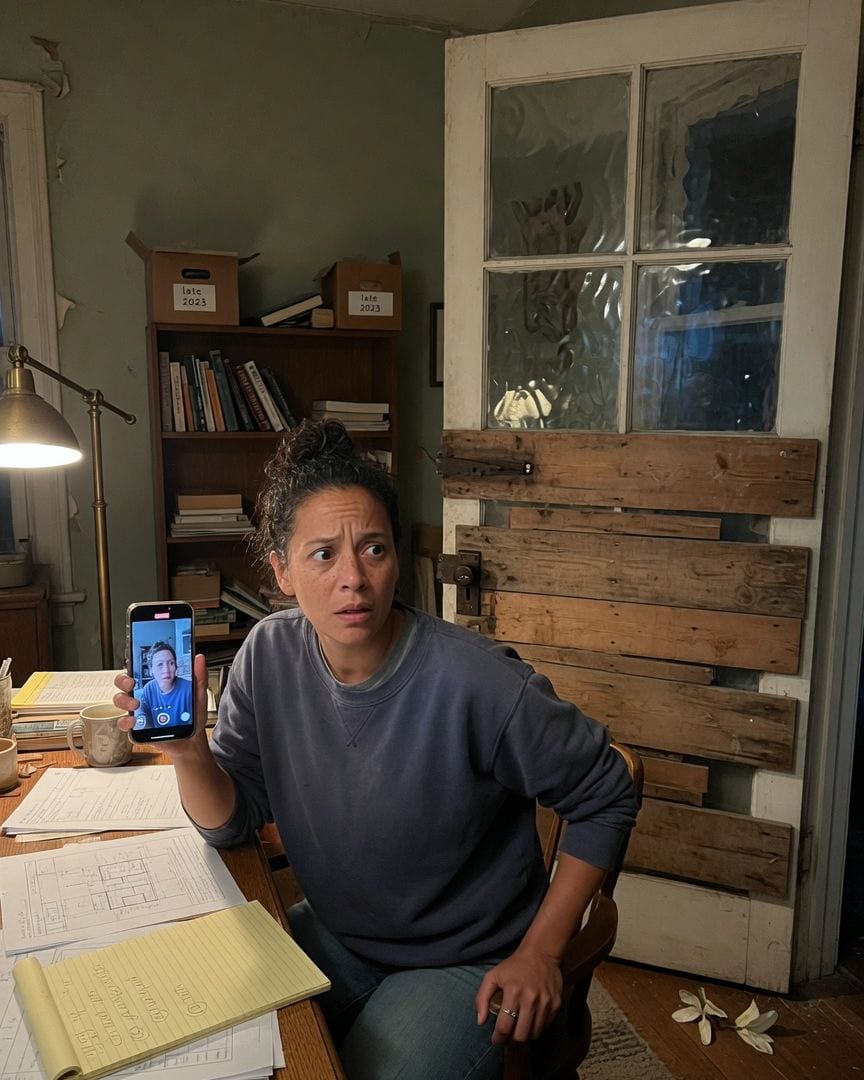
My boarded-up door opens onto a vanished balcony, a woman watching a street that isn't there.
I'm trying to settle into my new house, but the study's old French door is a problem. It's been boarded up for decades, but precisely at 11:03 PM, it silently swings inward to reveal a balcony and a gaslit street from another century.
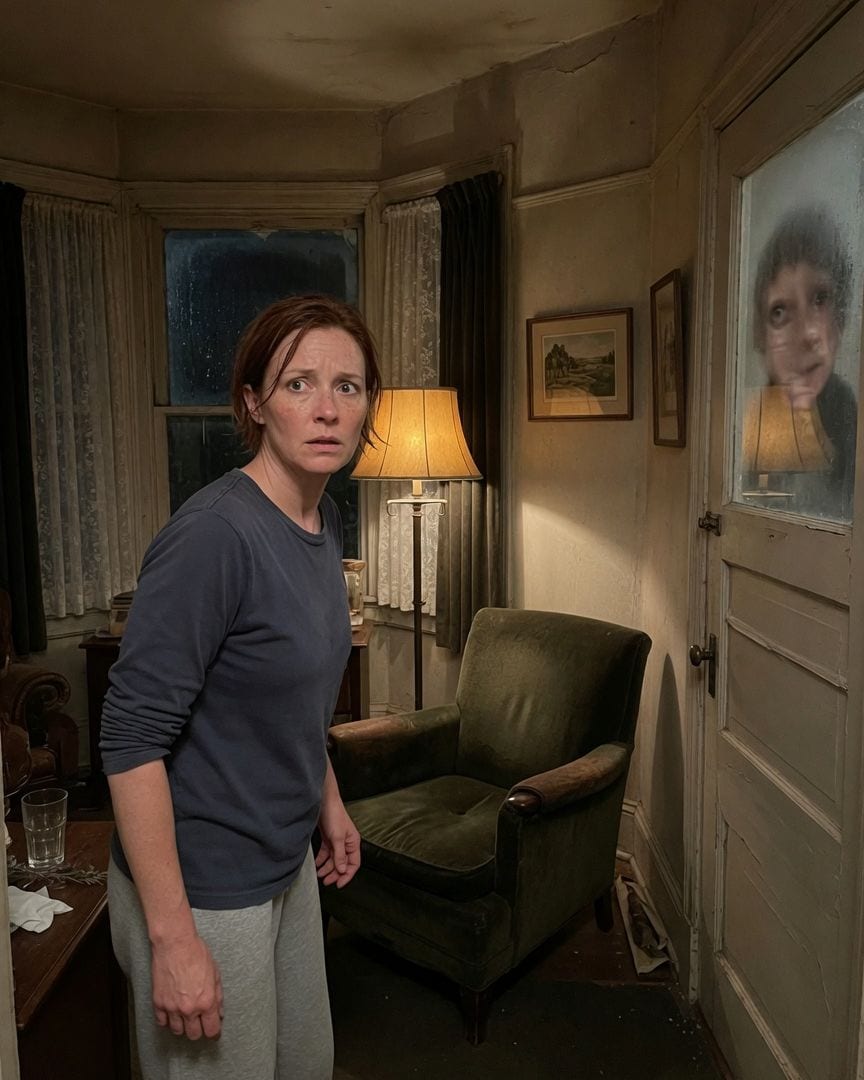
The armchair by the bay window was warm last Tuesday at 9pm. I’ve never sat in it, and the cushion was still settling from a weight that wasn't mine.
I bought this old house for quiet, and most days it's exactly what I needed. But there’s an antique armchair in the living room, deep green velvet, with a permanent hollow from years of use. I’ve never sat in it, yet last Tuesday, I found it radiating a distinct warmth, the cushion slowly settling as if someone had just left.
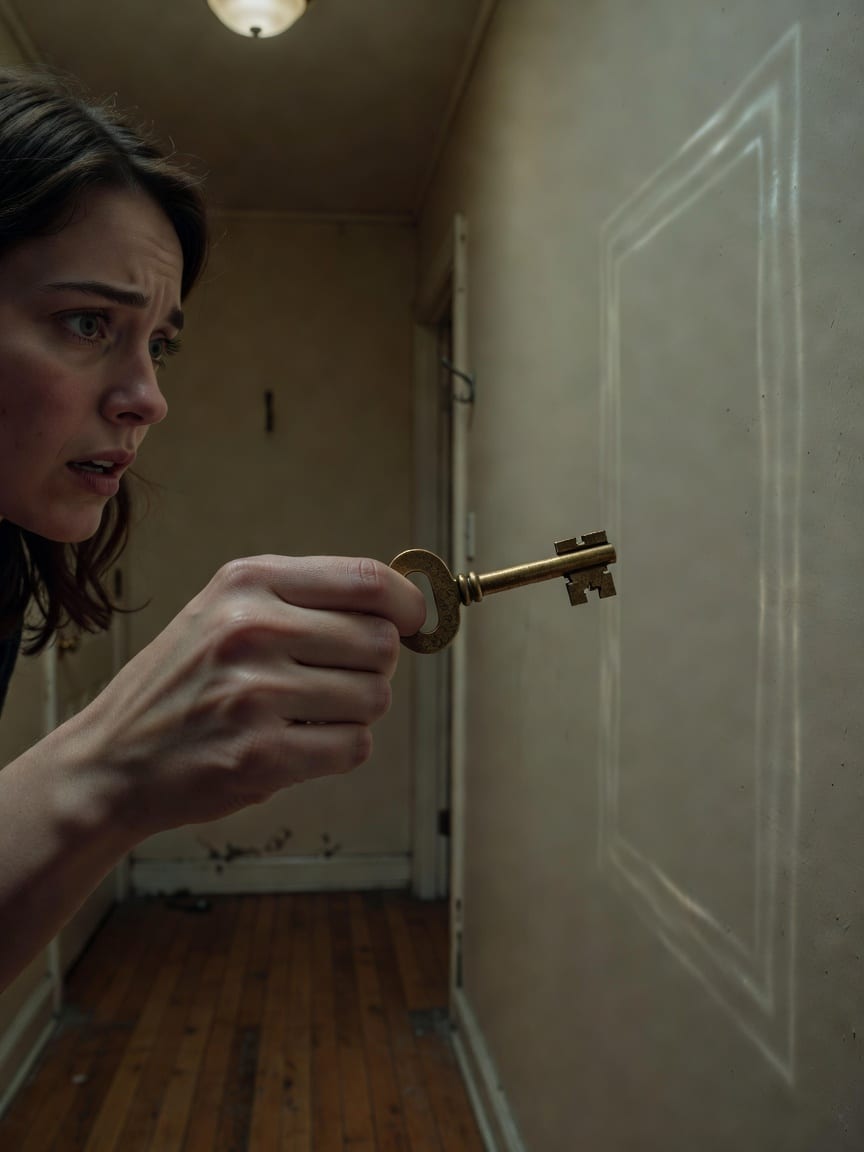
My new house has seven rooms. The removal men counted six. Now one of them asks who's in the locked seventh, on a landing with only six doors.
Moving into my new house, I supervised the removal men hauling boxes. But on the landing, Paul, the senior man, asked about a locked seventh room upstairs, pointing to a blank wall. His quiet certainty, despite the clear absence of a door, filled me with a sudden, icy dread.
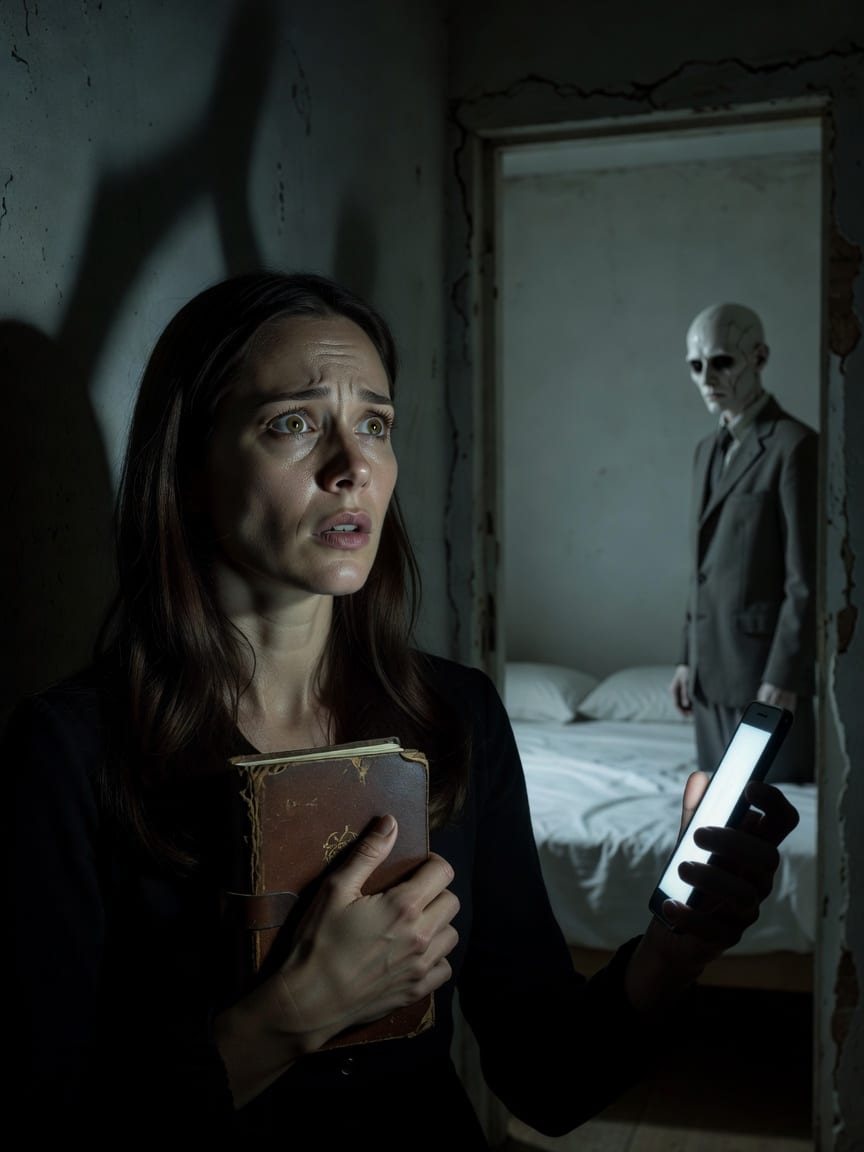
Behind a plastered-over doorway, I found a room. Papered, carpeted, and furnished with a made bed, sealed for decades. The air was dead still, but the bed wasn't dusty. My council tax bill only lists five rooms.
I'm Claire, an architect, meticulously planning my new Victorian terrace renovation. But when I uncovered a hidden room behind a wall, everything I knew about time and decay shattered. The bed was perfectly made, the air still, yet there was no dust, only an unnerving cold.
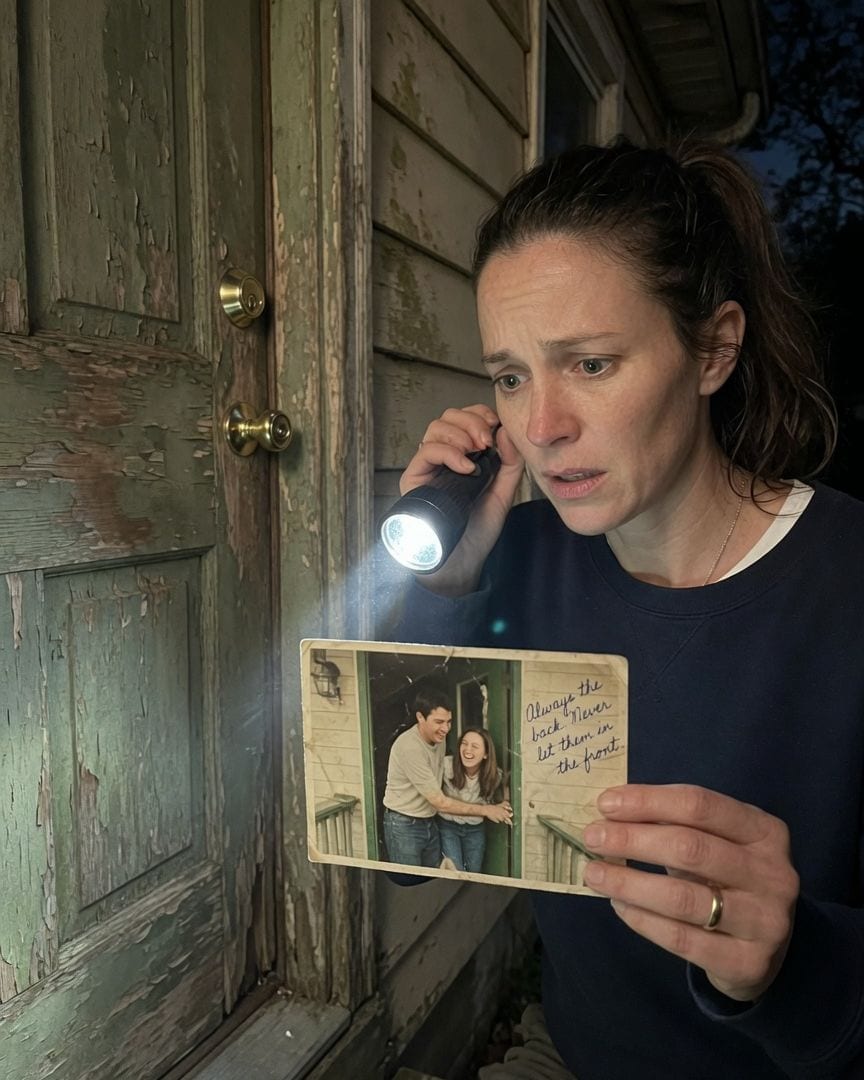
My mother waves us to the front door now. She was missing five days. She says we've always used the front, but the back door, our kitchen door for thirty years, is locked.
My mother, Janet, finally came home after five days, but her overly bright smile and insistence on using the front door felt wrong. For three decades, our family always used the back entrance, which now had a gleaming, new deadbolt. The quiet hum of unease quickly grew into a chilling dread.
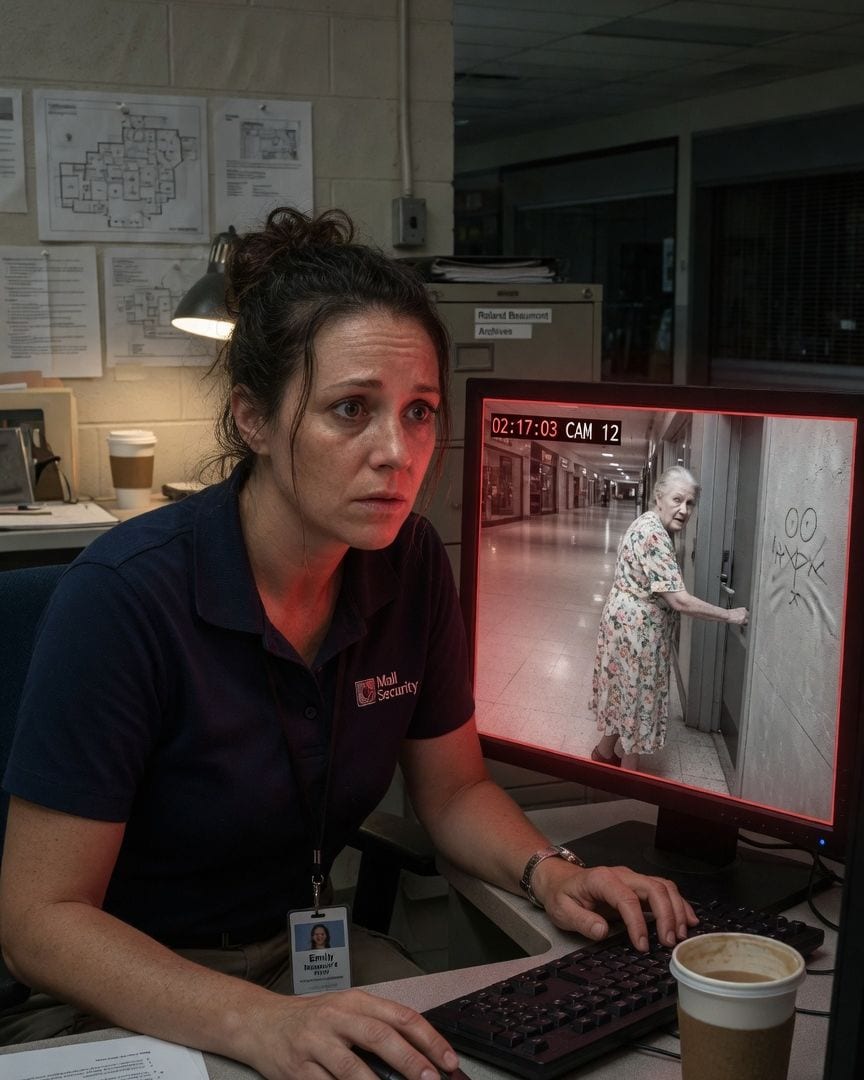
Mall security footage caught an old woman walking the concourse after closing. Every camera filmed her, but no single frame shows how she got in.
Working the overnight shift, I monitor my locked mall's security footage. It was 2:17 AM, five hours after closing, when an old woman in a floral dress simply appeared on Camera 7. She was never seen entering the frame, only *present*, walking slowly across the deserted concourse.