My own baby clothes arrived. Each tiny collar bore my name, embroidered in new thread. My mother swore she gave them away decades ago. The delivery note read: 'you'll need these again.'
The parcel arrived on a Tuesday, dumped unceremoniously on my doorstep. Plain brown paper, secured with a single strip of packing tape. No return address, just a neatly printed sticker that read 'Trevoole Farm.'
I picked it up, expecting a mix-up, maybe a forgotten online order. It was surprisingly light, yet felt substantial.
Inside, carefully folded and wrapped in tissue, were baby clothes. Tiny onesies, miniature bonnets, little embroidered booties. My breath hitched. They were my baby clothes.
I knew it instantly, the familiar pale yellow of a specific romper, the tiny lace trim on a bonnet my mother always insisted I wore. But something was off. Each item was freshly laundered, pressed crisp, smelling faintly of lavender.
And on the collar of a small white dress, in thread that looked unmistakably new, my full name – 'Audrey Holloway' – was stitched in a precise, elegant script.
My mother, Colette, was visiting for tea, sipping Earl Grey on the sofa. I carried the dress into the living room, holding it out. She gasped, nearly dropping her cup. 'Audrey, where did you find that?
My God, the detail on the collar…' She reached out, her fingers tracing the tiny stitches. 'But I gave all these away, decades ago! To the charity shop. Every single piece, a month after you outgrew them.
I cleared out the attic that summer. I remember it clearly.' Her brow furrowed, a deep line of confusion settling between her eyes.
Beneath a miniature blanket in the box, a delivery note lay tucked. It was thick, creamy cardstock, stark against the brown paper. In the same precise script as the embroidery, it read only: 'you'll need these again.'
I tried to find a sender. A logical explanation. The label simply stated 'Trevoole Farm.' My laptop was open on the kitchen counter.
A quick online search confirmed Trevoole Farm was nothing more than a cluster of ruined outbuildings on open land, with no official address, no inhabitants, just a historical marker for a place long gone.
No business, no charity, no living person to send a parcel. The clothes, soft and innocent, felt impossibly heavy in my hands, a cold knot forming in my stomach.
I spent the next few days trying to trace the parcel. The delivery company, after much back and forth, had no record of 'Trevoole Farm' as a valid sender address in their system.
They suggested a mix-up, a prank, maybe an old family friend playing a trick. But I knew better. The new embroidery, my mother’s certainty, the chilling note, the non-existent sender – this wasn't random. This was too specific, too personal.
On Saturday, I drove out to the desolate stretch of road where Trevoole Farm was marked on old maps. The autumn air was damp and cold, biting at my exposed skin.
Just as described, crumbling stone walls, empty window frames staring out like vacant eyes. A ghost of a place. The wind whistled through the gaps, sounding like a sigh.
I walked around the perimeter, my boots crunching on fallen leaves and ancient stones. There was nothing, just ruins and overgrown nettles.
As I stood by my car, contemplating the skeletal remains of the farm, an older man approached. He walked slowly, steadily, from the direction of the main road, as if he’d been waiting.
He was neatly dressed in a dark coat, his face lined but kind, his silver hair neatly combed. He stopped a few feet from me, his presence oddly calm against the desolate landscape.
'Audrey Holloway?' he asked, his voice soft, almost apologetic.
I was startled. How did he know my name? I confirmed it, my voice tighter than I intended.
'My name is Sean Sutton,' he said. He didn’t offer a hand, just stood there, his gaze unwavering. 'And I am truly sorry for what's to come, in a few days. The small, frustrating loss.
Your car keys, perhaps, misplaced just when you need them most, leading to a significant delay, a missed appointment. It’s unavoidable, I assure you.'
He met my gaze, his eyes full of a strange, profound sadness that seemed to hold a century of knowledge.
He simply nodded once, then continued walking past the ruins, without another word, melting into the distance as if he’d never been there at all.
I stood, frozen, the chill from the ruins now a sharp, internal dread that seeped into my bones.
Three days later, I tore through my apartment, frantic. My interview for the promotion I'd been working towards for months was in fifteen minutes, and my car keys were gone.
Not just misplaced, but utterly vanished from their usual hook by the door, the spot I always left them. I checked my bag, my coat pockets, under cushions, even the fridge. Every logical place. Nothing.
My heart hammered against my ribs, a sickening drumbeat of panic.
Then Sean Sutton's words echoed in my mind: 'The small, frustrating loss. Your car keys, perhaps, misplaced just when you need them most…'
I found them an hour later, nestled in the freezer, beside a bag of frozen peas. The interview was missed. I sat on my kitchen floor, the cold keys in my palm, my rational mind shattered.
The baby clothes, the impossible note, the ghost farm, and now this precise, targeted dread. It wasn’t a prank. It was something else entirely. Something that knew my name, my future, and the exact, impossible detail of my life.
He knew.
I tried to find Sean Sutton again. I drove back to Trevoole Farm several times, waited, but he never reappeared. I searched online for his name, checked local directories, even tried social media. Nothing. He was untraceable.
It was as if he had simply manifested by the ruins of Trevoole Farm just to deliver his chilling message, then dissolved back into the landscape.
The incident with the keys, while minor in the grand scheme, had disrupted my life profoundly. It was a perfectly executed, chilling demonstration of impossible foreknowledge.
The dread was no longer ambient, a vague uneasiness; it was pinpointed, a sharp needle in my mind, telling me I was being watched.
I returned to Trevoole Farm, this time with a purpose that hardened my resolve against the cold. I didn't just look at the ruins; I scoured them. I walked through the collapsed doorways, stepped over fallen timbers.
The air inside the crumbling walls felt colder, heavier, than the outside. I found nothing obvious – no hidden messages etched into the stones, no clues tucked away in the damp corners. Just the silence, broken only by the wind.
The land felt empty, yet charged, like a battery holding a silent, immense power.
My research shifted from the present-day farm to its historical records. I spent days at the local library, surrounded by the smell of old paper and dust.
The information was sparse, mostly old agricultural surveys detailing crop yields and livestock numbers from centuries past. Nothing about mysterious parcels or knowing strangers.
But one faded map from the late 1800s, tucked into a fragile, linen folder marked 'Local Properties of Interest,' caught my eye.
Trevoole Farm was marked not just with its name, but with a small, stylized symbol next to it—a looping, almost knot-like design that, with a jolt, I realized looked vaguely like an 'A' and an 'H' intertwined. My initials.
It was a detail too specific to be coincidence, too impossible to be random.
Further digging through property deeds and parish records revealed that Trevoole Farm wasn't always a 'farm' in the traditional sense. It was often referred to in very old texts, in barely legible script, as 'The Field of Returns.'
The records showed an unusual history of ownership, often passing between families with no clear lineage, sometimes seemingly abandoned for decades before suddenly reappearing in new hands.
It was as if the land itself was not bought and sold in a human way, but simply waited, dormant, until it was ready to claim its next tenant. Or its next return.
The more I delved, the more I felt an unseen presence. It wasn't menacing, not exactly, but it was there, subtle and unsettling.
I’d find my research notes subtly rearranged on my desk when I returned from making tea, a particular page highlighted in yellow I swore I hadn't touched.
A book I’d been reading, left face down, would be open to a different page, one that spoke of local folklore or unexplained phenomena.
Once, my laptop, which I always shut down completely, was open to a blank document, the cursor blinking, waiting. It was a silent, unsettling invasion, a soft warning that my actions were observed, my curiosity noted.
Each time, I tried to rationalize it – a draft, a lapse in memory, a system update – but the explanations felt thin, like tissue paper over a growing void.
Then, the phone call came. My private number, unlisted, known only to a handful of people. It rang once, then twice, the sound echoing unnervingly loud in the quiet apartment.
I answered, heart pounding against my ribs like a trapped bird. A voice, calm and even, spoke my name. 'Audrey Holloway.' No static, no background noise, just that unnervingly clear, neutral tone. 'We know you’re looking.
It’s natural, to try and understand. But some things are simply meant to be.' The voice paused, a beat of absolute silence that stretched taut. Then it added, 'You’ll always find your way back, Audrey. The path is set.'
The line went dead.
No threat, no demand, just a statement of absolute certainty. My actions were observed, and my destiny, whatever it was, already determined. The dread tightened its grip, squeezing the air from my lungs.
I wasn't just investigating; I was being watched, guided, herded. There was no escaping the feeling that I was simply following a predetermined script.
Driven by the chilling phone call, I tracked down Richard Beaumont, the town's oldest and most reclusive archivist. His name had appeared on several historical society documents related to the 'properties of interest' in the area.
I found him in a dusty back room of the town hall, which served as a makeshift archive, surrounded by stacks of ancient ledgers and brittle scrolls.
The air hung heavy with the scent of aged paper and something faintly metallic.
He initially dismissed me, grumbling about 'local superstitions' and 'young people meddling where they shouldn't.' His hands, gnarled with age spots, trembled slightly as he shuffled through a pile of tax records.
But when I mentioned Trevoole Farm, and then the 'Field of Returns' and the strange symbol, his demeanor changed. His eyes, watery and pale behind thick spectacles, widened slightly. He stopped shuffling the papers.
'That old place,' he muttered, his voice raspy, barely above a whisper. 'Always had a… peculiar reputation.'
I pressed him, explaining everything. The baby clothes, the impossible embroidery, the note. Sean Sutton and his impossible foreknowledge of my car keys, the missed interview. The cold, certainty in the voice on the phone.
Richard listened, his face growing paler with each detail I recounted. He clasped his hands together, his knuckles white.
'There were stories,' he finally admitted, leaning forward, his voice barely audible over the hum of the ancient fluorescent lights. 'Whispers of things appearing, of people being drawn there. Not in a malicious way, mind you, but… as if called.
And always, always, to a specific name.' He revealed that Trevoole Farm was never truly a working farm, not in the sense of crops and livestock.
It was a place of 'designation,' a site where certain individuals were, over generations, 'marked.'
He spoke of a 'register,' a 'ledger' that was said to have recorded these designations, an artifact that supposedly vanished decades ago.
'It wasn't about who owned the land,' Richard explained, his voice gaining a strange, almost reverent quality, 'but who the land claimed. Who it called to return.'
He said the 'returns' weren't always physical, a simple coming back to the place. Sometimes it was a shift, a change within the person, a new understanding of one's place in the wider scheme of things.
The clothes, the note, the apology—they were all part of this 'calling,' this 'return.' The terror that gripped me wasn't that something was coming for me, or that I was being hunted. It was worse.
It was the dawning realization that I was simply fulfilling an ancient, inevitable role, a part already written.
My breath hitched, catching in my throat. 'The ledger,' I whispered, the word feeling impossibly heavy on my tongue. 'You said it vanished. Did you ever… did you ever see it?'
Richard Beaumont hesitated, his gaze darting around the dusty room as if searching for an escape route, a way to unburden himself without fully committing. He slowly nodded, his silver head bobbing almost imperceptibly. 'Once. Years ago.
Before it disappeared for good. It was… unsettling.' He described it as a heavy, leather-bound book, thick with age, filled with names in elegant, looping script, each one a testament to something ancient and unknowable.
'I only glanced at a few pages,' he continued, his voice barely a tremor. 'I didn't dwell on it. Dismissed it as local folklore, a morbid curiosity. But one name… one page… it stuck with me.'
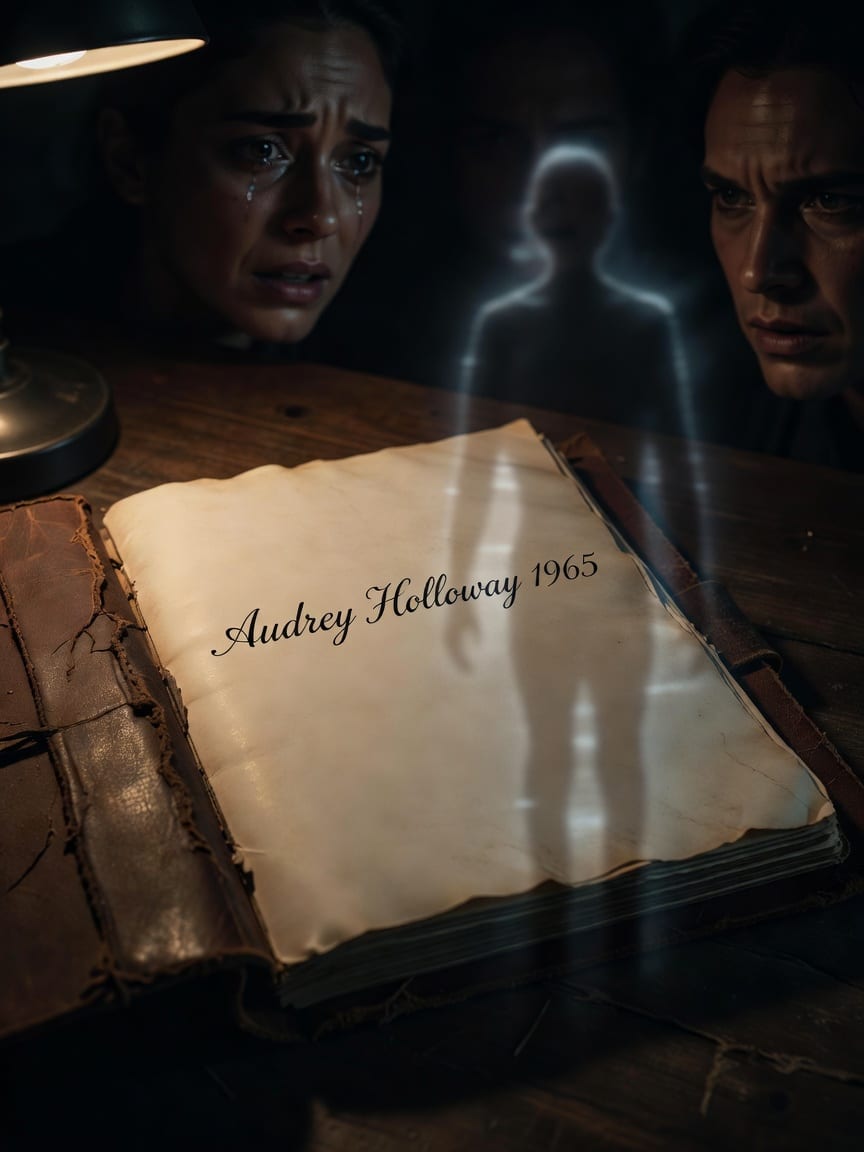
He stared at me then, his eyes wide with a dawning horror that mirrored the one twisting in my own gut. 'Your name. Audrey Holloway. It was there. Clear as day.'
He pointed a trembling finger at an imagined spot on the table between us, as if the phantom ledger still lay open there. 'But the date… the date next to it was 1965. Long before you were even a thought.'
I felt the world tilt, a sickening lurch that stole my breath. 1965. My birth year was 1992. Twenty-seven years before I existed. This wasn’t just a historical oddity anymore. This was me.
'Where?' I demanded, my voice a raw whisper, cutting through the silence of the archive. 'Where did you see it? Where did it go?'
Richard, now fully consumed by fear and guilt, stammered, pointing a shaking hand towards a forgotten, sealed-off alcove in the deepest, darkest part of the archives. A place he’d dismissed as merely a damp storage nook, walled off decades ago.
It was behind a rusted grate, almost hidden by a stack of broken filing cabinets.
Together, driven by a desperate, shared need for the truth, we pried open the rusted grate. It shrieked in protest, the sound tearing through the quiet.
Behind it, amidst generations of forgotten, mildewed papers and a scattering of desiccated insects, lay a heavy, dark leather-bound book.
The air in the alcove was thick with the scent of old paper, damp stone, and something else, something metallic and cold that seemed to hum with a silent energy.
I reached in, my fingers trembling so violently I almost dropped it.
It was cold to the touch, surprisingly heavy, its leather cover worn smooth in places, embossed with a faint, almost invisible looping symbol—the intertwined 'A' and 'H' I’d seen on the old map of Trevoole Farm.
I pulled out the ledger and opened it, flipping past brittle, yellowed pages. Each one was filled with names in that elegant, looping script Richard had described.
Names and dates stretching back to the mid-19th century, each entry accompanied by a brief, cryptic note: 'Returned,' 'Claimed,' 'Awakened.' The cold emanating from the book seeped into my hands, then into my arms, climbing slowly, steadily.
I found the page Richard had described. There, clear as day, was 'Audrey Holloway.' And beneath it, undeniably, the date: 1965. My birth year was 1992.
On the preceding pages, the pattern repeated: names, dates stretching back generations, each with a similar designation. The looping symbol I’d seen on the old map was subtly embossed on the cover, a faint, almost invisible mark.
The clothes, the apology from Sean Sutton, the phone call with its knowing certainty, the invisible watchfulness—it all clicked into a terrifying, coherent whole. I wasn't just being targeted; I was part of a lineage, a recurring event.
I was the latest entry, the next 'return.'
I traced my name in the ledger, my finger hovering over the impossibly early date. The dread was no longer external, a fear of what might happen. It was a cold, settling weight within me, an absolute certainty.
This wasn't a threat to be fought, or a mystery to be solved. This was a truth to be absorbed, to be lived. The ledger wasn't just a record; it was an active document, a claim.
Each entry was a step in a long, unbroken chain. The last entry before mine was blank, awaiting a new 'note.'
I looked up at Richard. His face was etched with a silent, profound understanding, his watery eyes filled with a helpless pity. He knew I was lost to the rational world, lost to the life I thought I had.
The ordinary explanation was dead, irrevocably. The ledger was real, dated, and checkable. It existed, and it contained my name, decades before I drew my first breath.
I closed the book slowly, the soft thud echoing in the quiet archive, a final seal on my old life. I had brought the parcel of baby clothes with me, still in its brown paper. I now understood their purpose.
They weren't a gift; they were a uniform, a skin for the role I was destined to play. A preparation.
I felt a pull, a subtle but undeniable shift in my own being, a sense of inevitability that erased all resistance. I was not escaping. I was becoming.
The entity, the pattern, whatever ruled Trevoole Farm, was not a monster in the shadows; it was the story written in this book, and I, Audrey Holloway, was its latest character.
Richard Beaumont, utterly broken, sat slumped on a dusty stool, trying to rationalize it as a bizarre historical anomaly, a morbid local joke, but his eyes betrayed him. He knew.
He had seen it, touched it, heard me read my own name from its impossible pages.
I left the historical society with the ledger clutched in my hands, its cold weight a constant reminder. The parcel of baby clothes was tucked securely under my arm. I returned home.
The clothes, still folded, lay on my bed where I’d left them before going to the archives. I didn't put them away in a drawer or in a box. I didn't need to.
My apartment felt different, quieter, as if the air itself had settled into a new, profound acceptance. My rational mind, once my strongest defense, had simply… given way. It had no more explanations to offer, no more excuses to make.
I moved through my days with a quiet, unshakeable certainty. The terror, once sharp and piercing, had solidified into a terrible intimacy, a sense of belonging to something ancient and inescapable.
I saw the symbol of the intertwined A and H everywhere now, in the patterns of frost on my window, in the swirling steam of my morning coffee.
It was not a sign to be deciphered, but an emblem of my new identity.
I stood before my bedroom mirror, not seeing my reflection so much as looking through it, into a deeper, older truth. My eyes seemed clearer, yet held a distant, unreadable quality.
I ran a hand over my own face, then picked up one of the tiny baby shirts from the bed, tracing the new, crisp embroidery of my name, Audrey Holloway. The fabric felt soft against my skin, surprisingly warm.
A faint smile touched my lips, a smile of quiet acceptance.
Audrey Holloway stopped answering calls a week later. Her mother, Colette, visited the house, finding it neat, quiet, the air strangely still.
On the bed, a small parcel of baby clothes lay folded, her daughter's name embroidered on each tiny collar. Colette picked one up, felt the new thread, and wondered why Audrey would have left them out.
She placed it back down, a faint smile touching her lips, a smile that wasn't quite her own.
If this one got to you
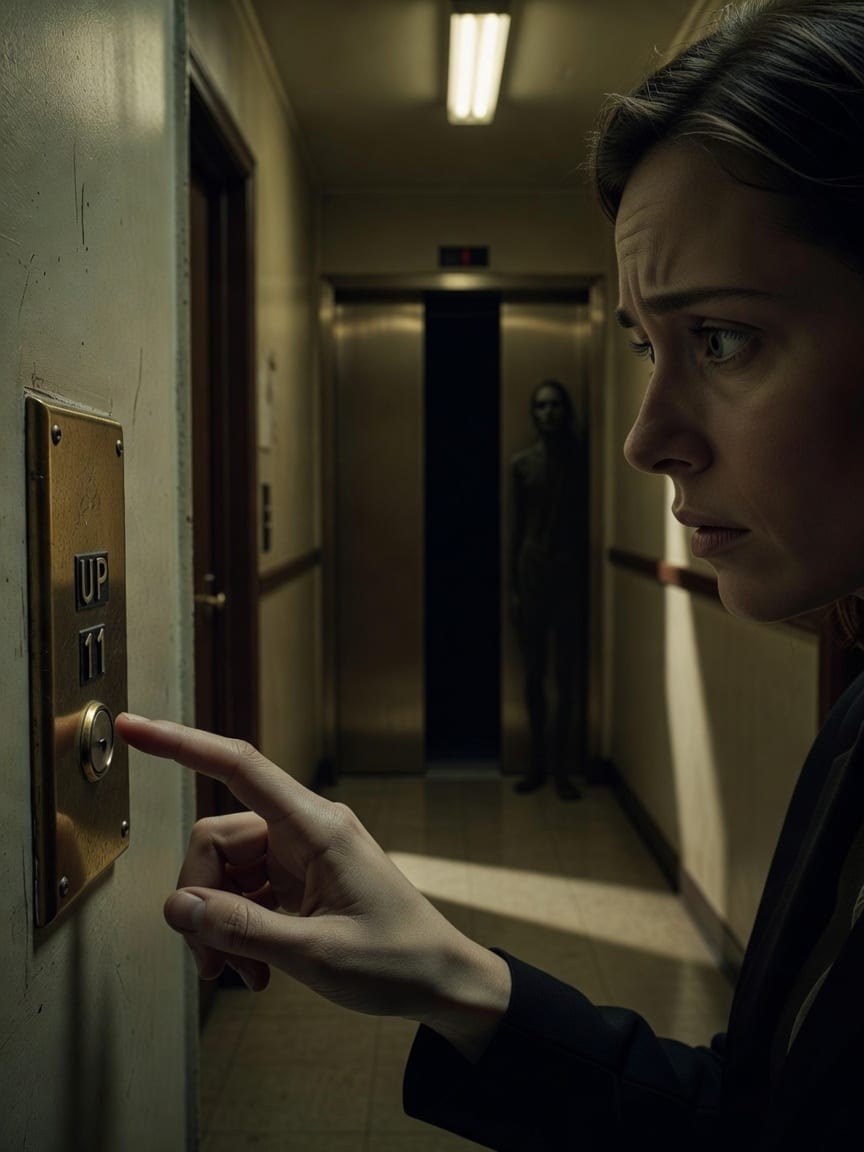
My doorman warned me not to take the tenth-floor lift on Saturday. The building's lift passed inspection last month. He seemed terrified that he'd said it.
My doorman's unsettling warning about the tenth-floor lift left me with a metallic taste of unease. I tried to rationalize it away, but then a birthday card arrived for me, five months early, from an impossible address. It was a site linked to unexplained disappearances, and a cold certainty began to settle in.
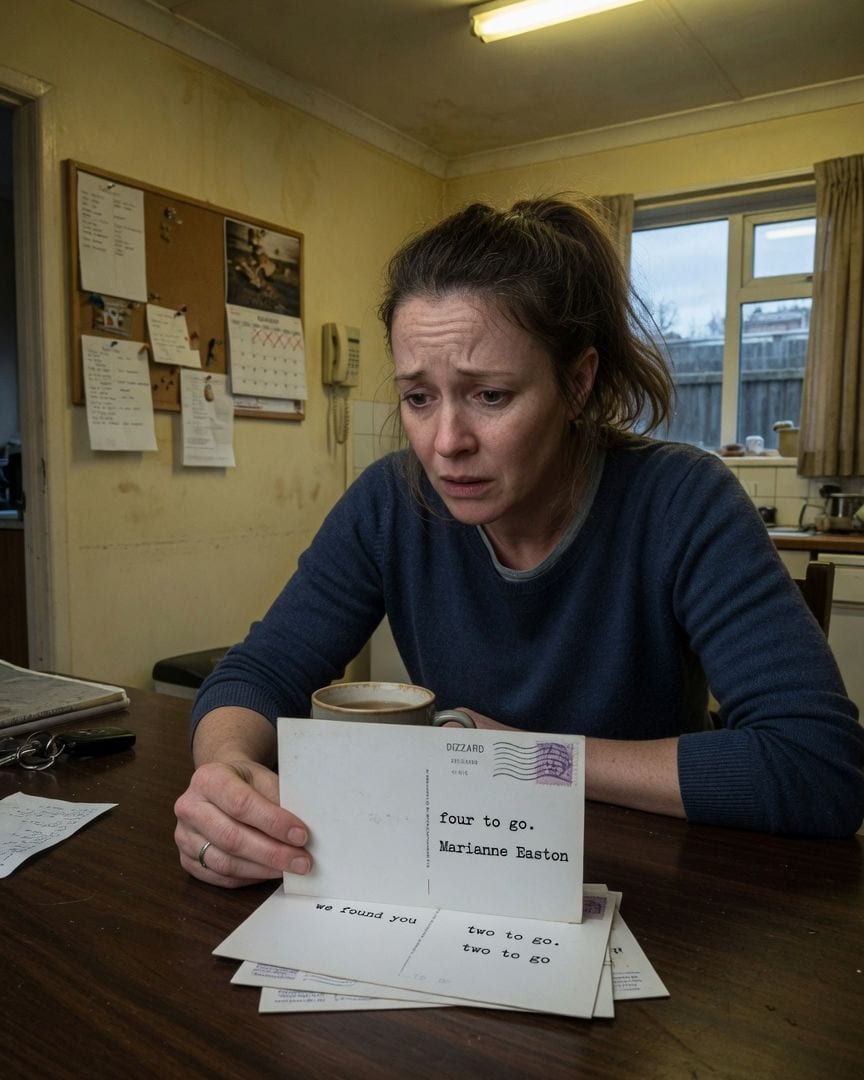
My postcards arrive each Friday, addressed by name, counting down. This week's says 'four to go,' postmarked from a cliff with no postbox.
Every Friday, stark white postcards arrive on my kitchen table, addressed to me. Each one is postmarked 'Dizzard,' a desolate cliff miles from any town, with no post office. For weeks now, they've been counting down.
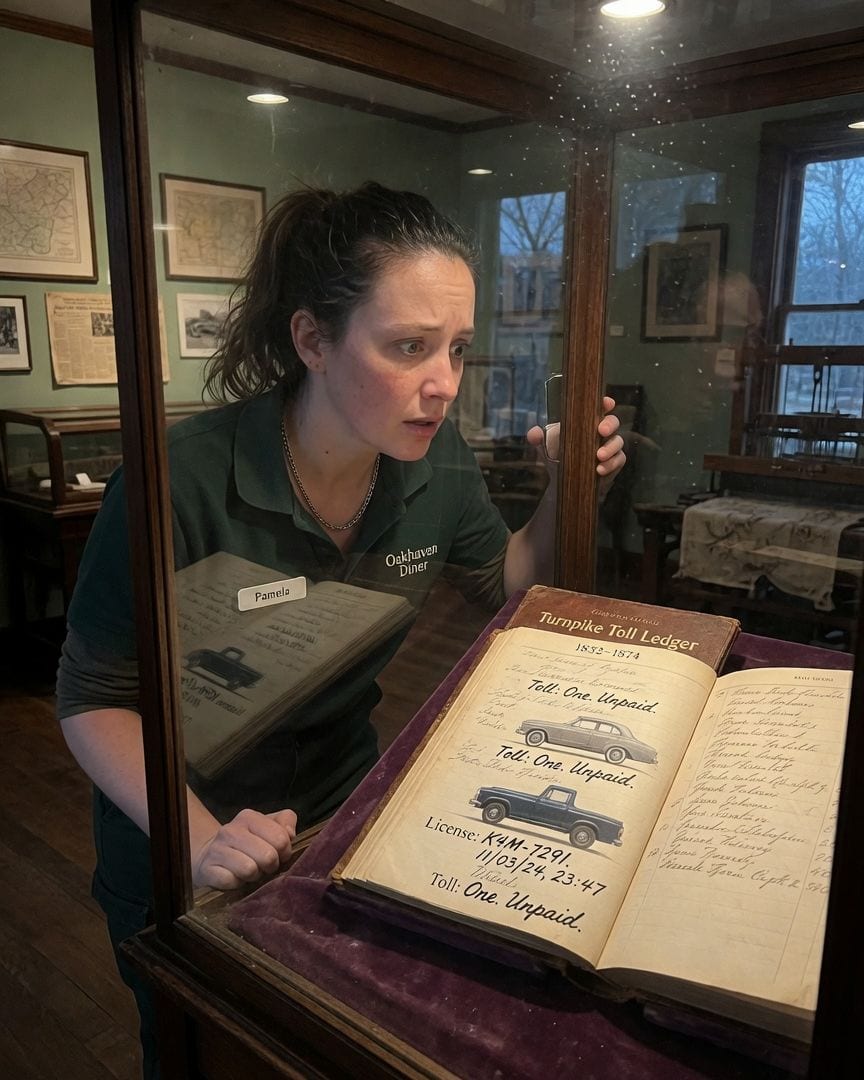
My car stalled at the old turnpike milestone, after dark. The toll ledger, closed in 1874, then listed my car, my stall time, and a toll of one, unpaid.
I had just moved to Oakhaven when my old sedan died on a dark, winding road by an infamous turnpike milestone. The next day, I found my car's exact registration and stall time written in fresh ink in a 150-year-old, locked museum ledger, marked 'Toll: One. Unpaid.' The curator dismissed it as a prank, but her white knuckles and strained voice hinted at something far more unsettling.
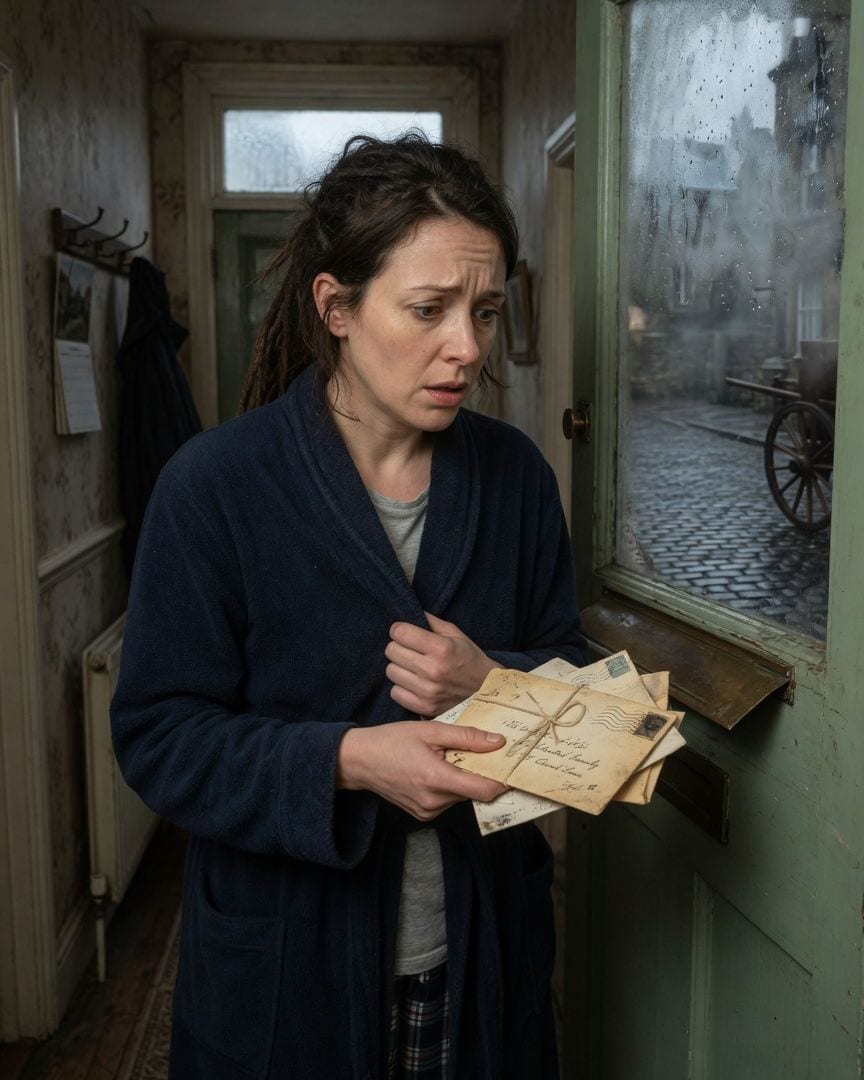
Seventy years ago, a hidden journal recorded my door opening to the wrong street and receiving Lockwood post.
I'd only recently moved into my inherited house, a quiet place on the edge of town. One grey morning, a distinct clatter from the front door's post flap caught my attention. Reaching down, I expected my gravel path, but instead, the flap showed a dark, cobbled street that wasn't mine. A bundle of warm, old letters, addressed to 'The Lockwood Family,' slid through, before the vision flickered and was gone.
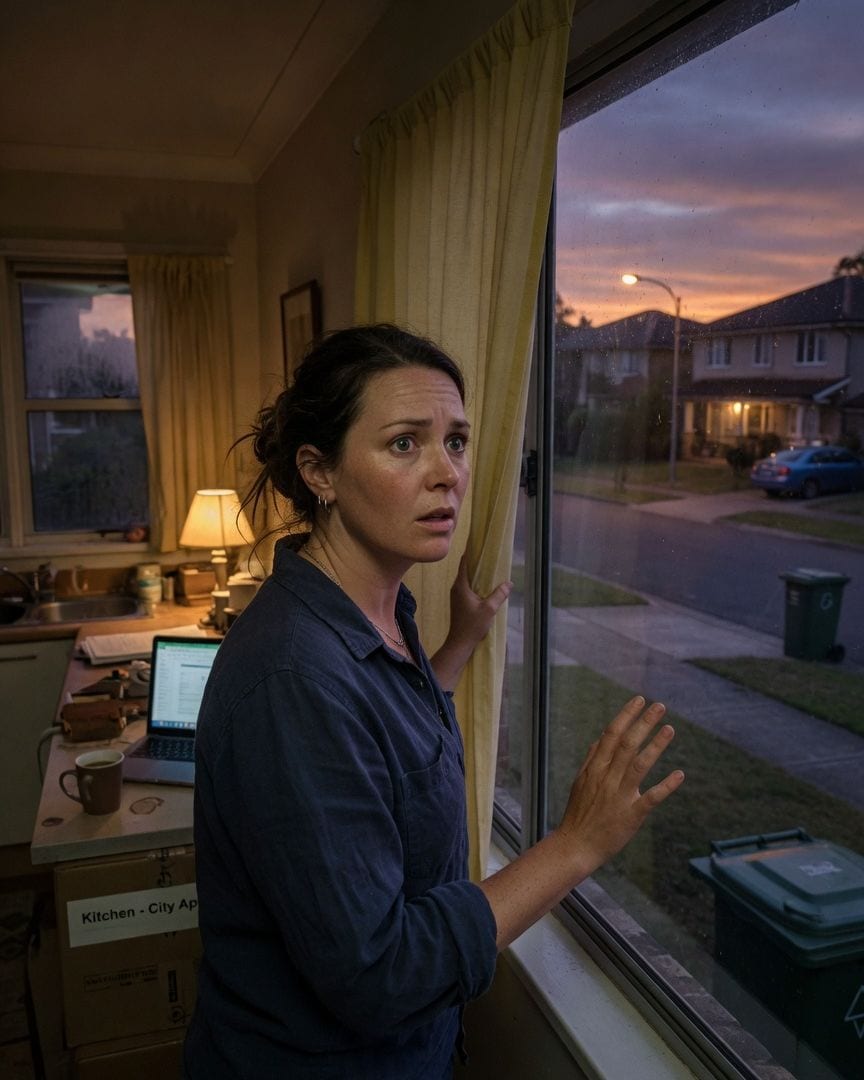
My bin was turned the wrong way Tuesday. The man three doors down hasn't been seen since, though his curtains still open.
New to Oakhaven, I dismissed the local warnings as charming quirks. But after I put my bin out first, my neighbor Joel Whitmore vanished, leaving only a cryptic 'My turn' note. The same strange symbol from his note was chalked on my bin, facing the street.
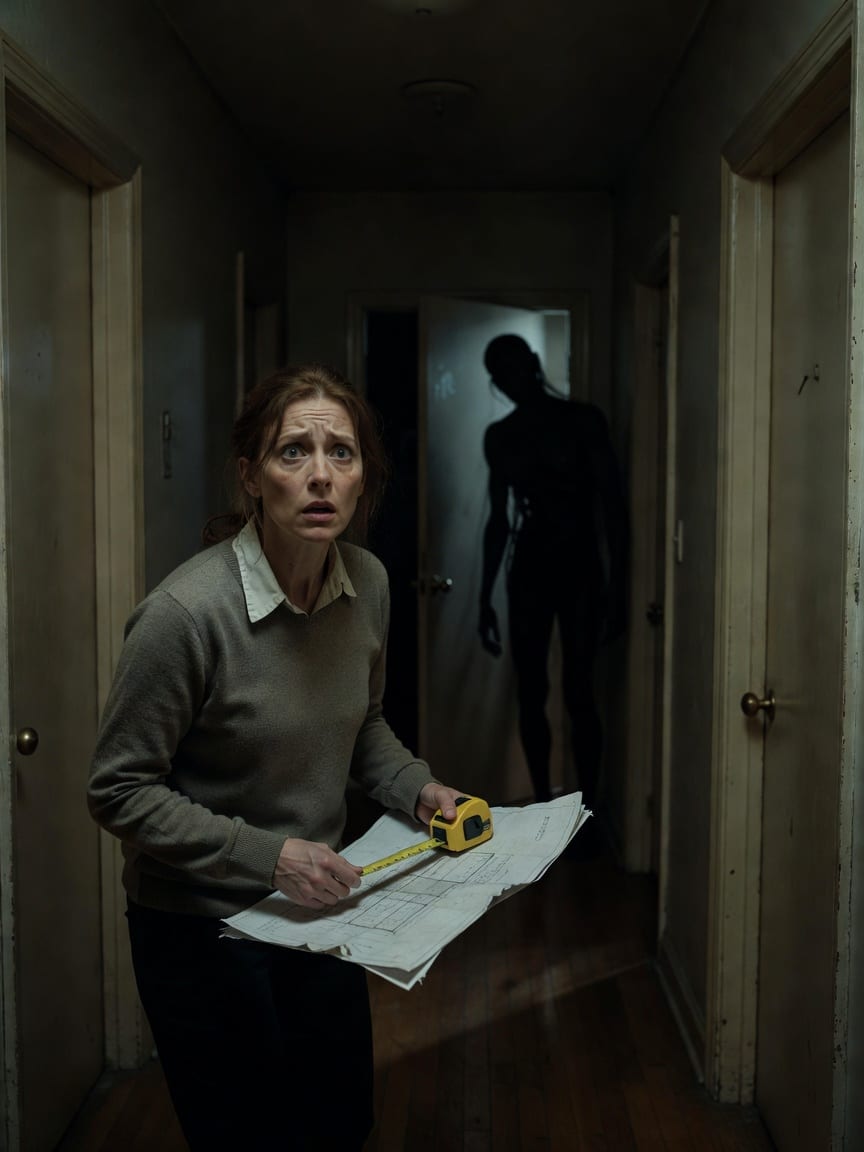
My front door has a dented gate and a dead hydrangea. I walked past it six times, trying to reach the corner shop just a hundred yards away. The pavement kept bringing me back to my own porch, and the shop's light never moved.
My morning started like any other, a quick walk to the corner shop from my home at Number 14, Elm Terrace. But after walking what felt like two minutes, I found myself back at my own front door, the shop no closer. I tried six times, faster and slower, but my street kept compressing, refusing to let me leave.