My bin was turned the wrong way Tuesday. The man three doors down hasn't been seen since, though his curtains still open.
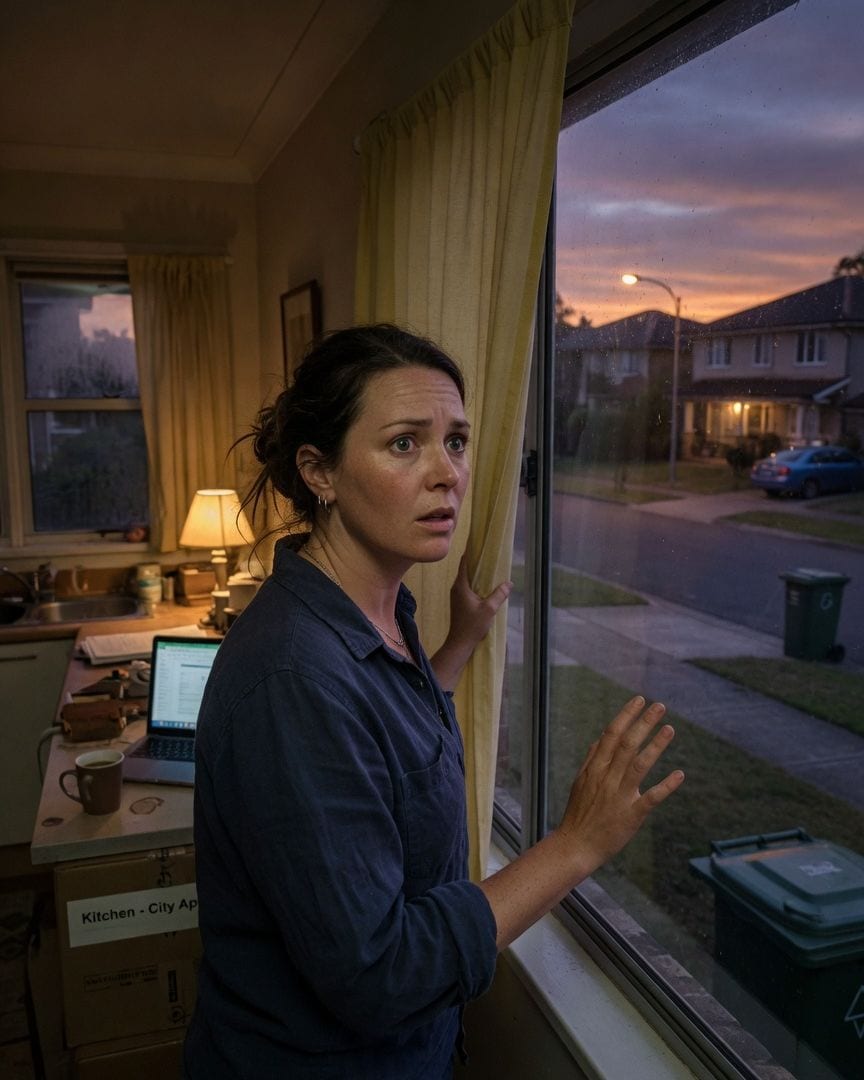
My first week in Oakhaven, Beatrice Sinclair, bless her heart, leaned over the fence with a plate of brownies and a gentle warning. She was seventy-eight, her hair a soft cloud of white, her garden a riot of petunias.
"Around here, dear," she'd said, her voice a whisper, as if sharing a confidence, "we wait for Joel Whitmore, three doors down, to put his bins out first. Always. Never jump the gun." I’d smiled, nodded, and promptly forgotten.
I was new, fresh from the city, and eager to settle into the quiet rhythm of this small town. Local quirks, I’d thought, just part of the charm.
Tuesday, I was up early for work. It was still dark, a thin mist clinging to the streetlights. My green wheelie bin, still pristine from the delivery, was the first on the curb, gleaming under the streetlamp.
A small, innocent act. I backed my car out, glancing down the street. Joel's driveway was still empty. I remember a fleeting thought: Oops, Beatrice won't approve. But then the workday took over.
When I returned that evening, the sun was setting, painting the sky in bruised purples and oranges.
My bin was at the end of the row, pushed slightly further than where I'd left it, turned to face the street, not my house, and its lid was slightly ajar. Odd.
I pushed it back to my driveway, the plastic rattling, and went inside. It was only then I noticed the silence from Joel Whitmore’s house. Not just the usual quiet of a sleeping street, but a profound, unnatural stillness.
Joel Whitmore, the man three doors down, was gone. Not just "out for the day," but truly, utterly gone. His car, a sensible blue sedan, was still in the drive.
His porch light was on, as it always was, illuminating the perfectly swept path to his front door. But the house was silent. No radio, no television, no shuffle of footsteps.
His mail, a few flyers, still sat tucked into the letterbox. The oddest thing?
His living room curtains, visible from my kitchen window, still opened precisely at 7 AM and closed at 9 PM, every single day, as if he were still living inside.
I tried to convince myself it was a local prank, a bizarre welcome to Oakhaven, but the chill that settled in my stomach refused to budge. The bin, turned the wrong way, felt like a silent accusation.
The local police, bless their hearts, chalked Joel's disappearance up to an elderly man's wanderlust. "Happens all the time," Officer Miller had said, shrugging. "He was a quiet one, Ms. Vance. Kept to himself.
Probably went to visit family, forgot to tell anyone." No forced entry, no signs of struggle, no note. Just... gone. They’d walked through the house, taken a statement, and left, satisfied with their prosaic explanation.
But the curtains. Those curtains, opening and closing like clockwork, gnawed at me. Every morning, 7 AM, a precise, almost mechanical swish, then open. Every evening, 9 PM, another precise swish, then closed. It was too perfect.
Too consistent for an empty house. I mentioned it to Beatrice Sinclair, trying to keep my voice casual. Her usual gentle smile faltered.
"Oh, those," she’d said, her eyes drifting away from mine, towards the distant hills, "well, Joel was a creature of habit, wasn't he? Very particular."
The way she said it, too smooth, too practiced, like a line rehearsed a hundred times, made me profoundly uneasy. It felt less like an observation and more like an instruction.
One evening, after a week of watching those curtains from my kitchen window, the flicker of a faint light caught my eye in Joel's living room. It wasn't the main overhead light, just a soft glow, like a lamp.
Curiosity, or perhaps dread, pushed me out of my door and down the sidewalk. I walked past Joel’s house, feeling a strange pull towards the porch. The front door was unlocked, as if he’d just stepped out for a moment.
I hesitated, then pushed it open, calling his name. "Joel? Mr. Whitmore?" The silence that echoed back was absolute, swallowing my voice whole. The house was immaculate, frozen in time. Not a speck of dust.
A half-finished crossword lay on the coffee table, a pen resting beside it. Everything was just so.
On the kitchen counter, next to a neat stack of unread newspapers, a small, leather-bound calendar, the kind given out by local hardware stores, lay open to the current month.
Each day had a neat, precise entry: "Water plants," "Pharmacy," "Bin collection." And on the date of his disappearance, scrawled in red ink, was a single, stark phrase: "My turn."
Below it, small and unnervingly deliberate, a hand-drawn symbol: an inverted triangle. My breath caught, lodged in my throat. I’d seen that shape before.
I stumbled back, the calendar clutched in my hand, its cheap leather surprisingly cold. "My turn." What did that mean? A game? A secret society?
I tried to rationalize it, to find a mundane explanation for the chilling phrase and the odd, stark symbol. A joke, maybe? A morbid hobby?
But the quiet perfection of Joel’s house, the untouched mail, the persistent curtains, wouldn't allow for it.
As I walked out of Joel's house, the setting sun glinting off the street, my gaze fell to the spot where my bin had been that fateful Tuesday morning.
The green plastic still bore a faint, almost invisible chalk mark on its side. A mark I'd dismissed as a child's scribble, or a stray paint smudge, when I’d first wheeled it back into my driveway.
I'd wiped at it then, but some residue had remained. It was the same inverted triangle. The very symbol on Joel Whitmore's calendar. The symbol that had been facing the street, turned the wrong way, on my bin.
The inverted triangle became an obsession. My initial attempts to rationalize it away evaporated. I scoured local history forums, library archives, anything I could find about Oakhaven's obscure symbols or folk practices.
I spent hours on the public library's creaky computer, typing in combinations of "Oakhaven," "symbols," "local legends," "disappearances." Nothing.
The more I asked discreetly about Joel – in the local bakery, at the hardware store, even just chatting over the fence with Mrs. Henderson – the more I encountered "The Town That Agrees."
Everyone, from the postman to the grocery store owner, offered the same saccharine-sweet story: Joel was a quiet man, kept to himself, probably went to visit family, just forgot to tell anyone.
"He’ll turn up when he’s good and ready," they’d say, always with a mild, practiced smile. Their eyes, though, held a flicker of something else, a quiet understanding that bypassed words. A shared secret they wouldn't, or couldn't, voice.
I visited the local historical society, a small, dusty building crammed with forgotten artifacts and yellowed photographs. The curator was Beatrice's nephew, Everett Vance, a man in his late twenties with earnest eyes and a perpetually rumpled tweed jacket.
He was helpful, but strangely evasive when I mentioned the bin rule or Joel.
He showed me old town ledgers, property deeds, fascinating accounts of Oakhaven's founding, but steered me firmly away from anything related to local traditions or unexplained events.
"Just a sleepy town, Ms. Vance," he'd said, dusting off a century-old butter churn. "Not much drama here, I'm afraid."
It was in one of those dusty ledgers, a record of property transfers from the early 20th century, that I found it. Not a symbol, but a pattern. My fingers traced the faded ink, page after page.
Every seven years, almost like clockwork, a property on Joel's street, or one very close by, was listed as "abandoned" or "owner untraceable." Not sold, not inherited, but simply... vacant. No new owner. No forwarding address.
The dates, when I cross-referenced them with old newspaper archives on microfiche in the back room, showed a consistent, quiet pattern of "unexplained departures" in Oakhaven. A farmer in '56, his homestead simply empty.
A seamstress in '63, her shop locked up forever. A schoolteacher in '70, her pupils just told she'd "moved on." Always individuals living alone. Always around the same time of year, coinciding roughly with the Tuesday bin collection schedule.
Always without a trace. The mundane explanation of "wanderlust" began to crumble under the weight of decades of quiet, consistent absence.
My quiet inquiries didn't stay quiet for long.
One afternoon, as I was leaving the library with a stack of microfiches – more names, more dates, more disappearances – I found a small, neatly folded note tucked under my car's windshield wiper.
It wasn't formal, just a piece of lined paper torn from a notepad. It simply read: "Some things are best left undisturbed, dear. For everyone's sake." No signature, no threat, just a chilling, polite warning.
My heart hammered against my ribs. I looked around the library parking lot. It was empty save for my car and an older sedan parked far off, its tinted windows obscuring the driver.
I felt a prickle on my neck, the distinct sensation of being watched. The air in the parking lot suddenly felt heavy, pressing down on me.
Later that week, I returned home from work to find my green bin, the one with the faint chalk mark, sitting squarely in the middle of my driveway, facing my front door. It wasn't bin collection day.
And the lid was wide open, completely empty. A clear, unmistakable message. My hands shook as I wheeled it back to its usual spot, pushing the lid closed with a shudder.
That night, I called Beatrice Sinclair. I knew it was a mistake even as I dialed. "Beatrice," I started, trying to keep my voice steady, "I've been looking into Joel's disappearance. And some others. There's a pattern, isn't there?
Every seven years. People just... vanish." Her voice, usually so warm and full of neighborly cheer, turned cold, flat. "Cynthia," she said, cutting me off, "you're upsetting things. You're new here. You don't understand how things work.
Some stories are just stories, and some warnings are to be heeded." She hung up before I could respond, leaving a dial tone that sounded like a scream in my ear.
The Town That Agrees wasn't just steering me away; it was actively protecting something. And I was getting too close. The phone receiver, still warm against my cheek, felt like a lead weight.
The next morning, the exhaustion of restless nights and mounting dread pushed me to the town hall. I needed access to older records, specifically the municipal archives that Everett Vance had so carefully diverted me from.
I found Conrad Hughes, the town clerk, a man in his early fifties with tired eyes, thinning hair, and a perpetually worried expression, filing away old documents in a cluttered back office.
Dust motes danced in the slivers of sunlight cutting through the high windows.
I showed him Joel's calendar, opened to "My turn" and the inverted triangle. I laid out the dates of the disappearances I'd found in the property ledgers, the microfiche printouts splayed across his desk.
He listened, his face growing paler with each piece of evidence. The small, buzzing fluorescent light above us seemed to flicker in sync with my rising panic.
"It's just local superstition, Ms. Vance," he said, his voice flat, barely above a whisper, but his hands trembled visibly as he shuffled papers, rearranging the neat stacks on his desk for no apparent reason. "Old wives' tales.
This town has a lot of history, a lot of quaint stories."
"Old wives' tales don't explain a missing man and a pattern of disappearances every seven years, Mr. Hughes," I countered, pushing the newspaper clippings, each detailing a cryptic "departure," across his desk.
"And they don't explain why everyone in this town gives me the same practiced line about Joel’s wanderlust."
He sighed, running a hand over his thinning hair, his gaze fixed on the calendar. "You broke the rule, didn't you? The bin rule."
His voice was barely audible now, lost beneath the low hum of the ancient air conditioning unit.
I nodded, feeling a fresh wave of dread wash over me, cold and heavy. "What happens when you break it?"
He leaned forward, his voice dropping to an almost inaudible whisper, forcing me to lean in closer. "The rule... it's to signal. To show what's ready. Who's ready. Joel... he was next. He knew. We all knew.
He'd been chosen weeks ago. But you... you put your bin out first, and facing the wrong way. That's a disruption. That's... a challenge." He looked terrified, his eyes wide and unfocused. "The inverted triangle? That's the mark.
The mark of the one chosen. Joel knew. They always know." He swallowed hard. "And the wrong way... that's for when the pattern's broken. When something new has to be decided. It draws attention. Not to Joel, but to...
the break." He wouldn't say "who" or "what" decided, but the implication hung heavy in the stale, dusty air. The story wasn't just a story; it was a carefully managed reality.
Conrad, seeing the determination in my eyes, finally cracked. He pushed his chair back, the old wood groaning under his weight, and stood, his gaze darting nervously to the closed office door.
He led me to a hidden compartment behind a false panel in his office, one I hadn't noticed, concealed by a stack of official-looking but clearly unused folders.
With trembling fingers, he manipulated a small latch, revealing a small, locked safe. The metallic click echoed in the suddenly silent room. He opened it, pulling out a heavy, leather-bound ledger, brittle with age.
Its pages were yellowed, the leather cracked like ancient skin.
"This isn't for public eyes," he muttered, his voice hoarse, his gaze darting to the door again as if expecting someone to burst in. "This is... the real history of Oakhaven."
He opened it to a page marked "Annual Harvest: Rules and Provisions." My eyes scanned the archaic script, detailing a recurring "Presentation" to "The Silent Steward" for the "Continued Prosperity of Oakhaven."
It listed specific dates, specific locations, and chillingly, "Protocols for Incorrect Display of the Vessel." My blood ran cold.
And then, at the bottom of the page, a list of names, generations of Oakhaven families, each with a small, stylized signature. My breath hitched. Among the faded ink, three generations back, I saw it.
The elegant, looping script of my own family name: Vance. A signatory. My ancestors had been part of this.
Conrad looked at me, his eyes filled with a profound, quiet resignation. The fluorescent light above us flickered again, casting deep shadows on his face.
"You weren't supposed to find that," he said, his voice barely a whisper, as I held up the faded, official-looking document from the hidden ledger – a "Community Agreement" signed by generations of Oakhaven families, detailing the "Annual Harvest" and the "Rules of Presentation," with a specific clause about "incorrect display."
My own surname, Vance, was listed among the signatories, three generations back.
The ledger trembled in my hands. My family. Part of this monstrous pact. Conrad, his voice hollow with the weight of generations of secrets, began to explain.
How the town of Oakhaven had been founded on this very agreement centuries ago. A harsh winter, a dying settlement, and a desperate bargain with something ancient and unseen, residing in the dense, silent woods that ringed the valley.
Prosperity, safety, good harvests, healthy children – in exchange for a life. Every seven years. A single resident. The "Silent Steward," he called it. The name hung in the air, a presence felt, not seen.
The bin rule, he confirmed, wasn't just a warning; it was the mechanism. The precise timing and placement were crucial, a carefully choreographed ritual.
The "man three doors down," or whoever happened to be in that designated spot, was always the next in line for selection, a role sometimes passed down through specific families, other times a random draw from those living alone, those most easily...
absorbed. The inverted triangle was the mark of the chosen, the final confirmation of their designated role. And my bin, turned the wrong way, put out too early, had signaled a disruption.
"You broke the cycle, Cynthia," he whispered, his eyes fixed on the antique document in my hands. "You interfered with the designated offering. Now it needs a new one. And it knows you saw the mark."
The coherent horror of it all crashed down on me. Joel knew. Beatrice knew. The entire town knew. They had all been complicit, maintaining their silence, their "agreement," generation after generation, to protect their own families, their town's unnatural prosperity.
Every quiet glance, every evasive answer, every smoothly delivered platitude about "wanderlust" or "local quirks" suddenly made horrifying, sickening sense.
I wasn't just an observer; I was inside it now, my own family's history woven into the very fabric of Oakhaven's dark secret. The dread was in the perfect, sickening coherence of it all.
There was no escaping the pattern, only delaying it.
I ran from the town hall, the ledger still clutched to my chest, its brittle pages rustling like dry leaves against my arm.
The familiar streets of Oakhaven, once quaint and welcoming, now felt like a cage, every perfectly manicured lawn, every charming porch light, every house a silent conspirator.
I saw Beatrice Sinclair tending her roses, her back to me, then she straightened, turning slowly. Her gaze met mine across the fence.
This time, there was no gentle smile, only a look of profound sorrow, and a quiet, almost imperceptible shake of her head. A warning, or a plea for understanding? I didn't know. I didn't care.
I didn't stop until I reached my house. I packed only essentials, my mind a blur of dates and names, images of inverted triangles and neatly arranged bins. I couldn't stay.
To stay was to accept my complicity, to become another silent agreement, another cog in the horrible, quiet mechanism.
I threw my bag into the passenger seat of my car and turned the key, the engine roaring to life like a desperate gasp.
As I drove out of Oakhaven, the sun setting behind the ancient, looming trees that ringed the town, I saw them. Not the entity, not the "Silent Steward," but its effects. The bins.
Every green wheelie bin, neatly lined up, facing the correct way, waiting for collection day. A perfect, unwavering line of quiet, communal dread.
I knew what they represented now. I knew the cost of that order, the price of Oakhaven's peace. I didn't see the thing that took Joel. I never would.
But I felt its presence, a cold, hungry awareness that had been watching Oakhaven for centuries, an entity whose rules were now seared into my very soul.
I had escaped the immediate threat, but the knowledge, the absolute, chilling coherence of it all, had branded me. I was a witness, and now, a carrier of the secret.
I never returned to Oakhaven. My house there sits empty, its bins presumably still put out correctly by a new tenant, or perhaps left to gather dust. I don't know.
Joel Whitmore's house remains vacant, his curtains, I imagine, still opening and closing on time, a silent, macabre puppet show for the town. The police eventually closed his case, citing "no leads."
The town of Oakhaven, I'm sure, continues its quiet, prosperous existence, its residents maintaining their unspoken agreement, their carefully observed rituals. The pattern continues, unbroken, simply redirected.
I live in a new town now, miles away, a place without ancient trees or peculiar bin rules. A town with nothing but ordinary, unblinking streetlights and predictable Tuesdays.
But every Tuesday, without fail, a cold sweat breaks out on my skin. I check my neighbors' bins, making sure mine is never the first. Never facing the wrong way.
I understand the quiet agreements now, the subtle cues, the desperate need for order in the face of something inexplicable. I carry the knowledge of Oakhaven like a shroud, an invisible mark.
I survived, yes, but I will never truly be free of the pattern I uncovered. The world is full of forgotten rules, and I know now that some of them are not superstitions, but warnings.
The bin rule holds, now, for me.
If this one got to you
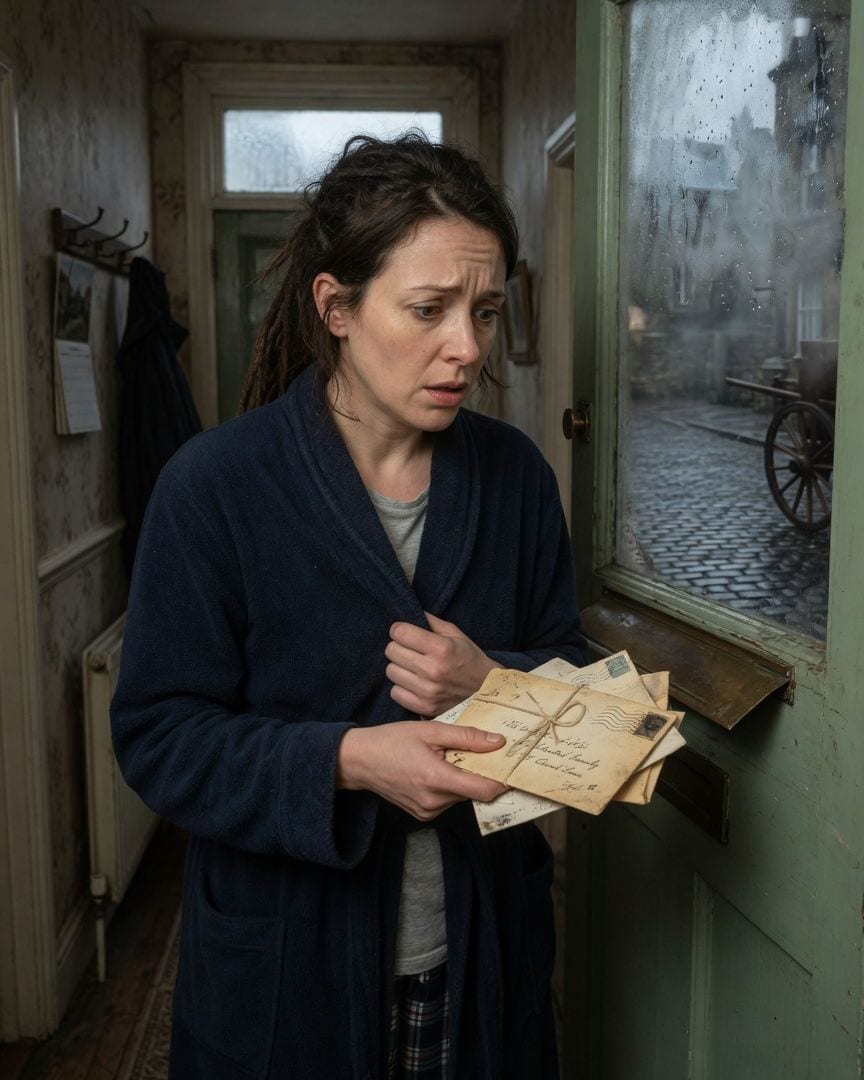
Seventy years ago, a hidden journal recorded my door opening to the wrong street and receiving Lockwood post.
I'd only recently moved into my inherited house, a quiet place on the edge of town. One grey morning, a distinct clatter from the front door's post flap caught my attention. Reaching down, I expected my gravel path, but instead, the flap showed a dark, cobbled street that wasn't mine. A bundle of warm, old letters, addressed to 'The Lockwood Family,' slid through, before the vision flickered and was gone.
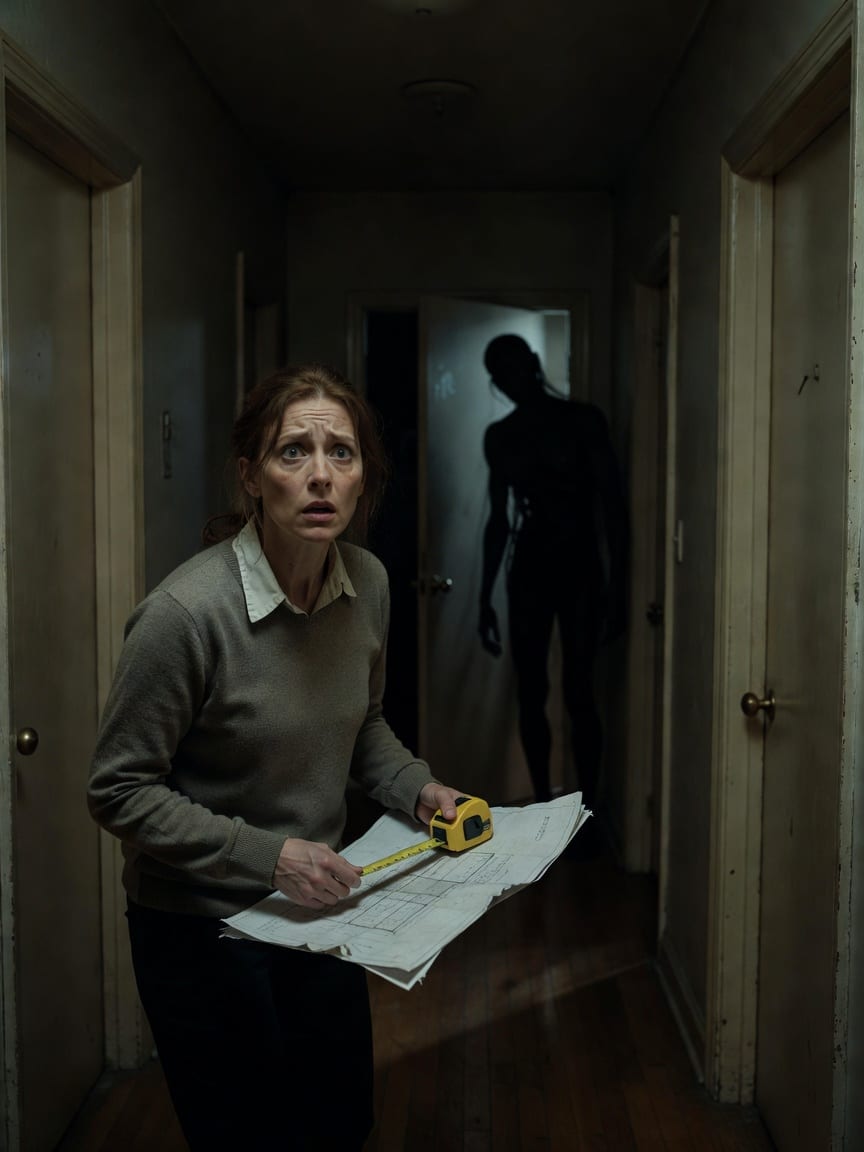
My front door has a dented gate and a dead hydrangea. I walked past it six times, trying to reach the corner shop just a hundred yards away. The pavement kept bringing me back to my own porch, and the shop's light never moved.
My morning started like any other, a quick walk to the corner shop from my home at Number 14, Elm Terrace. But after walking what felt like two minutes, I found myself back at my own front door, the shop no closer. I tried six times, faster and slower, but my street kept compressing, refusing to let me leave.
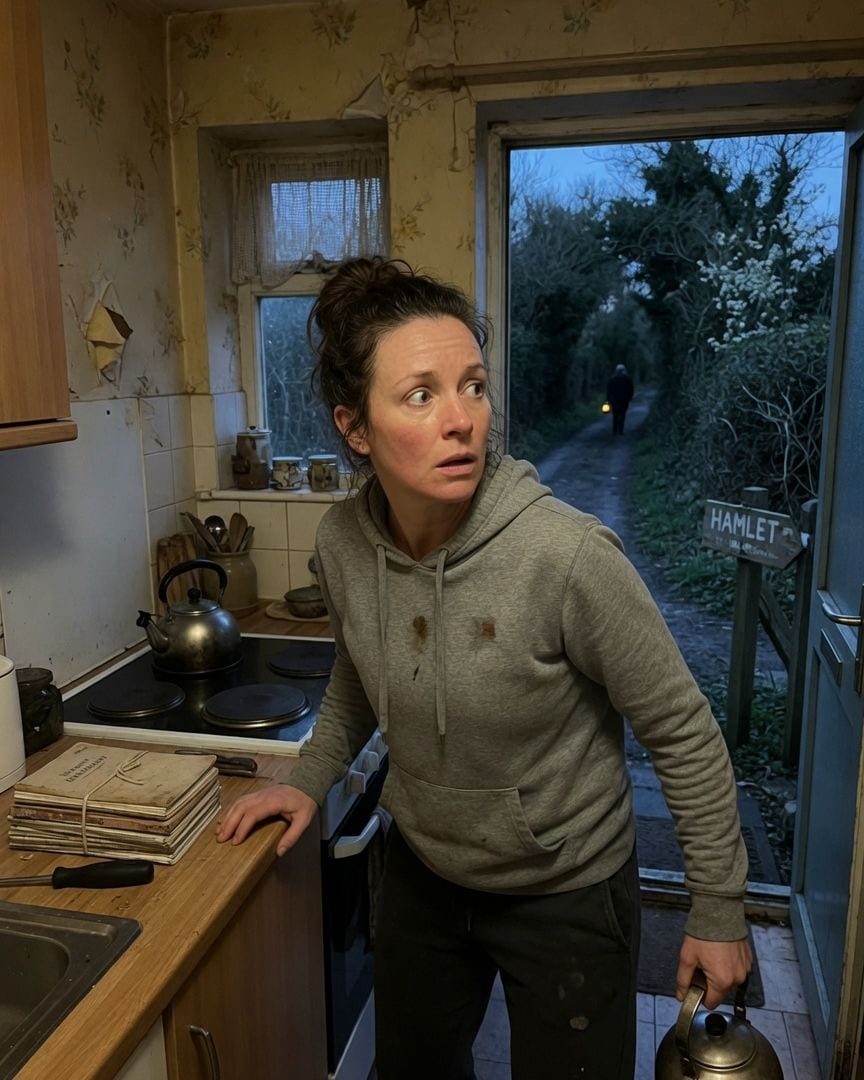
My side gate opens onto a dirt lane between hedgerows, not the close, and a figure with a lantern comes up it toward me.
My side gate normally opens onto the familiar tarmac of the close, but lately, it's opened to a narrow, overgrown dirt lane instead. Three times now, at dusk, I've seen a man with an old-fashioned lantern walking unhurriedly up this impossible lane towards my house. Each time, when I dare to look again, the lane is gone, leaving only the bins and a racing heart.
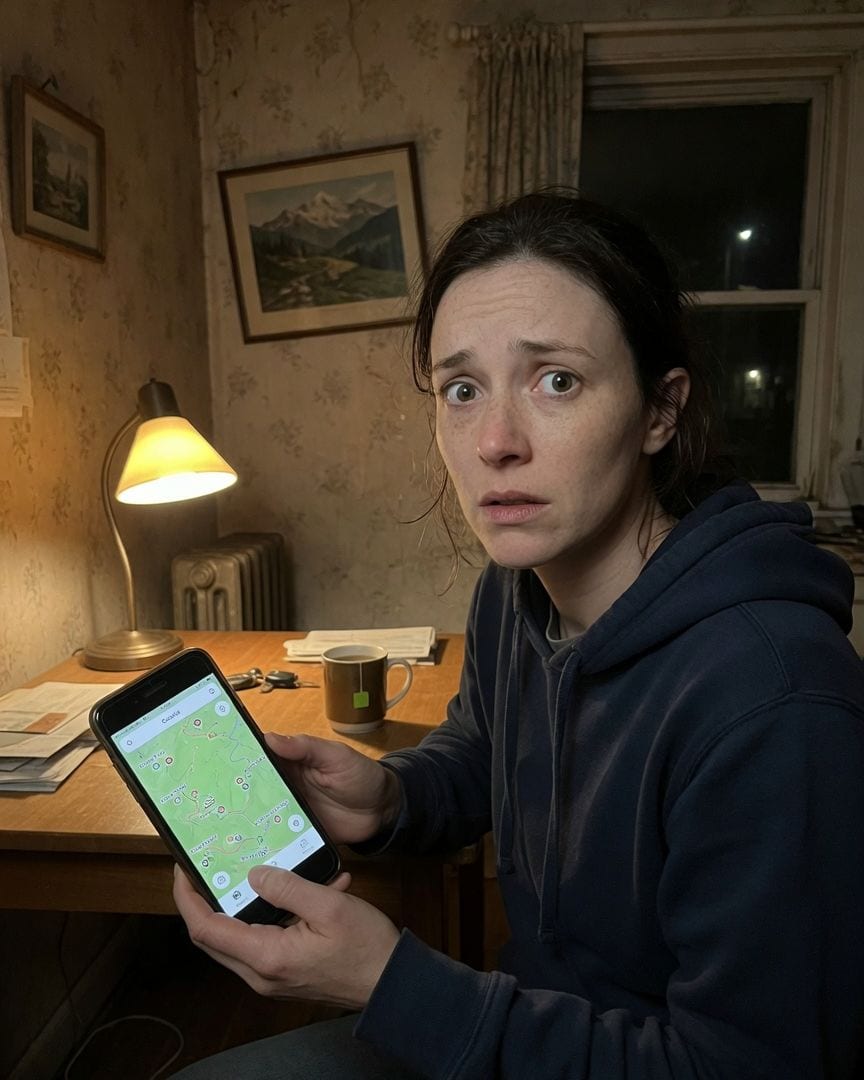
My hiking app scrubbed the hill's name from the map, on a phone that's been in airplane mode for two days.
I just moved to town and hiked a local hill, 'Cathan Tor,' according to my phone's app. But when I mentioned the name to the mechanic, he froze, dropped his wrench, and whispered, 'Don't say that name, Colette.'
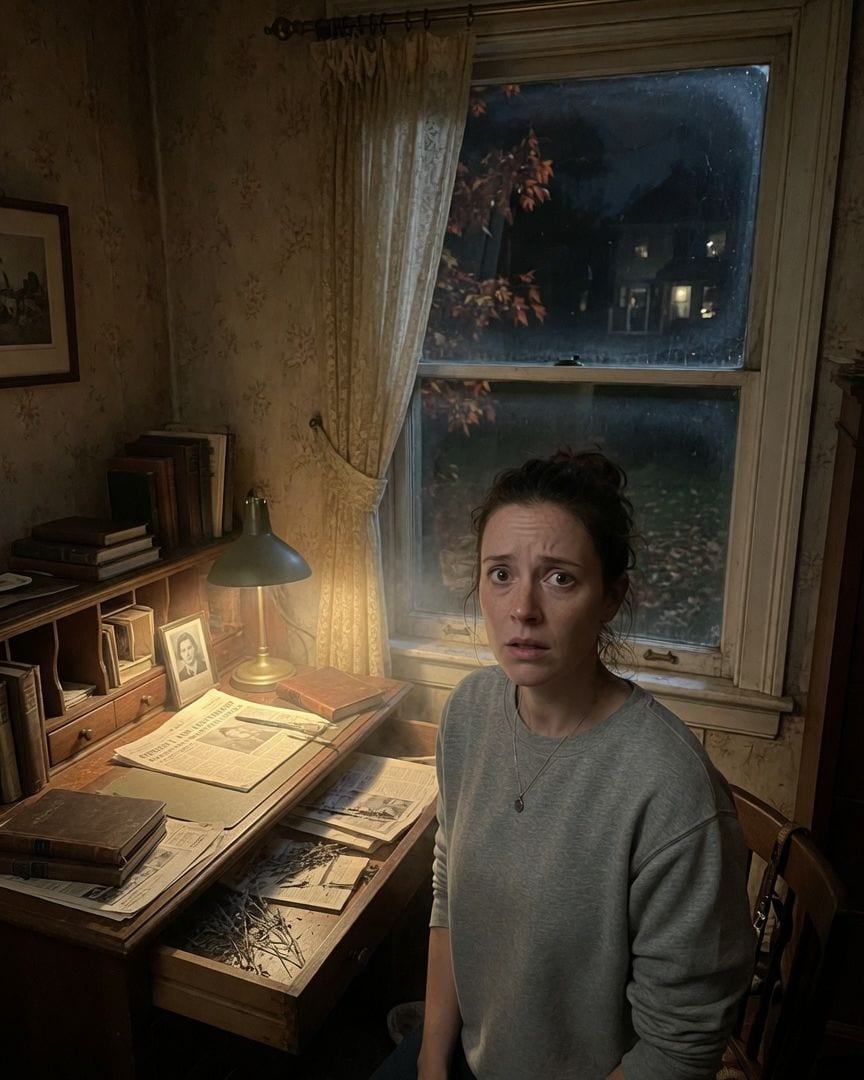
One night every October, every house on our lane lights a single lamp in the west window — 'for him,' the old diaries say. No one under seventy will tell me who 'him' is, or why the lane is named for a man with no grave.
I moved into my grandmother Vera's old house on quiet Radcliffe Lane, finding comfort in her diaries. Every October entry ended with the same cryptic line: 'left the lamp in the west window for him, as we do.' Now, almost every house on the lane lights a lamp in its west window, but mine remains dark and strangely cold. No one here will explain this quiet, golden vigil.
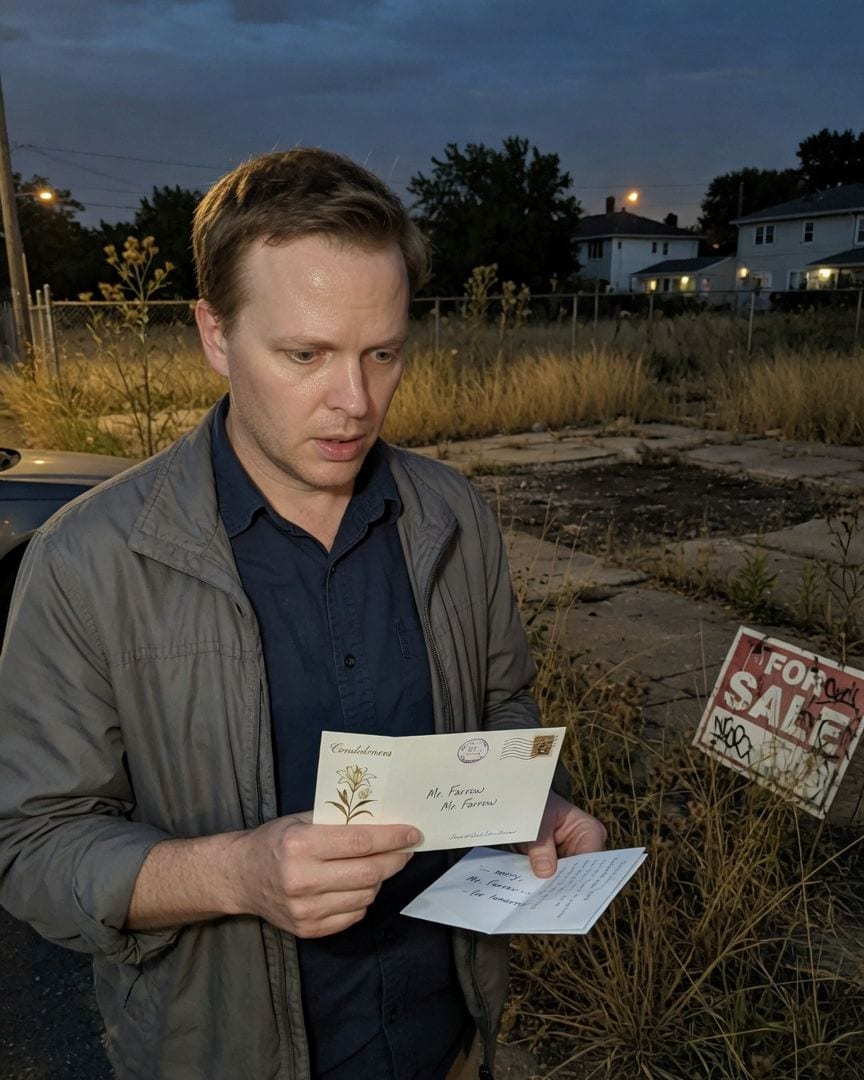
My waiter apologized for tomorrow's plans I hadn't made. He stared at his own handwriting, swore he didn't write it.
My quiet, solitary life was routine until a condolence card arrived, addressed to me for an unknown loss. The postmark, '14 Elm St.', was unsettling enough, but driving there revealed the impossible truth: the address was nothing but an empty lot.