My mother's left wrist has a new scar. She never had one there.
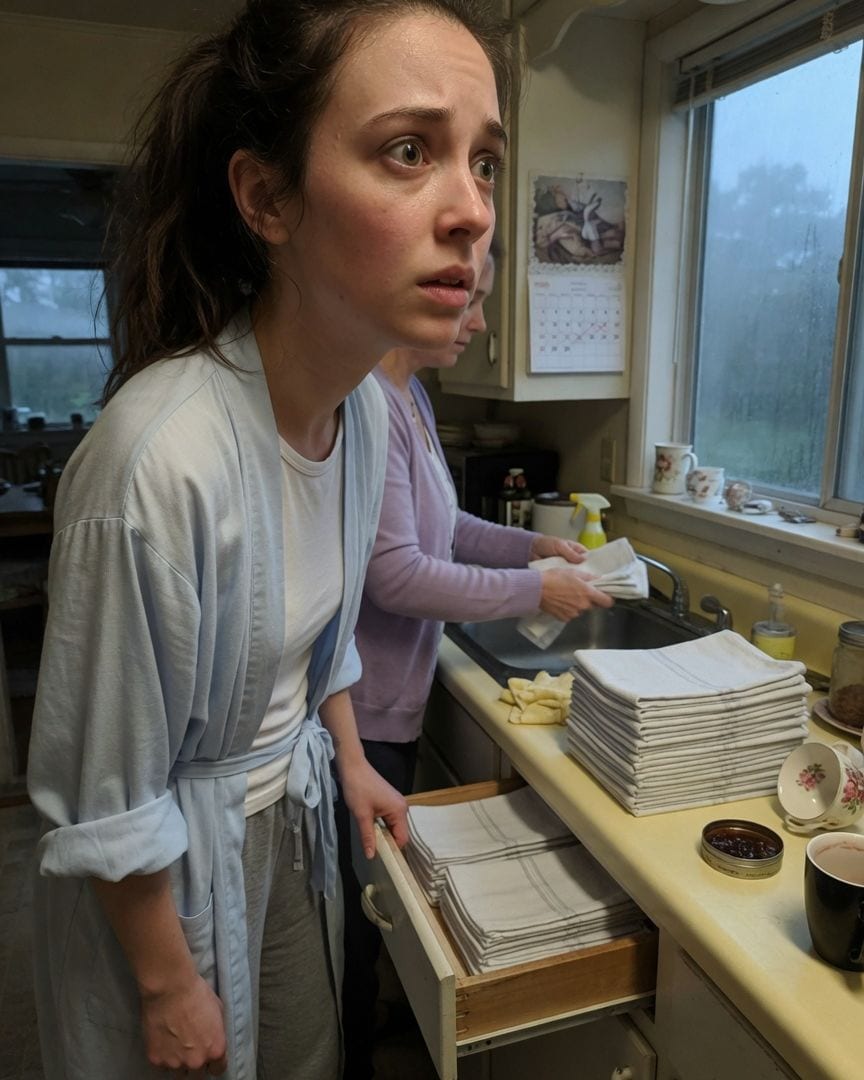
The kitchen smelled of lemon polish and a faint, unfamiliar sweetness. My mother, Deborah, stood at the counter, her back to me, meticulously folding tea towels.
She’d been home for four days now, after her disappearance last spring, and I was trying to fall back into our old rhythm. I watched her hands move, smoothing the fabric, bringing the ends together.
Then she creased it down the middle, creating a neat rectangle, seam-out. My stomach knotted. My mother had always, for as long as I could remember, folded tea towels in precise thirds, seam-in.
It was a small thing, a ritual I’d learned at her knee, part of the fabric of our home.
"Mom?" I asked, my voice a little too high. "Are you trying a new way to fold those?"
She turned, a placid smile on her face. "New way? What are you talking about, dear? This is how I've always done it." She gestured to the stack already in the drawer, every towel folded identically, seam-out.
A cold rush hit me, a sensation of displacement. I remembered helping her unpack the groceries just yesterday, seeing those same towels. Had I not noticed then? Or had she refolded them all, every single one?
It felt like a deliberate inversion, an erasure of a tiny, deeply ingrained habit. I tried to rationalize it – trauma, a memory lapse from her four missing days.
But the sight of the newly stacked towels, perfectly inverted from their usual state, made the ordinary explanation feel flimsy.
She began to hum a tune, a light, airy melody I didn't recognize, her gaze distant, fixed somewhere beyond the window.
Later that evening, the air on the porch was cool and damp from the approaching coastal fog. Mom sat across from me, sipping black coffee from her favorite mug.
It used to be her tea mug, stained faintly brown inside from years of Earl Grey. "Fancy the coffee tonight?" I asked, trying to keep my tone light. She’d always preferred tea, a calming nightly ritual.
"Oh, tea gives me the jitters these days," she said, her smile soft and unblinking. "Must be my age." Her eyes, usually so expressive, seemed to hold a placid, unfamiliar depth. I tried to prompt a memory, anything familiar.
"Remember that old set we got from Aunt Clara? The chipped rose pattern? We always had tea out of those on rainy nights."
"Aunt Clara?" she mused, tilting her head. "I don't recall any rose pattern. Sounds lovely, though." Her voice was perfectly normal, but her words were like stones dropped into a deep well.
My mother loved Aunt Clara; that tea set was a cherished heirloom. I looked away, trying to shake the feeling that I was talking to a stranger. That's when I saw it.
A faint, almost invisible line on her left wrist, just above the cuff of her sweater.
It was a small, thin scar, almost a mirror image of the one on her right wrist, from when she’d fallen off her bike as a child. A scar I knew like the back of my own hand.
But she’d never had one on her left. I must have stared, because she covered her wrist, pulling her sleeve down. "Cold out here, isn't it?" she said.
That night, sleep wouldn’t come. Every creak of the old house was amplified, every shadow seemed to deepen. I thought of the tea towels, the coffee, the scar. The rational part of my brain screamed for an explanation, any explanation.
But the pit in my stomach told me the rational explanations were failing. My mother was here, in her bed down the hall, but something about her was profoundly, unsettlingly wrong. I slipped from my bed, pulling on a robe.
I crept down the hall, the floorboards groaning under my weight. Her door was slightly ajar, a sliver of darkness visible. I pushed it open gently, peering inside. She was asleep, breathing softly.
The room was tidy, everything in its place. My gaze fell on her bedside table. Amidst her usual things—a half-read novel, a bottle of lotion—there was something new.
A small, rough-hewn wooden charm, intricately carved with a symbol I didn’t recognize. It lay stark against the familiar lace doily. My mother preferred simple, classic jewelry, never anything so… earthy.
I tiptoed closer, my heart thrumming against my ribs. My fingers reached out, hesitant, then closed around the charm. Its surface was cool, almost cold, and surprisingly heavy.
The symbol was complex, a swirling pattern that seemed to coil in on itself. Not something my mother would ever wear, not something she would own. A cold dread, a genuine, bone-deep fear, began to settle over me.
I held the wooden charm, its carved surface cool and alien in my hand. My breath hitched in my throat, a dry, rasping sound in the silent room.
I flipped it over, hoping to find some kind of inscription, a name, anything to explain its presence. On the back, almost imperceptible against the darkened wood, was a small engraving.
Three tiny, perfectly symmetrical holes, arranged in a triangular pattern. My mind raced, trying to reconcile every subtle wrongness since Deborah’s return: the tea towels, the black coffee, the new scar on her left wrist, the unfamiliar hum.
This charm felt different, though. It was a tangible thing, a piece of physical evidence that something was deeply, profoundly wrong.
I clutched it, the silence of the house pressing in around me, the knowledge that this wasn't just my mother being 'different' solidifying into a terrifying certainty.
The next day, my nerves frayed, I discreetly tucked the charm into my pocket and drove to the local historical society. It was housed in the old brick schoolhouse, smelling of dust and ancient paper.
Harold Kingsley was there, as he always was, hunched over a microscope examining some artifact. He was a quiet, elderly man, his sparse gray hair perpetually askew, but his mind was a living archive of the town’s obscure history.
"Harold," I said, trying for a casual tone, "I found this old thing. Any idea what it is?" I laid the wooden charm on the scarred oak counter between us.
He peered at it through thick-rimmed glasses, his brow furrowing slightly. He didn't pick it up, just studied it intently. "Hmm. Haven't seen one of these in a long while." His voice was a low, steady rumble.
"That's a warding mark. Old local craft. From the settlement out by Blackwater Creek, before the flood of '37 submerged it." He traced the symbol with a gnarled finger, not quite touching it. "Families used to carve these for...
well, for those who strayed too far from the path, in the old days."
My breath hitched. "Strayed too far? What does that mean?"
Harold looked up, his eyes a pale blue behind the lenses, meeting mine. A flicker of something – recognition? warning? – crossed his face, quickly masked. "Just an old superstition, Emily.
Folk believed if someone got lost in the woods for too long, they might... change. These were meant to remind them of home, or keep them safe, depending on who you asked." He pushed the charm back towards me.
"You could try checking the county records for similar symbols, if you're truly curious. They're all online now, much easier than digging through old books." He turned back to his microscope, a subtle dismissal.
His reticence, combined with his specific, almost too-ready knowledge, only deepened my unease.
I left the society with the charm burning a hole in my pocket, convinced Harold knew more than he was letting on, and that the charm was far more significant than a mere curiosity.
I spent the next few days in a haze of fear and frantic research. Online, I delved into old town records, searching for anything on 'warding marks' or 'those who strayed.'
Fragmented mentions appeared: disappearances in the deep woods surrounding our coastal town, often followed by 'unsettling returns.'
Stories from before the logging roads, before electricity, when the old-timers spoke of the 'Hollow Men' or 'fetch-things' that walked out of the mists.
Each entry was vague, couched in folk language, but the pattern was undeniable: people gone, people returned, people subtly, terrifyingly different.
One afternoon, hunched over my laptop, immersed in a grainy scanned image of a 1912 newspaper article, my phone buzzed. It was on the kitchen counter, where I’d left it charging. A text message.
My blood ran cold when I saw the unknown number. The message was short, brutal: 'Some things are better left buried.' My hands started to shake. I hadn't told anyone about my research, only Harold. Had he?
No, Harold was too quiet, too careful. My gaze darted from the screen to the kitchen. My mother was in the garden, humming. Was she? Or was 'Deborah' watching me, even now? A cold certainty bloomed in my chest.
That evening, as I walked home from the library, the sea air grew heavy and damp, thick with the scent of pine and salt. The streetlights flickered on, casting long, distorted shadows.
I noticed a subtle shift in the shadows behind me, at the edge of the woods that bordered the old abandoned quarry.
A figure, too tall and too still to be a neighbor, seemed to be keeping pace, always just out of sight.
Every time I glanced back, it melted further into the deeper gloom, yet I felt its presence, a prickle on my neck.
When I quickened my step, the shadow seemed to do the same, keeping its distance but never quite disappearing.
I forced myself not to look back again, my heart pounding a frantic rhythm against my ribs, the hair on my neck standing on end.
Unnerved and terrified, I drove straight back to Harold Kingsley's house, the charm clutched in my hand. The porch light was off, but a dim glow spilled from a window. I pounded on the door.
He opened it, looking surprised but not particularly flustered.
"Harold," I blurted, holding up my phone, the text message stark on the screen. "What did you mean by 'those who strayed'? And who sent this? I haven't told anyone about my research except you!"
He looked at the phone, then at me. His expression was unreadable. After a long, heavy silence, he simply said, "Come in, Emily."
He led me through his cluttered living room, past towering stacks of books, into a back room I’d never seen before. It was colder here, filled with the scent of old leather and mildew.
Dust motes danced in the single bare bulb hanging from the ceiling. He pulled out a heavy, leather-bound book from a shelf, its pages yellowed with age, almost crumbling.
"This is the town ledger," he said, his voice flat. "Kept by the council, long before computers. Recorded everything. Births, deaths, notable events." He opened it to a specific entry from 1948.
The faded ink detailed the disappearance of a local fisherman, Curtis Vaughn, for five days. And his subsequent return. My eyes scanned the words: 'Curtis Vaughn returned, five days gone. Much changed. Habits inverted. Memories fuzzy.'
Beside the text was a faded, hand-drawn sketch – a perfect rendition of the wooden charm I’d found. My hand flew to my pocket, touching the cool wood.
Harold pointed to a small, almost illegible notation in the margin. 'Seen near the old quarry, carrying a piece of the black stone.'
My mind reeled, connecting the dots. The charm. The changed habits. The disappearances, not just mine, not just now, but stretching back decades. A chill, colder than the room, settled into my bones. "It's not just my mother, is it?"
I whispered, my voice barely audible. Harold shook his head slowly, his gaze steady, devoid of pity or surprise. "No, Emily. It's never just one."
Harold closed the heavy ledger, the thud echoing in the small, dusty room. His gaze, calm and steady, met mine over the faded drawing of the charm.
"It happens," he said, his voice a low, steady rumble, like stones shifting deep underground. "The ones who come back. They're never quite the same.
And sometimes… sometimes they bring a piece of where they've been, tucked away where no one looks." My eyes darted to the notation about the 'black stone' from the quarry, a new, more terrifying thought taking root in my mind.
If my mother brought something back, something impossible, where would she hide it? And what if it wasn't just a token, but a piece of them?
The idea that the 'returned' are not just changed, but are hosts, carrying fragments of their 'other' origin, sent a shiver down my spine.
The knowledge that this was a generational pattern, that my mother was just the latest, and that whatever came back was not her, but a copy, a shell, filled me with a cold, paralyzing dread.
I looked at Harold, my face pale, the full implication of his words settling over me like a shroud.
I drove home in a daze, the ledger’s words echoing in my mind: 'A piece of where they've been.' My mother’s old sewing kit.
It was a metal box, faded and dented, a treasure trove of forgotten trinkets and buttons she’d collected over the years.
My heart pounded in my chest as I pulled it from the back of her closet, the lid creaking open.
Beneath spools of thread and thimbles, tangled embroidery floss, and a collection of antique buttons, my fingers closed around something hard and rough. I pulled it out.
It was a small, jagged piece of dark, petrified rock, unlike any stone found in our coastal town. It had a strange, almost unnatural sheen to it, and its surface was incredibly dense.
I knew enough about local geology to know this wasn't from around here.
It was a specific type of igneous rock, formed under immense pressure, uniquely found in deep, isolated cave systems hundreds of miles inland – a place Deborah could never have reached in four days.
A place like the Black Caves, miles from any known road, a region I'd only ever seen on geology documentaries.
The rock was cold to the touch, and on its surface, I saw it: three tiny, perfectly symmetrical holes, arranged in a triangular pattern. Identical to the engraving on the wooden charm I still carried in my pocket.
The impossible artifact, a piece of irrefutable proof, stared back at me, confirming the full, horrifying truth. My mother was replaced. And whatever replaced her brought a piece of its impossible home.
I found 'Deborah' in the living room, staring out the window at the graying sky. The house felt colder than usual. I gripped the petrified rock, its edges digging into my palm, my hand trembling.
"This isn't from here," I stated, my voice shaking but firm, trying to inject some strength into it. "This is from the Black Caves, hundreds of miles away. You couldn't have gone there in four days. You're not my mother."
'Deborah' slowly turned from the window. Her smile, which had been faint, now faded entirely. Her eyes, usually warm and familiar, were now flat, unreadable, like dark, polished stones.
She took a step towards me, her movements fluid, almost too smooth, her footfalls silent on the old wooden floor. "Emily," she said, her voice perfectly calm, a melody devoid of any real emotion. "You're mistaken. I've always had that.
It's just an old trinket."
She reached for the rock, her fingers surprisingly strong as they closed around my wrist, a grip like steel. I struggled, a primal scream catching in my throat, but 'Deborah’s' hold was unyielding. Her skin felt strangely cool against mine.
The smile returned to 'Deborah's' face, wider now, stretching her lips, showing too many teeth. Something ancient and hungry gleamed in her eyes, a predatory spark I'd never seen before, and it was looking directly at me.
I felt a cold current pass through me, a draining sensation, a profound chill that started in my bones and spread outwards.
'Deborah' pulled me closer, her smile unwavering, a silent, terrible promise in her gaze, her grip tightening until my fingers went numb.
Days later, Harold Kingsley walked past the Montgomery house. The curtains were drawn, thick and dark, blocking out the morning sun.
He paused for a moment, his gaze lingering on the porch, then continued on his way, a familiar sorrow in his eyes. The mail piled high in the mailbox, undisturbed, growing thicker by the day.
The local paper, several days old, reported Deborah Montgomery and her daughter, Emily, had 'moved away suddenly.' No one saw them leave.
The kitchen light is on. The tea towels hang neatly on the oven rail, folded in halves, seam-out. 'Emily' hums a tune no one recognizes, a faint, wrong little smile playing on her lips.
She picks up a freshly washed tea towel, smoothing it with deliberate care. She folds it in halves, seam-out, and adds it to the stack.
She smiles, a faint, wrong little smile, and picks up the tea towel, folding it in halves.
If this one got to you
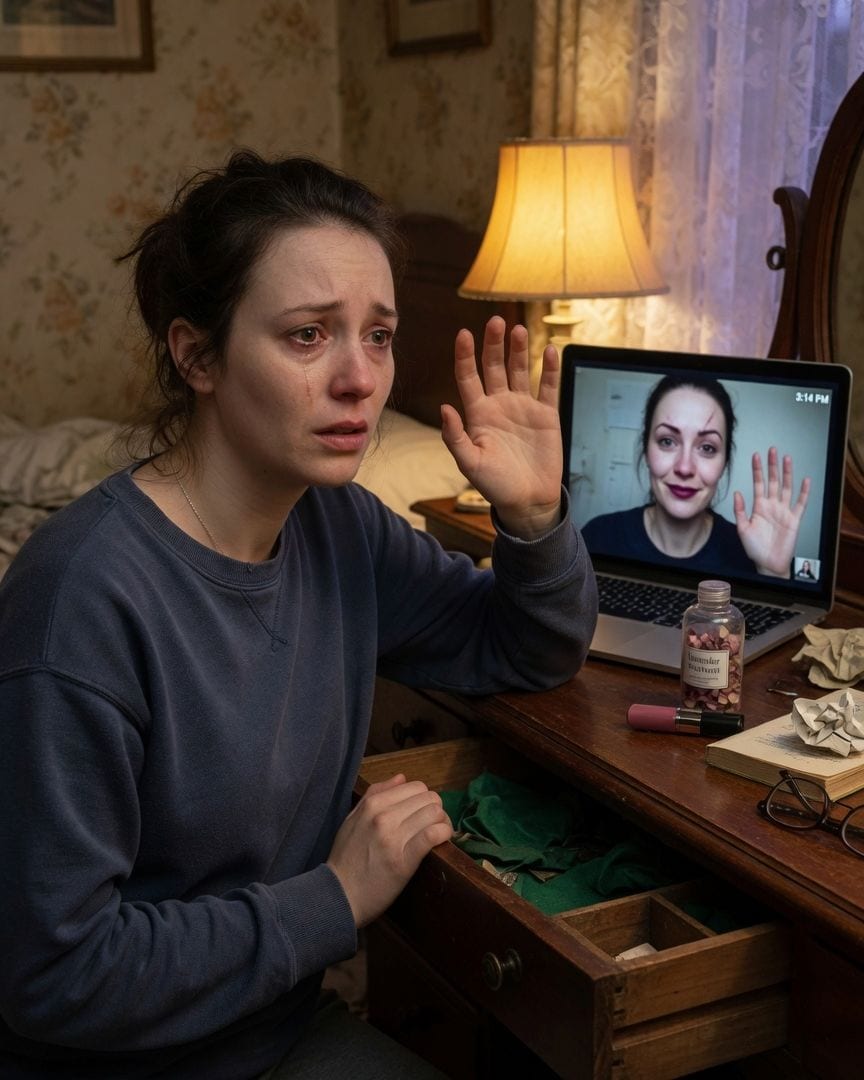
My mother waved with her right hand, both times, on our first call after she came home. She always waved left.
My mother vanished three months ago, then came back. On our first video call, she waved goodbye, but not with her usual left hand. It was her right, a small gesture that twisted something cold in my stomach.
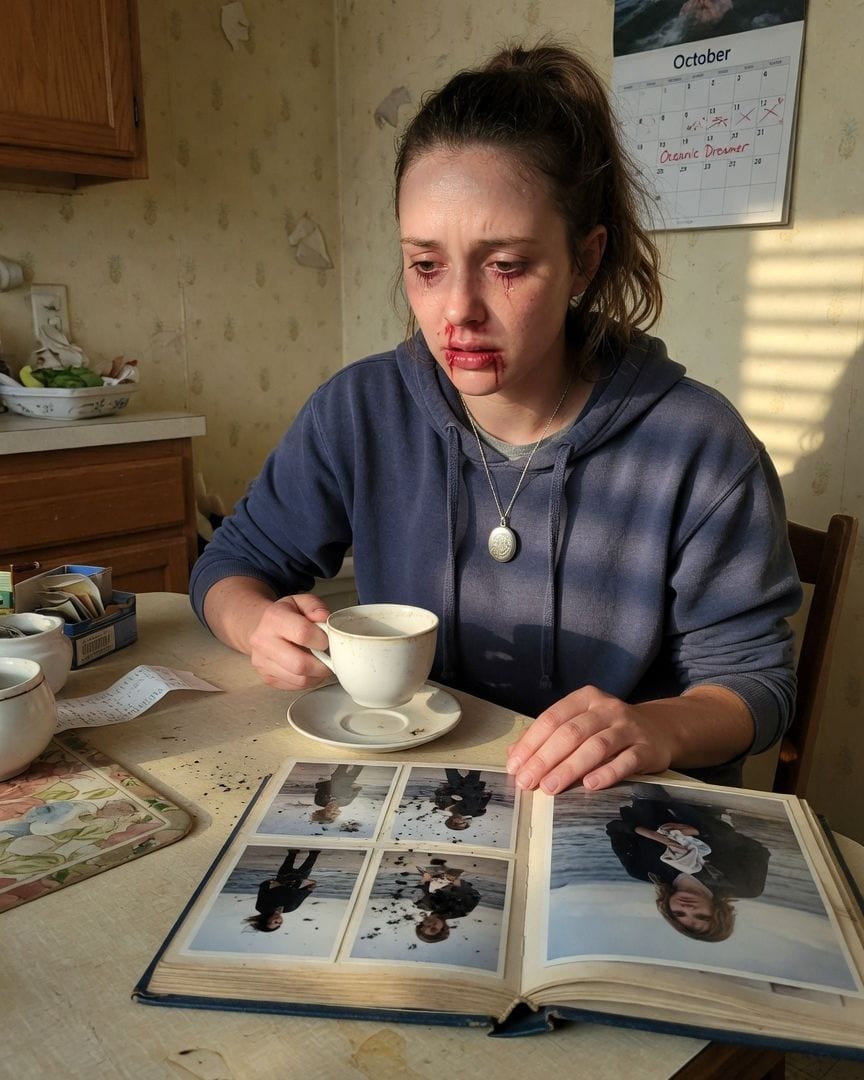
My mother recalled scattering Dad's ashes. She was gone when we did it, lost at sea. She knew which of us cried that day.
My mother came home a month ago, changed after nearly drowning at sea. But then she started describing the day we scattered my father's ashes, every detail sharp and clear. She couldn't have been there; she was lost at sea when we stood on that pier.
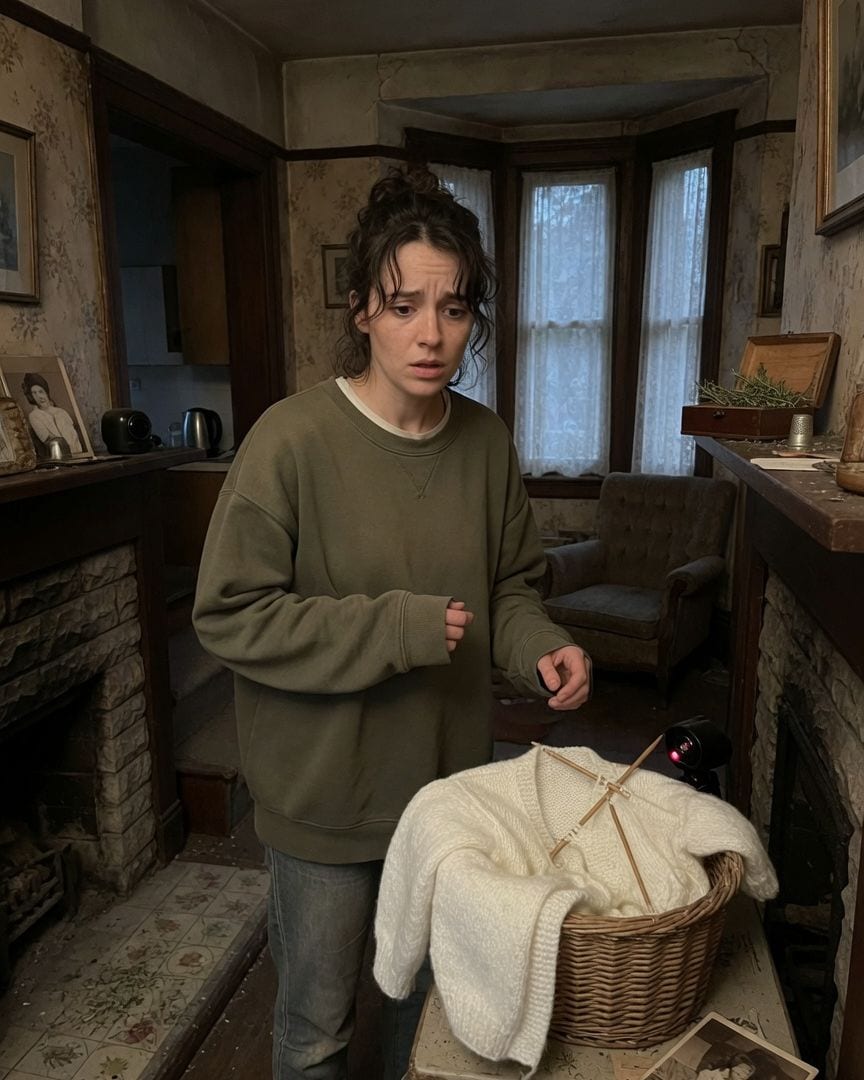
A half-finished baby's cardigan sits by my fireplace, and every few days it has more rows than before. Last Sunday a whole sleeve was finished — but I can't knit, and I live alone.
Moving into my grandmother's quiet old house, I found a half-finished baby cardigan in a workbasket. I thought it was a sweet detail, left it there. But then, day after day, new rows of perfect white stitches appeared on the wool. I don't knit, the house was locked, and I live alone.
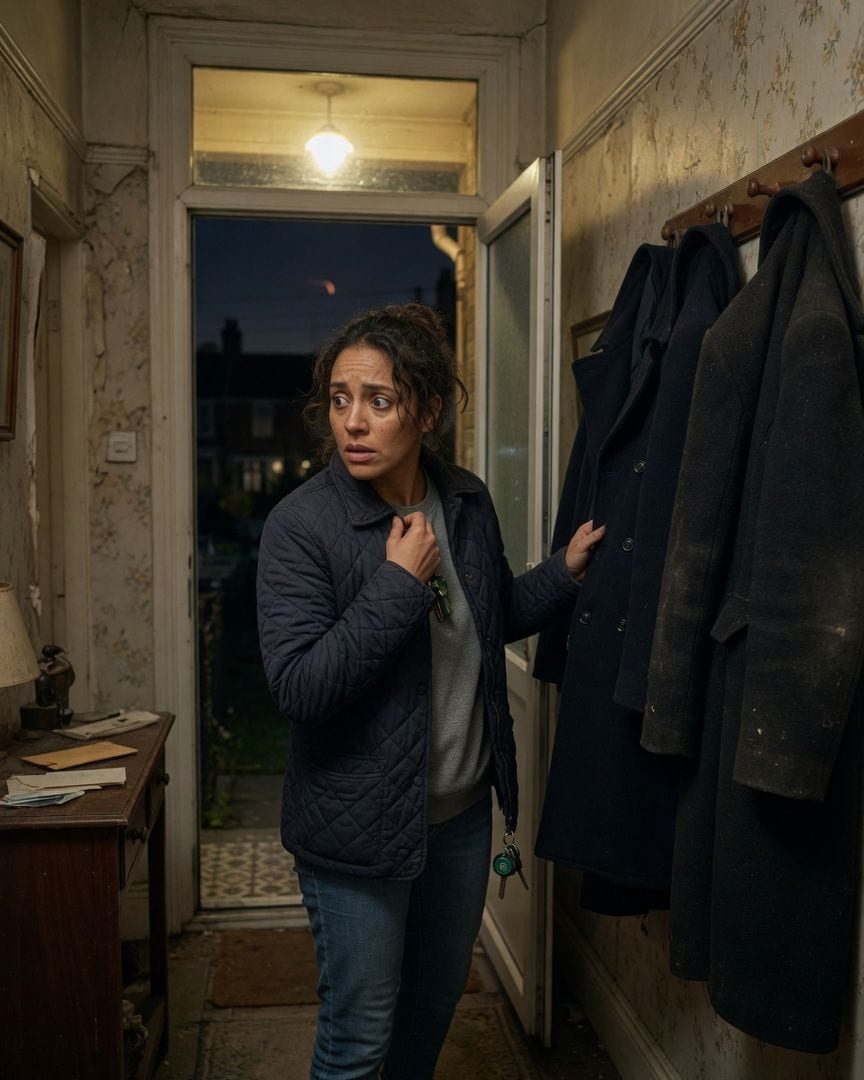
My tiled path was new, my front door green. Then three dark coats hung in my hallway.
After a late night watching the lunar eclipse, I returned to my Victorian house, only to find the path and front door inexplicably changed. Though the house seemed to revert to normal, strange things started appearing: a kettle warm from boiling, a distinct impression on my armchair. Then, an antique, lavender-scented handkerchief appeared on my bedside table, an undeniable presence in my private space.
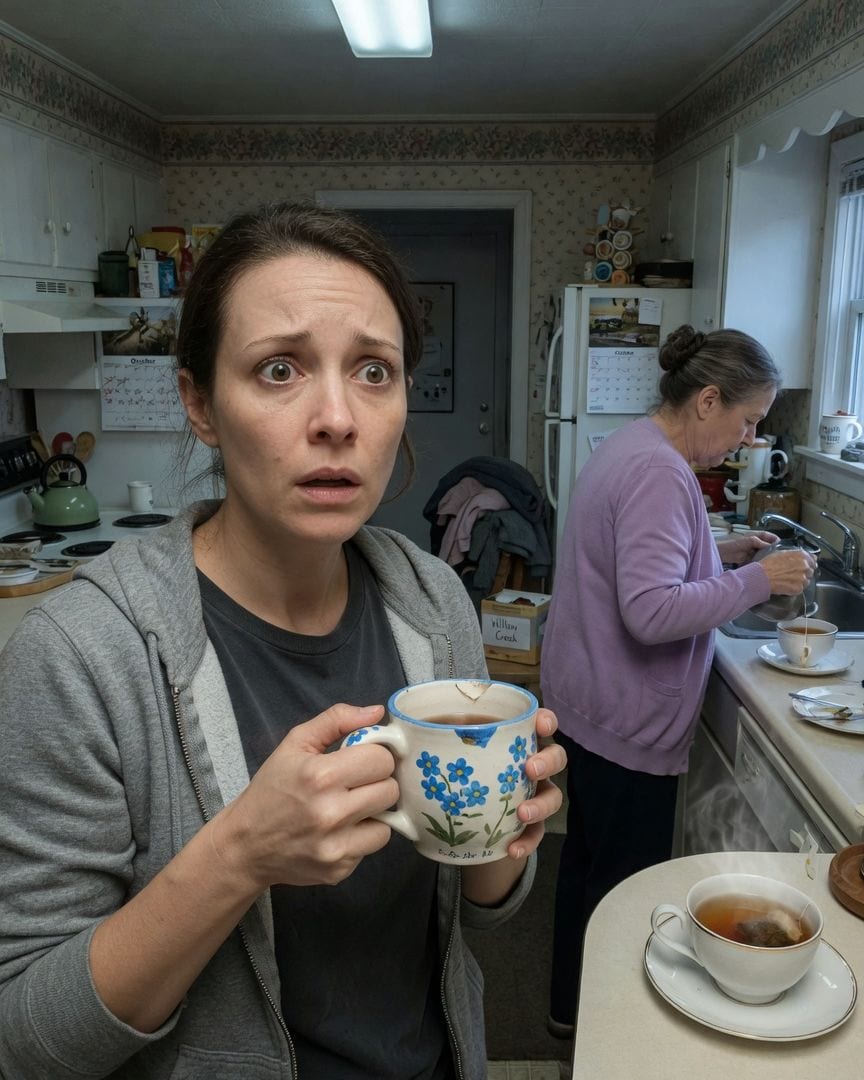
My mother came back remembering my secret childhood runaway night. She slept through it.
My mother returned from Willow Creek, after five days unaccounted for. She seemed herself, until she casually mentioned her lifelong preference for Earl Grey tea. But Mom, Judith Kingsley, had only ever consumed black coffee for sixty-eight years, calling tea 'dishwater drink.'
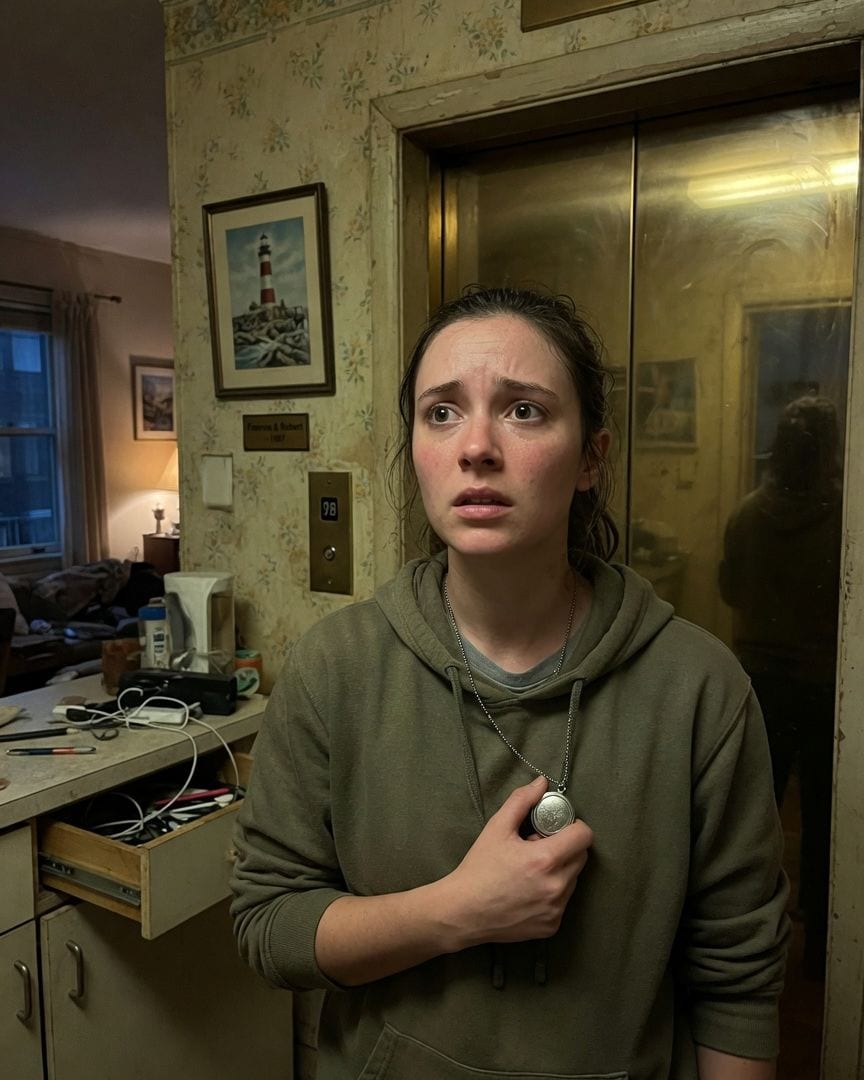
My aunt rode the elevator up, humming, at ease. She hadn't stepped in one since 1994, and told the story of why to anyone who'd listen.
My Aunt Frances stood beside me in the hospital elevator, humming a low tune. It felt deeply wrong; she hadn’t set foot in one since a traumatic incident in 1994, always taking the stairs. Now, after five days missing, she was completely at ease, denying she’d ever feared something so silly, her eyes holding an unsettling calm.