My aunt rode the elevator up, humming, at ease. She hadn't stepped in one since 1994, and told the story of why to anyone who'd listen.
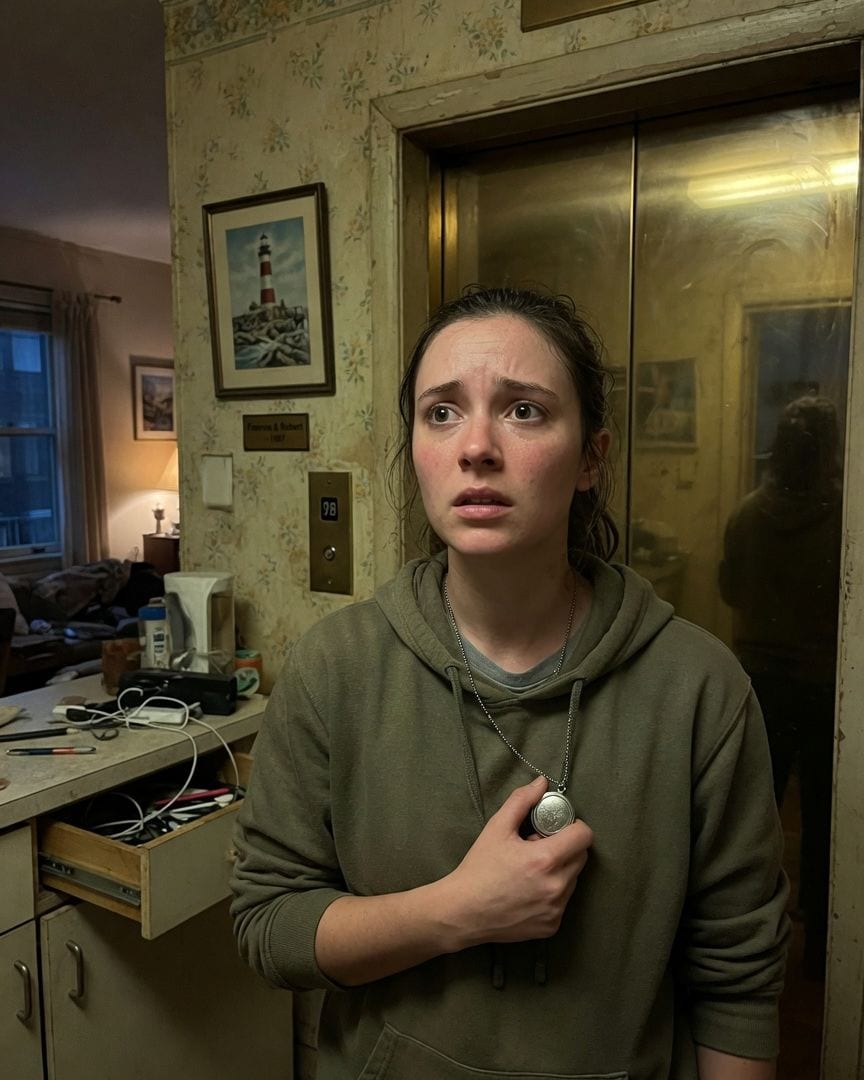
The polished brass doors of the elevator gleamed, reflecting the harsh hospital lights, and my Aunt Frances stood beside me, humming a low, tuneless melody. A faint, placid smile played on her lips.
My stomach twisted into a cold, hard knot. It was wrong. All of it was wrong. Frances hadn't set foot in an elevator since 1994, after that power outage trapped her for hours, nine floors up.
She’d always climbed the stairs to her apartment, even after her knees started giving her trouble, always with a theatrical sigh and a muttered complaint about ‘modern conveniences.’ It had been a point of pride, a defining quirk.
Now, after five days missing post-hospital, she was here, completely at ease.
I tried to make a light joke, a nervous laugh catching in my throat. “Well, look at you, Aunt Frances, breaking all your old rules. Thought you’d be taking the stairs.”
Her humming stopped. She frowned, a fleeting shadow of irritation passing over her face, then smoothed her expression. “Rules? Oh, Chloe, I don’t know what you’re talking about. I’ve never been afraid of anything so silly.”
Her voice was flat, utterly convinced. The contradiction hung in the air between us, thick and suffocating, like old dust.
I glanced at her reflection in the brass doors – same face, same faint scar above her left eyebrow from that bicycle accident when she was a teen.
But the eyes, staring back, held a strange, unblinking stillness that wasn’t there before. A deep, unsettling calm. I couldn’t unsee it. I couldn’t rationalize it away.
The elevator doors slid open on the ninth floor with a soft hiss, and Frances stepped out, still humming, leaving me trapped in a spiral of silent, growing dread.
Over the next few days, I tried to nudge her, to test her. I brought up old family stories, shared memories, things only Frances and I would remember.
She recalled them, yes, but with a detached, almost academic precision, like she was reciting facts from a textbook, not reliving a moment. There was no warmth, no genuine flicker of recognition in her eyes.
Then, the 'Memory They Shouldn't Have' hit, like a sharp, cold jab. I mentioned the time she and I got stuck on a broken ski lift when I was a child, wrapped in scratchy wool blankets, shivering.
Frances smiled warmly, a smile that didn't quite reach her eyes.
"Oh, yes," she said, her voice soft, "I remember the panic, the cold, and how we finally got out when the maintenance man opened the door to the next floor down.
We had to climb out onto the roof of the car and then into the building." I froze. That wasn't us. That was a story Frances had told me a hundred times, about her friend Susan and Susan's daughter.
We were never stuck on a ski lift. I pressed, as gently as I could, my voice thin. "Aunt Frances, that wasn't us. We were never stuck on a ski lift."
Her smile didn't falter, but her eyes grew calm, certain. Utterly certain. "Of course it was, dear. You were so brave."
Later that day, unsettled to my core, I started to discreetly search her apartment. My aunt was a creature of habit, and things were…off.
A small, intricately carved wooden bird, a gift from my late grandfather, usually sat prominently on her mantelpiece. I found it tucked away in a dusty box, almost buried, in a rarely used closet, beneath a stack of old magazines.
It wasn’t just misplaced; it felt hidden, almost discarded, as if someone who didn't know its significance had put it away, not caring.
The wooden bird felt wrong, deeply wrong, but it wasn’t enough. My dread tightened its grip as I continued my quiet search, a frantic energy buzzing under my skin.
I moved into the kitchen, opening a forgotten junk drawer where Frances used to keep old receipts, spare batteries, and a tangled mess of rubber bands.
Buried under a tangle of old phone chargers and dried-up pens, my fingers closed around something cold and metallic. I pulled it out.
Frances’s silver locket. Tarnished, dull, but undeniably hers.
A gift from her late husband, my Uncle Robert, it had been a constant presence around her neck for thirty years, a heavy, comforting weight she never took off, not even to sleep. I quickly unclasped it.
Inside, the faded photograph of my uncle, looking so young, stared back. From the living room, Frances began to hum a new tune, a jaunty, unfamiliar melody.
I stared at the locket, then at the half-open drawer, then at the doorway, my breath catching in my throat. This locket, the humming, the elevator – it all coalesced into a single, terrifying certainty.
Clutching the locket, its cold weight a counterpoint to the growing chill in my heart, I began to dig. My first call was to St. Jude’s Hospital, feigning concern about Frances’s follow-up care.
I asked about the discharge process, specifically who picked Frances up after her minor procedure. The records were vague, a generic ‘family member’ noted. I pressed, and after being transferred a few times, a kind, elderly Nurse Davenport answered.
“Oh, dear Mrs. Montgomery,” she said, her voice warm, “such a sweet lady. She was a bit confused when she left, yes, but her nephew came for her, I think.” Nephew? I have no brothers, no male cousins.
I asked for a description. Nurse Davenport faltered. “Well, he was… tall. And quiet.” I pushed again, my voice tight. “Did he sign anything?” The nurse checked. “Yes, a Mr. Montgomery. Her husband, I suppose, though he looked younger.”
My Uncle Robert had been dead for twenty years. The nurse, sensing my unease, quickly ended the call, citing patient confidentiality. My dread solidified, heavy and cold.
I drove straight to the hospital. At reception, I managed to pull a few strings, leveraging a distant family connection, and asked to see the physical discharge logs for Frances Montgomery.
The paper records were sparse, almost deliberately so, but I found Frances’s entry. The signature for ‘Mr. Montgomery’ was a sprawling, almost childlike scrawl, nothing like my uncle’s elegant, precise hand.
Below it, faint, almost erased, a small, handwritten note: ‘V-7 protocol initiated.’
The day after my hospital visit, I returned to Frances’s apartment. The intricately carved wooden bird, which I’d found hidden in the closet, was now back on the mantelpiece, prominently displayed, as if it had never been moved.
Frances sat in her armchair, sipping her Earl Grey – a brand she’d always hated, preferring plain English Breakfast, a habit as old as I was. She watched me with an unsettling, serene gaze.
“You seem preoccupied, dear,” she said, her voice devoid of genuine concern, “Thinking about old things?” A chill crawled up my spine. Had she somehow known about my visit, my search?
Later, I found my laptop open on the kitchen counter, the browser history showing searches for ‘St. Jude’s Hospital discharge procedures.’ I was meticulous about closing my browser tabs.
That evening, as I discussed my findings with a friend over the phone in hushed tones, Frances walked in. Silent as a ghost, she stood in the doorway, listening, her presence a cold weight in the room.
I quickly changed the subject, laughing too loudly, but the message was clear. She knew. She knew I was investigating.
The next morning, a small, unmarked envelope was slipped under my apartment door. Inside was a single, perfectly pressed autumn leaf, its edges sharp, its colors faded but distinct.
I remembered Frances, just a few days prior, mentioning how much she loved the fall foliage, a sentiment I knew was entirely new for her aunt, who’d always preferred the vibrant energy of spring.
The leaf was a quiet, unsettling warning.
I confronted Nurse Davenport in a quiet corner of the hospital cafeteria, the hum of the fluorescent lights making me feel like I was caught in a buzzing trap.
I showed her a photo of the forged signature I’d taken from the discharge log and mentioned the ‘V-7 protocol.’ Her face went slack with terror. “I shouldn’t… I could lose my job,” she whispered, her eyes darting around.
“My aunt isn’t herself,” I pressed, my voice low and urgent. “What happened after she was discharged?”
Davenport, trembling, finally cracked. “She was confused, yes. Mr. Montgomery came. But… he wasn’t right. Not her husband. He led her out a side door, not the main exit, like they usually do.
And then, a few days later, she just… reappeared. Different, but the same. It’s happened before. Always after a stay here.” She leaned closer, her voice barely audible. “The V-7 protocol… it’s what we do when someone comes back.
We don’t ask questions. We just… integrate.”
A cold dread spread through me, numbing my fingers, my toes. The elevator phobia, the locket, the strange memories, the new preference for Earl Grey – it all snapped into sickening focus.
This wasn’t my aunt’s grief or some strange form of dementia. My aunt was replaced.
Davenport added, her eyes wide, “They always come back with one small thing off. A new habit, a forgotten memory. Like a copy that isn’t quite perfect. And they’re always so calm.”
I thought of Frances’s unnerving serenity, her unblinking gaze as she watched me. The real Frances, the one who feared elevators, who loved her locket, who preferred English Breakfast tea, was gone.
Nurse Davenport, desperate now, her fear palpable, led me through a maze of dimly lit corridors to a forgotten storage room in the hospital basement.
The air was thick with the scent of dust and old paper, clinging to my clothes like a shroud.
“They keep old files here, from before everything went digital,” she whispered, her voice barely audible above the distant rumble of the city. “I saw something once, years ago. A pattern.”
My heart pounded against my ribs as I helped Davenport pull out dusty, heavy ledgers from metal shelving that scraped against the concrete floor. We flipped through decades of discharge records, the pages stiff and brittle.
My fingers traced the faded ink, searching for ‘V-7.’ And then I found it. Not just on Frances’s record, but on dozens of others.
Each ‘V-7’ entry corresponded to a brief hospital stay, a ‘missing’ report shortly after discharge, and then a ‘return’ noted within days, followed by a vague, often contradictory ‘recovery’ note.
The names were familiar, like ghosts from local history: old photographs in the town gazette, names on plaques in the park. Local politicians, respected teachers, even a childhood friend’s grandparent.
All ‘returned’ with subtle personality shifts, their families accepting the changes as ‘grief’ or ‘old age’ or ‘just being a bit different after their ordeal.’
I saw a name, Samuel Norwood, a prominent local historian who returned from a routine hernia surgery years ago, suddenly obsessed with abstract art, abandoning his research. I remembered his family saying he’d ‘come back calmer.’
My hand trembled as I turned another page, and another. The pattern was undeniable. It wasn’t just Frances. It’s never been just Frances.
A draft of cold air swept through the room, making my hair prickle, as a loose floorboard creaked nearby, echoing in the terrible silence.
Chloe and Nurse Davenport frantically searched the old ledgers, the flickering overhead bulb casting long, dancing shadows. The ‘V-7’ entries were not random.
They corresponded to patients admitted for minor, non-life-threatening conditions, often elderly or vulnerable individuals—those whose families might be less scrutinizing, or more willing to accept subtle shifts in personality as a result of illness or age.
The ‘Mr. Montgomery’ signature, or similar generic ‘family member’ signatures like ‘Ms. Peterson’ or ‘Mr. Davies,’ appeared again and again.
The ‘source shown only in traces’ became horrifyingly clear: St. Jude’s Hospital itself, or a hidden faction within it, was facilitating these replacements. It wasn't a monster in the traditional sense, but a quiet, insidious process.
Nurse Davenport pointed to a series of entries from the 1990s, her finger shaking. “Look,” she whispered, “always after a brief stay in Ward B, Room 3.”
I found Frances’s original admission for her minor procedure; the entry confirmed Ward B, Room 3. The entity, whatever it was, operated within the hospital’s blind spots, preying on those who would be least questioned upon their return.
The returned individuals were always ‘calmer,’ ‘less anxious,’ stripped of their defining quirks, easier to manage, easier to simply exist.
I realized the true horror: it was a form of quiet, perfect assimilation, maintaining the illusion of normalcy while erasing the original person. The entity didn’t want to be noticed, only to exist, to replace.
I returned to Frances’s apartment, the silver locket clutched tight in my hand, its familiar weight a cold comfort.
Frances was sitting in her armchair, reading a book I knew she never would have touched – a dense, leather-bound philosophy text, its pages brittle with age. “You’ve been busy, dear,” Frances said, without looking up from the page.
Her voice was flat, devoid of emotion, a monotone hum.
I held out the locket, my hand shaking slightly. “This was Uncle Robert’s last gift to Aunt Frances. She never took it off.”
Frances glanced at it, then shrugged, a subtle, dismissive movement. “An old trinket. People change.”
My voice trembled. “No, they don’t. Not like this.” I described the real Frances, her absolute terror of elevators, her love for this locket, the way she used to tell that ski lift story about Susan, not about herself.
As I spoke, the placid mask on Frances’s face began to crack. A flicker of confusion, then irritation, then something cold and ancient in her eyes, something that wasn't Frances at all.
“You don’t understand,” Frances said, her voice deeper, no longer quite hers, a low resonance that filled the room. “It’s better this way. Quieter.”
I pushed, my voice rising. “What happened to my aunt?”
The entity in Frances’s body recoiled, a subtle shudder running through her. The calm facade crumbled, revealing a raw, unfamiliar distress. The eyes darted around the room, no longer serene, but trapped, desperate.
It wasn’t physical violence, but a psychic unraveling, a tearing at the edges of its perfect imitation. “She… left,” the voice hissed, strained, almost a whisper. “She wanted peace.” The body slumped, eyes closing, then opening again, vacant.
The entity, unable to maintain the facade under the pressure of truth and genuine memory, abandoned its host. Frances’s body remained, empty, lifeless, slumped in the armchair.
The room was silent, save for the faint, distant hum of the building’s ventilation system.
I called emergency services, my hands shaking so badly I could barely dial. I reported Frances’s sudden, peaceful death. The official cause was a heart attack, quick and clean.
My frantic story of replacement was dismissed as grief-induced delusion, something people said when they lost someone they loved. Nurse Davenport disappeared from St. Jude’s, her phone disconnected, no longer answering.
The ‘V-7’ entries in the old ledgers were gone, replaced by blank, suspiciously new pages. The hospital denied any knowledge of such protocols or patterns, their automated voices calm, professional.
I was left with the terrible truth, a survivor carrying a burden no one would believe. The empty apartment, stripped of its false serenity, felt like a mausoleum for a ghost that had walked among the living.
I watched the world with new, wary eyes.
I saw the subtle shifts in others, the small, almost imperceptible wrongness in a neighbor’s new, unsettlingly calm demeanor; a distant cousin’s sudden, inexplicable change in hobbies; a local councilman’s previously unknown ‘passion’ for gardening after a recent, routine stay at St. Jude’s.
I knew the hum of the entity now, the quiet, pervasive dread of its presence in the everyday.
I learned to recognize the ‘returned,’ not by their faces, but by the small, vital details that were just a little bit off, the habits reversed, the memories they shouldn’t have.
It’s an endless, silent war, playing out in plain sight. I, now marked by my knowledge, carried the weight of a world quietly being hollowed out.
I often passed the local bakery, where the owner, Mr. Radcliffe, had returned from St. Jude’s last month. He always took his coffee black, but now, he added precisely two sugars, every time, with a faint, unblinking smile.
The coffee tasted wrong on her tongue, too, and she'd always taken it black.
If this one got to you
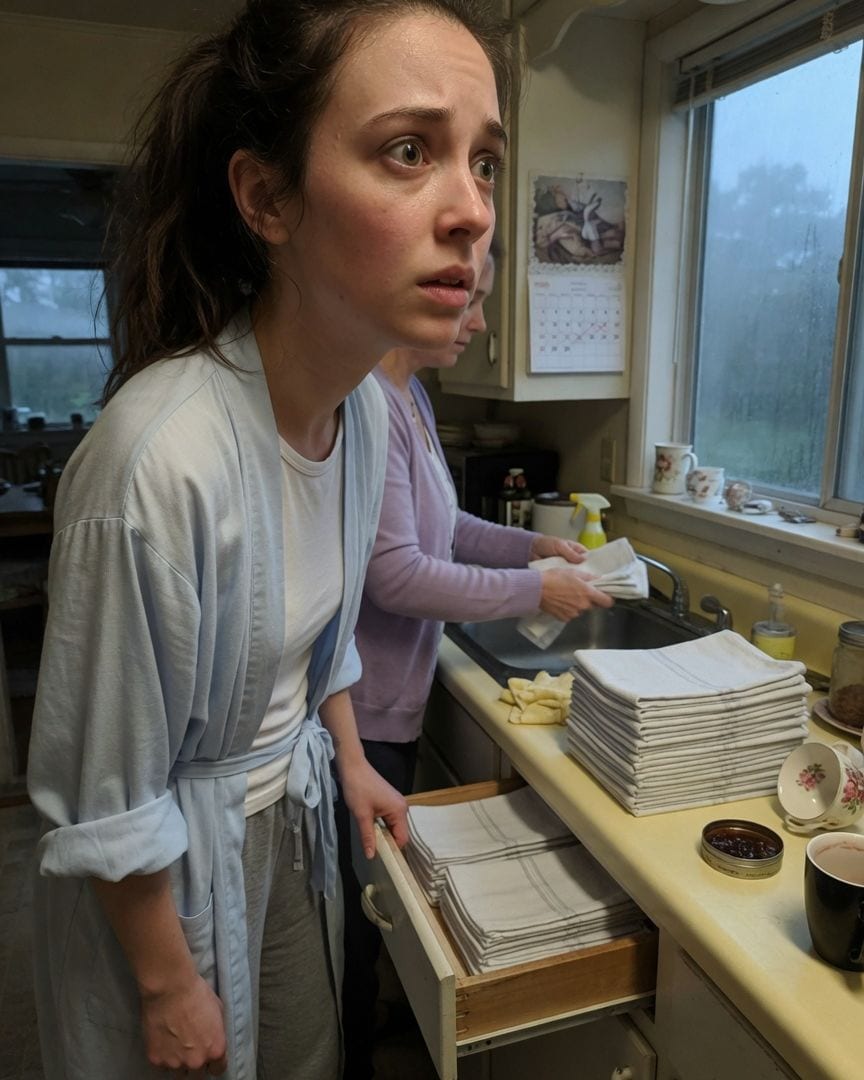
My mother's left wrist has a new scar. She never had one there.
My mother is finally home after her disappearance, and I'm trying to find our old rhythm. But then I watch her fold tea towels, a simple ritual I learned from her. She's doing it completely wrong, seam-out, insisting it's how she's always done it.
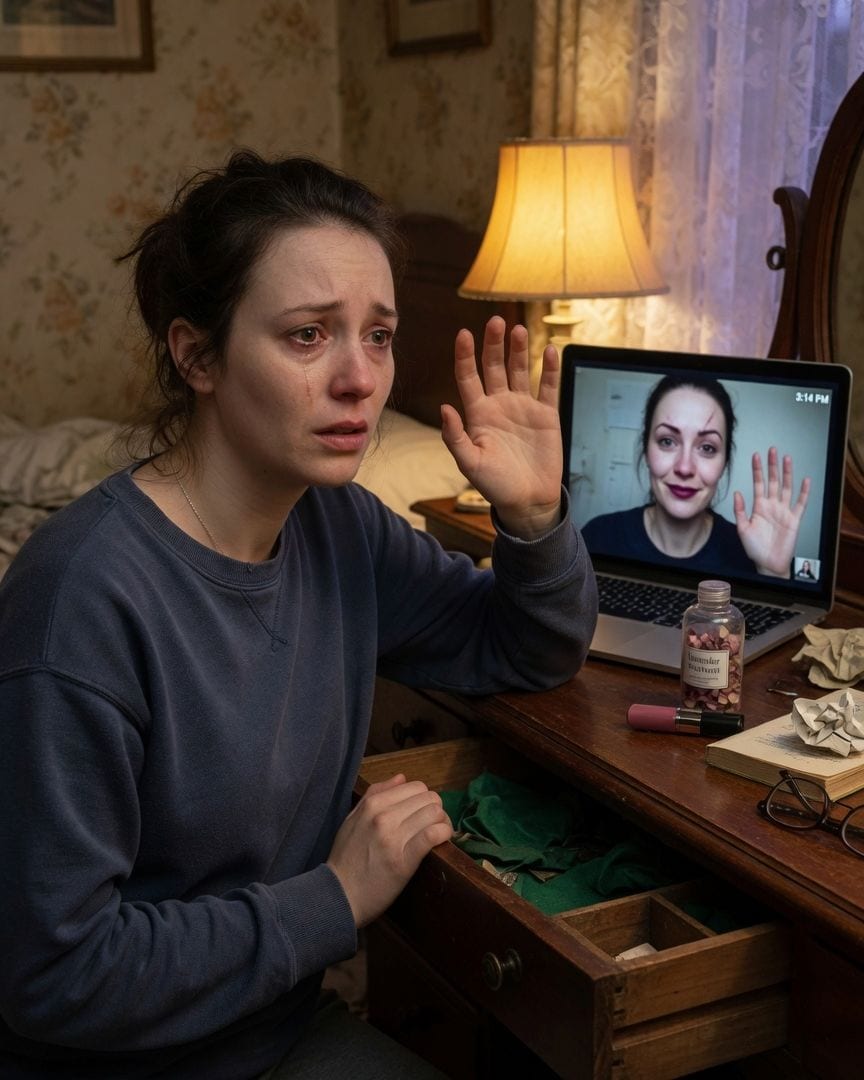
My mother waved with her right hand, both times, on our first call after she came home. She always waved left.
My mother vanished three months ago, then came back. On our first video call, she waved goodbye, but not with her usual left hand. It was her right, a small gesture that twisted something cold in my stomach.
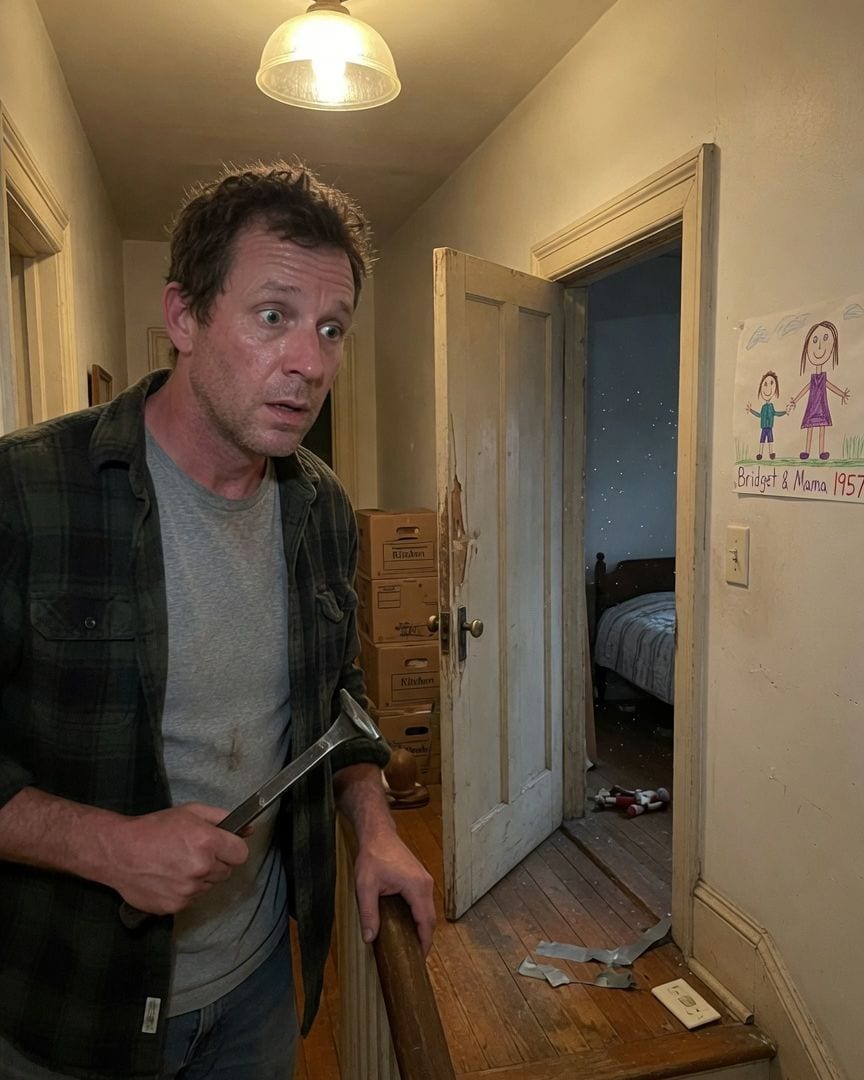
My landing light switches itself off at 9:40 every night. I've watched the switch flick down under nothing, the tape peeled back. The house holds its breath.
My great-uncle's old house was a quiet gift, a place to finally settle. But as I unpacked, a strange worn path on the floorboards led me to a small, barely visible door, perfectly blended into the wall. It was undeniably locked, and felt like a deliberately obscured secret.
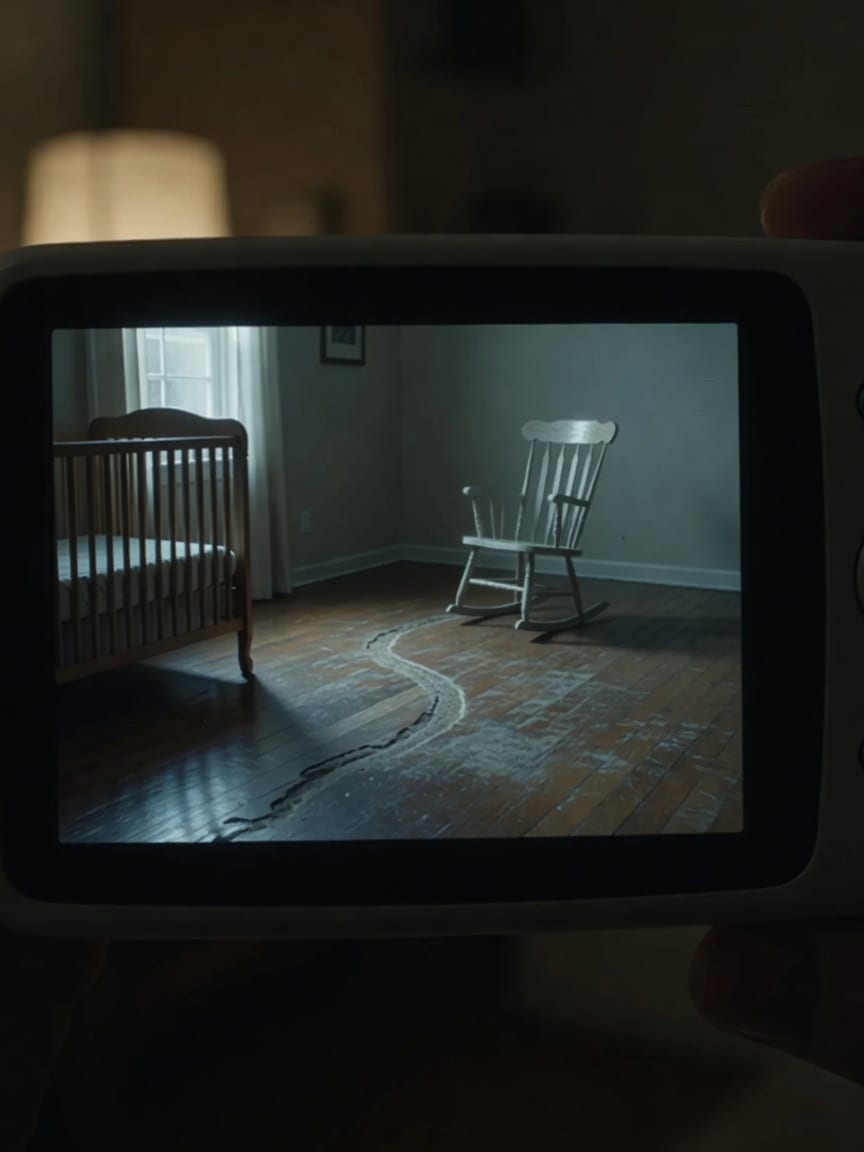
My baby monitor hums a lullaby at 2 AM. I hear a rocking chair creak. The camera shows my daughter's room empty, every night.
Every night, my baby monitor hums a gentle lullaby and a rhythmic creak, as if a rocking chair is in Lily's nursery. But the room is always empty, the monitor's camera shows nothing, and we don't even own a rocking chair. Then I found a newspaper clipping from sixty years ago, detailing a child's disappearance from our house.
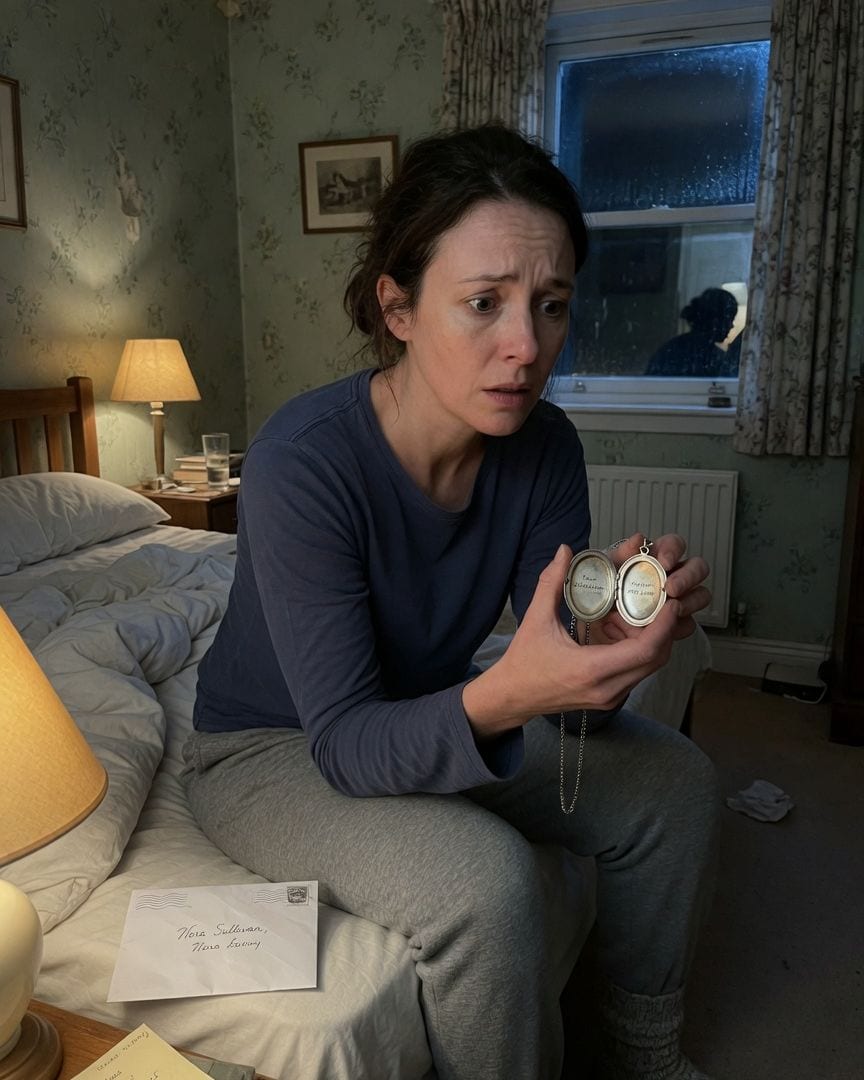
My antique locket held my maiden name, engraved with 'until the ninth.' The dealer said the woman who owned it left a note: 'for her, when she comes.'
My husband Scott, always finding unusual things, gave me an antique silver locket. Inside, engraved beneath my maiden name, Nora Sullivan, were three chilling words: 'until the ninth.' It felt like a direct, personal address, even though I hadn't used that name in years.
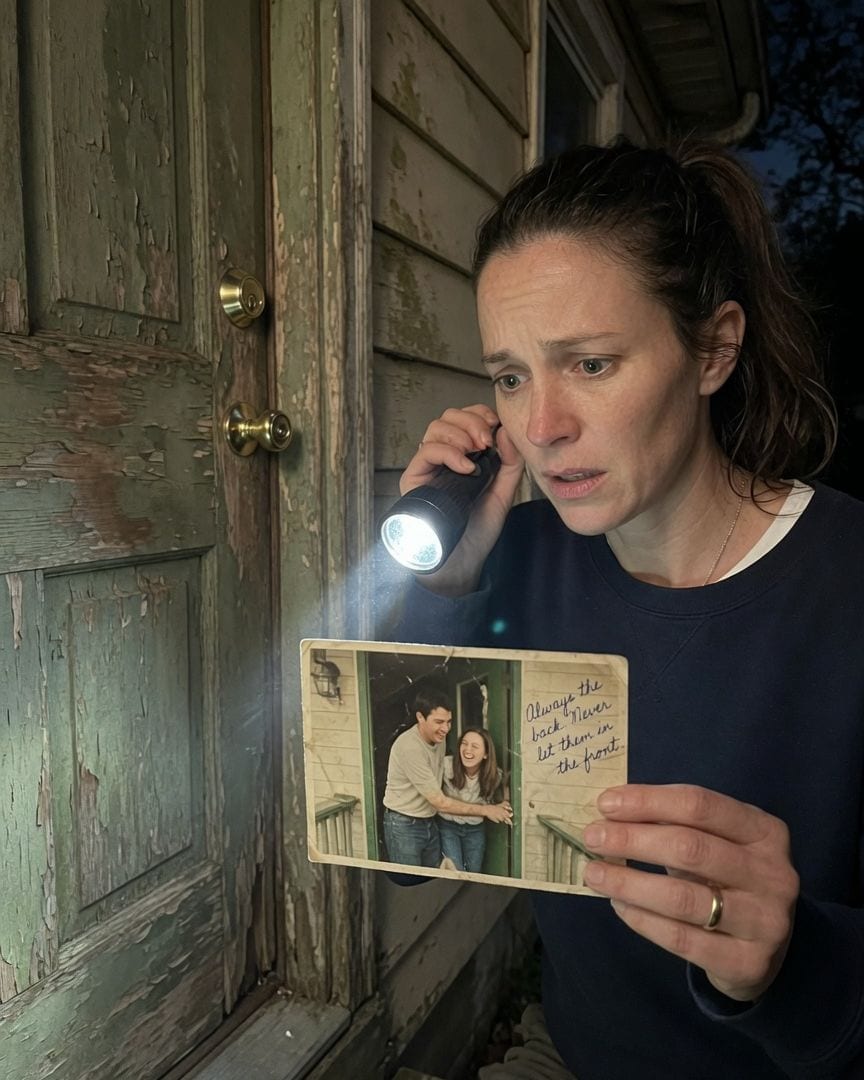
My mother waves us to the front door now. She was missing five days. She says we've always used the front, but the back door, our kitchen door for thirty years, is locked.
My mother, Janet, finally came home after five days, but her overly bright smile and insistence on using the front door felt wrong. For three decades, our family always used the back entrance, which now had a gleaming, new deadbolt. The quiet hum of unease quickly grew into a chilling dread.